Foreword
I had long delayed setting foot in Laos,
not because it wasn't good enough,
but because its culturally connected neighbors—
Vietnam, Cambodia, Thailand, and Myanmar—
had already left deep impressions on my travel map.
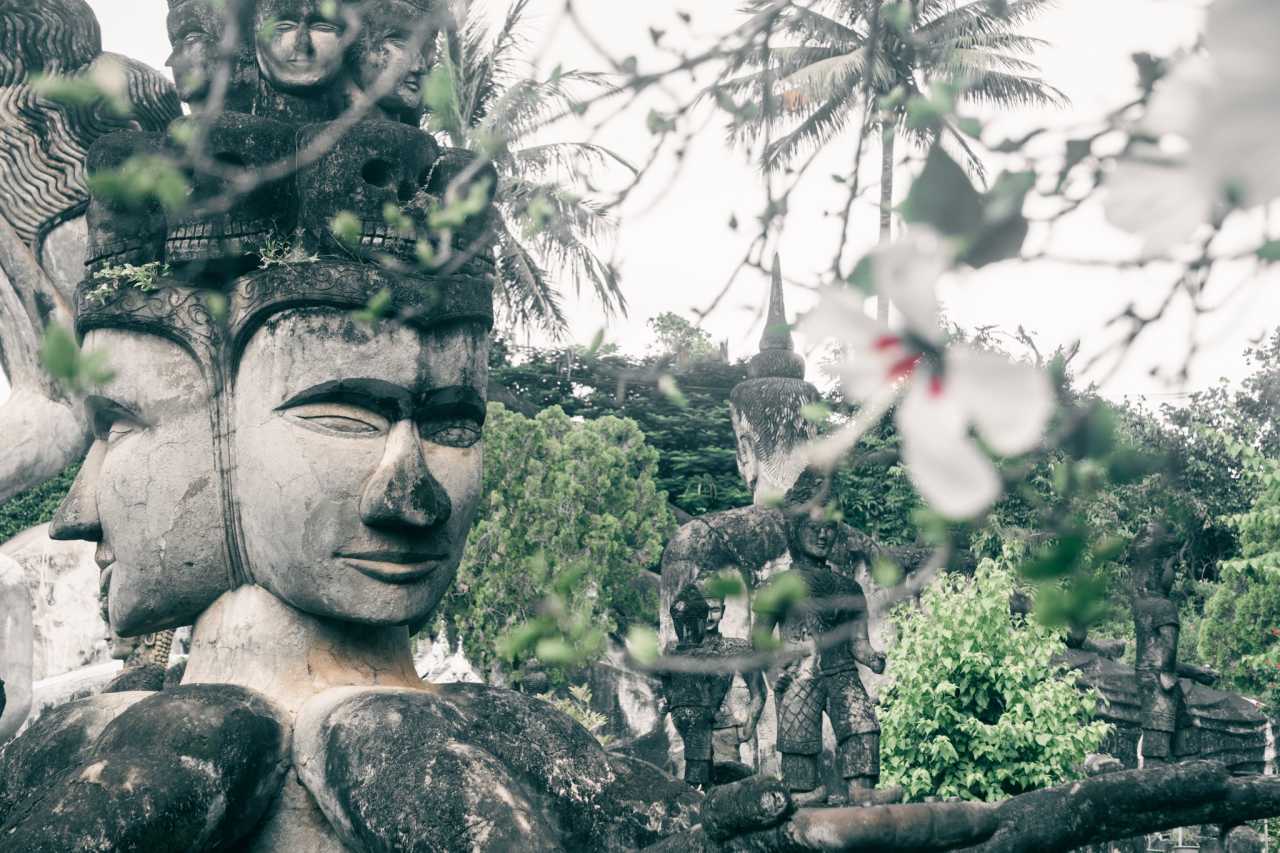 Buddha Park
Until a mature opportunity arose,
that door which had long remained unopened
finally found its reason to swing wide.
Departure | Taking the High-Speed Rail to Laos
Being able to take a high-speed train directly to Laos from within China
was the first unexpected surprise of this journey.
Only then did I learn that
this cross-border artery called the "China-Laos Railway"
had quietly been open for two years.
It wasn't the first cross-border railway,
but it is currently the only high-speed cross-border rail line.
Weighing economy, convenience, safety, and experience,
I ultimately chose this train for the outbound journey,
saving the flight for the return.
The train "Lancang" shares its name with the river,
connecting two countries—
a poetic coincidence.
Departing from Kunming Station in the early morning,
it would pass through my planned stops of Luang Prabang and Vang Vieng,
ultimately arriving in Vientiane.
En route, one must disembark at the border stations of Mohan and Boten,
carrying all luggage to complete immigration procedures.
The train journey to Luang Prabang took nearly nine hours,
with two hours consumed by border formalities and waiting.
The process was somewhat convoluted,
but overall remarkably smooth.
Regarding visas,
if arriving by air at Vientiane Airport,
a visa on arrival is straightforward;
but entering via land borders,
rumors were conflicting.
For peace of mind,
I obtained a sticker visa in advance,
seeking reassurance.
At immigration,
I saw fellow countrymen ahead being stopped by stern officers
for incomplete arrival cards.
When my turn came, it was surprisingly smooth—
no rumored solicitations,
only procedural indifference.
Throughout the subsequent journey, I encountered no forced tipping
or deliberate short-changing.
Laos has no such customs;
compared to certain countries,
this ordinary practice seemed extraordinarily precious.
This trip's route
was only roughly sketched before departure,
with clear focus on northern Laos—Luang Prabang and Vang Vieng.
Vientiane would be optional,
while the southern Four Thousand Islands
remained an unresolved question mark.
After subsequent itinerary adjustments,
I decided to skip the Four Thousand Islands.
The final route became:
Luang Prabang → Vang Vieng → Vientiane → Champasak → Vientiane → Mueang Fueang.
A 14-day journey,
with 12 full days spent exploring within Laos.
From north to south,
I felt like reading a scripture scroll soaked by rain.
Luang Prabang | Rain Falling into the Heart of a Small Town
Alms Giving
At five in the morning,
the ancient town was still dreaming.
Fine rain drew silver threads,
glimmering under streetlights;
soft light diffused,
spilling across wet cobblestones.
Watching the thickening rain,
we hesitated under the hotel eaves,
A woman approached from afar,
seeming to read our doubts,
assuring us the ceremony would continue;
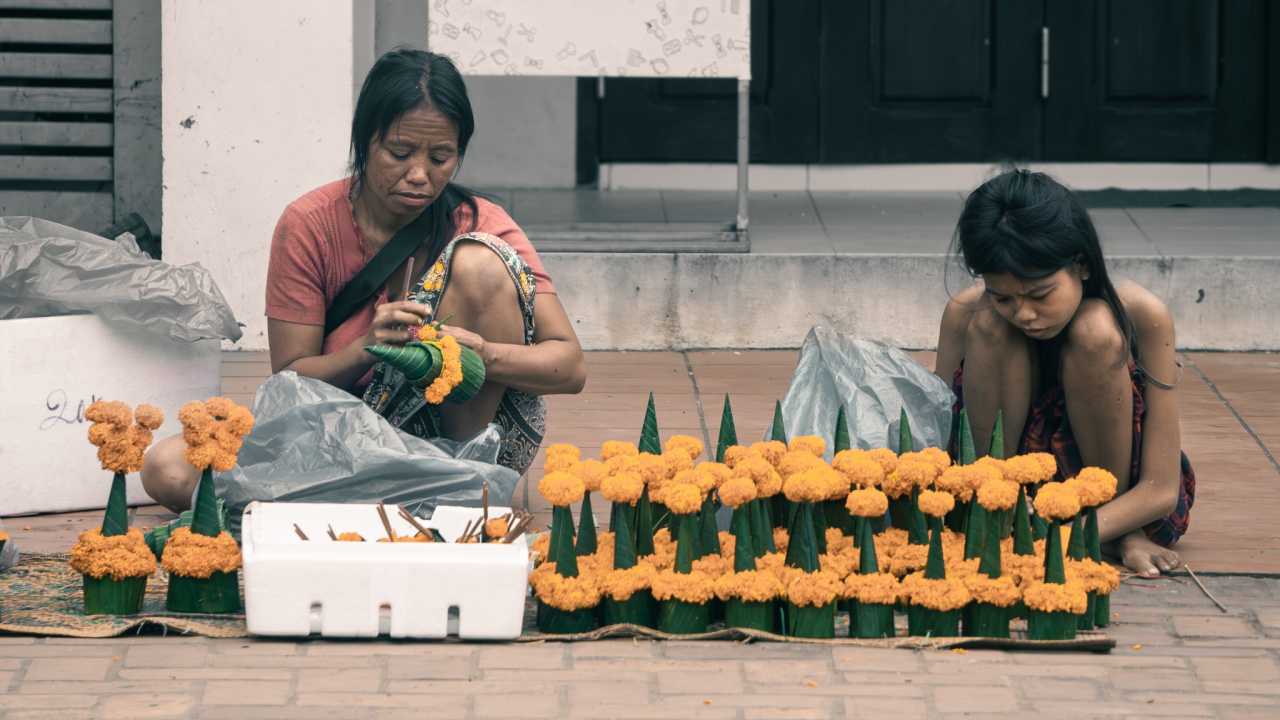
then skillfully began peddling her alms-giving supplies.
This is a business born for tourists,
which suddenly made me feel detached.
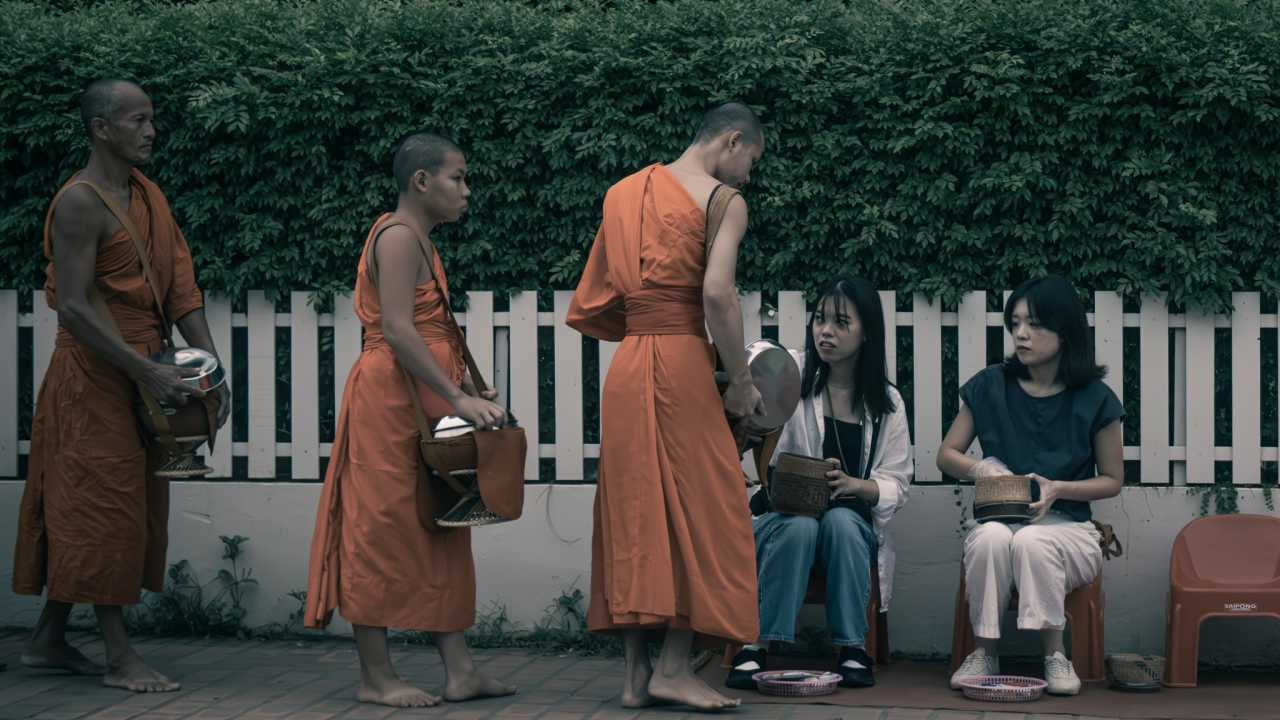
I deeply understand that
true alms giving should stem from inner devotion,
not participation as mere formality.
Many novel experiences await during travel,
but faith cannot be simulated.
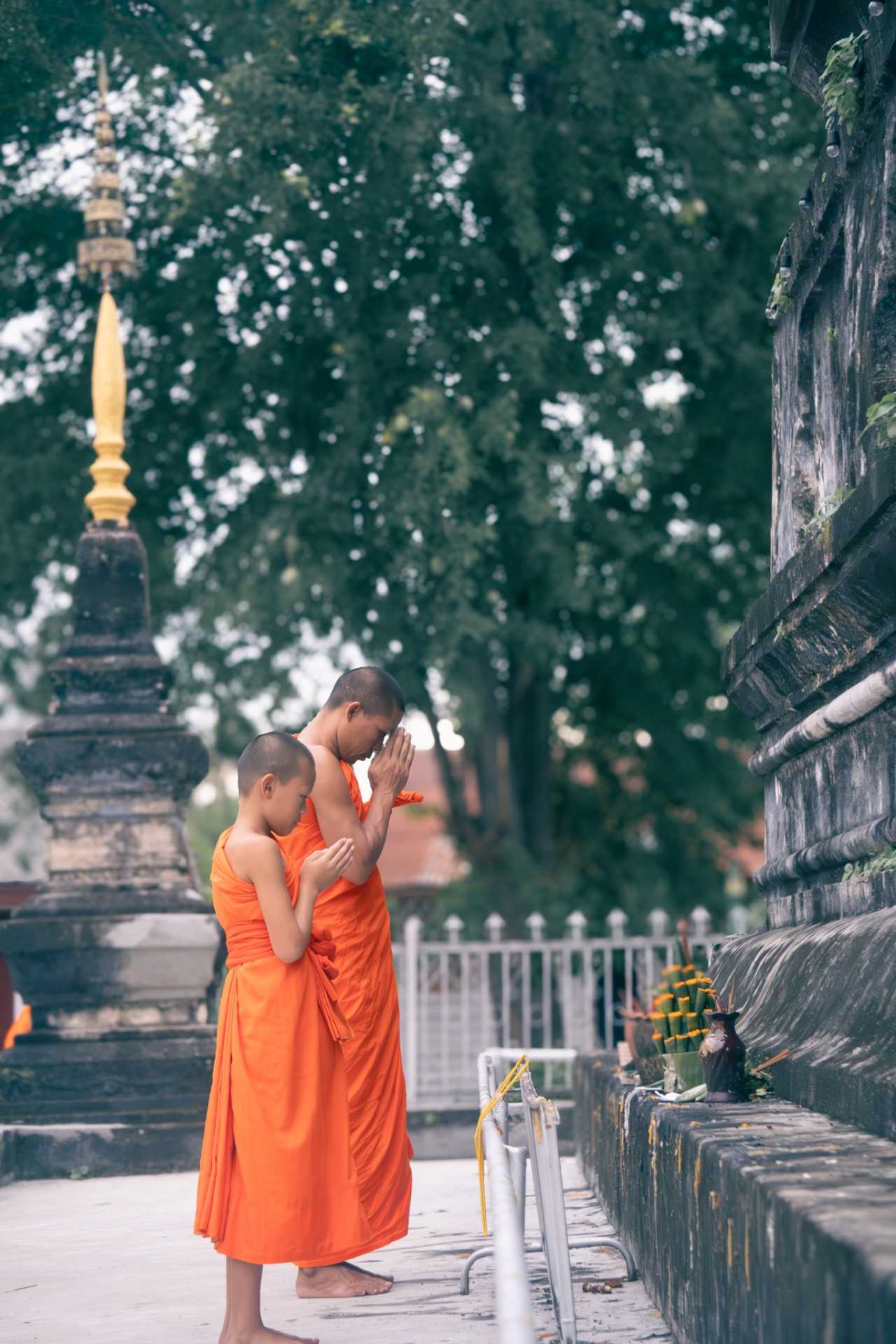
Its true warmth
exists in sincere encounters between hearts,
embedded in belief traditions spanning hundreds of years.
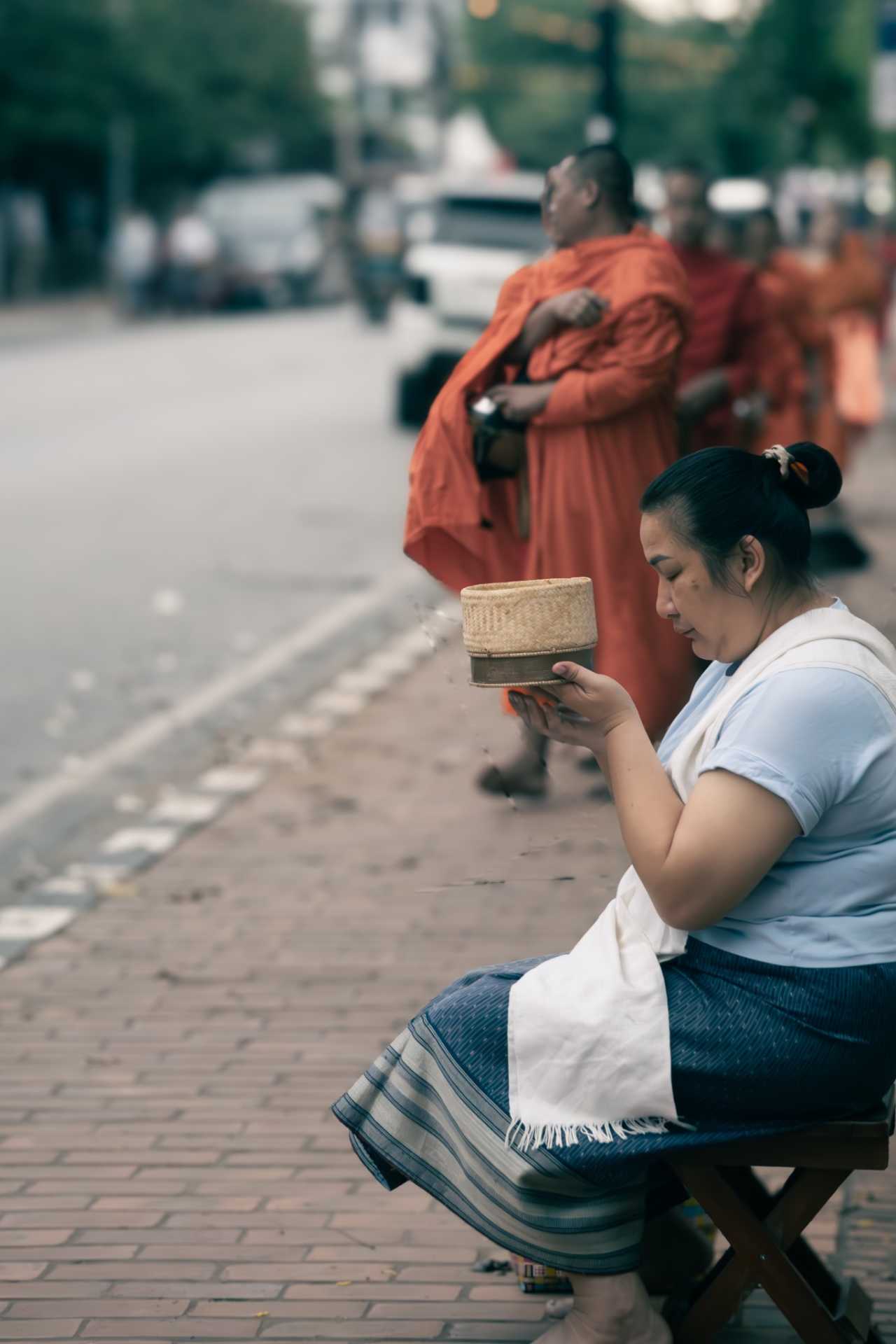
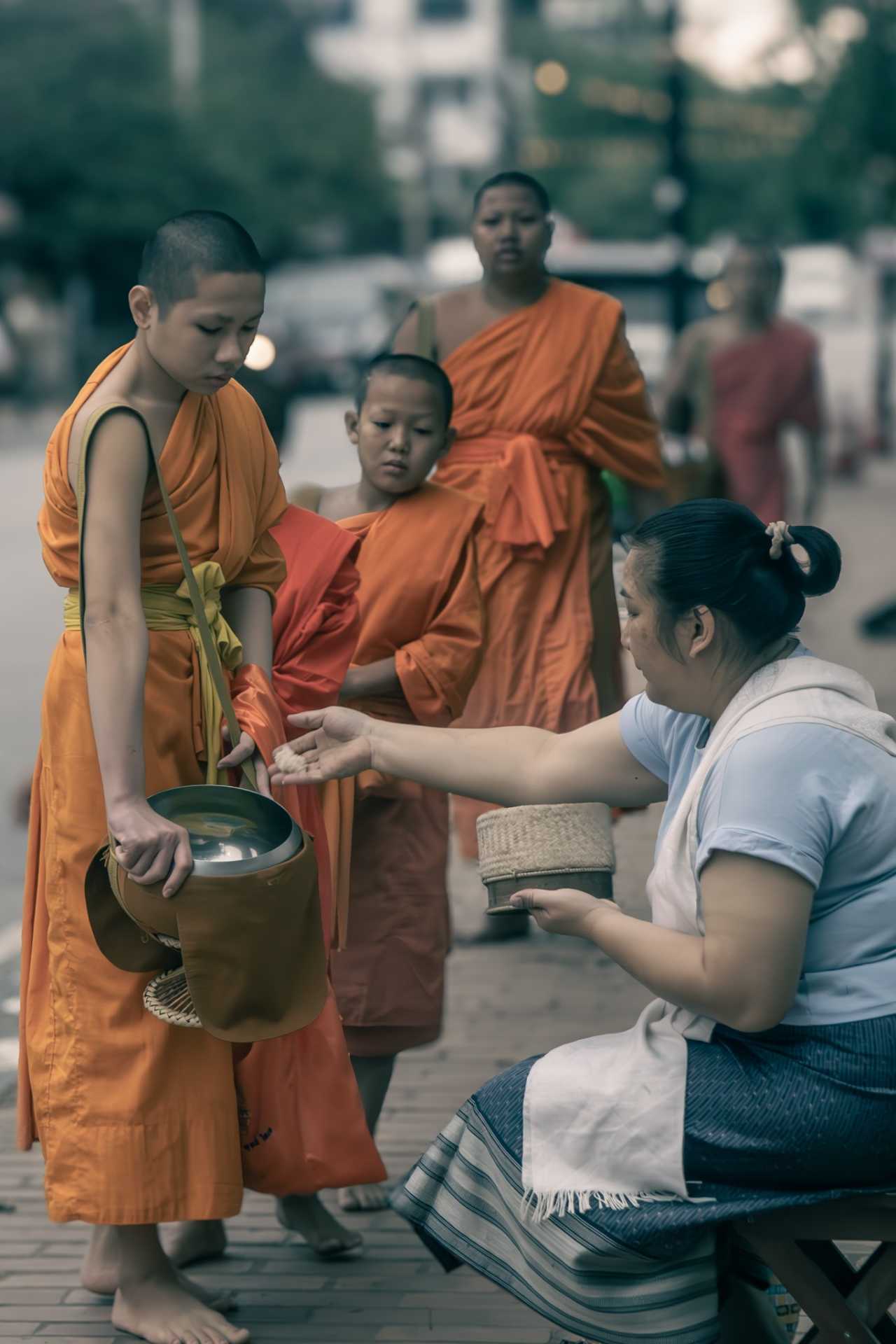
Of course,
whether this tradition, flowing through centuries to today,
has already altered its original intent
is another matter entirely.
Walking through rain-soaked streets,
not reaching Wat Mai in time,
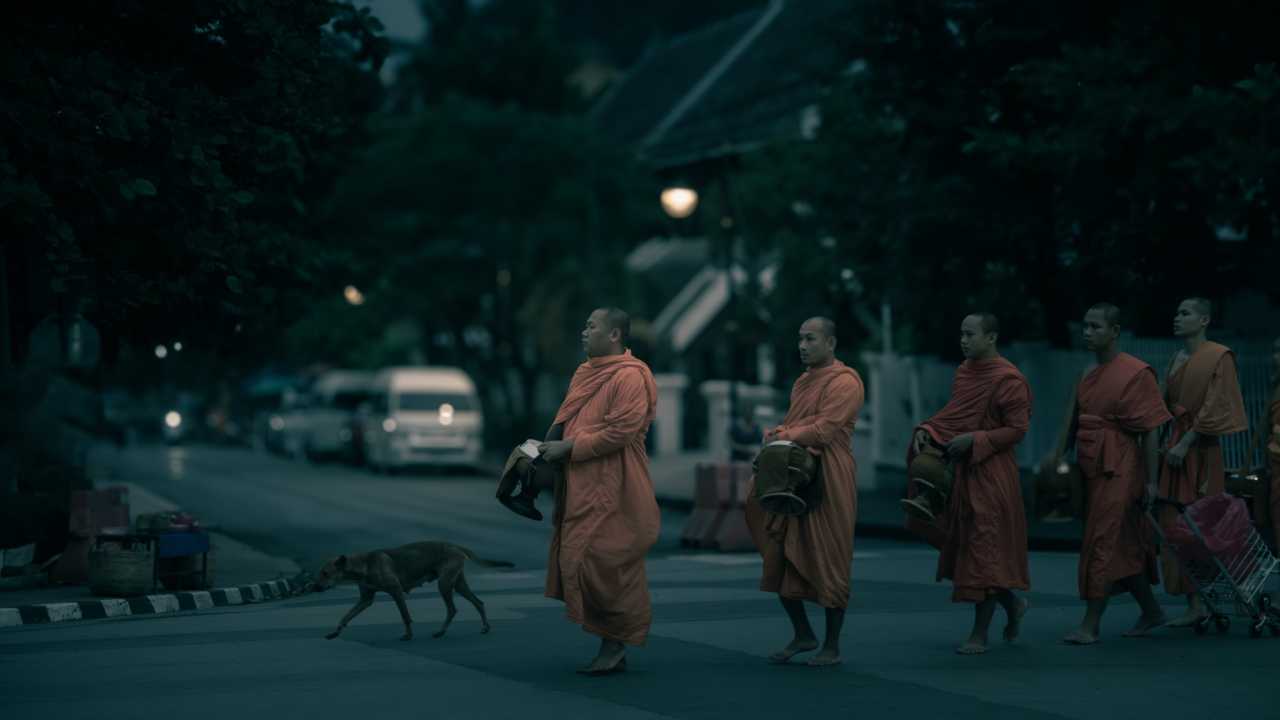
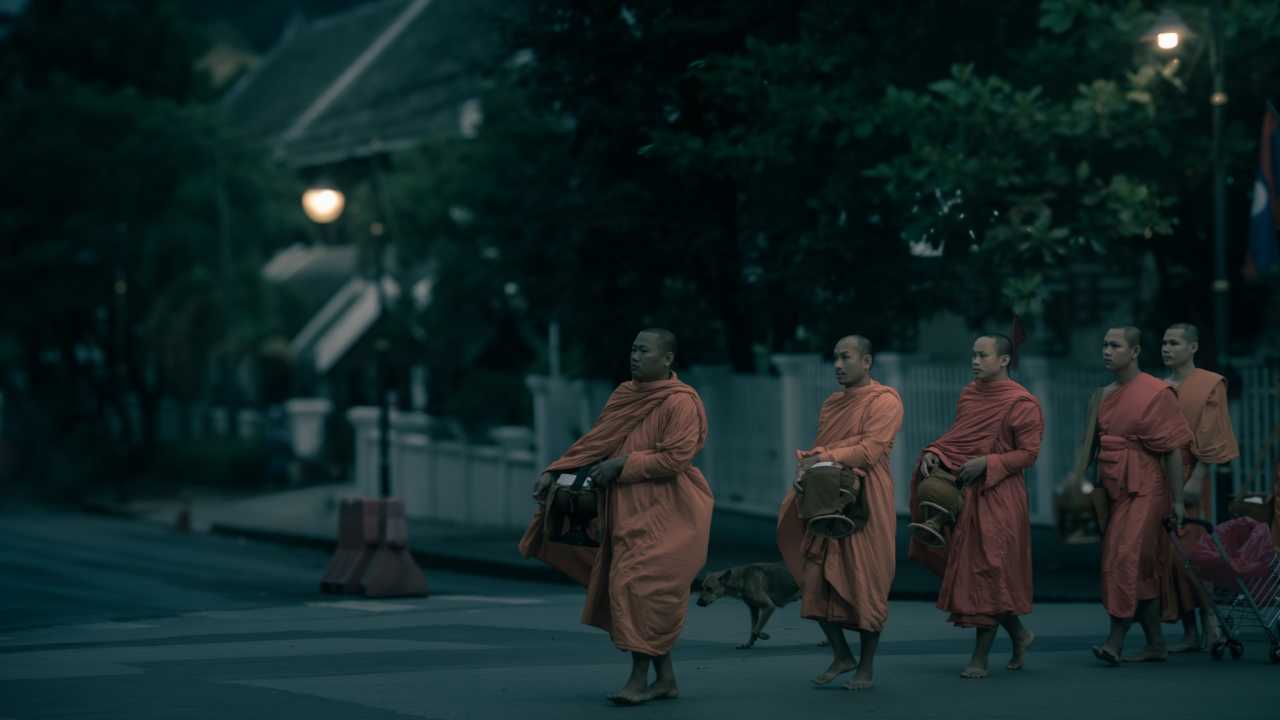
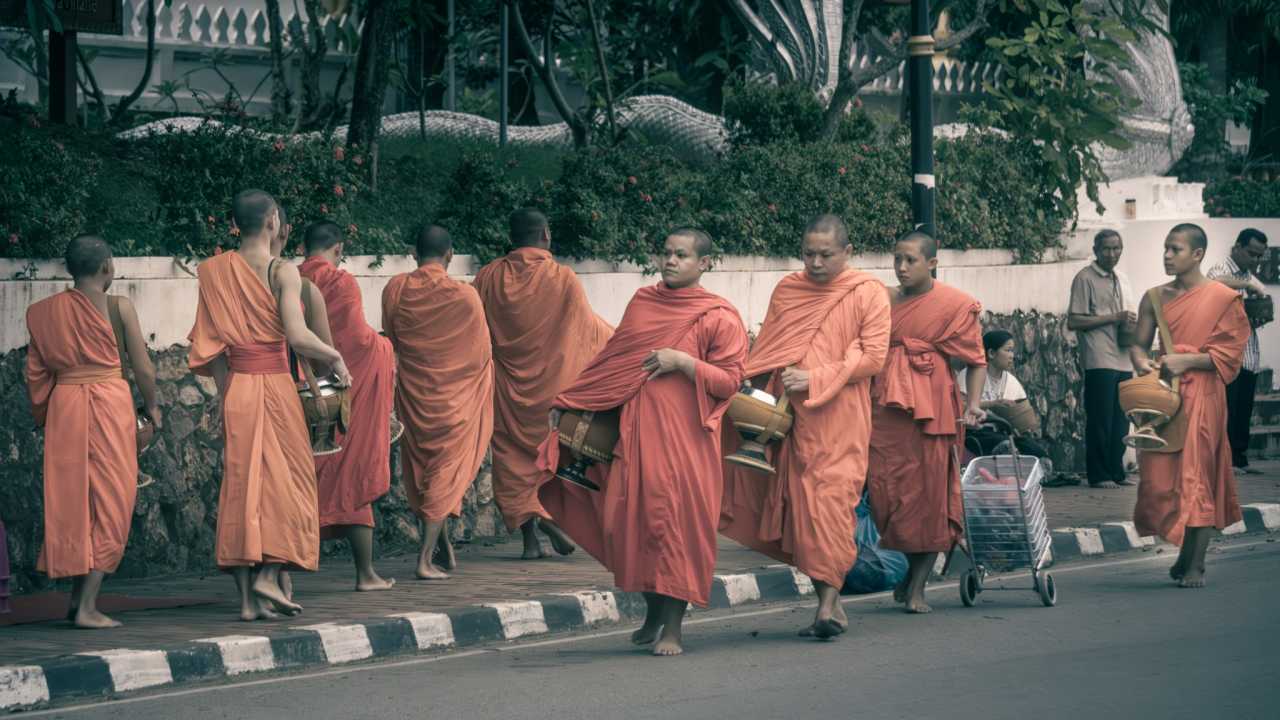
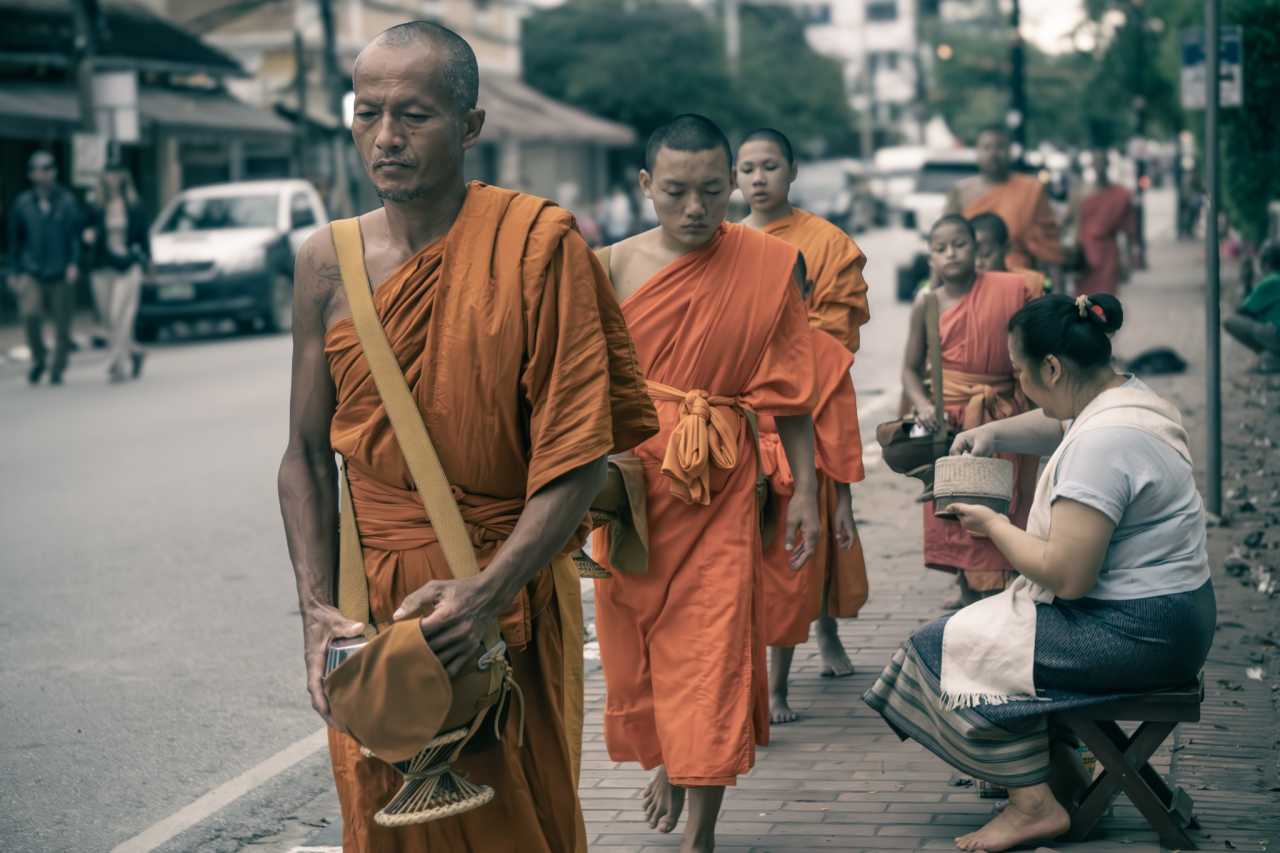
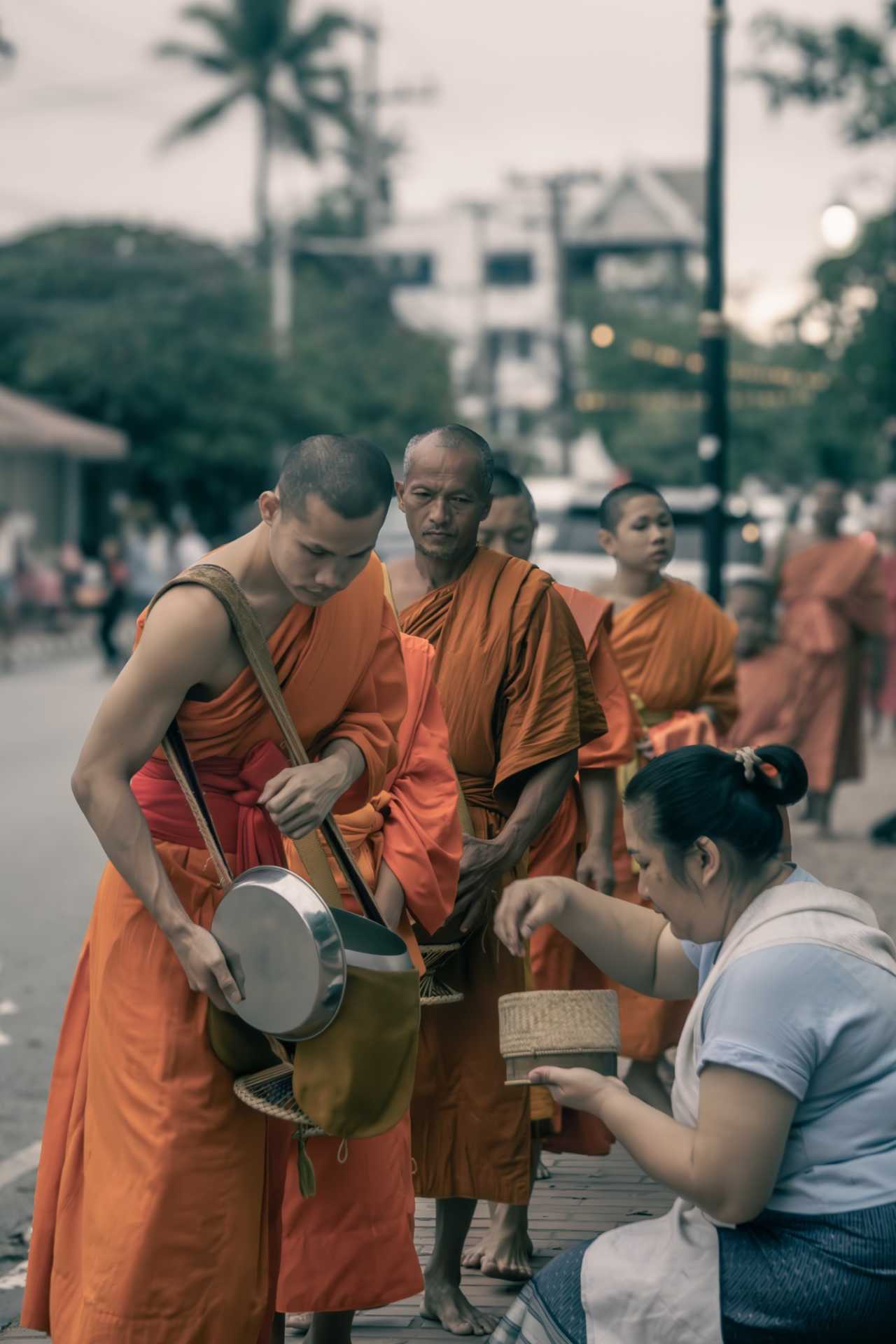
I encountered multiple processions of saffron-robed monks.
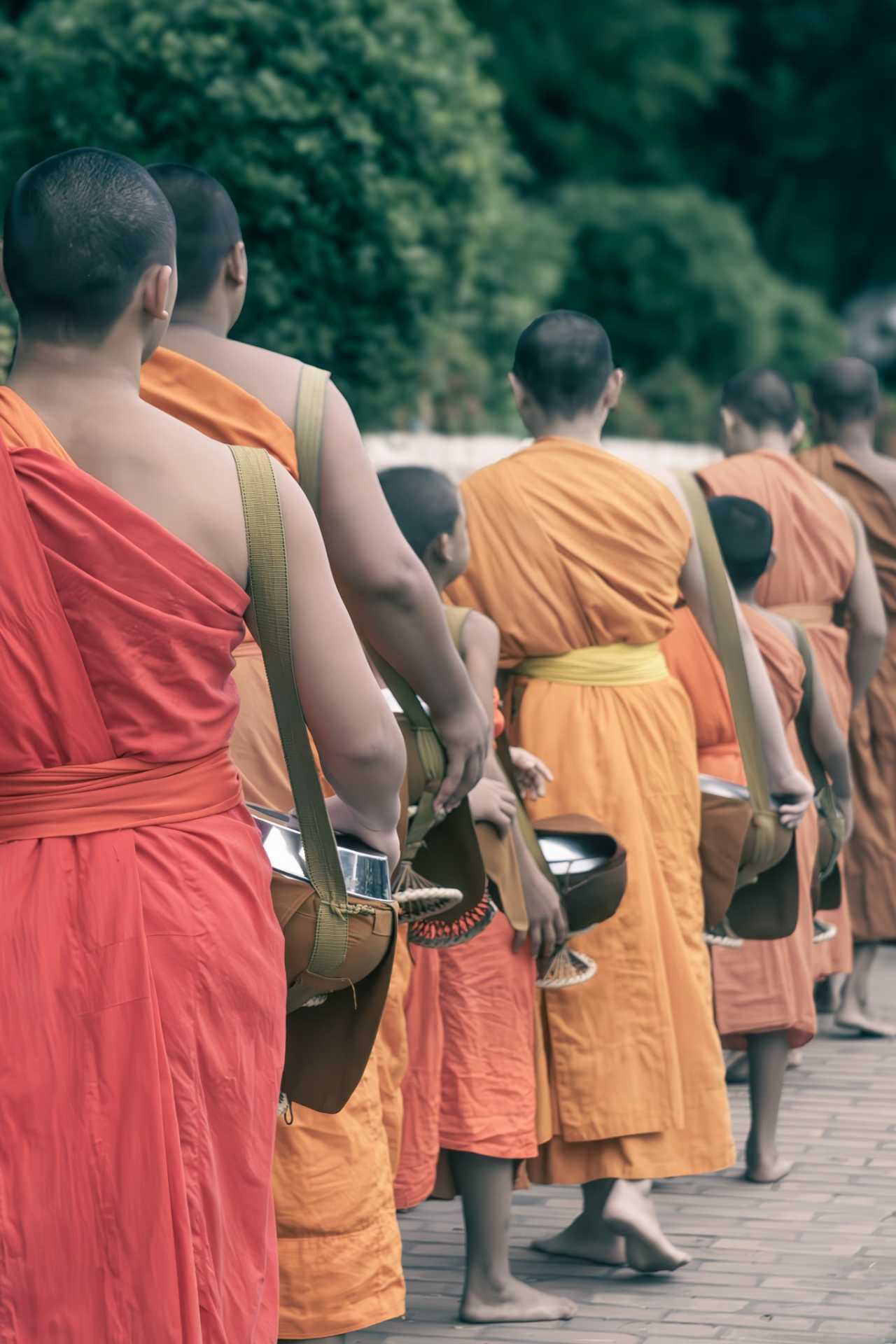
At the intersection,
they walked barefoot through rainwater,
coming from different directions,
then dispersing toward different paths.
In that moment,
the entire ancient town seemed immersed in
this morning ceremony that has continued for centuries.
This profound impact
could not be captured by camera lenses,
only recorded through eyes
and entrusted to memory.
Kuang Si Waterfall
That day's itinerary
was to visit Kuang Si Waterfall, 15 kilometers away.
Renting a motorcycle to ride into the countryside
was undoubtedly the best choice.
120,000 kip daily rental,
plus 50,000 kip for fuel—
such affordability could buy a whole day of riding freedom.
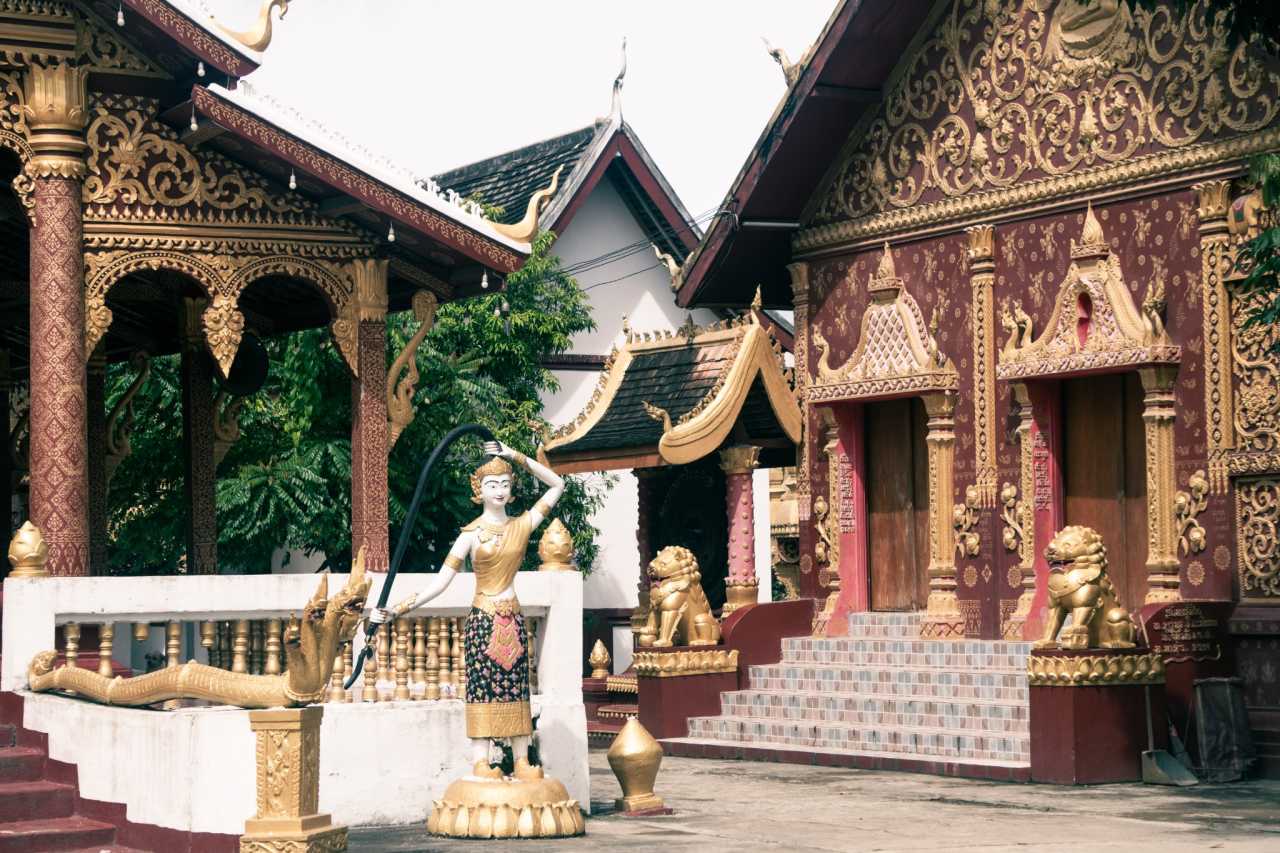
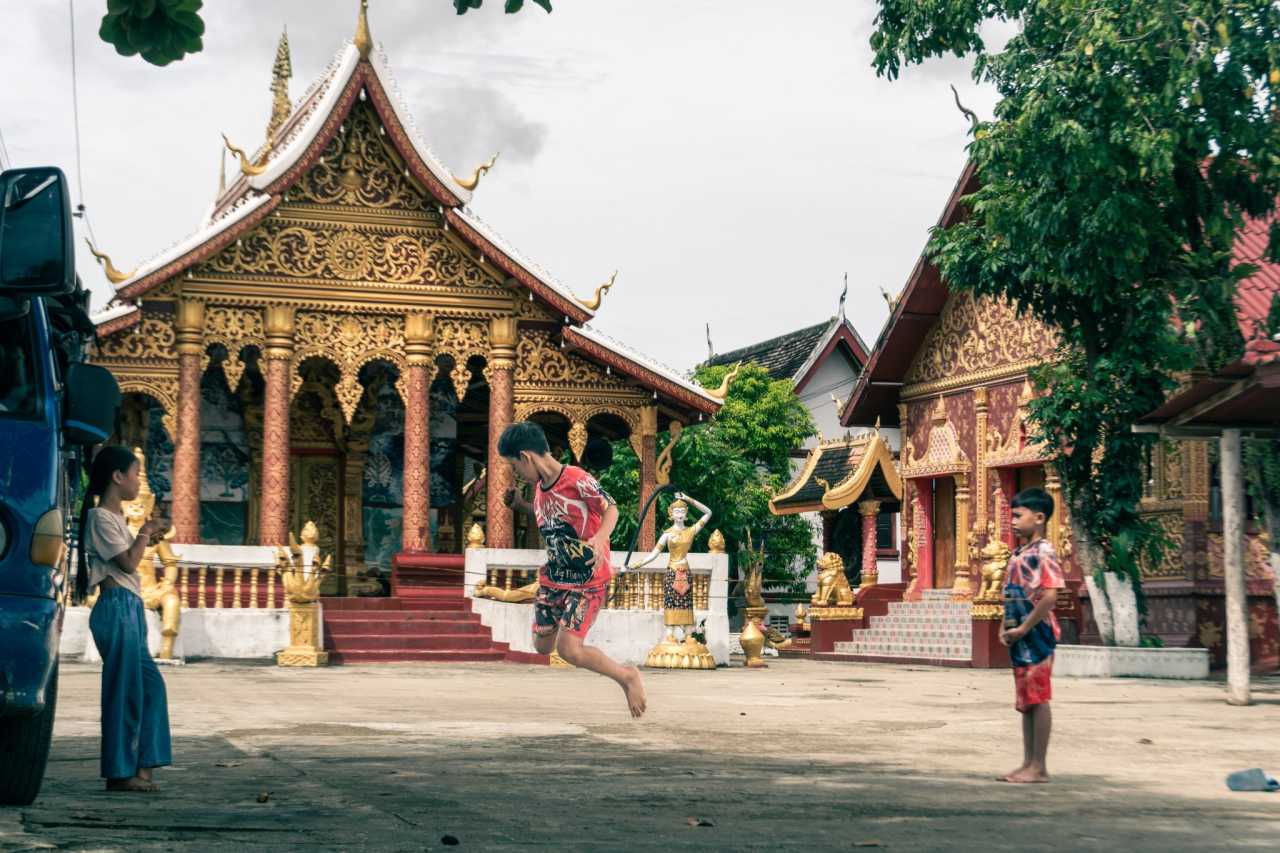
The motorcycle wound through rainforest highways,
passing an unnamed small temple,
where I saw children playing and jumping rope in the courtyard.
Childhood across borders is surprisingly similar—
this exotic scene
was fortunately captured by me.
As for Kuang Si Waterfall itself,
it was somewhat disappointing—
like the Mekong River,
the rainy season's turbid waters stripped it of its usual spiritual energy.
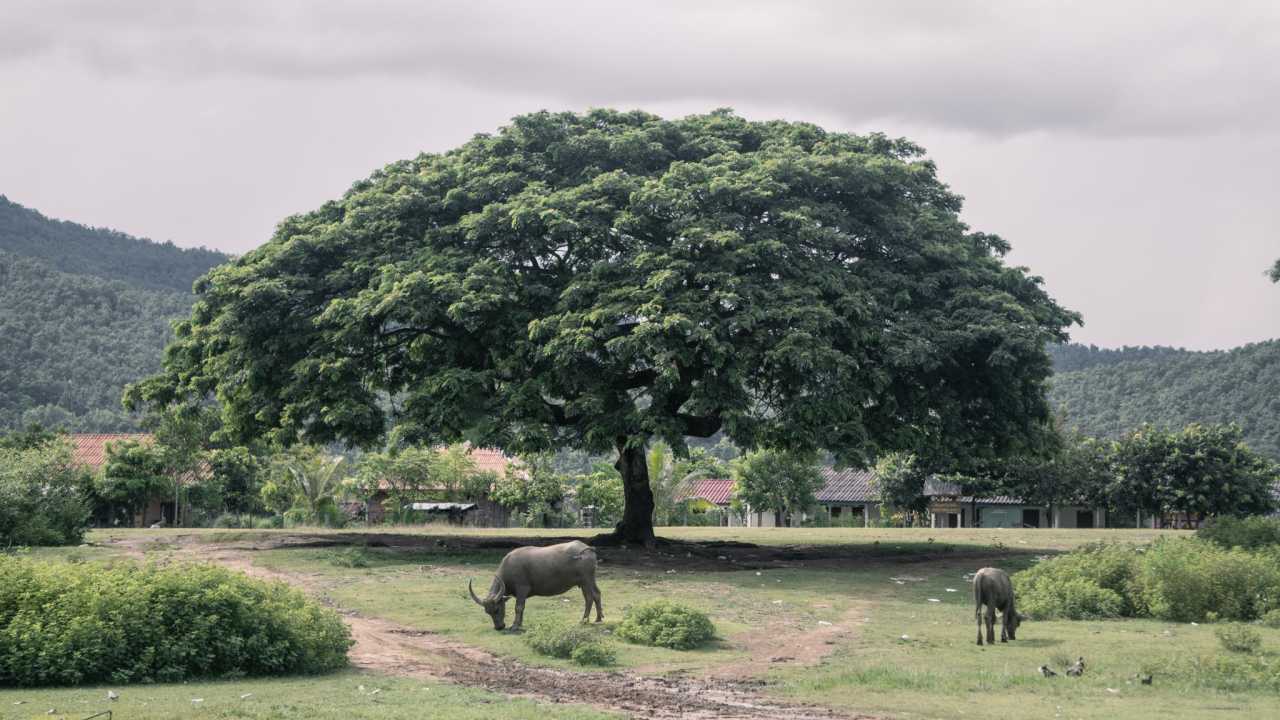
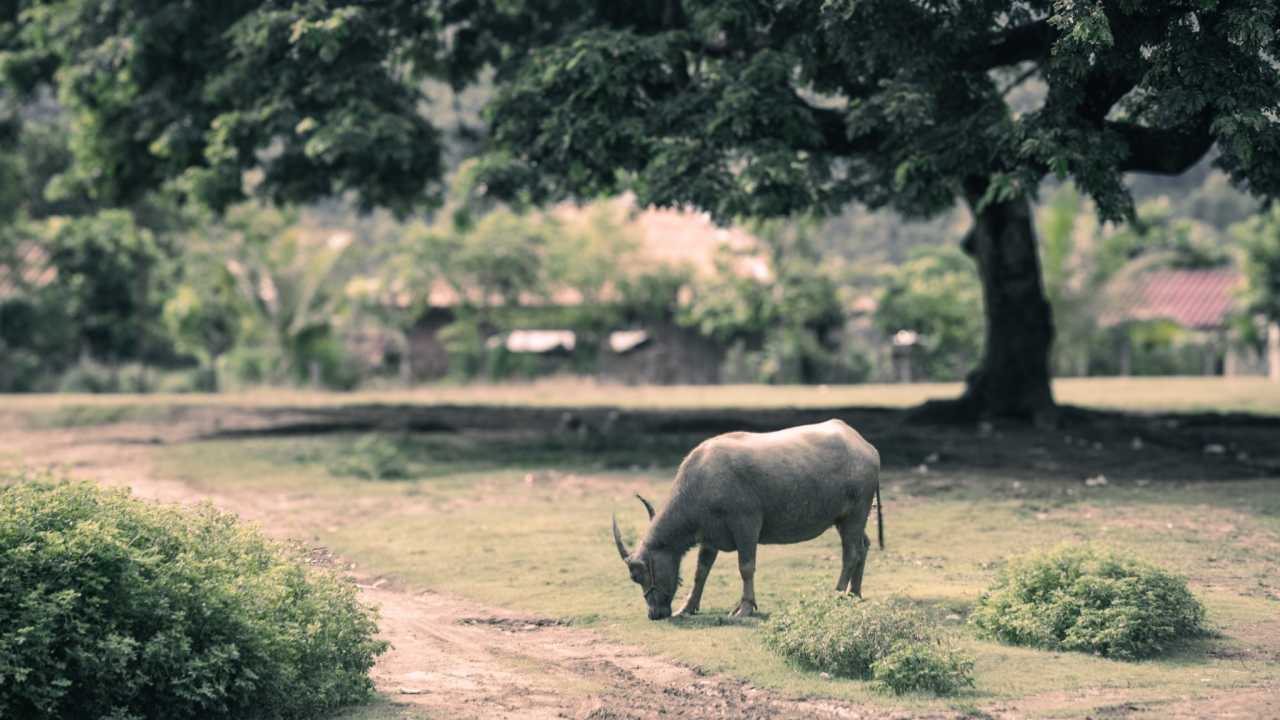
The Lonely Tree
But travel's most beautiful gifts
often lie not at predetermined destinations.
That "Lonely Tree" appeared ordinary,
yet through exquisite composition became a scene of its own.
Rice Field Coffee
On the return journey,
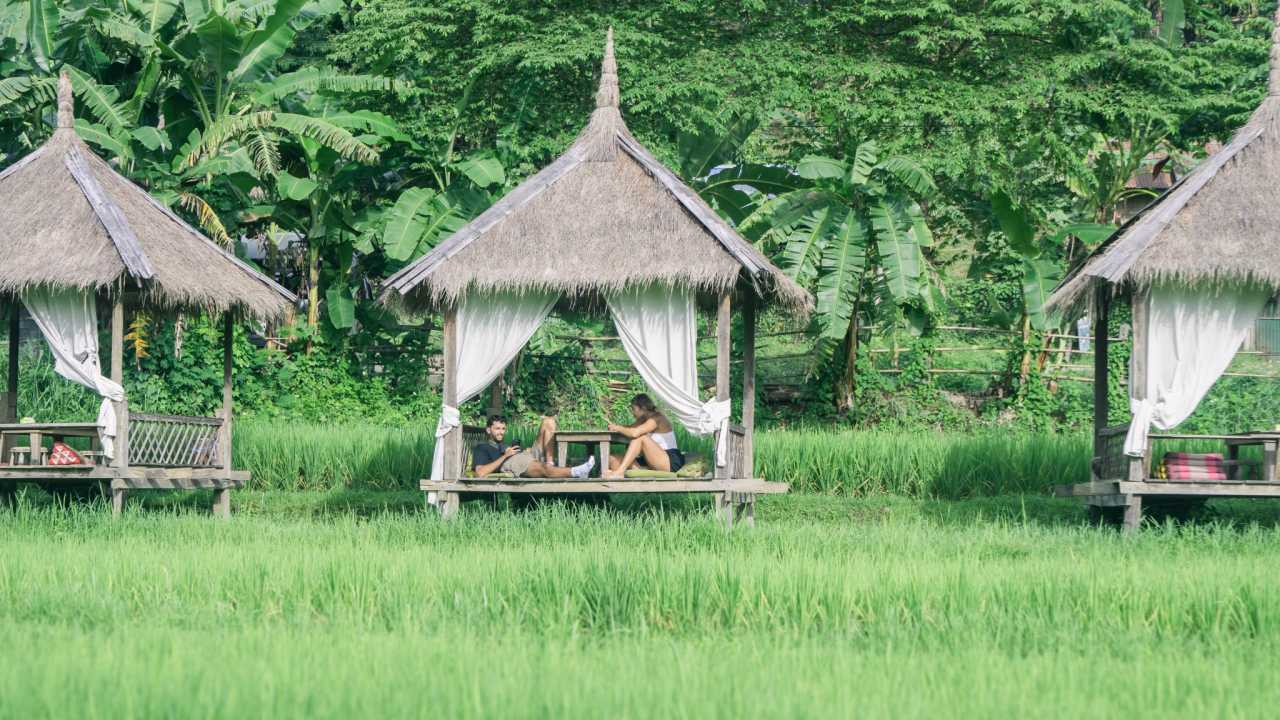
we reserved the final and most abundant time
for a rice field café.
September—
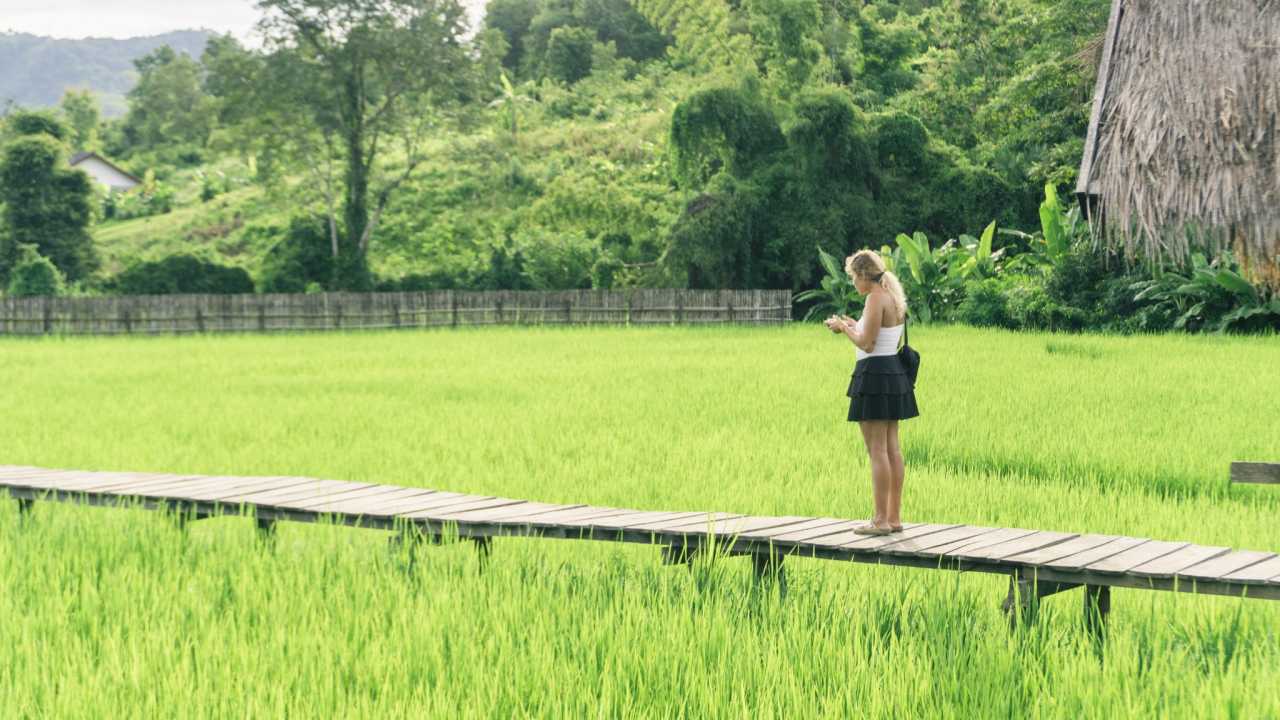
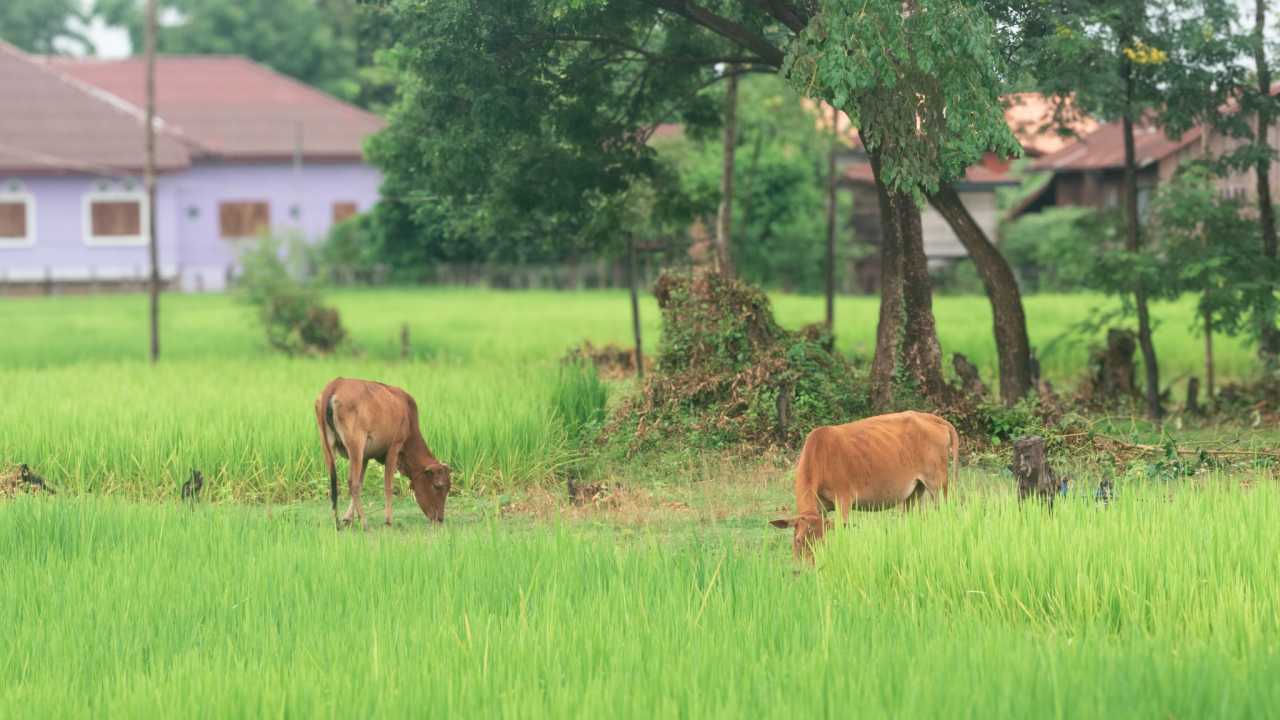
rice seedlings newly green, fields fresh with emerald.
The off-season rice paddies were exceptionally tranquil.
A Western couple sat quietly on the terrace,
truly placing themselves within the landscape,
enjoying complete leisure.
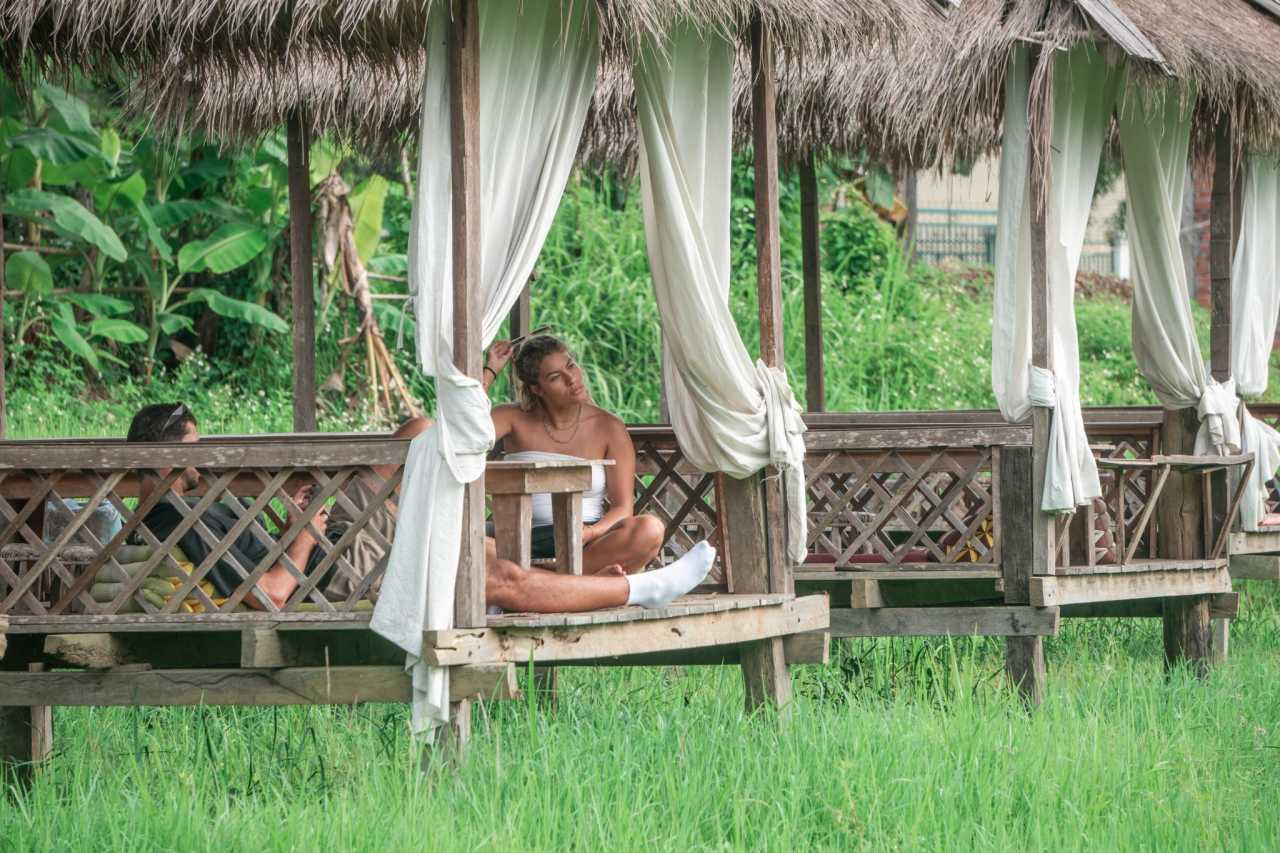
By contrast,
I constantly switched between camera and drone,
filled with recording and creative passion,
yet seemingly losing travel's proper composure.
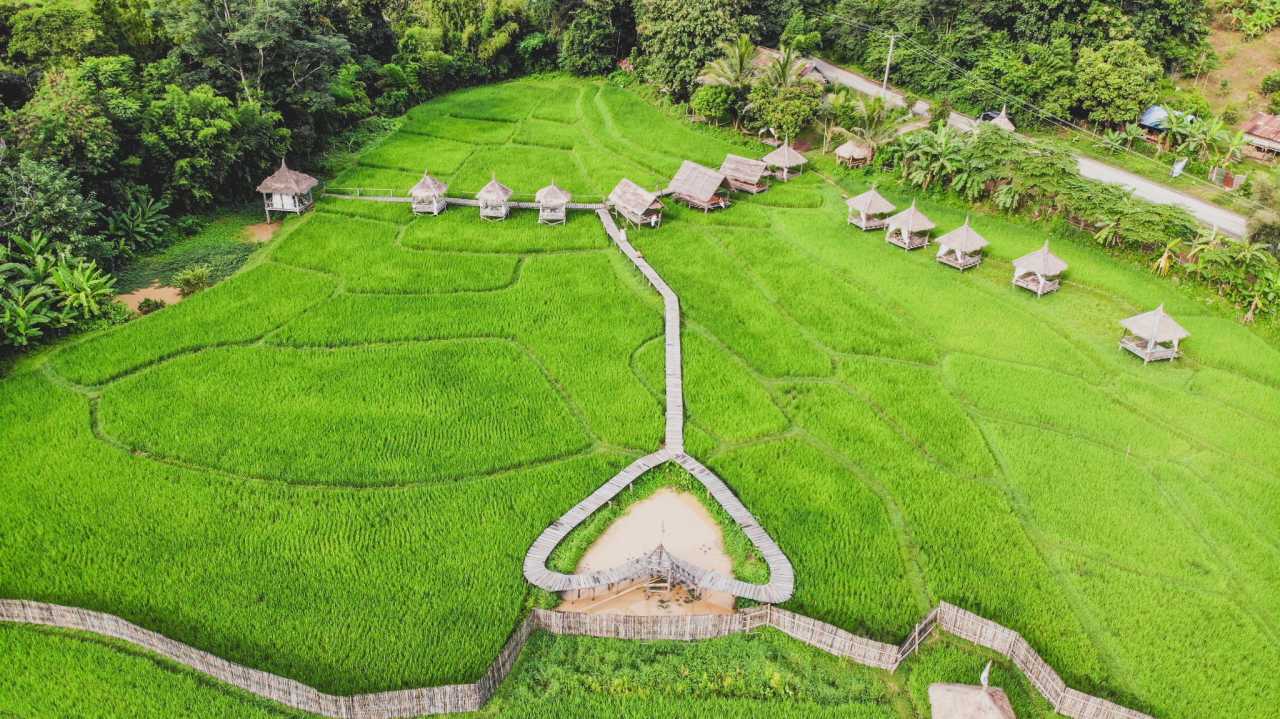
After much busyness,
when I learned to sit beneath the wooden house like them,
trying to quietly savor cold drinks,they learned from me to launch the drone.
⚡Young Monk in a Small Temple
The dawn alms giving
is Luang Prabang's daily opening performance.
The next day I returned to Wat Mai for采风.
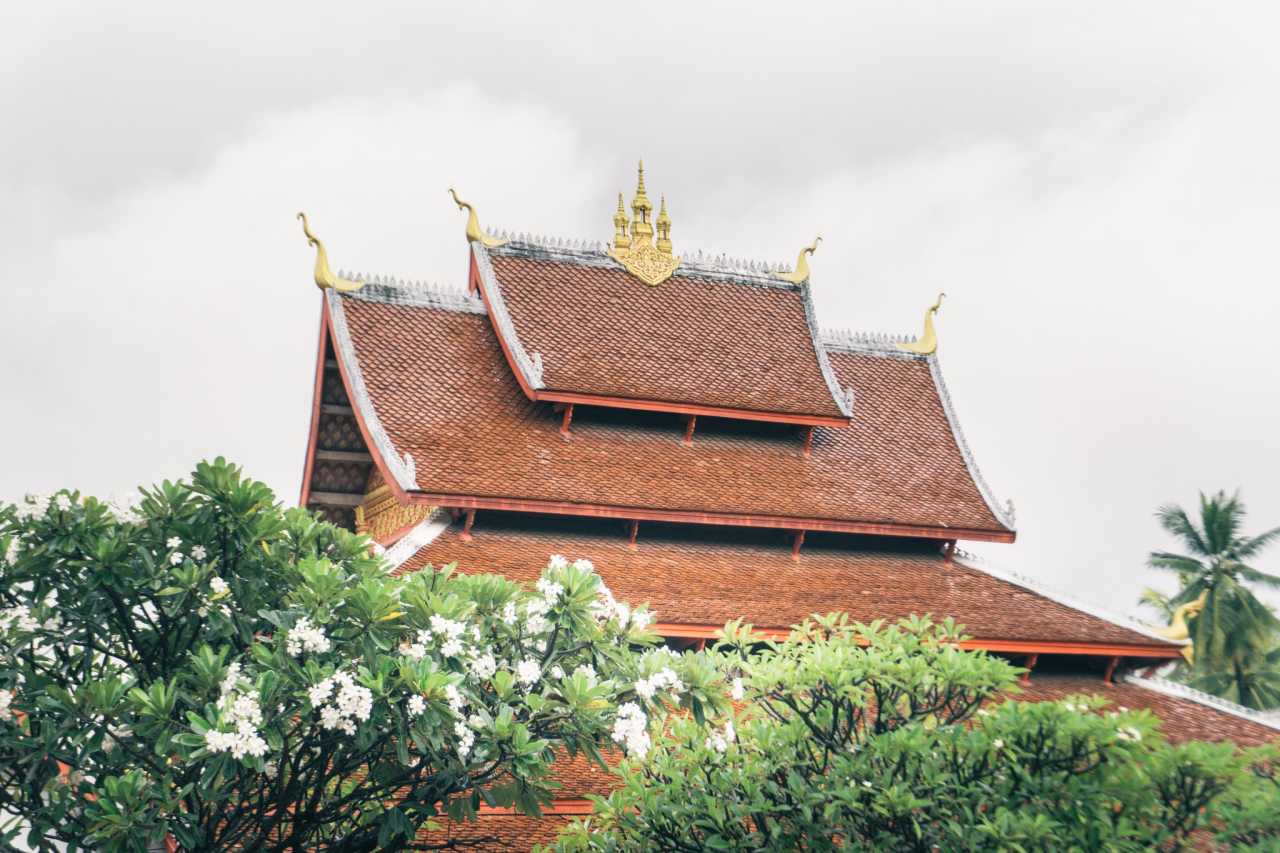 Wat Mai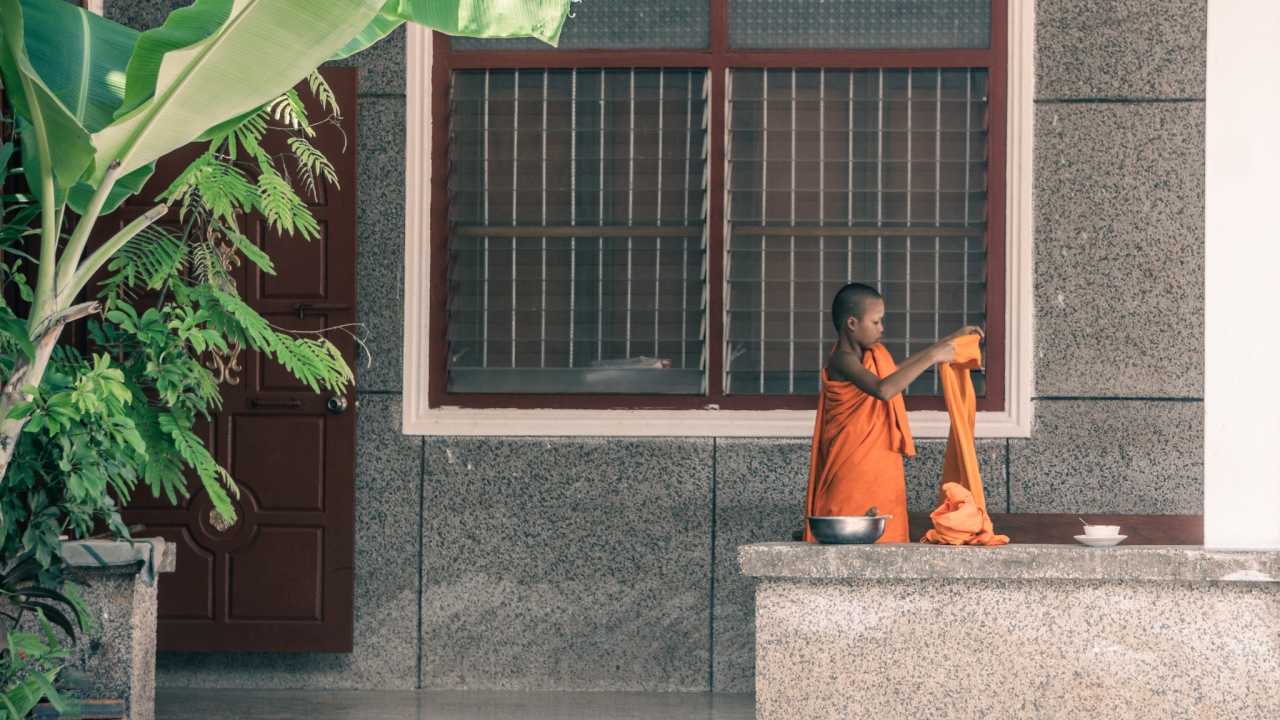
Then wandering through the morning market beside the temple,
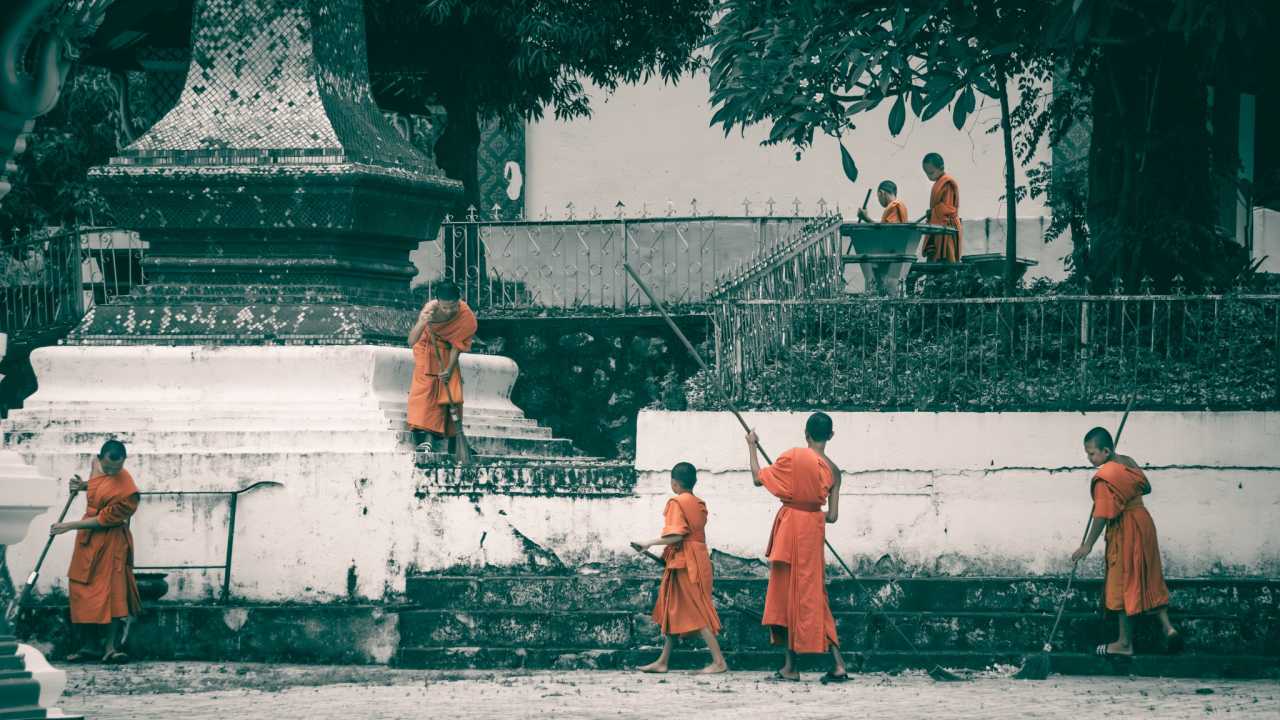
I accidentally turned into a small temple behind a stall.
The courtyard was quiet and peaceful,
with only monks walking softly.
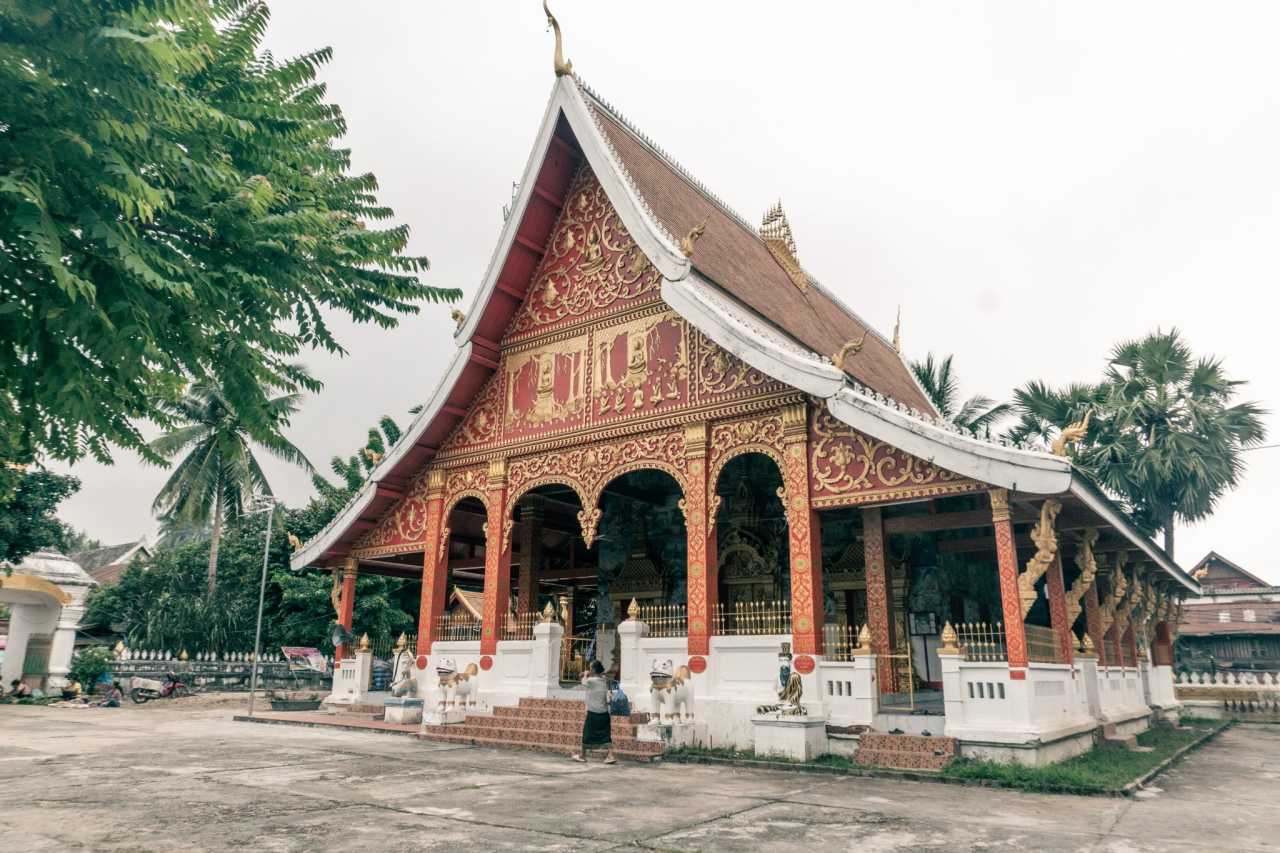 Wat Mai
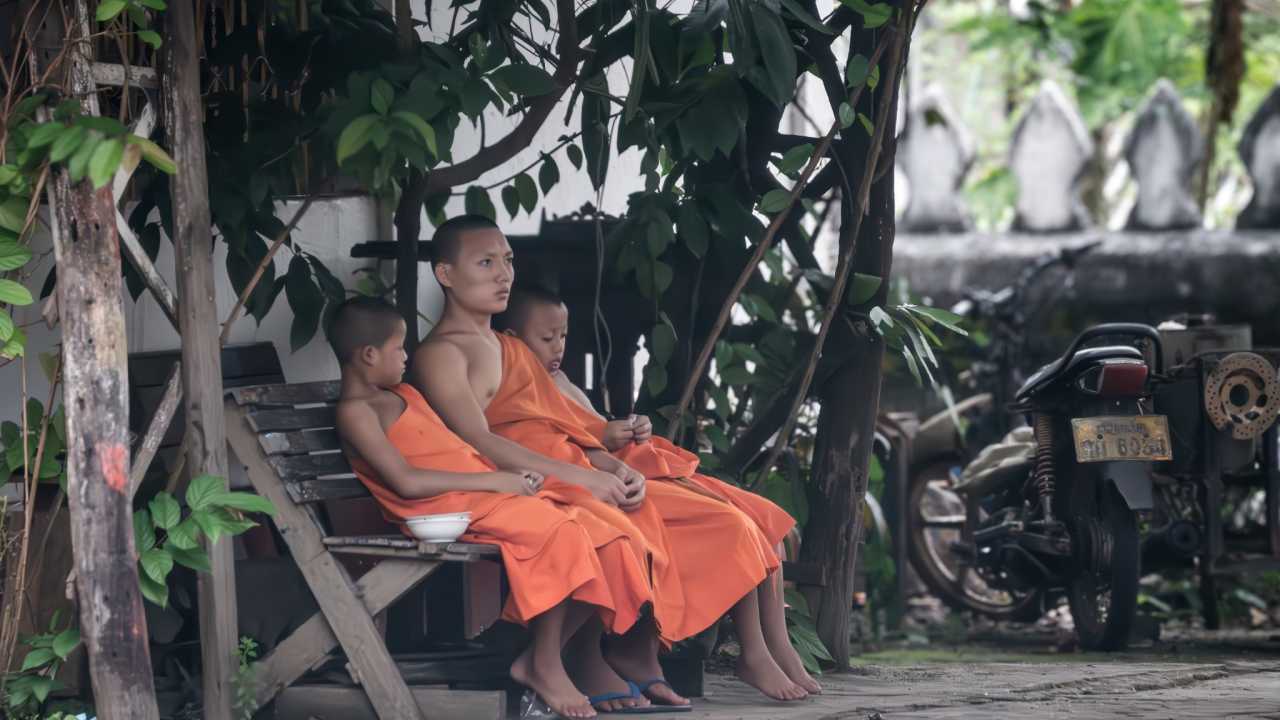 Wat Mai
While resting in the courtyard,
a young monk actively approached to converse.
During conversation,
we vaguely sensed
the young monk's eyes flickered with
an "ambition" somewhat mismatched with his saffron robes—
we could feel his urgent longing for the outside world—
for knowledge, for communication,
perhaps for another life.
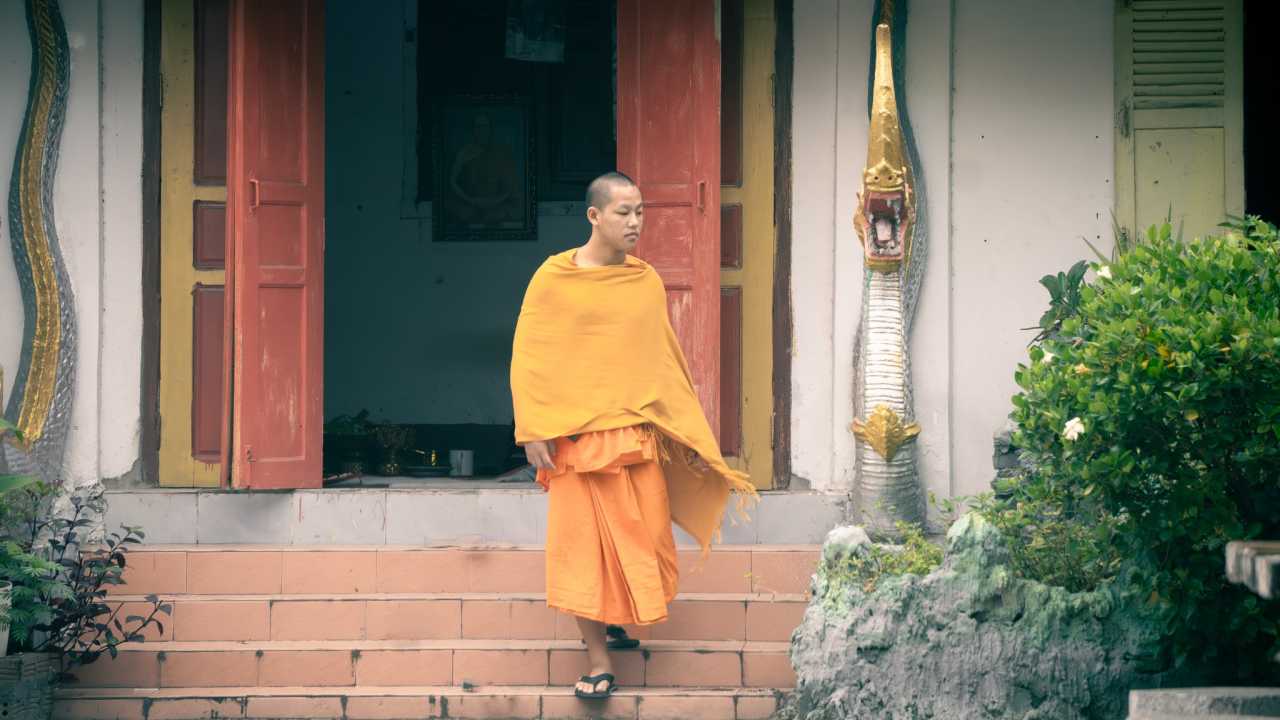
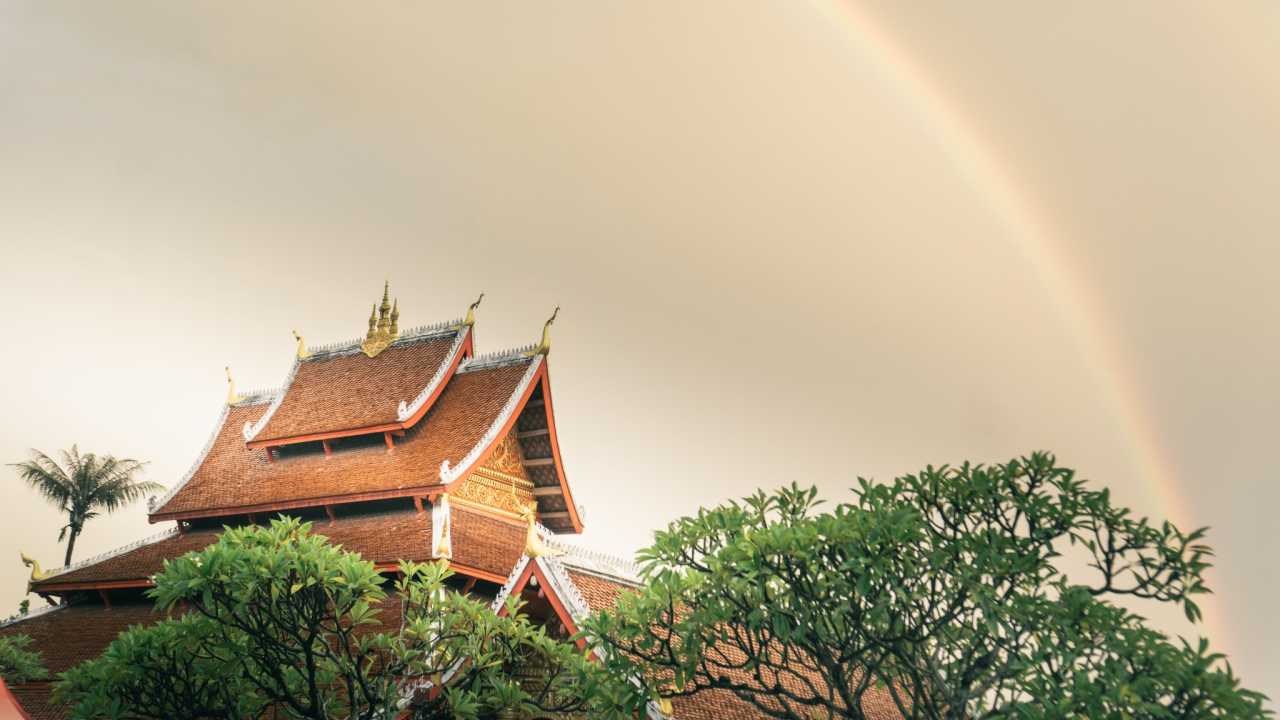 Wat Mai
Royal Palace, Wat Xieng Thong
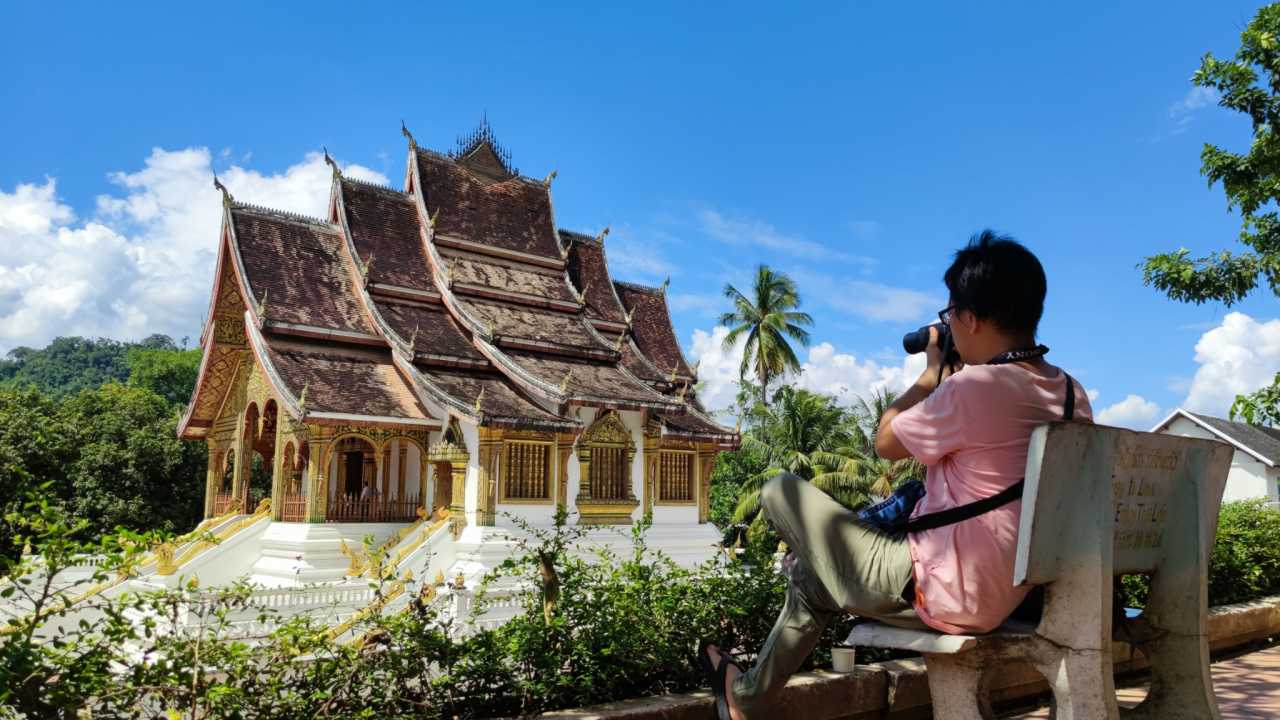
Sitting quietly on a bench outside the Royal Palace,
observing was more intriguing than entering;
before the "Tree of Life" mural at Wat Xieng Thong,
Chinese elderly tour groups displayed barbaric behavior again,
their arrogant, bullying attitudes relying on age
completely enraged me...
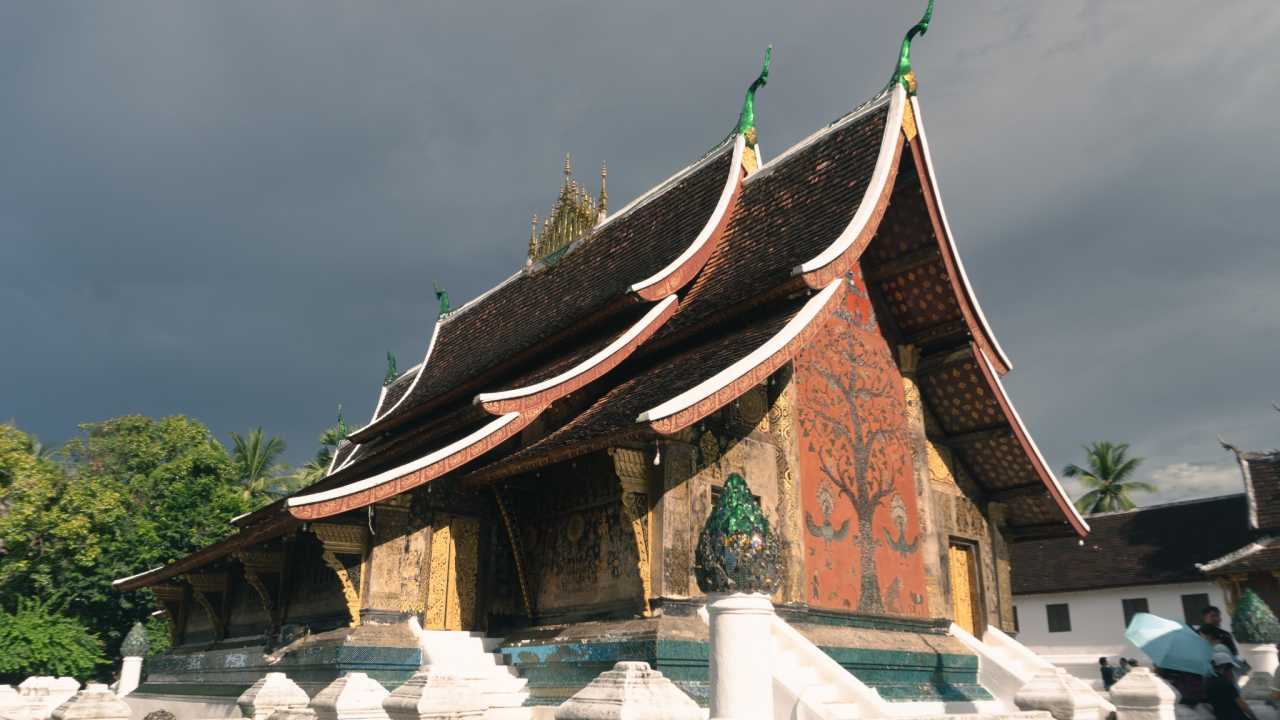 Wat Xieng Thong
Mount Phousi
On the last night remaining in Luang Prabang,
I climbed Mount Phousi,
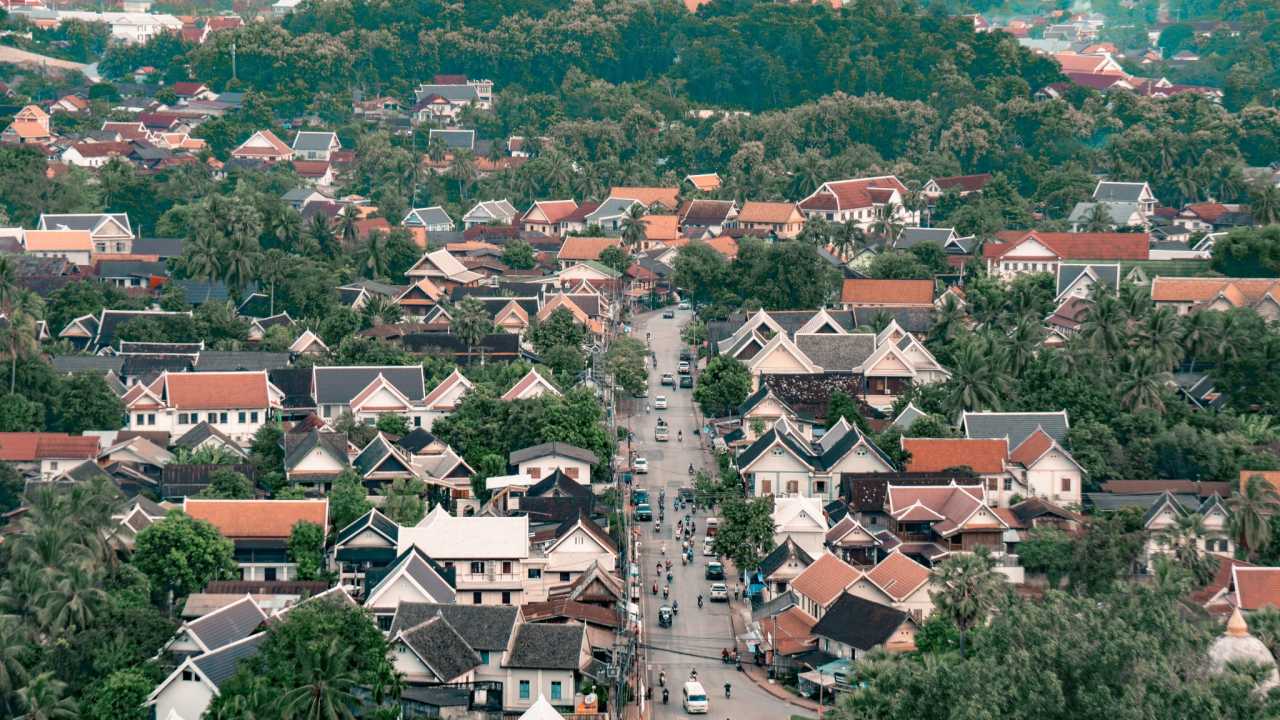
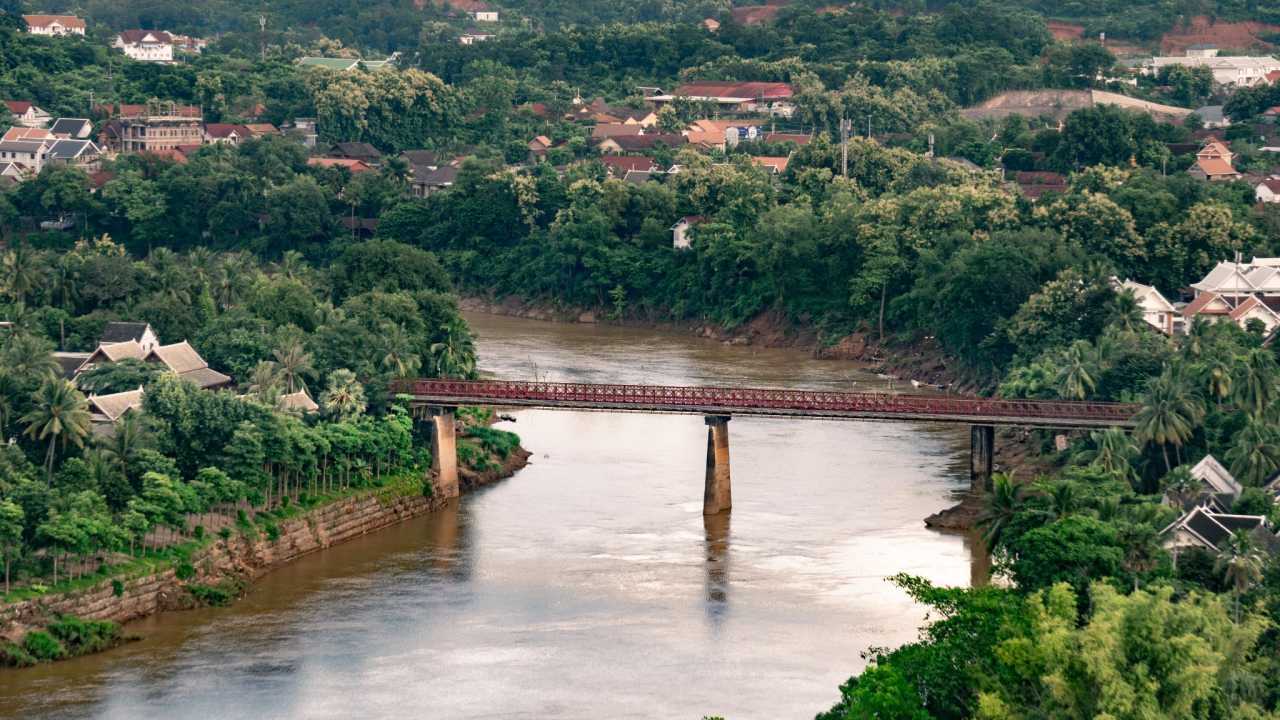
looking down,
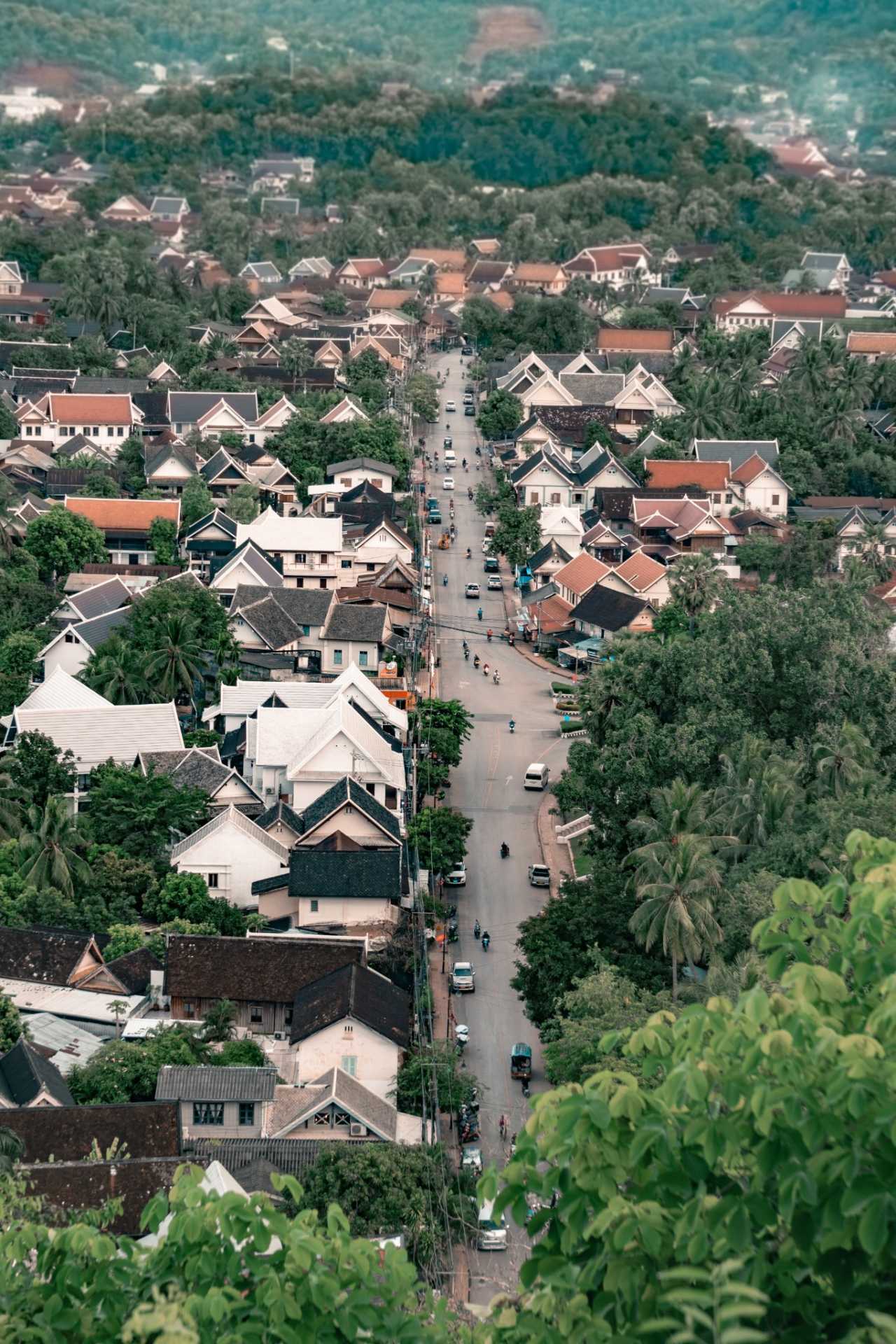
the small town wasn't as dilapidated as imagined,
its neat and uniform appearance surprisingly pleasant;
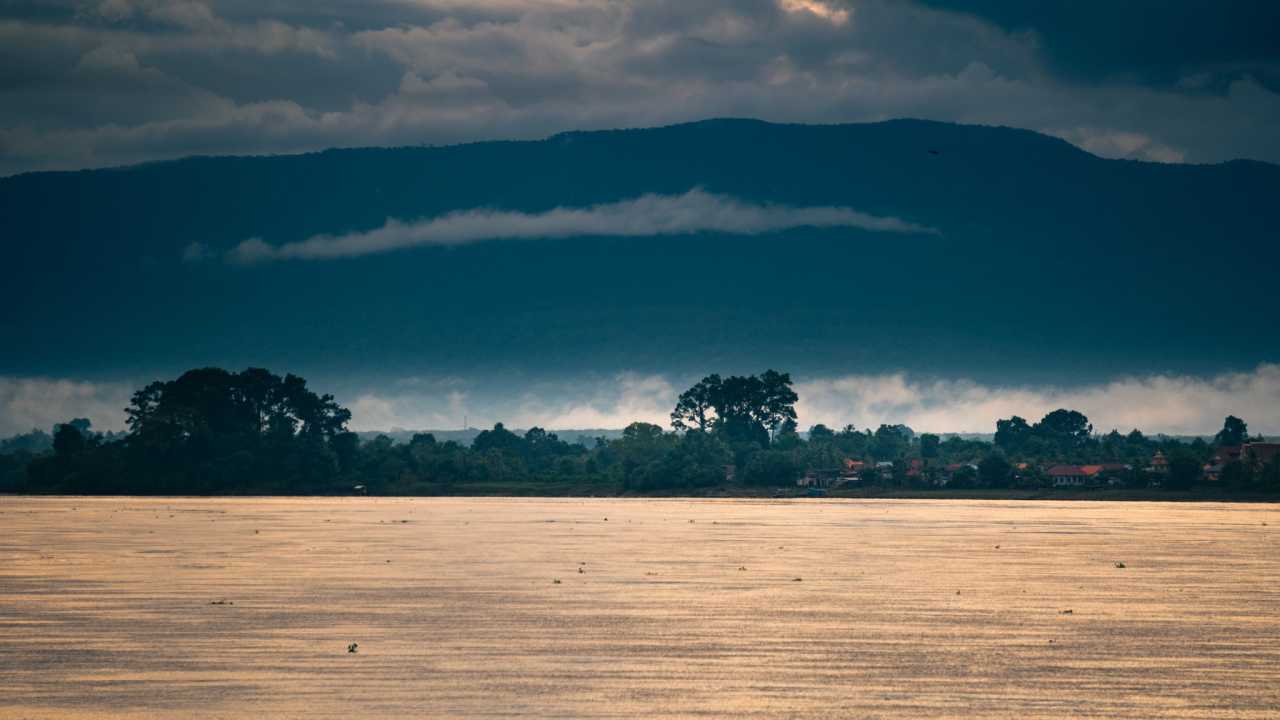
the Mekong appeared turbid and vast under overcast skies,
the expected sunset ultimately didn't appear.
Alms Giving
On the morning of departure,
unwilling to miss any opportunity
to experience foreign culture,
I hurried to Wat Mai for the third time.
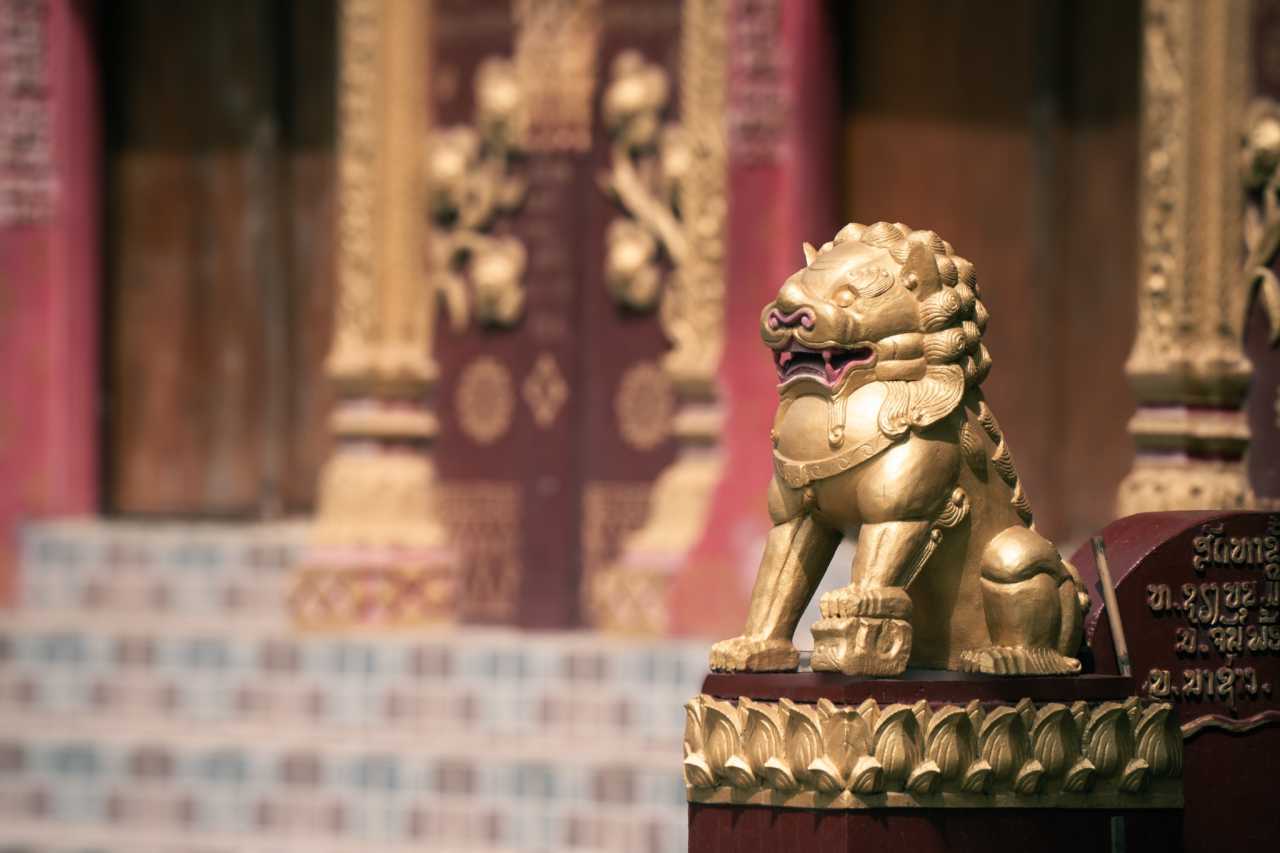
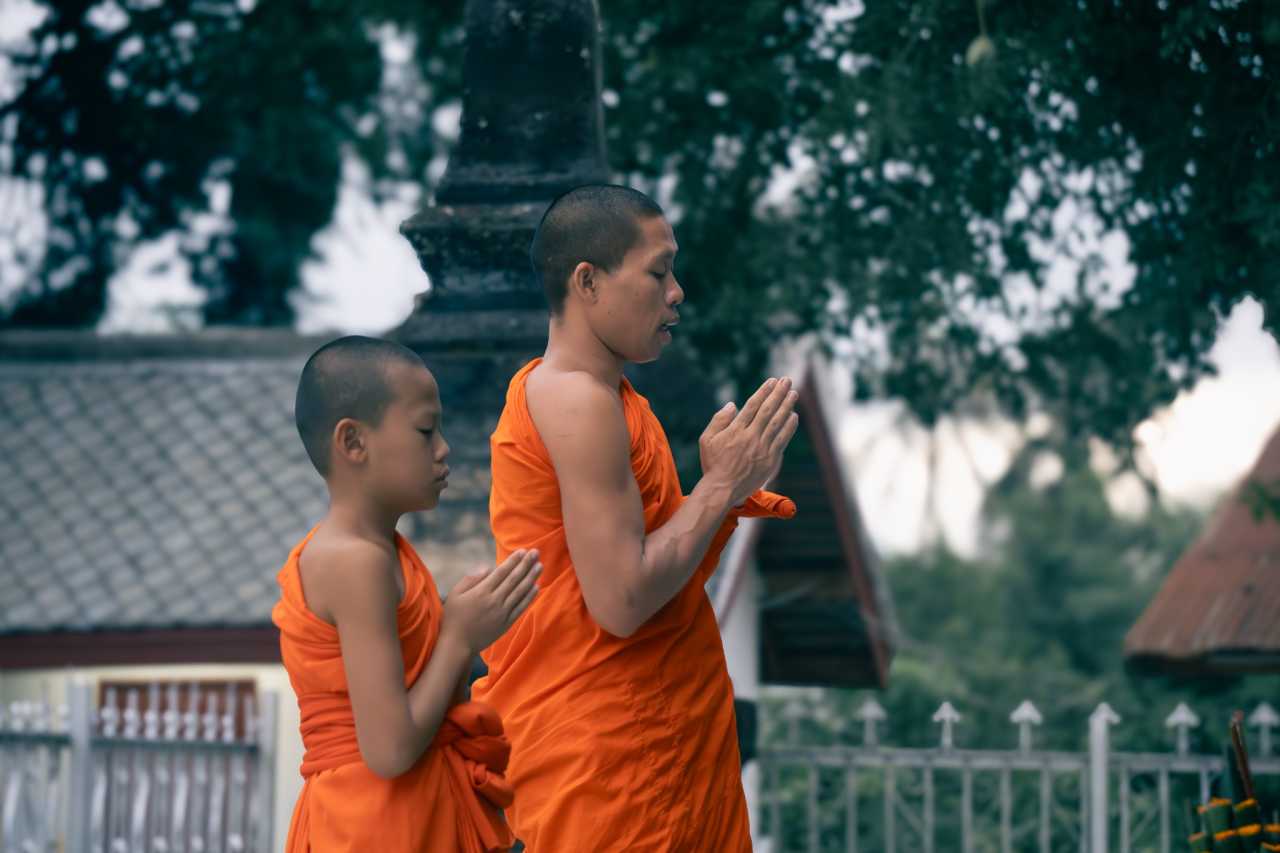
This time I changed my photography strategy,
no longer waiting at fixed spots,
but following an alms-giving procession.
Coincidentally,
I recognized at the procession's end
that young monk from the small temple conversation the previous day.
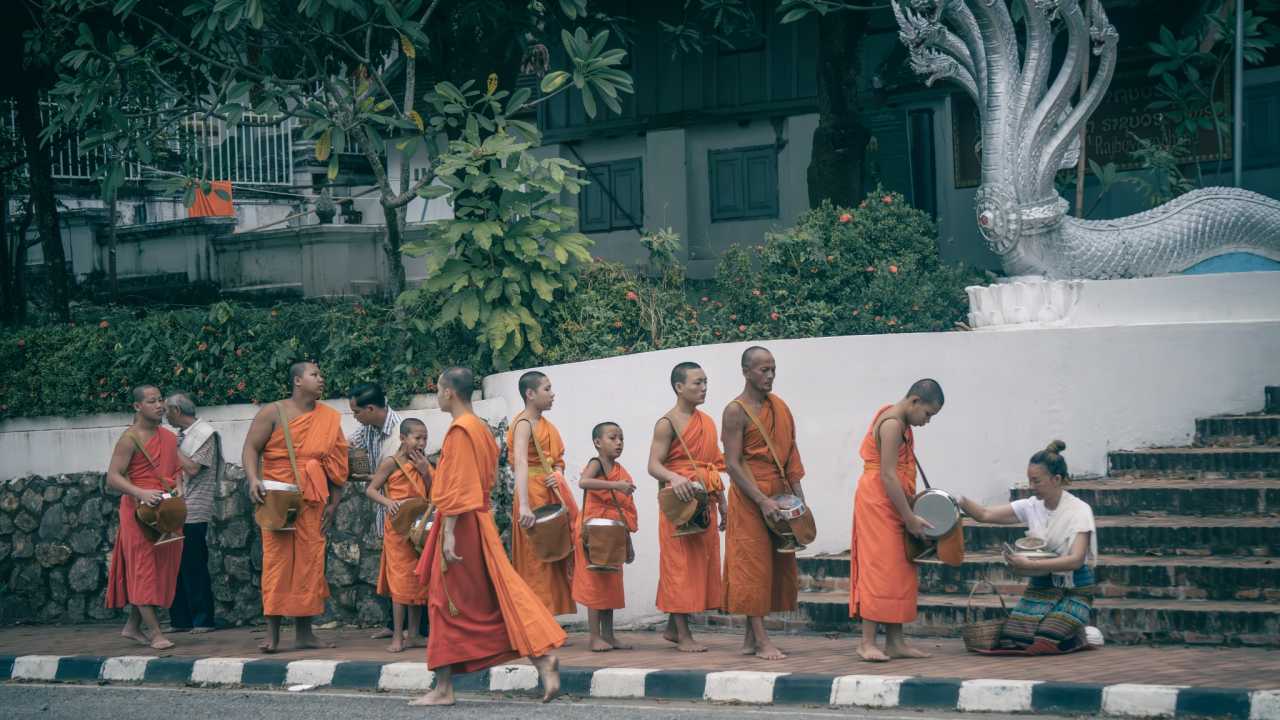
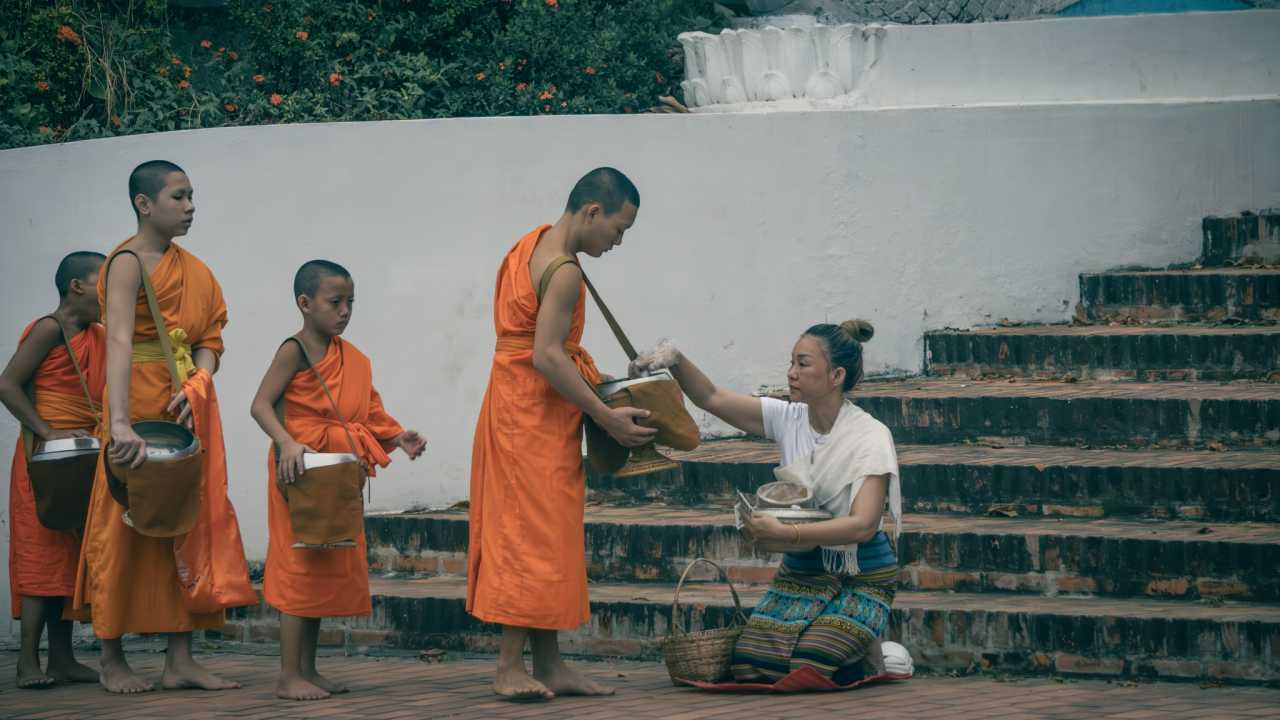
After exchanging glances,
I nodded in greeting,
he lowered his head holding his alms bowl, expression focused,
completely different from yesterday's youth
who longed to connect with the world.
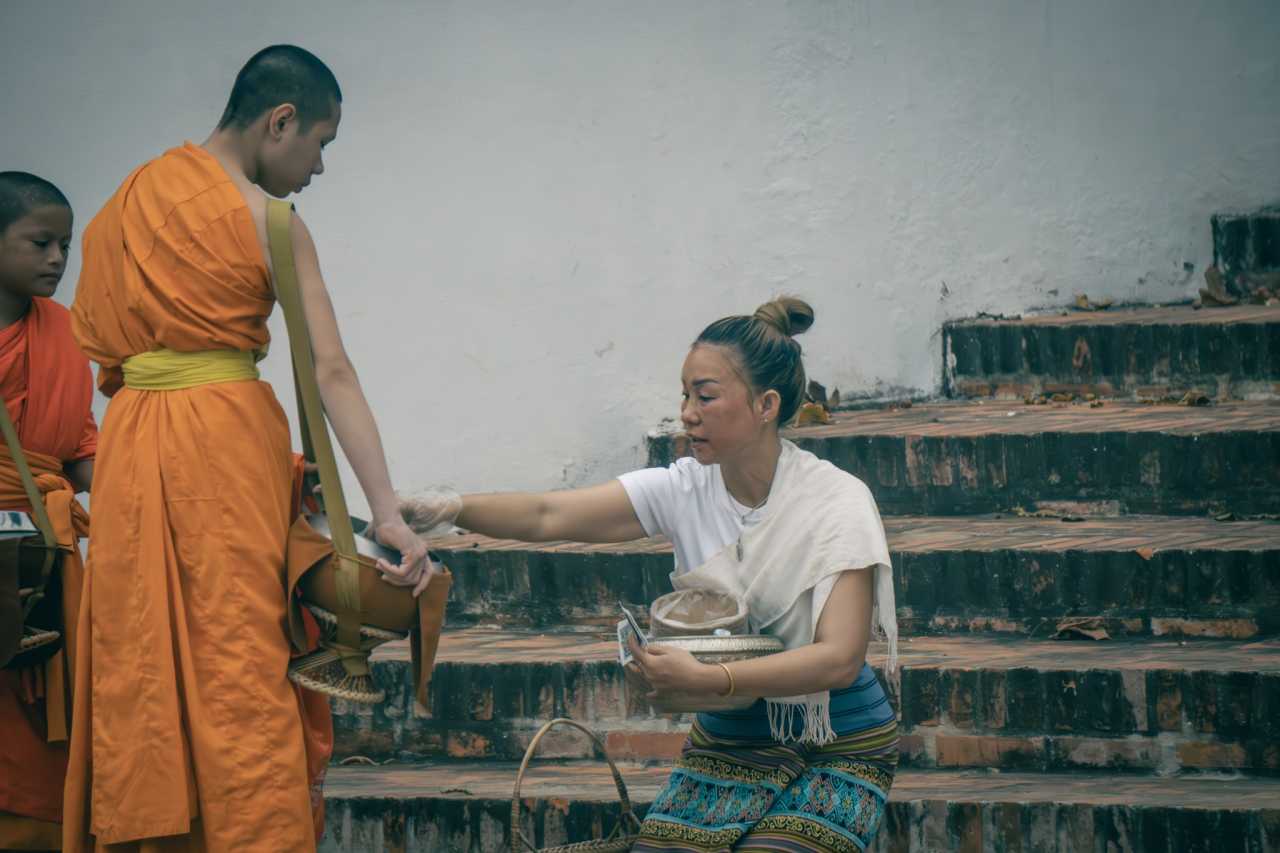
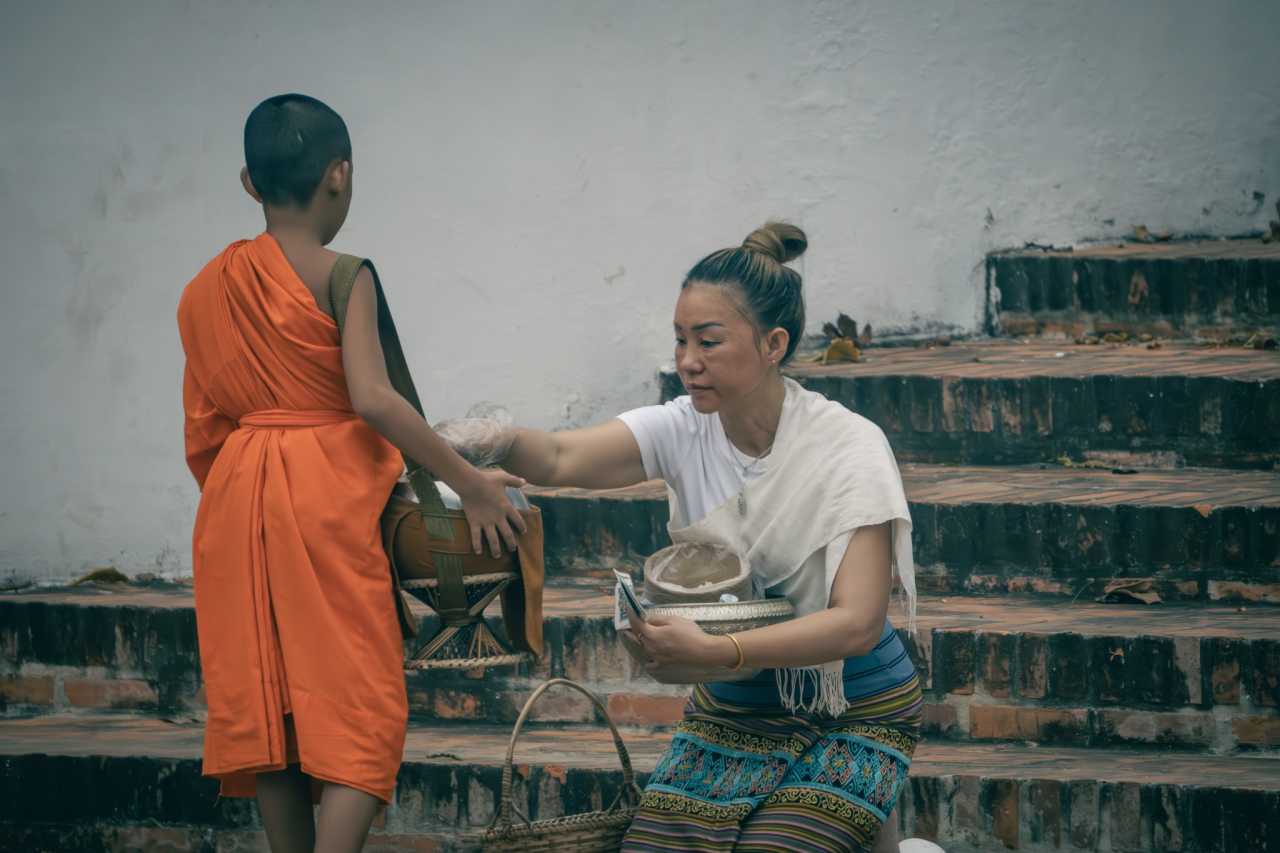
In that moment I seemed to understand
that actually each of us
is playing our own role.
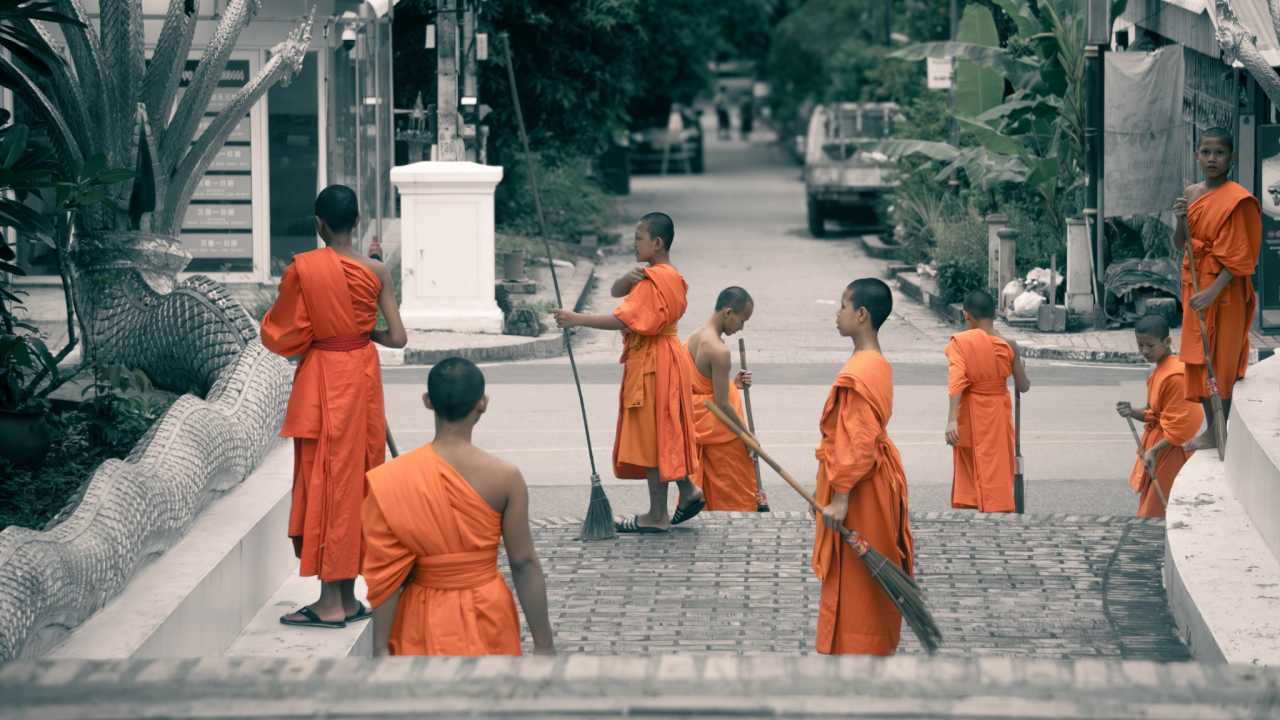
Monks walk the same route day after day,
yet meet different donors;
while we travel far and wide chasing distant horizons,
what we ultimately meet is often another version of ourselves.
And in Luang Prabang's rainy season,
I met that traveler who both wanted to record and immerse,
who observed others while reflecting on himself.
 Luang Prabang Royal Palace Museum
Luang Prabang without filters
is actually just another
earthly world gathering mortal fireworks.
Vang Vieng | From Mountain Wilderness Purity to Temple Chaos
Hot air balloons' grace,
paragliding's thrill,
lagoon diving's joy—
Vang Vieng's famous experiences
were never what I sought.
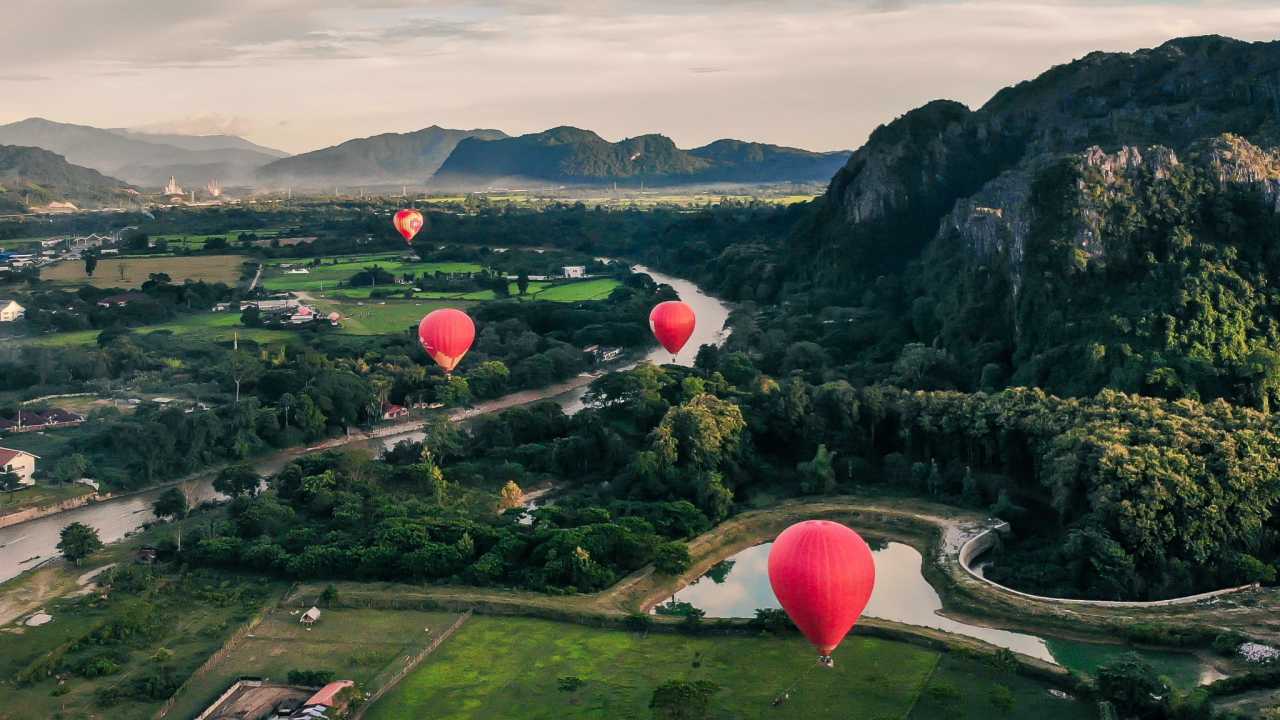
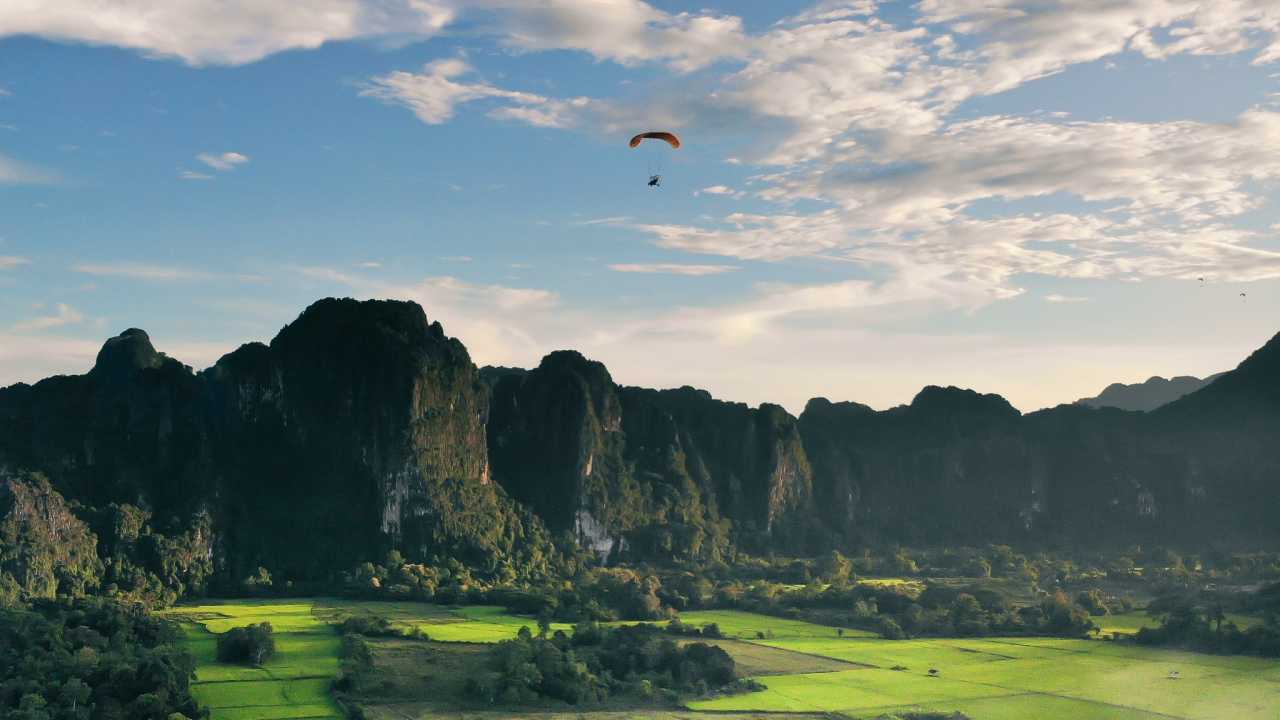
What I craved
was the freedom to embrace entire wilderness alone on motorcycle—
until wheels crossed the Nam Song River,
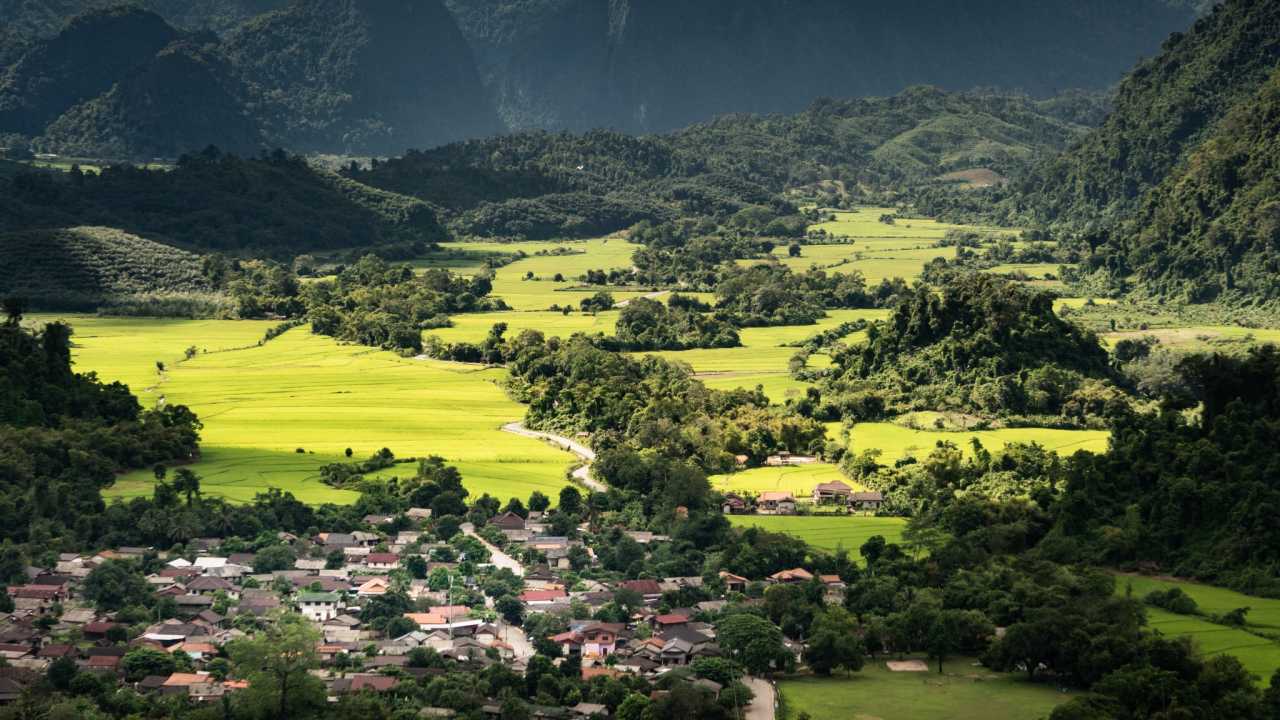
Vang Vieng truly opened to me:
that was the assault of fresh grass scent,
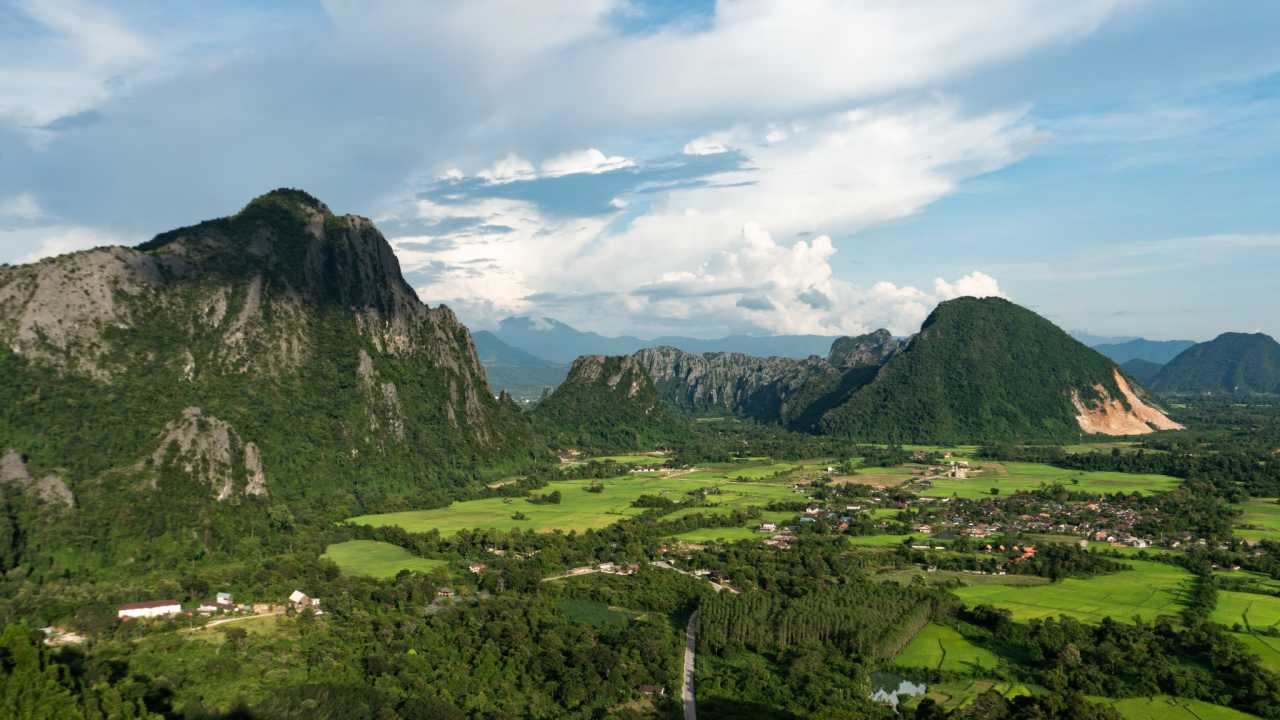
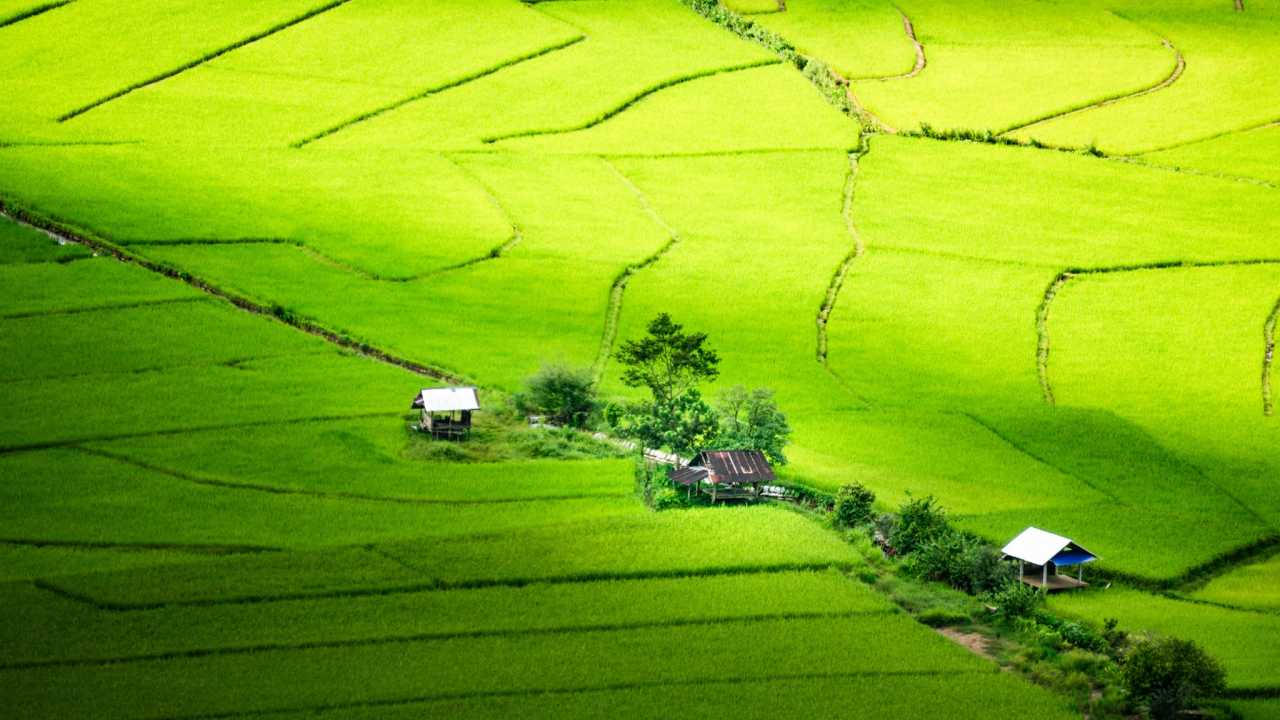
unnamed fields and streams beneath karst peaks,
all the wildness yet to be named.
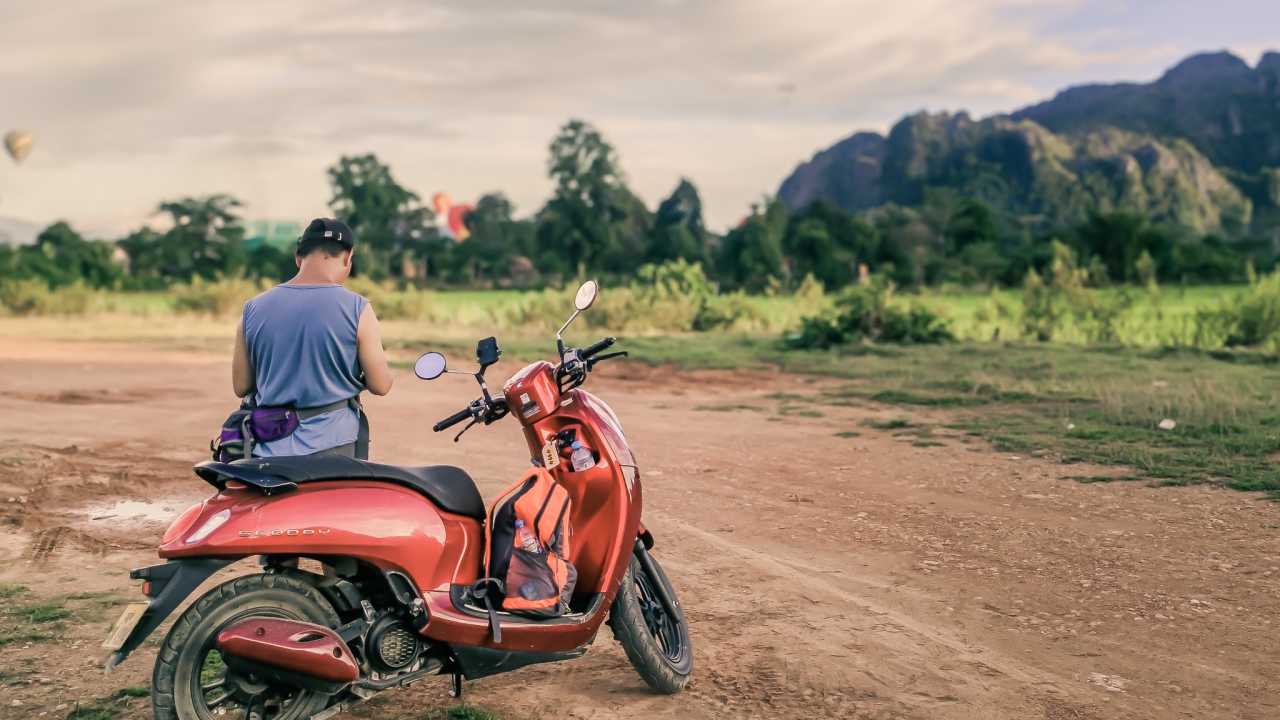
Motorcycle Mountain, Airplane Mountain
Rusted motorcycles on Motorcycle Mountain,
worn fighter planes on Airplane Mountain,
originally alien to nature,
yet appearing unobtrusive,
instead becoming landscape symbols with subtle humor—
only moderate intervention
can maintain this delicate harmony.
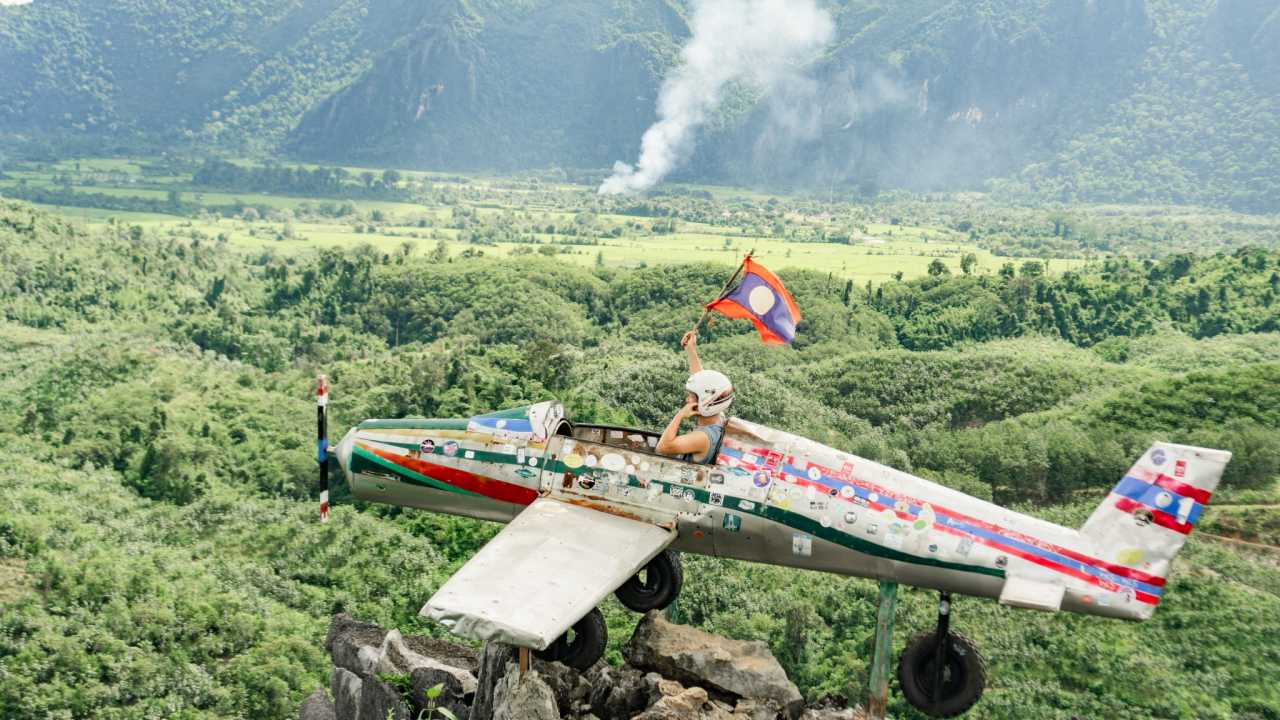
If someday neat stone steps are laid here,
dazzling signboards erected,
that would truly strip Vang Vieng's soul completely.
Vang Vieng's beauty
lies not in wonders but in wildness,
a rough yet pure primal texture
gradually forgotten by the world.
Caves
True natural power
lies hidden in caves scattered among mountains.
Bowing to enter,
flashlight beams pierce million-year silences,
illuminating primordial darkness undefiled by colored lights,
stalactites hanging like frozen time,
primal and savage awe surging from within.
Here exists only damp coolness,
clear sounds of water drops falling,
and lonely echoes of footsteps in hollow chambers.
It pleases no one,
only through its most honest appearance
evoking purest reverence in human hearts.
Compared to this,
those lagoons reduced to artificial playgrounds
aren't worth mentioning.
⚡Drone Crash
The most profound episode of the journey
was the drone's crash.
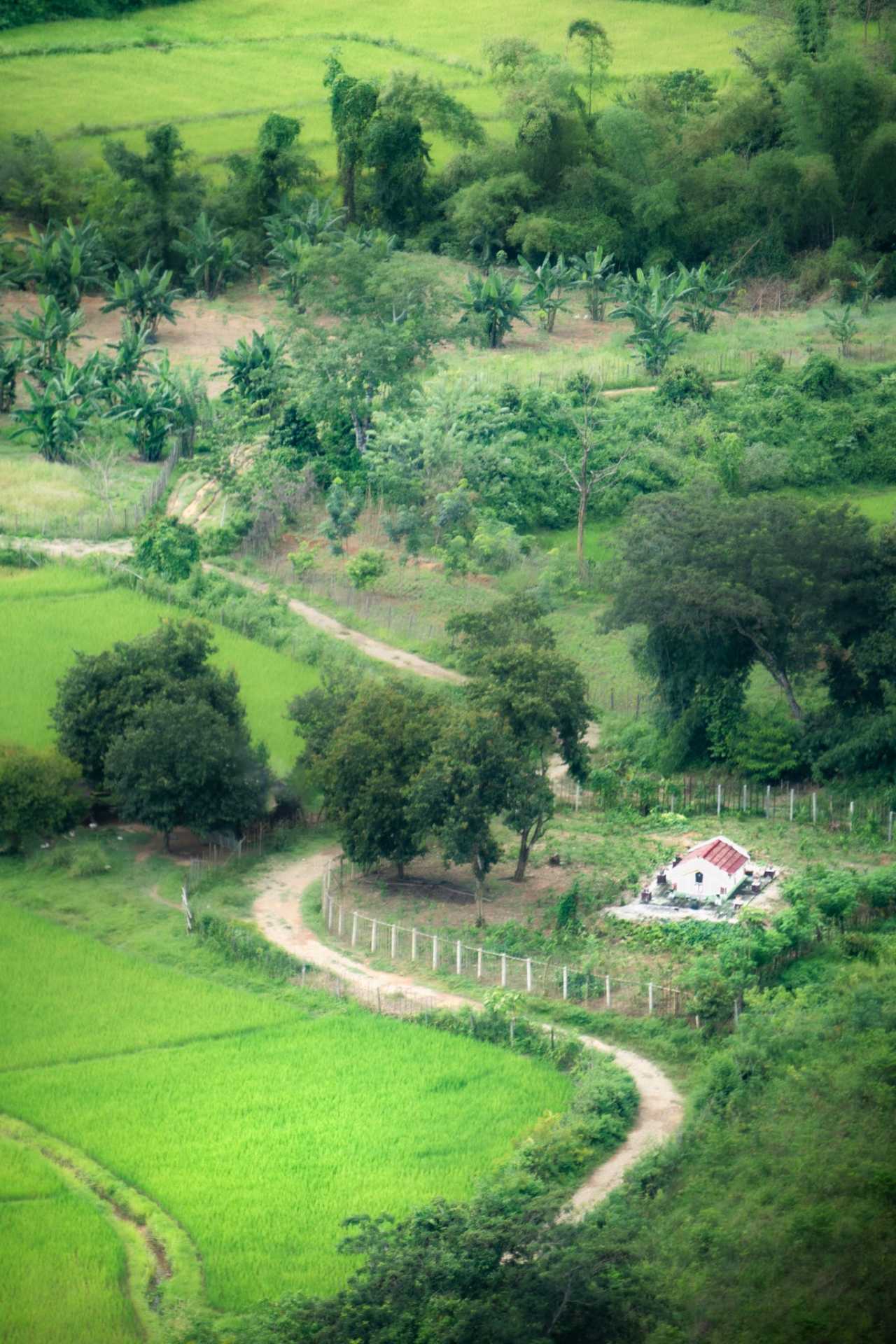
It suddenly lost control,
plunging into an uninhabited rice field.
After nearly hopeless searching,
I miraculously recovered the intact fuselage from the mud.
This joy of loss and recovery
gave memory the texture of story.
Vang Vieng Cuisine
Vang Vieng's cuisine was another joy.
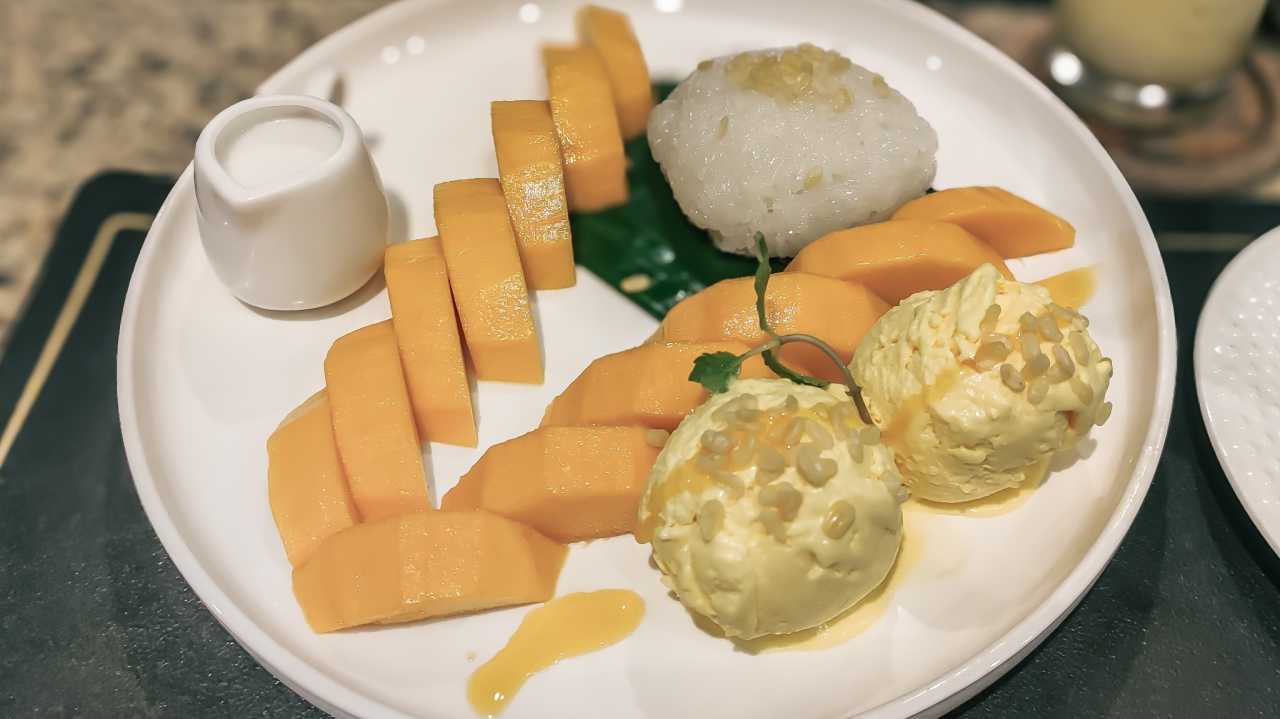
Happy Mango's mango sticky rice
awakened taste memories from Thailand years ago,
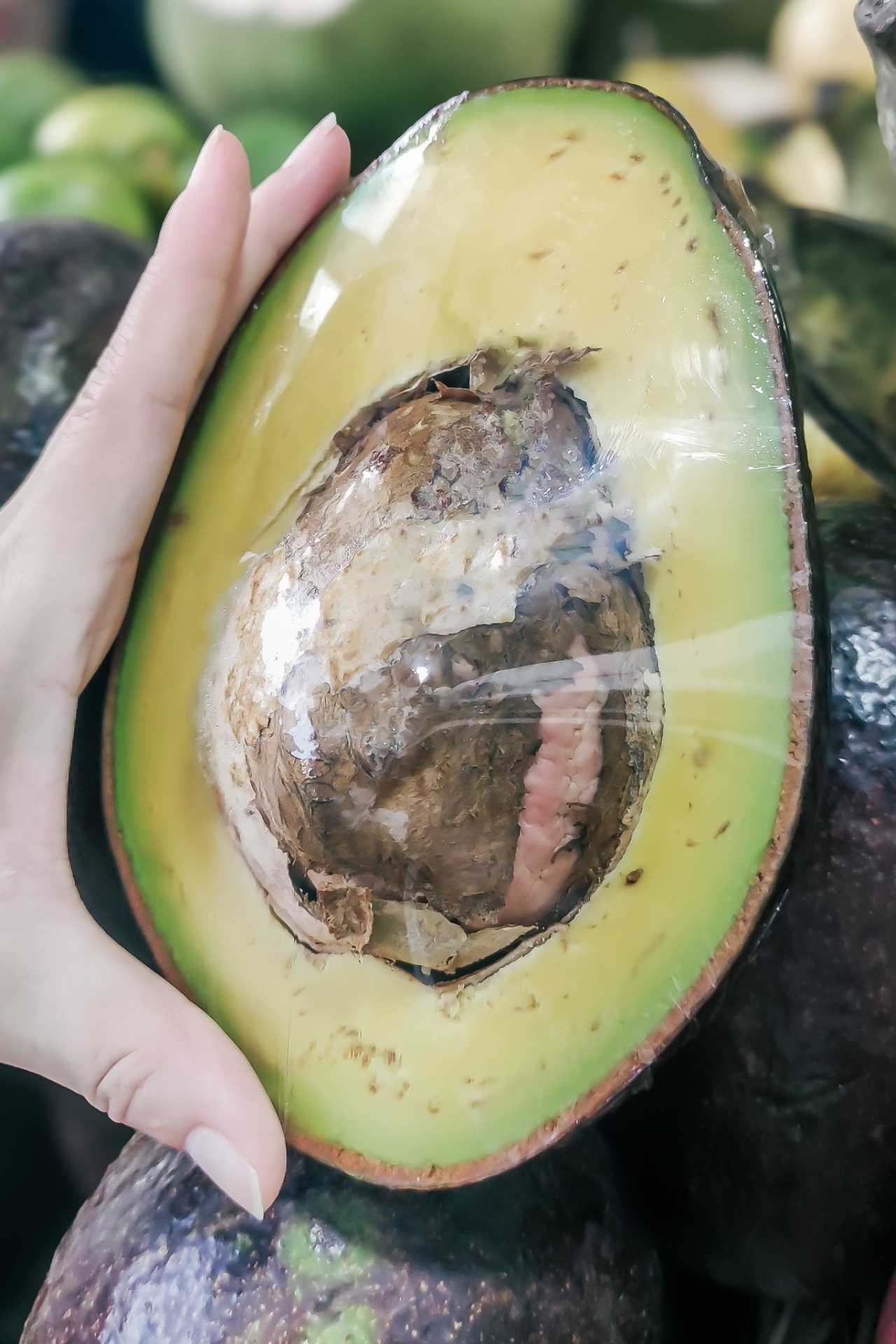
while street stalls' 30,000 kip avocado smoothies
became Laos' most honest flavor with their rich sweetness.
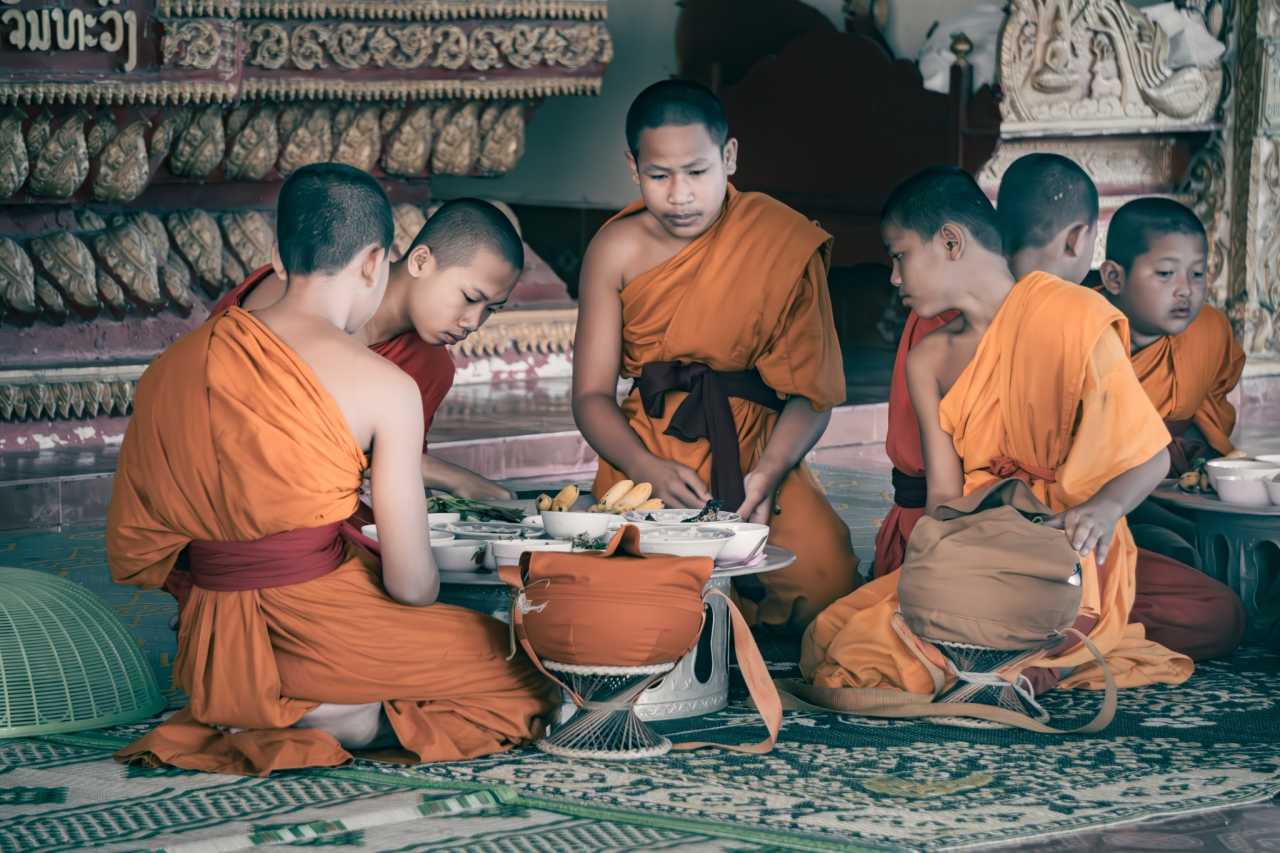
⚡Temple Alms Giving
Final contemplation
was reserved for a temple named "Sysoumangkhararam."
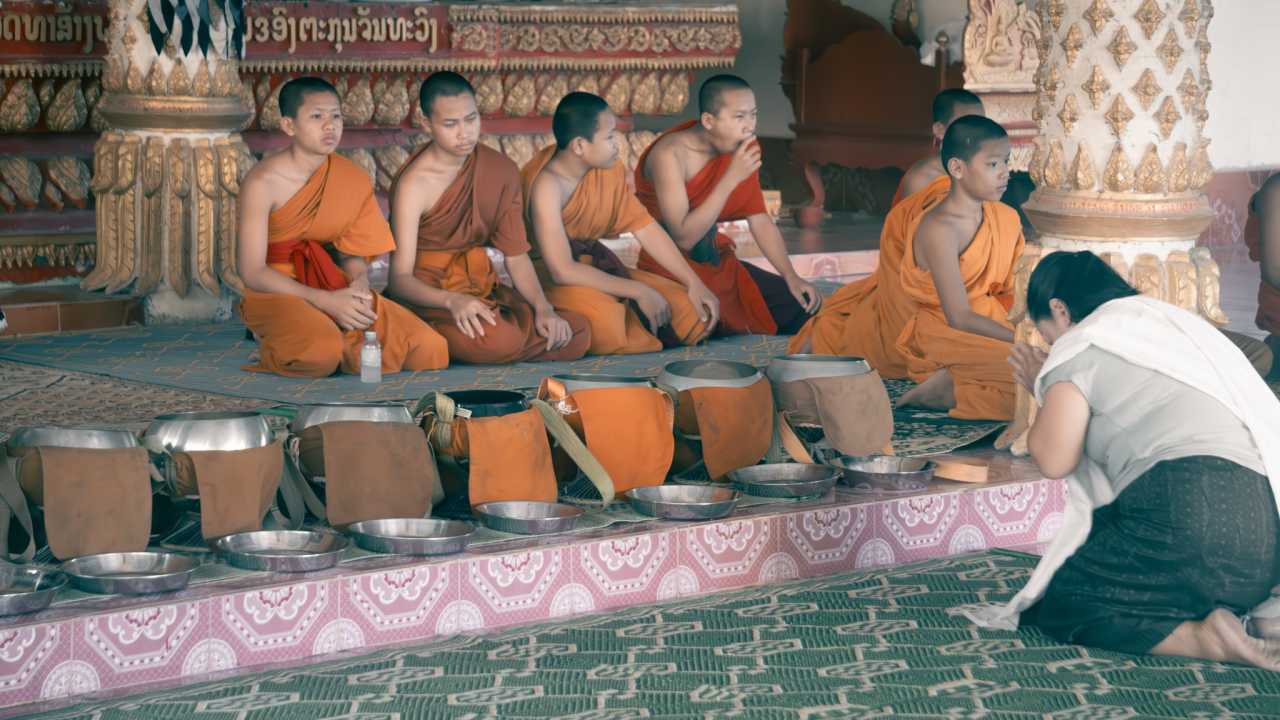
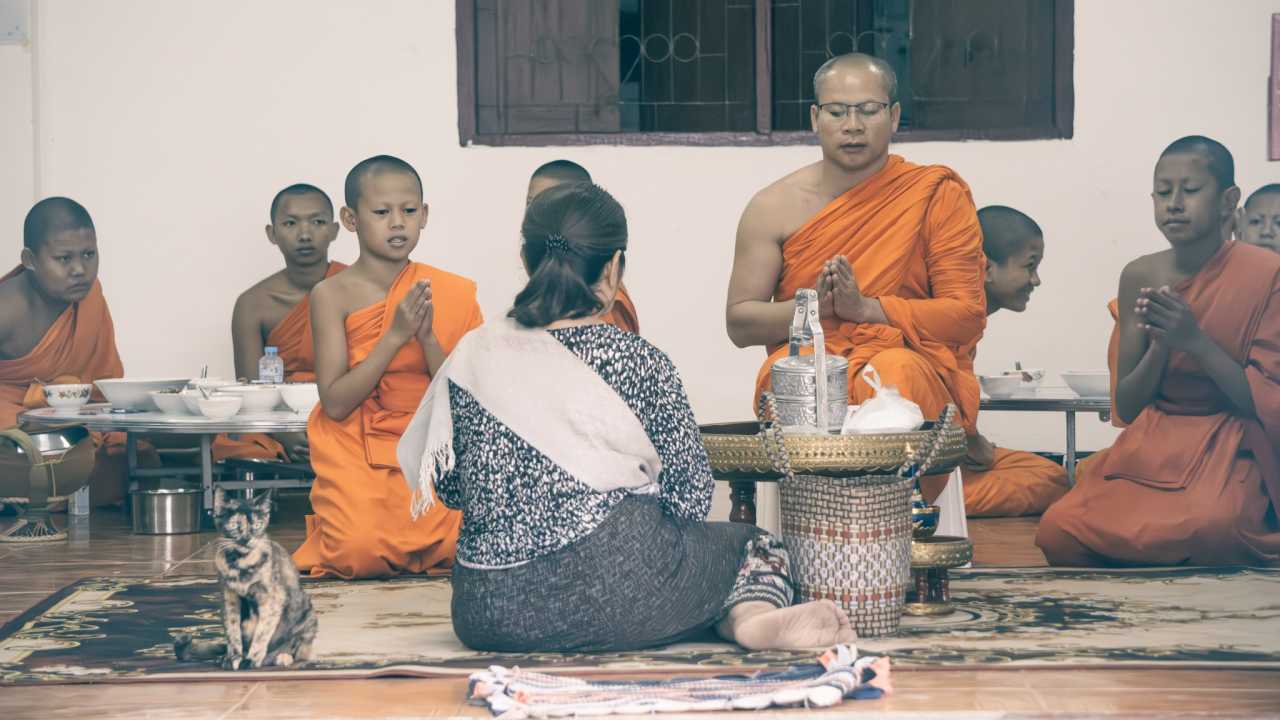
A different alms giving from Luang Prabang was underway here.
Women knelt devoutly,
offering food respectfully,
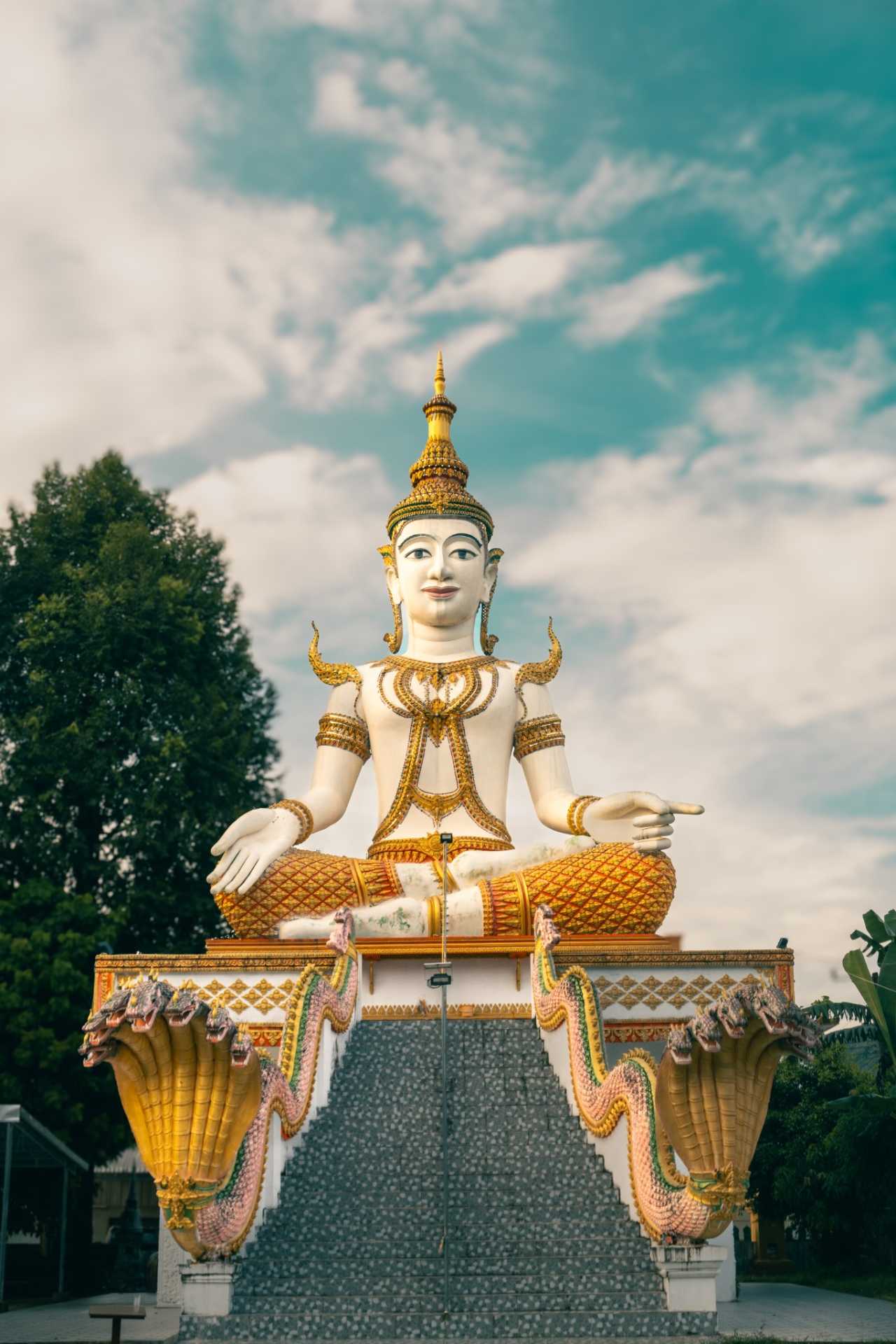
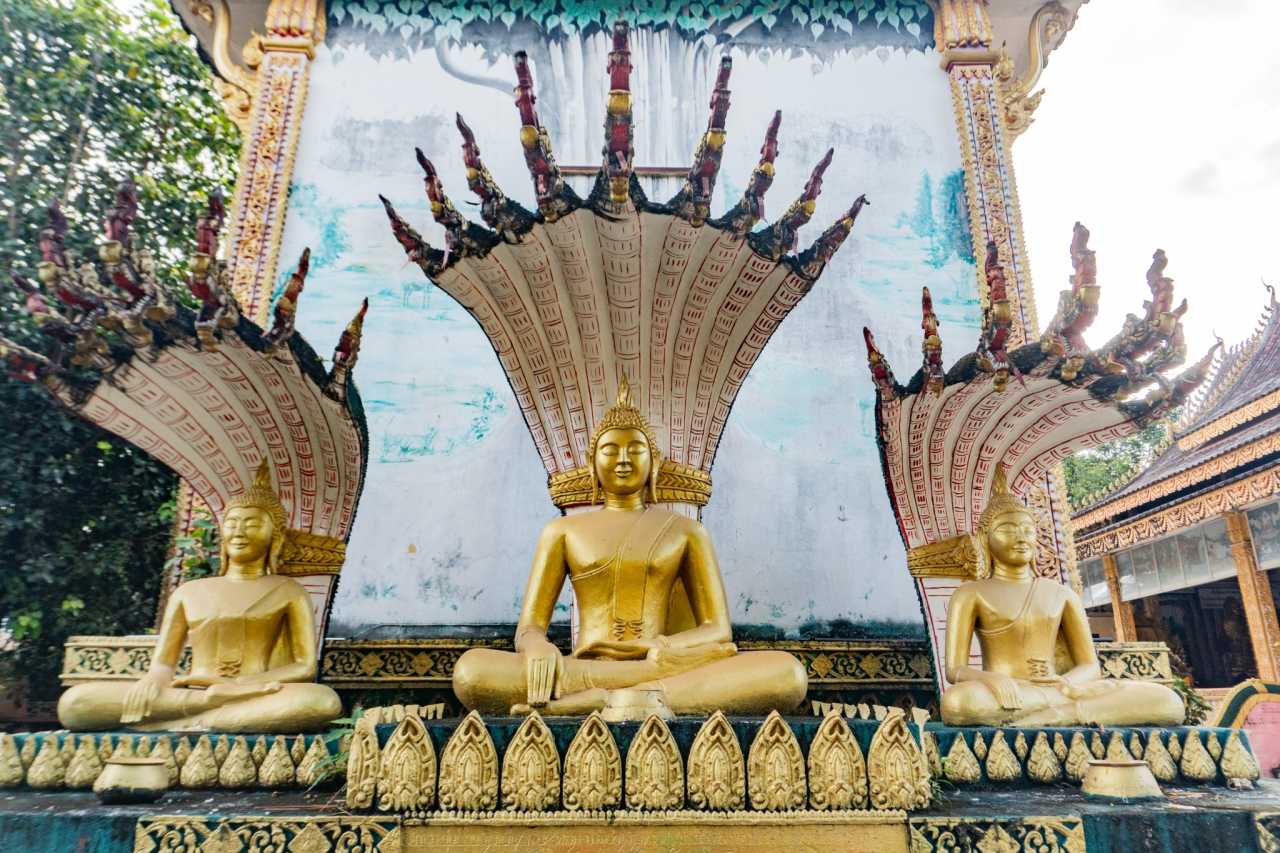
whether worshipping the seated Buddha
or the seated monks.
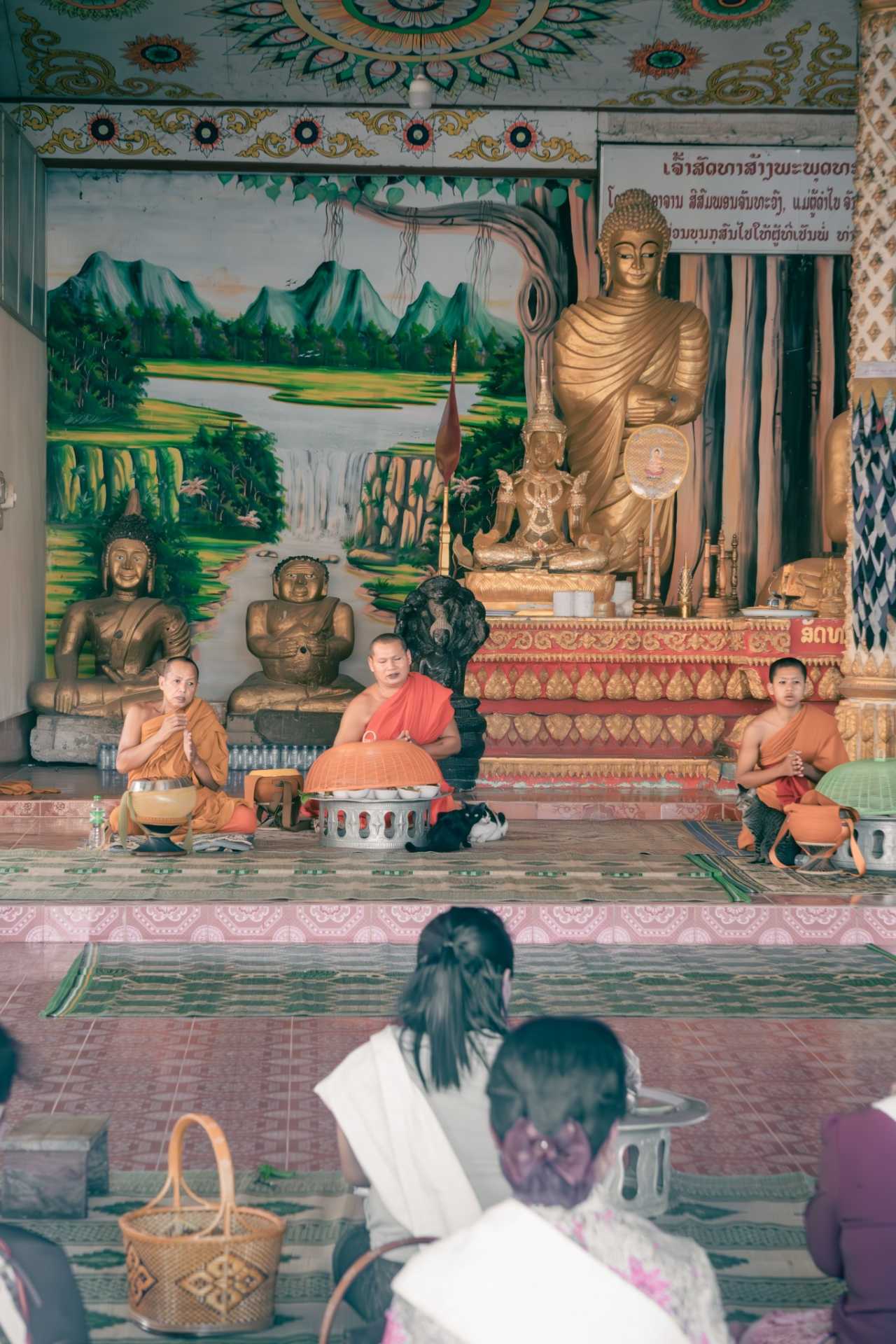
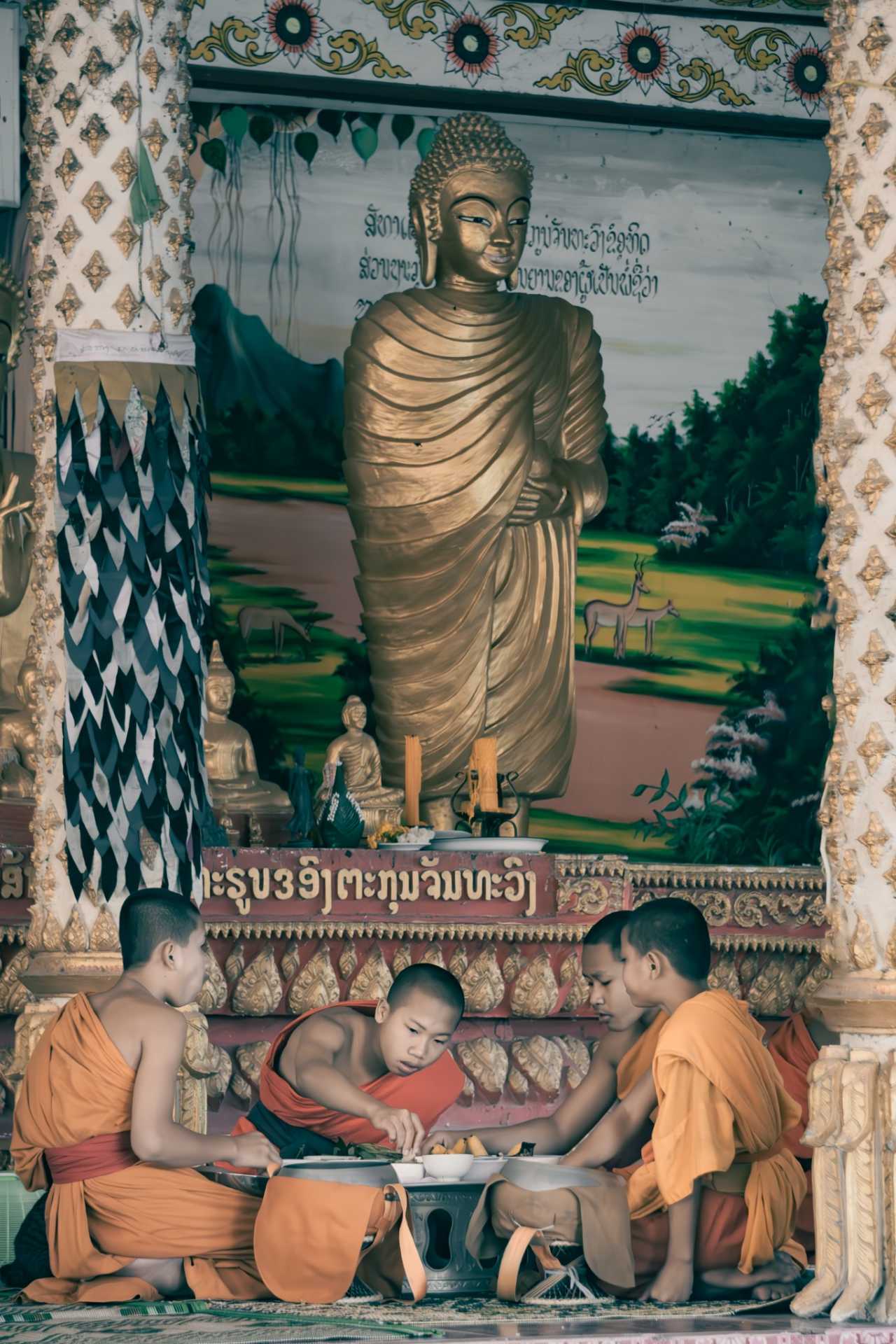
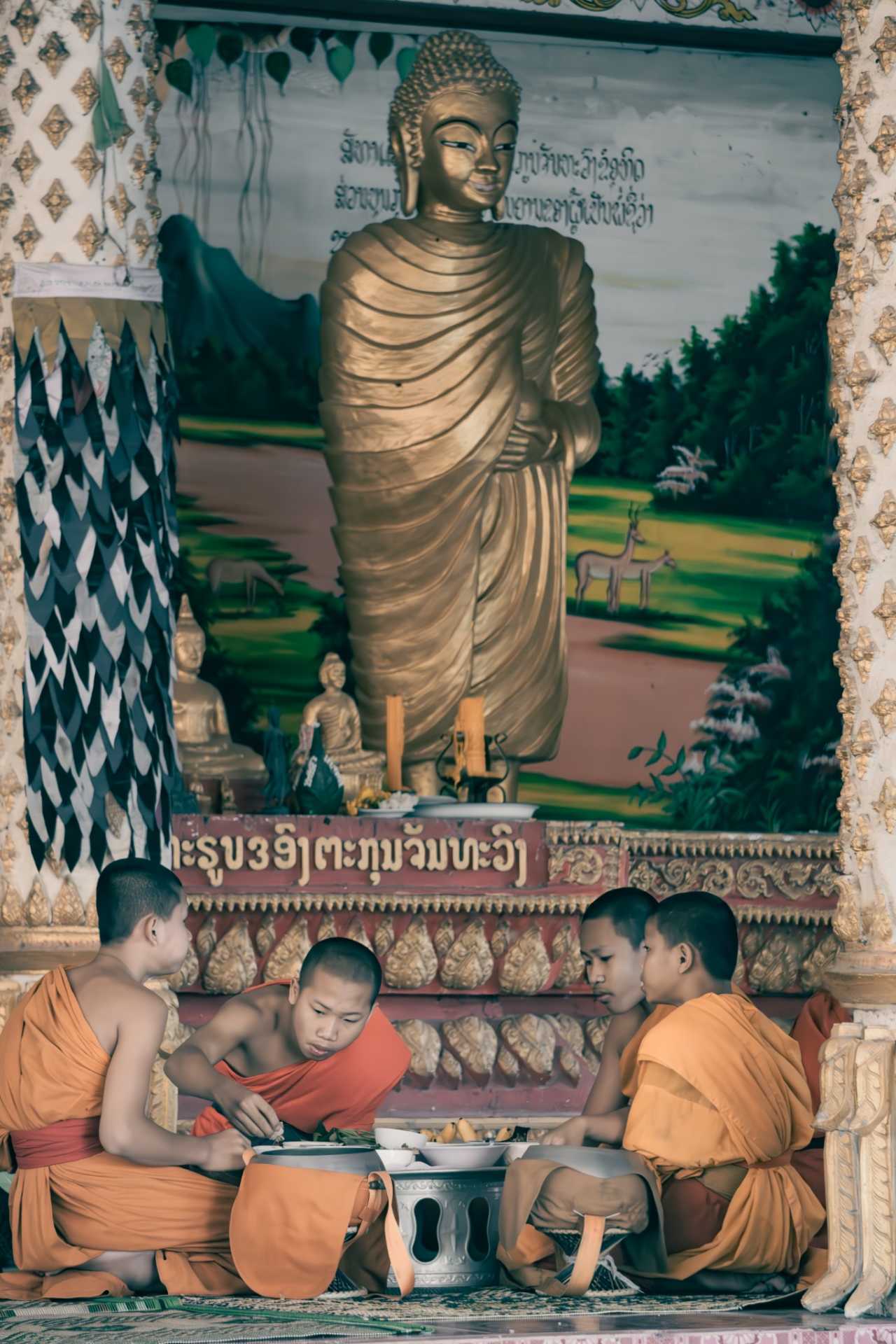
Yet the monks receiving alms showed no expected solemnity,
young monks even wore playful smiles and casual postures.
After the monks finished eating,
women still washed dishes and cleaned the temple for them.monks only needed to press palms together and chant briefly.
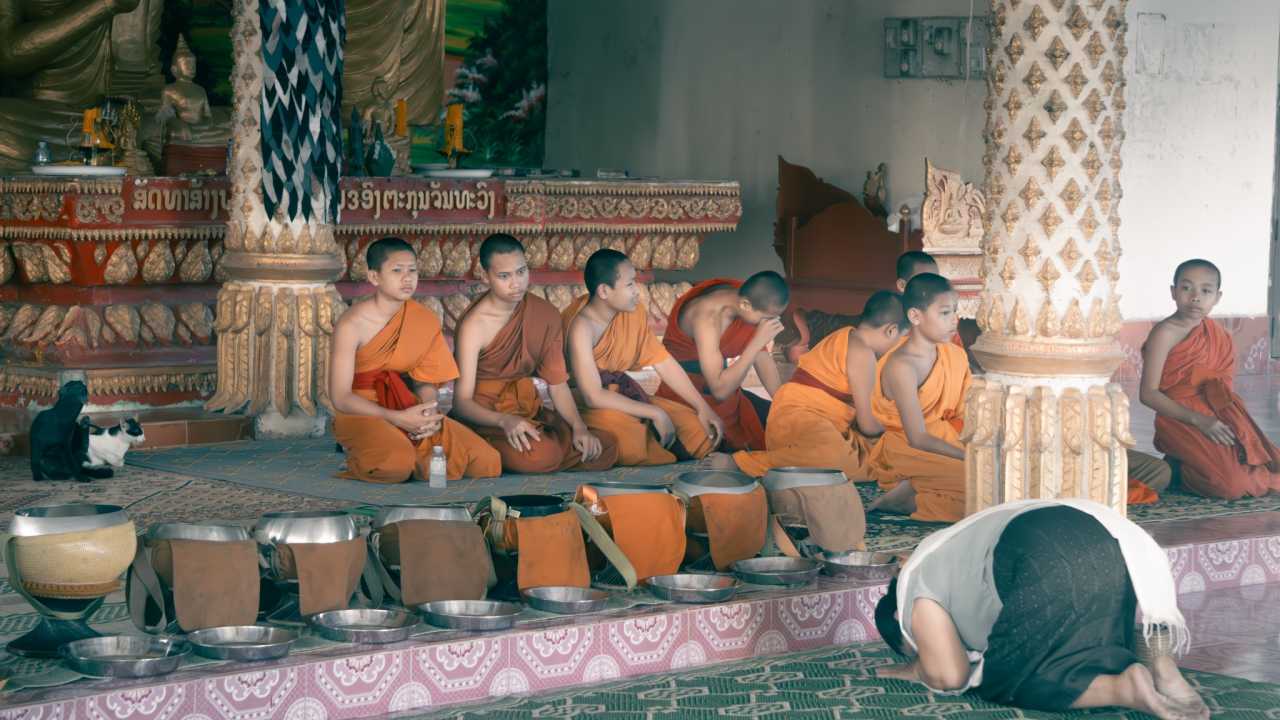
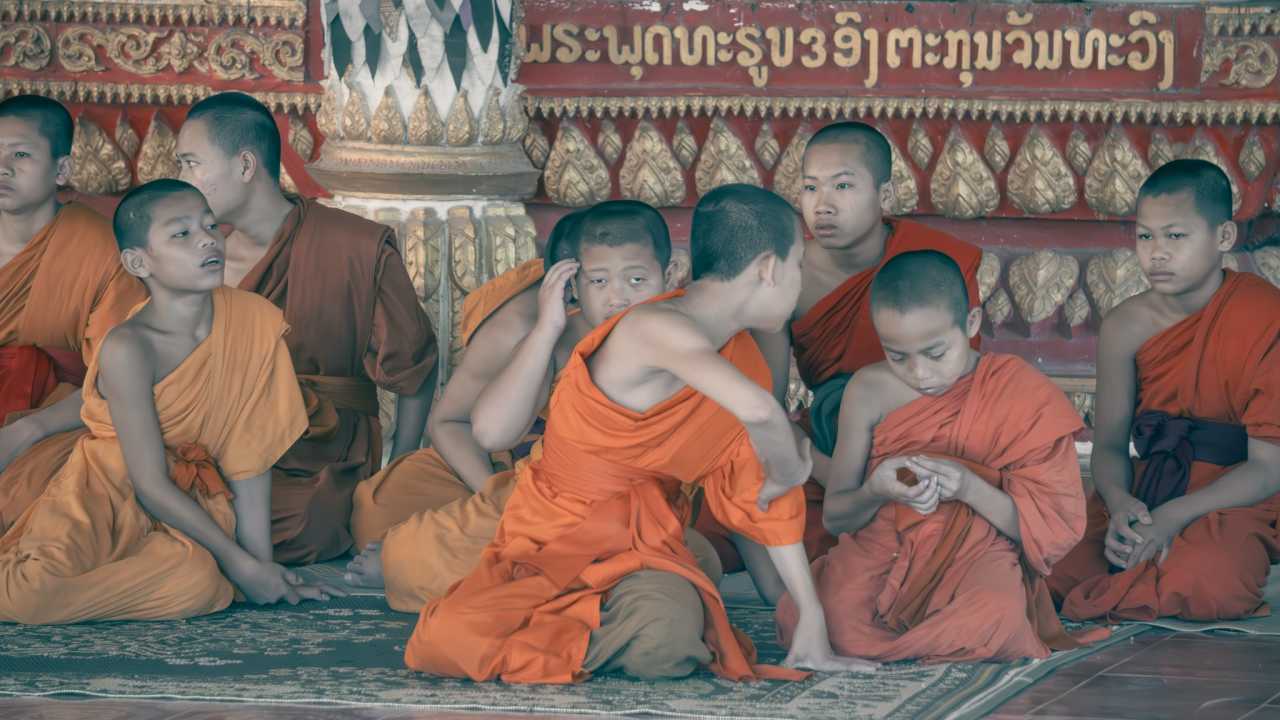
The greater confusion lay in the alms food—
the plates actually contained fish and meat—
perhaps I misunderstood local Buddhist precepts,
but this scene before me
truly diverged from my understanding of monastic fasting.
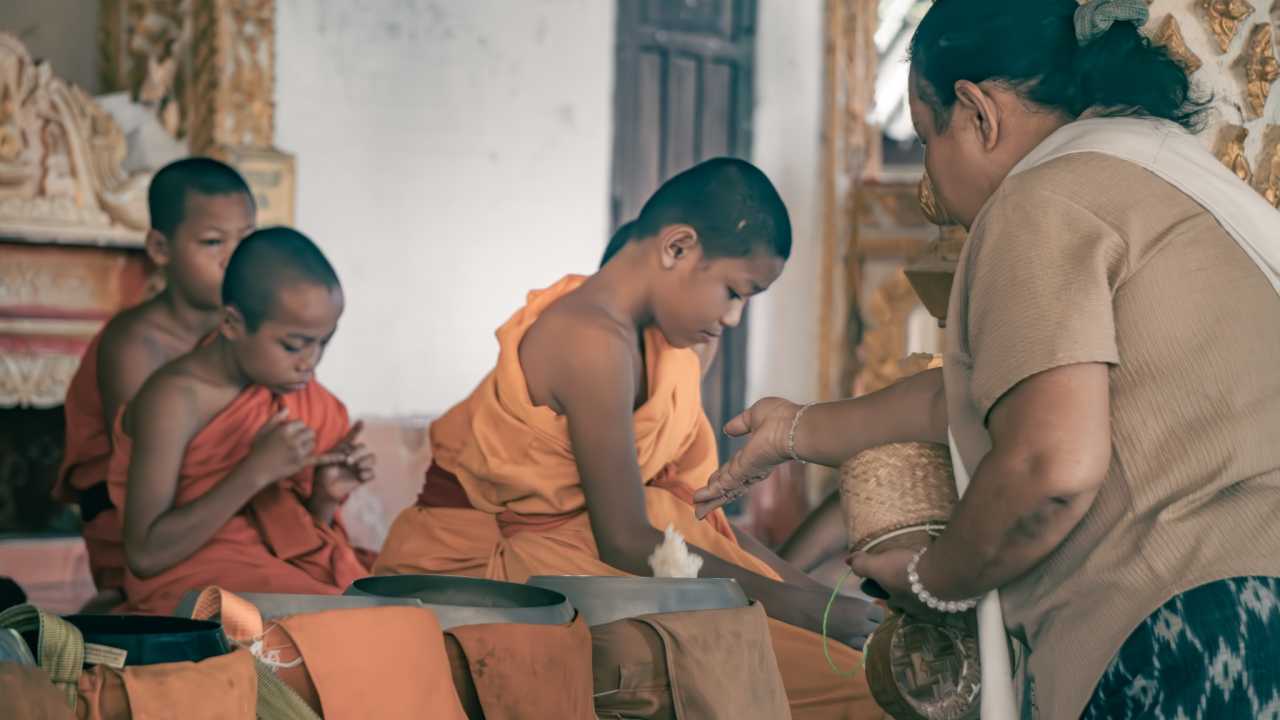
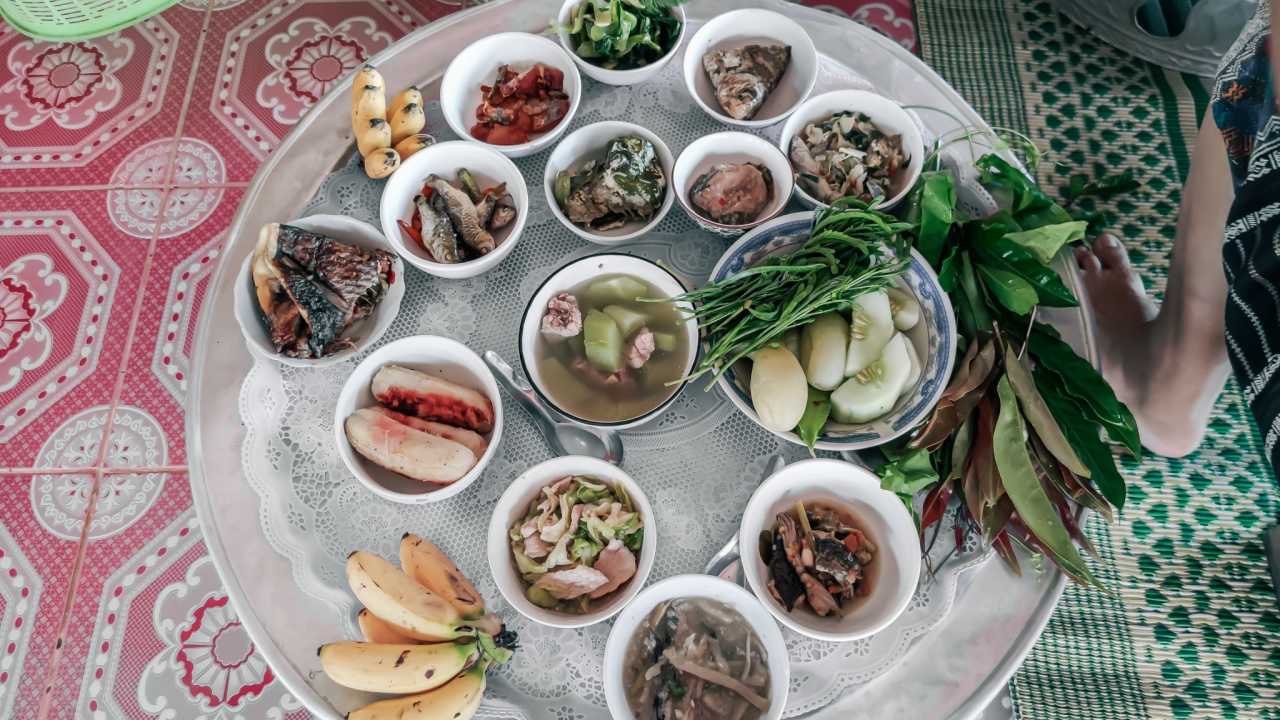
My knowledge remains insufficient for definitive conclusions,
yet I cannot help harboring doubts—
both about these monks' spiritual state
and certain presentations of Buddhism itself.
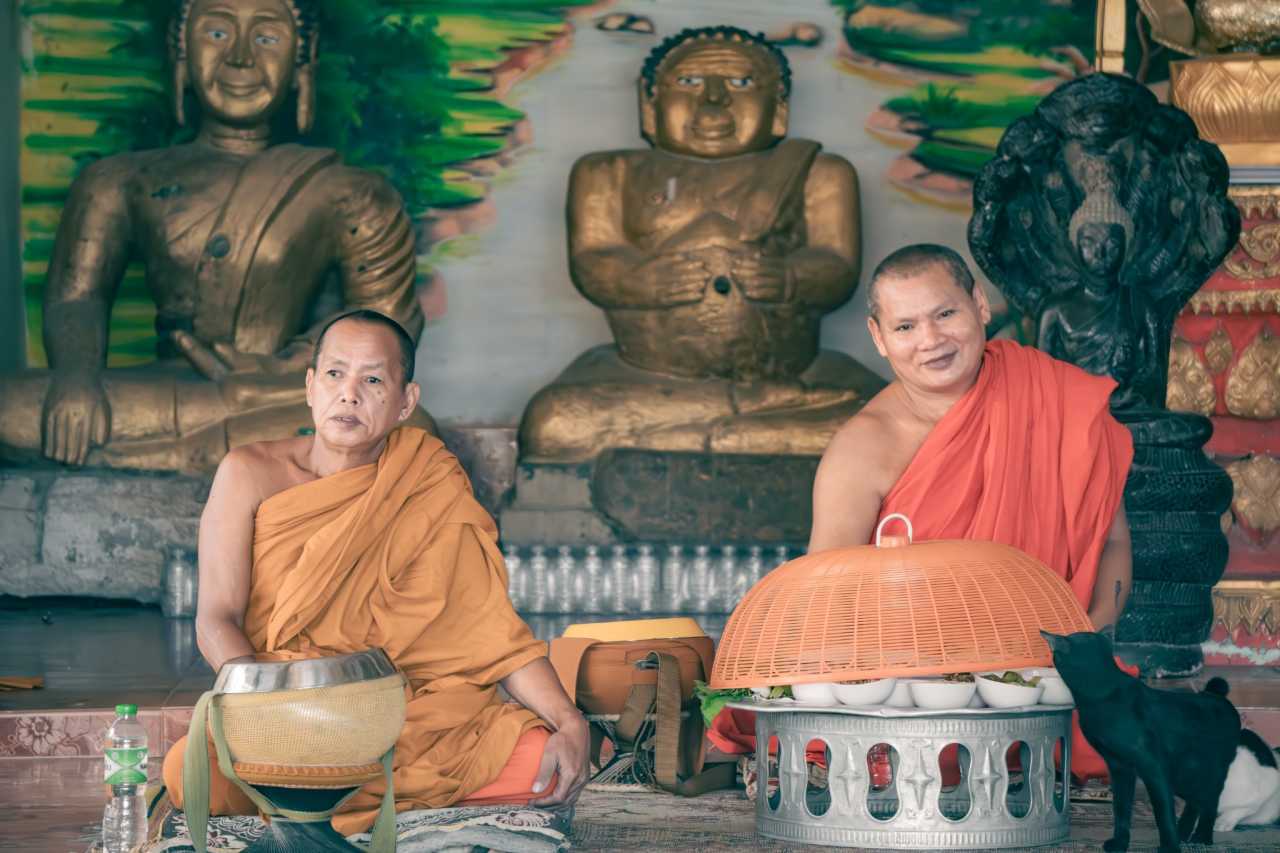
For a long time,
I've recognized my religious understanding as extremely superficial,
yet never stopped contemplating,
especially regarding Buddhism.
I have treated it with disdain,
and also gazed upon it with reverence;
wandering repeatedly through observation and self-reflection,doubt has already taken root in my heart.
This topic is too weighty;
I possess neither systematic knowledge
nor confident dialectical ability
to reach conclusions about Buddhism or religion overall.
Religion ultimately constitutes an important part of human society,
bearing irreplaceable humanistic value.but at this moment,
I choose to maintain restraint and silent observation.
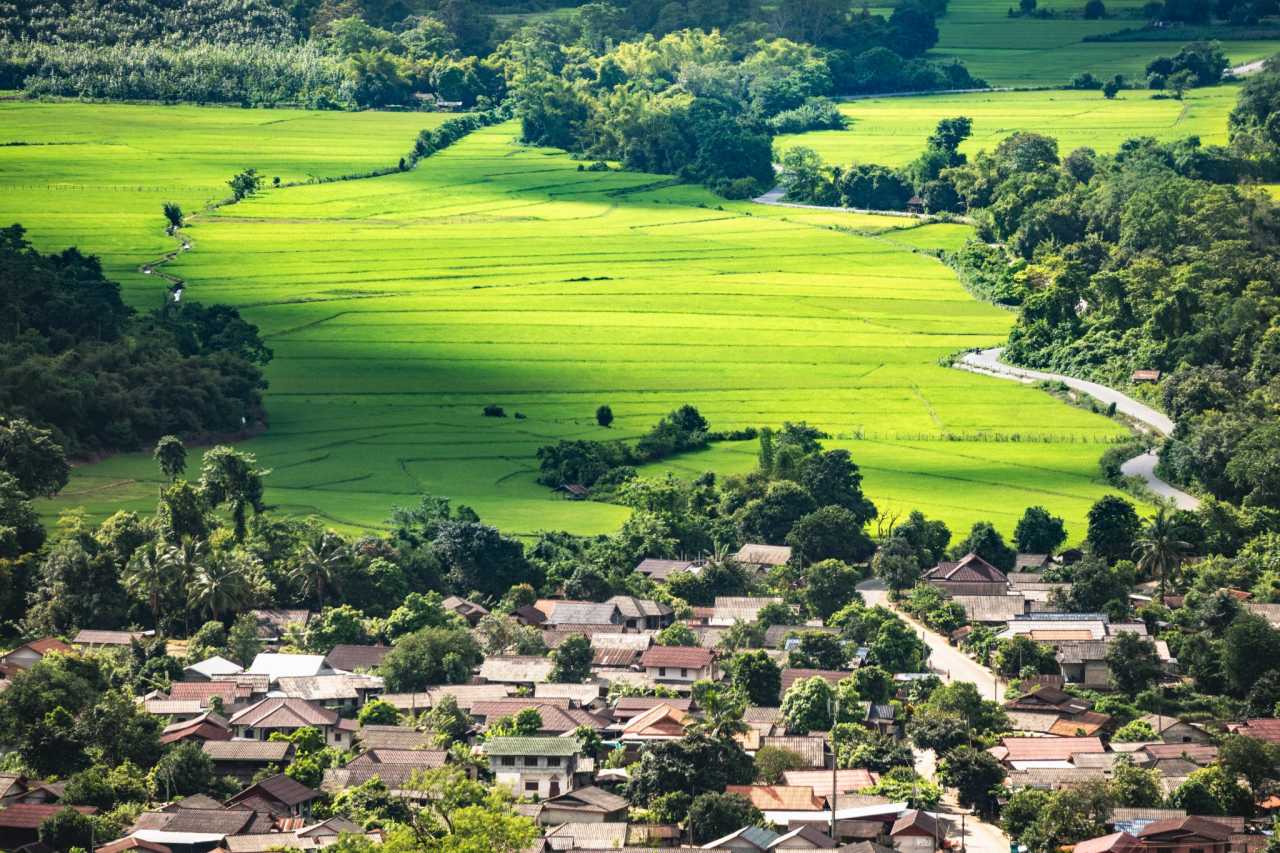
Vang Vieng granted me no stunning scenery,
but gave me more substantial experiences:
a freedom galloping through wilderness,
a contemplation without answers before faith.
Champasak | Summoned by Wat Phu
⚡Giving Up Four Thousand Islands
Veteran travelers praise Four Thousand Islands endlessly,
yet not a single photo has ever moved me.
Until Vang Vieng's itinerary neared its end,
I had to face this multiple choice:
follow mainstream voices,
or obey inner intuition?
Later I realized
what drove me to consider going
was merely curiosity about its reputation,
not genuine yearning;
and this curiosity was insufficient to drive me
to travel extensively during precious journey time.
The moment I finally decided against Four Thousand Islands,
my heart actually felt lighter.
⚡Sleeping Bus
But giving up Four Thousand Islands didn't mean abandoning southern Laos.
Out of yearning for Wat Phu
and obsession with experiencing Laos' complete north-south character,
I who consistently practice budget travel
ultimately boarded the overnight bus from Vientiane to Pakse.
 Wat Phu
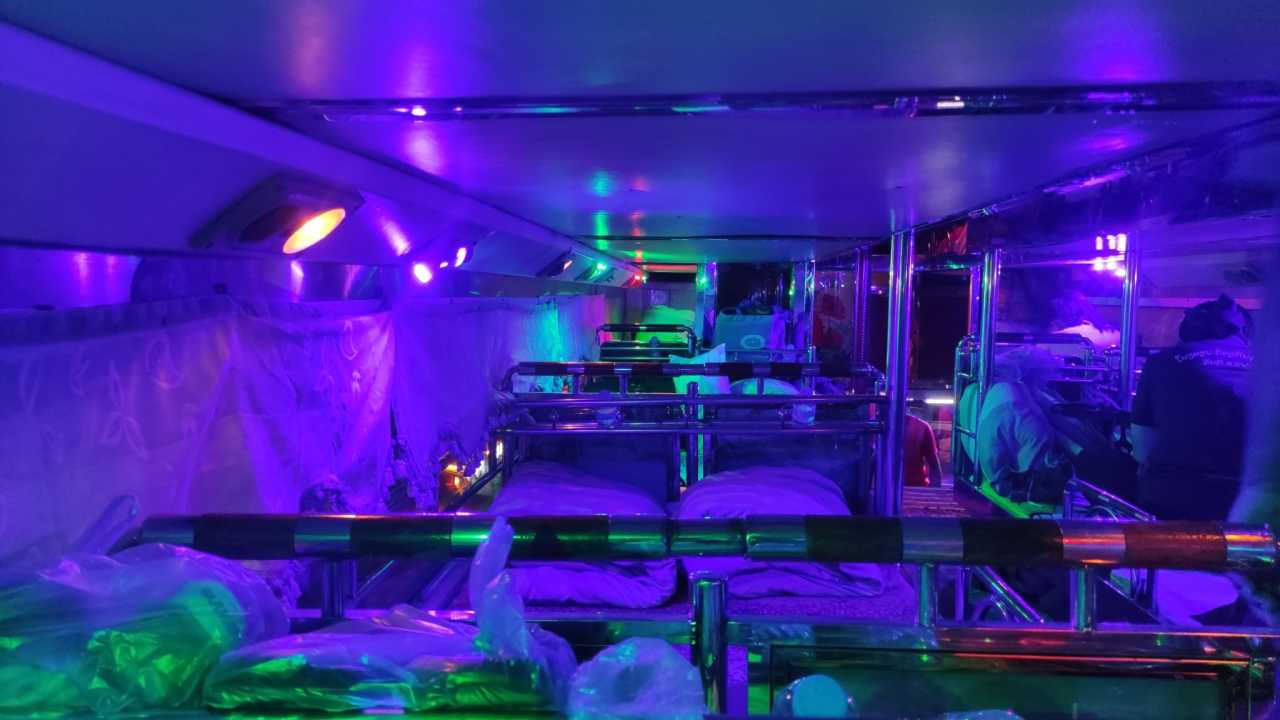
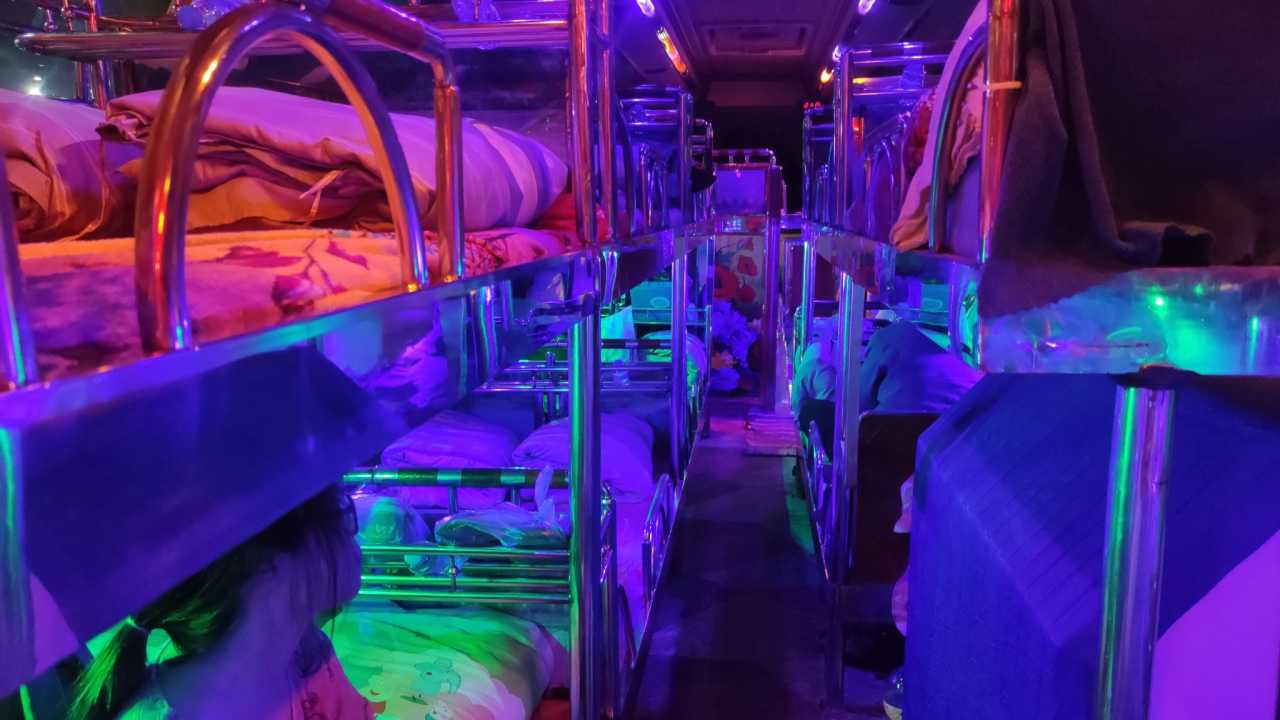
This thirteen-hour sleeper bus
was itself an experience of going native.
The carriage was filled with comically colored lighting;
the most "ingenious" design
was those side-by-side sleeping berths—
for solo travelers randomly assigned a
strange "bed mate" to sleep with through the night.
We with severe mysophobia
strictly controlled water intake along the way,
between bumps and half-dreaming,
waging a tug-of-war between senses and will.
At dawn,
whether from physical discomfort or psychological effect,
I actually felt a faint urge to vomit.
So I urgently booked return flight tickets—
some experiences, once is enough.
Champasak Town
Pakse was merely transit;
the true destination was Champasak.
This small border town sharing the provincial name was already niche,
appearing even more desolate during off-season,
with even European and American backpackers vanished.
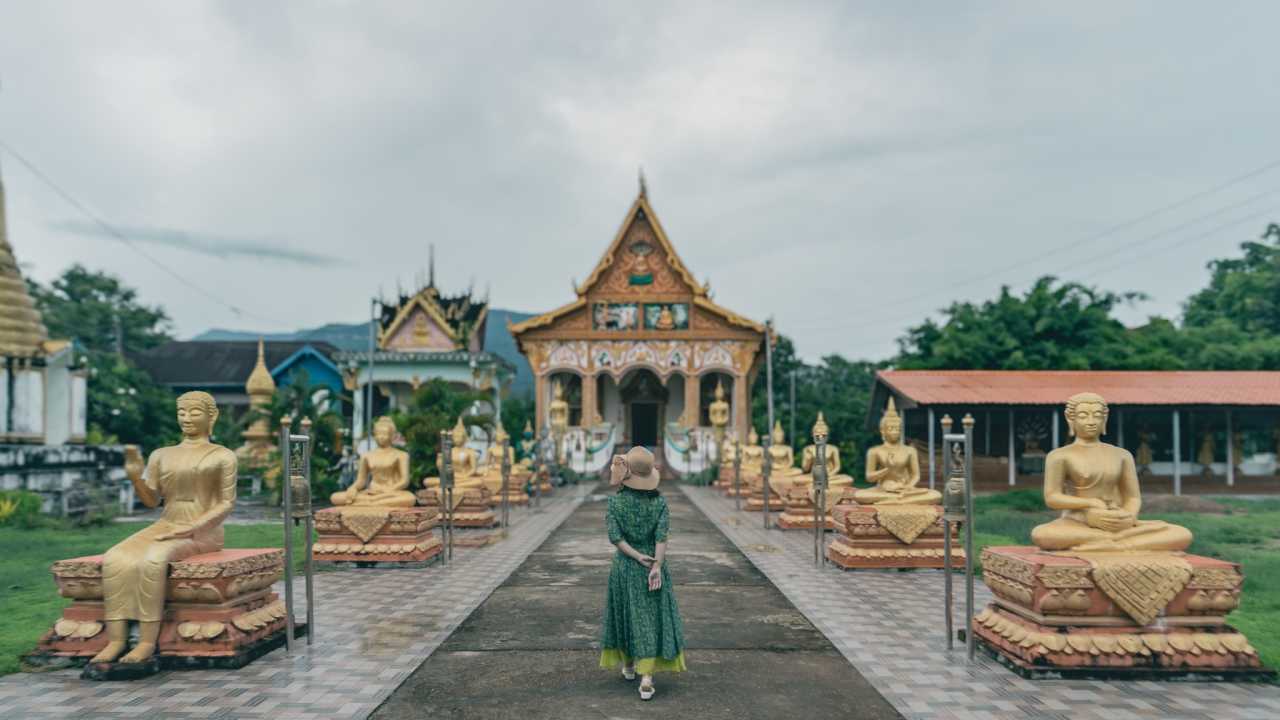
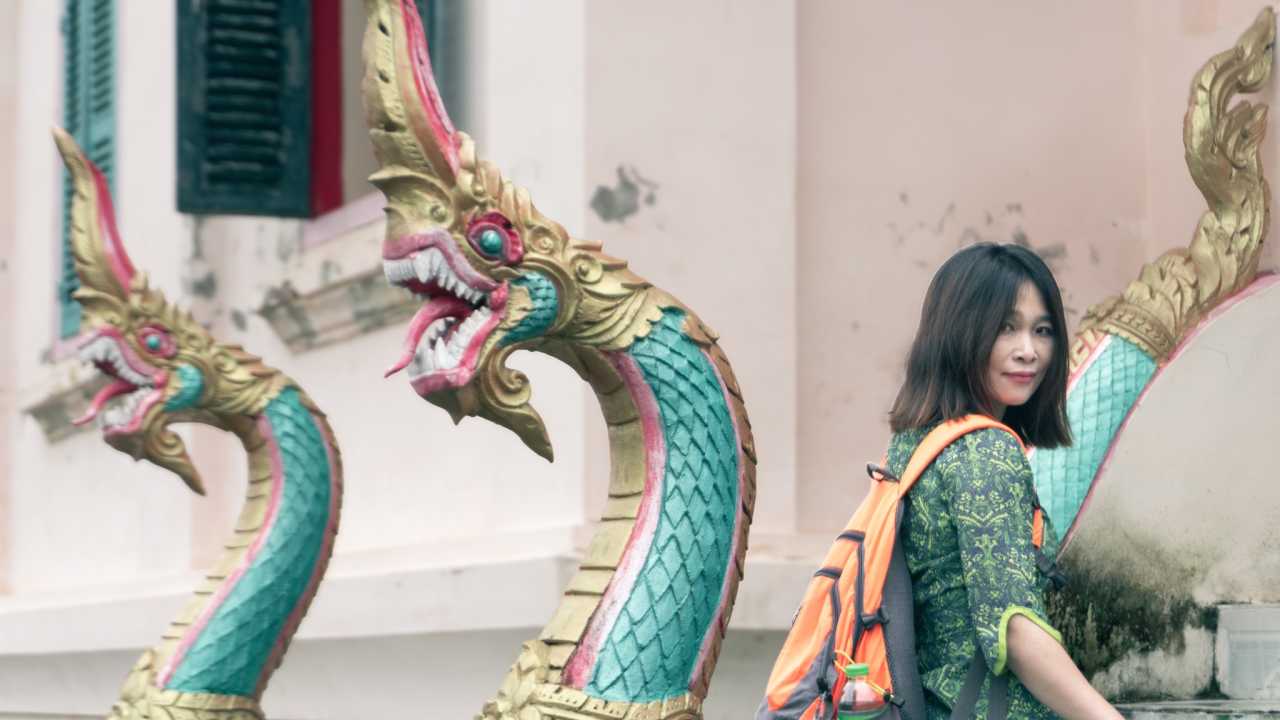
Renting a motorcycle at the guesthouse
made exploring the entire town effortless.
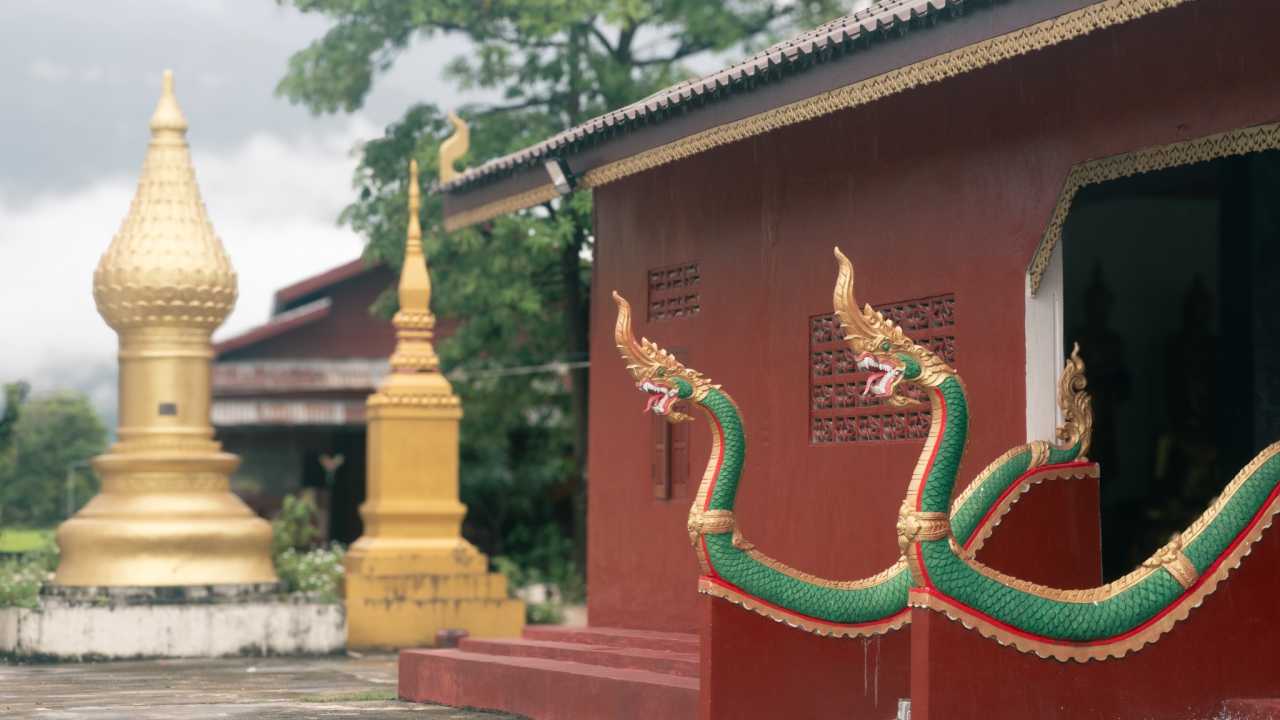
The first day's plan to visit Wat Phu
was shattered by wave after wave of unexpected rain.
We reluctantly tested,
then awkwardly hid,
finally defeated by repeated downpours,
able only to gamble on tomorrow.

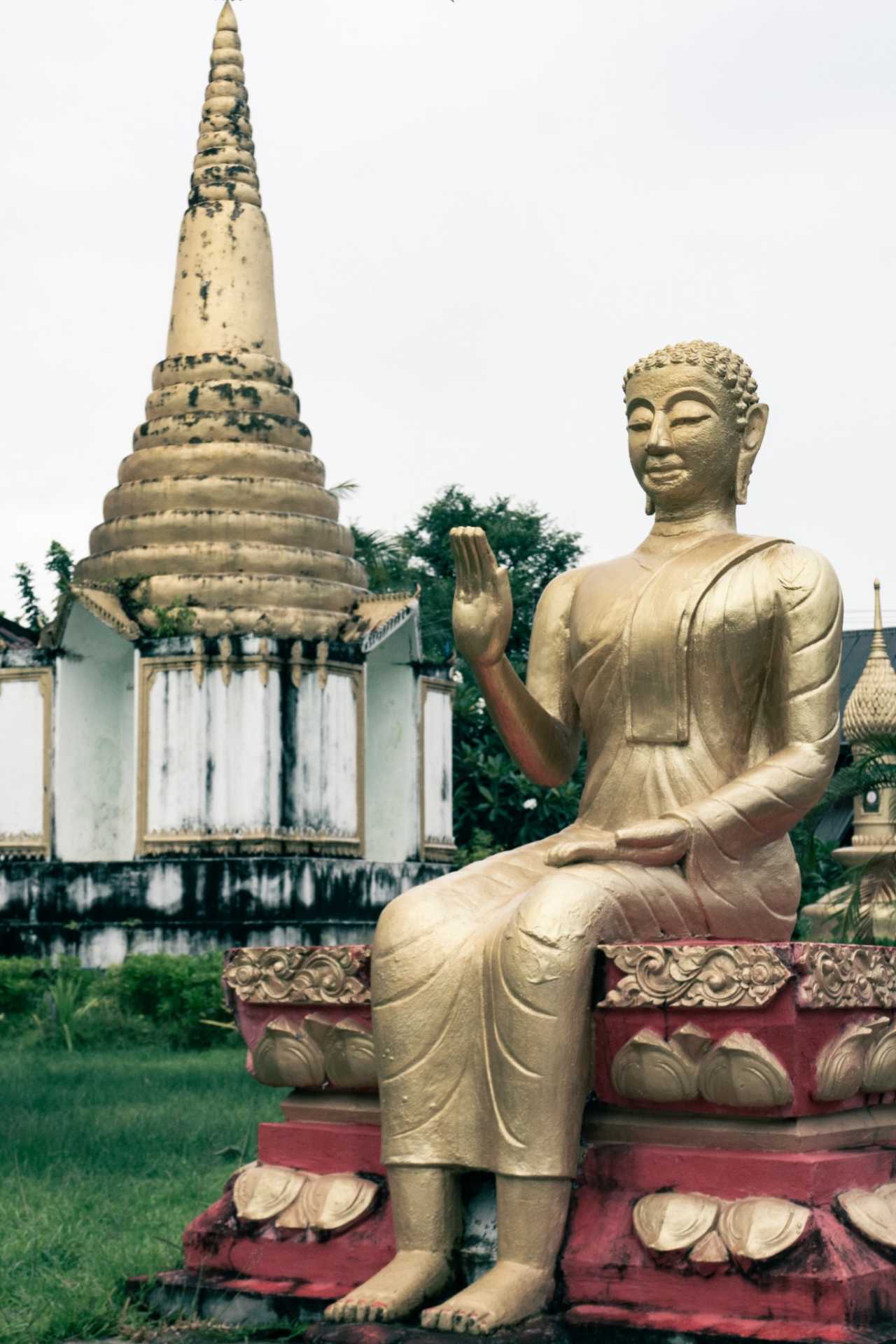
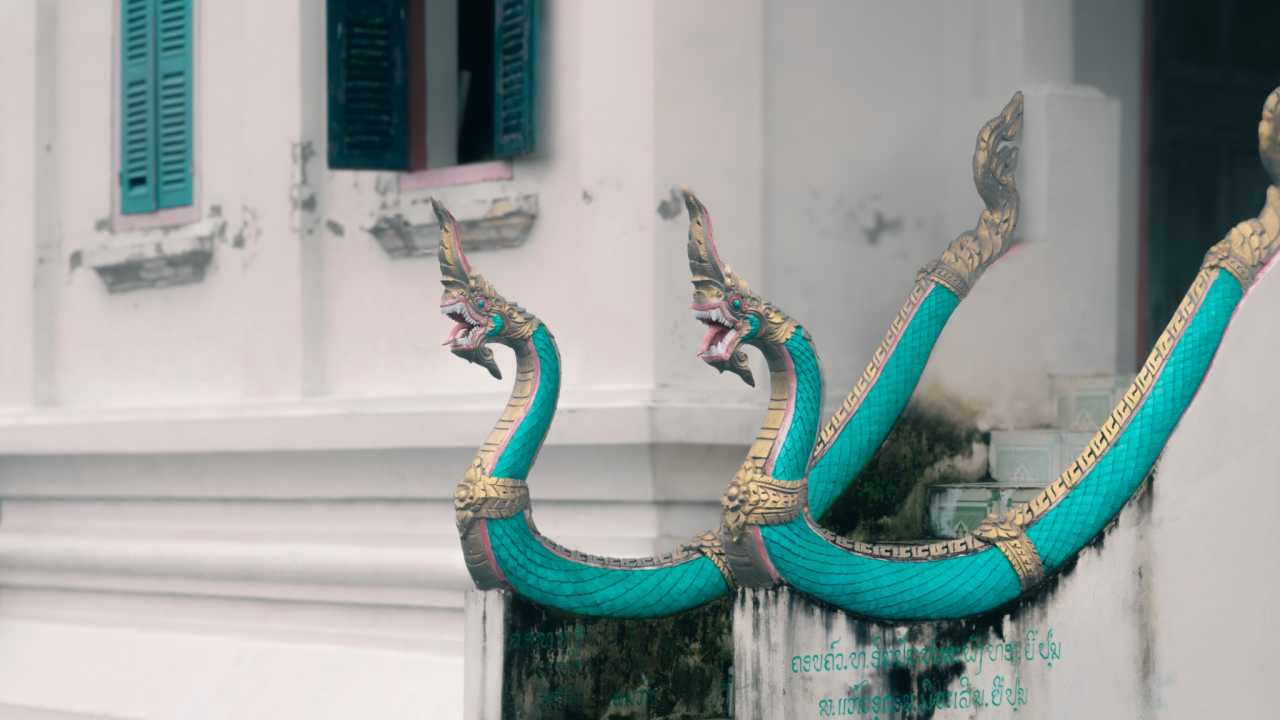
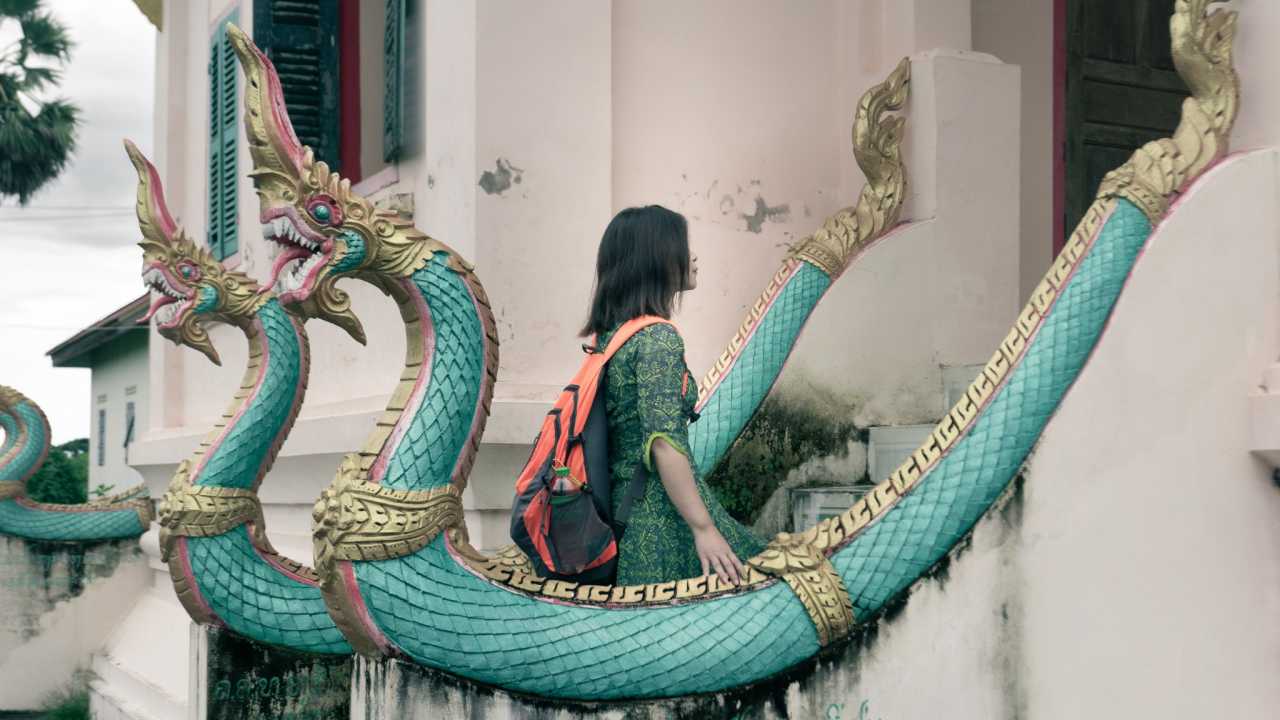
Wandering through town temples,
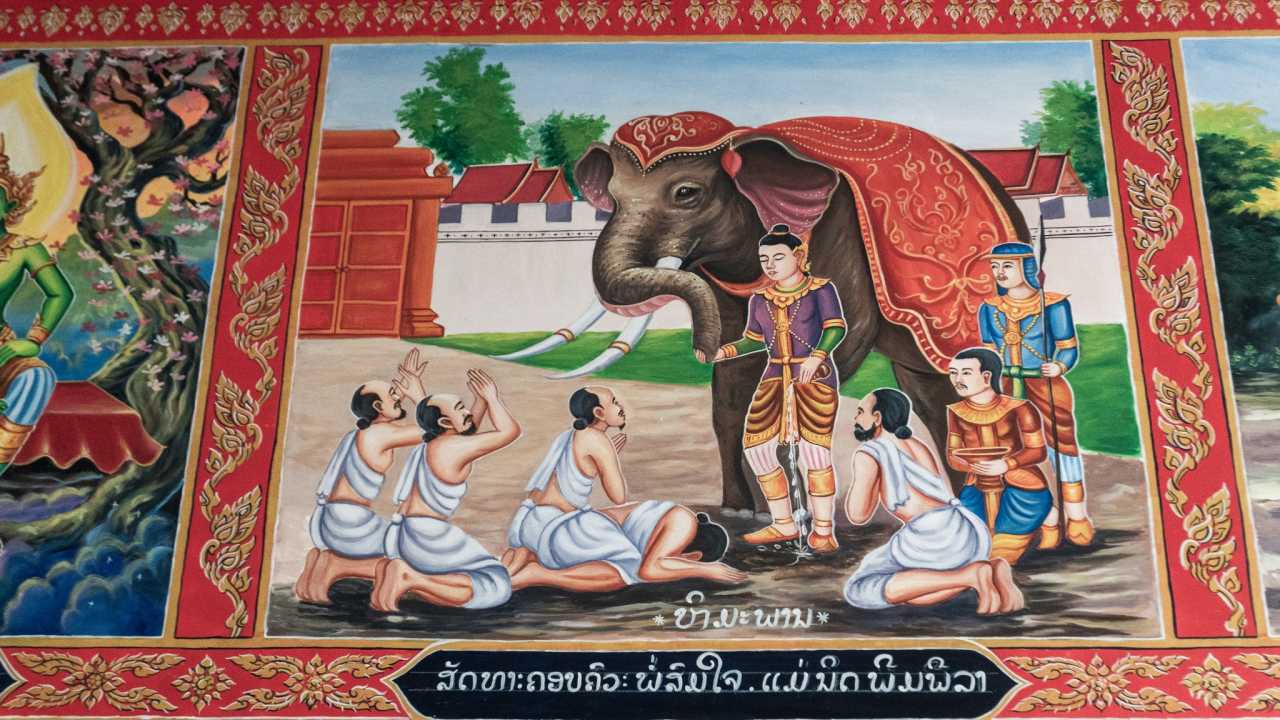
I met a young artist painting murals for a newly built prayer hall.
The religious stories in his brushwork were vividly lifelike,
needing no words to convey their spiritual essence.
Our stopping to admire drew him down from scaffolding,
each trying to initiate communication,
but phone translation apps collectively failed at the crucial moment.
In that instant,
the air was filled with sincere embarrassment and helpless warmth.
Ultimately we only learned
he was an artist invited by the temple.
This could have been a deeply explored connection,
unfortunately stranded by the language barrier.
Following netizen recommendations,
at dusk we found that riverside restaurant
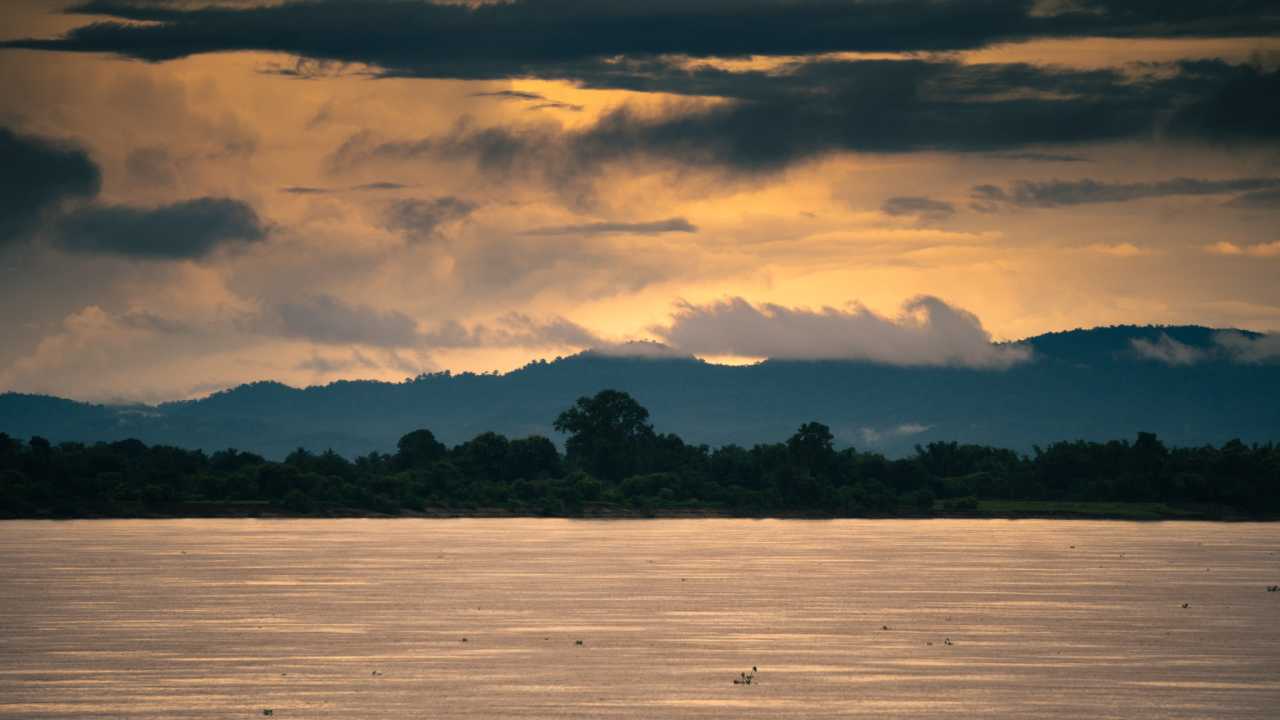
"Riverside Home Made." The Mekong in the southern section remained turbid,
lacking the legendary spiritual energy it should possess.
In the empty restaurant,the owner's enthusiasm was the only warm color,
adding an unforgettable story to the cold night.
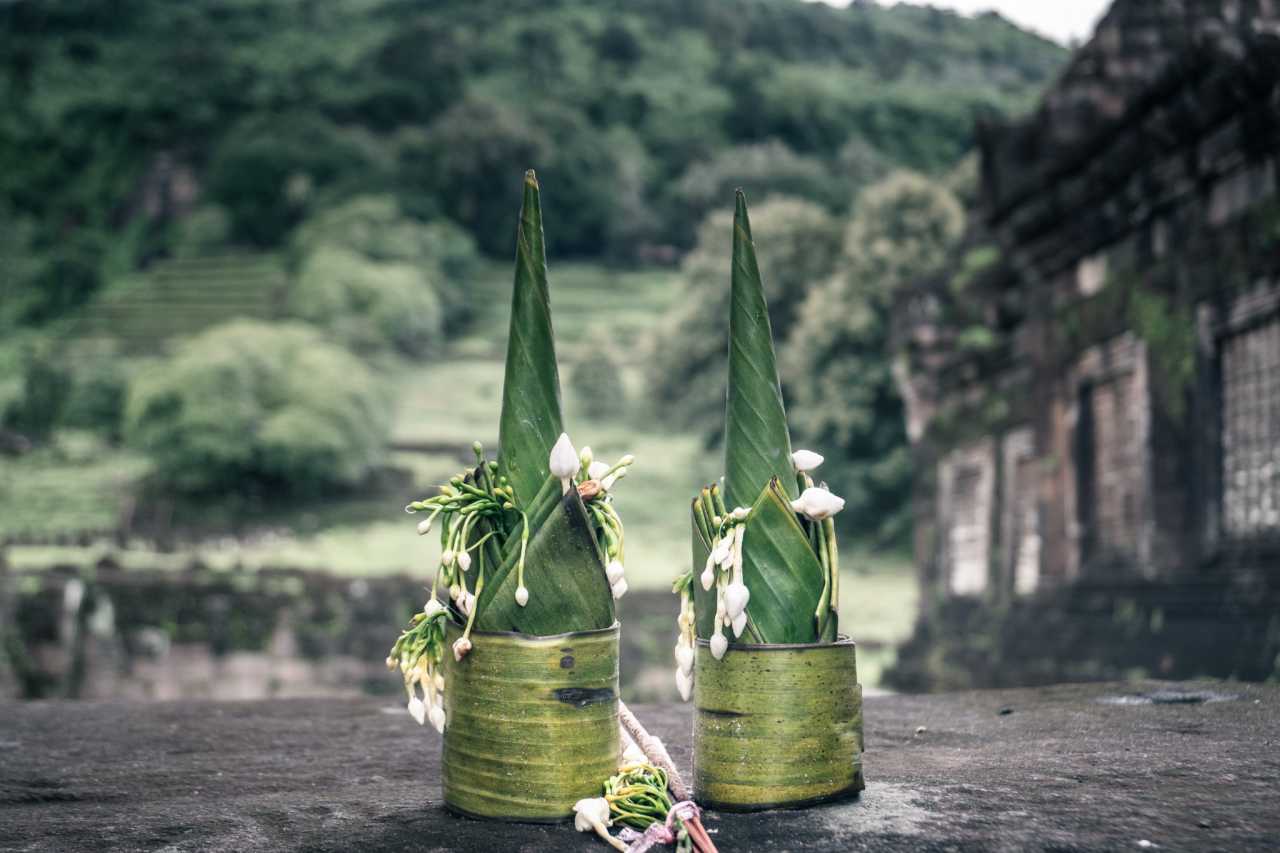 Wat Phu
Wat Phu
The next day we returned to Wat Phu.
Low clouds hung heavy,
the motorcycle stopping and starting through rain curtains.
Rain blurred vision,
also blurring the meaning of persistence.
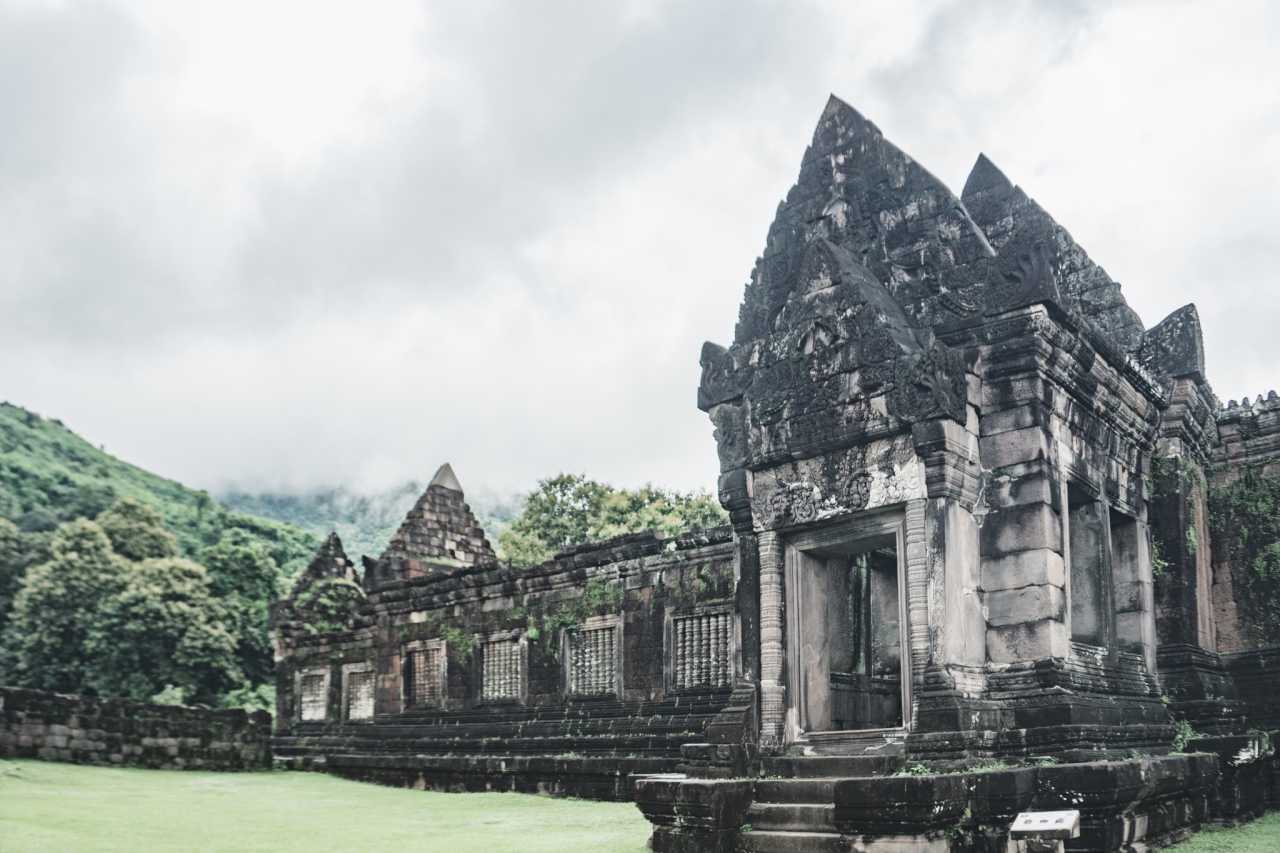 Wat Phu
Carrying some anger,
finally during a brief rain respite,
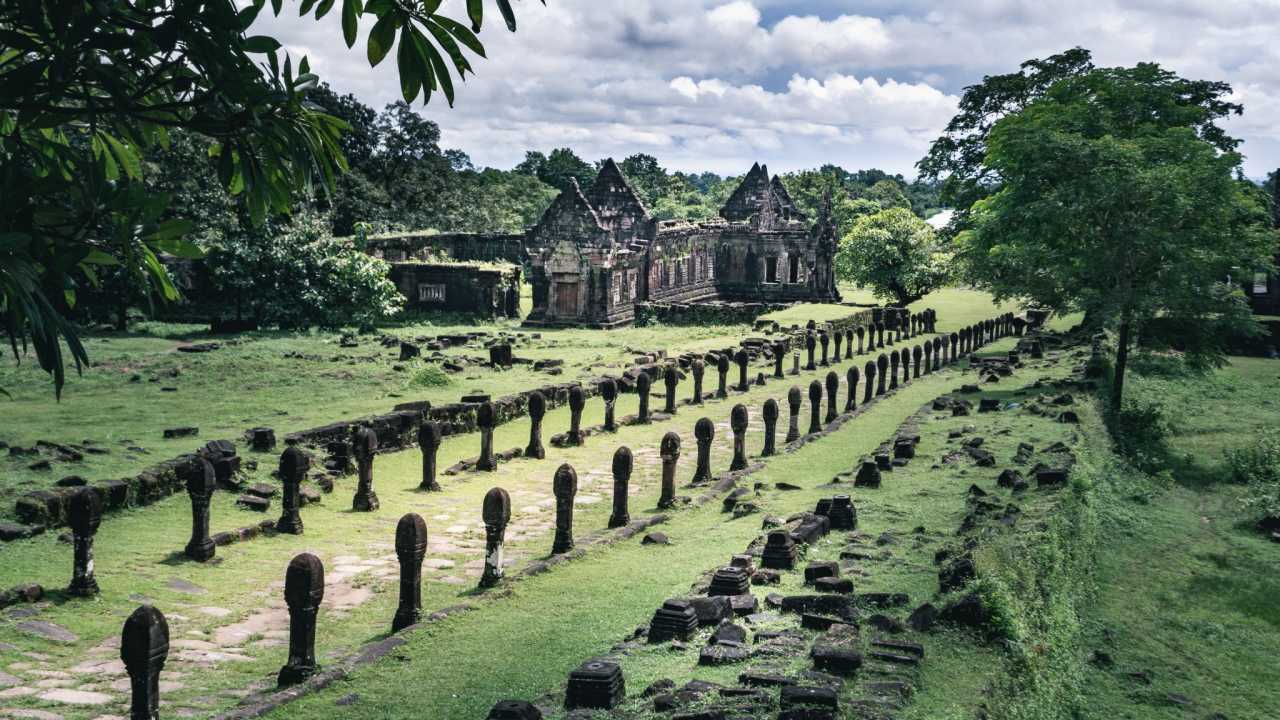
we reached this Khmer temple built in the 5th century.
The scenic area was completely empty,
ruined palaces and temple groups
appeared even more desolate and ancient
in the misty vapor after rain,
immediately awakening memories of Angkor Wat.
Wat Phu is far smaller in scale than Angkor,
but older than Angkor.
Ruined walls among overgrown weeds
possess a desolation completely conquered by time.
When sunlight pierced through clouds,that post-disaster beauty
instantly washed away all exhaustion.
At farewell time,
the guesthouse owner's seven-year-old daughter
ran through rain repeatedly with umbrella,
stuffing drawings into our hands one by one.
The pictures showed crooked rainbows and flowers,
paper edges dampened by rain.
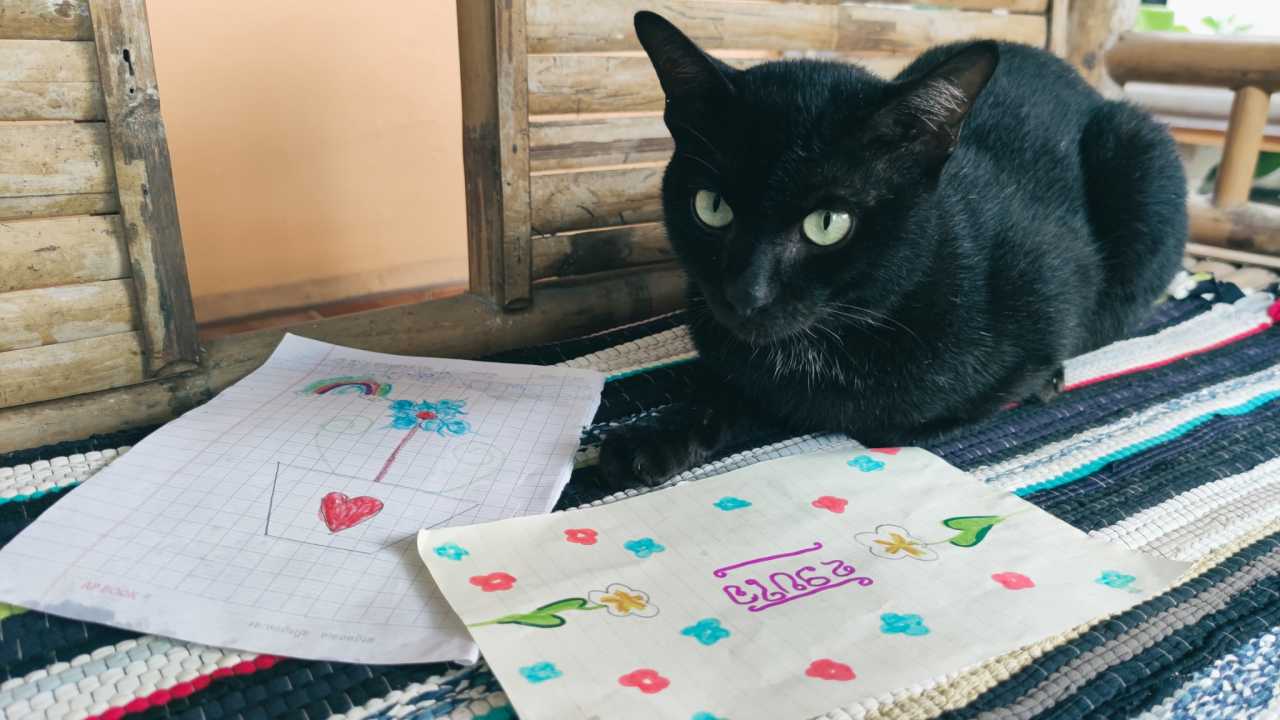
She said nothing,
that shy smiling face as she ran away blushing
diluted the unpleasantness from her mother's constant calculations.
This bashful gift
became Champasak's brightest memory.
Returning from Champasak to Pakse,
I spent half a day walking through this largest southern city,
it was ordinary and unremarkable,
yet untied a knot in my heart.
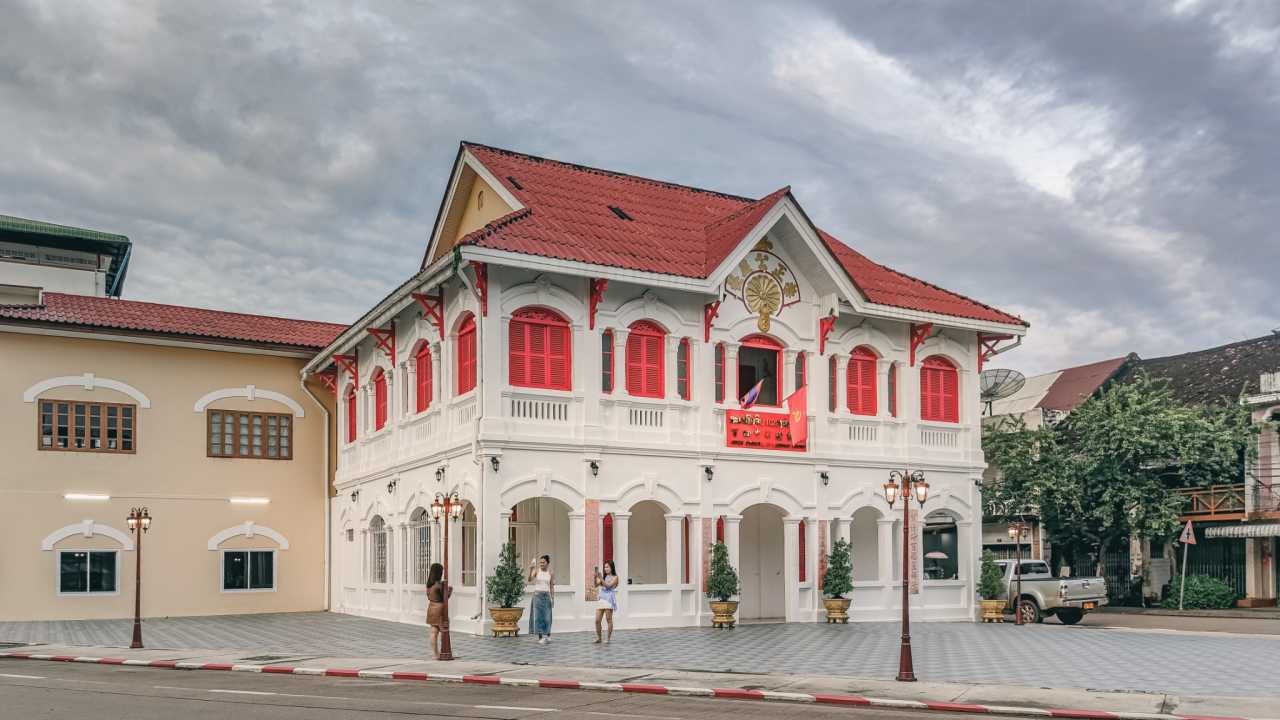
I had worried whether
the energy and money spent along this route were worthwhile.
But thinking deeper,
travel's value is never calculated by accumulating attractions.
It hides in that sleepless torment on the overnight bus,
in wordless exchanges with the artist,
in the capricious rain,
and in the little girl's shy gifted drawings.
It is all the time I experienced,
every version of myself I reached.
Vientiane | Scenes from a Worldly Stage
Mueang Fueang
Adding Mueang Fueang to the itinerary
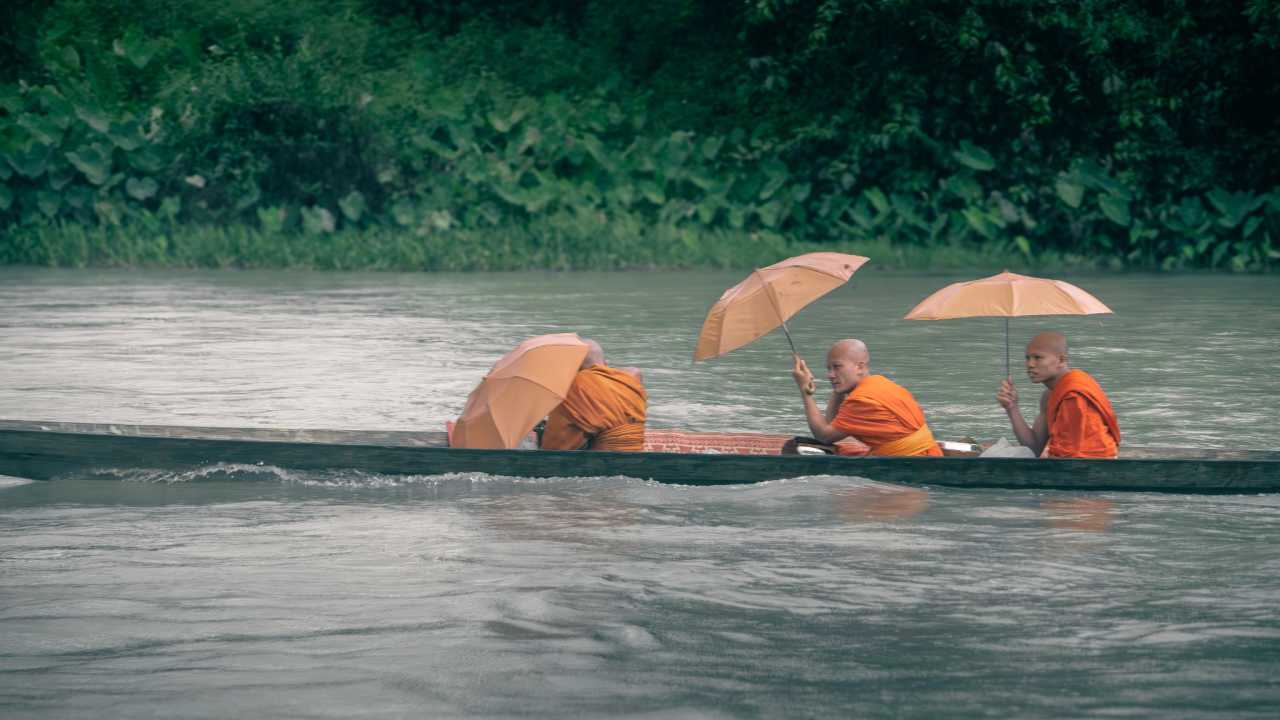
stemmed from imagining a water-based alms giving—
monks in boats, devotees offering food,
completing ancient rituals between morning mist and shimmering waves.
I could even envision what Zen-like qualities should appear in the camera lens.
The riverbank thirty kilometers away
received only brief mentions in travel guides,
yet I glimpsed a window into Lao folk beliefs.
For this,
I became exceptionally cautious,
fearful of missing that daily-only bus.
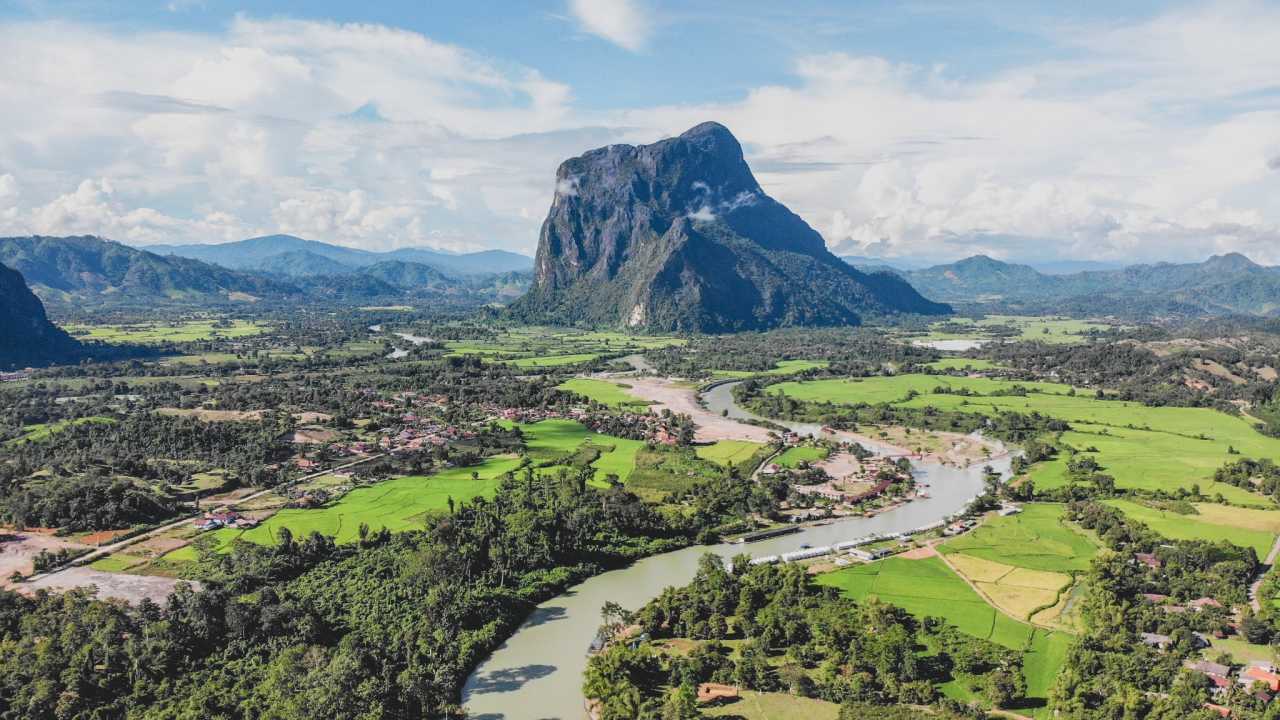
But the rainy season ultimately rewrote all preset scripts.
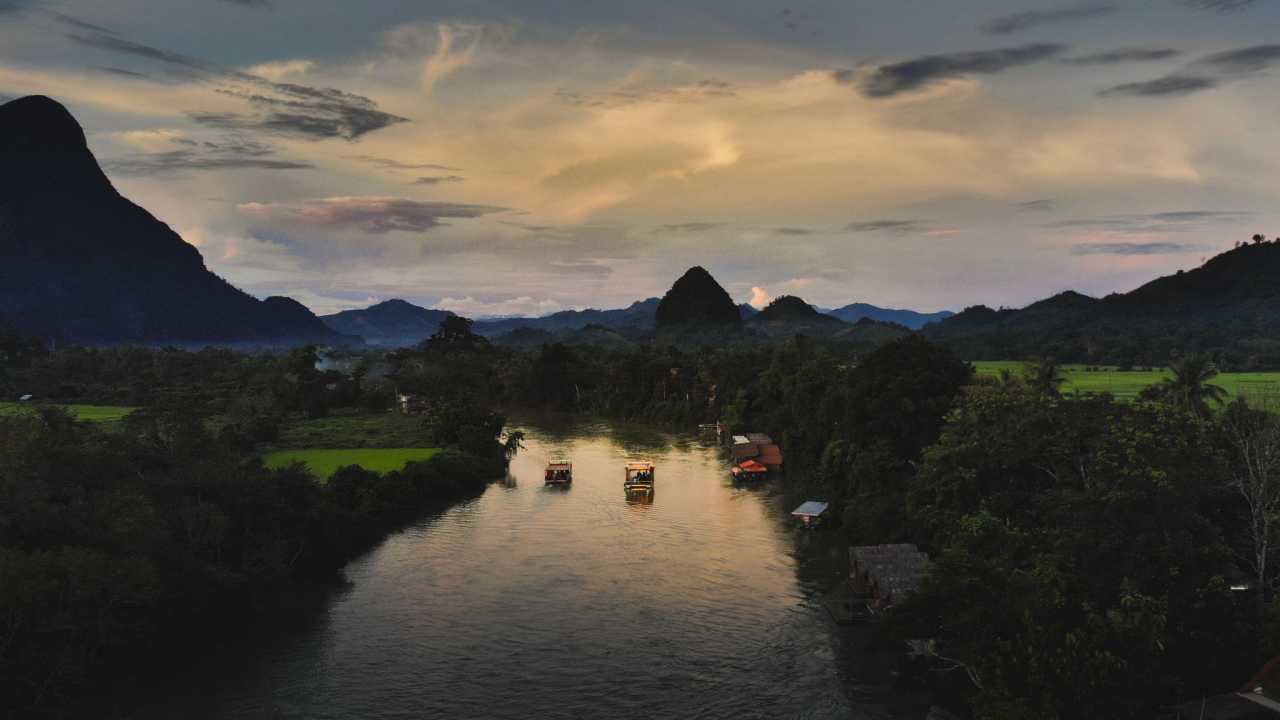
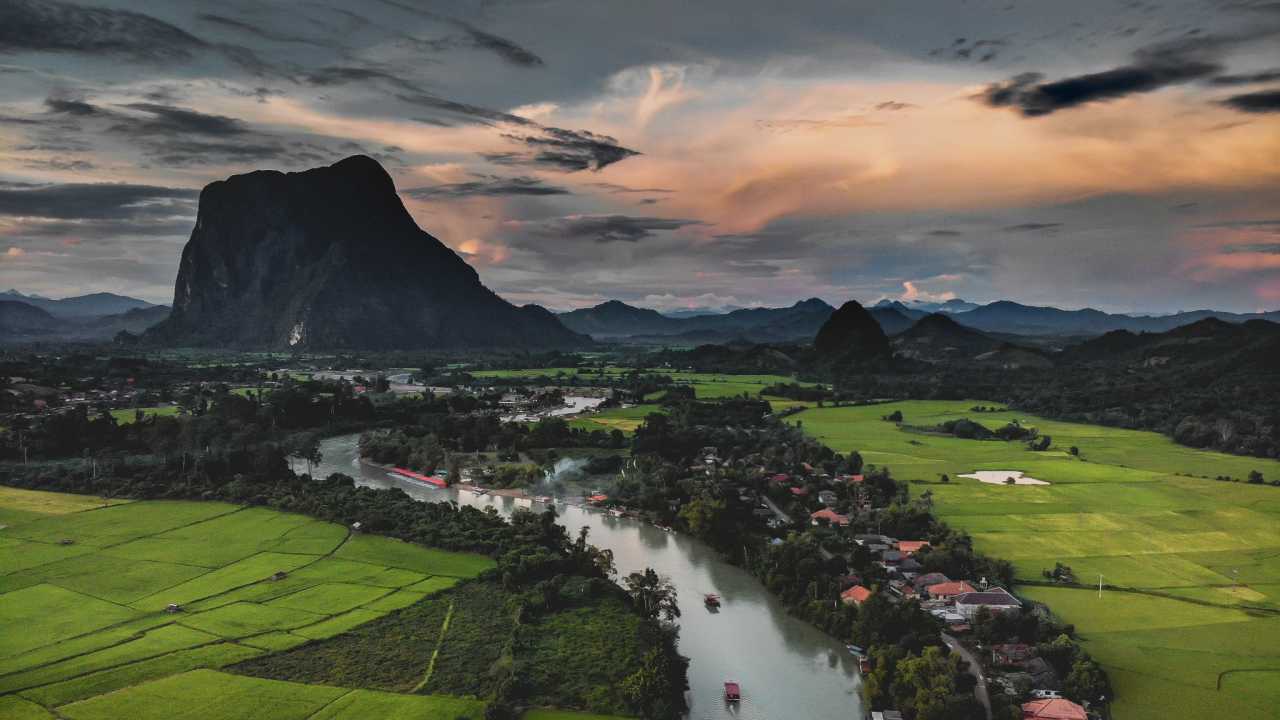
Mueang Fueang riverbank remained only rain-soaked silence,
vacation homes empty like abandoned stages.
No crowds for alms giving,
only scattered monks in canoes skimming water,
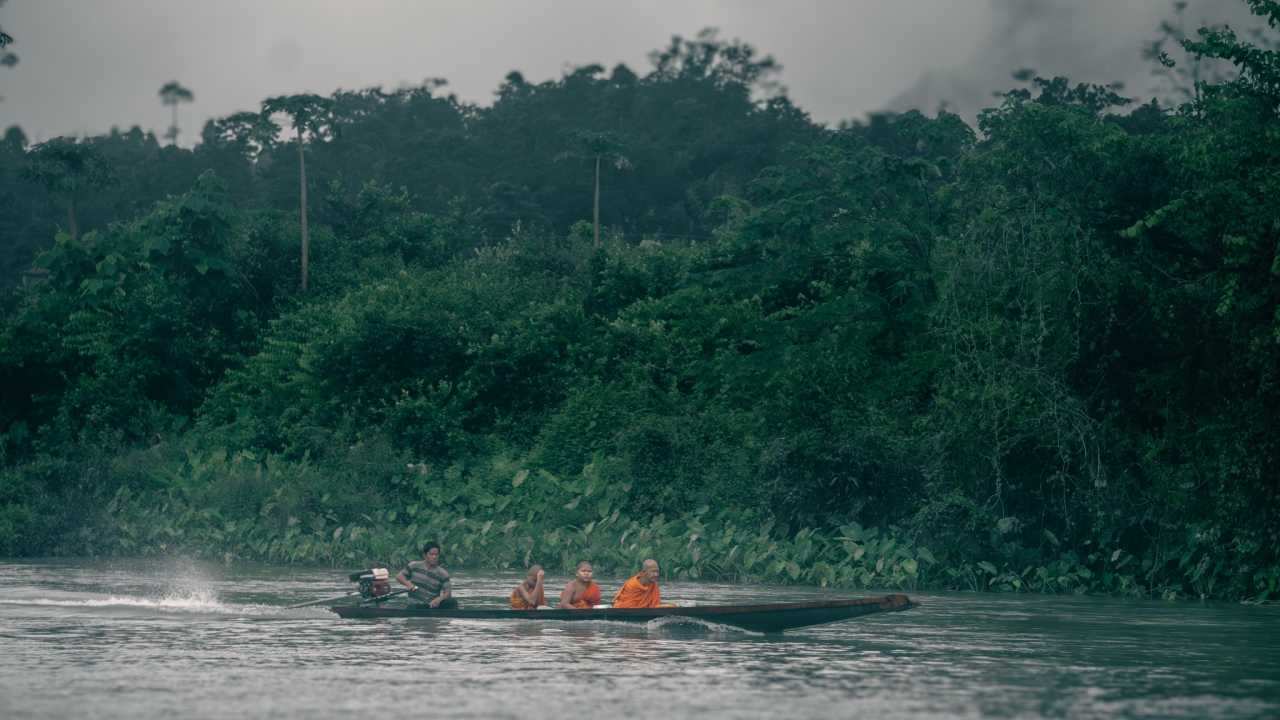
Coming specifically for this,
yet the expected scene never materialized,
what arrived was only the rainy season's persistent patter.
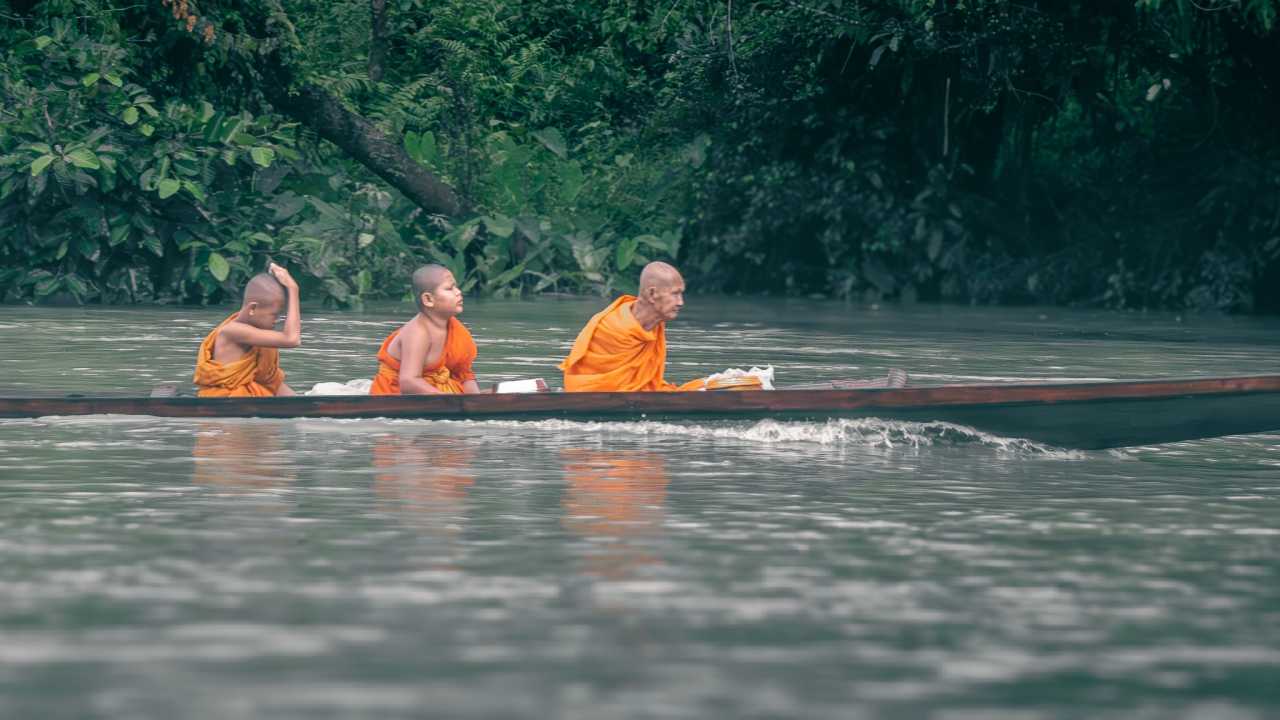
Mueang Fueang's meaning to me
shifted from an anticipated ritual
to a relaxed leisure time.
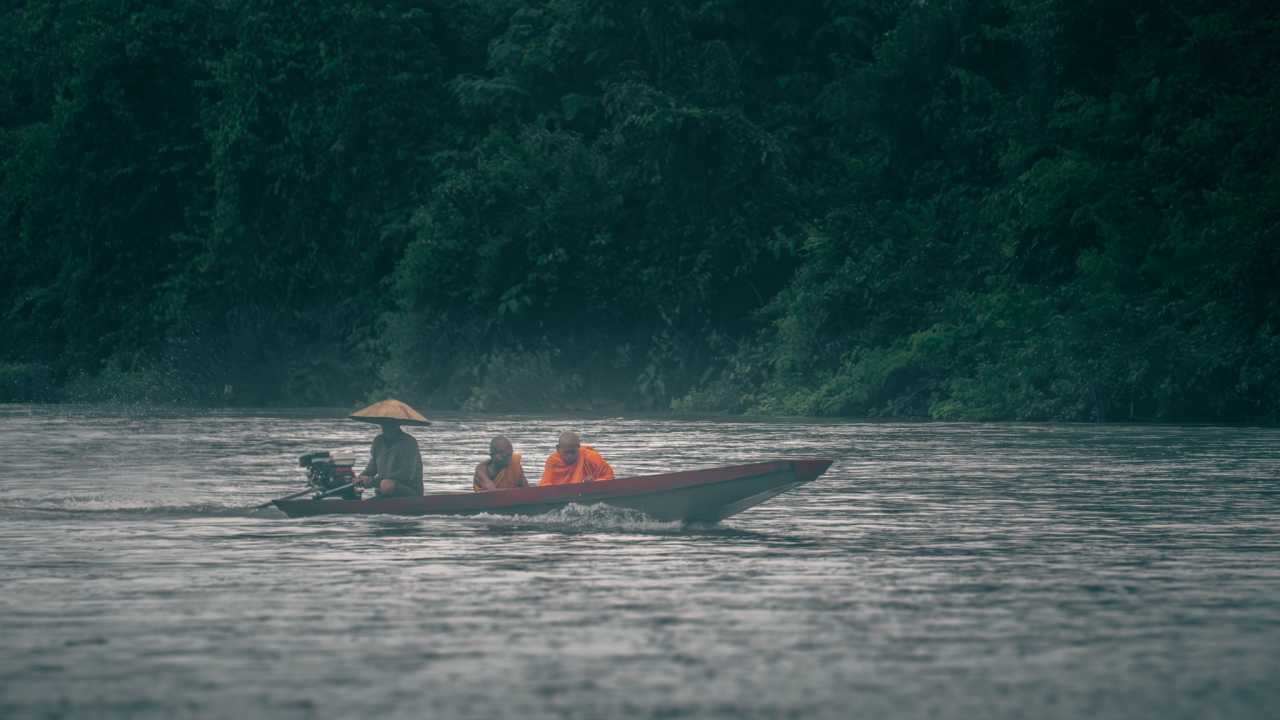
Instead, I unexpectedly witnessed vivid scenes of local vacationing—
tour boats carrying loud sound systems repeatedly passed,
breaking the tranquility,
creating an incongruous sense of amusement.
Xieng Khuan (Buddha Park)
Vientiane was the final act of the Laos journey,
aesthetic fatigue is the traveler's final luxury—
I allowed myself to pass countless gorgeous temples,
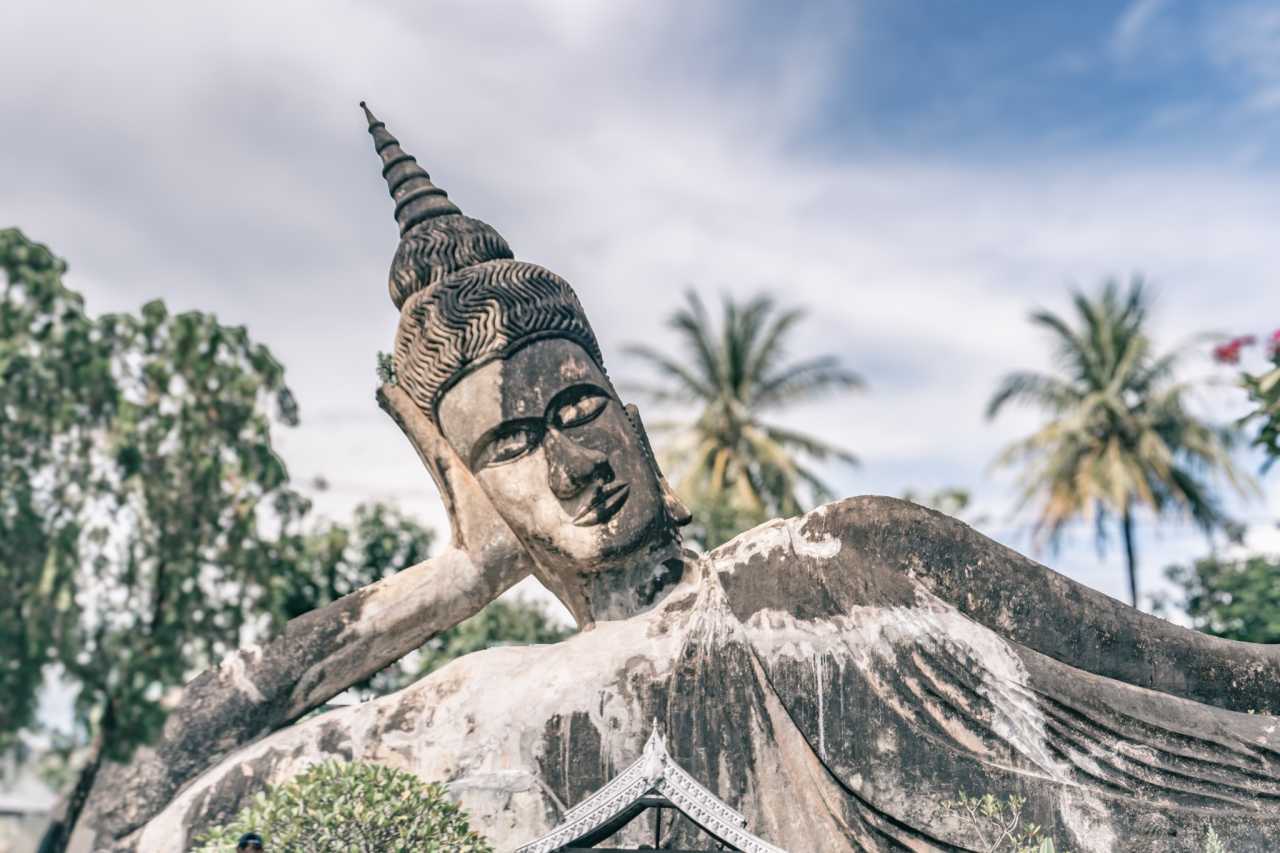
yet would make a special trip for Xieng Khuan in the distant suburbs.
 Buddha Park
 Buddha Park
I am no believer;
what attracts me
is never divine doctrine,
but the extremely rich humanistic aura
presented when humans interact with faith.
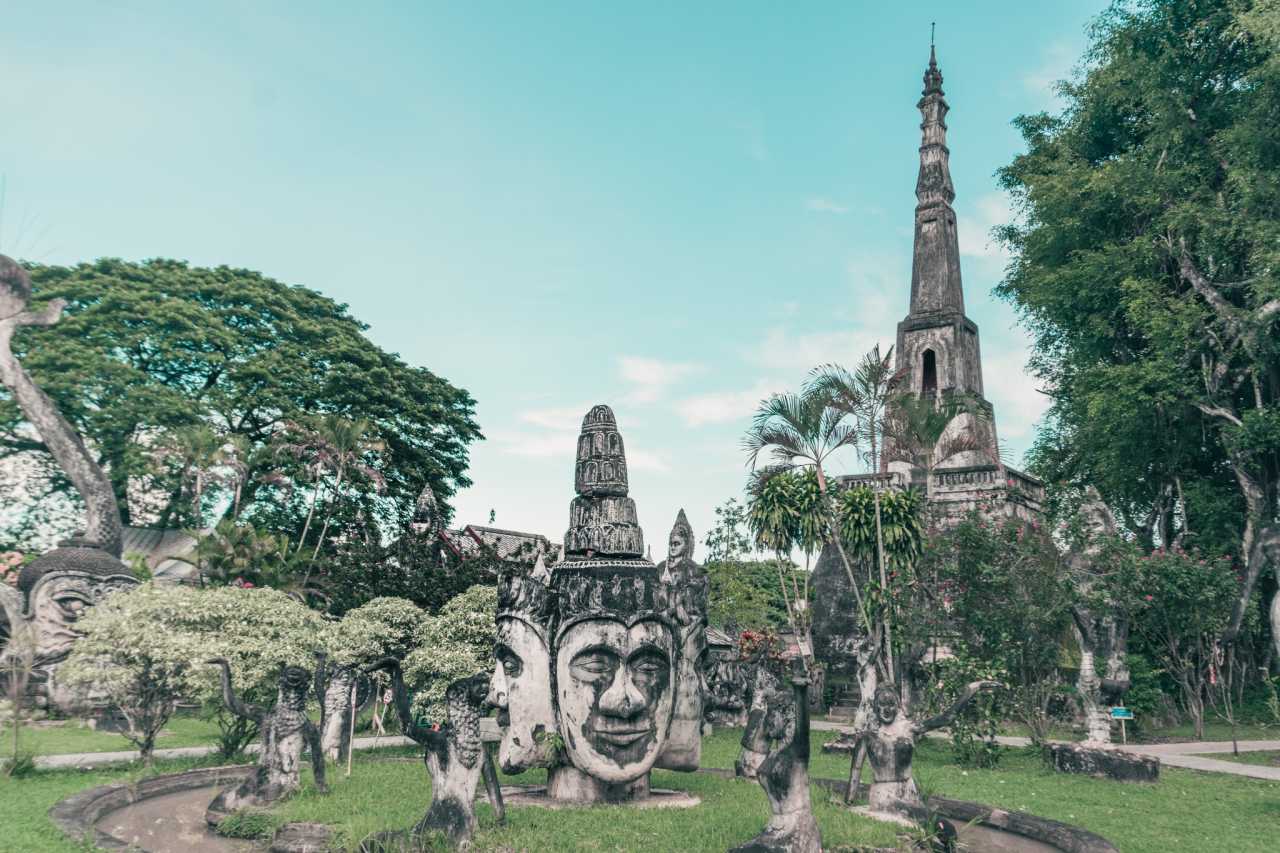
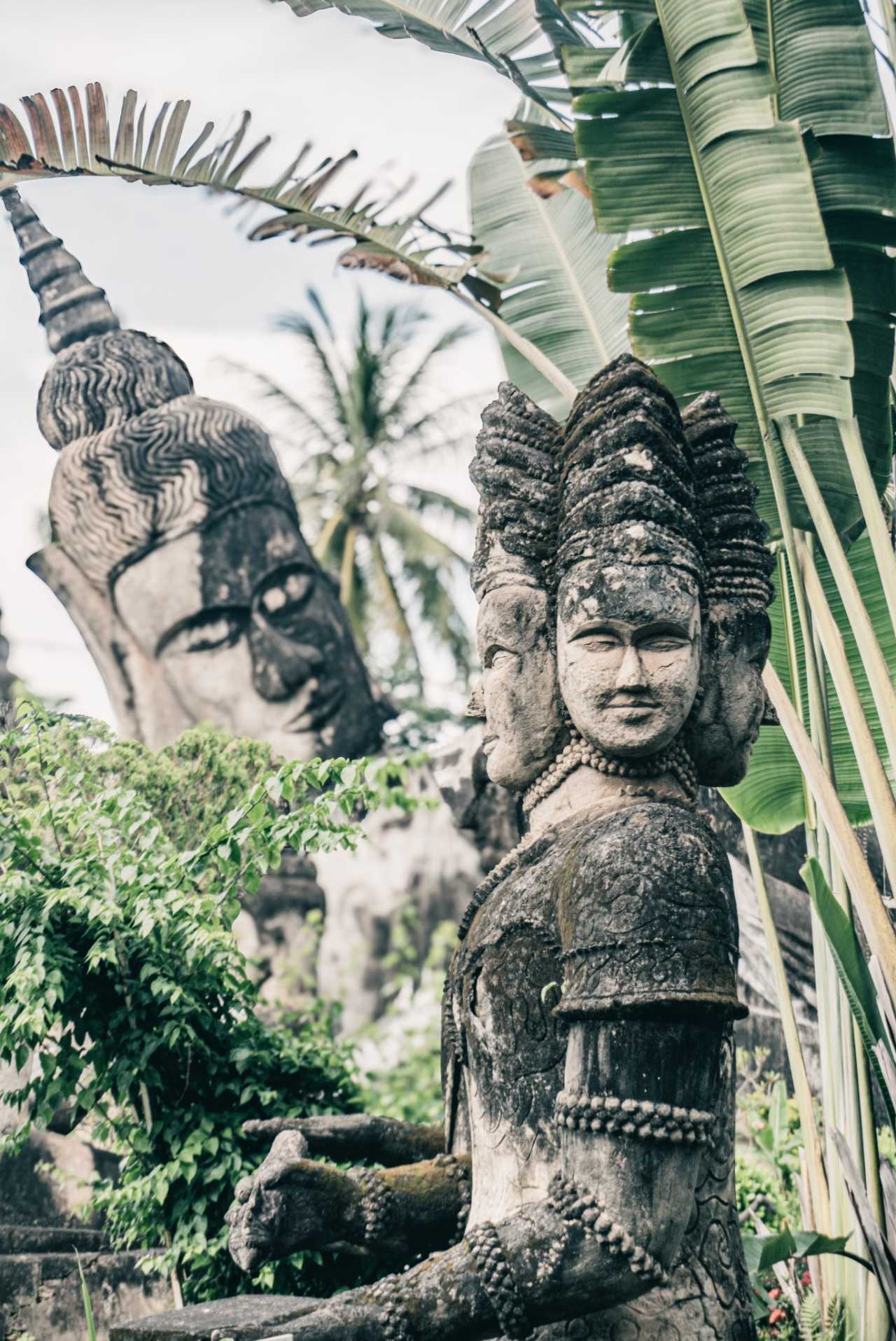
Xieng Khuan fits perfectly:
it fuses Buddhism's cycle of rebirth,
Hinduism's pantheon,
and the founder's artistic imagination into one.
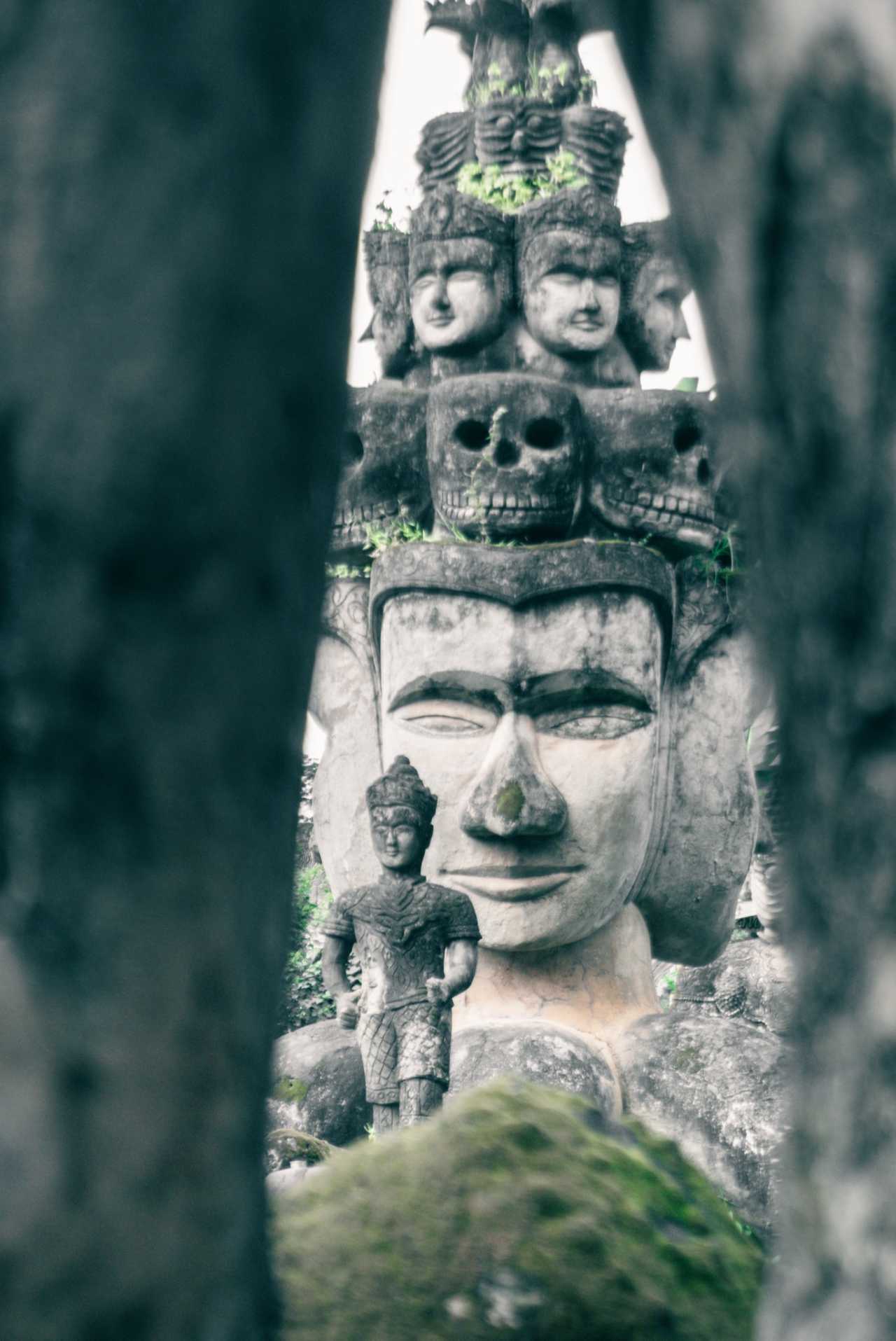 Buddha Park
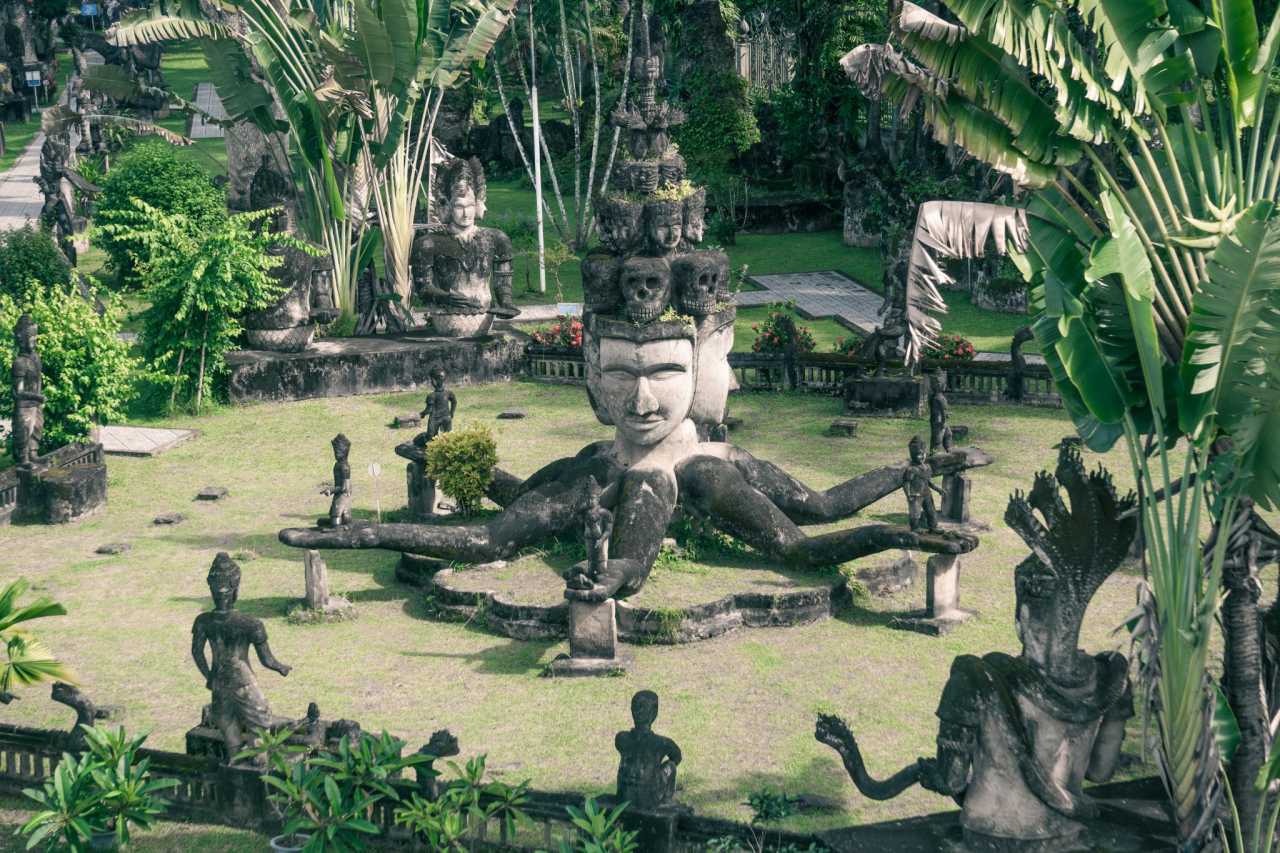
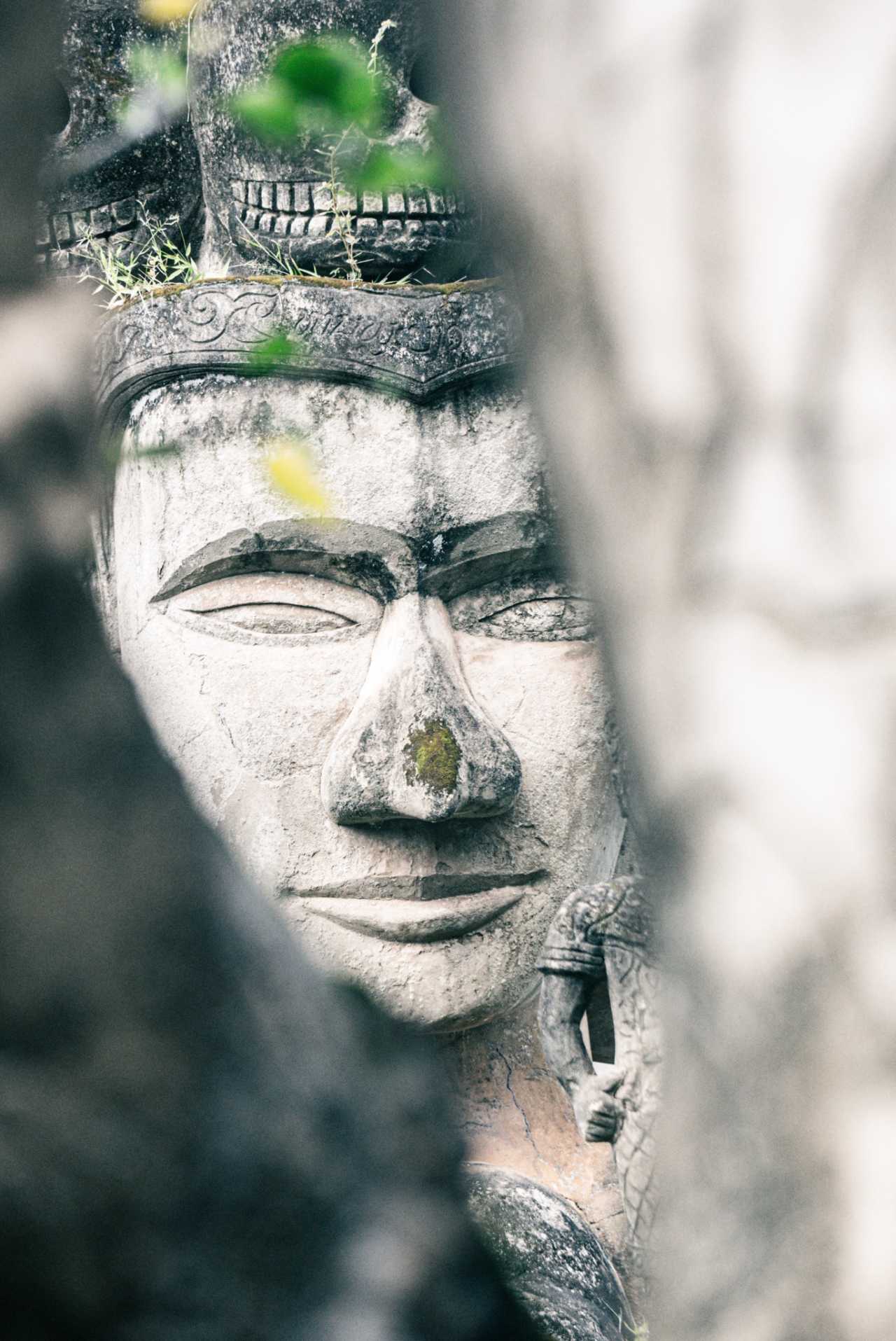
In this cement sculpture park of ten thousand Buddhas,
no heavy incense smoke,
only the creator's fantasy using deities as brushes.
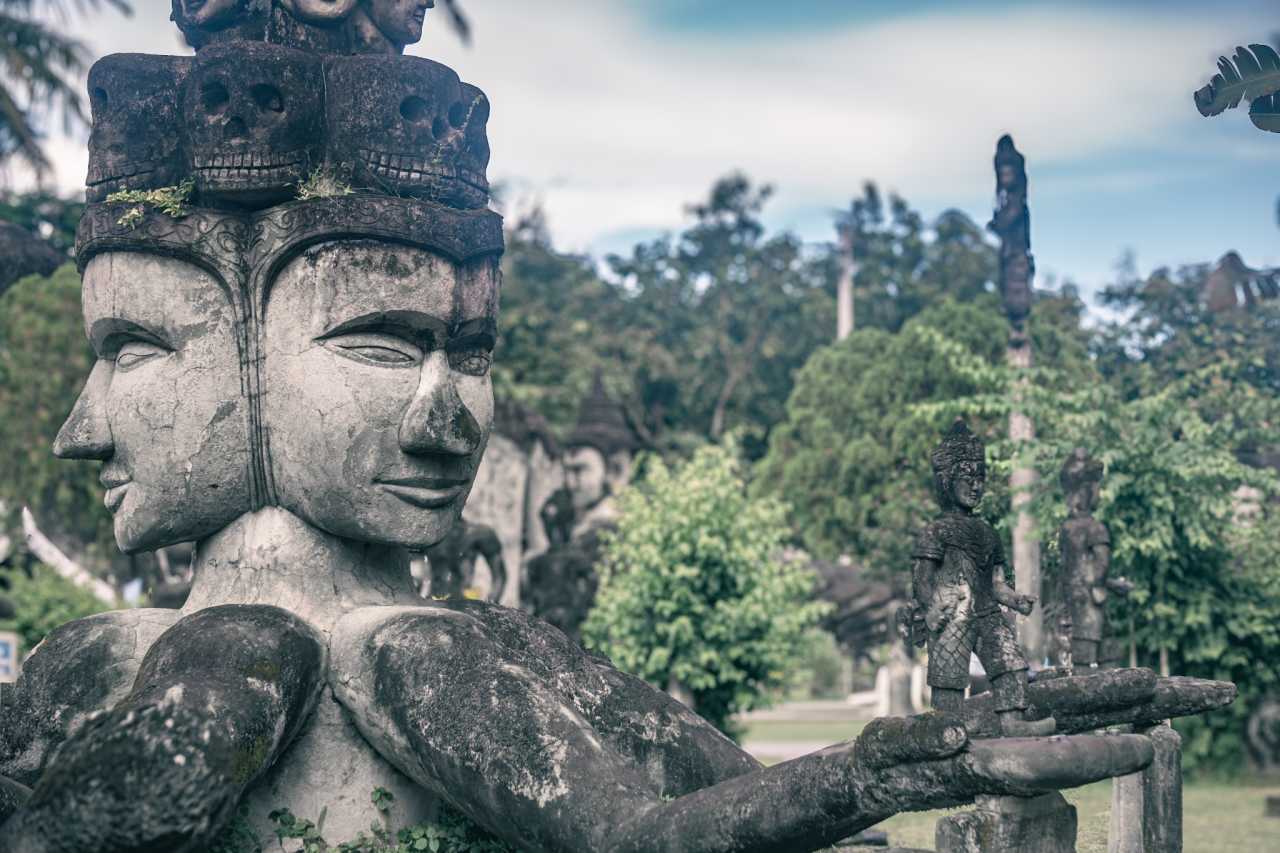 Buddha Park
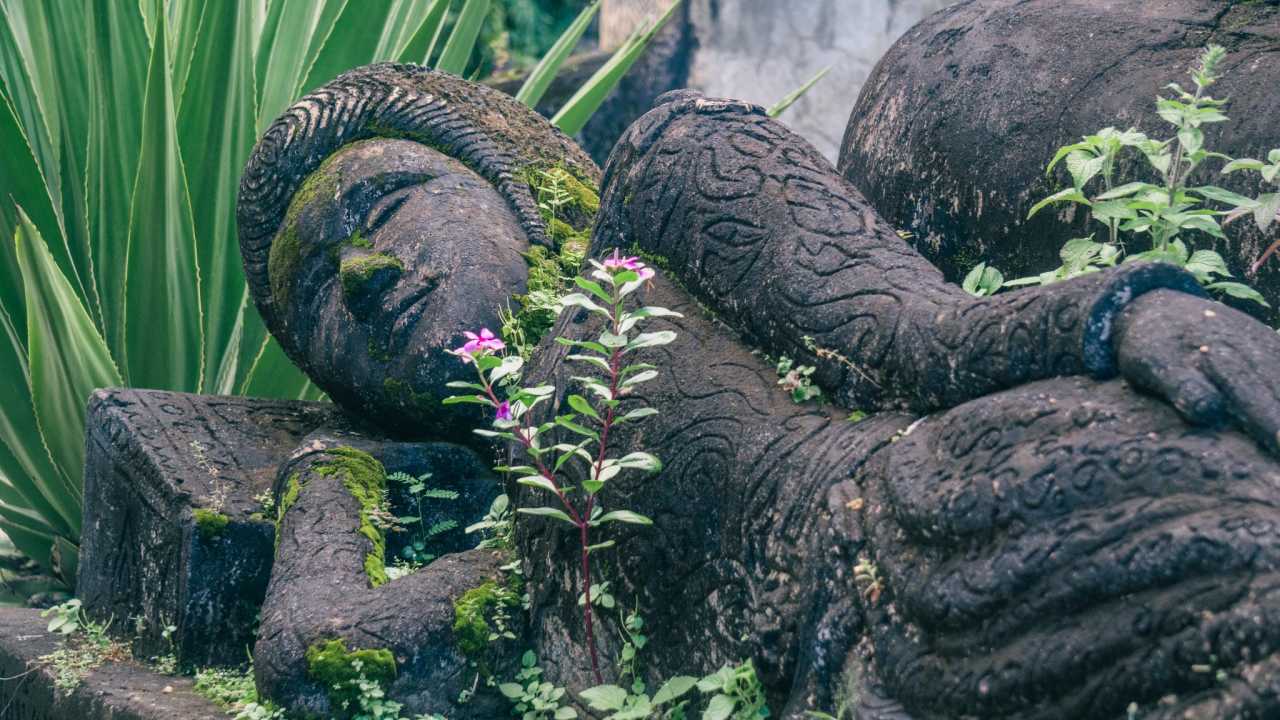 Buddha Park
At the entrance of "Hell Tower,"
a giant demon's mouth serves as the doorway.
Crawling through fierce teeth,
climbing narrow stairs to the tower top
symbolizes ascending from hell through reincarnation to heaven.
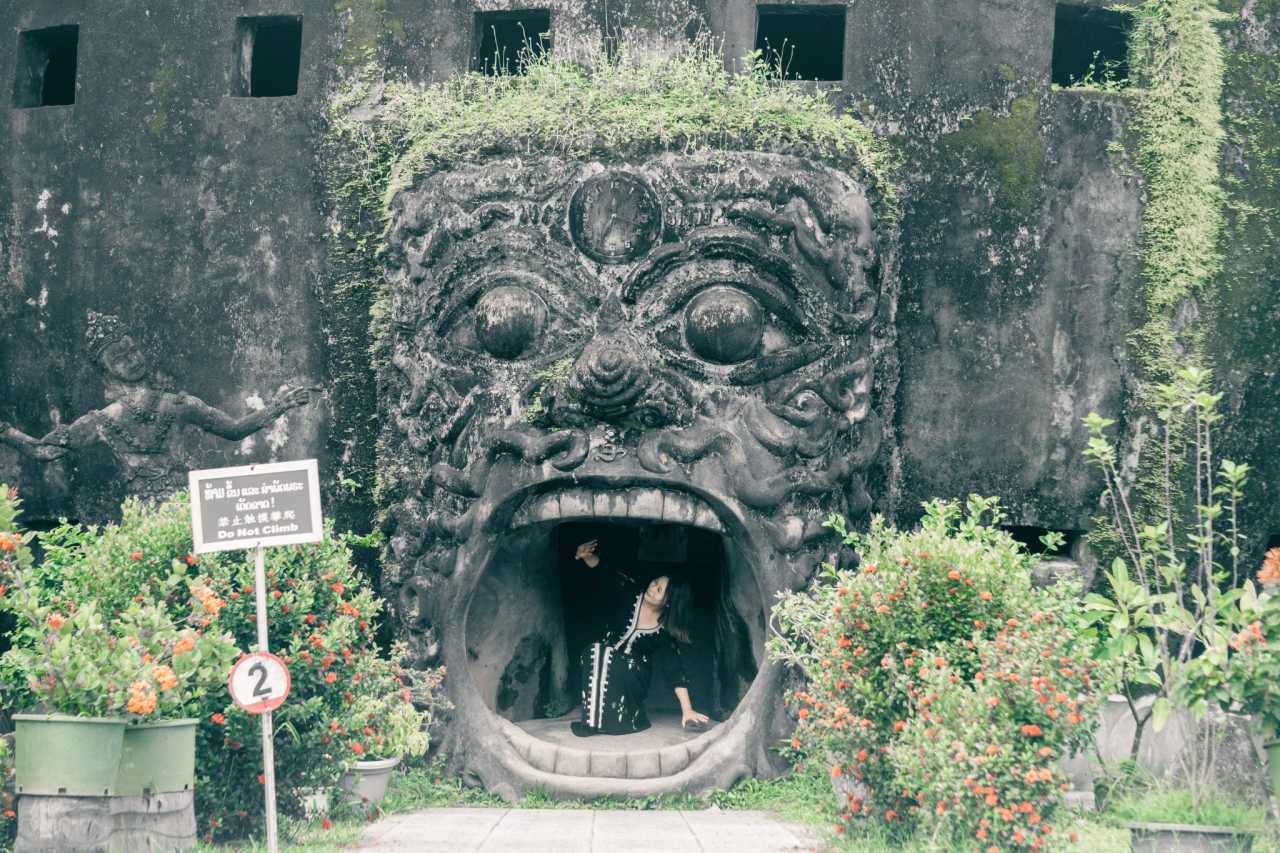 Buddha Park
 Buddha Park
As a faithless observer,
what I experienced wasn't divinity
but humanity—
that creative passion projecting inner landscapes
without reservation.
 Buddha Park
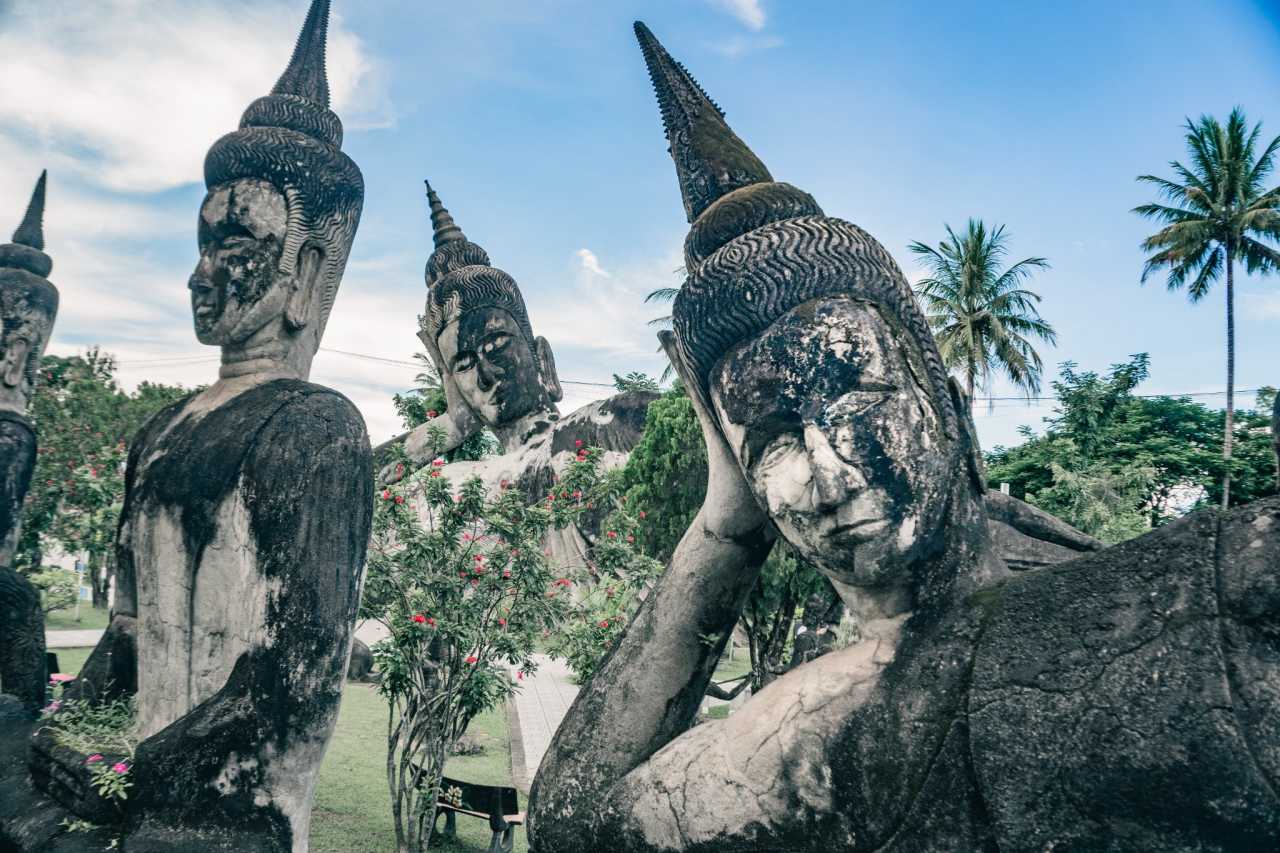
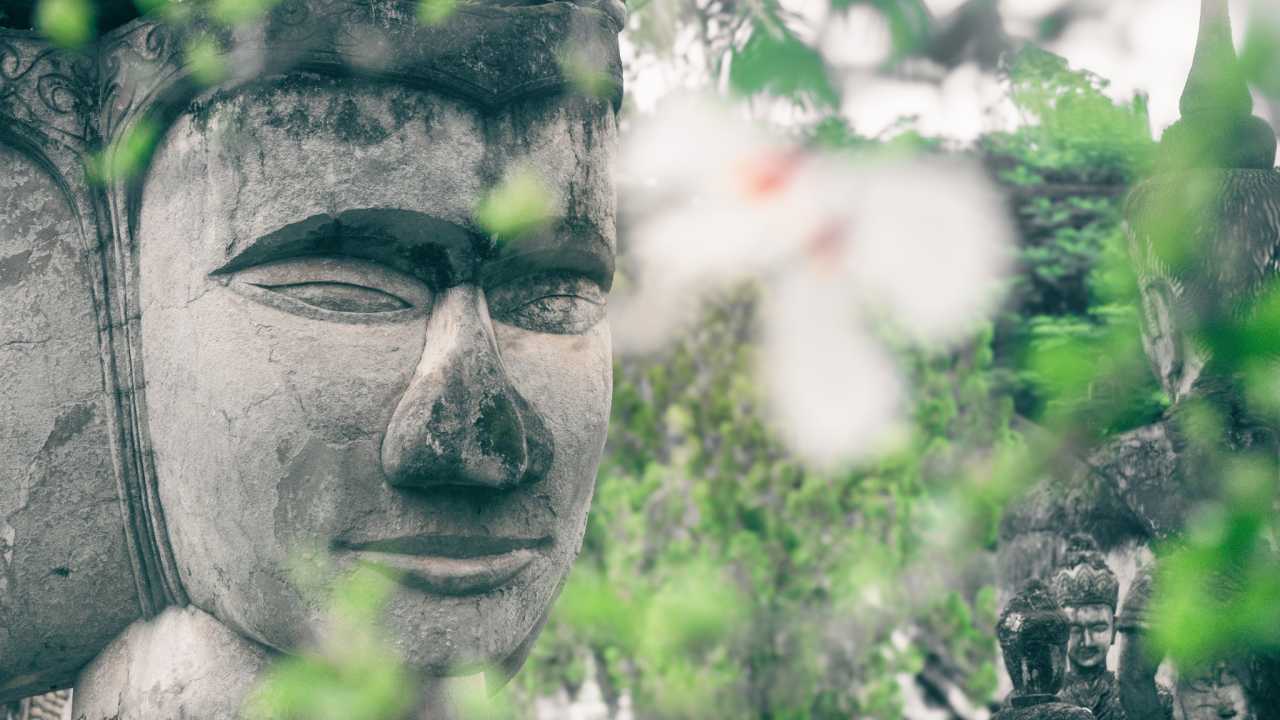
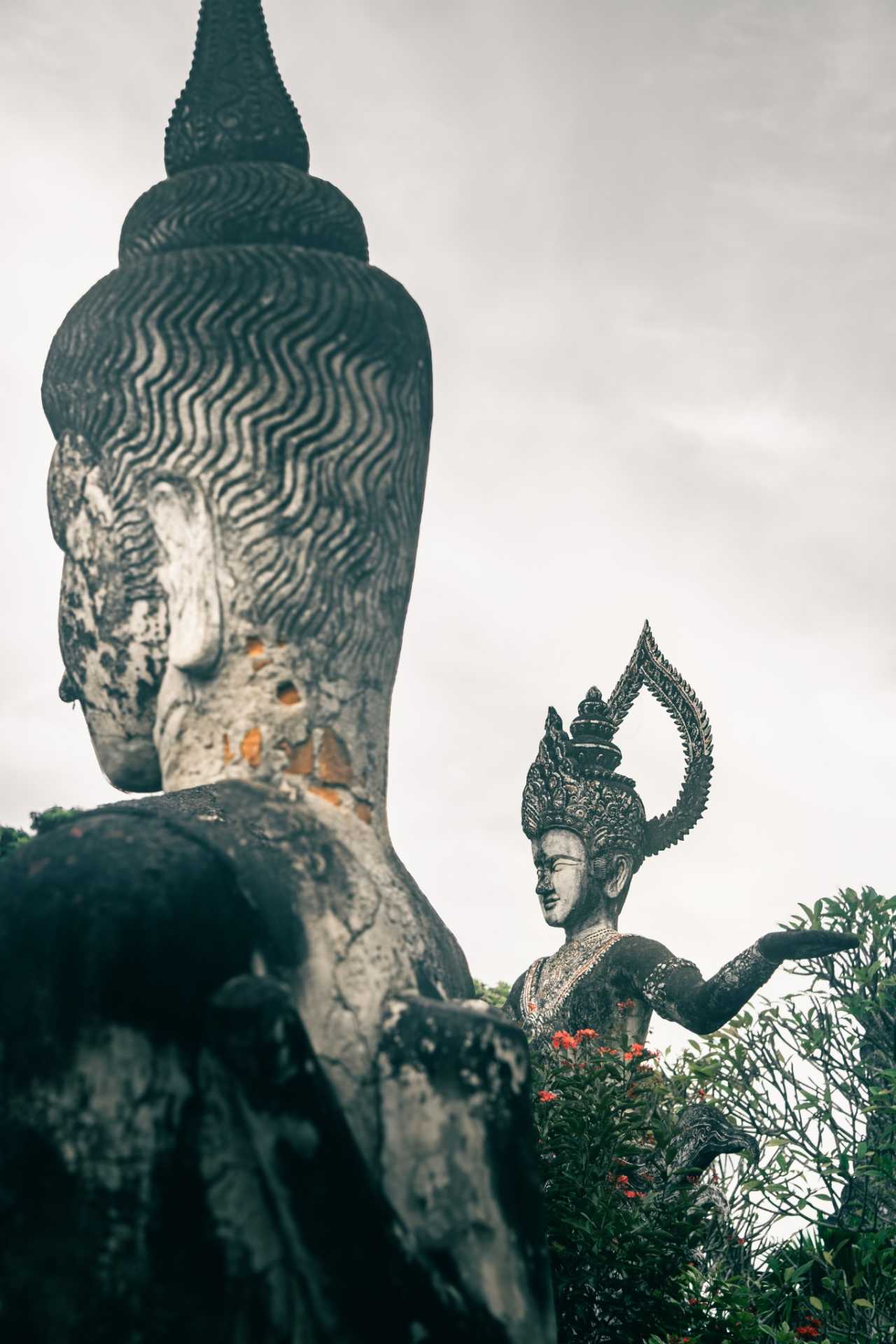
Walking among countless deity statues,
I felt artistic shock and cultural fusion,
yet always maintained a layer of rational distance.
No enlightenment,
only an indescribable sense of alienation and questioning.
 Buddha Park
 Buddha Park
From Xieng Khuan's frozen deities
to Mueang Fueang's unfinished alms giving,
what I constantly seek
is always the vivid performances on humanity's stage.
 Buddha Park
Postscript
Regarding the matter of monks eating meat witnessed at Vang Vieng temples,
subsequent research confirmed
this is indeed permitted by Theravada Buddhist precepts,
which differs from Chinese Mahayana Buddhist fasting traditions.
I have no intention of deeply investigating this single phenomenon;
religious precepts themselves possess complex historical and regional origins.
However, observing various Buddhist presentations in daily life,
and even broader religious landscapes,
the many self-contradictions existing between doctrine and practice
remain undeniable facts.
 Buddha Park
These contradictions
perhaps stem from transformations and misinterpretations during millennia of transmission,
or from deliberate distortions by practitioners with ulterior motives.
Thus, I'm further convinced:
maintaining never-relaxed critical examination of this world
is the only true practice.
Observe, then understand;
question, then learn.
My Travel Guide
Core Route
Luang Prabang → Vang Vieng → Vientiane → Champasak → Vientiane → Mueang Fueang
Itinerary Features
● Travel south along China-Laos Railway, winding through Luang Prabang, Vang Vieng to Vientiane, then deep south to Champasak heritage area, finally flying back to Vientiane.
● Complete integration of religious culture, natural landscapes, world heritage, and tropical ambiance.
● Budget travel focused, emphasizing cost-effectiveness and local experiences.
● Total 14 days, 12 full days on-ground exploration.
Visa
Land border/rail entry: advance visa processing recommended.
Air entry to Vientiane: visa on arrival available.
Personal experience: advance sticker visa, 180 RMB (platform processing), materials required only passport + photo.
SIM Card
Personal choice: pre-purchase ETL card via domestic platform (36 RMB/10 days, 18GB+calls), insert and use upon entry.
Signal: good in cities, weaker in rural areas.
Alternative: purchase Unitel/Lao Telecom local cards after entry.
Time Difference
Laos is in UTC+7, 1 hour behind Beijing time.
️ Climate (September Experience)
Season: Peak rainy season (July-September), daily rainfall
Clothing: Short sleeves mainly, carry light jacket for rain and cooling
Tips: Itinerary may be affected by rainfall, flexible adjustments recommended
Language
Official language: Lao
English prevalence: Basic communication无障碍 in tourist areas
Currency & Payment
Currency: Lao Kip (LAK)
Common banknote denominations: 100,000; 50,000; 20,000; 10,000; 5,000; 2,000; 1,000; 500
Exchange rate reference: 1 CNY ≈ 3,048 LAK (September 2025)
Currency exchange suggestions:
Priority to USD cash (some merchants accept directly)
Guesthouses generally provide exchange services, rates vary case-by-case, choose discretionally
Payment methods:
Cash primary, credit card acceptance low (may include additional fees)
Some merchants support Alipay/WeChat Pay
Consumption tips:
Tourist area prices approach domestic tier-2/3 cities, street snacks cheap;
Clearly priced shops more reliable, beware scams.
️ Security Feelings
Overall safe and friendly, nighttime street walking relaxed and stress-free
️ Main Attractions & Tickets (Kip LAK)
(Only includes attractions mentioned in text, prices for reference, subject to change)
Luang Prabang:
Sisavangvong Road: Free
Alms Giving Ceremony: Free
Royal Palace: Free for exterior
Wat Xieng Thong: 30,000 kip
Mount Phousi: 30,000 kip
Wat Mai: Free
Kuang Si Waterfall: 60,000 kip
The Lonely Tree: Free
Rice Field Cafés (like Samna Cafe): Restaurant consumption
Morning Market: Free
Night Market: Free
Vang Vieng:
Namxay Top View: 20,000 kip
Honekham Viewpoint: 20,000 kip
Sysoumangkhararam Temple: Free
Champasak:
Wat Phu: 70,000 kip
Vientiane:
XiengKhuan Buddha Park: 60,000 kip
Vientiane Night Market: Free
Mueang Fueang:
Water alms giving (avoid rainy season recommended): Free
Transportation Battle Guide
Long-Distance Intercity Transport
⭕ Reference itinerary sequence:
Kunming (high-speed rail) → Luang Prabang (high-speed rail) → Vang Vieng (high-speed rail) → Vientiane  → Pakse (songthaew) → Champasak (charter) → Pakse
  → Vientiane (bus) → Mueang Fueang (bus) → Vientiane
1. China-Laos Railway (core trunk line)
Route: Depart from Kunming South Station, China, disembark at Mohan Station and Laos Boten Station successively to complete immigration procedures. Laos section passes Luang Prabang, Vang Vieng, terminating at Vientiane.
Ticketing methods:
● China section (Kunming → Luang Prabang): Use official app "Railway 12306" for purchase. Passport required for ticketing, paper tickets must be exchanged before boarding.
● Laos section (Luang Prabang ↔ Vang Vieng ↔ Vientiane): Download Laos official app "LCR Ticket". This app supports Alipay and WeChat Pay.
2. Vientiane → Pakse (Night Bus)
Boarding location: Vientiane Southern Bus Station, distinguish from Vientiane Central Bus Station.
Price & duration: 320,000 kip/person, usually night sleeper buses (Sleeping Bus), approximately 8pm departure, 13-hour journey.
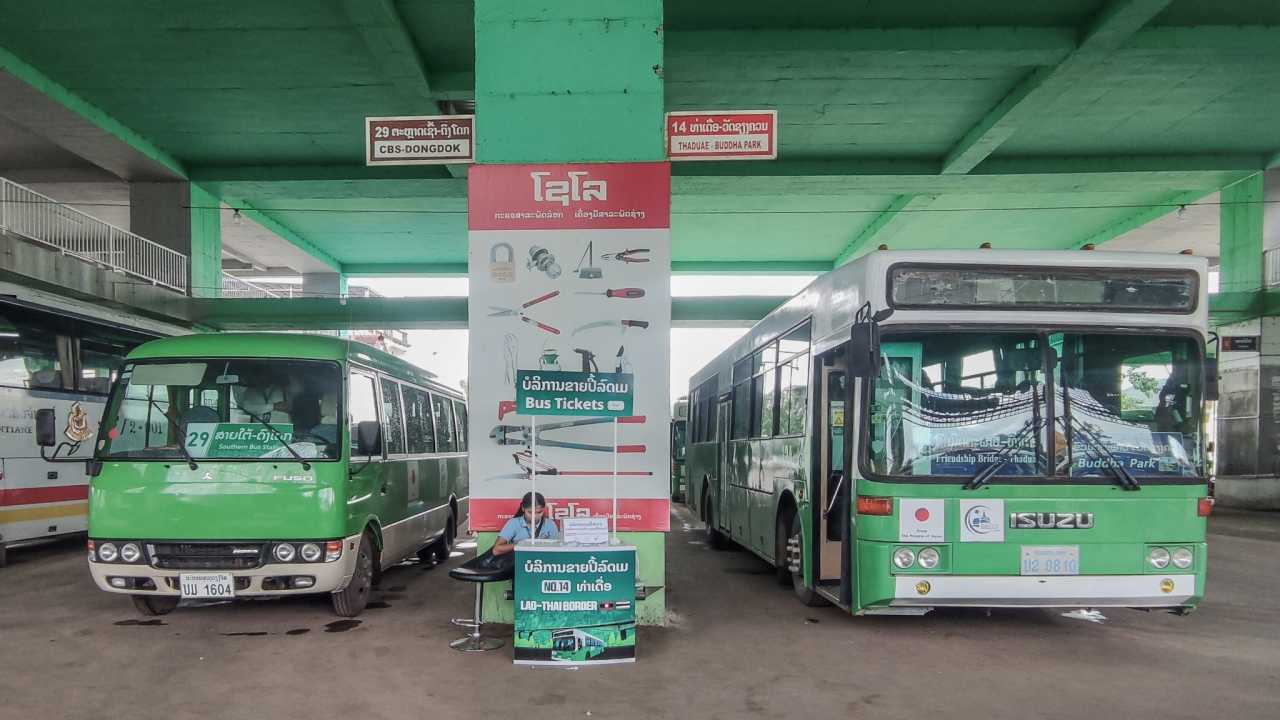
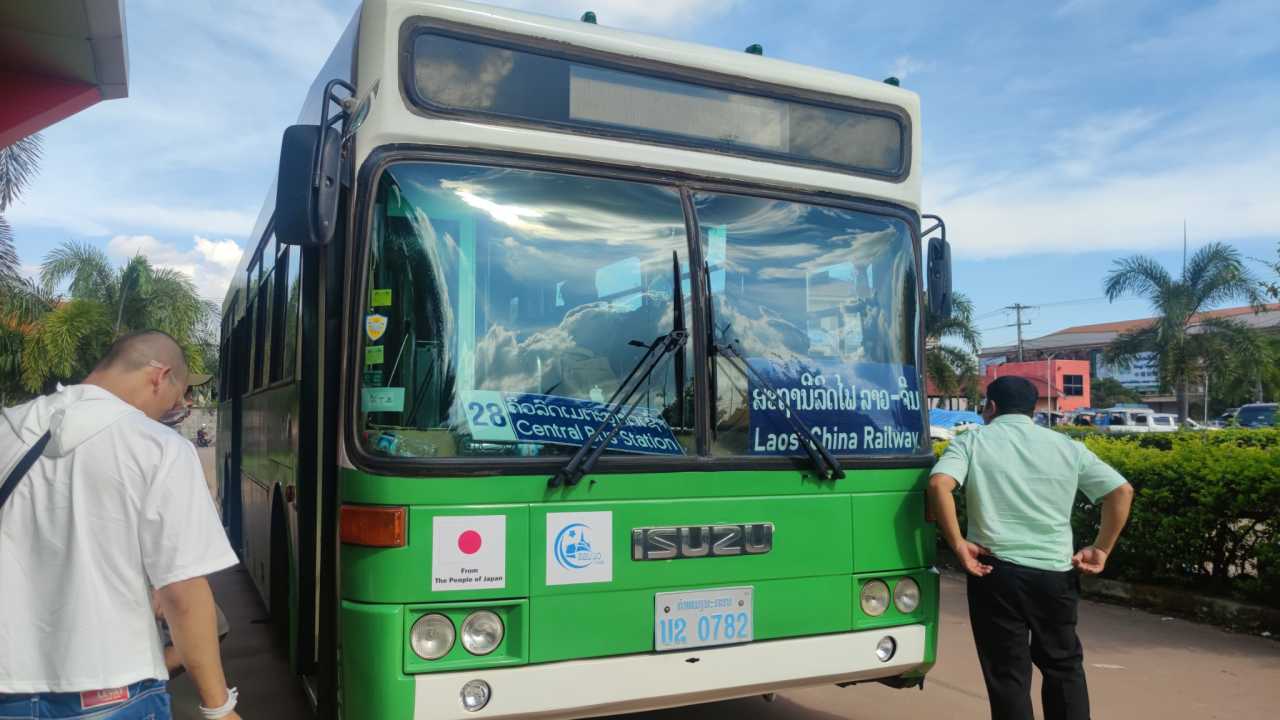
Connecting transport: From Vientiane Railway Station to Southern Bus Station, take Bus 28 (green large bus) at station entrance. Route goes to Southern Bus Station first, then Central Bus Station, unified 50,000 kip/person, very convenient.
3. Pakse ↔ Champasak (Songthaew/Charter)
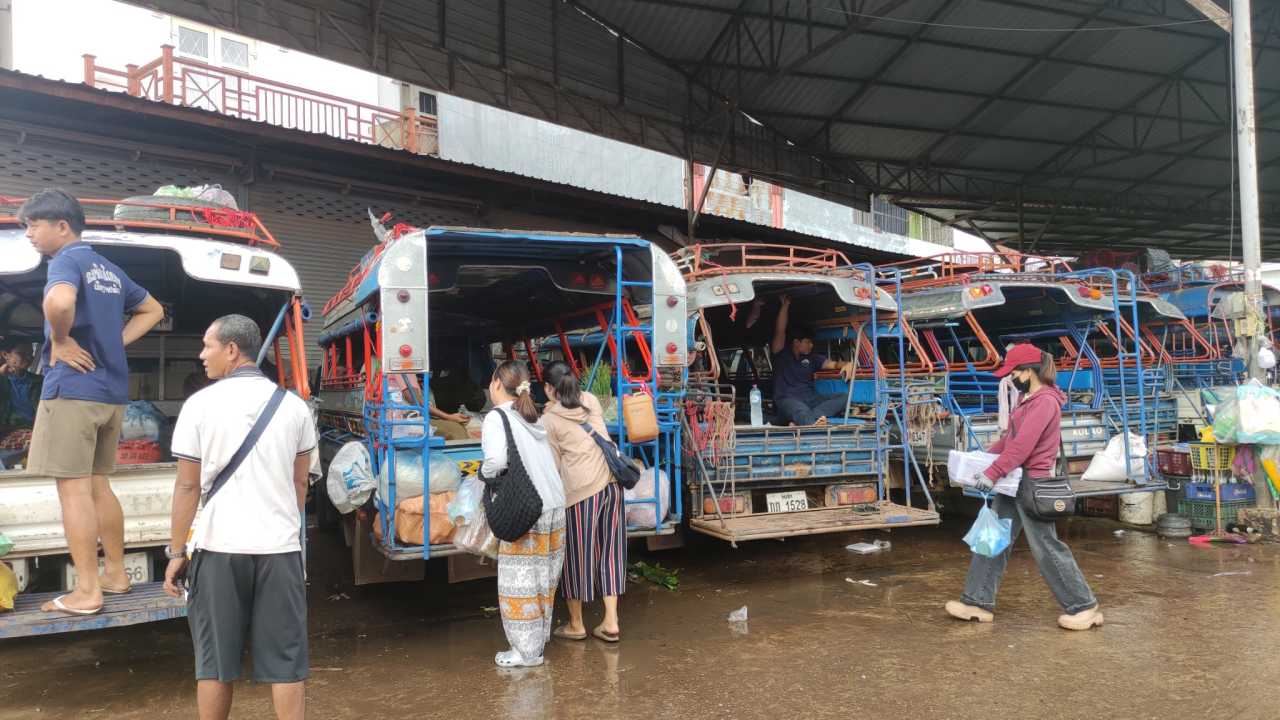
Outbound: At Pakse's Talat Daoheuang Bus Station (inside Pakse New Market) take songthaew, departs when full. 70,000 kip/person, ~30km, 40-minute ride. Tell driver guesthouse name for direct delivery.
Station connection: Talat Daoheuang Bus Station ~2-3km from Pakse's Champasak bus terminal, take tuk-tuk.
Return warning: Public transport info from Champasak back to Pakse is unstable, reportedly may only have morning service. We missed timing and were forced to charter return, quoted 23 USD, very passive.
4. Vientiane ↔ Mueang Fueang (Scheduled Bus)
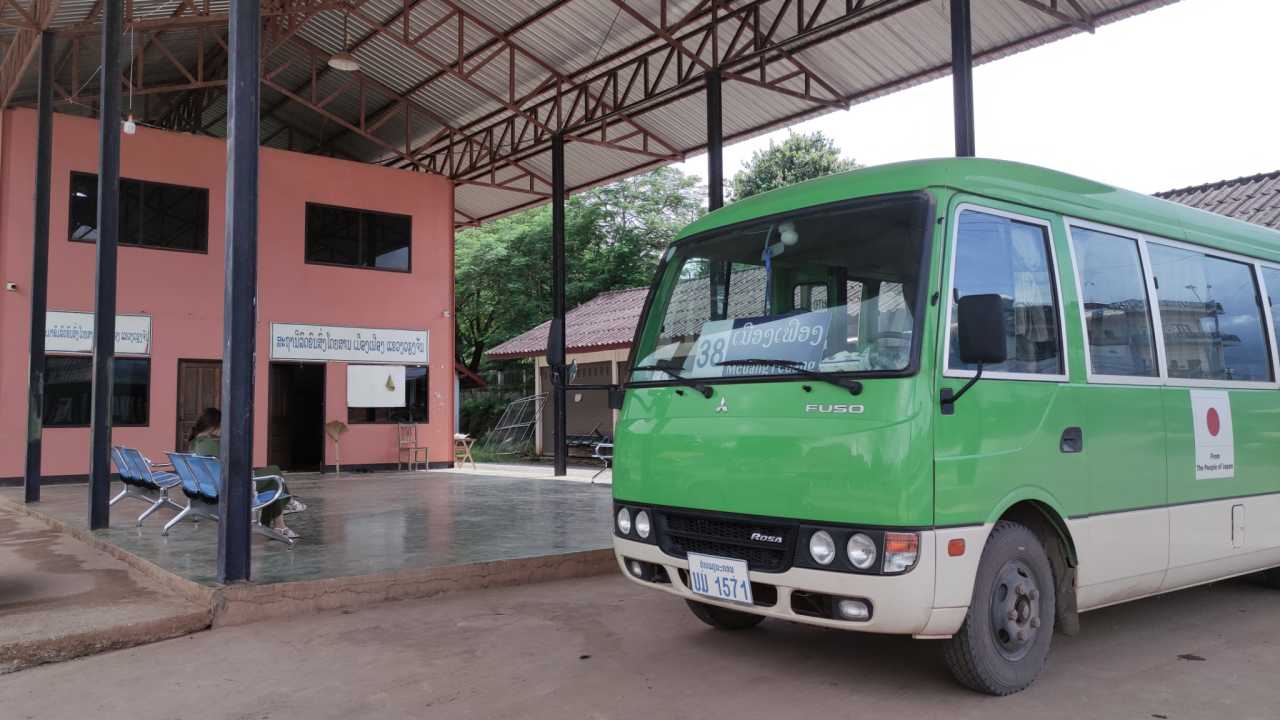
Outbound: Take Bus 38 at Vientiane Central Bus Station, only one daily departure at 10am, 3-hour journey, 150,000 kip.
Return: Mueang Fueang to Vientiane departure around 1pm+, plan timing carefully.
Local Short-Distance Transport
1. Ride-hailing/Tuk-tuk
●Indrive: Reportedly available but ineffective in multiple city tests.
●Tuk-tuk: Most common transport, but pricing opaque.
2. City transport details
Luang Prabang:
●Railway station to city: Uniform green minibus/songthaew after exit, 40,000 kip/person to city. Tell driver guesthouse name for direct delivery.
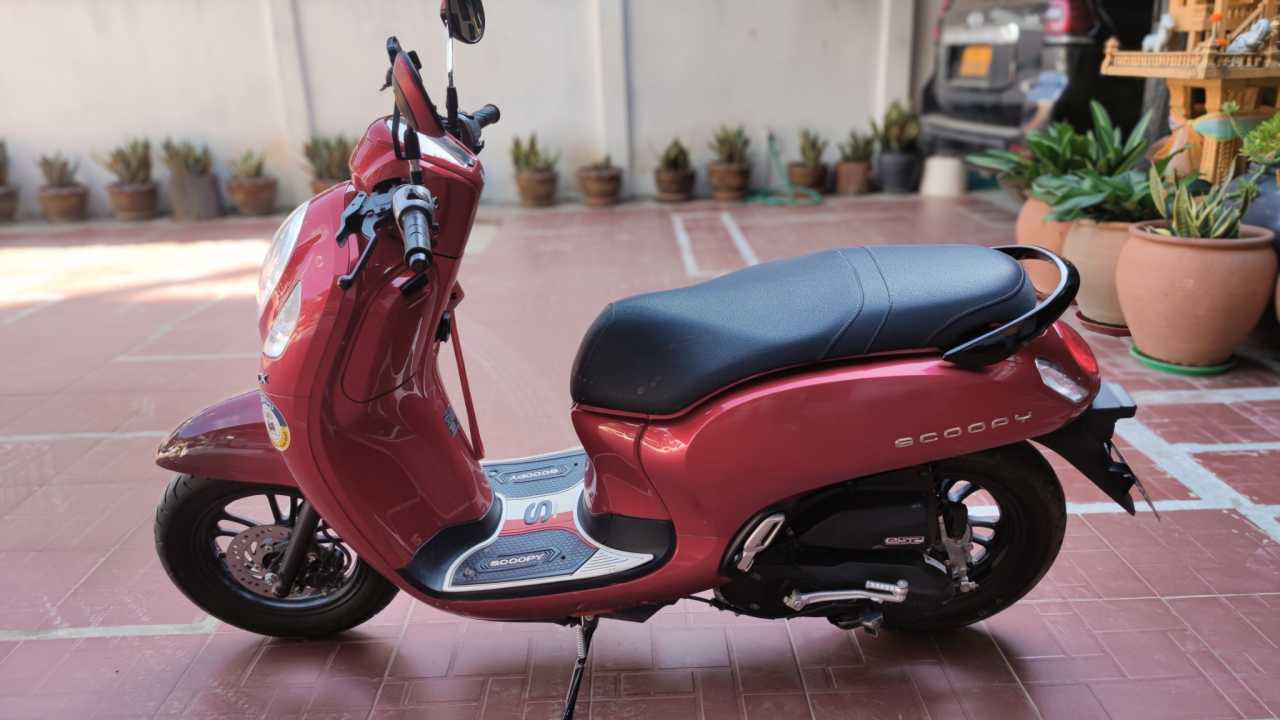
●Motorcycle rental recommended: Mung Korn Motorbike For Rent Company, search navigation for "Hahn Motorbike Repair Shop".
Old bikes: 100,000 kip/day; New bikes: 120,000 kip/day.
Owner speaks fluent Chinese, no deposit required, but passport held.
Driving to Kuang Si Waterfall 15km away, 50,000 kip fuel sufficient for round trip.
Vang Vieng:
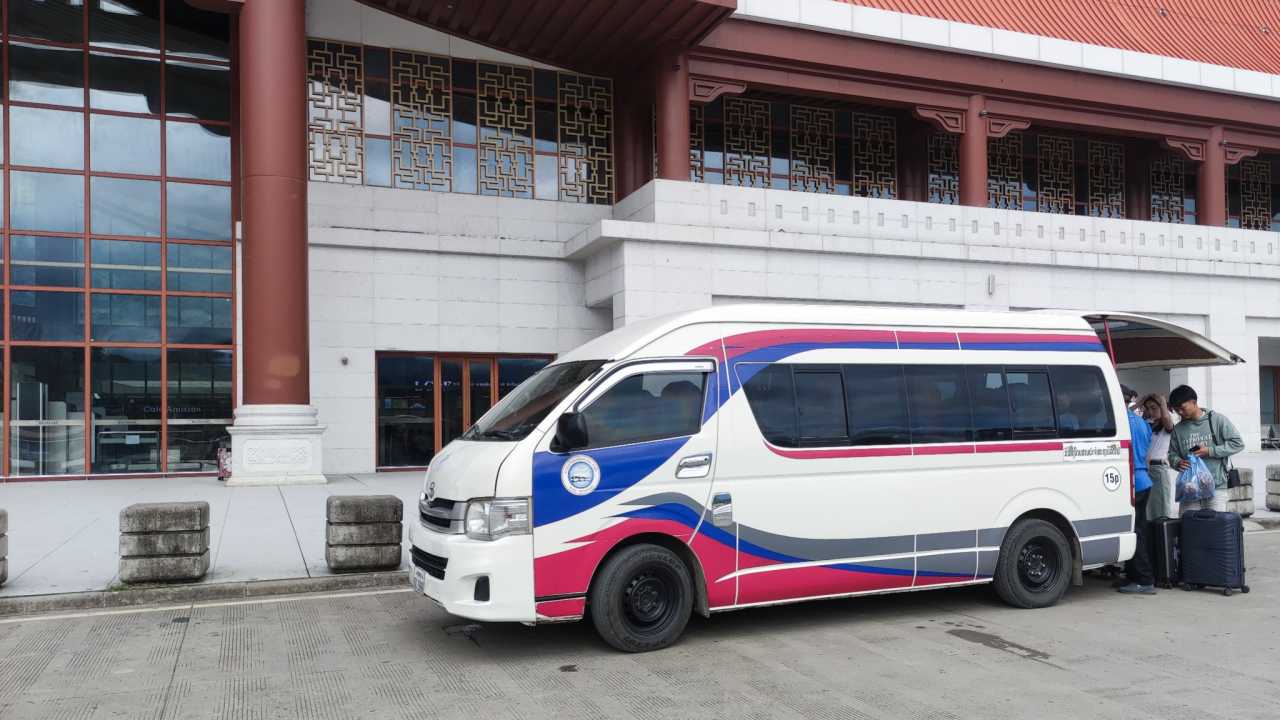
●Railway station to city: Take blue-white-red minibus after exit, same 40,000 kip/person, also supports guesthouse delivery.
●Play suggestions: Highly recommend motorcycle rental for suburban sightseeing.
Champasak:
Play suggestions: Recommend motorcycle rental for Wat Phu and surrounding attractions, but few rental points in town, consult guesthouse.
Vientiane:
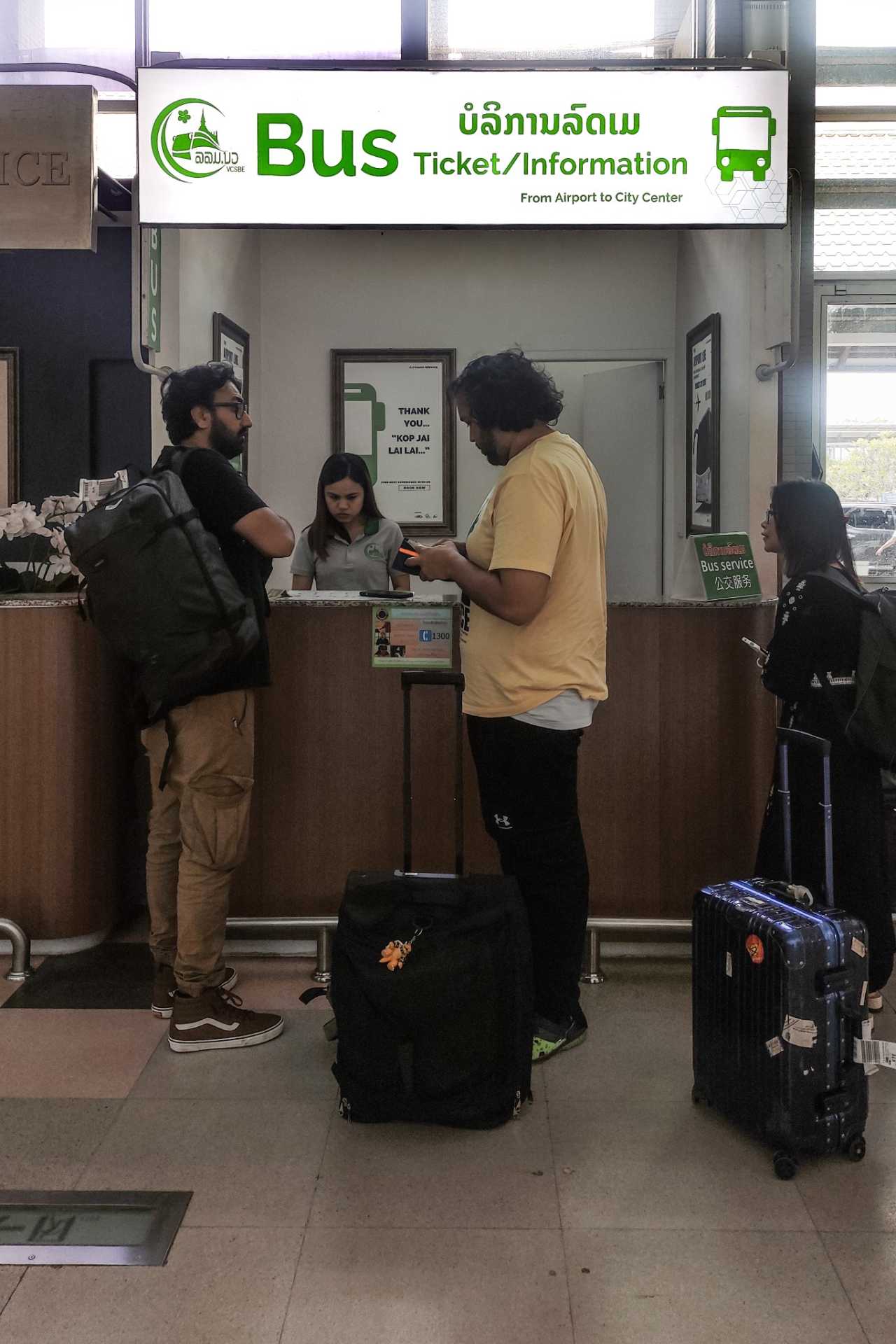
●Airport to city: "Bus Ticket/Information" counter inside terminal. Tell staff guesthouse name when purchasing, they'll write nearest station code on ticket, driver will remind when arriving.
●To XiengKhuan (Buddha Park): Take Bus 14 at Central Bus Station. Return wait at opposite site from park entrance, last bus ~6pm, confirm with park staff.