Having traveled to nearly 80 countries, crossing snow-capped mountains and deserts, ancient ruins and isolated islands, it is only now that I finally set foot on Canadian soil. I once spent three months in Michigan, yet never had the urge to drive two hours to see Niagara Falls. But that's the magic of travel - some places you pass by repeatedly without ever truly stopping to look. Today, with my belated curiosity, I came to experience this Canada wrapped in snow-capped mountains, forests, lakes, and multiculturalism.
Departing in the morning from Zurich Airport on a direct flight, about 8 hours and 40 minutes of flying. Swiss Air's service remains reassuring as always, with clouds outside the window transitioning from the snow-capped Alps to the magnificent Great Lakes of Canada. The flight was surprisingly smooth.
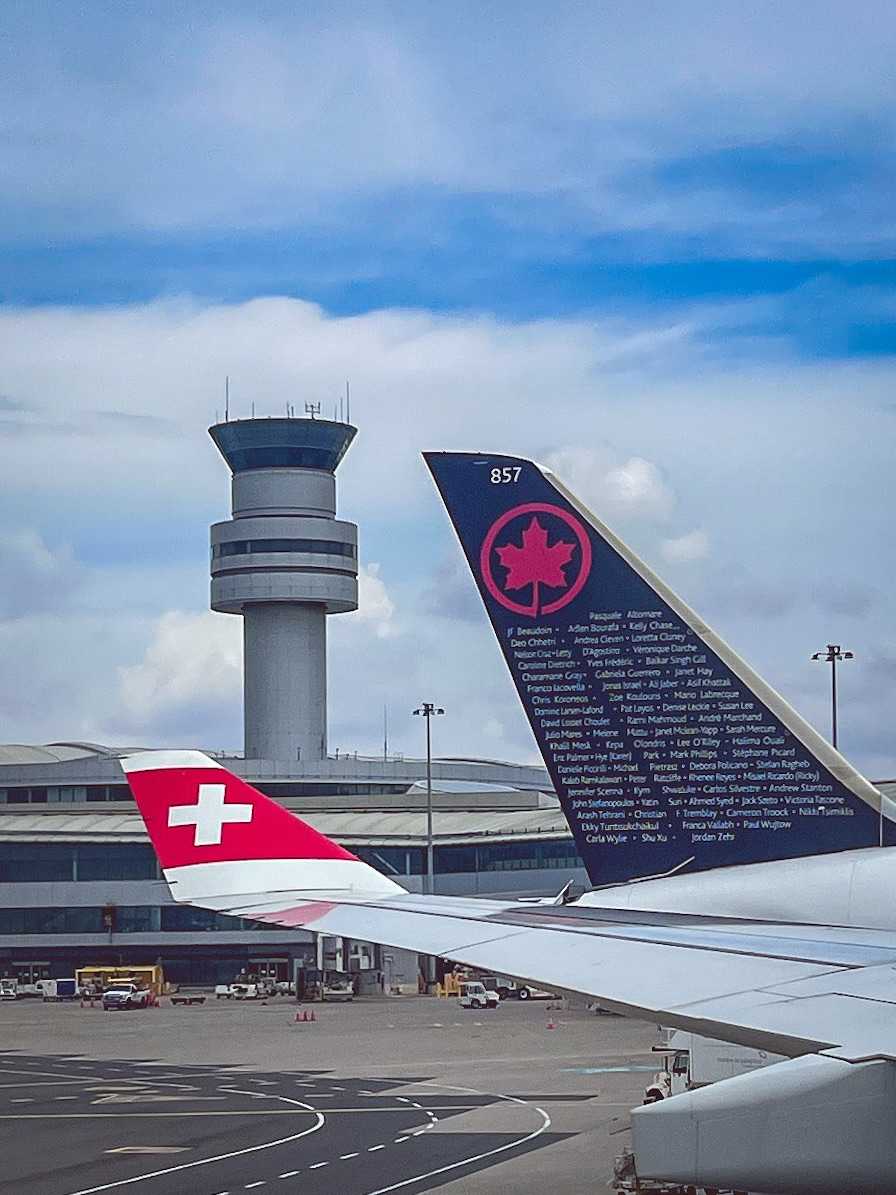
Entering Canada was also very convenient - electronic declaration plus facial recognition, the entire process took less than 15 minutes. As I exited the airport, a breath of fresh air greeted me. Toronto's summer sunshine was gentle and bright, with a bit more moist greenery compared to Europe's dry climate.
Upon arriving in Toronto, I was immediately struck by the city's "personality." The first thing that caught my eye were the police officers everywhere, with an extremely strong presence. But what was哭笑不得 was that the citizens seemed even more "let loose" than the police. On the streets, you could see all kinds of clothing and behaviors, giving people a sense of "I can do whatever I want" freedom. Some street corners smelled like Amsterdam's old town, with strong marijuana smoke hitting your face, as if even the air was free. The streets were full of South Asians (especially Indians), Chinese, Filipinos, and Black people - even more diverse than Australia.
Looking at the streets, they couldn't be called dirty, but they weren't exactly clean and tidy either. Compared to some neat and orderly cities, the streets here seemed somewhat casual, with occasional garbage, cigarette butts, or randomly placed shared bicycles.
Public transportation wasn't very "friendly" either. Many subway stations had no elevators, making it really exhausting to carry luggage up and down stairs. This was no small challenge for travelers who had just landed with large and small bags.
Niagara Falls, where the sound of water drowns out the heartbeat
Today's main character is the legendary Niagara Falls! Early in the morning, we drove for 1.5 hours along the lakeside highway, with scenery as beautiful as a computer desktop. Speaking of Canada's representative landmarks, Niagara Falls undoubtedly ranks at the top.
Driving along the QEW highway was smooth all the way. When we arrived at Niagara town, we could already feel a bit of "tourist area atmosphere" - tourists, sightseeing buses, helicopters circling in the sky, and the sound of water coming from afar. The moment the waterfall appeared before my eyes, I had a wow moment. Not because of how "tall" it was (actually it's not particularly tall), but because of the shock brought by the water flow. Tons of water poured down from the cliff, with a rumbling sound like nature roaring, but it somehow made people feel inexplicably at ease.
Many people ask "Is it better to view the falls from the Canadian side or the American side?" My personal feeling is: the Canadian side is more suitable for "viewing" the falls, while the American side is better for "standing on the falls" to experience. Standing on the walkway on the Canadian side, you can get a panoramic view of the entire Horseshoe Falls, which is very shocking.
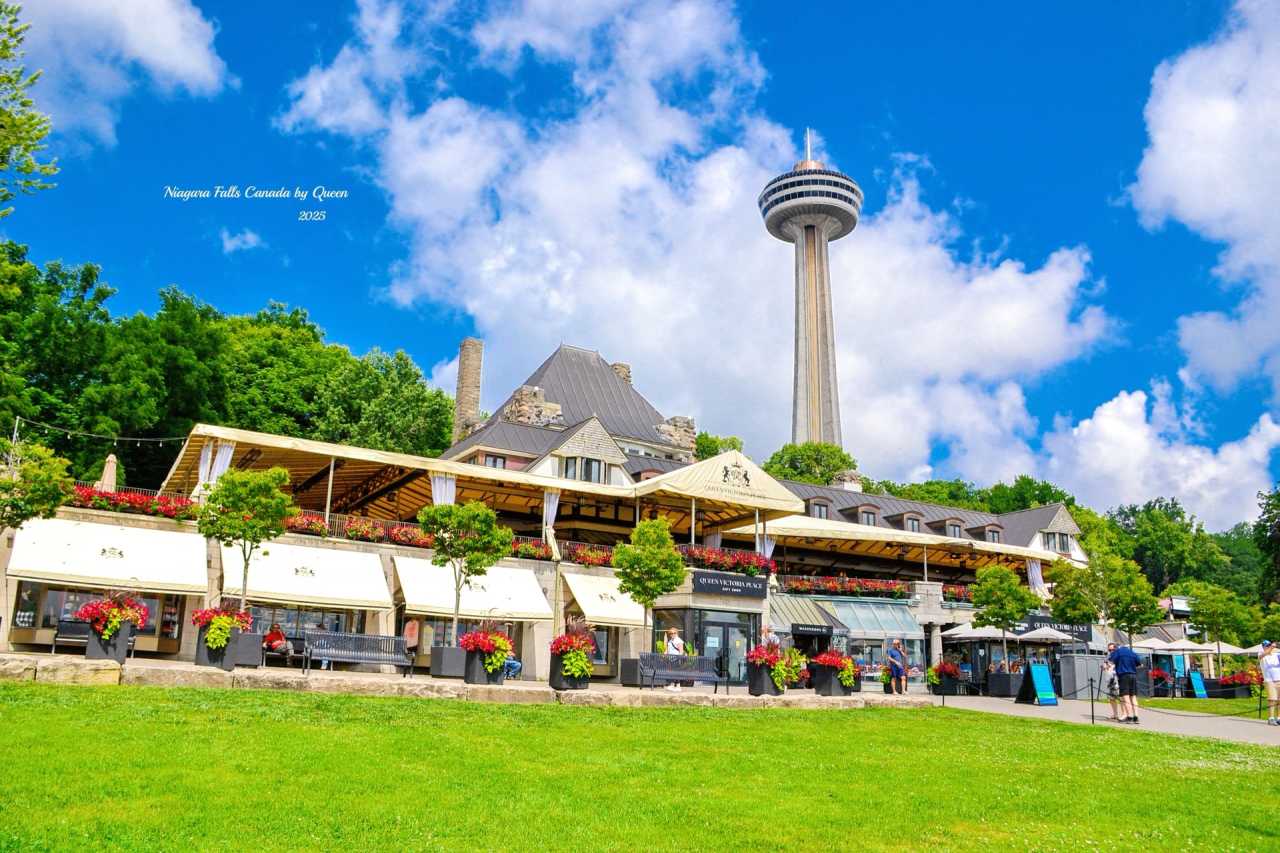
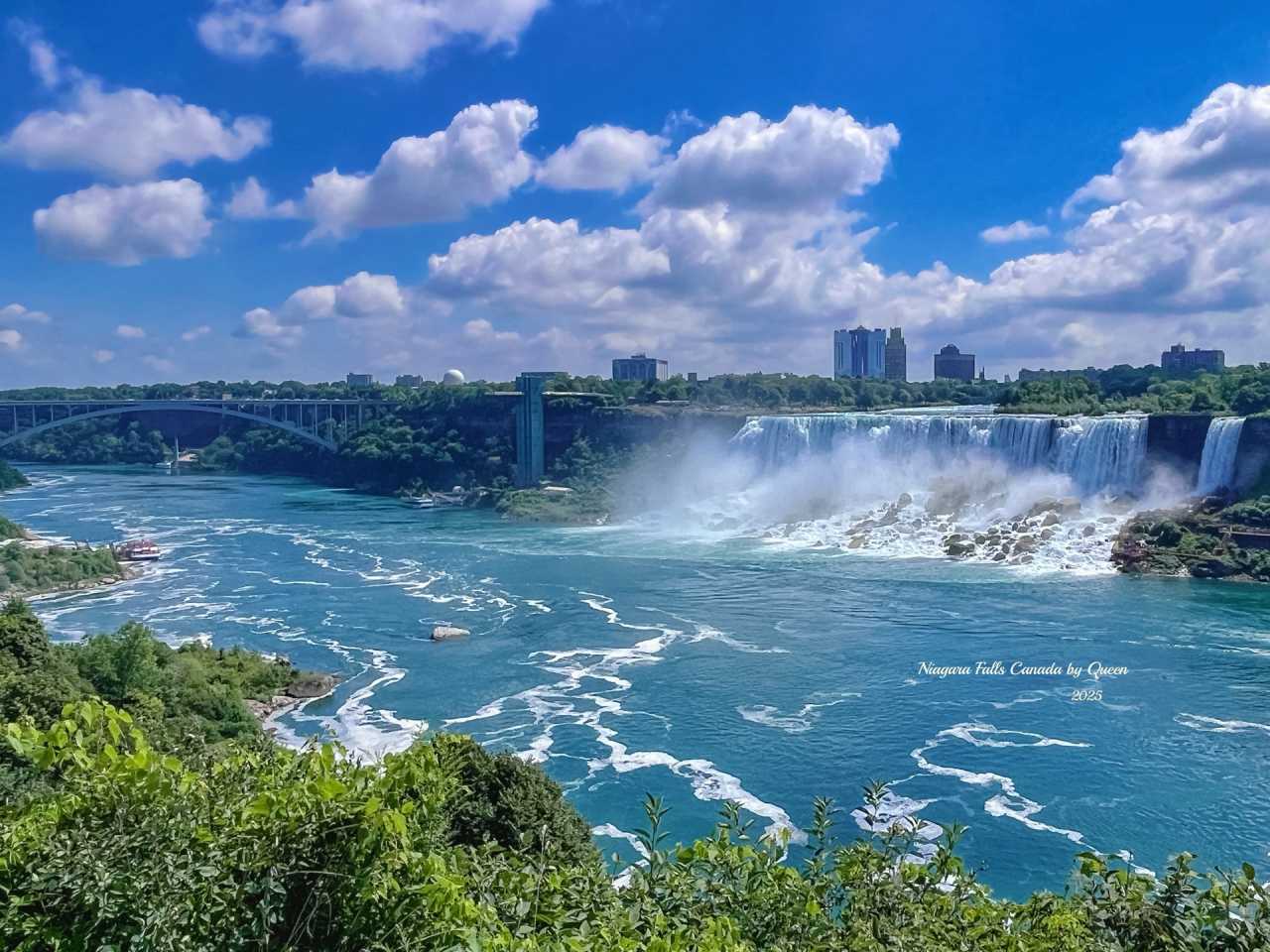
Niagara Falls is actually not one, but a combination of three major waterfalls.
Horseshoe Falls is the largest and most famous of the three waterfalls. Shaped like its name, it presents a curved horseshoe shape, located on the Canadian side. The shore viewing platform is very close to the waterfall, where you can see the water flow "rolling" at the edge of the cliff and then falling straight down. When it falls, it sprays up a large amount of water mist. When the sun is good, you can almost see one or even two rainbows.
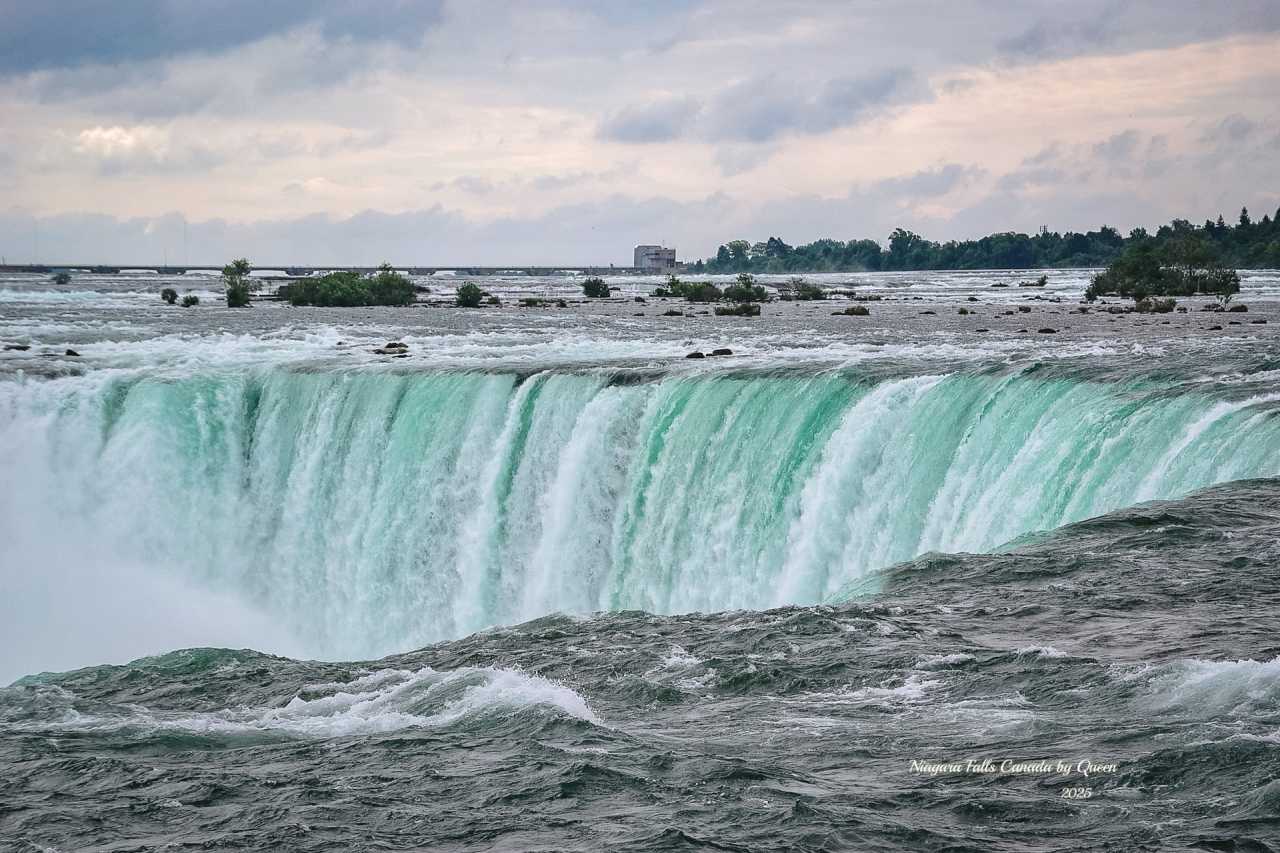
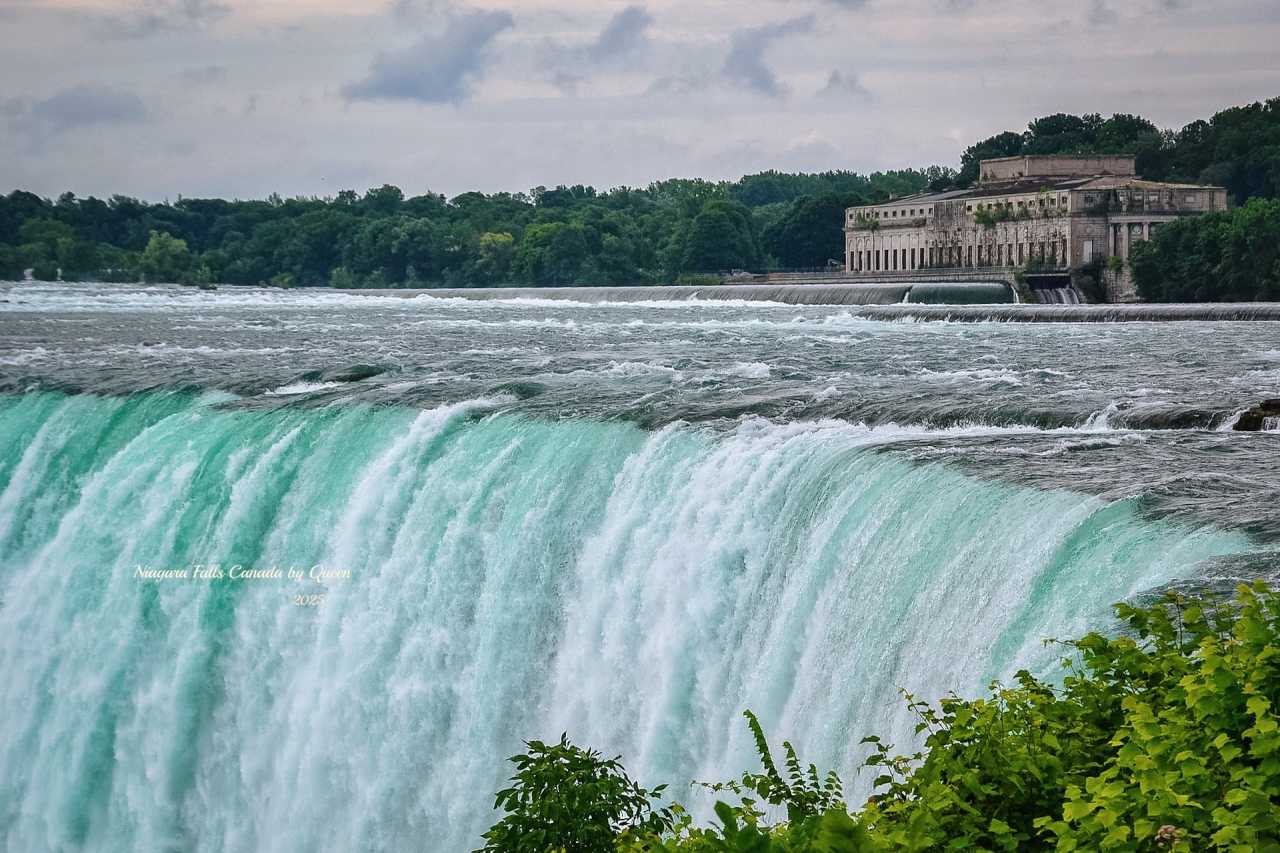
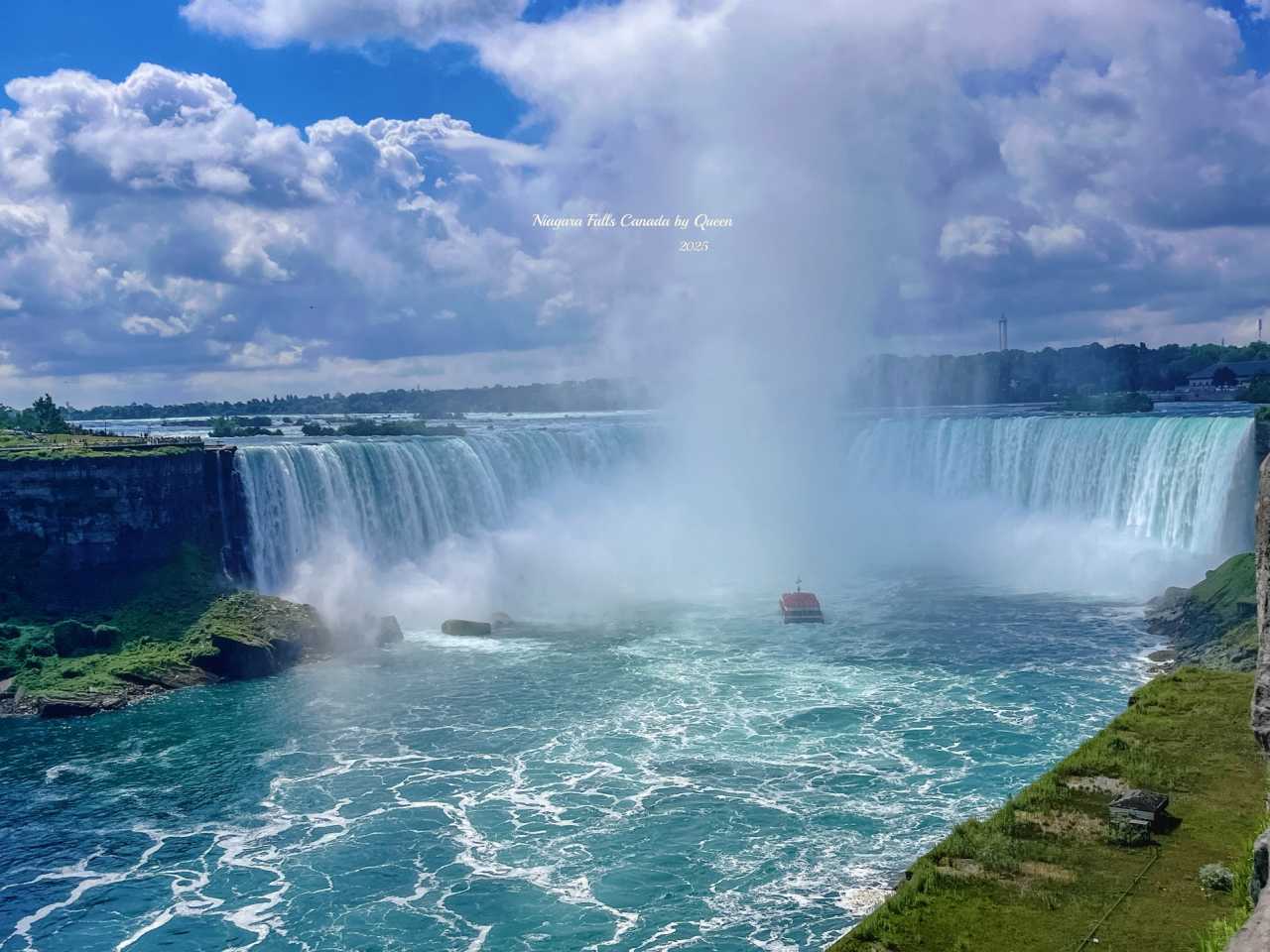
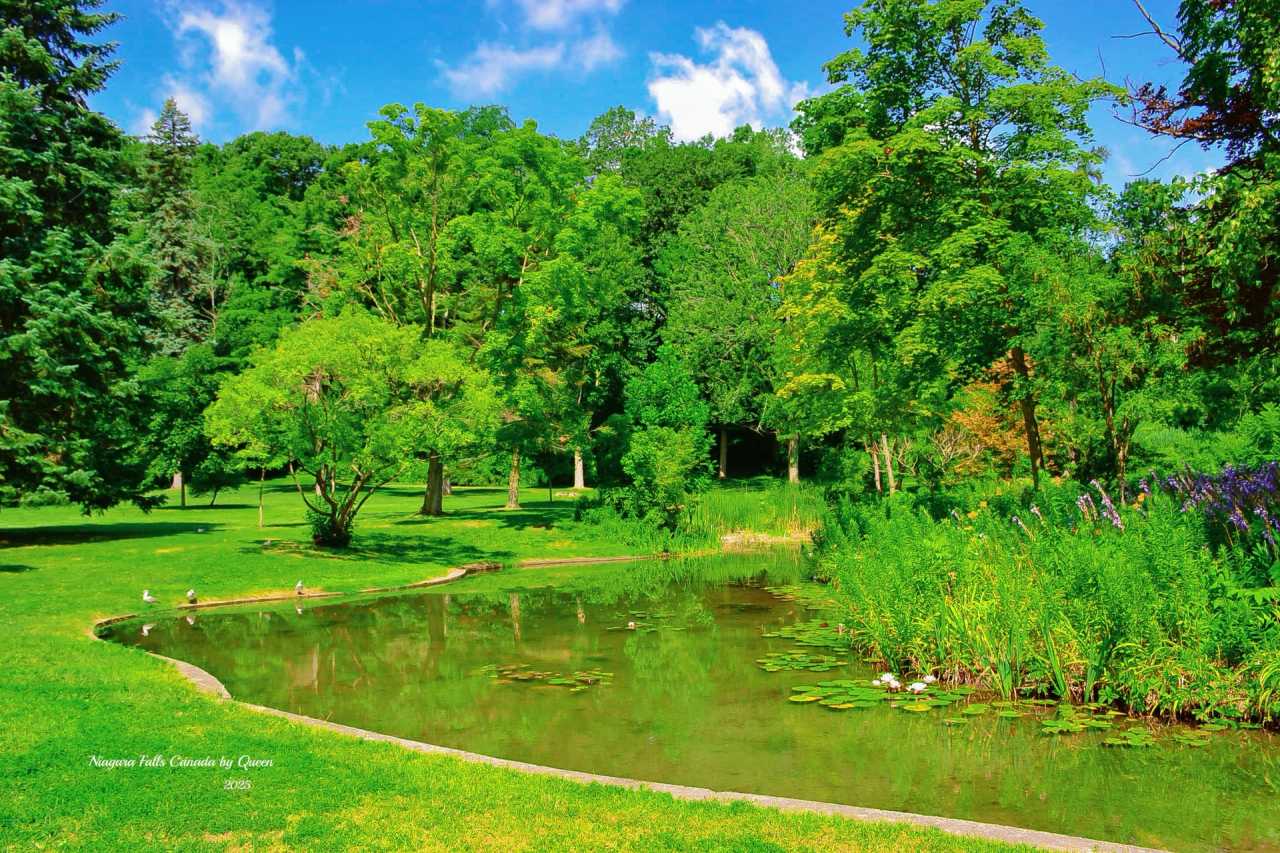
The Niagara Parkway near Horseshoe Falls is very suitable for a leisurely walk. The walkway is lined with neatly trimmed lawns and flower beds, with many benches for people to rest, and sometimes you can see squirrels and seagulls. Walking while slowly feeling the water vapor hitting your face is very refreshing.
Looking from the Canadian shore to the right, you can see two waterfalls located in the United States: American Falls, where the water hits the rocks with white foam splashing everywhere, giving a sense of "rugged power"; Bridal Veil Falls has a thinner water flow and elegant shape, indeed resembling a floating veil. These two waterfalls are viewed from a panoramic perspective on the Canadian side.
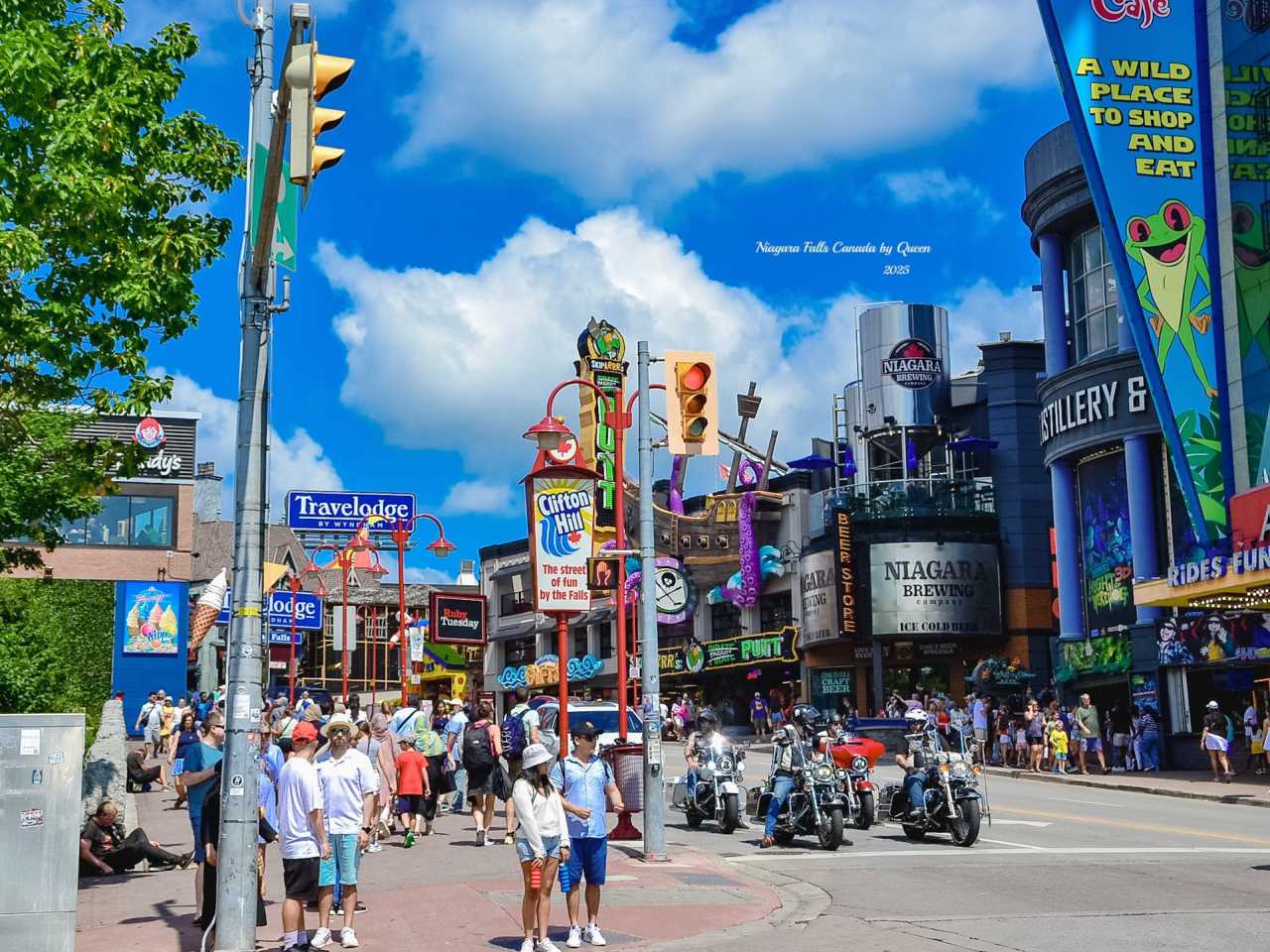
Niagara Falls city itself is somewhat unexpected. On one side are the falls, water mist and rainbows, and nature's grandeur; but turn around and you'll find colorful casinos, Ferris wheels, neon lights and imitation ancient buildings. There's even a Clifton Hill street that seems to pay tribute to Las Vegas. Game arcades, fast food restaurants, haunted houses, mazes, strange museums, candy stores - all piled together, feeling somewhat out of tune with Niagara Falls, but indeed very lively.
Toronto - No Distinctive Features is Also a Feature
Toronto was originally inhabited by indigenous people. In the late 18th century, British settlers arrived, initially calling it "York Town," which was renamed "Toronto" in 1834. With the rise of railways and lake shipping, Toronto gradually became the economic heart of Canada. Later, due to its good geographical location, convenient port, and large immigrant population, it slowly became a commercial and cultural center. Today's Toronto is one of the world's most multicultural cities.
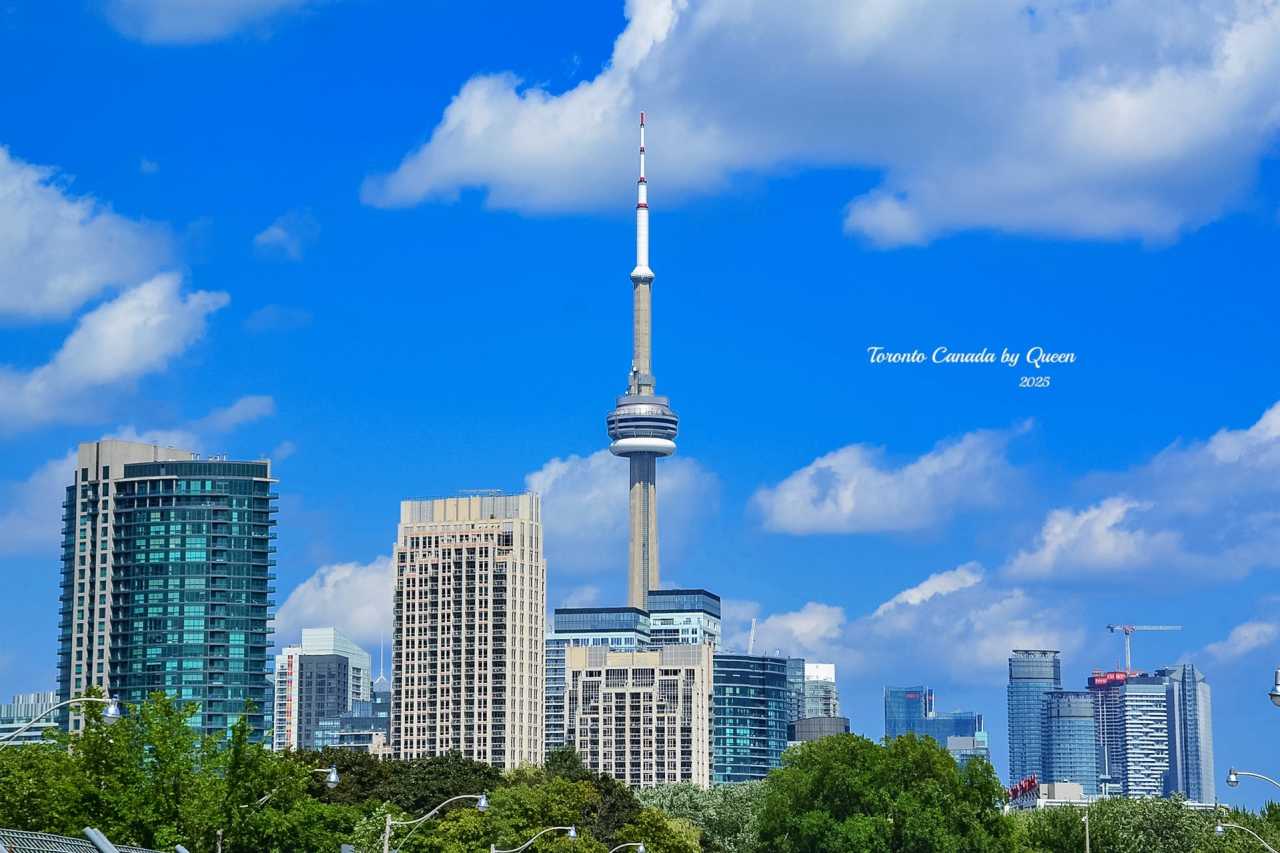
I chose to start my journey from the most iconic CN Tower (Canadian National TV Tower). From afar, it looks like a silver-gray long needle piercing into the sky, standing tall on the city skyline. No matter which corner of Toronto you are in, you can always see it.
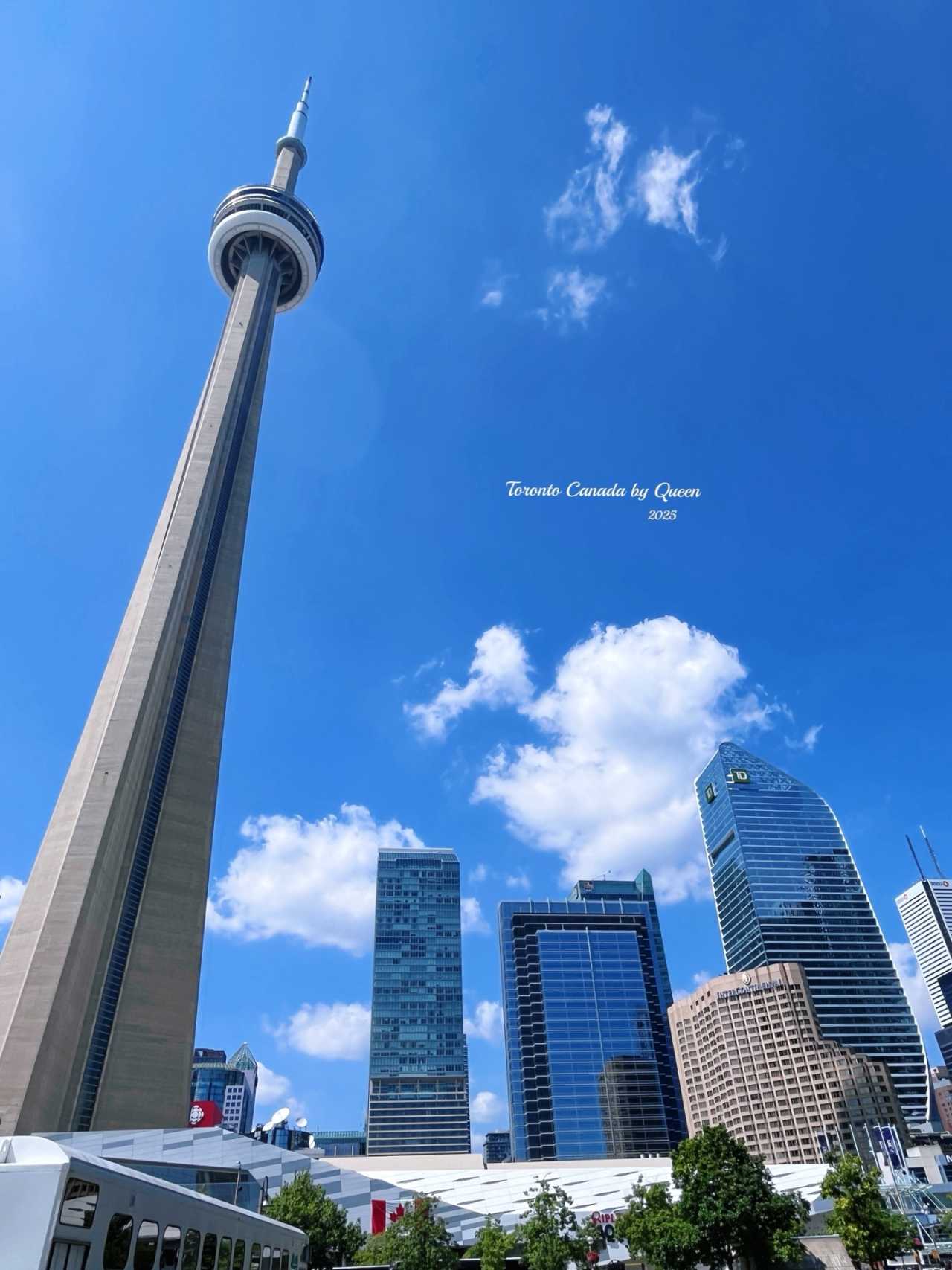
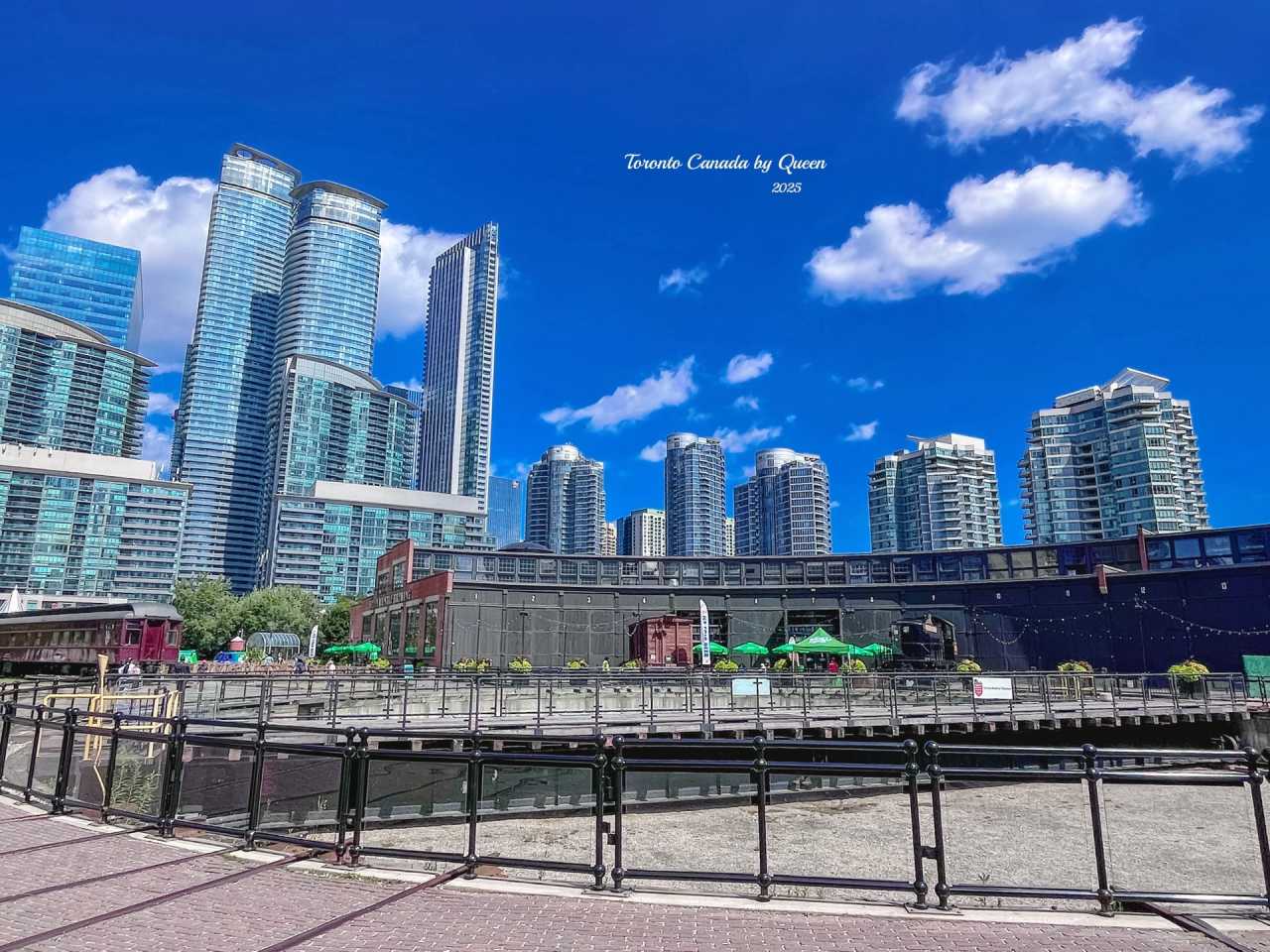
Walking to the other side of the tower, I discovered an area that made me stop for a long time - Roundhouse Park, a circular garage composed of railway tracks and old train cars. It used to be the main facility for train maintenance and turning, but now it has become the location for exhibition halls, craft shops and a small brewery. Standing among these historical relics, looking up at the modern glass and steel tower - CN Tower, in that instant, it felt as if the past and present were overlapping here.
This is actually part of the Toronto Railway Museum, quietly placing the silent weight of history at the foot of the busy city heart without any defense. Those retired steam locomotives, old passenger cars, and rusty railway tracks are neatly displayed between the grass and gravel paths.
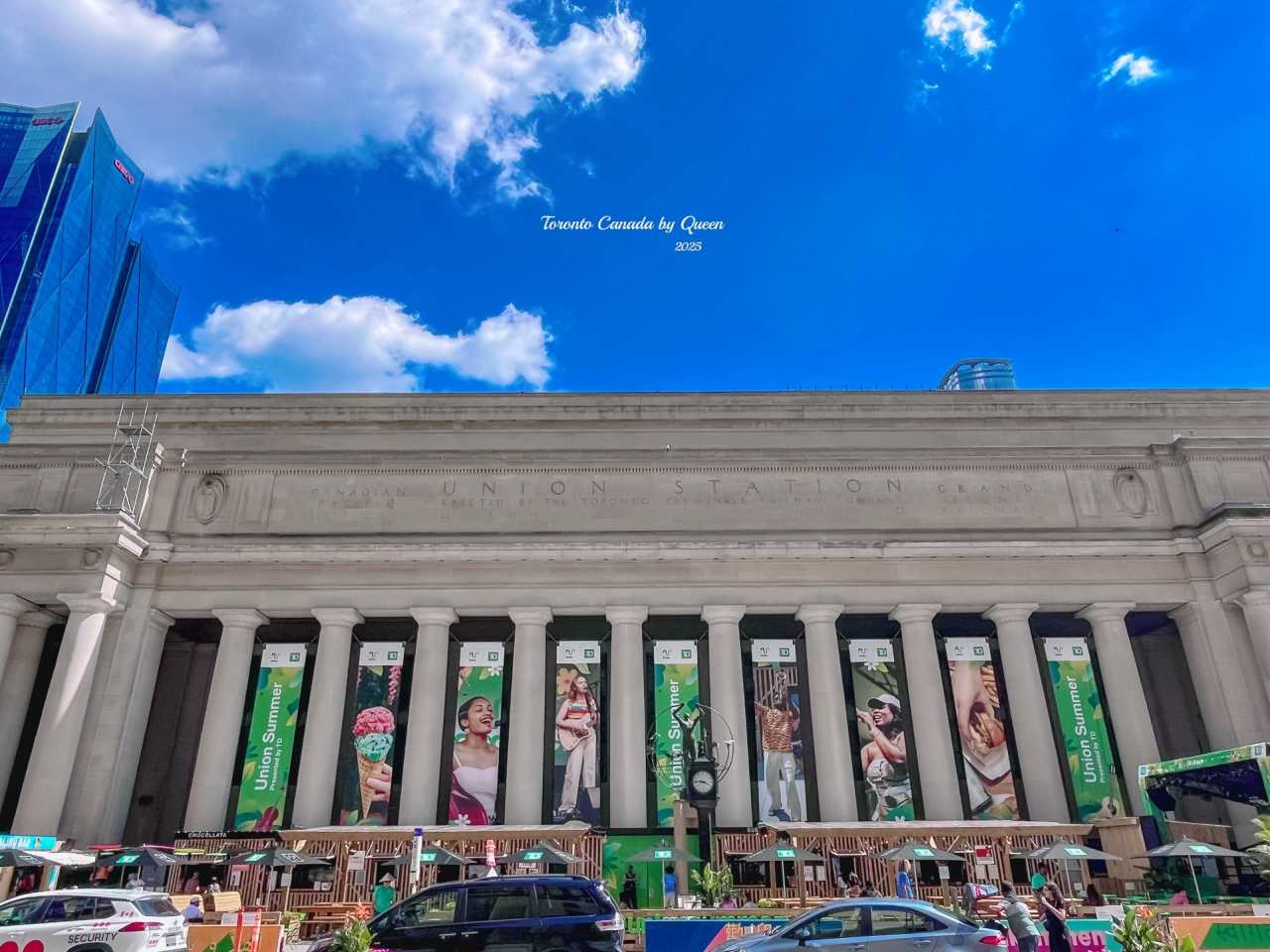
Toronto Union Station is located in the city center and is the most important transportation hub of this city, as well as a landmark that combines history and functionality. It not only connects local commuter trains, subways and intercity railways, but is more like the heart of the city, continuously transporting people and stories day and night.
Union Station was built in 1927, and its architectural style belongs to Beaux-Arts (Academy of Fine Arts style), which is an architectural style that emphasizes symmetry, proportion, classical elements and grandeur, originating from France and having a profound influence on public buildings in the early 20th century.
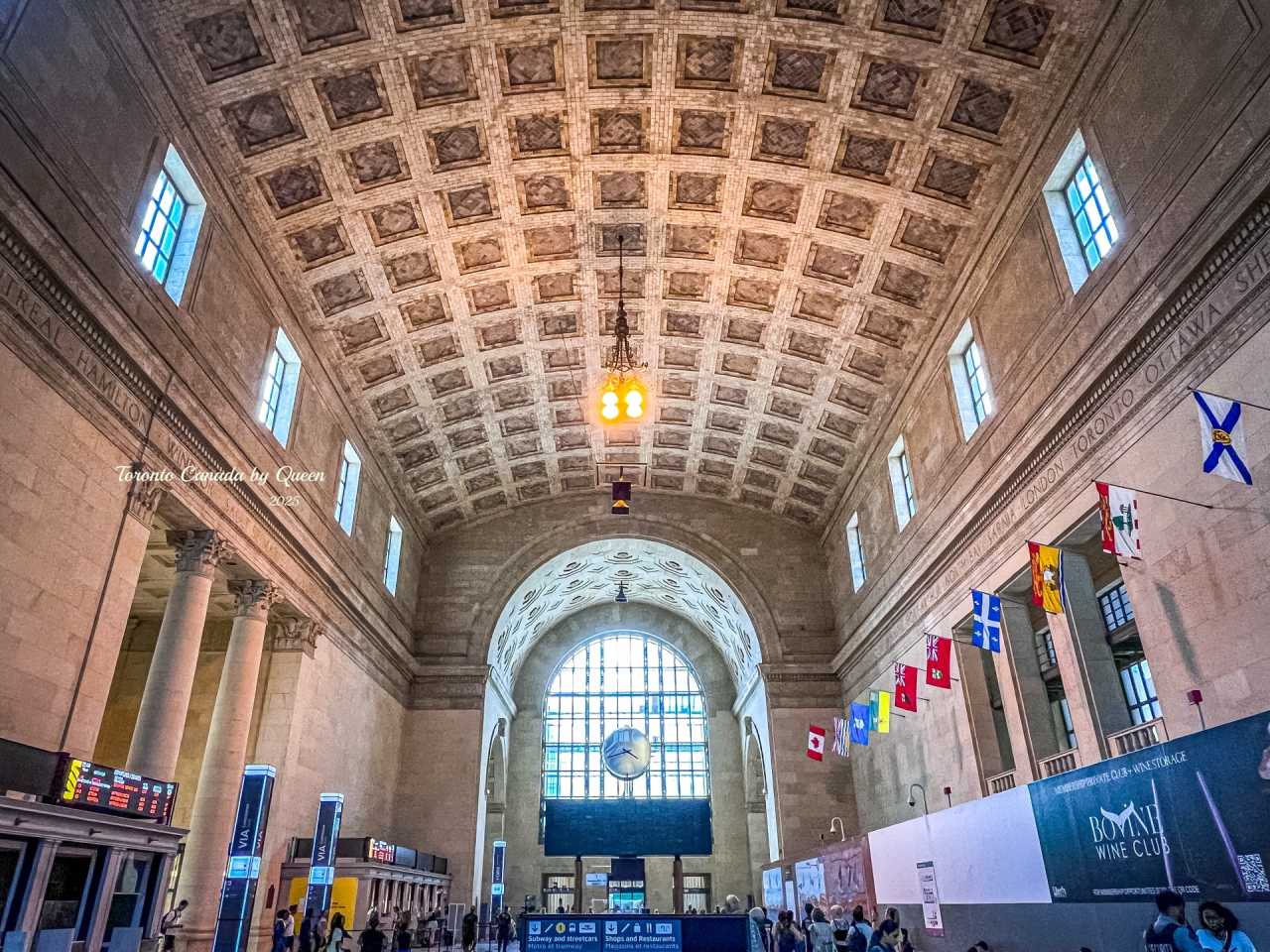
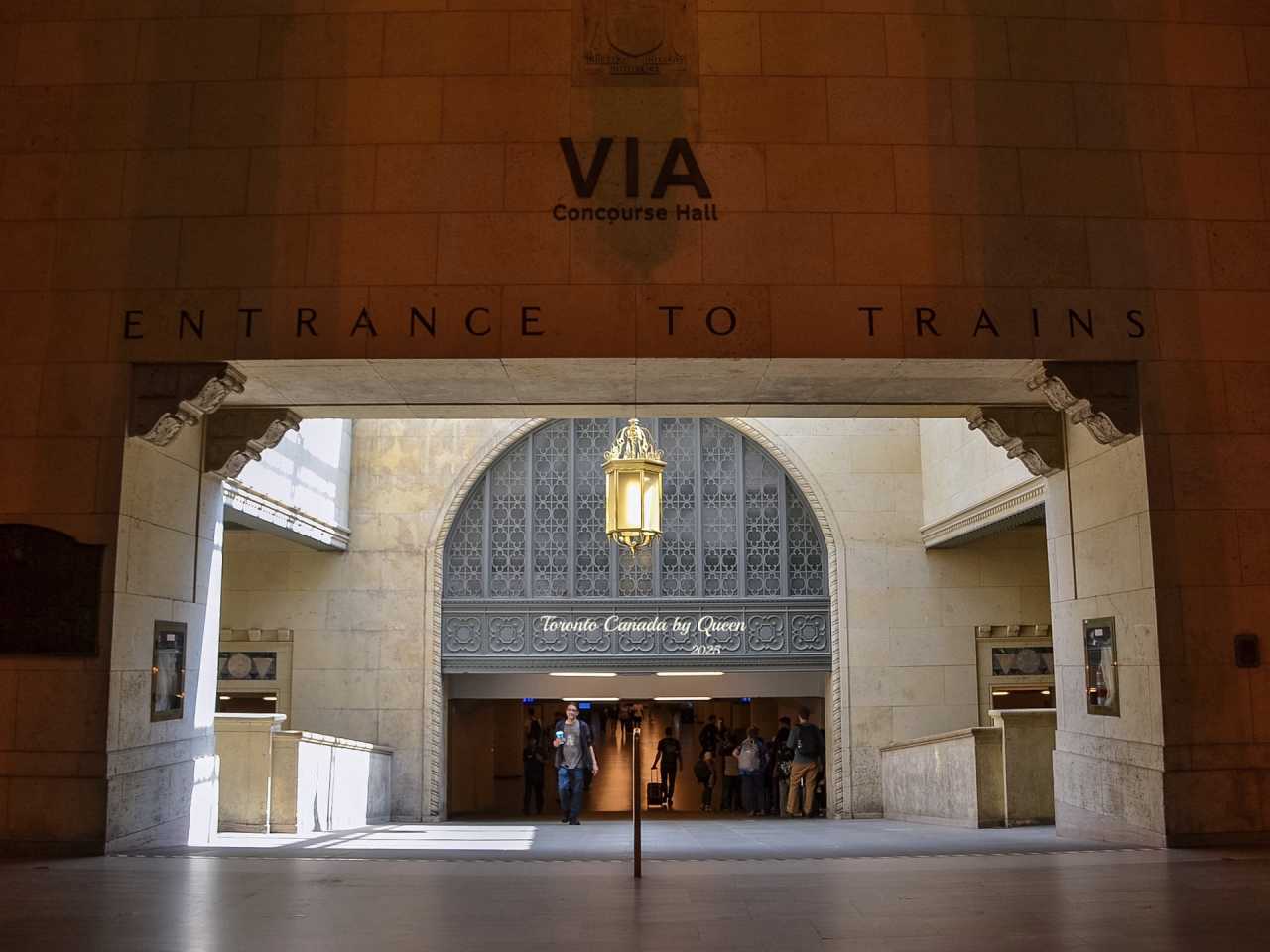
The exterior facade of the station adopts the design language of neoclassicism: a row of 56 tall Doric columns supports the main facade, combined with limestone material, making the entire building appear solemn, steady and eternal. The ceiling of the lobby inside the station is towering, the windows are arched, the floor is made of mosaic parquet, the details are exquisite, full of historical sense. There are also exquisitely carved relief texts at the top of the hall, recording important cities in Canadian railway history.
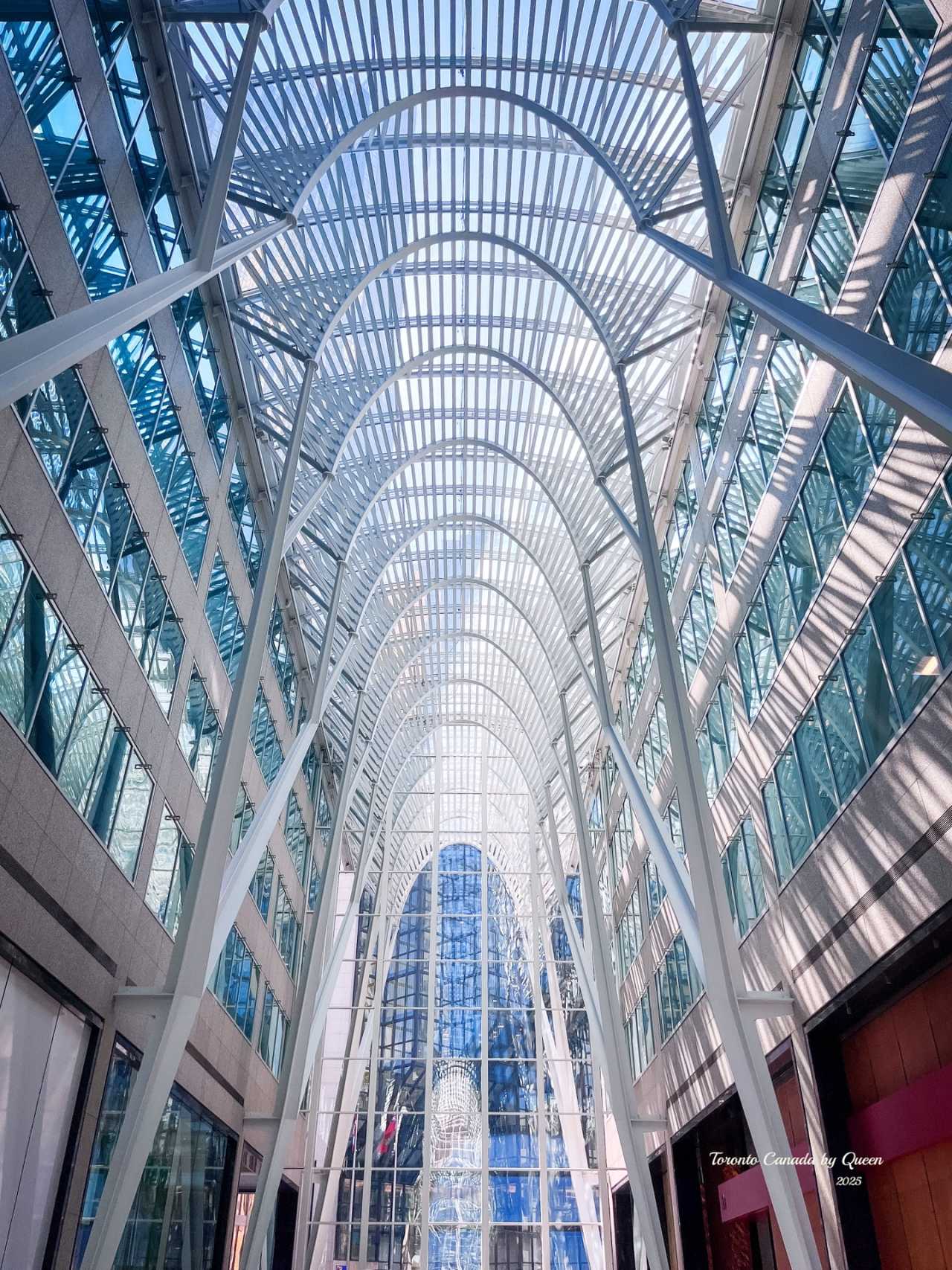
Walking into the city center, I entered a very special building: Brookfield Place (Brookfield Square). It looks like an ordinary office building from the outside, but inside it hides a poetic space - Allen Lambert Galleria. The arched glass dome stands tall, with sunlight pouring down from between countless metal ribs, as if standing in a church where modernity and the future meet. Although the space is large, it is extremely quiet. Standing in the heart of this city woven with steel and glass, for the first time I felt that Toronto is not "boring," she just hides her beauty very deeply, waiting for you to discover it yourself.
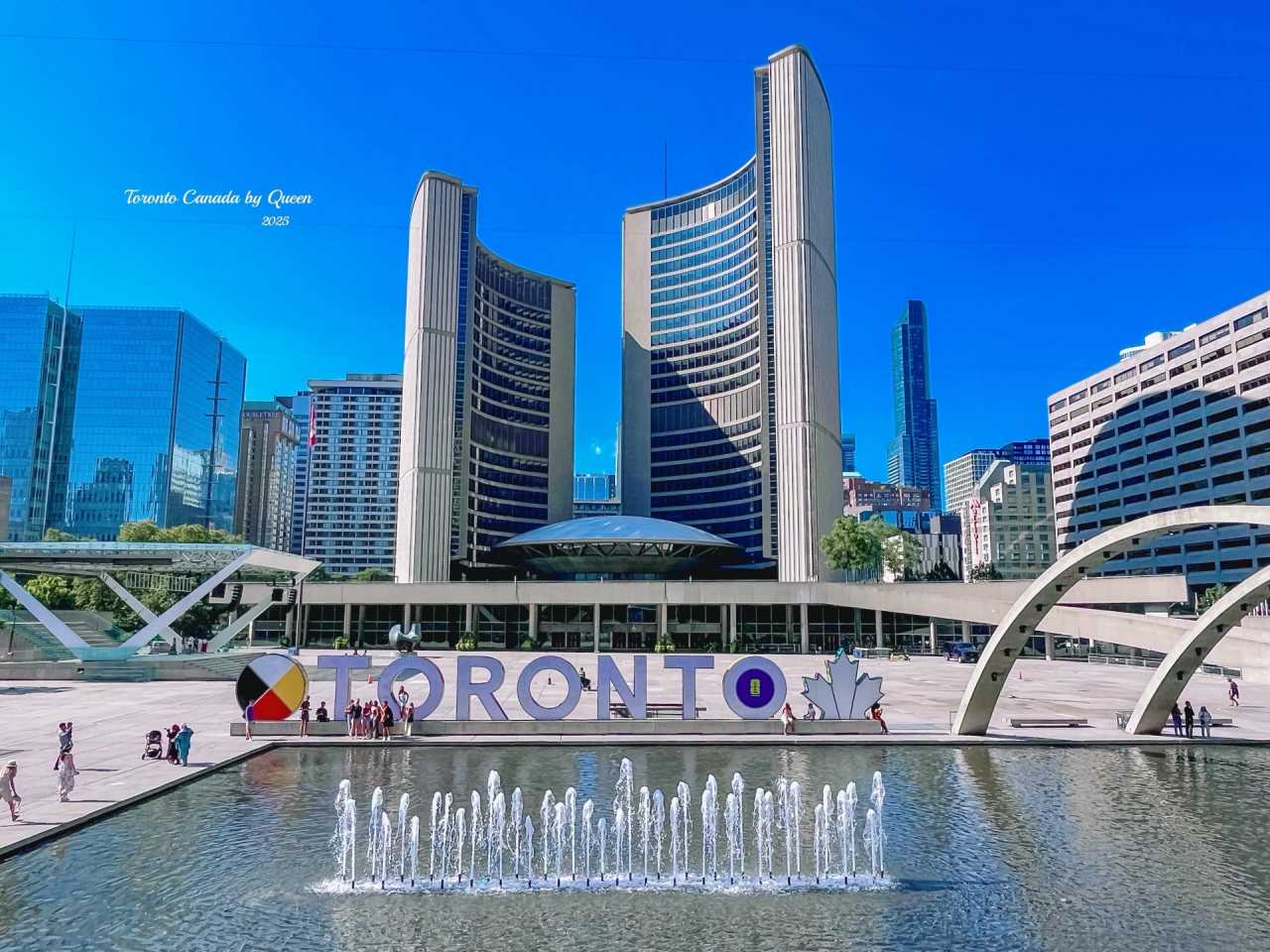
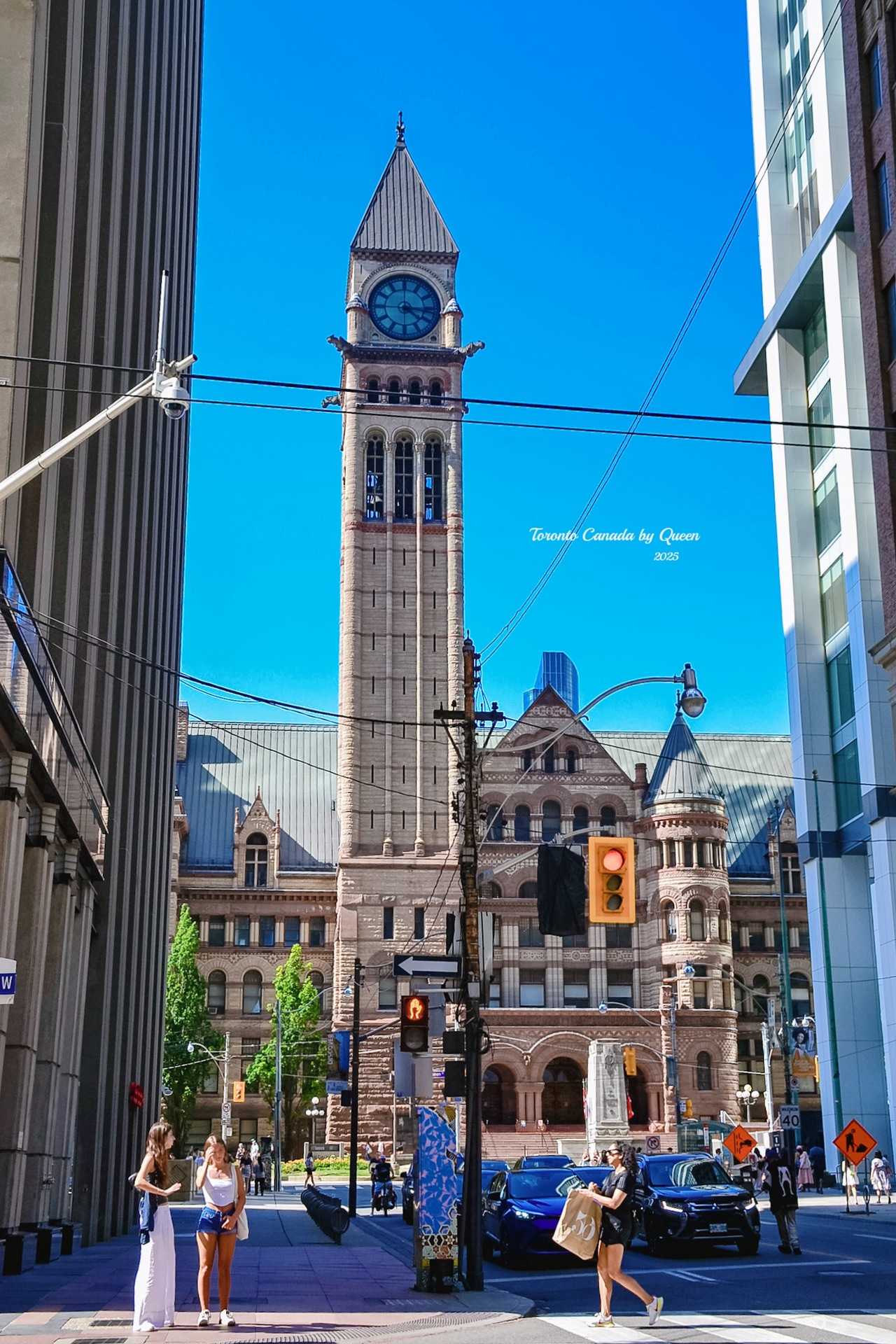
Not far from her, the old city hall still stands tall. It is a building with a clock tower and thick stone walls, as if it was moved from a European town. The old and new are only separated by one street, but the sense of time differs by a century. The city's memory and future stand side by side at this moment, showing Toronto's "duality" to passers-by.
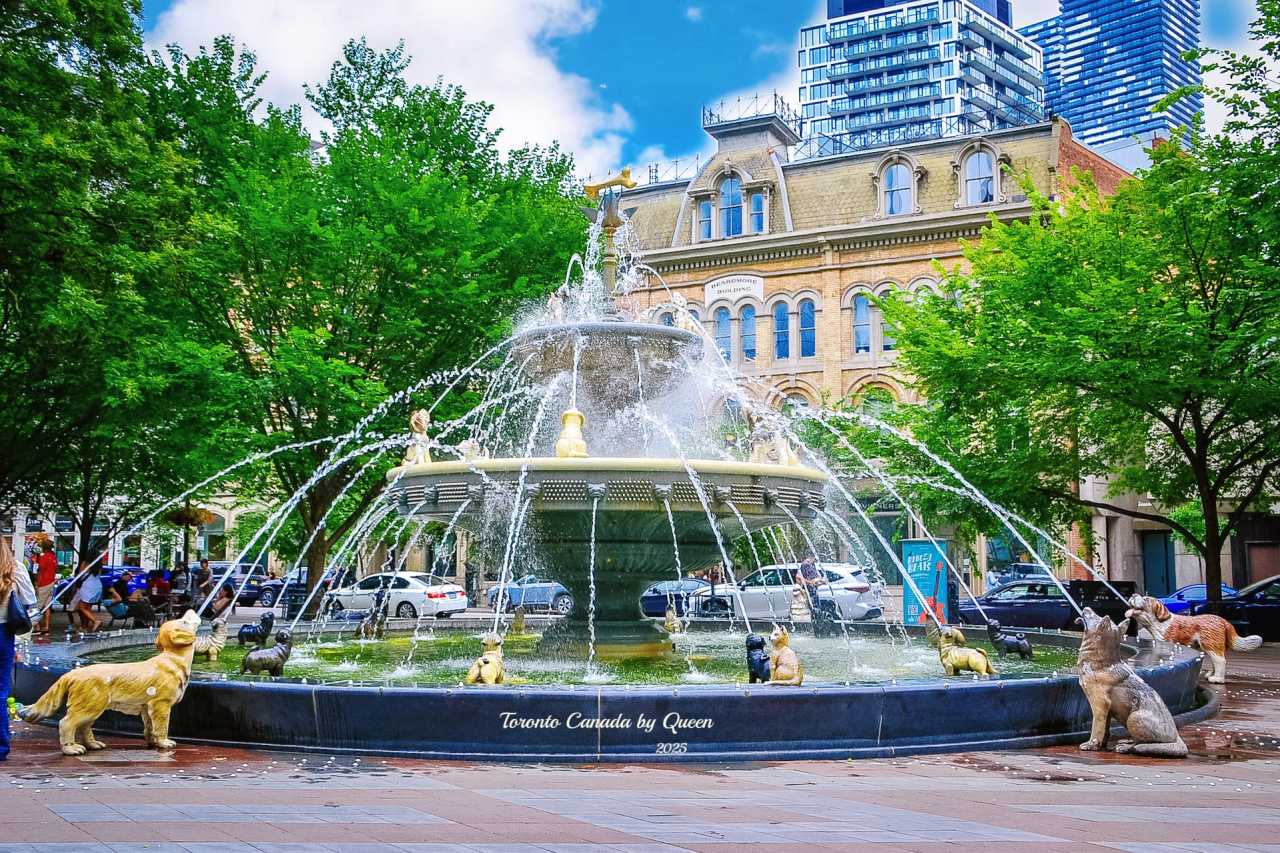
Walking a few steps further south, I came to an unexpected corner - Berczy Park. This is a small street-side park, but it has the cutest fountain in the whole city. Dozens of dog statues in various poses surround the central water column in a circle, some jumping, some looking up, some tilting their heads and acting cute, all eyes focused on the golden "bone" in the middle. The dogs really spray water from their mouths, looking like they are joyfully chasing. No matter how bad your mood is, seeing this fountain will make you unconsciously smile. The seriousness of the city is completely dissolved here, replaced by a childlike sense of humor.
Walking in the downtown commercial district, the streets are straight and wide, with glass curtain wall office buildings refracting blue-gray light under the sun. Bay Street, King Street, and Yonge Street weave into the busiest grid of the city, with neat office buildings, financial institutions, and high-end retail stores along the street. Suit-clad office workers walk hurriedly, as if everyone is operating precisely in rhythm.
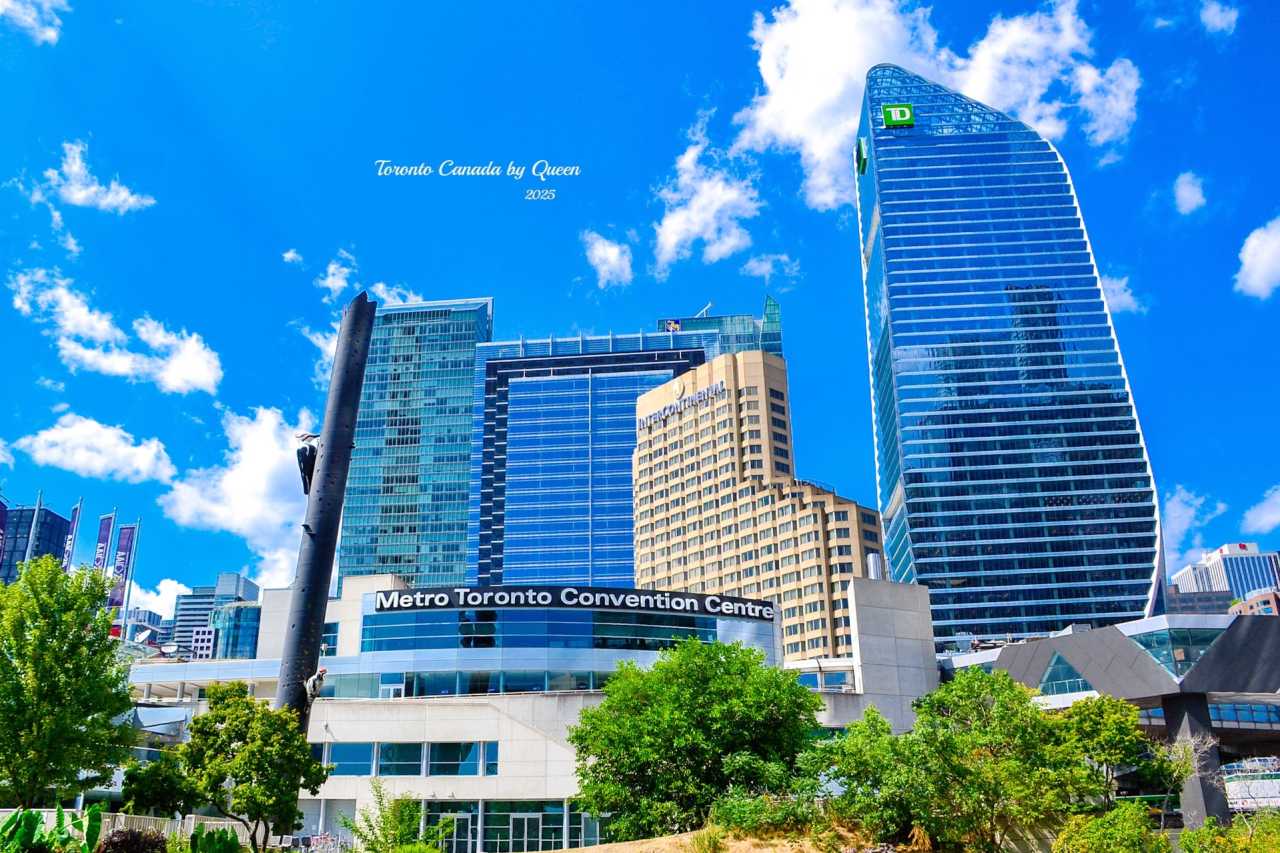
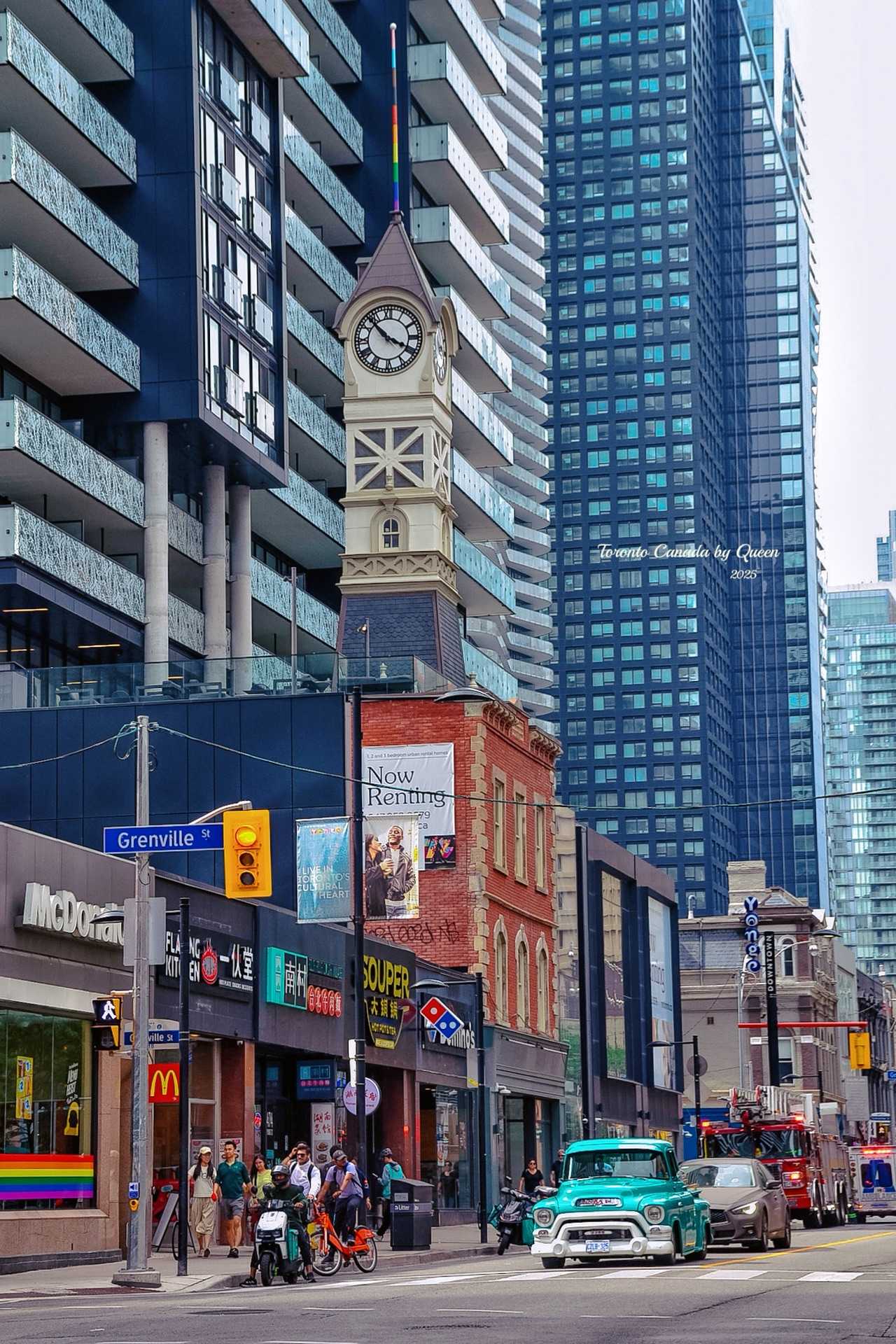
Looking up, Toronto's skyline is clear and neat, with tall buildings stacked like building blocks under the blue sky. That slender and tall CN Tower stands steadily in the center of the skyline, almost dominating the entire view. Compared with New York's dense and oppressive building clusters, Toronto's high-rise buildings are more restrained in arrangement, leaving space and breathing room, making the whole city appear open and clean.
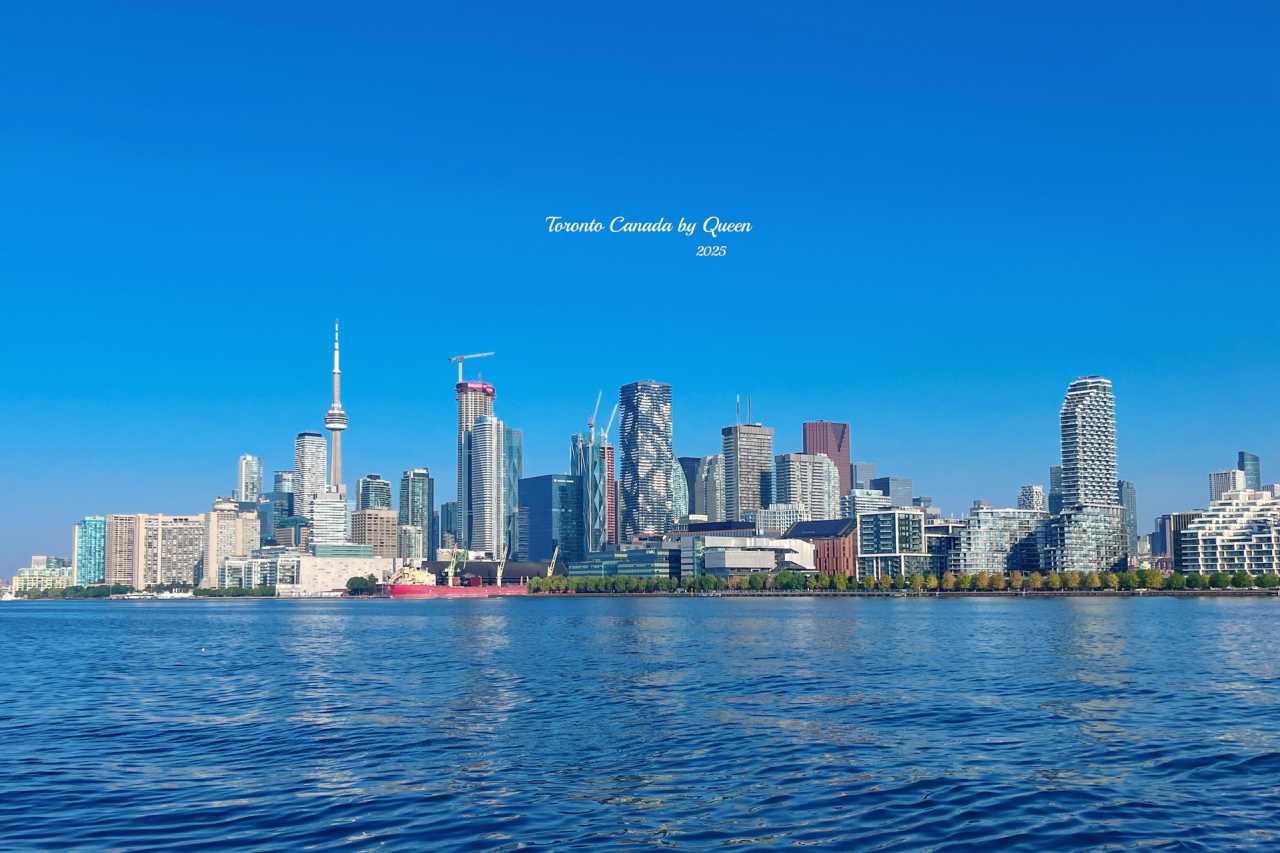
Toronto is not a city that will make you fall in love at first sight. She doesn't have extreme romance, nor does she have the visual tension that some cities possess that makes people amazed. Especially those modern glass jungles have never been my "type." Having experienced fires, industrial transformation, urban planning innovation, and today's immigration wave and high-rise buildings, Toronto lacks some vicissitudes of story and humanistic atmosphere. From the perspective of urban functions, she doesn't have many obvious shortcomings and is a very "practical" city. As the first stop for Canada tourism, it's barely satisfactory, not amazing enough.
Ottawa - Another Look at the Capital
Departing from Toronto along Highway 401 eastward, the scenery gradually transitions from urban high-rises to rolling rural fields and forests. The scenery along the road has nothing but trees, so I could only focus on driving. After stops and starts, it took almost seven hours to reach Ottawa. In a large country, traveling on the road consumes time and energy.
After driving for about an hour, I stopped near Colborne town at a prominent landmark - the famous The Big Apple. A rest stop marked by a giant red apple statue, visible from afar as it sits in the fields, as eye-catching as a landmark in a cartoon world.
The specific address is located at 262 Orchard Road, Colborne, Ontario K0K 1S0.
This is not only a transit station for refueling and rest, but more like an apple-themed park. Walking in, the air is filled with the aroma of apple pie coming out of the oven, making people unable to help but immediately queue up for a piece of hot, freshly baked classic apple pie. The crust is crispy and the filling is sweet with a hint of sourness, the kind of taste that makes people quiet when they bite down. In addition to traditional apple pie, there are also apple cider, apple bread, apple candy, and even apple cheese and apple-flavored BBQ sauce, dazzling to the eyes.
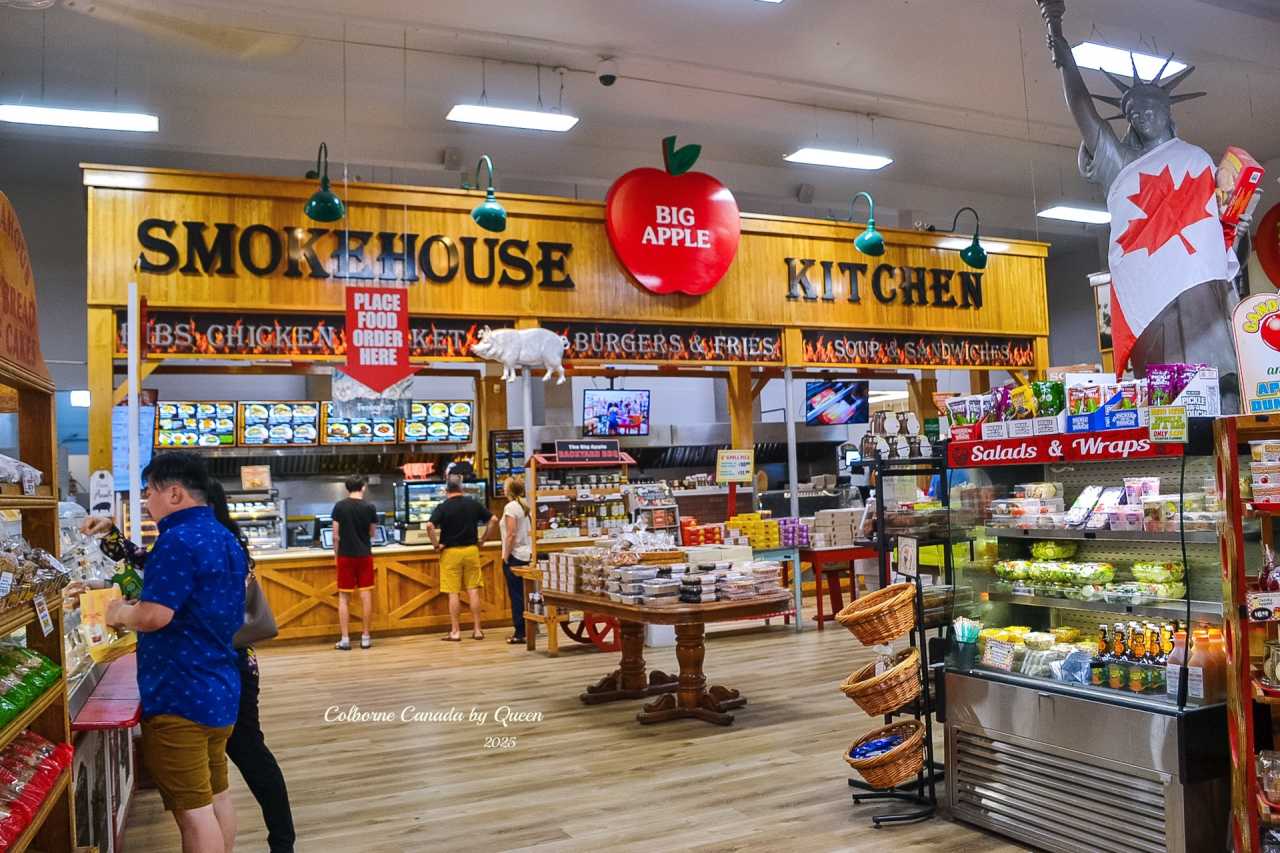
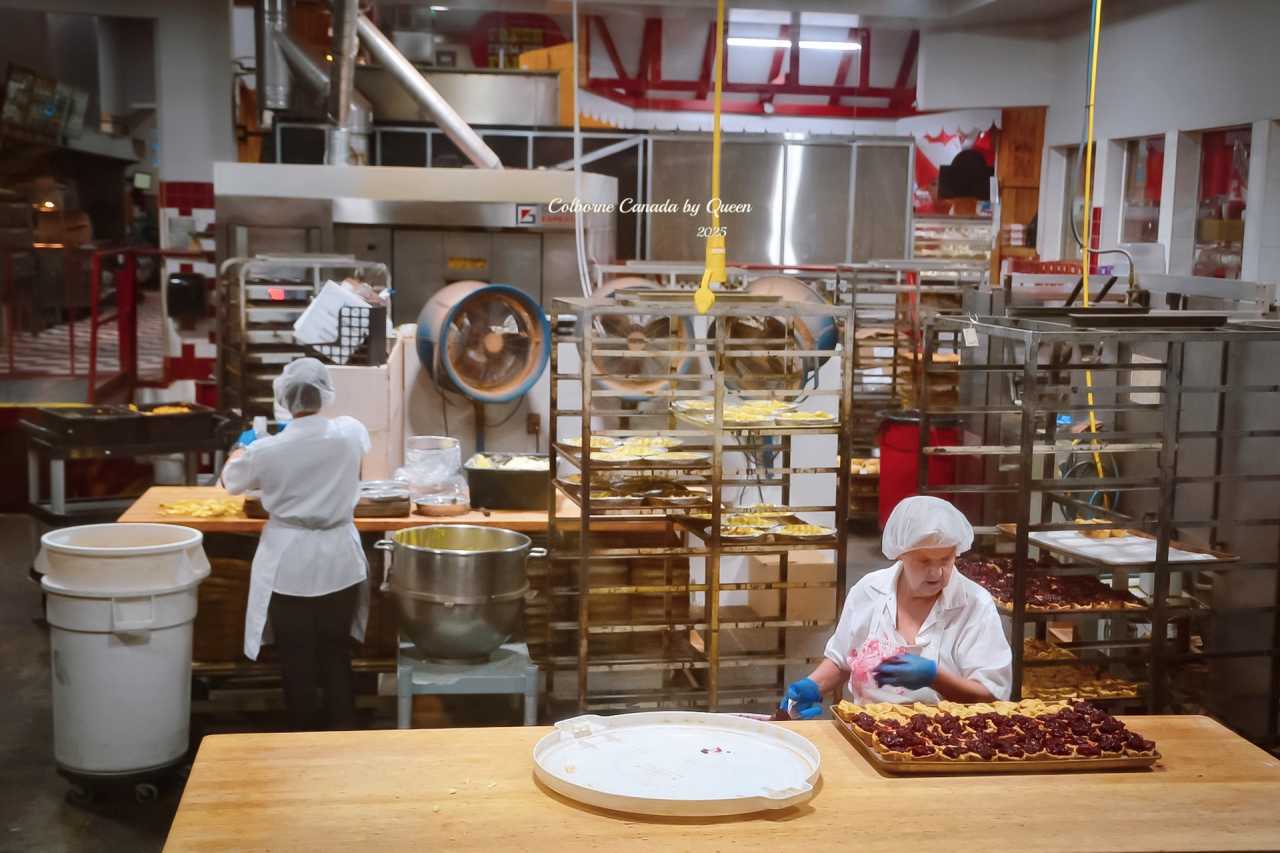
There is also a small observation deck next to it where you can climb up that giant "apple," standing on top to overlook the surrounding orchards and highways, with a sweet fragrance brought by the wind. In this boundless countryside, this apple fortress is both absurd and warm, an unexpected yet special episode on the journey.
At about 4 pm, we finally arrived in Ottawa. After checking in at the hotel, I immediately rushed into the city.
What makes Ottawa qualified to be the capital? Ottawa was originally a small village of lumberjacks, designated as the capital by British Queen Victoria in the 19th century. The reason? Because she is located between the French-speaking Quebec and English-speaking Ontario, everyone was "not very satisfied," which happened to be just right! This operation perfectly demonstrated the British-style humor of "fairness means no one gets an advantage."
If Toronto is Canada's meridian, then Ottawa is her heart. The moment I drove into this city, I didn't hear noisy traffic, nor did I see an oppressive skyline, only rivers, green spaces, and church spires sparkling in the sun in the distance. She is not as magnificent or prosperous as many national capitals, but has an indescribable calm temperament, like an old scholar who is not good at words, wearing gold-rimmed glasses, quietly reading a heavy national history under the sun.
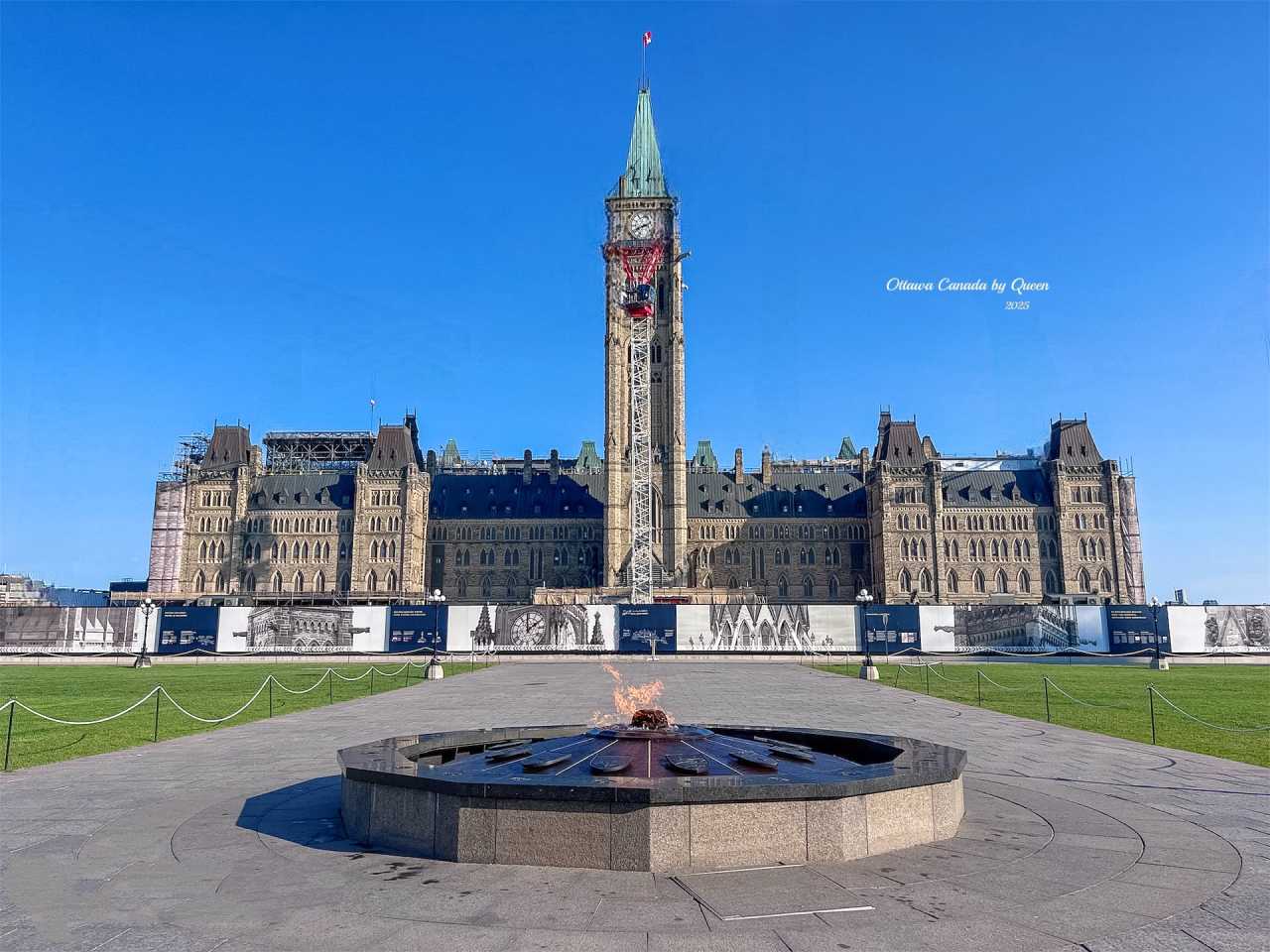
Parliament Hill is the core of the entire city. The building complex itself is like a castle woven from stone, with Gothic Revival-style towers, spires and carved details appearing particularly solemn under the blue sky.
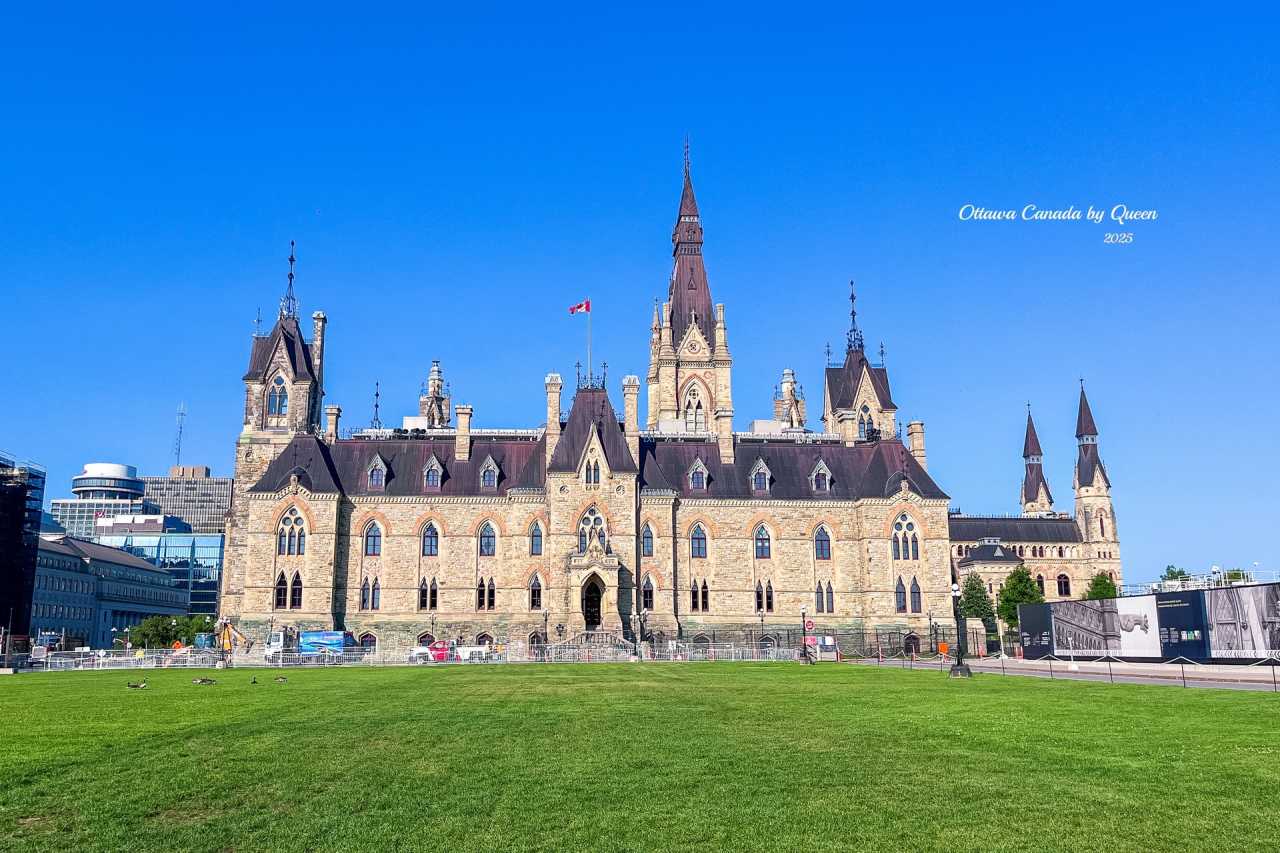
Climbing up the steps and standing on the central lawn, you can clearly see the Peace Tower towering into the clouds in the center. The bell at the top of the tower rings every once in a while, the sound is clear and long, as if recording every breath of this country. Below the tower is the Monument to the Martyrs, with an eternal flame burning, reminding people that this peace did not fall from the sky.
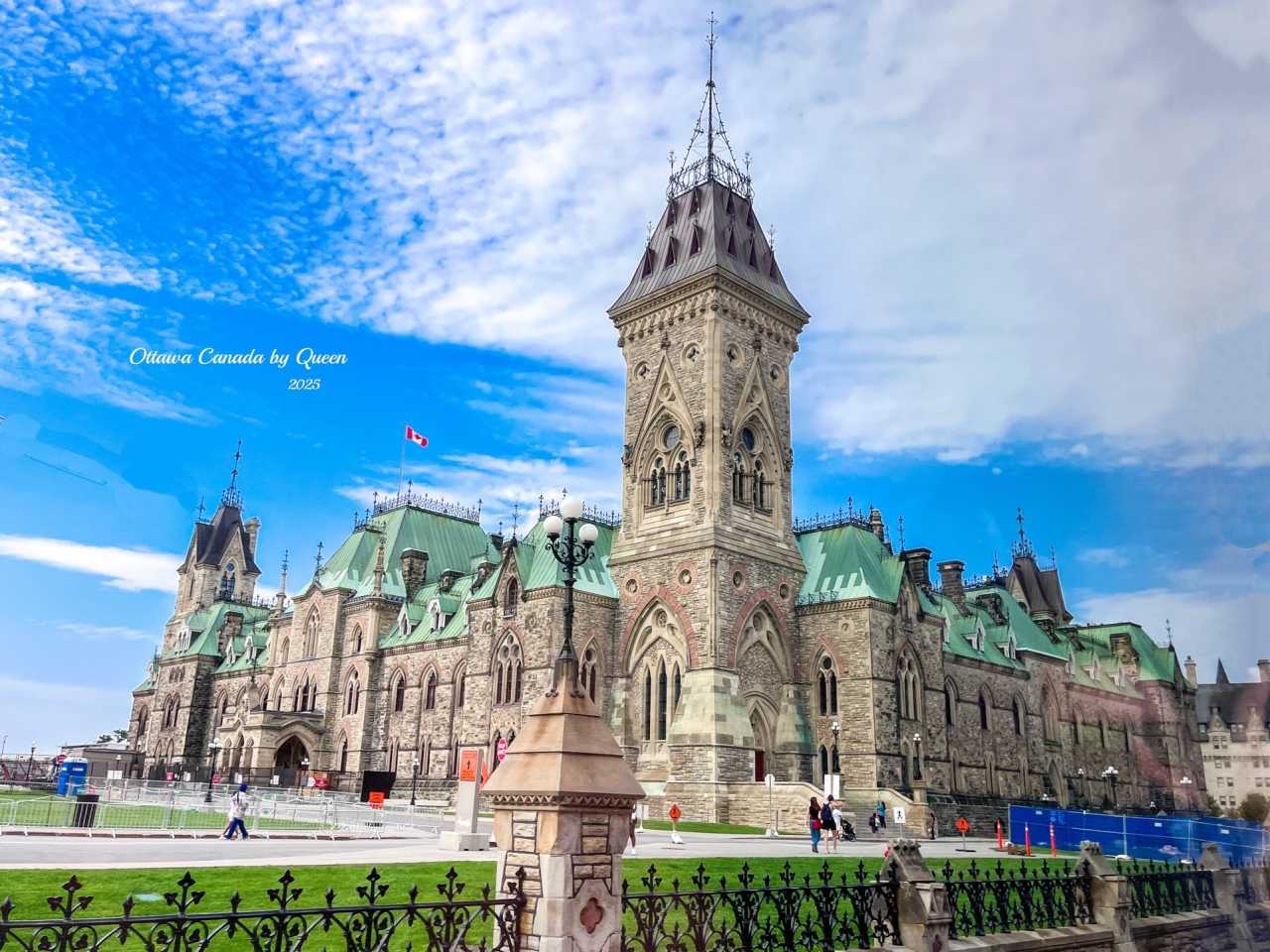
The East Block of the Parliament Buildings is one of the three main buildings of the Parliament complex, located on the east side of the Centre Block. It is often overlooked by tourists, but actually has extremely high historical value and is the "original appearance preservation site" of Canada's early political history. The East Block was built in 1859 and completed in 1866, one year earlier than the official establishment of the Canadian Confederation (1867).
The architecture of the East Block belongs to the typical Gothic Revival style, built with local gray stone, featuring spires, stone carvings, buttresses, arches and other medieval elements. The appearance is more heavy and simple than the Central Block, with very high preservation, and can be called the most "museum-like" building in Parliament Hill.
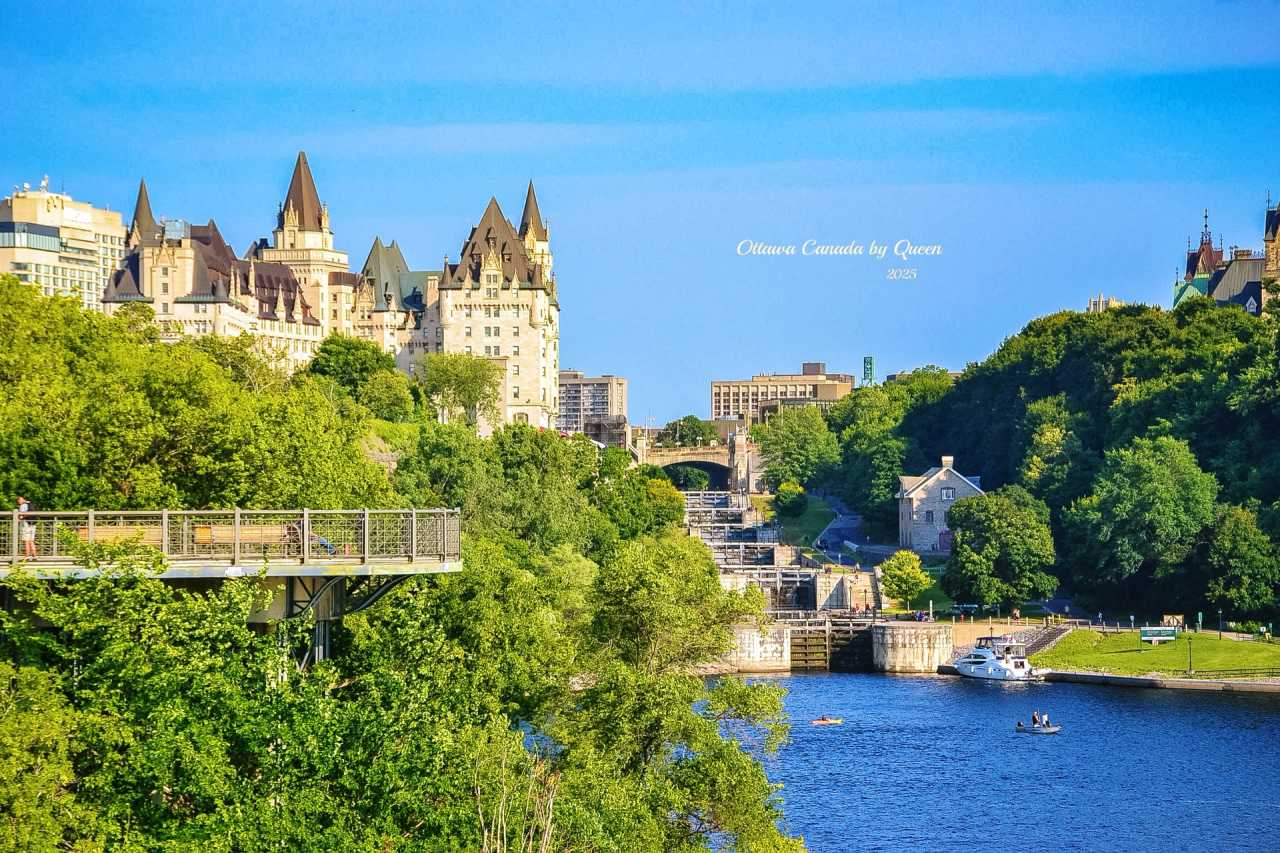
Not far east from Parliament Hill is the Rideau Canal that runs through the city. In summer, the Rideau Canal has calm water, with green trees on both banks, dotted with small bridges and locks, giving a sense of gentle order. Some people jog by the water, couples ride bicycles side by side, and tourists sit on the grass eating ice cream - everything seems particularly "Canadian": quiet, polite, not competing or grabbing. In winter, the canal becomes the world's longest natural ice rink, and the whole city seems to be frozen by a fairy tale, with people skating on the canal, water under their feet, and towers in front of their eyes - what an interesting scene.
Continuing north along the canal, we soon arrived at ByWard Market. This is the most "lived-in" place in Ottawa. Stalls are piled with fresh maple sugar, berries, smoked meat and local honey. Street performers are playing jazz, and several art shops display pottery and paintings by local craftsmen. Although there is no hustle and bustle of big cities, that kind of leisure and sincere life atmosphere makes people feel very real. Every few steps, you can encounter a restaurant or dessert shop that looks unassuming but tastes excellent.
Walking around the lively ByWard Market, the other side of the city suddenly jumps out - that is the famous "OTTAWA" giant sign. The letters are arranged at the edge of the square, like a city business card, attracting tourists to stop and take photos.
Behind the sign, several creative painted stairs extend upward, with colorful graffiti and patterns making this street corner full of vitality.
Not far from the intersection of the market is the National Gallery of Canada, whose glass tower sparkles in the sun. She doesn't overwhelm people with the heaviness of traditional stone buildings, but uses large expanses of glass and steel structure to create a transparency that is almost like a "church of light." The building itself is a work of art, with clean lines and light volume, like a quietly lying crystal at the north end of the city.
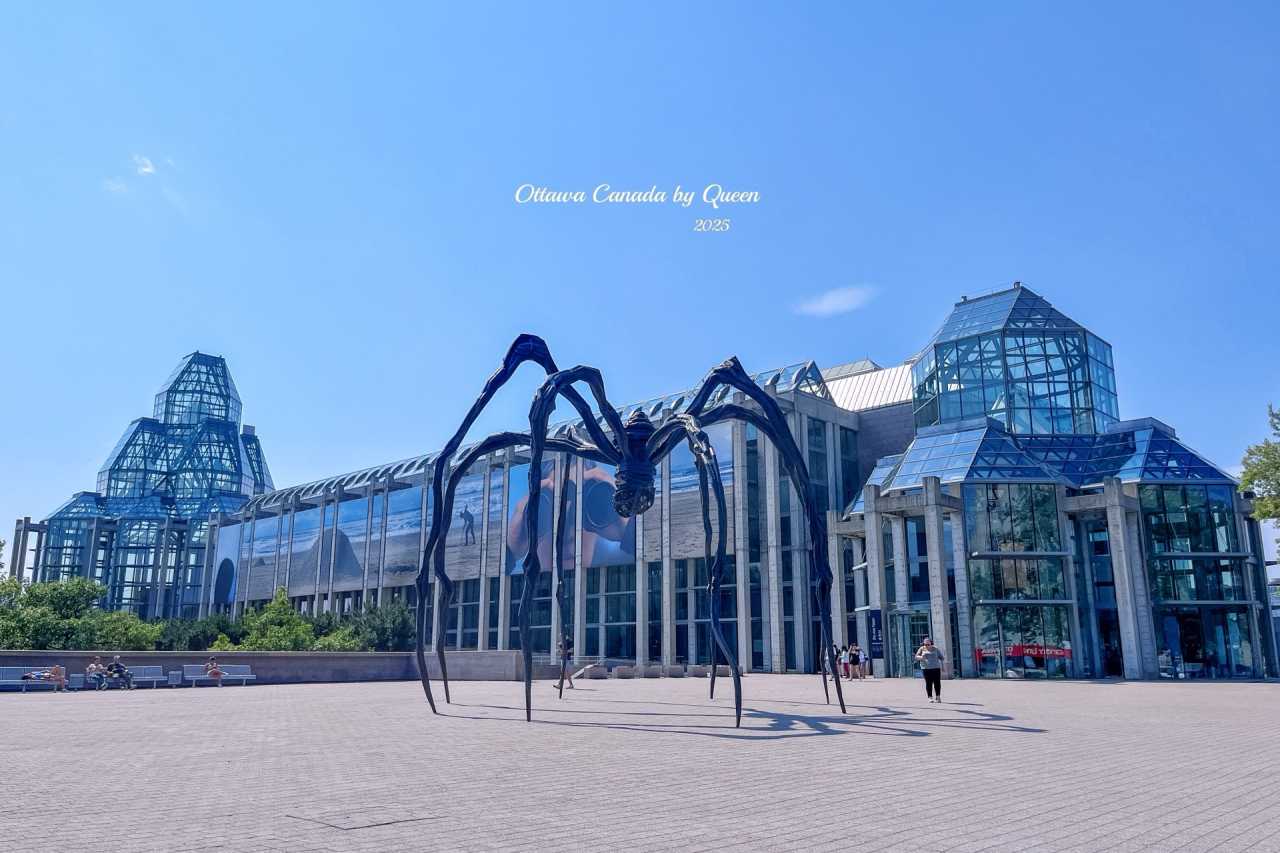
But what truly attracts tourists to stop is not the exhibition hall, but the giant spider sculpture in front of the art museum - "Maman." She is more than nine meters tall, cast in bronze and stainless steel, with eight slender legs propped up on the square. The abdomen also contains a sculpture symbolizing an "egg sac." This spider is both soft and majestic, it doesn't attack, but it's impossible to ignore. Standing beneath her and looking up, there's always a strange feeling of time and power being compressed, reminding people of a mother's silence and strength.
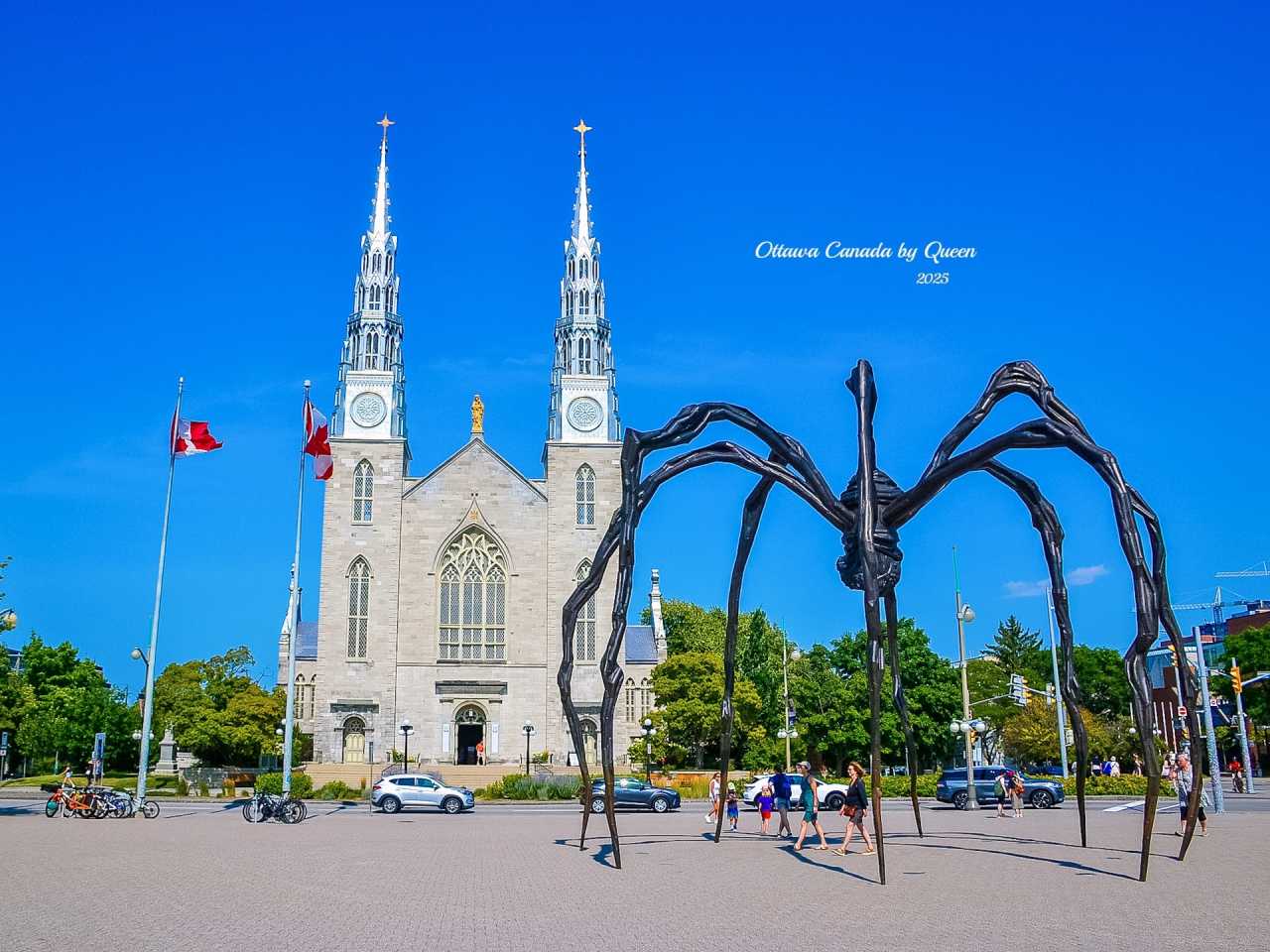
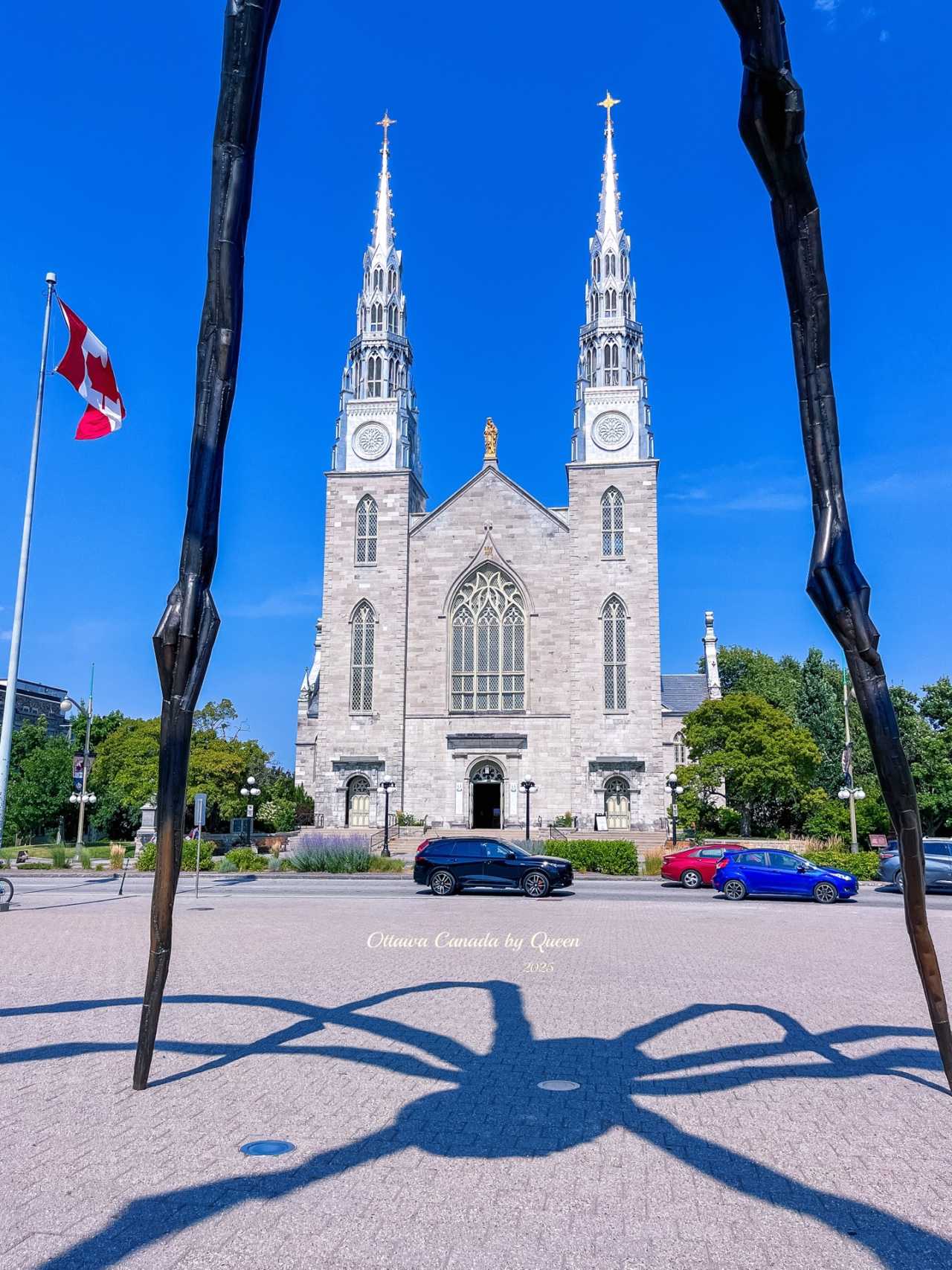
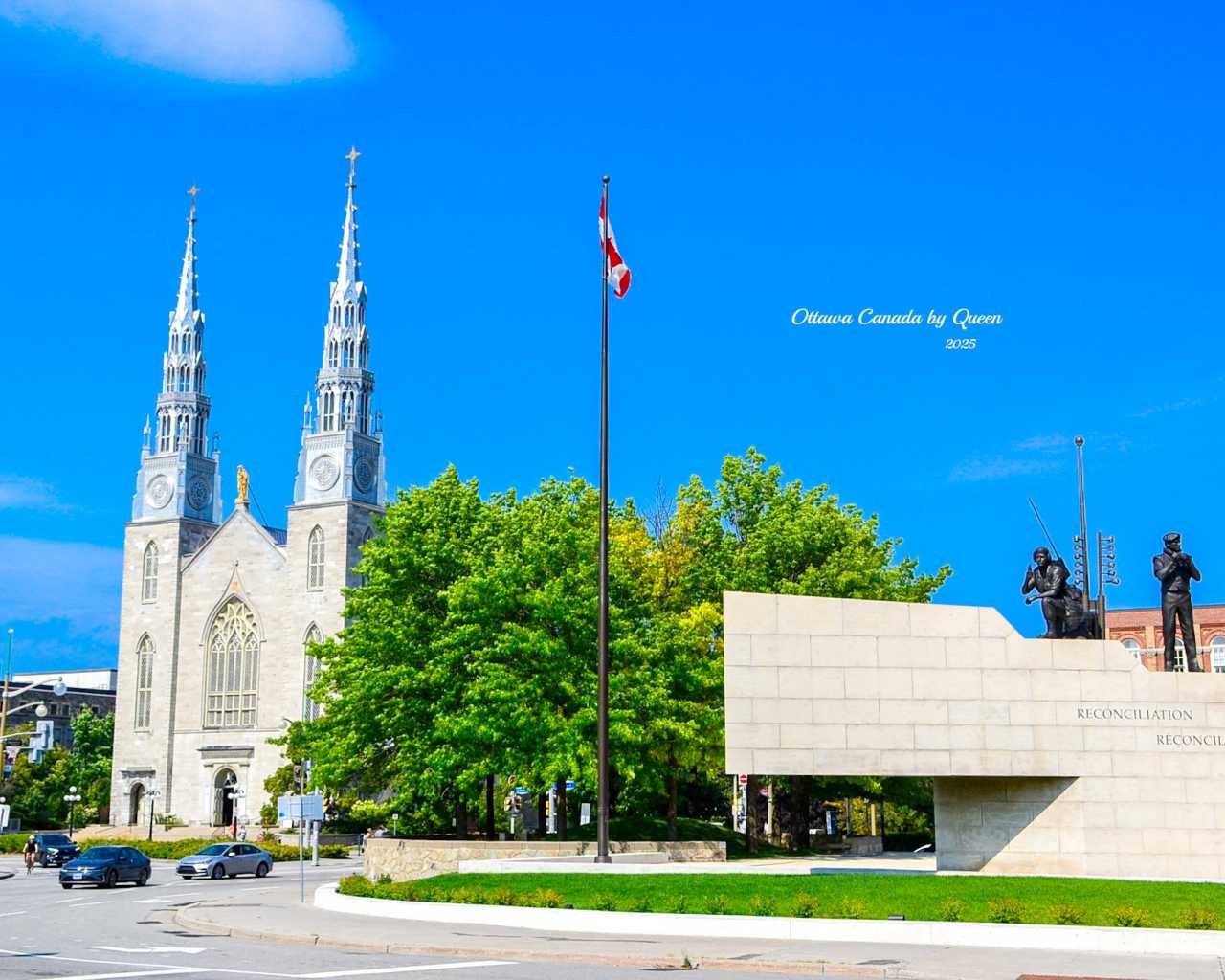
Walking across from the spider's shadow, one's gaze is involuntarily drawn to another landmark - Ottawa's oldest and most solemn church: Notre-Dame Cathedral Basilica. Her twin towers shimmer with silver light under the sun, with Gothic spires, rose windows, and blue-gold interior ceiling, exuding an almost gentle sense of sanctity.
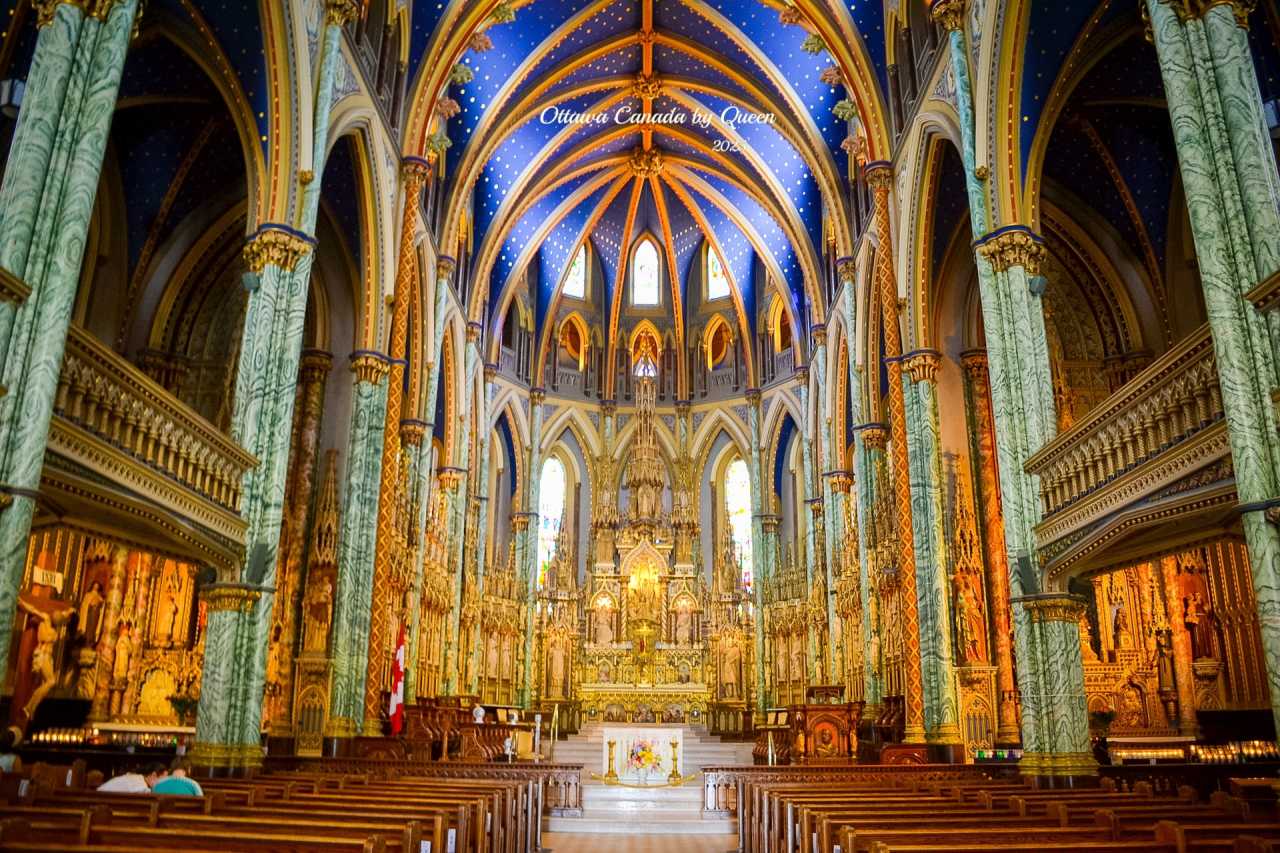
Entering the interior of the church, the first thing that catches the eye is the towering arched ceiling, with blue and gold intermingled ceiling painted with religious murals. Sunlight pours in through the stained glass windows, casting mottled light and shadow. The entire space is both solemn and warm. The ancient wooden pews are arranged neatly, with exquisite carvings and gold leaf decorations on the altar in front, and a faint scent of incense candles fills the air. The tranquility here makes people involuntarily slow down their breathing, as if time has stopped at this moment.
Walking around to the rear of the church, a vast grassy park unfolds, dotted with green trees, and several benches quietly sit under the shade of trees. There are no clear boundaries here, but it naturally brings people from the world of art and faith into a more relaxed, daily rhythm.
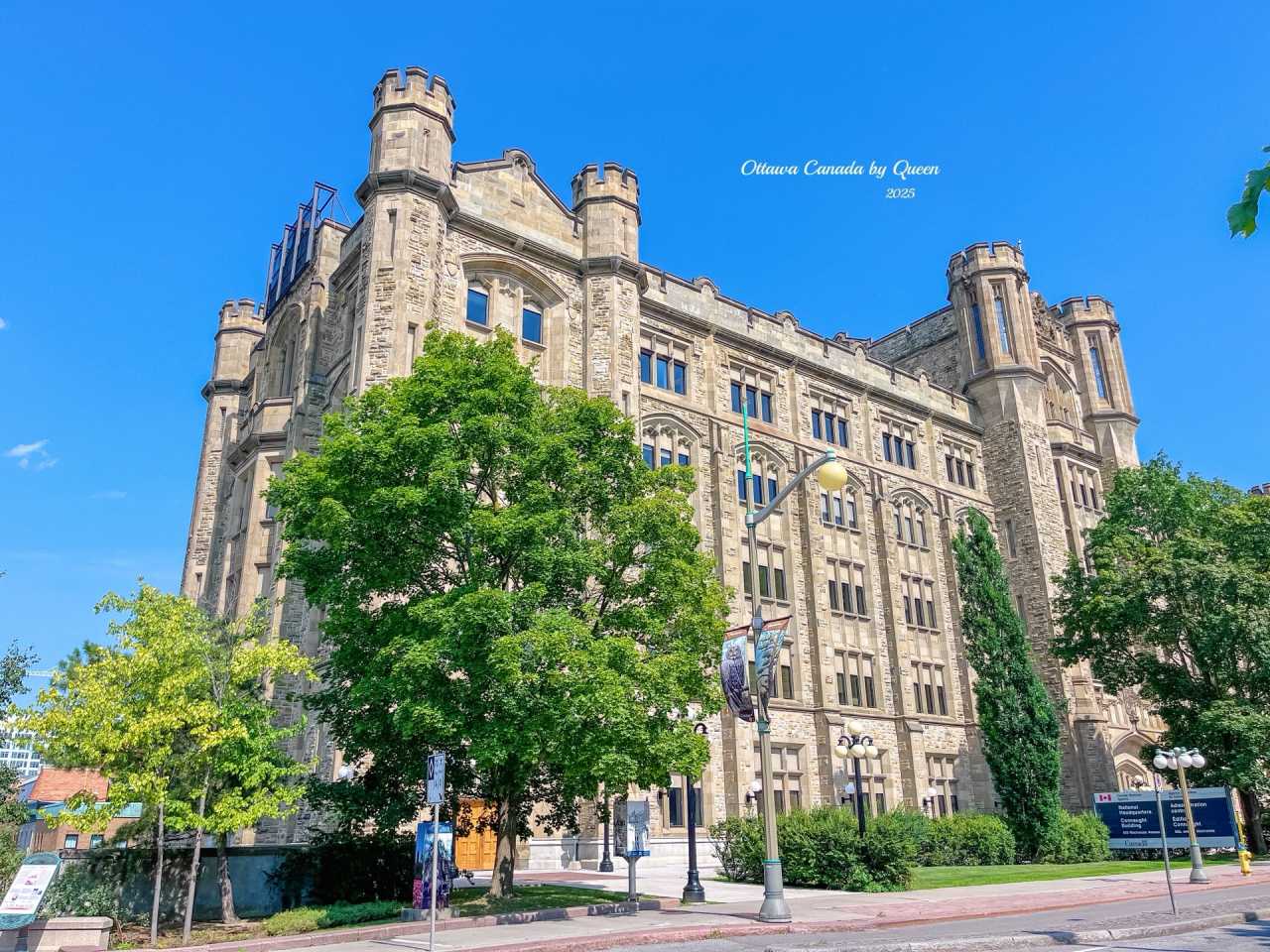
Walking further back is a government building with straight lines and gray-white steadiness - that is the Department of Finance Canada. Despite its low-key appearance, she serves as the brain of the country's fiscal policy.
Crossing the Alexander Bridge, we arrived at the Canadian Museum of History. Although it no longer belongs to Ottawa's administrative district, but is part of Quebec Province, this spatial "jump" makes people strongly feel Ottawa's bilingual culture and dual identity. This capital doesn't belong to a certain voice, but allows multiple languages, multiple histories, and even multiple cultural identities to coexist here.
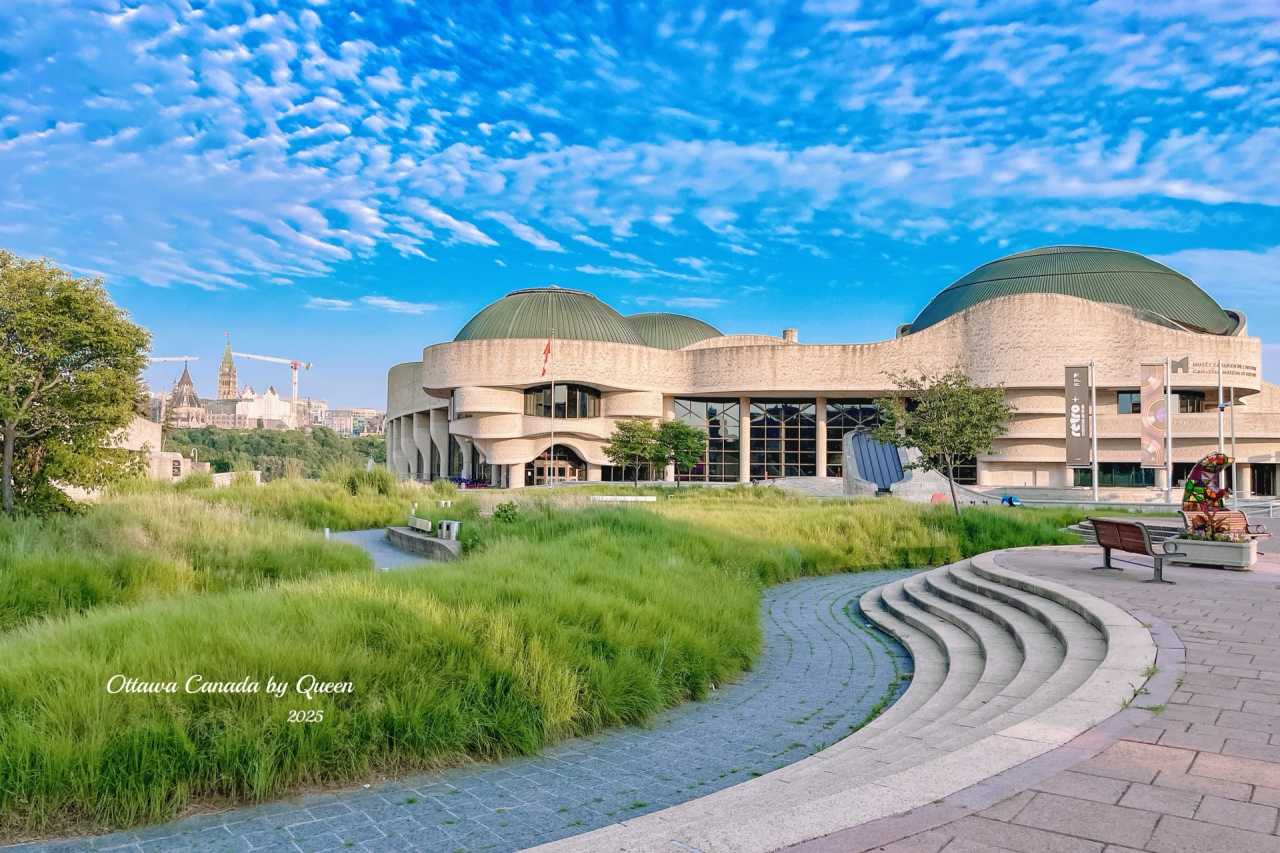
Standing in front of the tall floor-to-ceiling windows of the History Museum, looking across the Ottawa River toward the heart of this Canadian capital. The river surface is like a mirror, reflecting the scattered buildings on the shore and the blue sky. In the distance, the Peace Tower on Parliament Hill is clearly visible, with its Gothic spire shining solemn and peaceful brilliance under the sun. The city's skyline is flat and modern, with high-rise buildings not densely packed but arranged in an orderly manner, showcasing the unique charm of the city's blend of old and new.
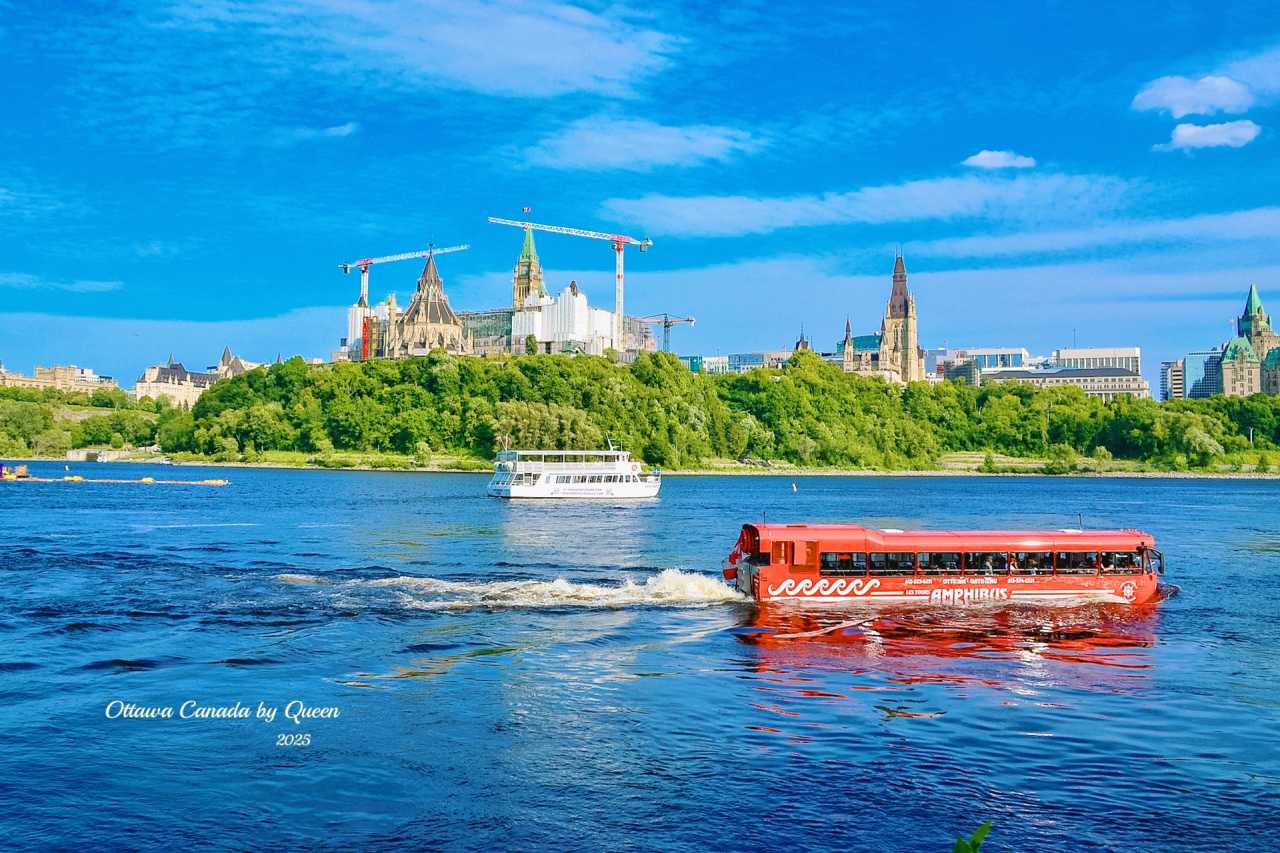
The banks on both sides are shaded by green trees, with parks and walkways winding and extending, adding a rare natural vitality to the city. Occasionally, cruise ships glide slowly across the water, creating ripples.
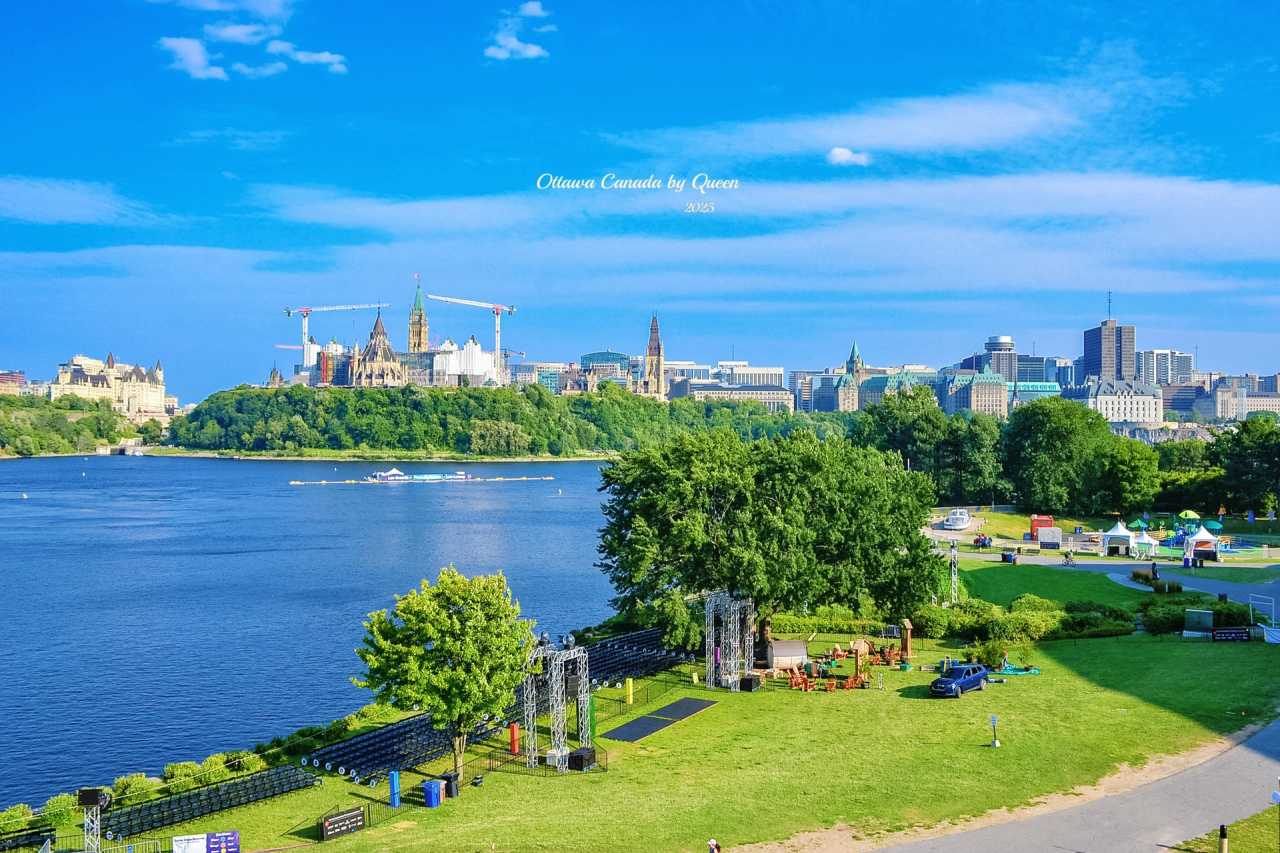
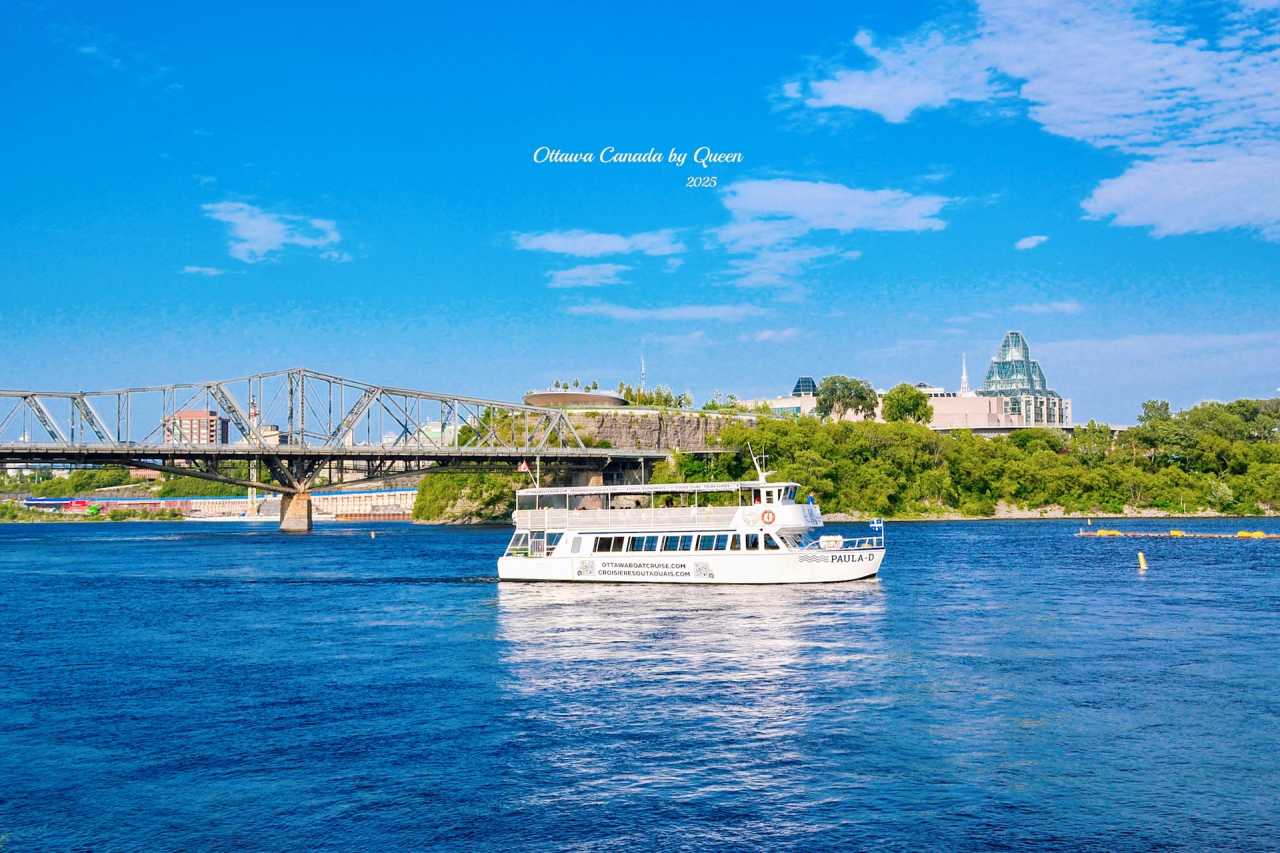
Ottawa has no forest of skyscrapers or endless stream of traffic. She is not outstanding, but writes "balance" and "respect" in every corner. For those who love urban rhythm and cultural texture, this place is just right.
Quebec - My Heart-Fluttering Moment
With the filter of "Goblin: The Lonely and Great God," I came to Quebec. This is a city that seems disconnected from time, with stone walls, spires, French whispers, and love affairs that have spanned four hundred years. Here, every step feels like walking into a Korean drama scene - and I don't know whether I'm a traveler or a character in the story. So I began to record this journey, not just for the scenery, but to relive that familiar line: "If one day you think of me, come to Quebec."
My journey began in Vieux-Quebec (Old Quebec). This is a UNESCO World Heritage Site and the only remaining walled city in North America. Stepping through Porte Saint-Jean (St. Jean Gate) feels like entering a medieval town in a fairy tale.
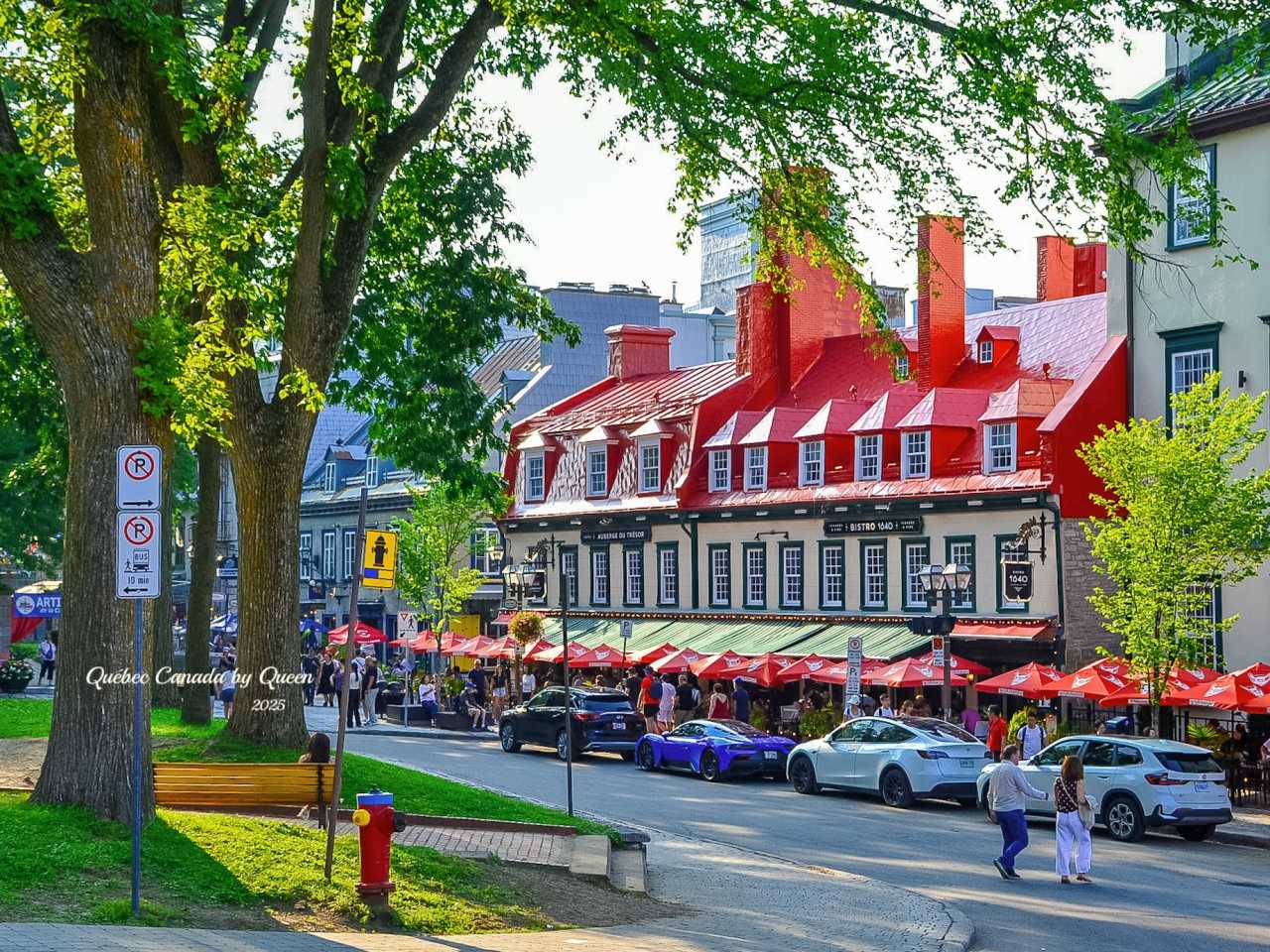
Cobblestone streets are lined with quaint stone buildings, French signs can be seen everywhere, and street performers' music echoes in the squares. What attracts me most is the Château Frontenac, this magnificent castle overlooking the Saint Lawrence River, is the landmark of Quebec. It is said that she is the most photographed hotel in the world, and standing in front of the castle, I finally understand why so many people are fascinated by her.
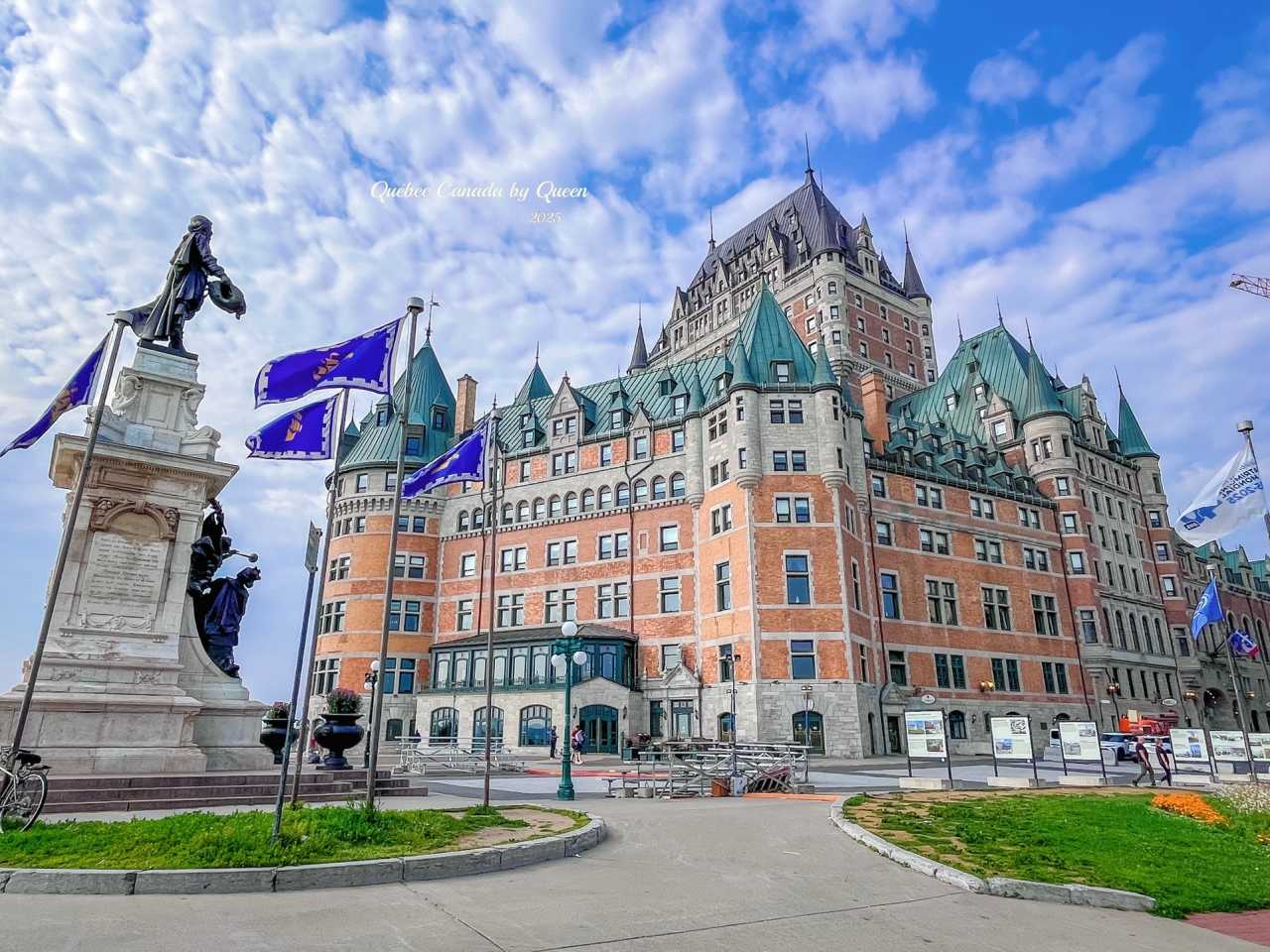
The Terrasse Dufferin in front of Château Frontenac is an excellent place for viewing, walking, and feeling history. The foot is a long corridor paved with wooden boards, and the front is the open view of Saint Lawrence River.
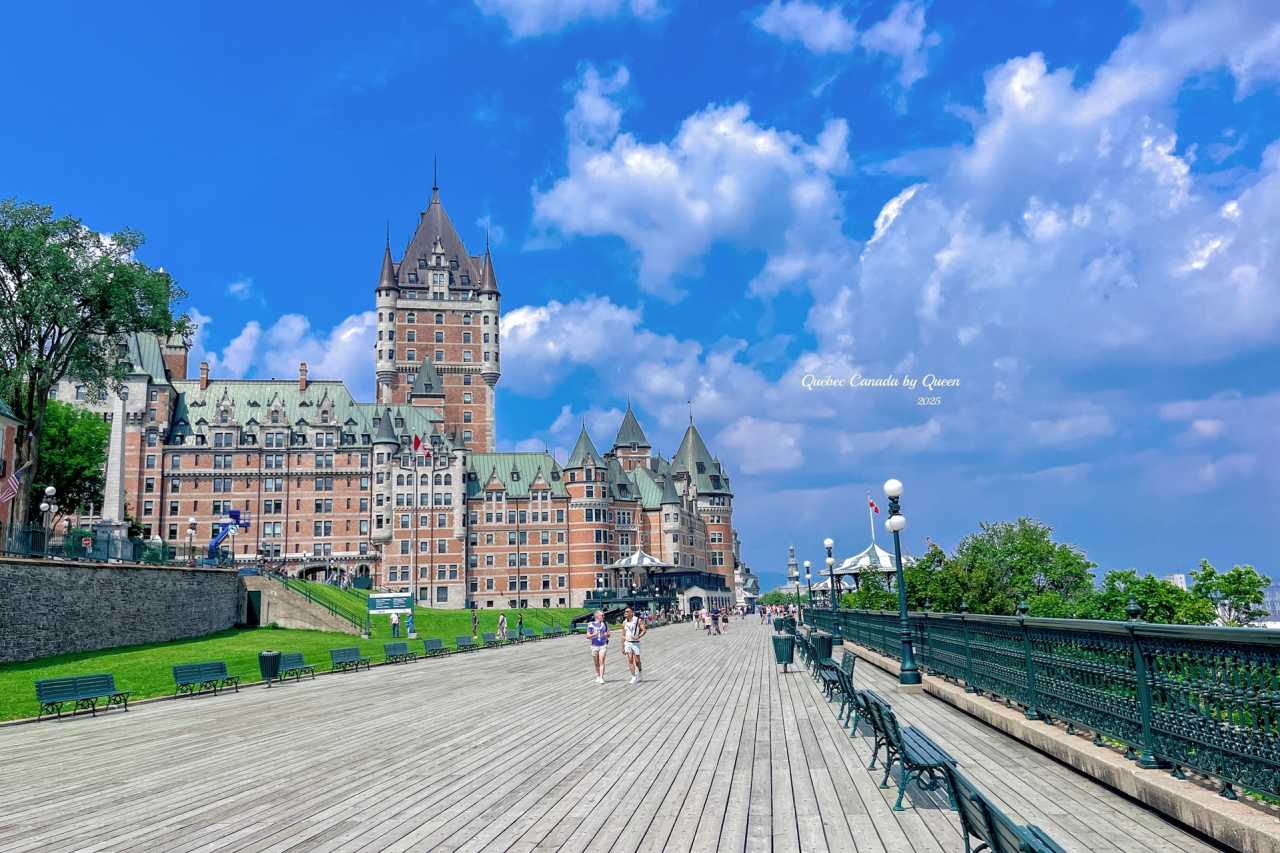
People walk on the promenade, eat ice cream, or watch street performers perform acrobatics and music. Summer sunlight shines on the wooden floor, emitting a faint light.
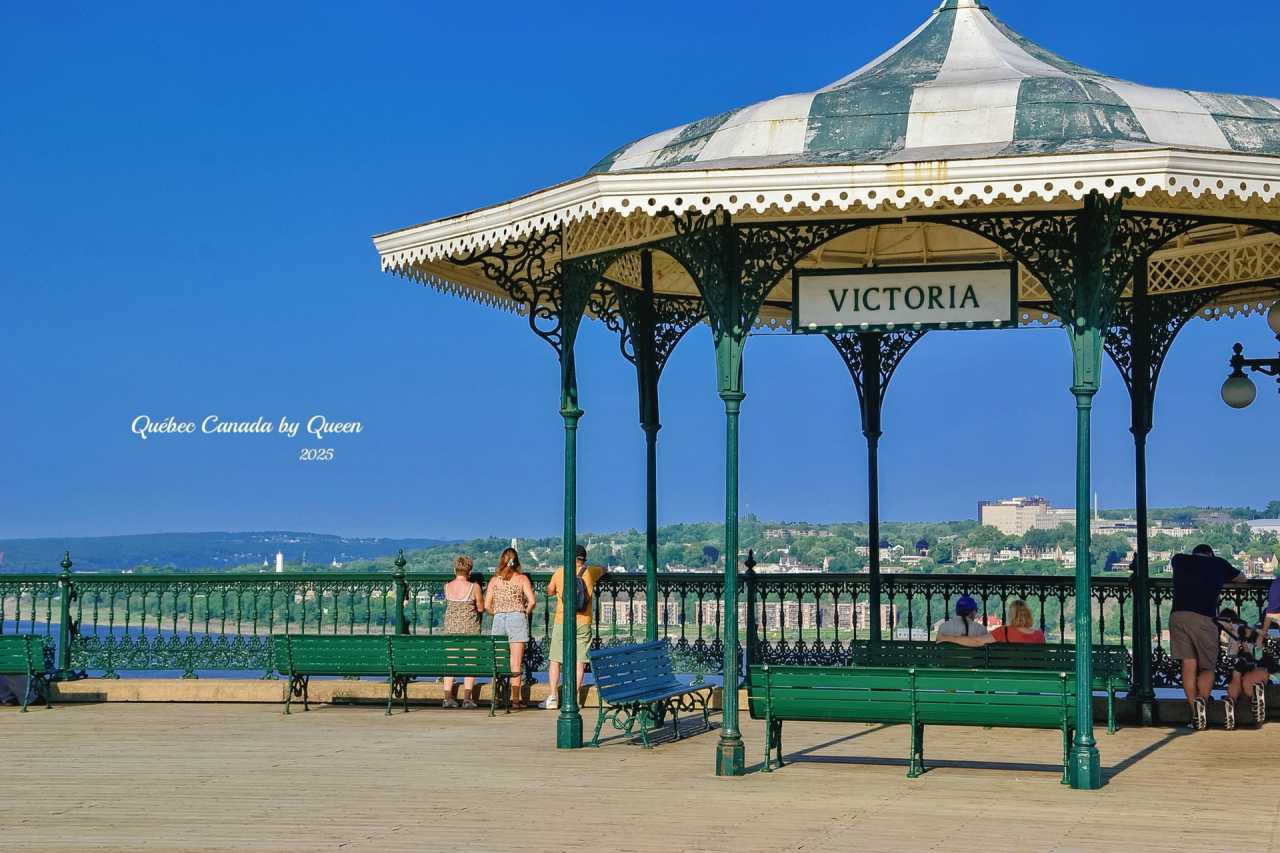
When passing through the old town, I casually pushed open a Christmas shop called La Boutique de Noël de Québec. This Christmas shop in Quebec is very famous, open all year round. Even walking in during the hot summer of July feels like traveling to Christmas Eve in an instant. It is one of the most fairy-tale and healing corners of the city. The house is not big, but it is decorated with great care, with Christmas trees, ornaments, and glass balls everywhere.
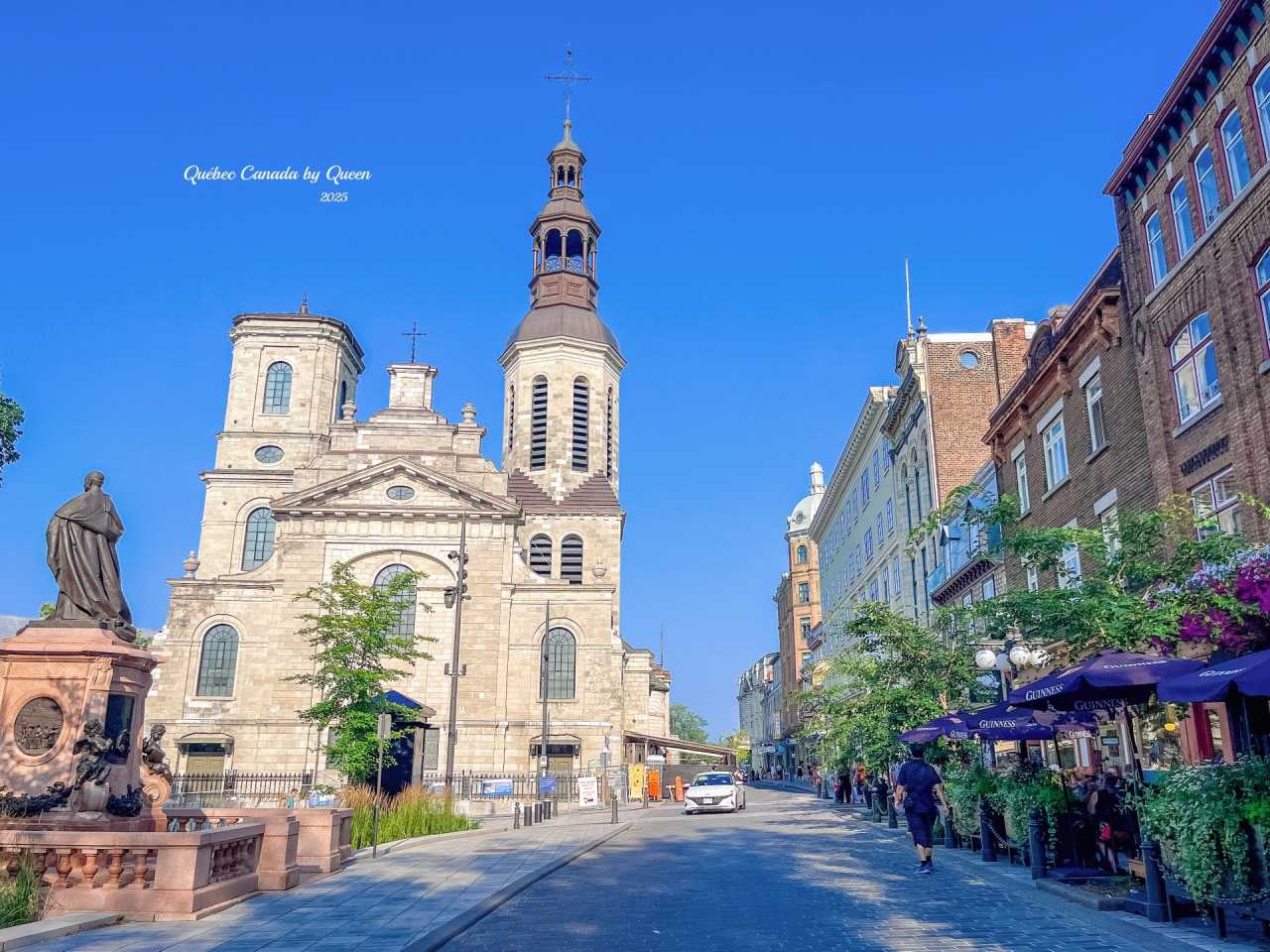
The church in front of the Christmas shop, Notre-Dame de Québec, is a very important historical building in Quebec's old town. It is one of the earliest Catholic churches in North America, originally built in 1647. This church is now one of the most important Catholic cathedrals in Canada and also a papal basilica, equivalent to the "basilica level" awarded by the Vatican.
The appearance of the church is relatively low-key, but the interior decoration is very exquisite, with golden altar, ceiling murals, and pipe organ all worth seeing. There are crypts on the side of the church, where many bishops in Quebec's history are buried, including François de Laval, the first saint in Canada.
Walking down the Escalier Casse-Cou ("Broken Neck Stairs") from Upper Town in Quebec's old town, you can see the entire Petit-Champlain street slowly unfolding like a painting. The wooden steps are somewhat mottled, with iron art handrails on both sides, making a slight sound when stepped on, quite a sense of age. This staircase is very steep and famous, being one of the oldest stairs in Quebec. The direct translation of its name is "broken neck stairs," which sounds scary, but actually has excellent scenery.
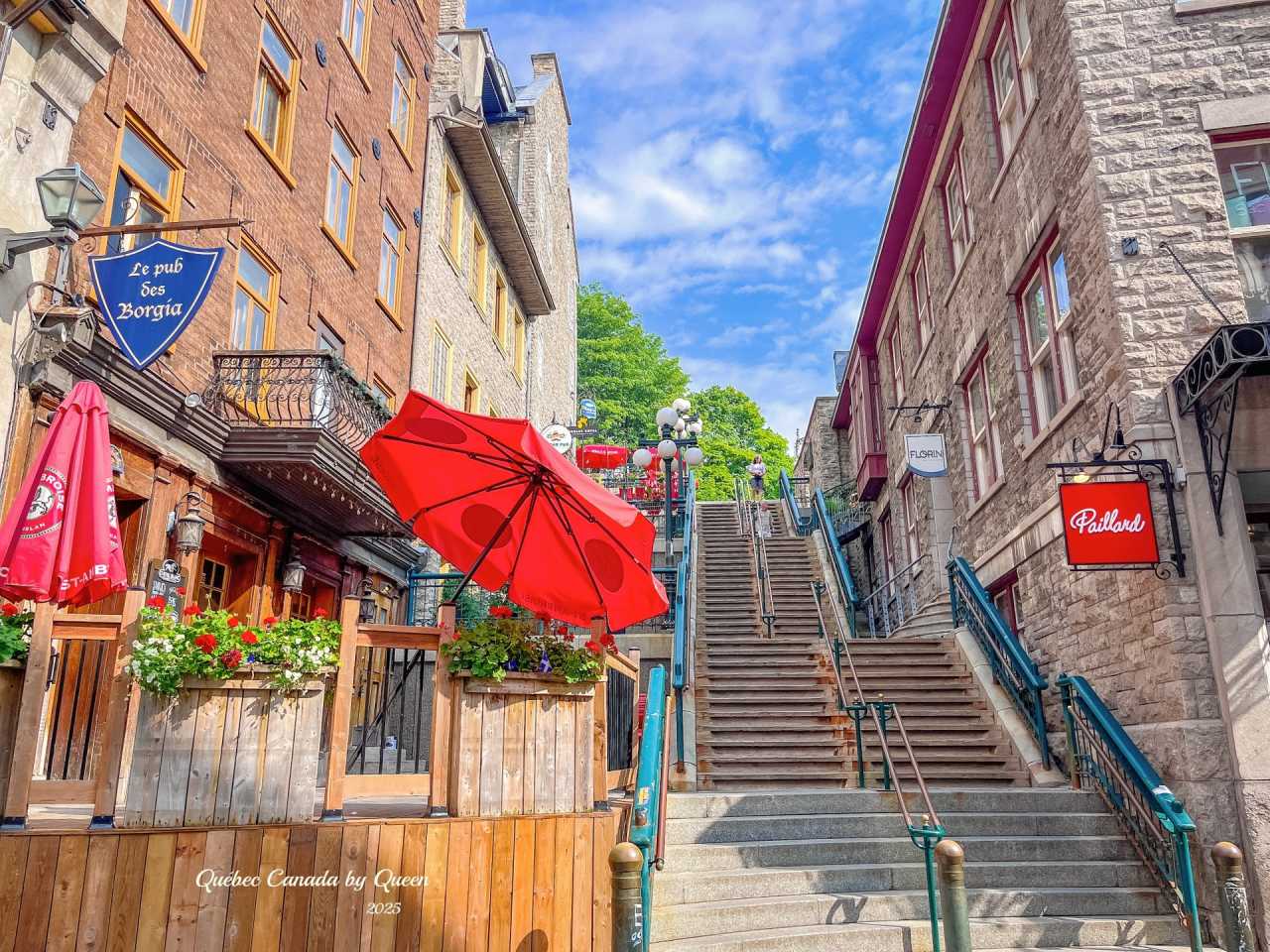
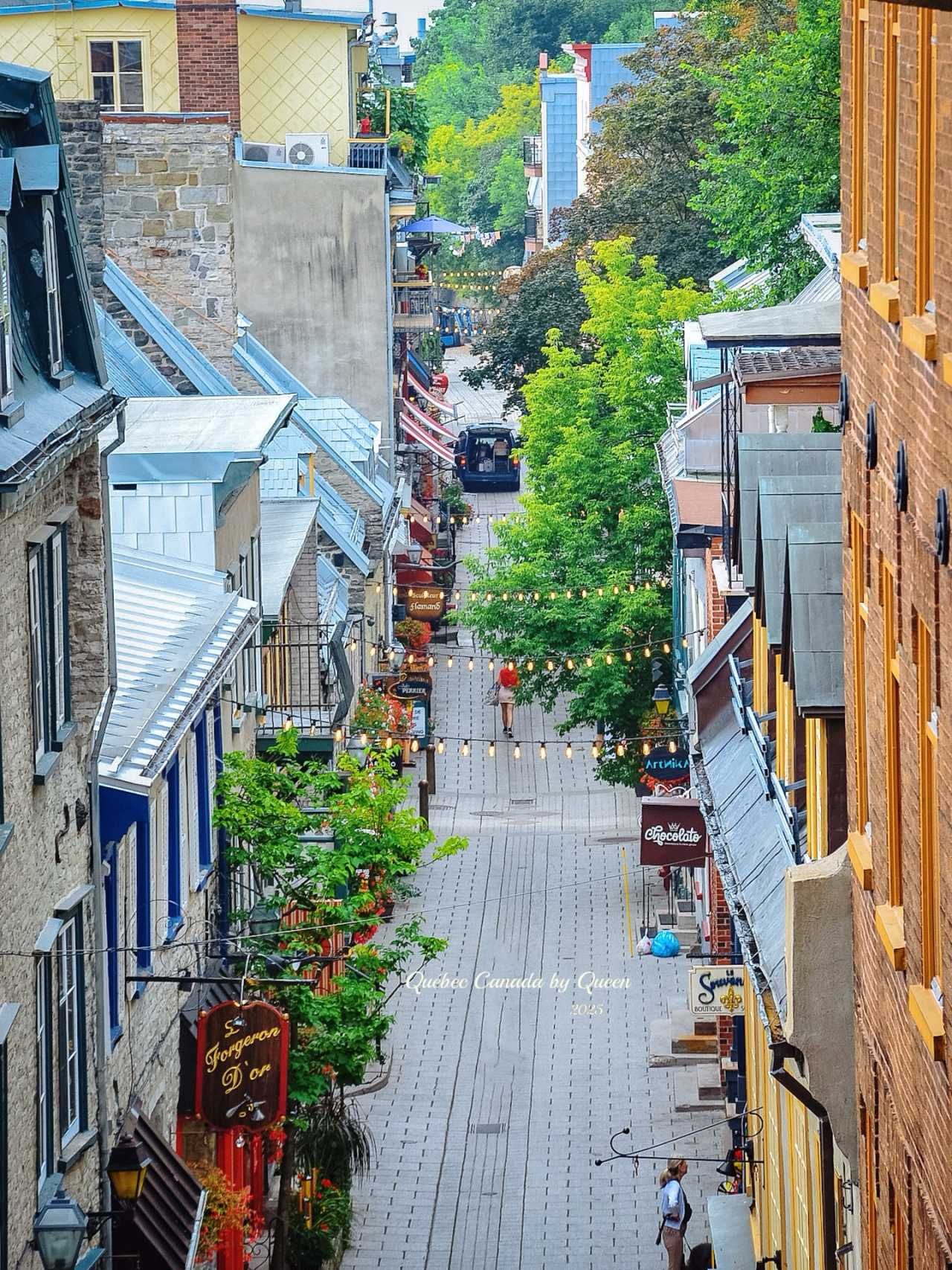
Petit-Champlain is one of the oldest commercial streets in North America. The winding cobblestone street is lined with brightly colored small shops, galleries, chocolate shops, and small cafes. Even in summer, it feels like being covered by magic here, full of French romantic atmosphere.
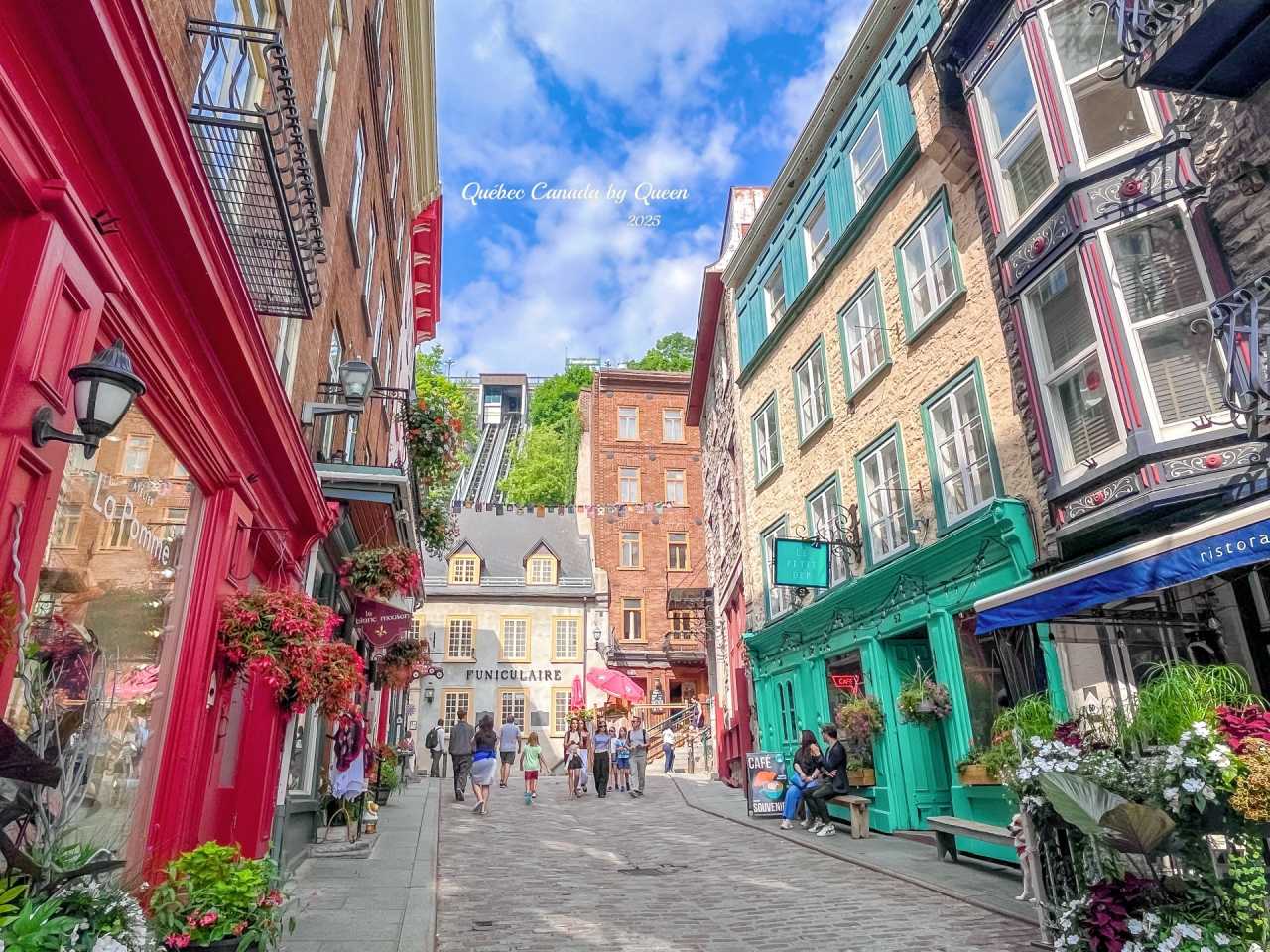
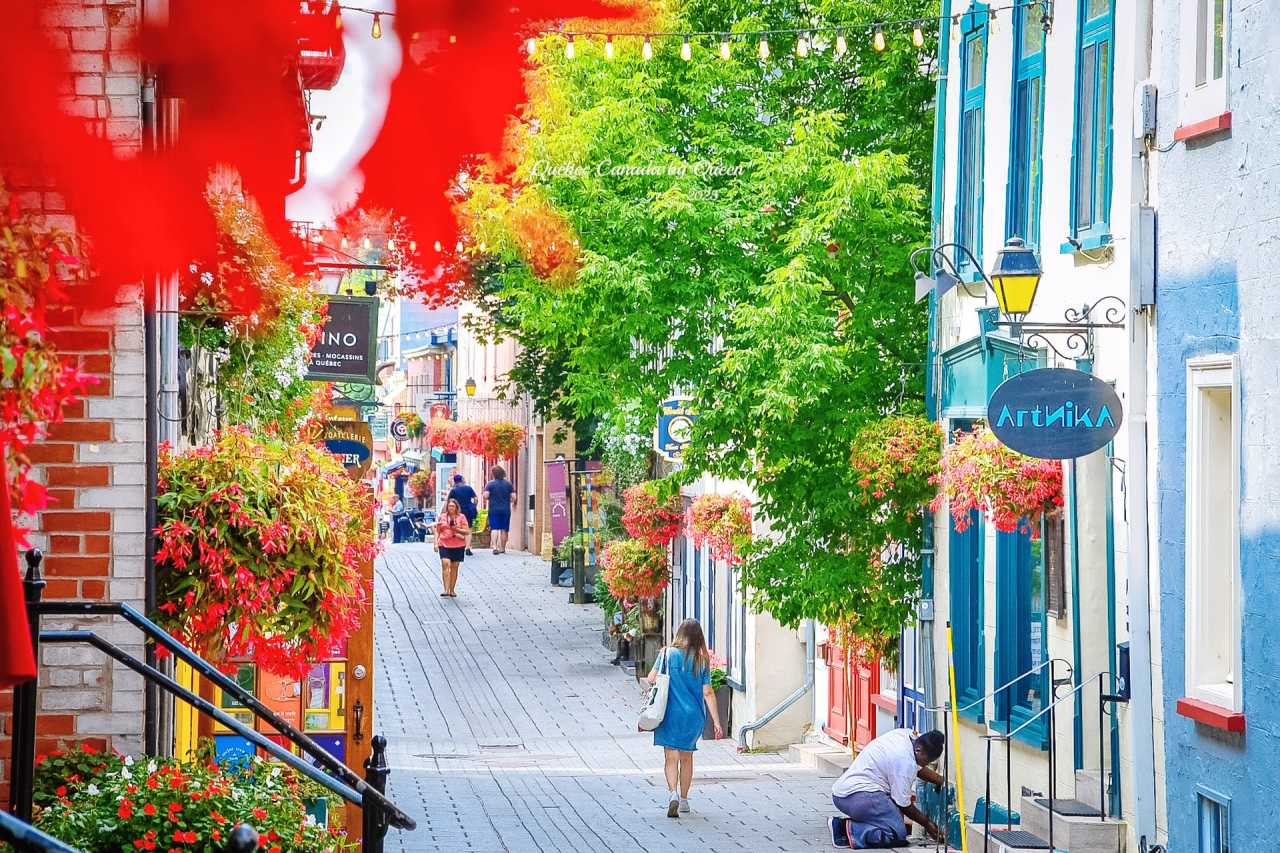
Colorful window frames, vine-wrapped balconies, and exquisite craft shops are my favorites. The alley is full of surprises.
For example, the puppet shop, with various big-nosed Pinocchios, foxes in dresses, and smiling clowns hanging in the window, each one seems to have life, making people unable to help but stick to the glass and look for a few more seconds.
For example, there is a restaurant called Cochon Dingue, with a pig peeking in from the window at the entrance, so dramatic that I wonder what it's looking at?
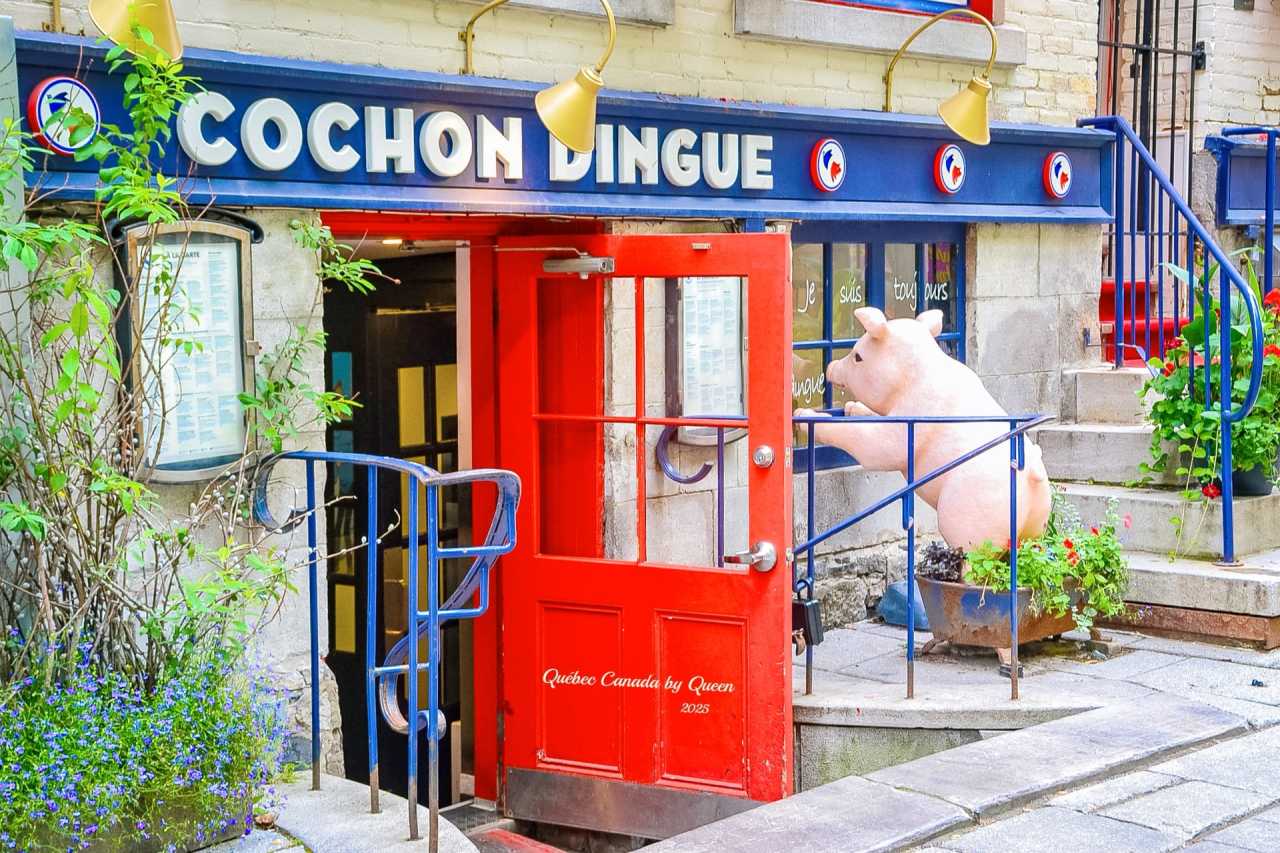
I really love Rue du Petit-Champlain too much. It's not a long alley, but it hides too many delicate and lovely shops: wooden doors, flower windows, handwritten signs, wanting to stop every few steps.
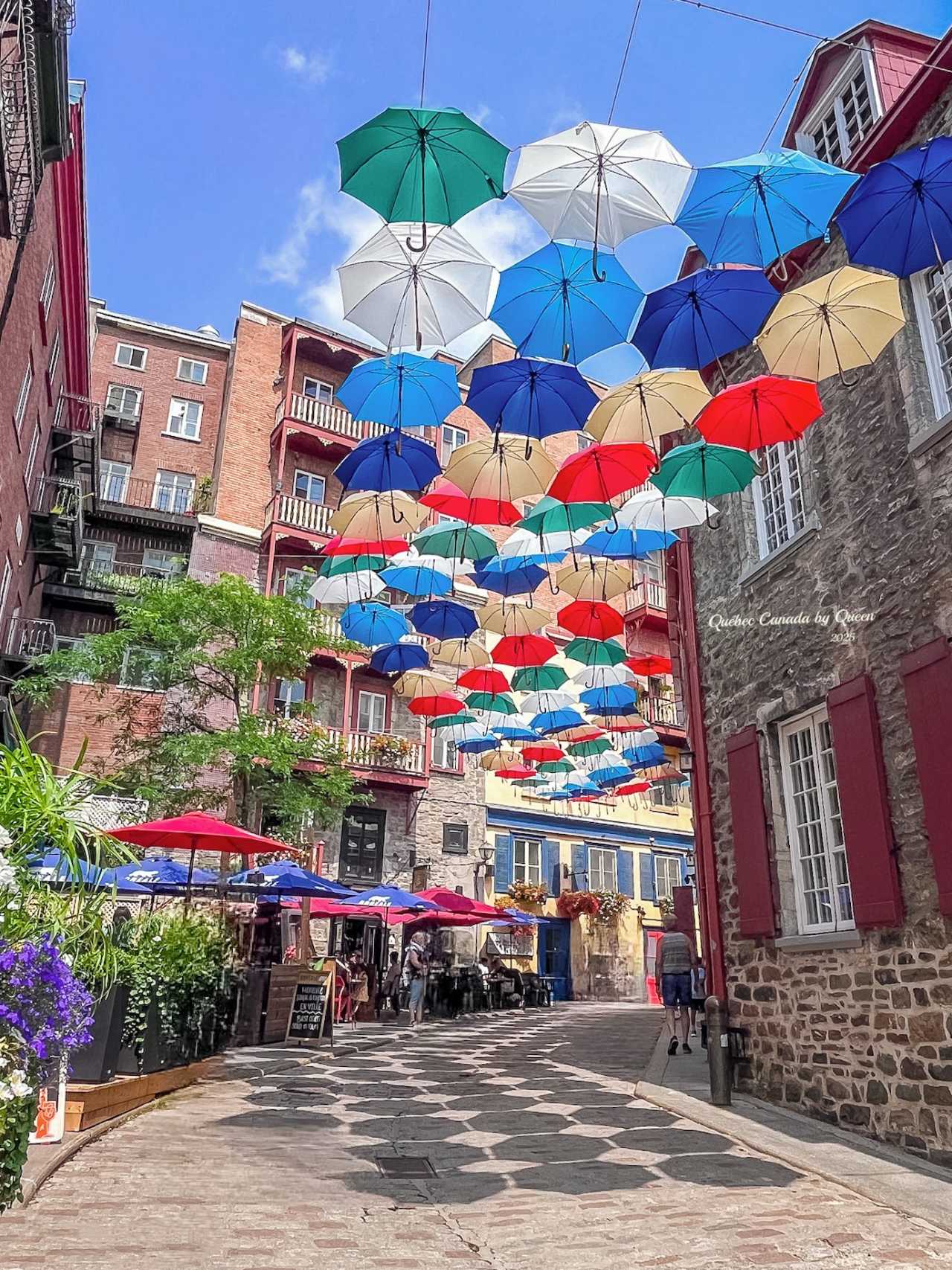
Continuing to walk, a colorful sky suddenly opened overhead. Countless umbrellas hung upside down above the alley, like a light festival suspended over the old city's stone roads. Sunlight filtered through the umbrella surfaces, casting colorful light and shadow on the walls and people, even the air carried a fairy tale feeling.
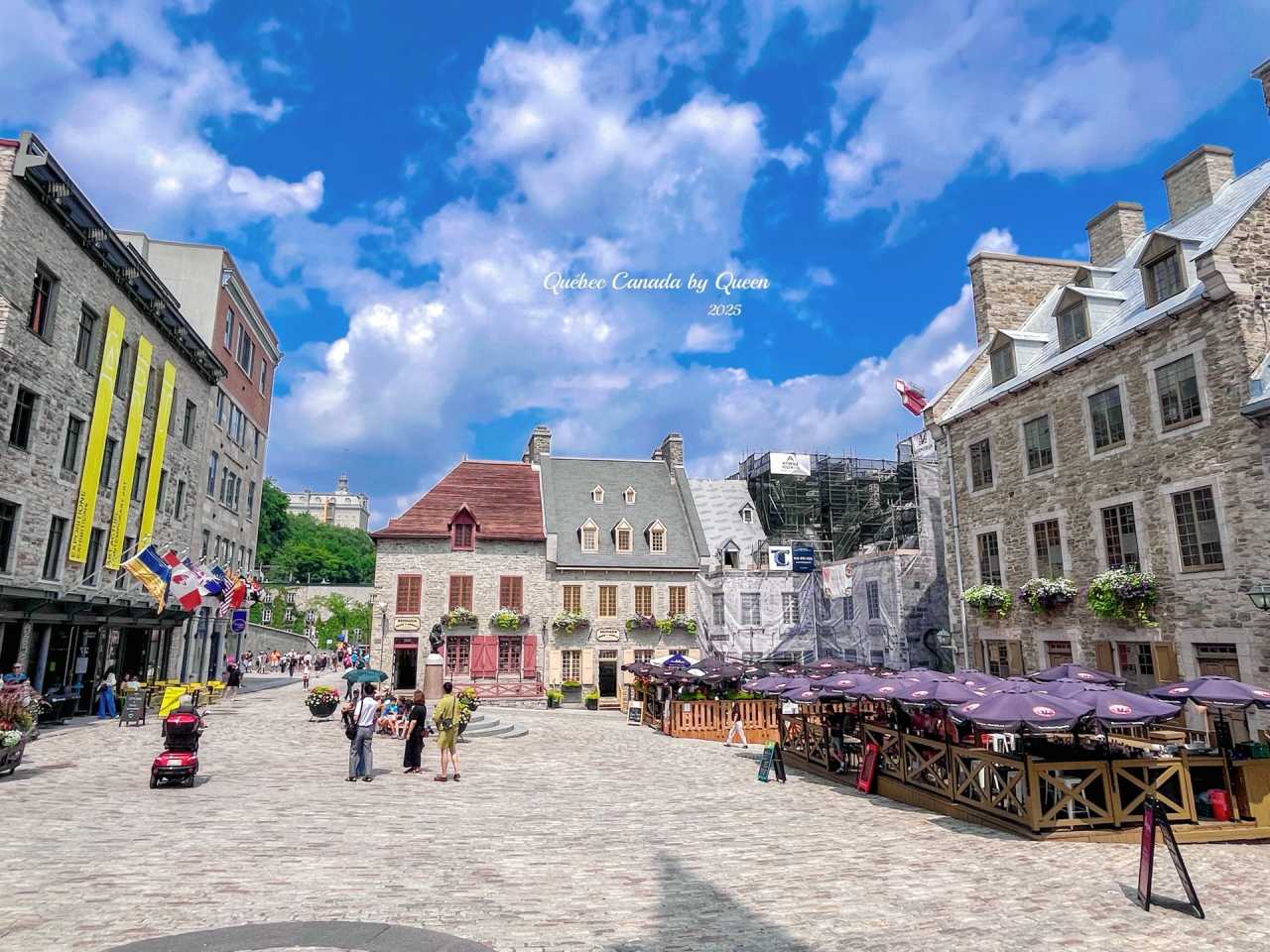
Not far away is Place Royale, the birthplace of Quebec. Ancient stone houses surround a small square, with a statue of King Champagne standing in the center. Standing between the old church and the cobblestone square, one can imagine what the French looked like when they first settled here.
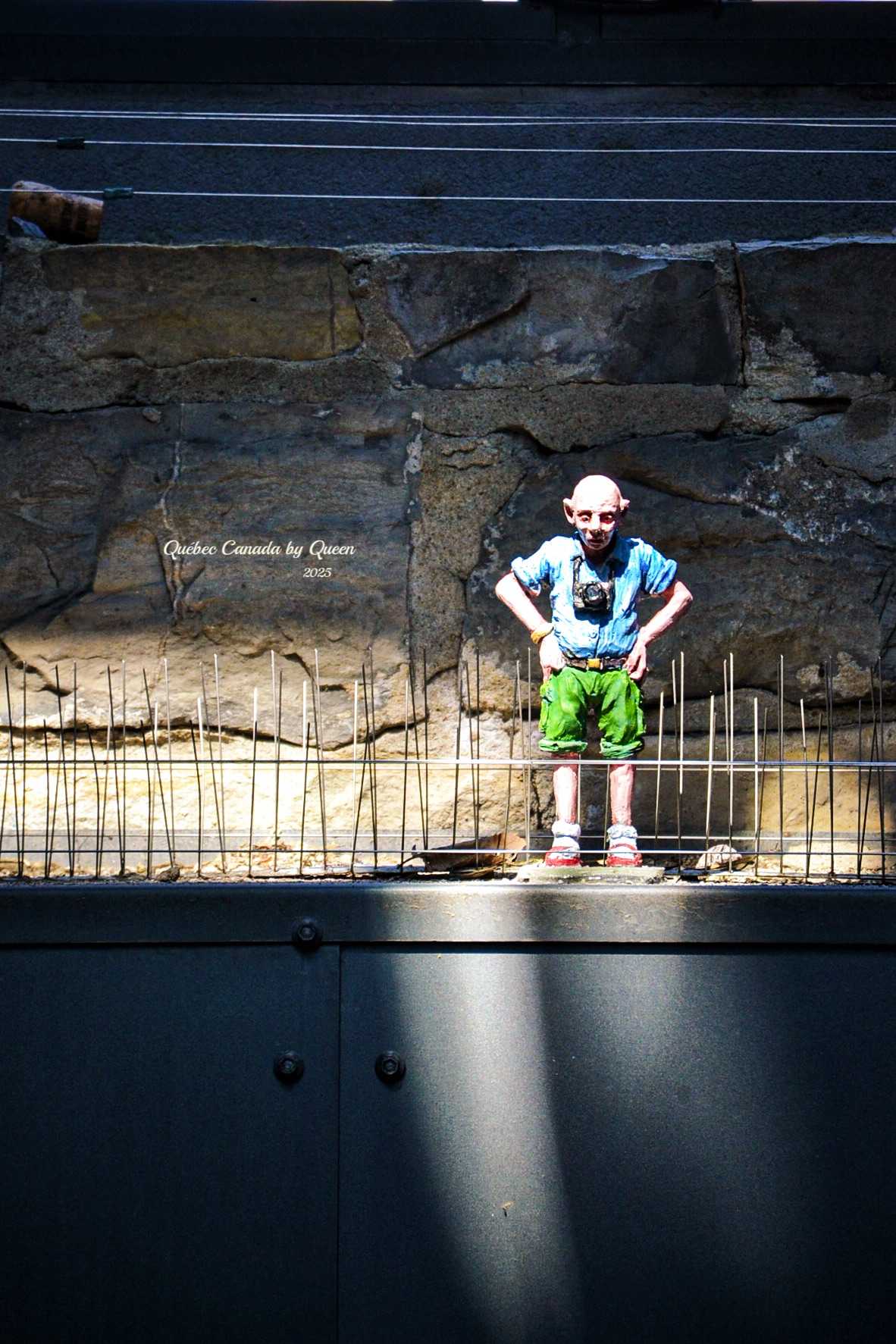
One of the most interesting urban details in Quebec's old town is those small bronze statues, usually called "the man on the eaves" (L'homme au regard perçant), or simply nicknamed "Quebec roof killer brother" by tourists.
He usually stands on the edge of the roof, above the window sill, or on the porch eaves, looking down at the street - with sharp eyes and a serious expression, looking like he is monitoring every movement on the street. He doesn't speak, but his presence is overwhelming. Sometimes he is partially covered by window flower pots or vines, and the moment you see him really has a "creepy yet romantic" feeling.
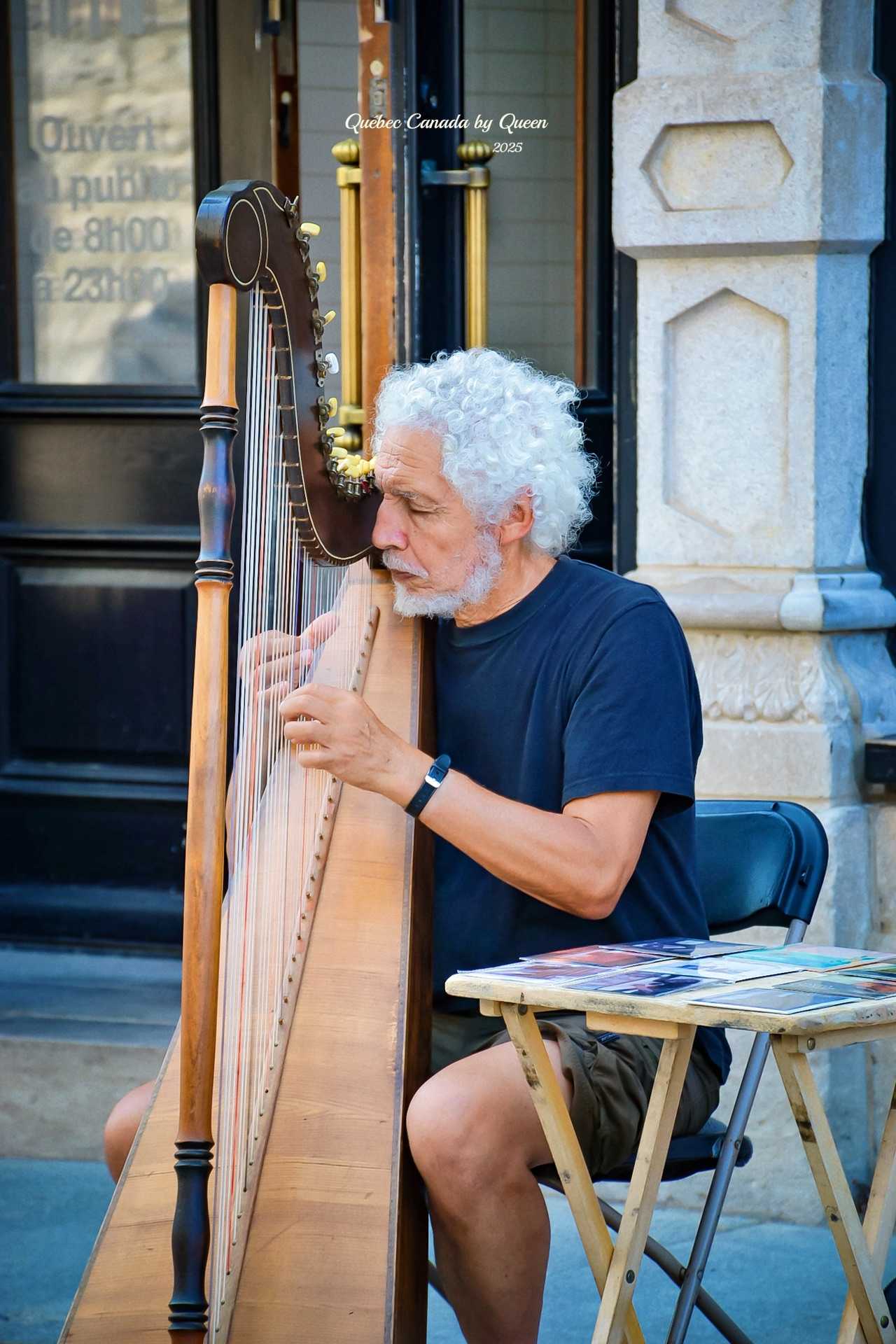
Besides the "killer brother," I also met a white-haired old man playing the harp in the square, a very famous street performer in Quebec's old town. He has a gentle temperament, snow-white hair, and neat clothes, with a quiet and transcendent presence - what's more special is that he actually appeared in the Korean drama "Goblin: The Lonely and Great God," becoming the "Quebec impression" in the hearts of many movie fans.
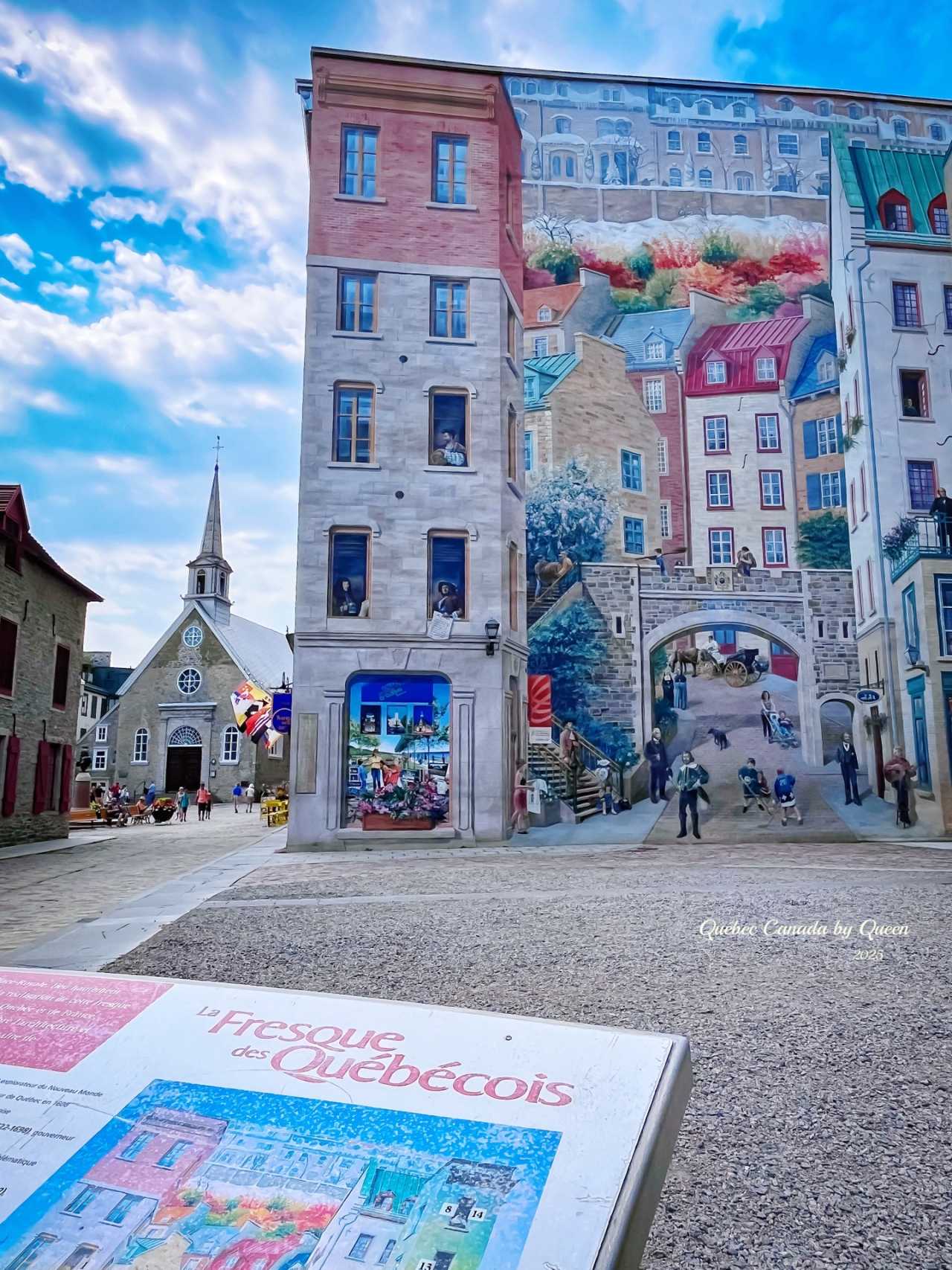
Walking to the end of the street, don't miss that extremely famous Fresque des Québécois ("Quebec Mural"). This giant mural is three stories high, depicting not only the development history of this city but also cleverly "hiding" many local historical figures, artists, and citizens, with reality and illusion interwoven.
Continuing to walk outward, you arrive at the Plains of Abraham. This vast grassy area was once the battlefield of the decisive battle between Britain and France, and is now a park for citizens to stroll, jog, and fly kites. Looking out from here, the entire Quebec is like a slowly unfolding painting. Roofs, stone walls, spires, Saint Lawrence River, and the fairy-tale-like Château Frontenac in the distance are all quietly arranged in the summer light and shadow.
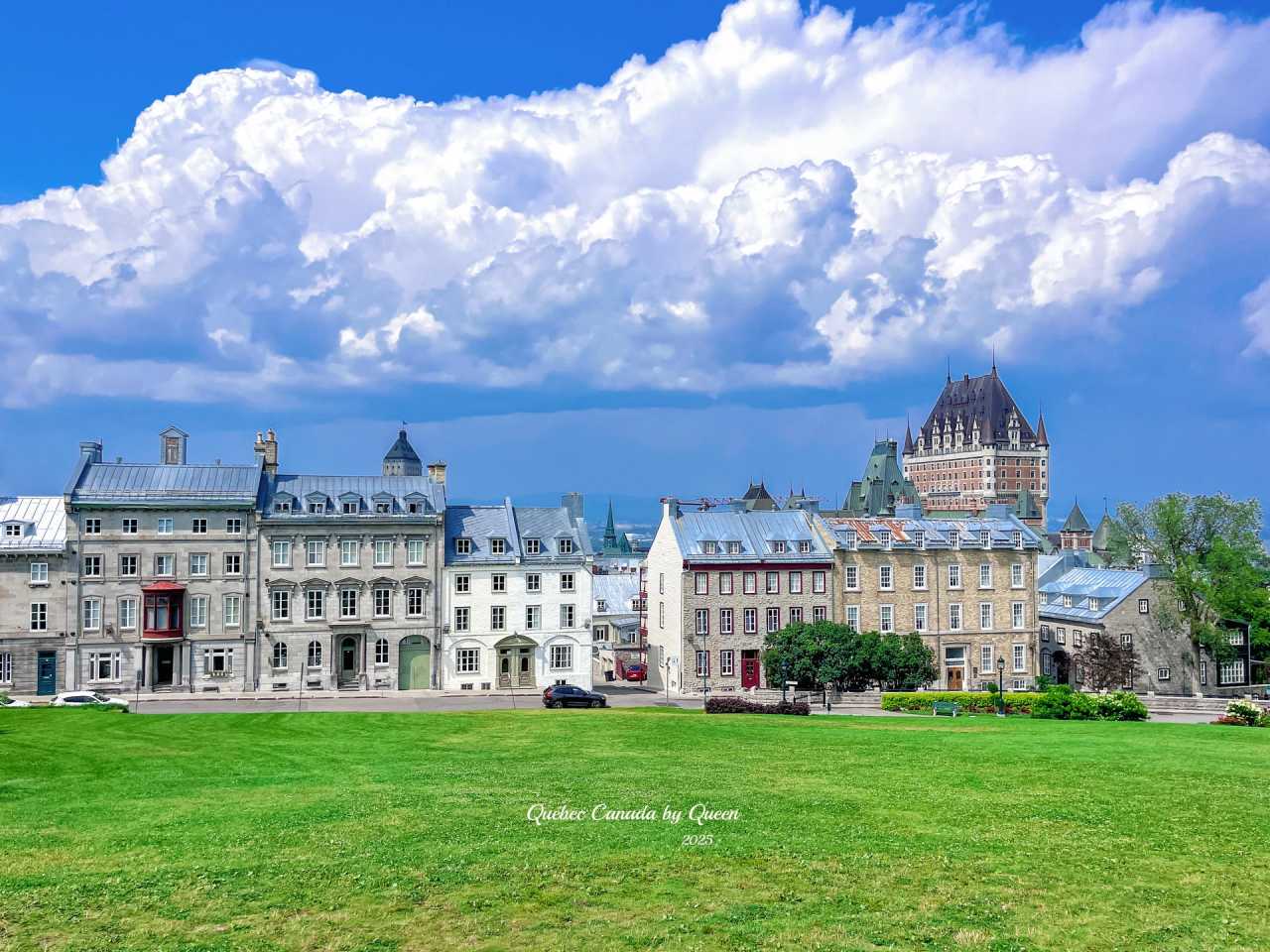
Standing at the edge of the grass, with sunlight shining down and wind blowing from the river surface, even the air is as clear as if filtered. I take one photo after another, never getting enough, because every glance is different, and every step makes me want to press the shutter.
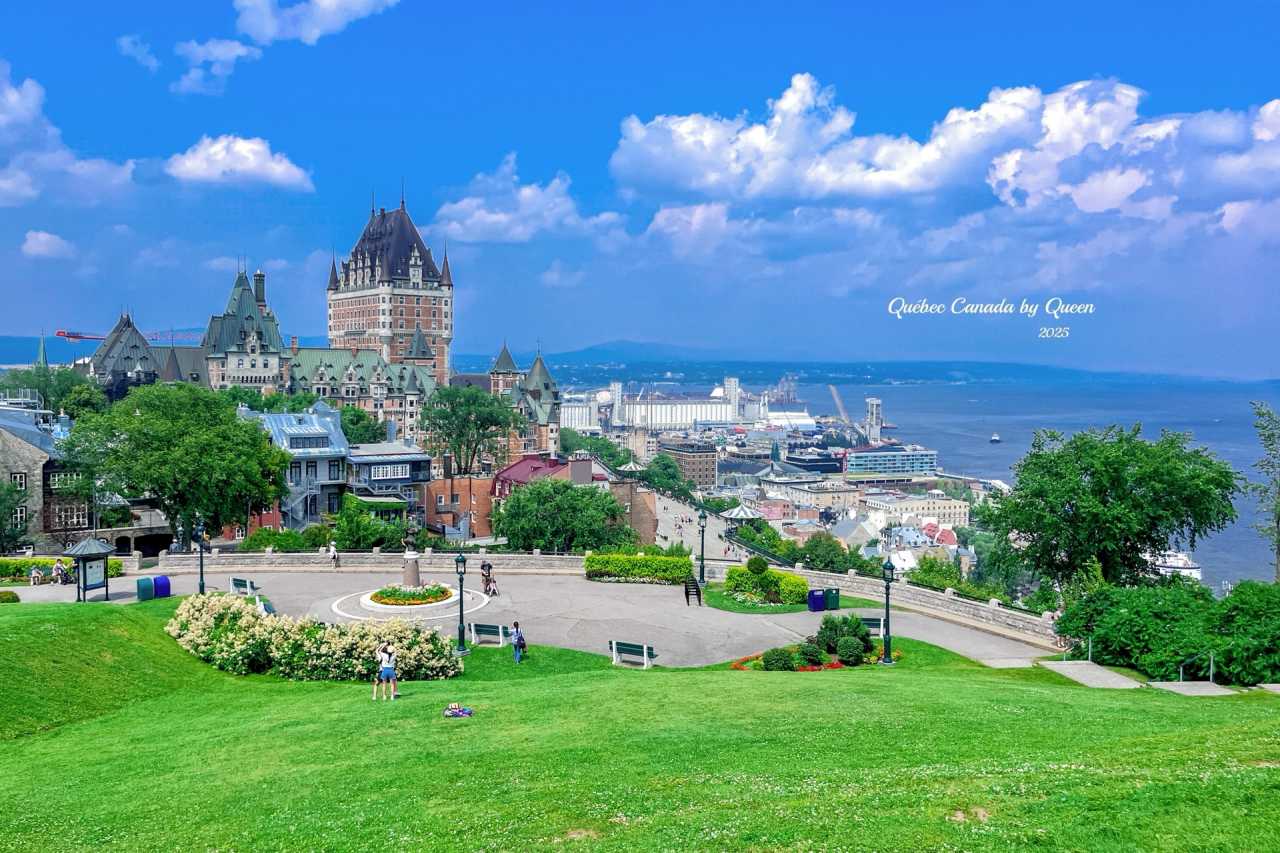
This trip to Canada, my favorite place is not Toronto's high-rise buildings, nor Ottawa's solemnity, but Quebec's romance. The city is not big, but every step is in the scenery. It seems that scenery without stories can only be glanced at; cities with souls can make people walk in. Loved it!
Montreal, half-French half-English slow-burn type
Leaving Quebec that day, the sun was beautiful. We set off from the fairy-tale-like old town, drove west along the riverside highway, heading to another completely different city - Montreal.
A few hours' drive, the scenery gradually transitioned from classical to modern. Montreal's first impression is mixed: language switching, architectural styles, sense of rhythm, all somewhat inconsistent, yet inexplicably real. Here, there is less carving and delicacy of Quebec, but more freedom, street, and life flavor.
The first stop was the Olympic Stadium - the main venue of the 1976 Summer Olympics, most famous for its white tower with a tilt angle of up to 45 degrees (Montreal Tower), which is the tallest inclined tower structure in the world. From afar, it looks like a white bird with spread wings, and some say it resembles a spaceship from the future. This building designed by French architect Roger Taillibert was initially seen as a symbol of modern architecture, but the construction seriously exceeded budget and was delayed for many years, becoming a famous financial "black hole" of that time.
In order to fill the high construction costs, the Quebec government once specifically increased tobacco taxes, using this "special income" to repay the stadium debt - this measure also became a topic of conversation among locals after dinner. Due to the huge financial pressure, this "Olympic heritage" was once nicknamed "Big Owe," meaning "huge debt."
Despite this, today's Olympic Stadium has become an important cultural landmark of Montreal. The high tower can be climbed to overlook the whole city, and there are also Montreal Botanical Garden, Insectarium, and Biodome around it, forming a large green science and education cultural area in the eastern part of the city.
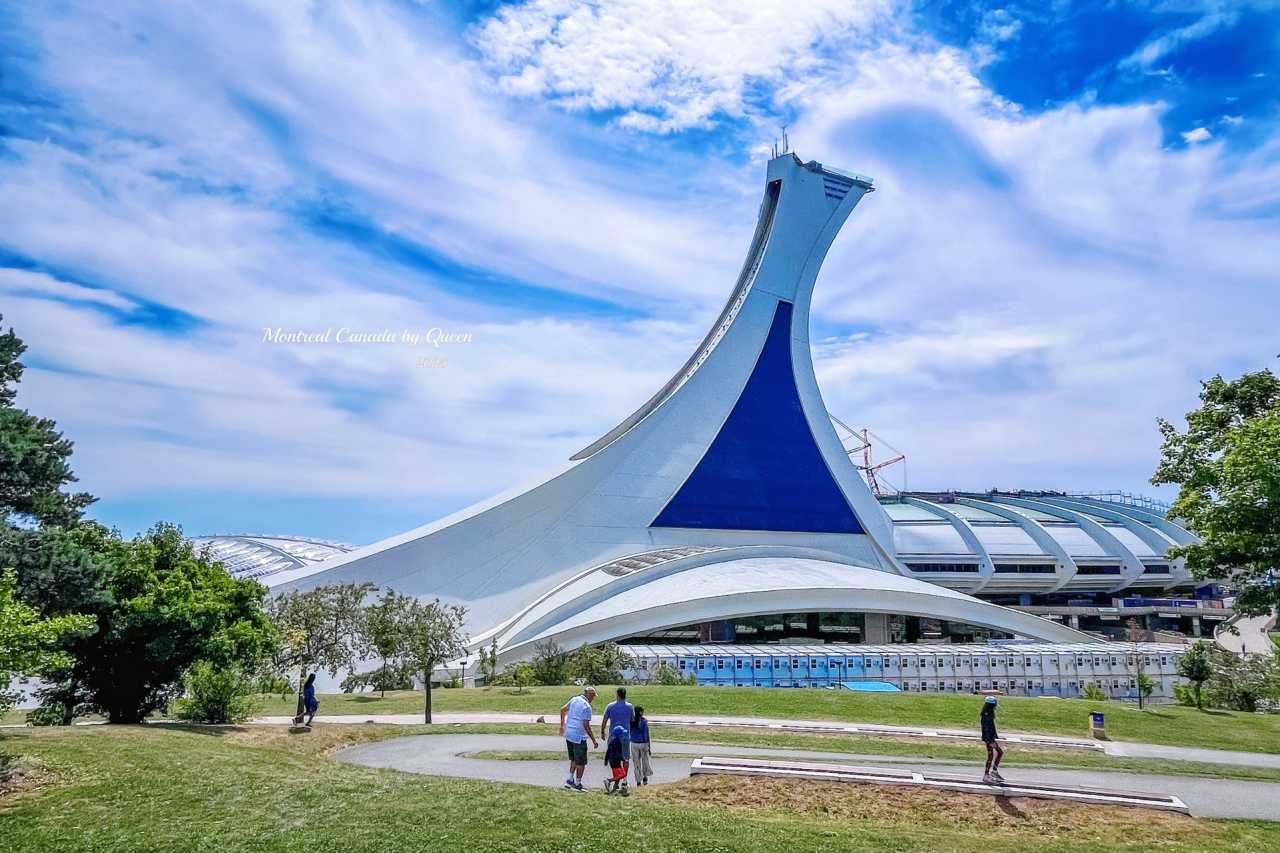
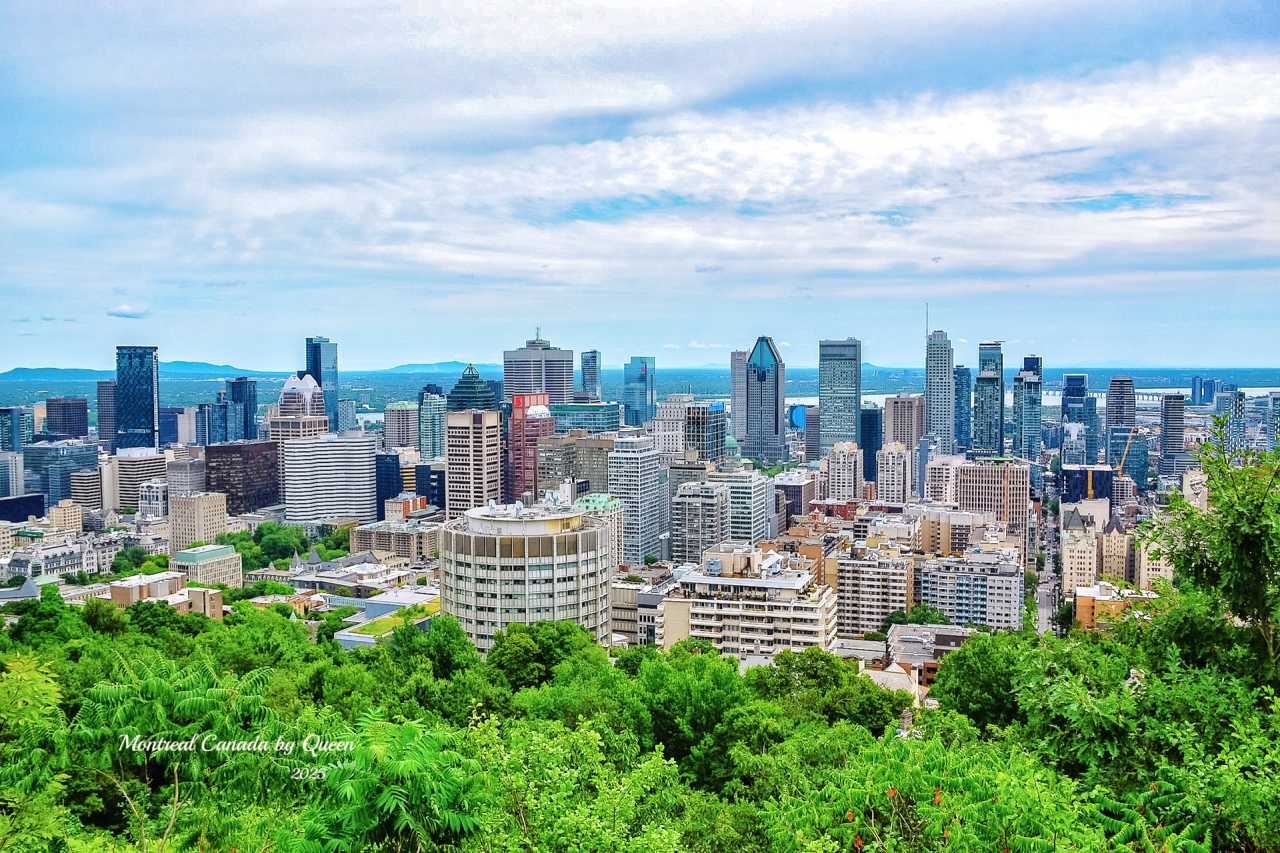
The second stop, we went up to Mount Royal Park and climbed a small slope to Kondiaronk Belvedere (observation deck). Montreal spread out before us, the city is not high, but layered, like a small human version quietly lying at the foot of the green mountain.
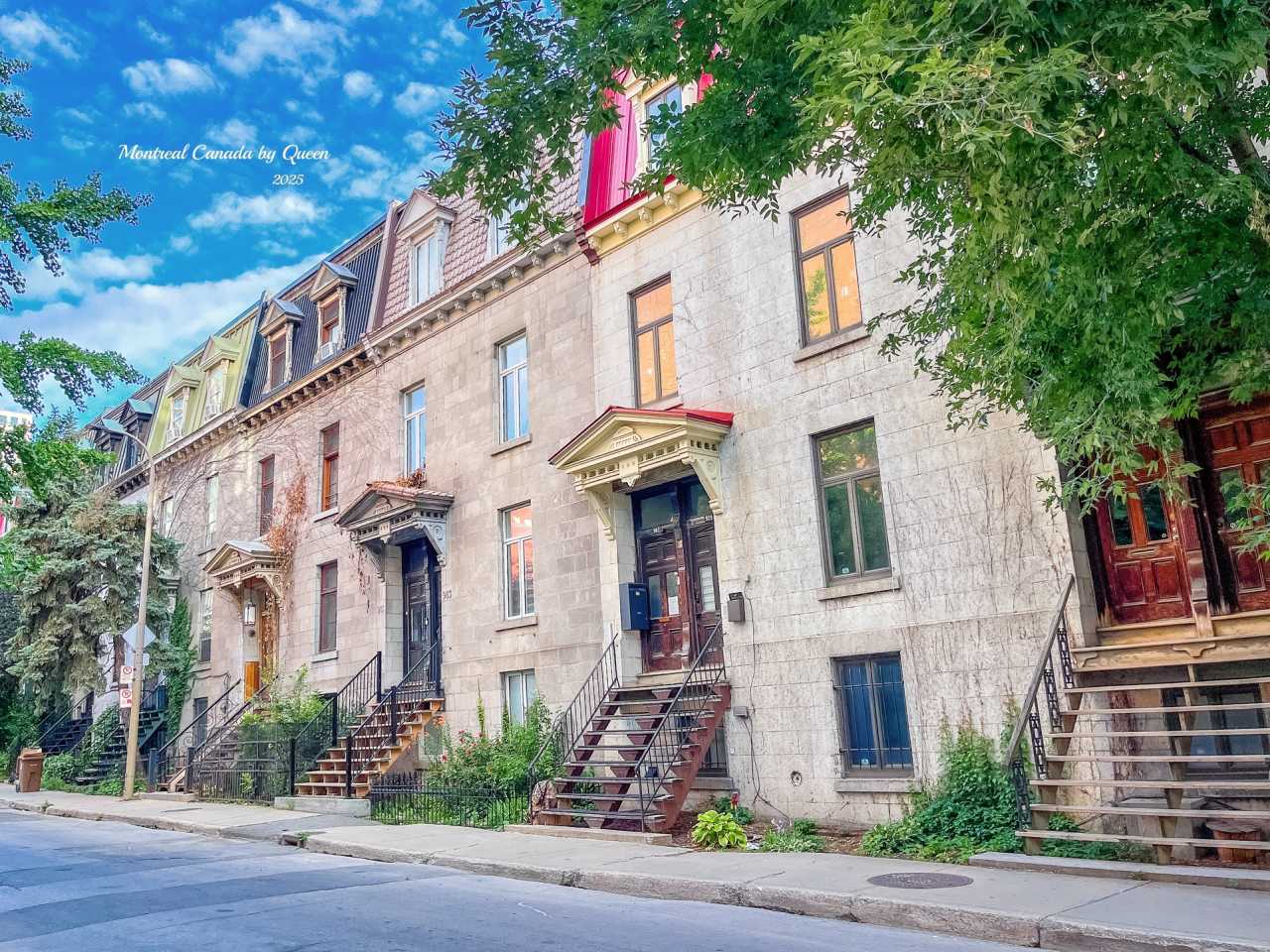
Montreal's residential neighborhoods, especially in the Plateau Mont-Royal and Mile End areas, are most attractive not for high-rise buildings or famous stores, but for rows of three or four-story old houses with stairs. Brick red, light green, gray-blue... each building has a different color, with vines often climbing up in front of the doors, and stairs winding down from the entrance, like a casually drawn stroke that has become Montreal's urban symbol.
These stair designs were initially actually to save indoor space and facilitate snow removal in winter. But now, they have become a kind of scenery.
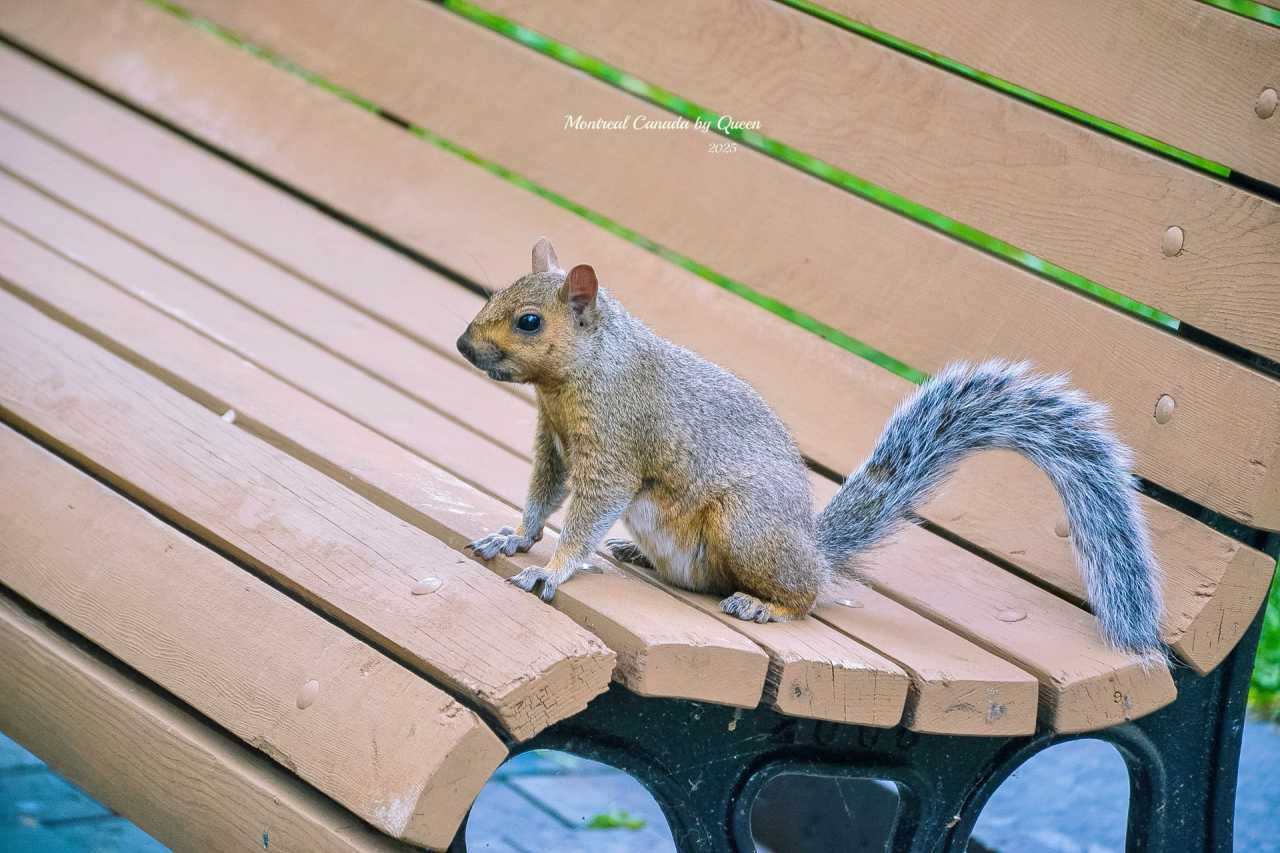
In Montreal, even in the high-rise downtown area, you can often accidentally walk into a quiet small square or garden, not big in area but full of greenery. A few benches, several clusters of flowers, a big tree, and squirrels often shuttling under the tree. At that moment, Montreal appears particularly pleasant.
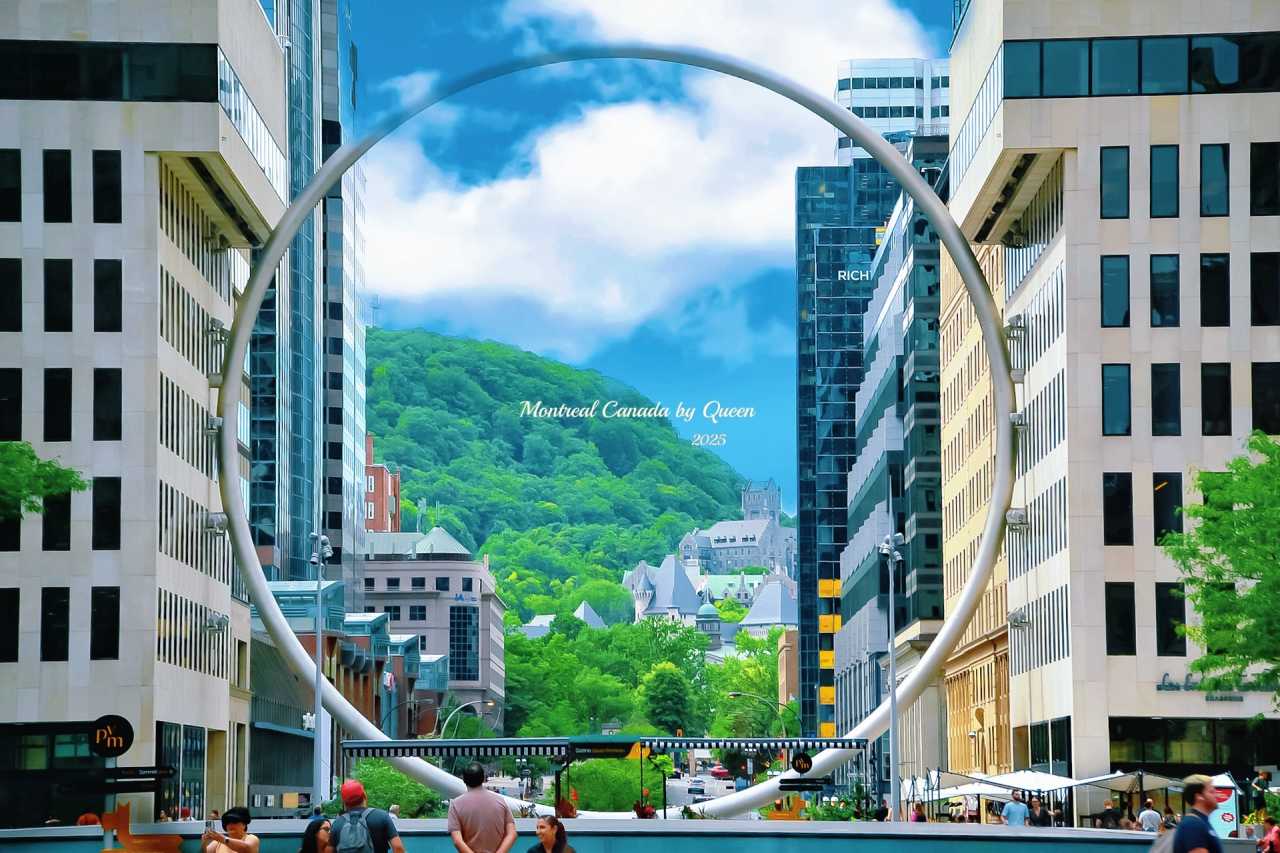
Among these buildings, there is also one of Montreal's most eye-catching new landmarks - The Ring. A huge metal ring with a diameter of 30 meters, suspended in the air, installed in the Esplanade Place Ville Marie square in the city center, designed by the local art institution Moment Factory. The Ring doesn't have too many decorations, just a clean, minimalist geometric circle, but it creates a visual pause and blank space between the city's high-rise buildings.
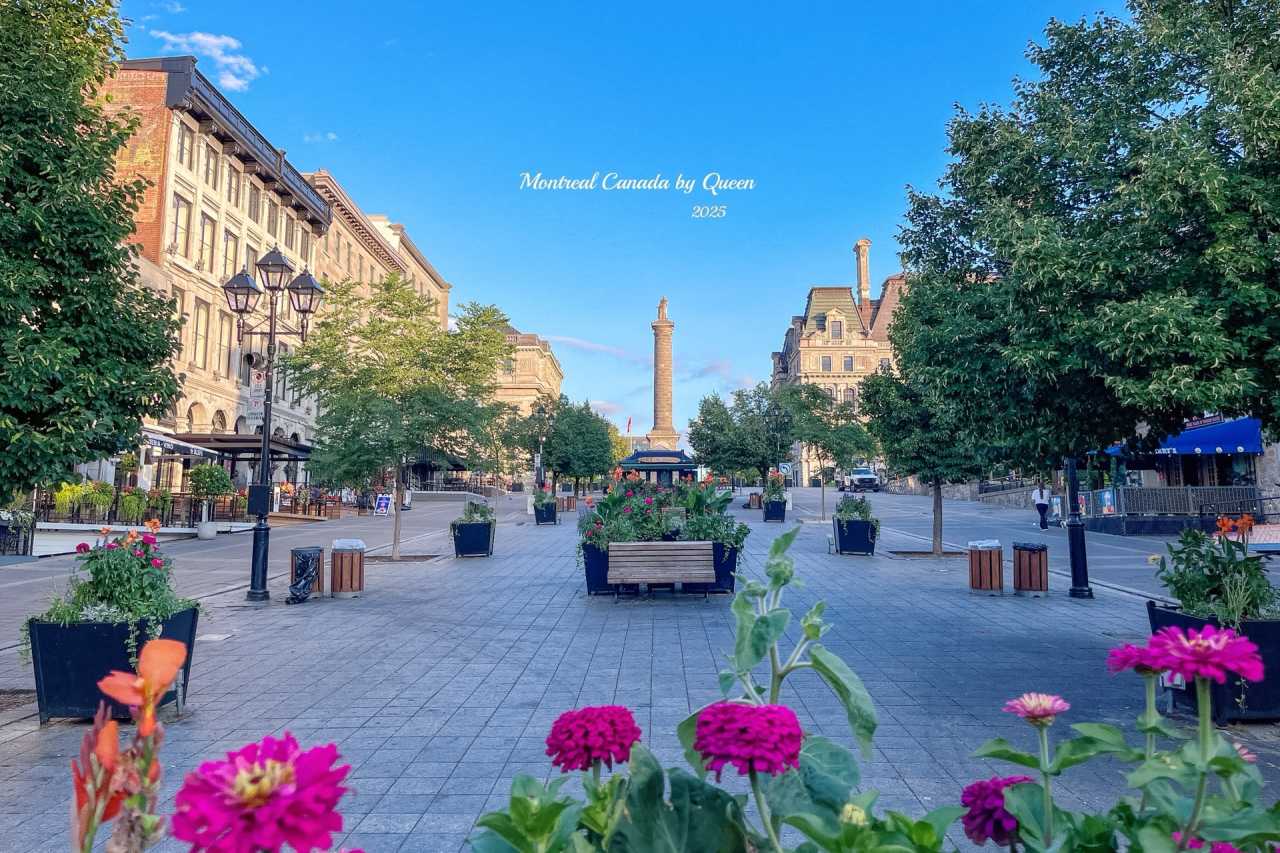
Walking down from Place Jacques-Cartier to Montreal's Old Port is a "welcome slope" that the city presents to tourists.
The square is paved with stone bricks, with neat French-style buildings on both sides, the central axis is open and straight, sloping gently toward the river. There are outdoor dining tables along the road, with people leisurely drinking and eating under umbrellas; while street performers, painters, and acrobatic performers are interspersed among them, making this road always interesting to watch.
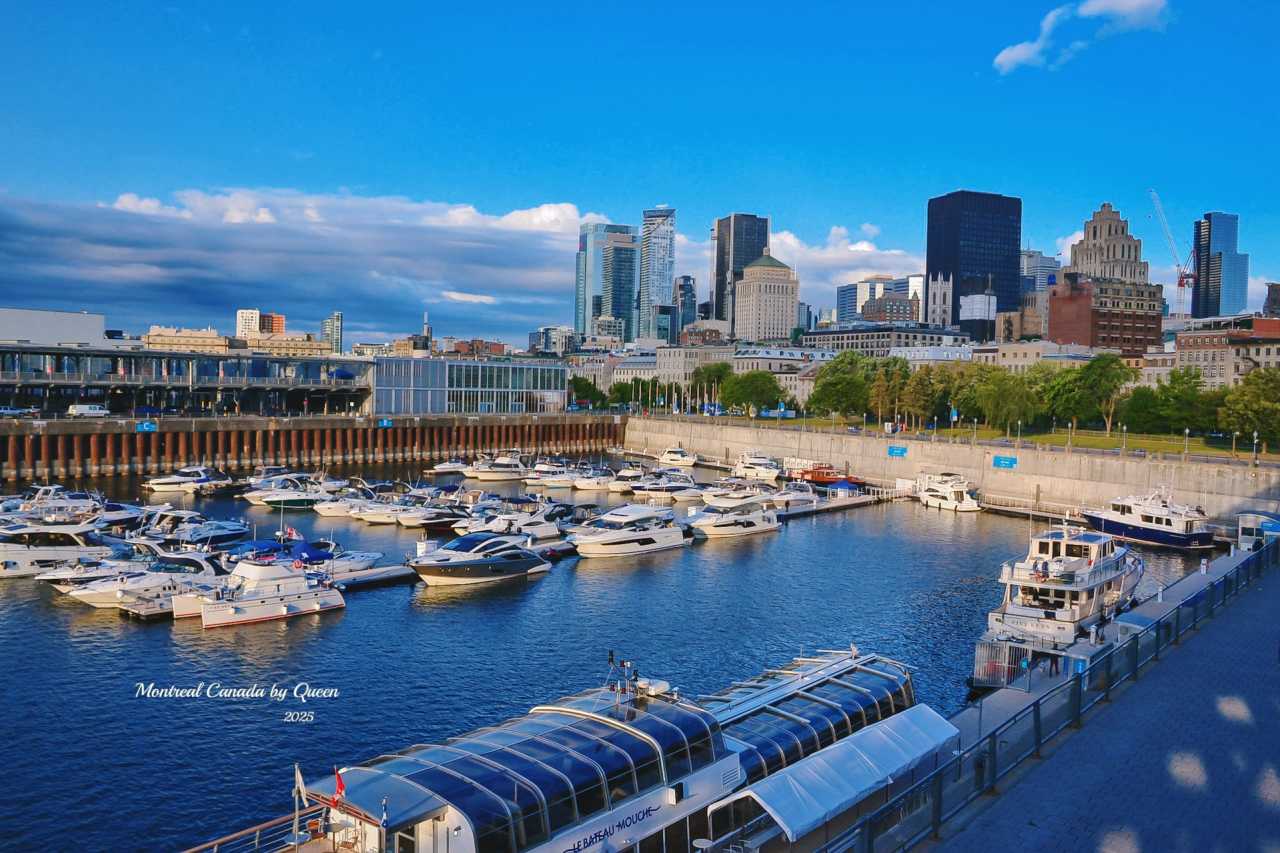
The Old Port itself is also a large vibrant pedestrian area, with stone roads and historical warehouse buildings preserving the texture of the old port, now transformed into restaurants, ice cream shops, museums and markets. Walking along the St. Lawrence River, some people are walking dogs, some are running, and some skate past you on skateboards. This is not a scenic spot, but vivid life.
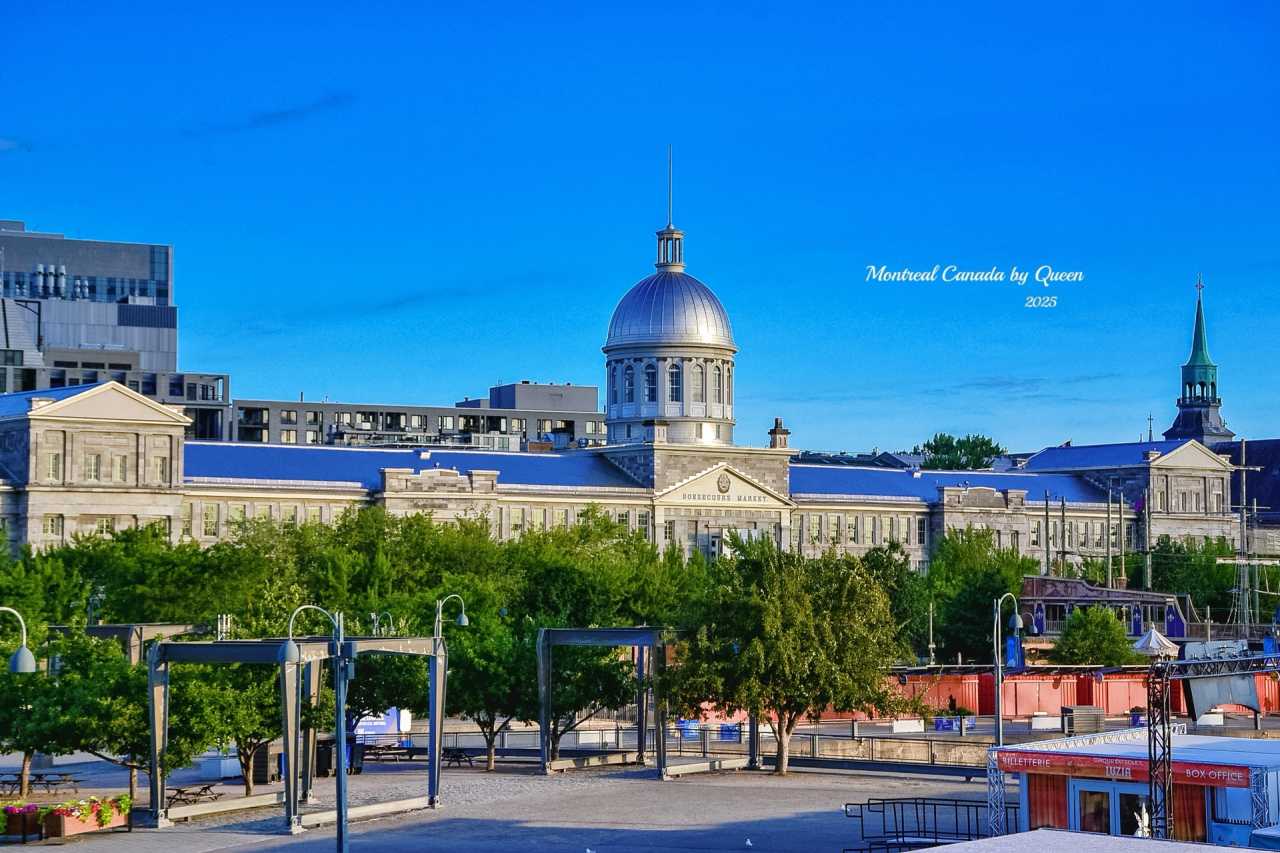
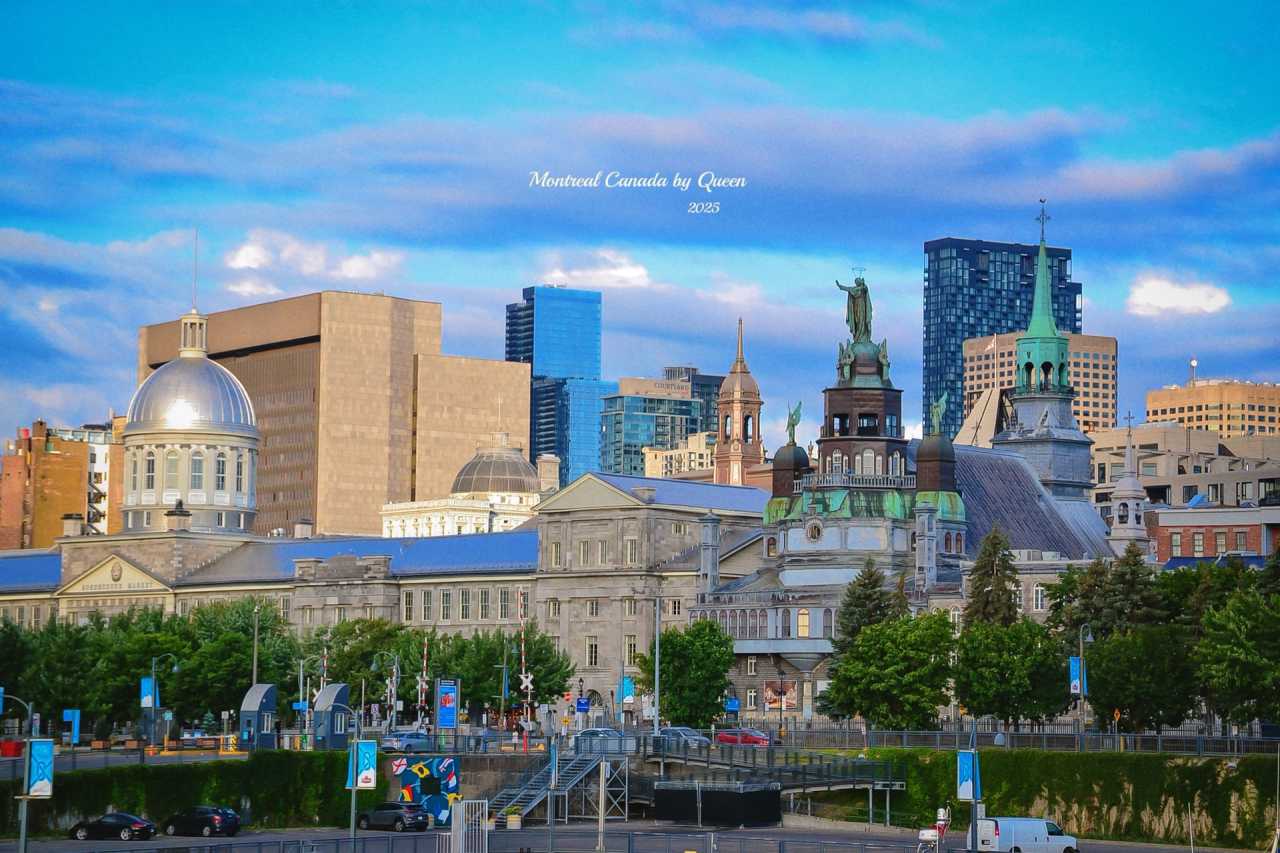
One of the most eye-catching buildings in the Old Port is the Bonsecours Market, whose silver-white dome shimmers with a faint light under the morning sun, like an old-era gem that has been polished. The long facade is composed of light gray stone walls, with windows reflecting golden skylight and casting quiet reflections on the water surface.
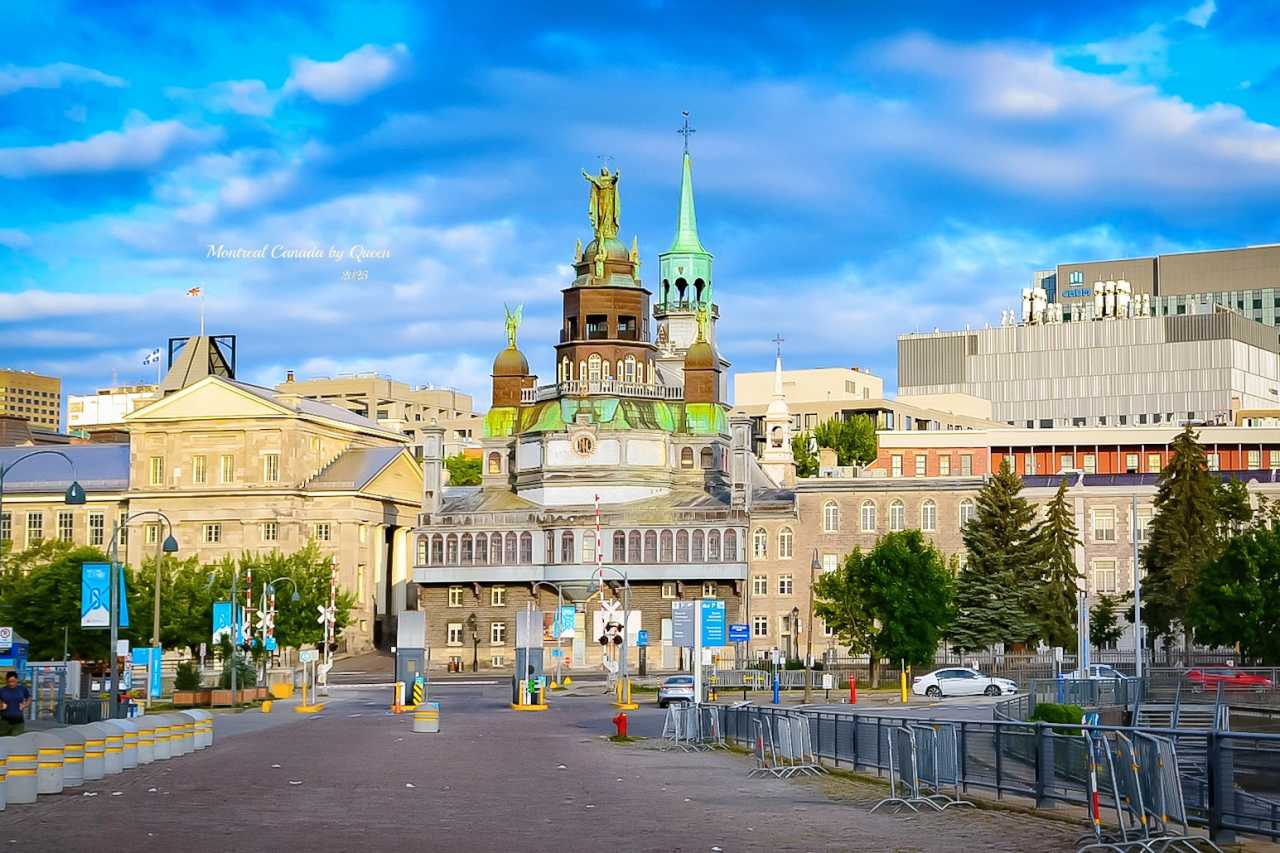
Right next to the market is the Notre-Dame-de-Bon-Secours Chapel facing the river. The church exterior blends colonial New French style with 18th-century neoclassical elements. The stone walls are thick and solid, the roof is wrapped with copper sheets, and after years of wind and rain, it presents the typical green copper rust tone. A tall spire in the middle points directly to the sky, with a cross set at the top of the tower, making it one of the most recognizable buildings along the old port coast. The church faces away from the river, with a statue of the Virgin Mary facing the water surface, spreading her arms as if blessing the returning sailors. This statue has also become the last landmark many sailors see before setting sail.
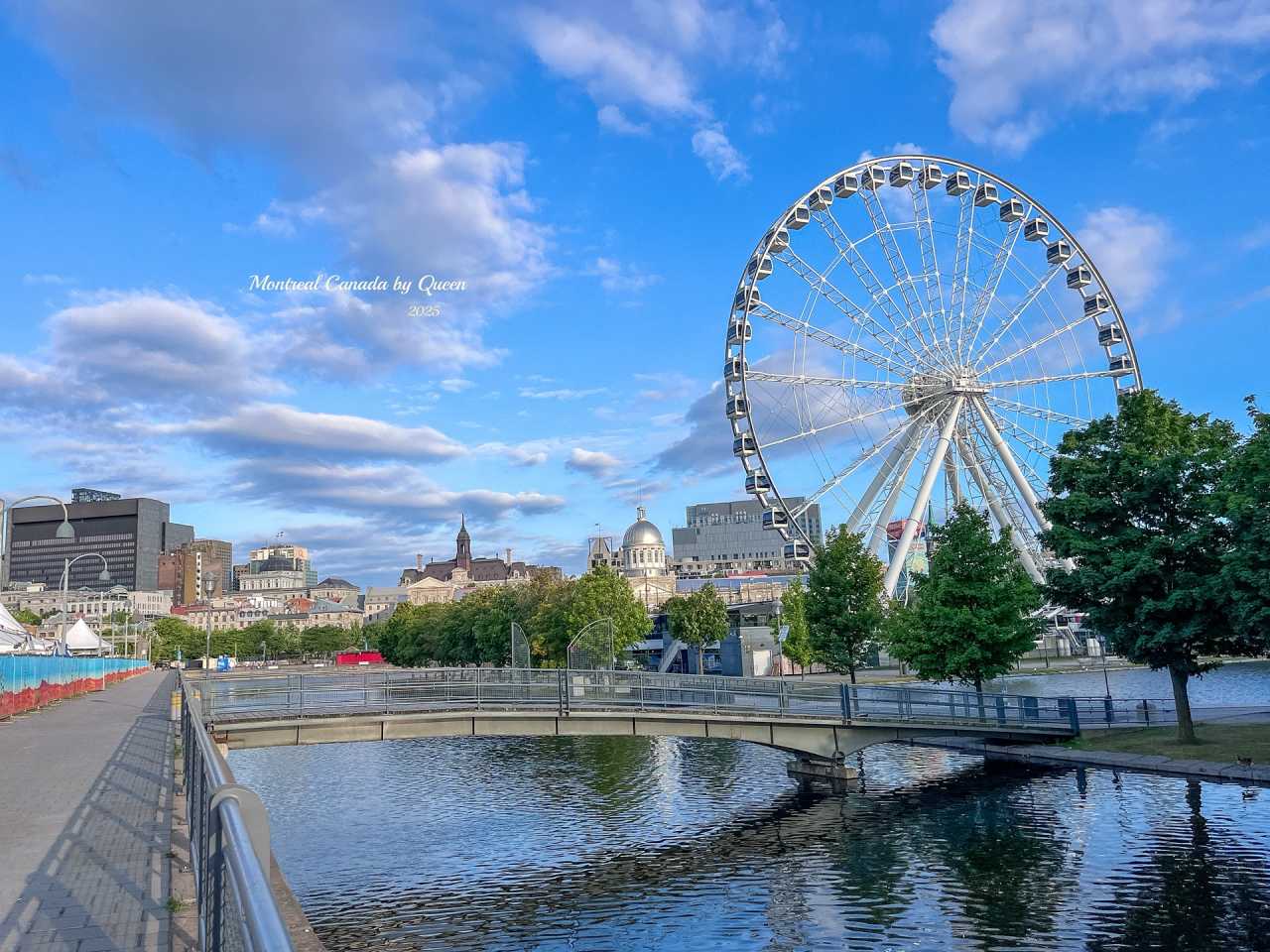
Another one of the most eye-catching landmarks in the Old Port is the La Grande Roue de Montréal (Montreal Ferris Wheel) towering in the center of the port area. This 60-meter-tall observation wheel is the largest Ferris wheel in Canada, offering panoramic views of the old city roofs, St. Lawrence River, and the industrial area on the opposite shore both day and night, and even the undulating skyline of Mount Royal on clear days.
Walking eastward along the Old Port's waterfront trail, you will see a white arch bridge spanning the St. Lawrence River - this is the Jacques-Cartier Bridge, one of the main passages connecting Montreal Island with the South Shore (Longueuil). Built in 1930, it is over 3 kilometers long and is one of the busiest bridges in Canada.
Looking southward along the river, you can see the famous Parc Jean-Drapeau located in the middle of the river on two artificial islands - Île Sainte-Hélène (St. Helen's Island) and Île Notre-Dame (Notre Dame Island).
Here is the Formula 1 Canadian Grand Prix track, which is also open as cycling and running paths outside the season.
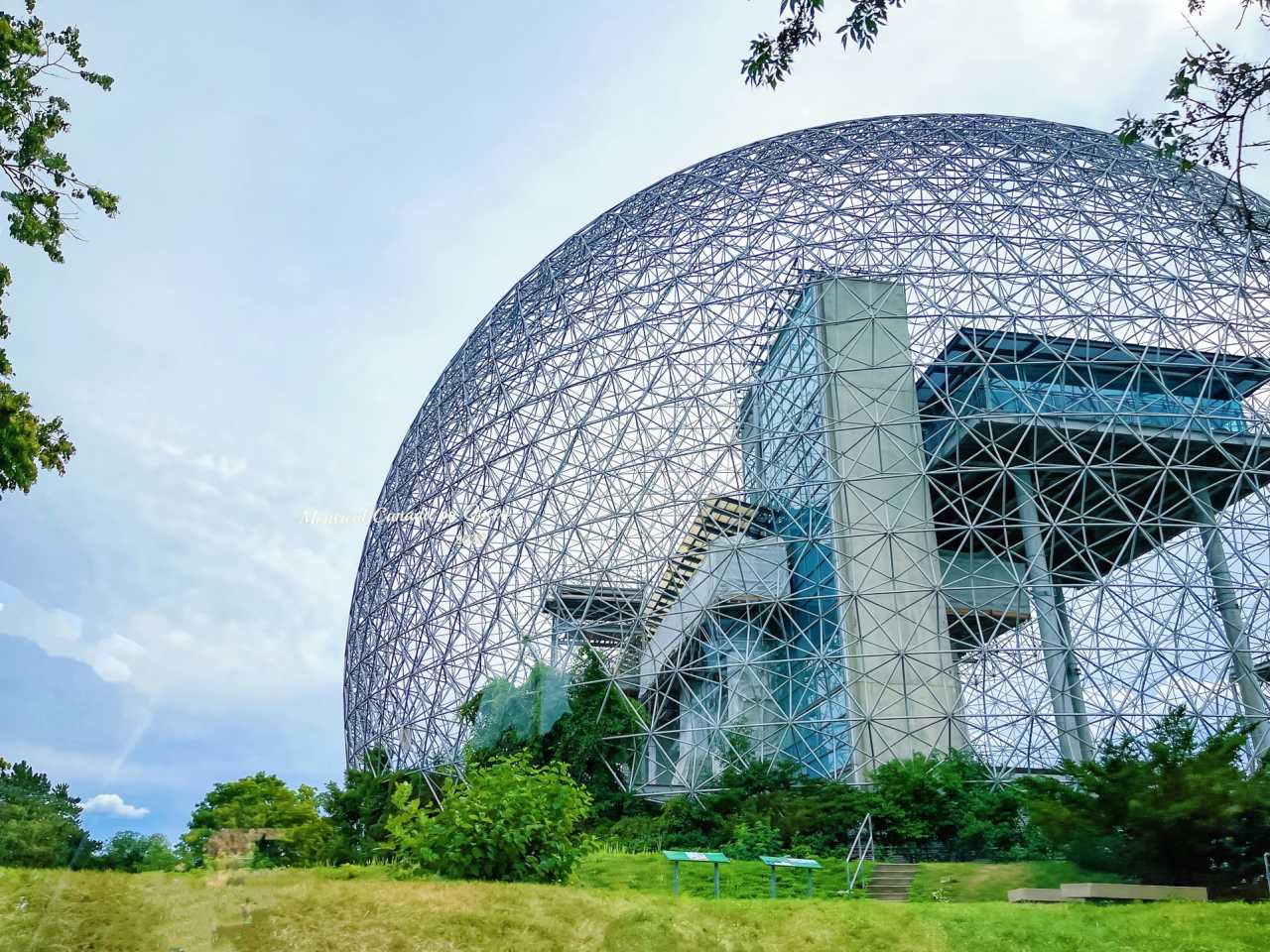
There is also a huge spherical grid structure - the Biosphère (Environmental Museum). It was originally the U.S. Pavilion at the 1967 World's Fair, designed by architect Buckminster Fuller, and later transformed into an environmental theme exhibition hall. Sunlight pours through the metal spherical net, making the whole building seem to float in the air, becoming one of Montreal's most futuristic cultural symbols.
Located in the center of the old town, Notre-Dame Basilica is one of Montreal's most solemn and amazing buildings. This church was built in 1824 and is one of the earliest and most spectacular Neo-Gothic churches in North America. Its exterior is low-key, but the interior is extremely gorgeous, praised by many tourists as "a colorful dream hidden behind stone walls." Unfortunately, I arrived too late and the church was already closed.
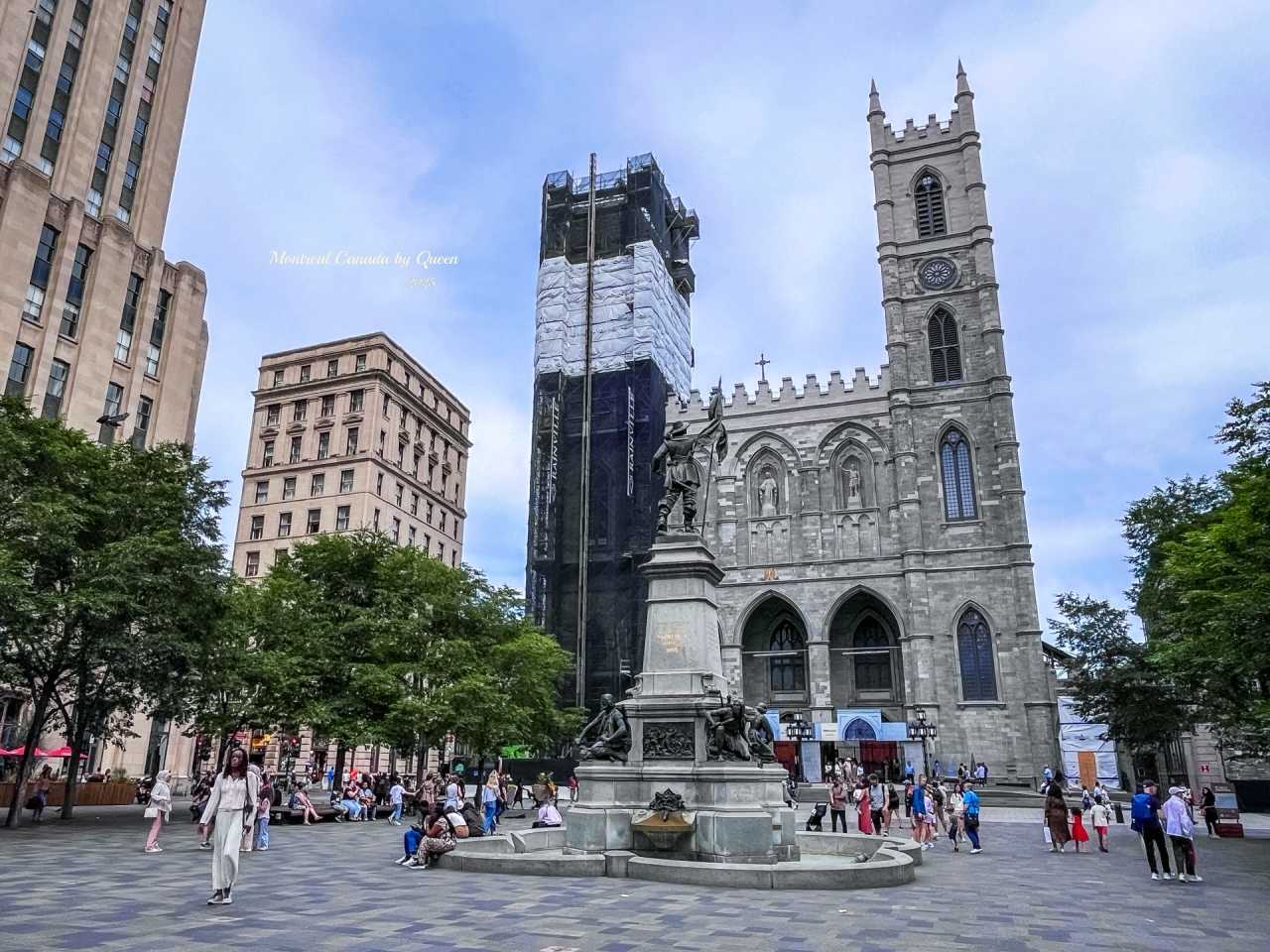
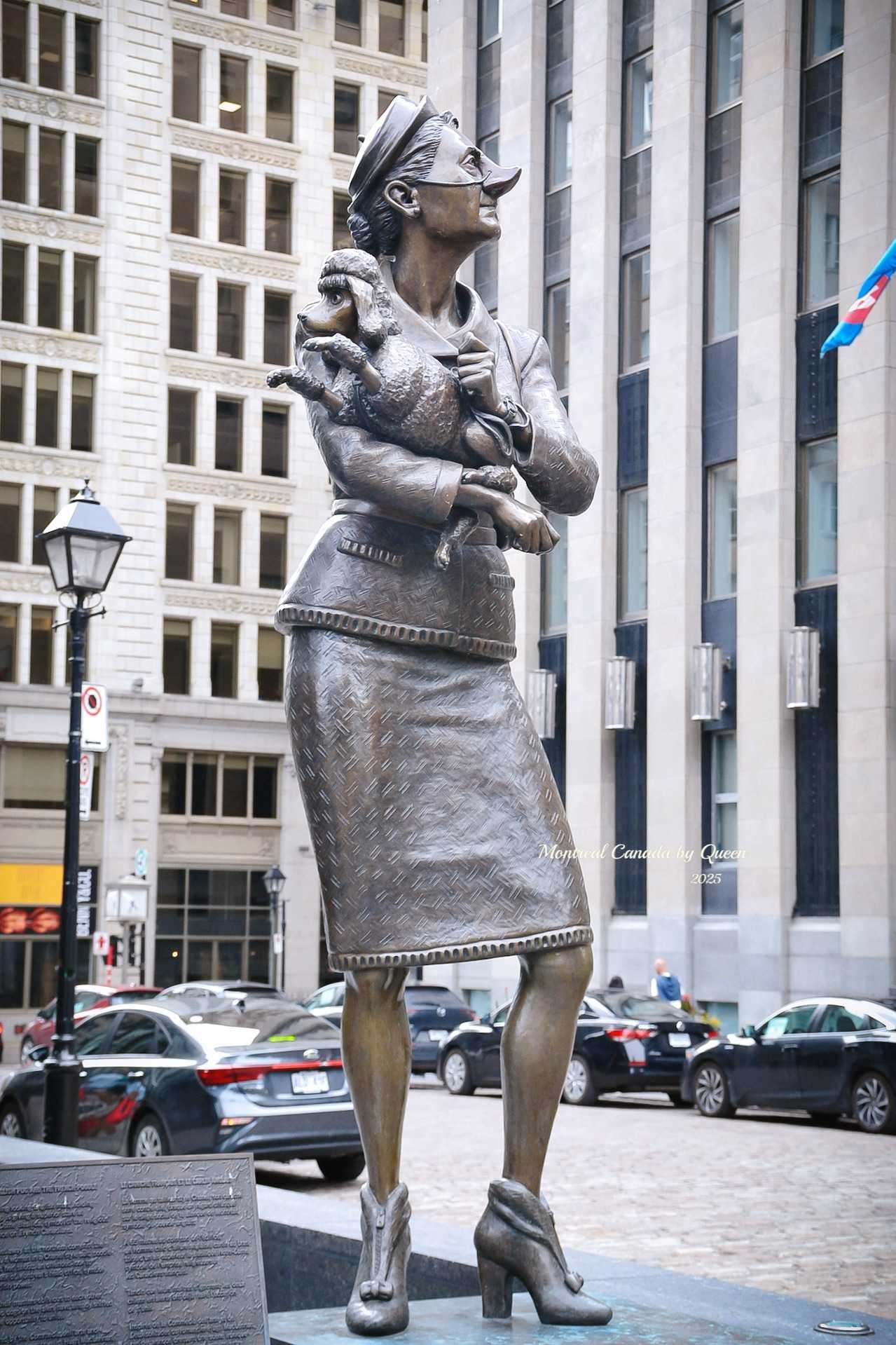
In front of the cathedral in Place d'Armes, there are two masked men holding dogs, part of a group of six realistic bronze figures created by Fortier, representing ordinary citizens of Montreal in different eras, vivid and lifelike.
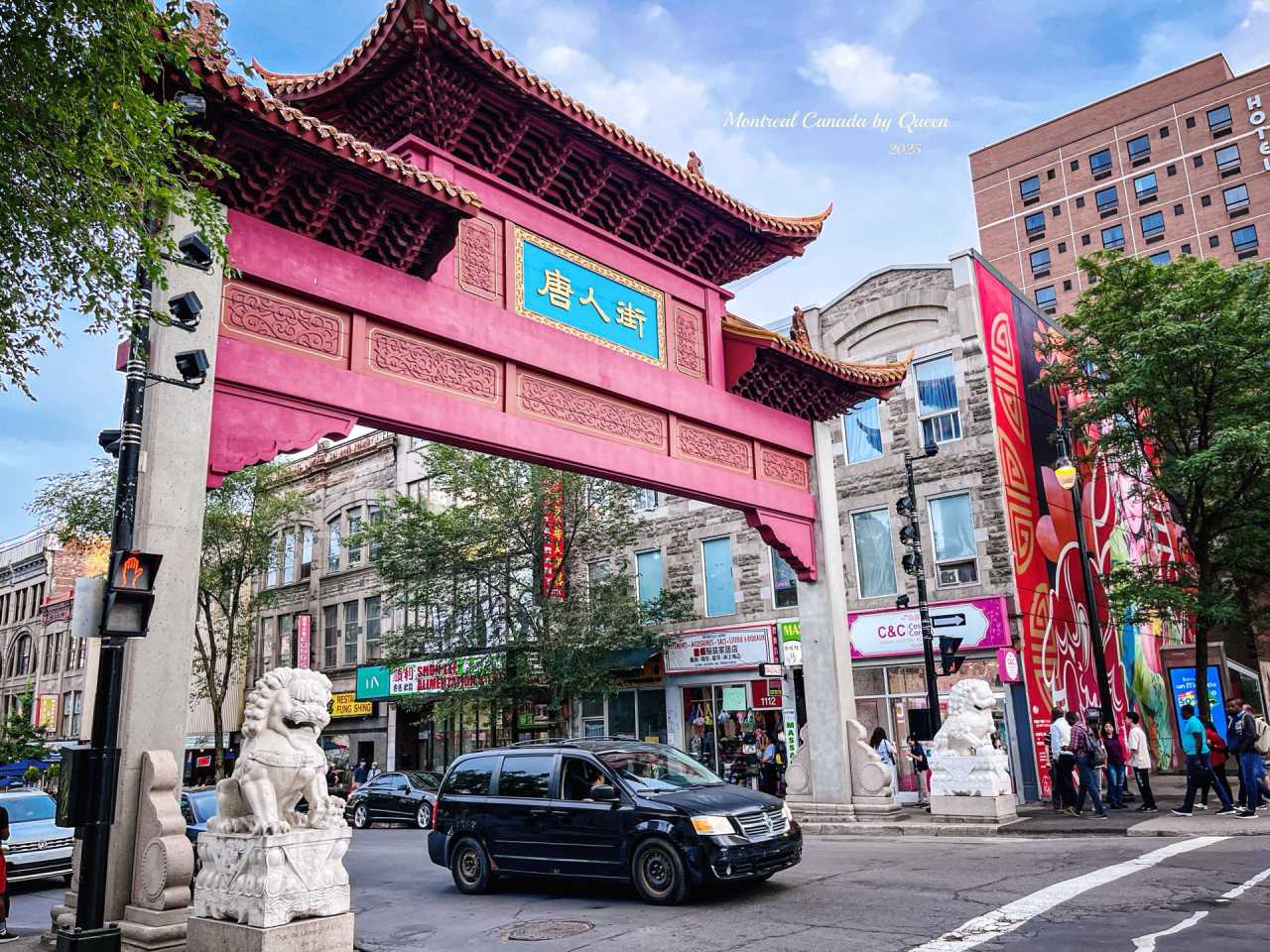
Dinner was solved in Chinatown. Although the entire area only has a few streets, snack shops, Chinese restaurants, traditional Chinese medicine shops, bubble tea shops, gift shops, Chinese supermarkets, and Buddhist temples are all densely distributed within it, very lively. Unfortunately, the restaurant was not chosen well, and I stepped on a big mine!
Montreal is not a place that amazes you at first glance. It's not as "immediately beautiful" as Quebec, but it's a city that becomes smoother the more you walk and more comfortable the more you look.
Thousand Islands, counting islands until dizzy
Leaving Montreal the next day, the weather was beautiful. We set off from the fairy-tale-like old town, drove along the river highway all the way south, until Rockport quietly appeared before our eyes.
There are no busy blocks here, nor commercial hustle and bustle, only a few old wooden houses, a small dock, a church, and an ice cream shop, surrounded by the St. Lawrence River, quietly guarding the breath of water and islands.
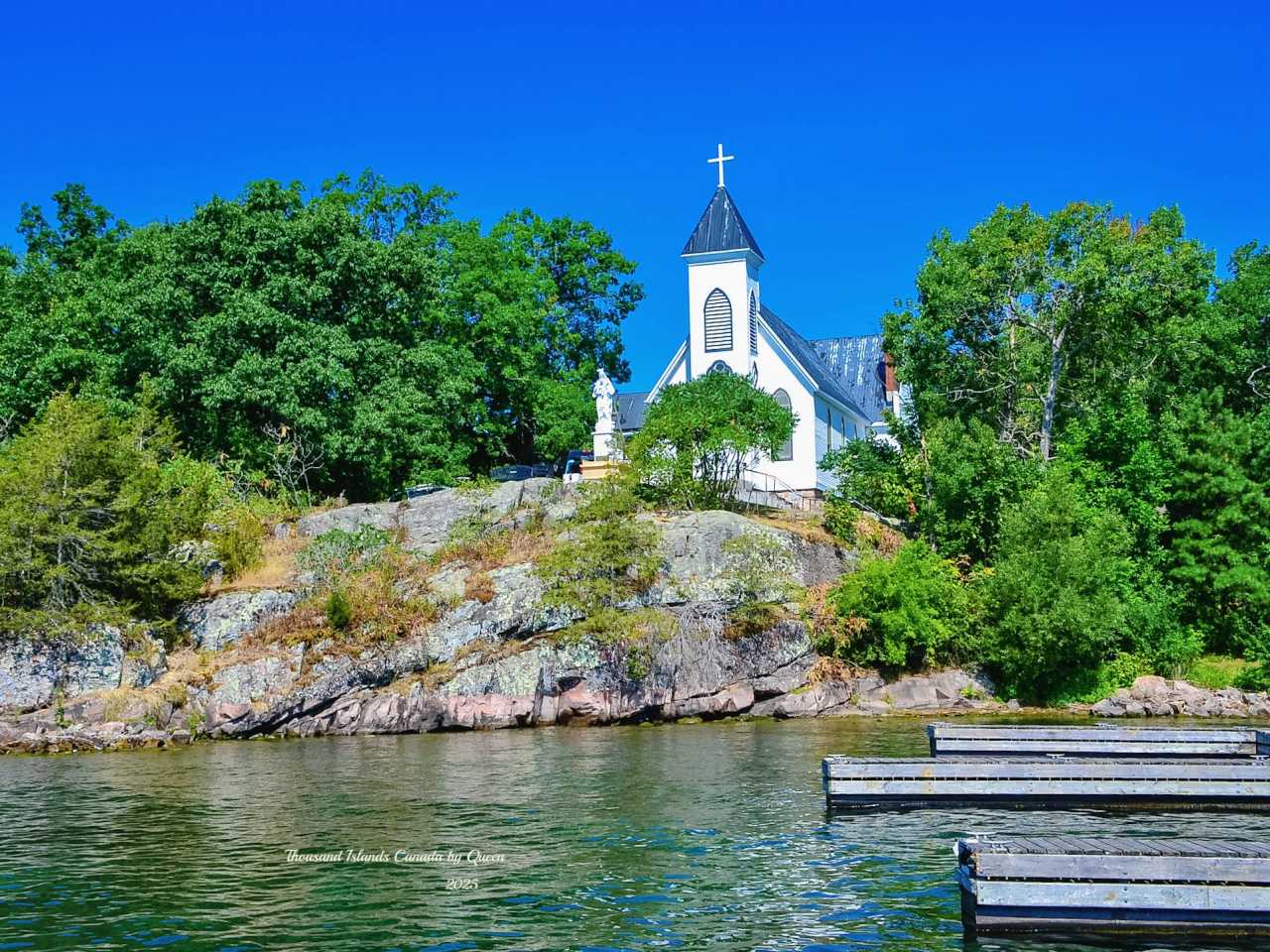
Rockport is like a small town that walked out of an old postcard, with low houses, mostly white or light gray exterior walls, some with old copper bells hanging under the eaves, as if not disturbed by tourists at all. A grocery store called "Rockport General Store" has maps, ice cream, cold drinks, and souvenir T-shirts displayed outside.
We boarded the Boat Cruise (Thousand Islands sightseeing boat) by the dock, with tourists from all over the world already gathered on the deck. Everyone's face was written with "expectation," like waiting for the opening of a movie with an unknown plot. The moment the staff untied the rope, the hull swayed slightly, water splashed up, Rockport's outline slowly receded behind us, and the world of Thousand Islands began to unfold before us.
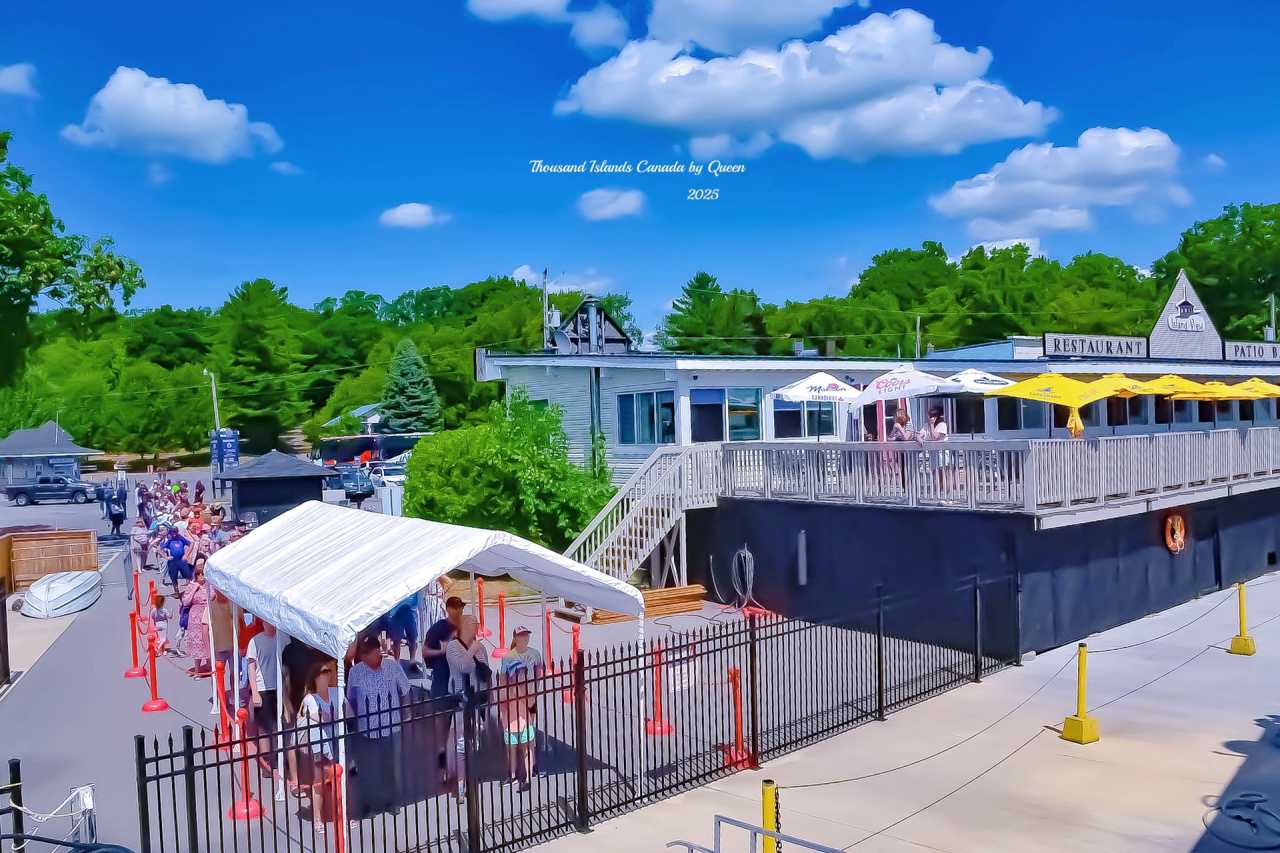
The tour guide broadcast slowly sounded, introducing the scenery and history before our eyes in English and French - "Thousand Islands" doesn't only have a thousand islands, but 1864 islands of various sizes, scattered like stars on the St. Lawrence River, distributed in the waters between Canada and the United States.
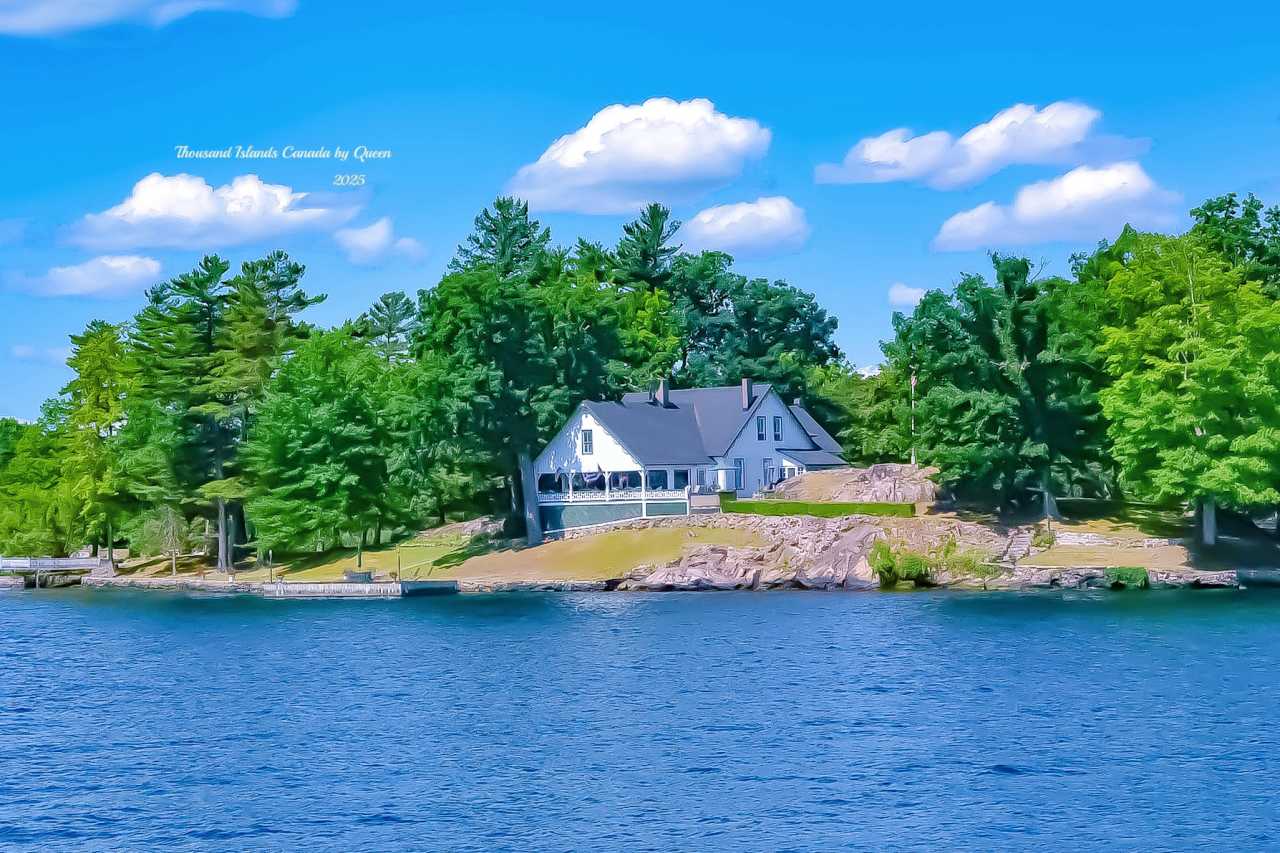
The boat gradually entered deep water, and islands began to emerge in various shapes: some as light as feathers, some like stone turtles lying on the water. What attracted my attention most were those small islands with residents, almost every island had a cottage built, some simple and ancient, some so luxurious they were almost fairy tales. If you ask me if I would want an island of my own? The answer is no.
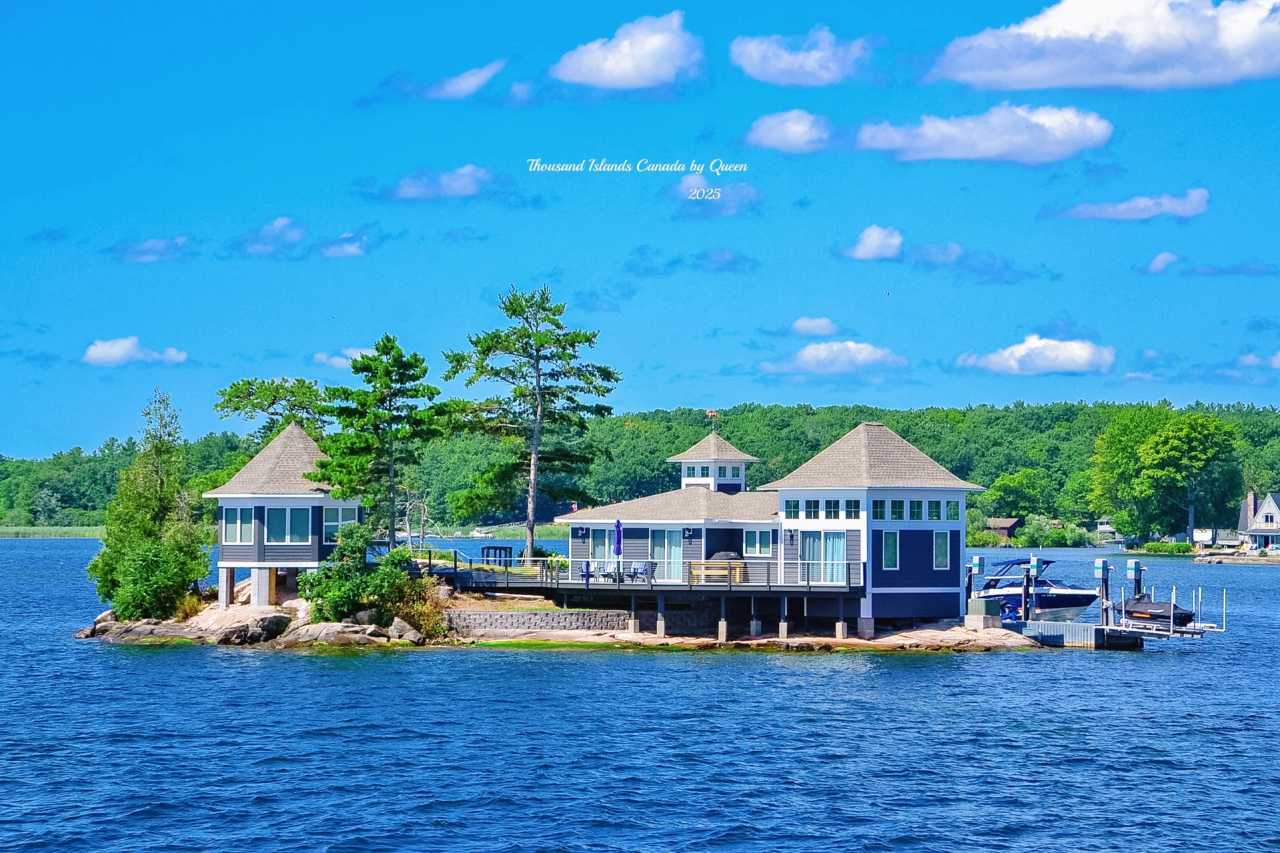
Actually, living on an island is not as beautiful as imagined. Most islands have no bridges and must be accessed by small boats, water taxis, or private yachts. Moreover, most islands have no public facilities, some using solar energy, generators, and rainwater collection systems. Many islands are basically evacuated after October, some completely cut off from electricity and water.
Sailing on the blue water under the sun, boats shuttle between islands surrounded by green trees. The broadcast continues to remind everyone to pay attention to a majestic European-style castle ahead: "This is Boldt Castle, a landmark on the U.S. side." Behind this castle lies a heartbreaking story - George C. Boldt was the founder of New York's Waldorf Astoria Hotel. He built this island castle for his beloved wife Louise in 1900, wanting to give it to her as a Valentine's Day gift. But just as it was about to be completed, Louise suddenly passed away, and the heartbroken Boldt immediately stopped the project. The castle was abandoned for many years thereafter.
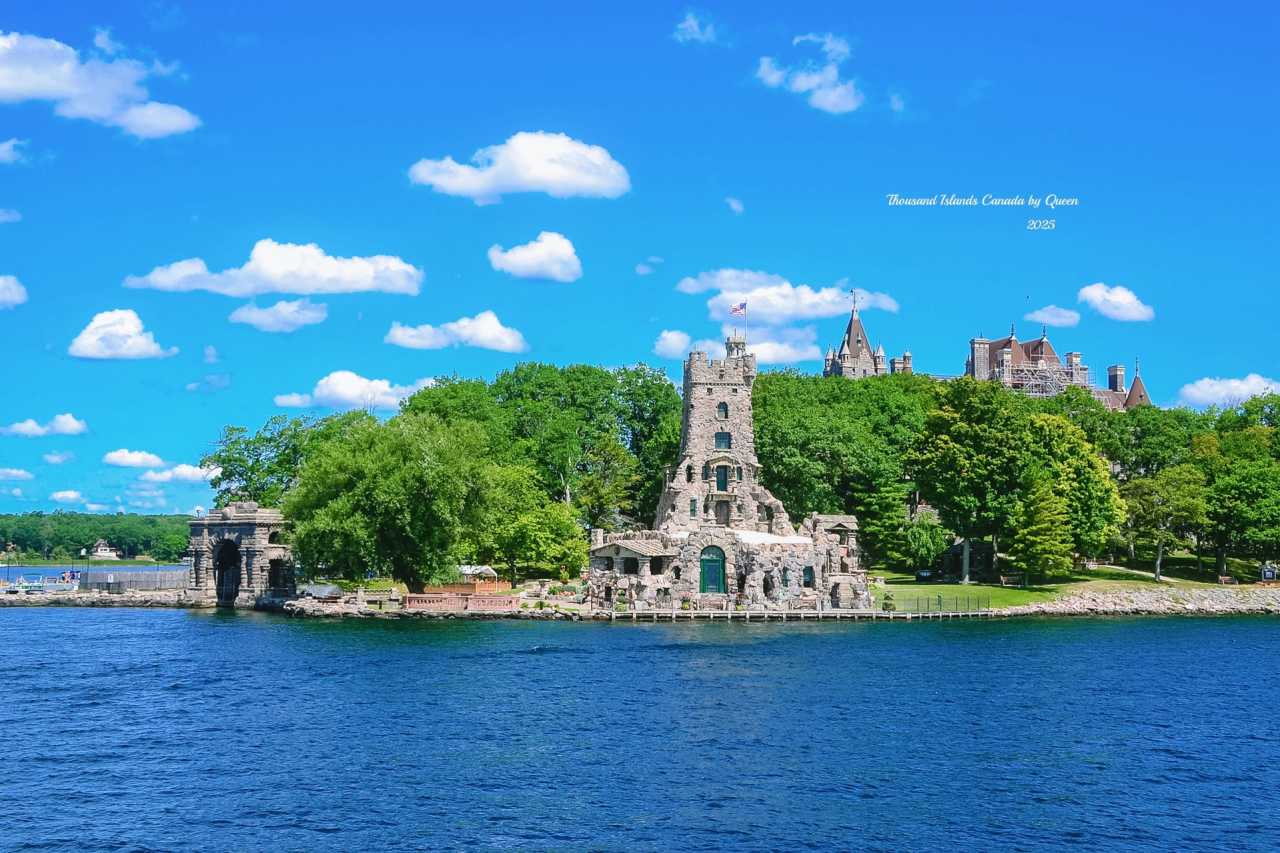
Standing on the deck looking at the castle's spire, I can feel that kind of sadness where "love was not spoken, but the building recorded it for you." Now restored and open for visits, it is one of the most legendary islands in the Thousand Islands.
Kingston - The Past and Present of a City
Driving out from Thousand Islands, I didn't return directly but chose to make a detour to Kingston - this city located on the north shore of Lake Ontario, known as the "Stone City," has both heavy history and unexpected lightness and vitality.
Although today's Kingston is a quiet city famous for its university, port, and lake views, in the 19th century, it was one of the early important towns for railway transportation in eastern Canada. Kingston's important railway history can be traced back to the 1850s. The construction of the Grand Trunk Railway (GTR) connected Kingston with cities such as Montreal, Ottawa, and Toronto, making it an important node connecting Upper and Lower Canada.
At that time, the railway not only transported passengers and mail but also carried munitions, timber, limestone, and agricultural products, serving as the artery connecting Kingston with the outside world. Railway branches near the port and military camp were used for military transportation to support Fort Henry and the Royal Naval Dockyard.
Some old railway warehouses and brick freight stations in downtown Kingston have now been transformed into galleries, shops, or restaurants, reborn with the shadow of the industrial era.
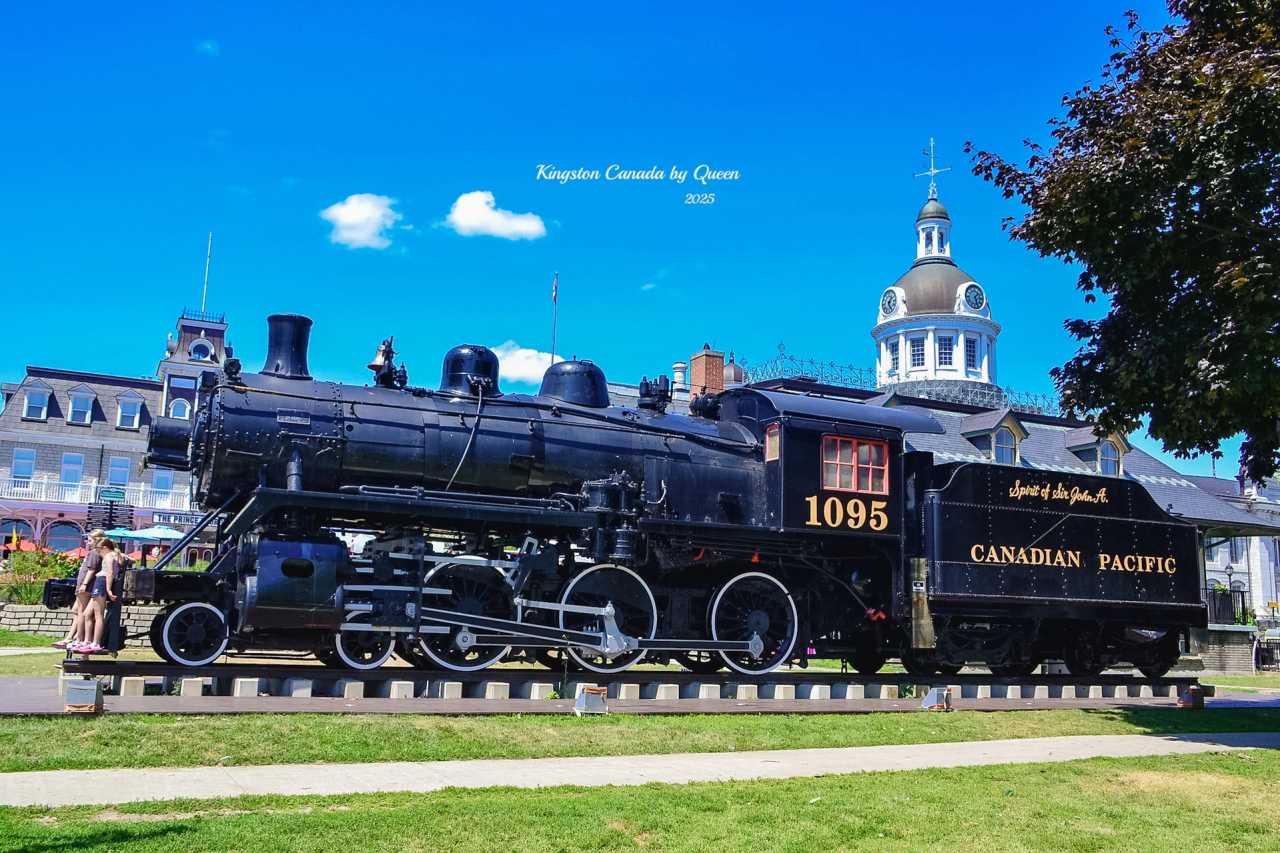
Passing through the city's main road and entering downtown Kingston feels like walking into a small European old town paved with stone and sunlight. There are no tall buildings blocking the sky here, instead, there are gray-white stone buildings, arched doors and windows, copper-roofed clock towers, and outdoor terraces, all retaining the skeleton of the 19th century and the flesh and blood of modern life.
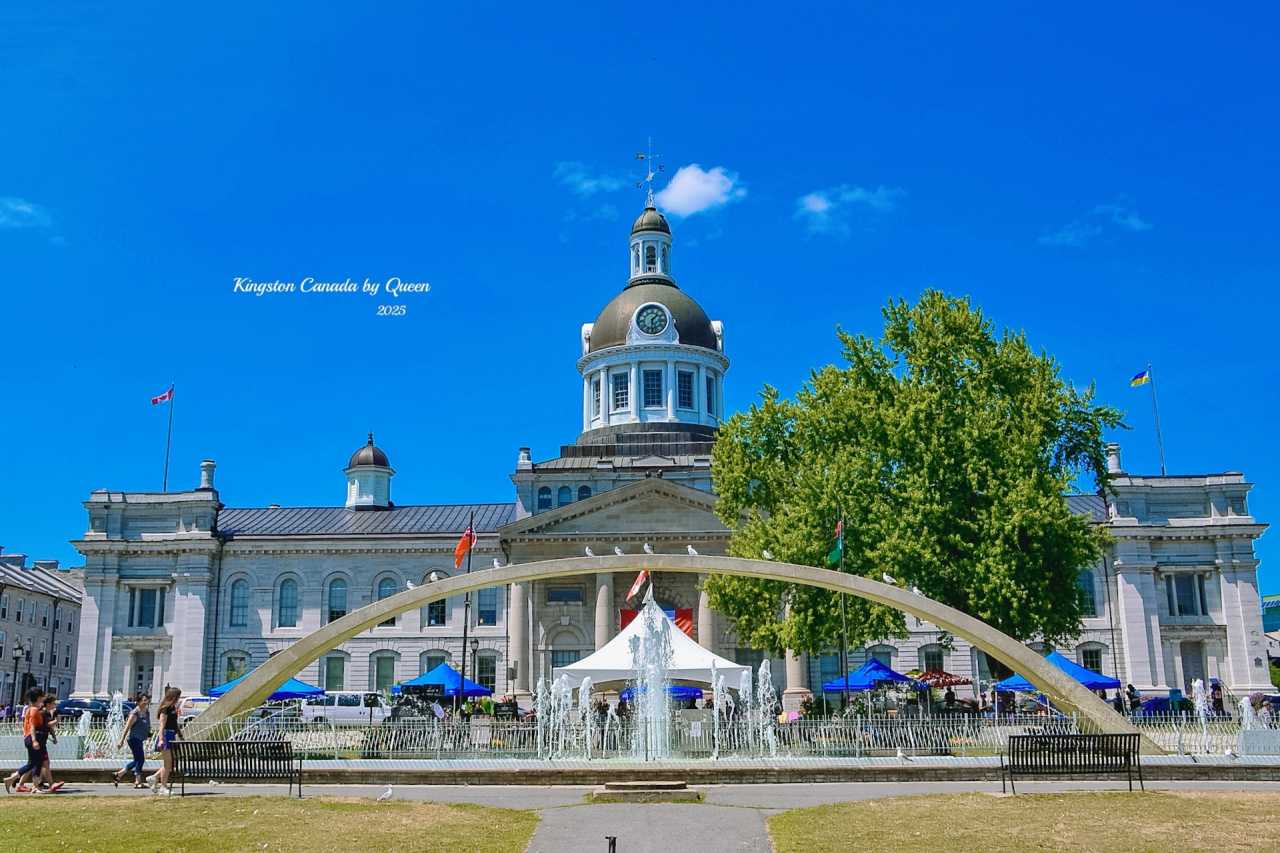
Kingston City Hall is the visual core of this area. It is a typical neoclassical building, with a tall silver dome shining under the sun, with a clock tower behind and a Market Square paved with cobblestones in front.
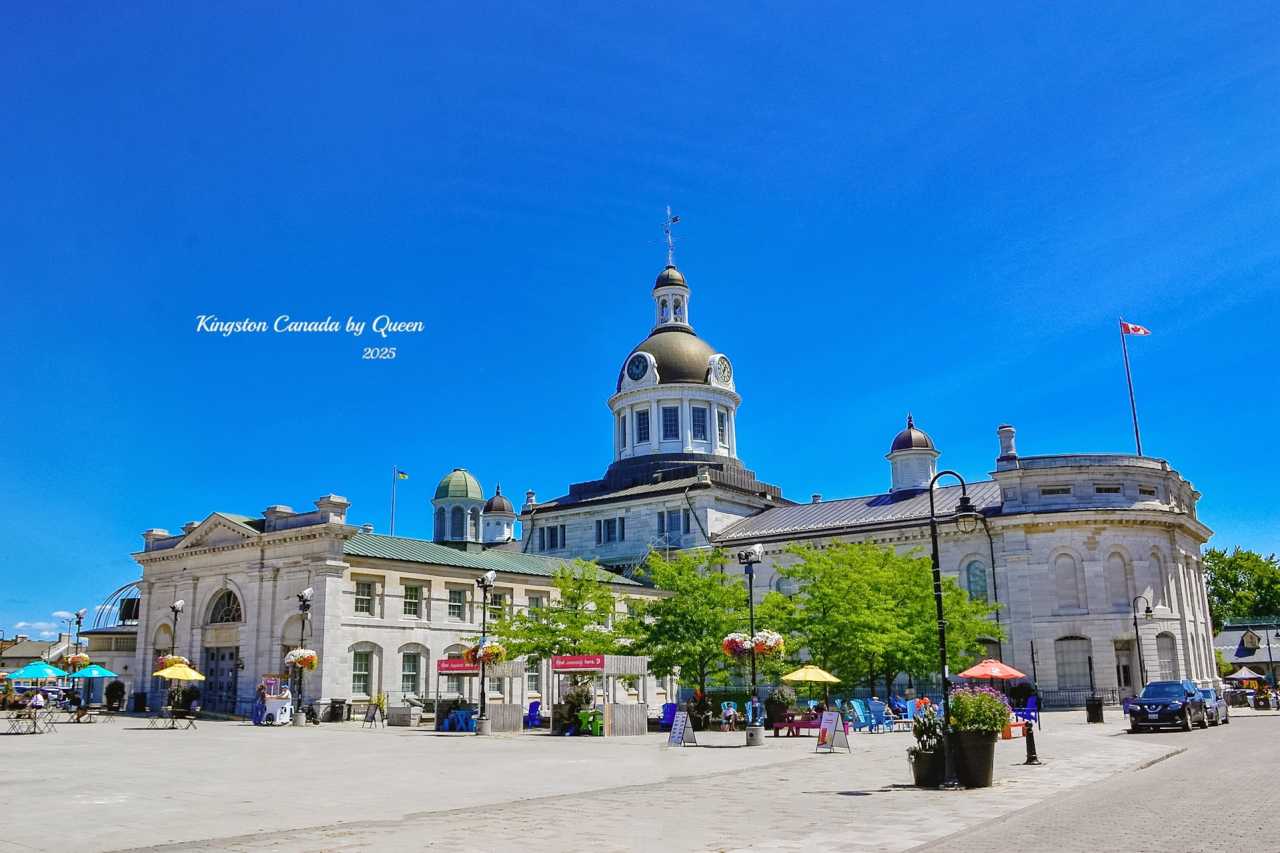
Colorful sun umbrellas are propped up on the square, dotted on the stone ground like candy, with sunlight spilling from the umbrella edges, adding a bit of vitality and intimacy to the originally somewhat bare square.
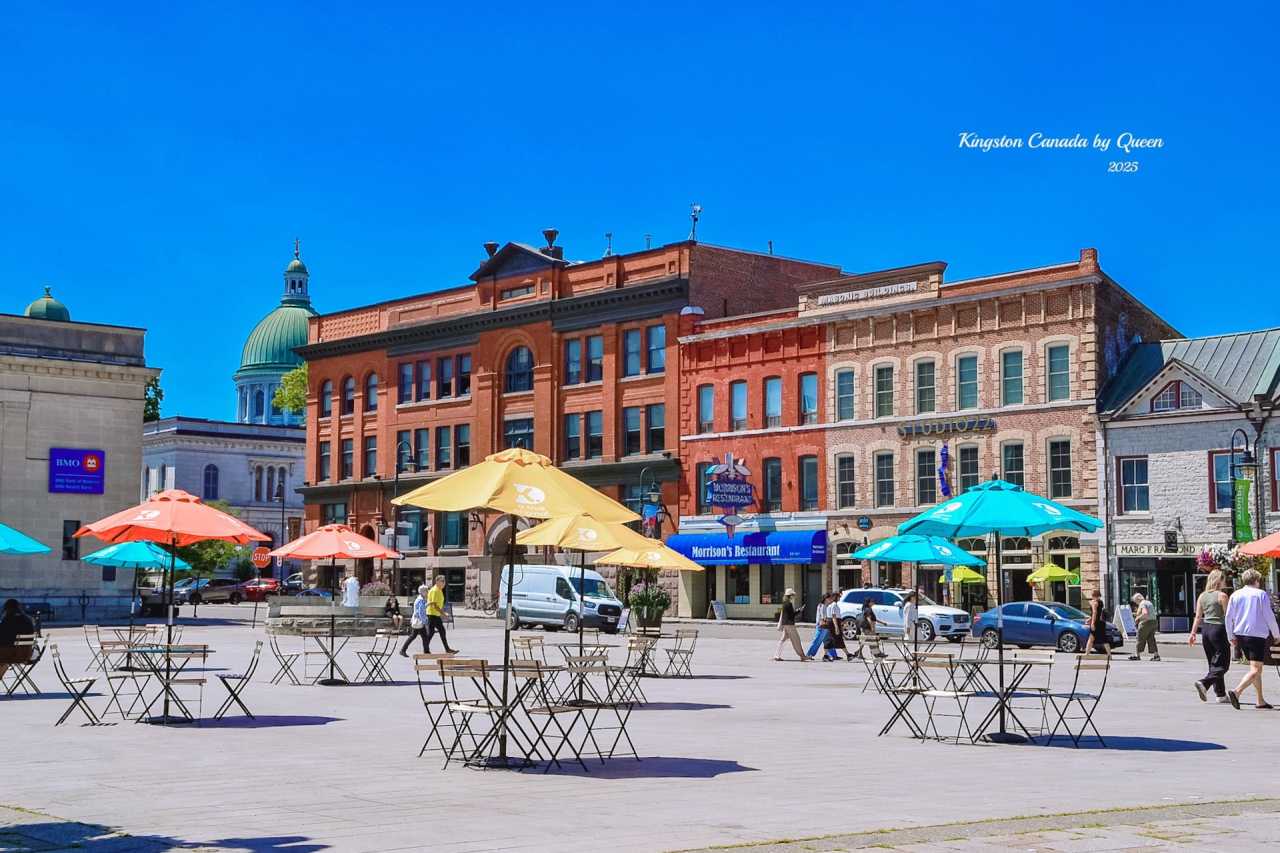
Passing through Princess Street and King Street West, the streets are lined with independent cafes, bookstores, vintage record stores, and small taverns. Unlike other cities, there are few chain stores here, mostly family-run shops that have been operating for decades, with green plants or handwritten menus in Japanese and French placed in front of the doors.
Walking a few minutes from behind the city hall, you arrive at Kingston's lakeside.
The port is filled with various boats, from small fishing boats to white double-decker yachts. In the distance are low islands and undulating water lines, with boats swaying back and forth in the water, reflecting the sparkling waves of Lake Ontario.
There is a long walkway by the lake called the Waterfront Pathway, running through the downtown lakeside section and suburban areas. Fountains, sculptures, and art installations are interspersed among them, adding a bit of modern flavor to the lakeside. Pigeons stroll leisurely on the grass by the lake, water birds rest on wooden stakes, and occasional breezes carry a faint smell of lake water and grass.
From here, you can look out at Fort Henry - a military fortress built in the early 19th century to defend against American invasion.
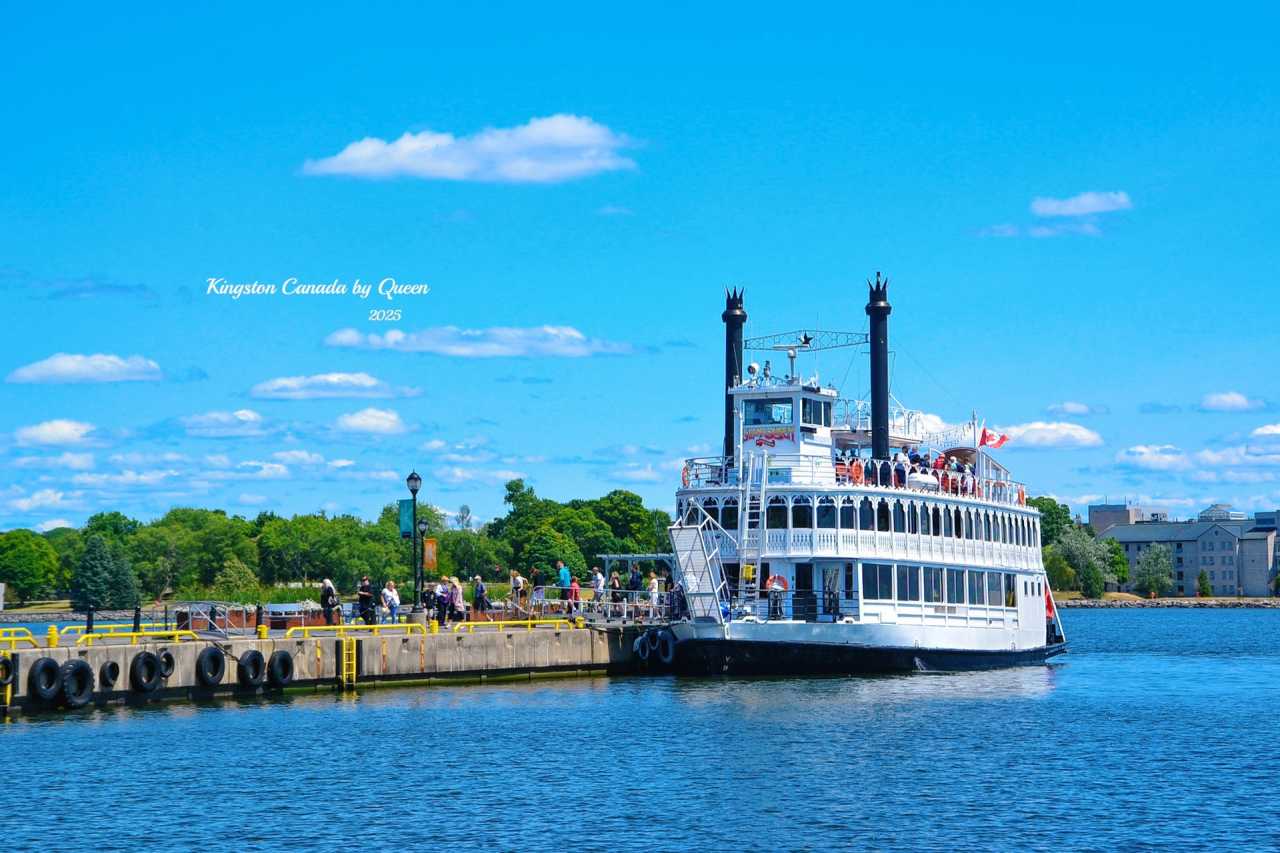
Calgary - Cowboy Metropolis
Canada is vast, so vast that flying from one city to another is like changing to a different country. Flying from Toronto to Calgary spans more than 3,500 kilometers and 2 time zones. A flight of nearly 4 hours is like jumping from a "city at the foot of the book page" into "the frontier of the Rocky Mountains." The moment the plane landed, I saw vast grasslands and towering mountains outside the window, and I knew that the journey belonging to Alberta was about to begin.
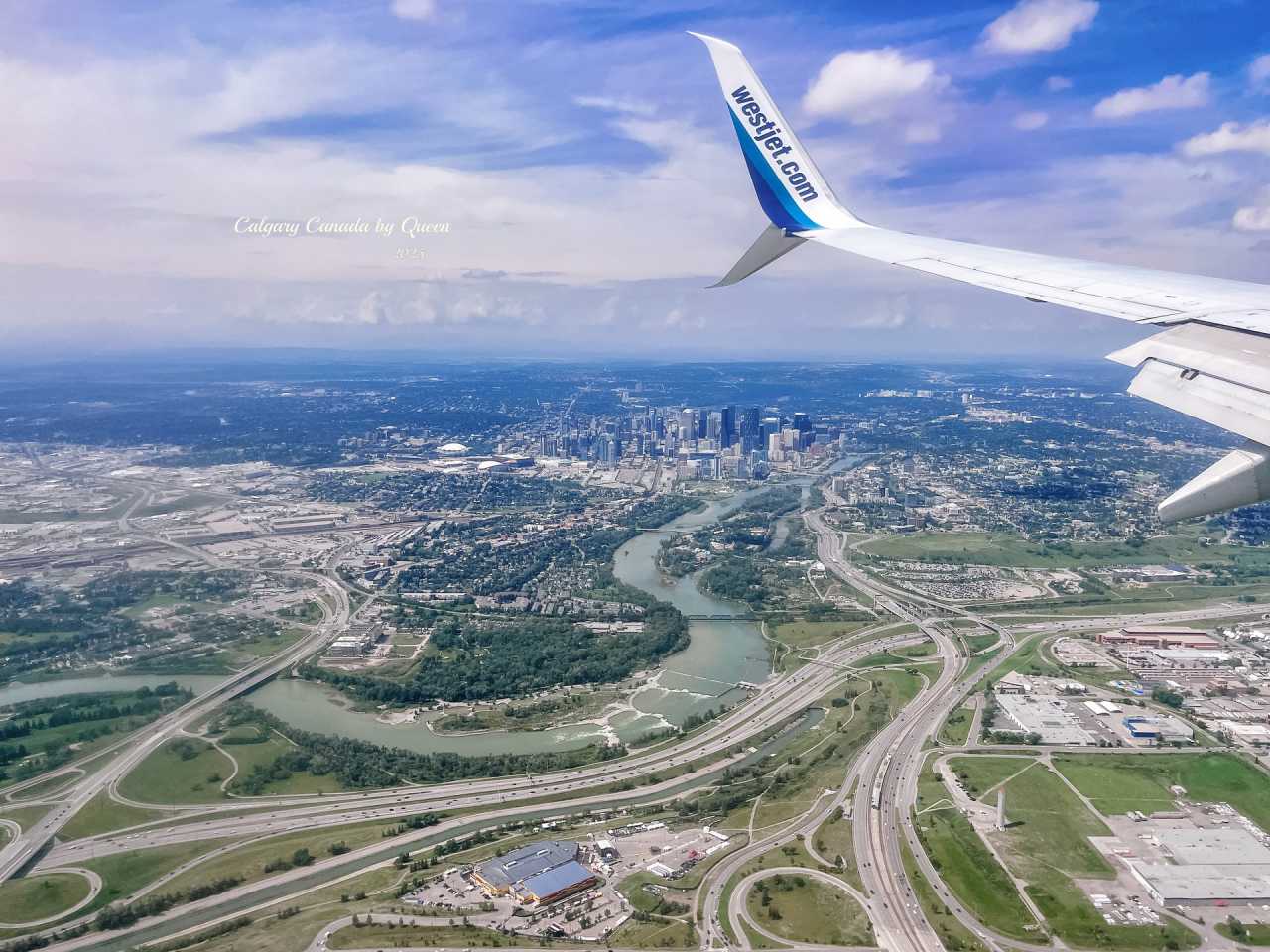
Arriving in Calgary in the afternoon, the sun was just right, the city seemed to have just awakened from its lunch break. The streets are clean and neat, with wind shuttling between high-rise buildings, a quiet yet not cold modern feeling rushing toward me. I dropped off my luggage at the hotel and went out for a walk, following the flow of people, slowly walking into the pulse of this city.
The first stop was Stephen Avenue Walk, the busiest living axis in the city center. Both sides are century-old buildings converted into shops and restaurants, with street performers singing and drumming in the sun, everything looking like life has just unfolded.
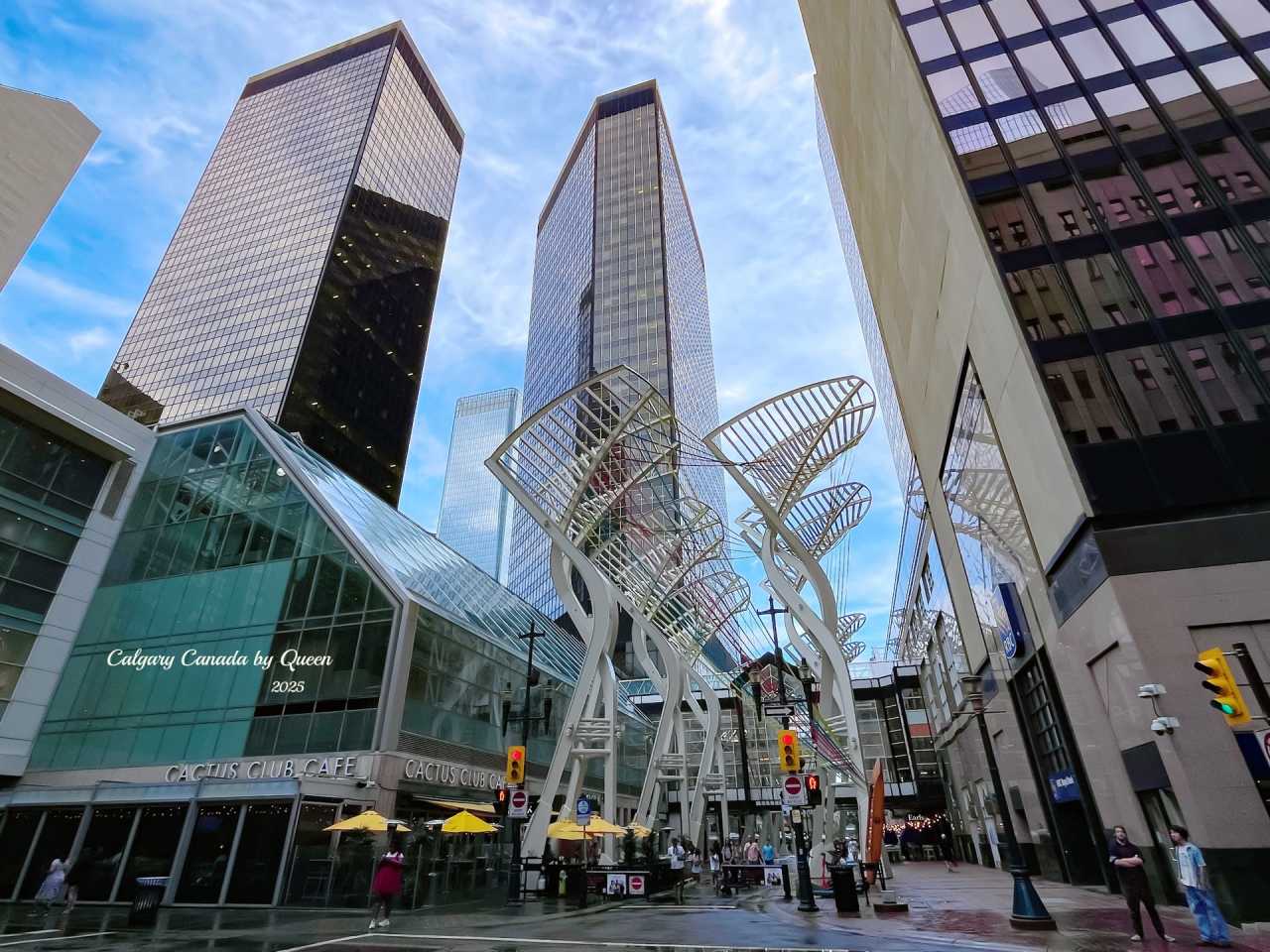
This pedestrian-only historical block has a road surface paved with light-colored stone slabs, with rows of Victorian-era red brick or gray stone old buildings on both sides, carved window frames, cast iron balconies, appearing particularly elegant and independent among the city's steel forest.
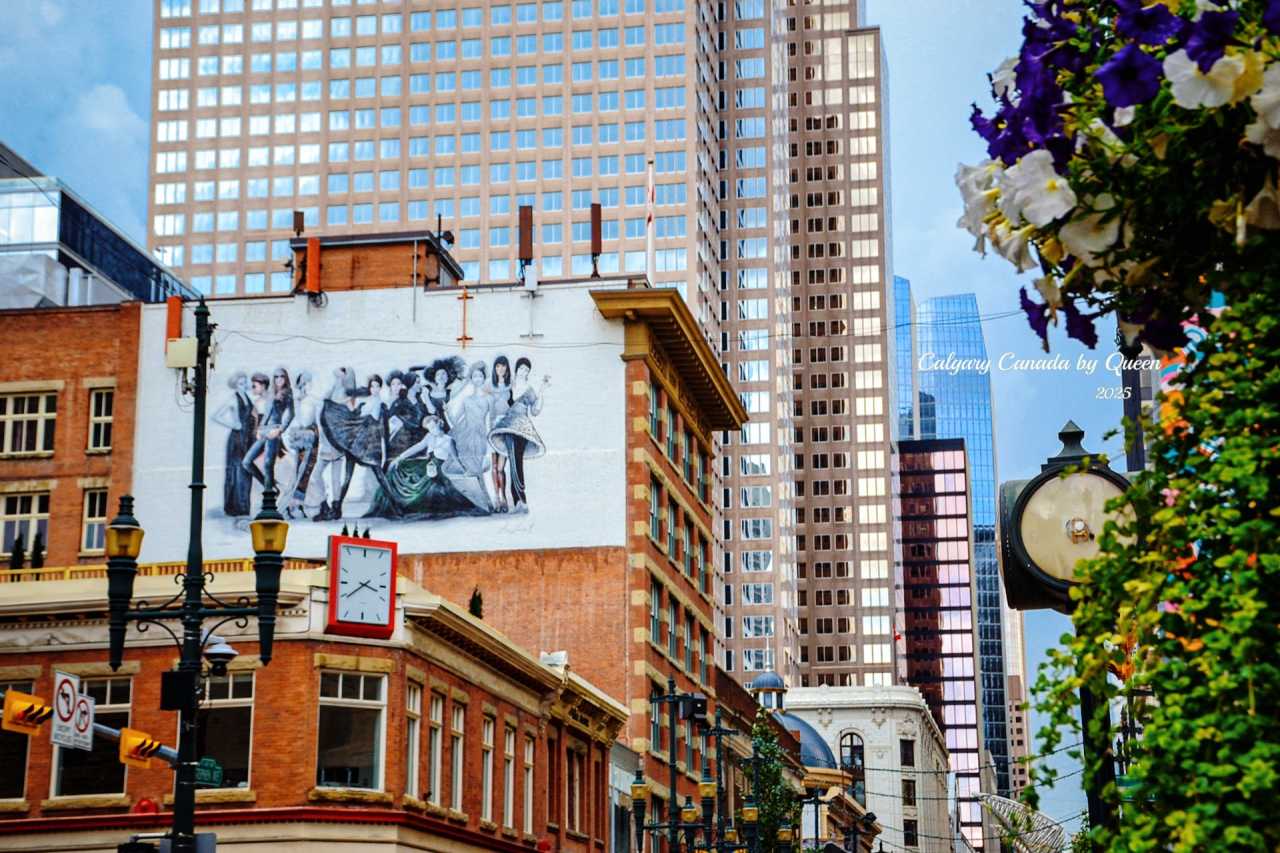
Not far away, the Calgary Tower stands tall into the clouds, like a probe of the city. I didn't go up to the observation deck because I already had a panoramic view of the entire city from the plane.
Continuing to walk on the street, I turned into a side street and came to the Wonderland Sculpture - the giant sculpture nicknamed "Head Sculpture." The design inspiration of Wonderland comes from the face of a young girl from the designer Plensa's hometown Barcelona, symbolizing human dreams and hopes. She quietly stands among the modern buildings, like a contemplative giant.
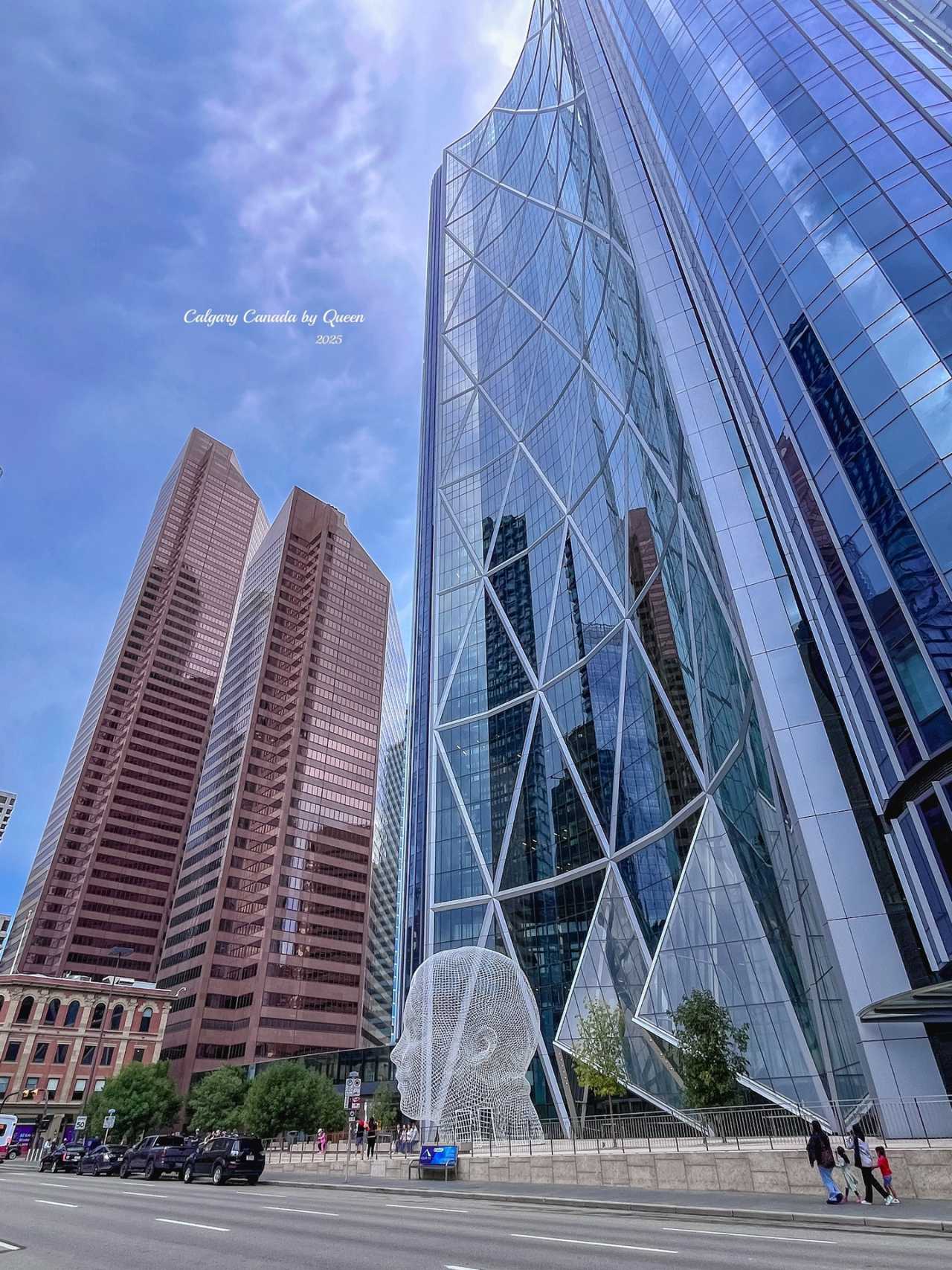
Interestingly, Wonderland has become one of the symbols of Calgary's modern urban style.
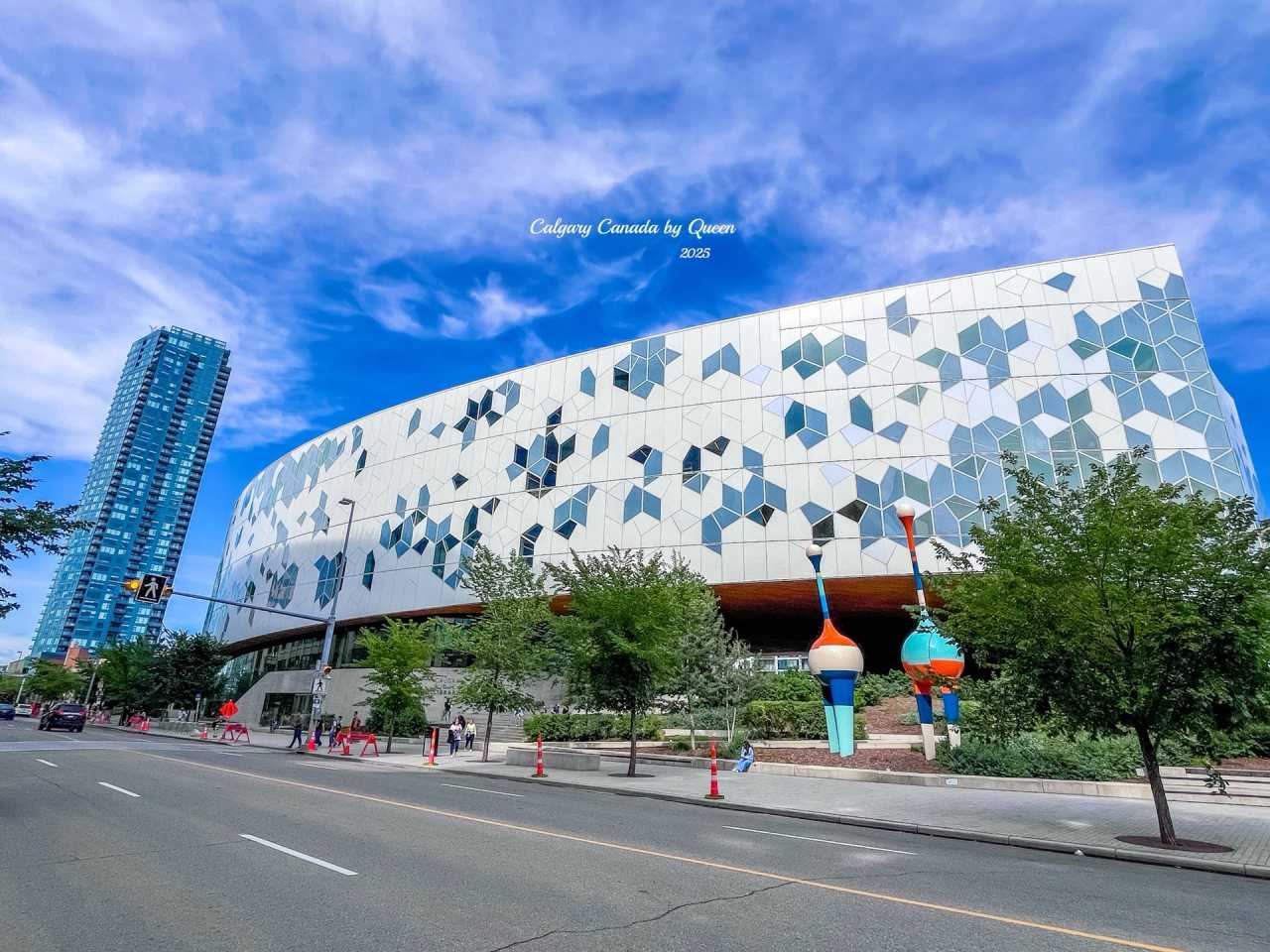
Next, I came to the Central Library. From afar, this library looks like a ship floating in the city, with honeycomb-shaped glass and light-colored wood grain exterior walls interlaced and spread out, like snowflakes, like ripples, and like a book about to be opened, extremely futuristic.
Stepping into the library interior is a moment of quietness and brightness. The lobby space is open, with warm-colored wooden stairs spiraling up between white walls and glass, like a spiral spine, attracting people step by step. Sunlight pours into every corner through the huge floor-to-ceiling windows, with each floor designed to be both functionally clear and visually stretched, without any sense of oppression.
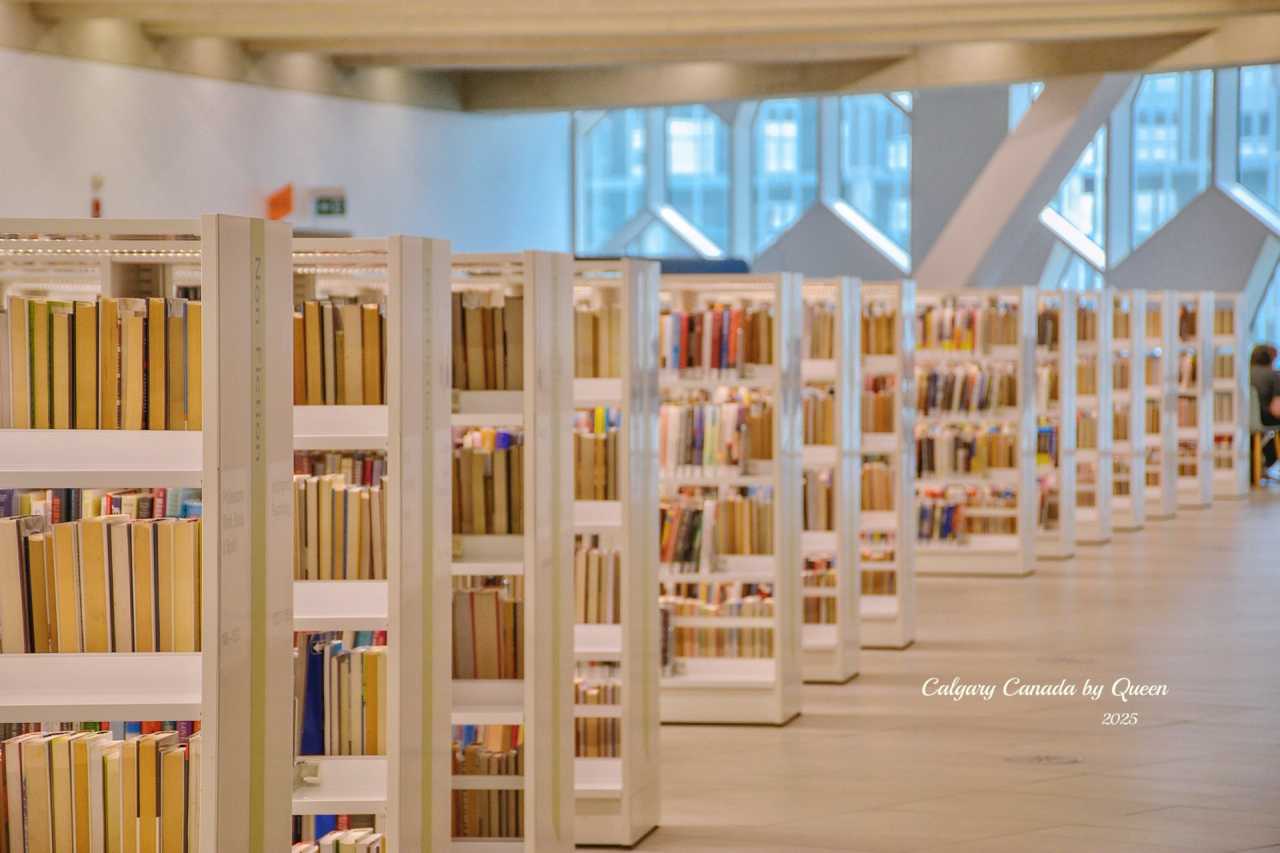
The space naturally unfolds upward around a "reading line." This design inspiration comes from the canyon - the architectural firm Snøhetta once stated that they hope visitors feel as if they have stepped into a natural canyon when entering the library, gradually entering quieter and more immersive spaces from the bottom up, slowly entering more quiet and immersed spaces.
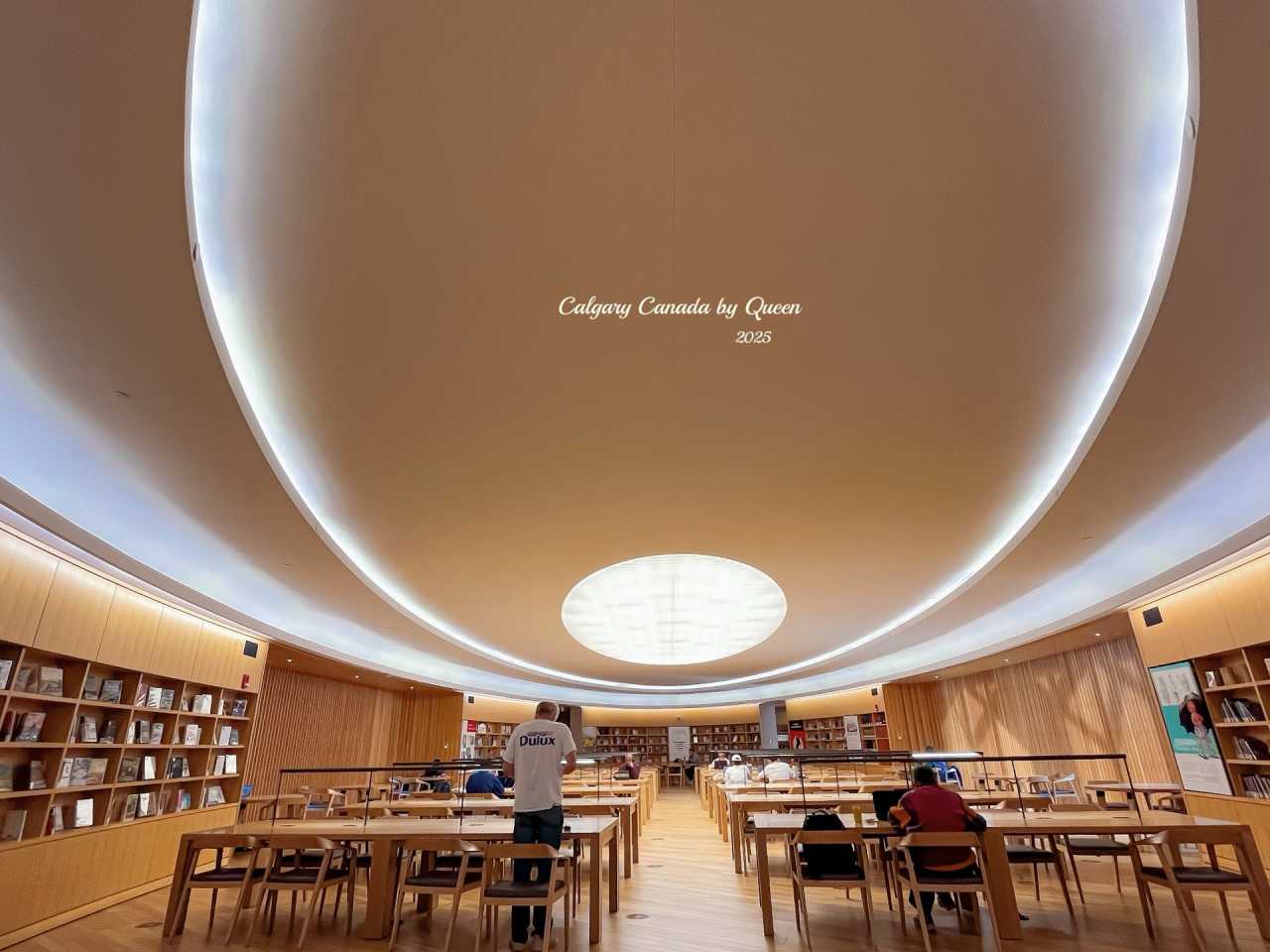
Therefore, from the open shared area on the first floor to the silent reading room on the upper floors, the entire reading experience is gradually quieting and settling, matching with people's spiritual journey.
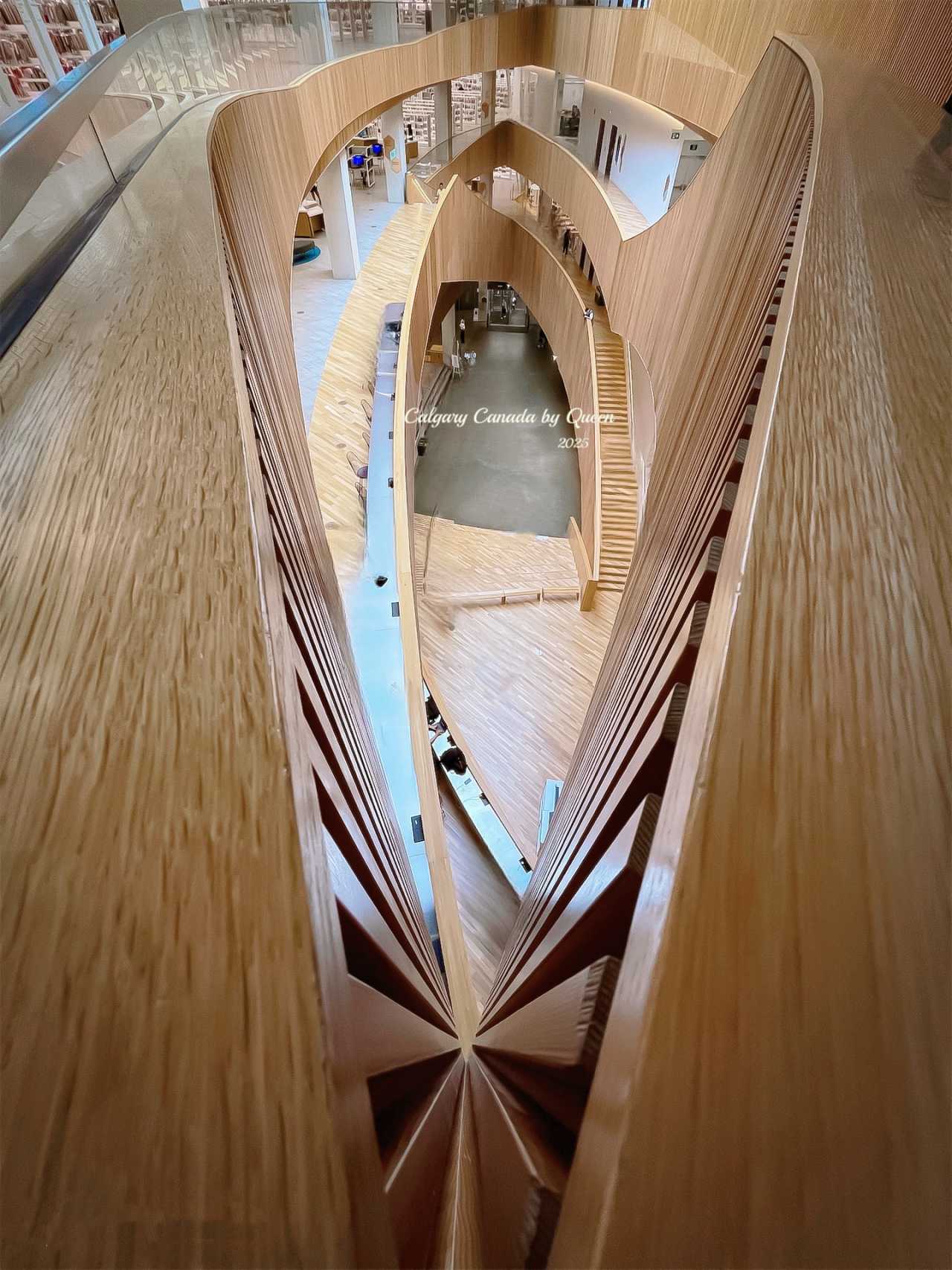
The design extensively uses light-colored wood and natural lighting, not only bringing visual warmth but also filling the interior with a sense of tranquility. Sunlight pours in through the honeycomb-shaped glass windows, not with a cold industrial feel, but similar to the light spots scattered in the forest, creating an atmosphere of "reading in nature."
In addition, there is a coffee shop, public seating, and free space on the first floor, welcoming people without library cards or even those who don't read to come in and rest. This "zero threshold" atmosphere is one of the reasons why this library is so widely loved. Of course, it's also a favorite for tourists who love to check in!
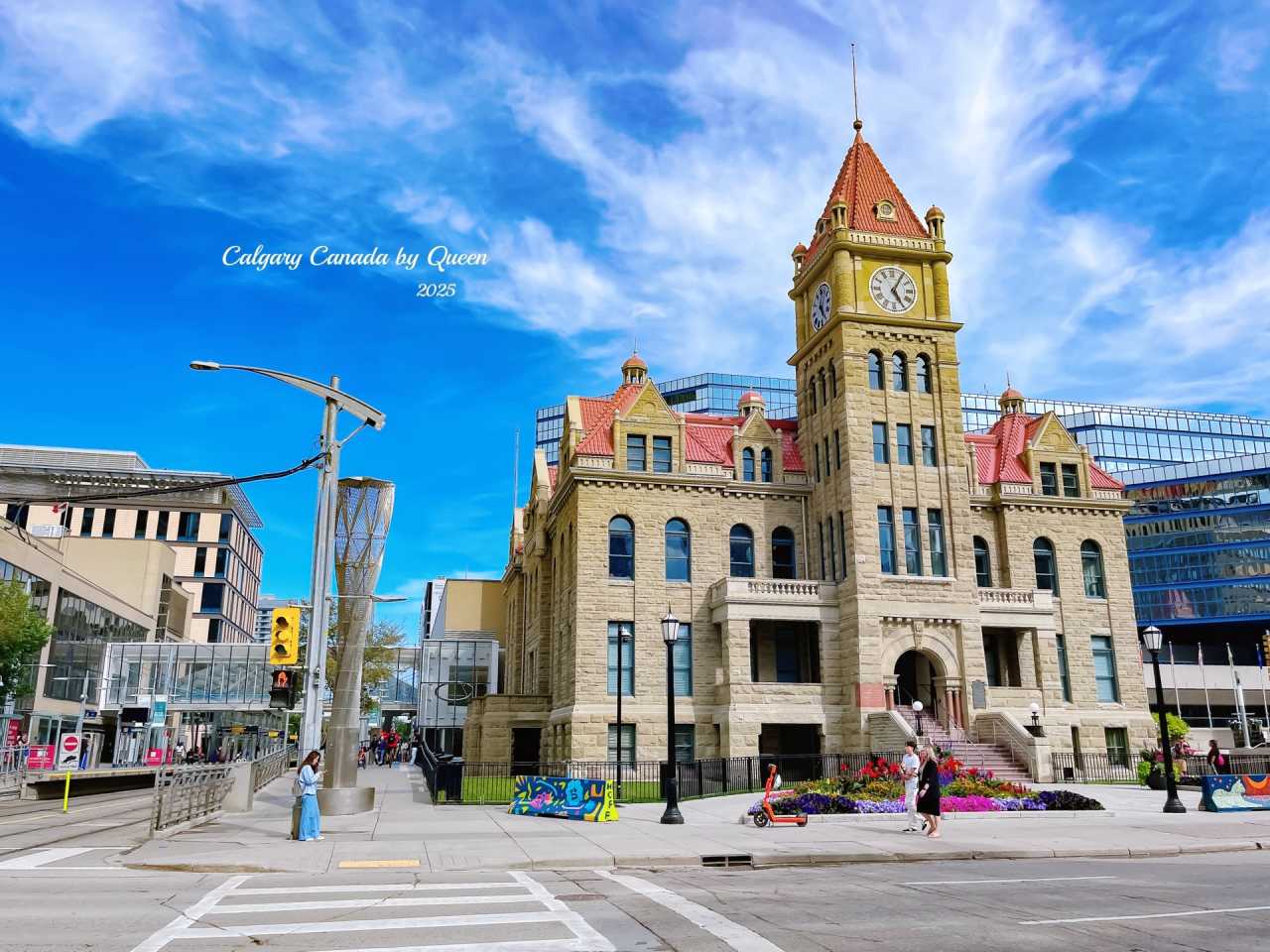
Coming out of the library is Calgary City Hall. The old city hall made of red bricks carries the heaviness of the 19th century, with a classical clock tower quietly telling the city's past; while the new municipal building next to it is a rational beauty of glass and steel structure, the two standing side by side, like a dialogue between the city's past and future.
In the modern glass buildings of downtown Calgary, there is a small area that exudes another familiar atmosphere - that is Chinatown. Here, a real life charm is preserved. The red archway at the street entrance, the blue brick and flying eaves, and the Chinese signboards write a few strokes of Eastern elegance among the lines of the Western city.
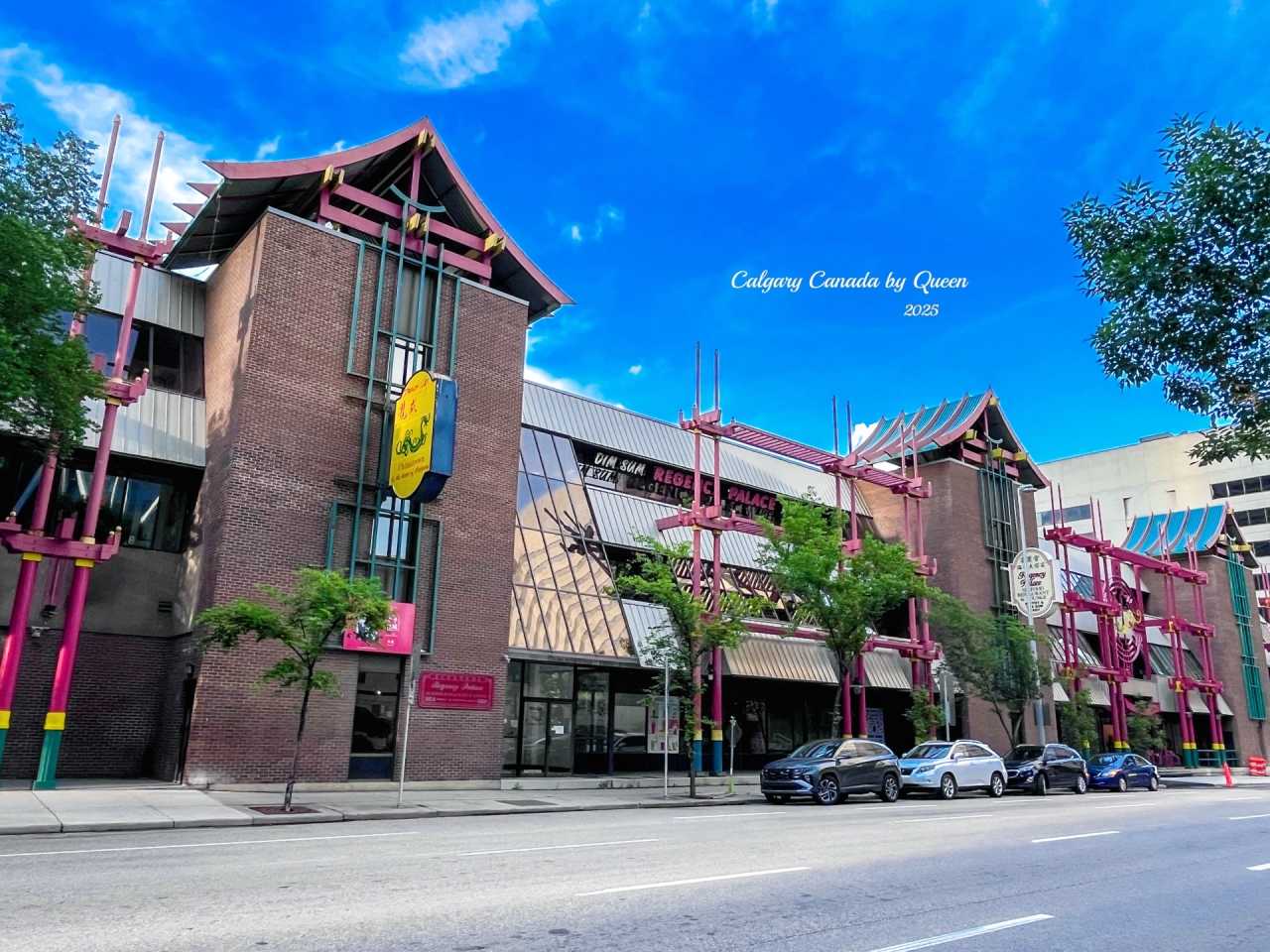
Chinatown's buildings blend tradition and practicality: old small multi-story shops, with traditional Chinese medicine clinics and associations upstairs, and supermarkets and Hong Kong-style tea restaurants downstairs. There are even dragon pattern murals on the corner walls, particularly eye-catching among the city's gray tones.
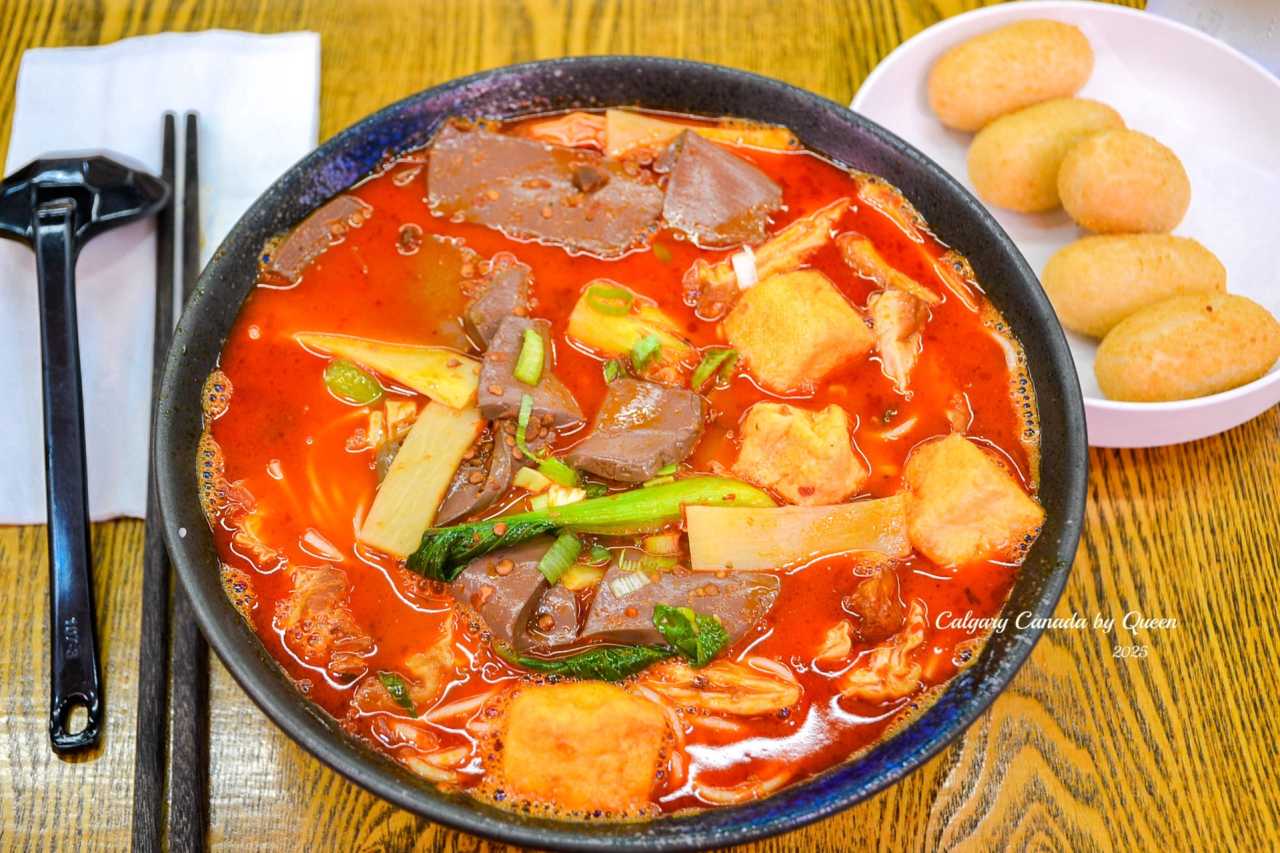
I sat down in a small restaurant, ordered a steaming bowl of Yunnan rice noodles, fresh, spicy, sour, and fragrant, warming up to the bottom of my stomach as soon as I took a bite. After the meal, I had a brown sugar glutinous rice cake, crispy on the outside and soft on the inside, wrapped in flowing syrup, simply perfect.
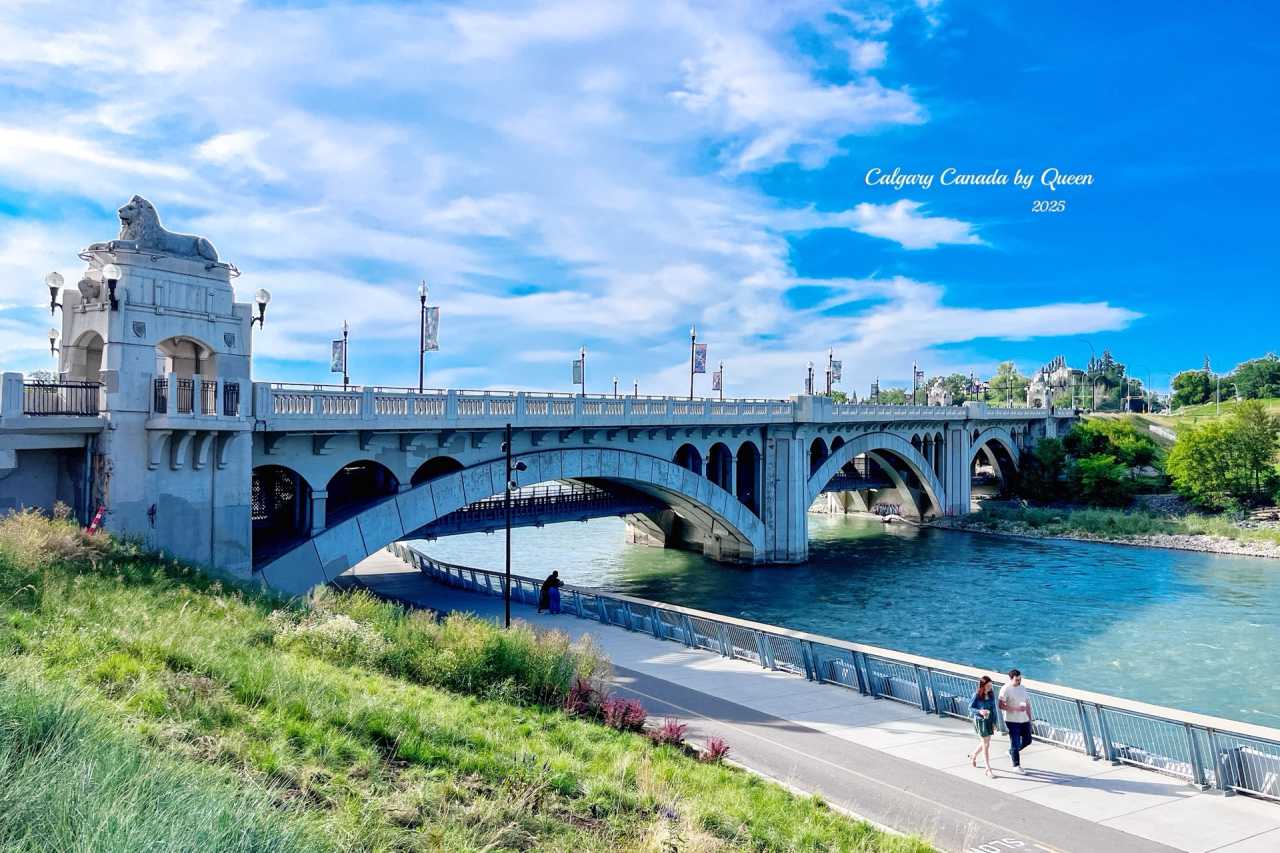
After eating and drinking, I came to the riverside walkway next to the city center and saw a white arch bridge spanning the Bow River - the Centre Street Bridge. This important traffic bridge was built in 1916 and is one of Calgary's cultural symbols. The bridge body is elegant, with white concrete structure carrying classical carvings, as if time has frozen here.
The most striking thing at the bridge head is the four Chinese stone lions - they quietly guard the north and south ends of the bridge. These stone lions were originally placed to commemorate the contributions of early Chinese immigrants to Calgary when the bridge was built. Over the years, they have also become a symbolic connection between Chinatown and the city.
Standing on the bridge, looking north is the city's emerging area, and looking south is the high-rise cluster of the city center. At dusk, the city shows a quiet tension in the light and shadow.
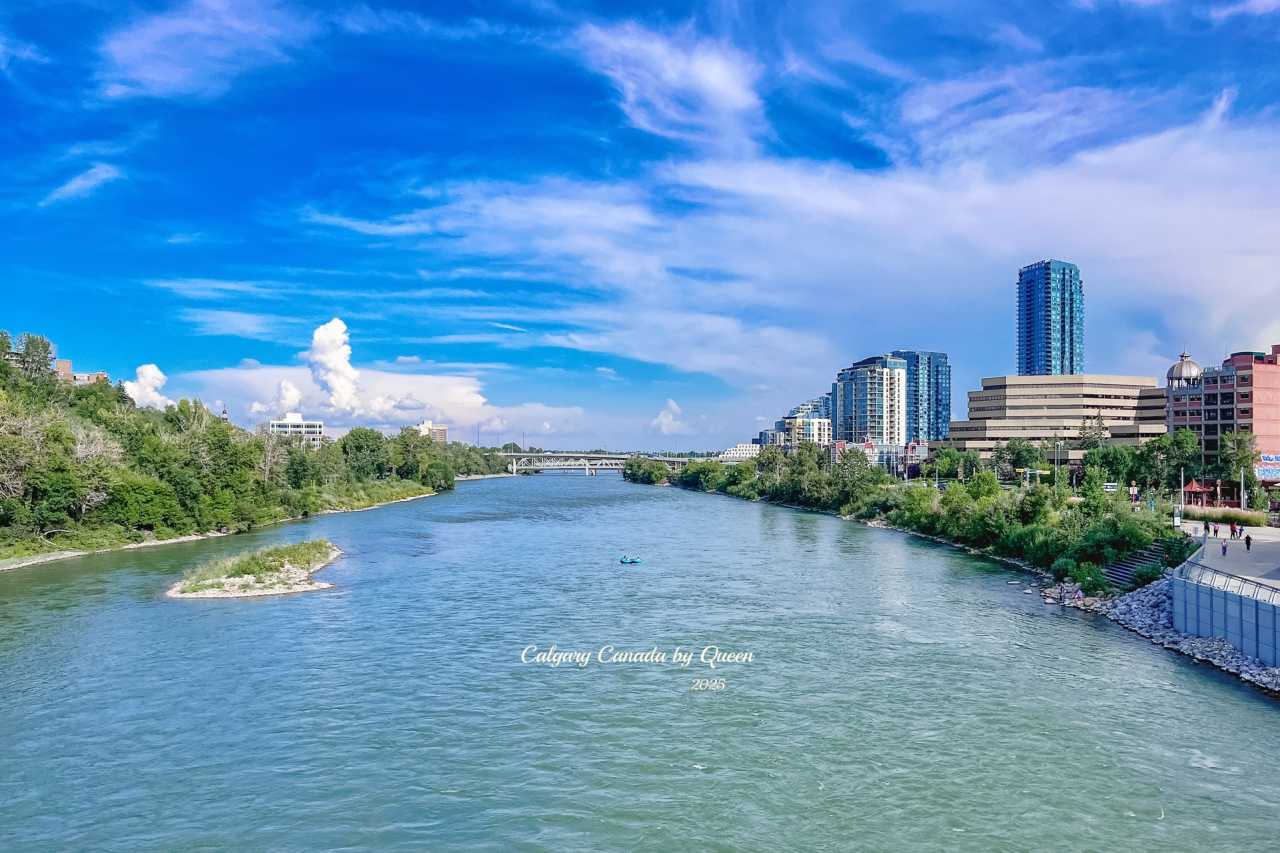
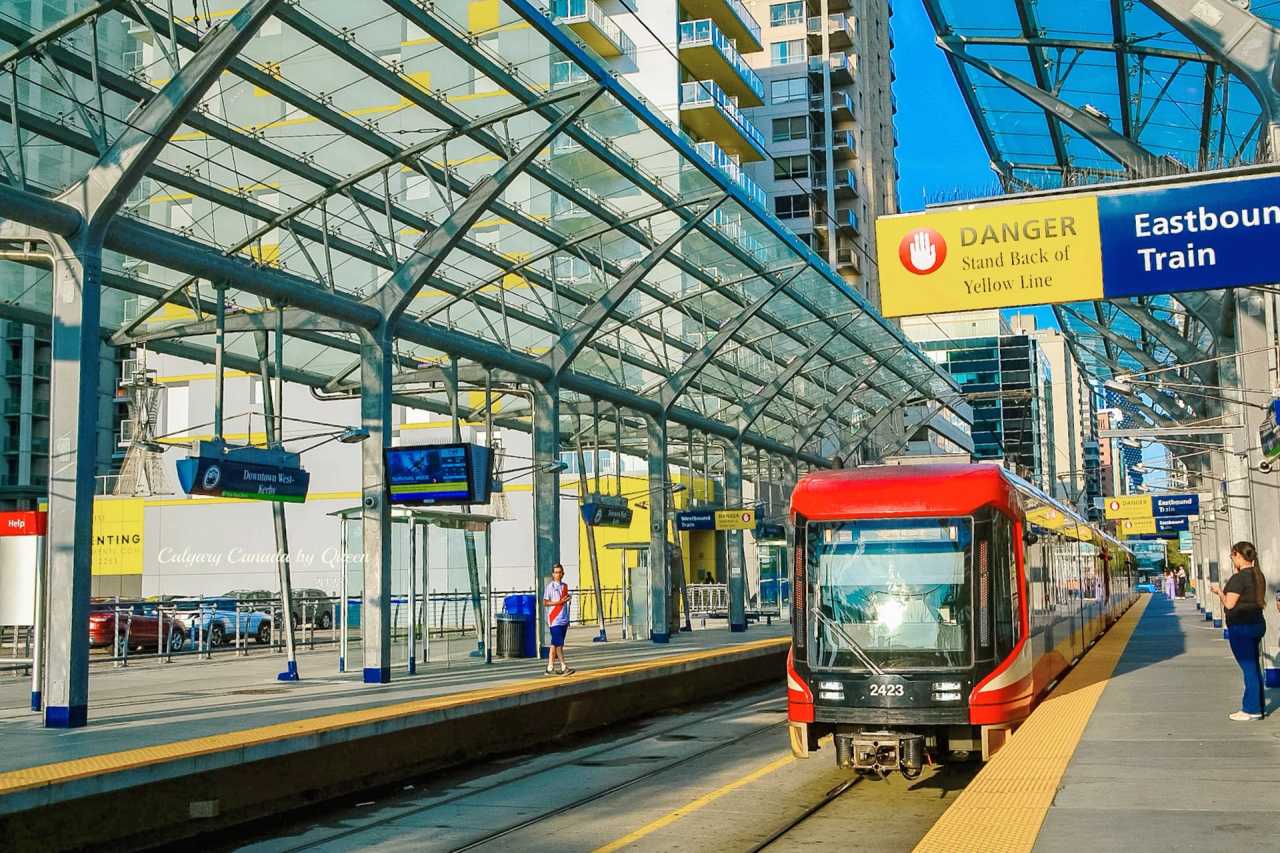
Calgary's urban planning is very clear - the Bow River runs through the city, dividing it into north and south banks. The north bank is mainly residential areas, while the south bank is the commercial and financial center. The city center is not large, but the transportation is convenient, with the C-Train light rail system connecting the main areas.
Canmore - The Back Garden of the Rocky Mountains
Some people say that the beauty of western Canada is the kind of beauty that makes you "afraid to blink while driving." From Calgary, heading towards Canmore, then deep into Banff National Park, the scenery along the way is so beautiful it's like accidentally walking into a movie filming location.
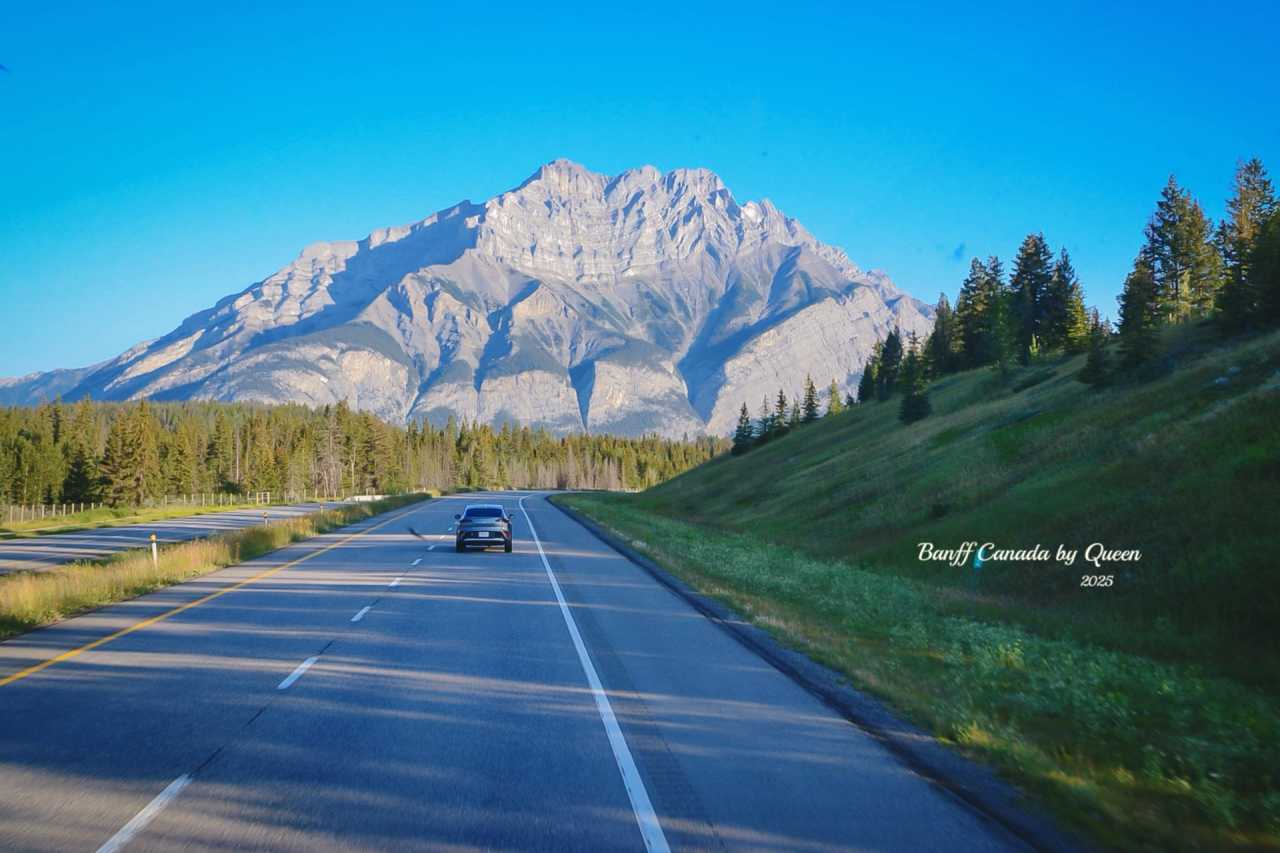
The further west you drive, the world begins to become three-dimensional. Emerald coniferous forests, azure skies, and snow-lined ridges appear alternately, so beautiful it's dizzying.
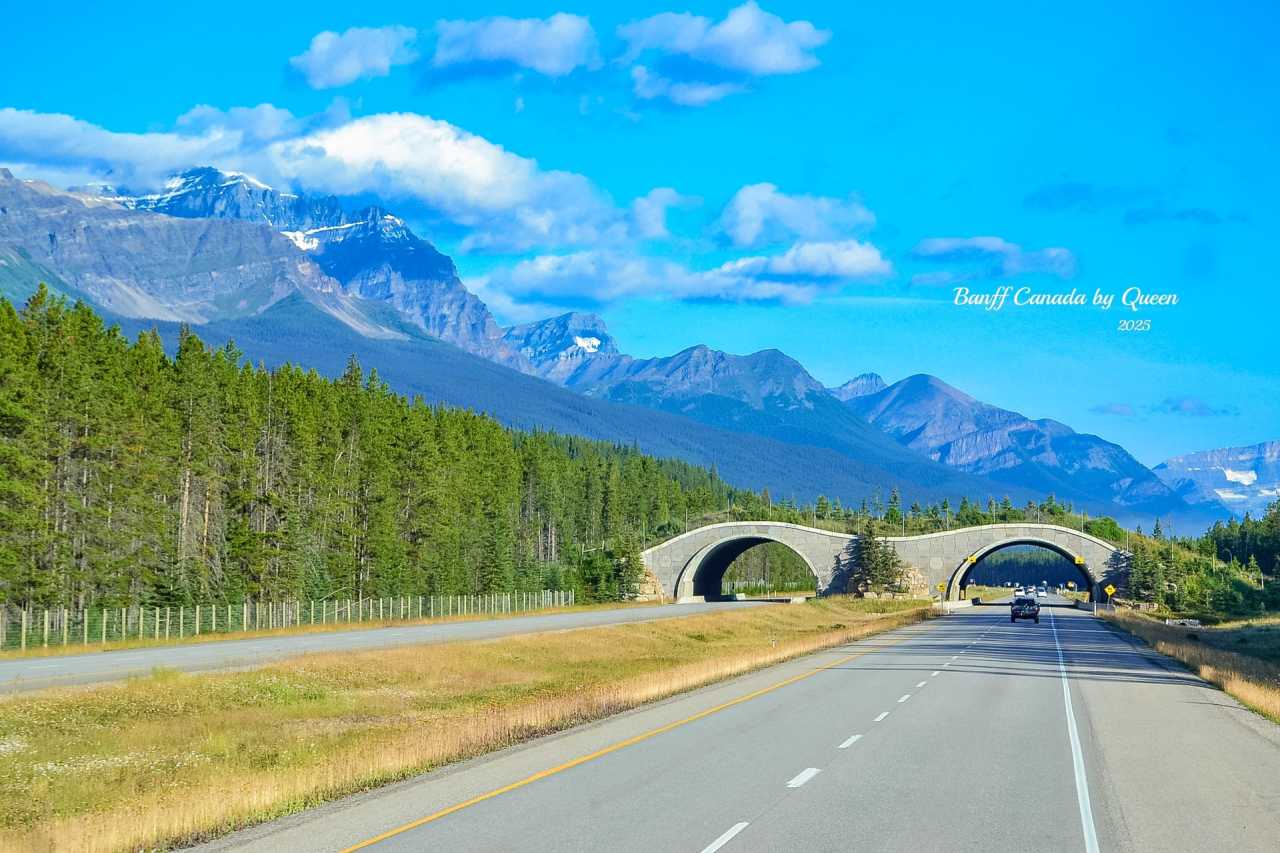
I chose to stay in Canmore, which was absolutely the right decision. Canmore doesn't have Banff's noise and crowds of tourists, but has equally magnificent mountain views, more authentic and peaceful.
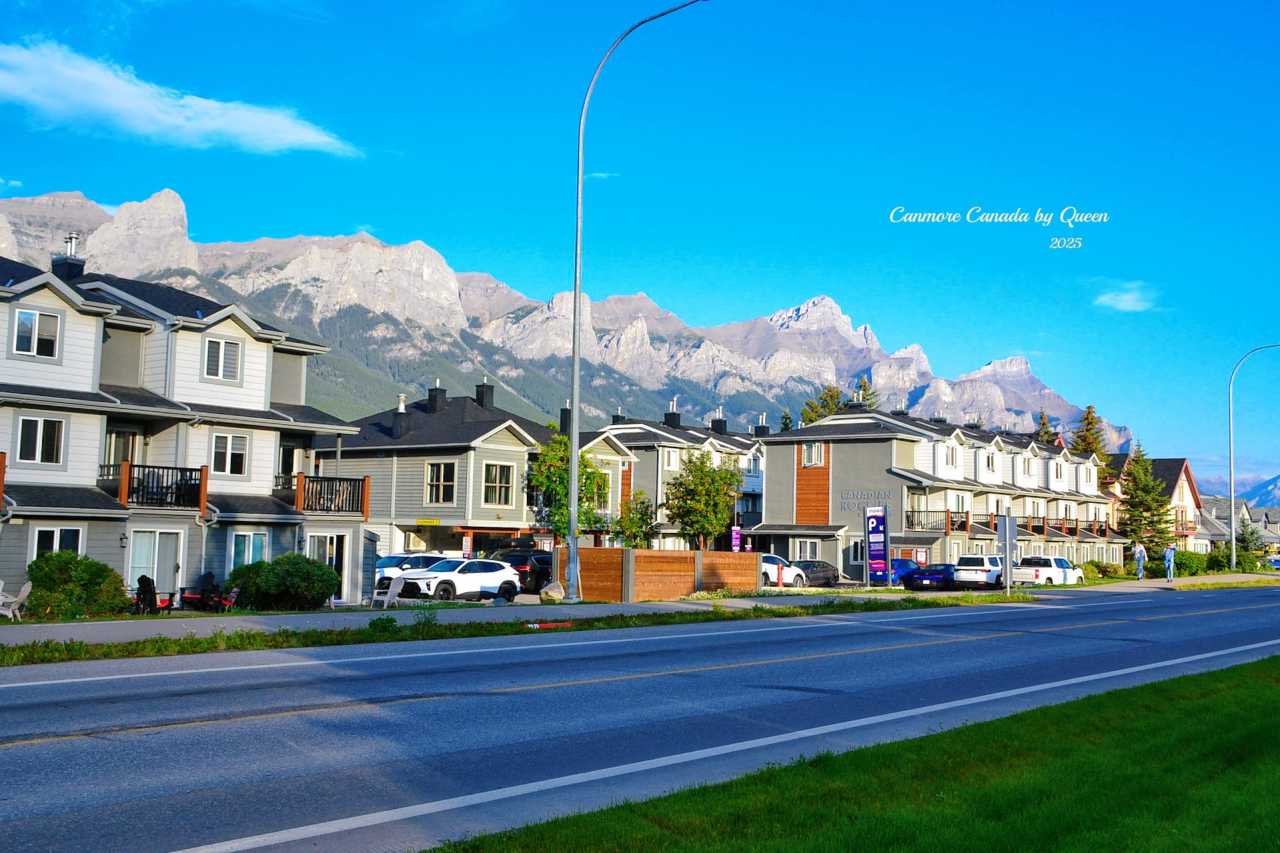
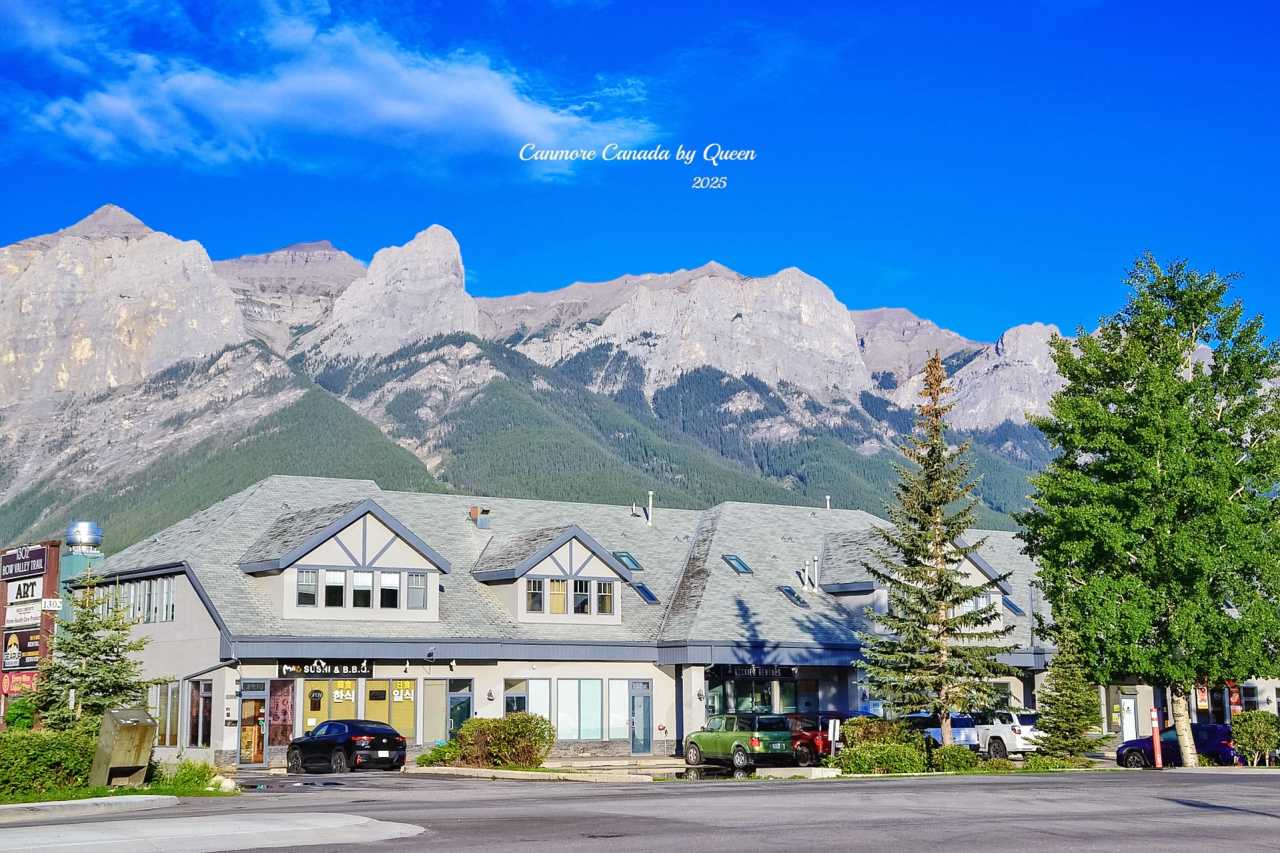
As soon as you enter the town, you're attracted by those three iconic mountain peaks - the Three Sisters, majestic and elegant, standing at the south of the town watching over the entire town. Walking on the main street, both sides are low wooden houses, artisan coffee shops, local galleries, no urban rhythm, no tourist trap mode, only the rhythm of life.
Banff - A Sample of Lakes and Mountains
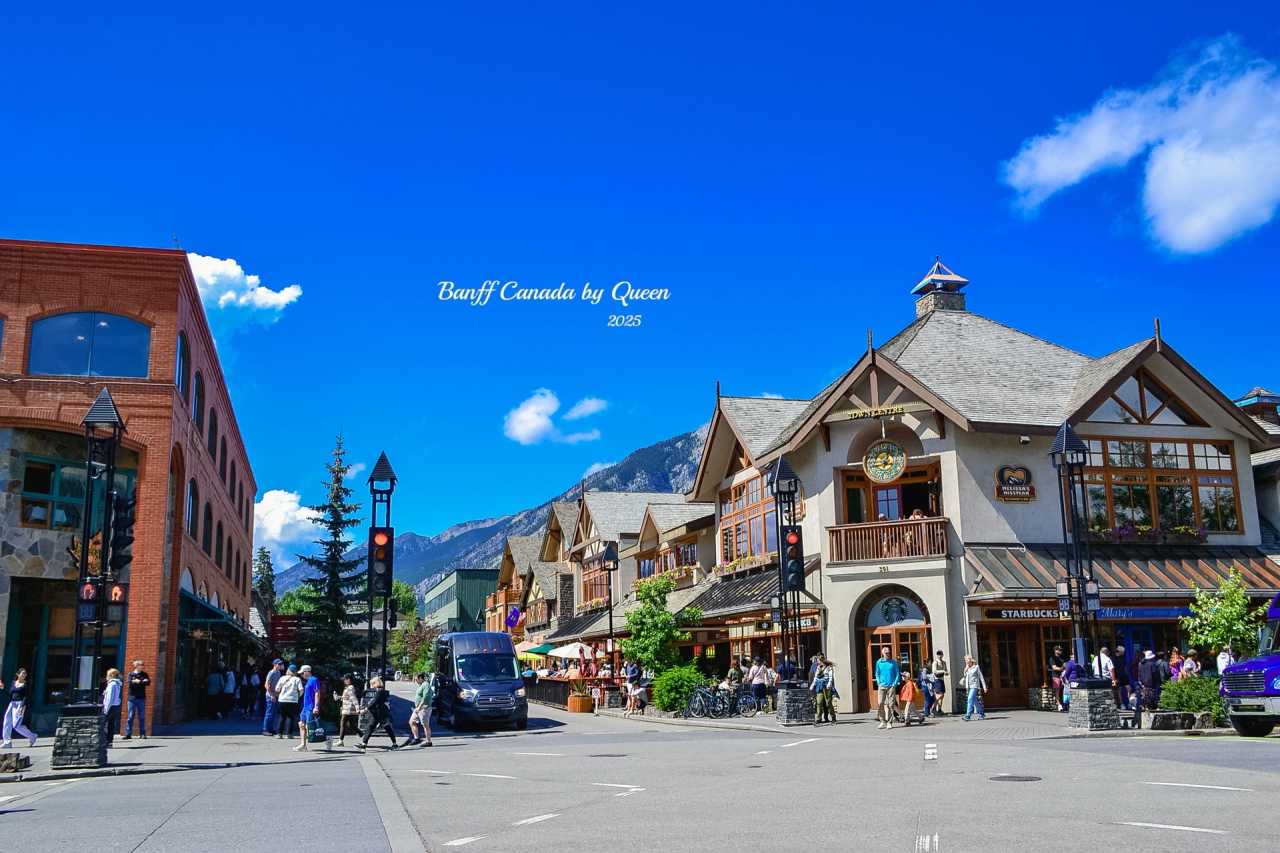
Walking into Banff is like walking into a painting gently outlined by snow mountains, pine forests, and history. This small town is hidden deep in the Rockies, yet has a temperament that rivals world-famous cities.
Banff town center is like a small street nestled in the embrace of mountains, just a few hundred meters long, but condensing all the expectations and romance of travelers. Both sides of the street are neat wooden house-style buildings, with slanted roofs and flower-decorated window frames, like a fairy tale mountain town. No matter which intersection you stand at, looking up you see layers of snow mountain backgrounds, majestic yet not overwhelming.
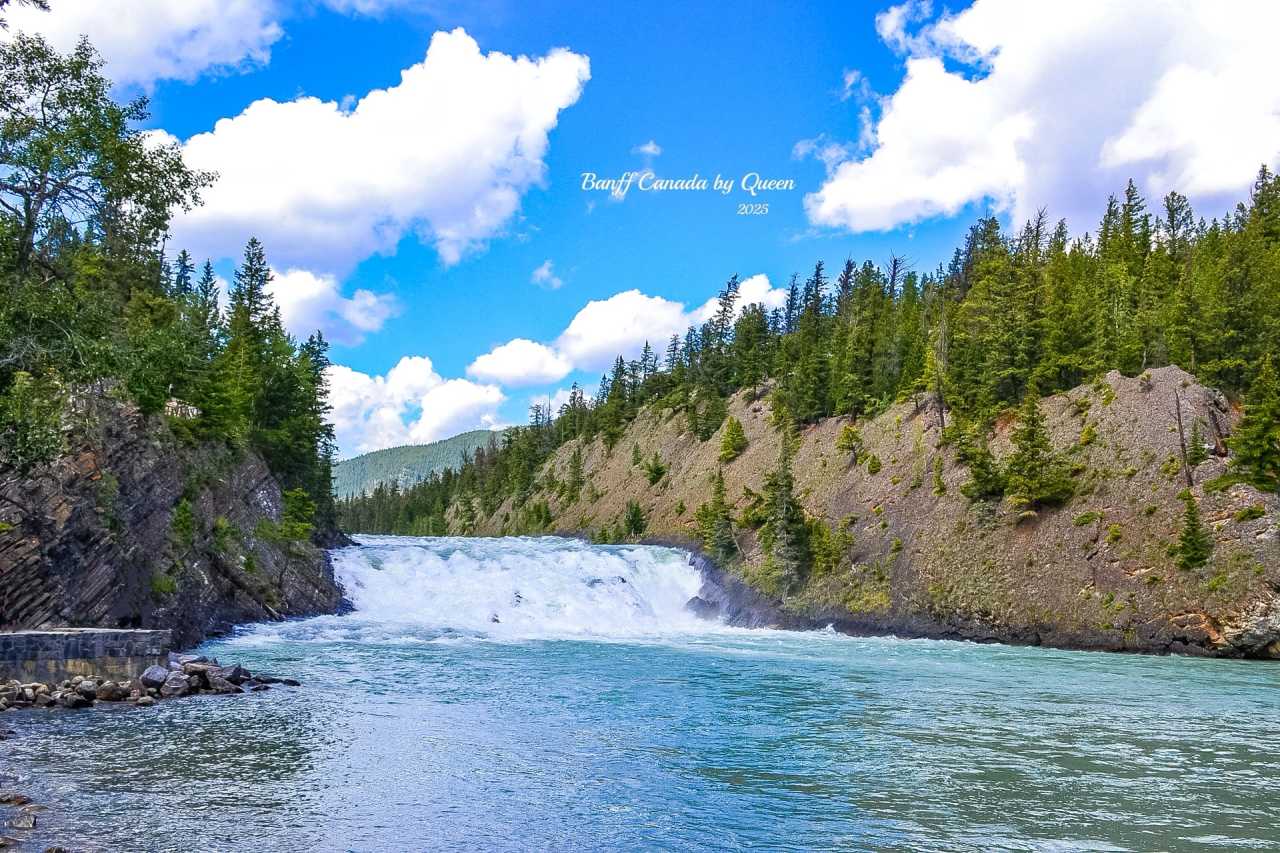
Walking slowly from the town center along the path leading to the river, underfoot is a gravel path, in the ears are birdsong and the sound of flowing water. Bow Falls is not far ahead. She's not the kind of waterfall that hangs high, but lies low, rolling forward between the rocks, with white water spray and blue river water weaving a primitive sense of power.
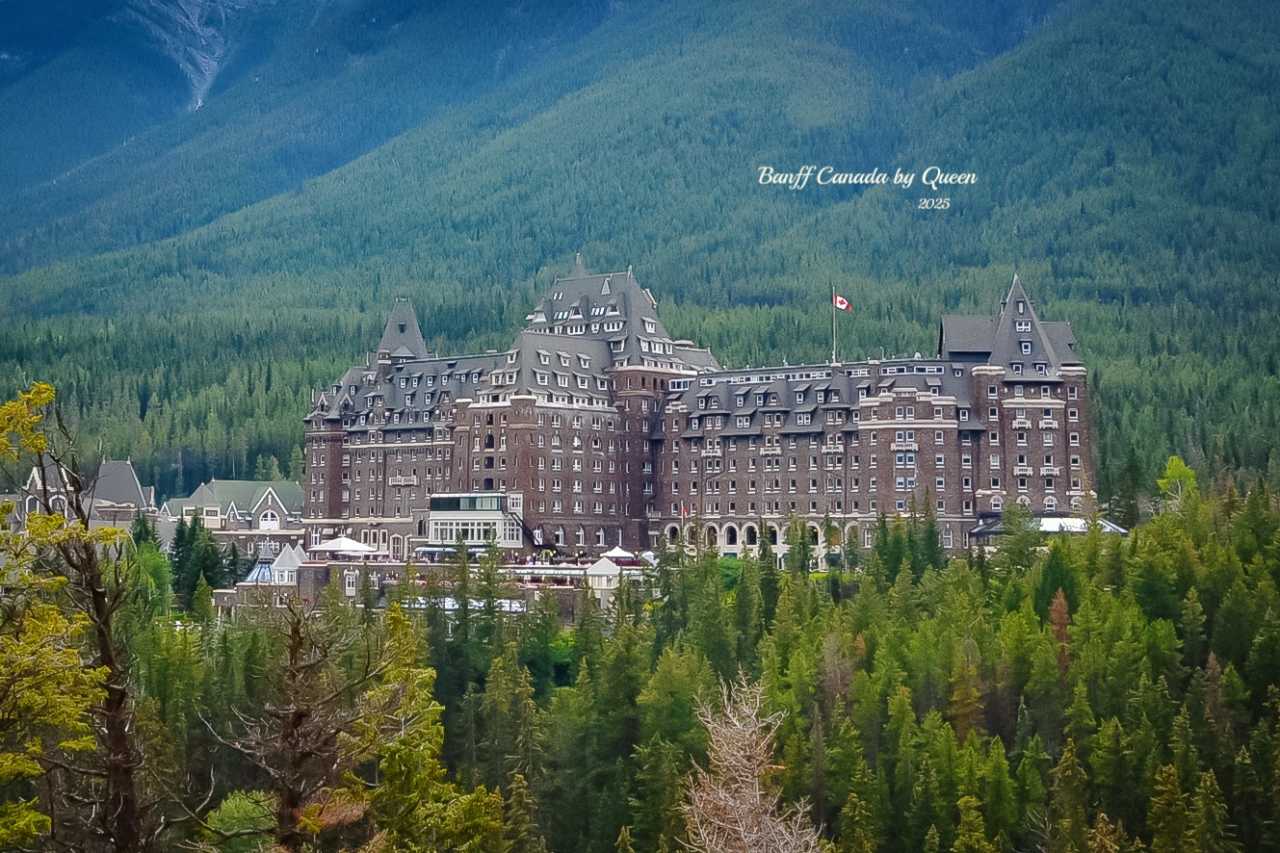
Shot the classic distant view of Fairmont Banff Springs Hotel from the Bow Falls trail. This hotel is one of Banff's most representative and legendary landmarks. Called "The Castle in the Rockies," she stands quietly on the hillside like a castle in a fairy tale, surrounded by pine forests, overlooking Bow River and the entire Banff valley.
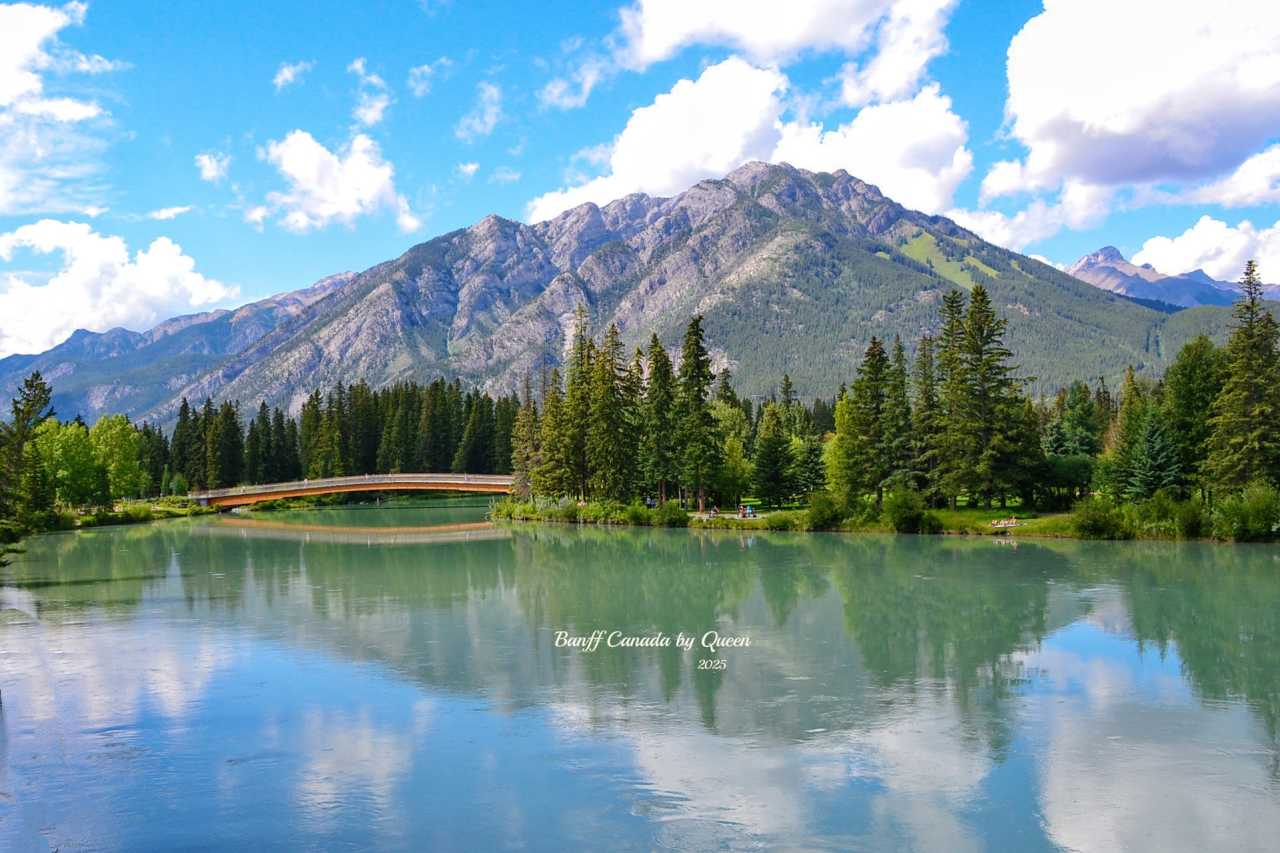
Walking back, crossing that old bridge spanning Bow River, the bridge body is ancient, standing on the bridge you can see beautiful scenery on both banks.
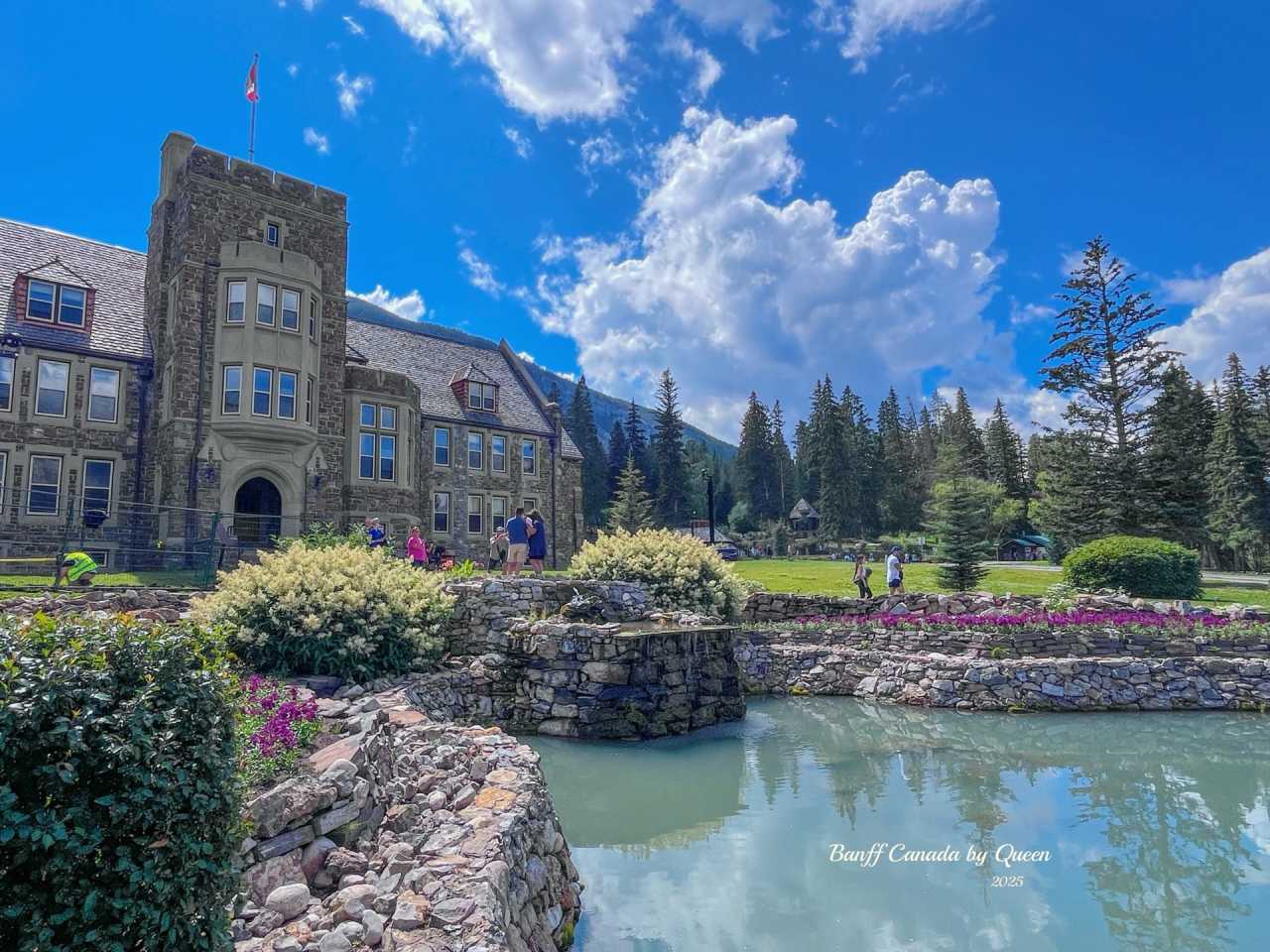
Next to the bridge is that small garden forgotten by time - Cascade of Time Garden. The garden paths wind, with steps, fountains, and flower beds advancing layer by layer, each place trimmed just right. Although it's just a small garden, it quietly blooms with its own rhythm and color.
Standing on the high platform of Cascade of Time Garden, overlooking the entire Banff town. The streets lead straight to the distance, with scattered cabins along the road, majestic snow mountains in the distance, and slowly flowing Bow River below - everything is just right.
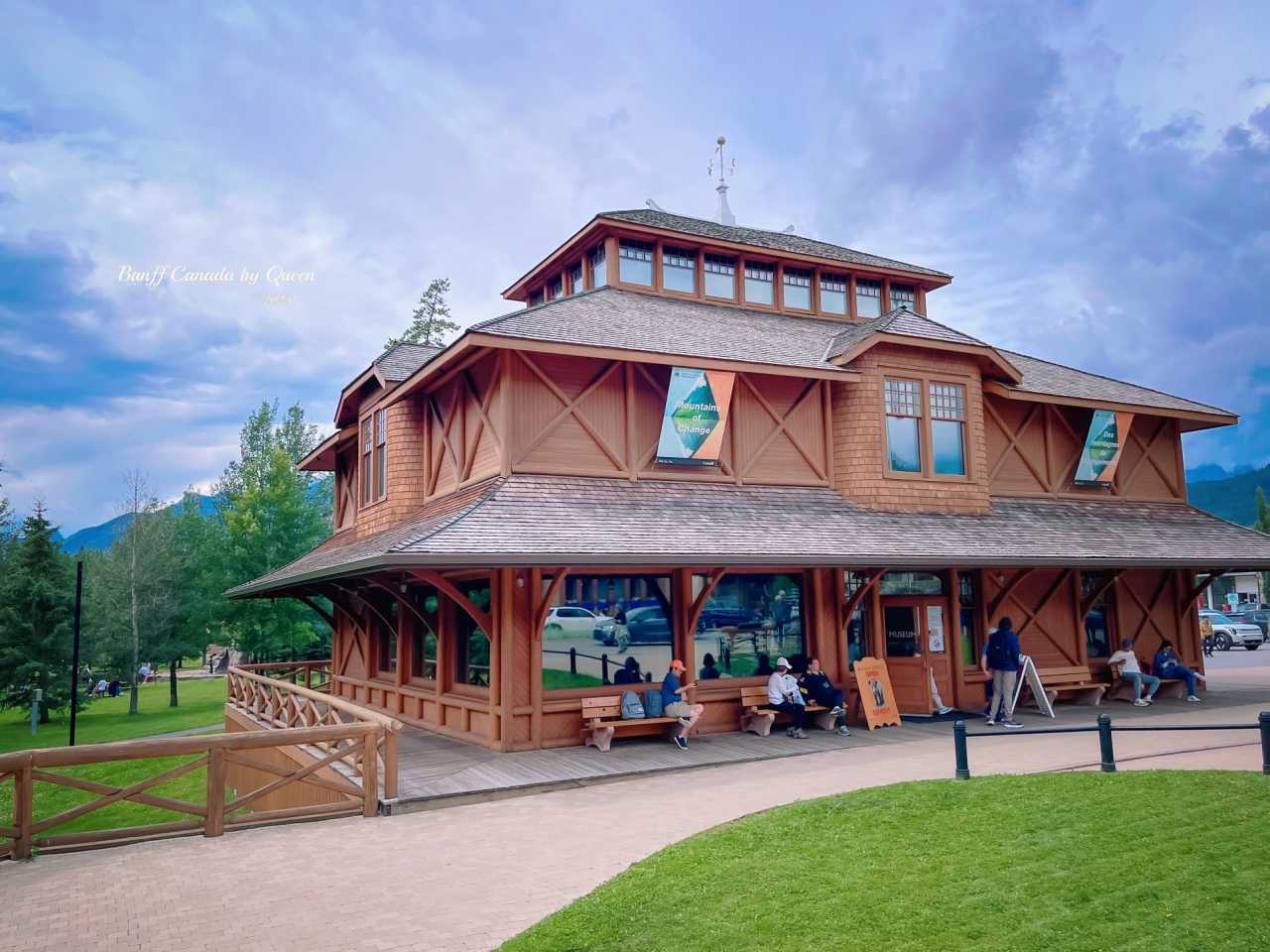
Walking into the nearby Banff Park Museum, immediately surrounded by vintage wooden structures. Here retains the architectural style of the early 20th century, like a wooden house that hasn't woken up from history. The museum displays wildlife specimens and ecological information of the Rocky Mountains, with wooden display cases, yellowed labels, and dim lighting, making people feel like traveling back to the era when explorers first stepped into the western wilderness.
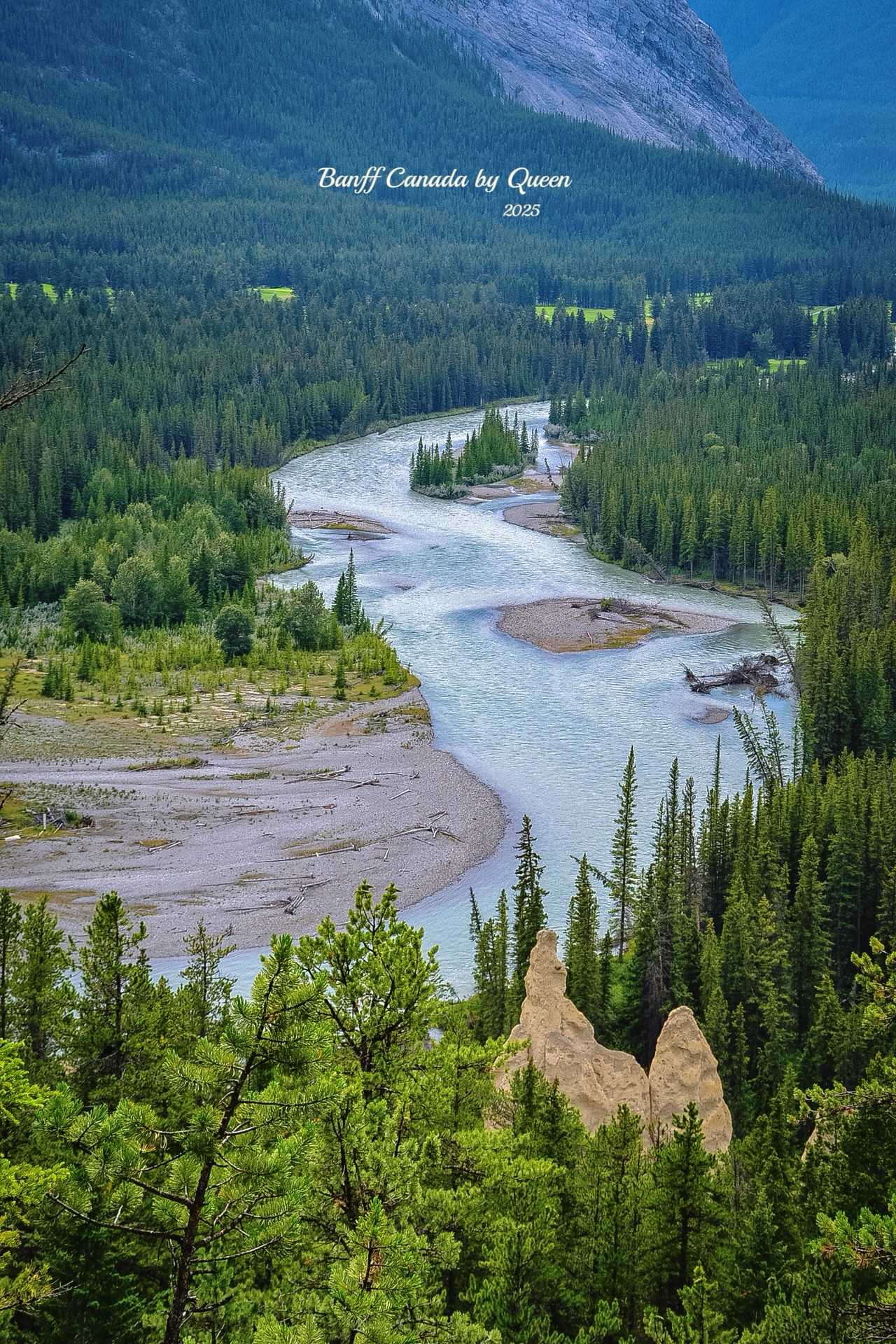
In the afternoon, I chose to detour to a farther hillside to see that group of strange rocks - Hoodoos. They emerge abruptly from the mountain like stone pillars. Standing on the viewing platform looking out, valleys, rivers, and forests are all in sight, absolutely beautiful.
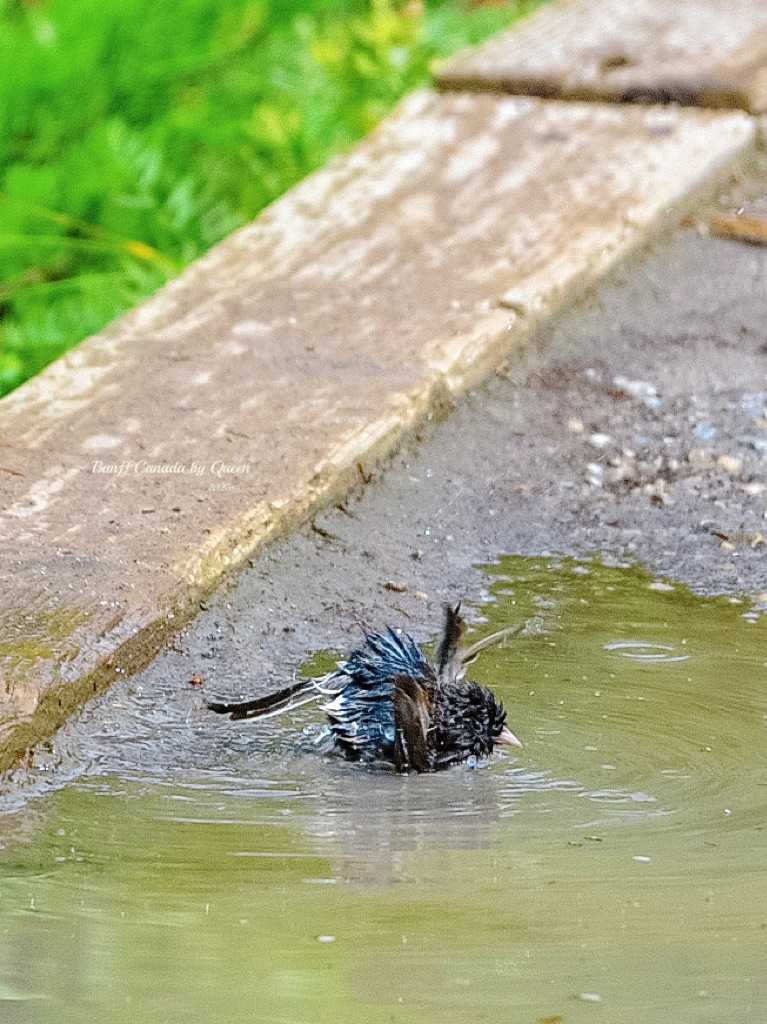
Encountered a bird taking a bath attentively. It stood in a small puddle, flapping its wings, water splashing everywhere, completely immersed in its own little world.
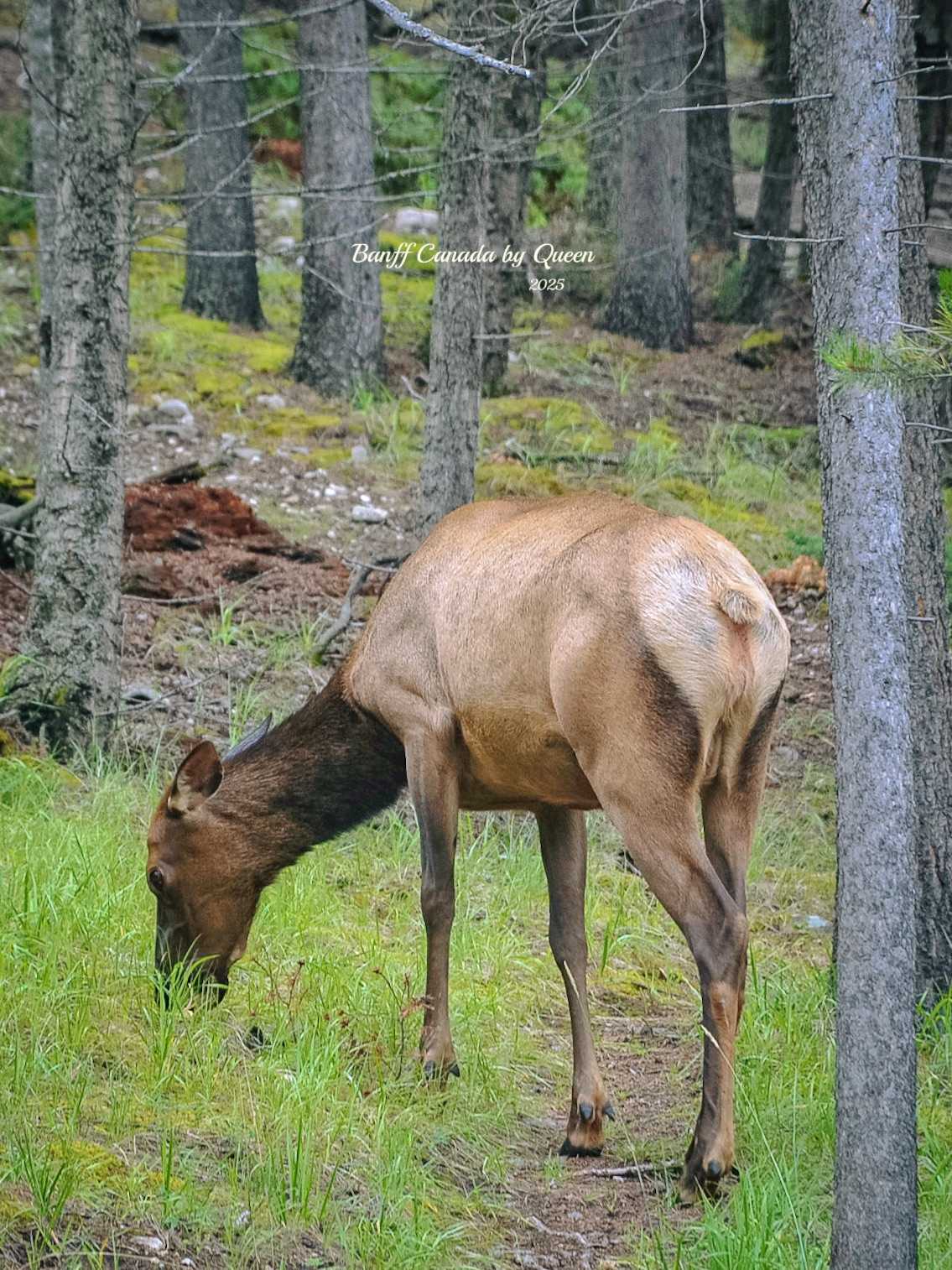
Also encountered white-tailed deer several times. They always appear silently in the forest or on the grass, and when you turn around you see that iconic "white butt".
Glacial Lakes of the Rockies: Moraine + Louise
Today's keyword is: "early." Because Moraine Lake and Lake Louise are super attractions for global pilgrims, especially in summer when it's packed with people and parking is as difficult as winning the lottery.
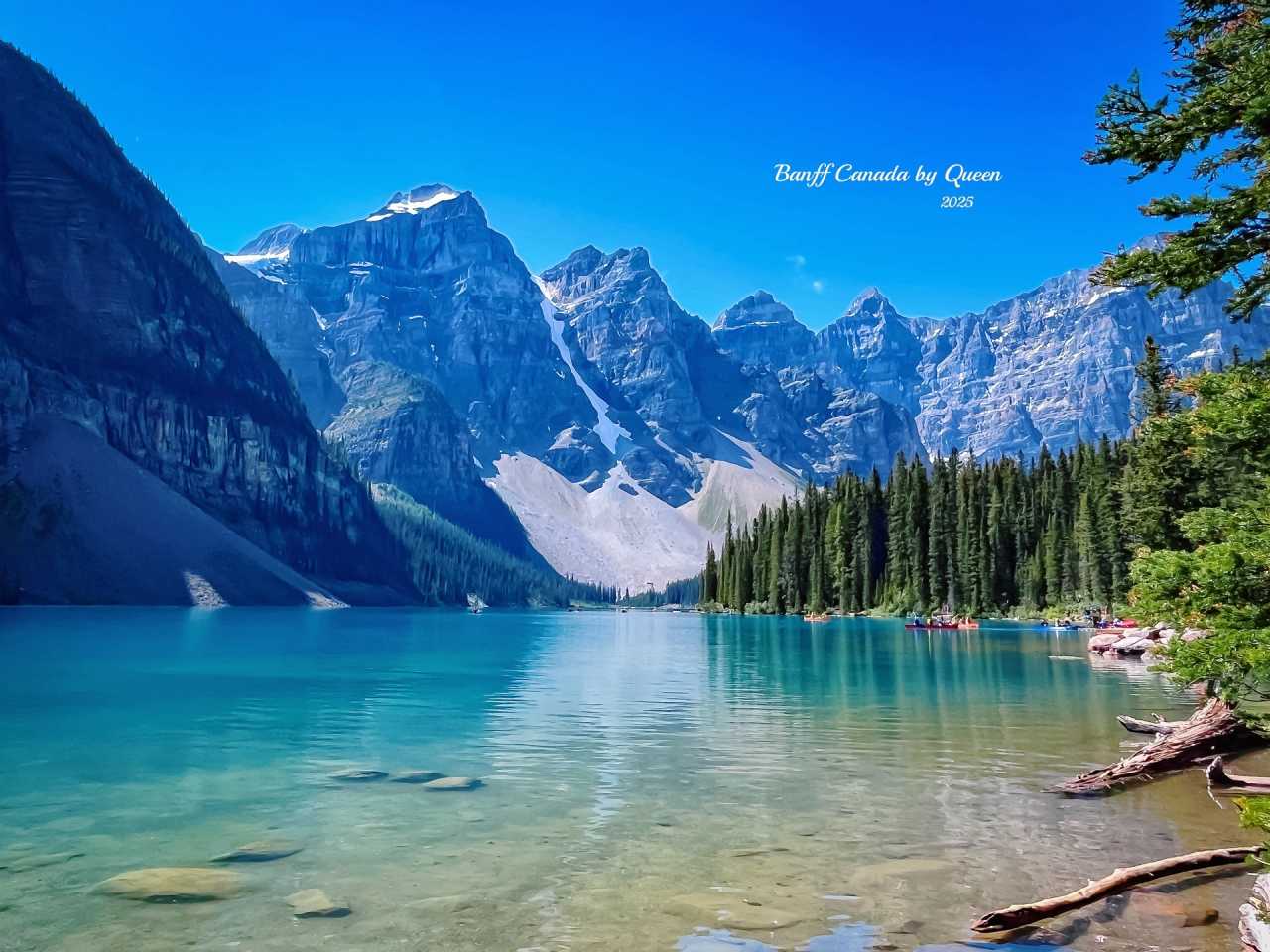
The first stop is Moraine Lake, like a dreamland. Surrounded by the Ten Peaks, the lake water is "milky blue" from glacier melt, paired with reflections and rocks - photos need no editing. At first sight of Moraine Lake, there are only two words in my heart: breathtaking.
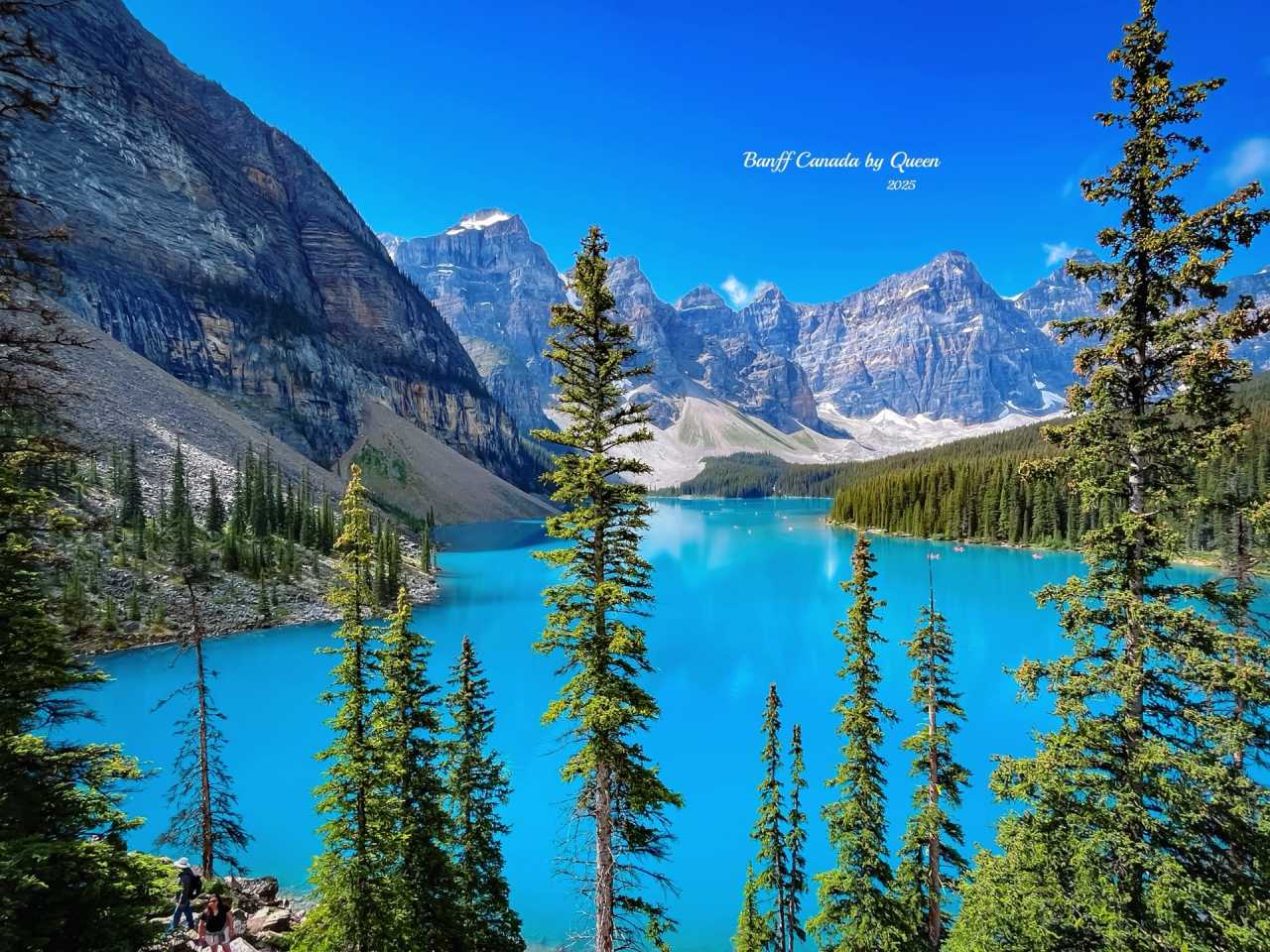
Walking slowly along the lakeside trail, stepping on the pine needle-paved path, each step feels like walking into a postcard.
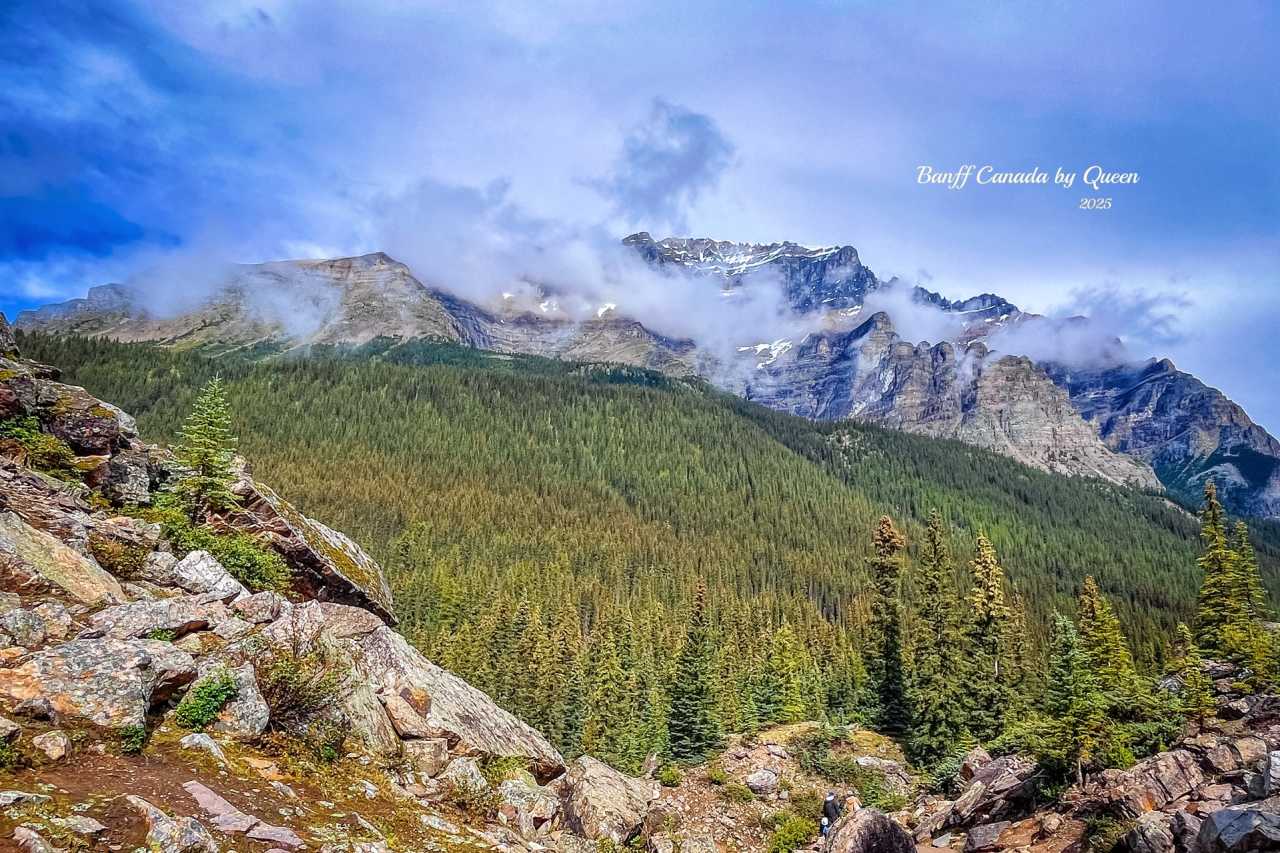
When reaching the mountaintop, that moment really takes your breath away. The lake water is unrealistically blue, that rich sapphire blue, like colors blended by snow mountains and sunlight, carrying the clarity after glacier melt, yet more transparent than any filter. The lake surface is as still as a mirror, reflecting the silhouette of Valley of the Ten Peaks, as if only mountains, water and silence remain in this world.
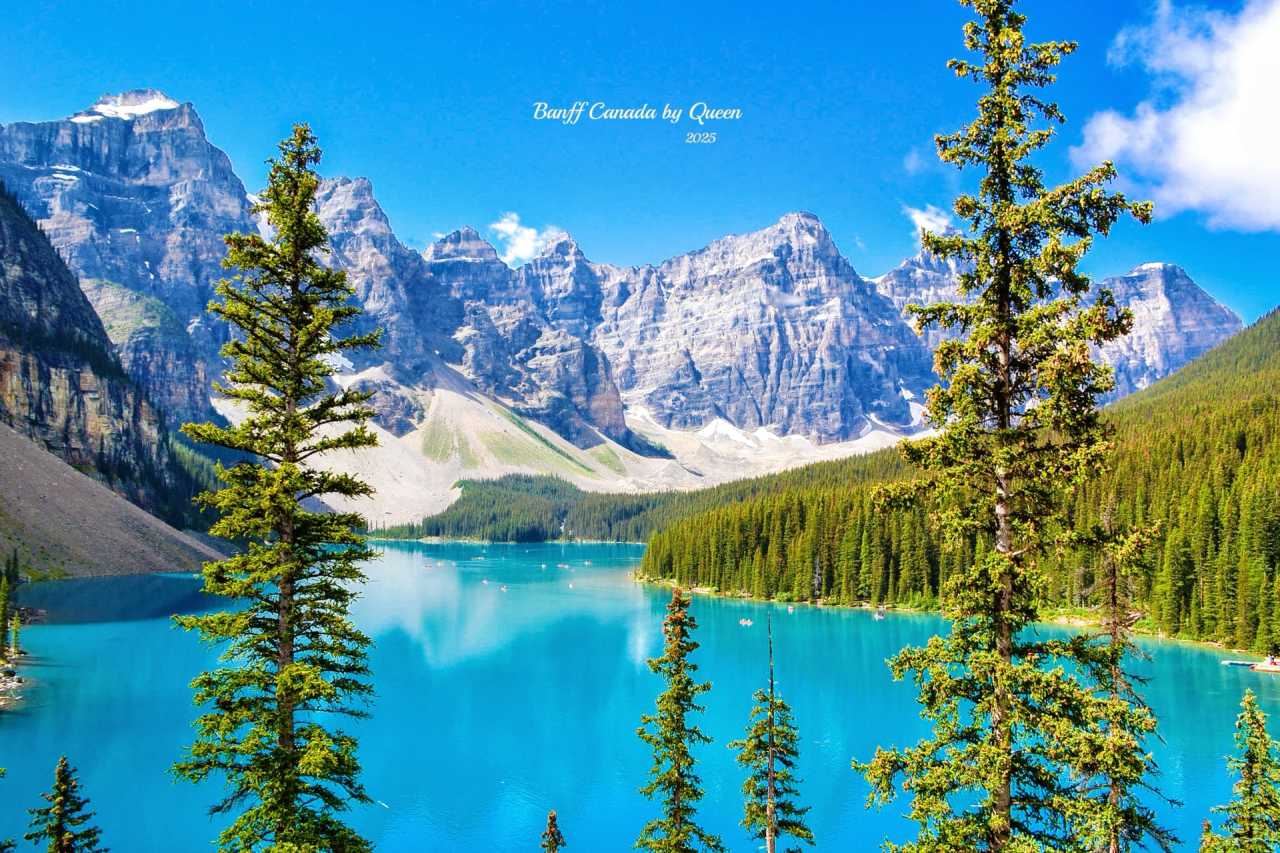
Walking higher, the lake panorama gradually unfolds: ahead is the unbelievably pure lake water, in the distance are towering peaks with unmelted snow lines, surrounded by lush spruce forests - this is "nature's ultimate".
The second stop is Lake Louise. When I arrived at Lake Louise on the first day, cold rain was falling, the mountains were surrounded by fog, the lake water lost its legendary turquoise blue, leaving only a leaden gray. Wrapped in a raincoat, I hurriedly took photos and left in embarrassment and disappointment, feeling somewhat unwilling in my heart - clearly the most famous lake in the Rockies, how could our first meeting be so disheveled.
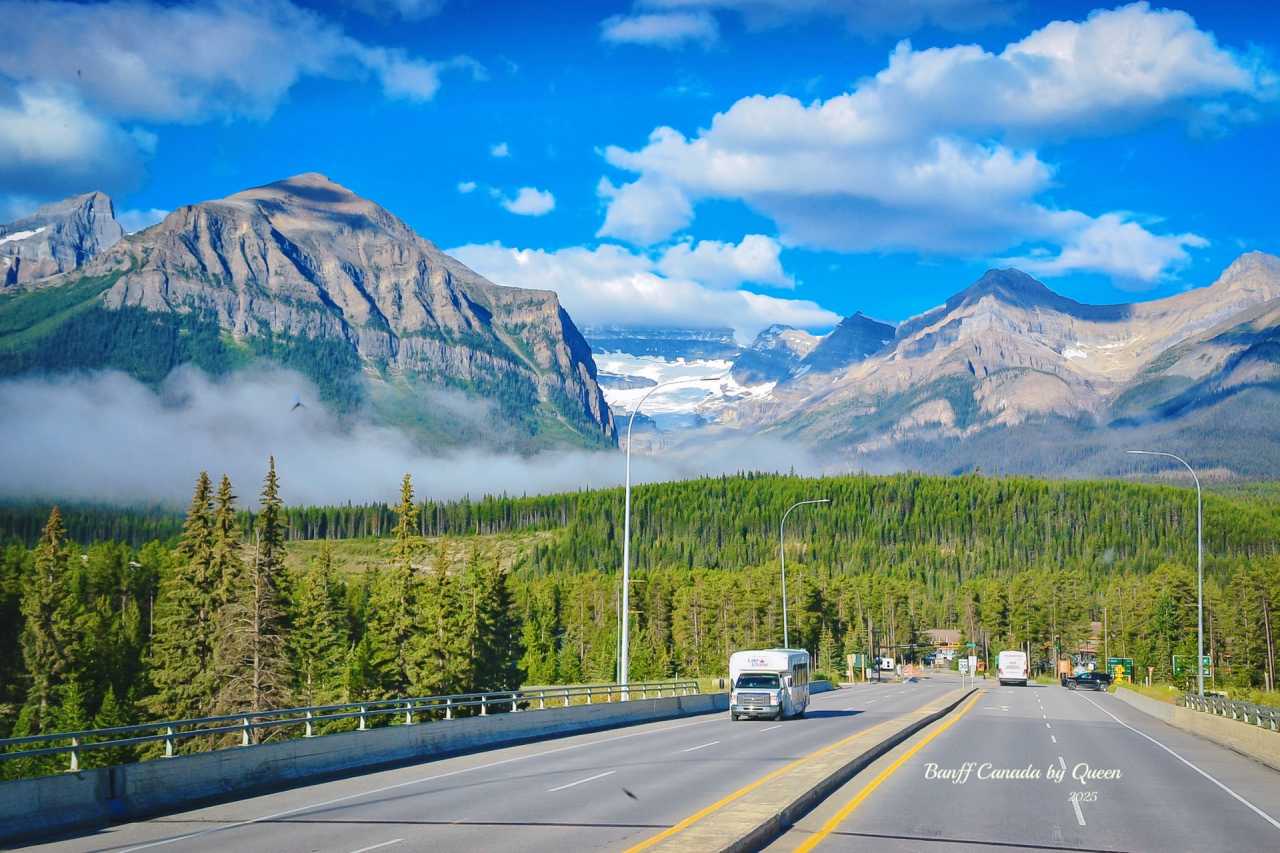
So the next morning early, I set off again for Lake Louise. This time, the sky was clear! Before even reaching the parking lot, I could already see Victoria Glacier from afar - amazing!
Standing by the lake, before my eyes is the crystal clear lake water like emerald, with glacier-carved mountain bodies reflected within, and Victoria Glacier in the distance sparkling with pure white light. Compared to Lake Moraine's cold and deep, Lake Louise appears more gentle and grand, like an elegant queen sitting quietly in the glacier valley, capturing everyone's gaze without needing to speak.
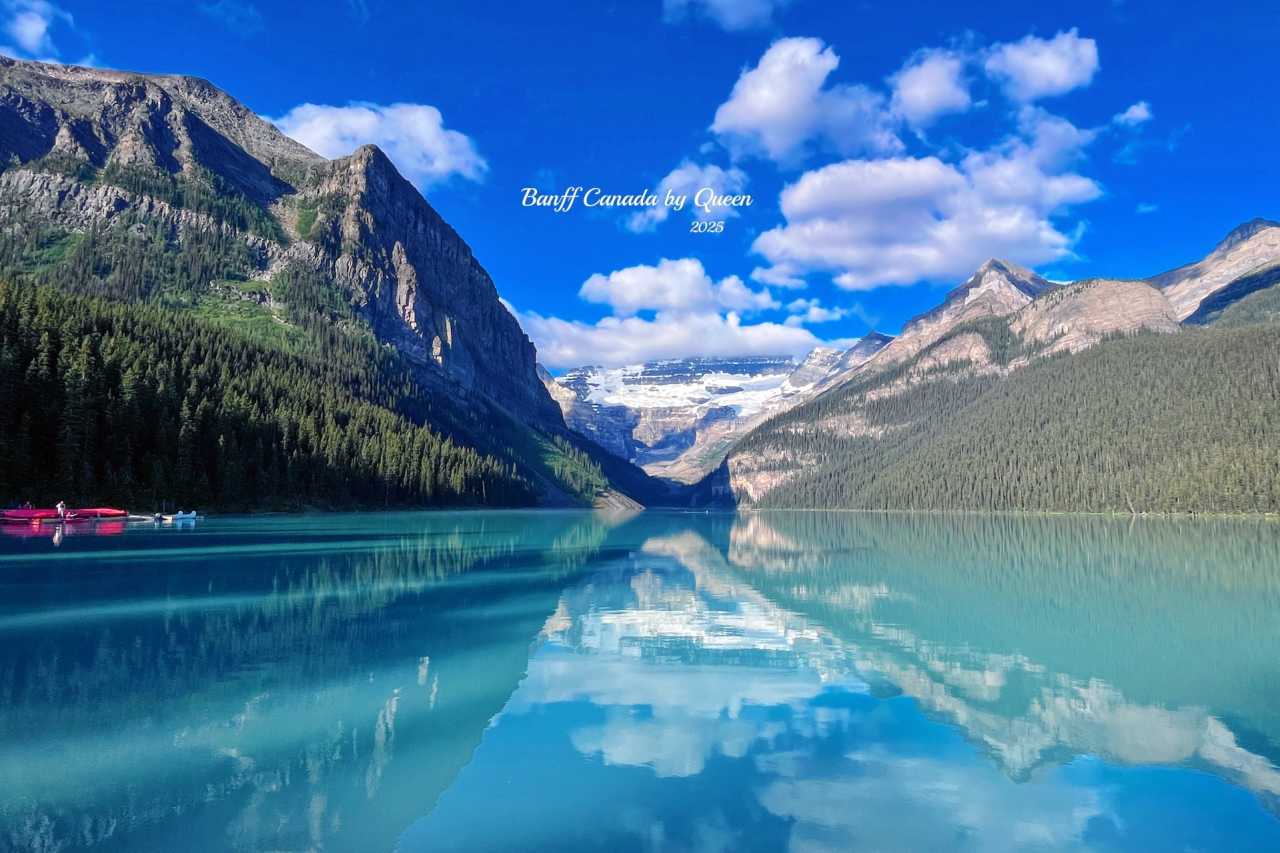
Walking along the lakeside, every few steps the lake color undergoes subtle changes, from lake green to emerald, then gradually showing a milky blue luster. Someone paddles a canoe slowly across the lake surface, the boat body cuts through the water waves, yet quietly closes again, as if no one has ever come.
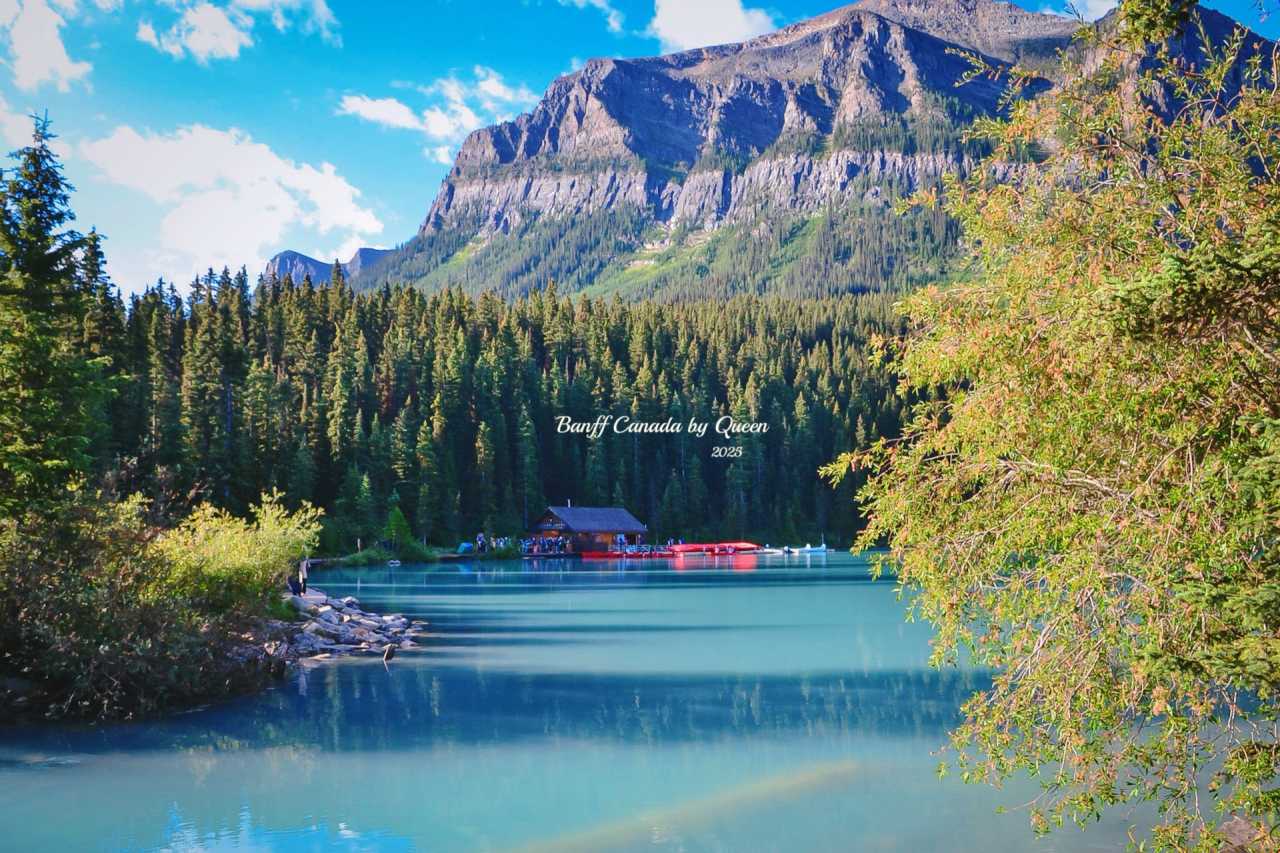
This day's Lake Louise seems to be reconciling with the previous day's self. You will understand that nature won't deliberately please you, she has her own rhythm, and the only thing you can do is respect, be patient, and then at the right moment, encounter her most moving appearance.
Glacial Lakes of the Rockies: Minnewanka + Two Jack
Third stop: Minnewanka Lake and Two Jack Lake. These two lakes are like sisters with different temperaments - one vast and deep, the other gentle and serene. However, these two sister lakes are somewhat inferior compared to Moraine Lake and Louise Lake.
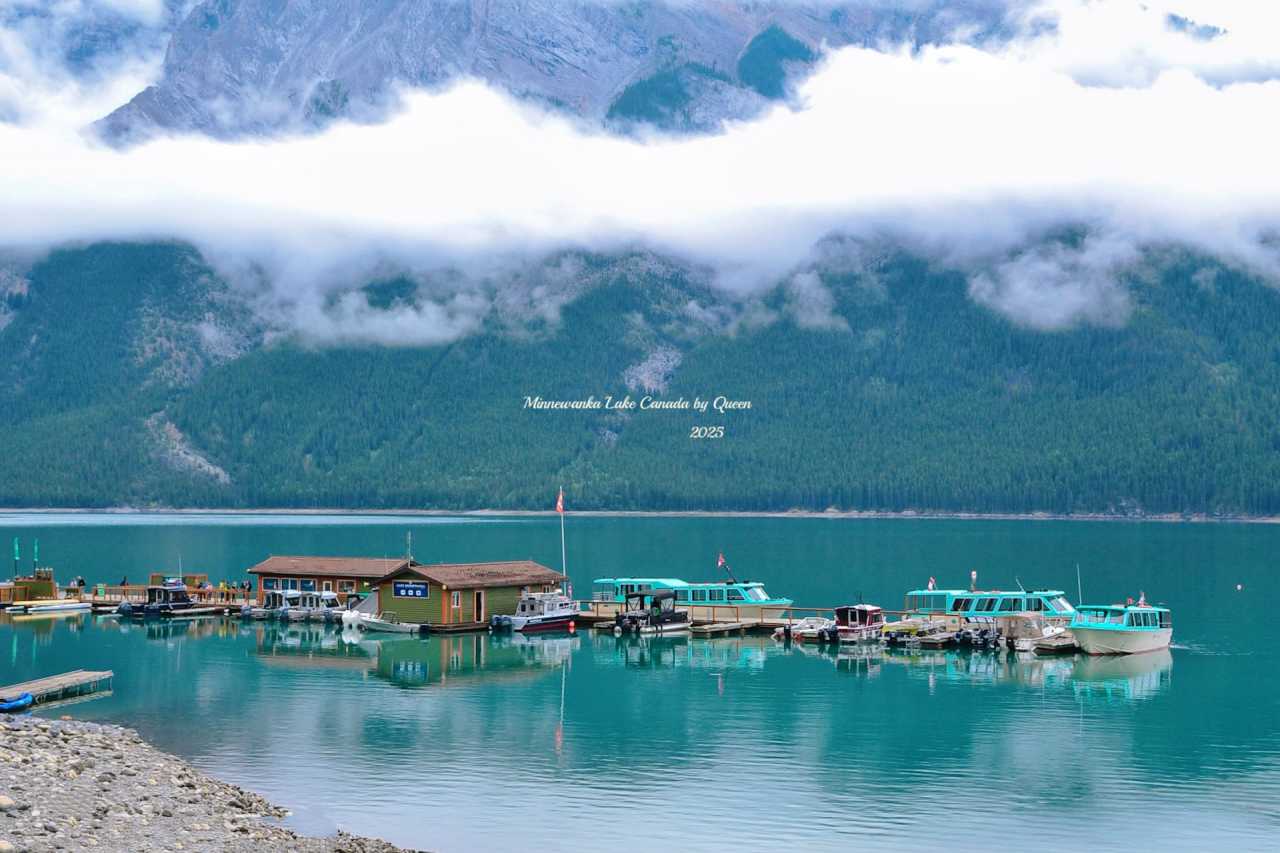
Driving along the winding mountain road, Minnewanka Lake comes into view first. She is the largest lake in Banff National Park, so vast that even the mountains seem to bow before her. Standing by the lake, the wind blows from the water surface, carrying the coolness of glaciers. The lake water is a cold tone of deep blue with gray, with shimmering waves, and distant mountains reflected in it, like a moving landscape painting.
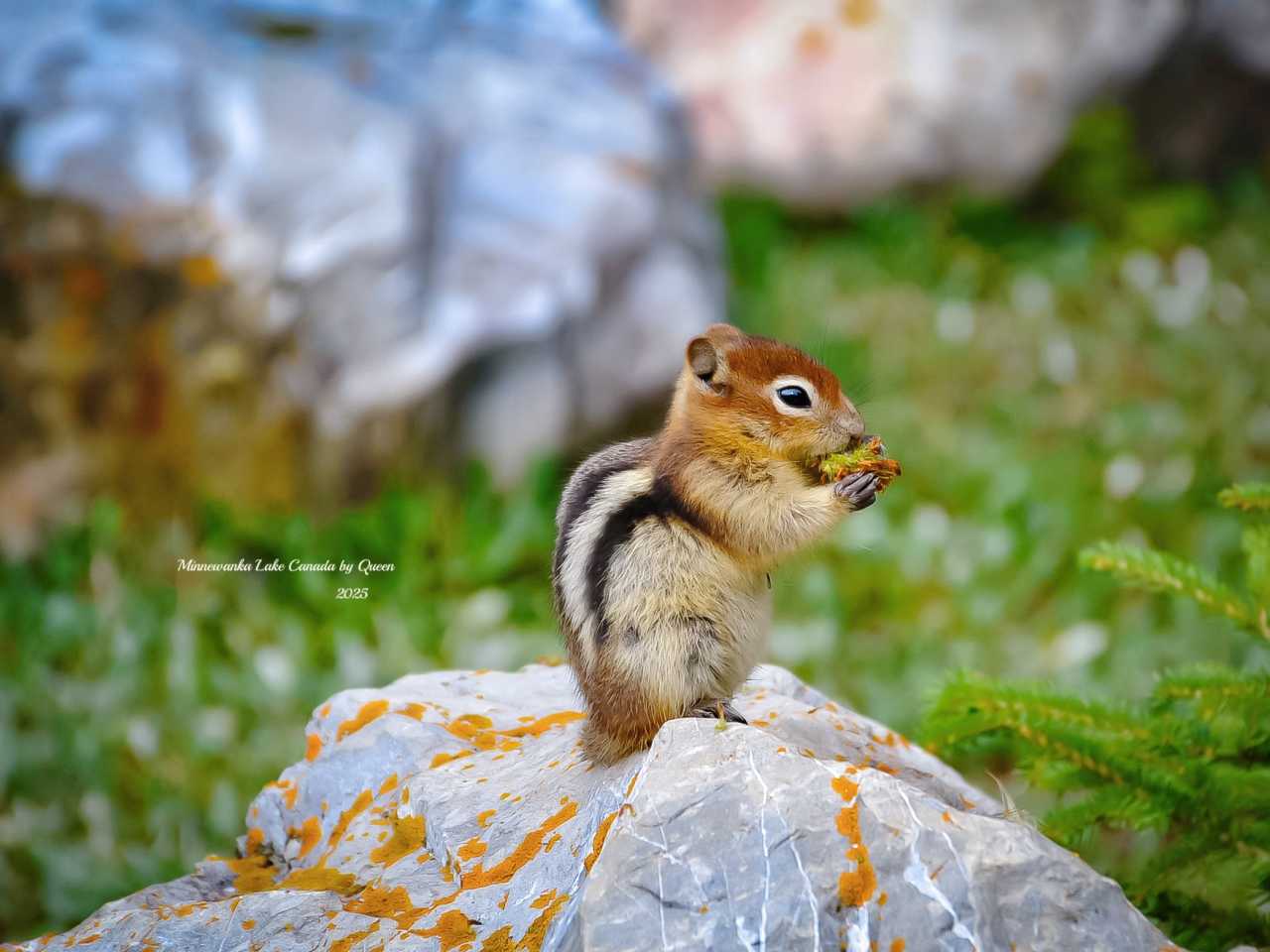
In the national park, Chipmunk is one of the most common and endearing small animals. They are petite in size, with several distinct light and dark stripes on their backs, agile in movement, always bouncing around the trails or between stone crevices foraging. When by the lake or in picnic areas, you often see them curiously poking their heads out, but when viewing these little sprites in Banff, it's best to just admire them from a distance and not feed them, allowing them to maintain their wild lifestyle.
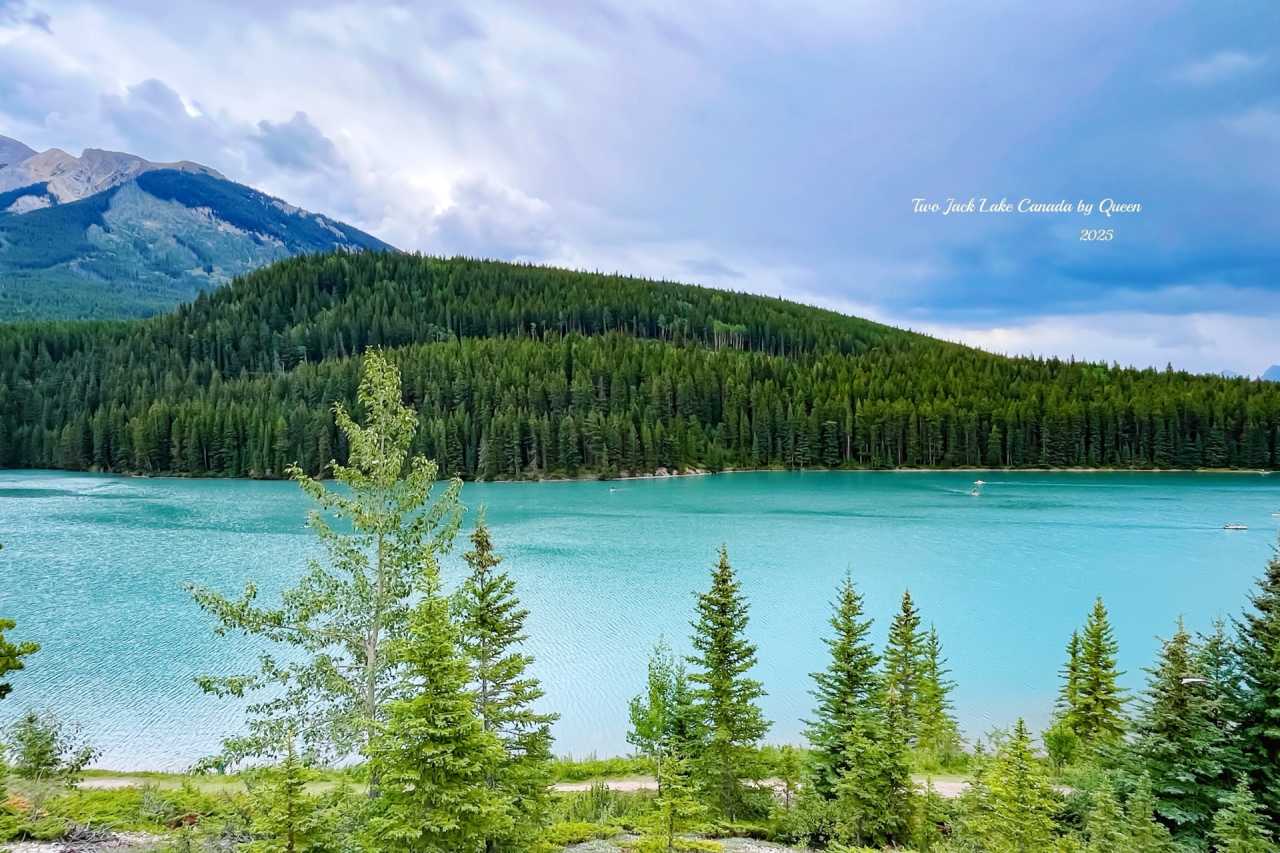
Continue forward, and you'll reach the quiet Two Jack Lake. She is not as spectacular as Minnewanka, but still beautiful. The lake water is shallow and clear, surrounded by dense forests, and the lake surface is often as calm as a mirror. The atmosphere here is relatively quiet, mostly families having picnics, with not many tourists.
Glacial Lakes of the Rockies: Emerald
From the Lake Louise direction, take a slight detour into Yoho National Park, and you will encounter an underrated yet stunning natural wonder - Natural Bridge.
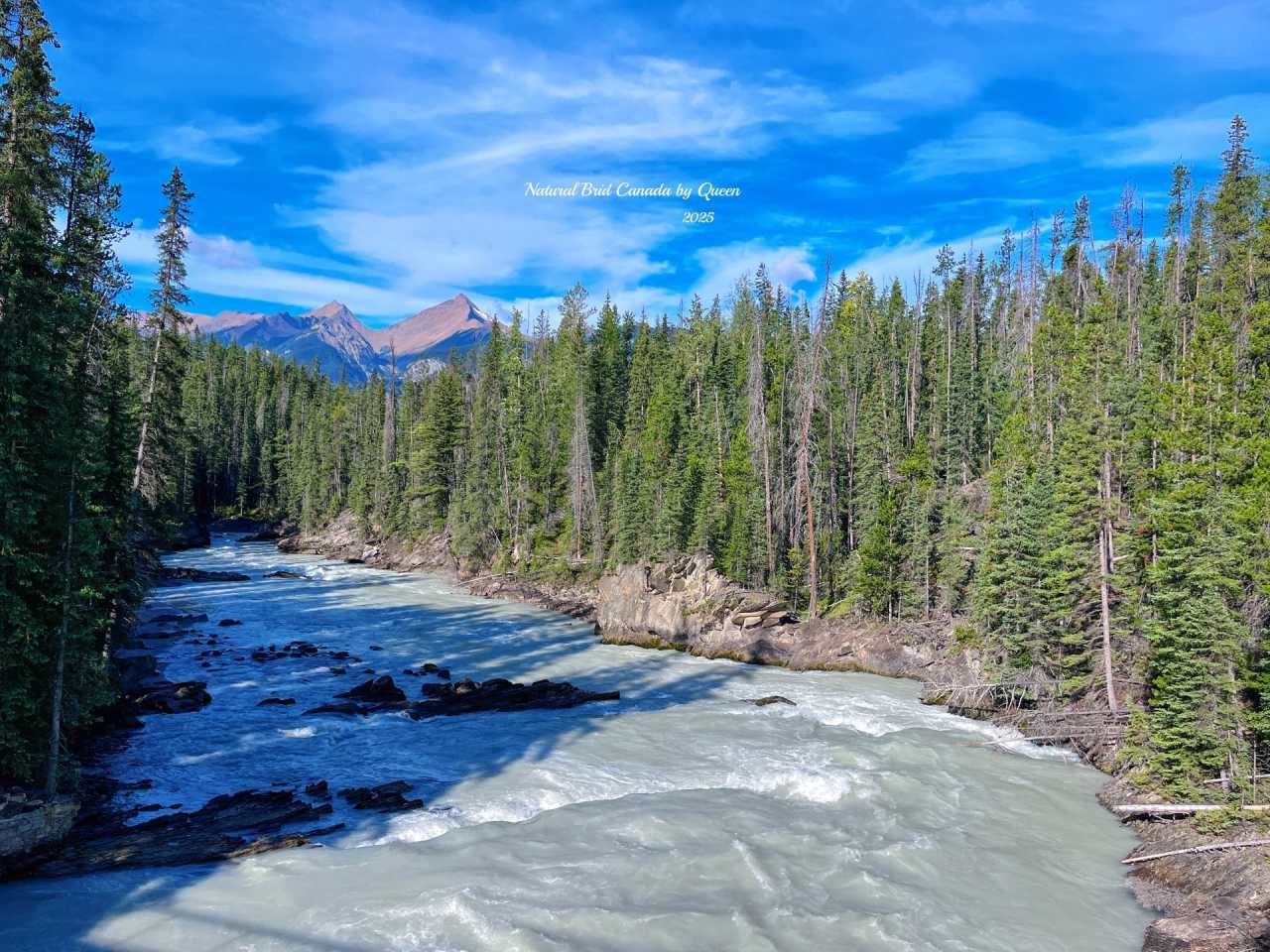
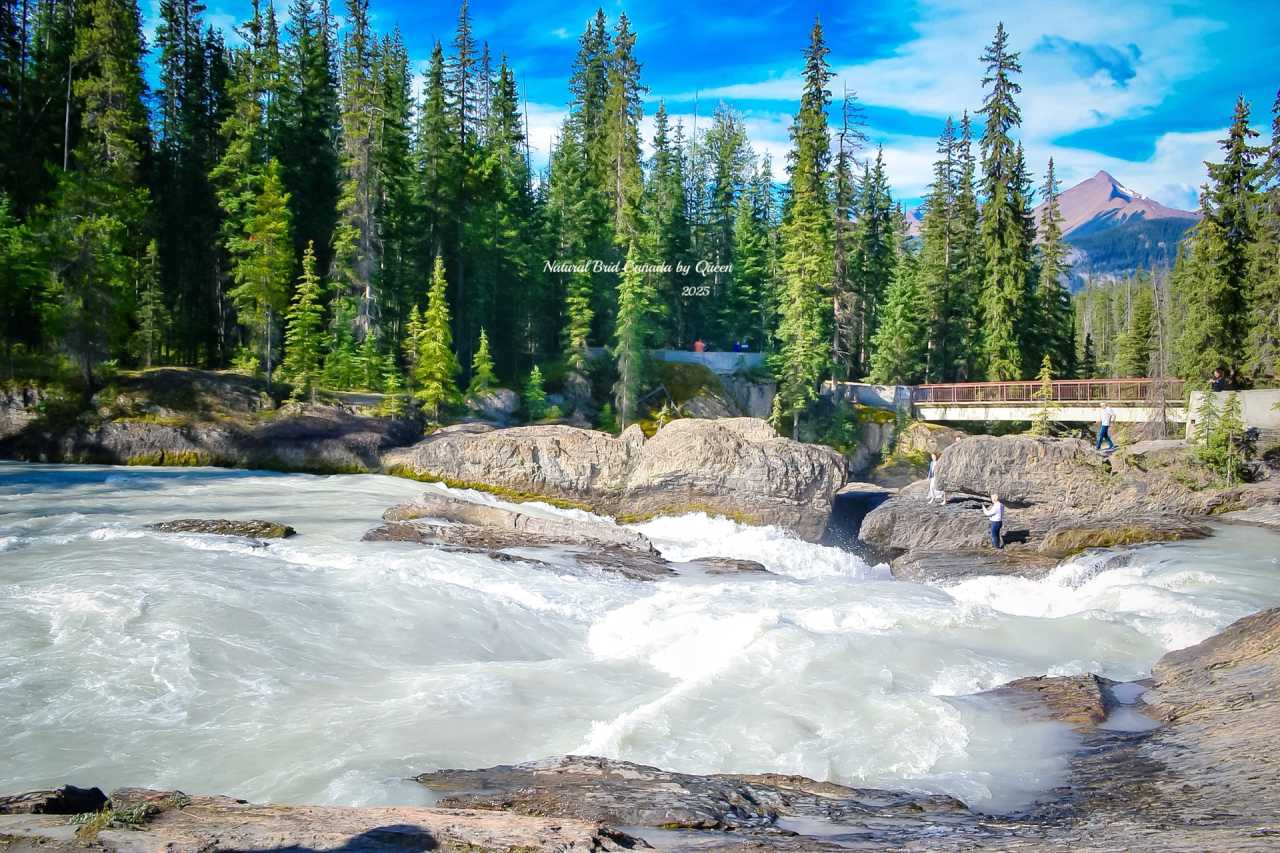
Natural Bridge is a "bridge" naturally formed by hard rock, spanning the turbulent Kicking Horse River. This was originally a waterfall. Over thousands of years, the river water continuously eroded the rock, gradually hollowing out the softer parts, eventually forming today's "bridge" - a naturally formed stone arch, with water flowing underneath, like a work carefully carved by nature with a sculpting knife.
From the Lake Louise direction, take a slight detour into Yoho National Park, and you will encounter an underrated yet stunning natural wonder - Natural Bridge.
Natural Bridge is a "bridge" naturally formed by hard rock, spanning the turbulent Kicking Horse River. This was originally a waterfall. Over thousands of years, the river water continuously eroded the rock, gradually hollowing out the softer parts, eventually forming today's "bridge" - a naturally formed stone arch, with water flowing underneath, like a work carefully carved by nature with a sculpting knife.
From the mountain road into Yoho National Park, through a forest highway, when the lake water first flashes through the gaps in the trees, Lake Emerald appears like a surprise without warning, quietly lying in the arms of the mountains - the lake surface is as smooth as a mirror, the color like a real emerald.
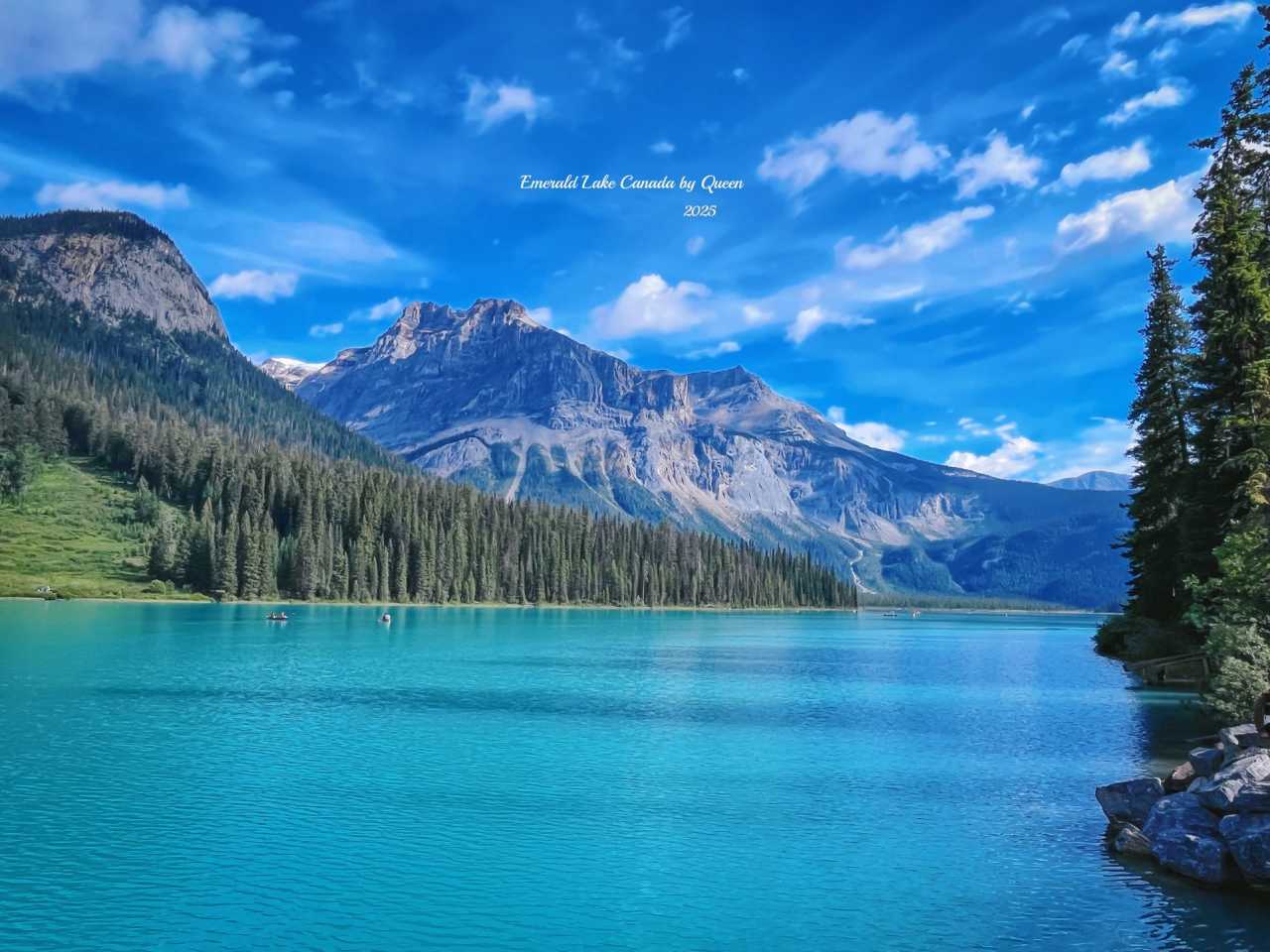
That kind of green is rarely seen elsewhere in the Rockies, not the bright lake blue, nor the dark forest color, but an extremely pure, clear green with a hint of milky white, as if paint accidentally spilled from a natural palette, poured into the valley.
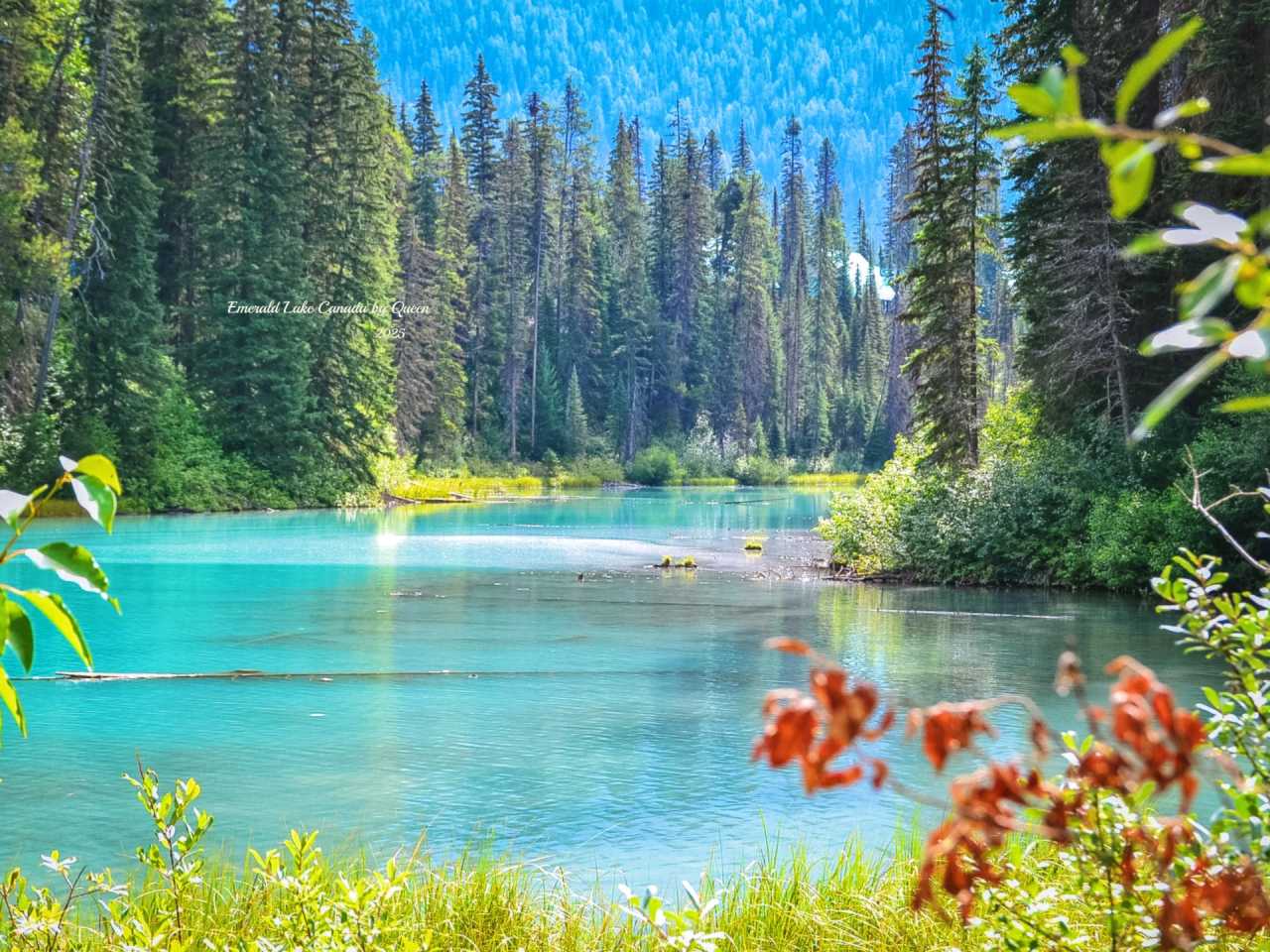
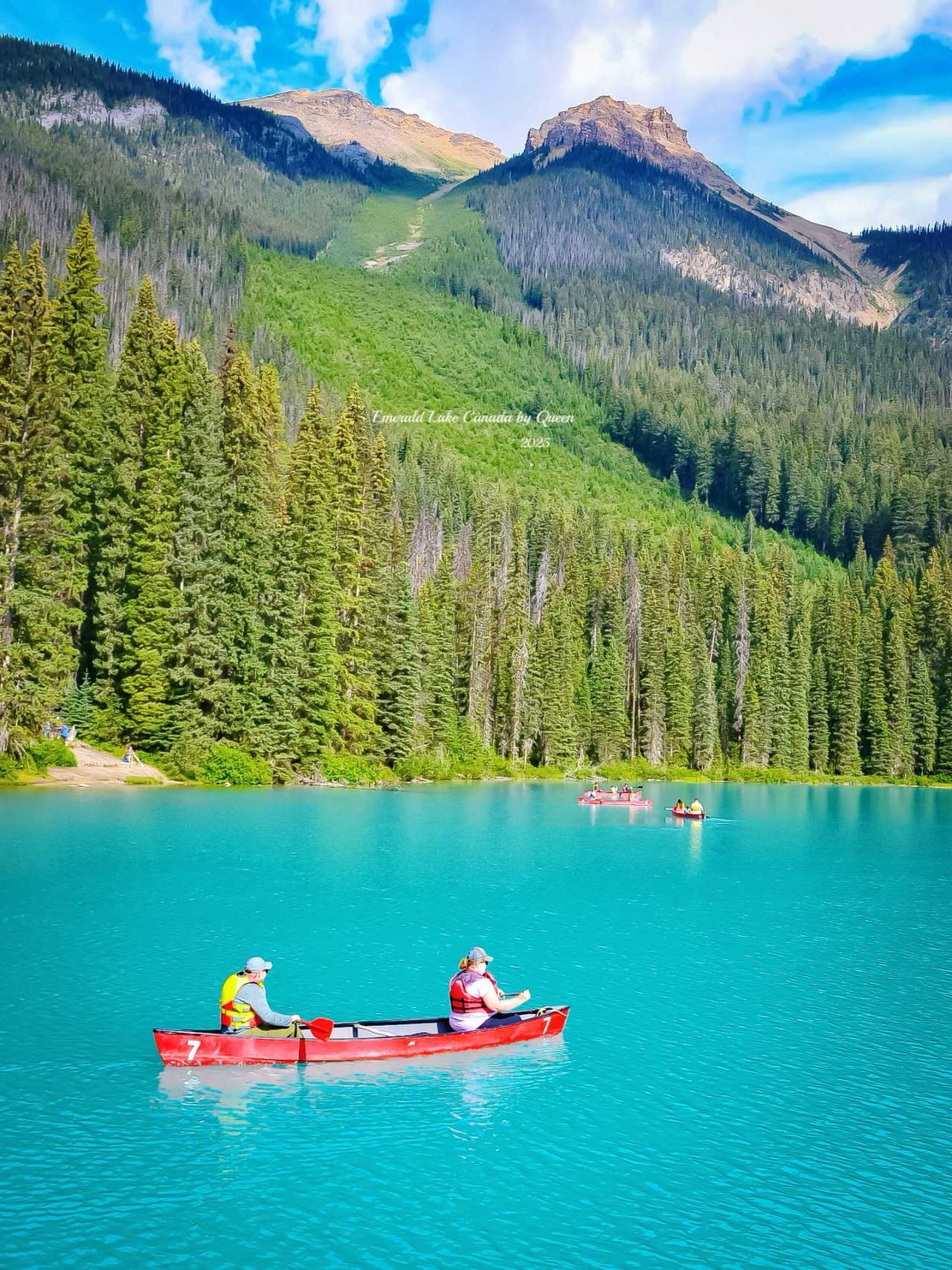
The lakeside trail is quiet and long, with the lake on one side and dense forest on the other. Occasionally, you can see canoes gliding across the lake, causing ripples. All this is as quiet as a landscape painting.
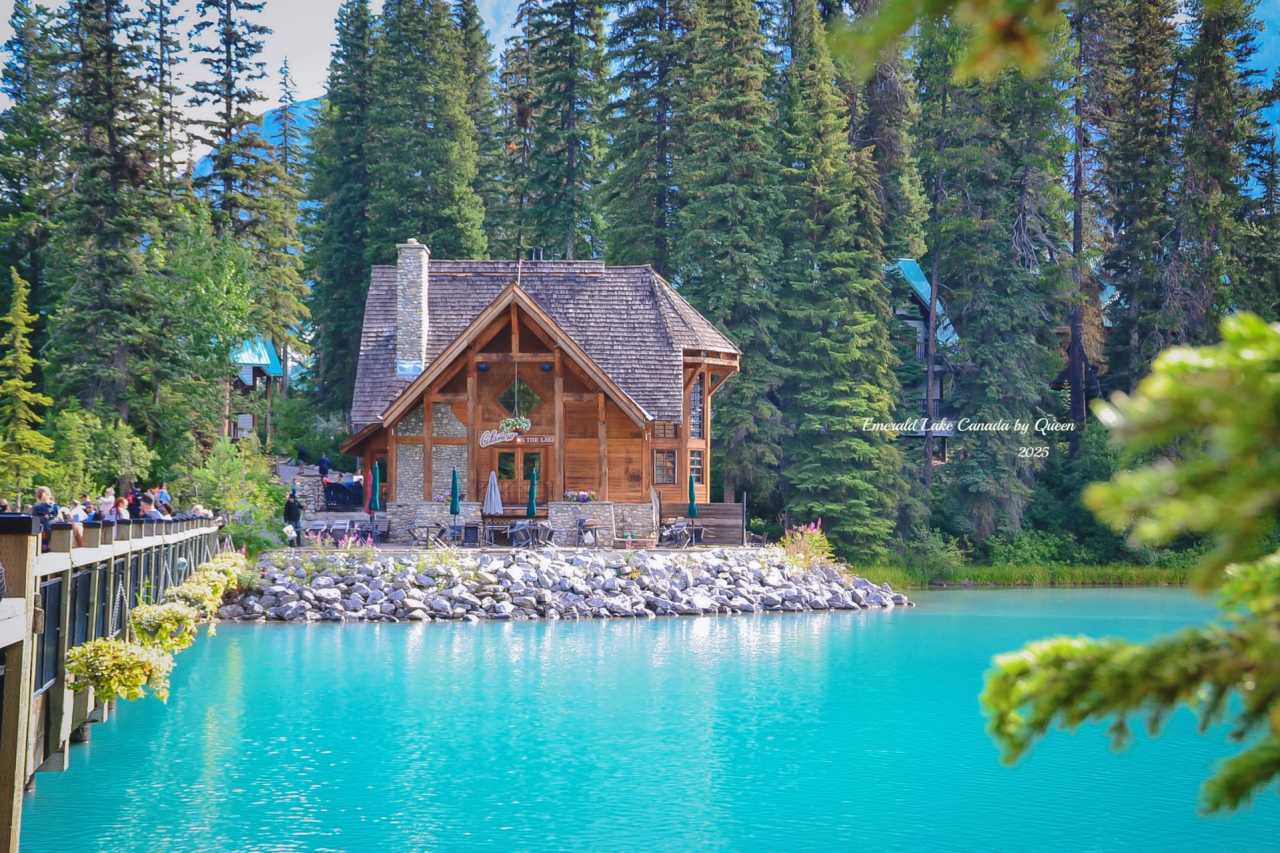
The wooden cabin hotel by the lake is even more of a dream bonus item. The roof is slanted with a layer of moss, the lake water almost touches the porch, like a fairy tale town lost in the human world. In the early morning, with low clouds and hazy light and shadow, the entire cabin and lake surface merge into one, so dreamy it doesn't seem real.
On the drive from Yoho National Park to Kamloops, the scenery unfolds like a slowly opening scroll painting. At first, the towering Rocky Mountains gradually fade away in the rearview mirror, the mountain shadows are gently shrouded by morning mist, and rivers shine with silver light in the valleys. As the altitude drops, the outlines of the mountains become rounded, and pine forests give way to open farmland and rolling pastures.
Some people say: Canada's mountains always teach you humility.
And the road from Yoho to Kamloops can just tell you that even the road between mountains is worth remembering for a lifetime.
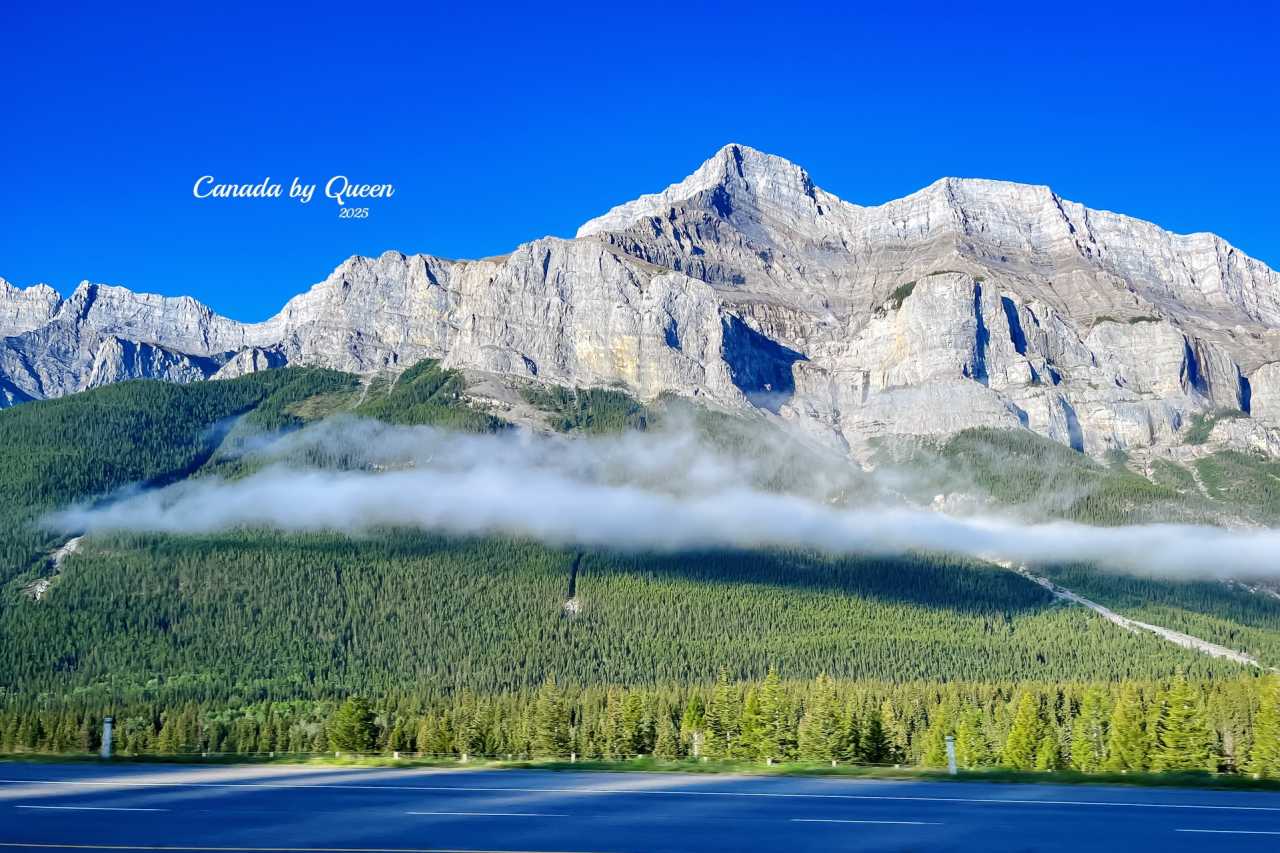
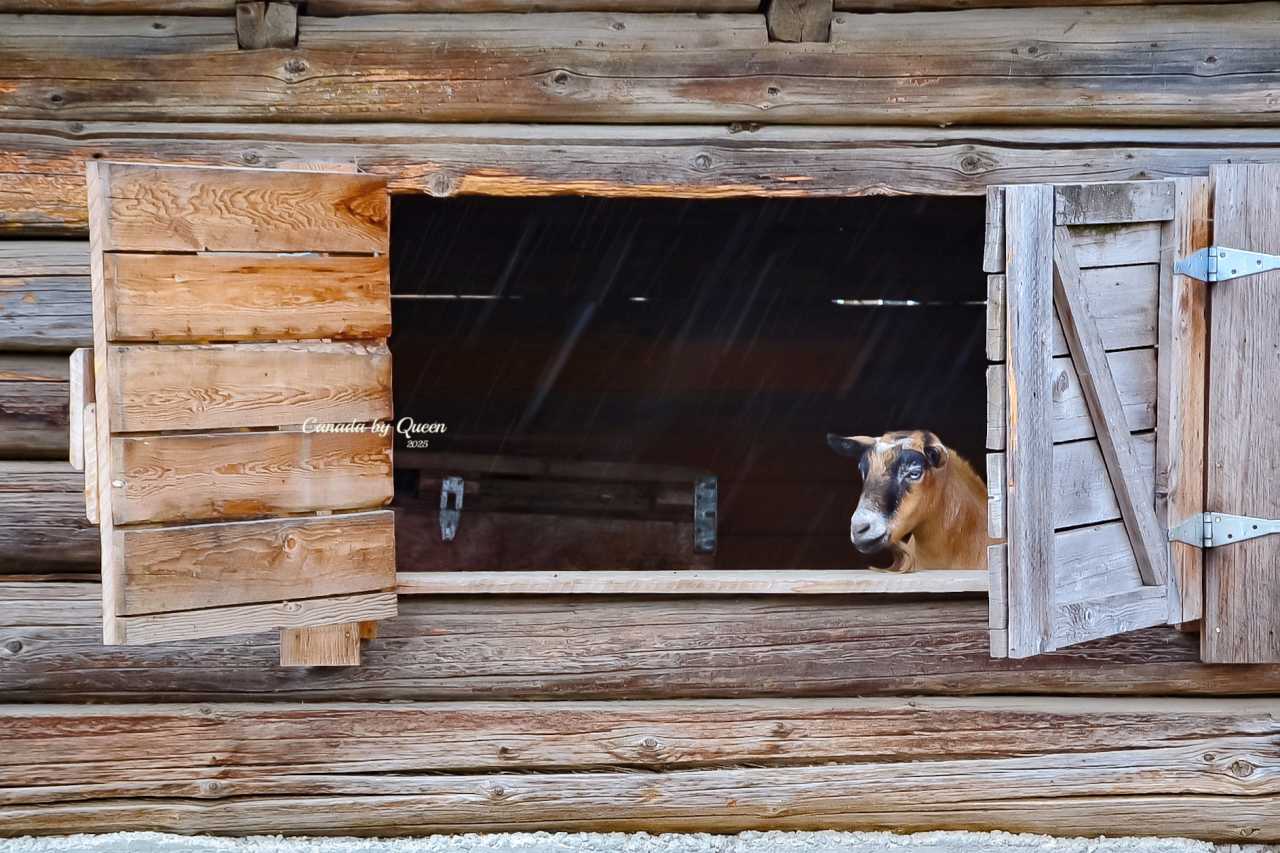
Stopped at a farm rest stop along the way, the air mixed with the fragrance of grass and earth. Green cornfields sway in the breeze, and several alpacas raised on the farm leisurely lower their heads to eat, occasionally raising their long-lashed eyes to glance at passersby.
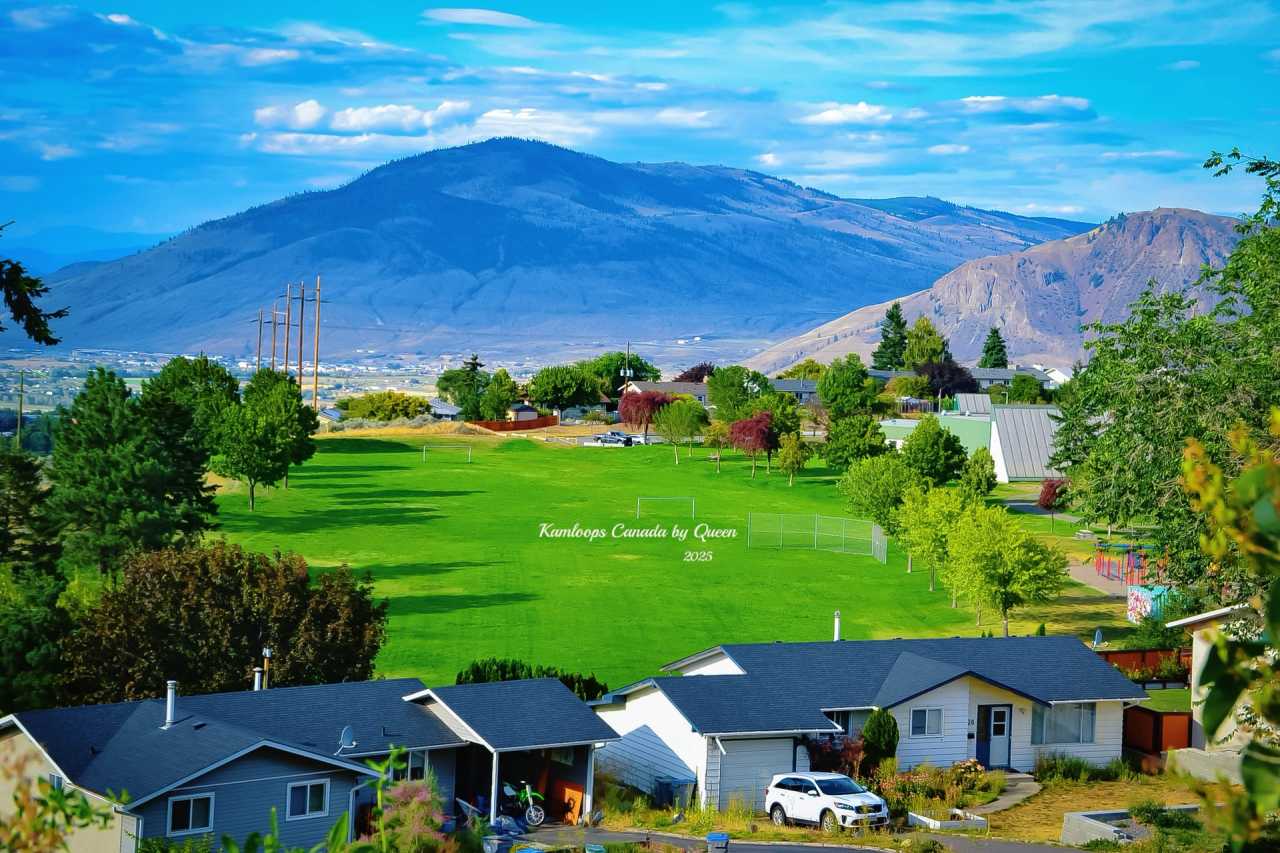
Kamloops is the "Sunshine City" of British Columbia. I didn't go into the city to check in, just rested in the hillside villa area outside the city. In the evening, sunlight falls from the west, the entire community is quiet and tidy, with gardens and neat lawns in front of the houses exuding a leisurely life atmosphere. Standing at the top of the slope looking out, the whole Kamloops unfolds: the winding river like a silver belt flows through the city, and the valley glows with a soft golden pink in the sunset.
Whistler, A Snow Country Romance
From Kamloops in the dry valley, heading to Whistler, the resort destination in BC province, this journey is like traveling through a condensed Canadian western geography documentary. The entire route is about 300 kilometers, taking about 4 hours to drive, yet it's like crossing the outline of a world. As the car enters Highway 99 (Sea-to-Sky Highway), the landscape gradually transitions.
At first, Kamloops is surrounded by dry hills and golden grasslands, with sparse shrubs dotted among them, the surface bearing the desolation and warm tones of the inland plateau. As the journey progresses, the mountains gradually rise higher, the valleys become deeper, and pine forests begin to replace the open grass slopes. Along Fraser River and Thompson River, the river flows in steep canyons, the mountain walls expose gray-black rock layers, revealing geological power.
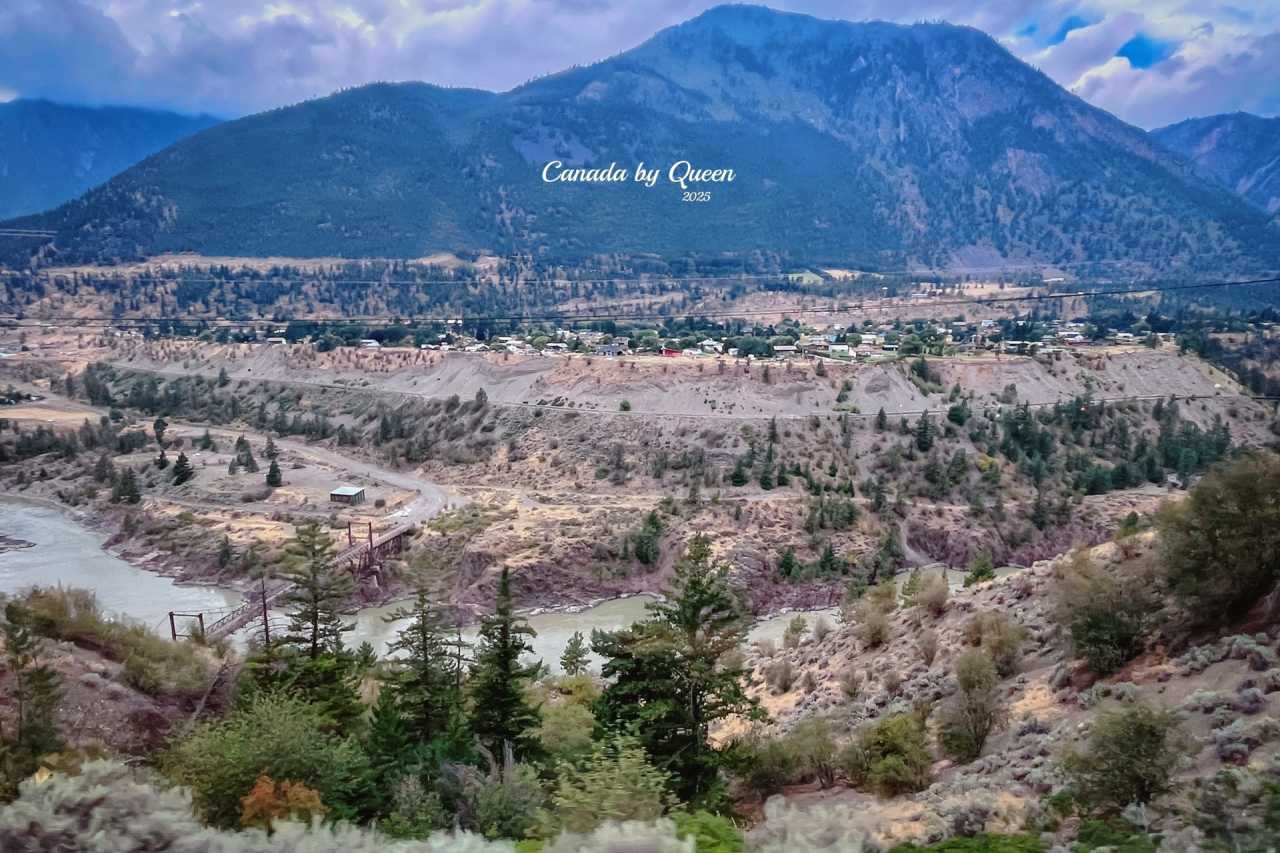
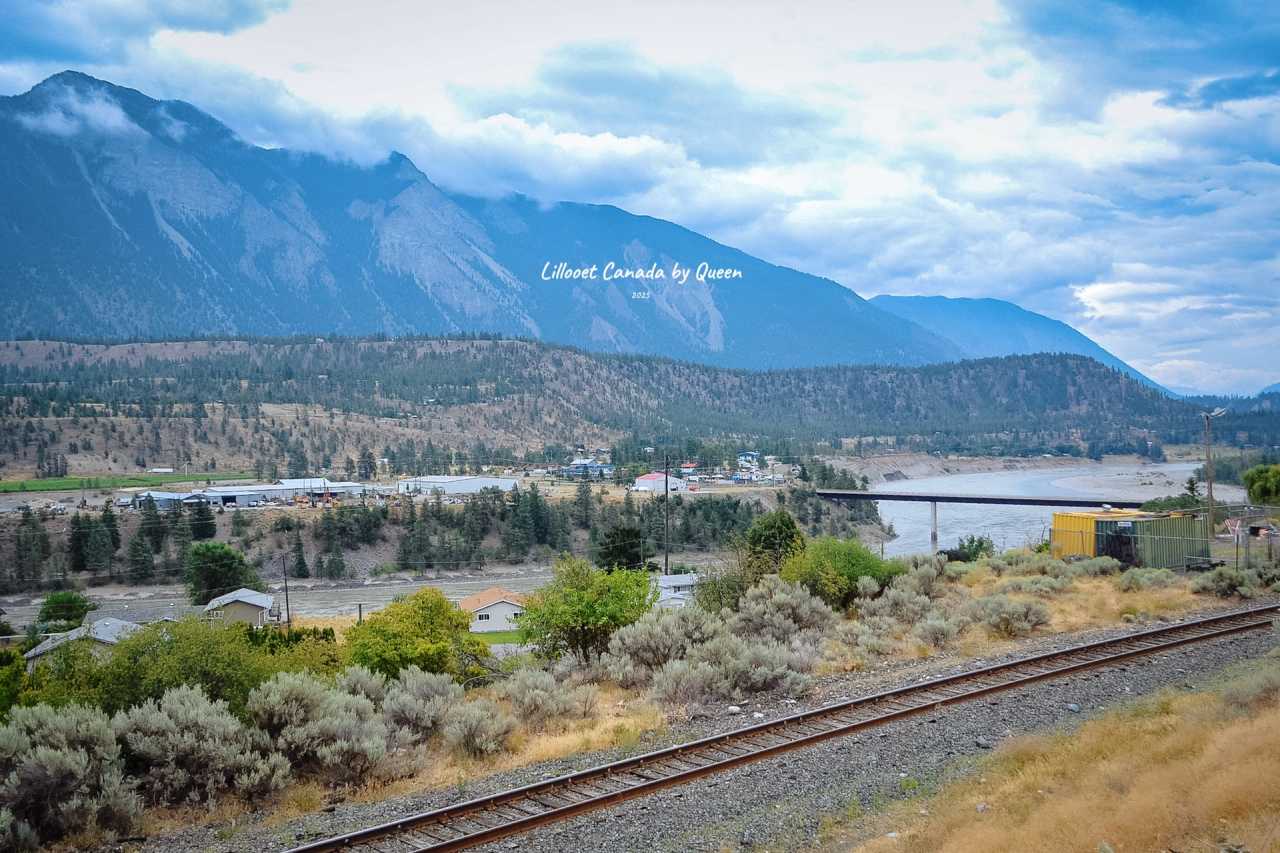
Further south, the climate suddenly becomes warm and dry, with vineyards and fruit trees even visible on the slopes - an unexpected semi-arid landscape. When passing through the town of Lillooet, surrounded by mountains, the air carries a dry coolness. The streets are surprisingly quiet, almost no pedestrians, occasionally a car slowly drives by. Lillooet is a small town located on the banks of Fraser River in BC province, surrounded by mountains and steep canyons, with magnificent scenery all around. It was once an important stronghold of the gold rush and also a place where indigenous and railway history intertwine.
This trip to Canada was overall a bit disenchanting. While the scenery is beautiful, the experience doesn't have many highlights. Especially the food, which is quite disappointing. Especially those so-called "star hotel breakfasts" - regardless of four-star or five-star, it's always cold toast and insincere jam, no sausages, cheese, eggs, or salads whatsoever! Truly the "worst breakfast in the world," bar none. After eating Chinatown all the way, I never had a satisfactory meal. With so many immigrants and Asians everywhere, why is Chinese food, Western food, fast food, and slow food all so terrible? Perhaps people living here are accustomed to convenience and safety, while traditional flavors gradually fade. The clean, safe, and slow-paced life is certainly comfortable, but it lacks surprises and vitality. See it once, and you know what kind of country Canada is; come again, it's more of a bland repetition rather than fresh exploration.