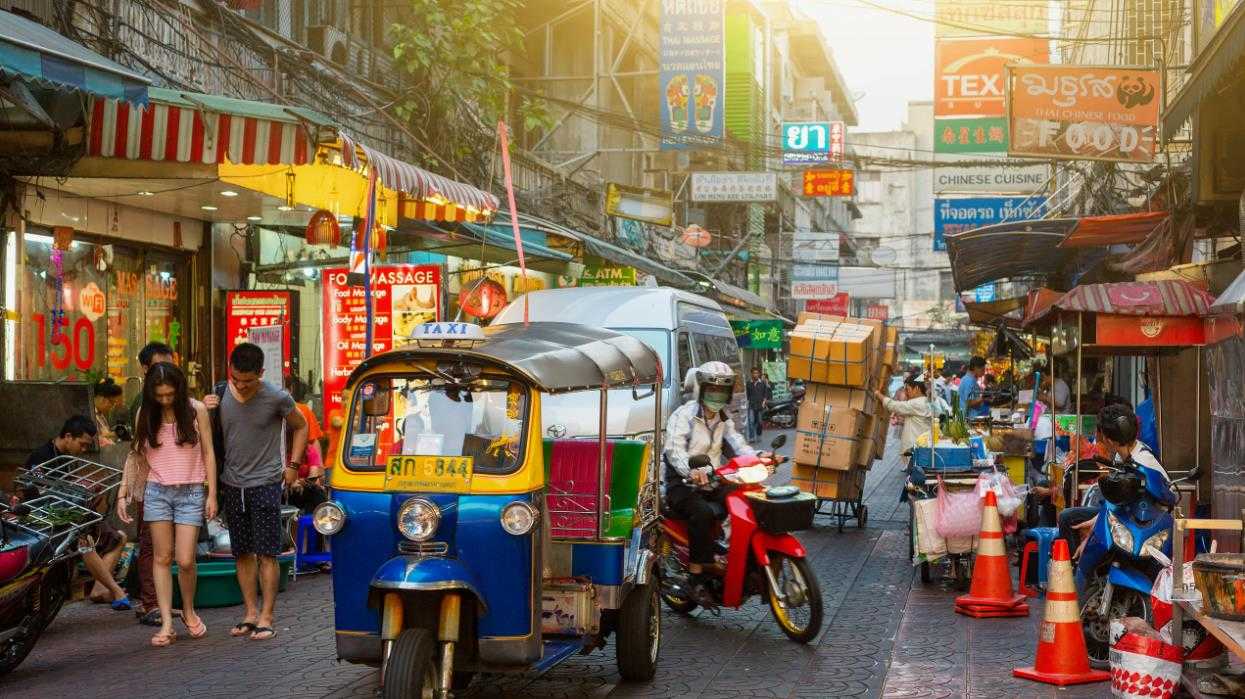
Foreword
At the end of April this year we self-drove the G318 to Lhasa. We had planned to visit Daocheng Yading, but the timing wasn’t right: the grass was not yet green and it was still cold, so we gave up.
After returning from Western Sichuan, the “withdrawal” hit hard. Our inner longing for glaciers, rivers, meadows, and alpine lakes surged to a peak. Determined to make up for the miss of Daocheng Yading, we squeezed out five days before the National Day holiday, set off off-peak, and headed to Daocheng Yading.
 Shangri-La Town
Yading Glimpses
Daocheng Yading is praised as “the soul of China’s Shangri-La” and “the last pure land on the blue planet.” In imagination, it is far from the secular world and free of noise, holding only the soft chant of autumn wind through treetops, the murmur of streams across stones, and the silent embrace of sunlight over earth.
Only when you witness it with your own eyes do you realize imagination is equally limited: solemn snow peaks, splendid forests, crystal lakes… Here, everything stays in its most original state, together forming a secret realm in mountains and waters, a paradise beyond the mundane, truly “the soul of Shangri-La.”
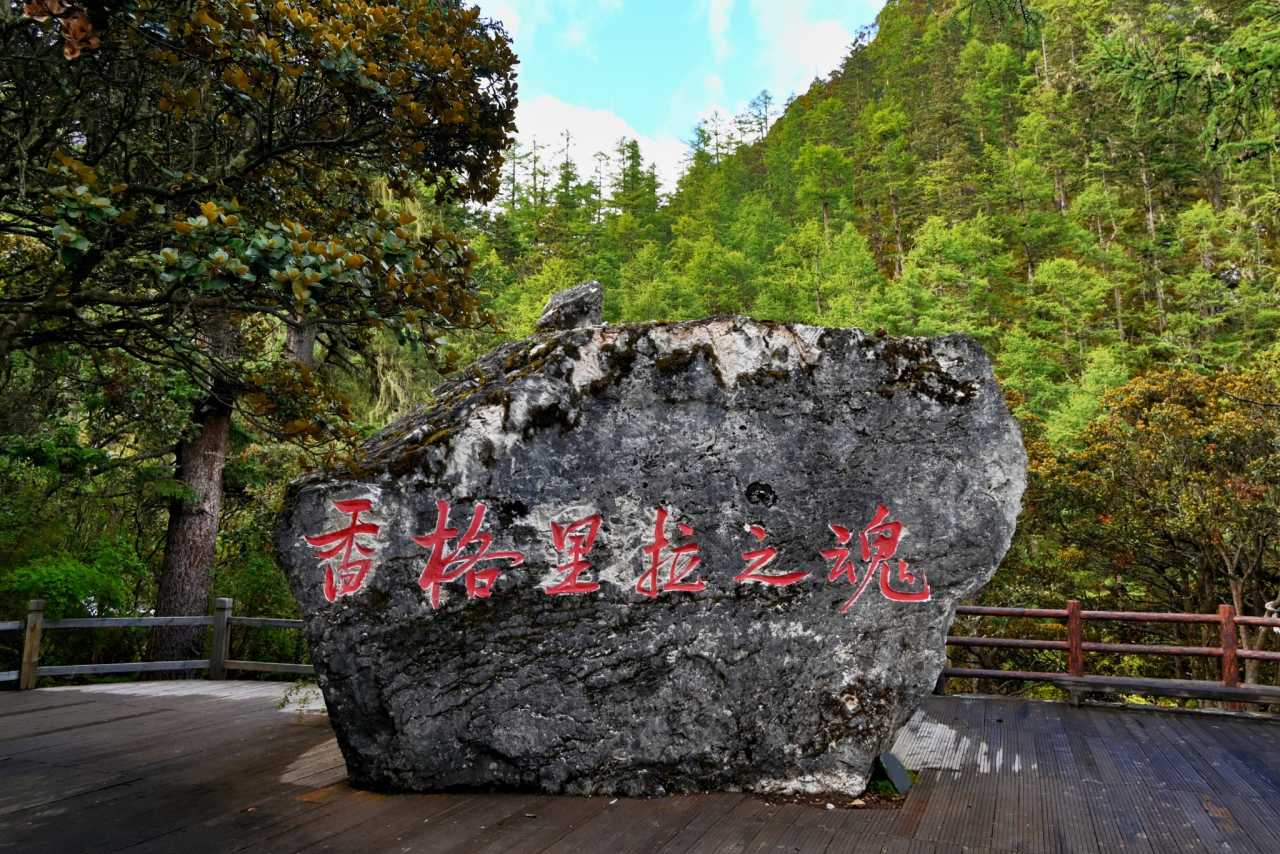 Zhaguanbeng
“Cattle and horses” looking at cattle and horses—no empathy, only envy.
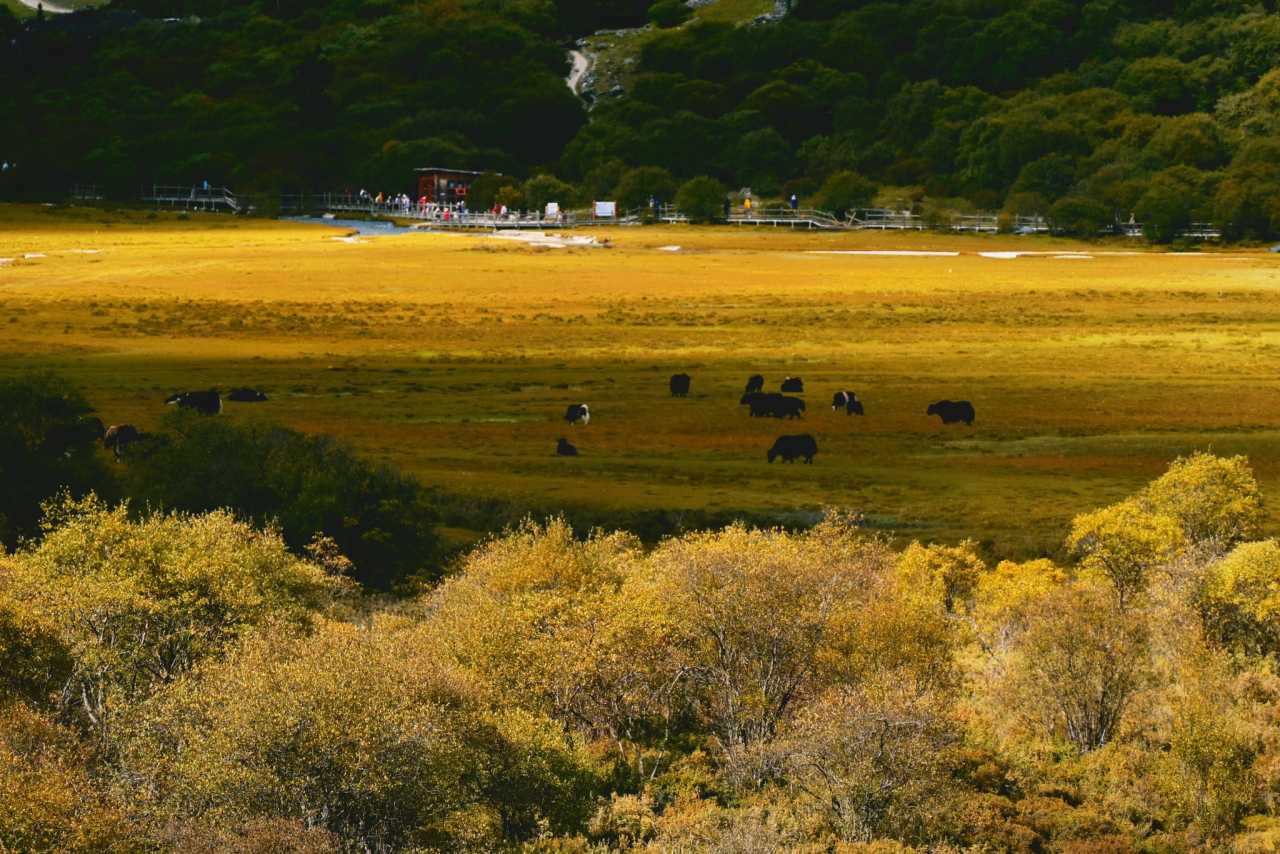
Glacial meltwater rushes down like silver silk meandering across the meadow.
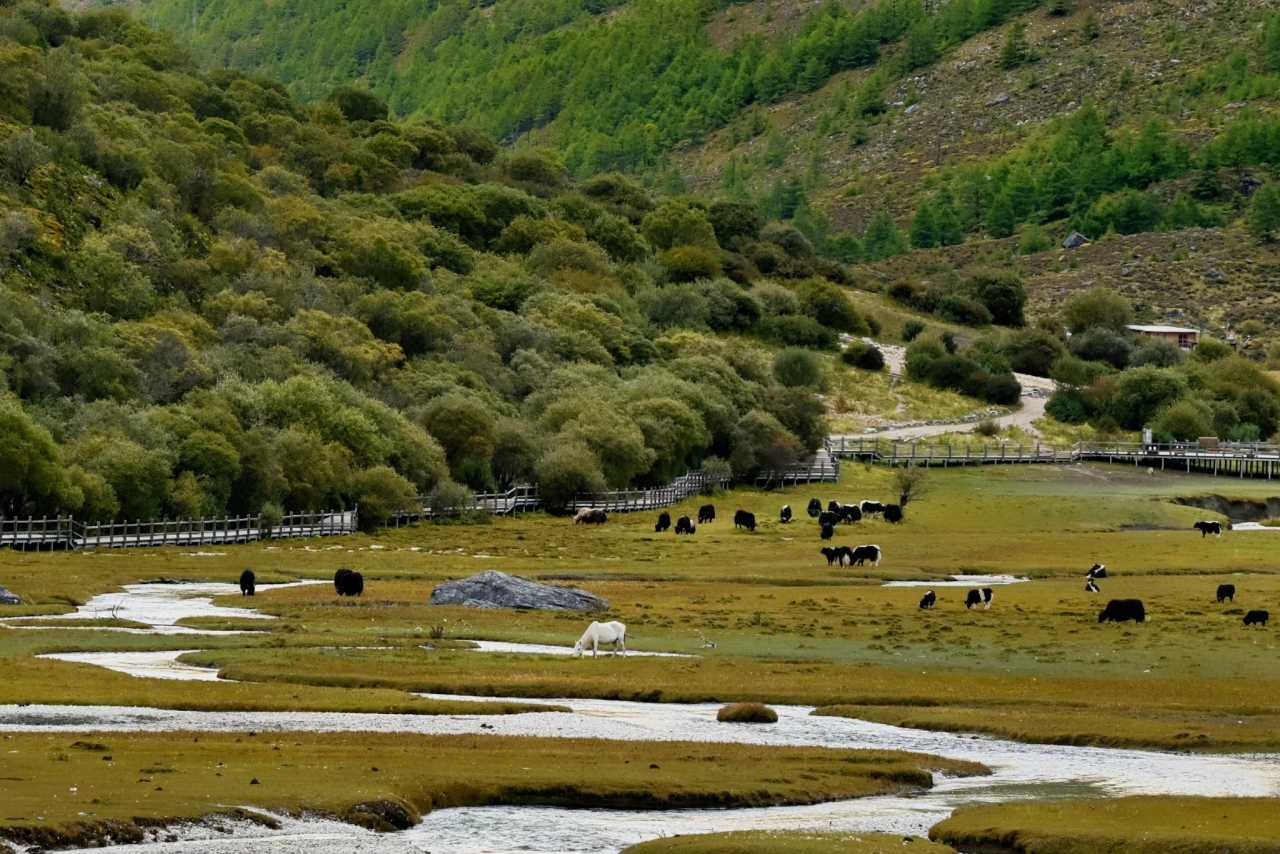
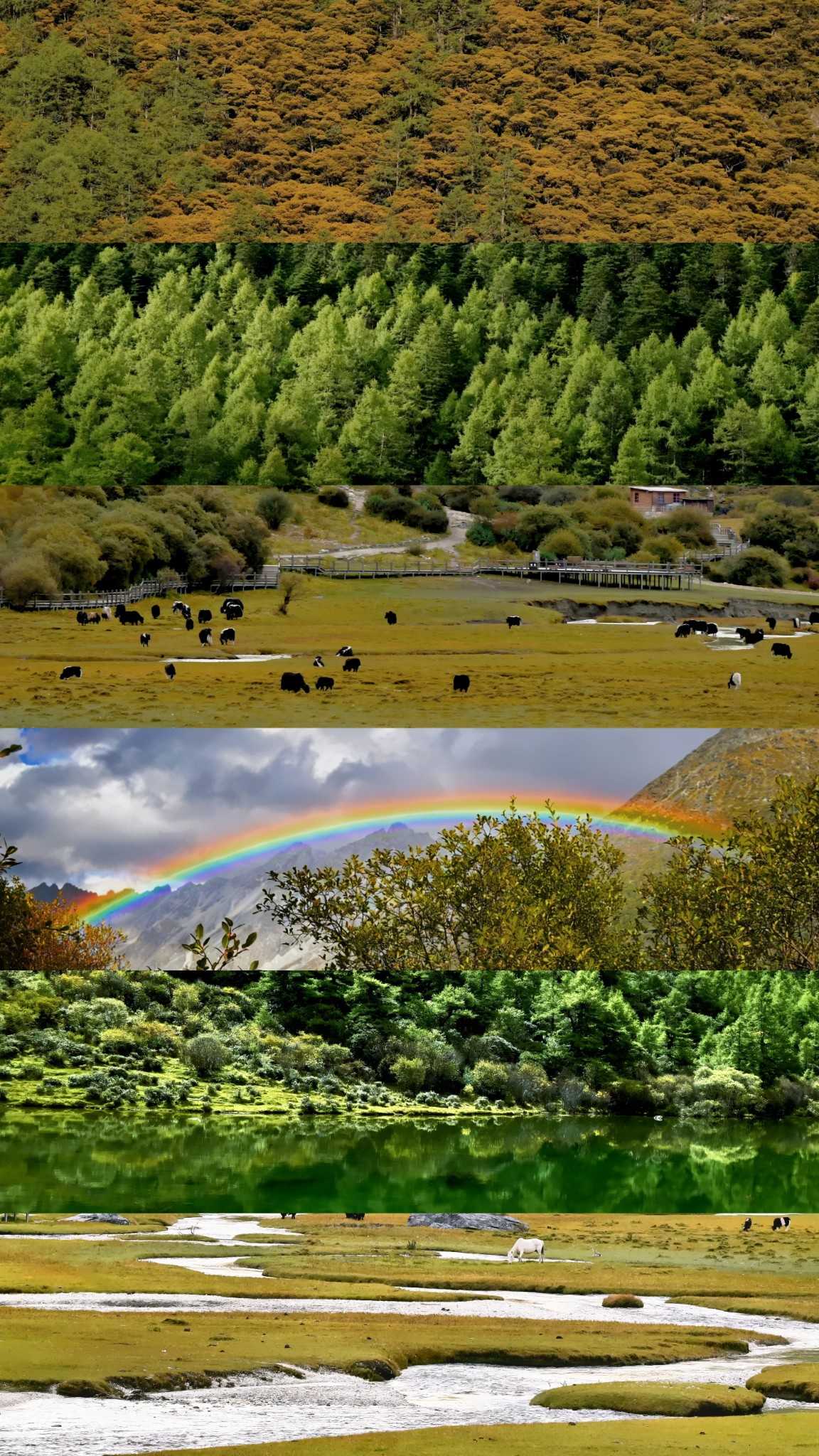
If snow mountains are Yading’s bones, then forests and meadows are Yading’s soul.
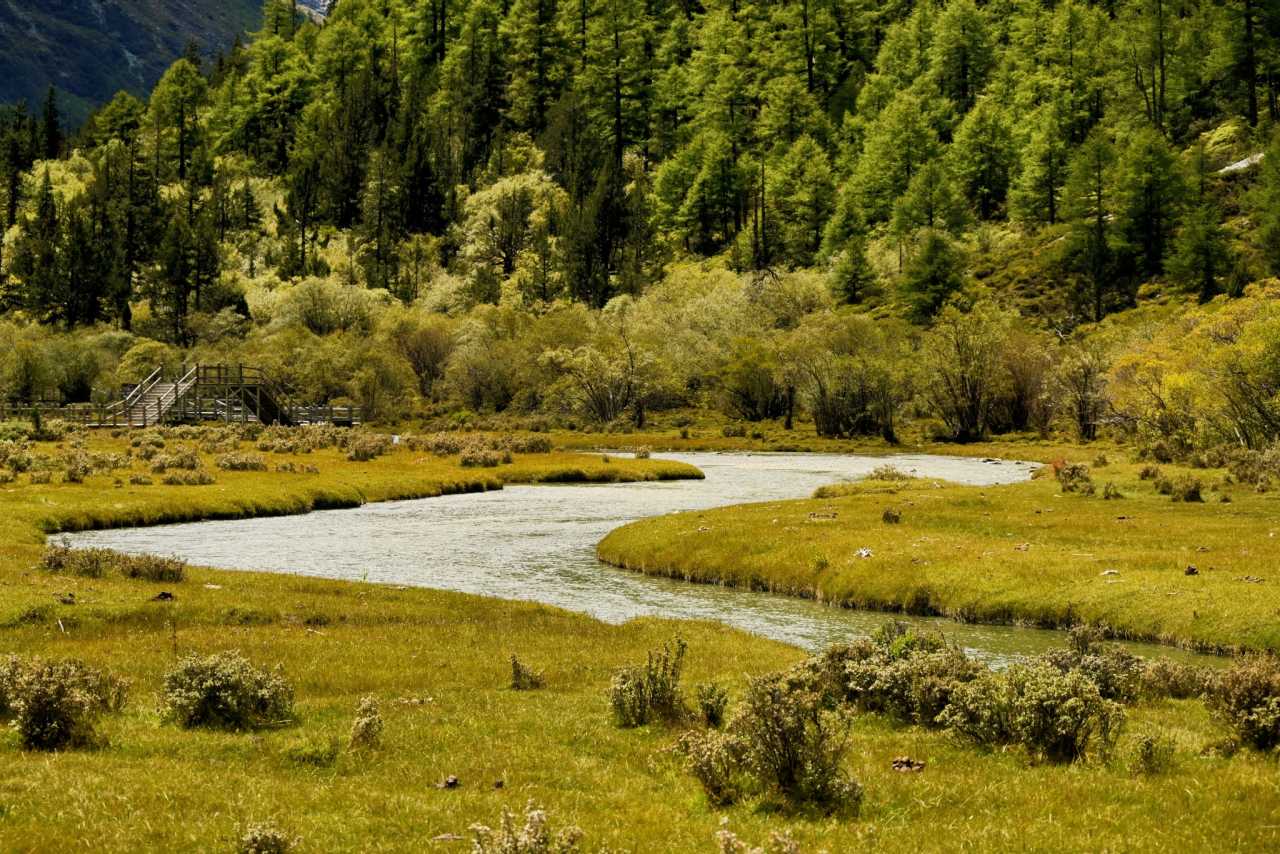 Xianuoduoji
It is like a well-aged wine—only when you settle down can you taste the mellow fragrance of years. The setting sun gilds the peak with a faint pink edge. The wind carries scents of grass seeds, the sweet astringency of pine resin, and the warmth of autumn sun.
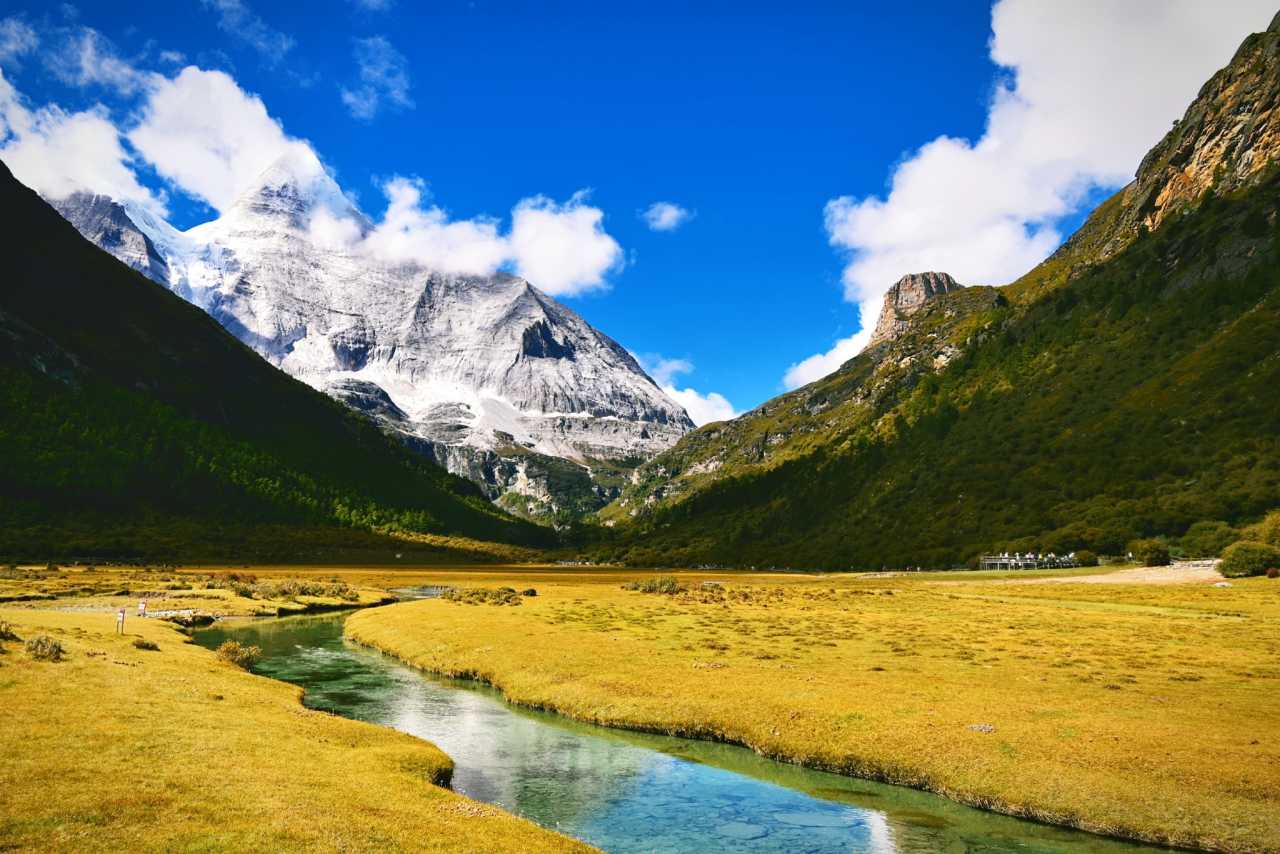
Branches of fir and spruce interweave, sifting autumn sunlight into mottled gold that falls on ground carpeted with pine needles.
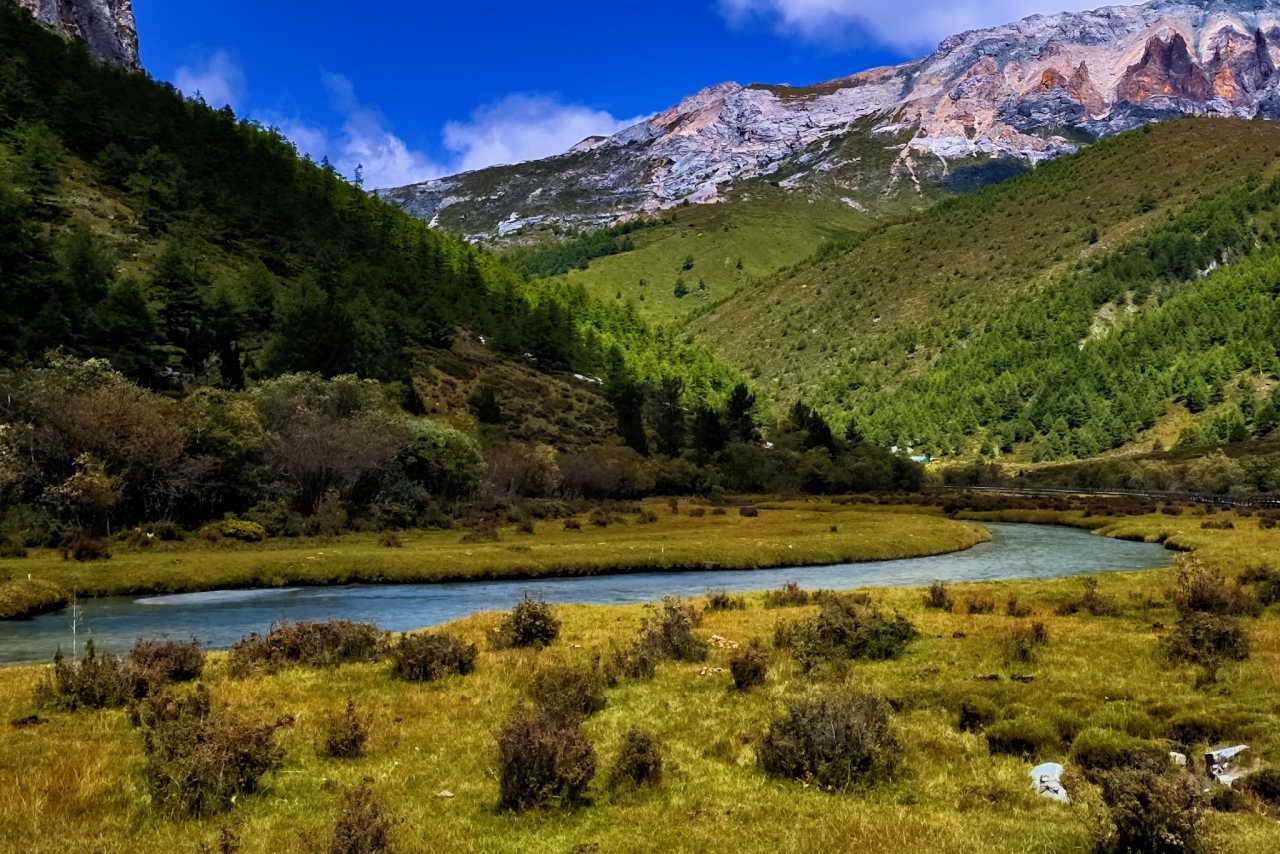
Autumn in Daocheng Yading is alpine lakes bathed in gentle breeze atop the mountains. The ripples no longer bitterly cold; they make the azure softer. The lake calms like glass, soaking in drifting clouds, snowy summits, and golden sunlight—even ripples left by wind shimmer with heart-soothing blue.
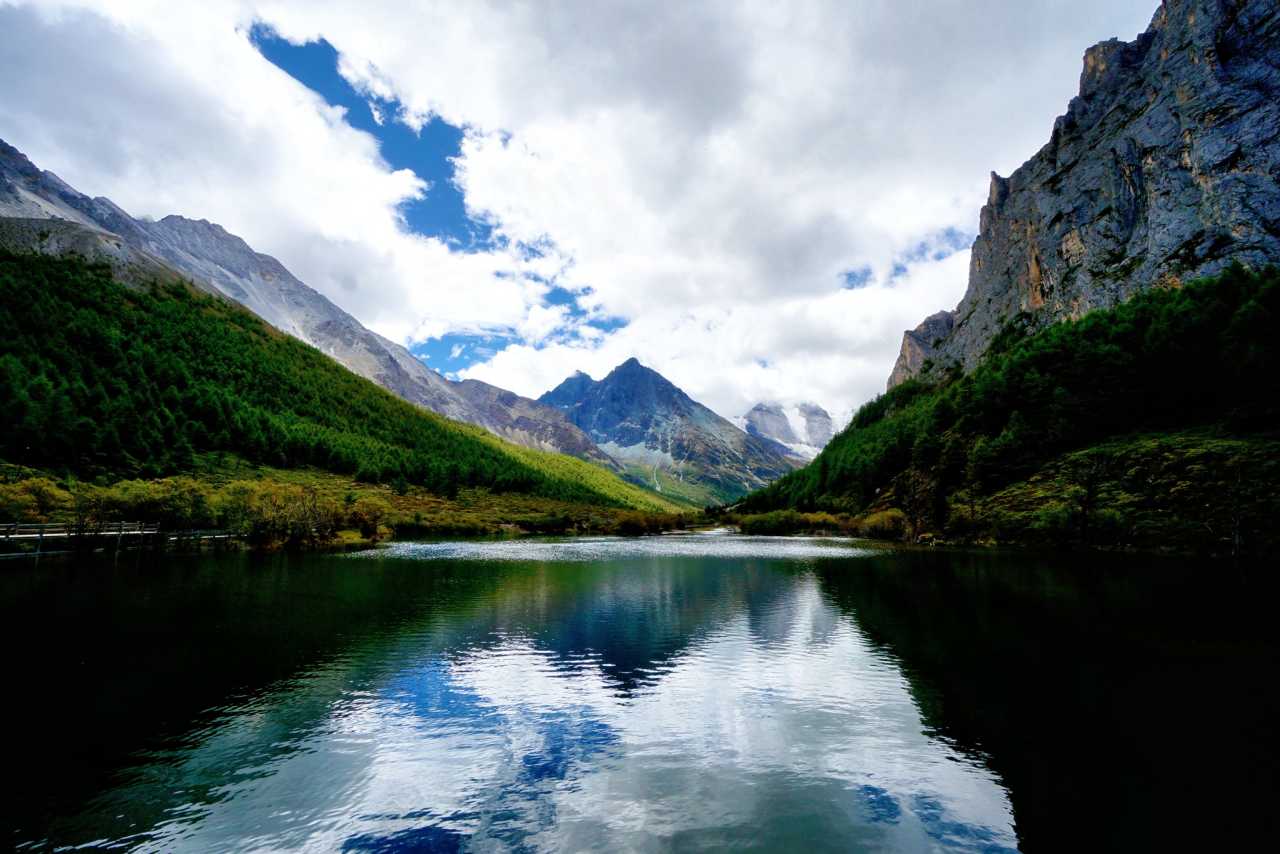
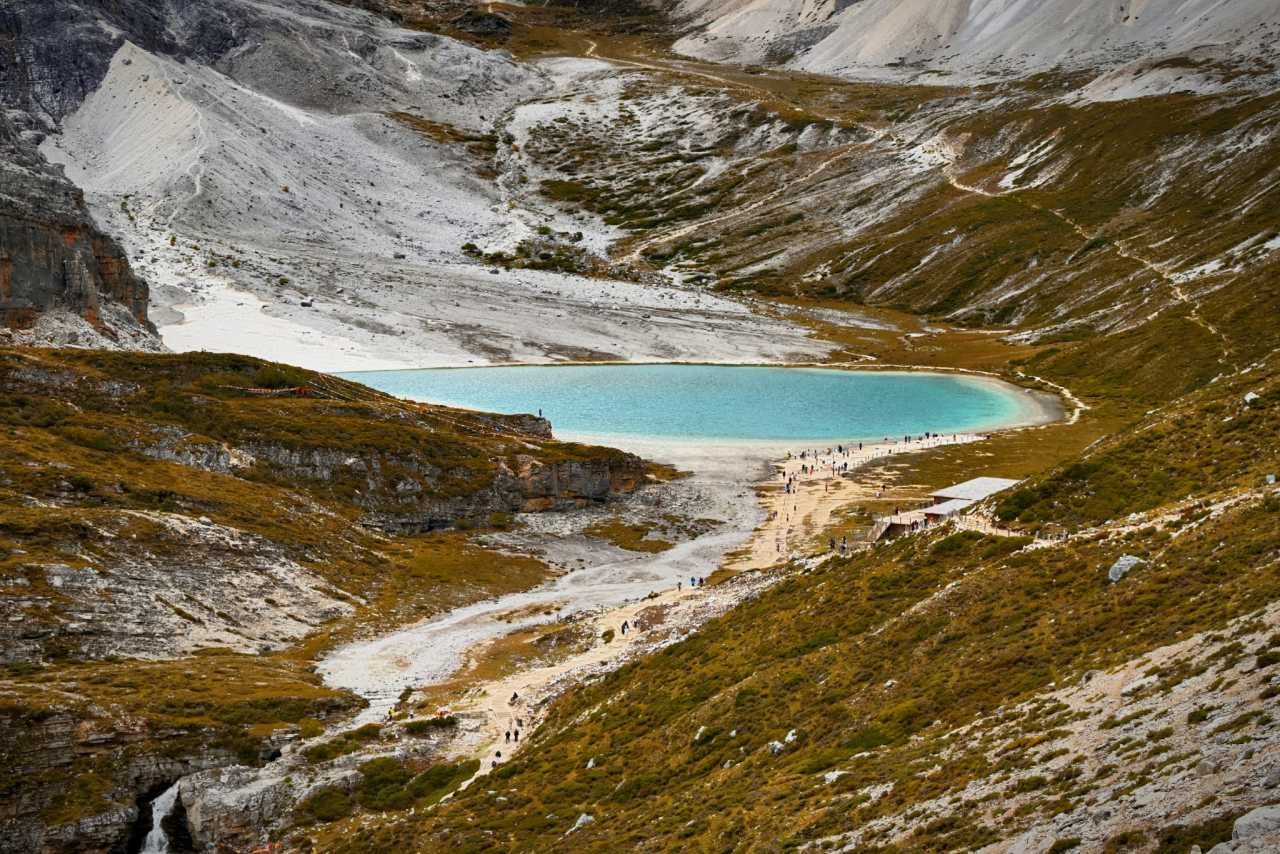
Snow mountains “fill the frame,” flooding the entire visual world.
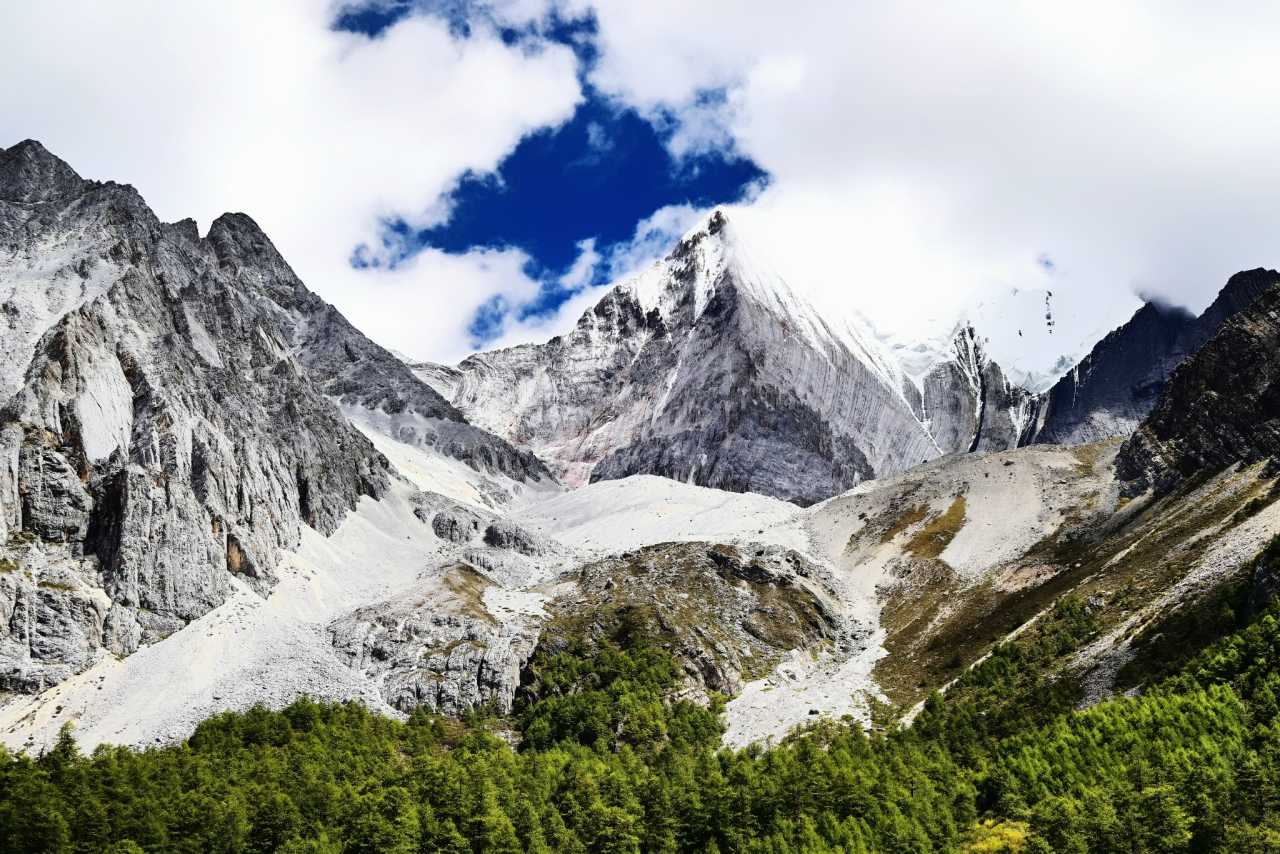
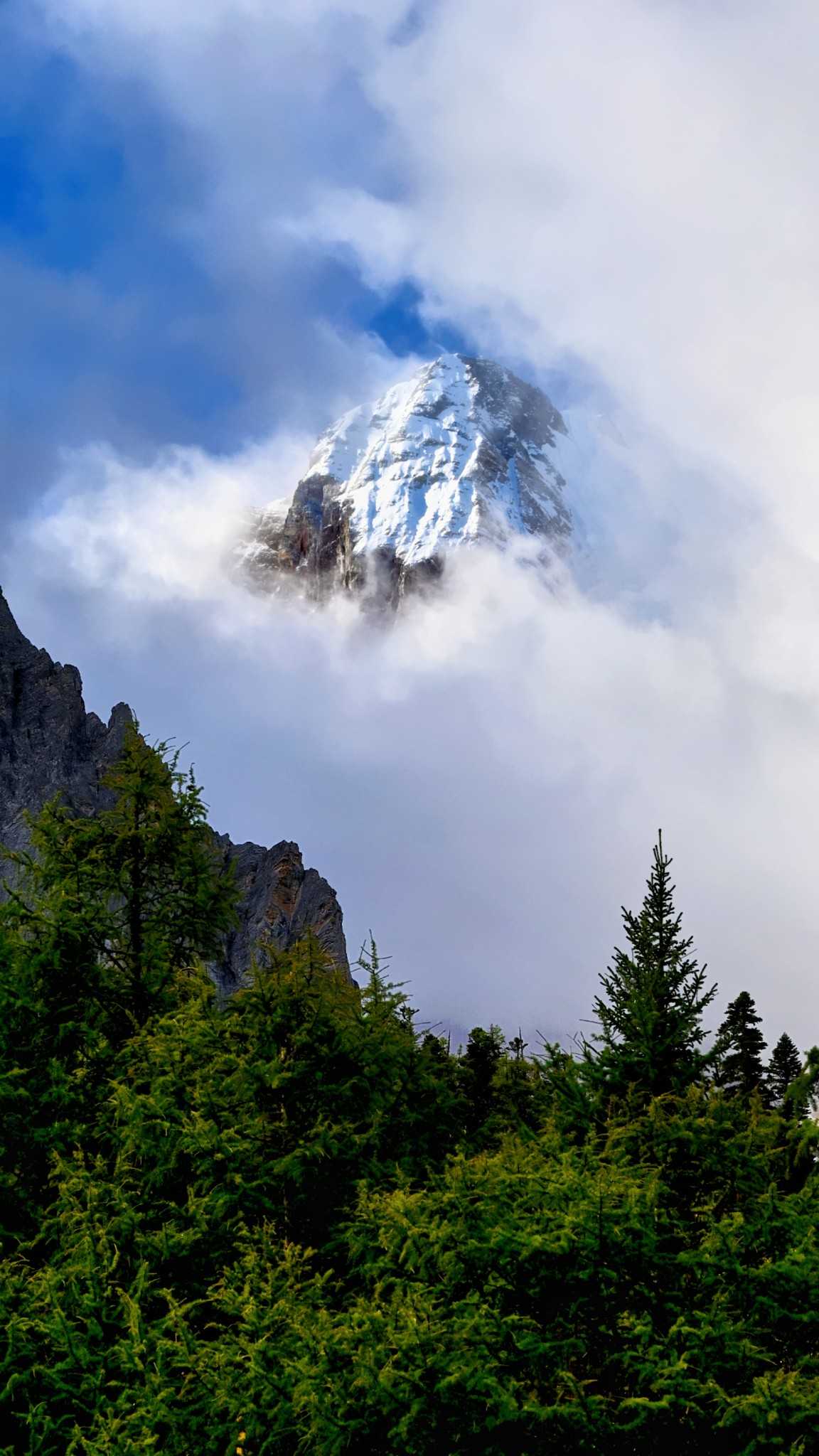
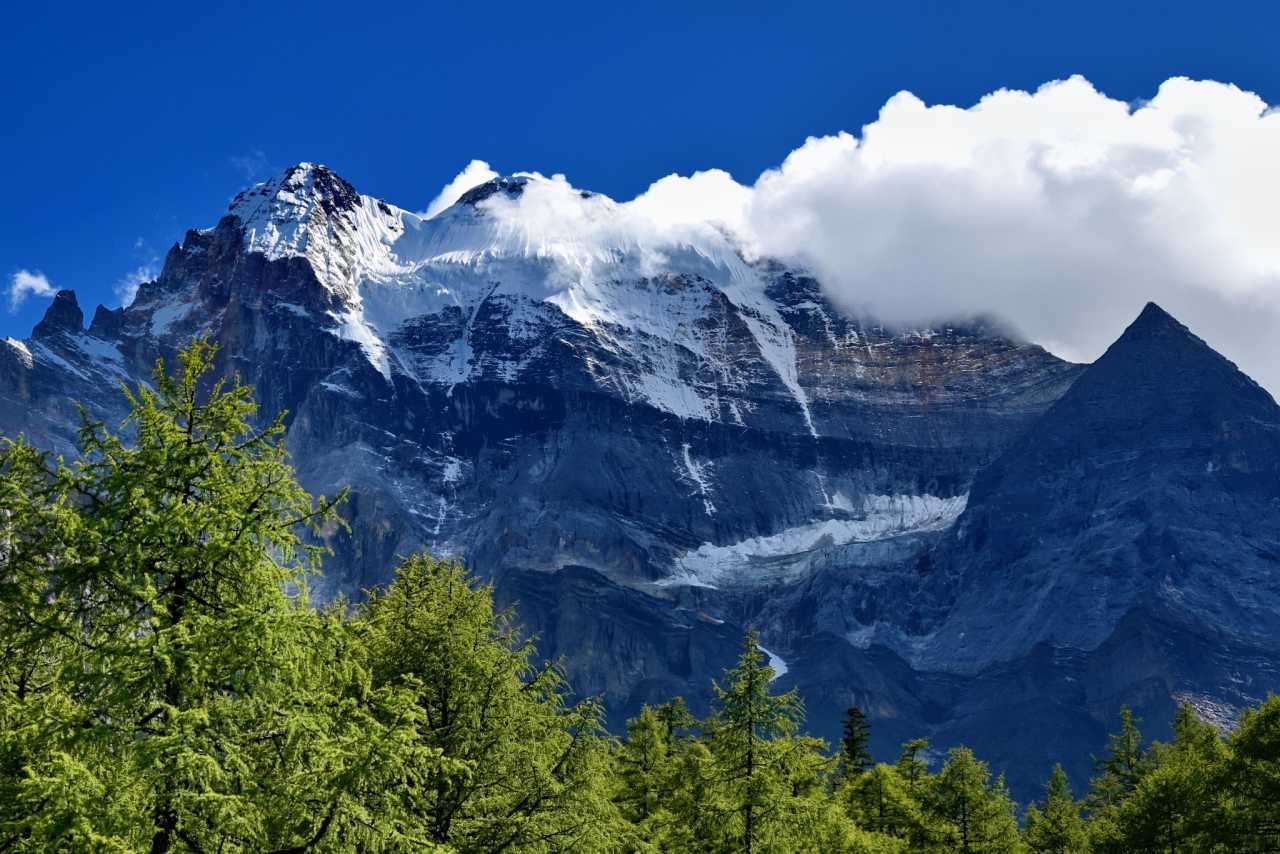
Early autumn on the plateau is not as intense as at low elevations—more like an ink wash gradually diffusing.
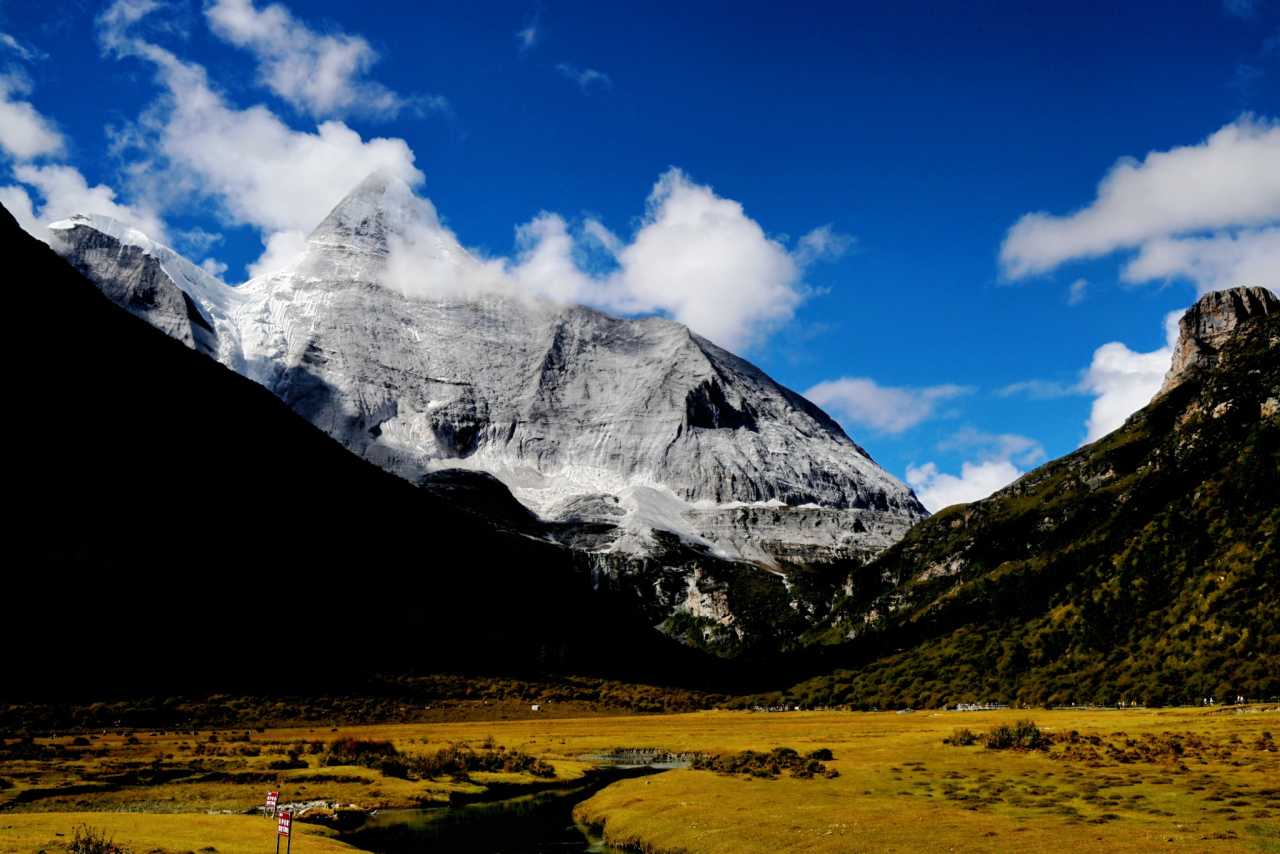
We were lucky to see three rainbows.
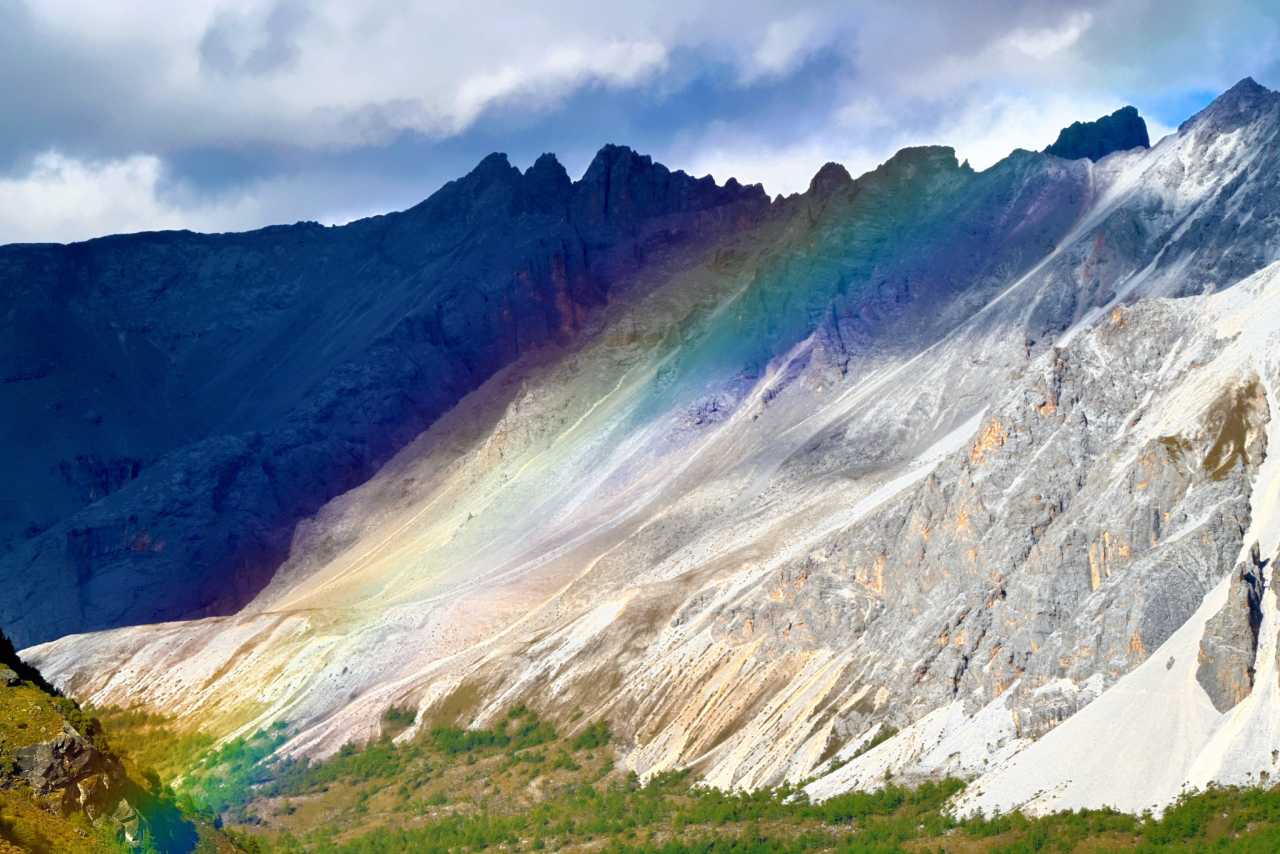 Daocheng Yading – Yading Viewing Deck
Itinerary Planning
 DAY 0: Shanghai Pudong Airport → Chengdu Tianfu Airport (precious “cattle-and-horse” holiday time, so it’s rushed)
Stay: Chengdu Tianfu Konggang Yuexiang Hotel (great; recommended; details below)
 DAY 1: Chengdu Tianfu Airport → Daocheng Airport (off-season, only two flights a day)
Plan: Stroll around Shangri-La Town to acclimatize to altitude
Stay: Daocheng Snowy Garden Hot Spring Hotel (average, but well-located; details below)
 DAY 2: Manjushri Wisdom Line (blue) + Guanyin Compassion Line (orange) — commonly called “half long line + short line”
Stay: Daocheng Snowy Garden Hot Spring Hotel
 DAY 3: Vajra Challenge Line (pink) — commonly called “the long line”
Stay: Daocheng Snowy Garden Hot Spring Hotel
 DAY 4: Return.
Within the two core days inside the scenic area, although the official routes are split into three: the Guanyin Compassion Line, the Manjushri Wisdom Line, and the Vajra Challenge Line, many guides simply divide them into a “long line” and a “short line,” which roughly correspond to:
# Long line = Manjushri Wisdom Line (blue) + Vajra Challenge Line (pink)
# Short line = Guanyin Compassion Line (orange)
On the map, the Manjushri Wisdom Line and the Vajra Challenge Line connect end to end. So separating them into long and short looks fine; but after doing them, I think the official three-route split is more suitable for people with normal fitness.
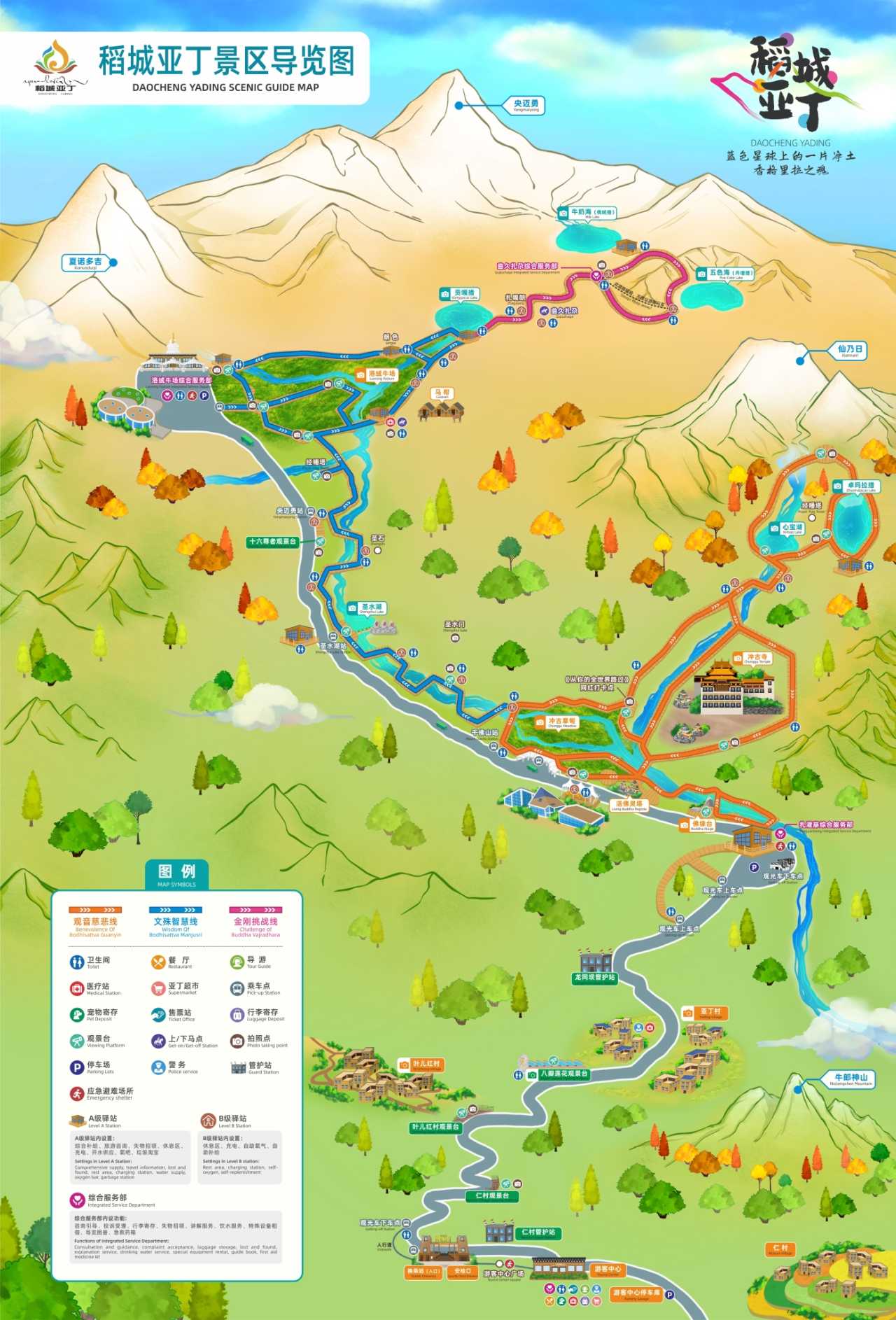 Daocheng Yading Scenic Area
We spent two full days in Yading, roughly 8am–8pm each day—longer than a workday…
We were mentally prepared: after our Western Sichuan road trip we don’t get carsick, we’re used to mountain roads, and we don’t suffer severe altitude sickness. Even so, high-altitude hiking still sets “high standards” for physical fitness—we were utterly exhausted in the end.
——Manjushri Wisdom! The Most Beautiful Trail!——
Manjushri Wisdom Line – Half Long Line Overview
Take the shuttle bus from the Visitor Center to Zhaguanbeng (about 1 hour). Elevation jumps from 3000 m to 3900 m, the whole way is winding mountain road (if you get carsick, take medicine in advance—don’t collapse before starting).
To be safe, on day one we chose a milder plan: morning Manjushri Wisdom Line + afternoon Guanyin Compassion Line—commonly the short line + half of the long line.
This “half long line” is the Manjushri Wisdom Line. It is the best route to view two holy peaks, Xianuoduoji and Yangmaiyong, from afar.
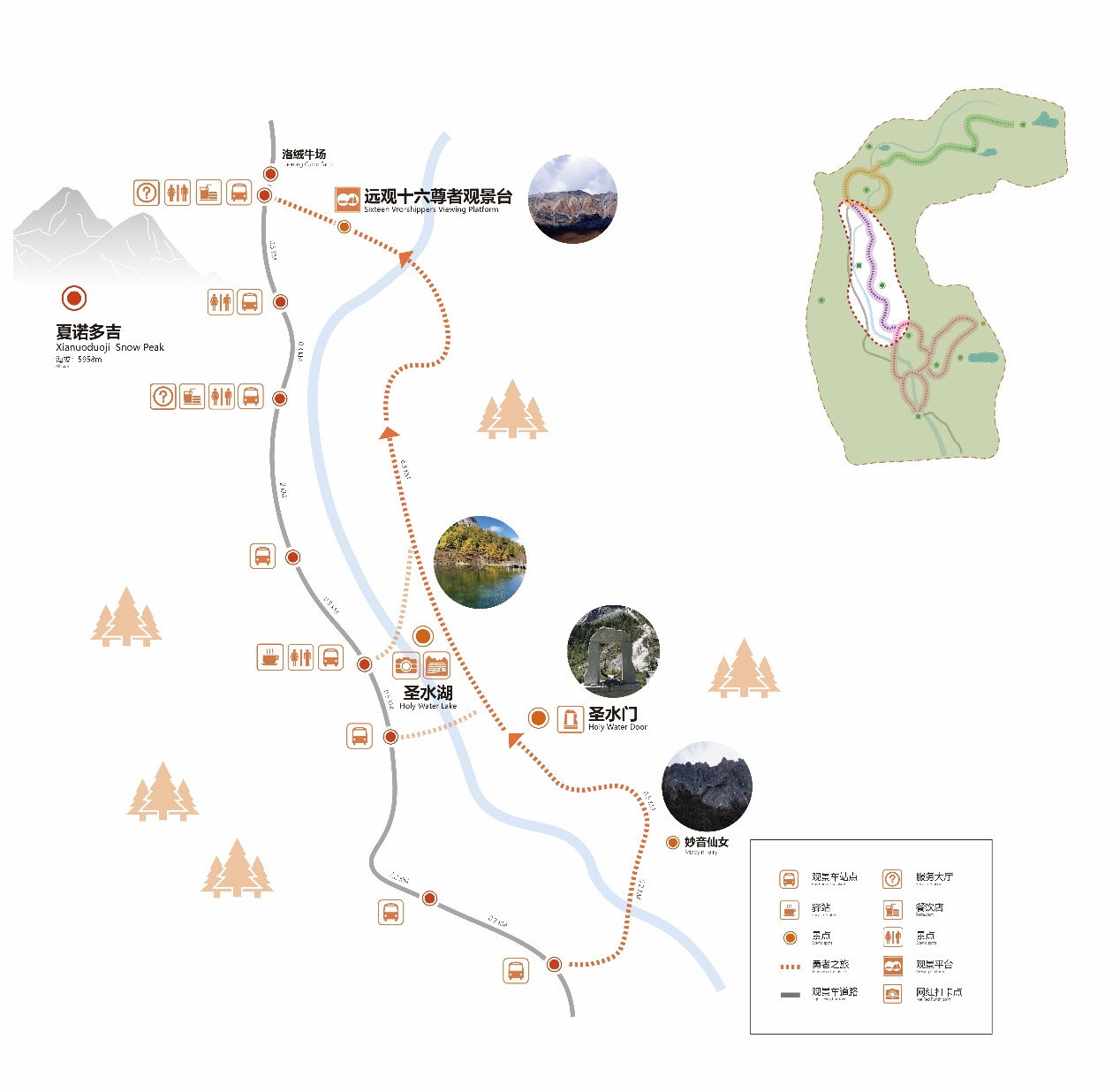
From Zhaguanbeng, walk 500 m uphill to the sightseeing/electric cart station. Using that as the start, hike to Luorong Pasture. The walking trail is about 6.8 km.
 Daocheng Yading Scenic Area
You’ll pass: Chonggu Meadow – 0.7 km – Sacred Water Gate – 0.5 km – Sacred Water Lake – 6.3 km – Distant View of Sixteen Arhats – Luorong Pasture. The trail is a single path, hard to get lost.
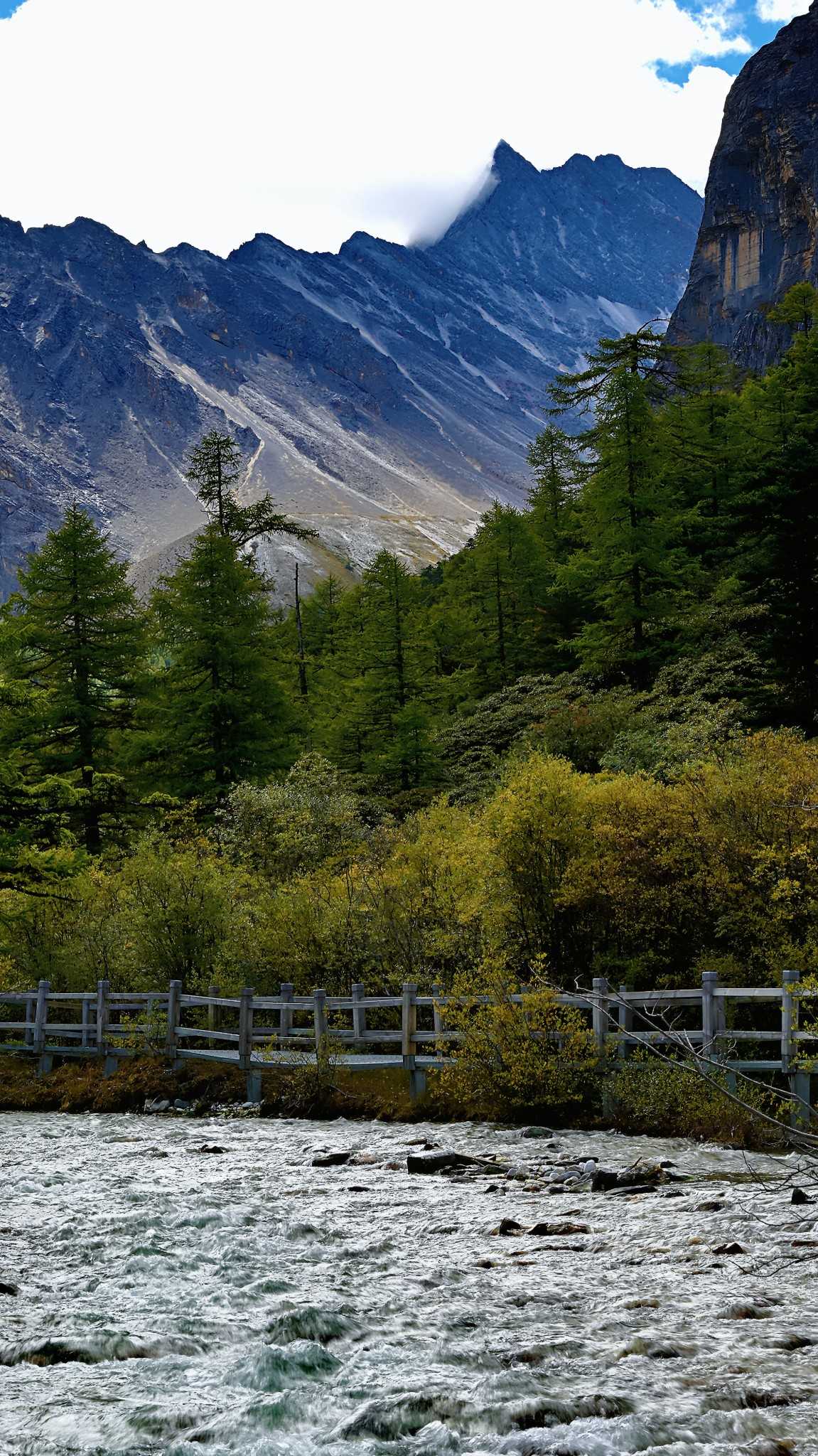
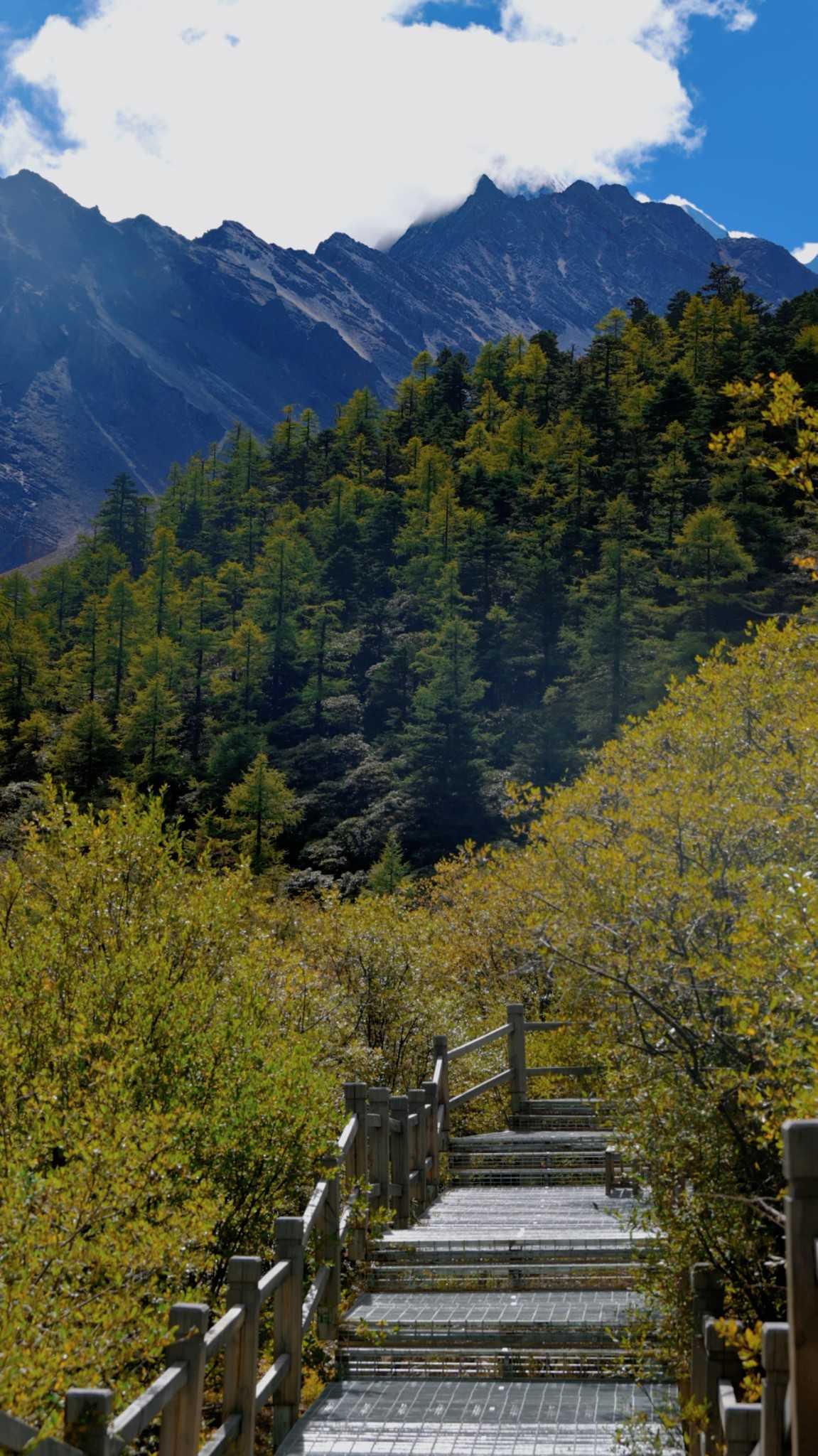
This walkway is almost parallel to the green sightseeing road. The road is slightly higher; the boardwalk sits low, nearly level with lakes, winding through forest—very wild and original—one of the few extremely friendly routes for stamina in Yading.
Some guides recommend riding the sightseeing cart to Luorong Pasture and walking back towards Zhaguanbeng (i.e., reverse). Reason: Luorong is higher, Zhaguanbeng lower, so walking down is easier and avoids crowds.
 Daocheng Yading Scenic Area
Reverse is feasible, but I don’t recommend it.
First, although elevation rises from Zhaguanbeng to Luorong, the boardwalk is gentle—mostly long, shallow slopes with short flights of 3–4 steps. No long steep staircases; no high-knee movements. As long as altitude reaction isn’t severe, it’s manageable.
 Daocheng Yading Scenic Area
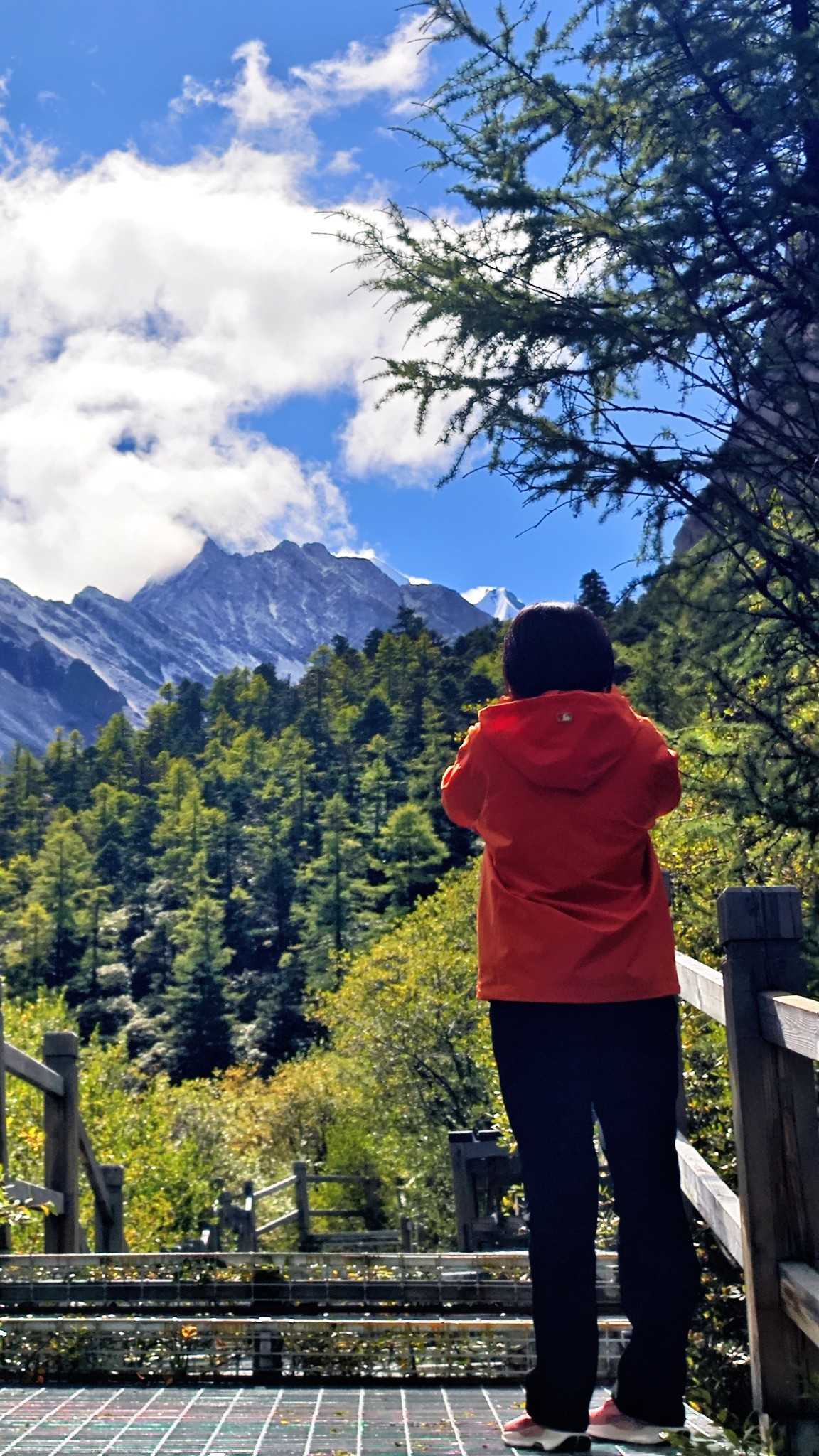
Second, heading toward Luorong is heading toward Xianuoduoji and Yangmaiyong. The mountains always sit ahead, snow peaks accompanying you—beautiful foregrounds abound—easier than walking with your back to the peaks and needing to look back often.
 Daocheng Yading Scenic Area
Manjushri Wisdom Line – 01 – Depart Zhaguanbeng
As the interchange of all three routes, Zhaguanbeng is immediately impressive. Its scenery does not win by vast grandeur, but by opening the mysterious prelude toward the sacred realm—carrying a sense of “transition” and “ritual” between the “modern” and the “holy.”
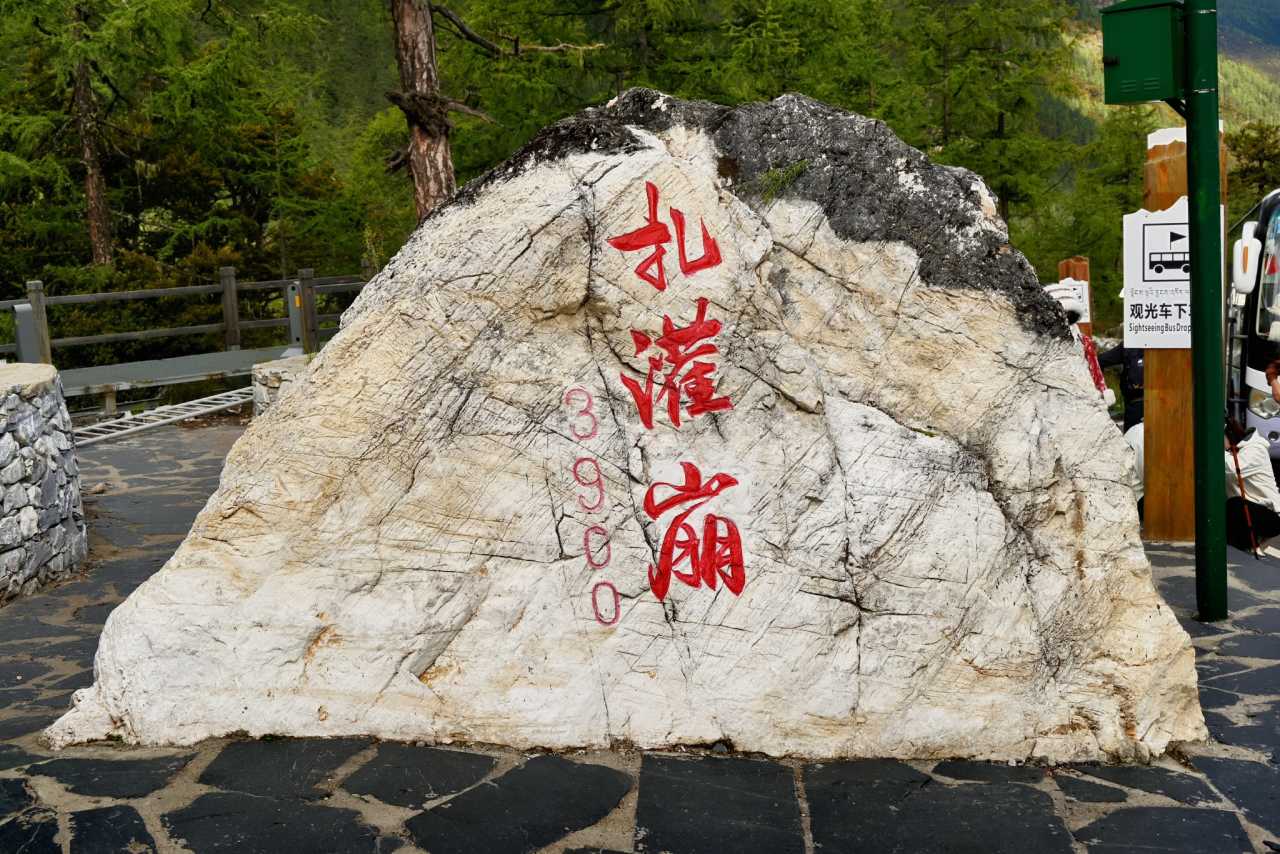 Zhaguanbeng
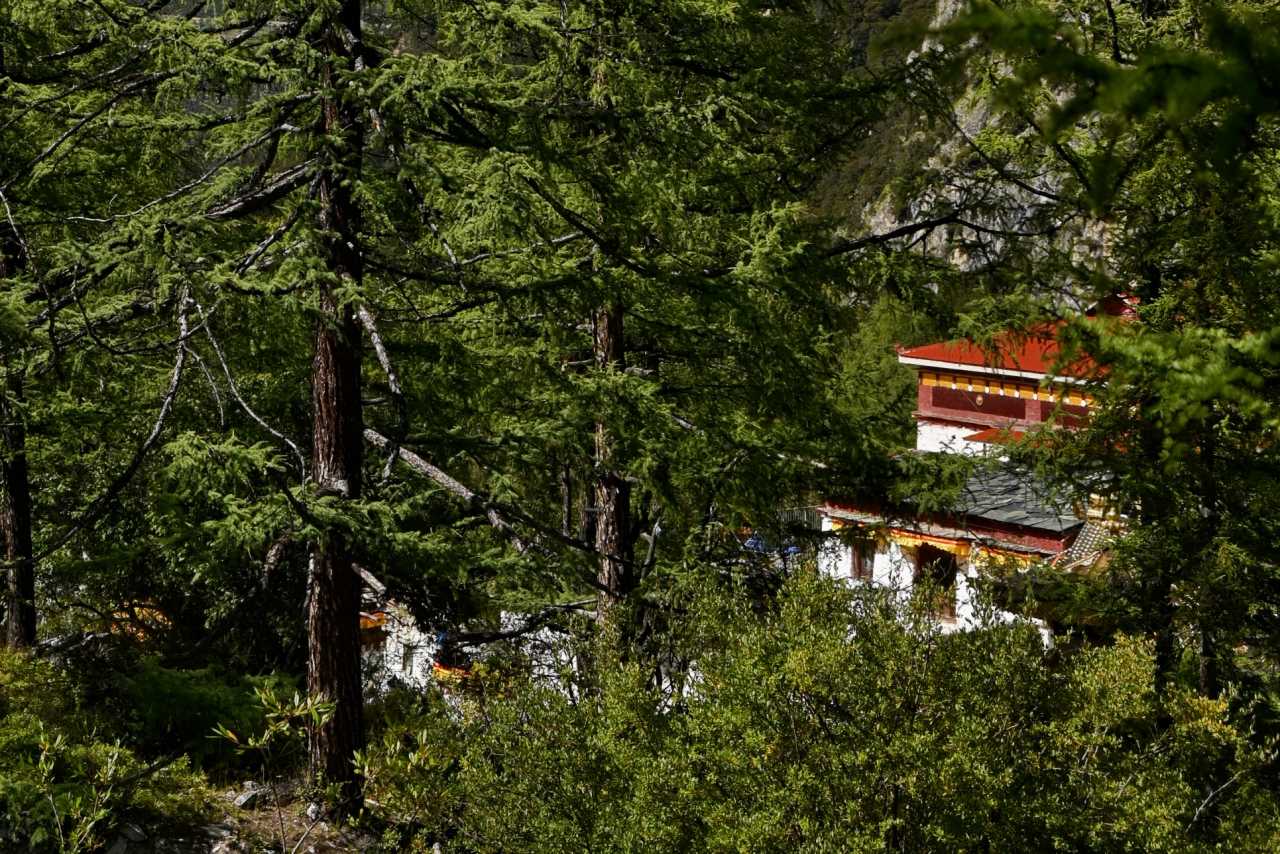
From the Visitor Center, look up: nearby sits golden-roofed Chonggu Monastery, half-hidden among green shade; above the forest you can glimpse one corner of the massive Xiannairi mountain.
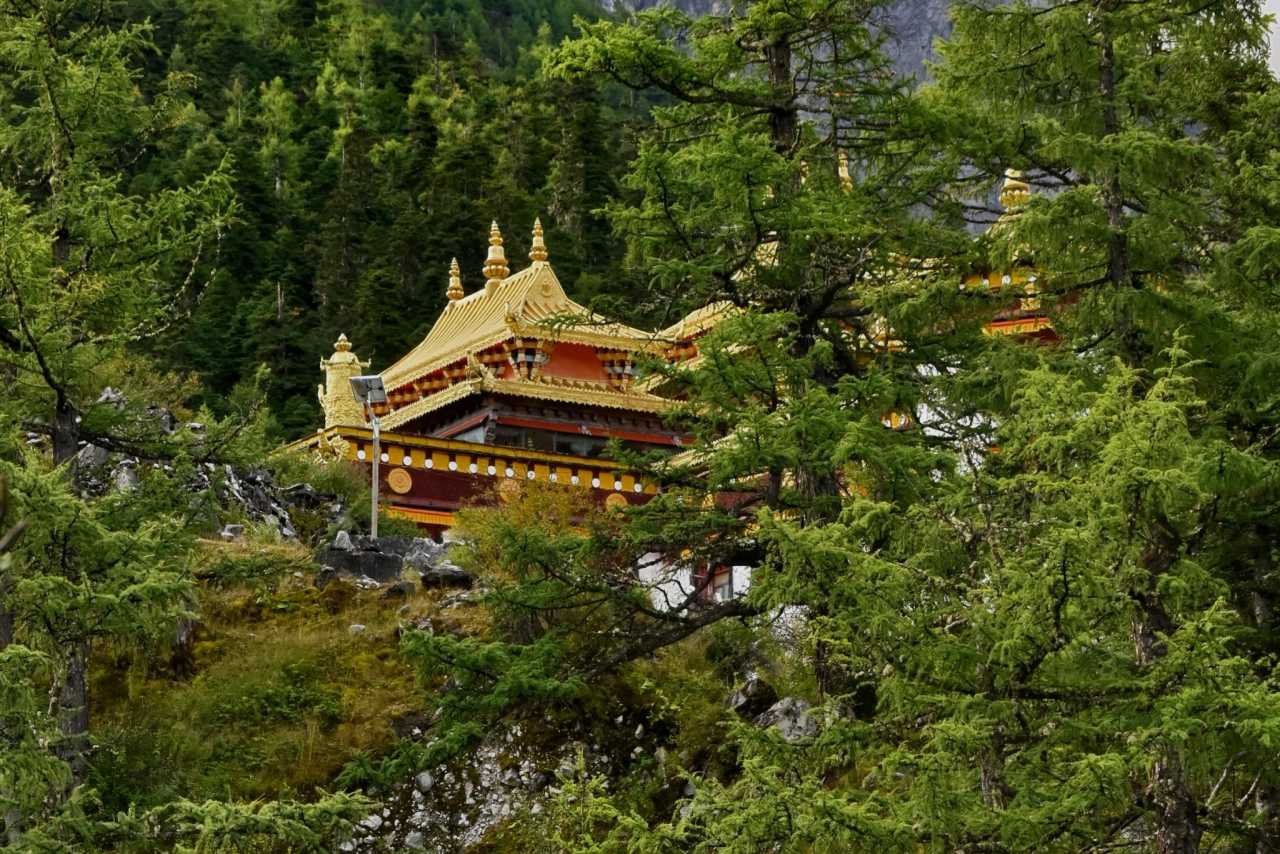 Zhaguanbeng
It’s not the full view; the summit is veiled by cloud. Yet this “half-shown” pose only adds solemnity and mystery, instantly igniting desire to explore forward.
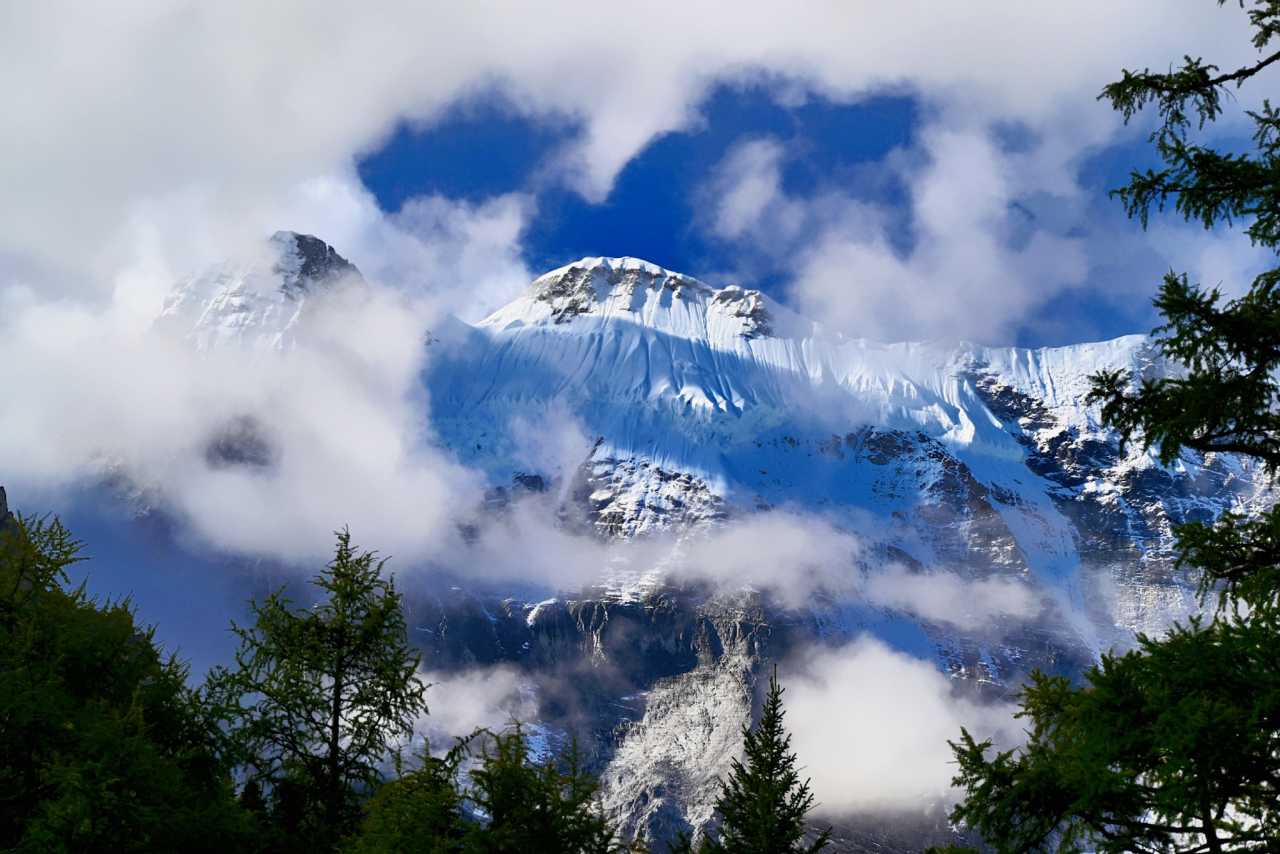 Zhaguanbeng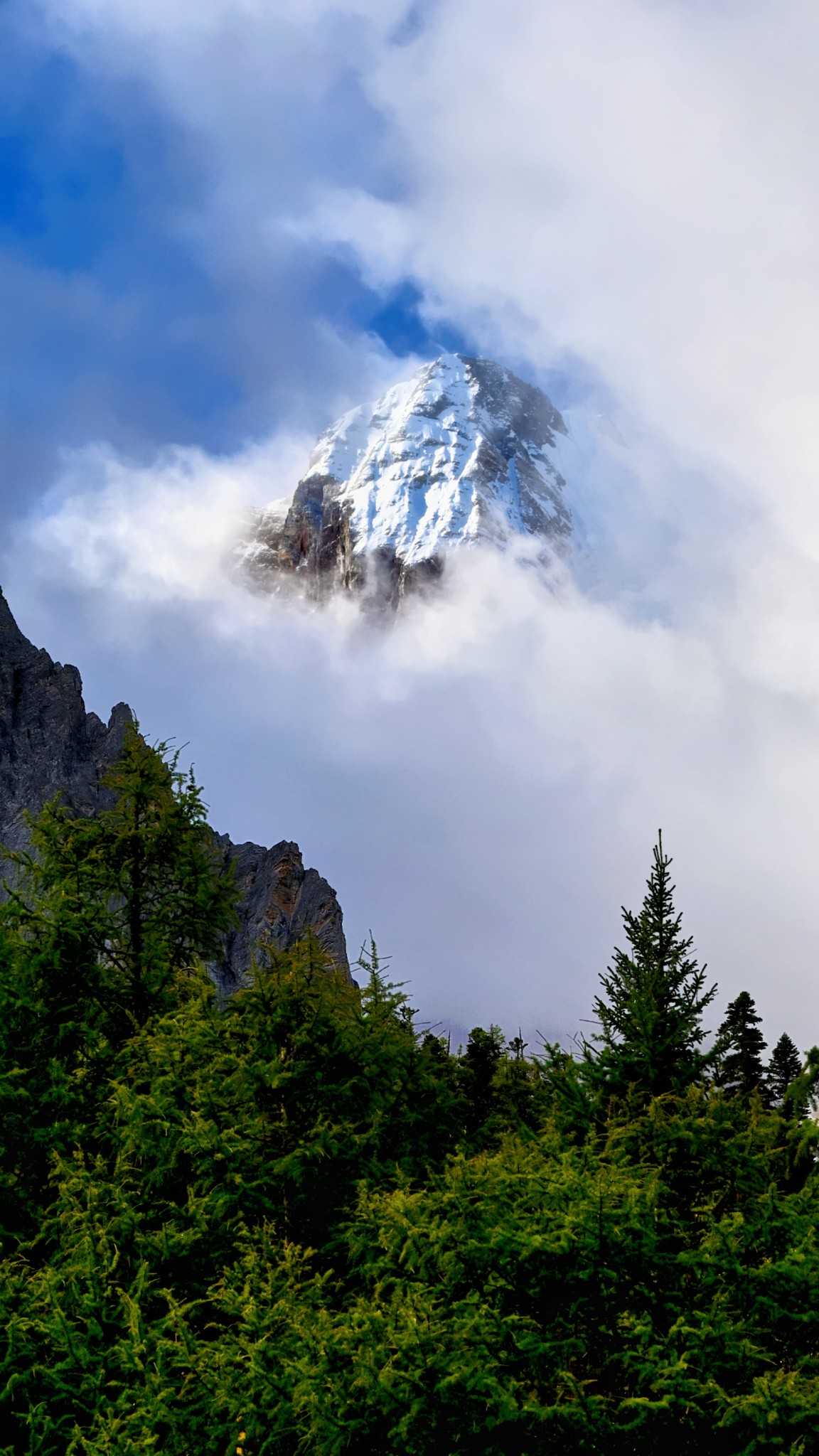
Zhaguanbeng is the start of the electric carts and the first stop to tour. The center sells supplies like oxygen bottles, drinking water, snacks, sun-protection and warm clothing for patching up what visitors lack.
 Zhaguanbeng
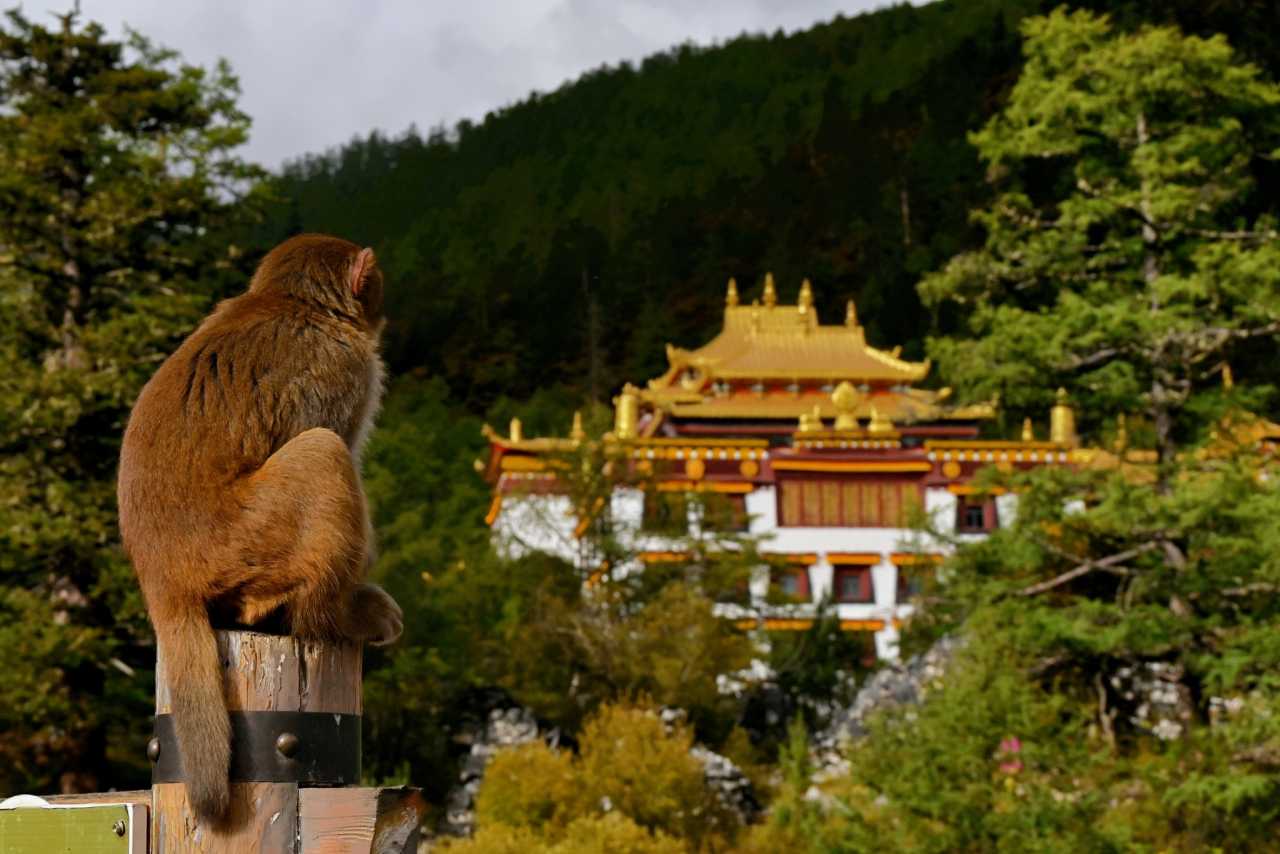
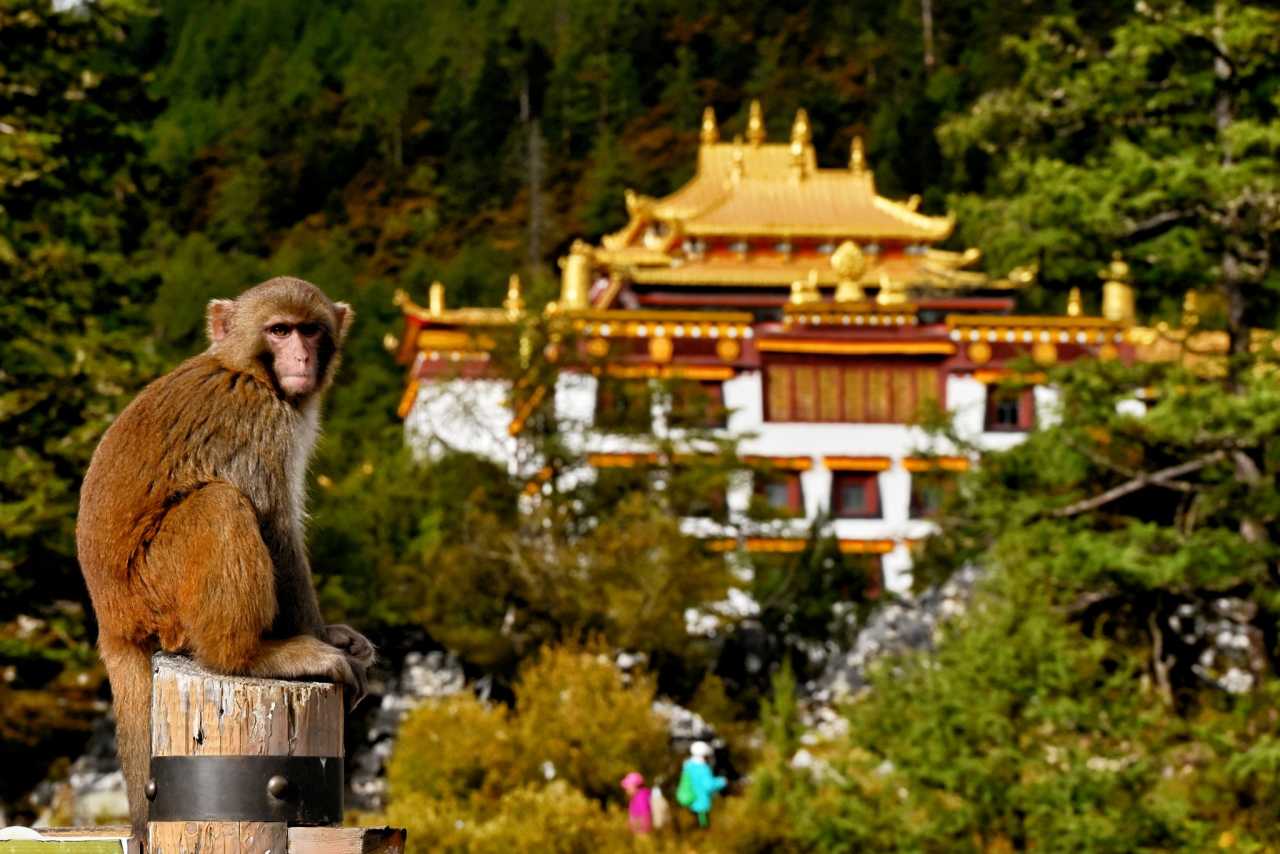
Gathered visitors and ample food attract many wild Tibetan macaques to “beg.” Plump wild troops sit along the forest edge by the road, eyeing passersby, waiting to “snatch” food from tourists.
(Tip: put food away at Zhaguanbeng, keep distance from the monkeys, do not tease, touch, or feed them to avoid injury.)
 Zhaguanbeng
 Zhaguanbeng
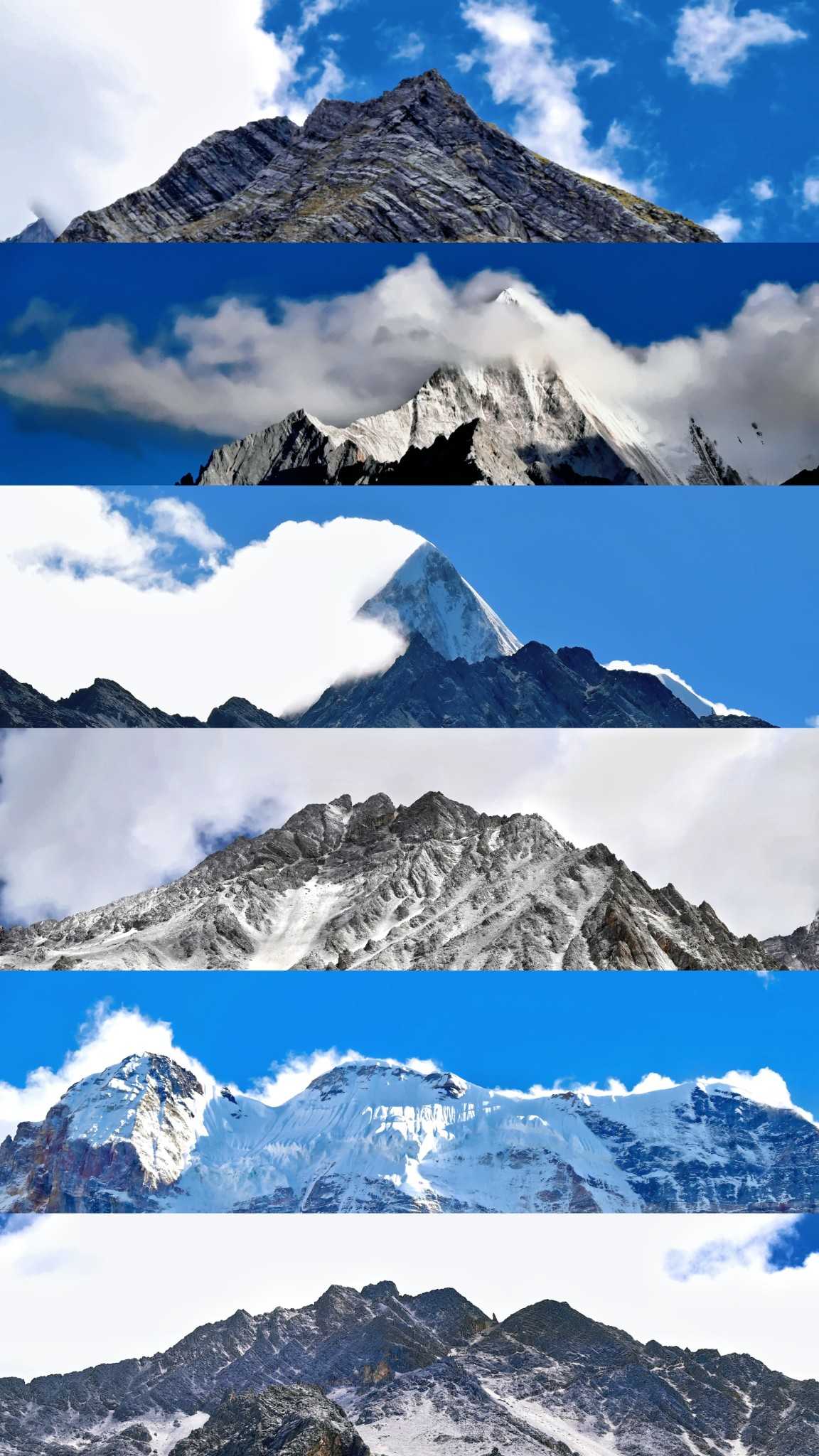
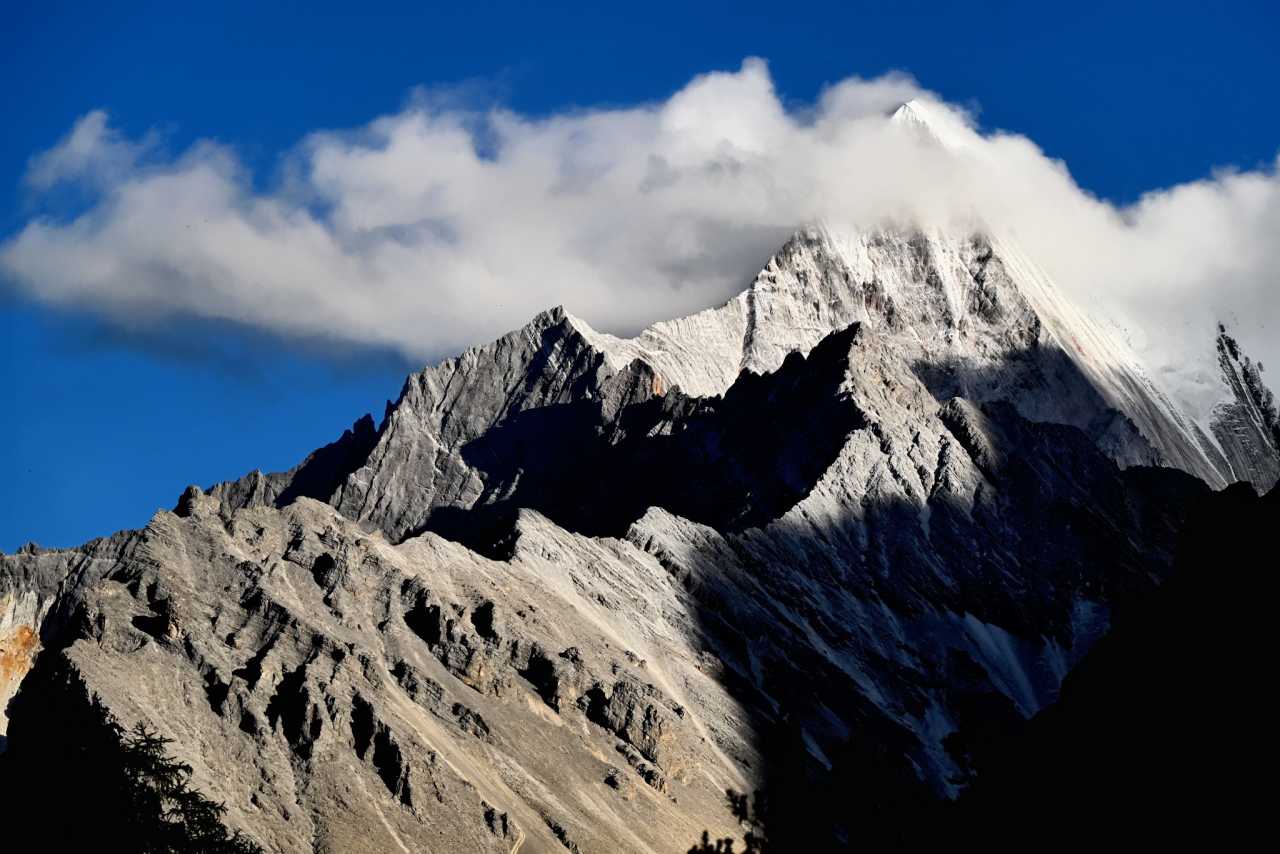
From Zhaguanbeng you can see “horn peaks.” Horn peaks—pyramidal peaks—form under glacial action. The mountain takes a four-sided pointed shape like an Egyptian pyramid, sculpted by glaciers eroding all sides. Xiannairi, Yangmaiyong, and Xianuoduoji are classic examples—natural “pyramids” carved by glaciers.
 Zhaguanbeng
In short, Zhaguanbeng has a beauty of “held tension,” mixing deep forest, holy temple, rushing stream, and a fleeting glimpse of sacred peaks—forming a prelude to a grand movement. Not the final scene, but a door behind which miracles await our eyes.
Manjushri Wisdom Line – 02 – Chonggu Meadow
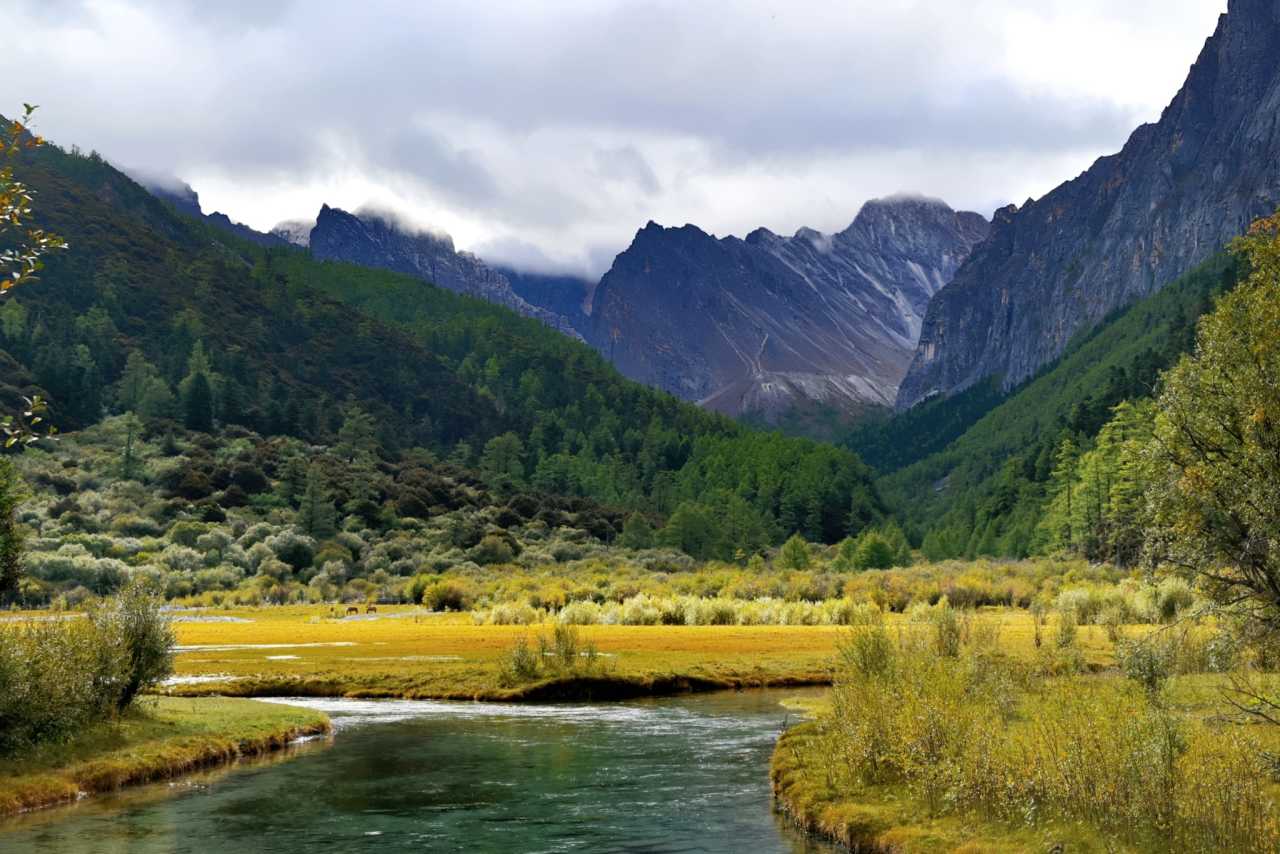
A short walk forward is Chonggu Meadow. Perfectly placed, it is the passage to Chonggu Monastery, the foot of Xiannairi, and Luorong Pasture—the junction of three routes. You’ll pass it for sure.
 Daocheng Yading – Chonggu Meadow
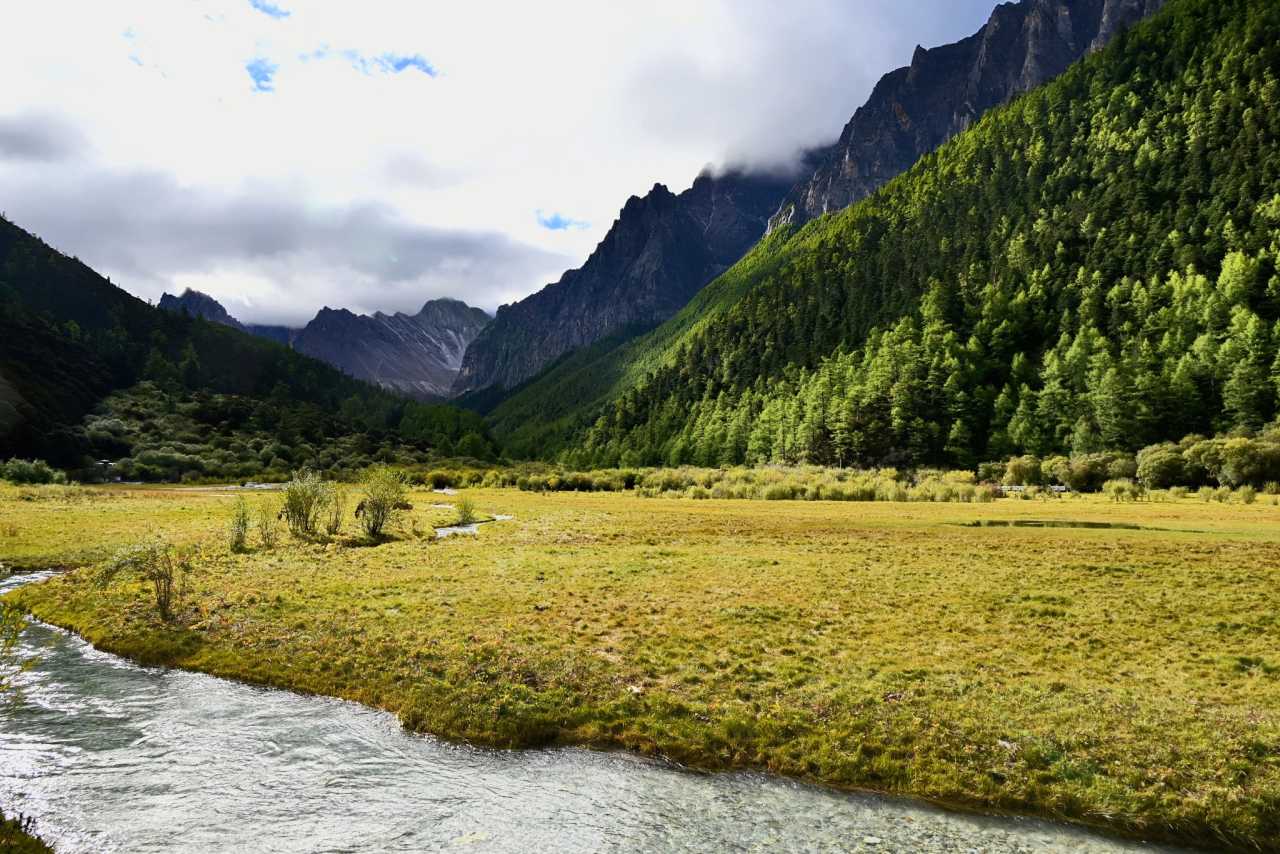 Daocheng Yading – Chonggu Meadow
Chonggu Meadow is flat and serves as summer pasture for local Tibetans—called “natural bonsai.” In person, I’d call it a real-life Emerald City.
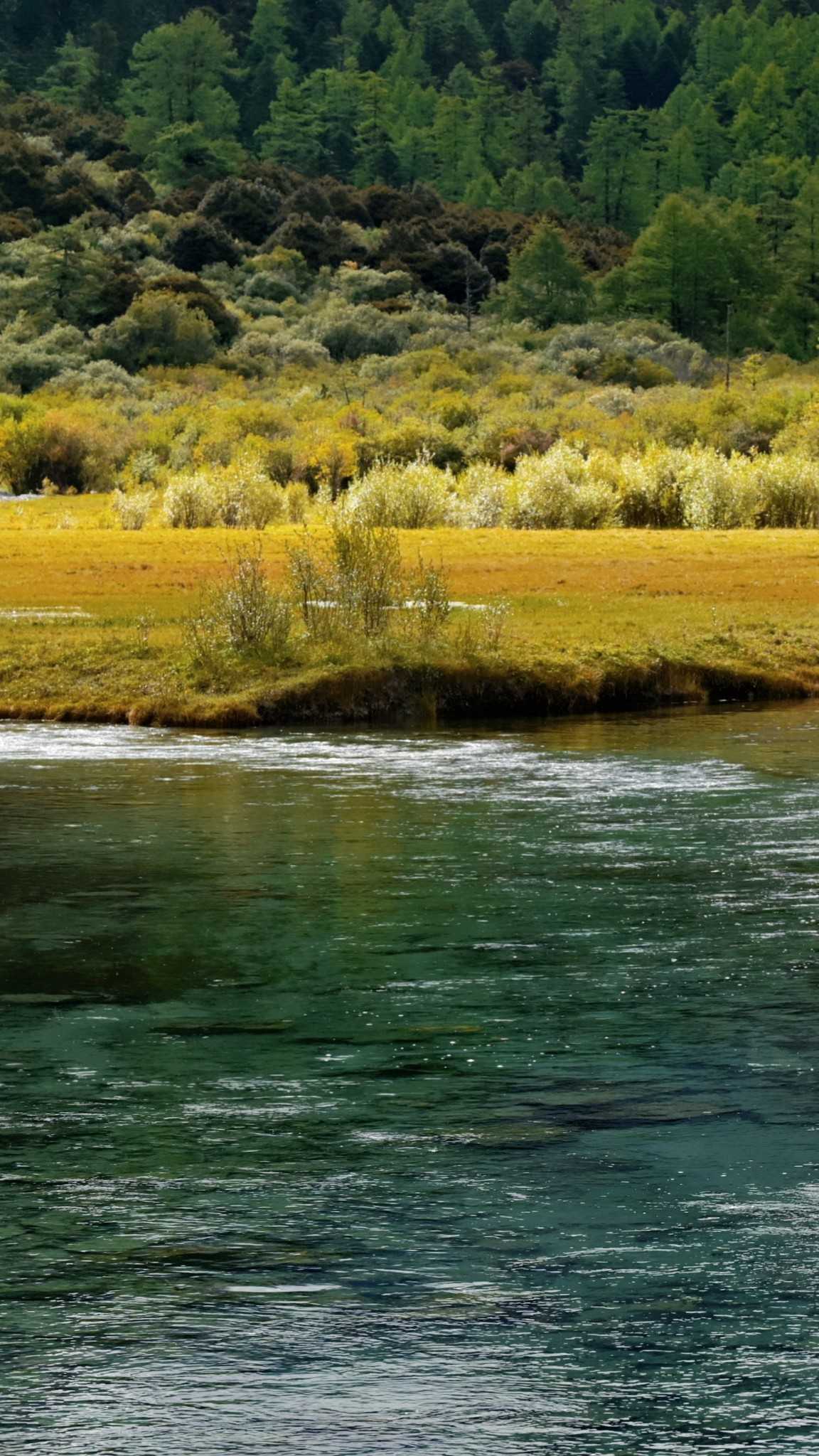 Daocheng Yading – Chonggu Meadow
The meadow is wide-open; even from far you can still see Chonggu Monastery near Zhaguanbeng. White walls and golden roof tucked among swathes of green—feels secluded and hidden in plain sight.
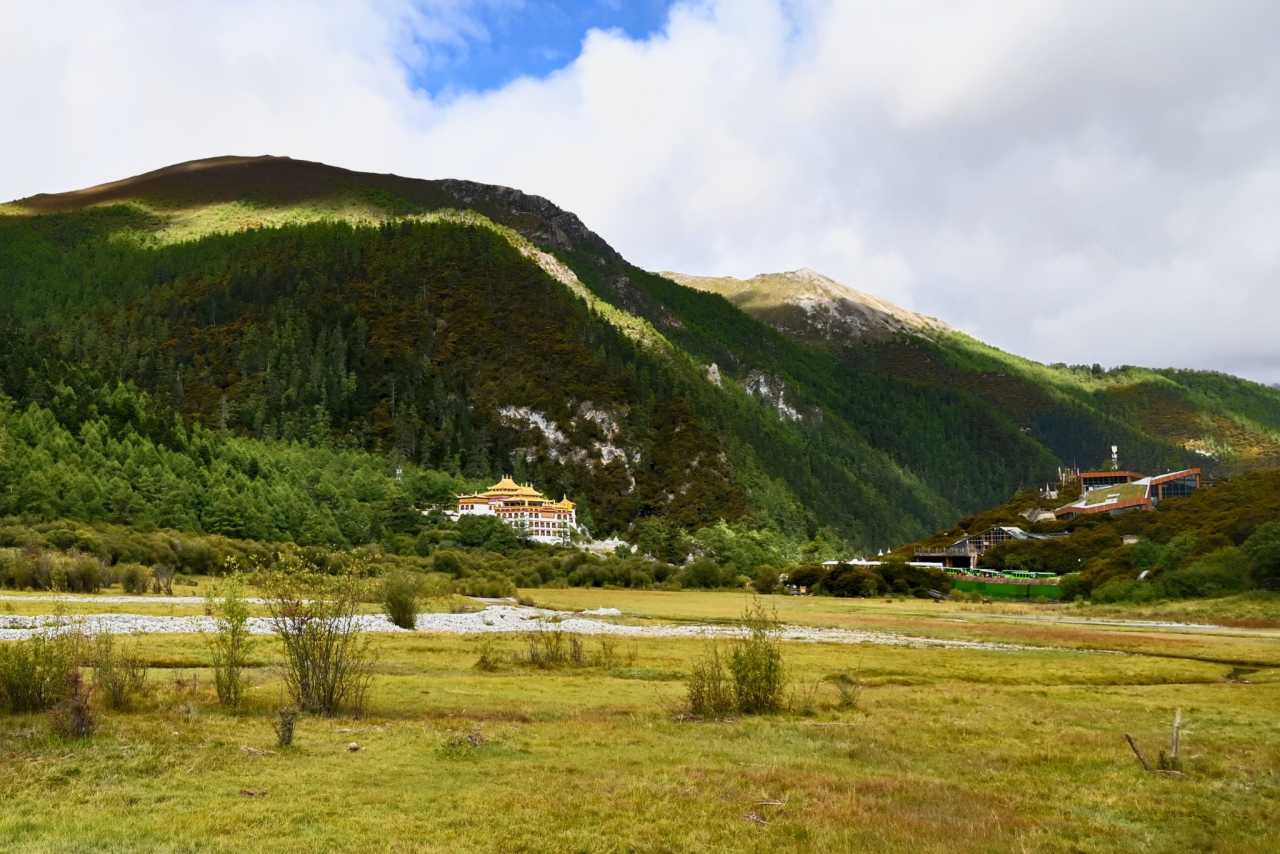 Daocheng Yading – Chonggu Meadow
Zooming in with telephoto, Chonggu Monastery looks full of divinity.
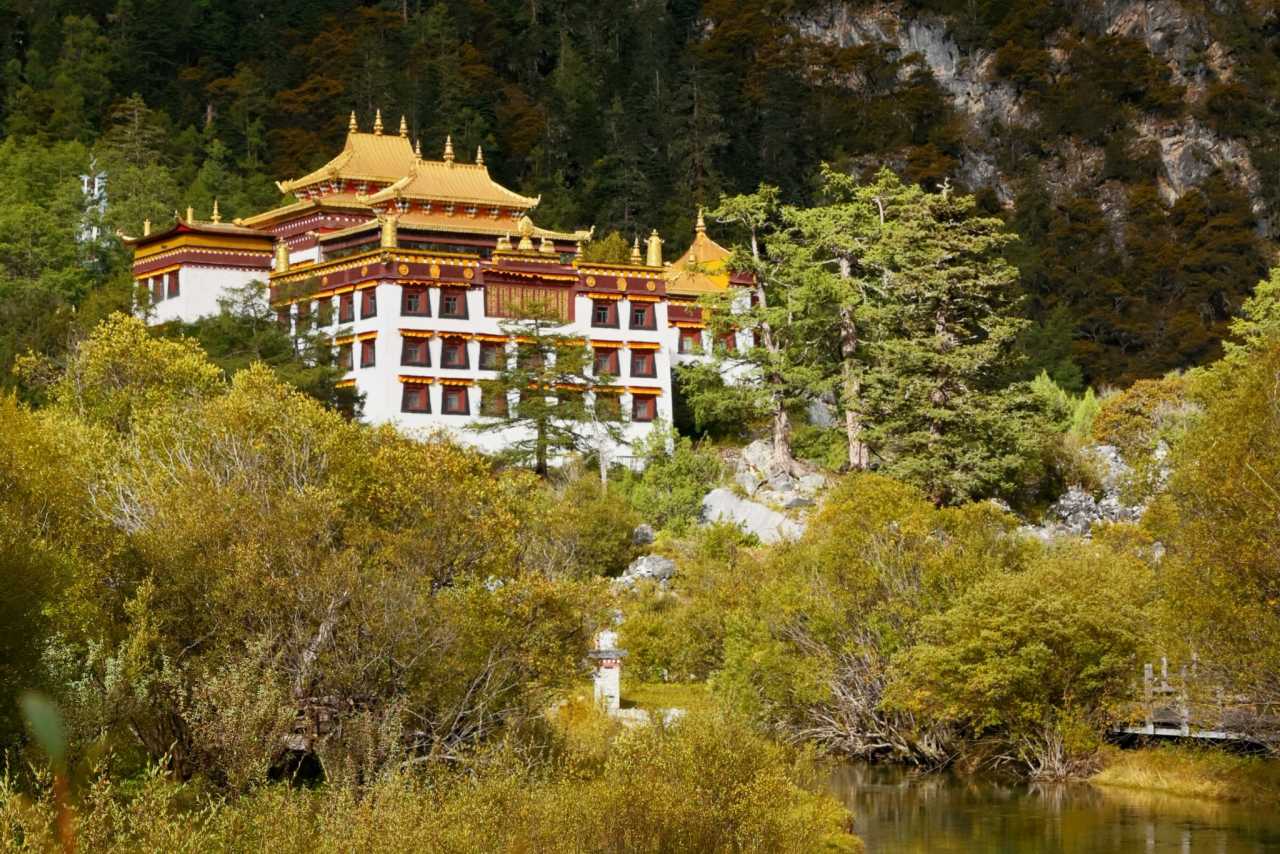 Daocheng Yading – Chonggu Meadow
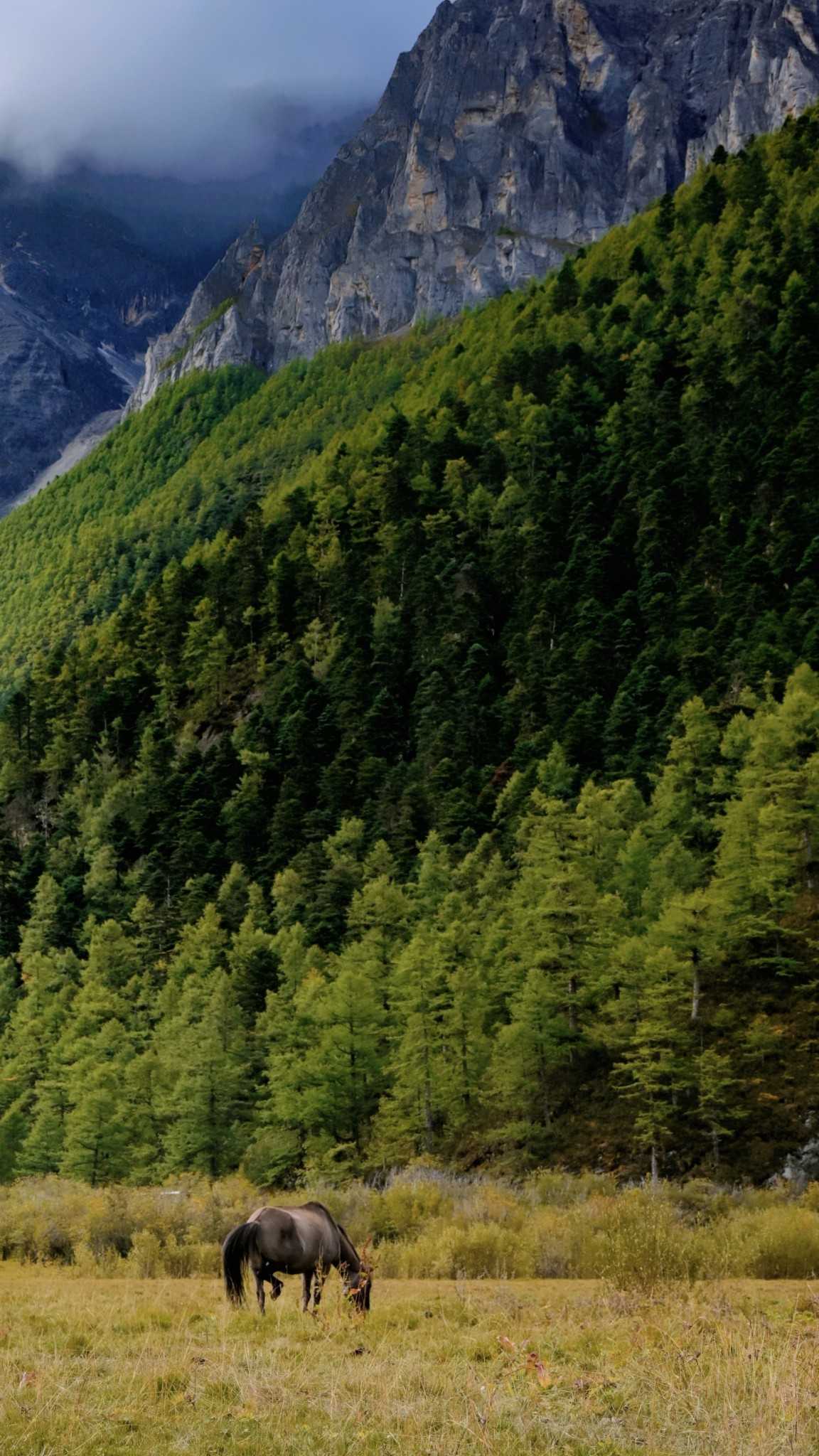
Geologically, tens of millions of years ago the eastern Tibetan Plateau rose strongly; climate shifted from arid desert to humid forest, allowing water systems to form.
 Daocheng Yading – Chonggu Meadow
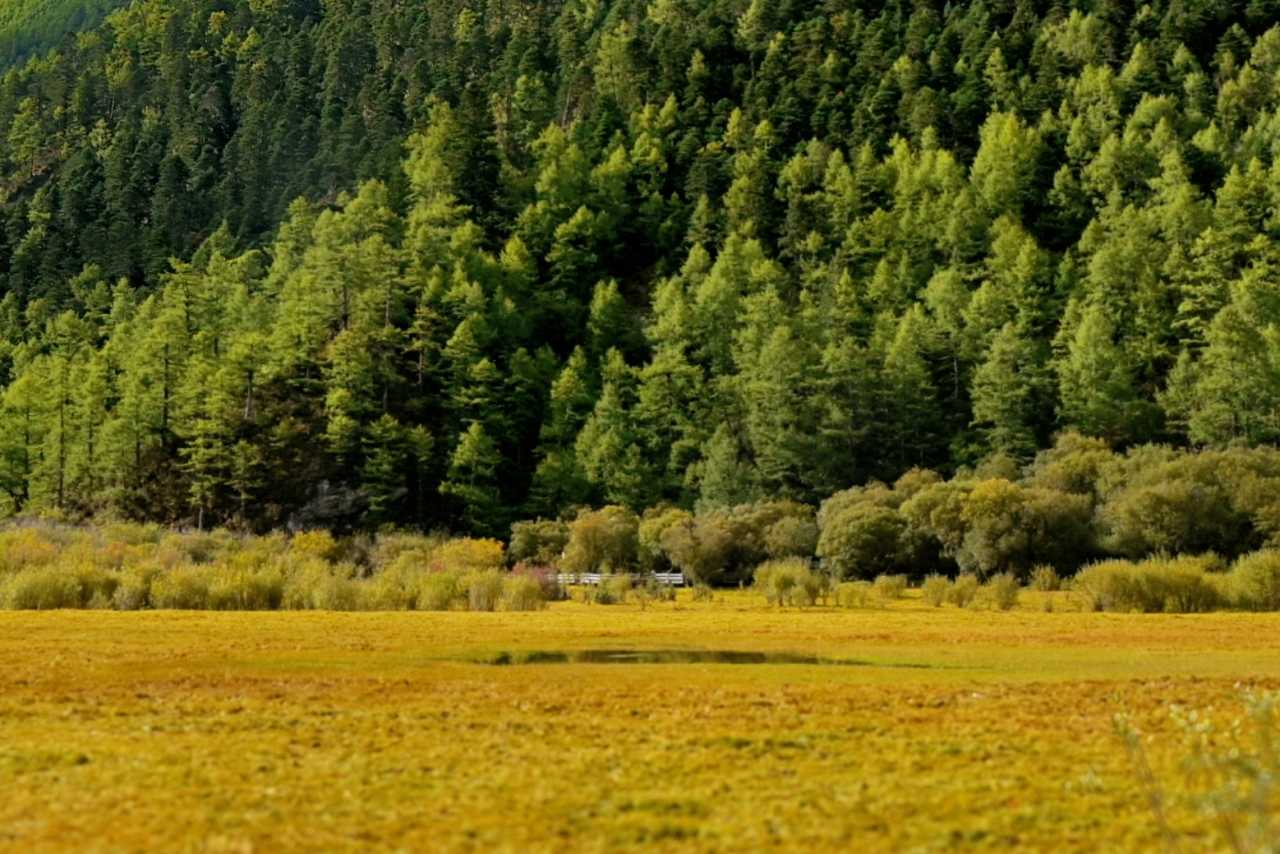
Glaciers retreated in the warm-humid climate; glacial deposits blocked valleys and formed lakes. As lakes drained, beds exposed and the former lake zones became meadows. Meltwater of the Gongga Silver Gully weaves through, nourishing the grass day and night, shaping today’s landscape.
 Daocheng Yading – Chonggu Meadow
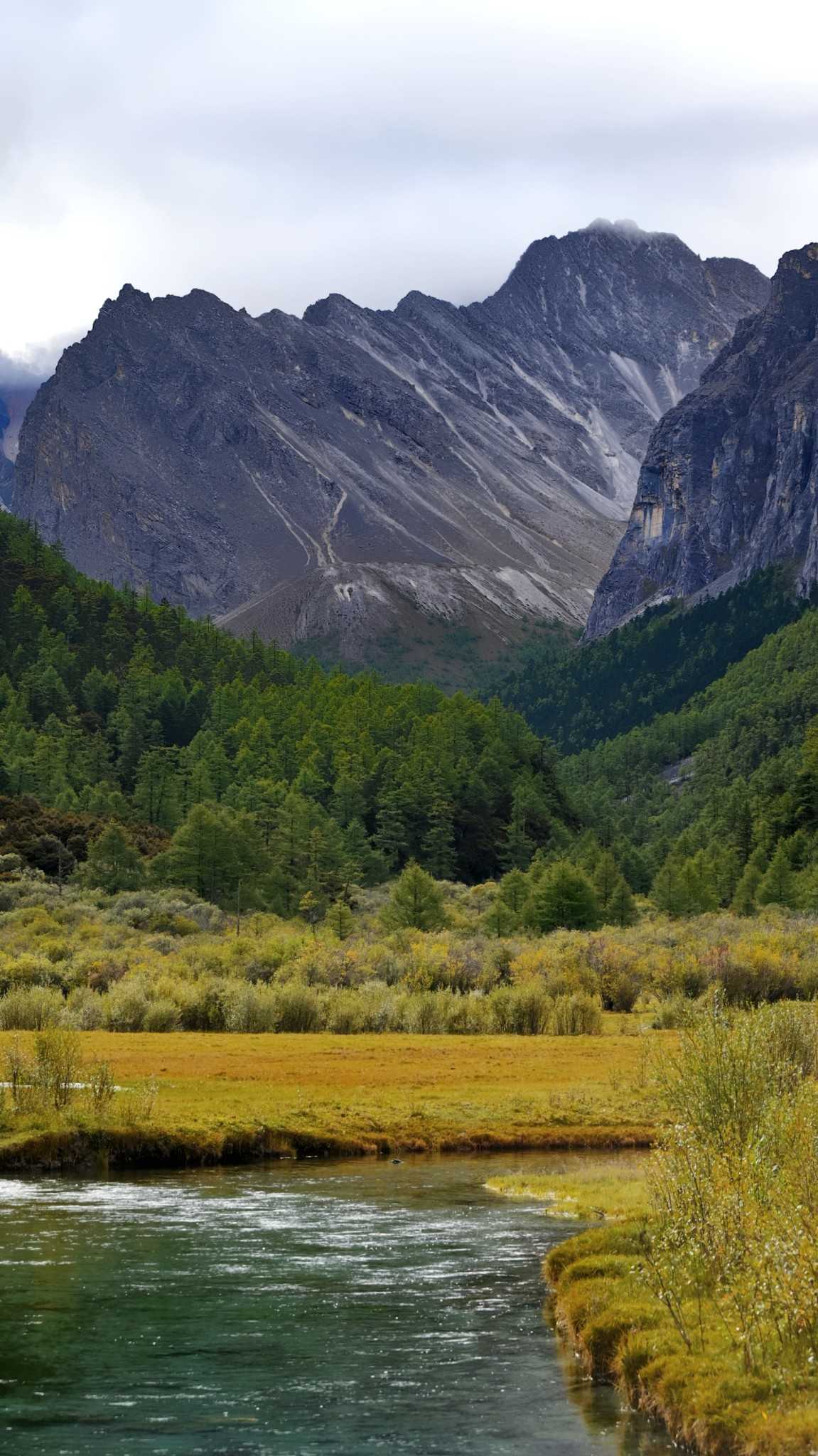
On sunny days, afternoon light is richest here. The meadow spreads like a giant brocade; streams meander between grasses, water clear and bright.
The whole valley soaks in honeyed halos; even tiniest twigs bathe in it. Even blades of grass are traced with golden outlines.
 Daocheng Yading – Chonggu Meadow
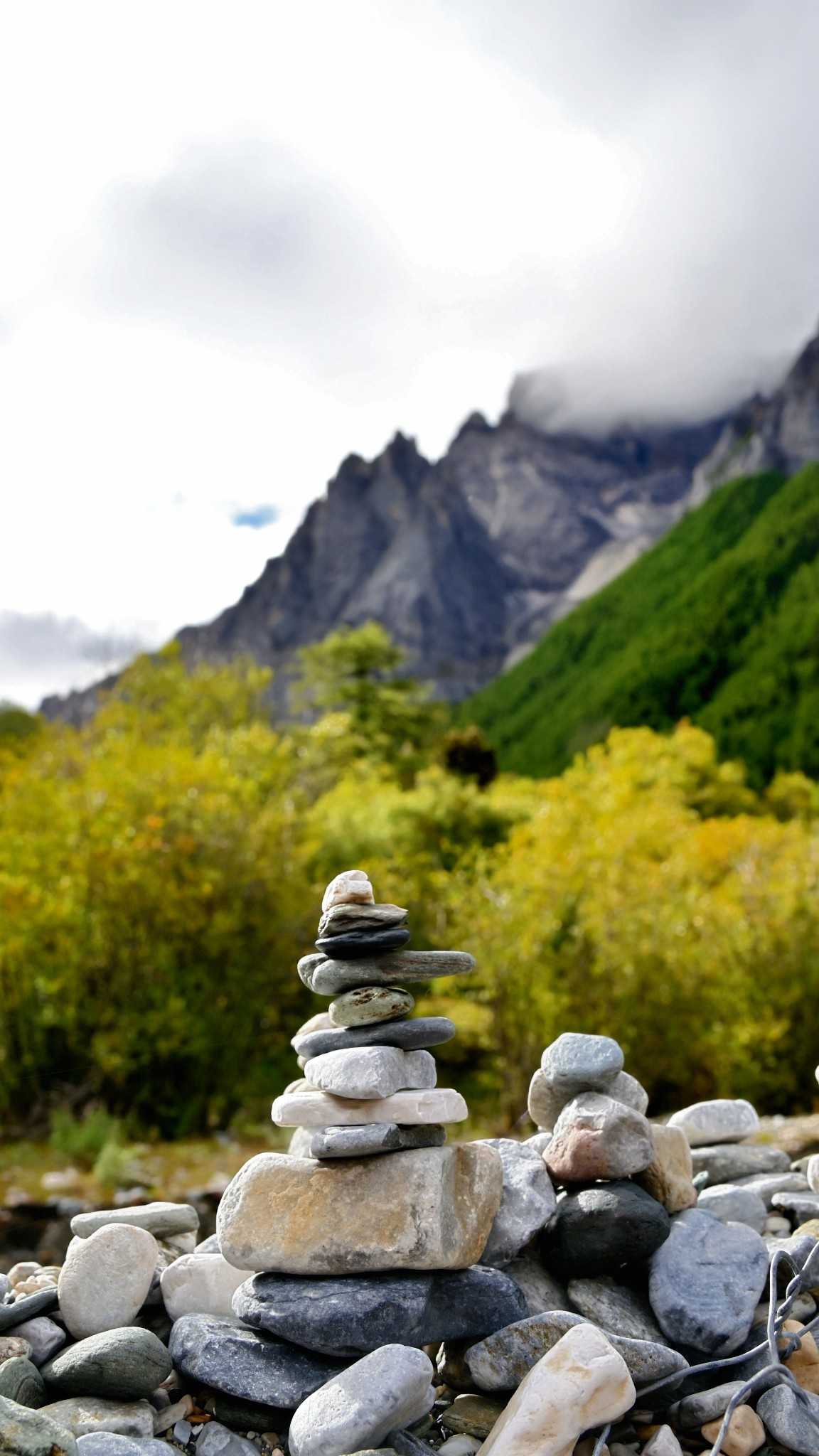
If lucky to avoid cloud, you can look up to both Xiannairi and Xianuoduoji. If peaks are covered, then look at countless mani piles by the stream; feel wishes in the wind—you can read travelers’ silent hopes placed upon stones.
 Daocheng Yading – Chonggu Meadow
Manjushri Wisdom Line – 03 – Toward Sacred Water Lake
At the edge of the meadow, the walkways slip into forest, like a natural seam, tracing the stream upstream.
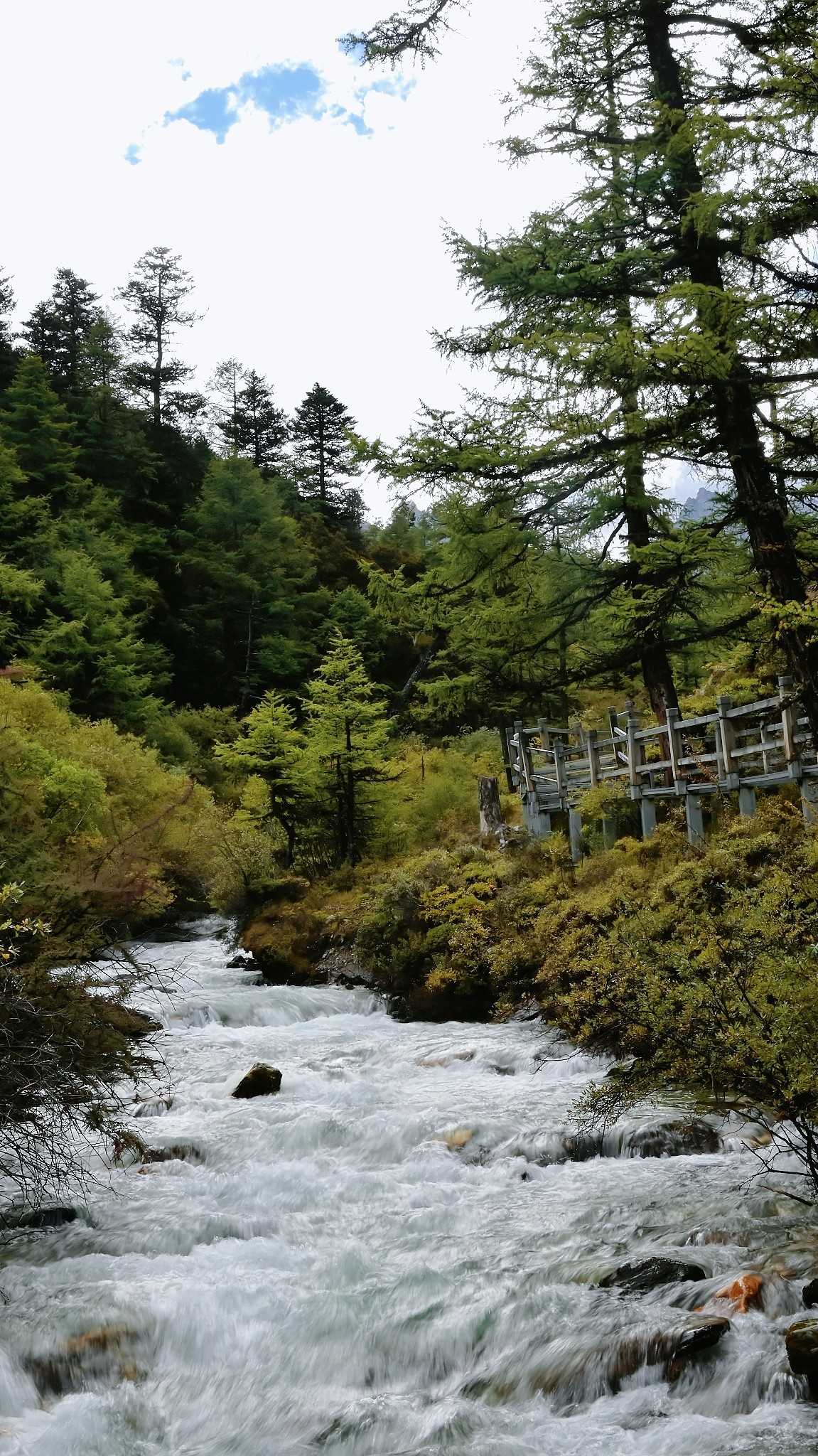 Daocheng Yading Scenic Area
We moved opposite the flow, facing the snow peaks, ears filled with the cool continuous murmur—a cold, uninterrupted background that deepens the woods.
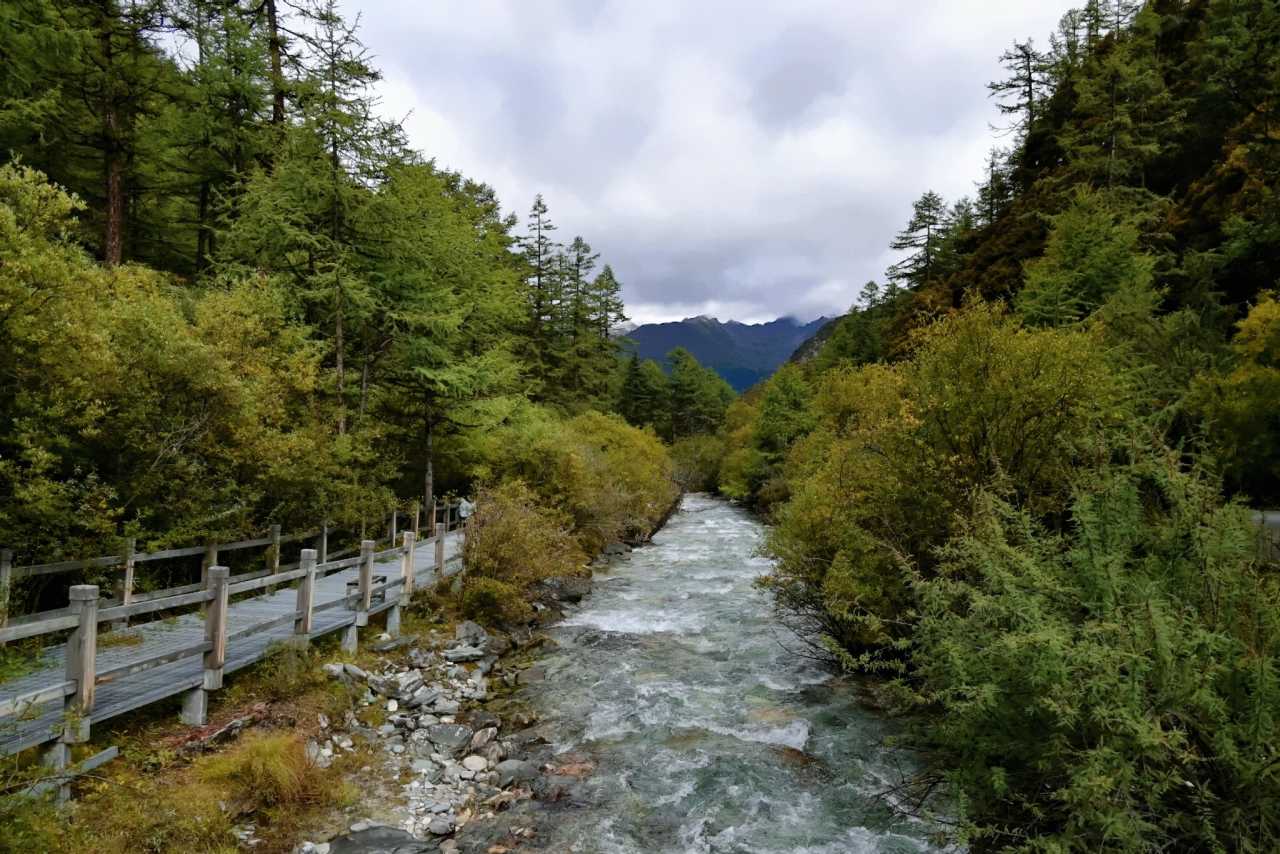 Daocheng Yading Scenic Area
On stony flats off the walkway, you’ll find mani piles of various shapes and heights, made of flat smooth pebbles carved by water. From afar, they look like a silent forest grown from wishes—each a tiny monument stacked with heart—countless strangers’ solidified footprints.
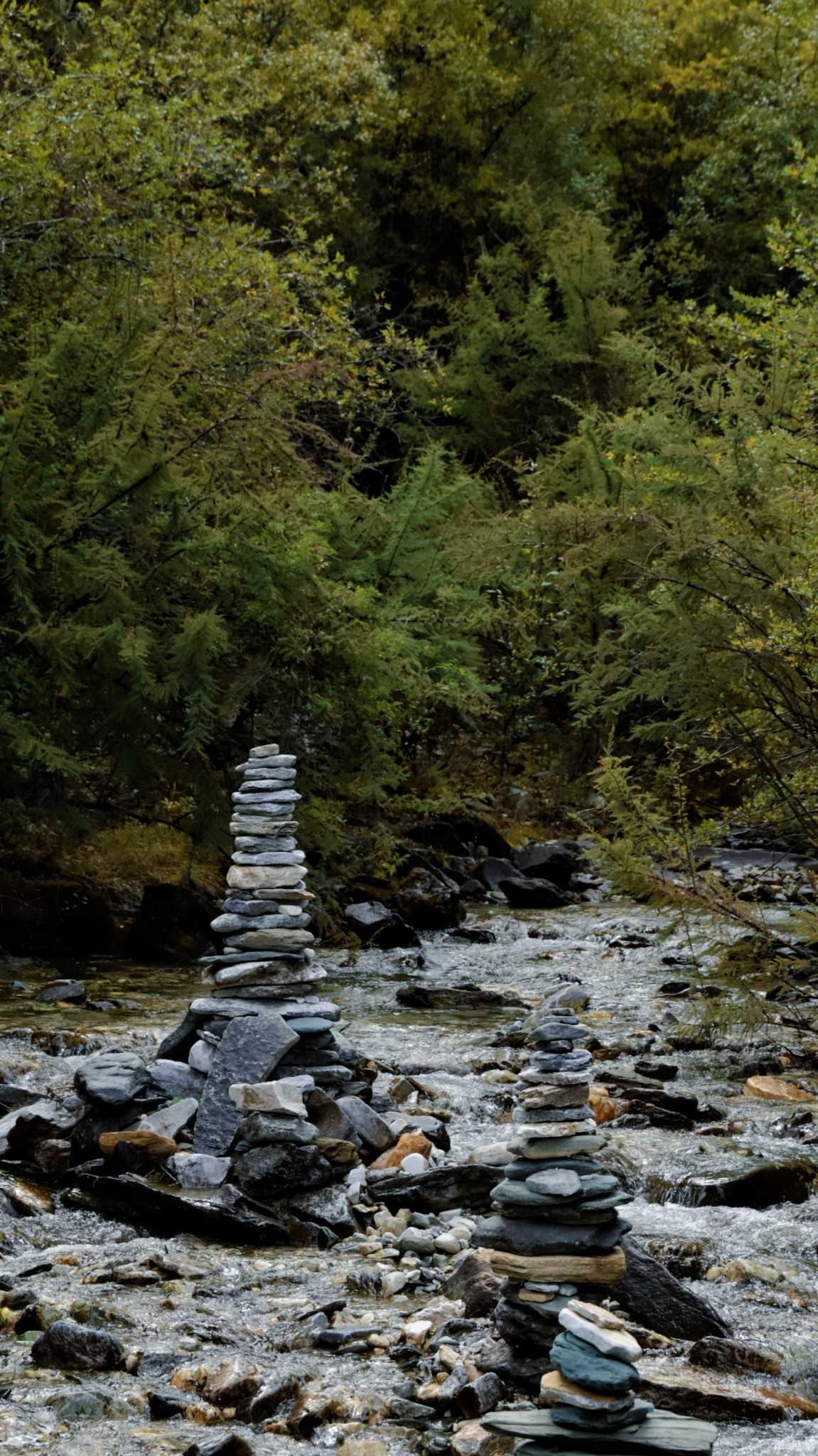 Daocheng Yading Scenic Area
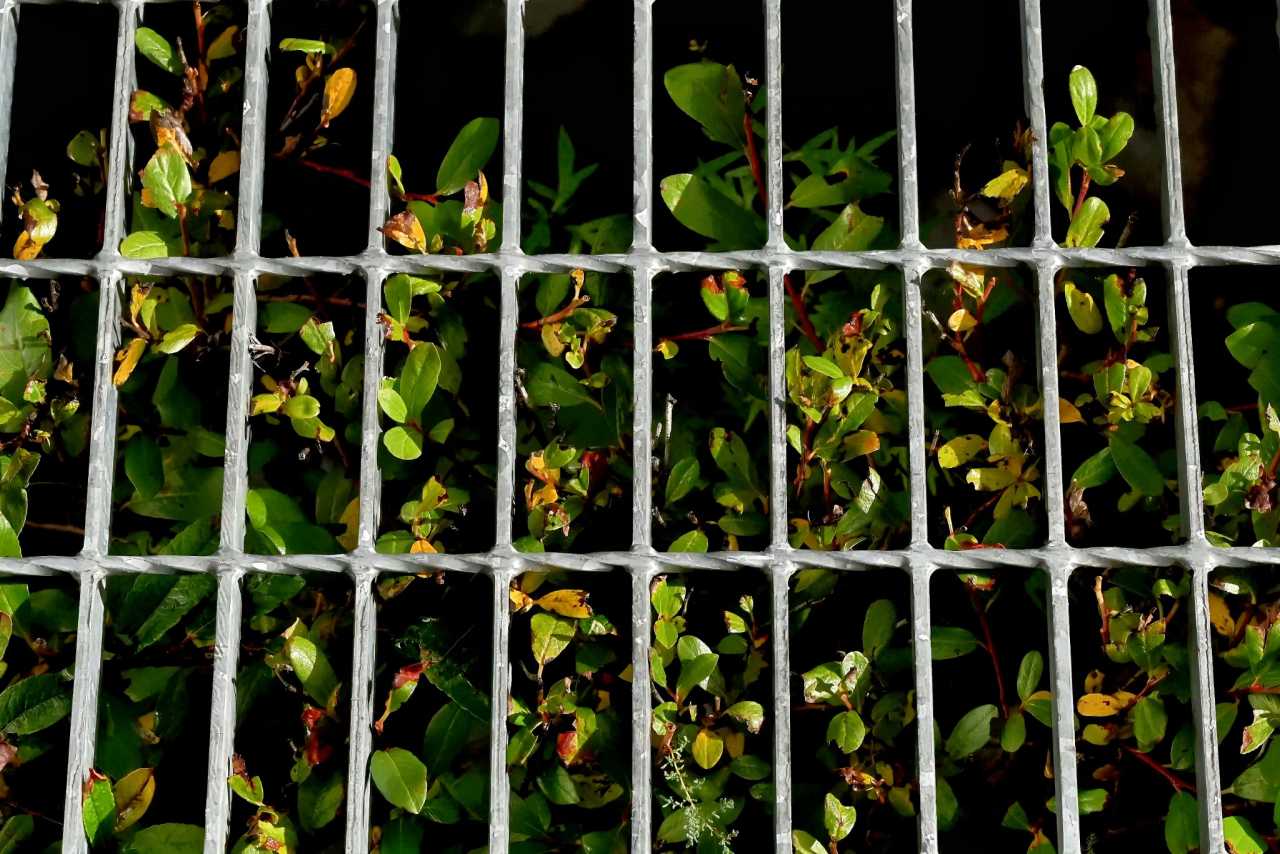
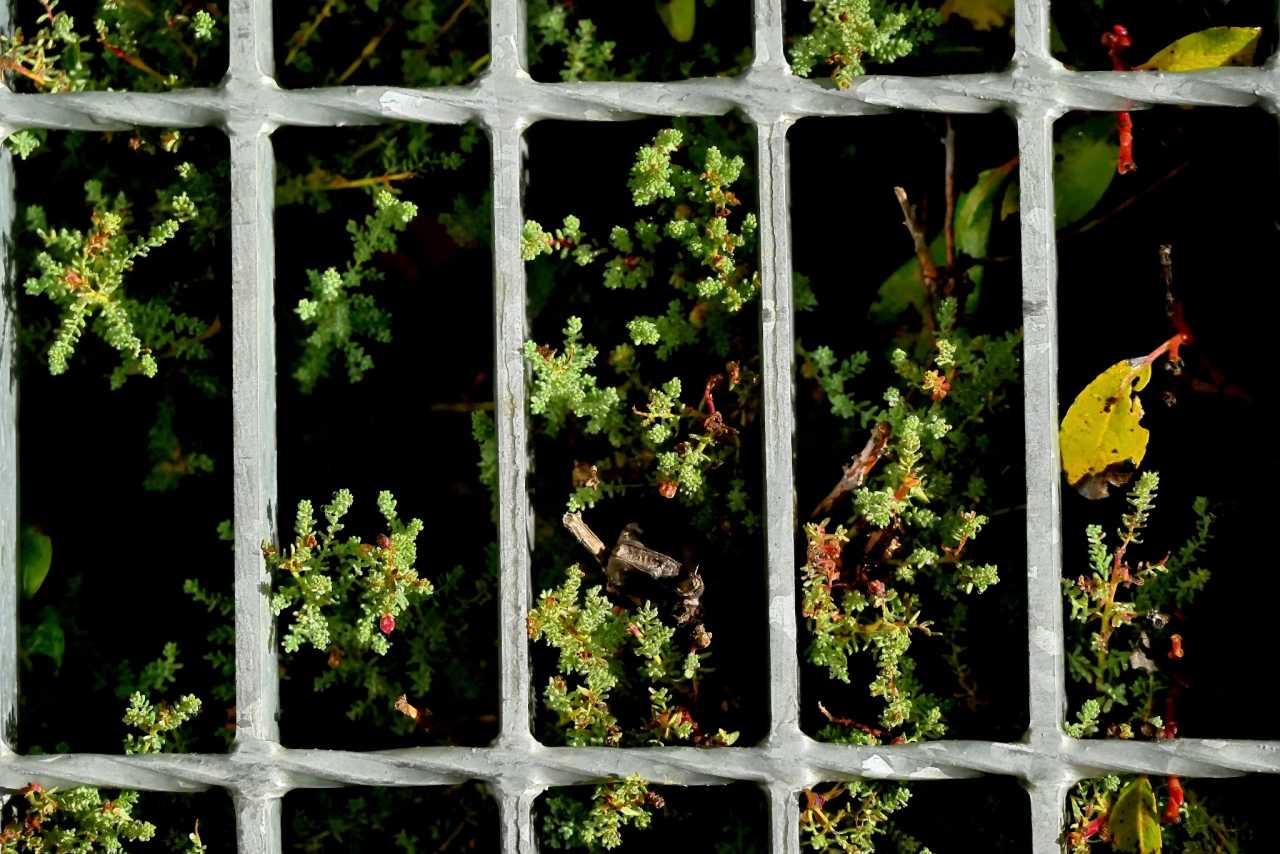
About 90% of the walking sections on the Guanyin and Manjushri routes use iron grating boardwalks—slender bars closely joined into latticed plates.
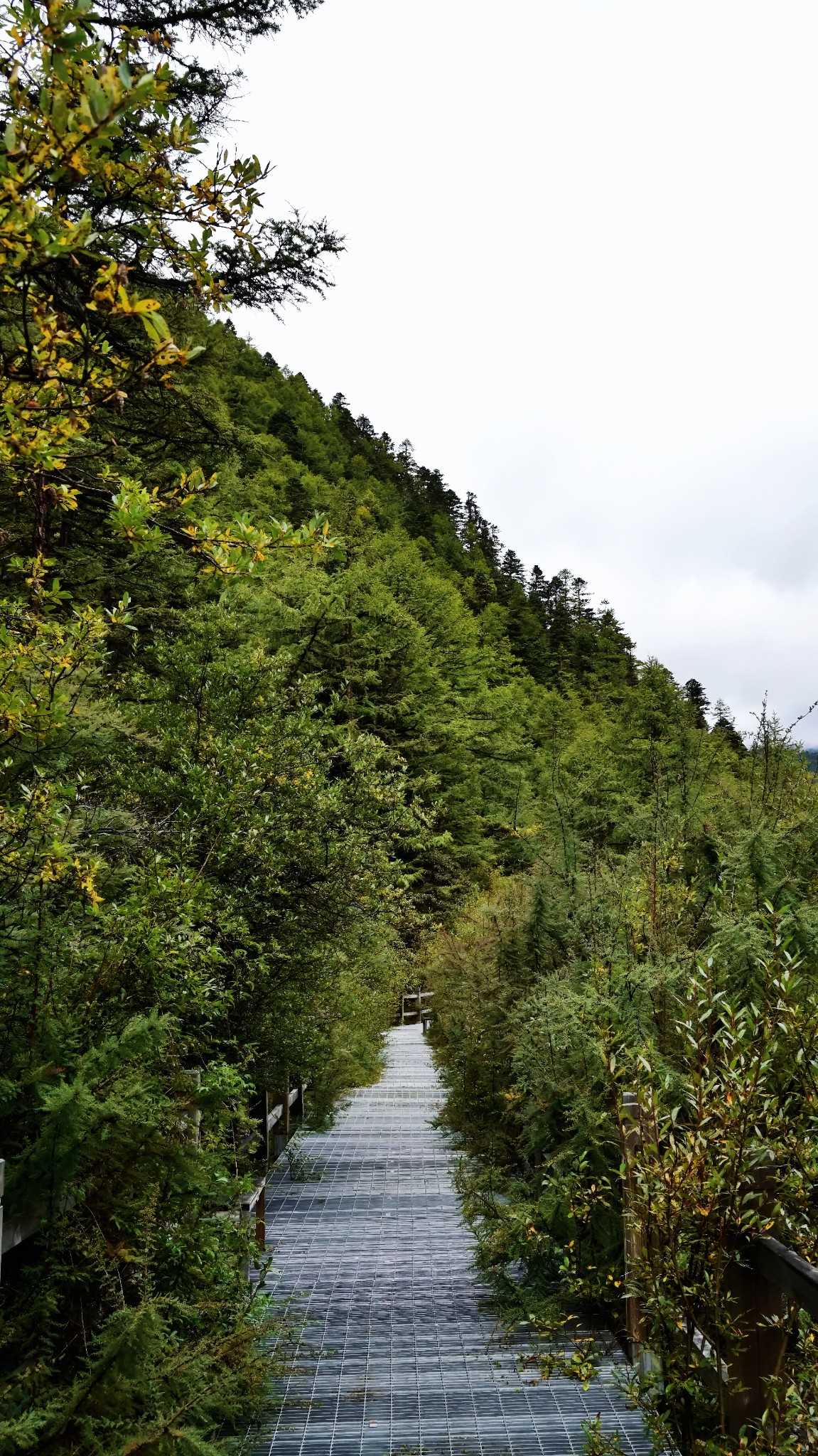 Daocheng Yading Scenic Area
Though it looks abrupt, the design fits real needs. In highlands the weather varies; winters are long; rain, snow, and hail are common. Latticed iron boardwalks don’t accumulate water or snow, reducing icing and slipping risks.
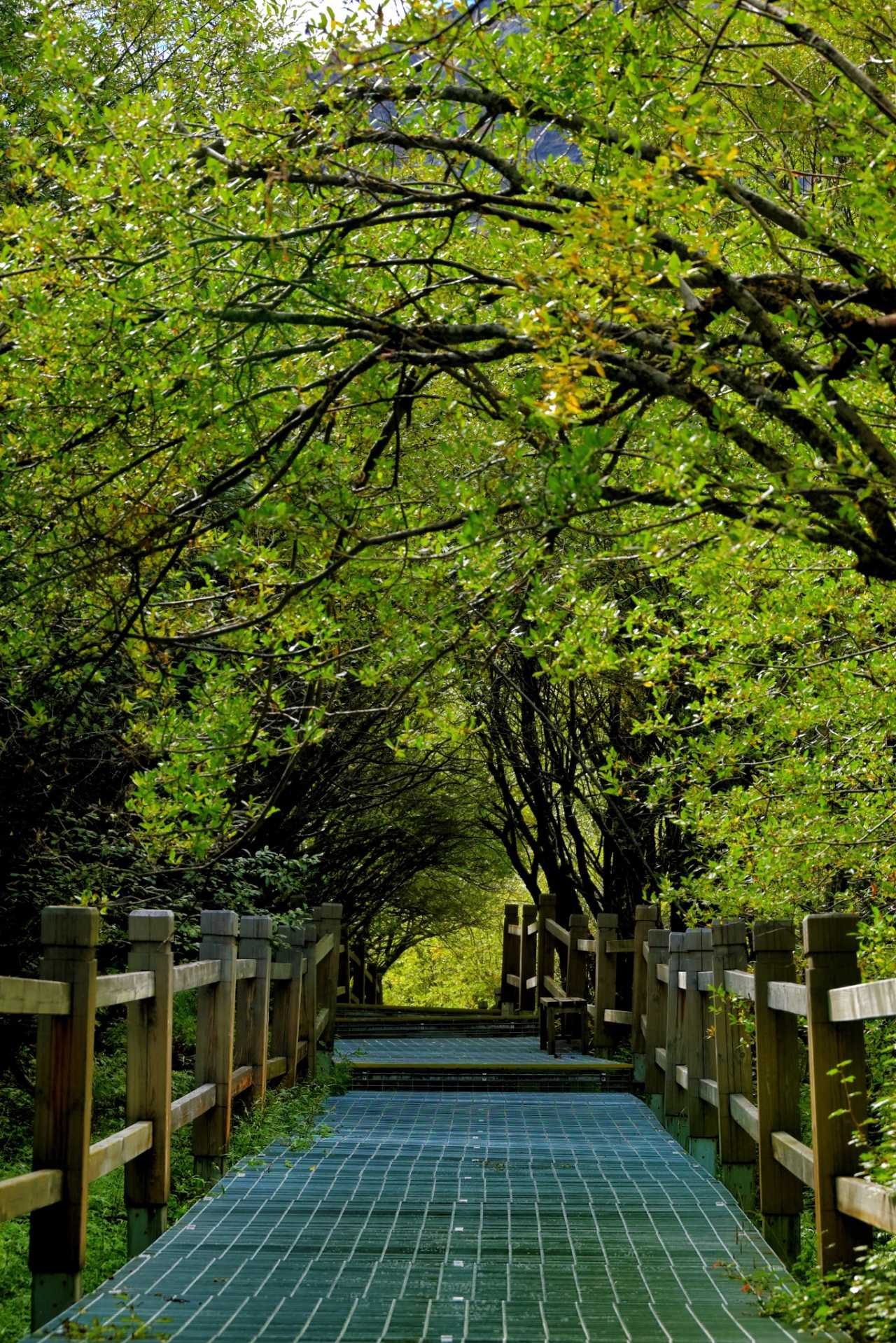
Wildflowers and grasses below can still get rain and sun, minimizing impact on nature. Metal is sturdier than wood and withstands tourists and wildlife better, easier to maintain.
 Daocheng Yading Scenic Area
The only downside: narrow trekking pole tips pierce too easily; they won’t take weight and often get stuck in the lattice holes. Hard to use, adding burden. So if your day is short line + half long, poles (especially sharp-tipped) aren’t recommended.
But! Poles help on the Vajra Challenge Line. Though it also has some iron walkways, they’re only ~40%. Most is dirt, mountain paths, real terrain; some sections are under slope-side construction—slippery. The descent is long and steep; having a staff to brace and rest helps a lot.
 Daocheng Yading Scenic Area
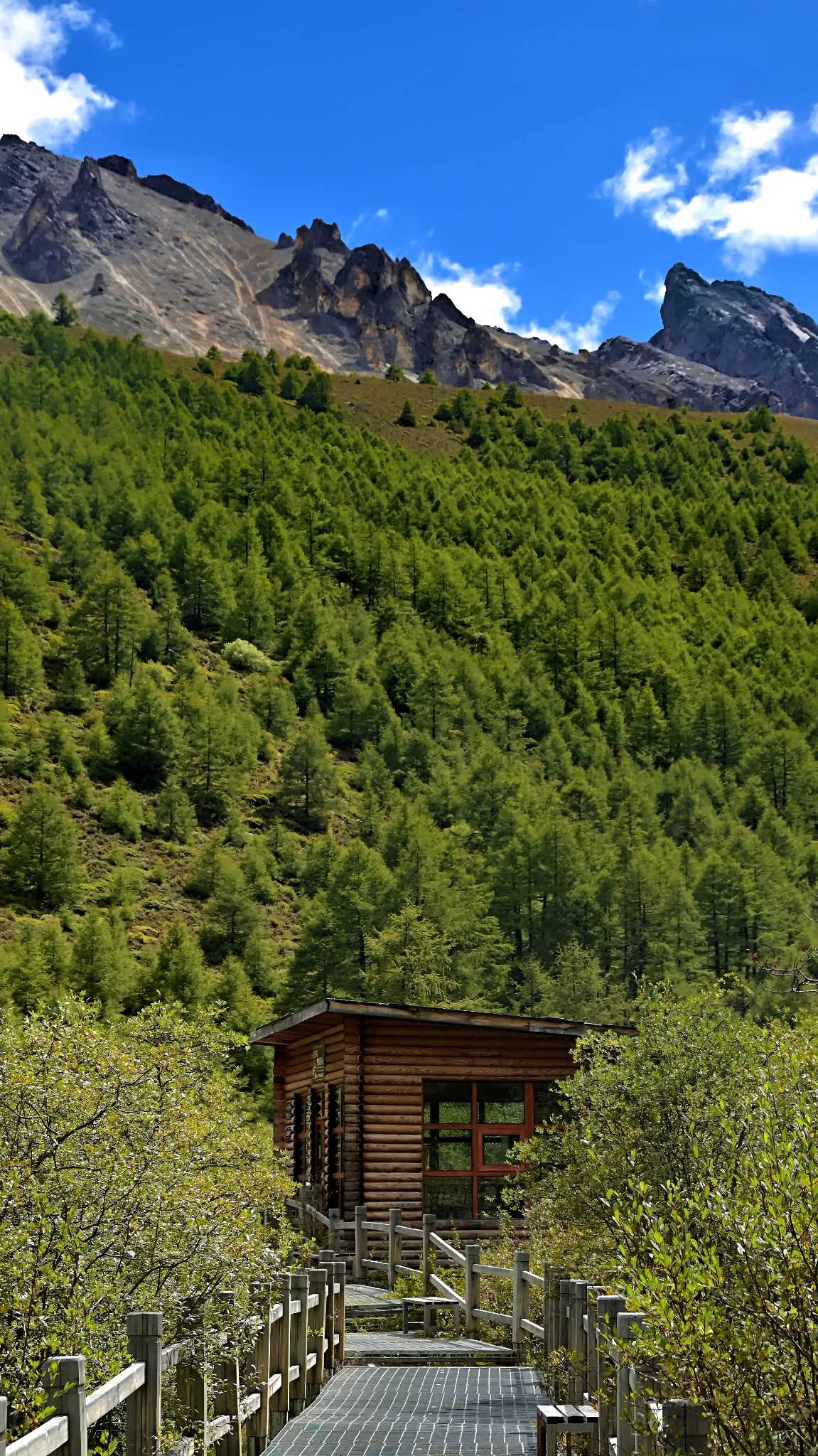
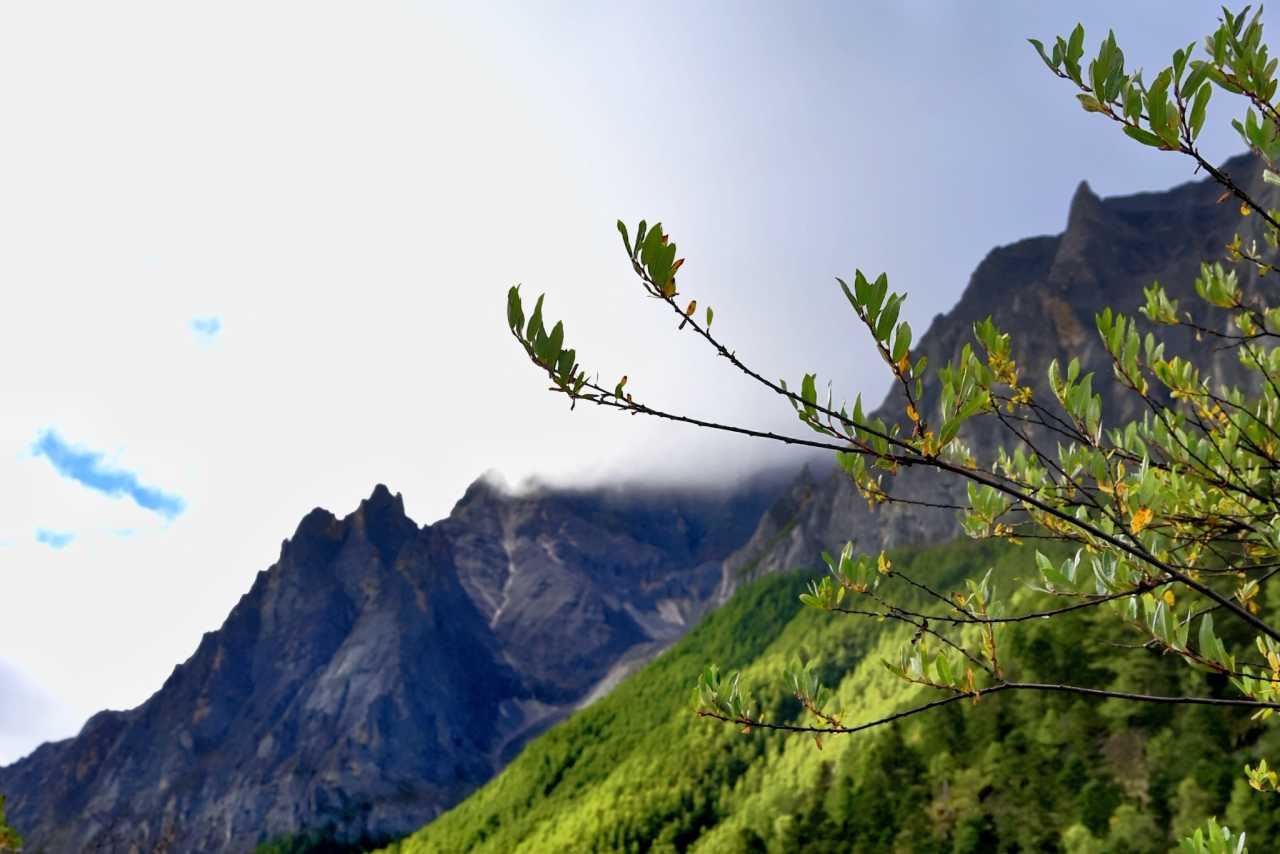
This segment is truly beautiful; inside it your vision reshapes. At human height looking up, the world is layered—each layer filled by towering fir, spruce, wilderness, massifs, and sky.
 Daocheng Yading Scenic Area
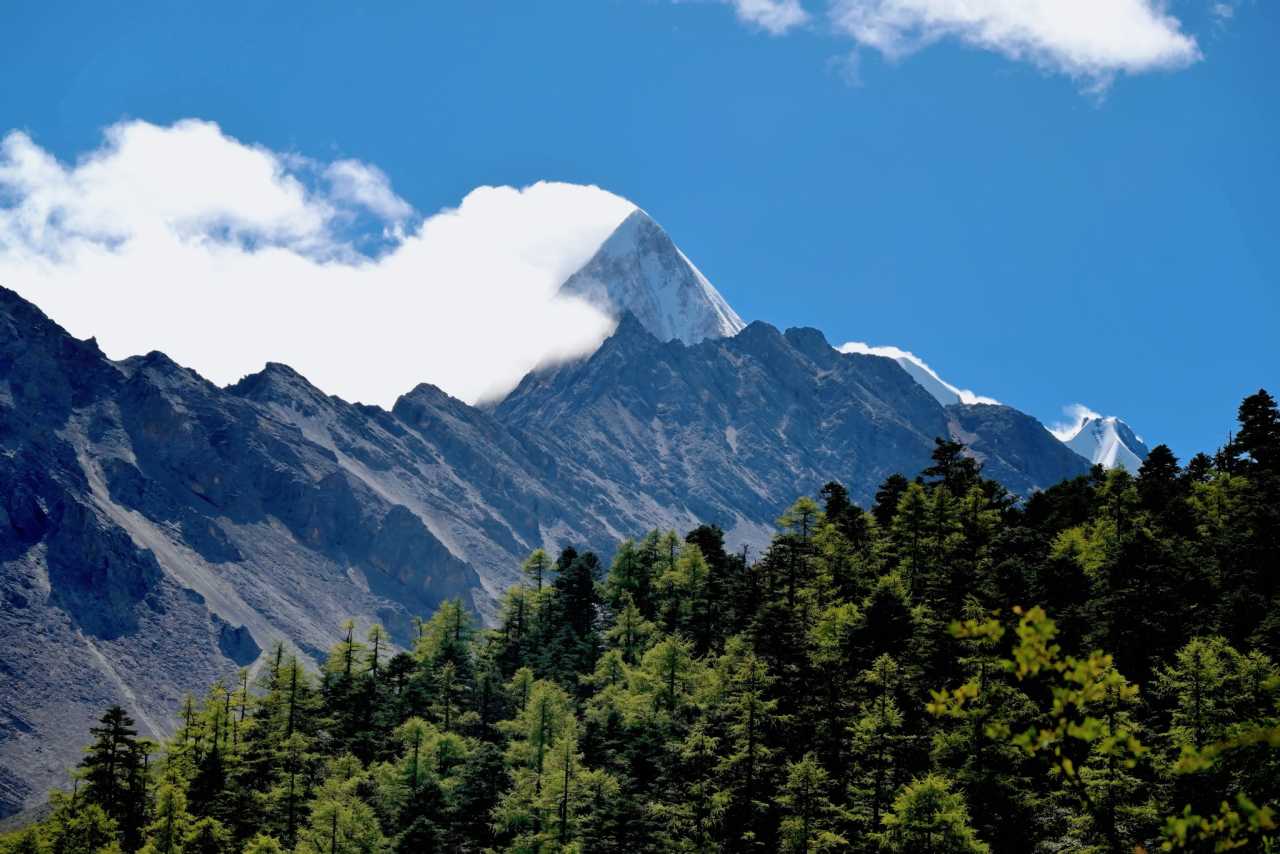
In the distance, only mountain tips that break free of forest sketch a rugged skyline;
 Daocheng Yading Scenic Area
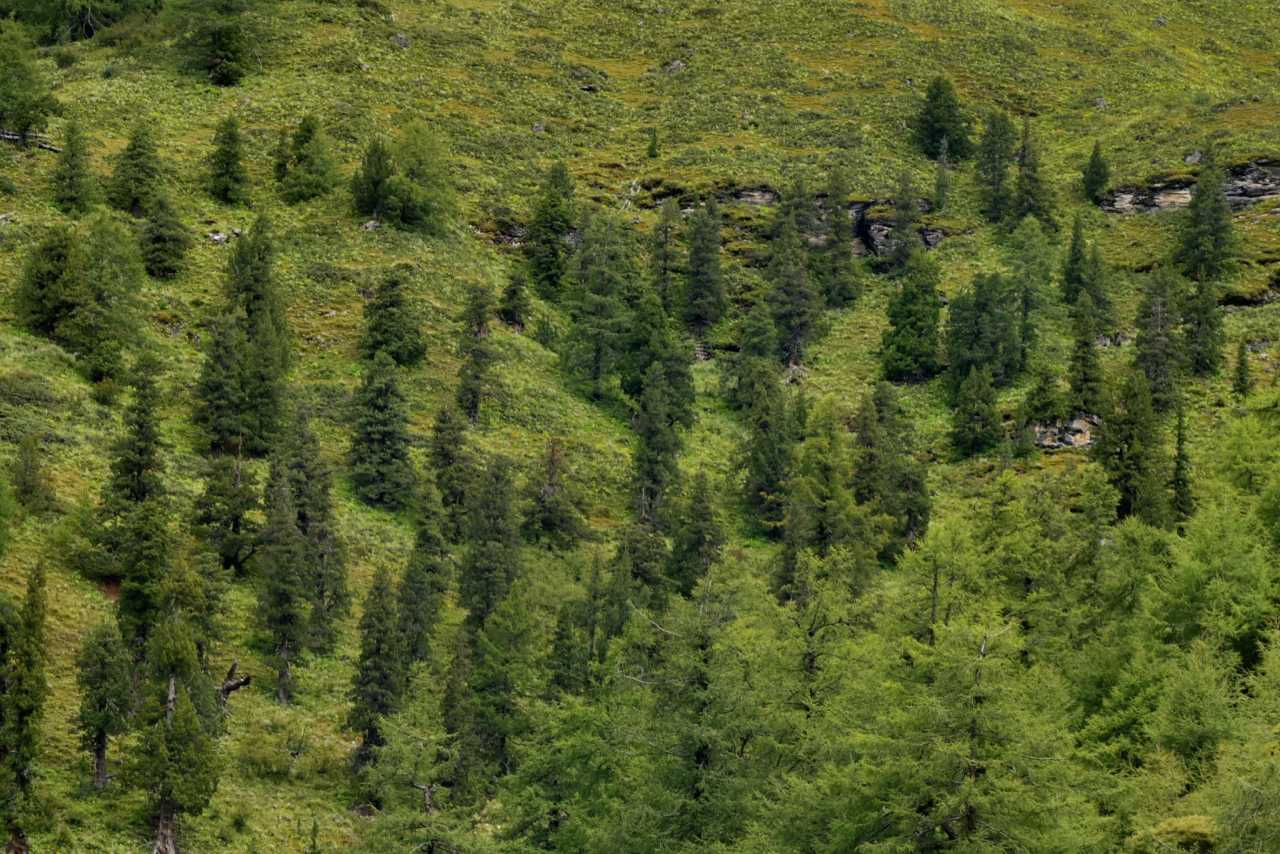
Up close, tall proud trees weave a deep canopy, sifting flowing, mottled light.
 Daocheng Yading Scenic Area
As steps climb, breath grows heavy; vegetation quietly changes. Terrain rises; moisture of the meadow fades; air turns crisp—as if nature silently completed a “transfer of power.”
 Daocheng Yading Scenic Area
Broadleaf forest with large leaves gradually gives way to fir and spruce—like silent monks in dark green robes, standing orderly on poorer soils.
 Daocheng Yading Scenic Area
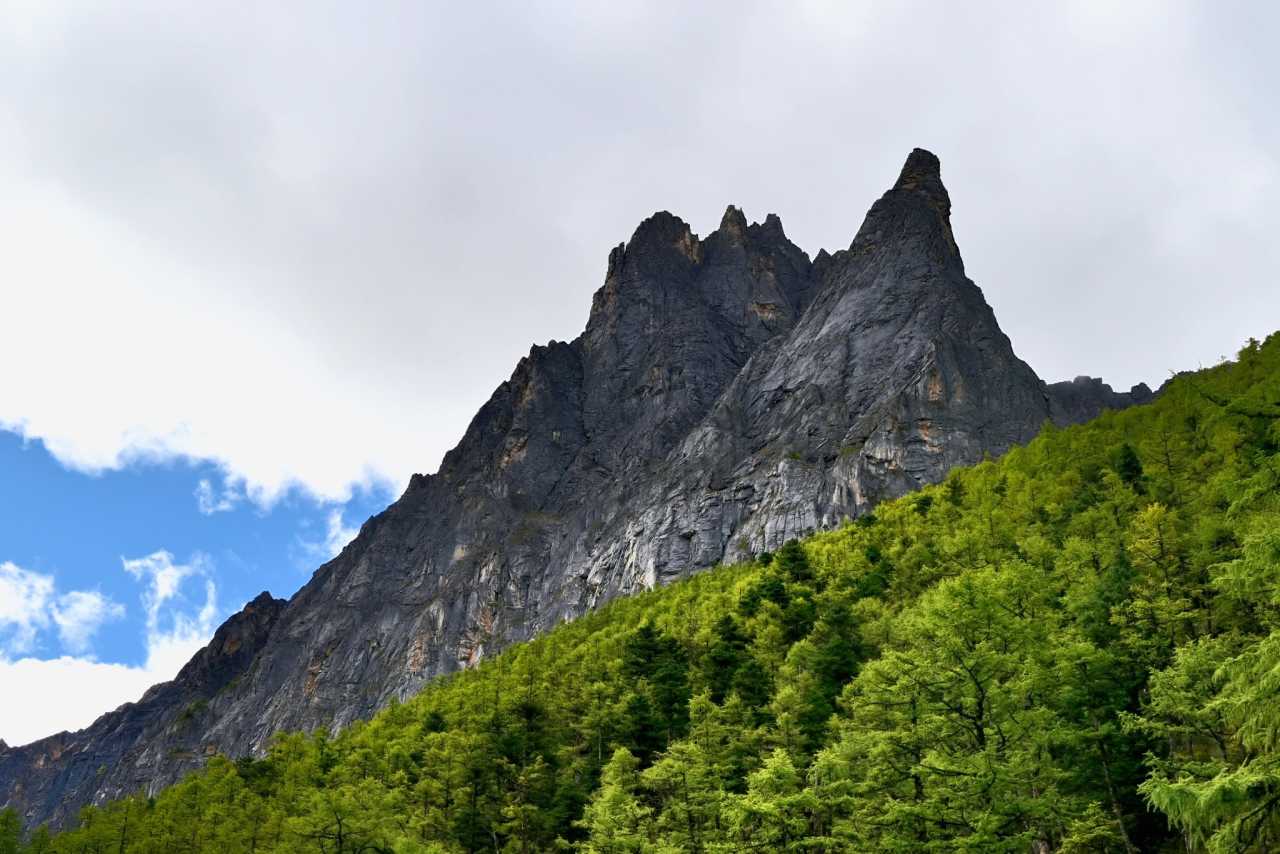
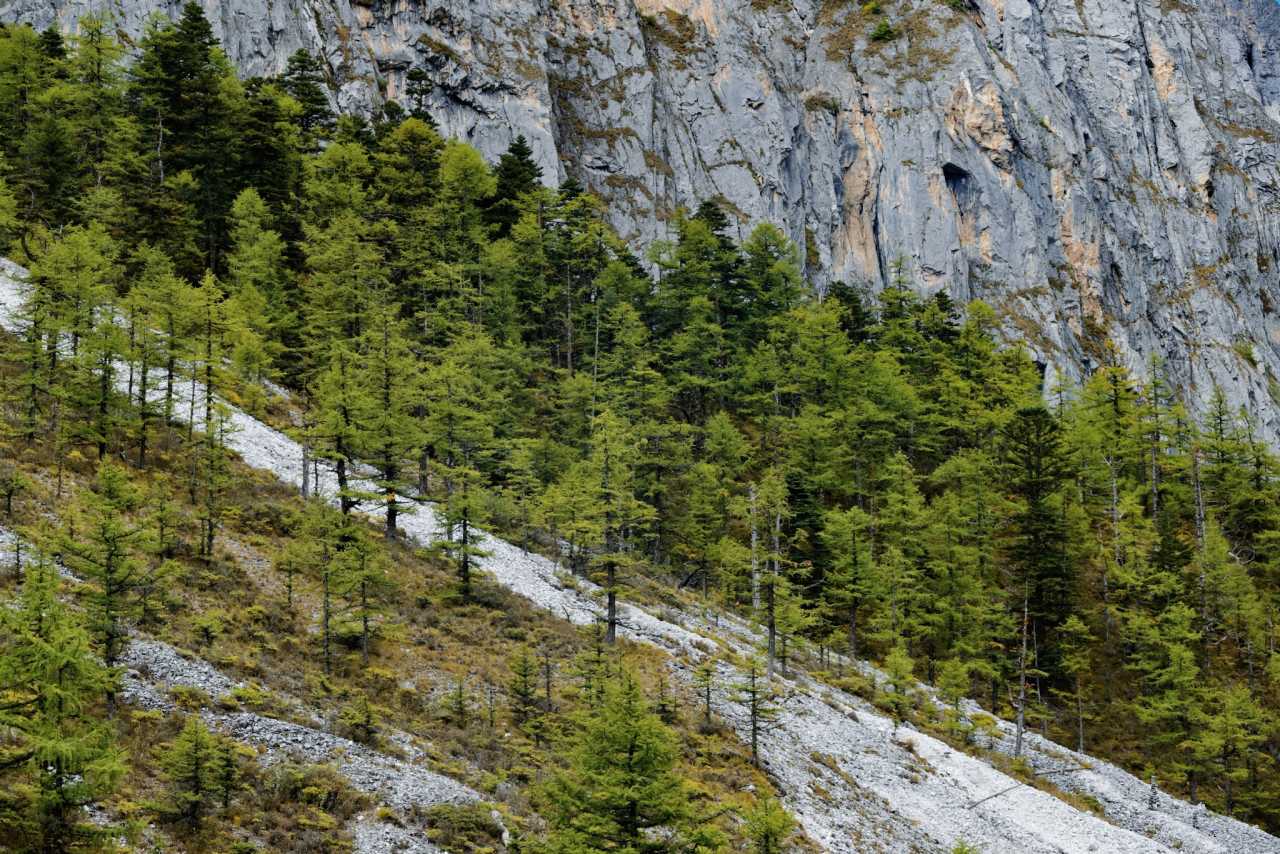
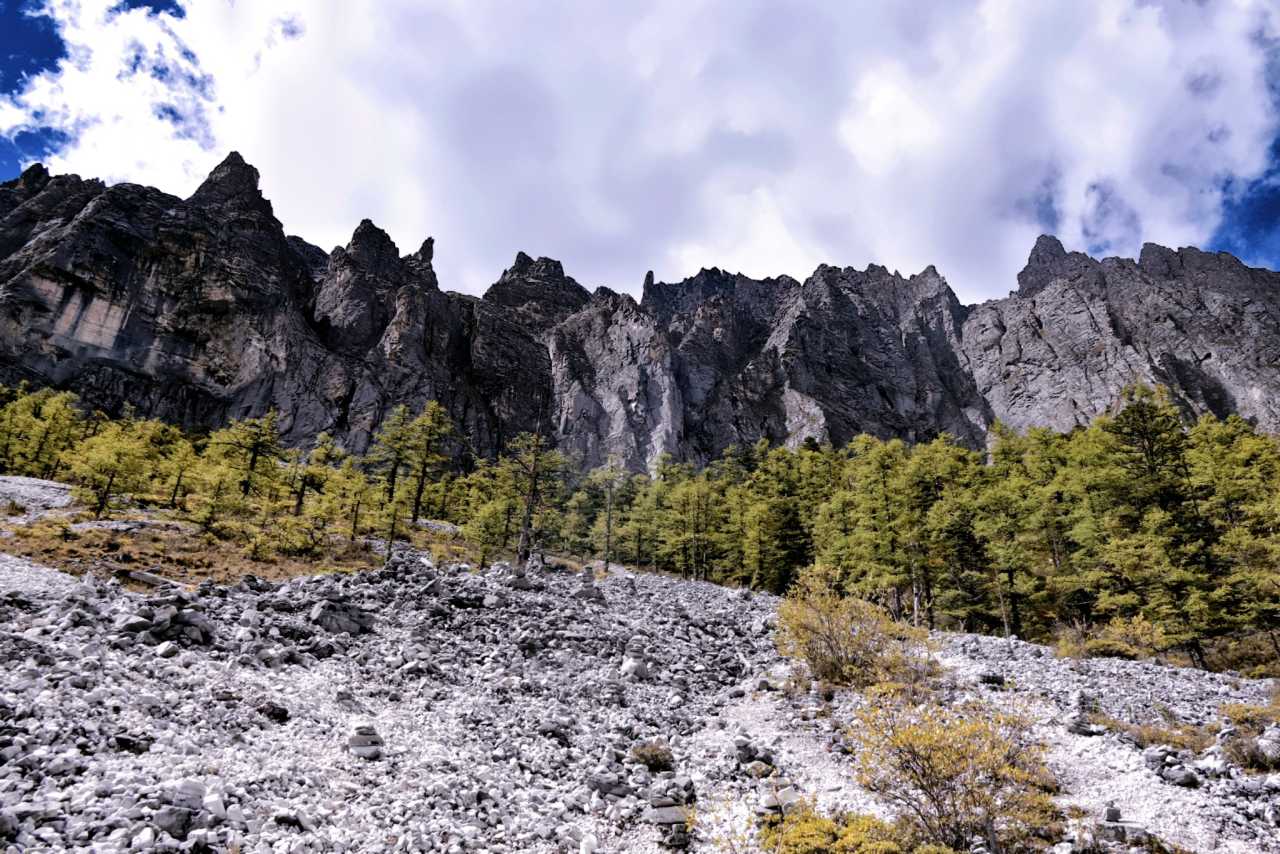
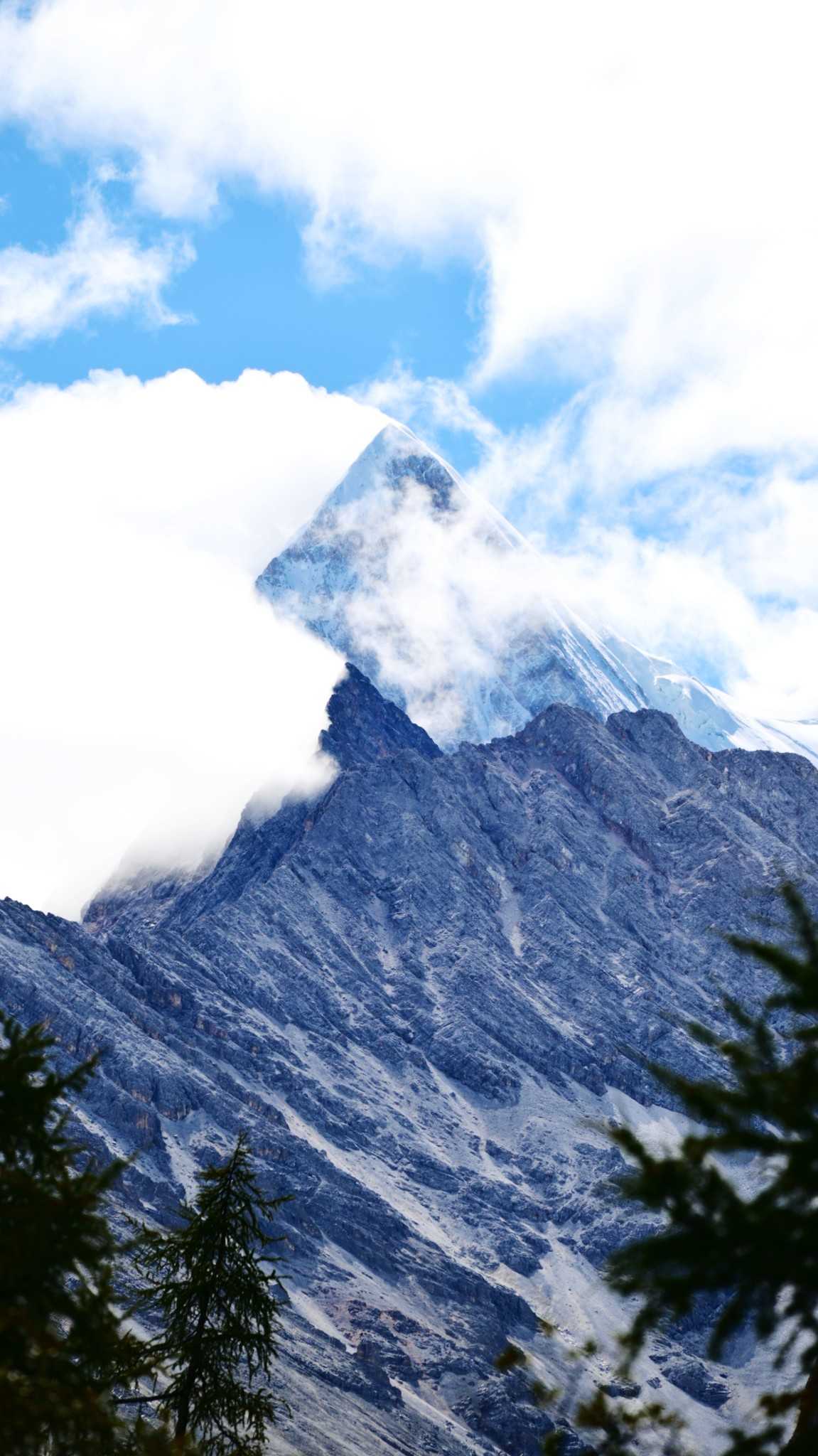
Still not the end. Higher up, even this dark green thins. Trees humbly retreat; vast rocks bare their original faces.
 Daocheng Yading Scenic Area
After millions of years of weathering, raw browns and grays reflect hard light under harsh sun.
 Daocheng Yading Scenic Area
 Daocheng Yading Scenic Area
 Daocheng Yading Scenic Area
Few visitors walk to Sacred Water Lake; you may not meet a soul even after ten minutes—but journeys are never lonely.
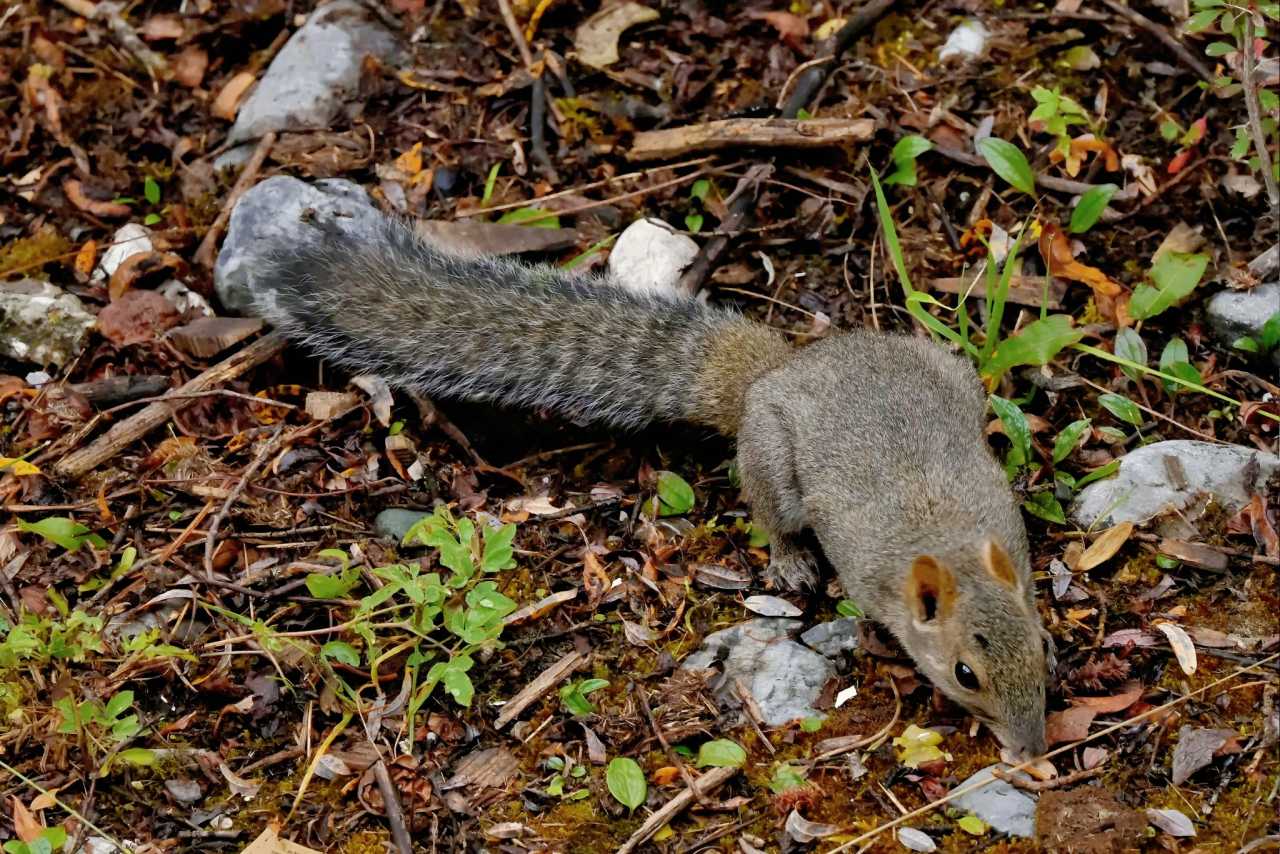
Suddenly, a quick shadow darts under mottled light—likely a glossy squirrel with bold black eyes, round body like a breathing pinecone.
 Daocheng Yading Scenic Area
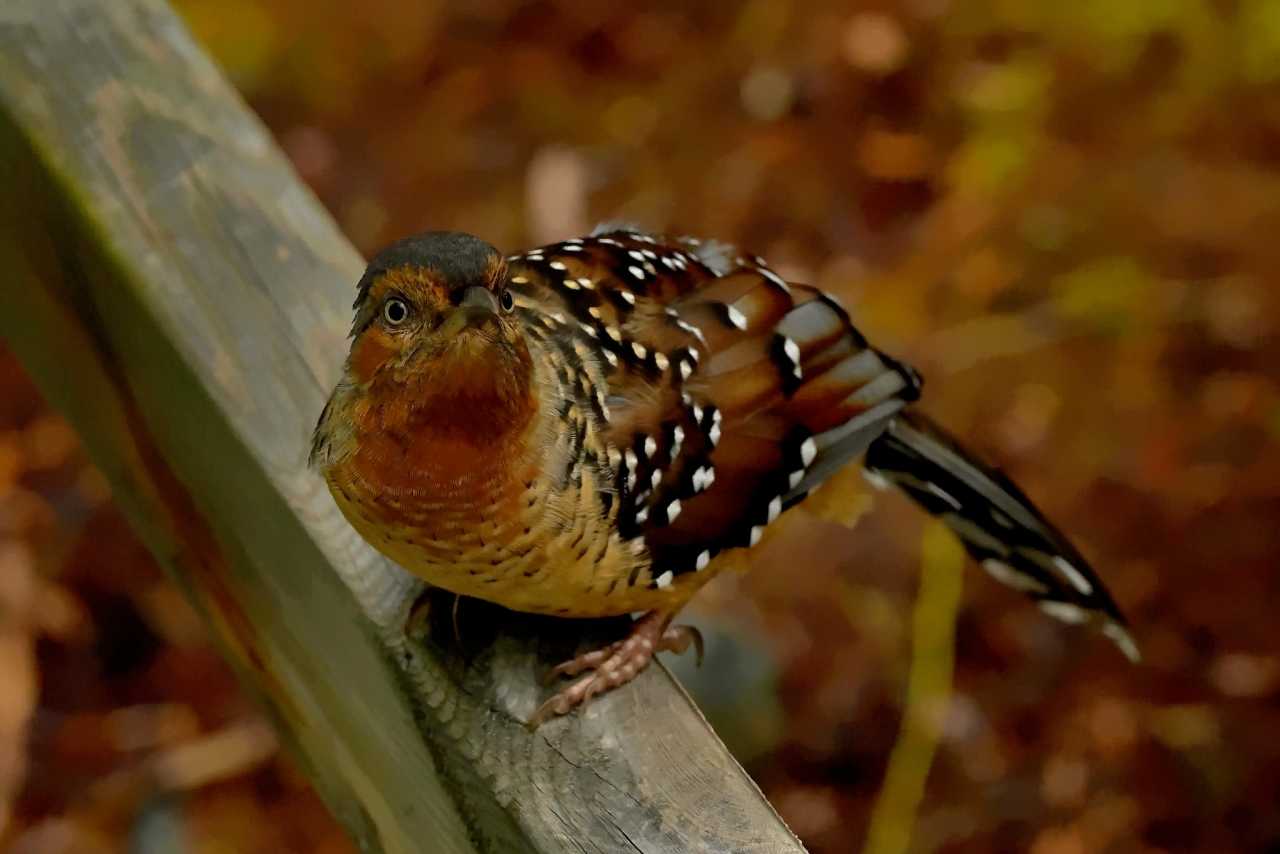
Many little birds travel with you. Small bodies and plumage blend into bark or moss; only when you approach do they burst from shrubs with a “puff.”
Whether leaping squirrels or perching birds, they look plump and sleek, with a wild, lively glow in their eyes.
 Daocheng Yading Scenic Area
They seem versed in dealing with two-legged visitors: not shy to come near for a surprise treat, yet ever alert—at the slightest move, they vanish like lightning into deep forest.
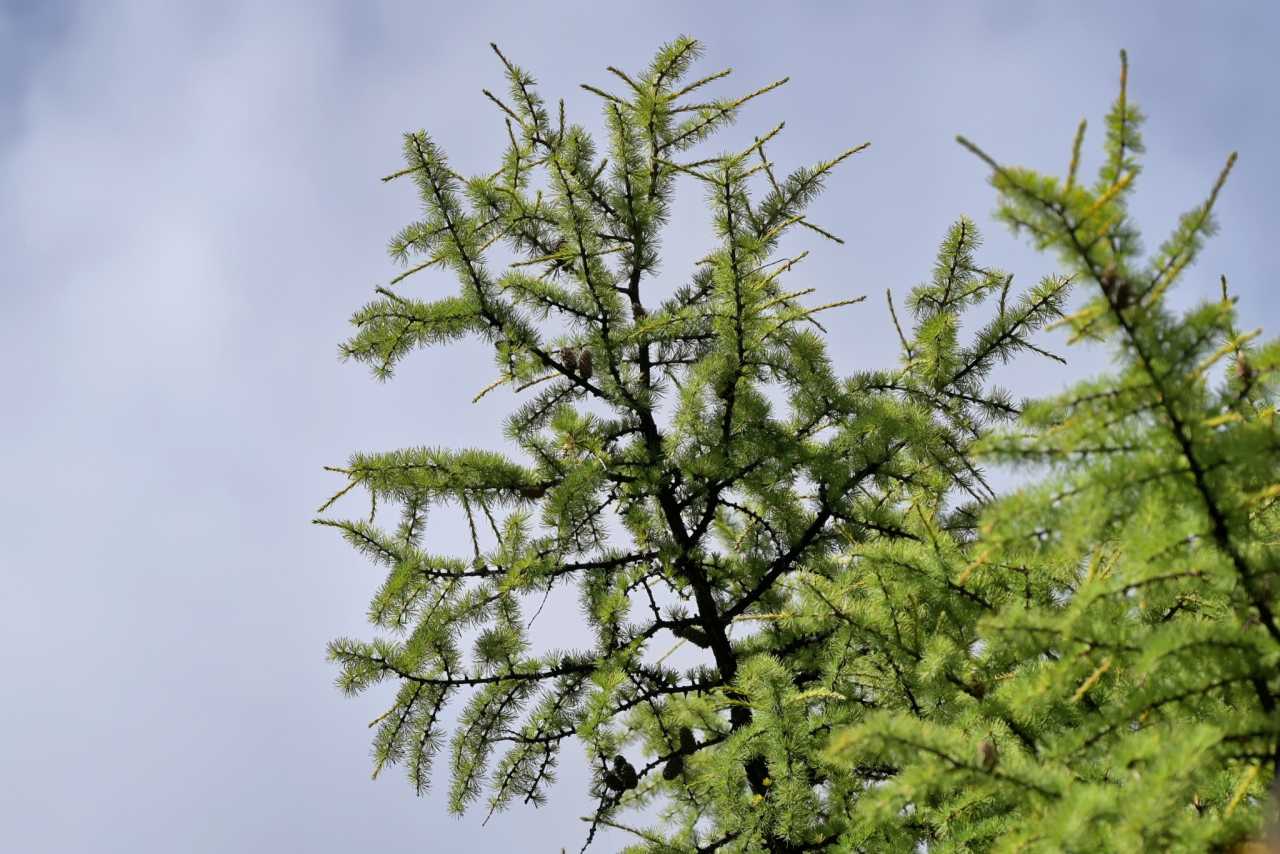
Looking up, the needle-leaf forest is like crawling caterpillars.
Whether trees or wildlife—they are the true masters of this pure land.
 Daocheng Yading Scenic Area
Manjushri Wisdom Line – 04 – Sacred Water Lake / Gate
Sacred Water Lake is another place worth lingering after Chonggu Meadow.
There’s a large rest area and a sightseeing cart stop nearby. Staff said carts mainly only serve the start (Zhaguanbeng) and end (Luorong Pasture); Sacred Water Lake has a stop but most of the time doesn’t board/alight (on national holidays they add transfers as needed).
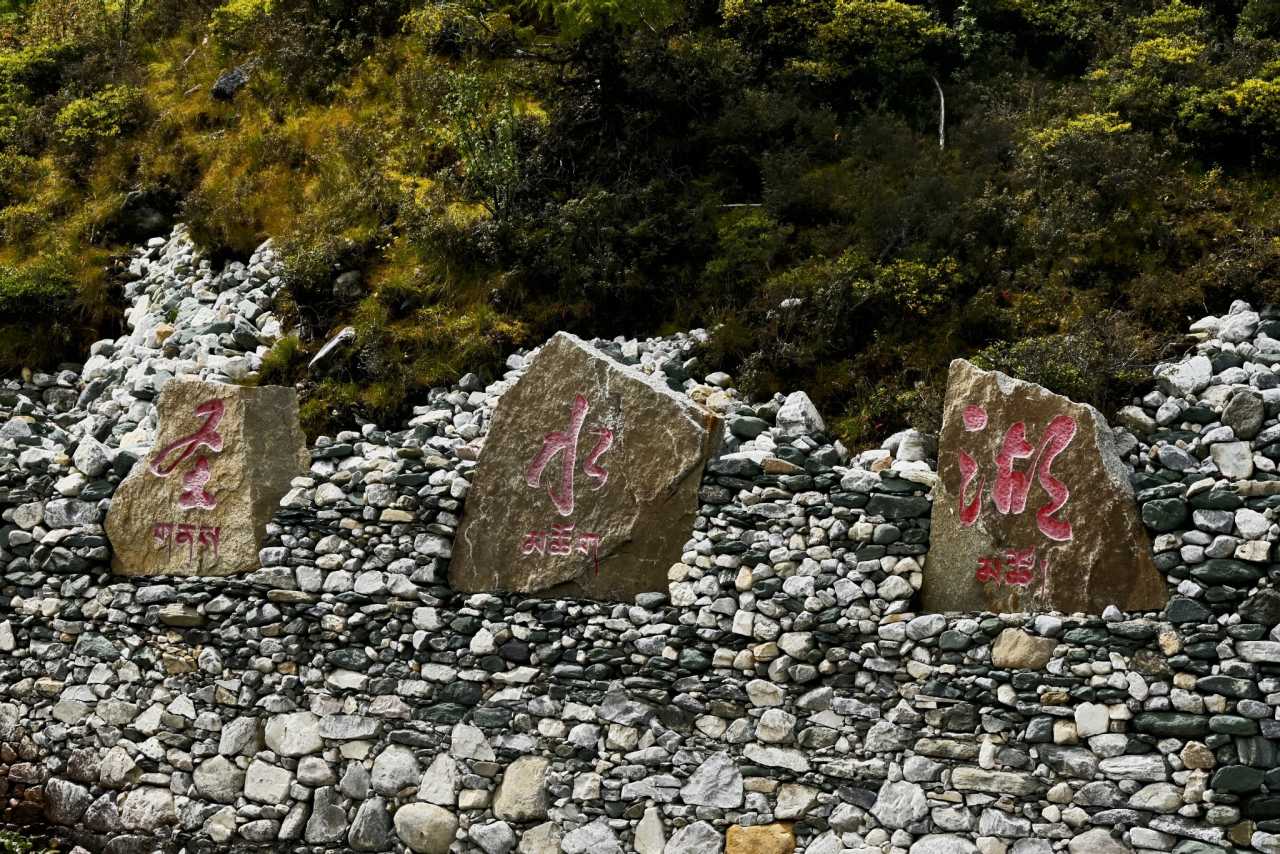 Sacred Water Gate
At the lake’s edge is a small cascade with modest drop but huge flow.
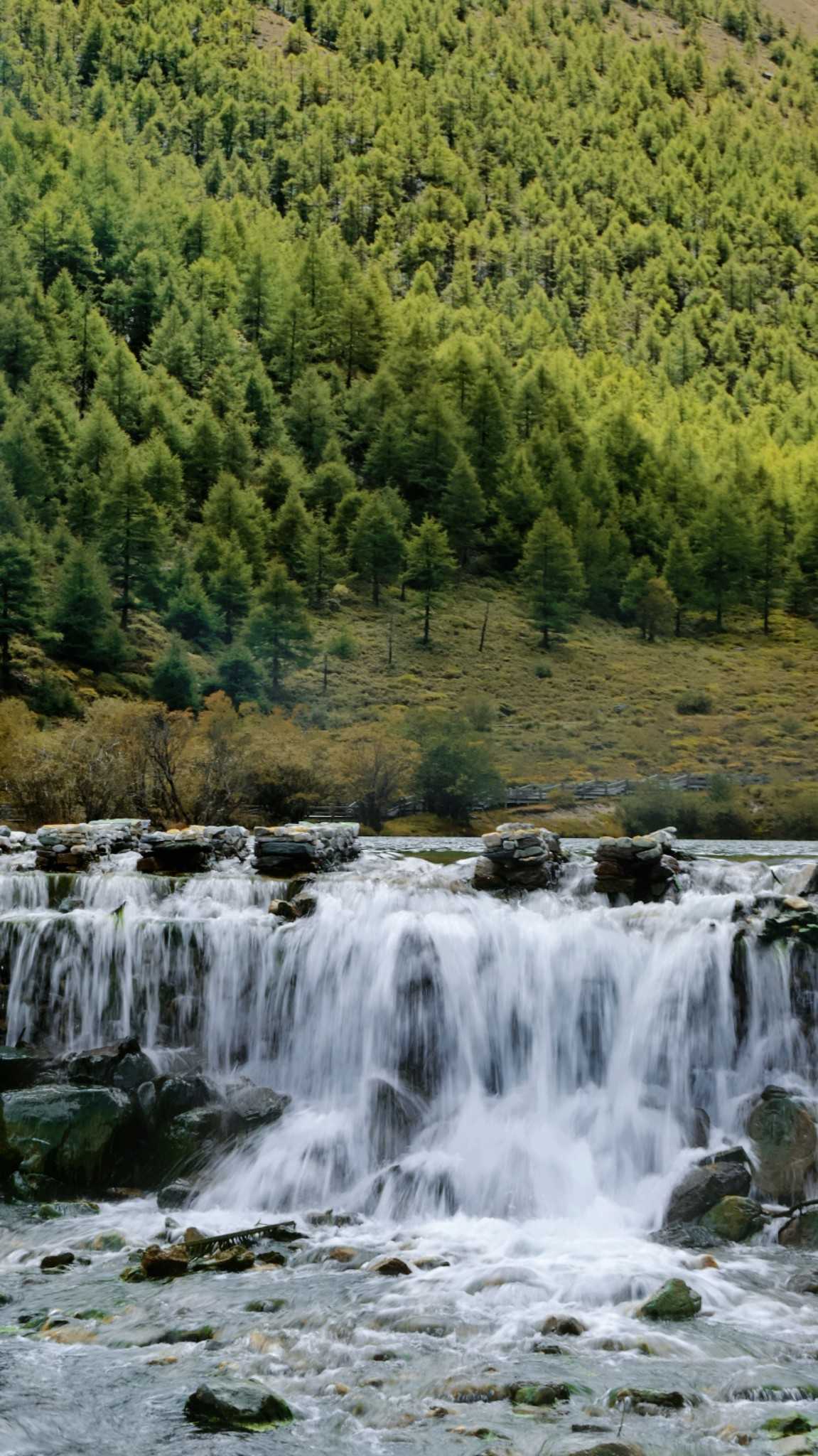 Sacred Water Gate
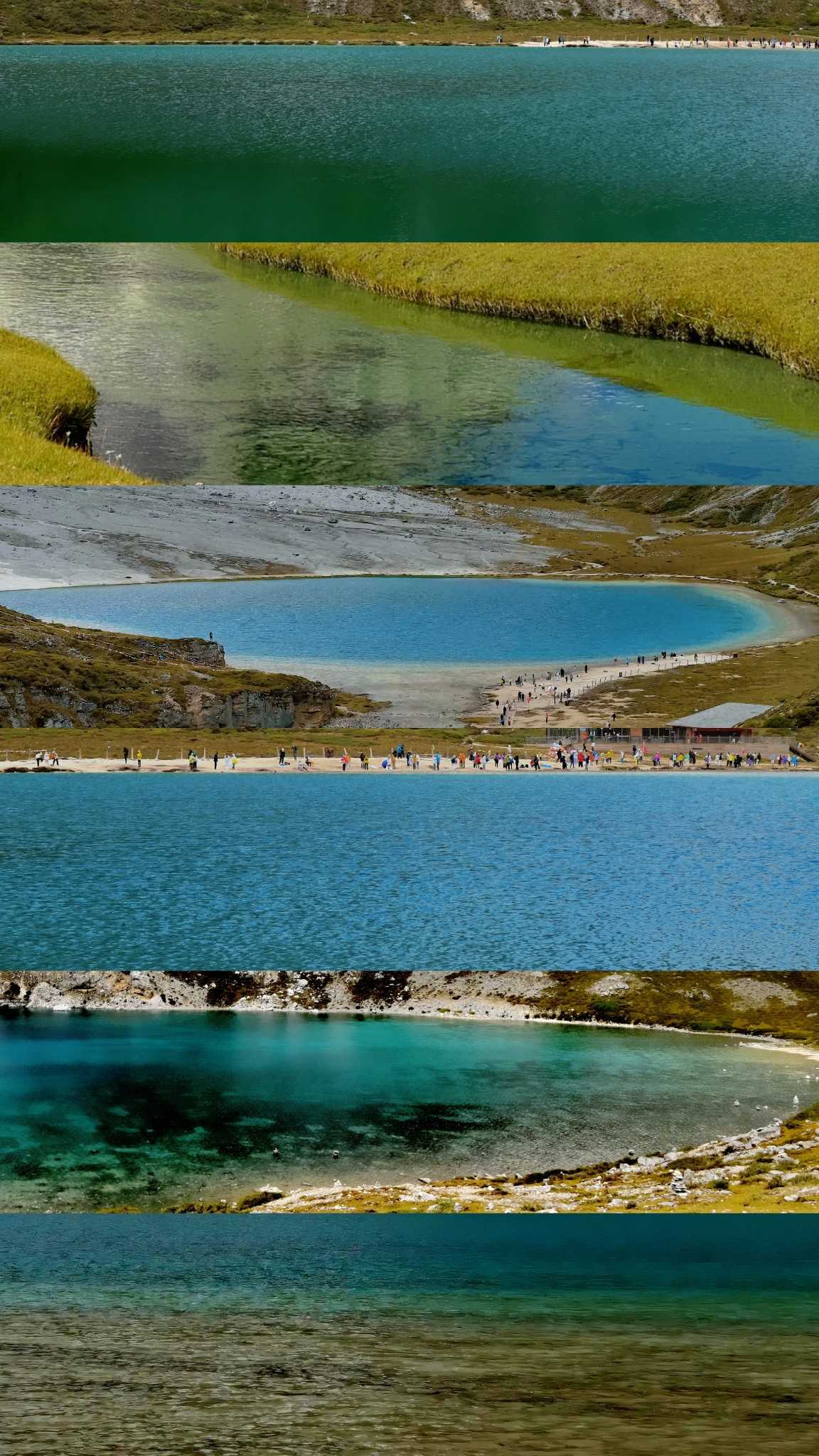
Sacred Water Lake is the largest water body within open areas of Yading—like a tear of Xiannairi mountain dropped on earth (a very big tear!)—or a carefully polished emerald.
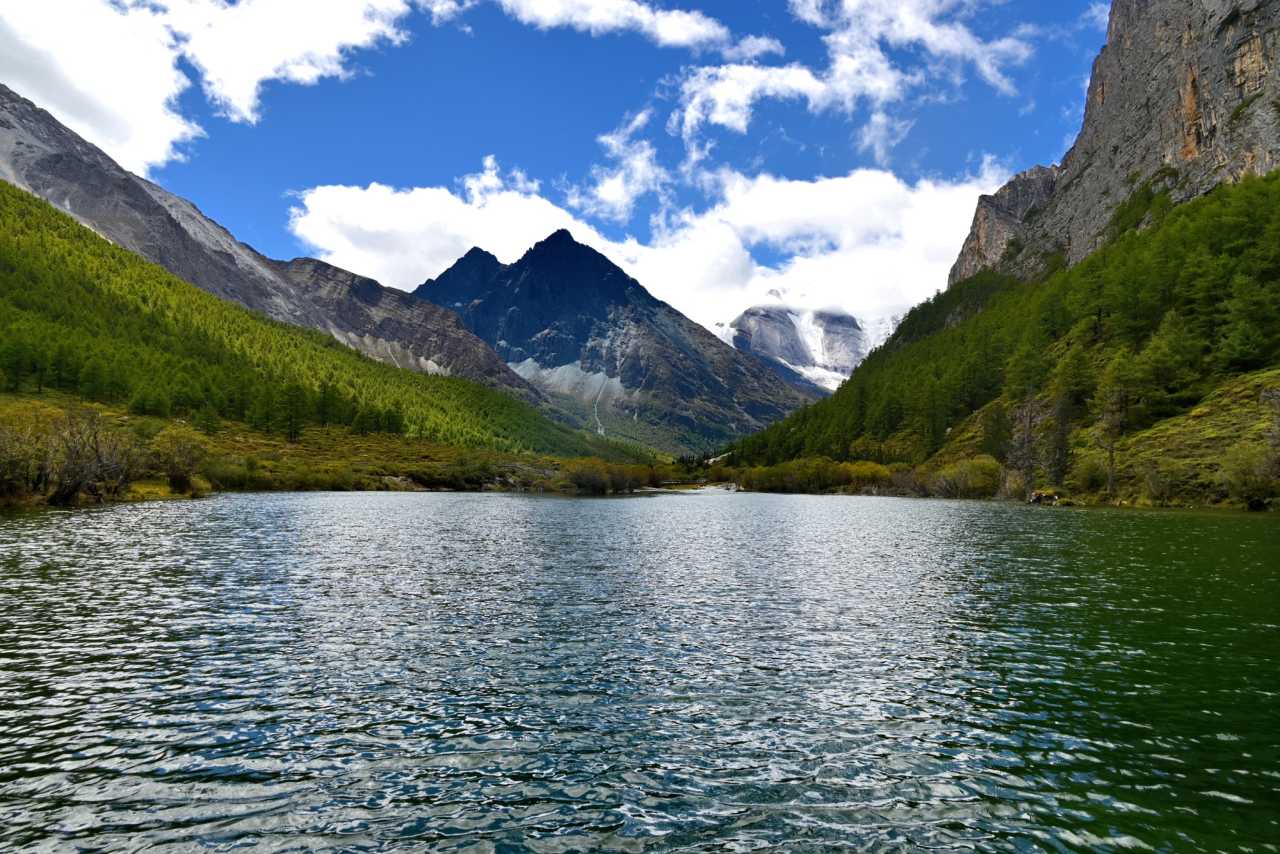 Sacred Water Gate
It’s not an ancient lake with timeless legends but a classic glacial-dammed lake, born of nature’s grandest force—glacial shaping.
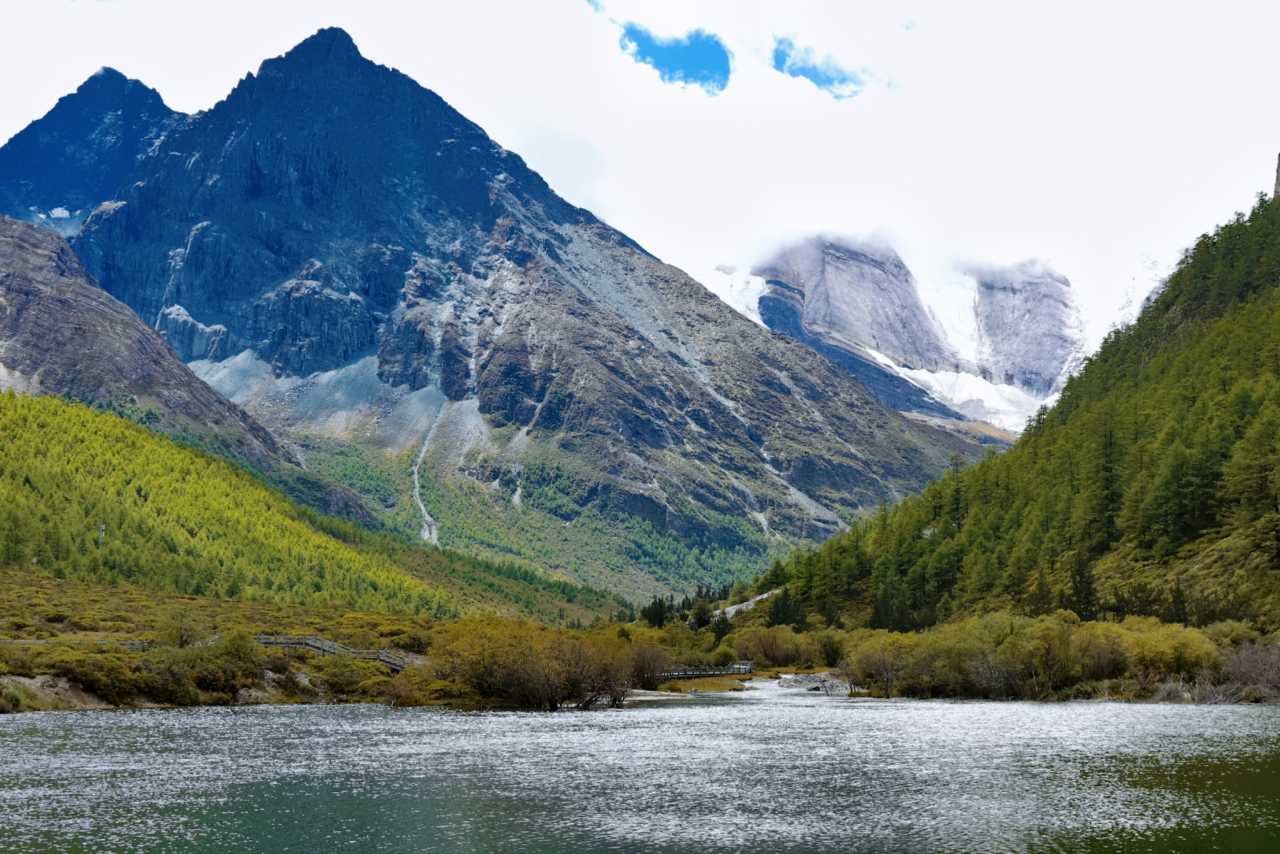
In the distant Quaternary Glaciation, moving ice carved out this hollow; when glaciers retreated, till built a natural dam. Meltwater from Xiannairi and precipitation pooled in the glacially eroded basin.
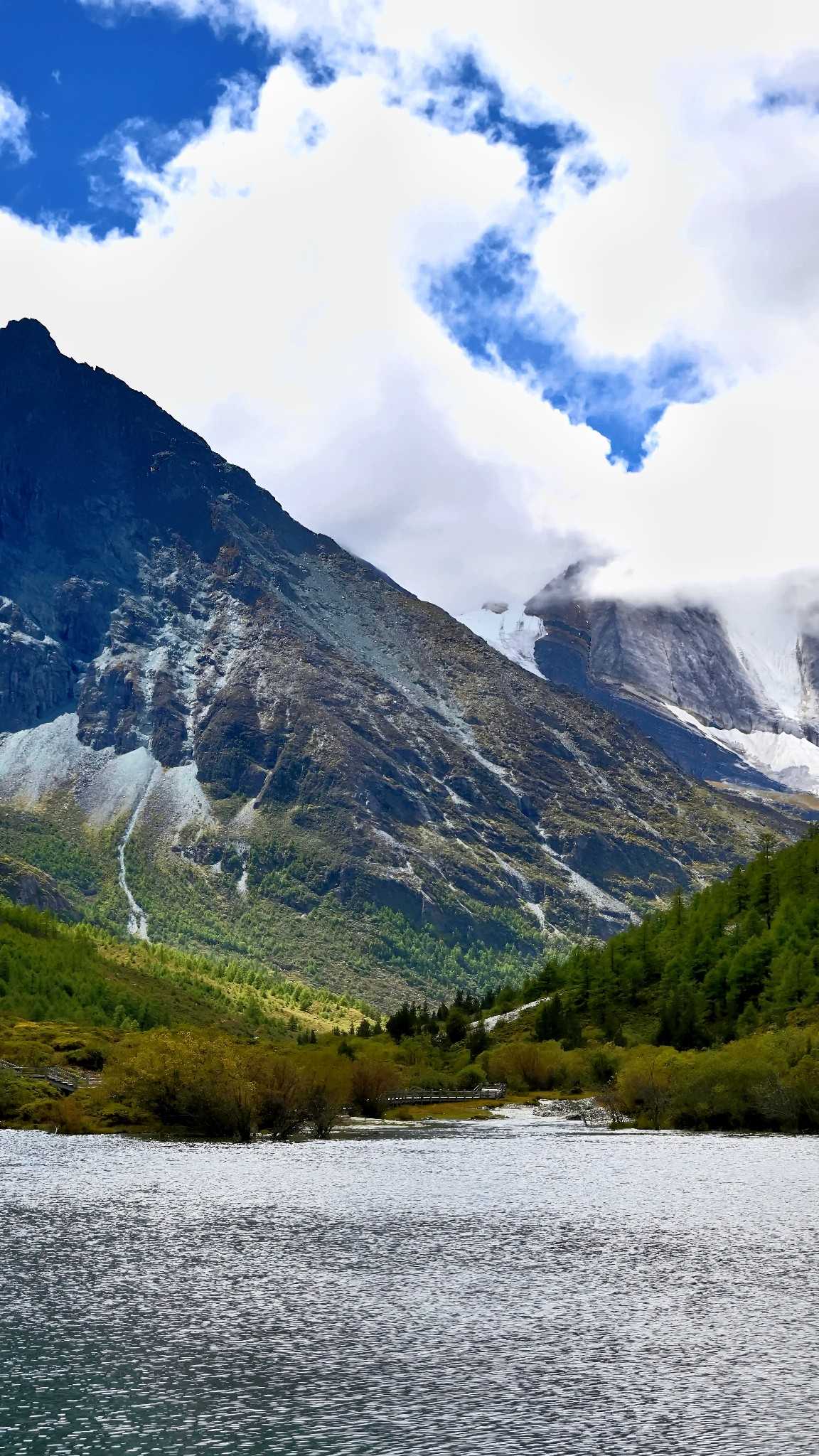 Sacred Water Gate
What makes Sacred Water Lake famous is its “reflection.” With no wind, the mirror-smooth surface perfectly replicates Xianuoduoji’s silhouette and the seasons’ shifting forest palette.
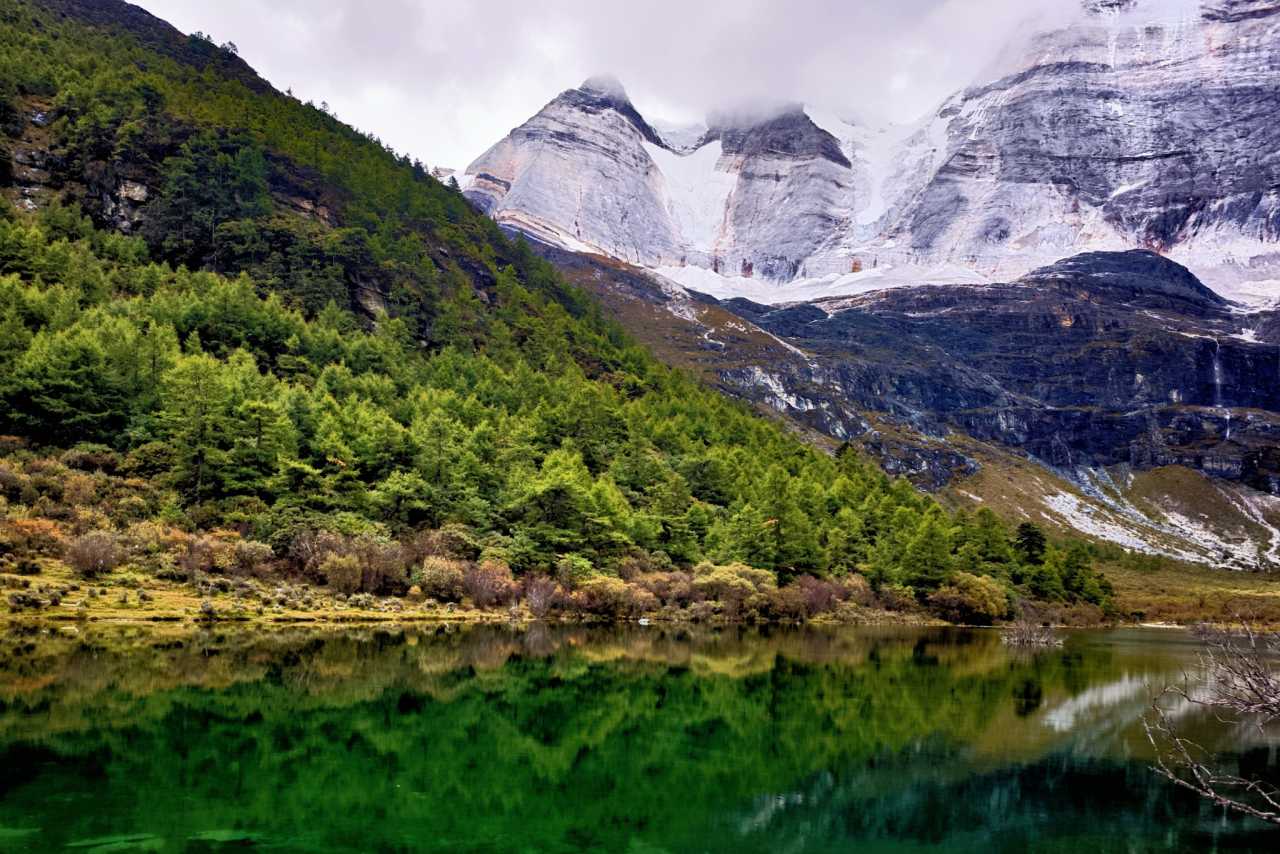 Sacred Water Gate
Most intoxicating is the moment when sunlight clearly casts peaks and clouds into the lake, forming an up-down symmetry, a seamless natural composition—OCD-friendly perfection.
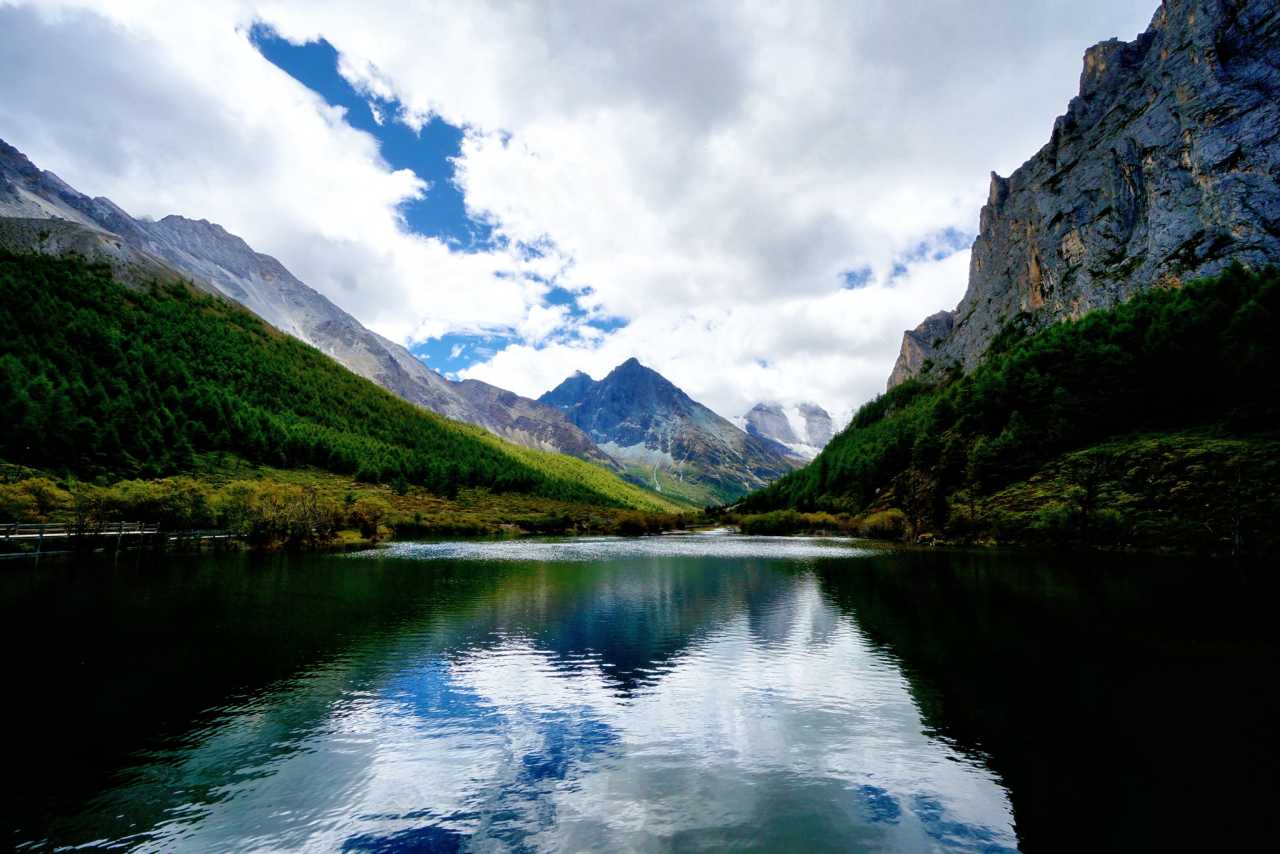
Snowy summits sway gently as ripples drift—the boundary of real and unreal blurs—creating a holy symmetric tableau. Almost all visitors linger, seeing the sky, the mountains, and themselves in the reflection.
When a breeze passes, the surface flashes with fine, sparkling scales of light. Sunlight becomes countless golden specks, chasing and playing upon the water.
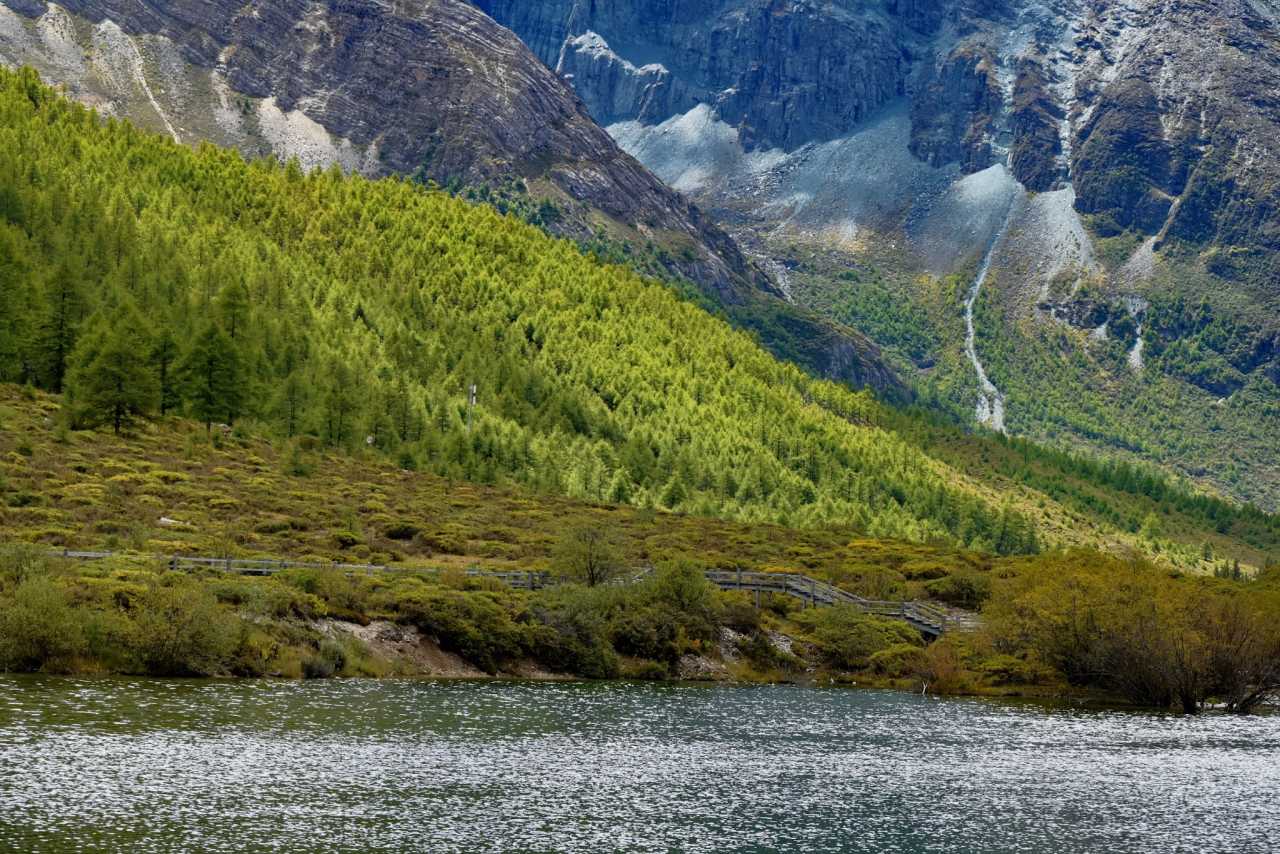 Sacred Water Gate
The colors shift from clear transparency nearshore, to pale green, to lake blue. Minerals in the bed and reflections of vegetation blend into a unique deep blue-green sheen.
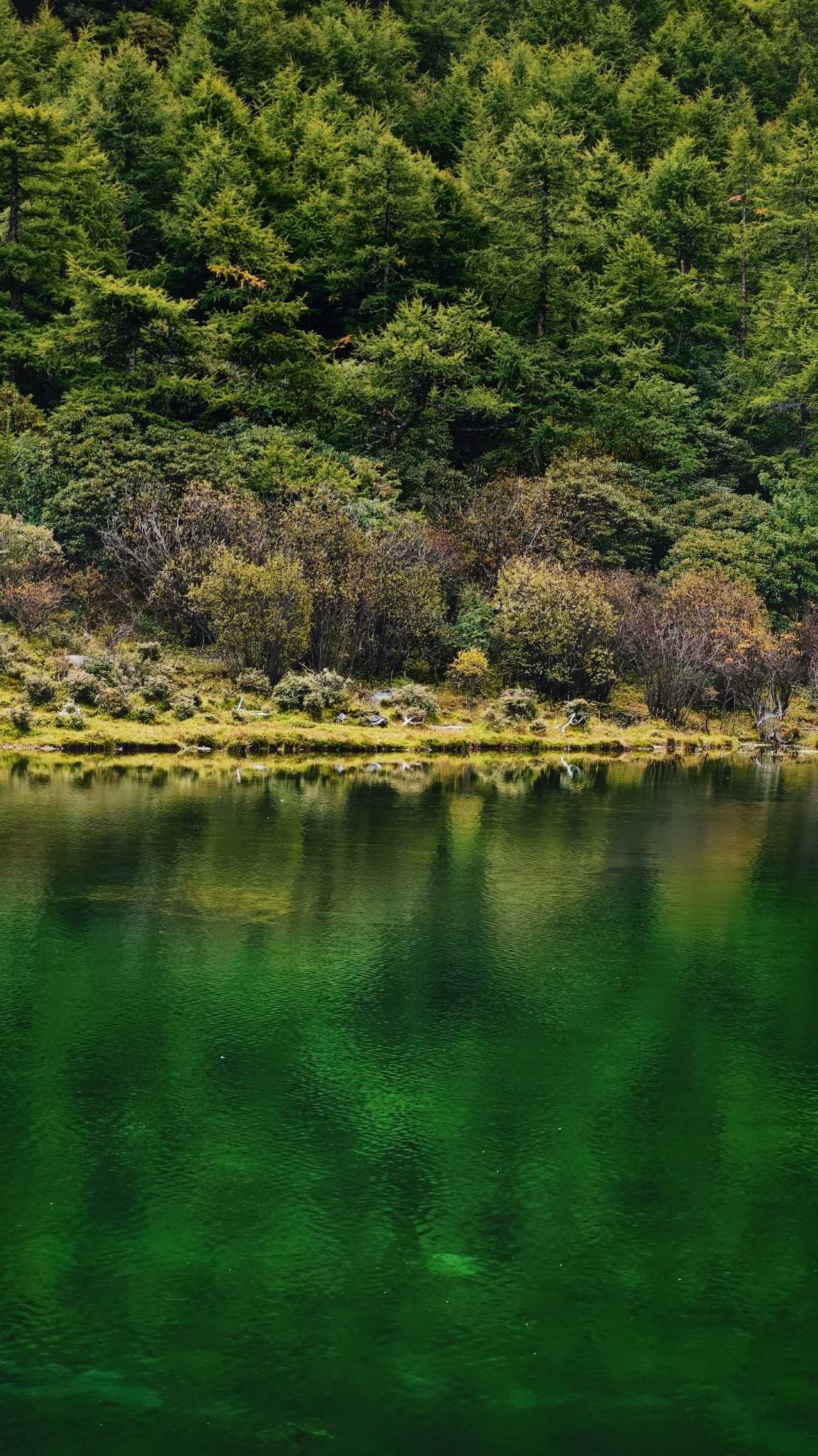 Sacred Water Gate
Curiously, in this “last Shangri-La,” what gives visitors the strongest “spatial coordinate” isn’t the mountains, lakes, or meadows, but the familiar blue signs with white letters—“I’ll wait for you at XXX.” Like standardized grammar, they are planted at every viewpoint.
Somehow our landscapes got “commandeered” by a unified visual symbol; as if without that sign, the scenery alone can’t tell where we are. As if the openness of Chonggu Meadow and the azure of Sacred Water Lake aren’t enough to mark a unique coordinate.
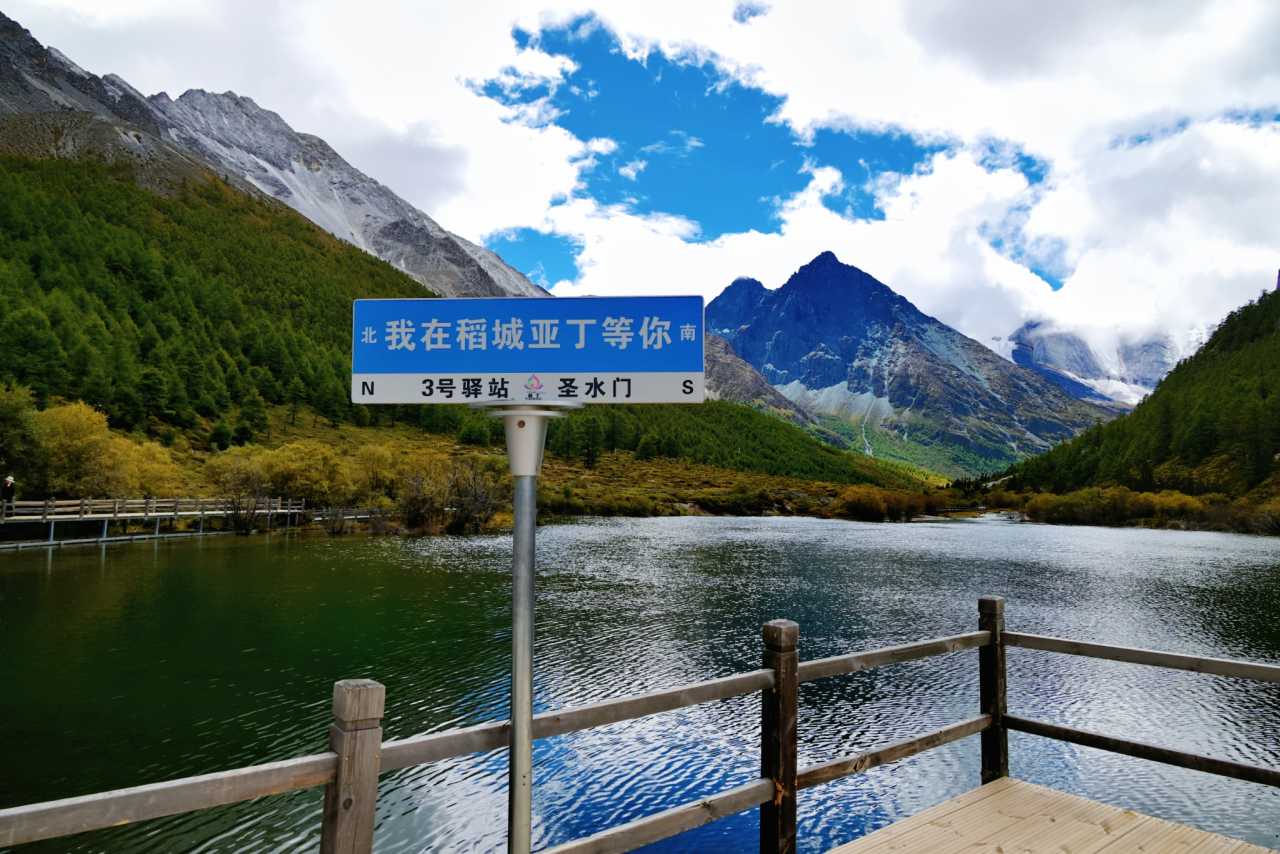 Sacred Water Gate
This feels like a collective syndrome: without such “certification,” even the grandest views seem lacking. We seem to have lost an ancient instinct to converse with heaven and earth, relying instead on a shareable textual coordinate. That sign becomes the laziest answer.
Manjushri Wisdom Line – 05 – Toward Xianuoduoji
From Sacred Water Lake to Luorong Pasture there is no ascent; views are wide—known by many as “Western Sichuan’s most beautiful snow-mountain trail,” about 2 km, with Xianuoduoji always ahead, guiding the way.
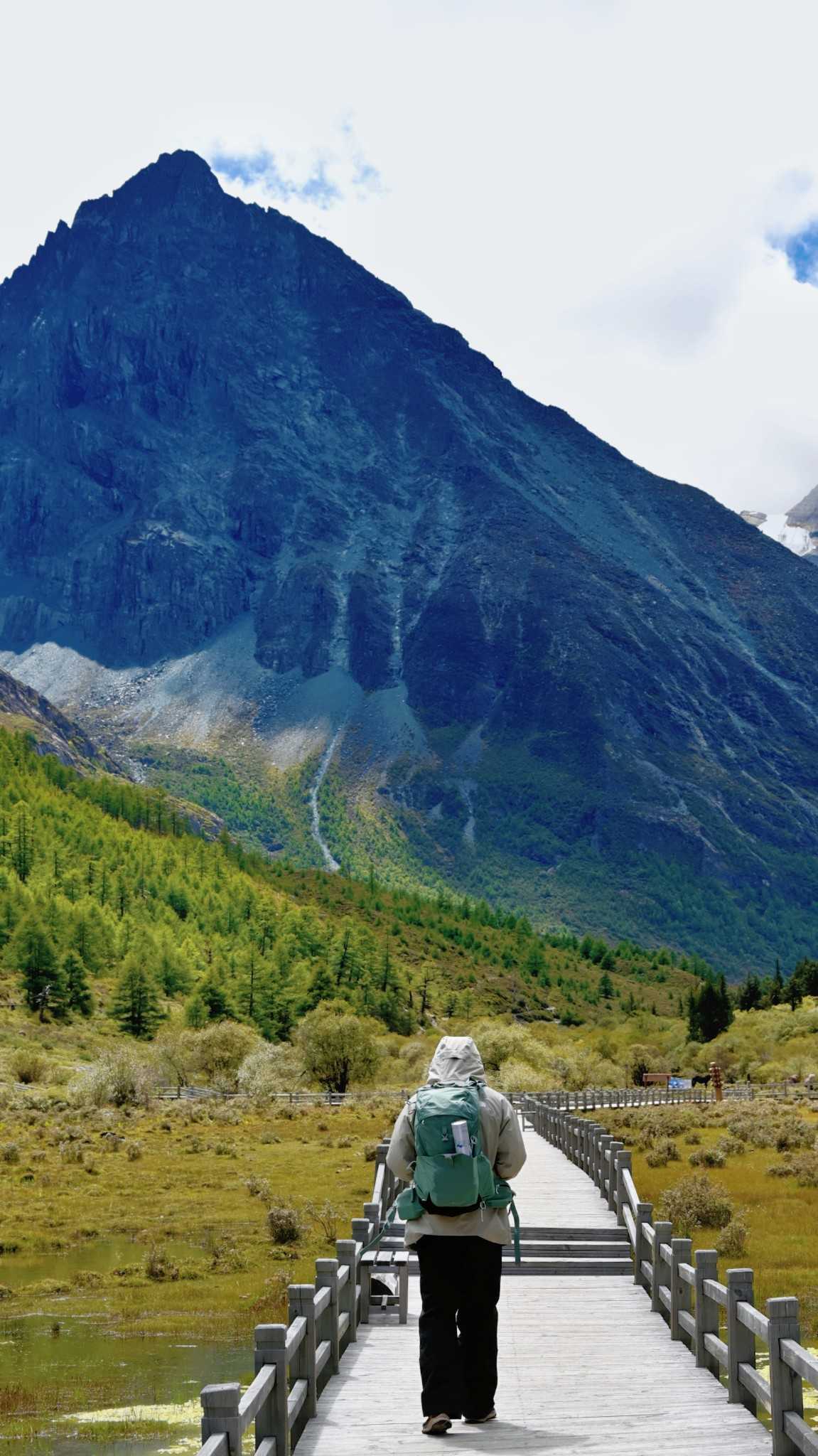 Xianuoduoji
The stream beside us sheds the gentleness it had at Chonggu Meadow—becoming torrential. The riverbed opens; cold meltwater pounds boulders, sounding like a heavy continuous thunder—the only background in this realm.
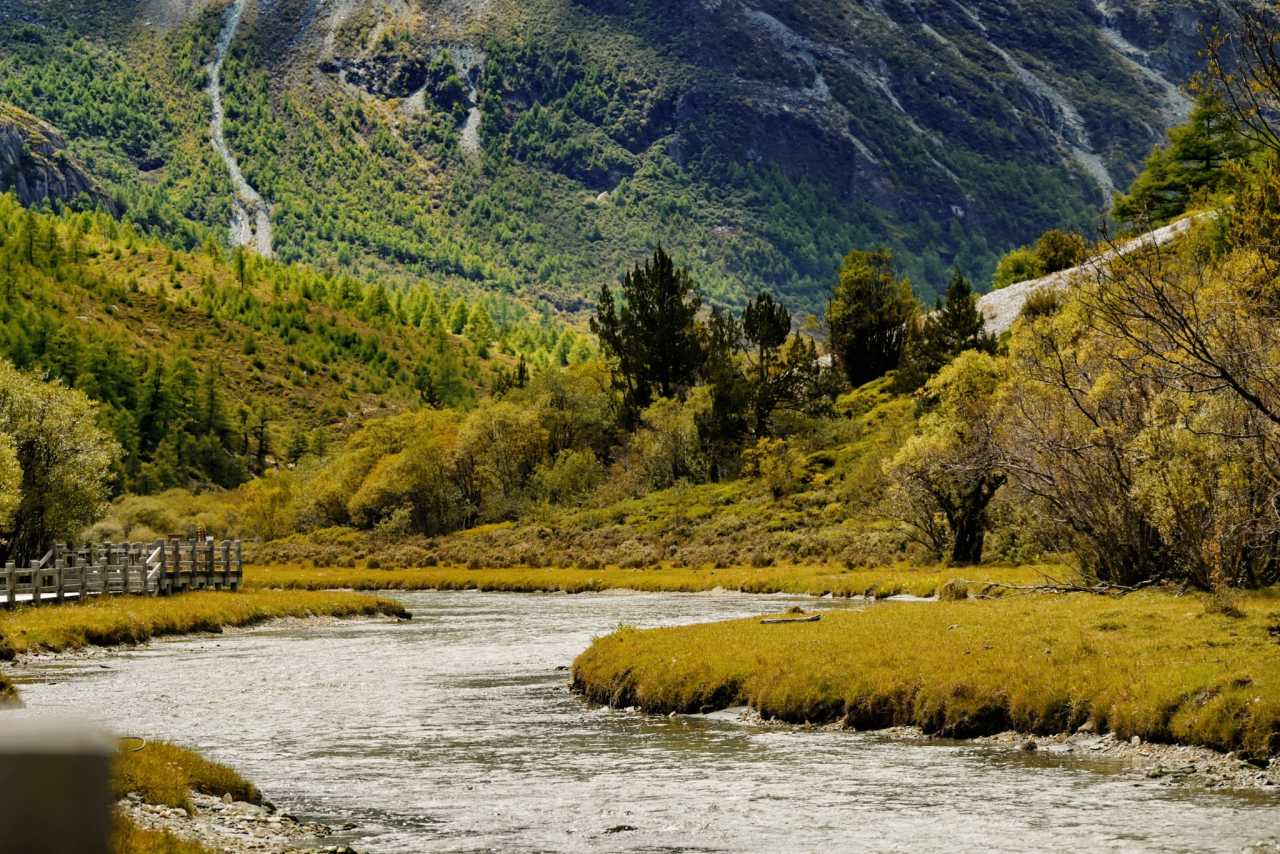 Xianuoduoji
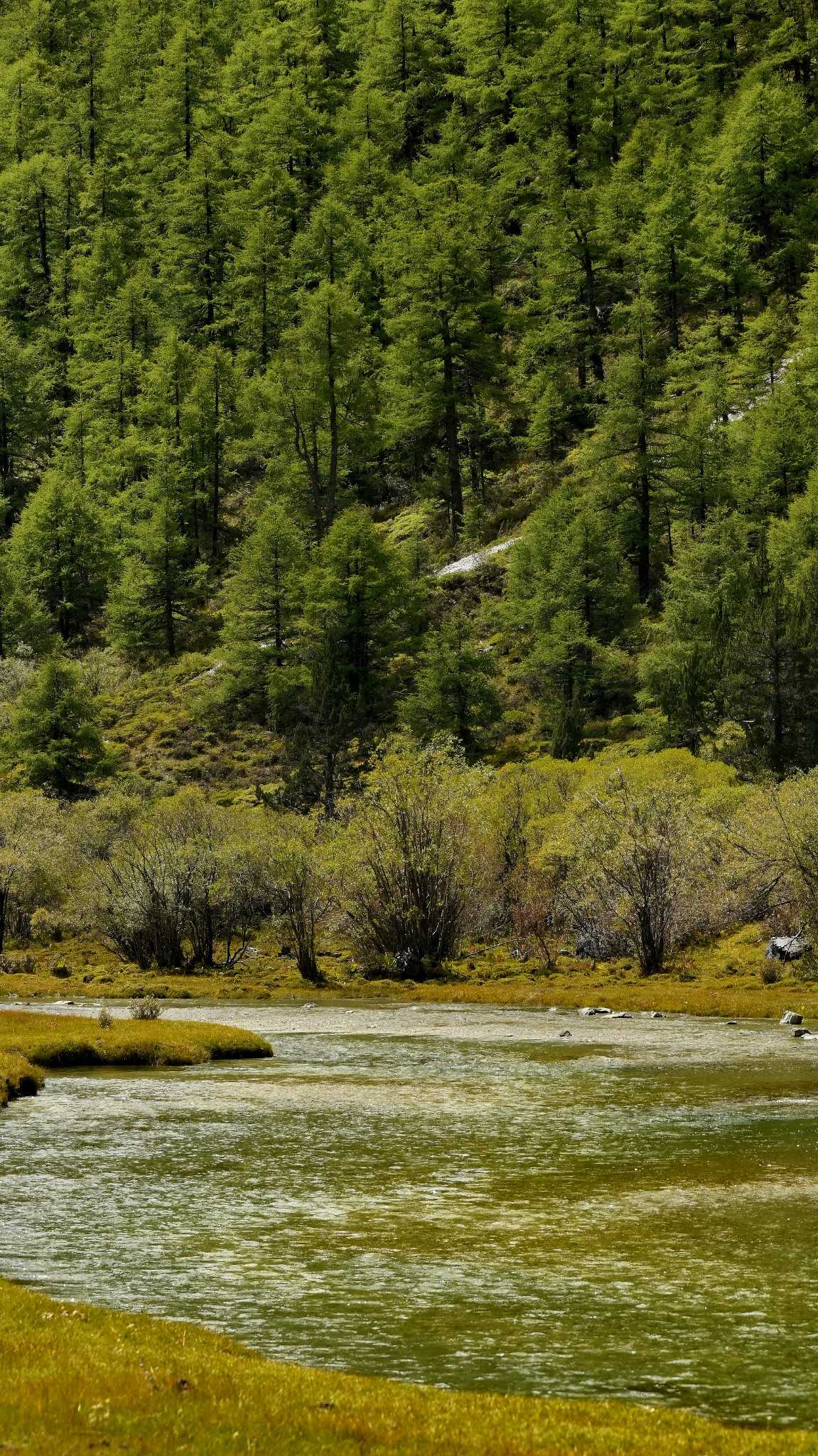 Xianuoduoji
Here you feel clearly: everything the eye sees—rugged rock, somber woods, quiet grasslands—is nature’s seamless arrangement. Only the man-made trail underfoot—and us walking—are intruders.
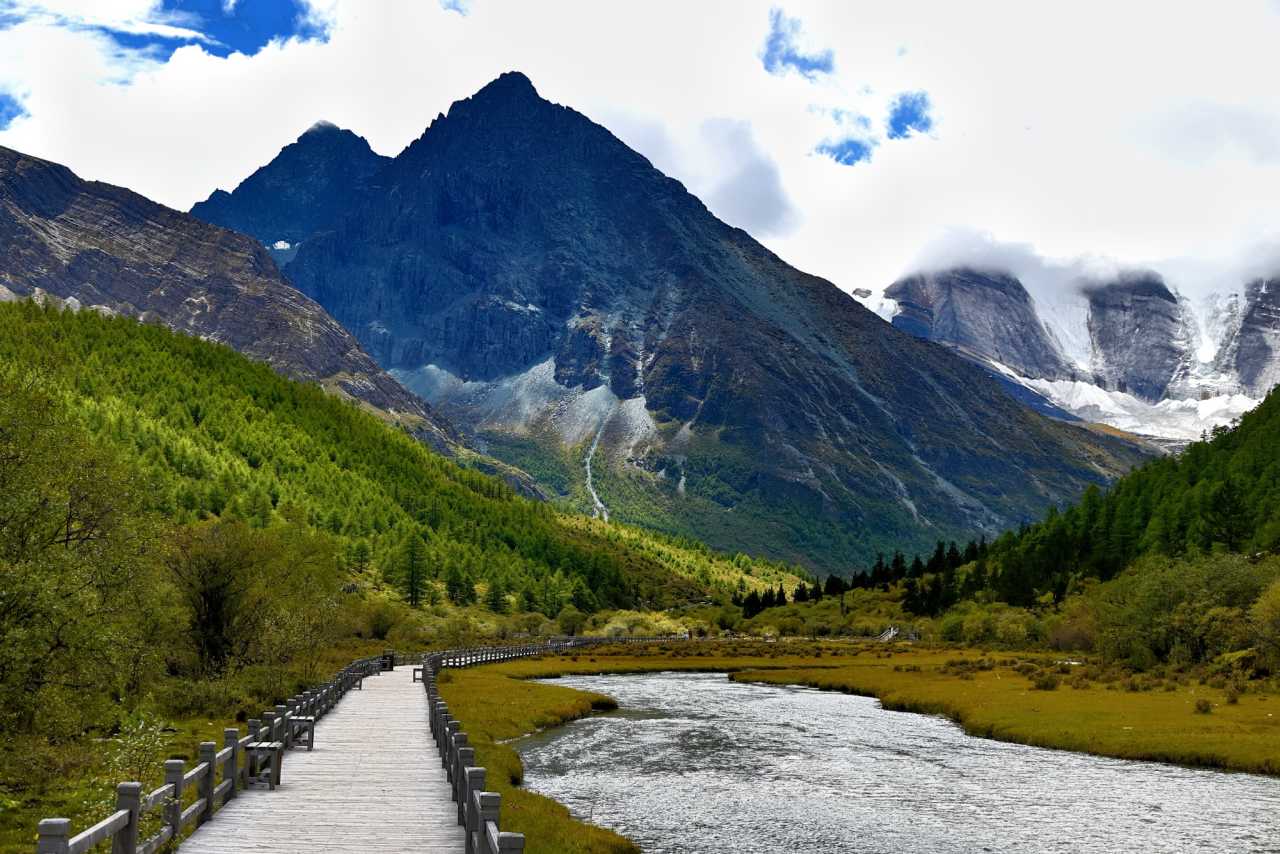 Xianuoduoji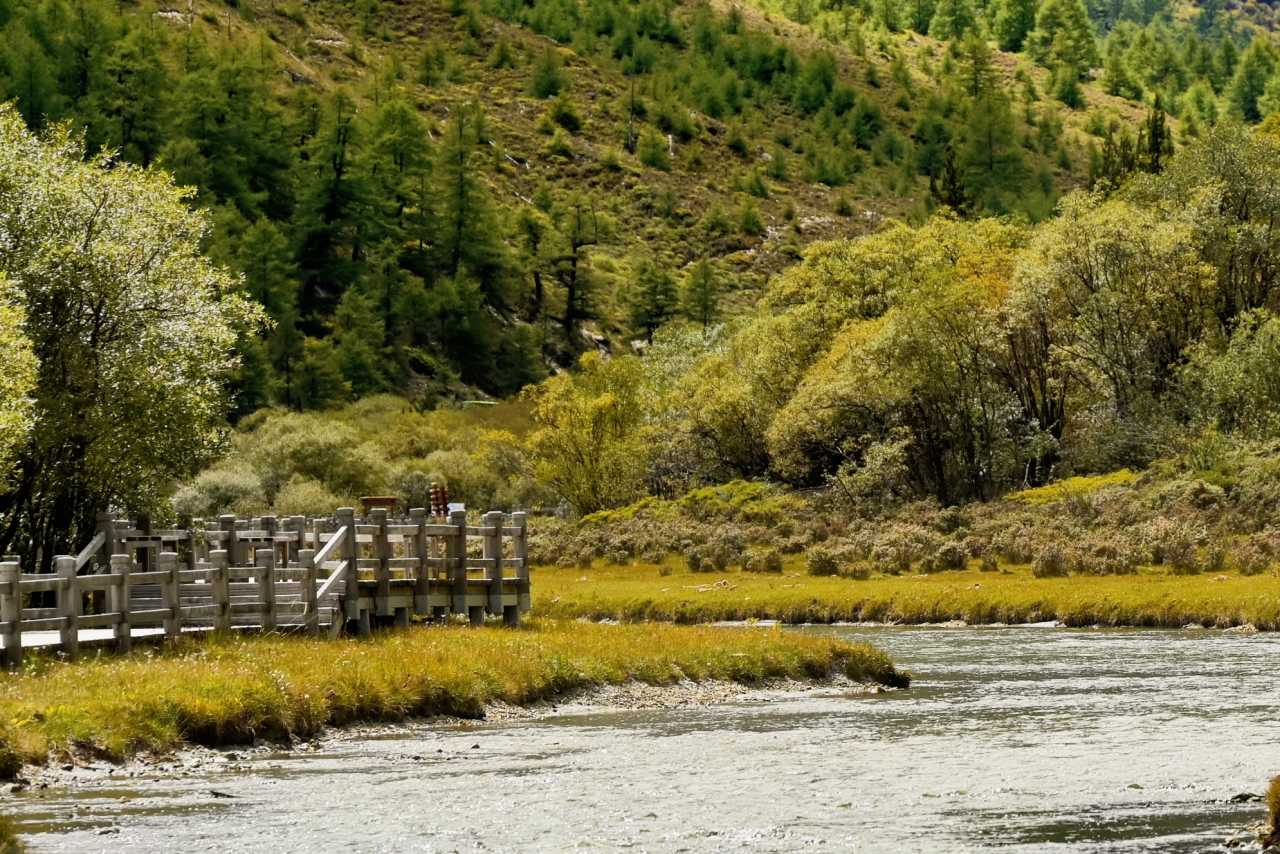
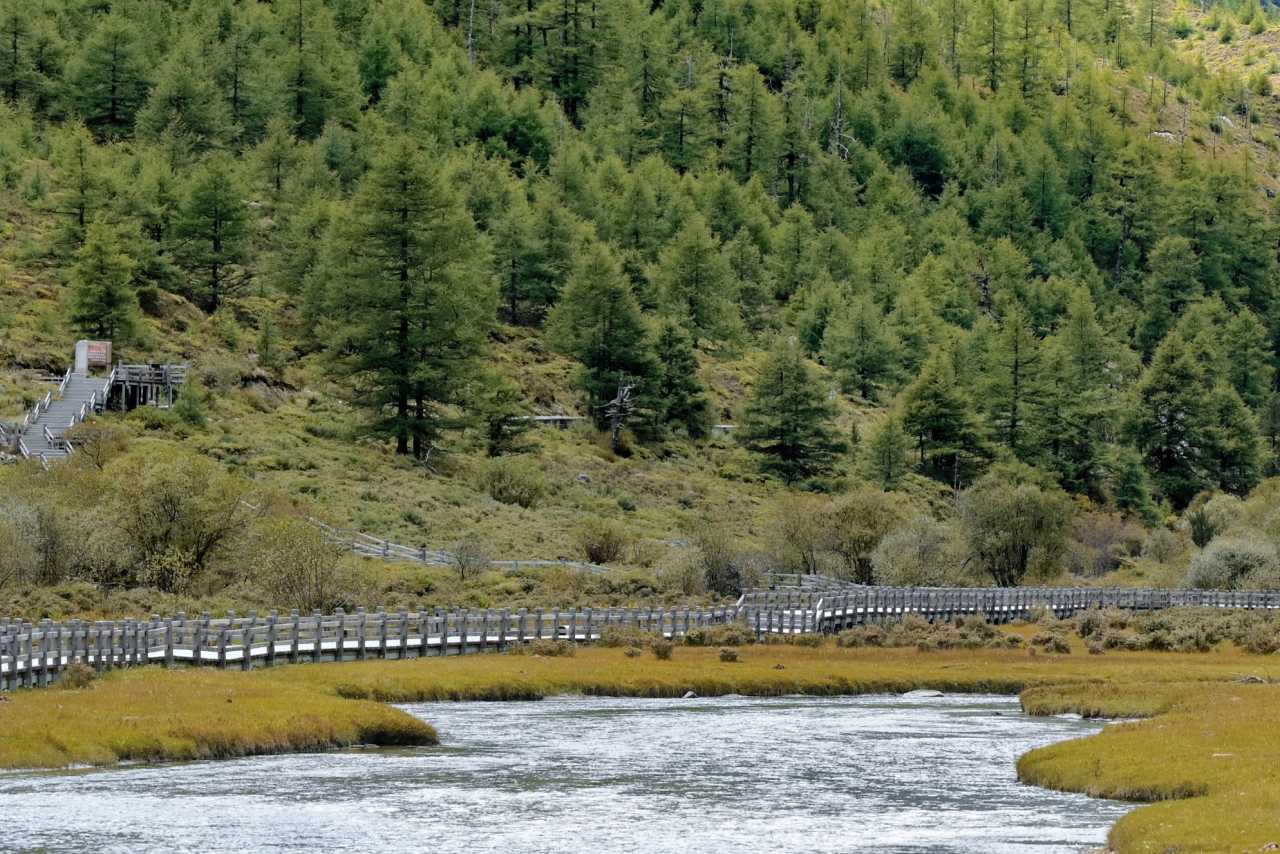 Xianuoduoji
Occasionally, electric sightseeing carts drive along the hillside above; the road there is almost parallel to the boardwalk.
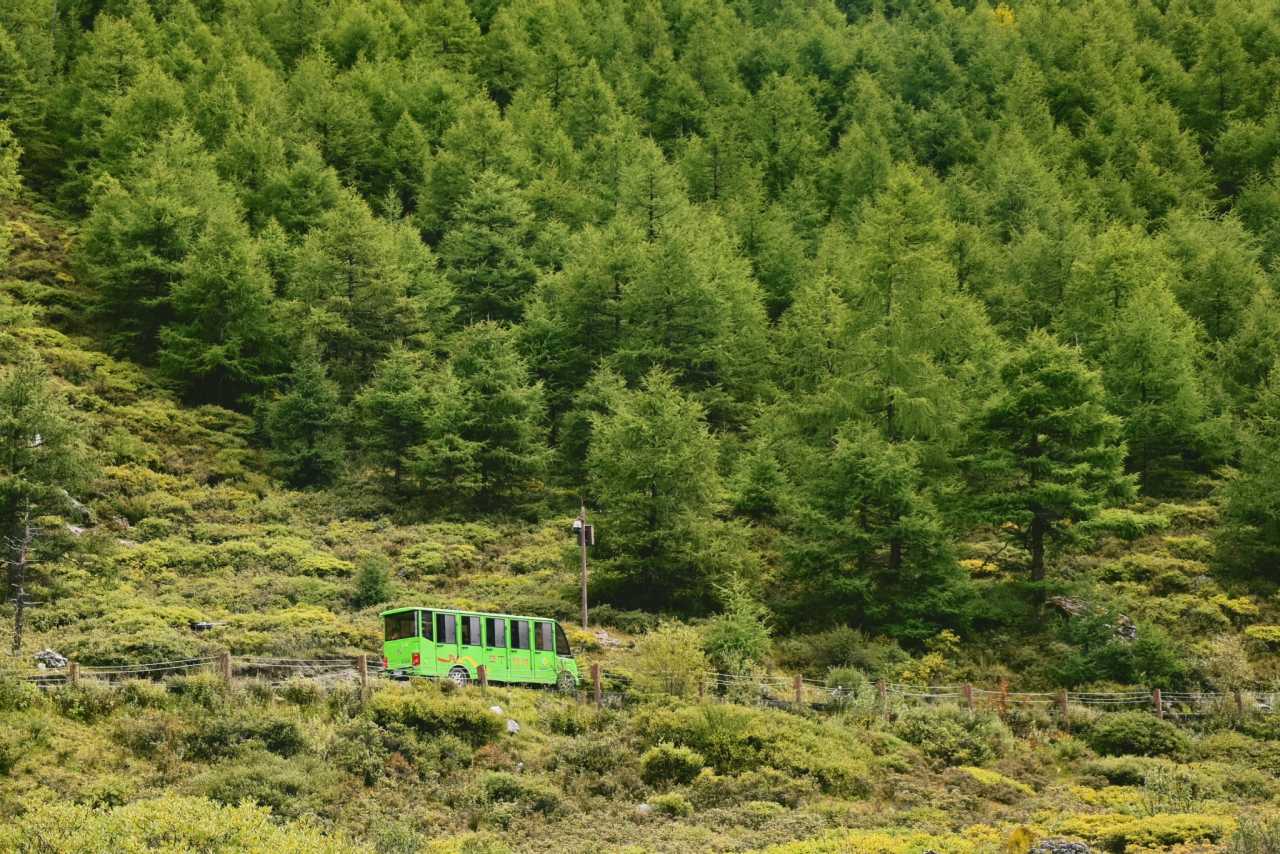 Xianuoduoji
More often, all is silent—no one before or behind.
This “few people” is not desolation but abundant quiet returned to nature.
Only horses graze on distant meadow, heads down—so at ease that they seem like souls grown from the grass itself.
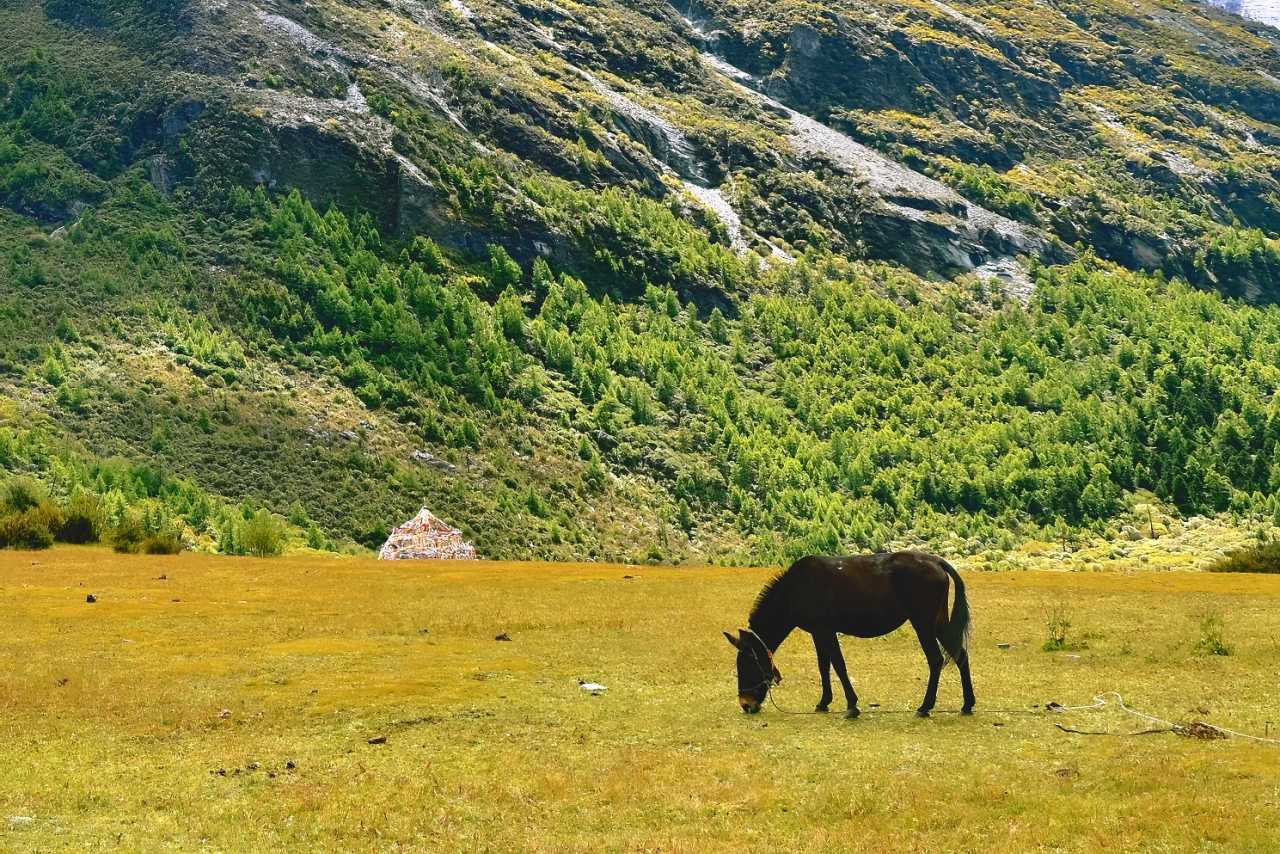
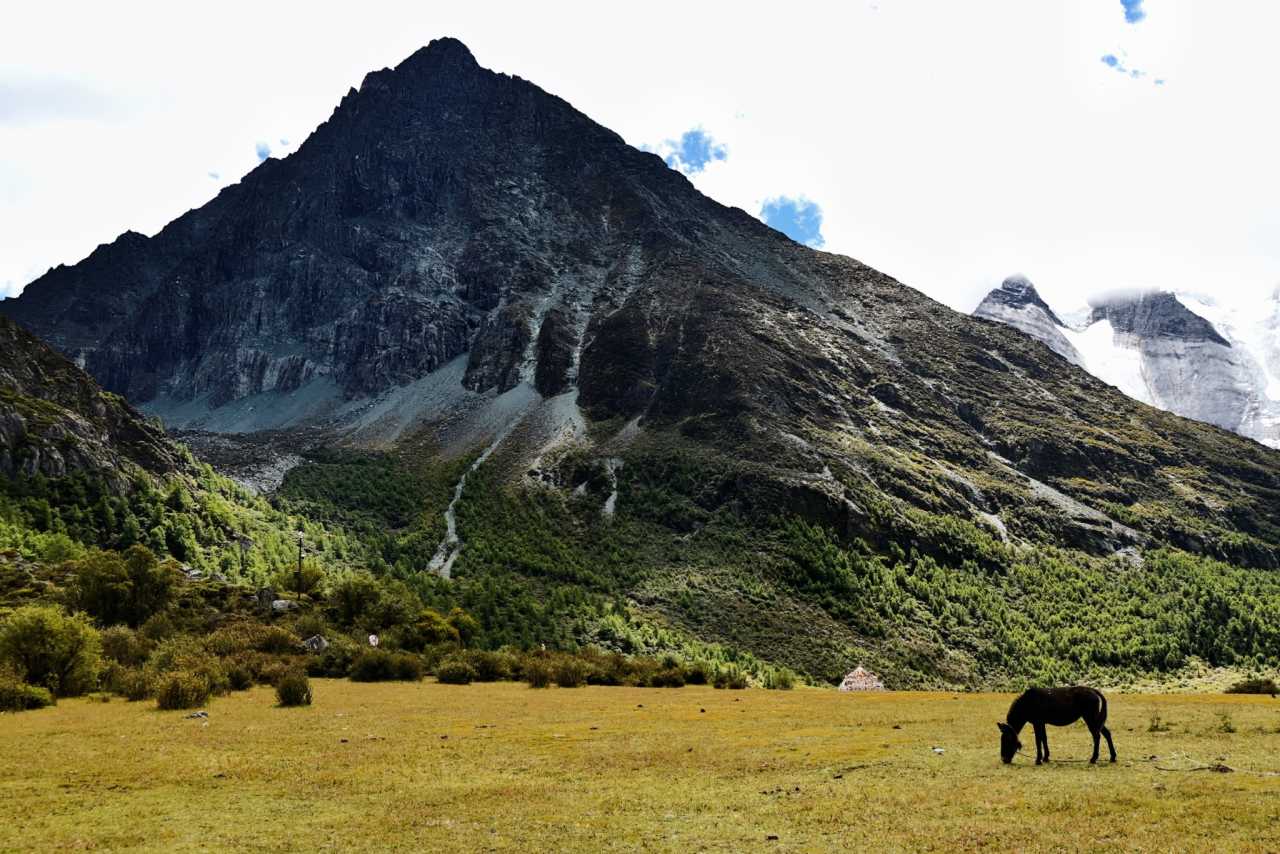 Xianuoduoji
“Xianuoduoji” in Tibetan means “Vajrapani,” endowed with vast power to subdue demons—representing Strength.
It is the eastern peak among the three, ~5958 m. In Buddhist iconography it’s a fierce guardian with tiger skin at waist and serpent belt, described like a bat ready to fly with spread wings—the embodiment of thunder in mythology.
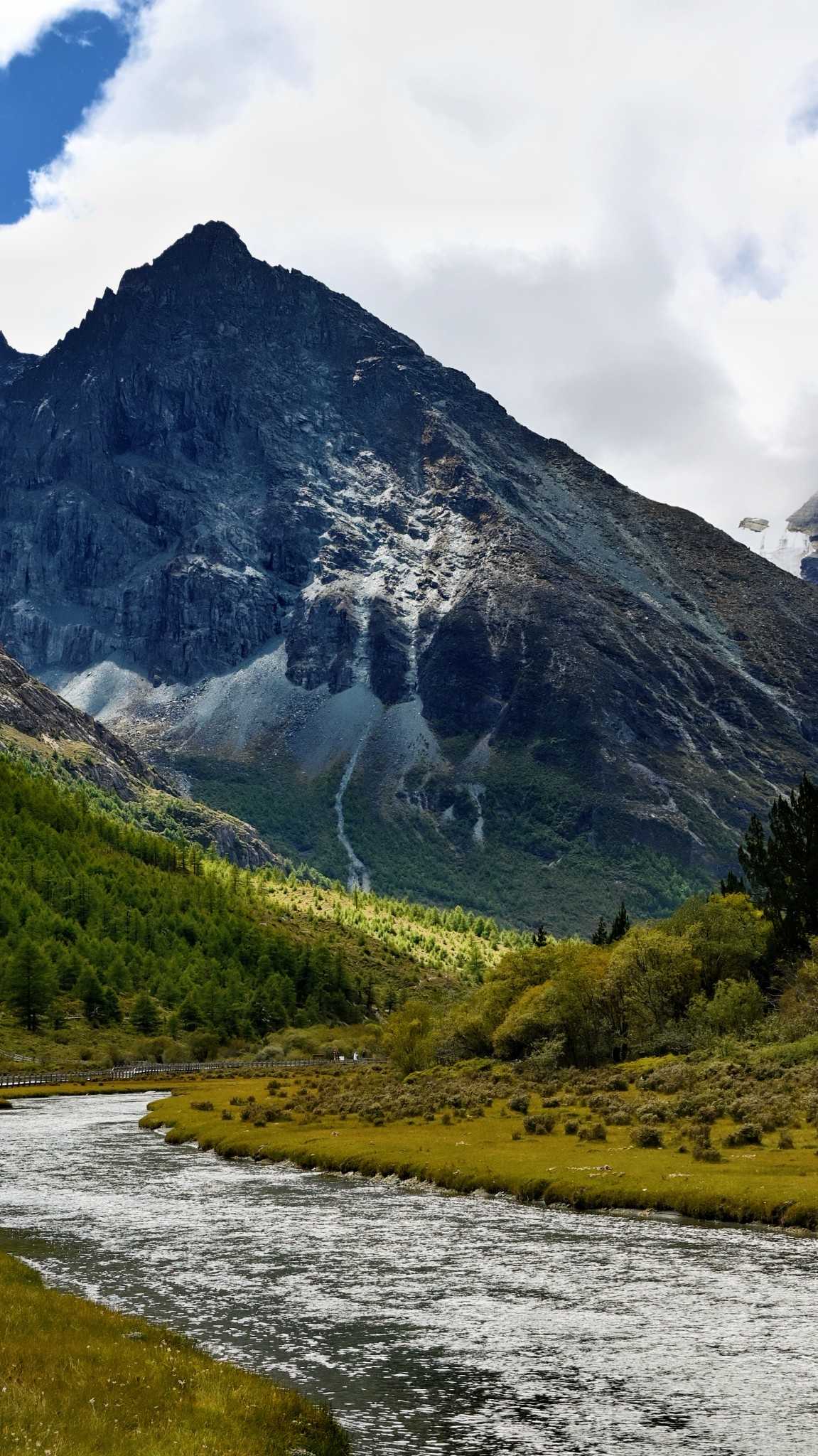 Xianuoduoji
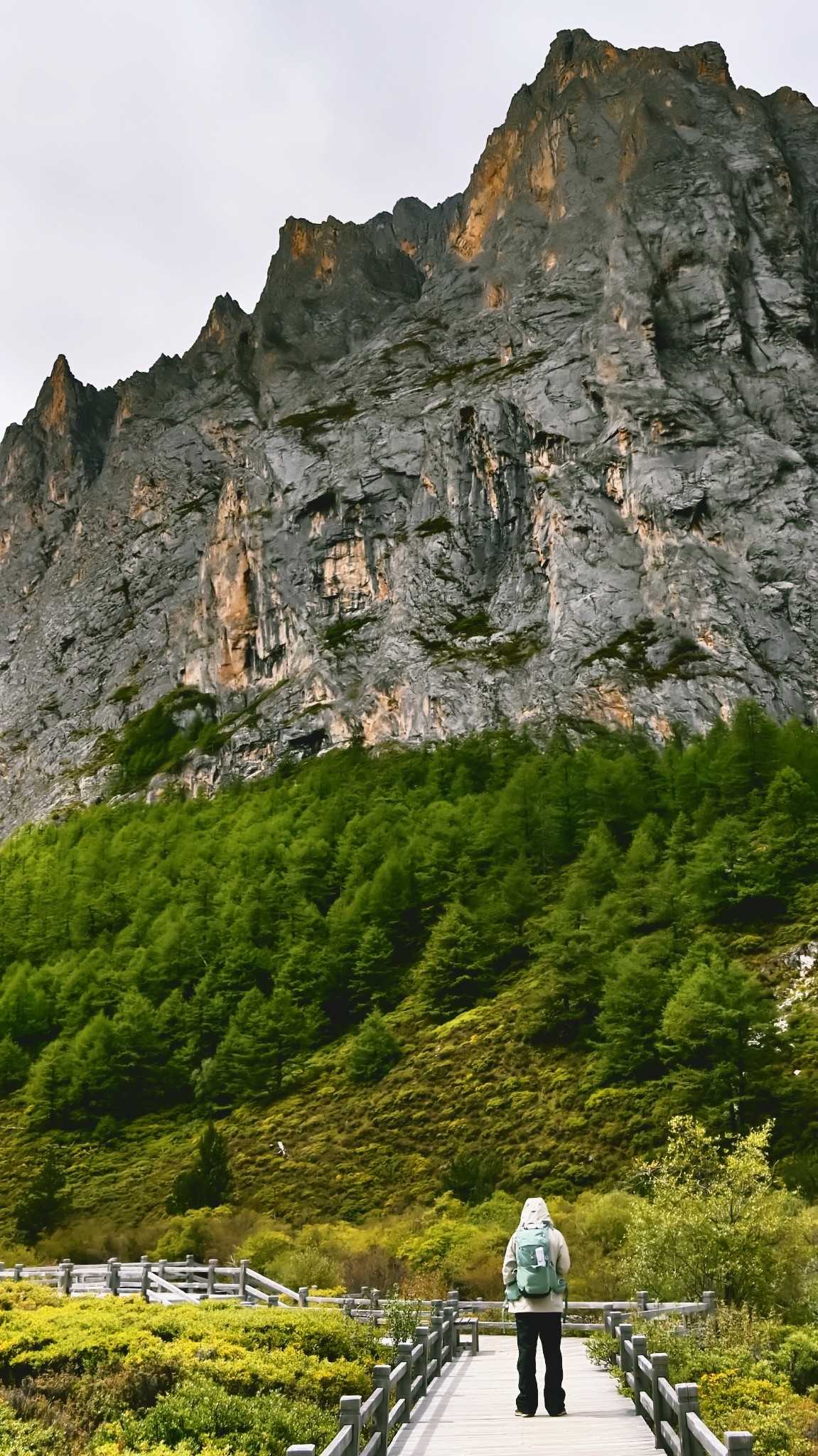
Beyond Xianuoduoji, almost everything is encircled by mountains—important members of Yading’s range though unnamed. The smallness of man within nameless mountains is among the trip’s deepest impressions.
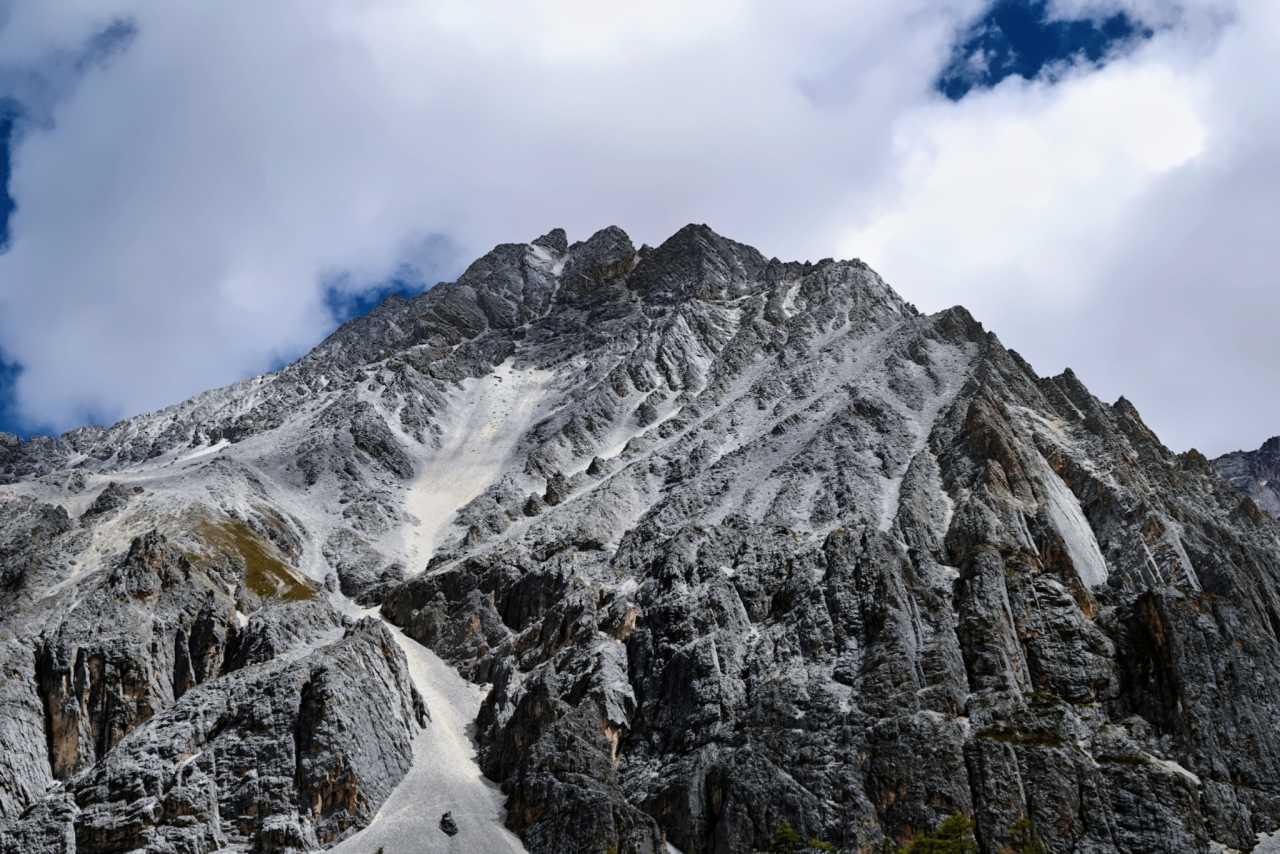 Xianuoduoji
Within those nameless arms, a person is as small as a forgotten punctuation mark. They stand and grow in spans of ten-thousand years; our lifetime is but one barely perceptible breath.
 Xianuoduoji
Walking here feels like stumbling into a sleeping giants’ realm. Ridges converge from all directions; they need no names—their presence alone fills your senses, compressing “self” into a tiny black dot.
Manjushri Wisdom Line – 06 – View of Sixteen Arhats
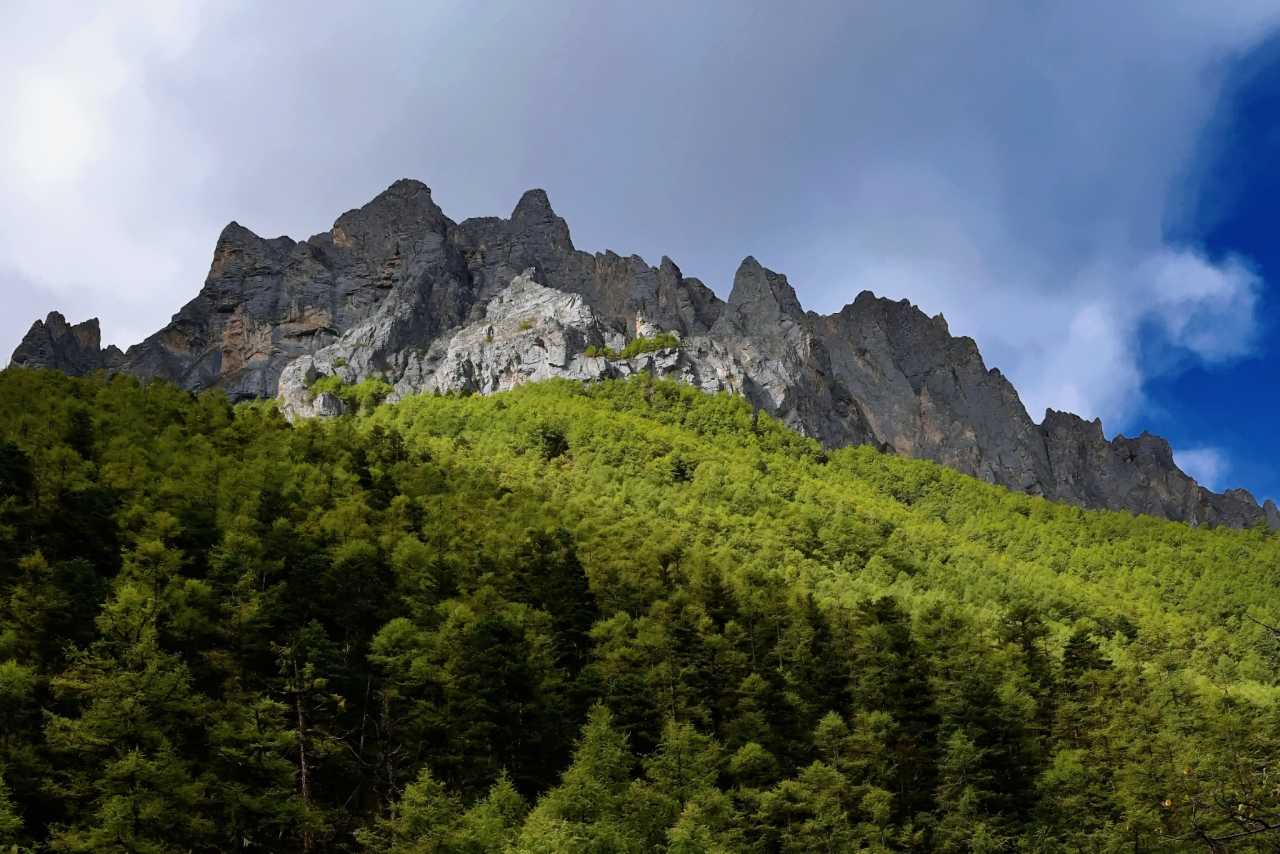
The viewpoint for the “Sixteen Arhats” lies not far from Luorong. Since we walk with our backs to that mountain, we nearly missed it without the roadside sign.
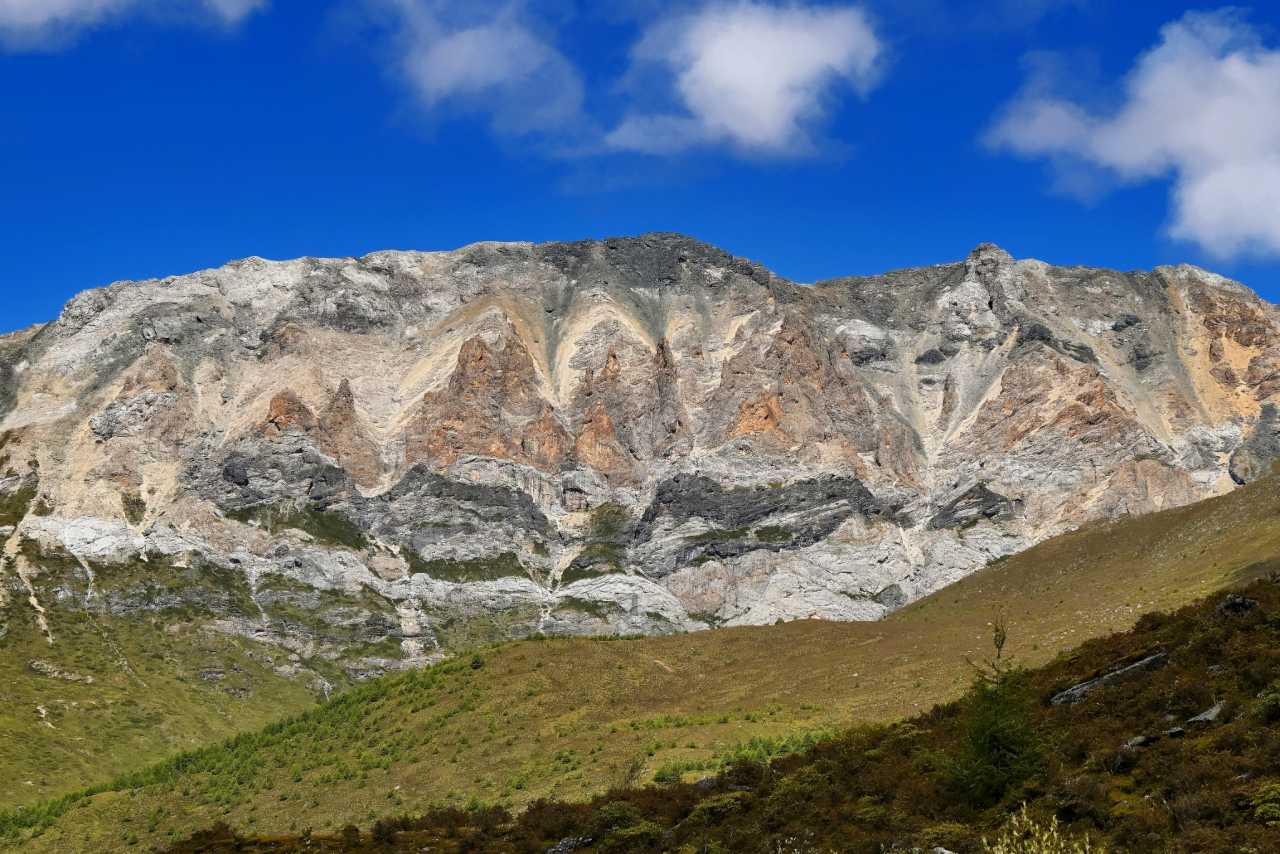
Looking back, giant gray-black cliffs resemble tempered dark iron, with broad red mottling—not uniform coating, but strokes as if deliberately painted. Color patches follow contours and fissures, cleverly outlining wide shoulders, drooping folds, even silent standing forms.
From afar, they look like meditating arhats in faded crimson robes—robes woven of clouds, light, and the essence of rock. This is not man-made cliff carving, but nature’s freehand art.
 Sixteen Arhats
Color and cliff merge; the figures hide within mountain forms—seeming present yet absent, inspiring imagination. Eternal rock and Zen robes unite, painting a Buddhist scroll of “man, deity, and nature.”
Later research showed “Sixteen Arhats” exists in Yading not just as shapes but in reality: on a cliff foot under Xiannairi are small houses scattered—retreat huts for monks or hermits, called “practice huts.”
Legend says Sixteen Arhats are disciples of Sakyamuni, entrusted to reside in the human world without nirvana, beyond life-death karma, supported by beings, sowing merit for all. Locals combine legend and reality, seeing the cliff-side practitioners as incarnations or followers of the Sixteen Arhats. The huts embedded in the cliff symbolize their presence from afar.
Manjushri Wisdom Line – 07 – To Luorong Pasture
By noon, Luorong Pasture is the end of our half-long line and also the end of the Manjushri Wisdom Line.
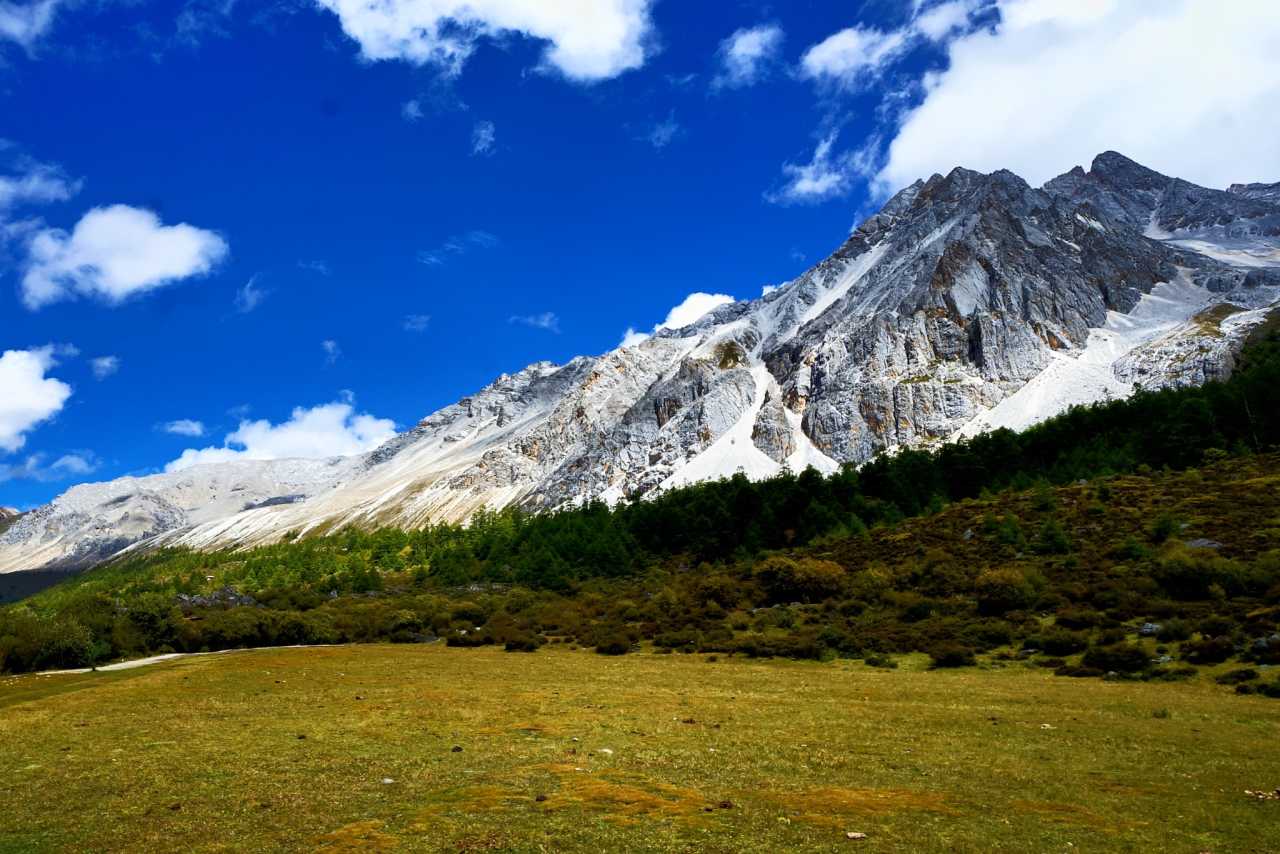
Each step feels like a silent covenant with the peaks. The snow summits of Xianuoduoji and Yangmaiyong grow larger and clearer inch by inch—truly embodying “if the mountain won’t come to me, I’ll go to the mountain.”
 Luorong Pasture
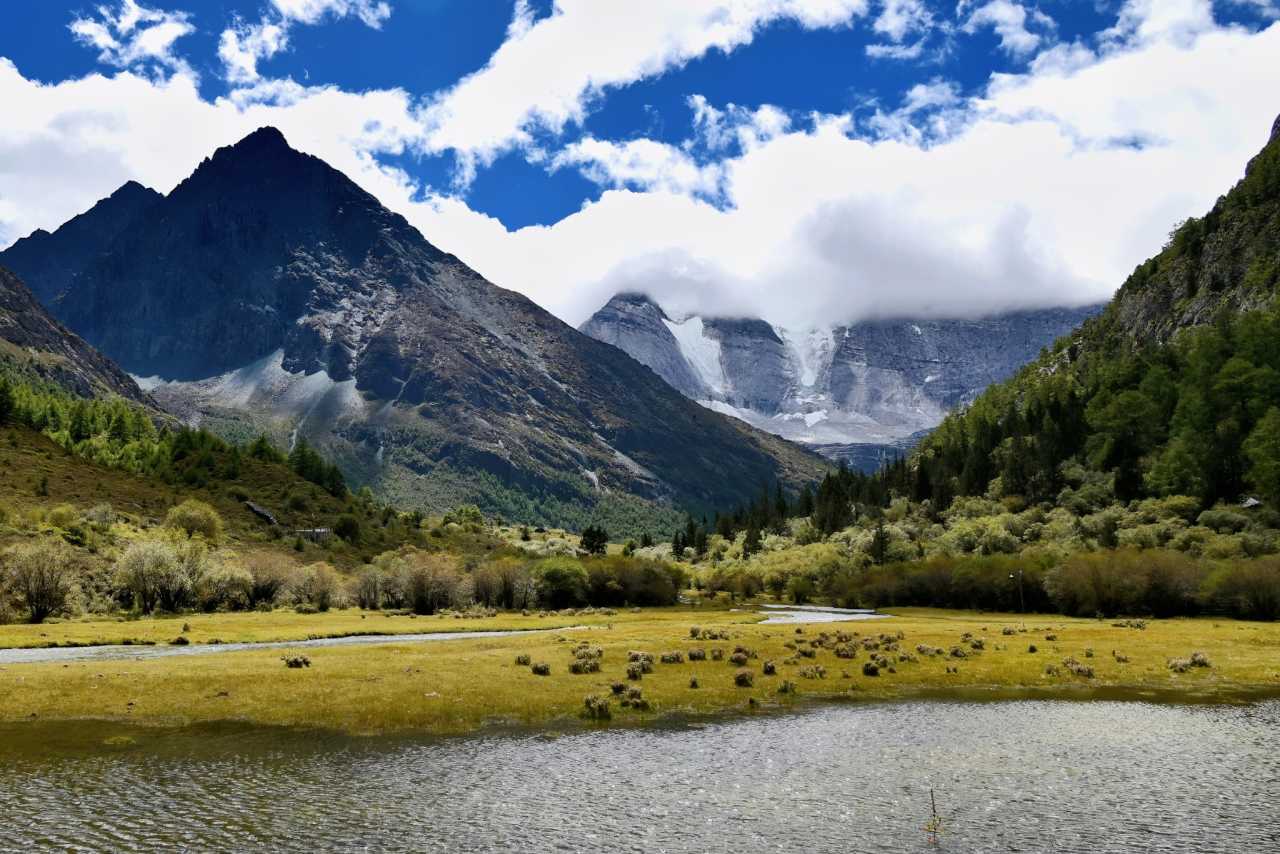
Closer to the pasture, land becomes gentler and richer. Meadows twine with glacial streams; silver lines run wantonly through green, carving countless shining edges—hard to tell whether meadow spreads over water or water nourishes boundless green.
 Luorong Pasture
On the Manjushri Wisdom Line you realize the best scenery isn’t a fixed end, but saturates the entire route—especially the ever-present murmuring streams and endless forests.
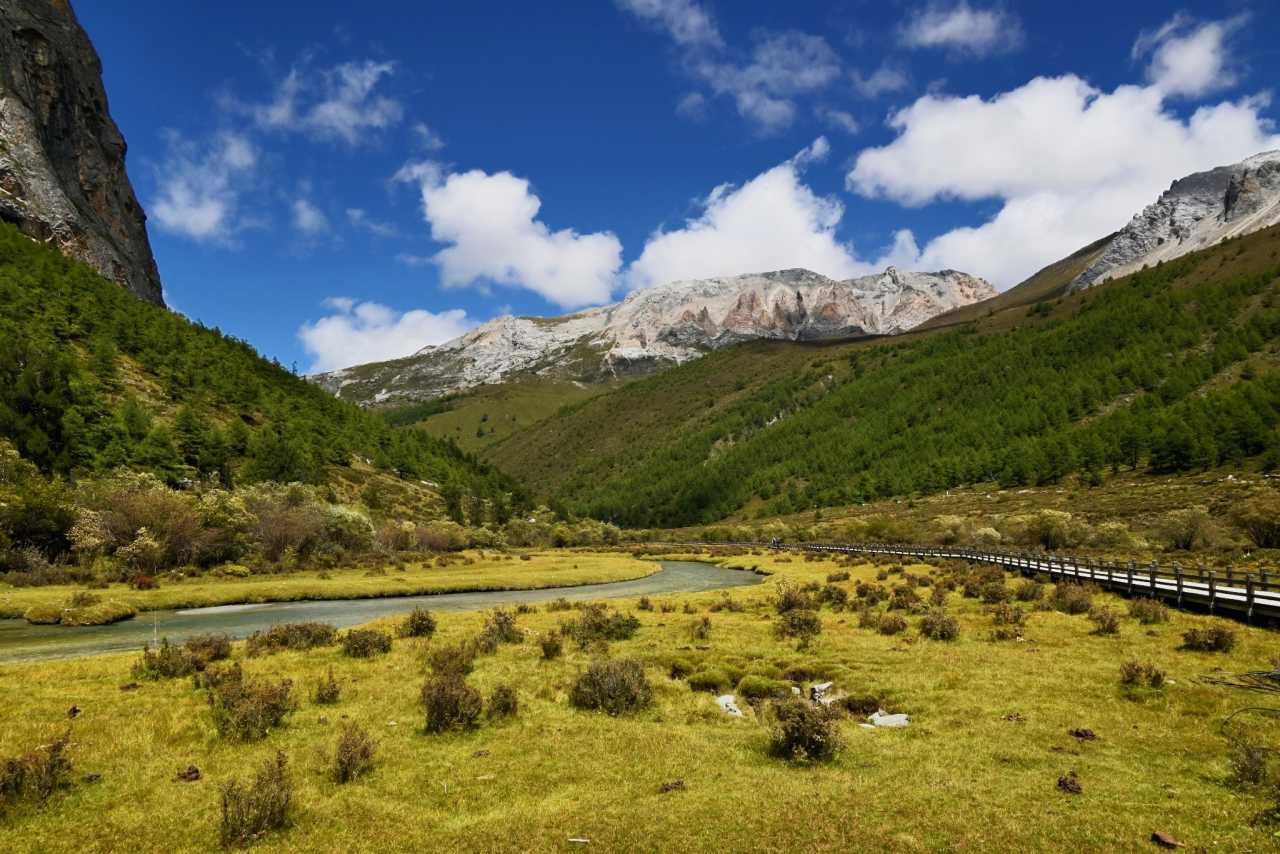 Luorong Pasture
Compared with famed autumn, I personally favor late spring to early summer.
Forests then are like a calm painter lavishly blending fresh green and light yellow—creating a subtle transition of life.
Yes, adults “want both,” and here I somehow had newborn vitality and mature abundance at once.
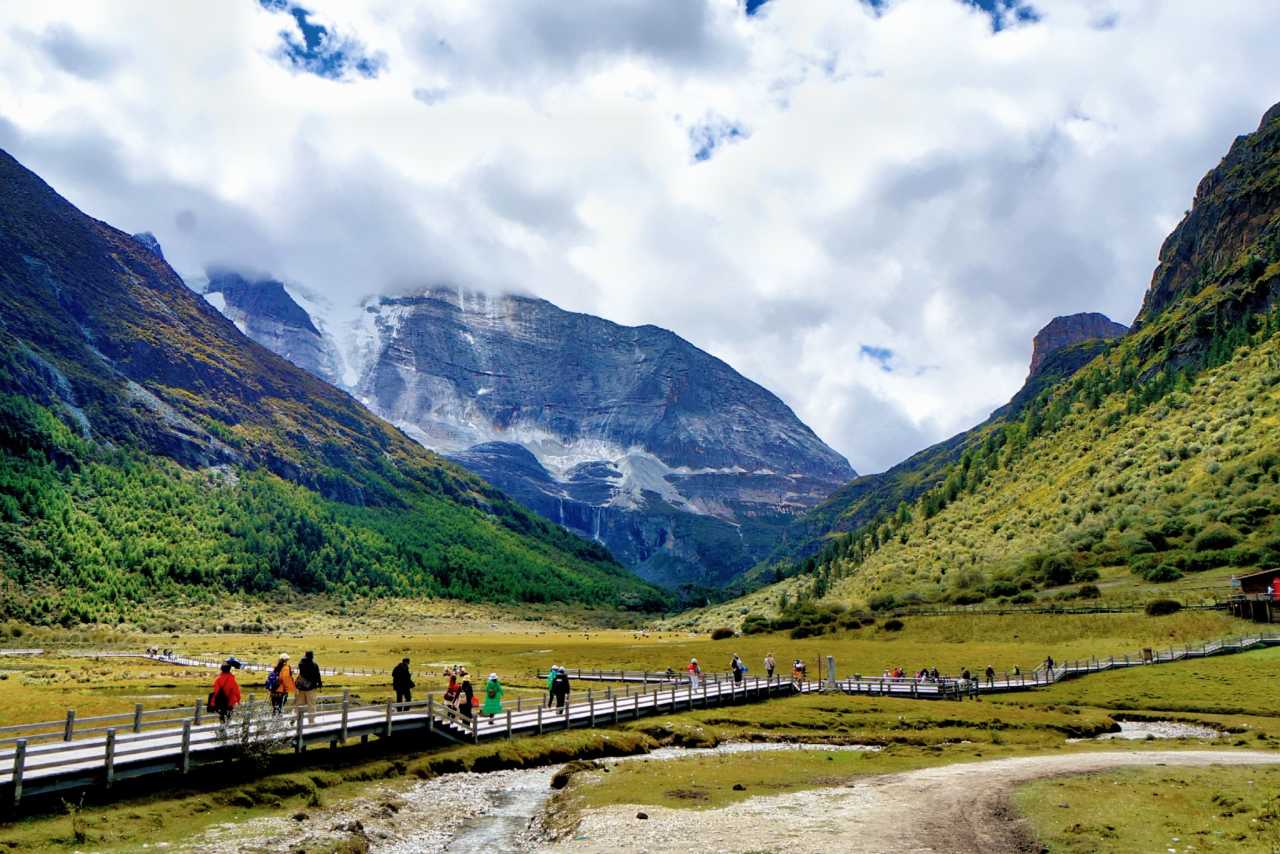 Luorong Pasture
Of course, all this visual feast needs a day of clear light.
Only when sunlight pours through layered leaves, tracing golden edges on each leaf, does the forest sea reach its highlight.
Light dances in woods; streams sing underfoot—then you understand: maybe wisdom hides in this flowing scenery.
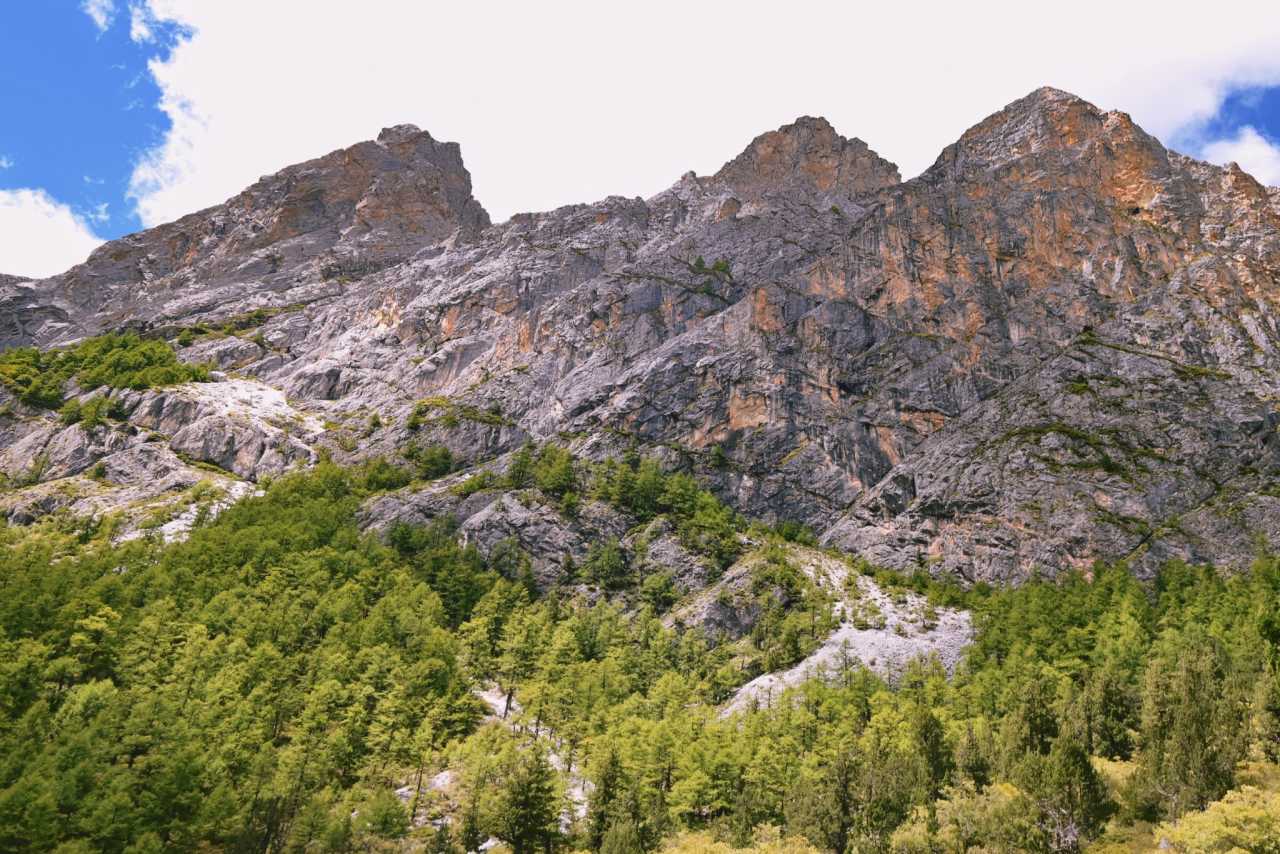 Luorong Pasture
Further on, more creatures appear. Yading’s cattle and horses carry a calm bred by mountains and waters. They’re gentle and smart; some “standouts” lean toward the railings and “pay attention” with big wet eyes.
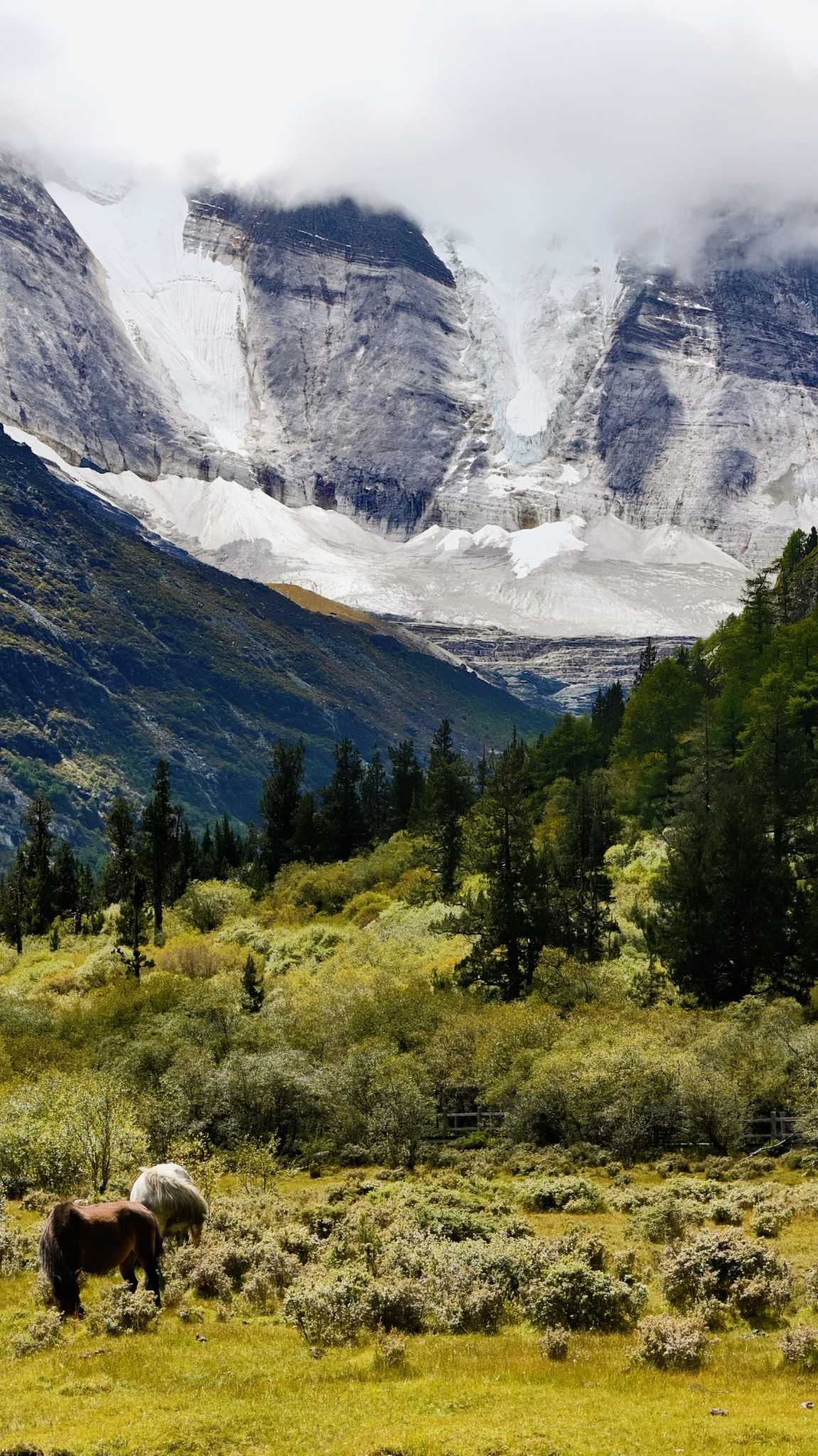 Luorong Pasture
They accept feeding without scrambling—their agile tongues flick and food is gone—elegant eaters.
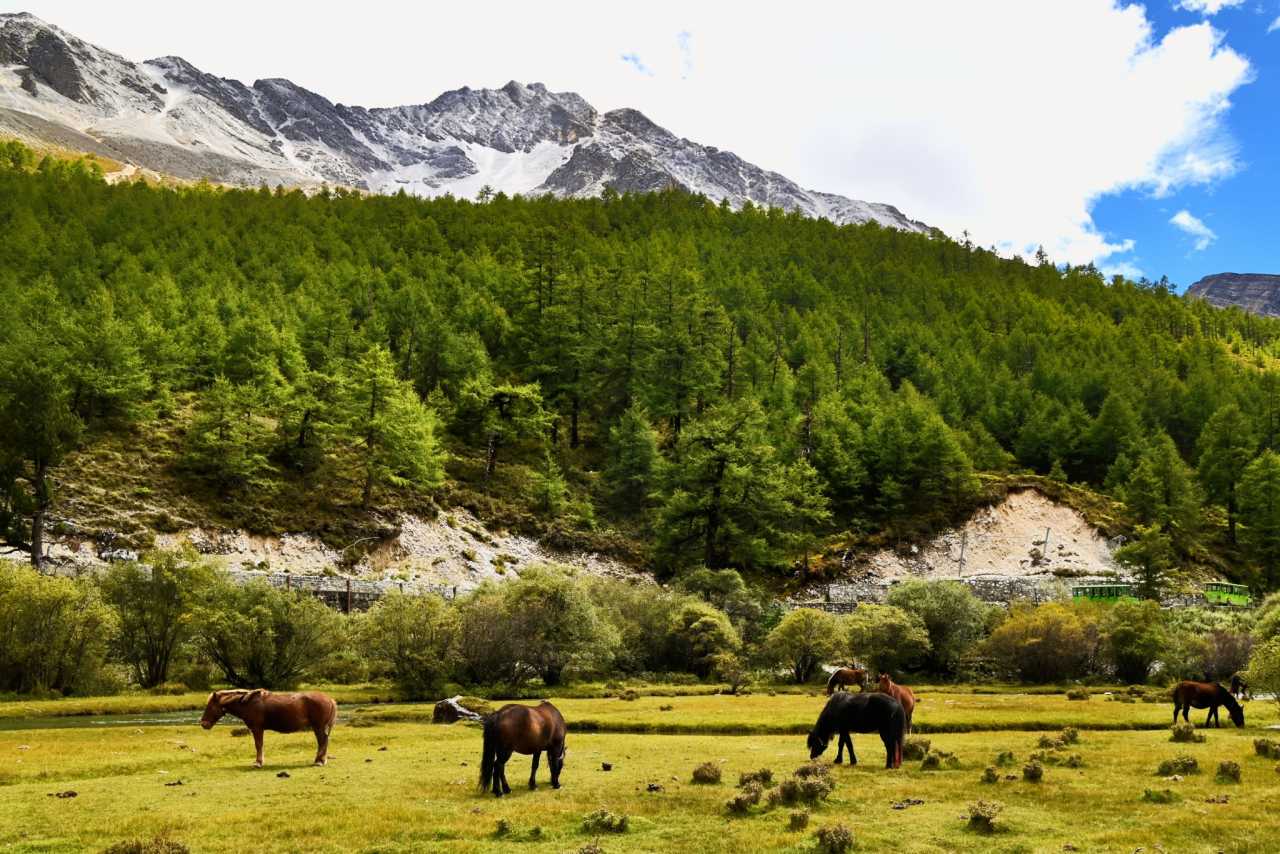 Luorong Pasture
Once one starts, others gather. Even without getting treats, they never pester—just shake heads and stroll back to the center to continue lunch—composed and dignified, like true children of the snow mountains.
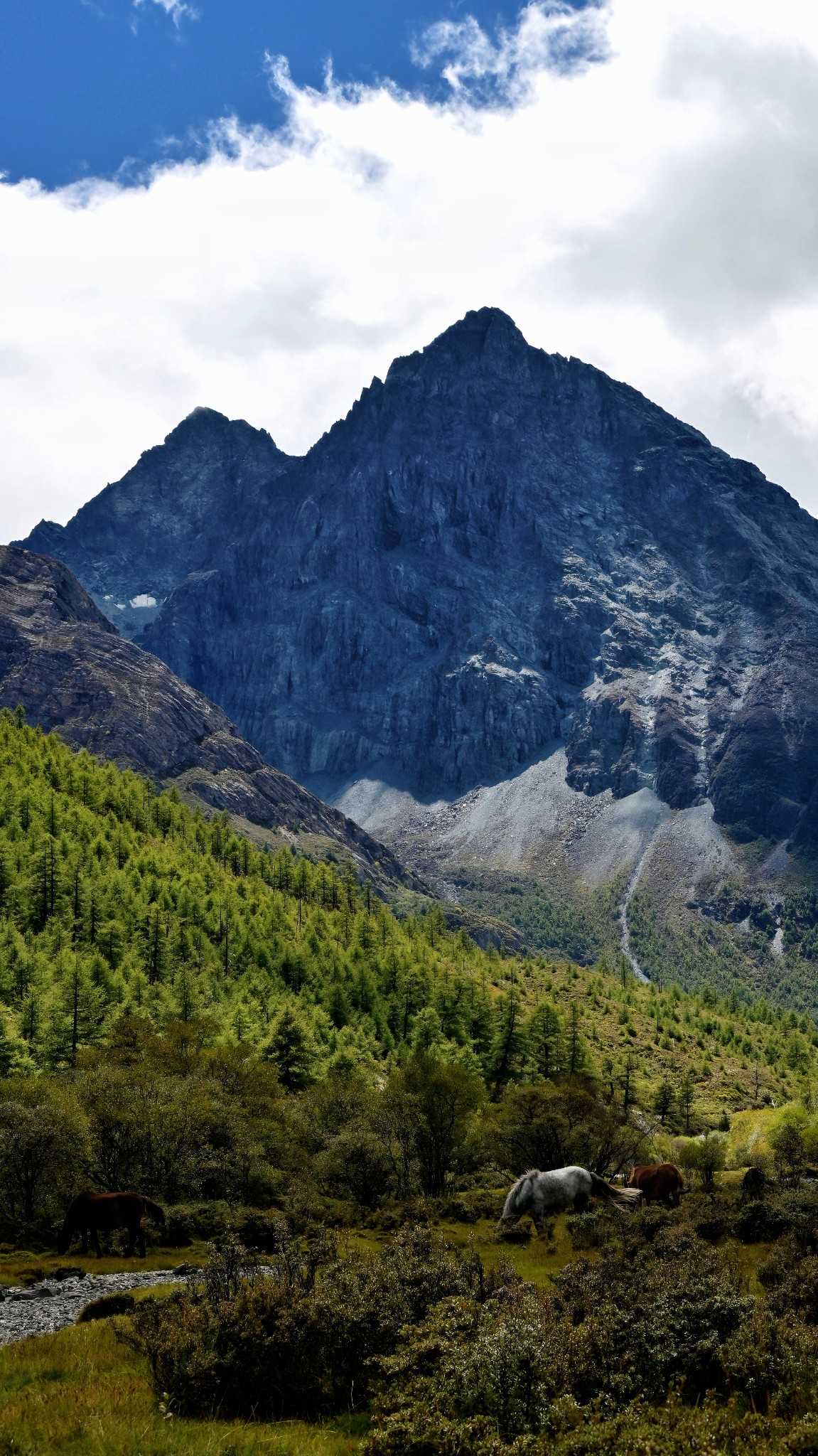 Luorong Pasture
A reminder: enjoy and interact with distance and restraint. Do not touch or tease to avoid stress reactions. At this altitude, any accident can sour a trip.
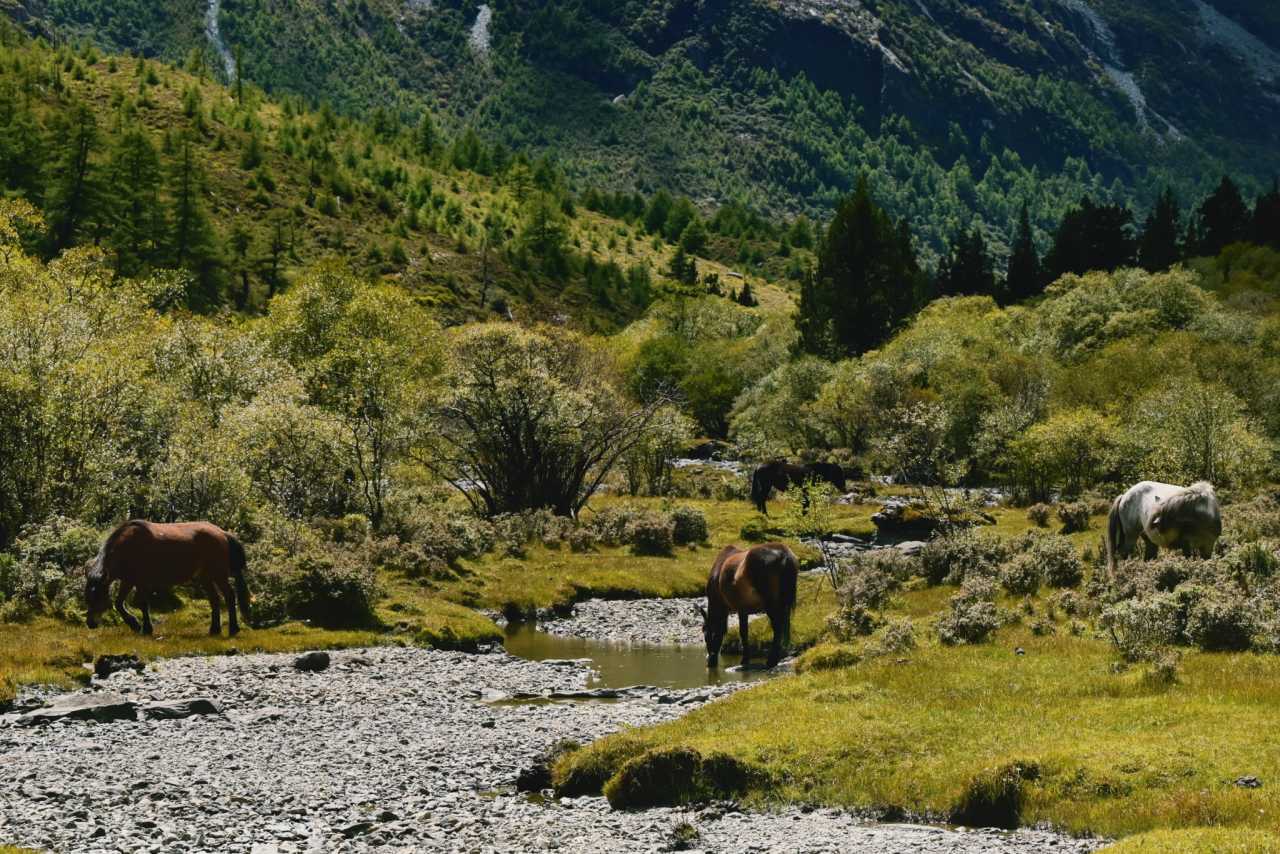 Luorong Pasture
Manjushri Wisdom Line – 08 – Luorong Pasture
On social media, most Yading posts use a similar angle for the cover to draw clicks: near, blue-green streams and golden meadow; far, dark green forest; and in the middle distance a towering snowy massif at the photo center.
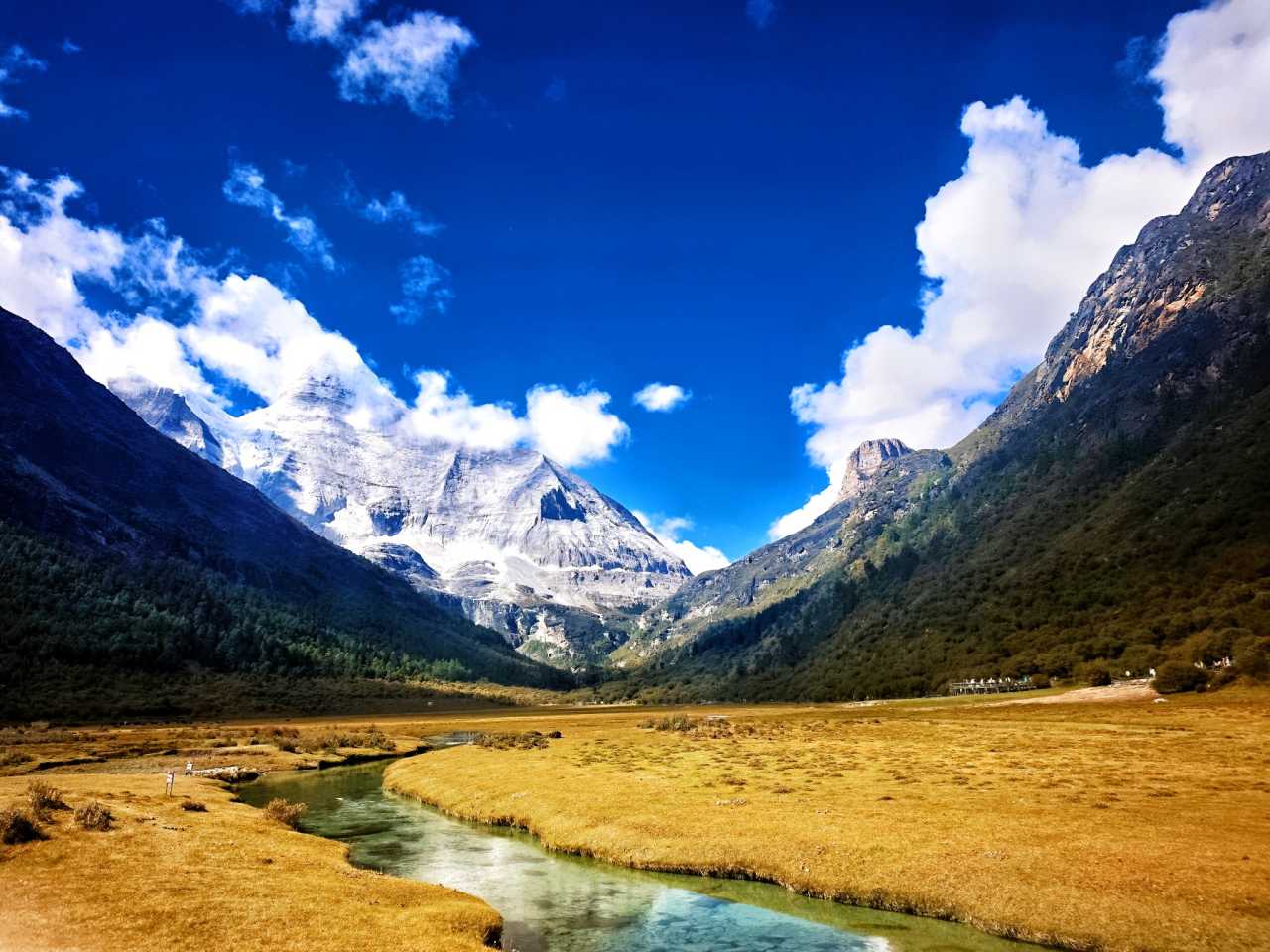 Luorong Pasture
It captures almost all natural elements in Yading besides lakes; unforgettable once seen—luring Chinese who love pastoral landscapes for life.
This perfect angle is at Luorong—a rare view gained with little effort.
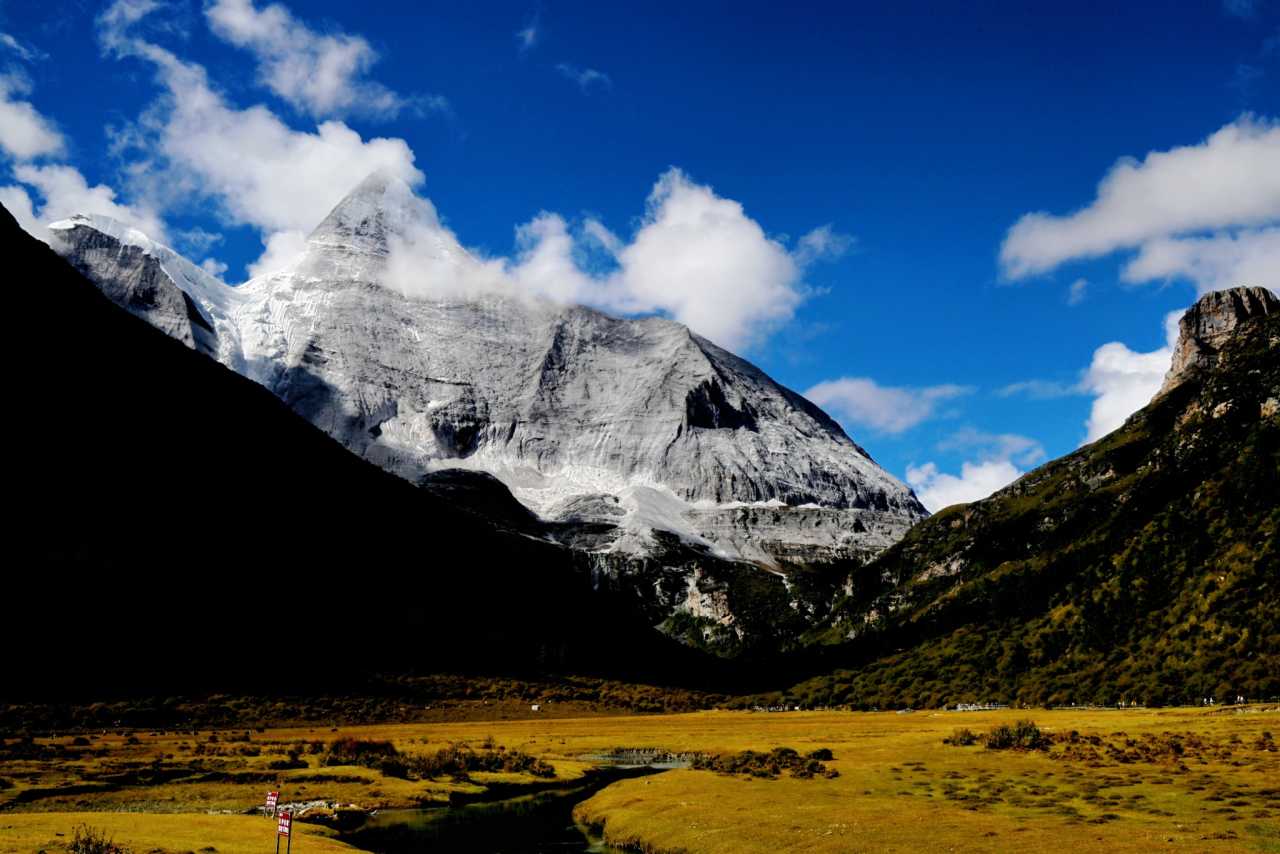
Continue along the path; at the mountain foot on the right you’ll see neatly built wooden huts—our end of the half long line: Luorong Pasture. It’s also the end of the cart line and the start of the Vajra Challenge Line.
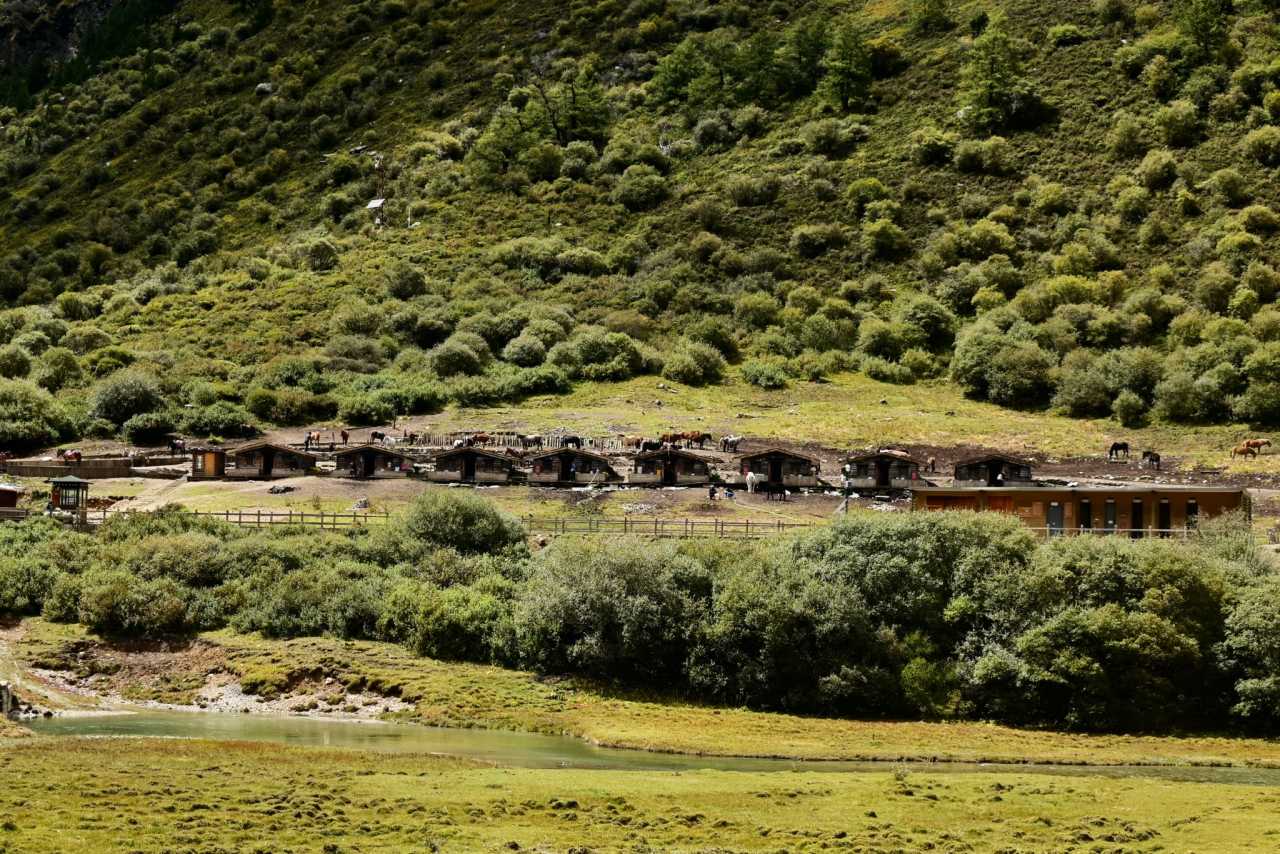 Luorong Pasture
“Luorong Pasture” is amusing—it’s called a “cattle pasture,” yet has no cattle—only horses and mules.
Horses graze in near meadows; blue sheep stand on far cliffs—their presence makes heaven and earth vaster.
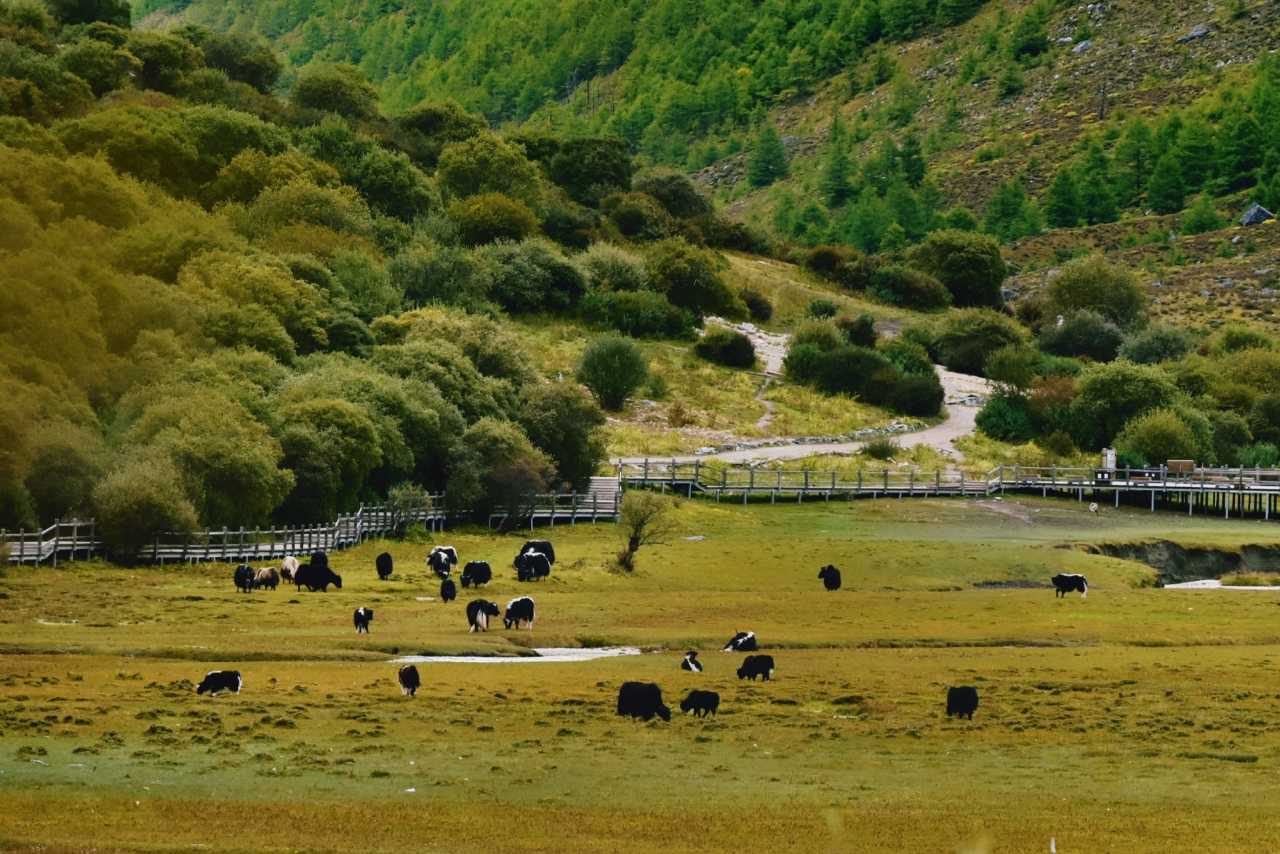 Luorong Pasture
Compared with sore, breathless human “workhorses,” highland cattle and horses are freedom incarnate—coats glossy, temper calm—sauntering through their own realm.
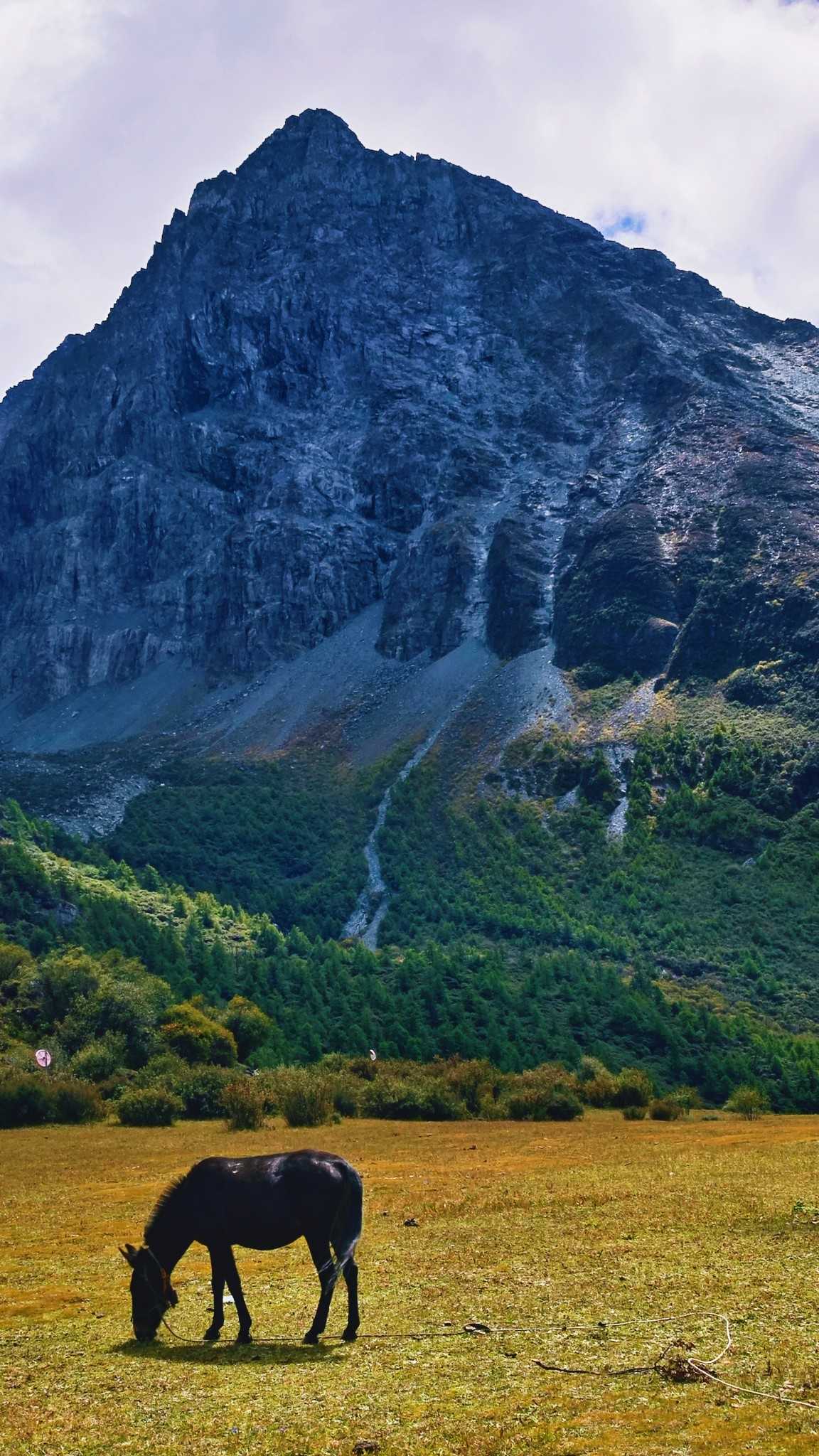 Luorong Pasture
Here, horses managed by locals are mounts taking visitors toward Gongga Cuo.
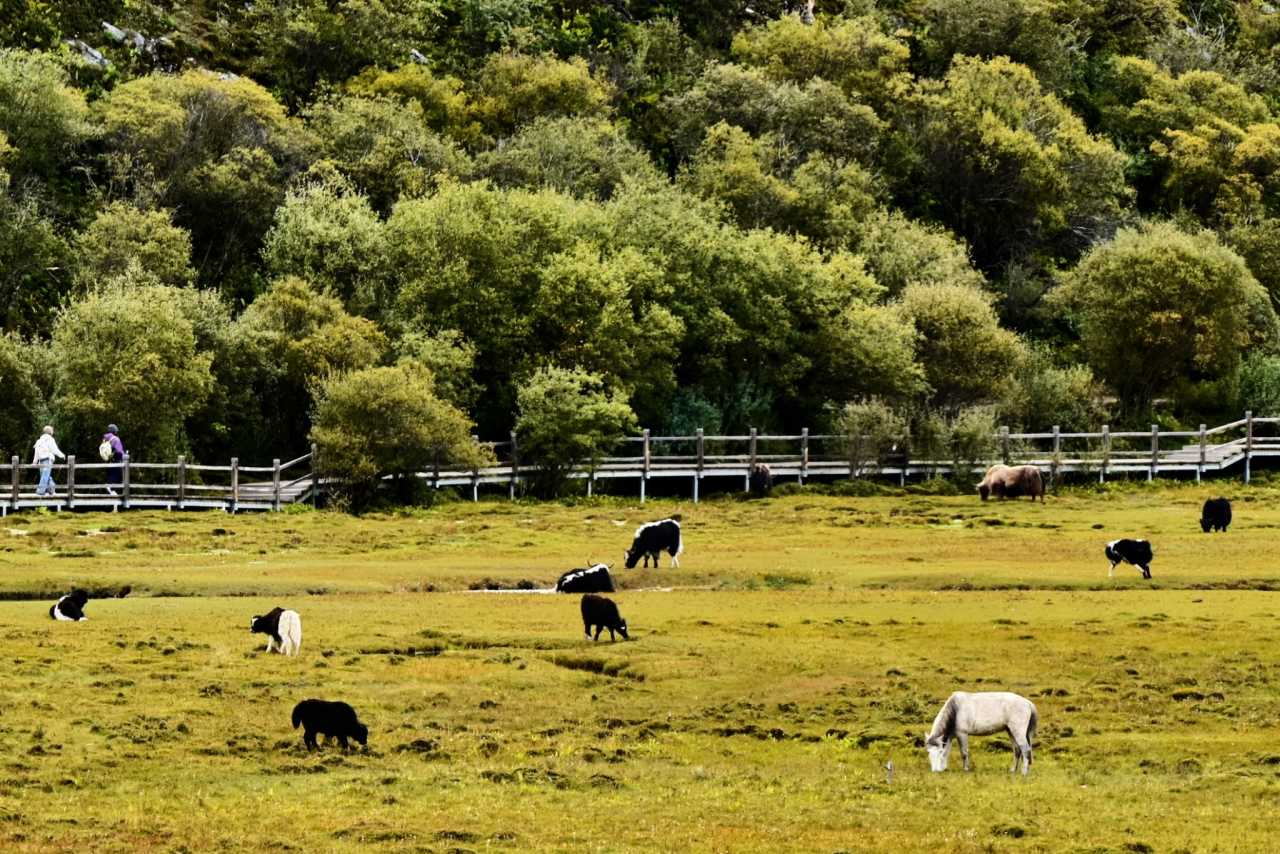 Luorong Pasture
We came in off-season; most horses were off-duty, scattered across meadows—ambling or grazing—enjoying quiet “snacks,” seemingly storing energy for the National Day crowds.
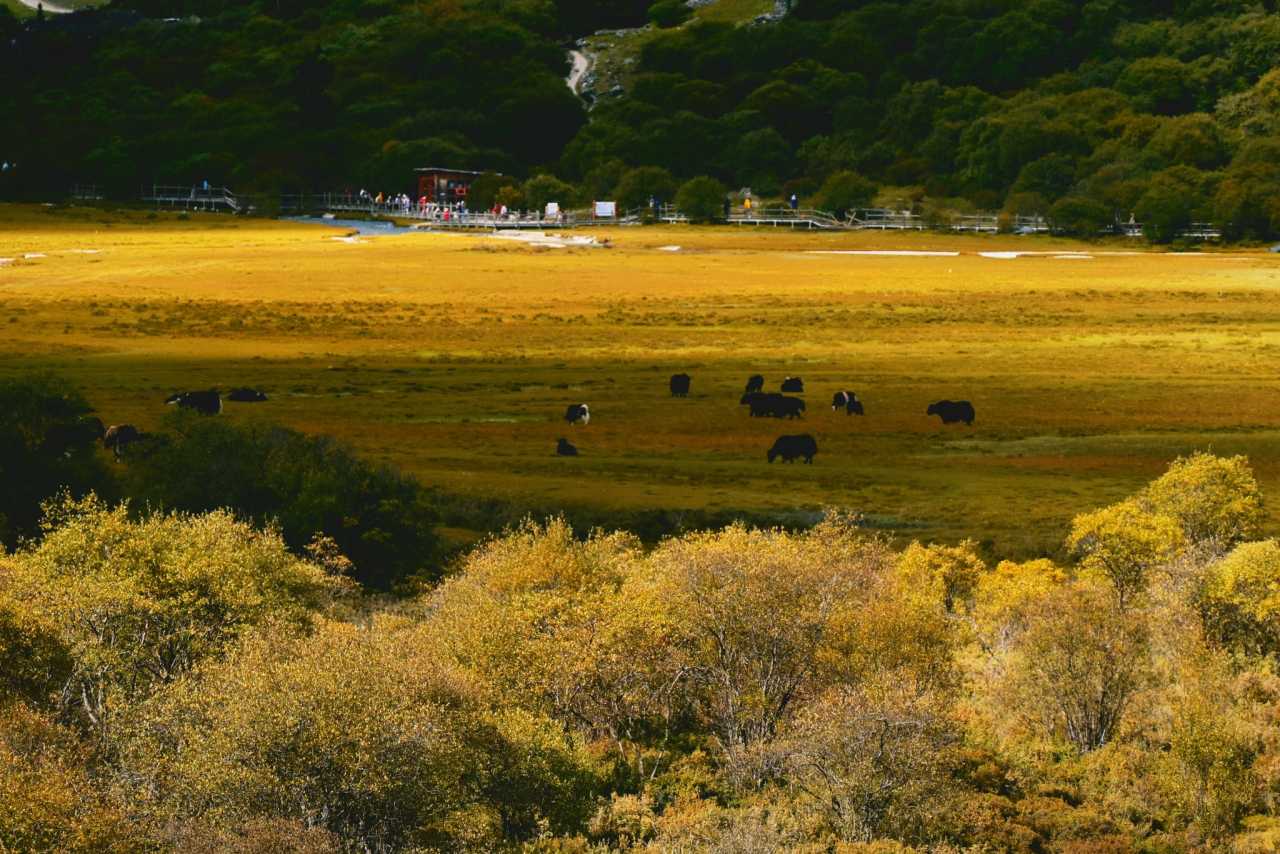
When holiday crowds arrive, these scattered units form a mighty “cavalry.” They carry visitors in a long line up the mountain—the endless procession like an army “expedition” toward Yangmaiyong, aiming to “capture” Milk Sea.
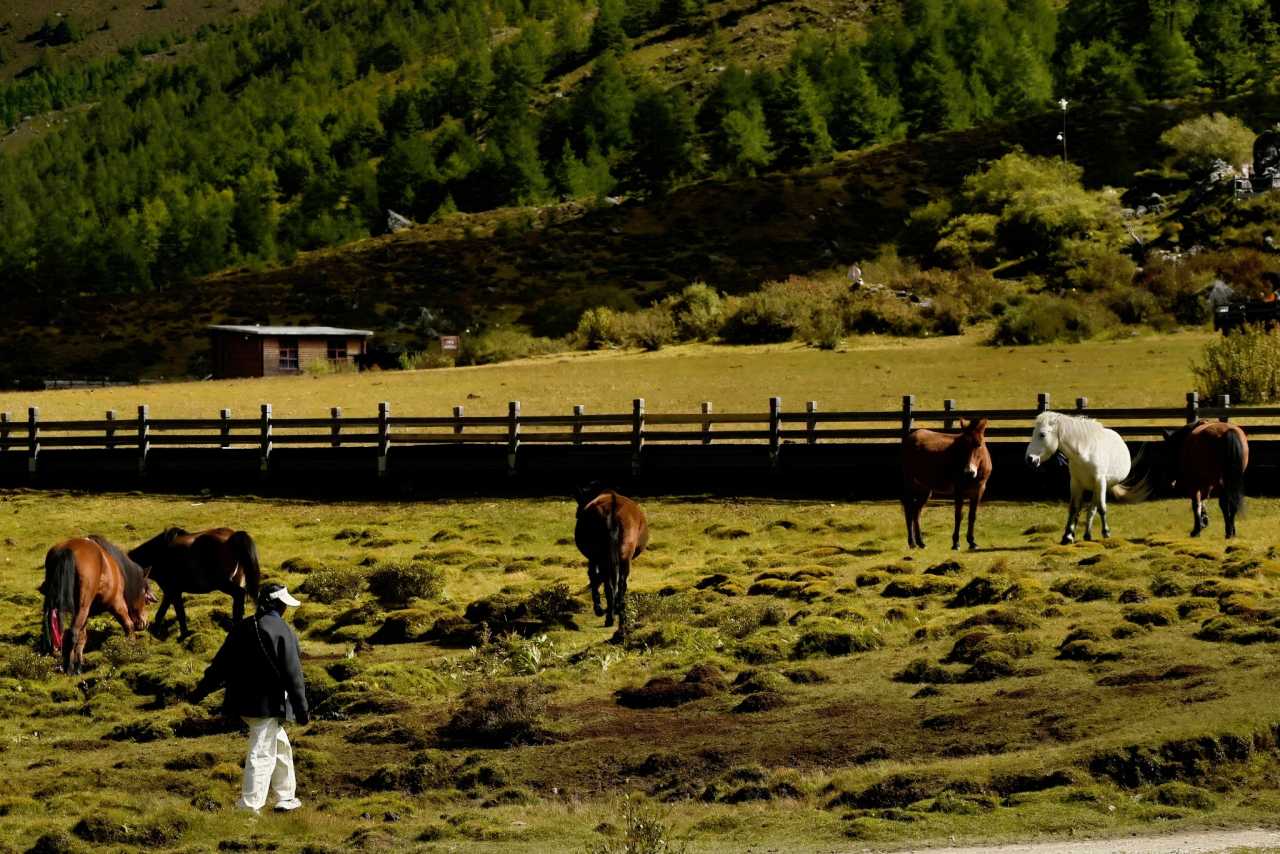 Luorong Pasture
Glacial meltwater winds down like a gleaming silver ribbon, slicing boundless grasslands into soft color blocks. The water is a heart-penetrating blue, threading yellow-green meadow and distant dark-brown wetlands. When wind passes, waves ripple across the grass like giant brocade.
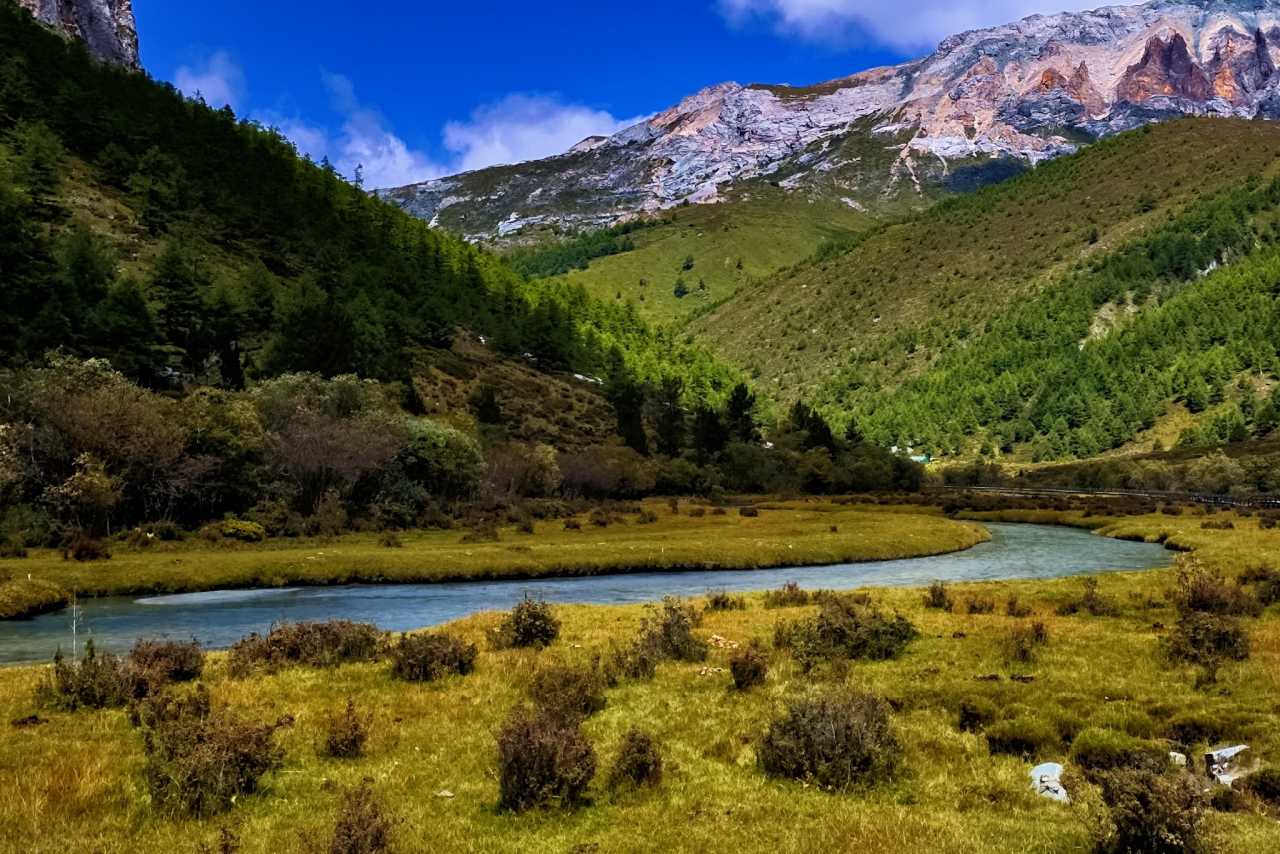
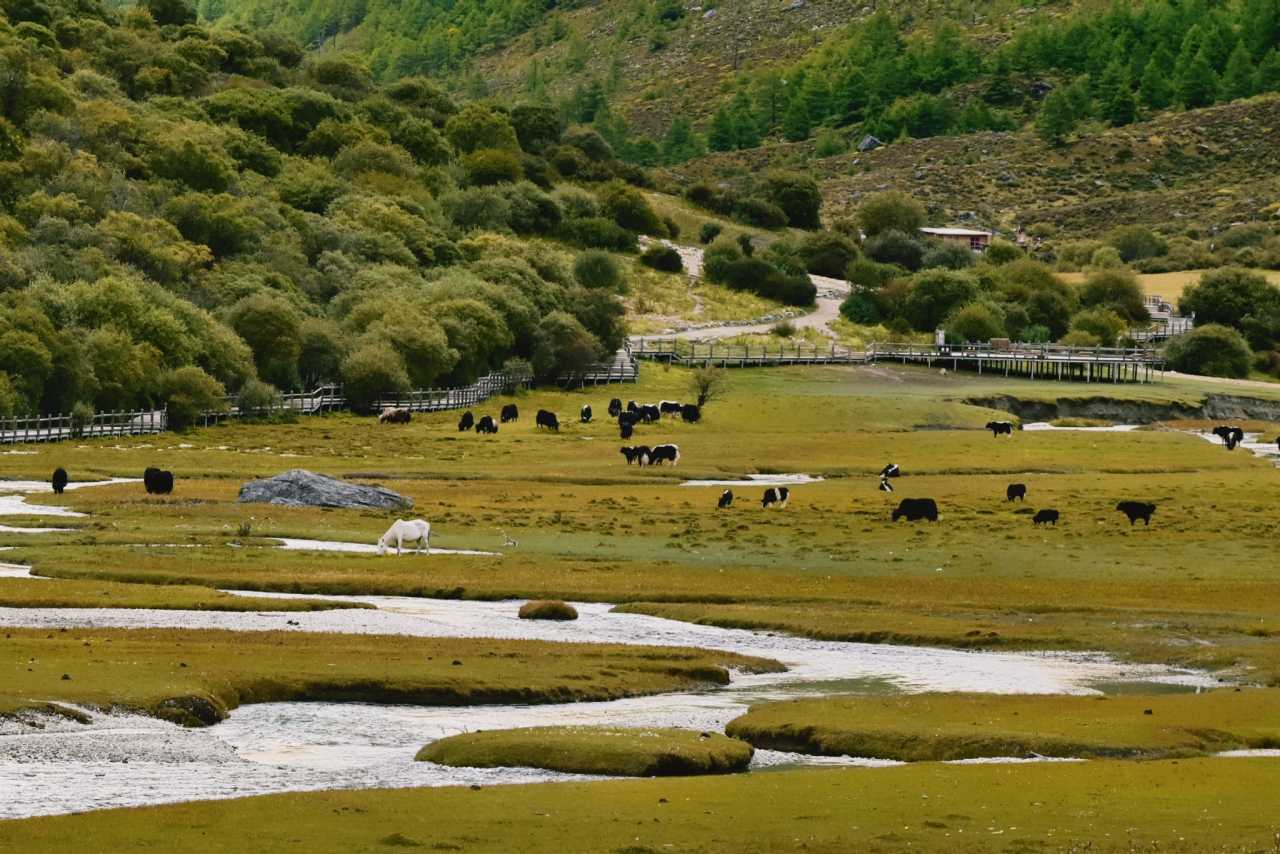 Luorong Pasture
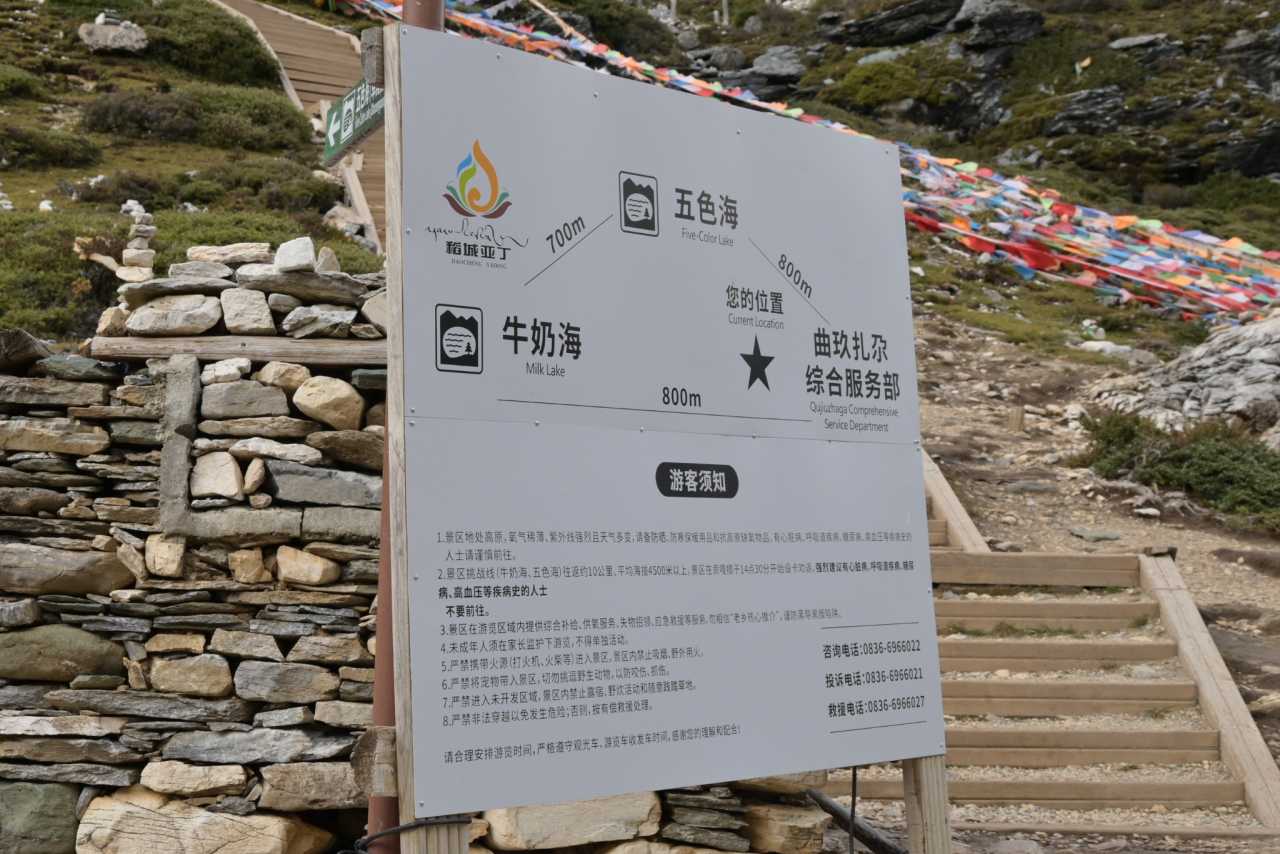
The path forks here: left to the visitor hub (cart drop-off) with restrooms, a shop, and the only fast-food (Dicos), plus a trail to Milk Sea and Five-Color Lake;
Right to the riding area at Luorong and another trail to Milk Sea and Five-Color Lake.
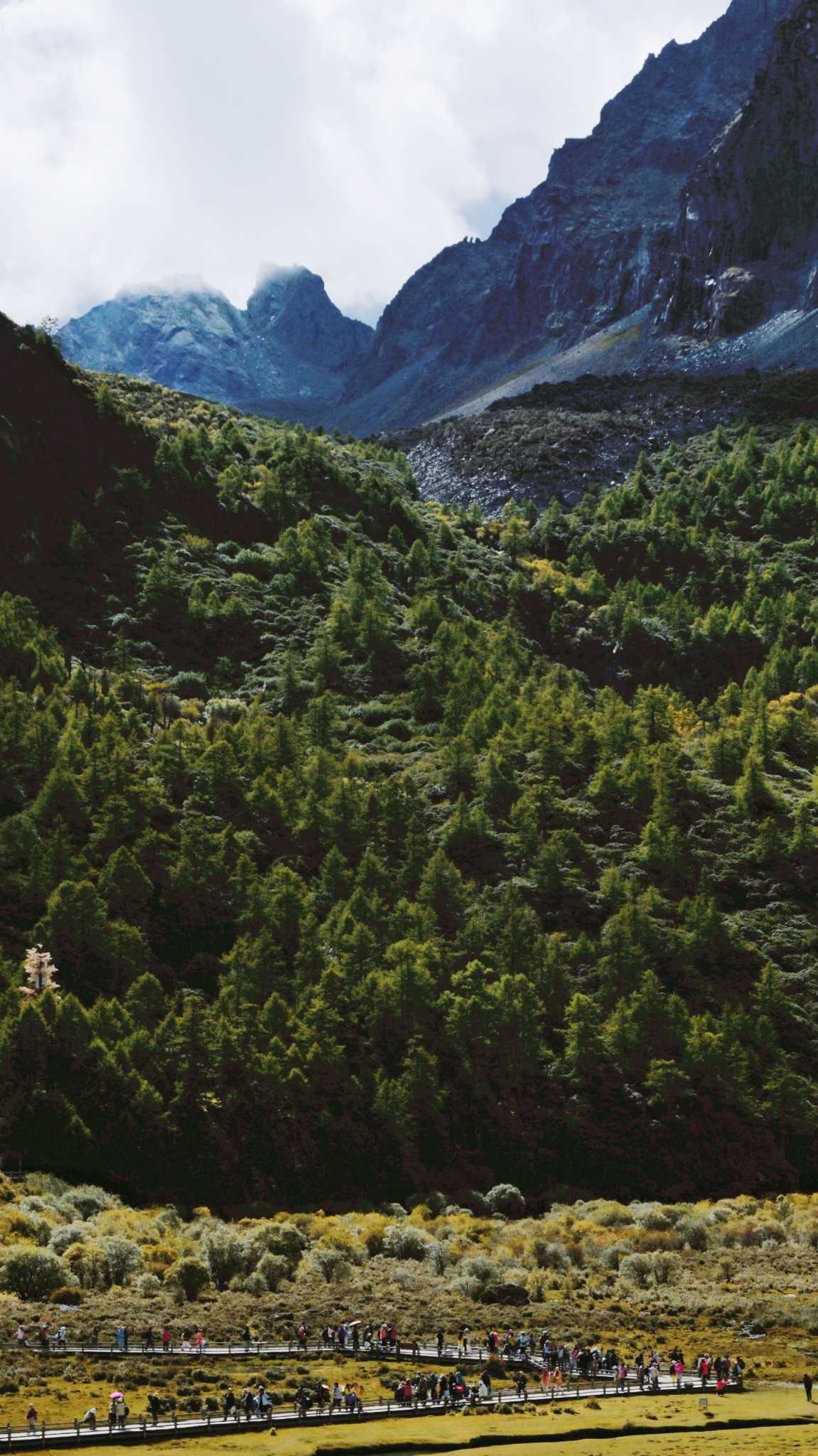 Luorong Pasture
Both trails end at the same place with similar length and difficulty, separated by a meltwater river from Yangmaiyong. From above they form a narrow loop—either is fine.
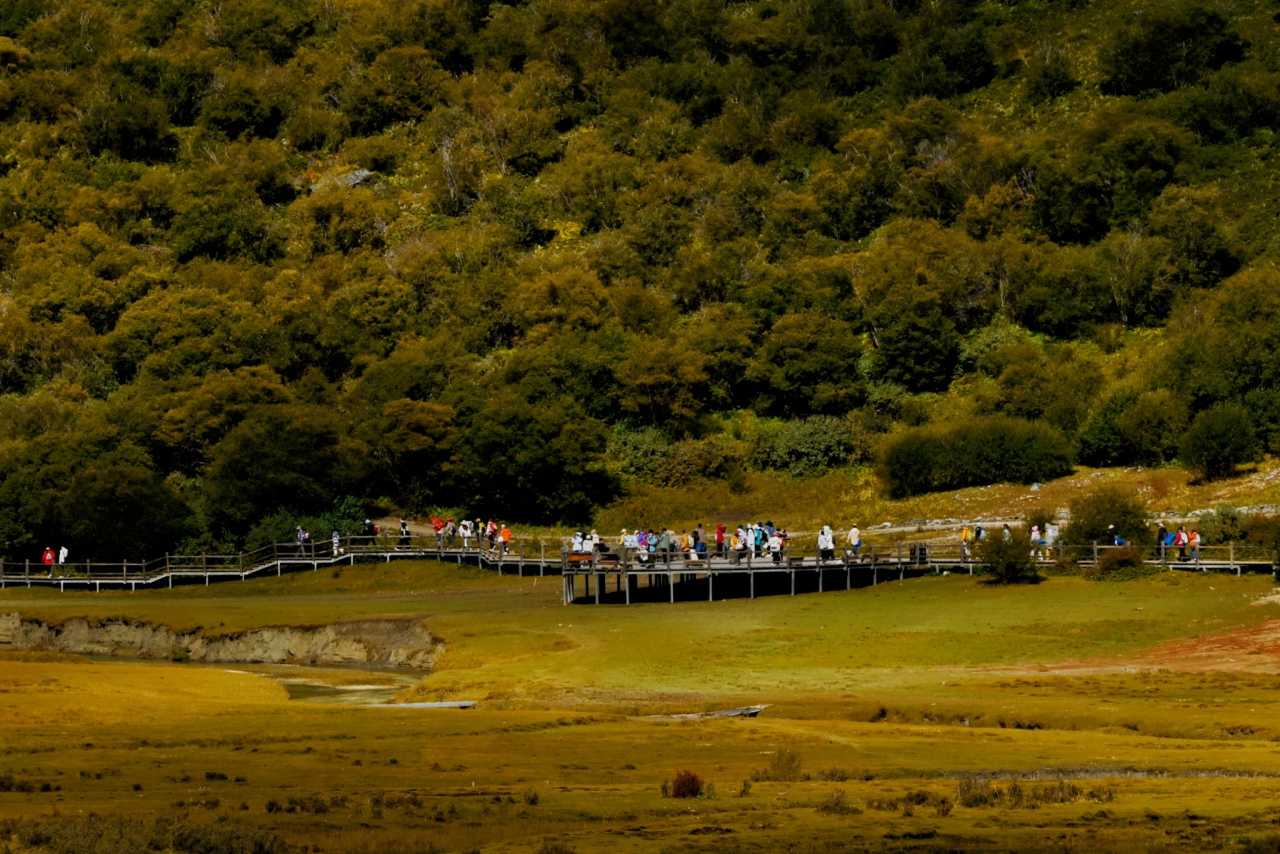 Luorong Pasture
Luorong faces Yangmaiyong; though still far, on clear days the massif is already very distinct.
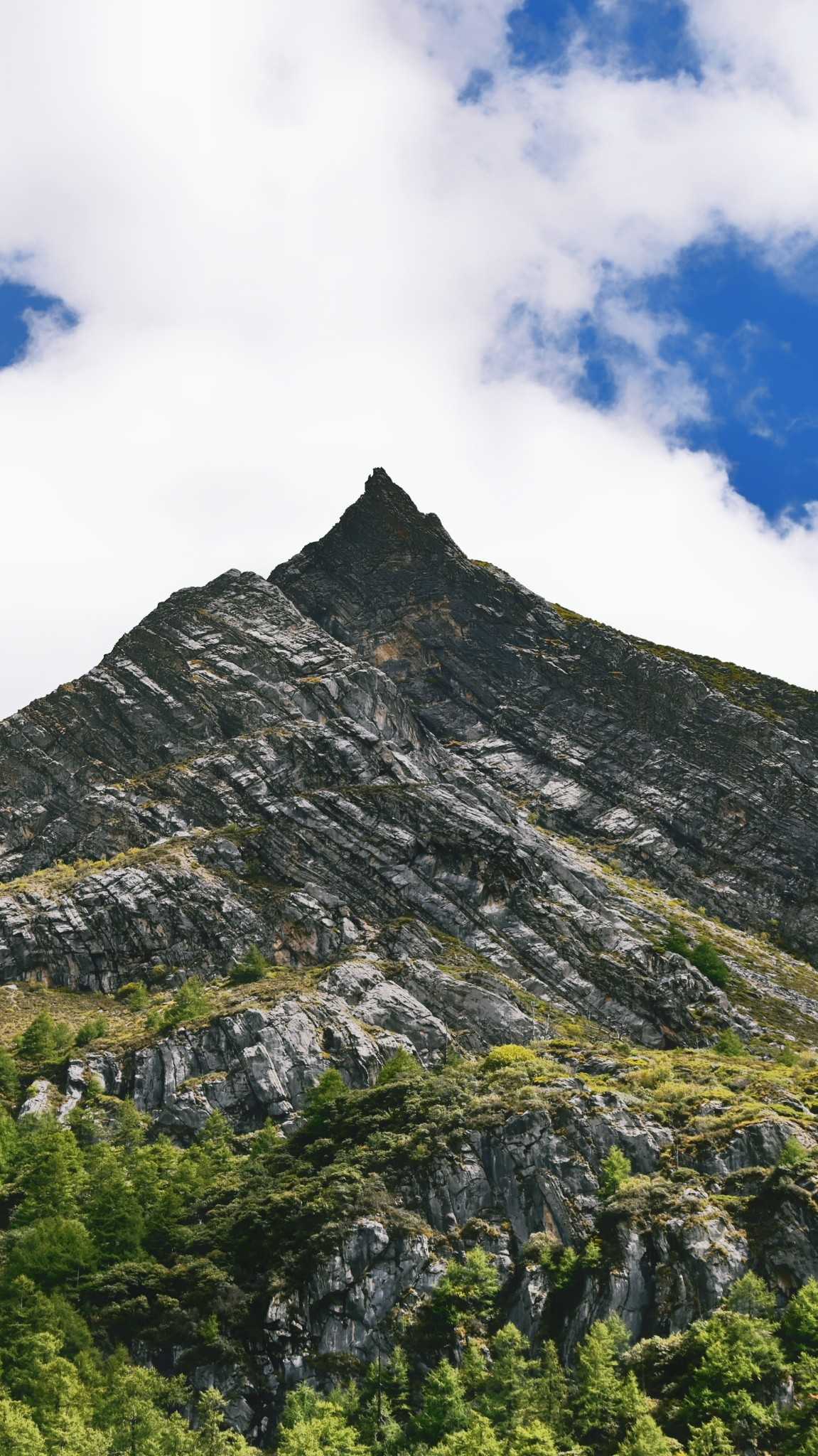 Luorong Pasture
Yangmaiyong is one of Yading’s three “protectors,” meaning “Manjushri” in Tibetan—an embodiment of wisdom, hence the “Manjushri Wisdom Line.”
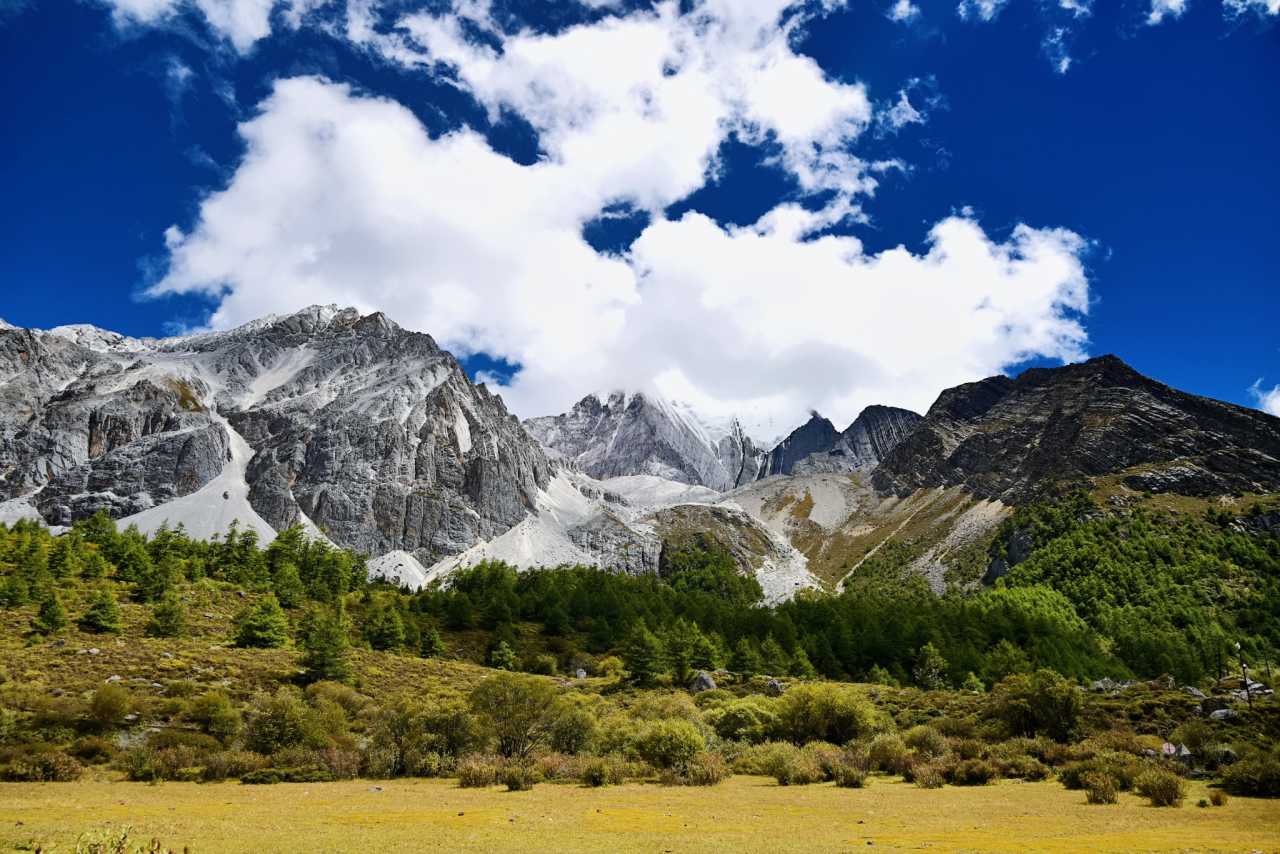 Luorong Pasture
Xiannairi, Yangmaiyong, and Xianuoduoji form a “pin” shape. Yangmaiyong’s elevation is 6033 m—slightly higher than Xiannairi.
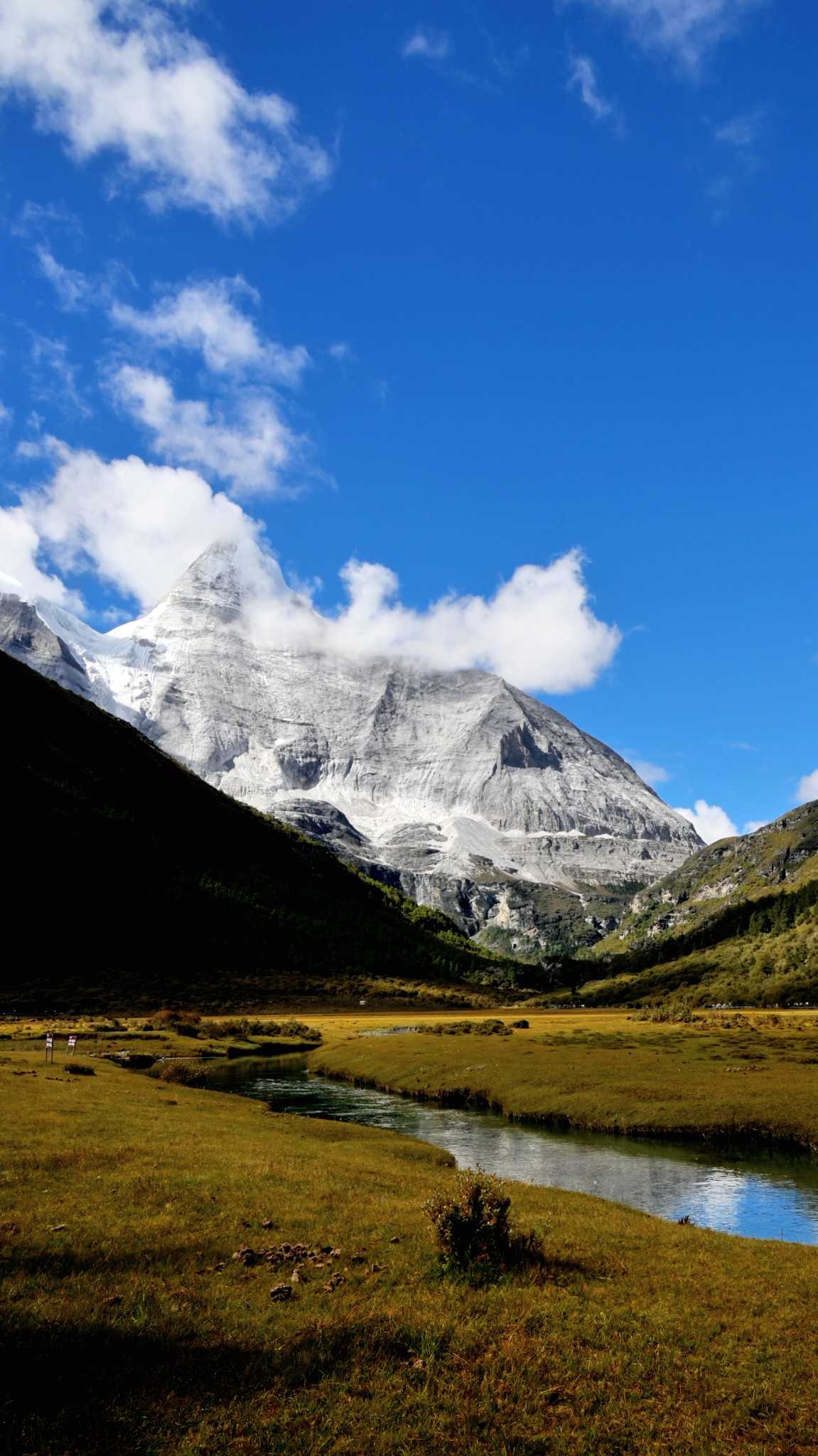 Luorong Pasture
Yangmaiyong stands front-center, piercing the azure with a lofty geometry; Xianuoduoji at right shows strength—bold and firm, flashing cold light in sunlight; behind, Xiannairi’s broad shadow builds a reliable backdrop like a giant white jade screen.
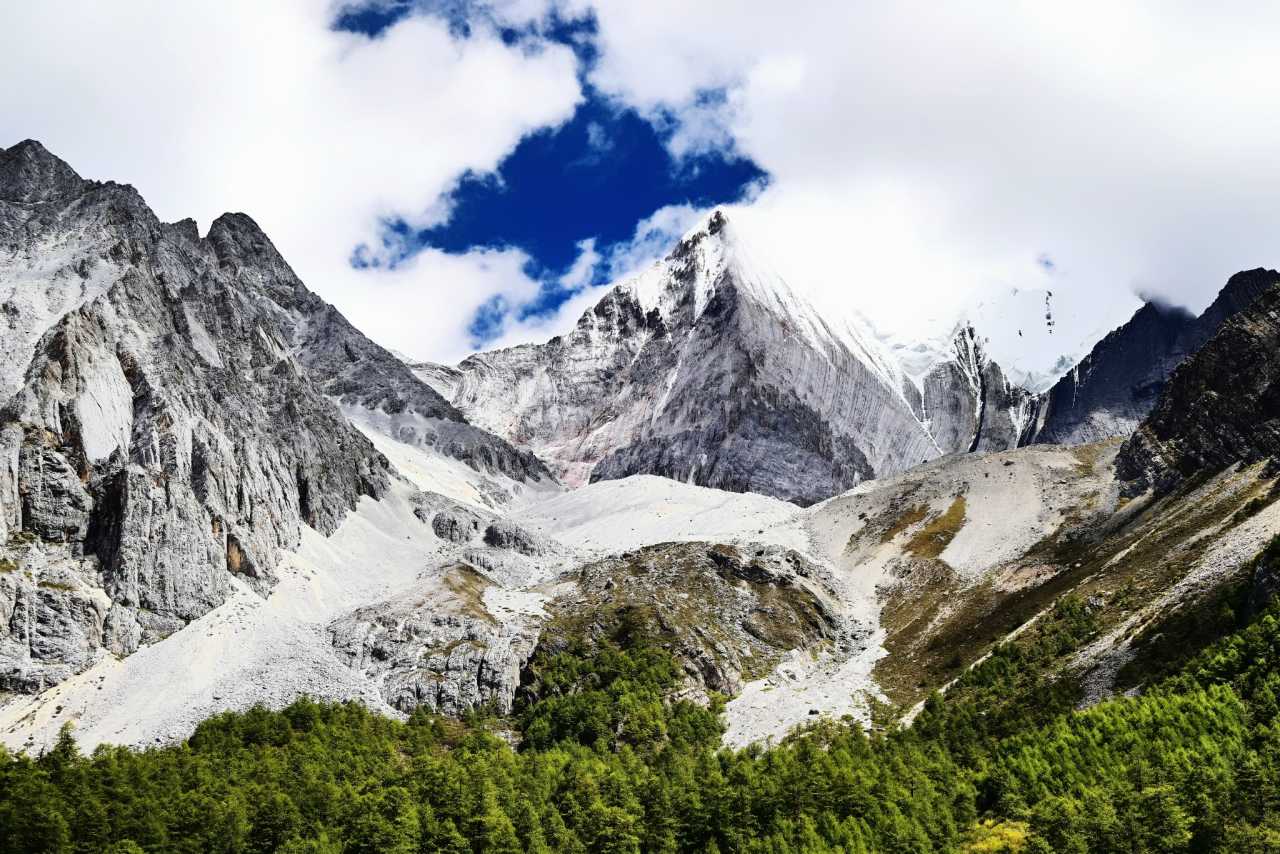 Luorong Pasture
These three are not fixed scenery; as clouds sweep and light shifts, they converse silently with you.
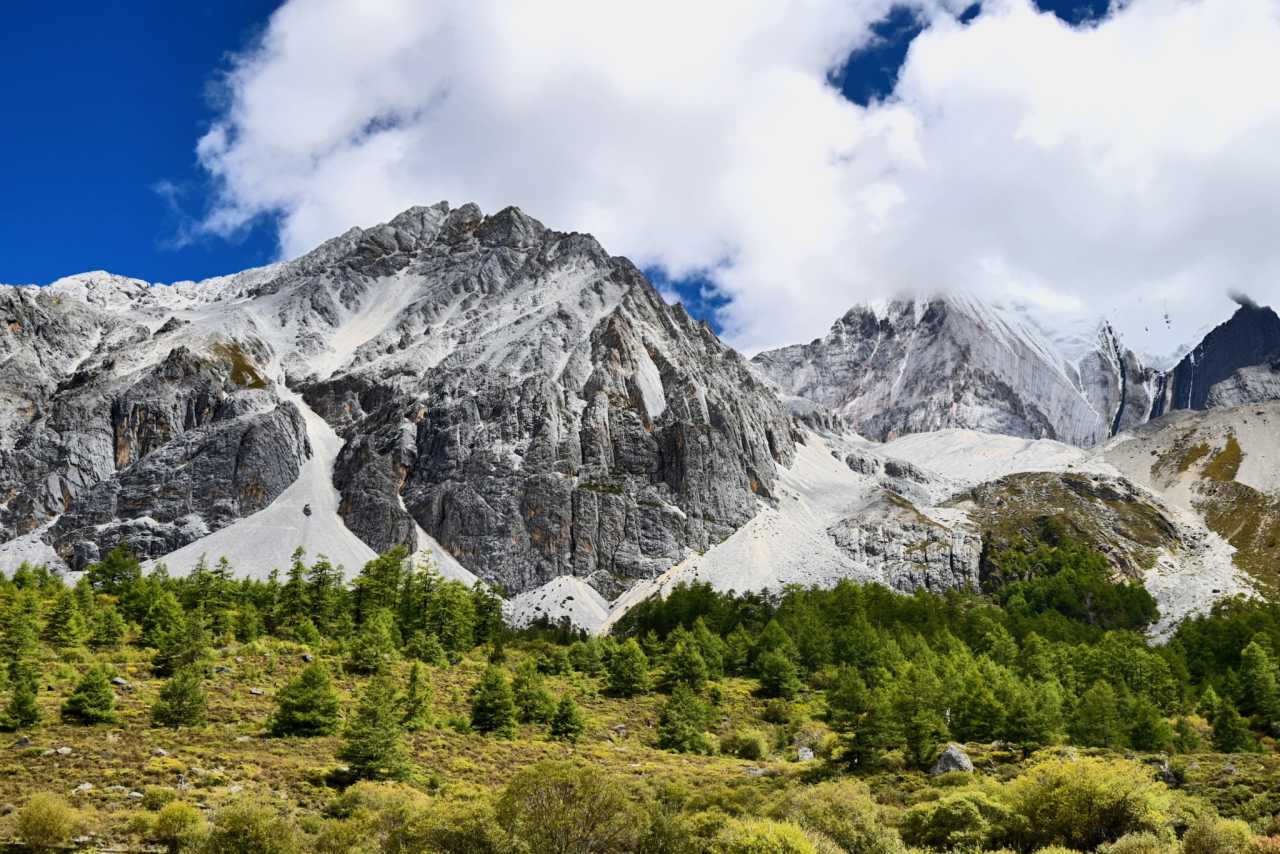 Luorong Pasture
In view, Luorong is wider than Chonggu—it feels like stepping into a world sealed by mountains.
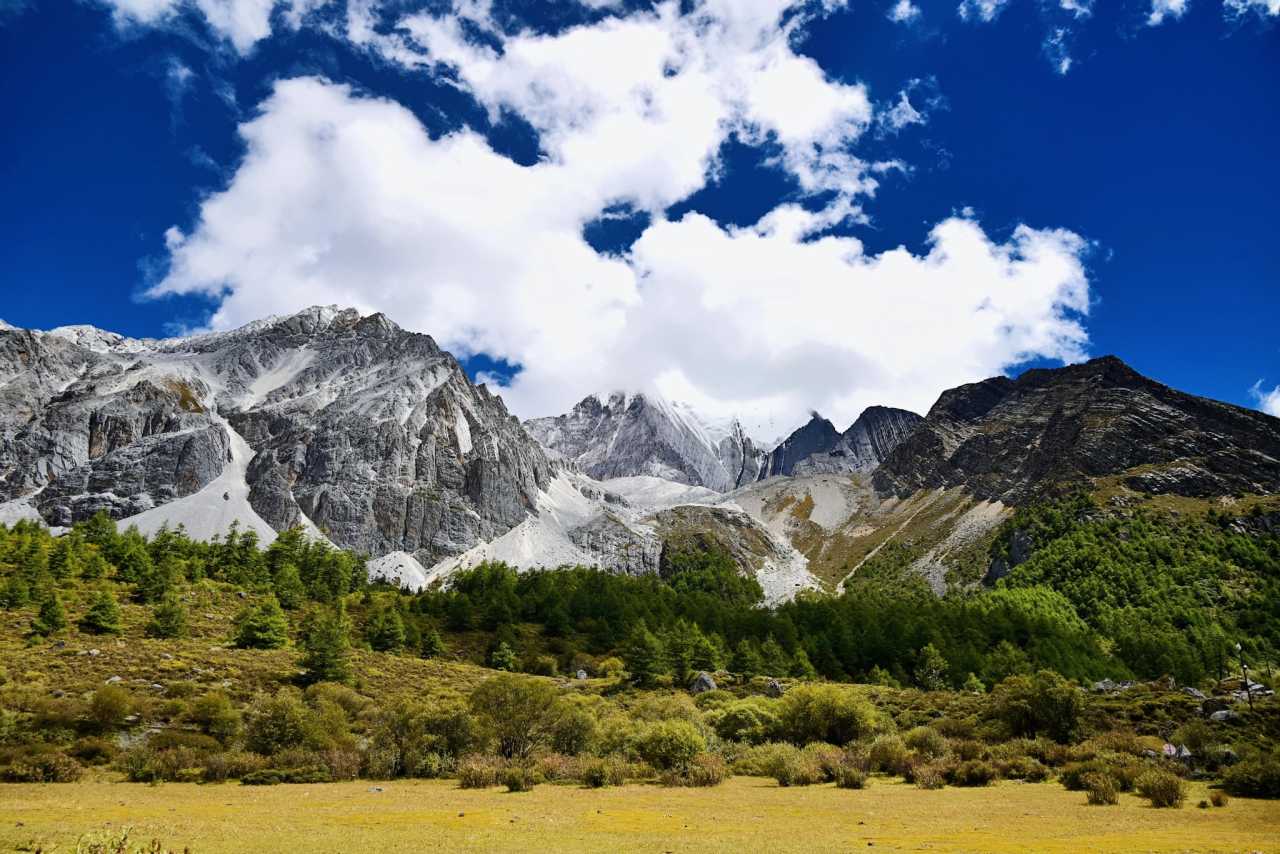 Luorong Pasture
Two eyes aren’t enough here; cameras even less so. Luorong isn’t a framed painting but an immersive, almost unreal nature experience.
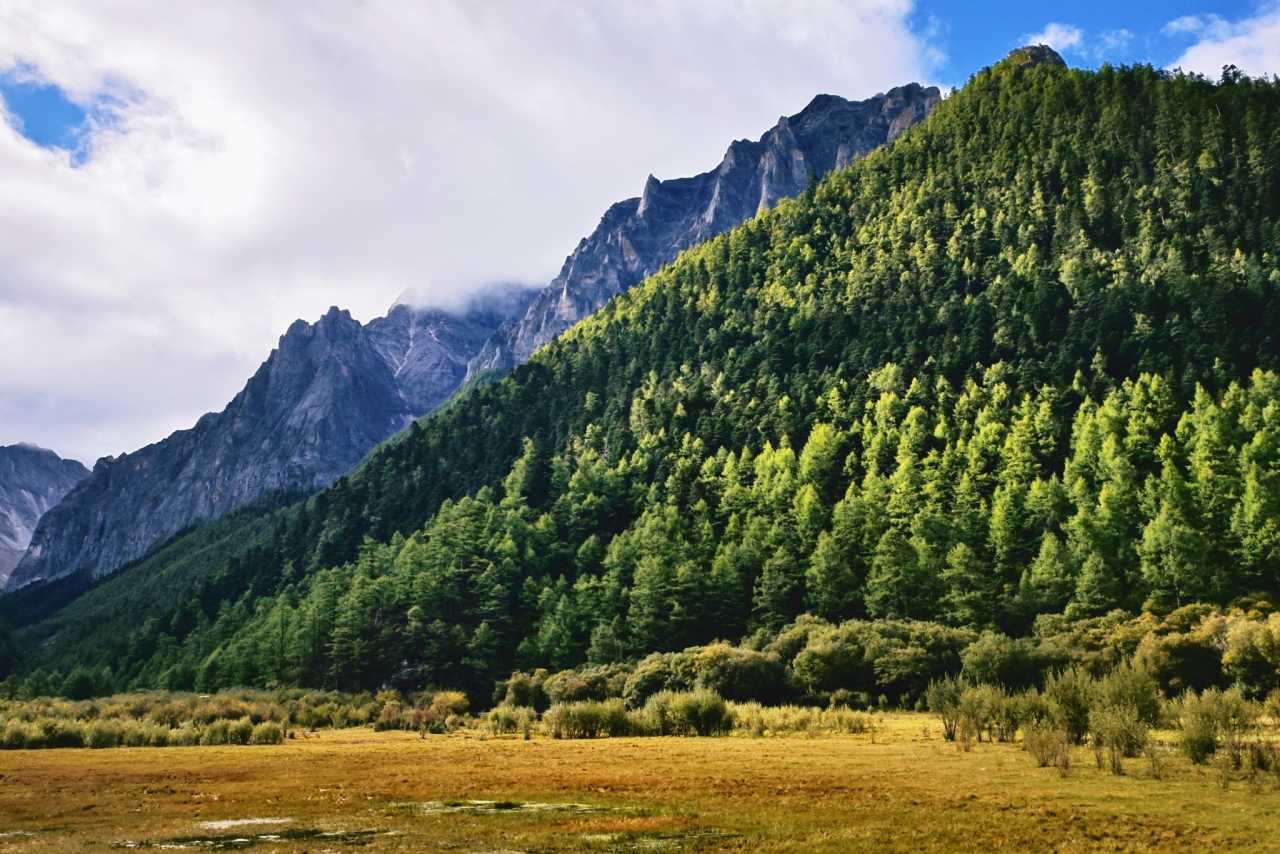 Luorong Pasture
Manjushri Wisdom Line – 09 – Praying Incense Tower
At the fork stands a massive “incense-burning” tower. Huge metal frames fold upward layer by layer, tracing the solemn, holy outline of a Tibetan white stupa.
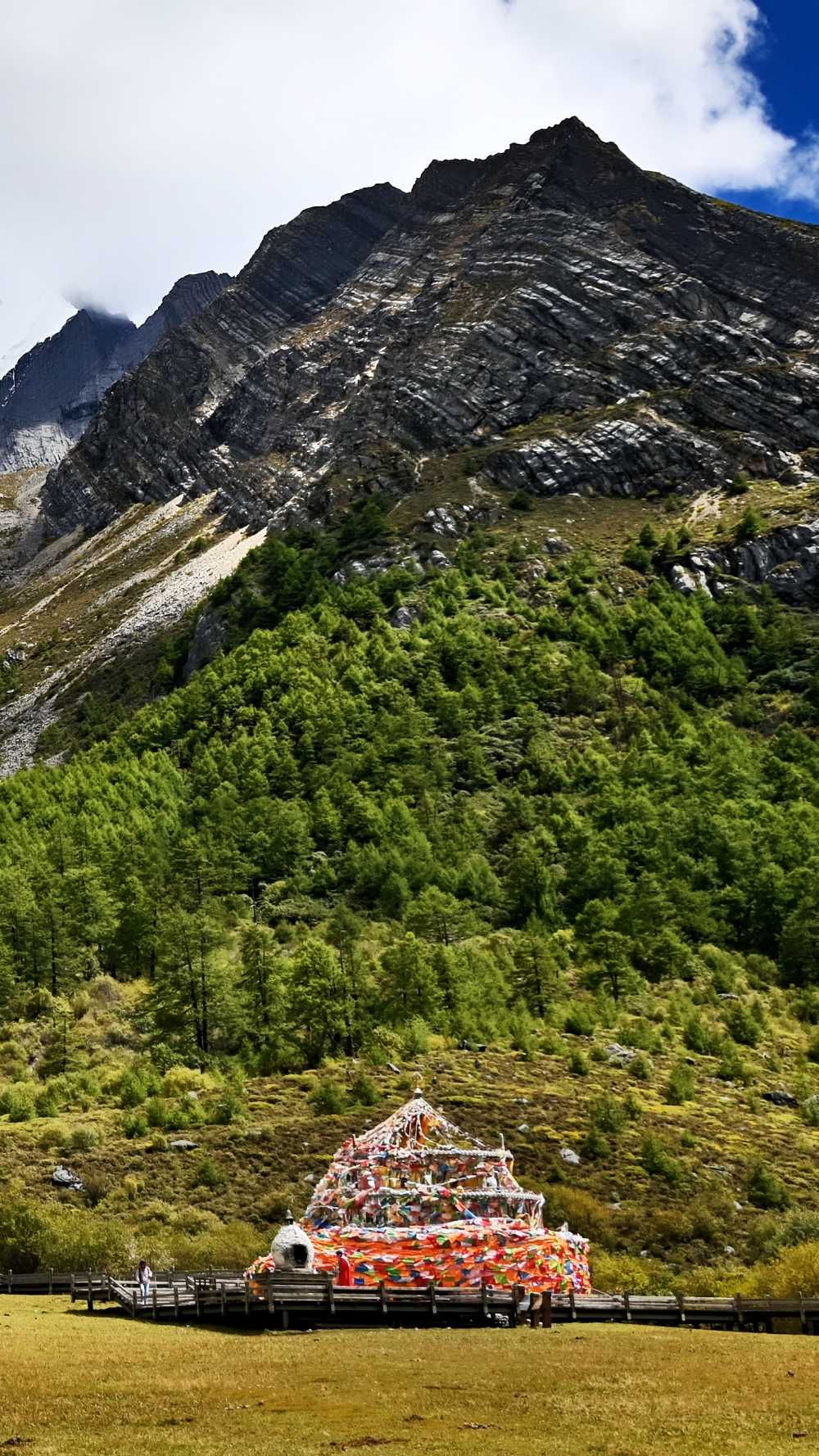 Luorong Pasture
“Incense burning” is a Tibetan ritual worshiping deities. Devotees burn cypress branches, barley, tsampa, etc., to produce smoke believed to nourish deities, purify the environment, dispel uncleanliness, and carry prayers.
 Luorong Pasture
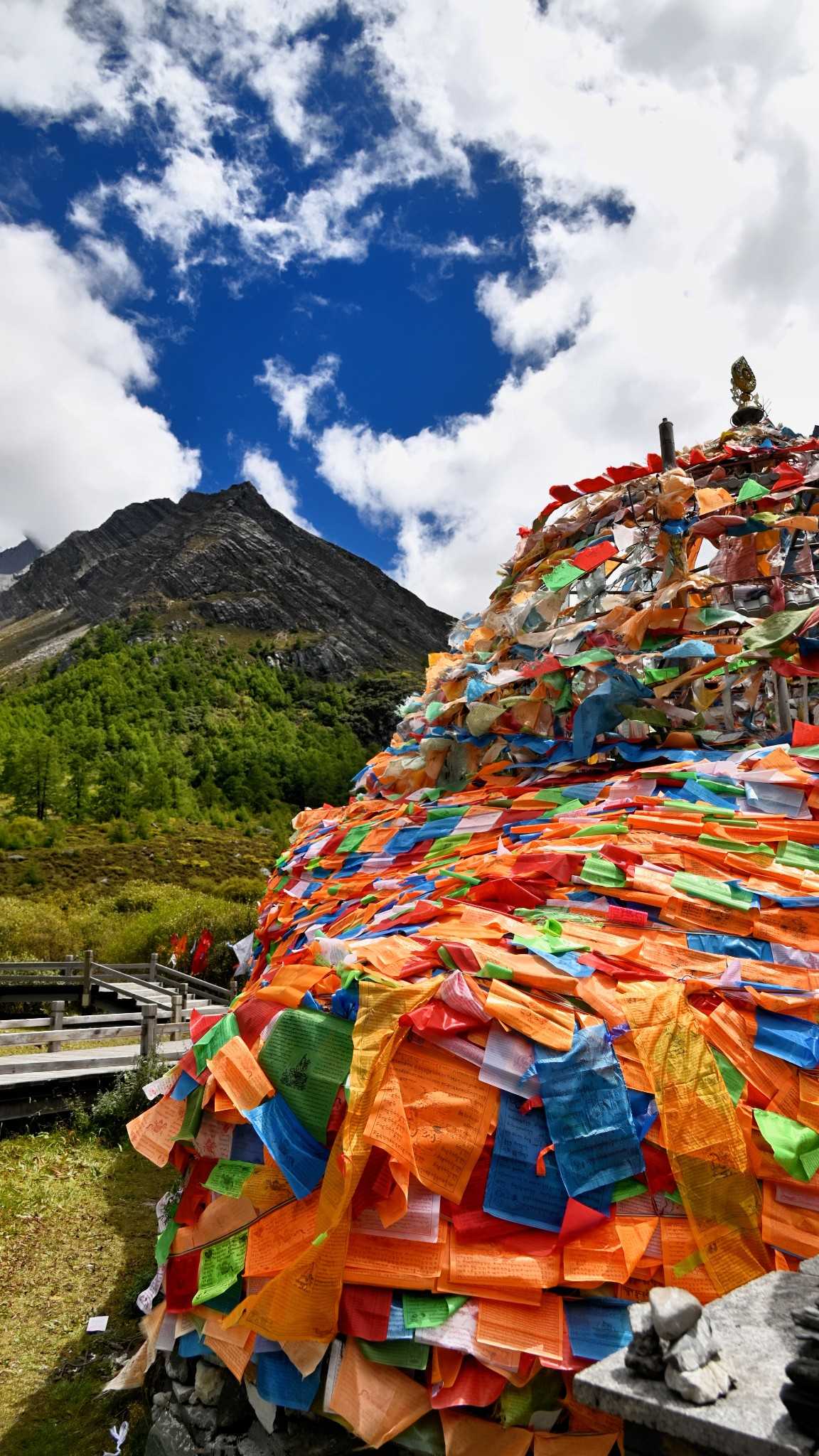
Long strips of five-colored prayer flags cascade like rainbows, driven by faith and mountain wind, layered densely all the way to the top.
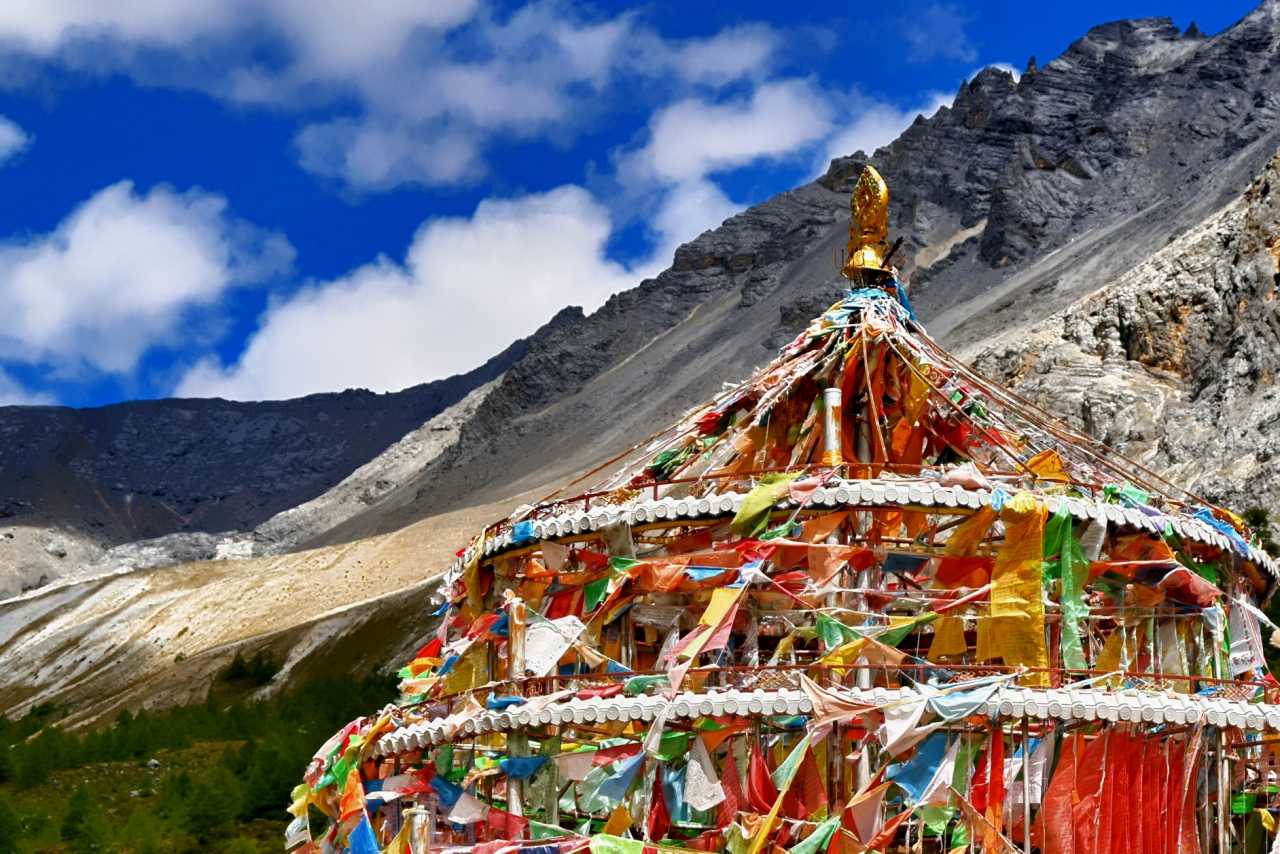 Luorong Pasture
They aren’t new ornaments; each weathered cloth is printed densely with scriptures bearing wishes. After years under strong sun and snow, they fade to gray-white toughness like an elder’s bright eyes filled with wrinkles.
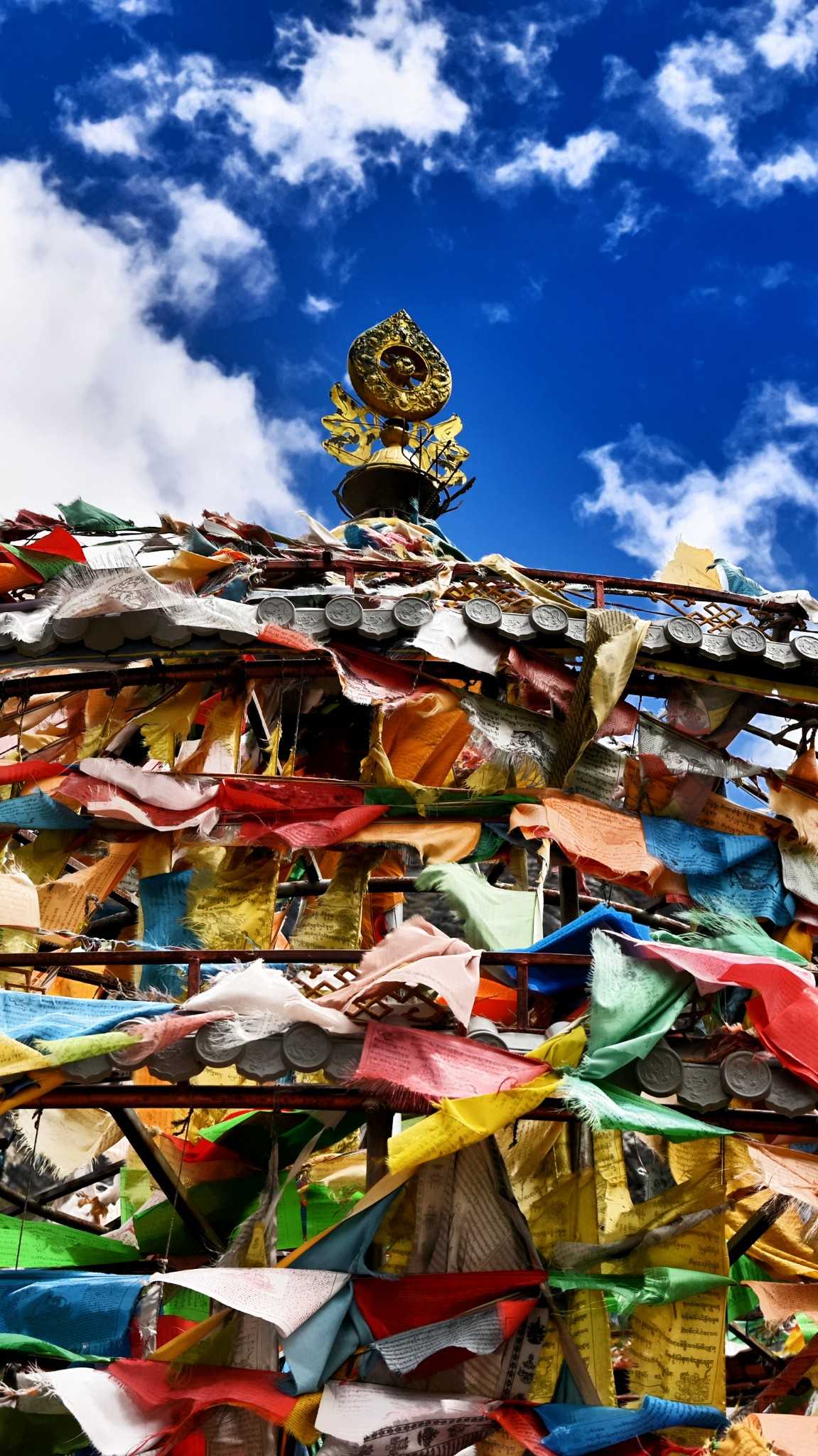 Luorong Pasture
In the howling wind you can’t hear human chatter—only the continuous, grand “flapping” as countless flags speak with the sky. Not a lament, but thousands of prayers in dialogue. In fading textures, belief settles heavier and more alive than in fresh color.
——Guanyin Compassion! Mirrored Beauty!——
Guanyin Compassion Line – Short Line Overview
From Luorong we took the cart downhill, reaching Zhaguanbeng around 1:30 pm—later than expected. We thought we might miss the short line, but asking people returning from it, they said round-trip 2–4 hours; if we hurry, it’s enough—so we went for it.
The short line has no horse caravan, no carts, no buses. It’s a loop up and down—relying solely on legs.
This is why we recommend resting on the cart back from Luorong; otherwise you fight consecutively—tough on legs.
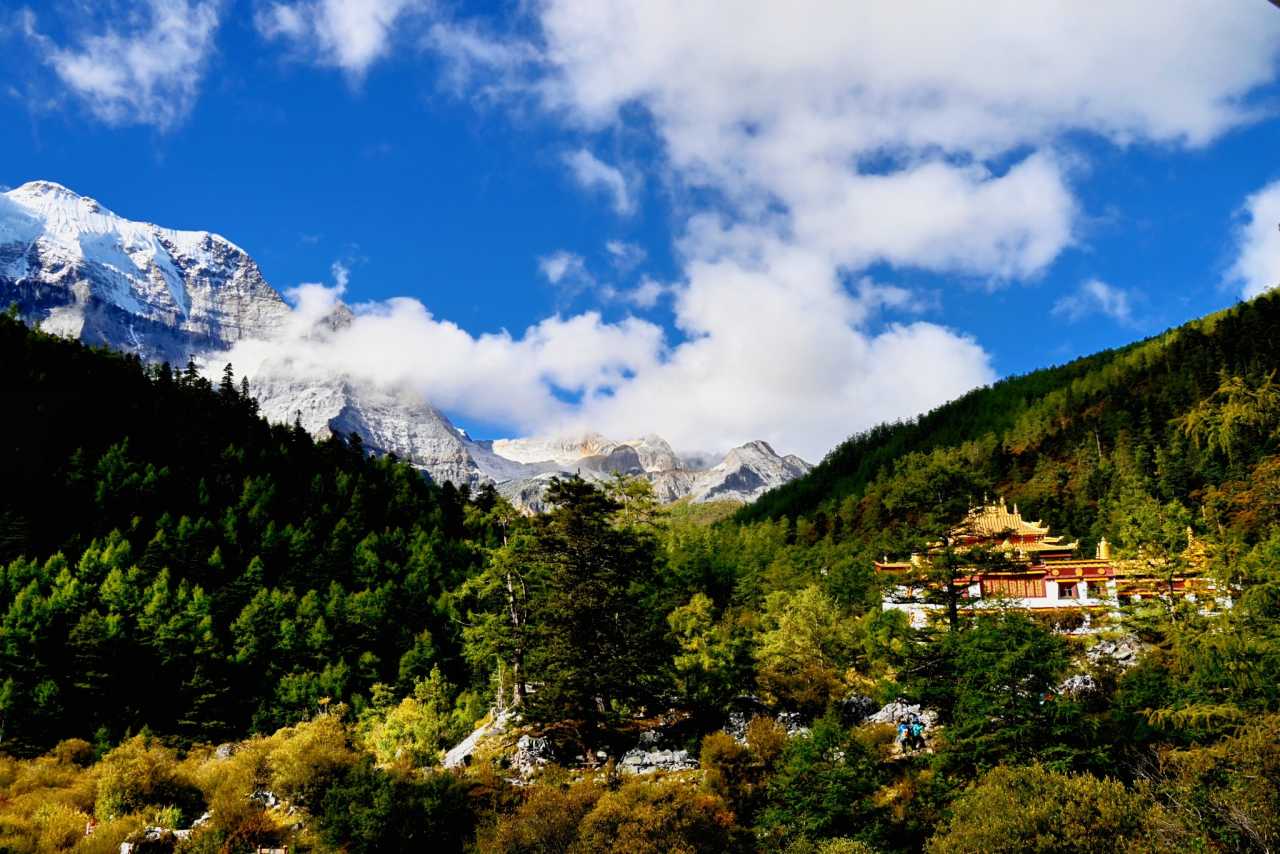
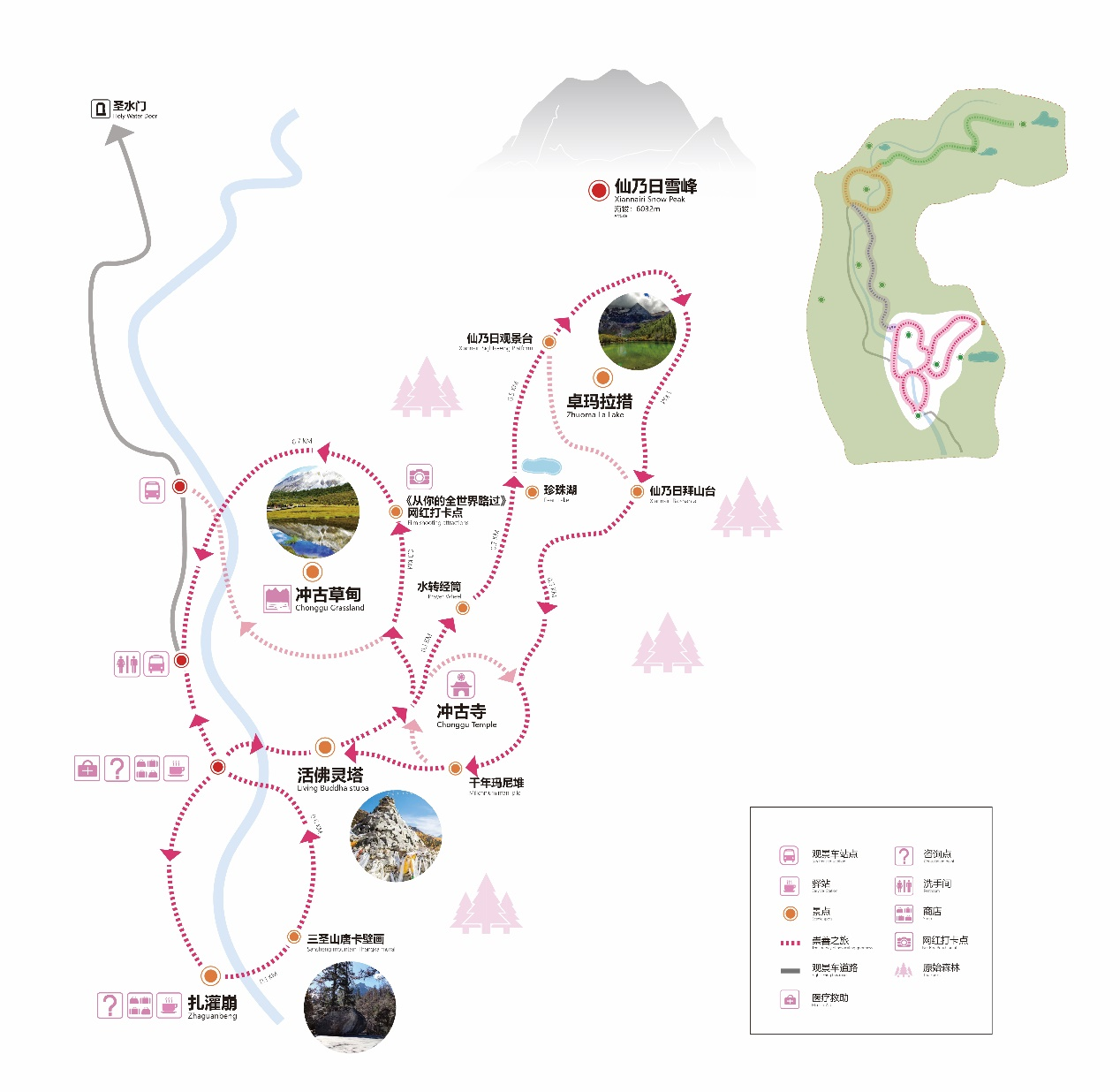
Start again at Zhaguanbeng. Within 200 m you’ll see the Three Holy Peaks Thangka murals, Living Buddha Stupa, and Water Prayer Wheels. Walk 500 m (~15 min) to Chonggu Monastery and the thousand-year mani piles.
From Chonggu, hike 1.5 km (~1 hour) to Xinbao Lake, then 1 km (~1 hour) to Pearl Lake (a.k.a. Zhuoma Lacuo) for reflections of Xiannairi, and return the same way.
 Daocheng Yading Scenic Area
On the map, the point marked “Pearl Lake” is actually Xinbao Lake; “Pearl Lake” is another name for Zhuoma Lacuo. Both lakes are great for viewing Xiannairi.
Guanyin Compassion Line – 01 – Mural, Stupa, Water Prayer Wheels
The Thangka mural and Living Buddha Stupa are not in one place but close, both toward the cart start from Zhaguanbeng. The mural is near the boardwalk; if you walk the road, trees block half the view.
We were climbing the 500 m incline and turned to see the rock mural; to see the full view we would need to walk back to the boardwalk. Considering our limited energy, we gave up.
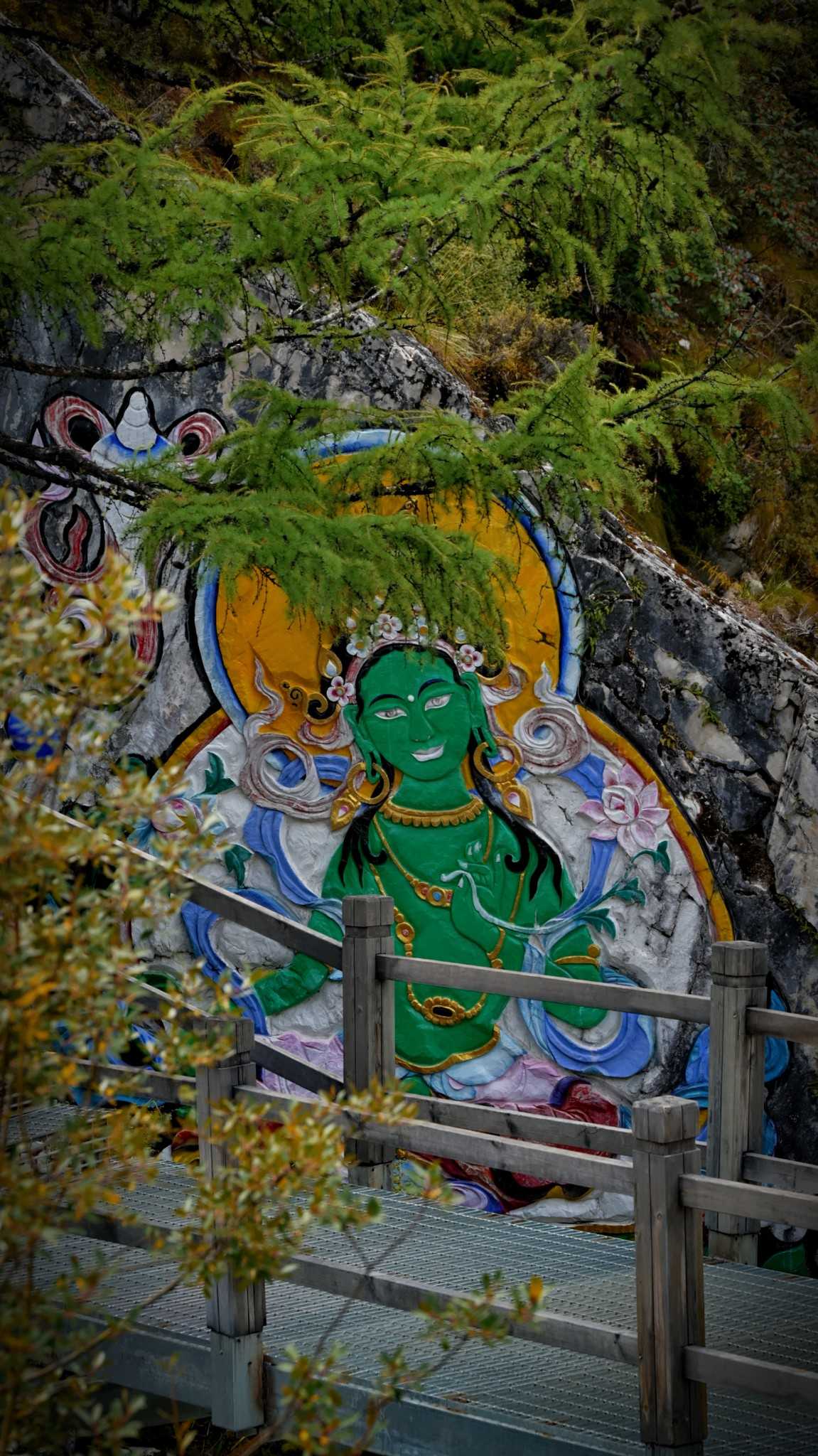 Daocheng Yading Scenic Area
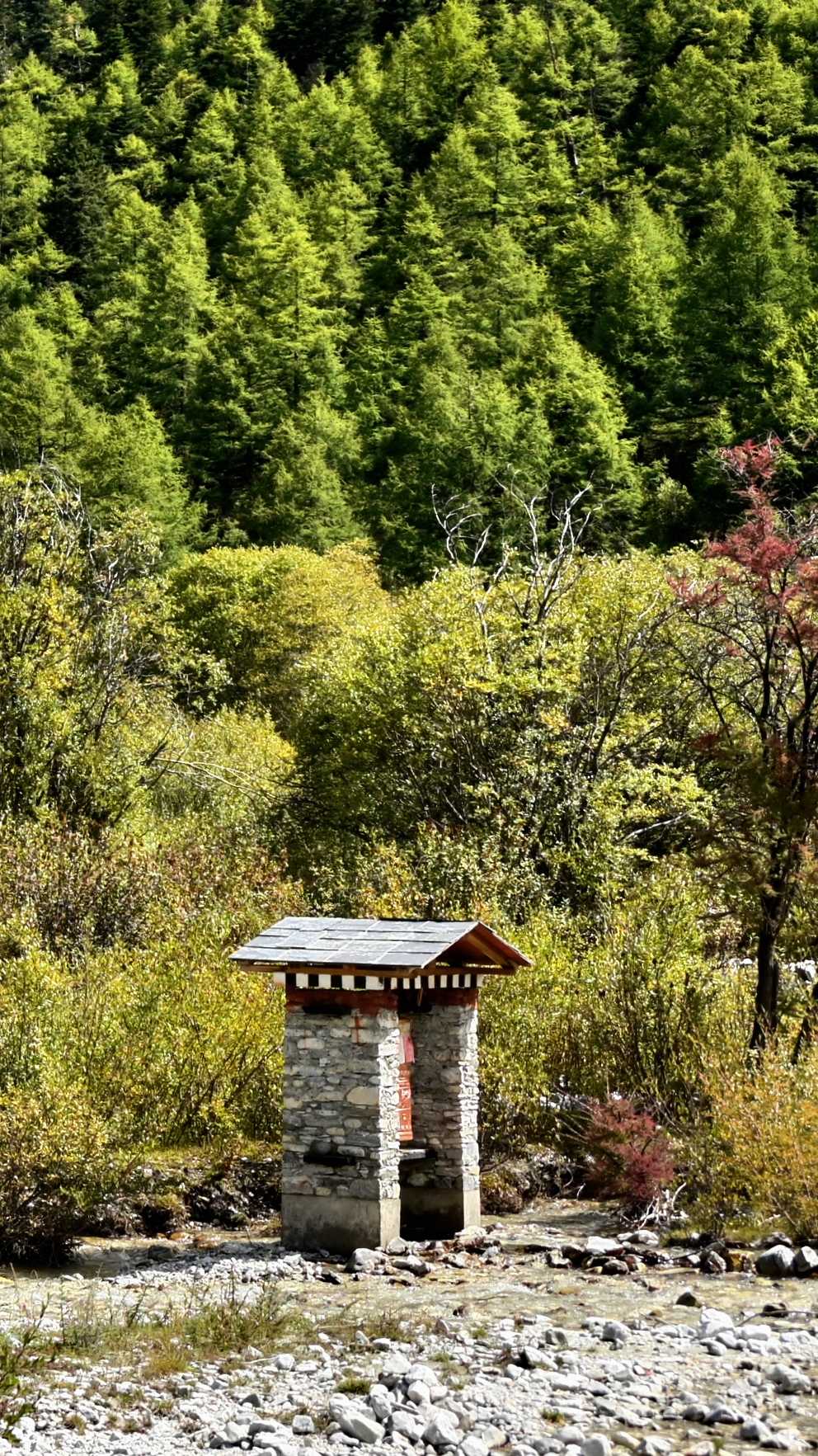
The Living Buddha Stupa is near a tent measuring blood oxygen and selling oxygen bottles. Follow stream and boardwalk and you’ll pass Water Prayer Wheels—these small sights sit together and are easy to miss, but looping around you’ll find them.
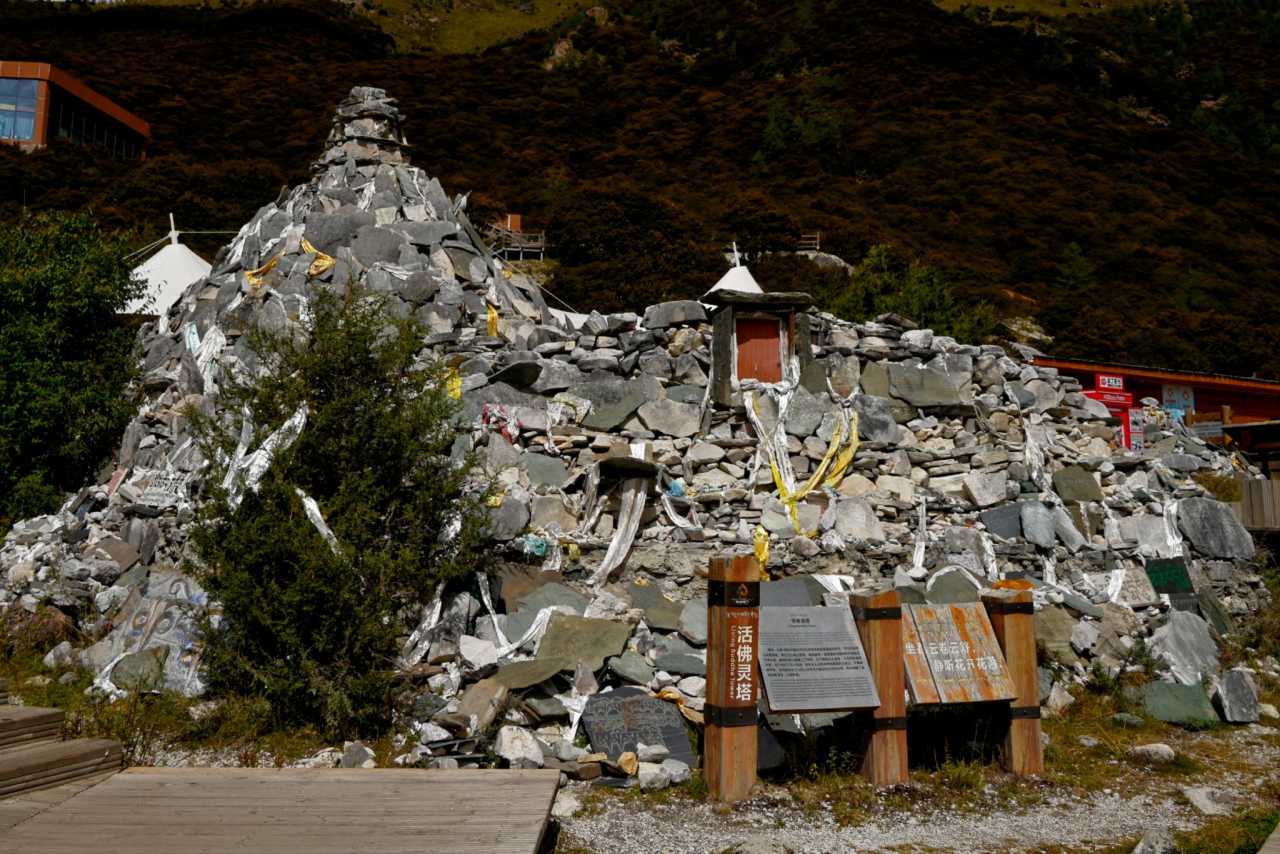 Living Buddha Stupa
Tibetan Buddhism believes chanting the six-syllable mantra (Om Mani Padme Hum) repeatedly expresses devotion, accrues merit, and seeks freedom from samsara. The more you chant, the more devotion shown and the more likely liberation.
To chant continuously—even among illiterate laypeople—devotees place massive printed mantras inside cylinders. Each turn equals reciting all scriptures inside once—cleverly weaving practice into daily life.
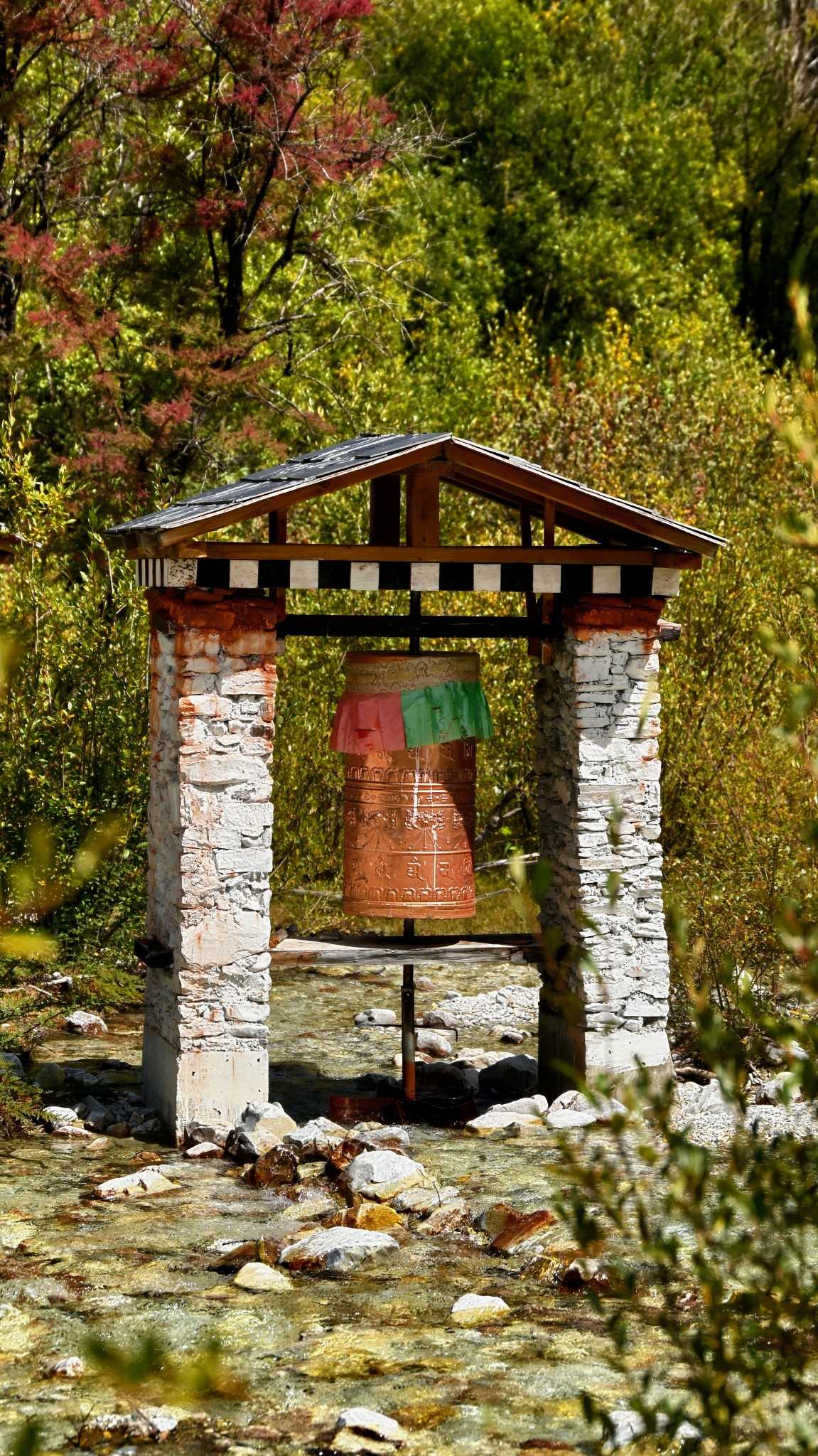 Zhaguanbeng
Prayer wheels are common in Tibetan regions; water prayer wheels are rarer. They use flowing water to rotate the wheel, symbolizing nature incessantly chanting and making the act eternal.
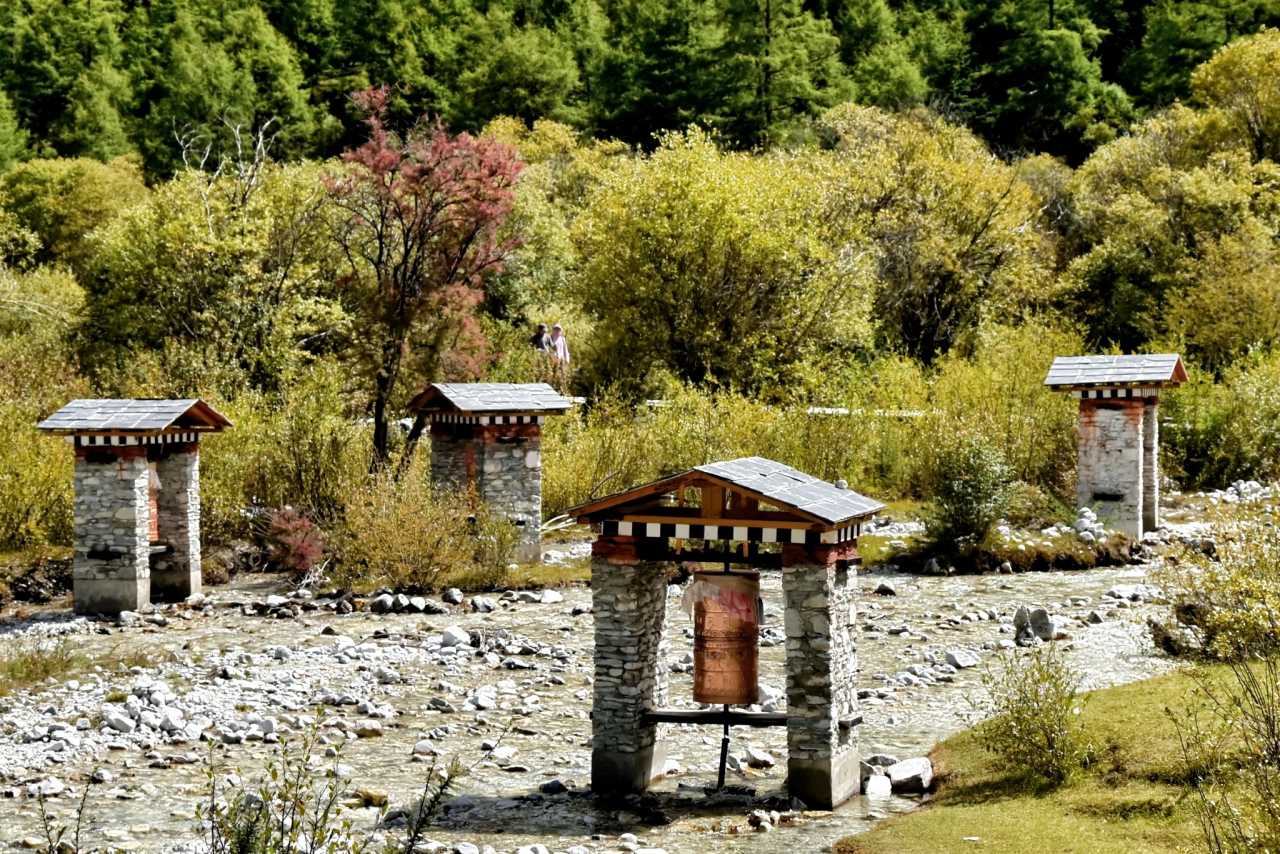 Zhaguanbeng
Here you can clearly hear gurgling water and the soft friction of turning wheels. Compared with crowded viewpoints, this area is quieter.
 Zhaguanbeng
Guanyin Compassion Line – 02 – Chonggu Monastery & Thousand-Year Mani Piles
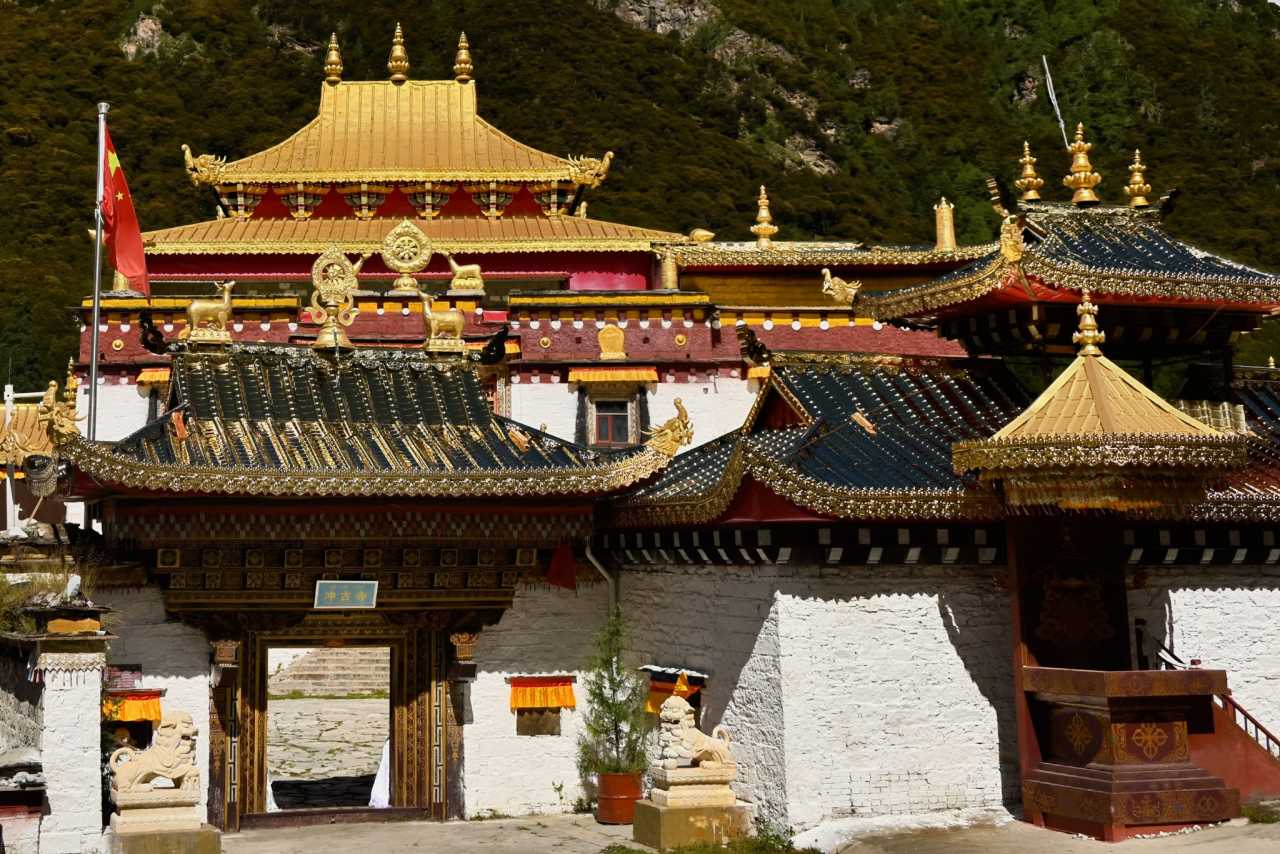
Follow the water prayer wheels upward and Chonggu Monastery appears—though this is a side entrance; the main gate lies further in. Most visitors are drawn by the exquisite mural in the porch and walk straight in—main or side hardly matters.
 Chonggu Monastery
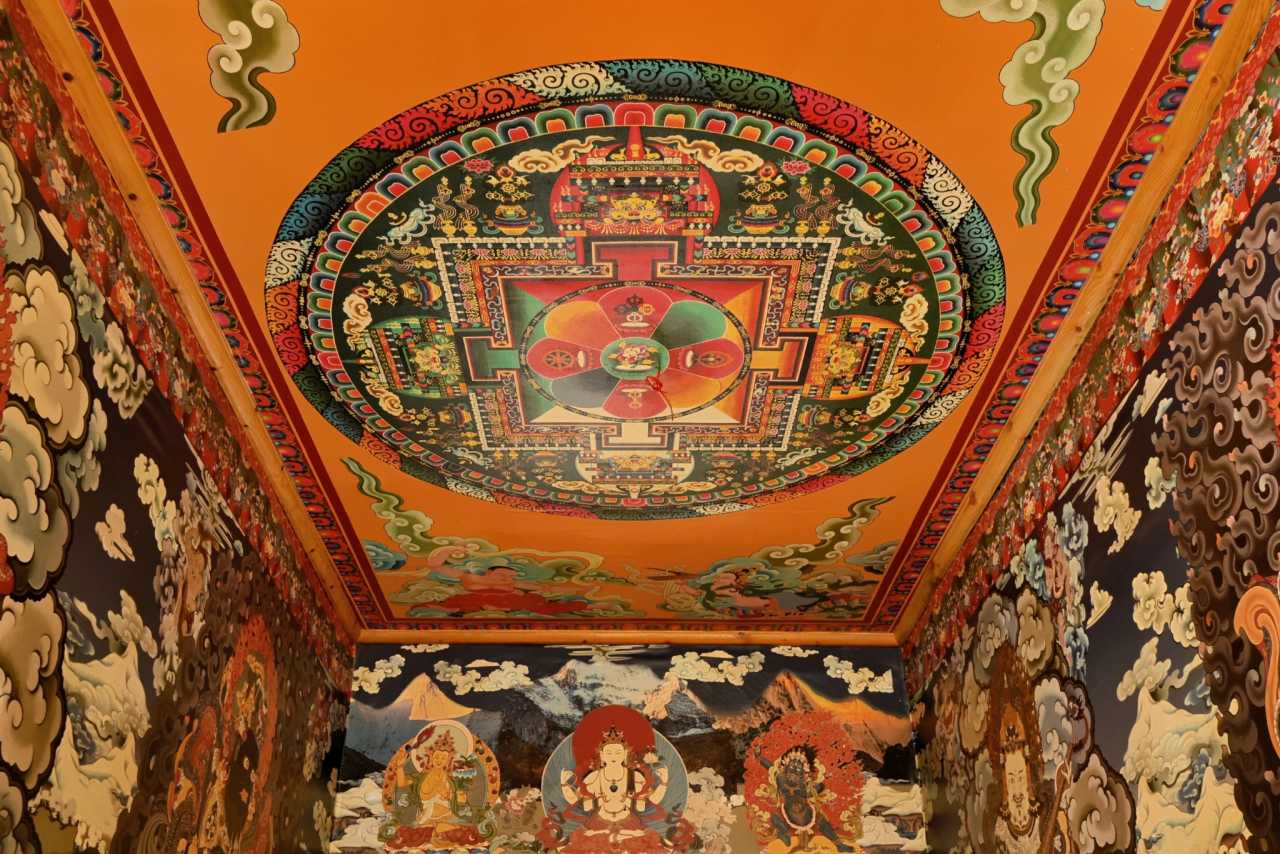
The porch murals are beautiful, following Tibetan monastic tradition.
On both sides stand the Four Heavenly Kings guarding the temple; behind is the Wheel of Life portraying Buddhist cosmology. Above sit three figures—likely Padmasambhava, Tsongkhapa, and disciple—overlooking those who enter, symbolizing Dharma lineage.
Colors are vivid—likely mineral pigments—which under harsh sun look extraordinarily bright. Jewels, robes, ritual objects, and offerings are depicted exquisitely.
Just a ten-meter porch, yet its murals instantly lift people from secular to sacred.
 Chonggu Monastery
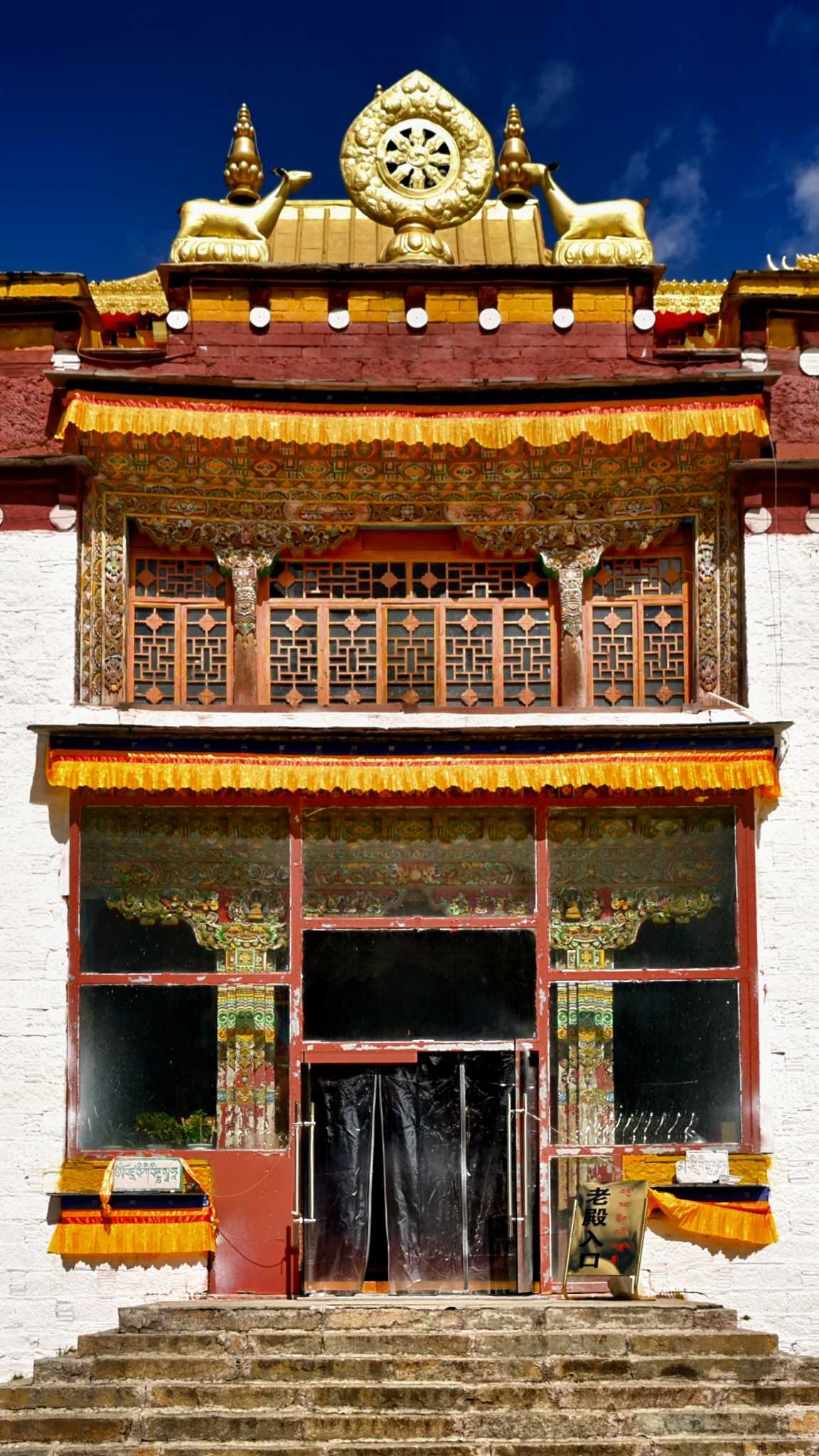
The old hall looks somewhat worn—not as gilded or grand as Potala—and far smaller.
 Chonggu Monastery
No photos in the main hall; shoes, sunglasses, and hats off to enter. We found it troublesome, so we wandered the small square and took a photo beside the “check-in” sign—as a token visit.
“Chonggu” in Tibetan means “temple at the source of lakes,” linked to the tertön Chöjé Gonggyal Gyatso.
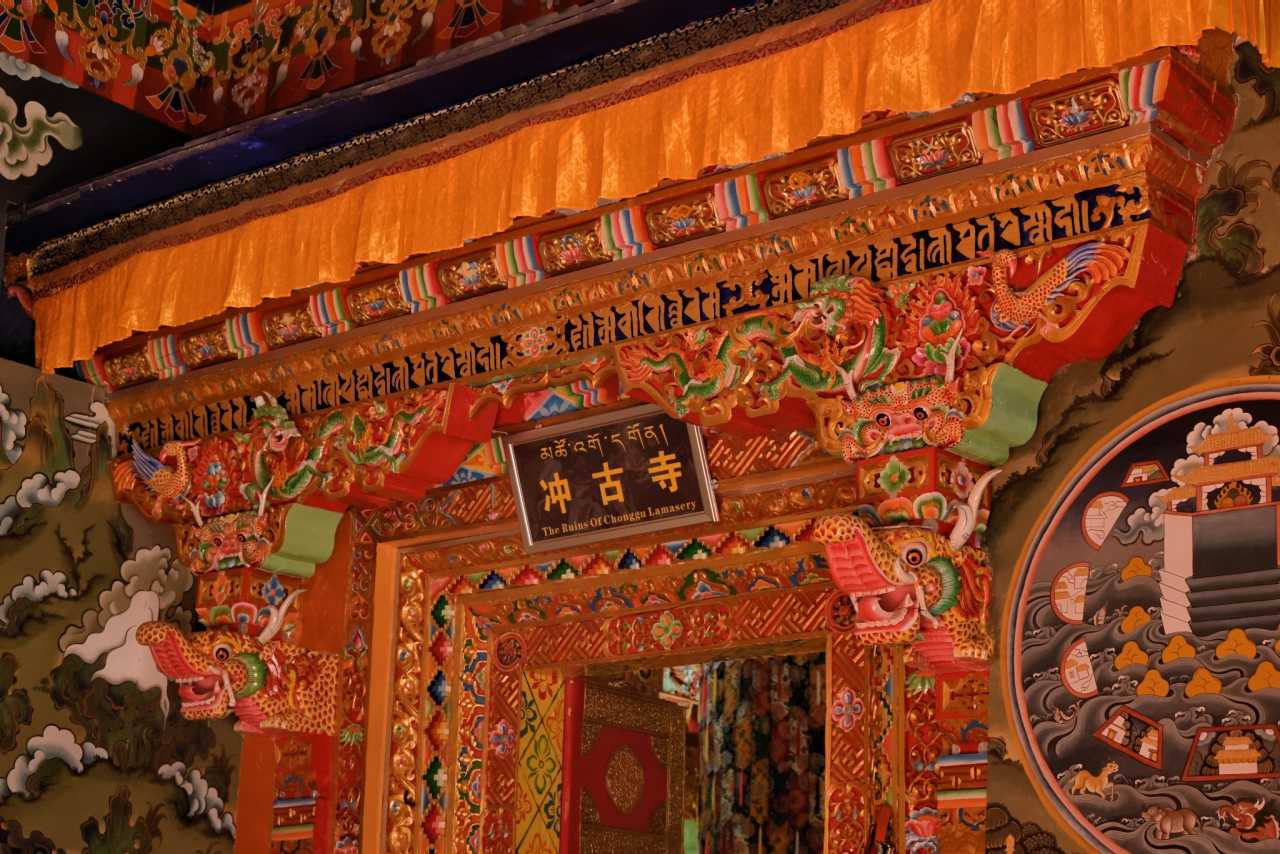 Chonggu Monastery
Legend says when he venerated Xiannairi, he chose to build a temple here but demons disrupted the work. With supreme power he finally subdued them and succeeded.
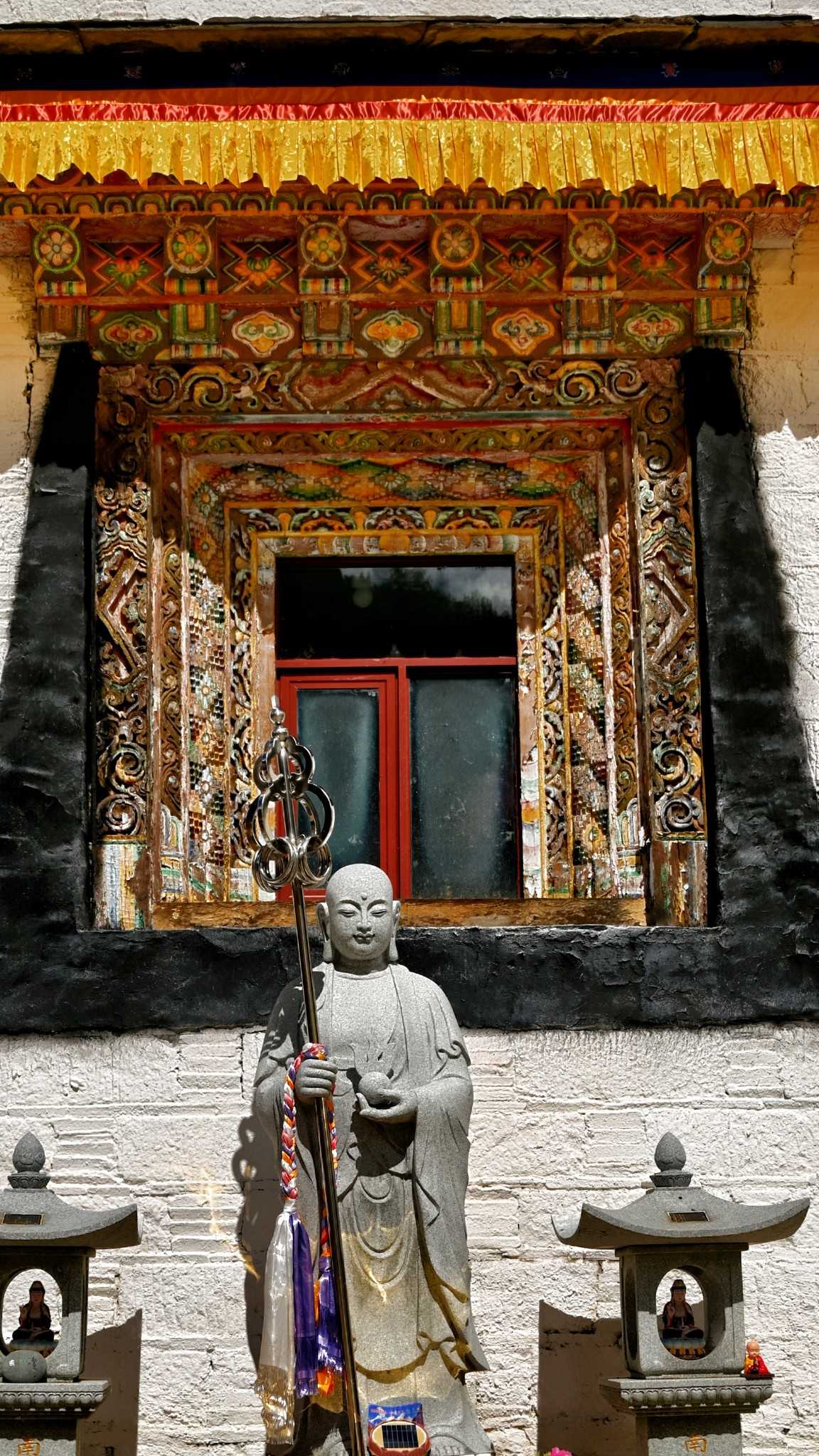 Chonggu Monastery
At ~3880 m, in Yading’s core, it’s a must-pass to the sacred lake Zhuoma Lacuo at Xiannairi’s foot.
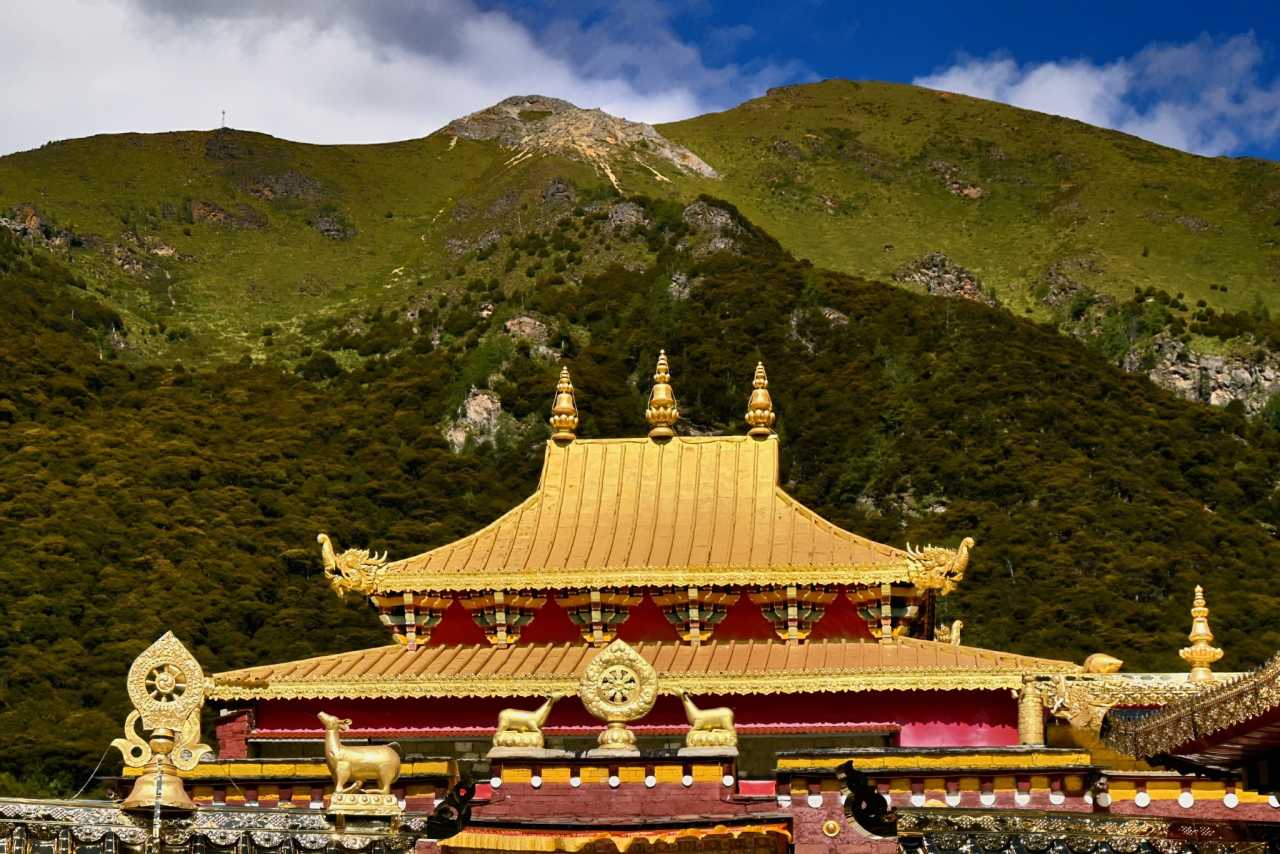 Chonggu Monastery
With its superb location, in the past it was a station for practitioners; today nearby Zhaguanbeng is the transit hub for tourists starting the three routes.
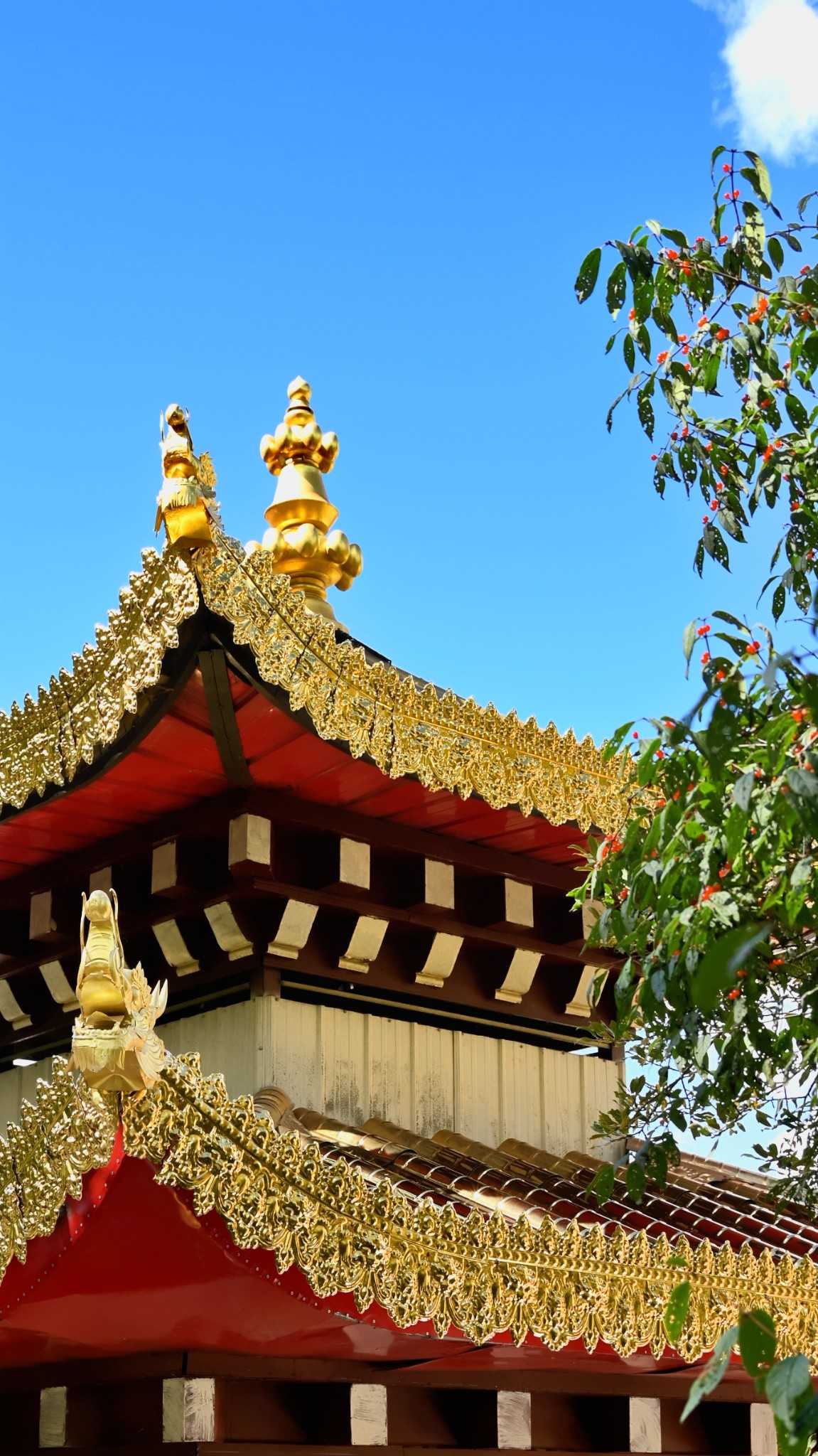 Chonggu Monastery
Guides claim you can view all three peaks—Xiannairi, Xianuoduoji, Yangmaiyong—from Chonggu, but when we arrived sunlight hit the golden roof and dazzled our eyes—we missed the chance.
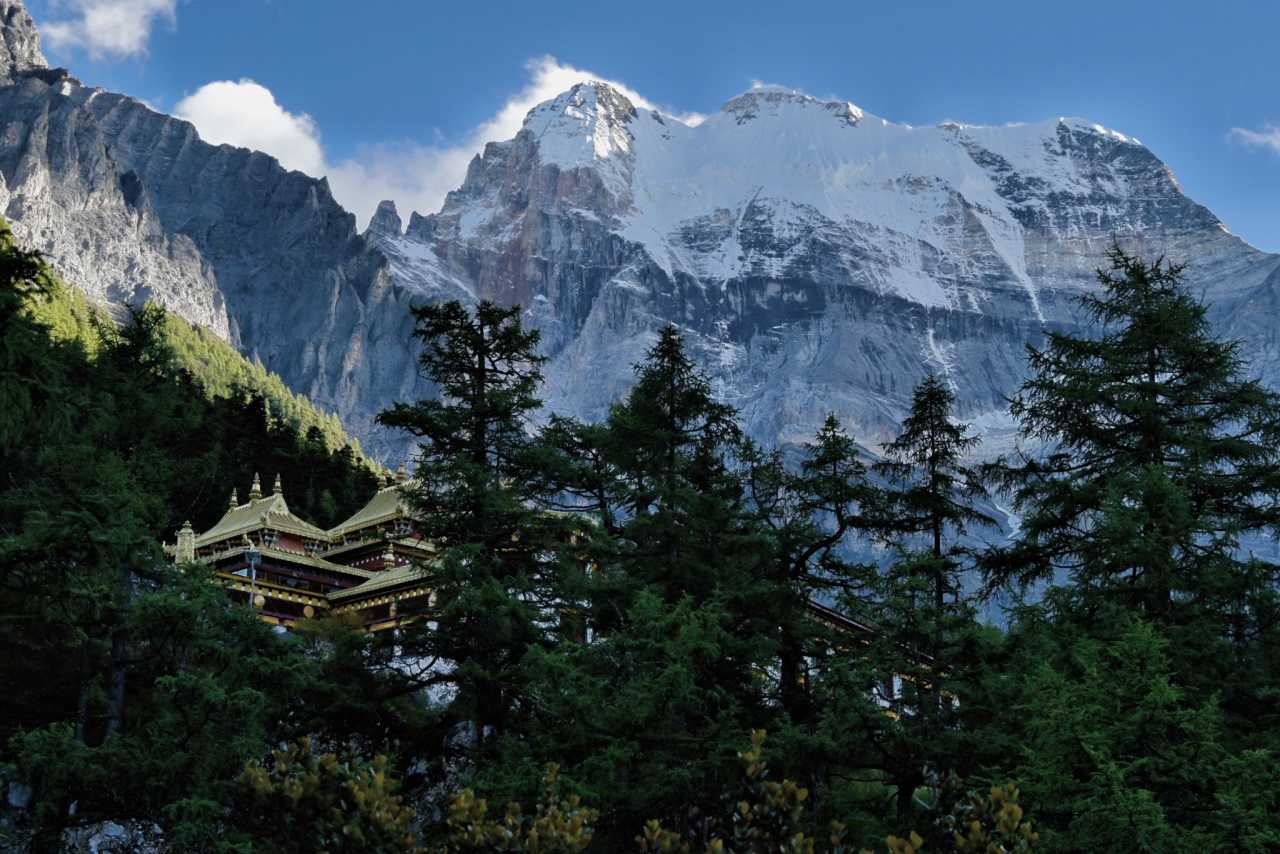
The roofs are mostly flat, adorned with gilded Dharma wheels, deer, and banners—gleaming under sun—contrasting sacredly with peaks and sky behind.
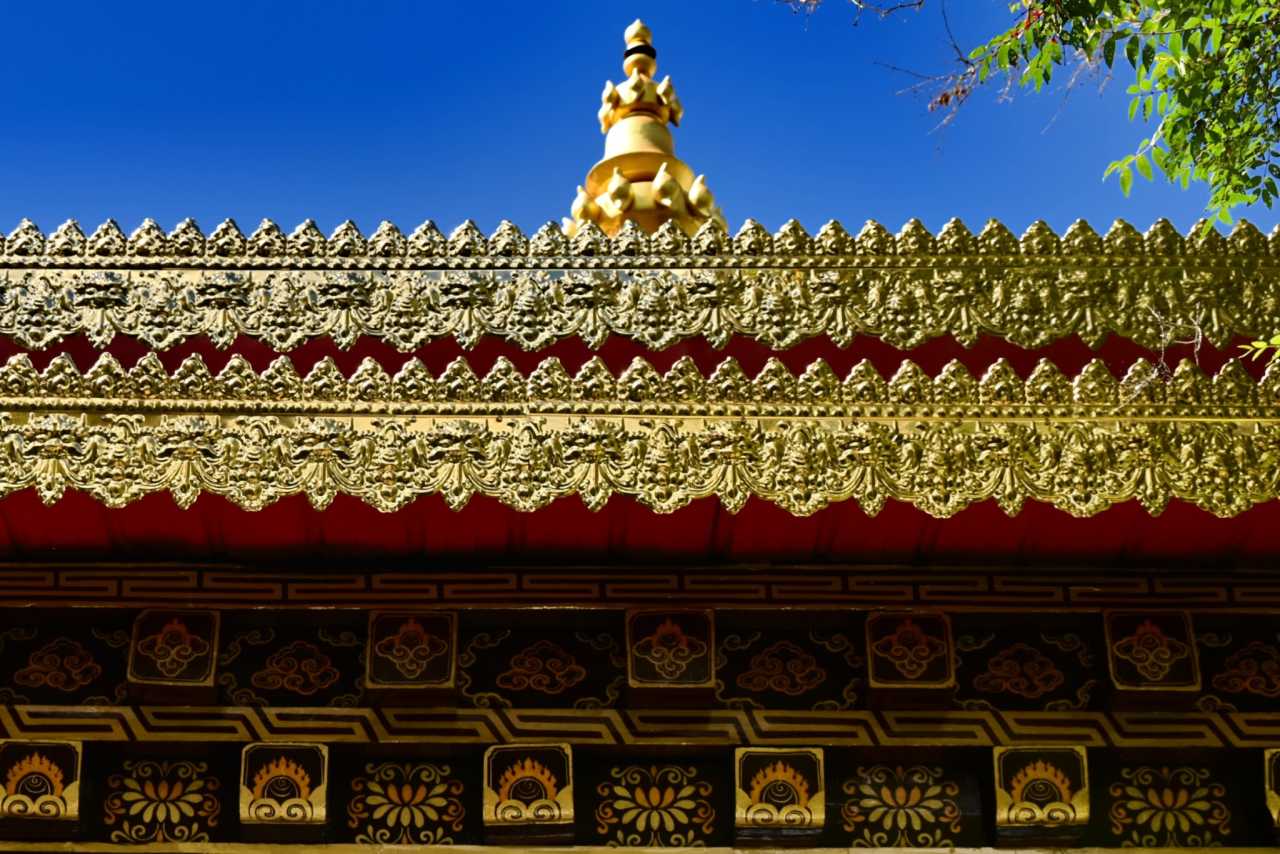 Chonggu Monastery
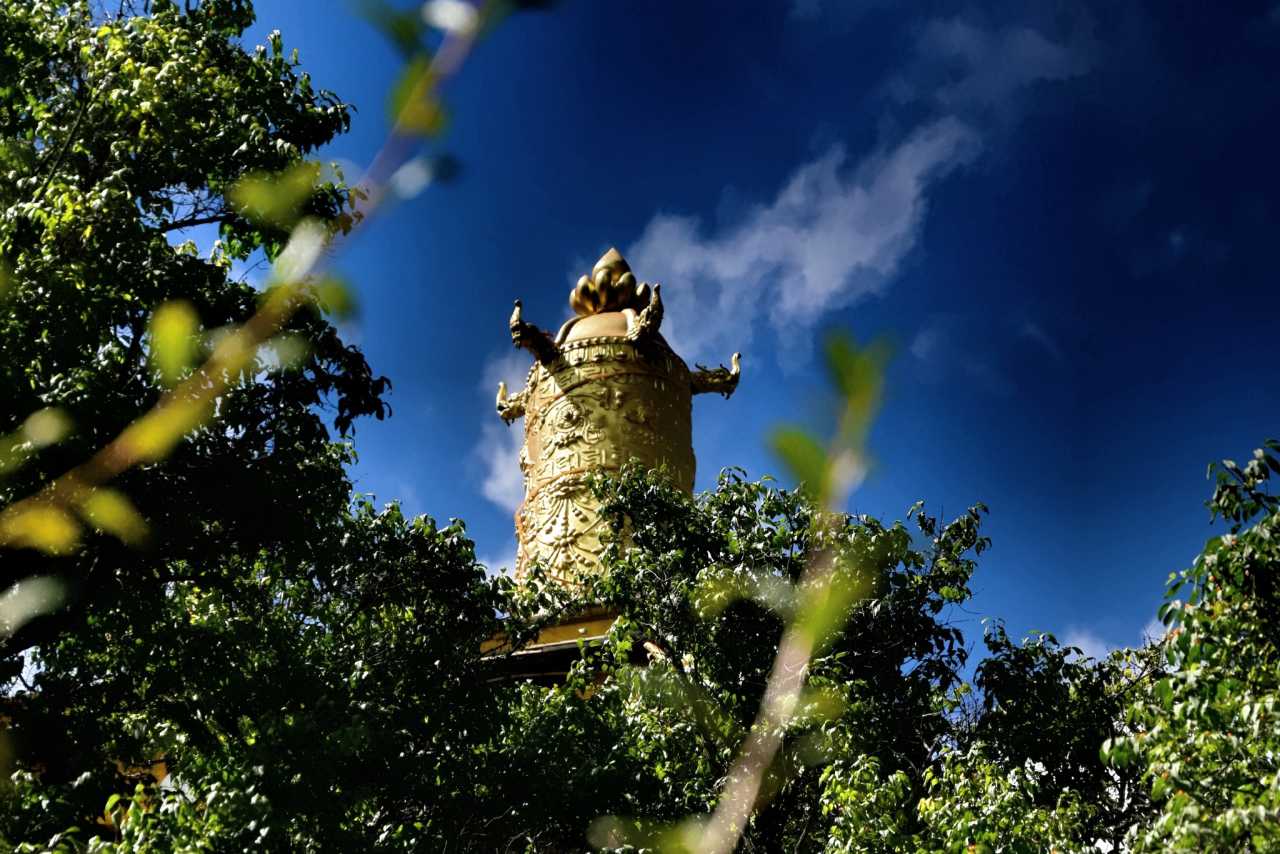 Chonggu Monastery
In open areas around the monastery, especially facing peaks and valley, lies a grand field of mani piles—regarded as a thousand-year faith wonder.
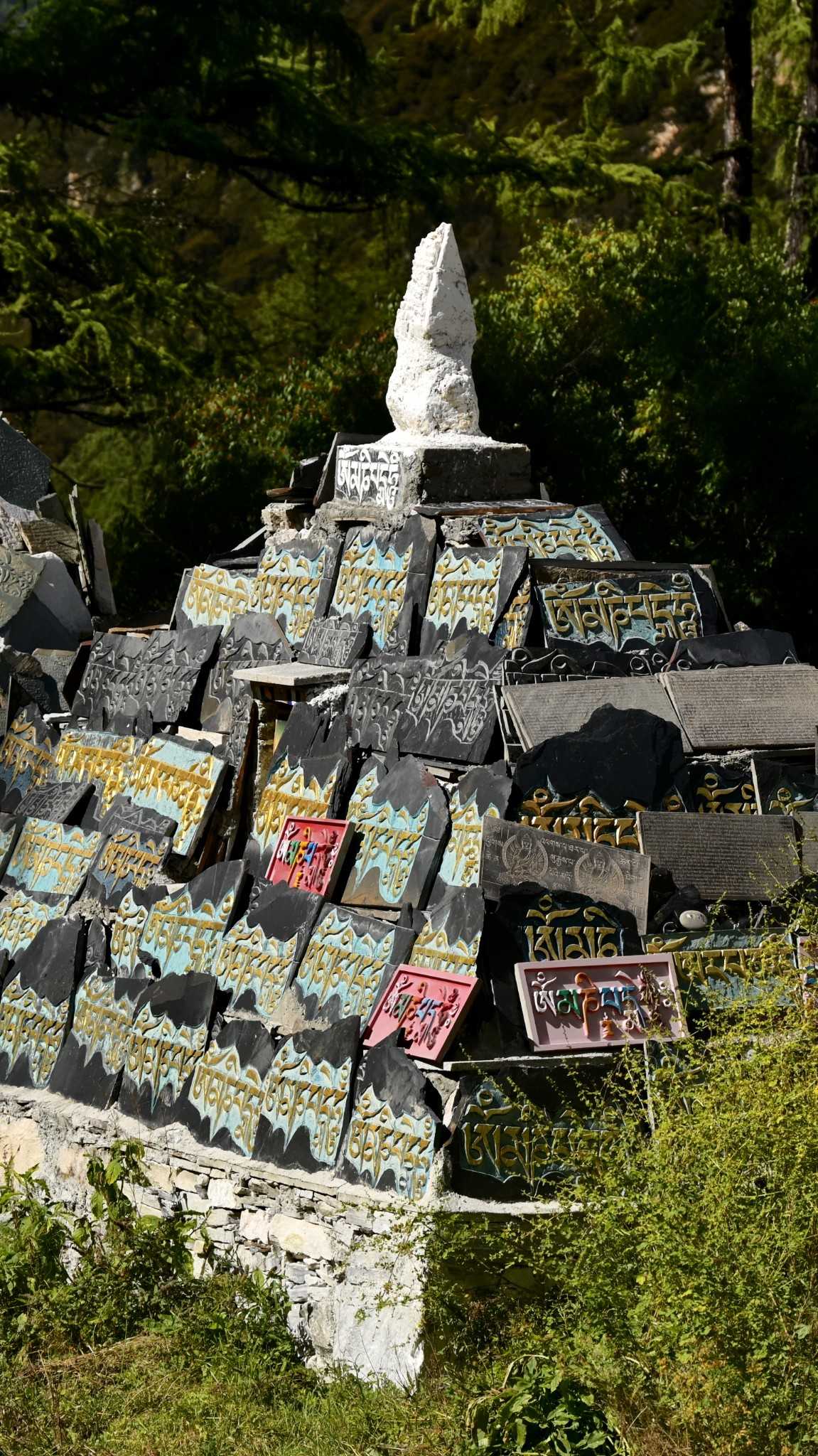 Chonggu Monastery
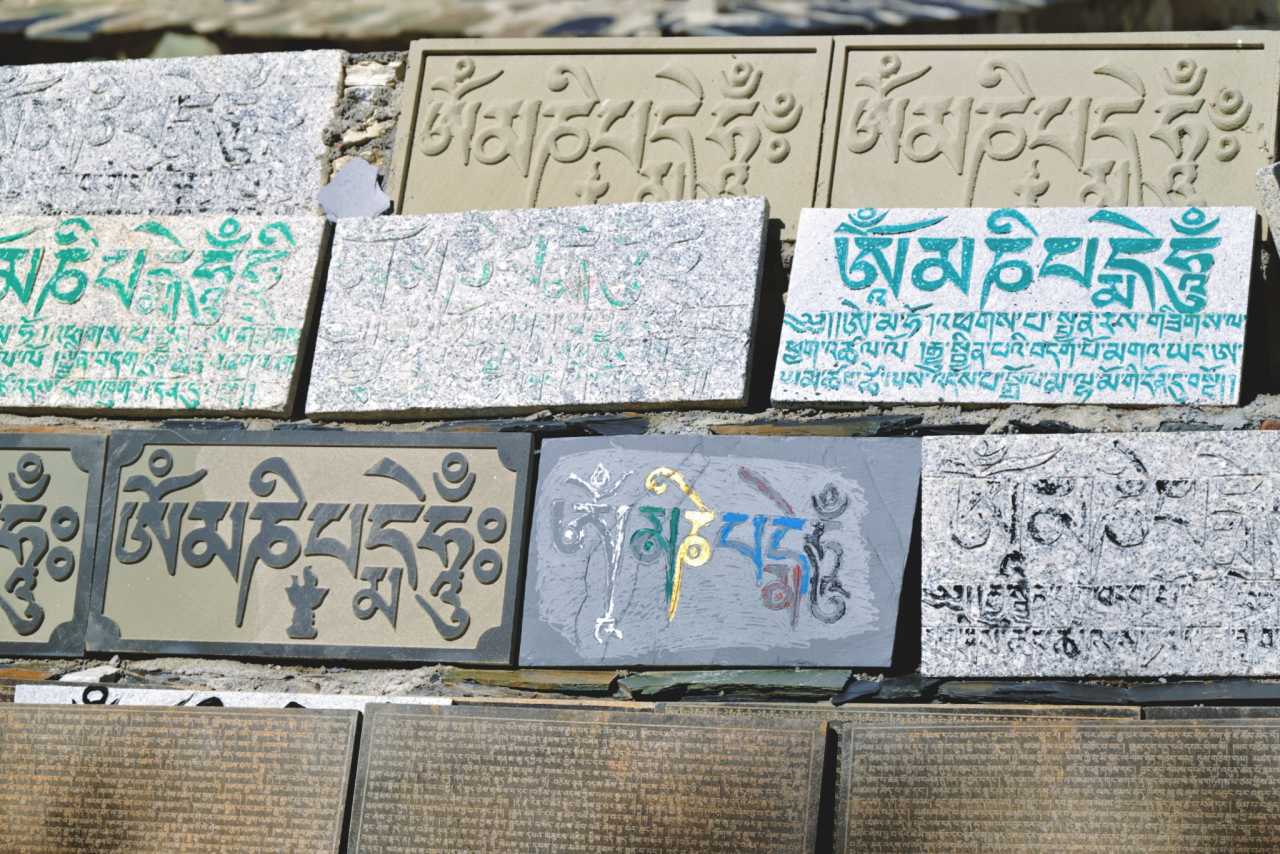 Chonggu Monastery
“Thousand-year” does not mean each slab is millennia old, but that this ritual tradition has continued here for a thousand years. Generations of monks and pilgrims add stones, making the field grow layer upon layer to today’s scale.
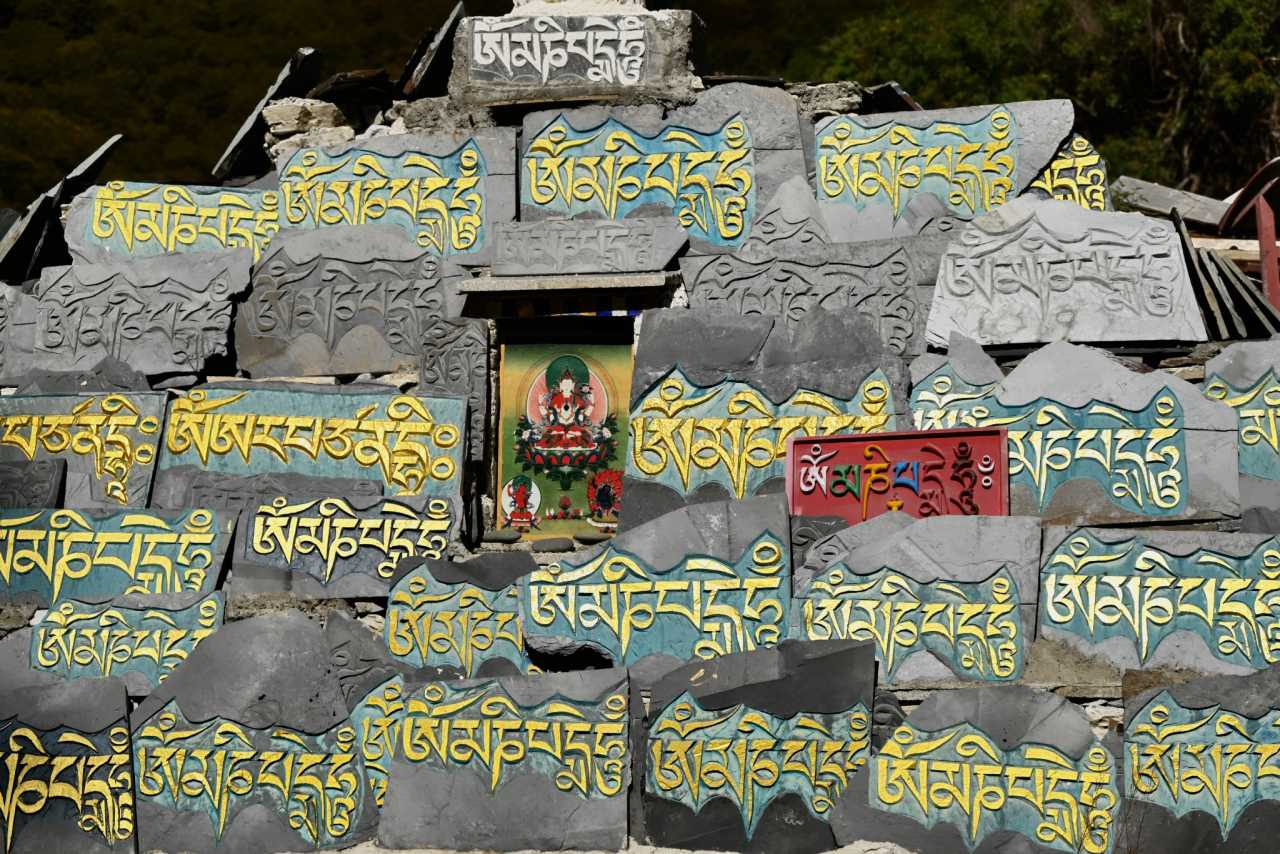 Chonggu Monastery
Mani piles vary in shape and height, composing a gorgeous scene with Chonggu behind, snow peaks afar, and meadows and streams underfoot—voicing silent reverence and faith toward the sacred mountains across centuries.
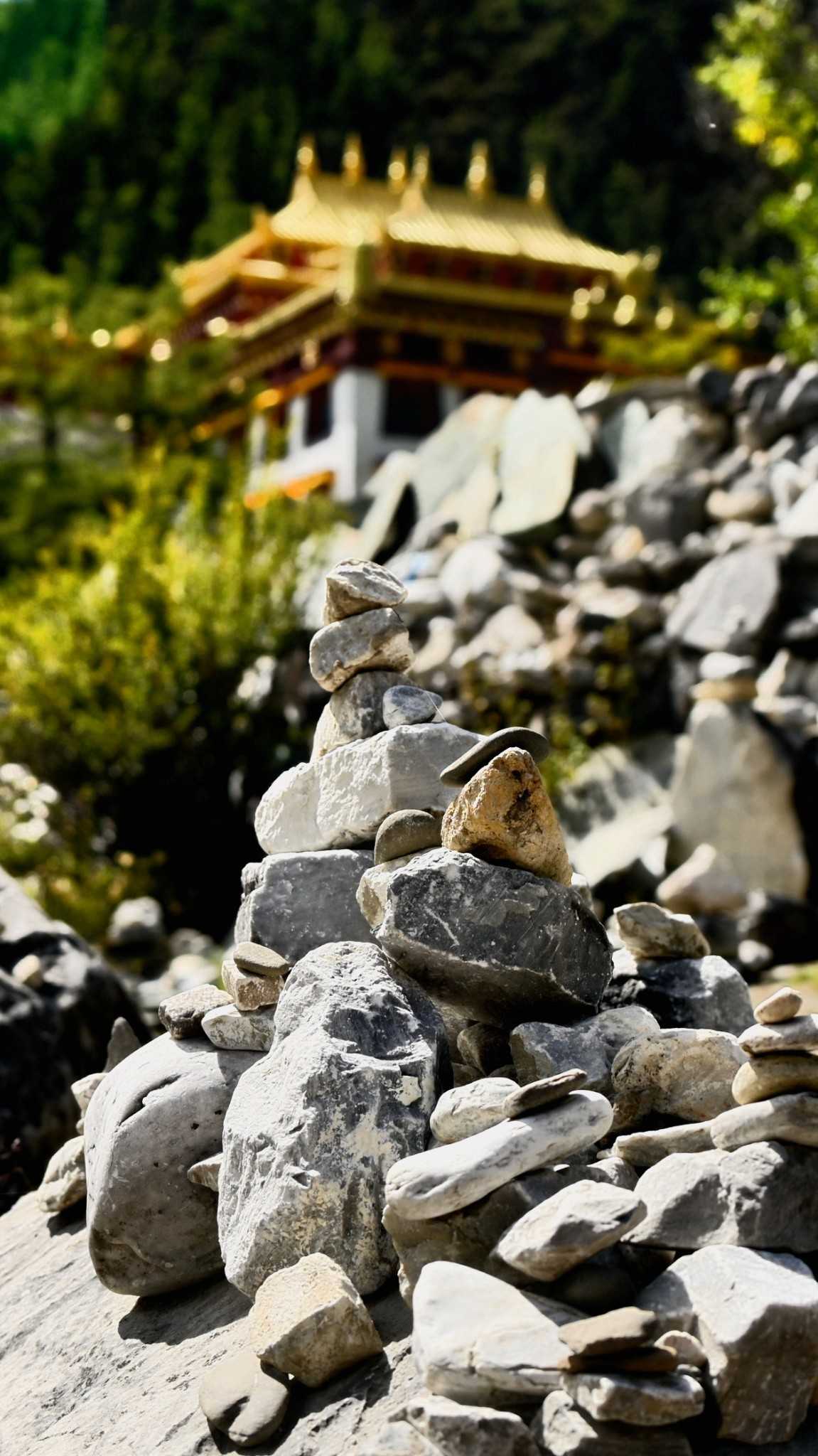 Chonggu Monastery
Even in corners shaded by vegetation, mani piles appear.
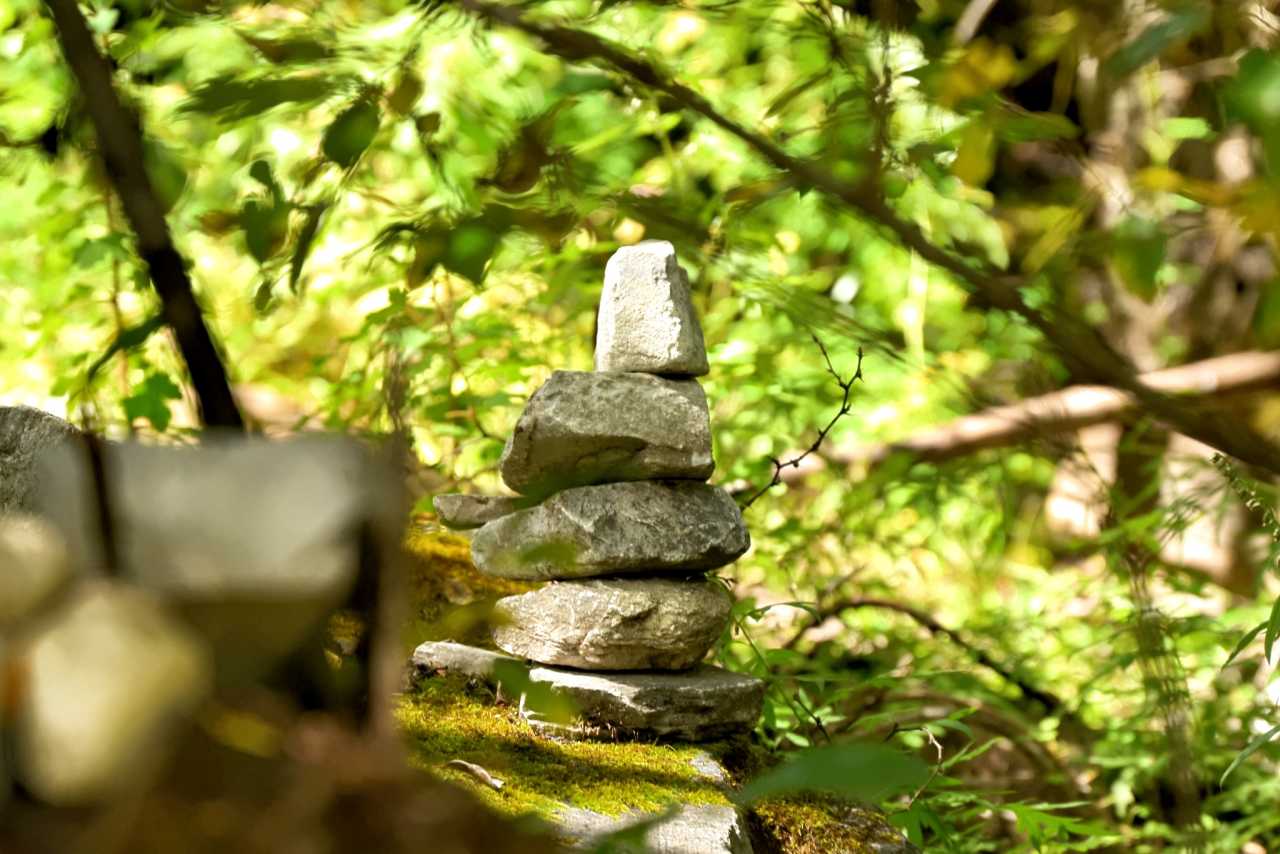 Chonggu Monastery
Guanyin Compassion Line – 03 – To Xinbao Lake – View Xiannairi
Leaving Chonggu we met locals soliciting guiding services—shortcuts to Xiannairi viewing deck, talk about Yading’s history, carry bags to save energy and oxygen—charging 100–200 RMB.
 Xiannairi
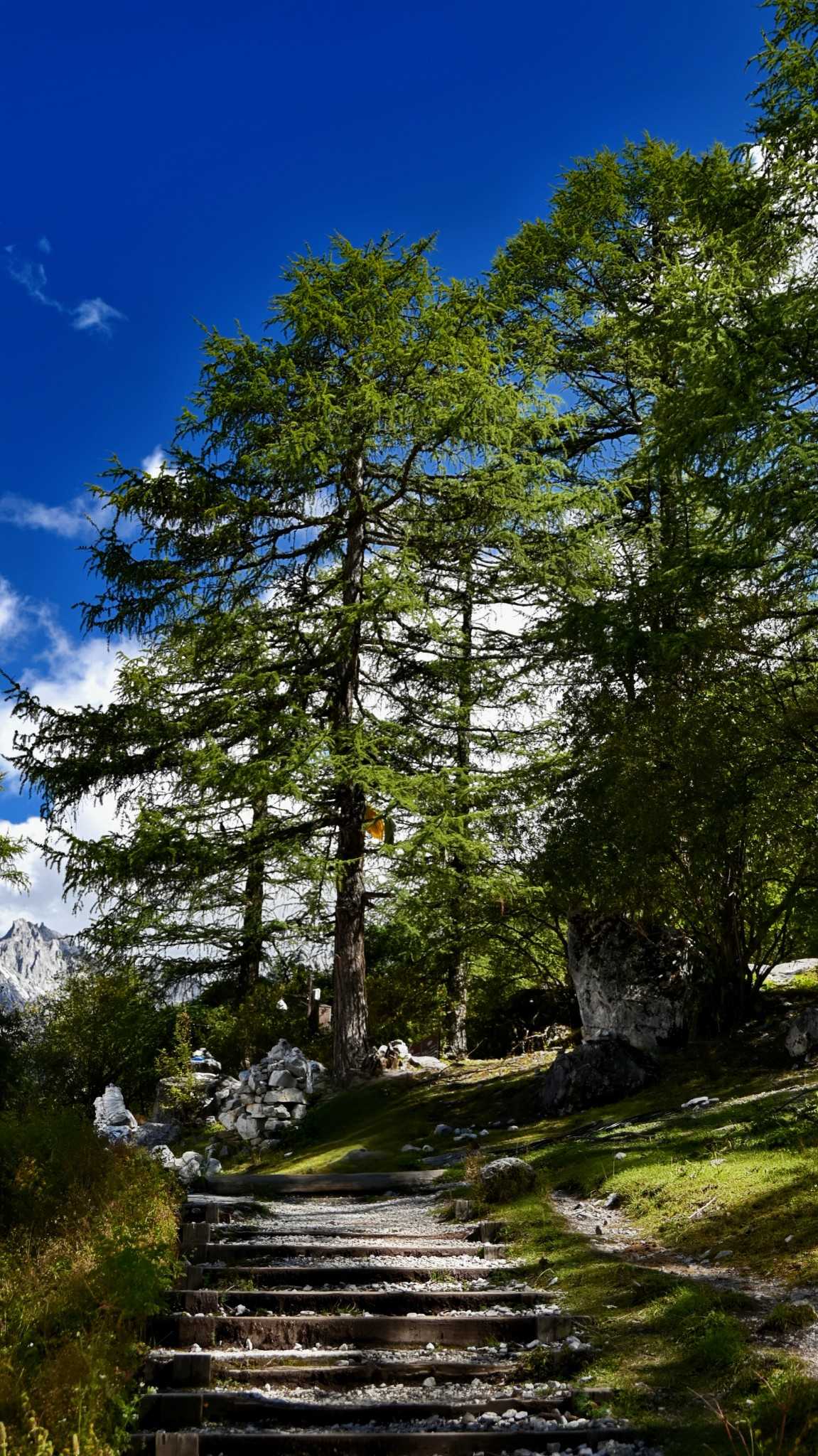
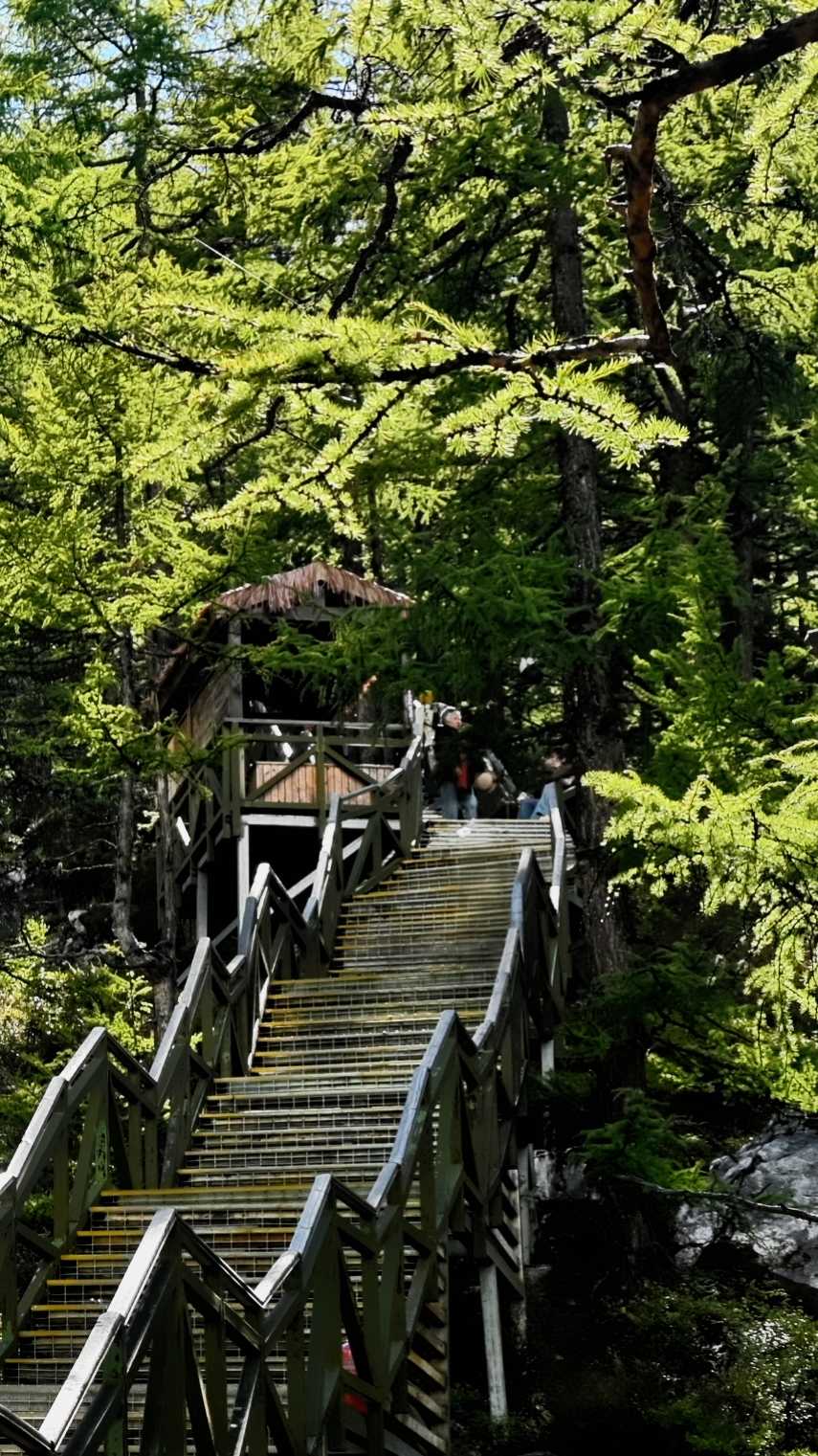
The short line isn’t long; viewpoints are concentrated. But with many visitors and iron boardwalks almost throughout, you must climb stairs constantly—heart rate spikes; breathing grows labored; legs fatigue quickly.
 Xiannairi
It felt even harder than the 7 km Manjushri boardwalk. But if altitude symptoms aren’t severe (headache, numb legs, or breathlessness), taking steps slowly with pauses, even low-energy folks can manage.
 Xiannairi
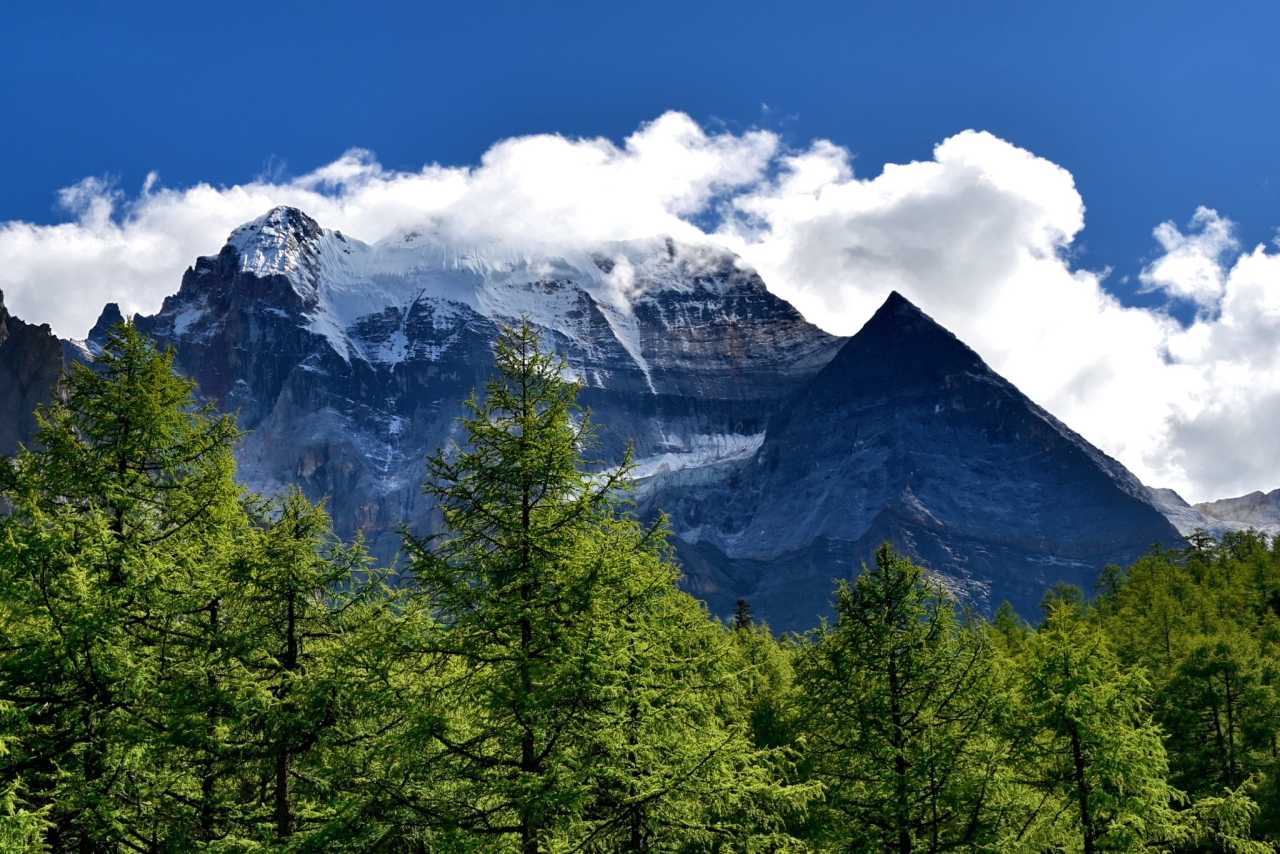
The focus here is Xiannairi. At 6032 m, it represents Avalokiteshvara in Chinese—hence the “Guanyin Compassion Line.”
 Xiannairi
Xiannairi is Sichuan’s fifth-highest peak and the chief of the three protectors. Guides say its shape resembles a reclining Buddha—but I lack imagination, so I gave up trying.
Unlike many scenic areas where you must go deep to see the “main role,” Xiannairi is extraordinarily high and among the few 6000 m peaks easily viewed up close by ordinary visitors (rare indeed).
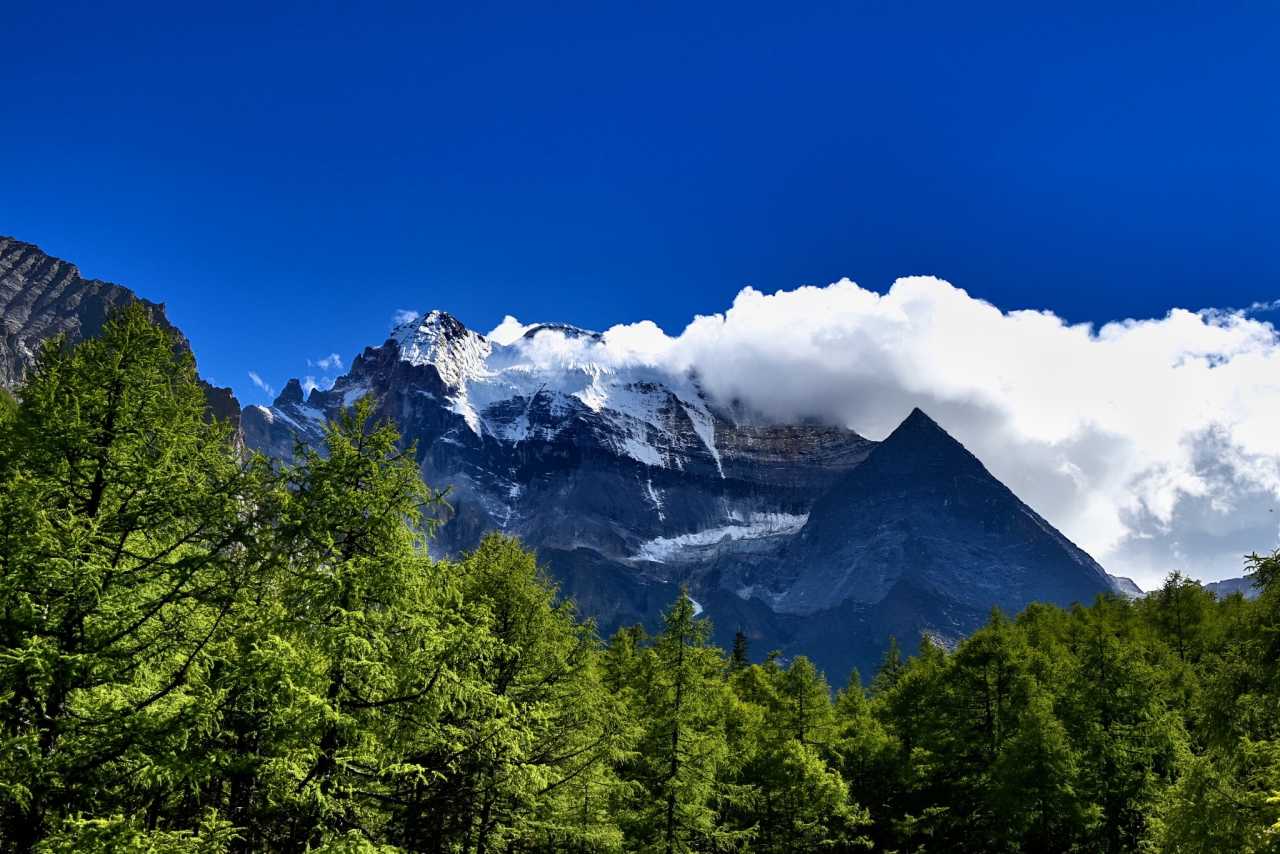 Xiannairi
How high? In clear weather you can see its tip near Zhaguanbeng—or even near the park entrance (key prerequisite: clear sky)—truly “surveying all mountains.”
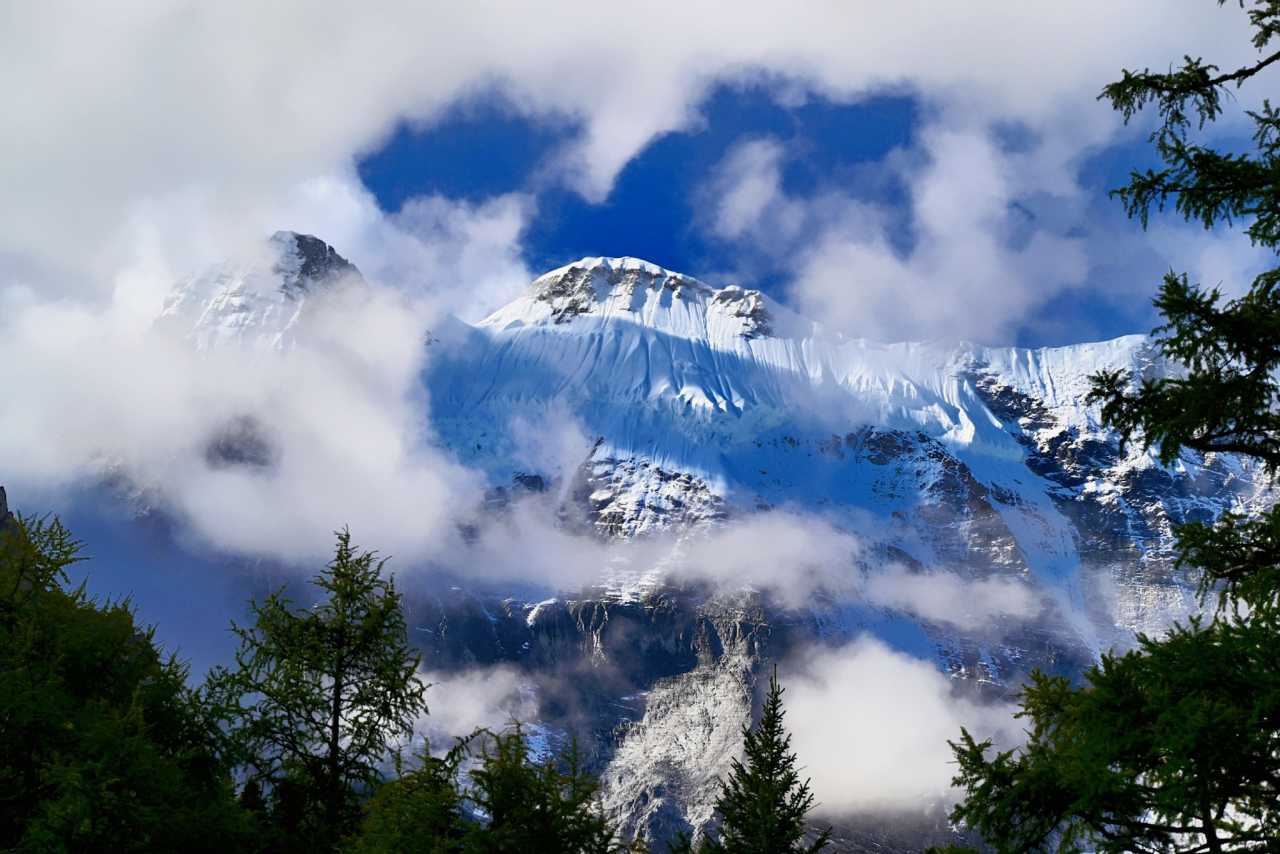 Zhaguanbeng
“Only in this mountain, clouds thick—unknown where”—no idle words from ancients.
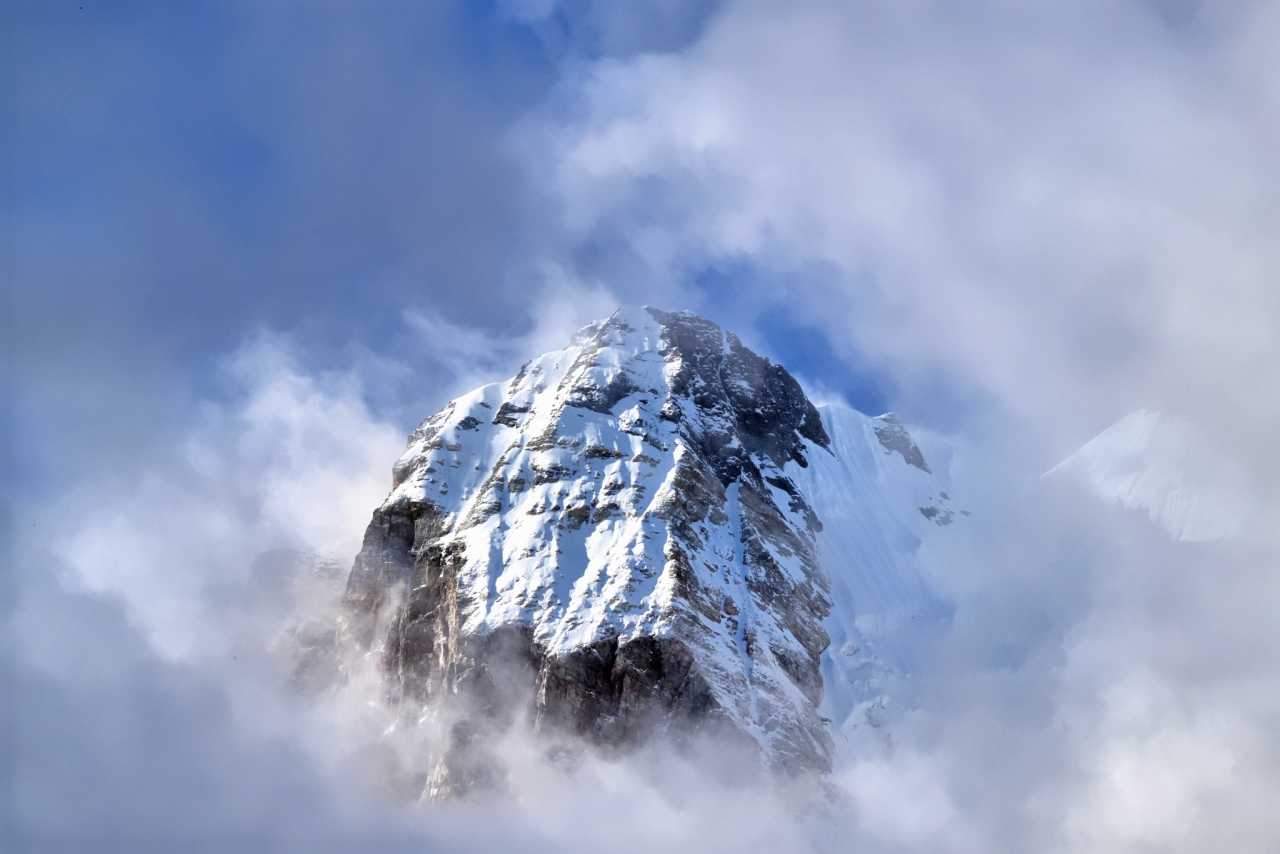
Most of the massif is blocked by near forests; only above the snow line can the tip appear above the cloud sea.
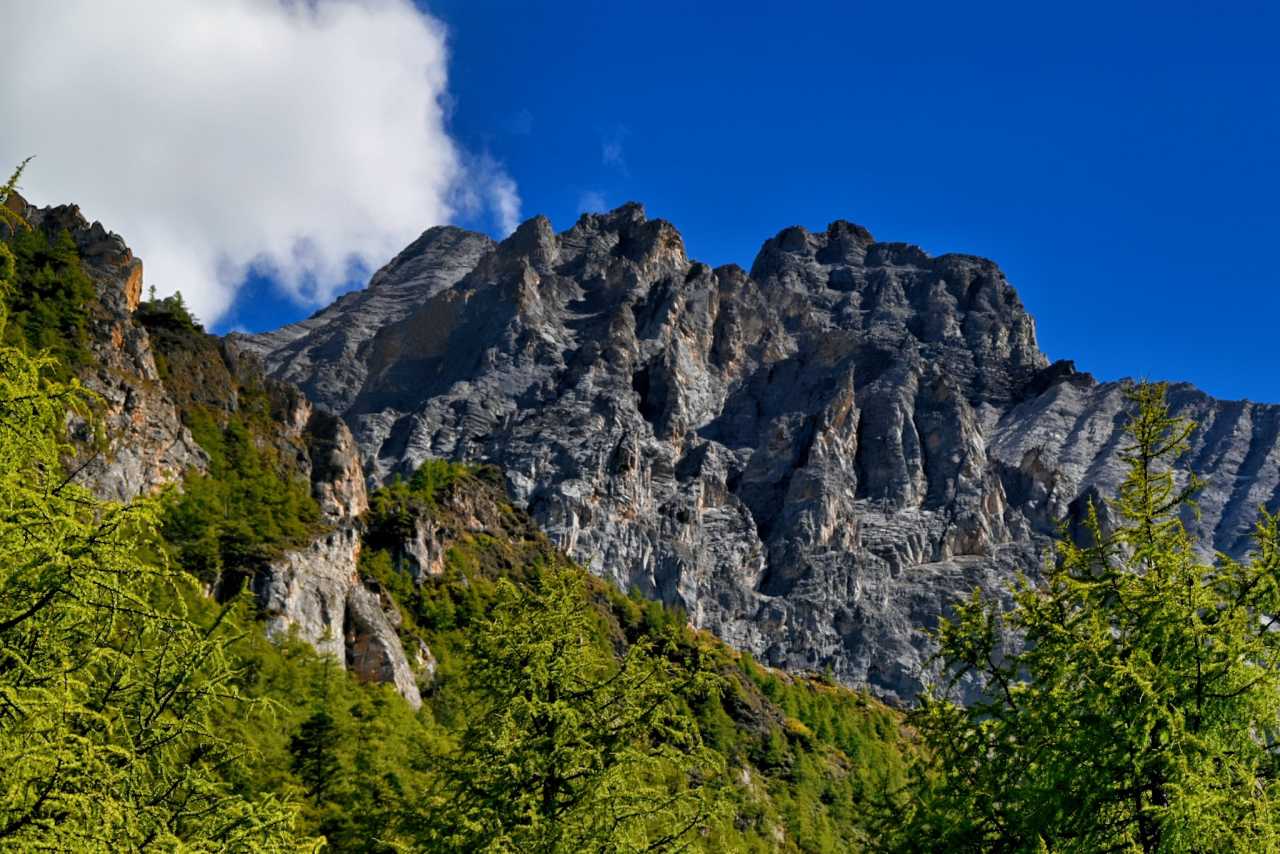 Xiannairi
The upward short line is crossing forest, approaching Xiannairi’s body—feeling the pressure of a giant and experiencing mountain worship.
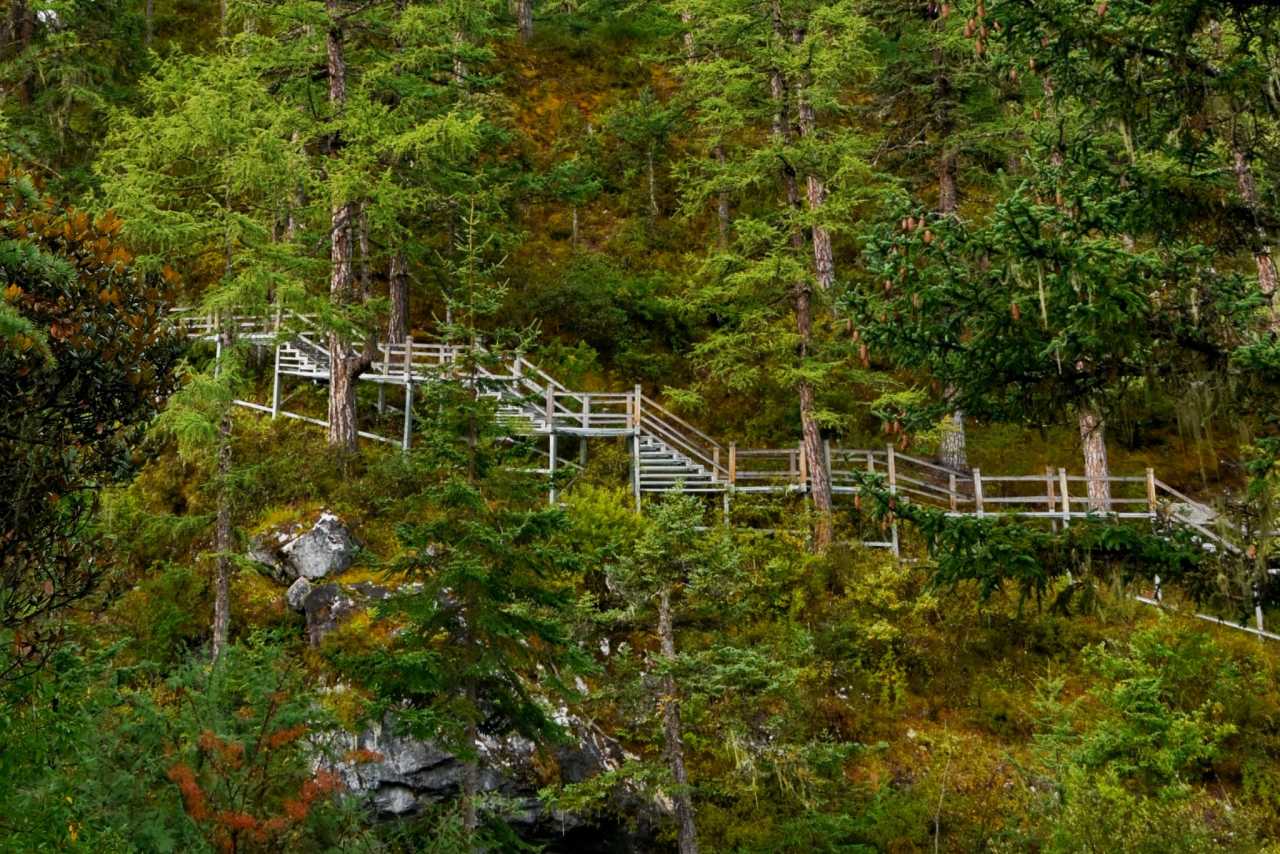 Daocheng Yading Scenic Area
As you climb, fir and spruce fade into a dark green wall; at first you look up, later you look level.
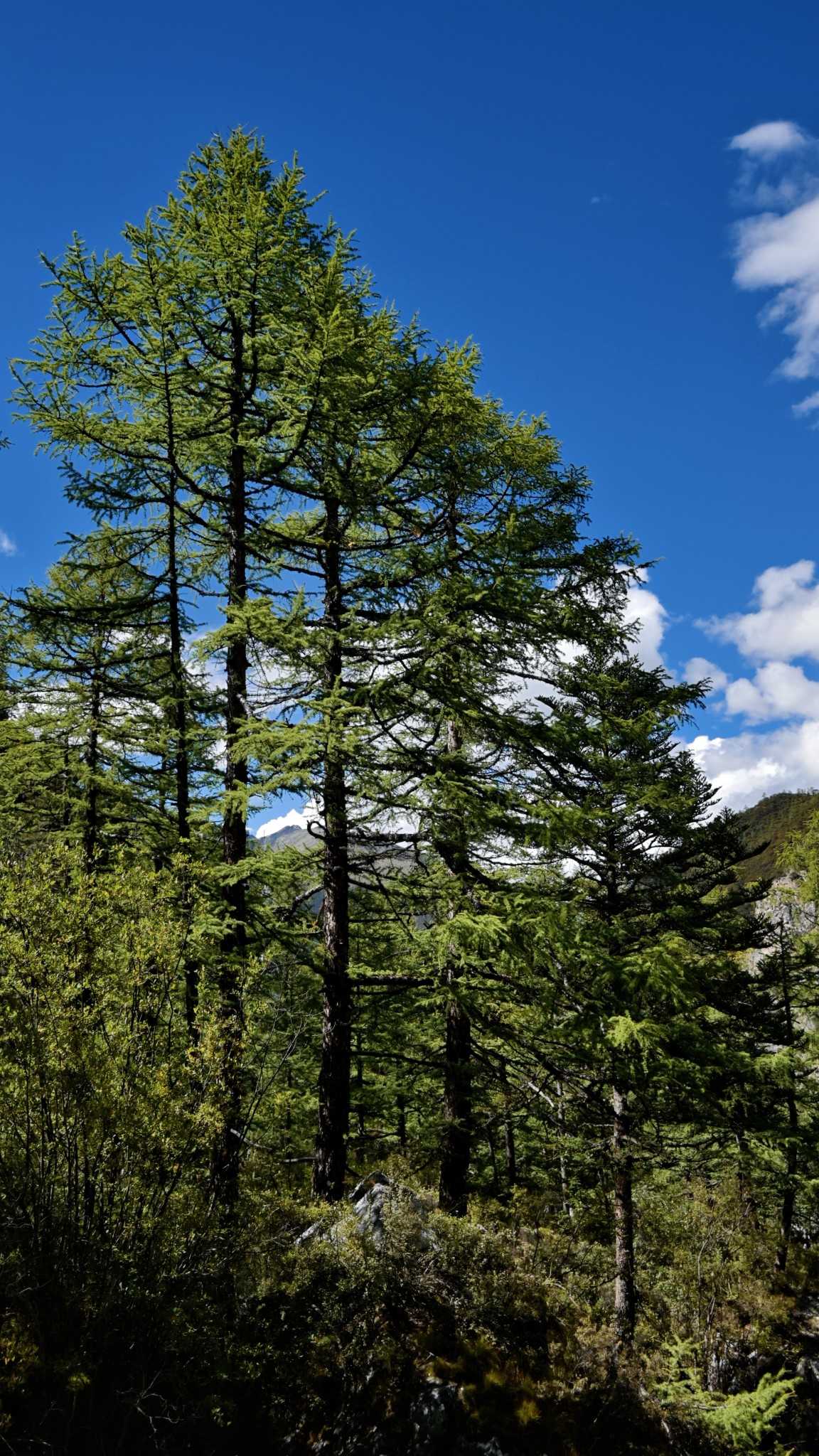 Xiannairi
You are wrapped by ancient woods and murmuring water; the loudest sound is your own heavy breath.
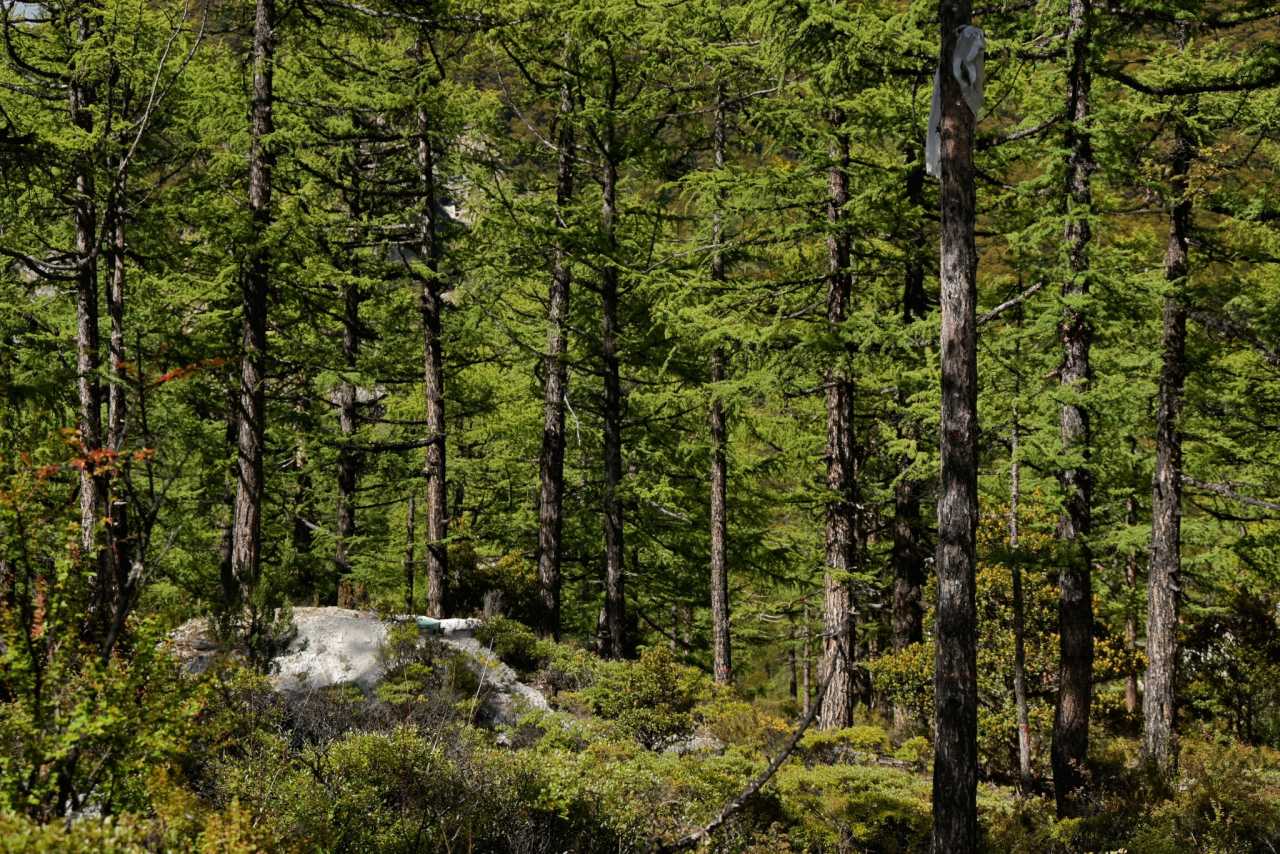 Xiannairi
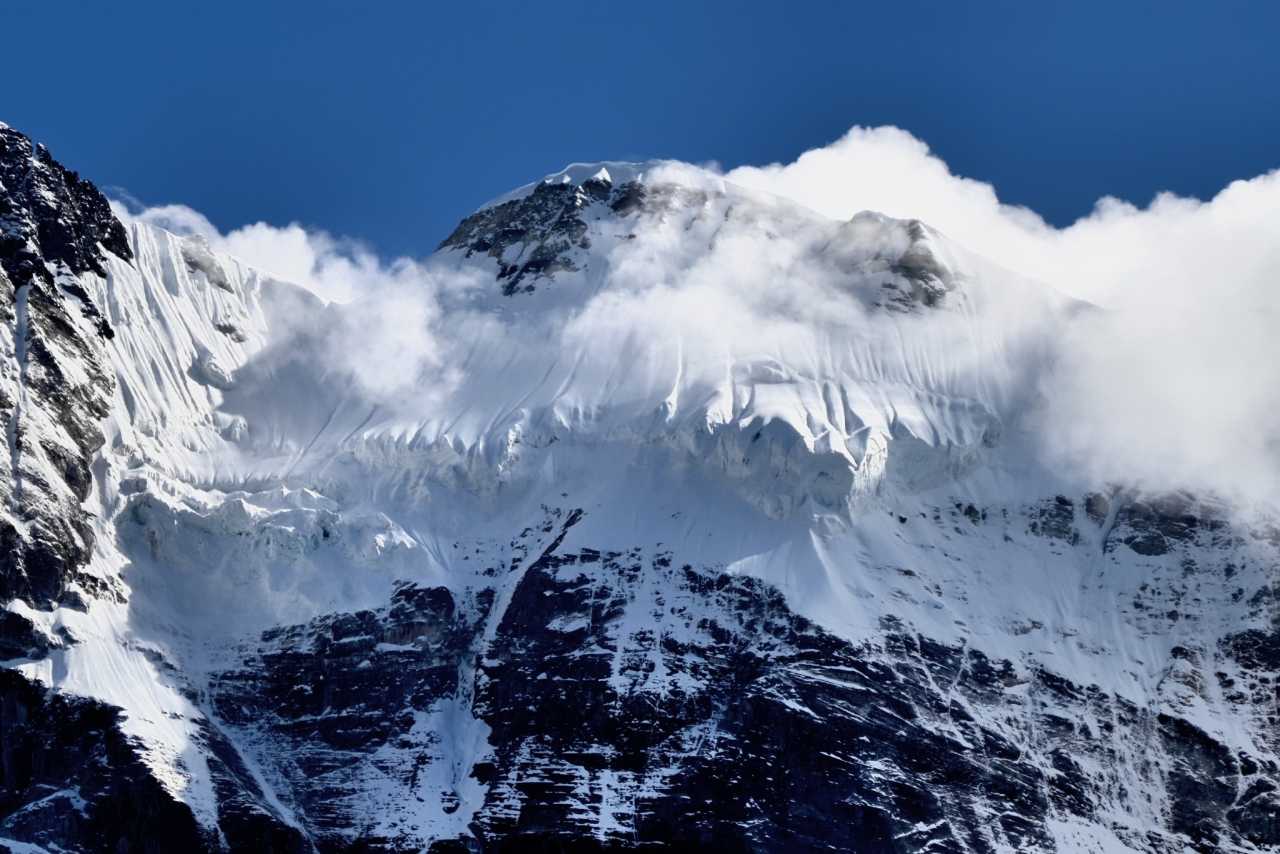
Then in a moment of panting look-up, Xiannairi “disappears”—not vanished, but its massive body fills the entire vision—no longer “scenery” but a sky-high wall. Glacial-cut rock is its wrinkles; wind-whirled snow its breath.
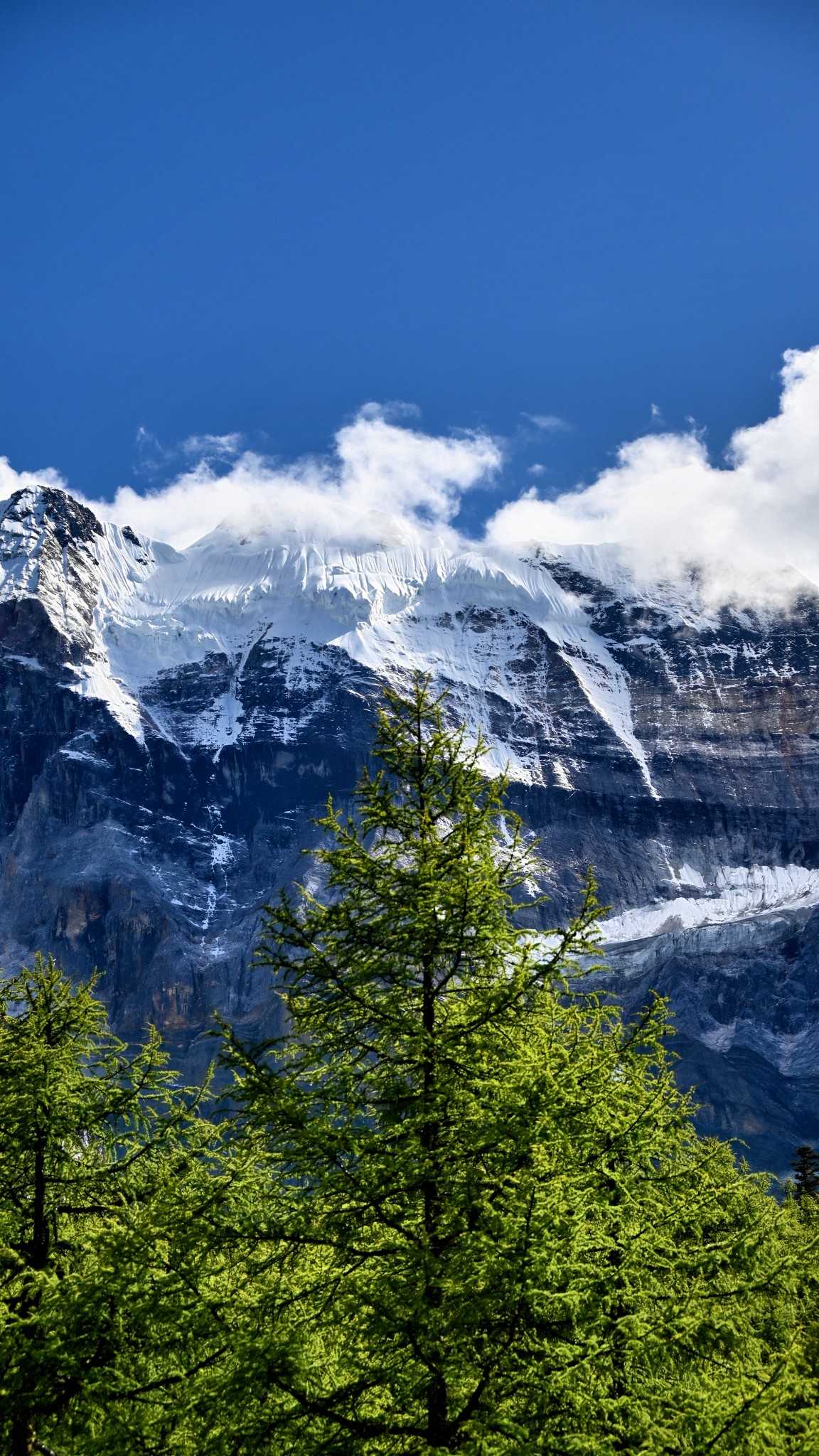 Xiannairi
Under pure physical oppression, a thought arises: I am walking upon the chest of a sleeping giant god.
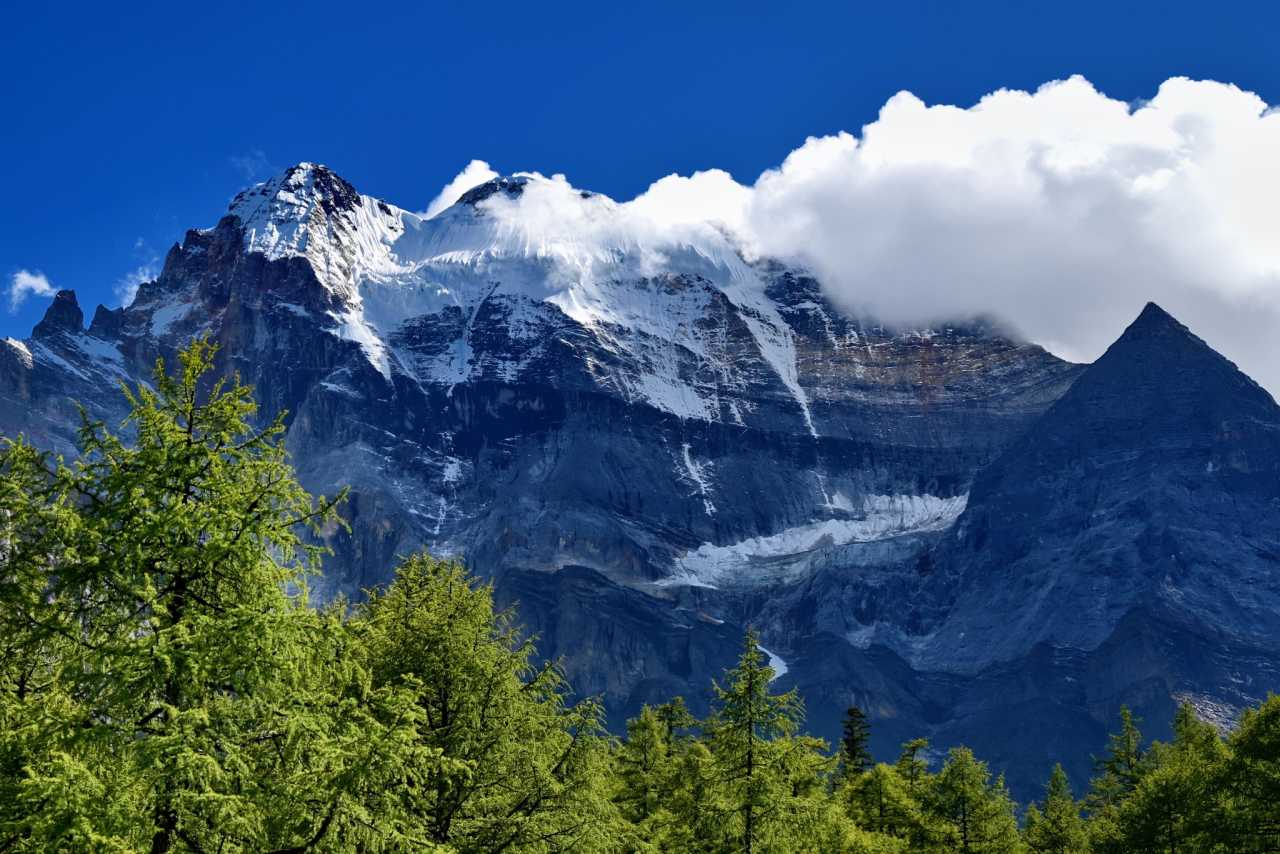
Every rolling stone underfoot seems to disturb its sleep. The air hums silently—not sound, but the weight of the mountain pressing directly upon senses.
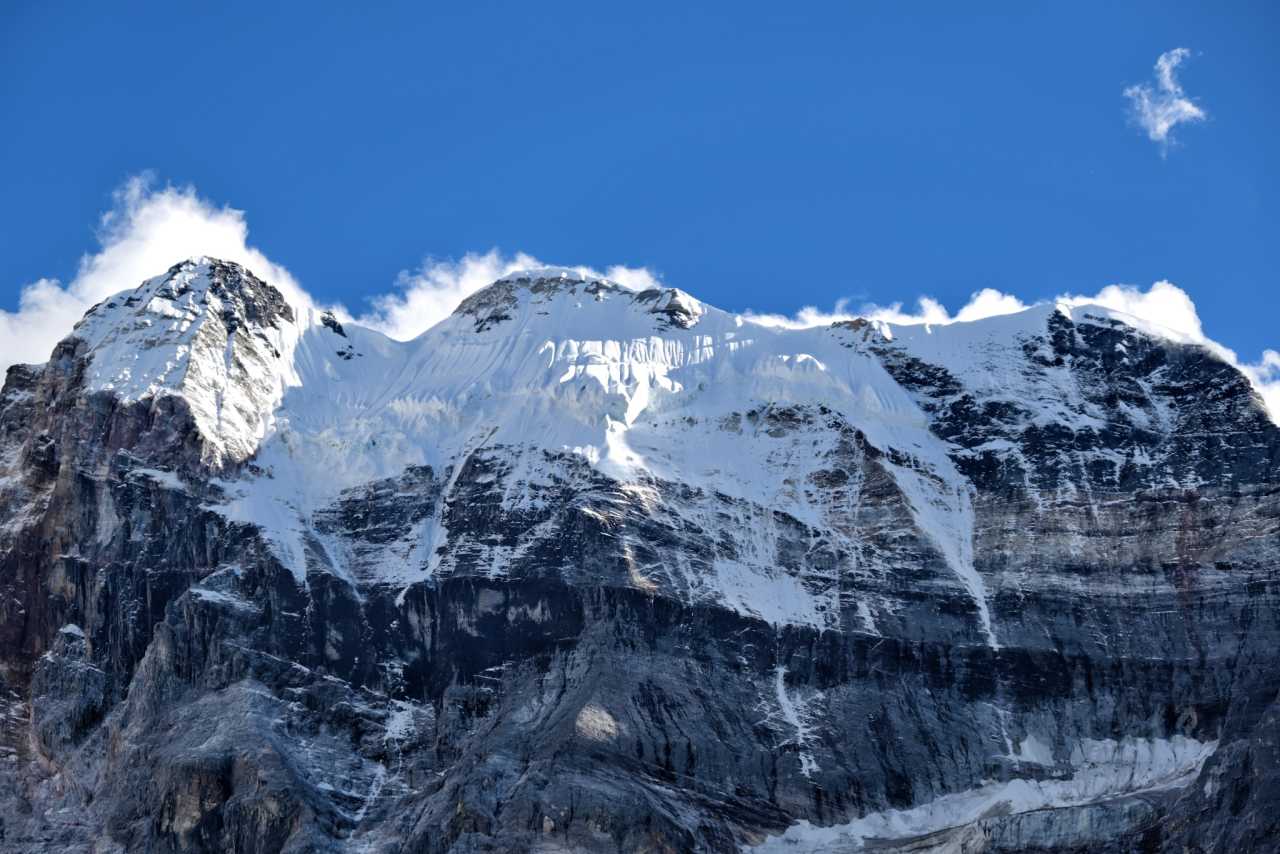
It’s obvious why locals worship it—you cannot conquer such existence; you only pass humbly at its feet—like a believer entering a sacred hall.
Guanyin Compassion Line – 04 – Xinbao Lake
Most guides omit Xinbao Lake—likely because it sits near Pearl Lake so the two get mixed.
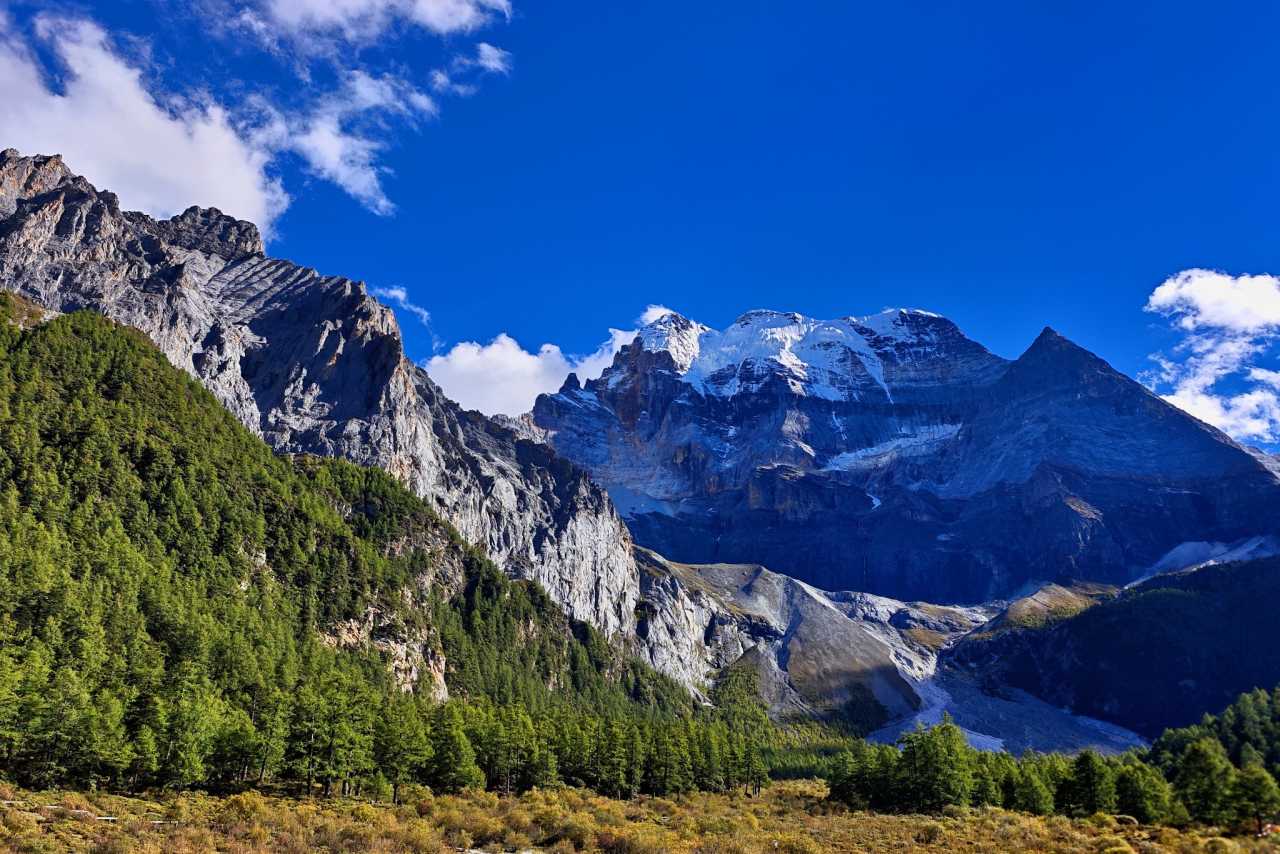
Xinbao Lake is small—you can scan it in one glance—water clean and clear, shifting blue-green with light—very pretty.
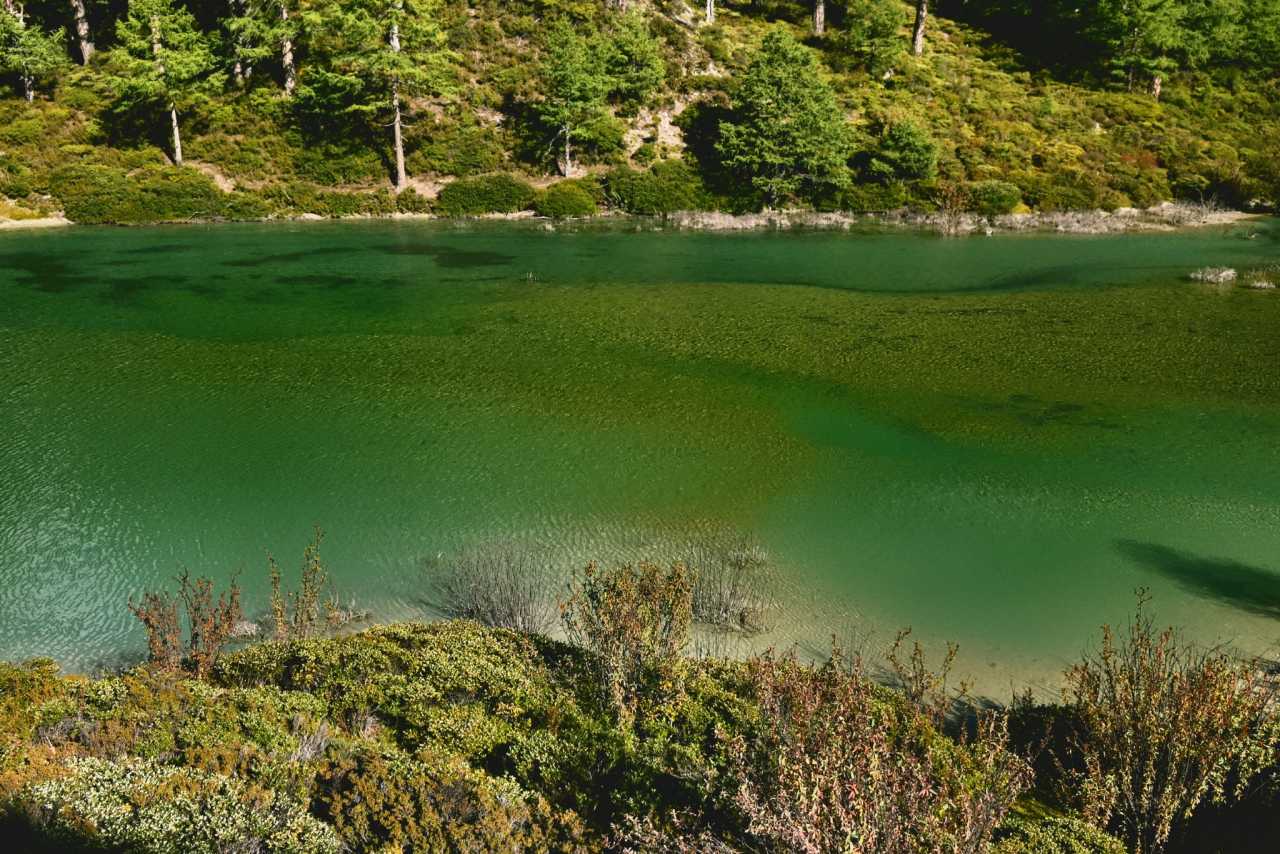 Pearl Lake
Around alpine lakes grow plants like sedge—low, tufted—well adapted to high cold, damp, poor soils—seem weak but strong.
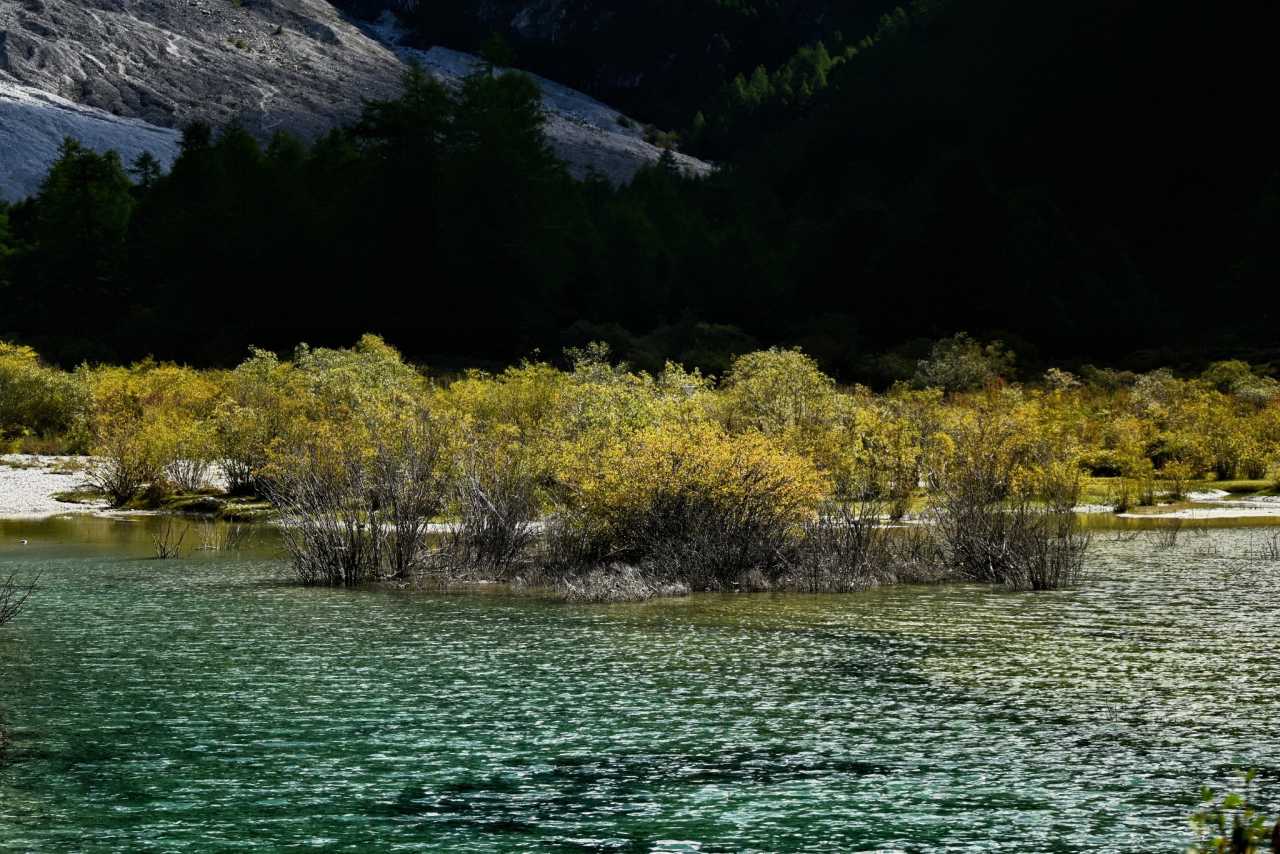 Pearl Lake
Portrait tip: wear bright colors for punchy shots, but avoid neon (in harsh sun neon overexposes and looks like separate layers from the background).
Two-person shot—one orange, one light green—which pops more is obvious.
 Xiannairi
Guanyin Compassion Line – 05 – Pearl Lake (Zhuoma Lacuo) – Xiannairi
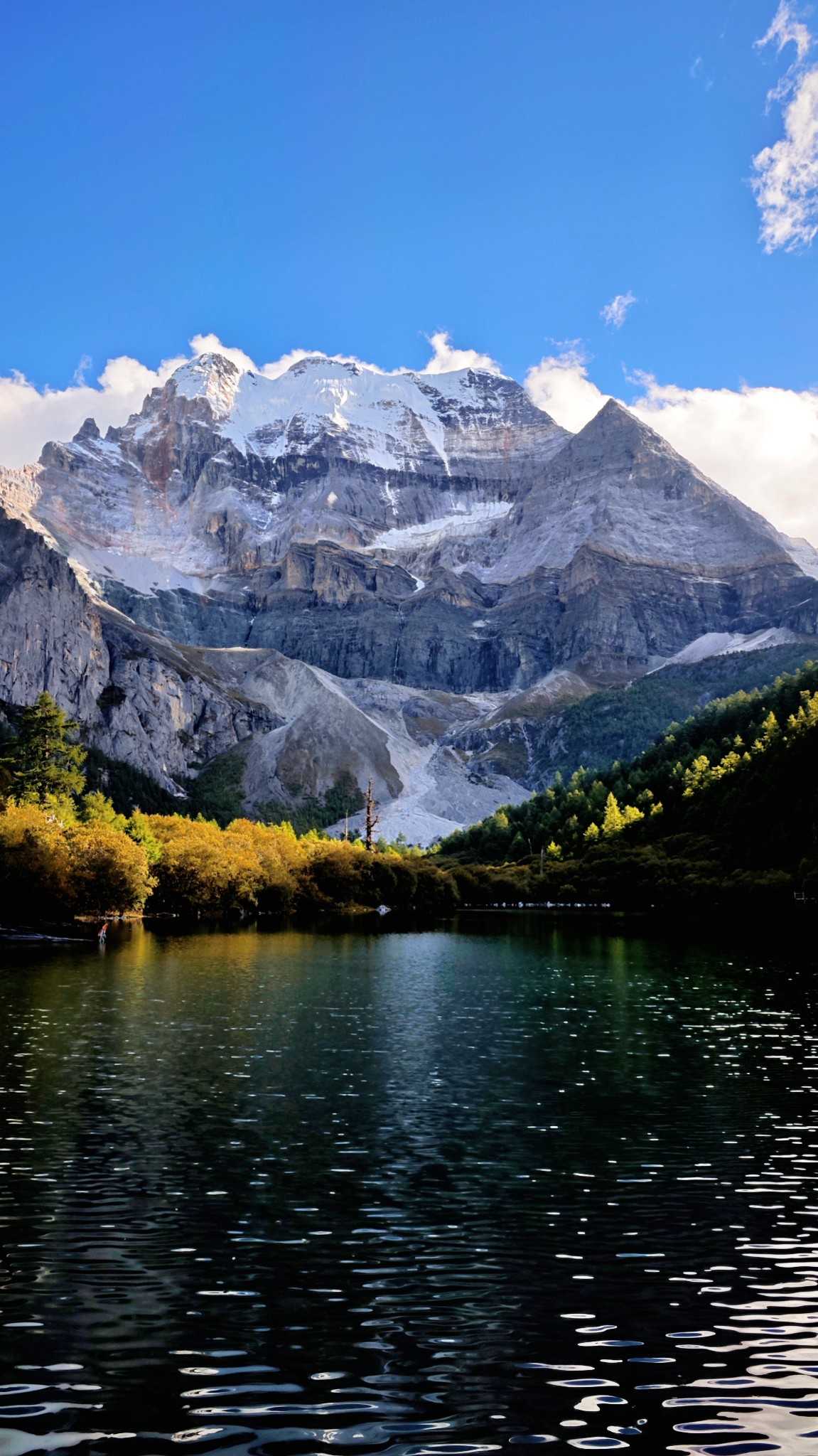
Zhuoma Lacuo’s huge surface is like an uncut blue-green gem, quietly set amid the forest at Xiannairi’s foot.
The pyramidal peak (horn) pierces the heavens—sharp, solemn, inviolable. Sunlight spreads; rock walls and snowfields display distinct yet soft tones—white snow and brown rock interlace, tracing powerful lines.
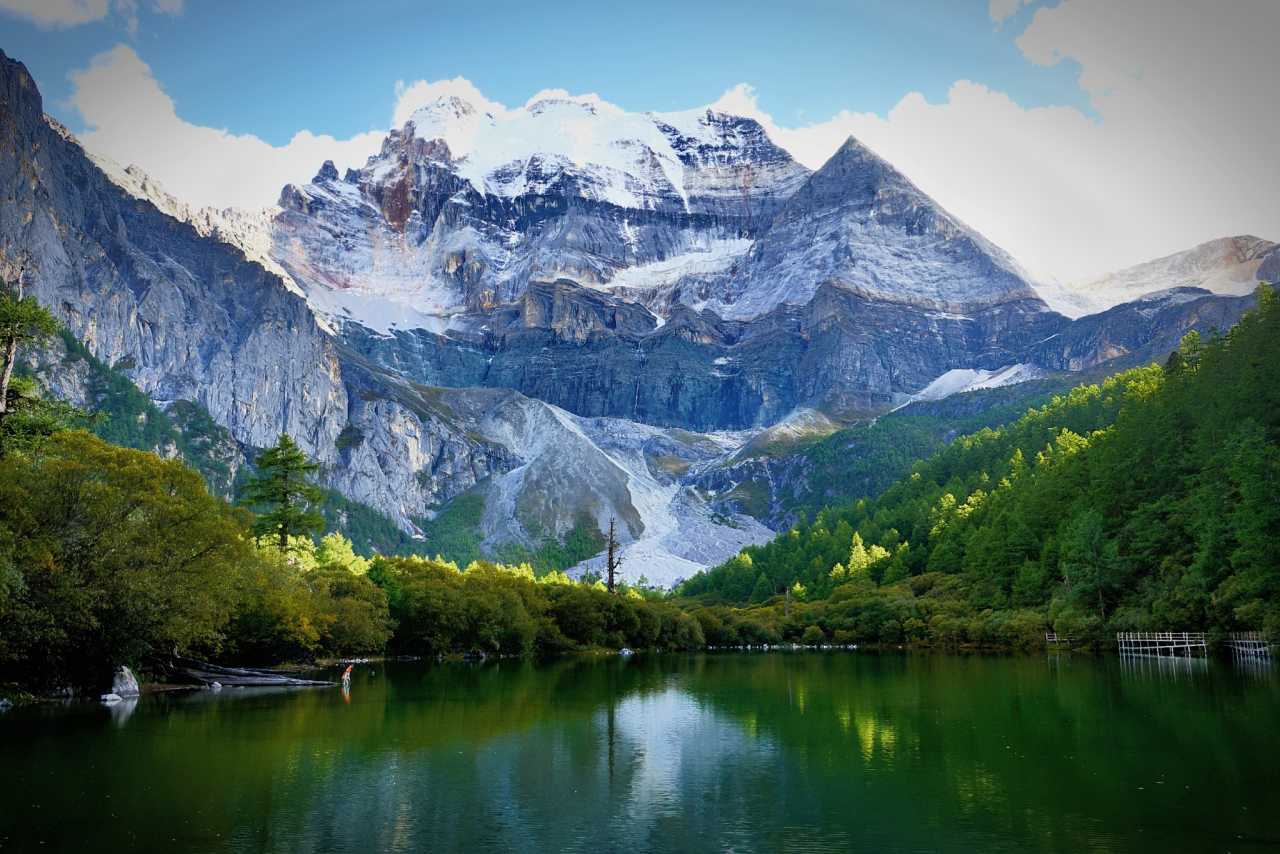 Xiannairi
Time is still. No wind disturbs. Above the lake is the real world—the tip covered in white snow under blue sky—clear, holy, majestic.
Below the surface lies a dream—everything replicated perfectly. The pyramidal tip forms an equally sharp, symmetric cone in water—joining with the real peak seamlessly—like the dome of a complete underwater palace.
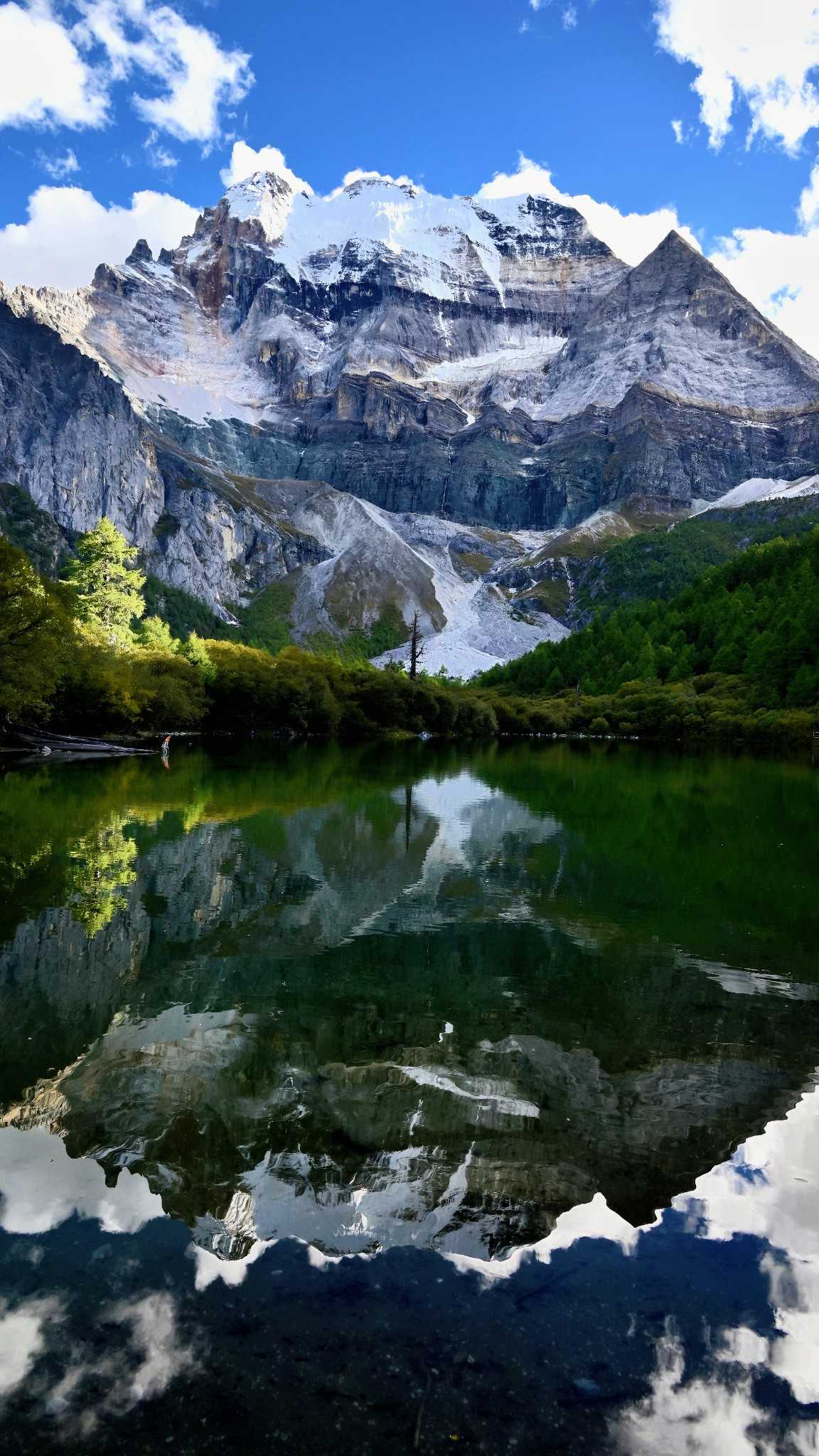 Pearl Lake
Every wrinkle and snow mark of the mountain casts clearly into water, forming a giant up-down symmetric scroll. The blue-green tint adds cool azure to the reflection—Xiannairi looks both real and ethereal.
The two best places to photograph Xiannairi are Chonggu Monastery and Zhuoma Lacuo.
“Zhuoma Lacuo” means “Fairy Lake” or “Tara Lake,” commonly called Pearl Lake, lying in dense forest on the northwest side of Xiannairi at ~4100 m.
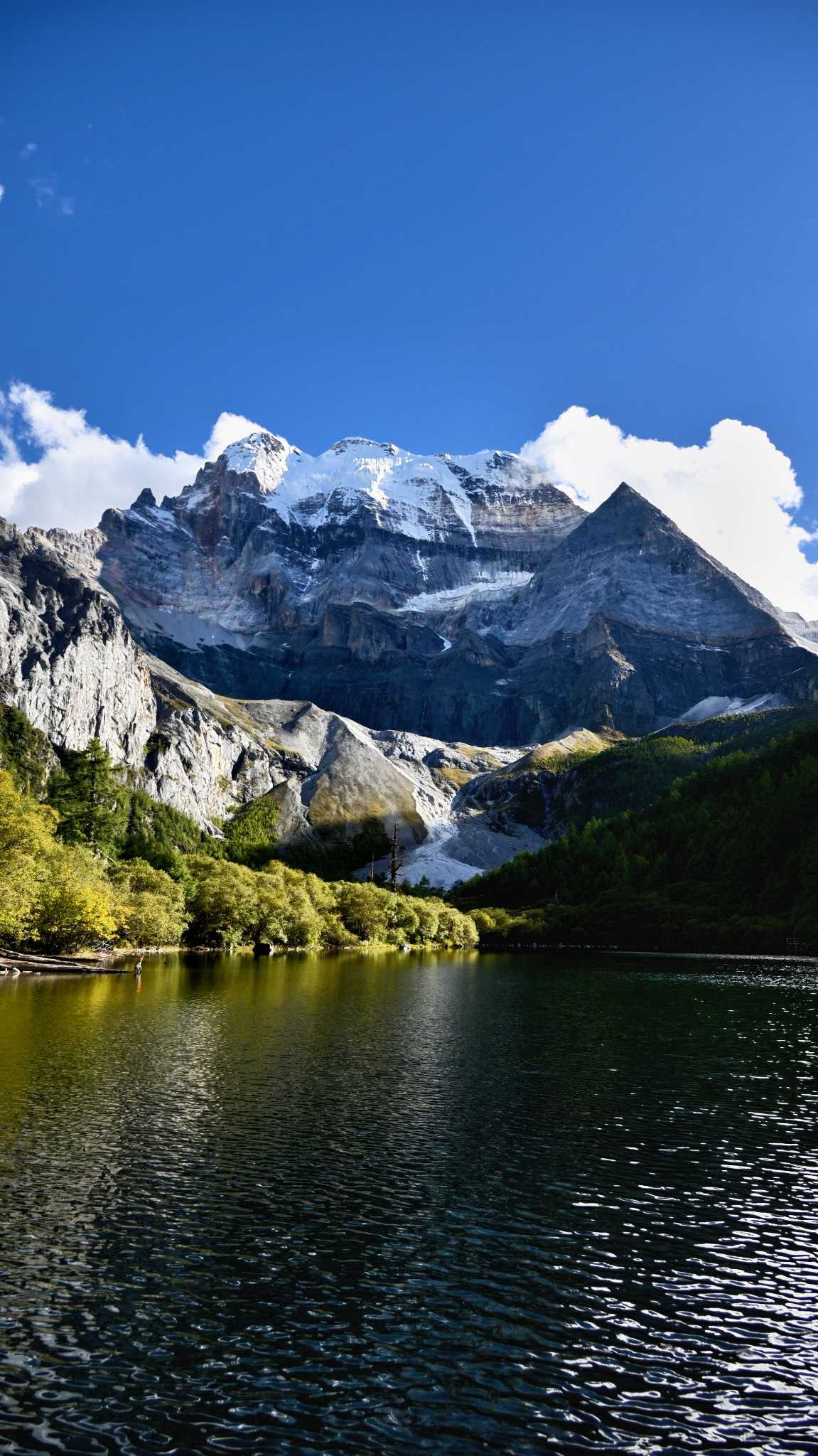 Xiannairi
Legend says Pearl Lake formed from a pearl dropped by Xiannairi’s goddess while dressing; in Tibetan Buddhism it is seen as Xiannairi’s mirror or the soul lake of White Tara—thus revered.
Geographically, it is a glacial erosional lake fed by Xiannairi’s meltwater, ~0.1 km². A circular trail lets you view it from multiple angles.
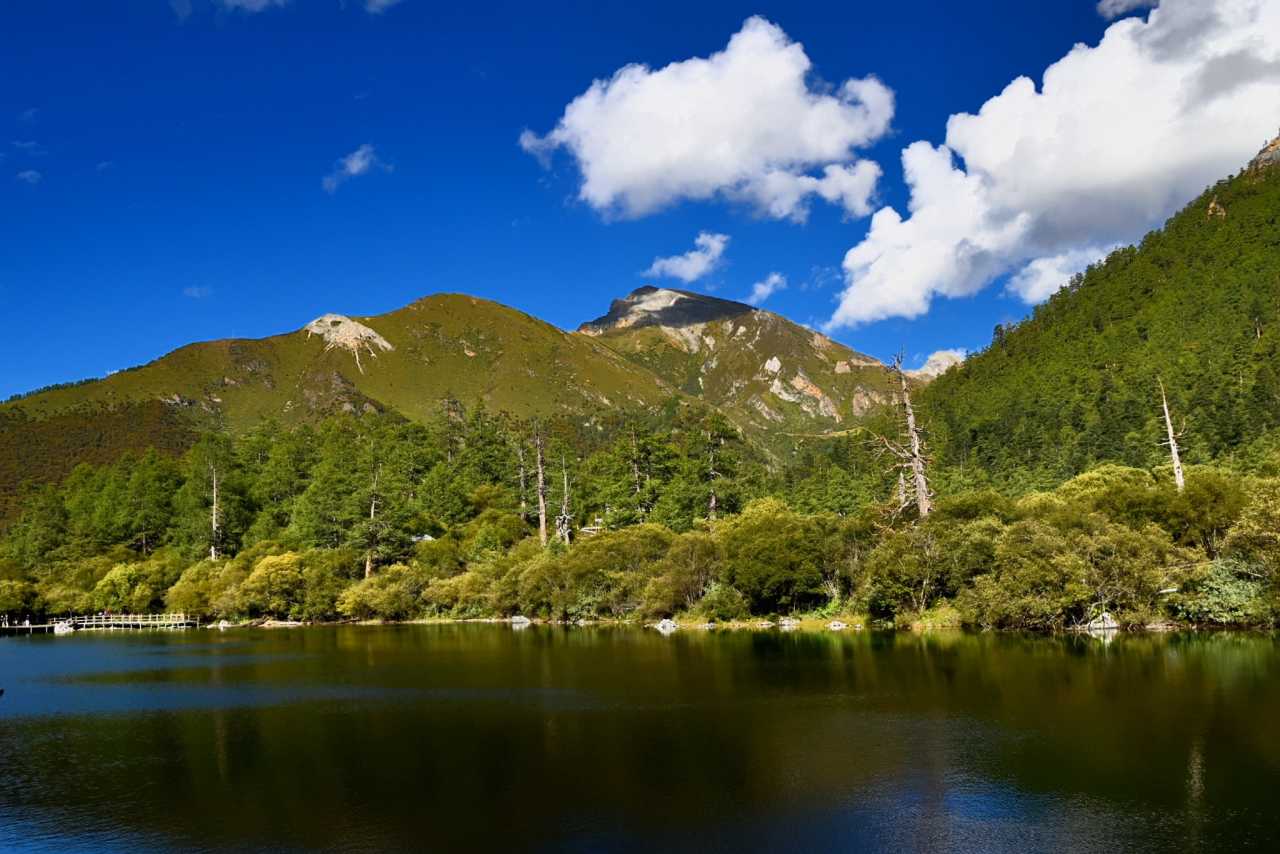 Pearl Lake
Dense forest frames the lake—like a natural picture frame.
At spring’s end and autumn’s start, foliage isn’t fully colored; brilliant yellow, dark green, and bright red aren’t at peak. Yet green alone already shows its palette—tender, grass, dark, with hints of yellow—faithfully recorded by the lake—ringing it like a splendid hada offered to the sacred mountains.
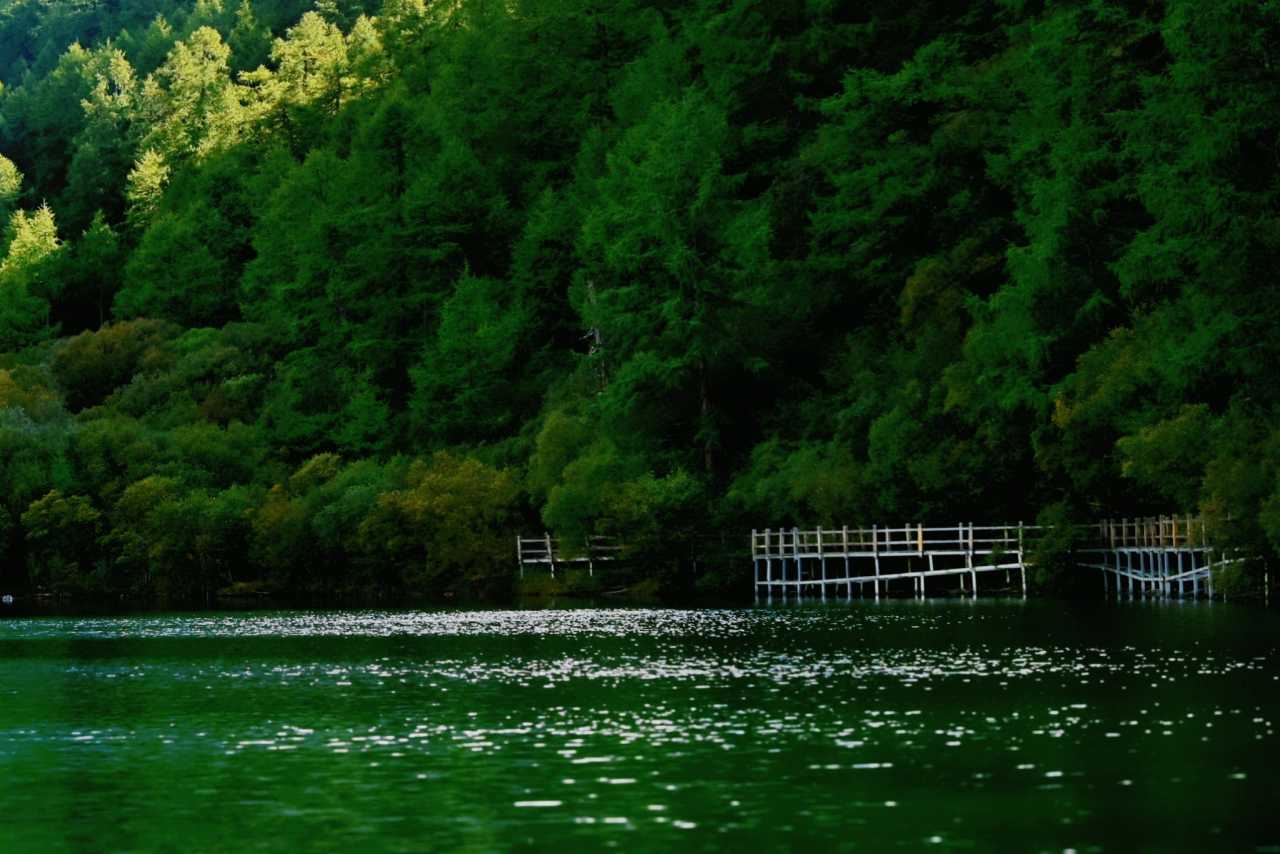 Pearl Lake
All is silent; only occasional birds chirp from distant woods—highlighting the stillness. This is not mere “scenery,” but a dialogue between heaven/earth and reflection—the boundary of real and unreal dissolves—one holds breath lest ripples disturb this beauty and the mountains’ peace.
Just one look explains why Tibetans revere mountains.
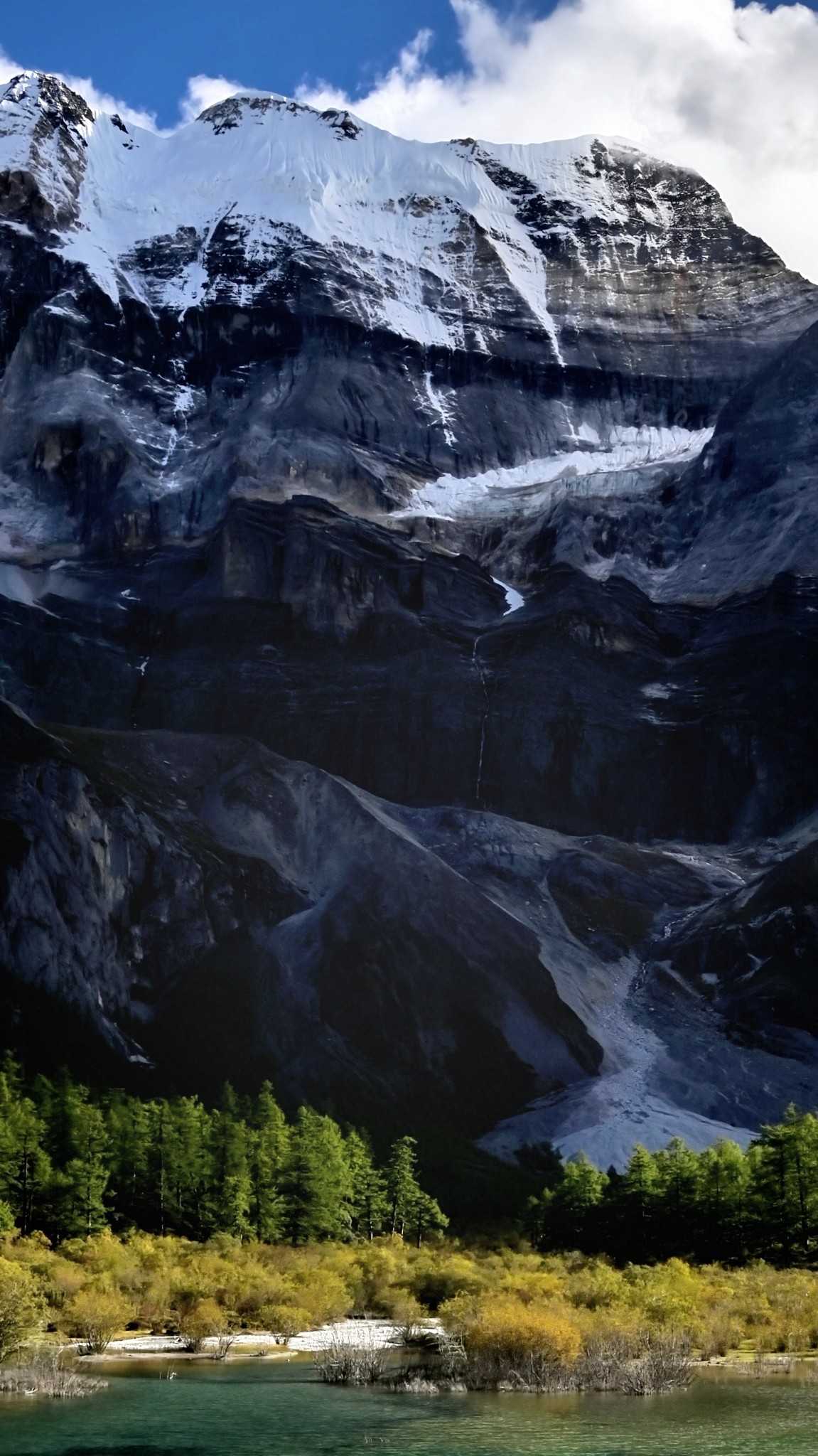 Pearl Lake
 Pearl Lake
Guanyin Compassion Line – 06 – A Wild Path Back
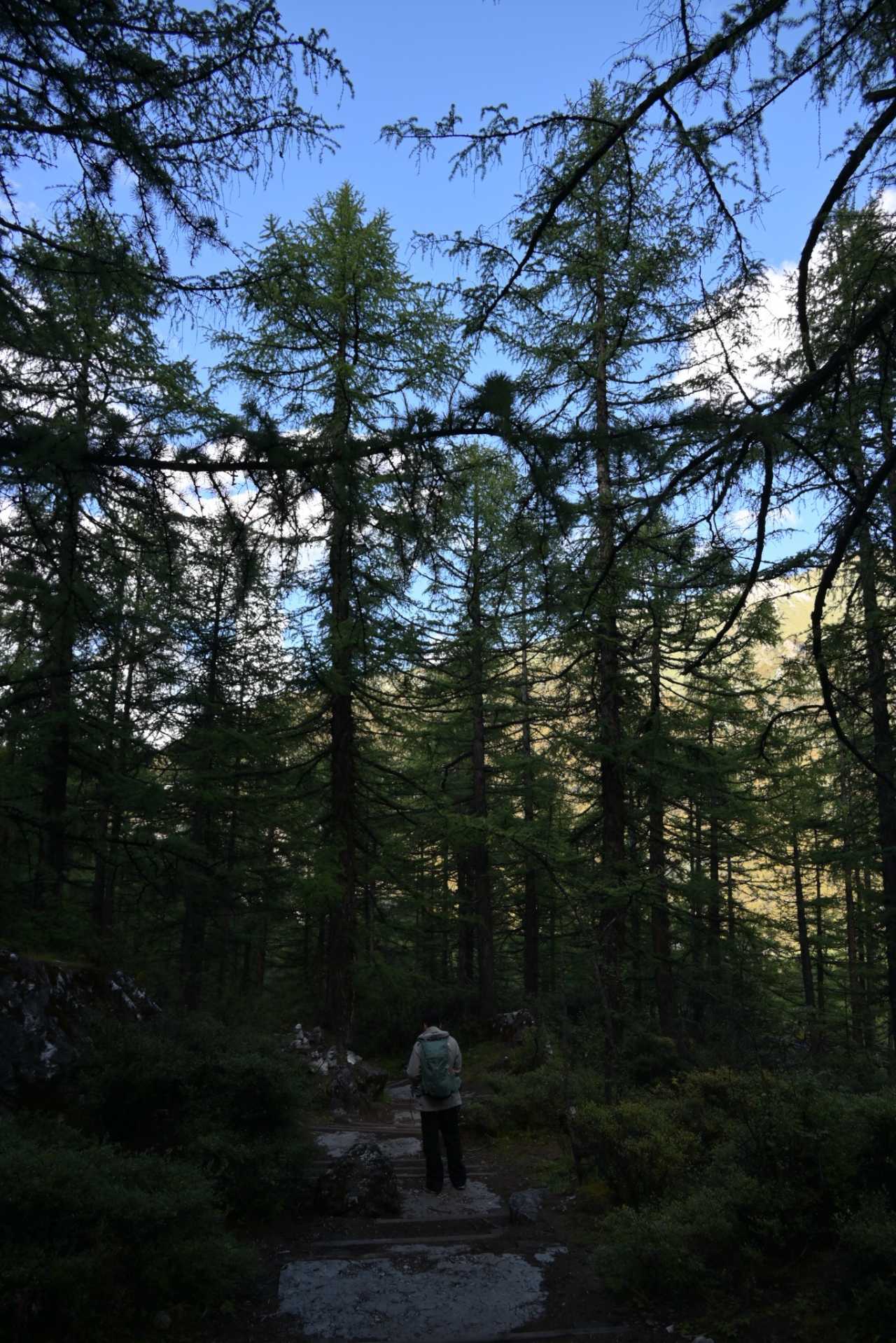
Circling Pearl Lake, we accidentally took the “shortcut” the freelance guide mentioned—doing an impromptu reverse traverse.
 Daocheng Yading Scenic Area
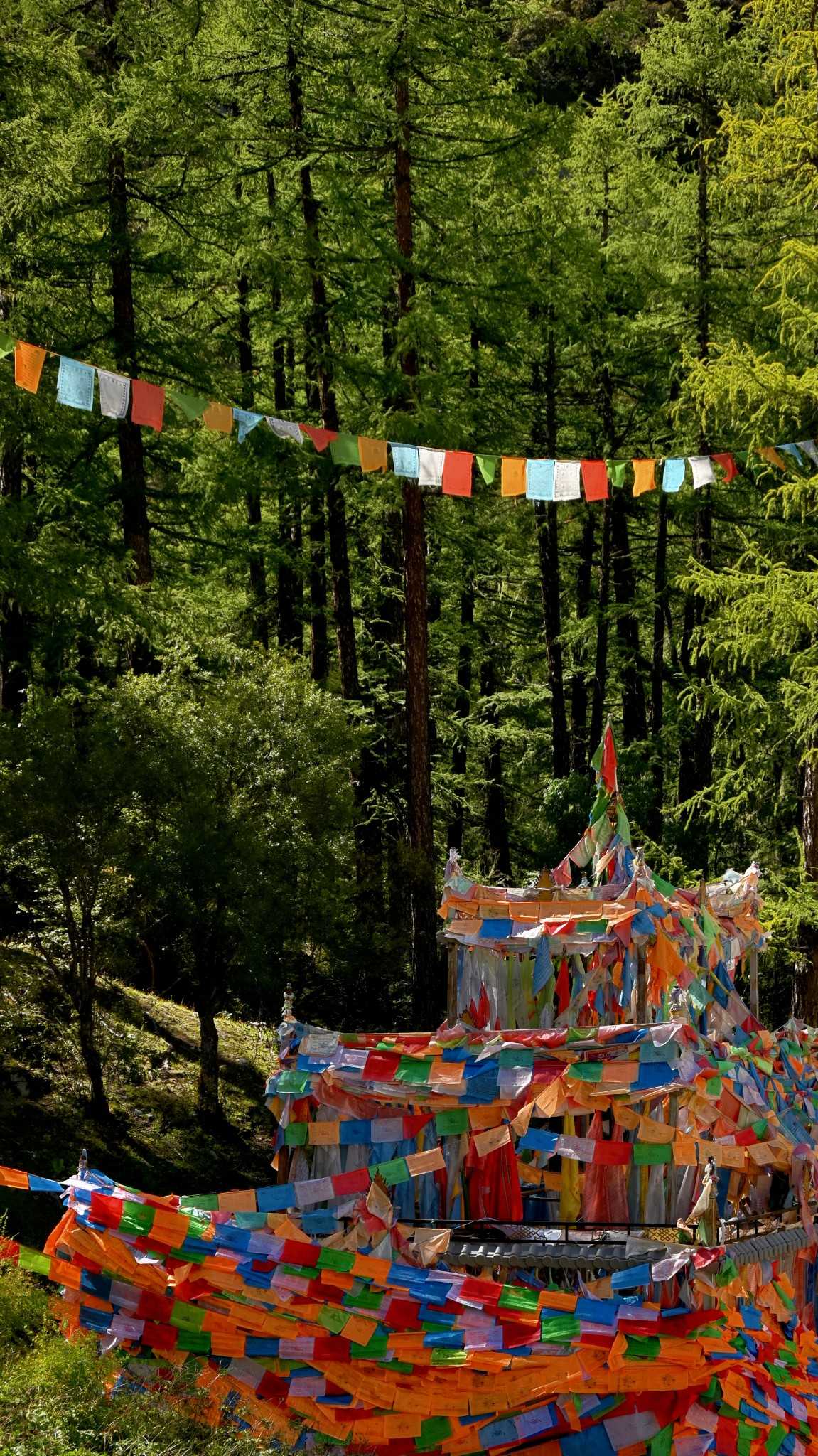
Starting from Chonggu, the “wild path/shortcut” seems to lie near the monastery complex: pass the main gate, see a prayer-flag tower by the museum, and continue forward.
 Chonggu Monastery
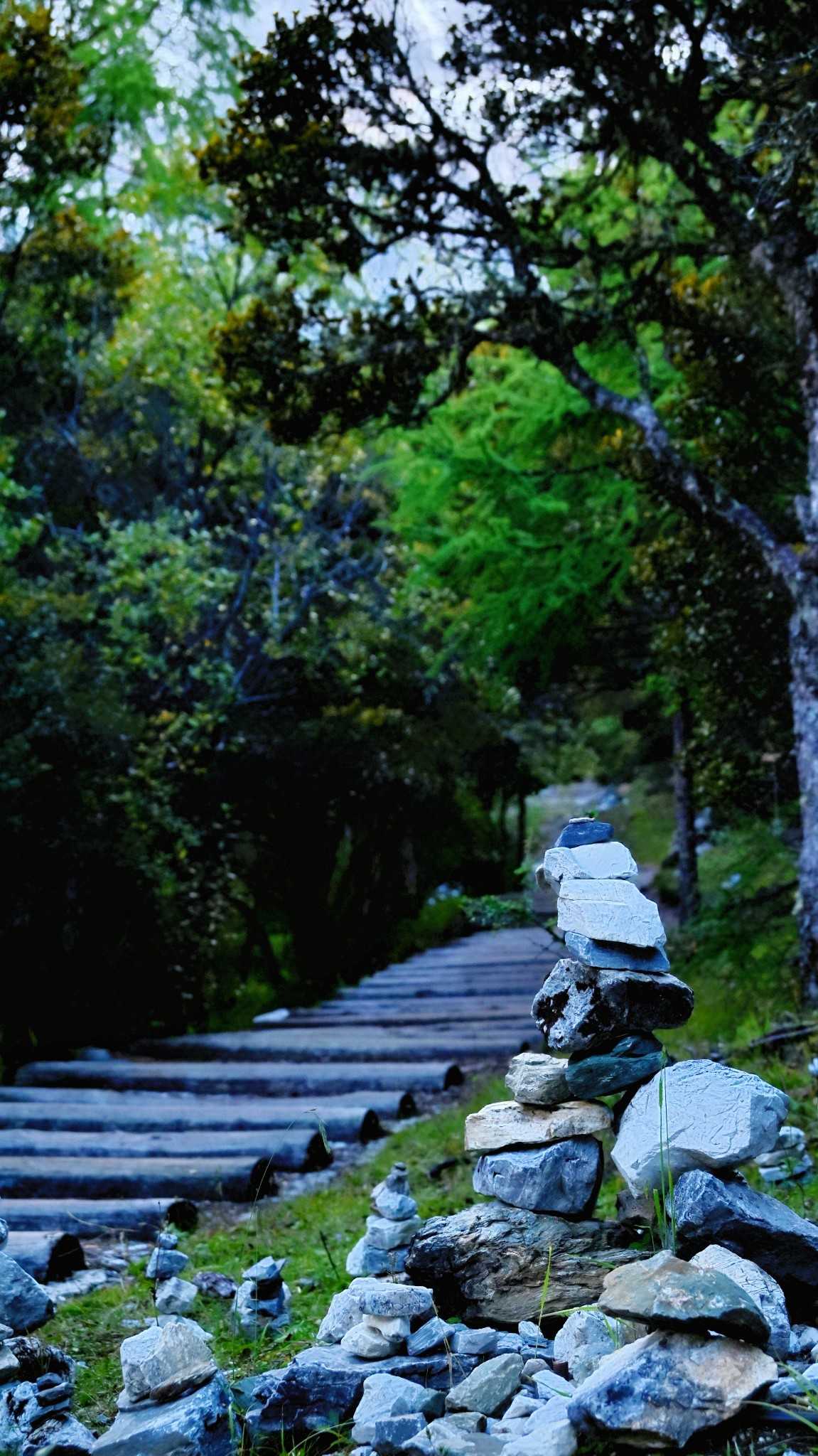
The ground is laid with long round logs—like locally sourced trunks pressed into soil over time—this is the “shortcut” the guide mentioned.
 Daocheng Yading Scenic Area
Few tourists take it. We used it returning from Xiannairi—indeed faster than iron boardwalks—but uneven with loose stones—very primitive mountain path. If rainy, logs get slippery; twisting ankles is easy—choose between shortcut and regular route by conditions.
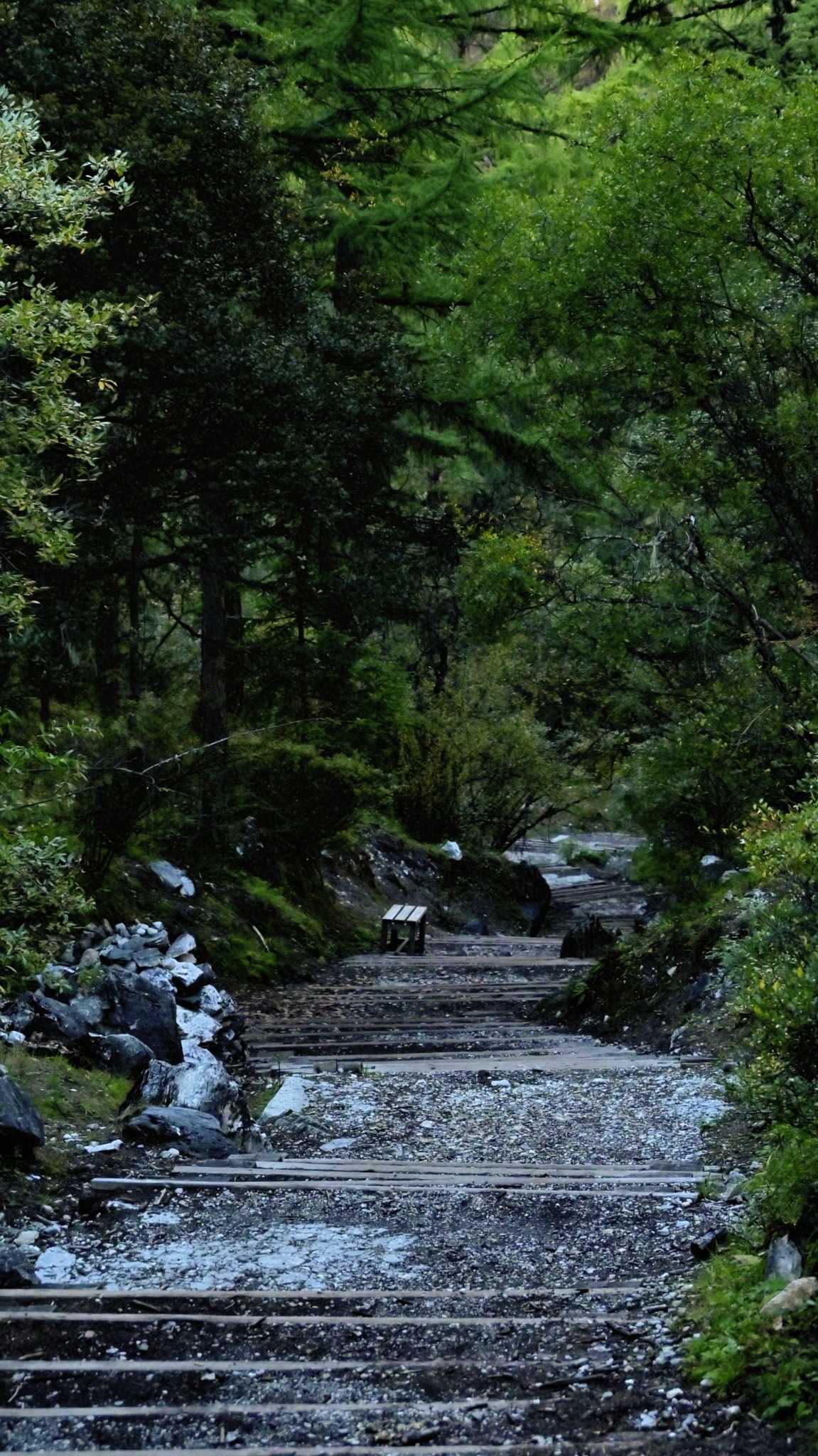 Daocheng Yading Scenic Area
This wild path and the tidy metal boardwalk feel like two faces of the world.
It seems long untended; gravel and layered leaves carpet the path, crunching underfoot with a soft, thick sound only nature can mix. Pinecones scatter like little towers; unknown fruits lie burst underfoot—purple or ochre juices painting the path with wild strokes.
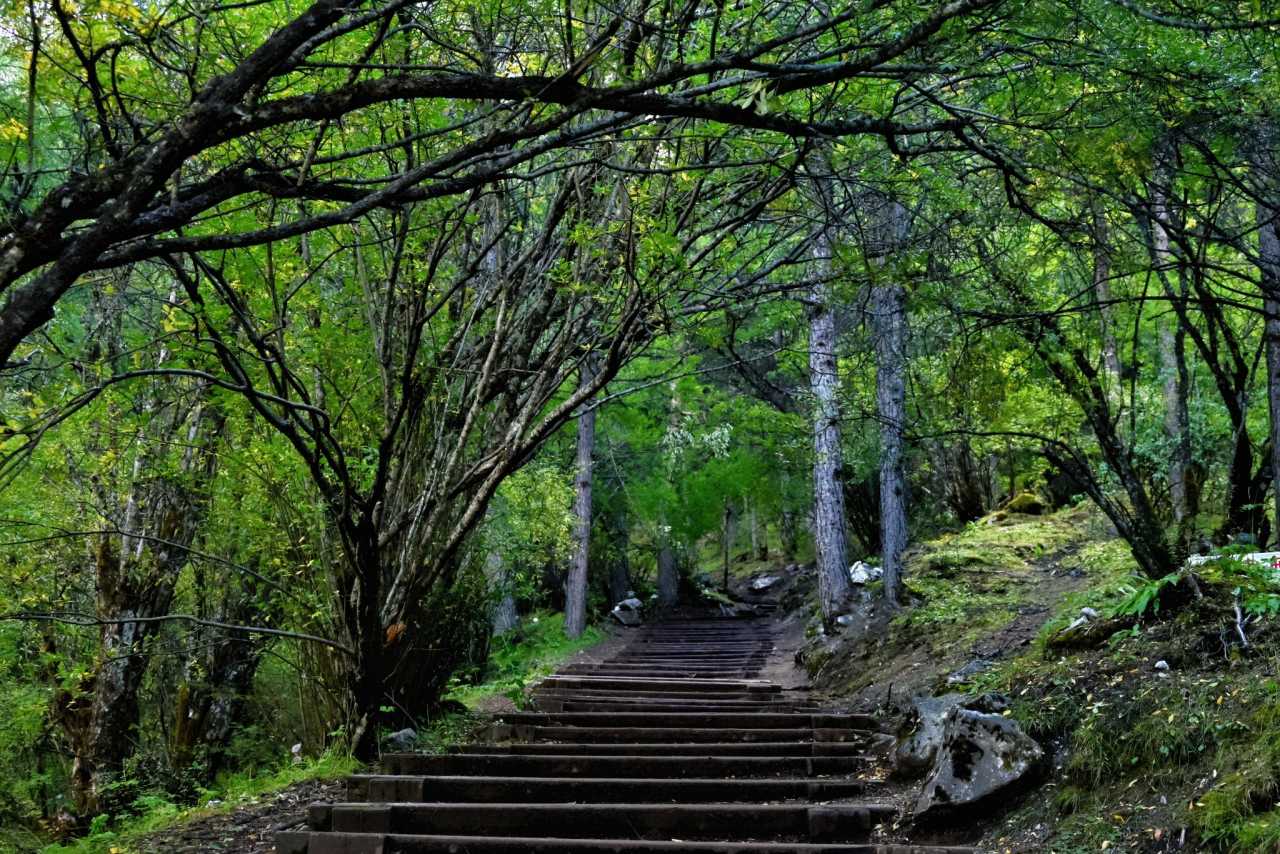 Daocheng Yading Scenic Area
Cleaner than regular trails? No. But walking it gifts full wildness. Dense shade blocks the sky, dyeing all in dark green; the air is cool yet rich with soil and humus.
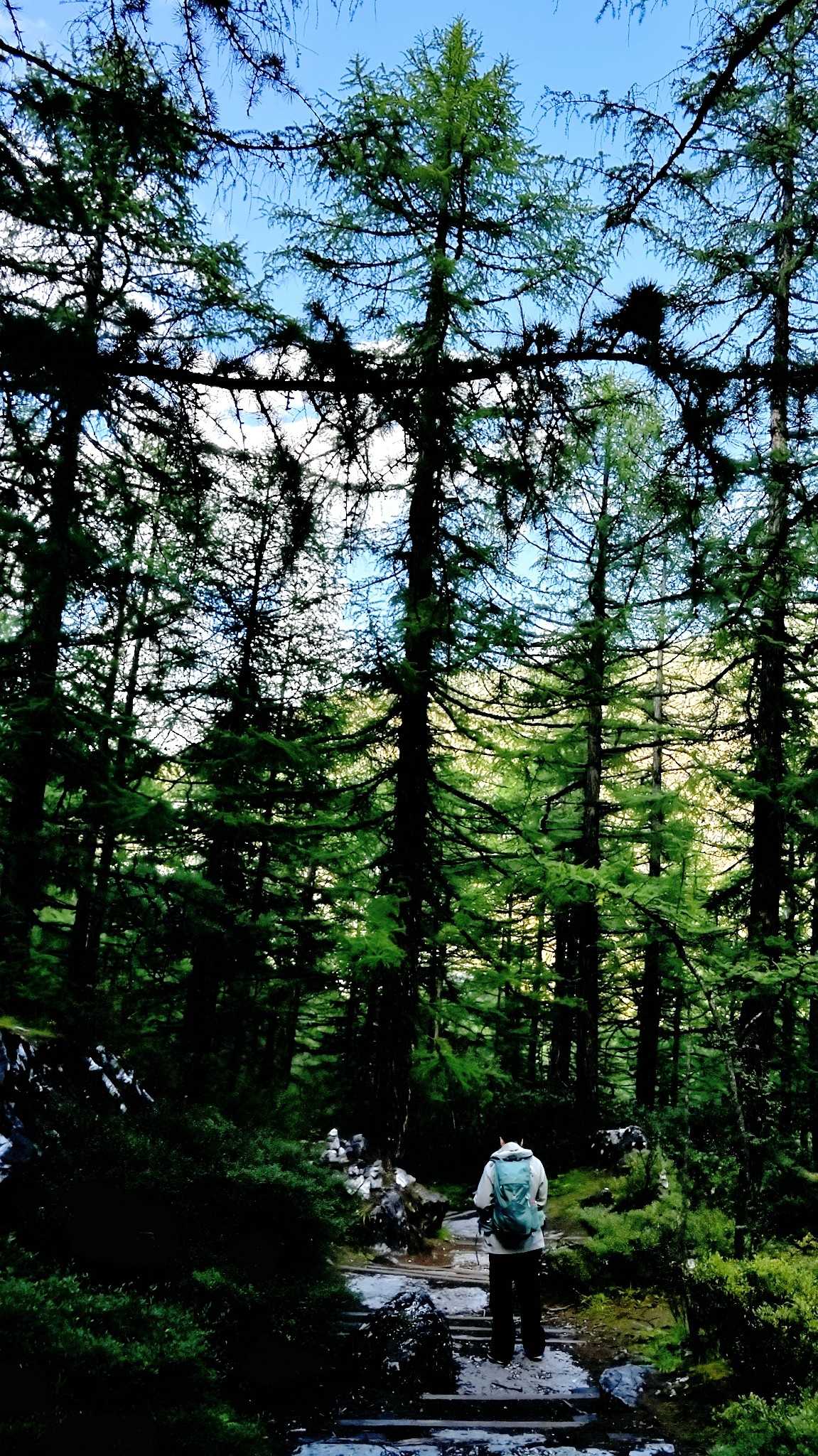 Daocheng Yading Scenic Area
For a moment, human voices and cars vanish; I feel I’m no modern tourist but stepping into an ancient, undisturbed forest.
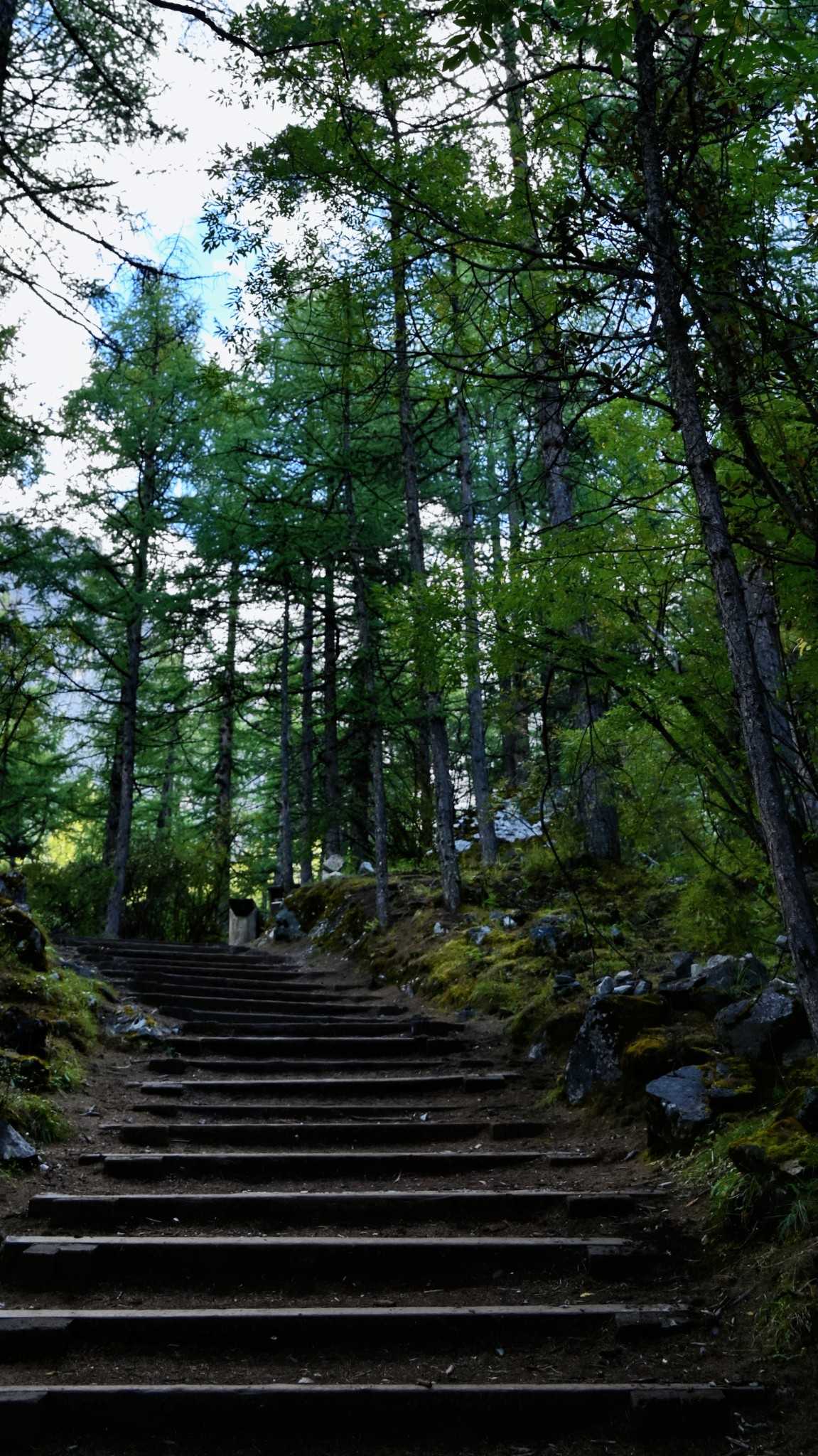 Daocheng Yading Scenic Area
Sunlight goes down with us, slanting onto slopes, gilding vast yellow-green woods.
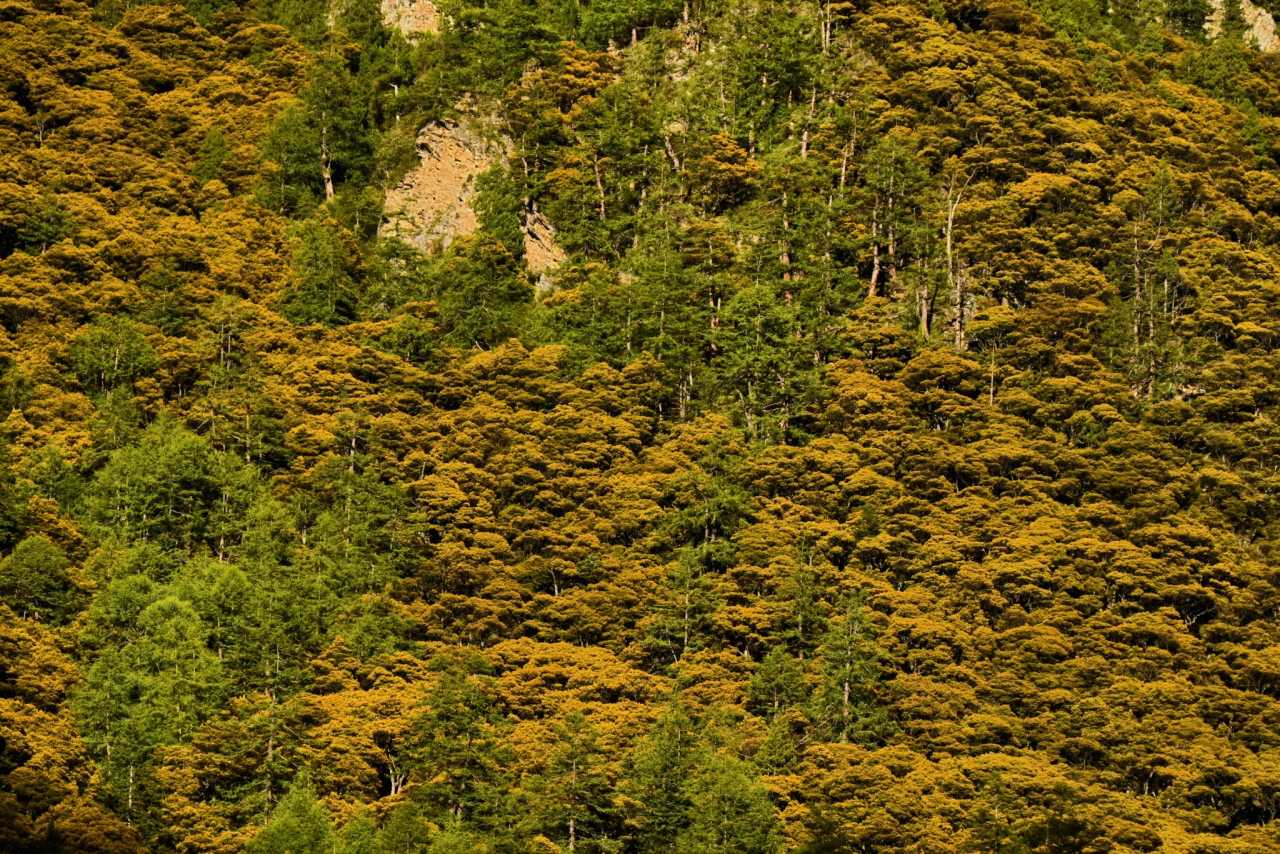 Daocheng Yading Scenic Area
Light looks strong but is already spent; warmth is faint; highland winds intensify—goosebumps rise on exposed skin.
We joked with my partner: once sun sets, it gets cold fast. Luckily we timed it right—no wandering in dark and cold (only to be slapped by the Vajra Challenge the next day…)
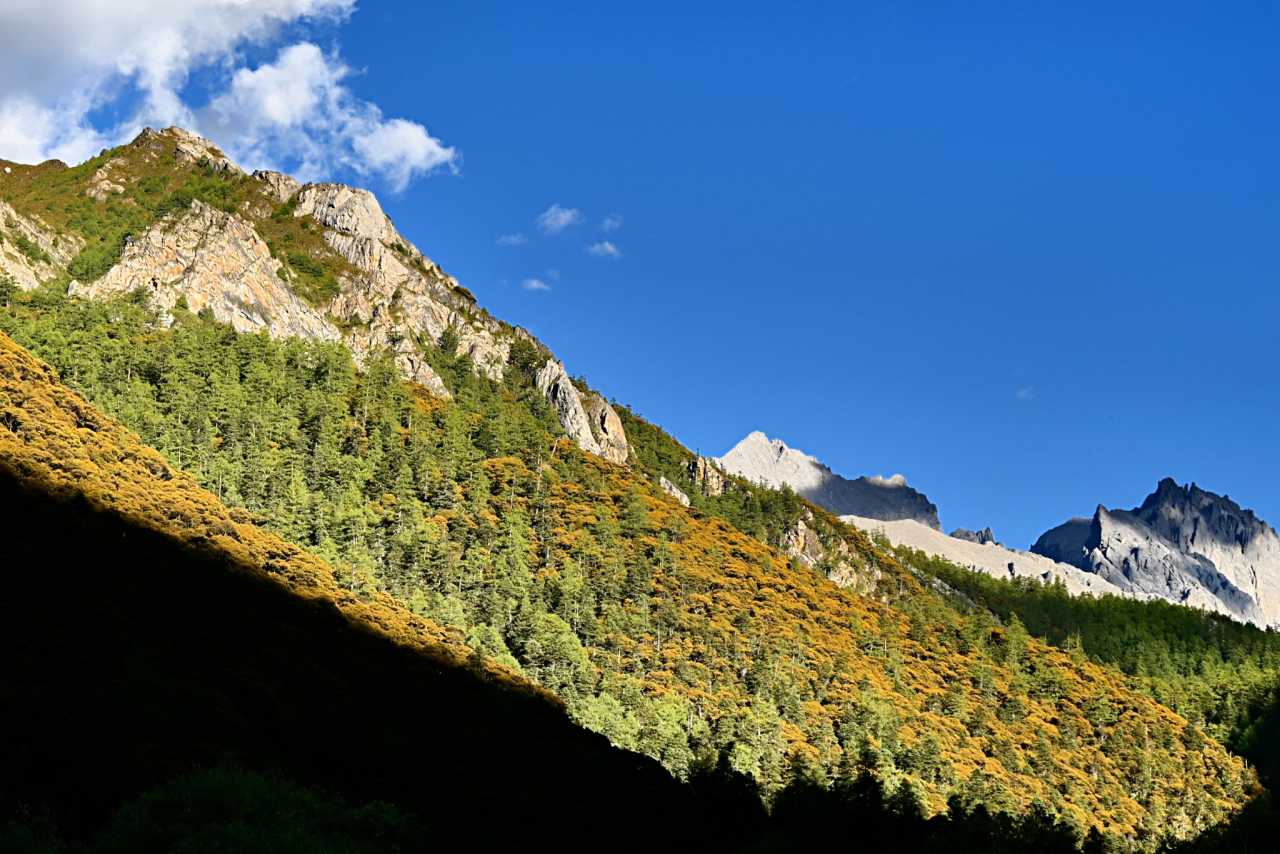 Daocheng Yading Scenic Area
——Vajra Challenge! Push Your Limits!——
Vajra Challenge Line – Half Long Line Overview
Day one we smoothly did Manjushri and Guanyin. Reviewing, we felt legs and lungs okay; we even bathed and strolled the town for dinner.
At dinner I explained the next day’s plan and said we had finished 2/3—only 1/3 left. Though the elevation was higher, we probably wouldn’t need to “reach the gate”…
Well, I spoke too soon… (Start early on the Vajra Challenge!)
To be fair, we left only 30 minutes later than day one. Black car 15 min to park, shuttle bus 1 hour to Zhaguanbeng, buy round-trip cart tickets and 20 minutes straight to Luorong.
From Luorong we set off on horseback just after 9:30—about 2 hours earlier than most guides recommend. Even with no queues or jams, those initial 30 minutes still aren’t saved—you must leave ample time for high-altitude hiking.
The route roughly: Gongga Cuo → (2.2 km) Qujiuzhaga → (1.1 km) Sacrifice Cliff → (0.3 km) Milk Sea → Five-Color Lake.
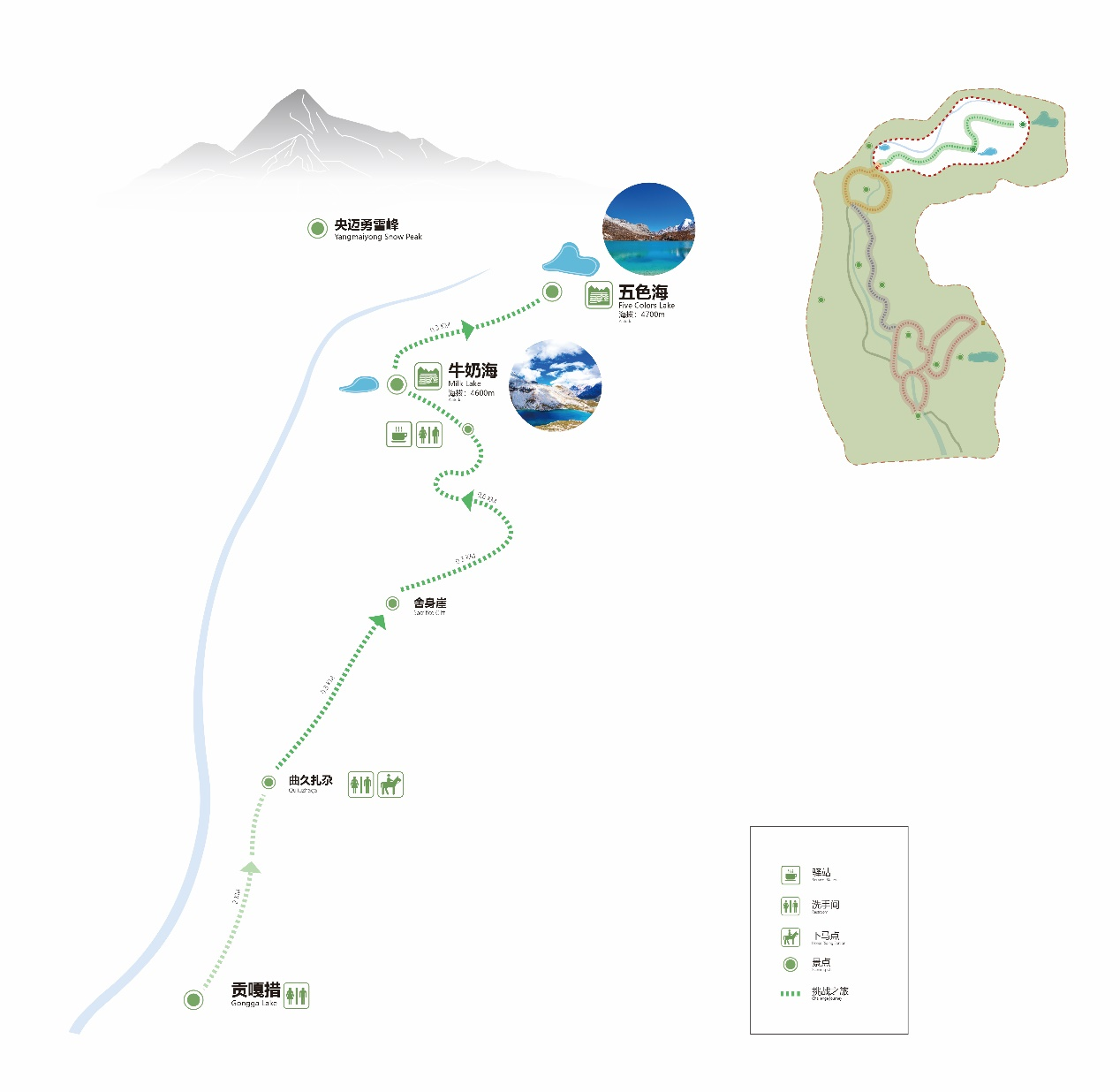 Daocheng Yading Scenic Area
Vajra Challenge Line – 01 – Sightseeing Cart
About buying cart tickets at Zhaguanbeng:
You can buy round-trip or one-way to Luorong. One-way return from Luorong can only be bought at Luorong, not at Zhaguanbeng.
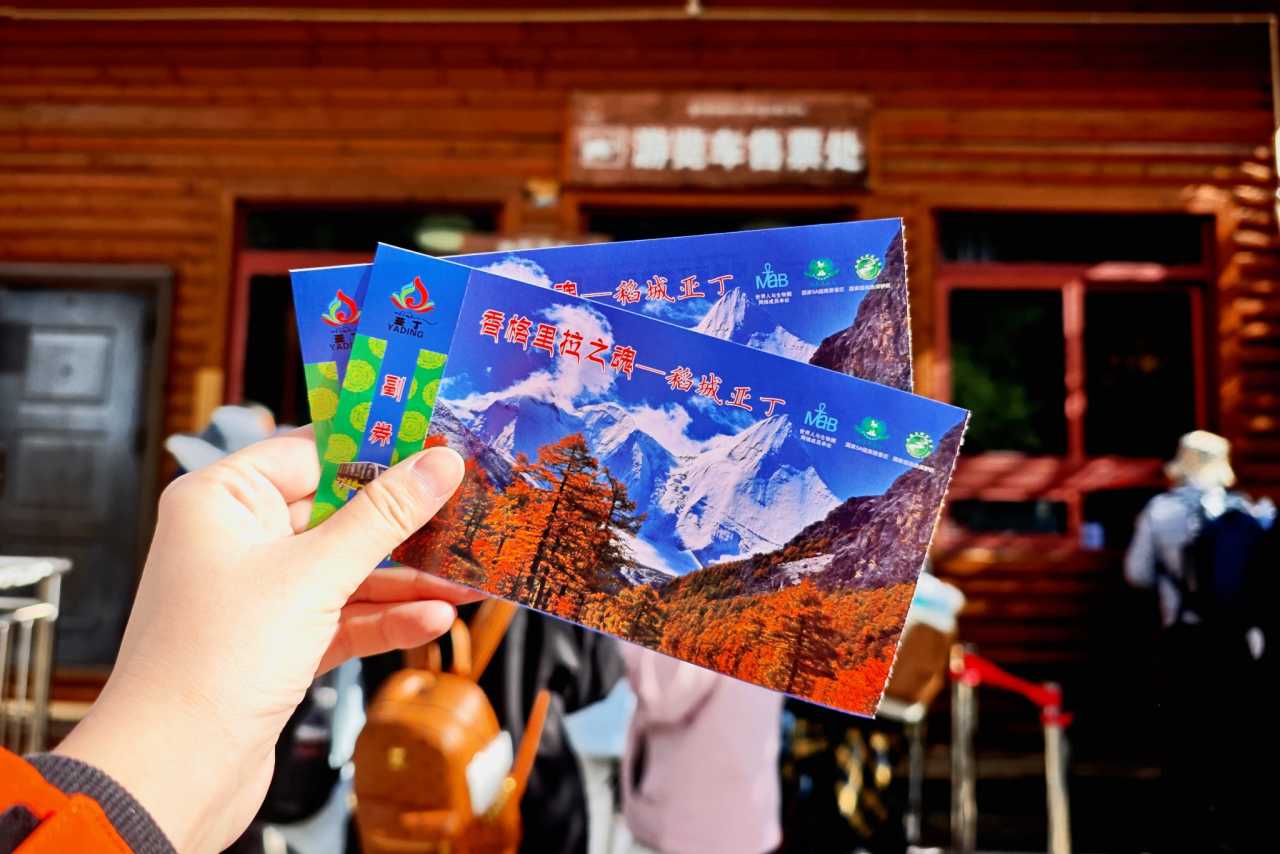 Zhaguanbeng
Carts seat three per row—small, but roads are narrow. Space is just enough; with thick clothing and oxygen pillows it feels crowded—but the ride is only ~20 minutes—fine.
The experienced drivers carve the curves like racing—rare braking—only the accelerator exists.
Tip: the front passenger seat can be taken—better for Vlog shots—try to “claim” it or wait for the next cart.
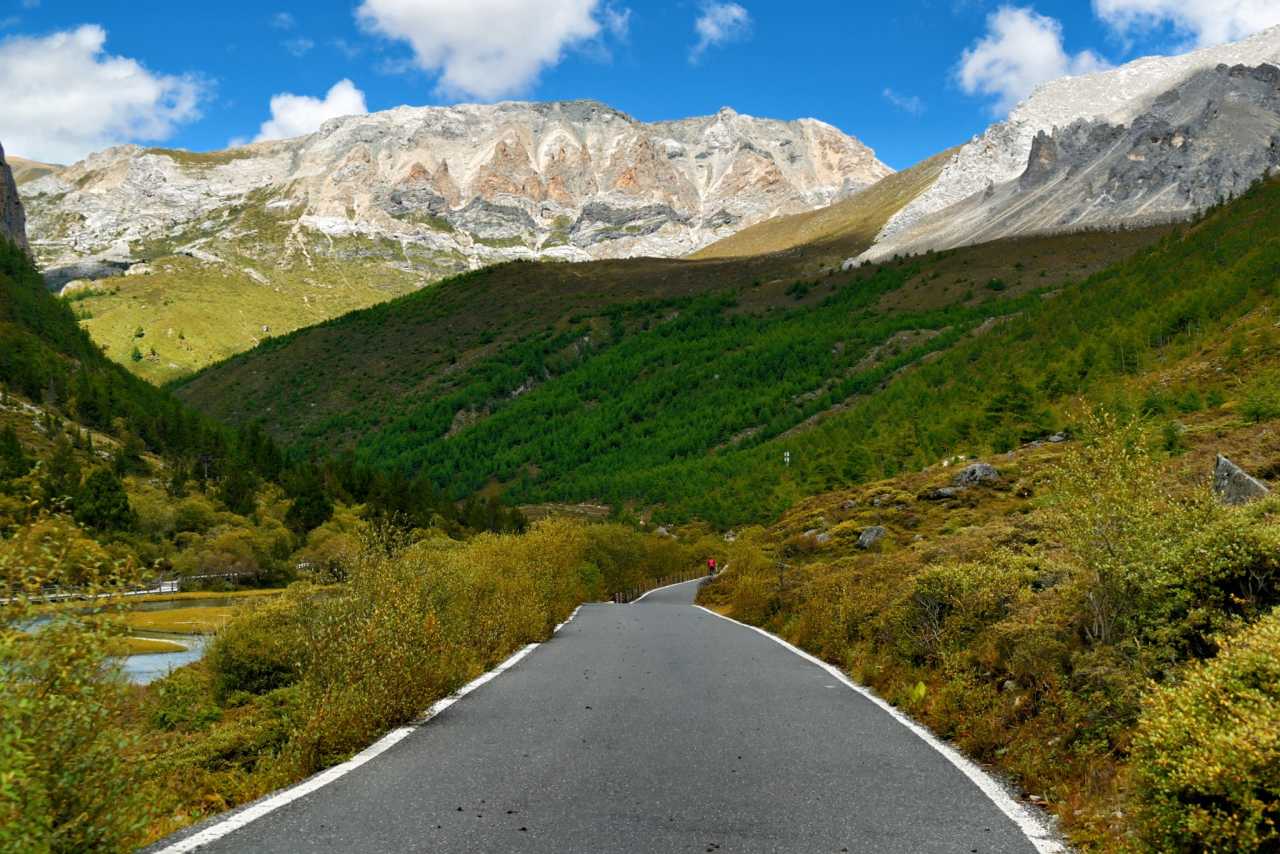 Daocheng Yading Scenic Area
The cart winds along the hillside like an aerial corridor. High up, views open; the boardwalk and green meadows we walked earlier unfold below—fantastic angle!
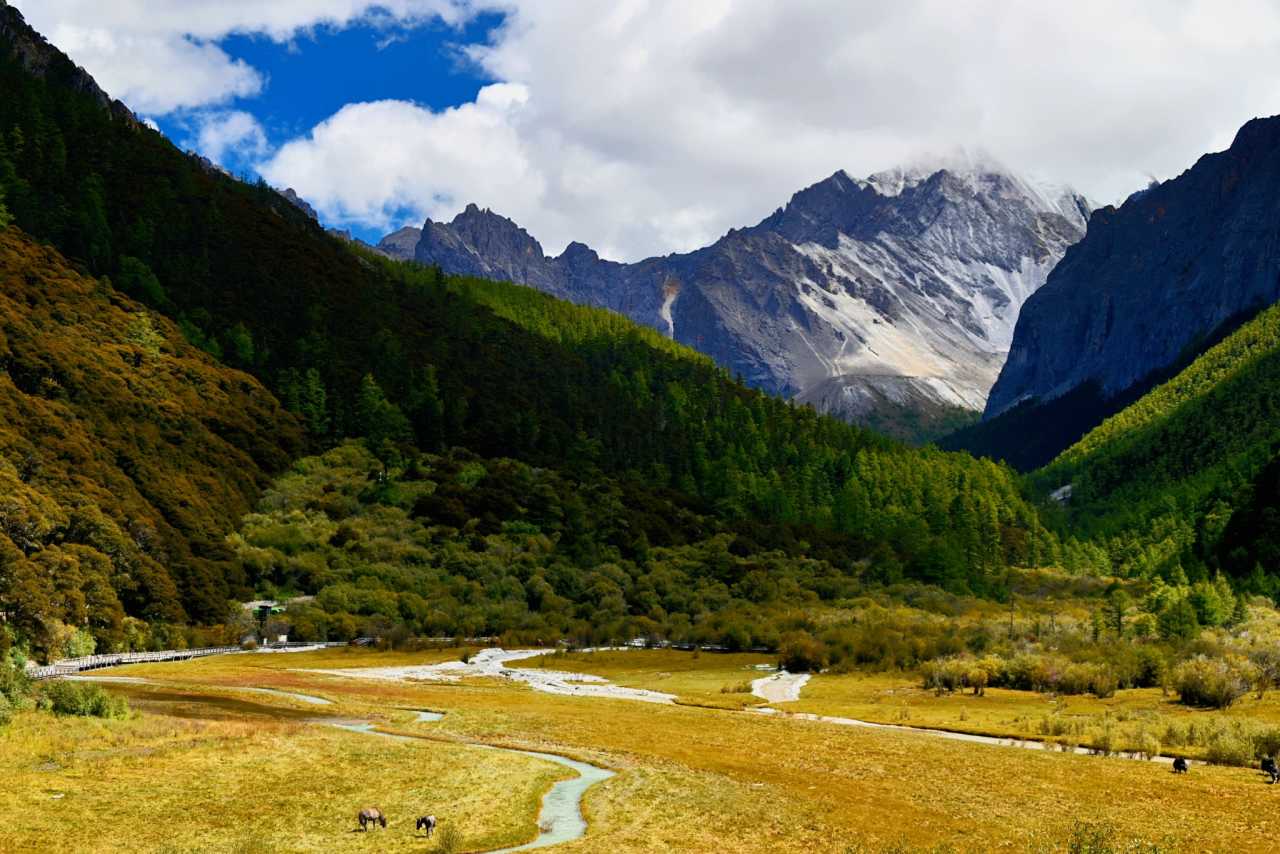 Daocheng Yading Scenic Area
Vajra Challenge Line – 02 – Ride to Gongga Cuo
I decided to ride from the start—partly novelty, mostly to save precious energy and time—day two we had at most 80% battery.
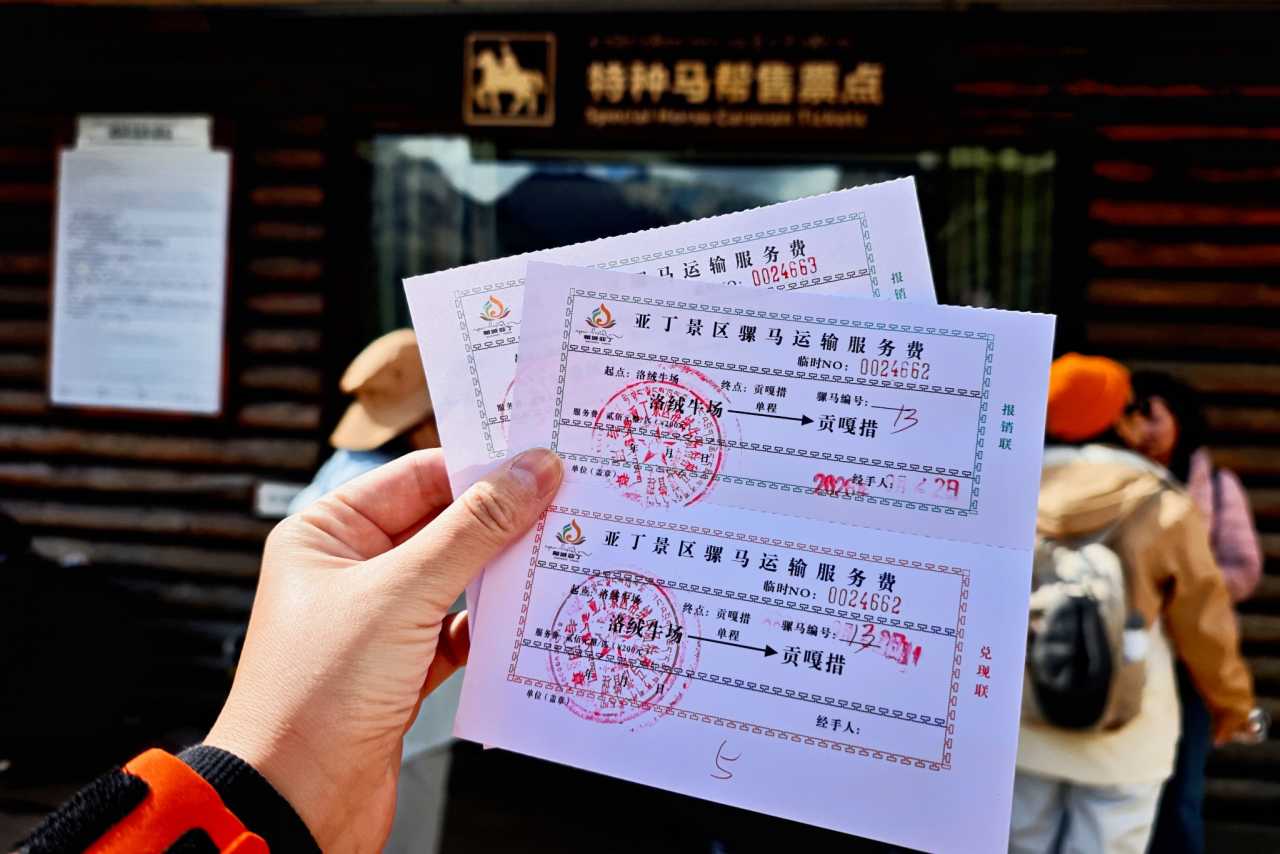
Horse fee is 200 RMB per person—not cheap but acceptable. Process is simple: buy a ticket at the hut—just a casual handwritten note with a queue number. By chance someone returned tickets due to altitude sickness, and we “inherited” their numbers.
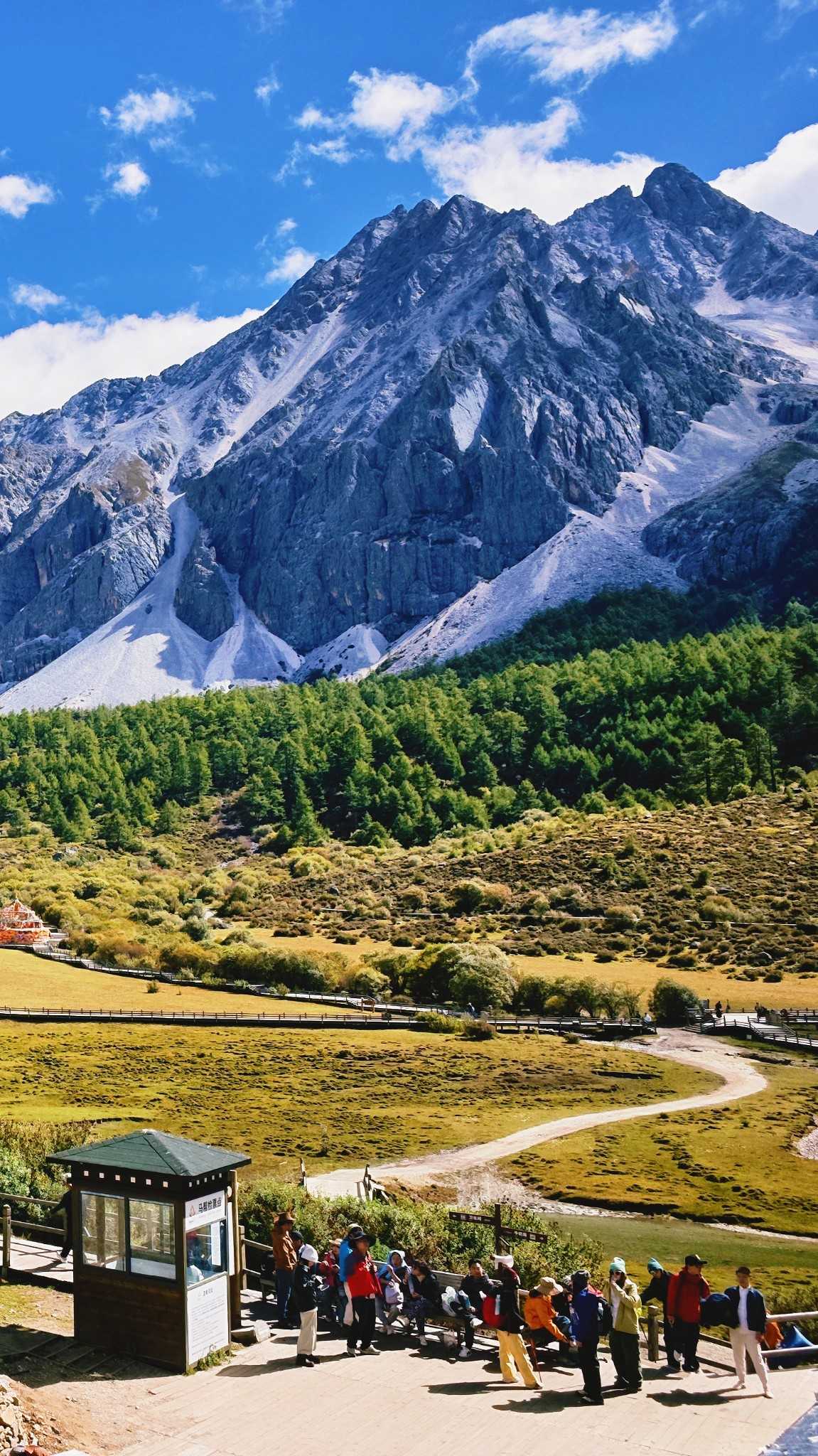 Luorong Pasture
Holding the lucky slip, we walked to the horses. Amid the crowd, someone shouted “Number 13!” I looked at my note—it matched.
I raised my hand: “13! Here!” A Tibetan handler urged in accented Mandarin: “Been calling long! Go to the first spot!”
I froze—how long? How am I first?
 Zhaguanbeng
The mounting area is clever: visitors queue atop a half-person-high earthen mound; handlers line horses opposite. Standing high makes getting on safe and easy—better than stools or ground mounts.
That handwritten number is your order—listen for the call and mount the mound. With the returned tickets we accidentally “cut in”—perfect timing for my OCD.
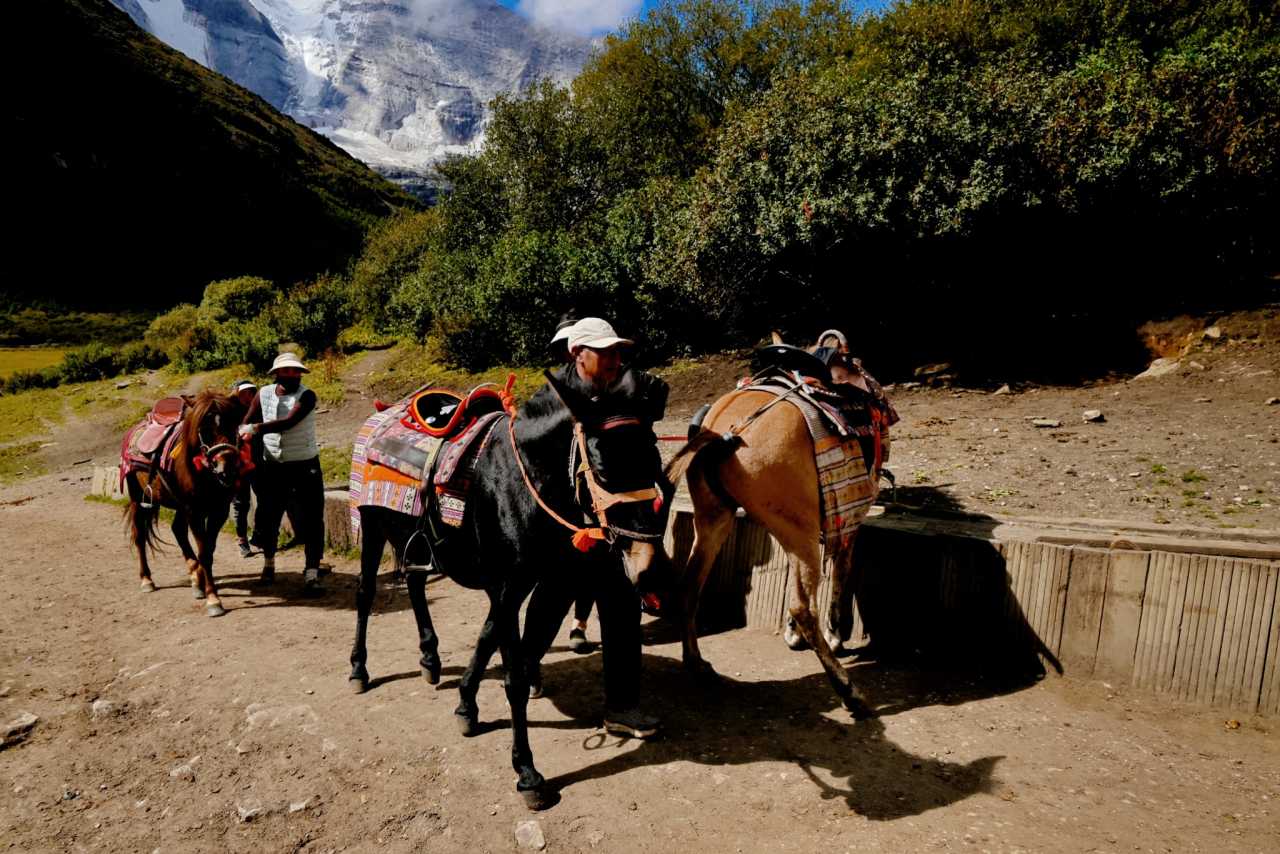 Luorong Pasture
The horseback route ends at Xinbao Lake, ~20 minutes. One person per horse; handlers lead in single file. No galloping—very safe.
The horses aren’t fat but sturdy; little odor—acceptably clean. (Reminder: don’t wear skirts; if you do, wear thick leggings.)
Perhaps because the path is narrow and away from crowds, we saw many wild animals.
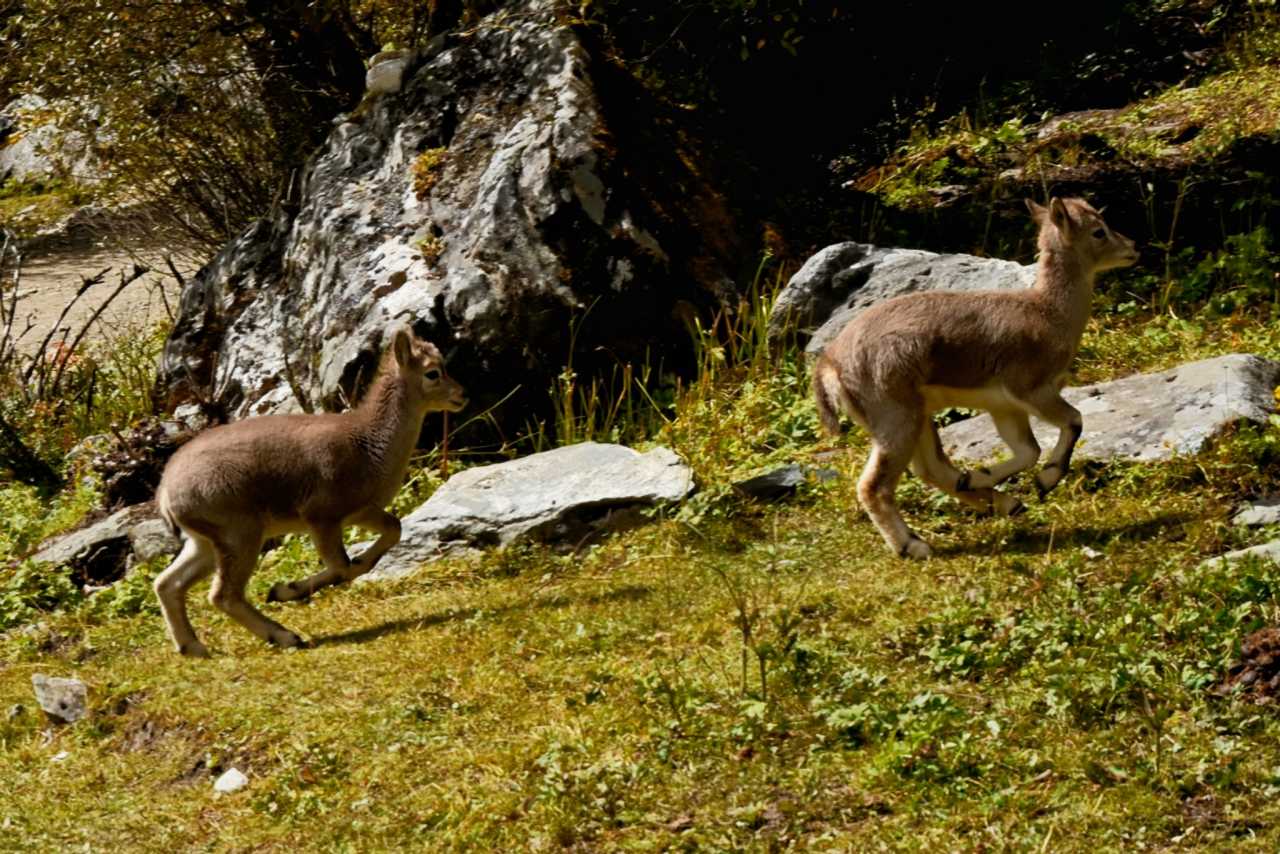 Luorong Pasture
Blue sheep, marmots, deer—some graze, some chase and play, some stop and watch us with interest—close enough to see clearly—an experience walking cannot match.
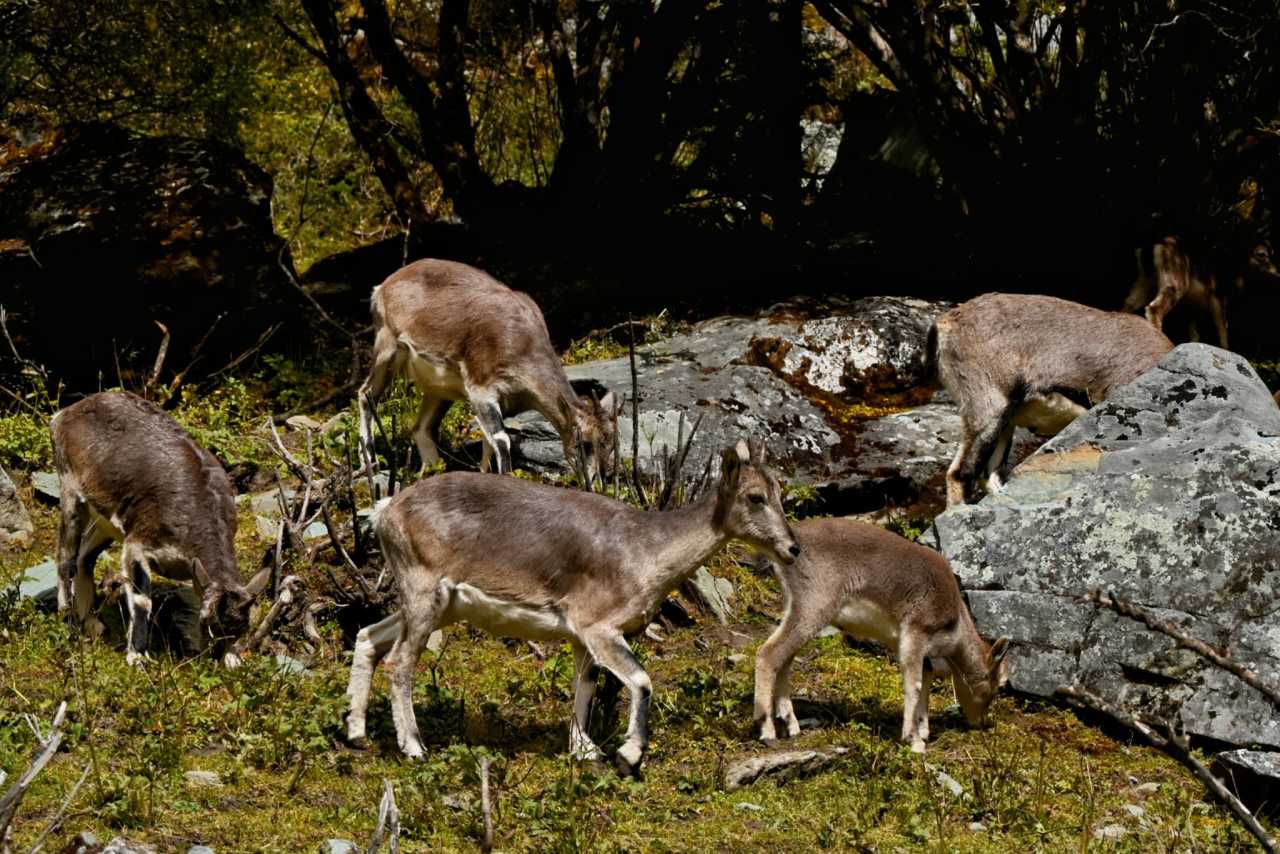 Luorong Pasture
The horse path intersects the boardwalk a few times but largely runs parallel.
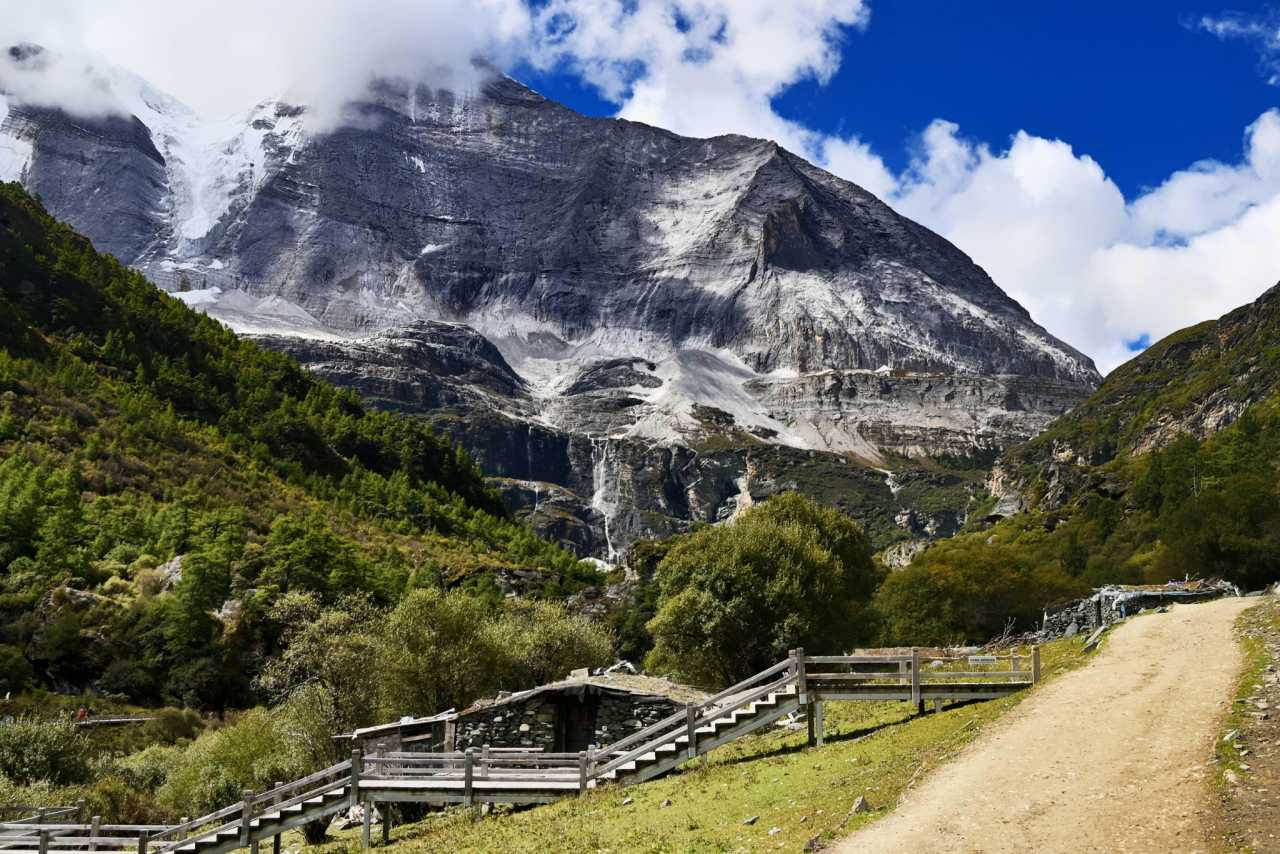 Luorong Pasture
Twice we saw returning horse trains led by locals—galloping swiftly—natural coolness from nature itself—eye-catching.
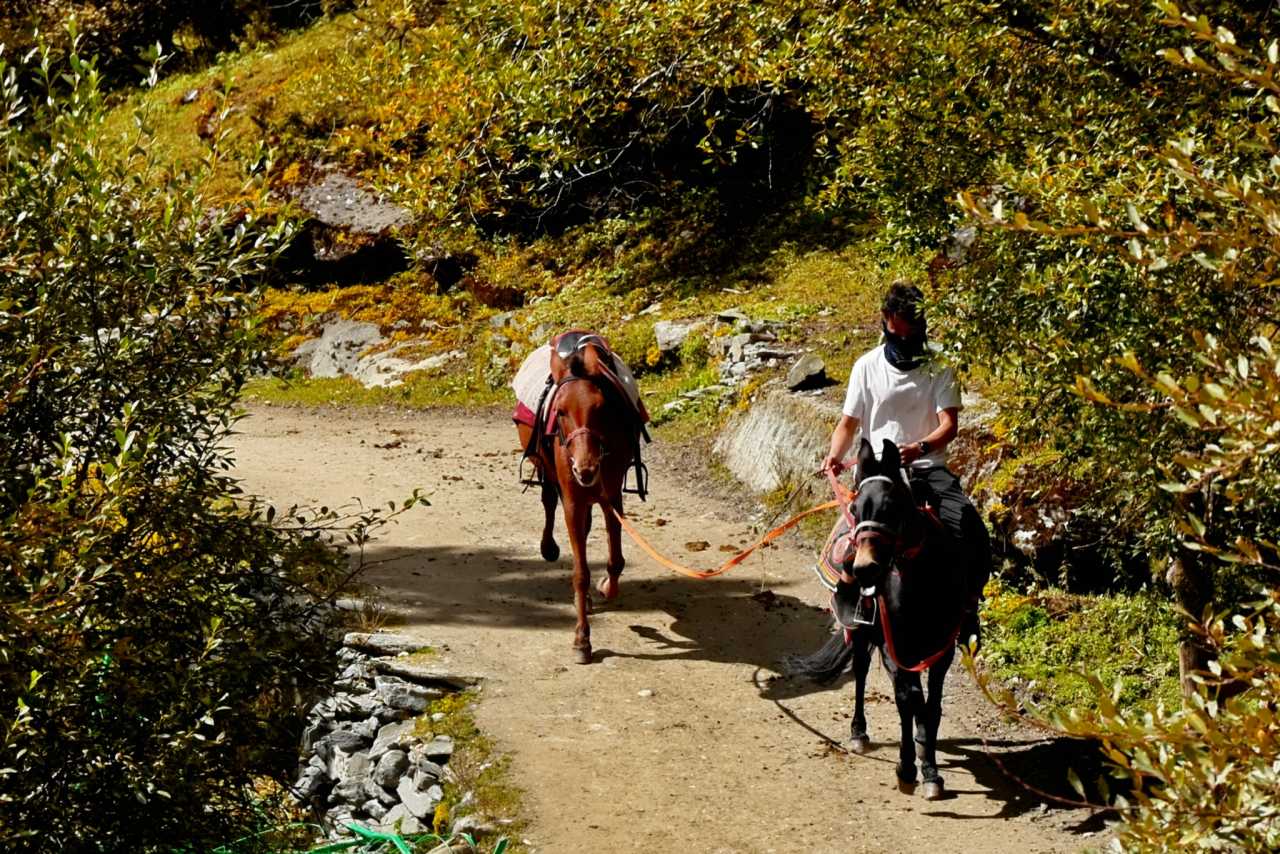 Luorong Pasture
Vajra Challenge Line – 03 – White Stupa and Stream
After ~20 minutes, horses reached the end.
Guides say the end is at Gongga Cuo, but in reality the end is flexible—not the lake-on-arrival I imagined. It’s a messy construction site with no clear sign—I thought we stopped wrong—then saw hikers converging here.
So, “no road—many walking—becomes road.”
From here the high-altitude hike truly begins!
Along the rough dirt path toward Gongga Cuo we stumbled upon an unmentioned scene: a white tower half-hidden in dense forest.
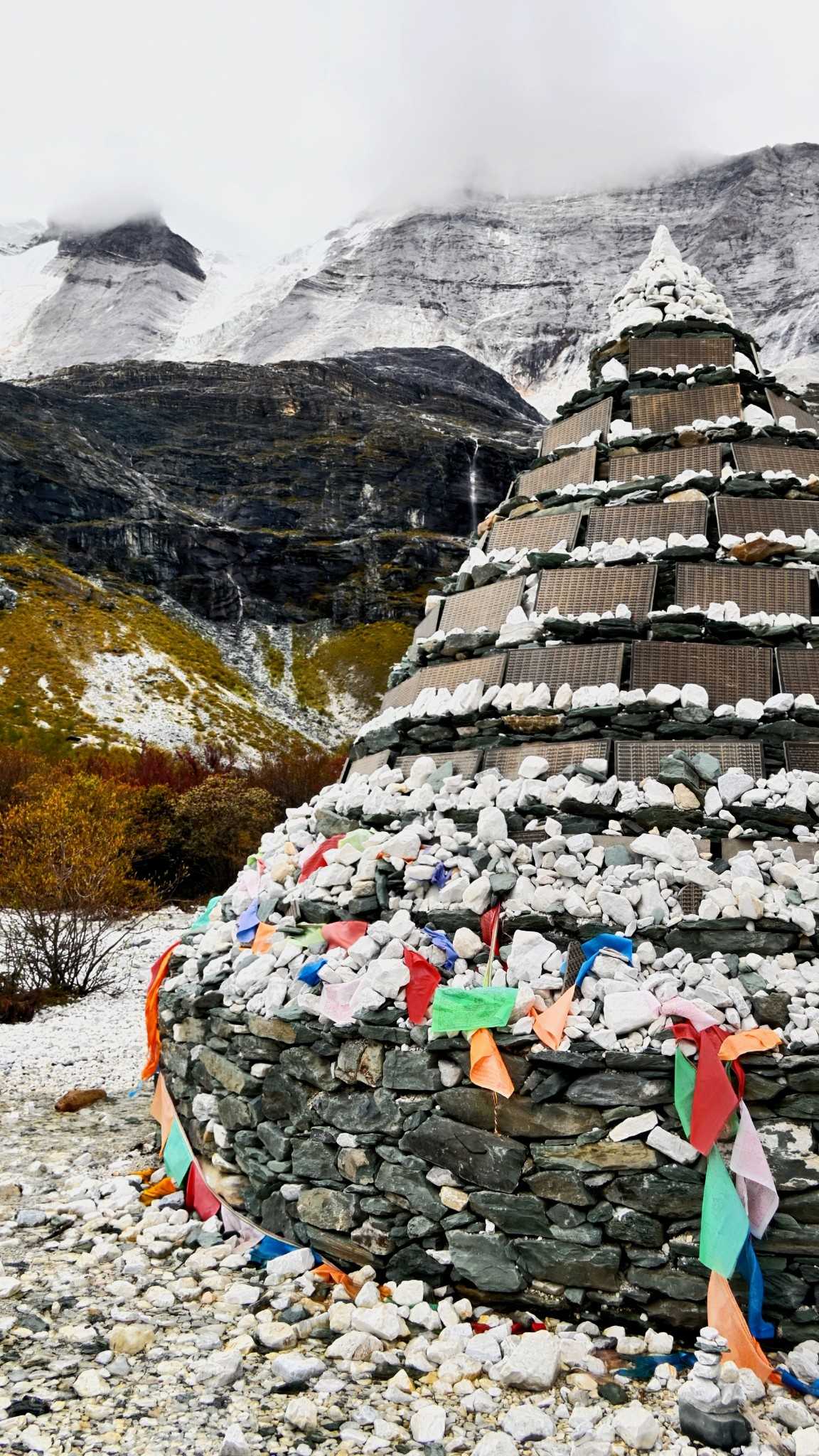 Yangmaiyong
Closer, there’s a man-made opening through the brush; stones and broken logs laid in shallow puddles cobble a rough path—inviting curious travelers to bow in and explore. We waded in—indeed “after darkness, another village.”
The white tower revealed—standing quietly by a stream—wrapped in layered prayer flags—silently praying.
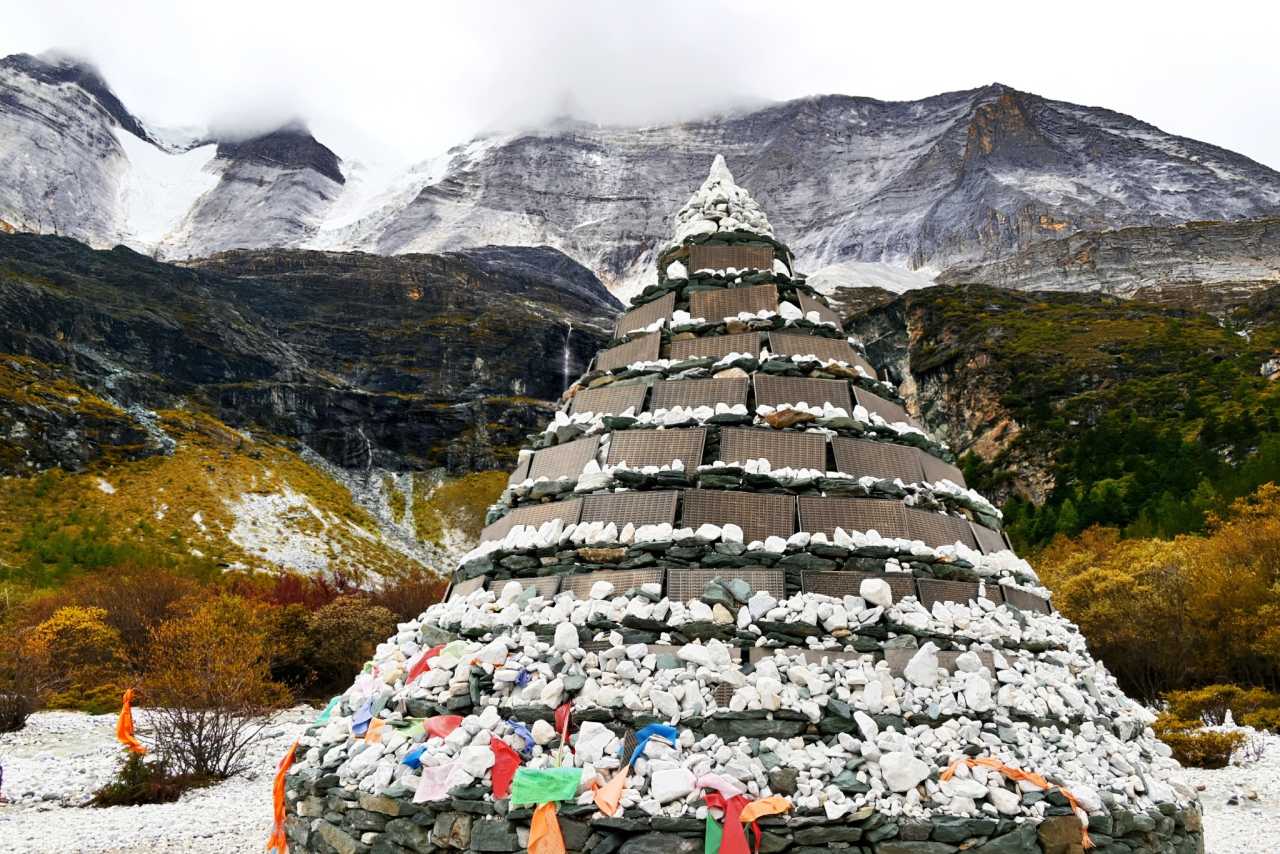 Yangmaiyong
Geographically this seems a transition zone in a high-mountain valley. Countless white stones pave a broad gentle gravel flat.
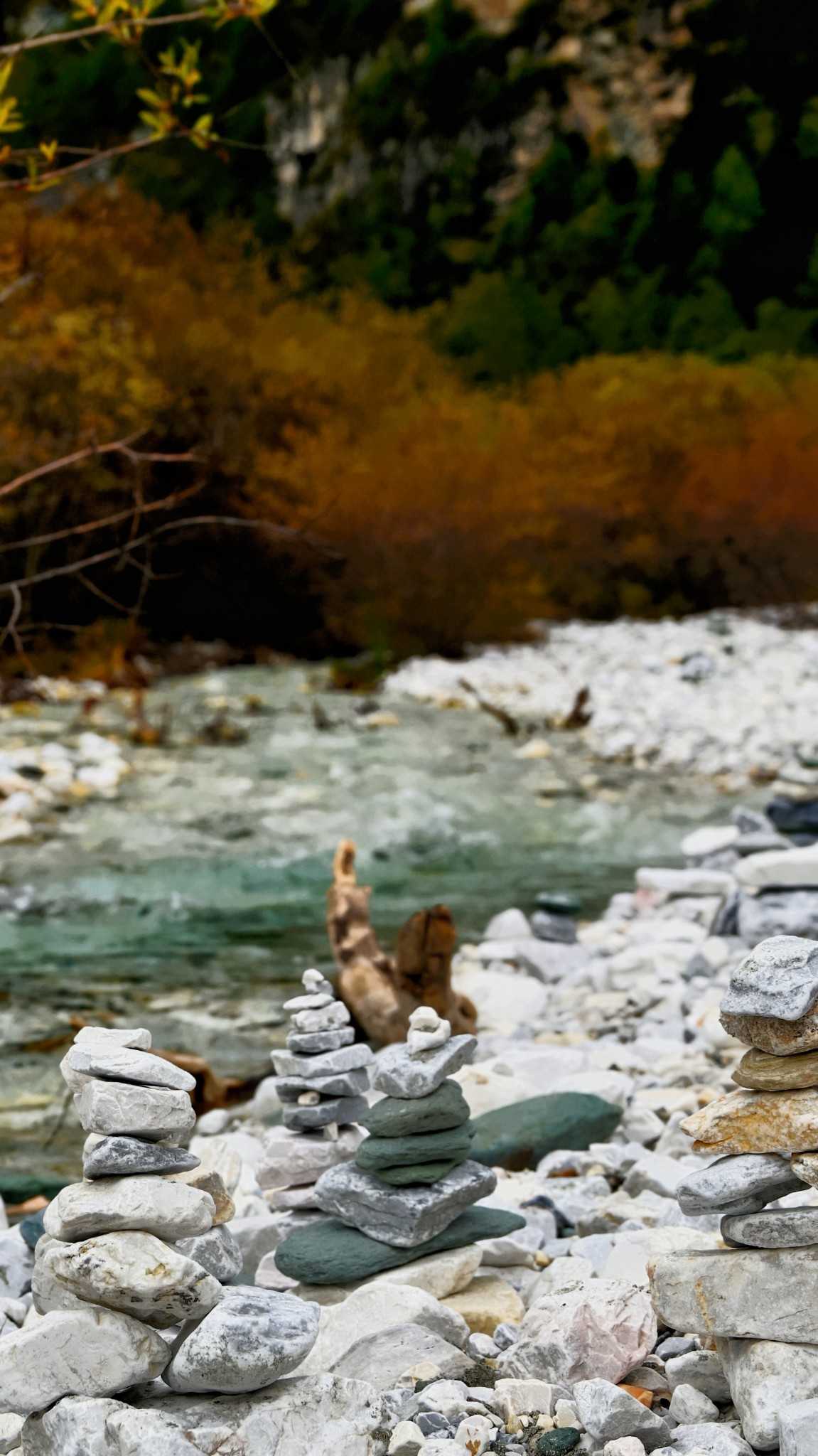 Yangmaiyong
Yangmaiyong’s meltwater trickles through; years of polishing make every stone smooth and round. They lie quietly in the clear bed, making the whole stream crystalline and glowing.
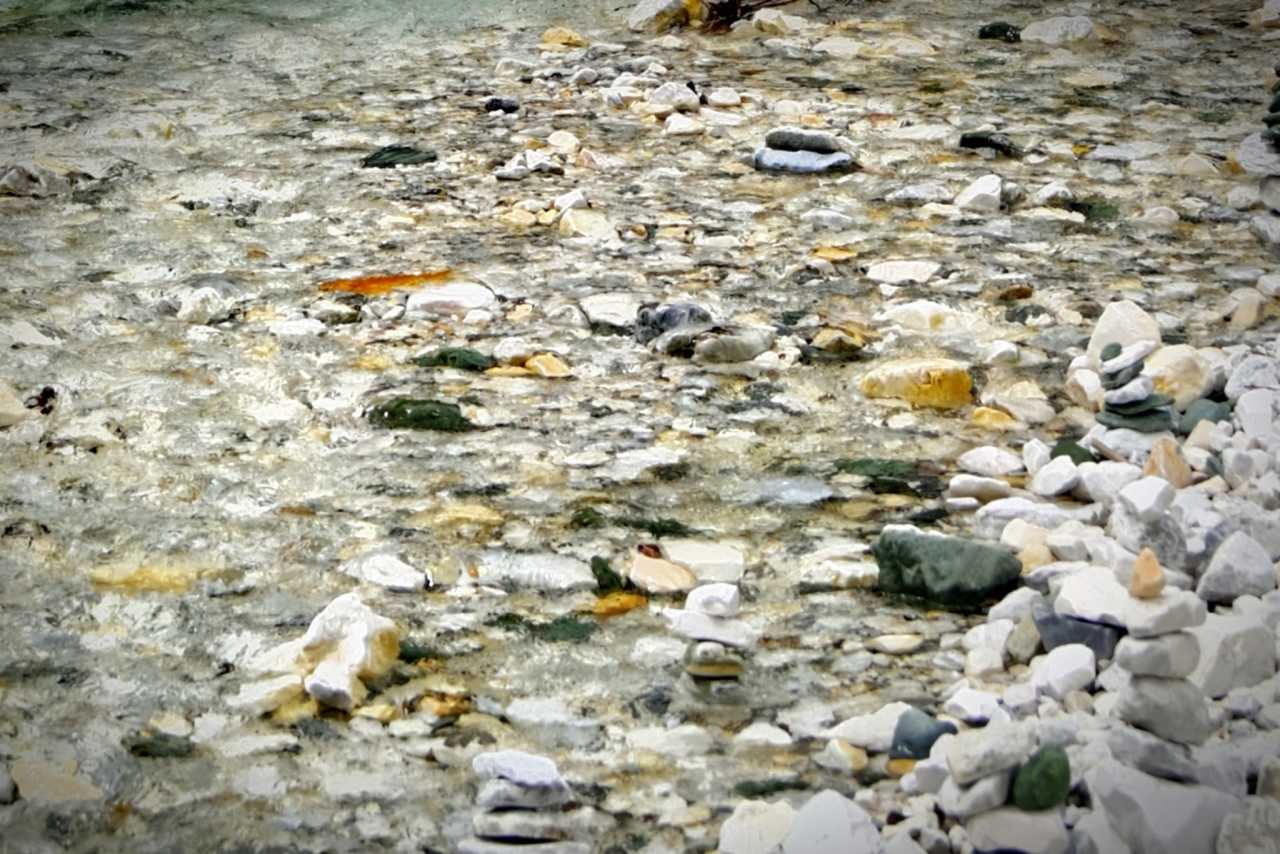 Yangmaiyong
Even under strong sun the water is bone-chilling. Get close and feel it, but don’t remove shoes (slippery), and don’t drink directly (protect your stomach). Many mani piles dot the shore—whether by locals or travelers—we added a few with delight.
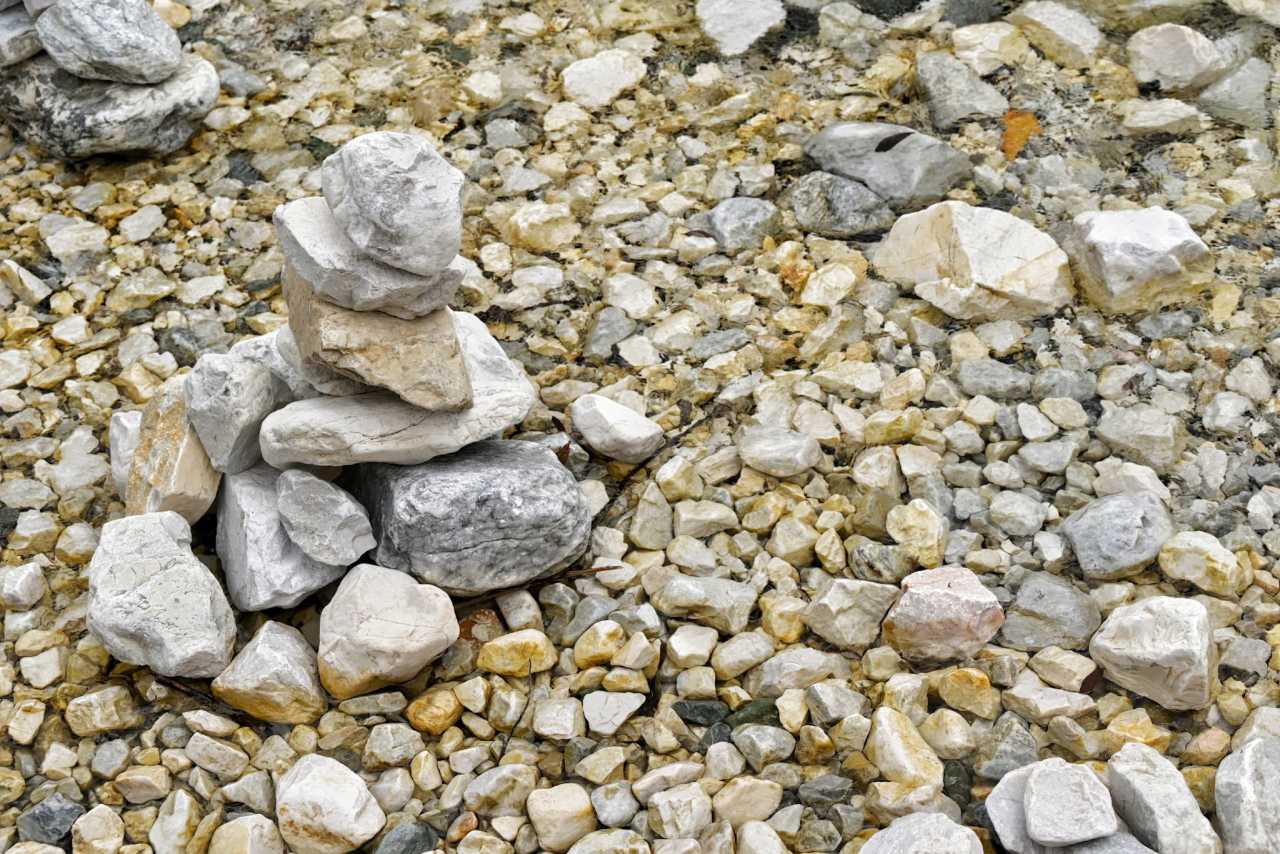 Yangmaiyong
After returning I scoured the web for mentions of this flat—found nothing—pity.
Though not vast, the view is very open. Forest encircles yet the sky above is boundless; Yangmaiyong’s rock folds and a long icefall are clear—seemingly within reach.
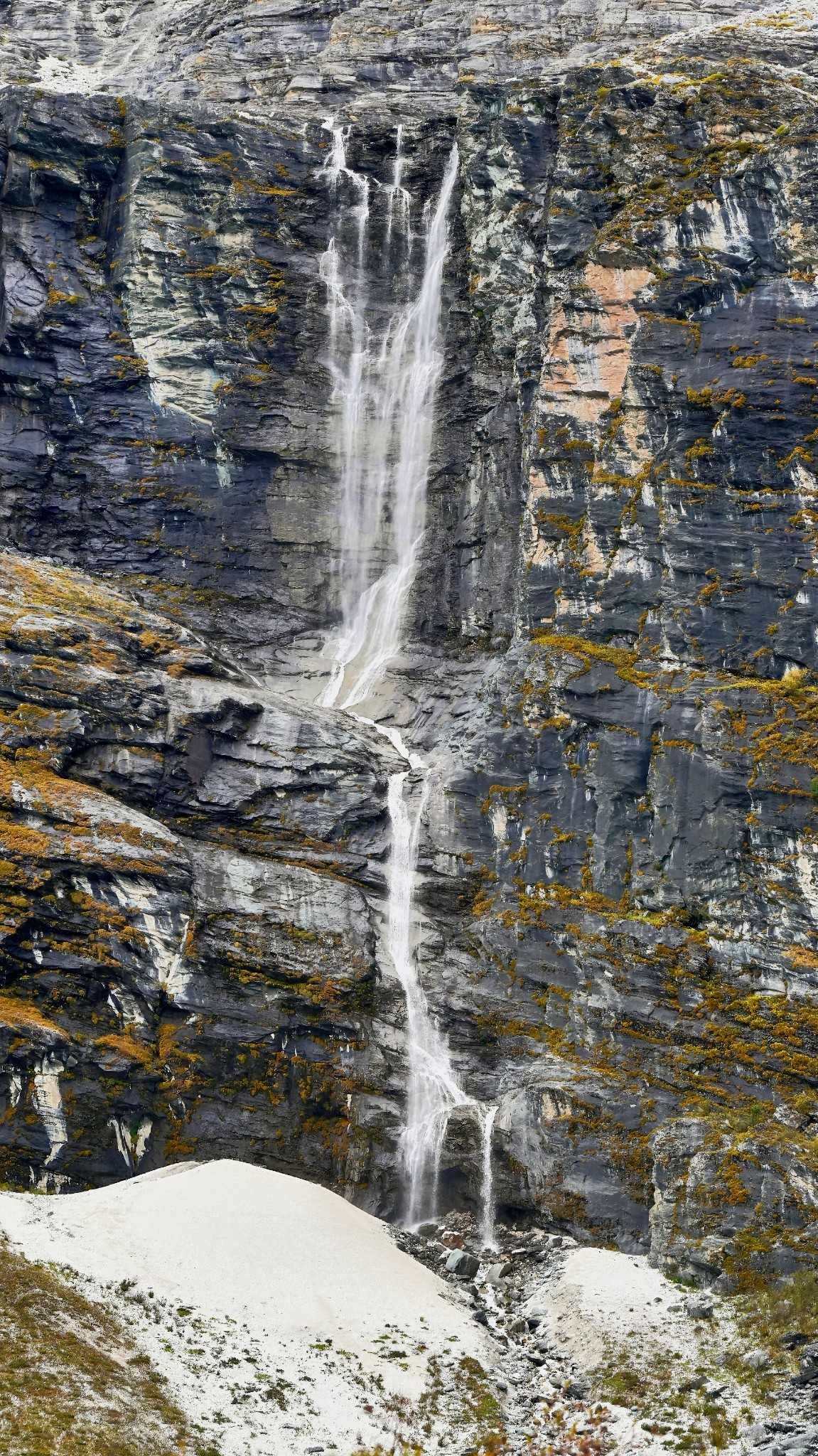 Yangmaiyong
The white-stone flat has a calming magic. I could sit all afternoon watching water and stones—not bored. But schedule urged us; we ate snacks, took oxygen, and set off again.
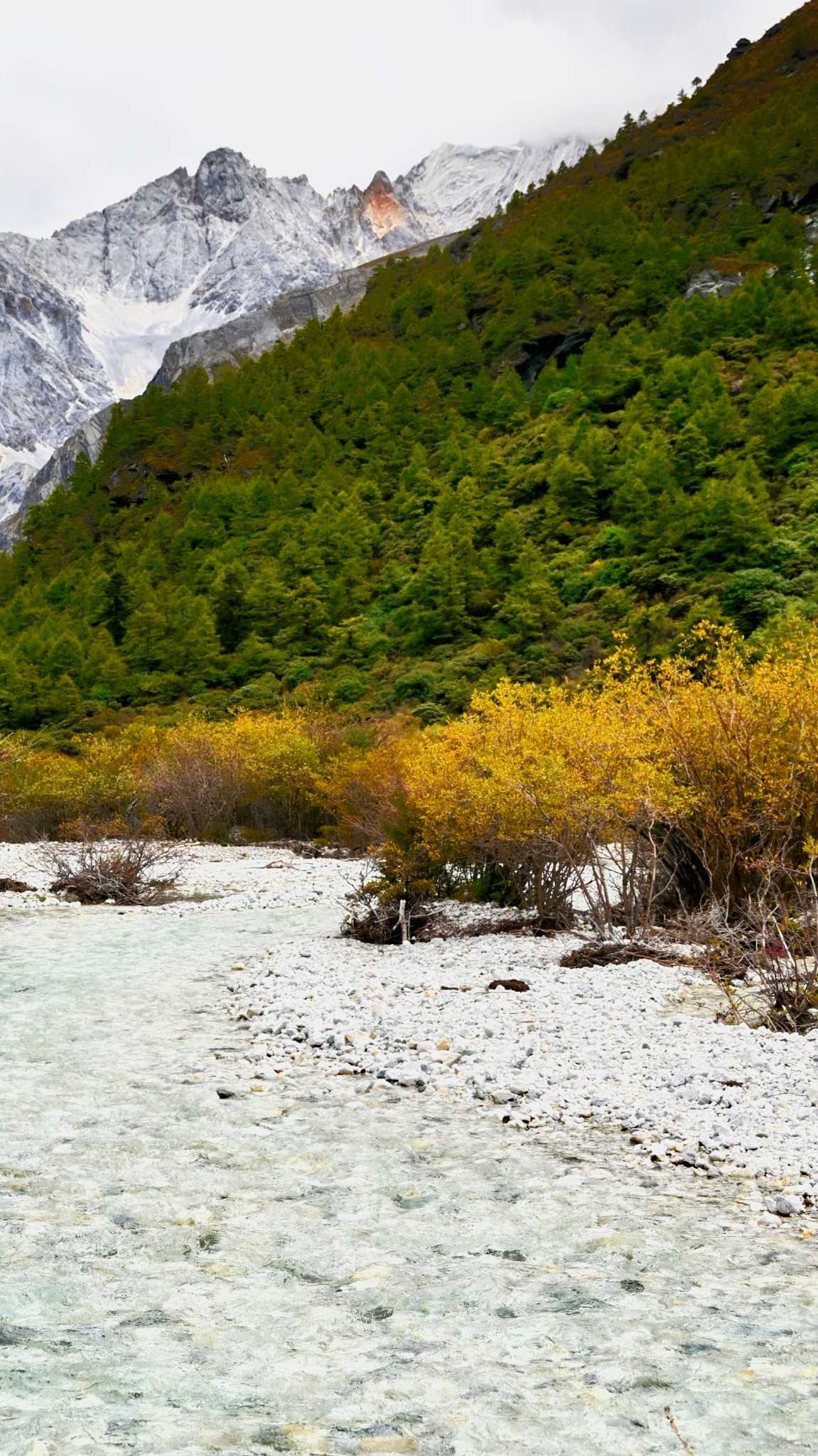 Yangmaiyong
It’s a perfect mid-route rest—just remember: leave nothing but photos and memories. Take all trash and keep this serendipity for others.
Vajra Challenge Line – 04 – Gongga Cuo
“Gongga Cuo” is straightforward: in Tibetan, “Gongga” means snow mountain, “Cuo” means lake—together “the lake under the snow mountain.” Honest and to the point.
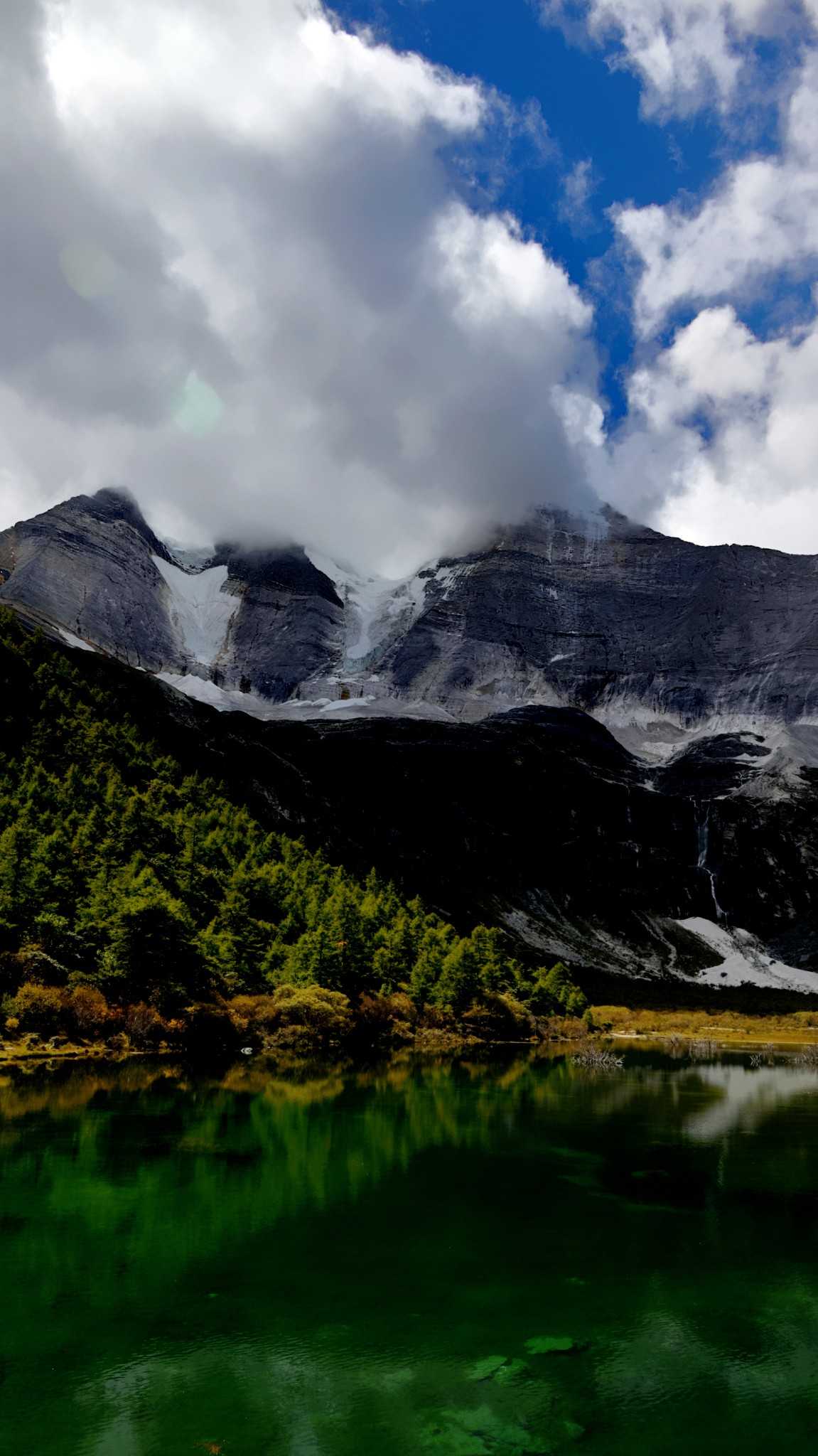 Yangmaiyong
The scenery surpasses the simple name. Gongga Cuo moves you with a painting of softness and strength—lake and Yangmaiyong together.
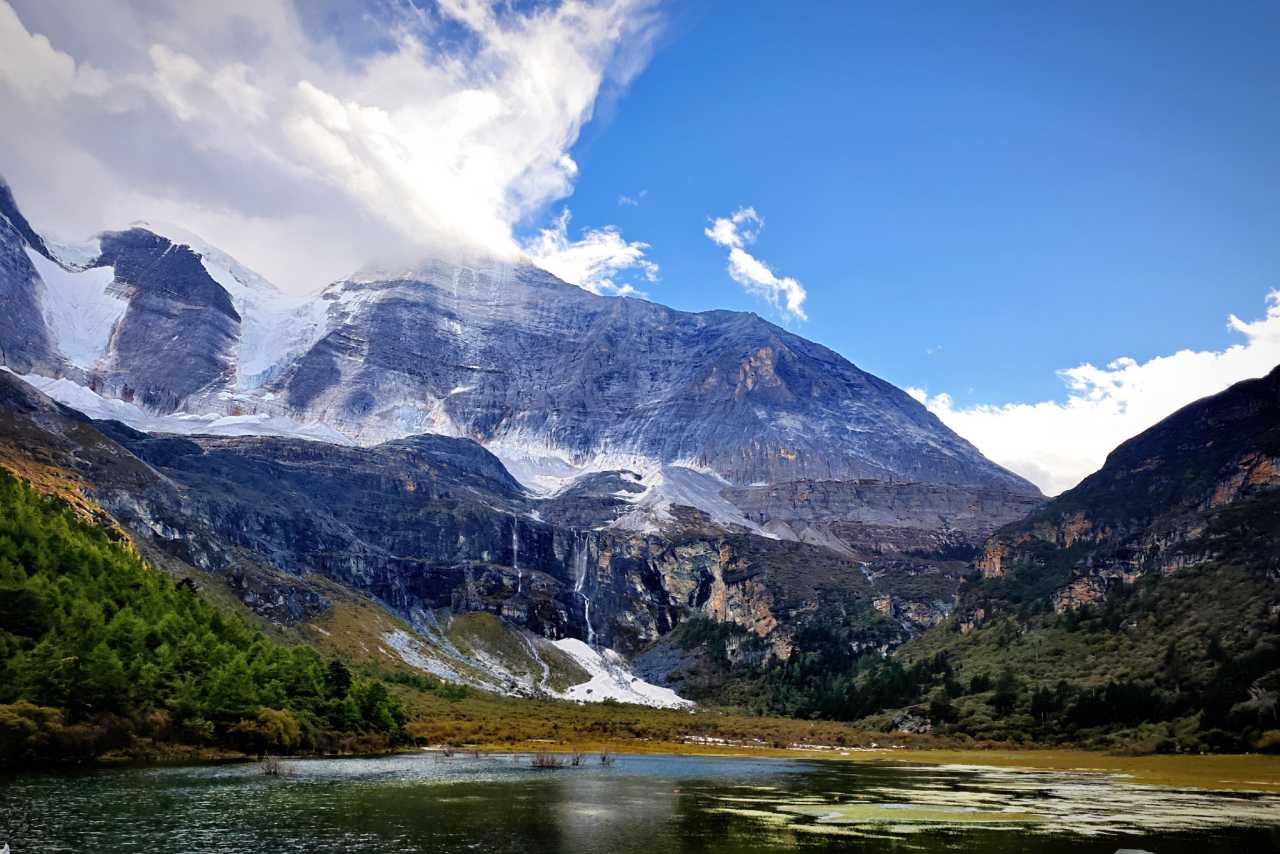 Yangmaiyong
Yangmaiyong is the extreme of stern beauty. Its ridge is like an unsheathed sword, stabbing the sky—sharp and proud—aloof and keen.
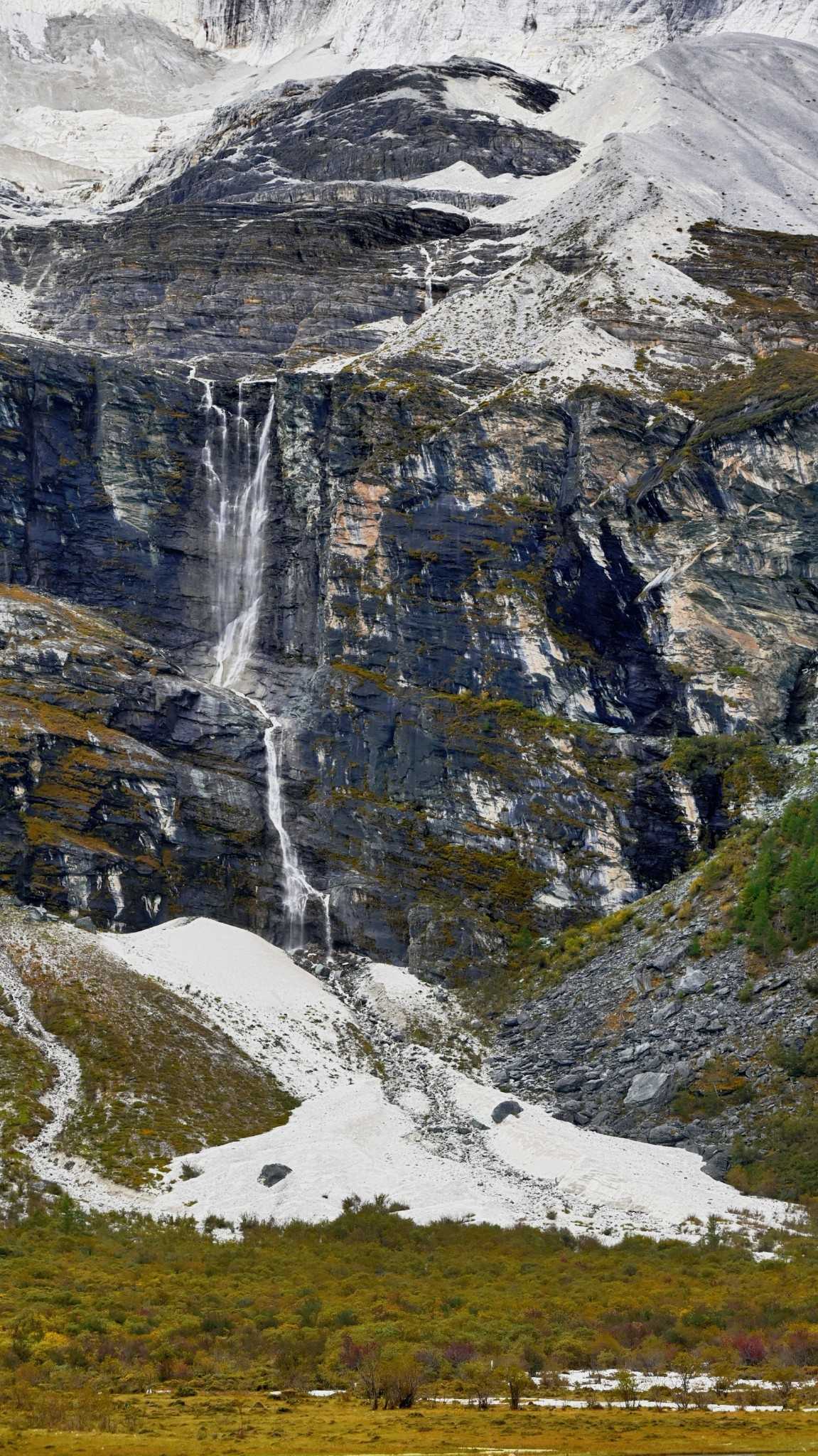 Yangmaiyong
Gongga Cuo is the extreme of softness—like a gentle companion nestled at the foot. The lake is quiet and lustrous—like giant dark-green velvet—embracing every contour of the snow peak. The sharp and the soft balance perfectly.
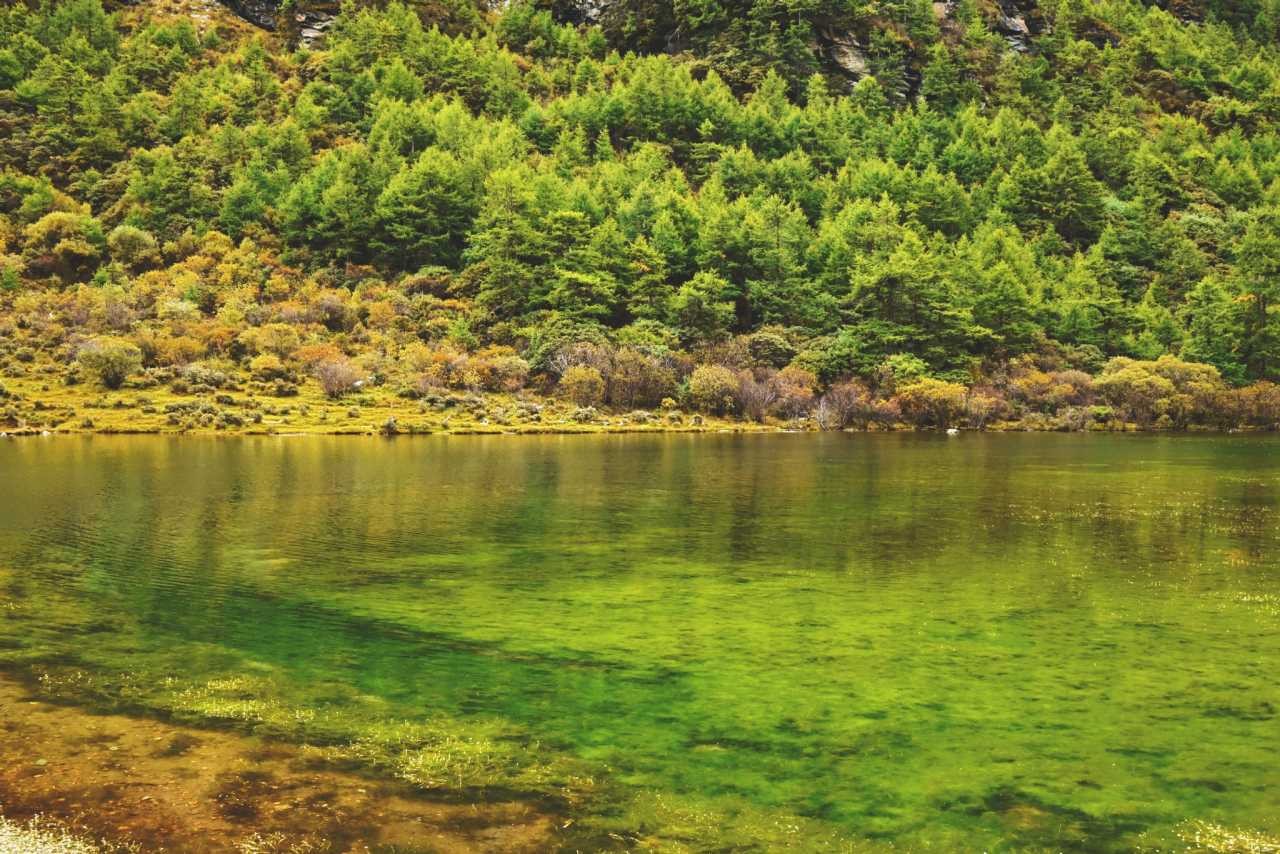 Yangmaiyong
Like Sacred Water Lake, Gongga Cuo has a broad viewing deck. Almost everyone is nailed in place, waiting for calm reflections.
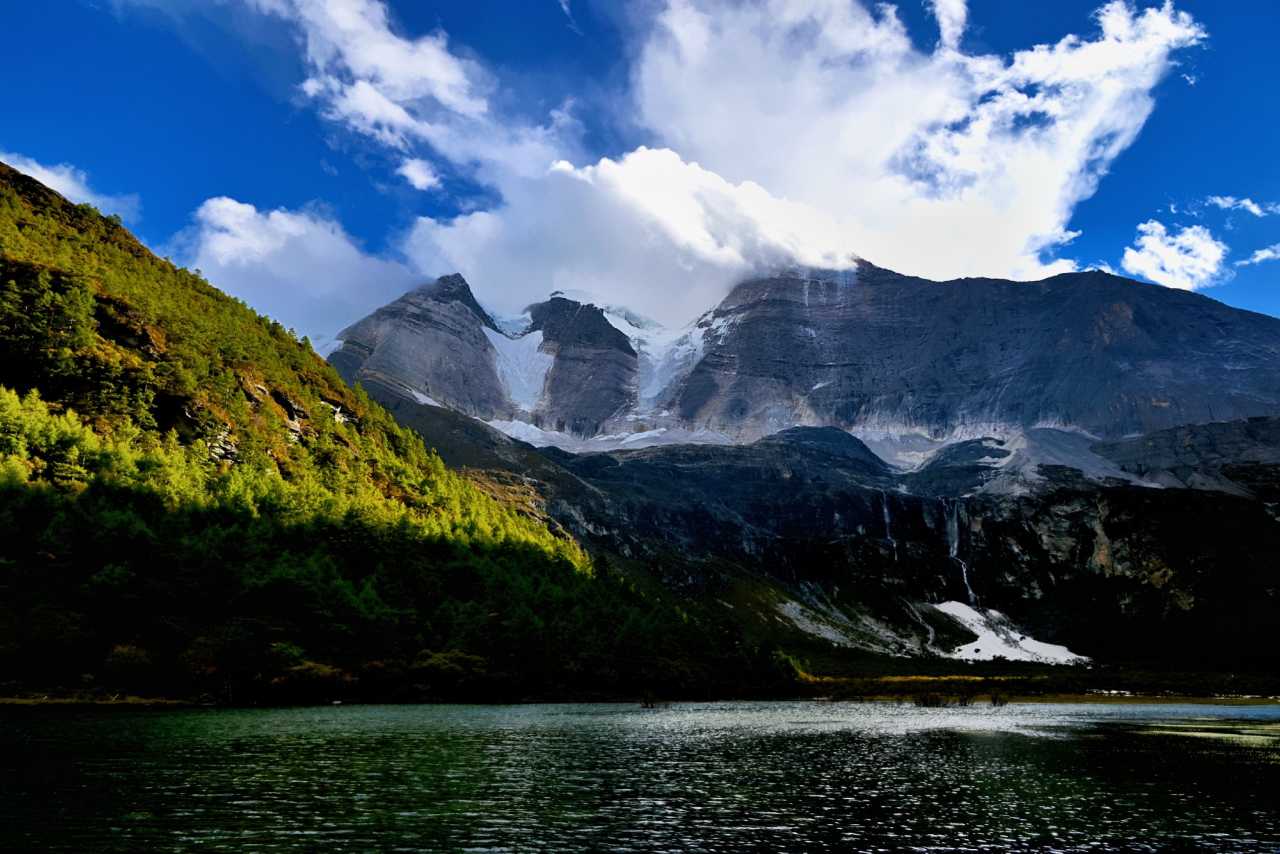 Yangmaiyong
I feel the same excitement, but suggest not staying too long here, for three reasons:
First, to avoid crowds: the longer you stay, the more people pile up even in off-season—queues at the “Gongga Cuo” stone reduce experience.
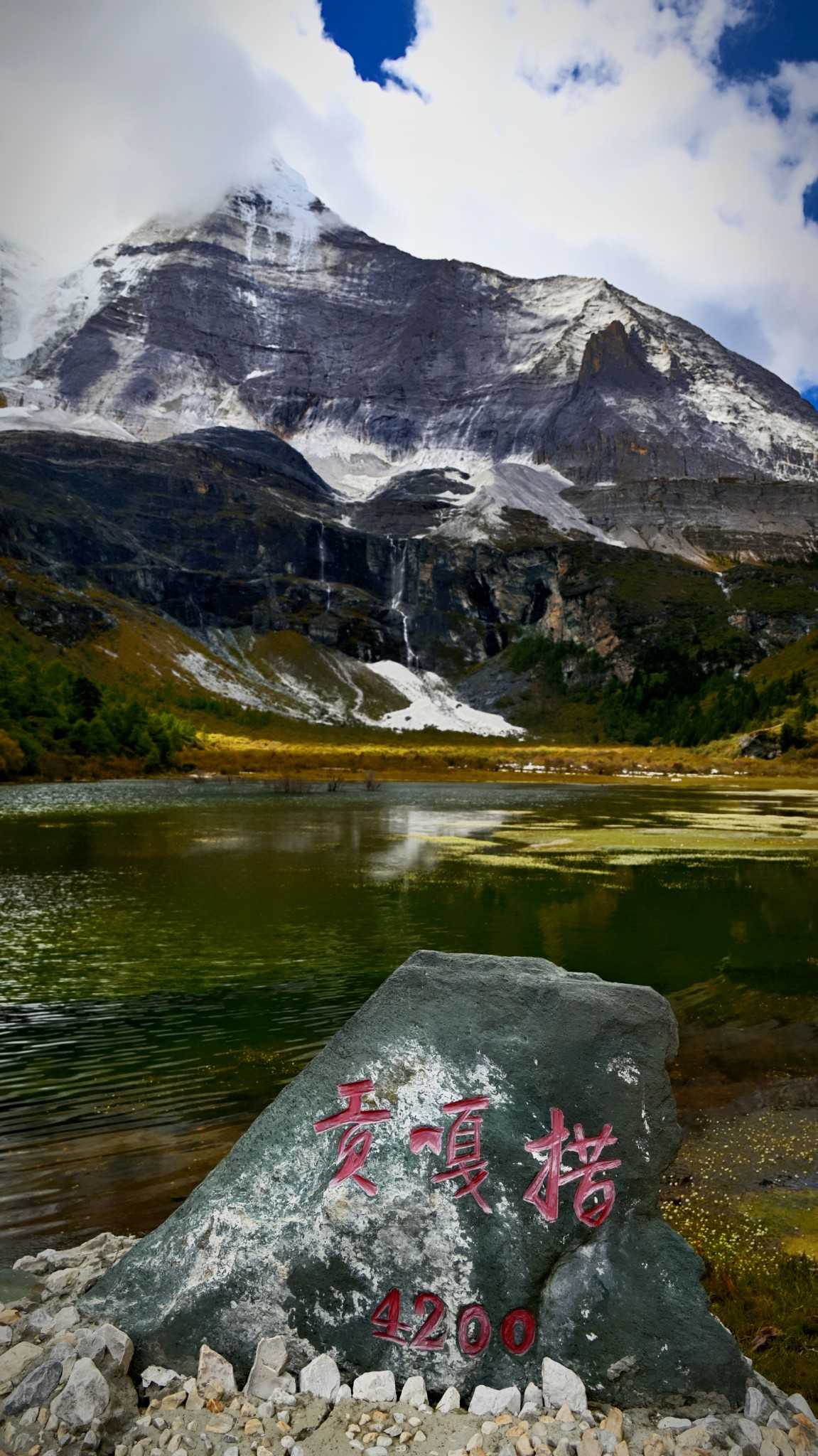 Yangmaiyong
Second, return is the same route—you’ll pass again. Around 4:30–5:00 pm it’s almost empty—you can “own” the lake.
We reached at 5 pm; staff were urging the last stragglers—several girls slumped asking “how far?”—hearing “at least an hour,” they resignedly rose. Someone asked about the rescue motorbike—“300 RMB”—everyone chose to dig deeper instead.
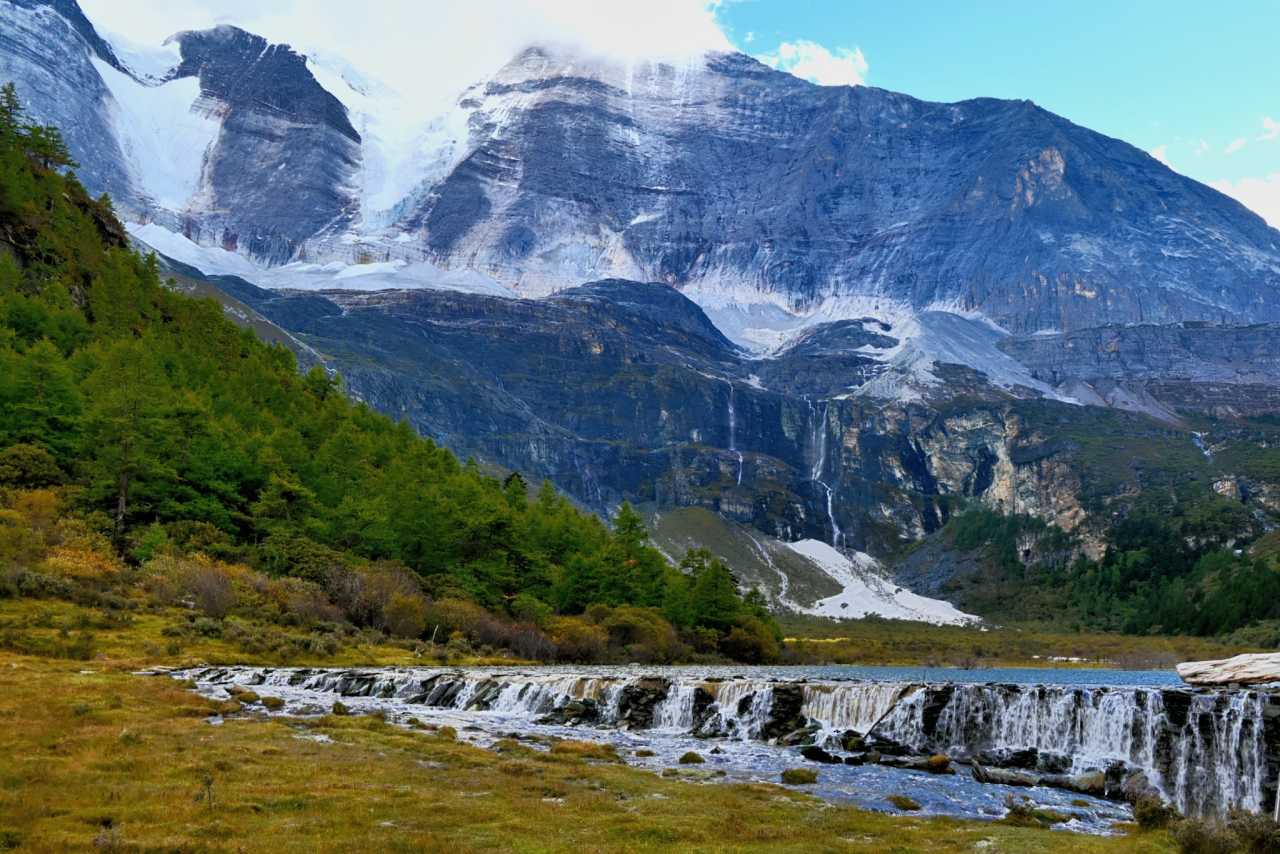 Yangmaiyong
Third, leave ample time for the grueling climb to Milk Sea and Five-Color Lake—else you may be cleared out before reaching them.
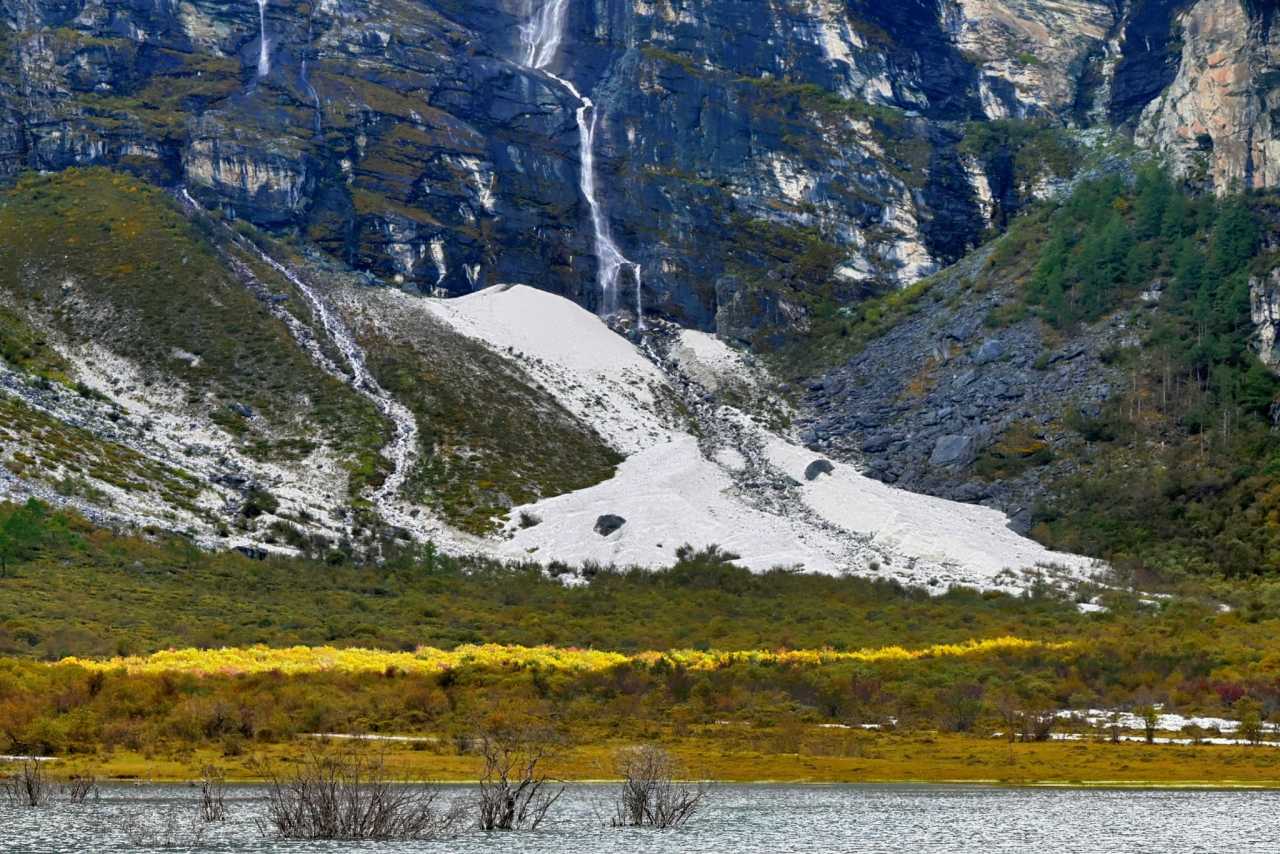 Yangmaiyong
Also, Gongga Cuo is squirrel heaven. They move like lightning; my attempts yielded only yellow blurs. Unlike the slightly aggressive monkeys near Zhaguanbeng, these timid gluttons are cuter—they snatch snacks then hide to feast—wave your hand and they flee—fun and safe.
Vajra Challenge Line – 05 – Toward Milk Sea
From Gongga Cuo to Milk Sea, the 3 km mountain trail ranks in my top three toughest hikes so far. Unbelievable as it sounds, compared to this, strolling around Everest Base Camp at 5300 m felt like a walk in the park.
The true face of high-altitude trekking reveals itself on the Vajra Challenge: starting from Gongga Cuo.
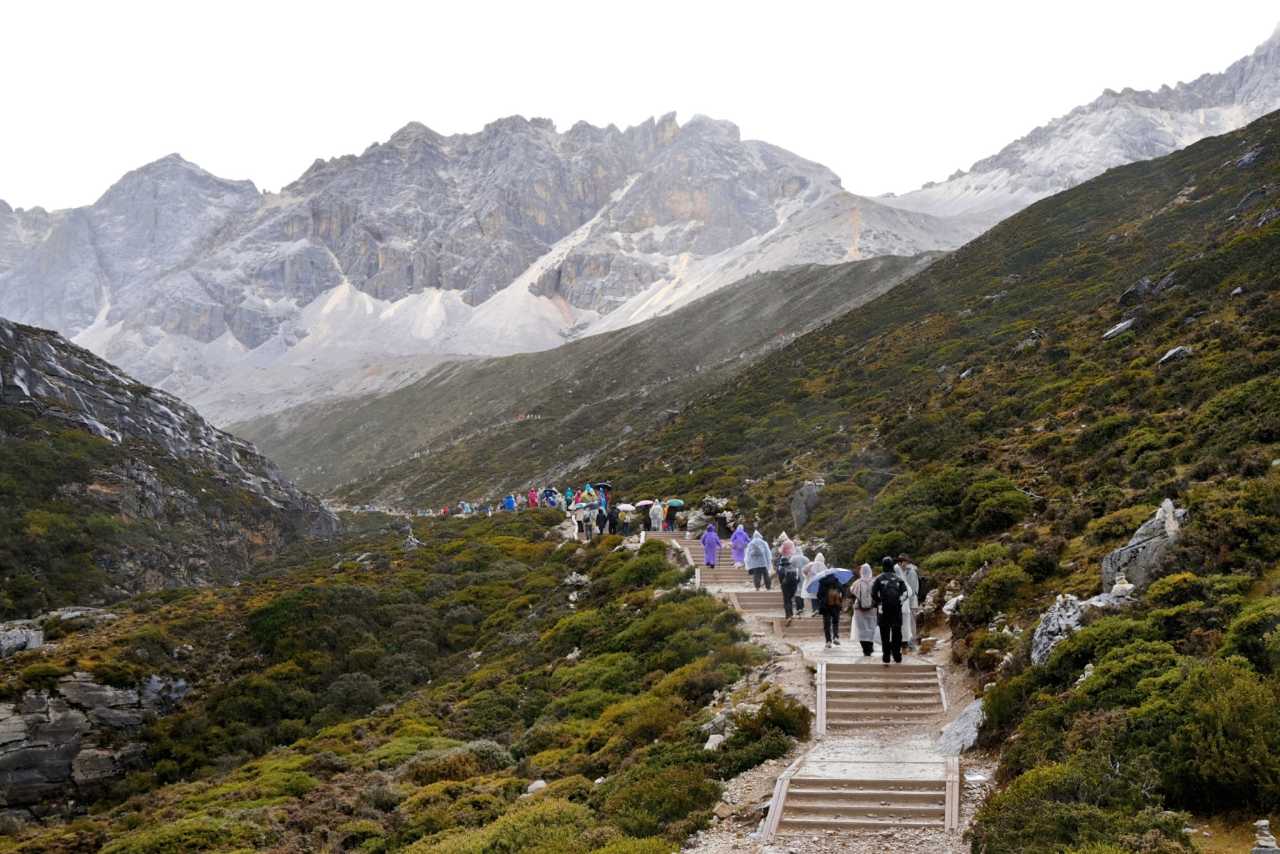 Milk Sea
Most of the route is near-continuous stair climbing into cloud—like an endless ladder. Elevation breaks 4200 m; air thins and chills. Each breath deepens and quickens, yet oxygen still feels scarce.
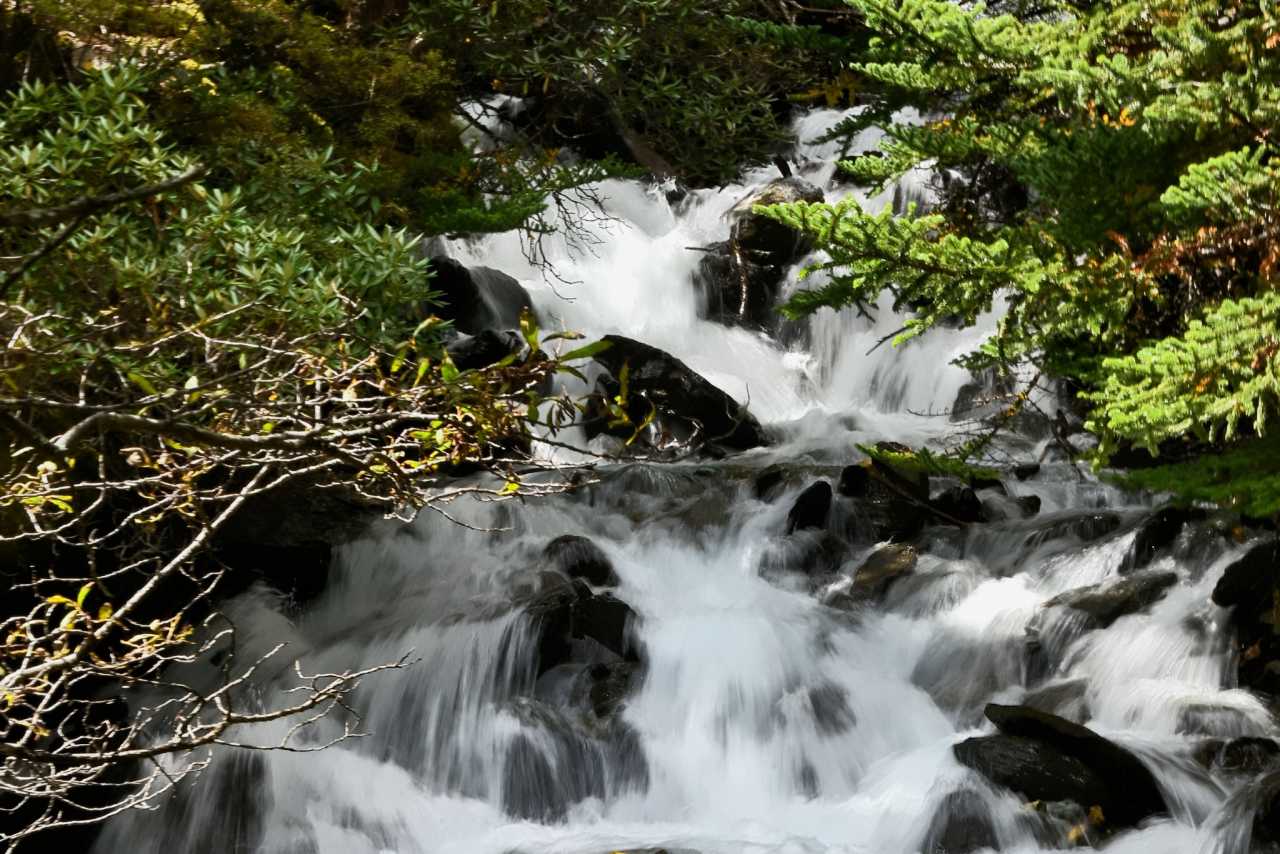 Milk Sea
Looking back, the memory is heavy as Five-Elements Mountain pressing down. At first I could climb ten steps and rest; later five steps demanded a stop for gulping air.
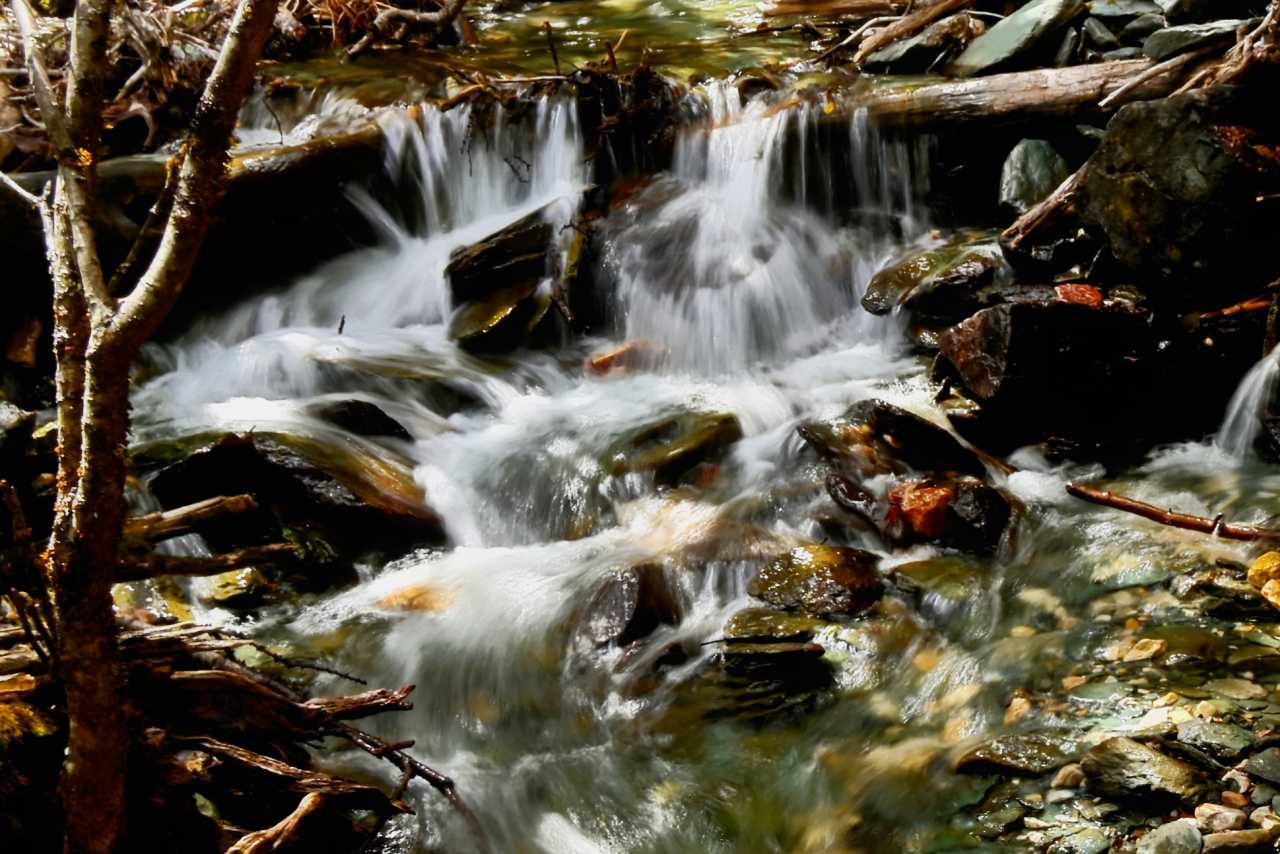 Milk Sea
Rest hardly helped—lungs felt like broken bellows never filling. Heart hammered at a rate ordinary workouts never reach.
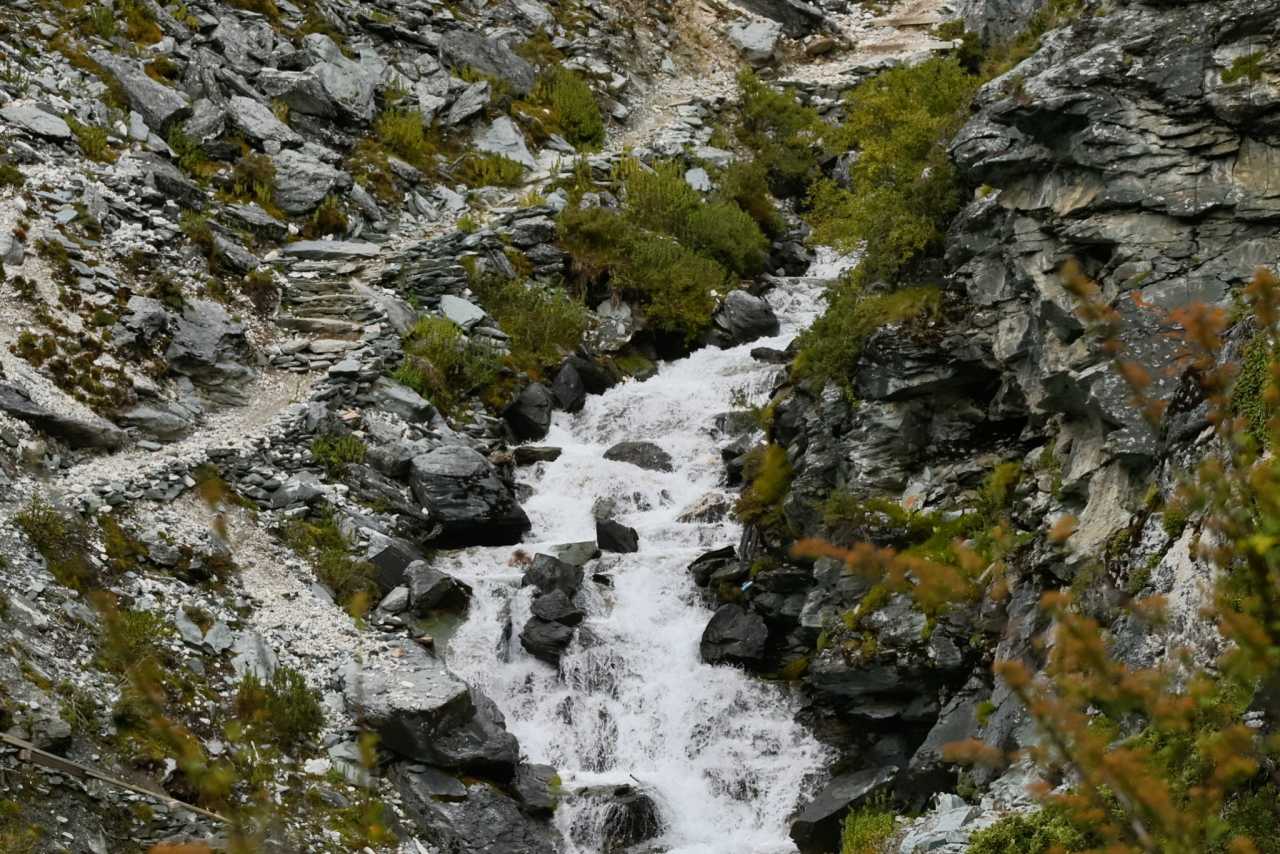 Milk Sea
Legs? Practically “not mine”—weighted like lead; quads taut; calves cramping; old left-ankle injury sore; right-knee with effusion dull-aching. Each lift felt like wading through knee-deep tar; each upward step needed full willpower against every cell’s protest.
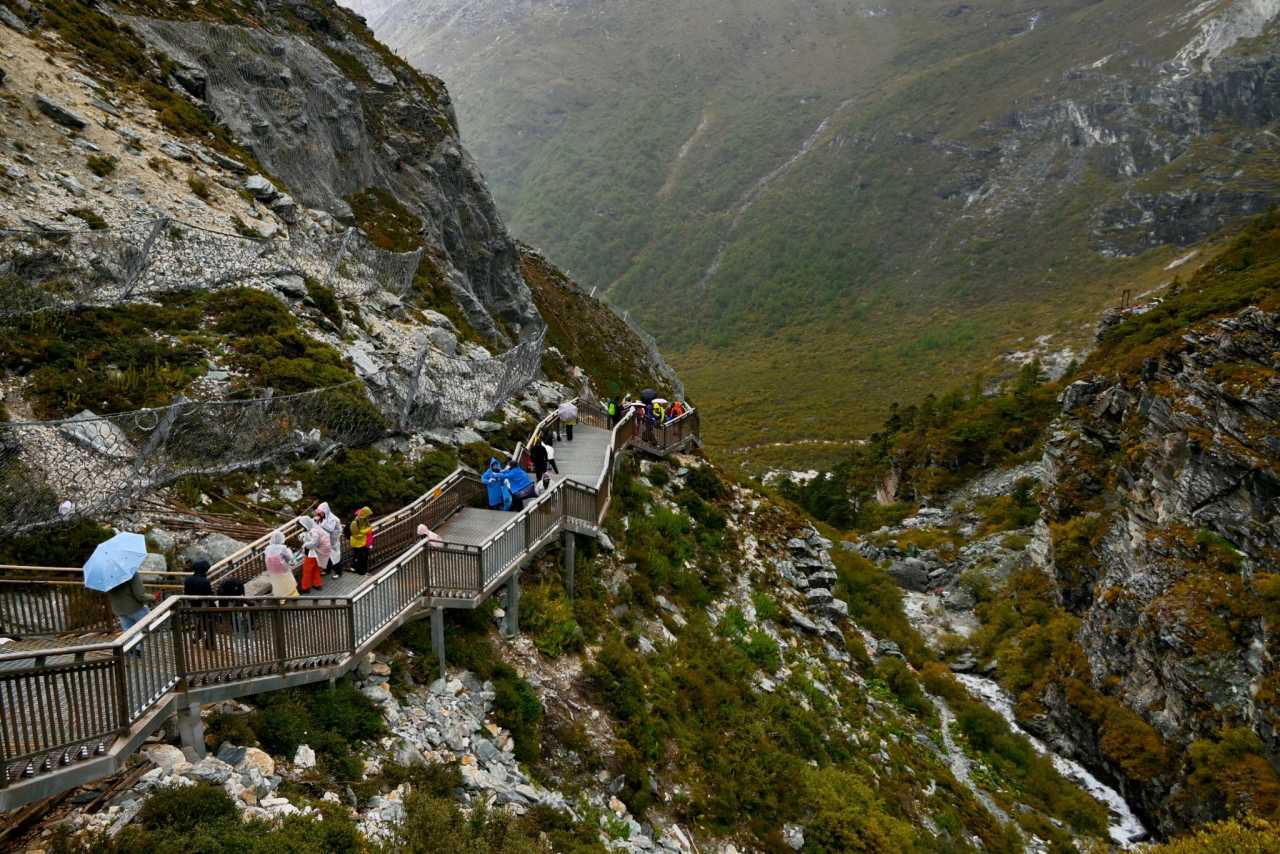 Milk Sea
The worst were earnest “encouragements” from descending hikers: “Hold on—there’s a tough section; past it, mostly flat; just over 1 km more…”
Unlike other scenic spots’ “five minutes left,” such truth needles the last bit of morale. I crawled toward that “tough section,” muttering: this is pure hell—three hundred meters of it.
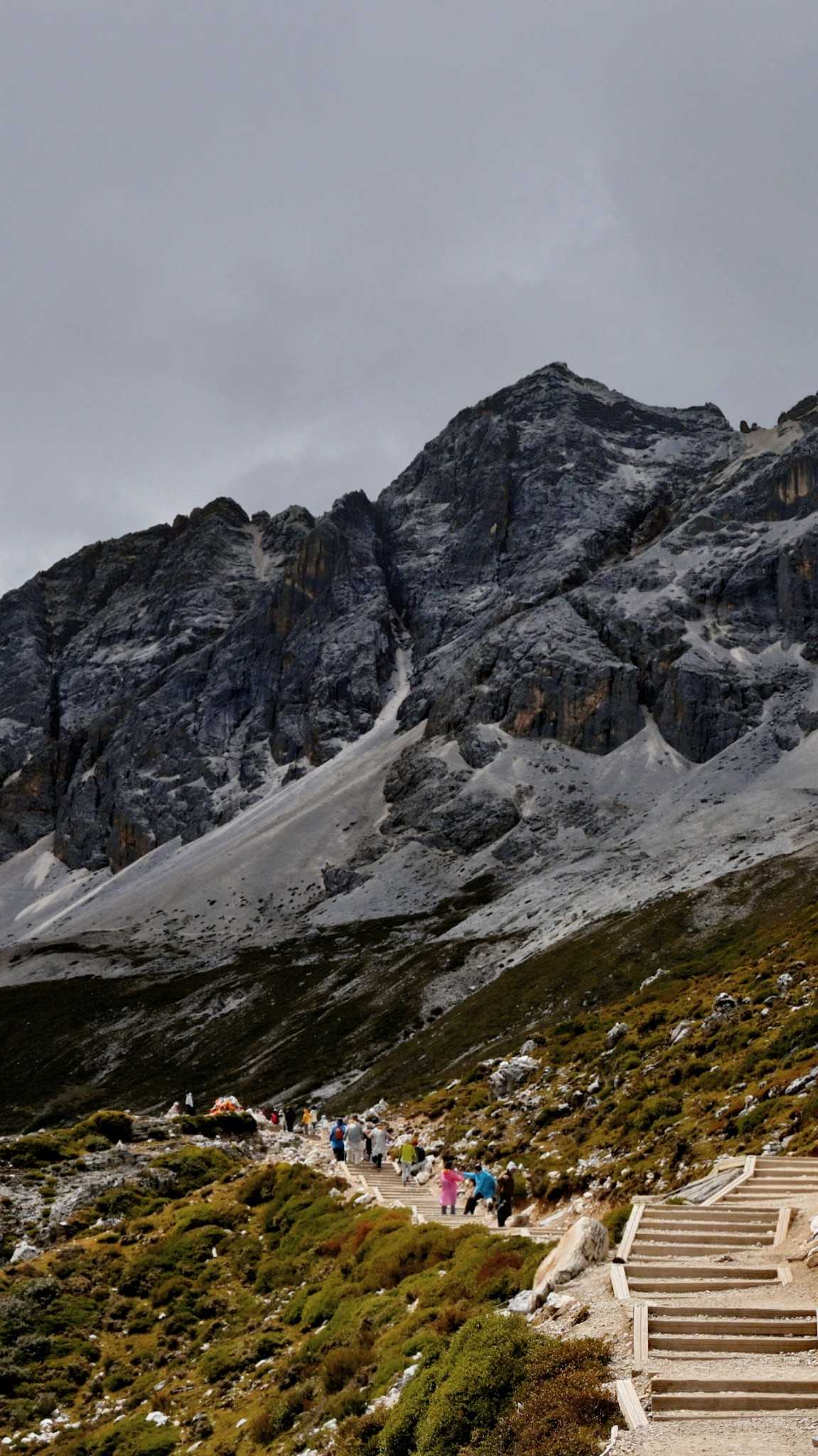 Milk Sea
Trail always wound upward, vanishing around another despairing bend. I bargained with myself: reach the small platform, the bin, that seated stranger, that oddly shaped tree… then rest. Ten vows; nine broken.
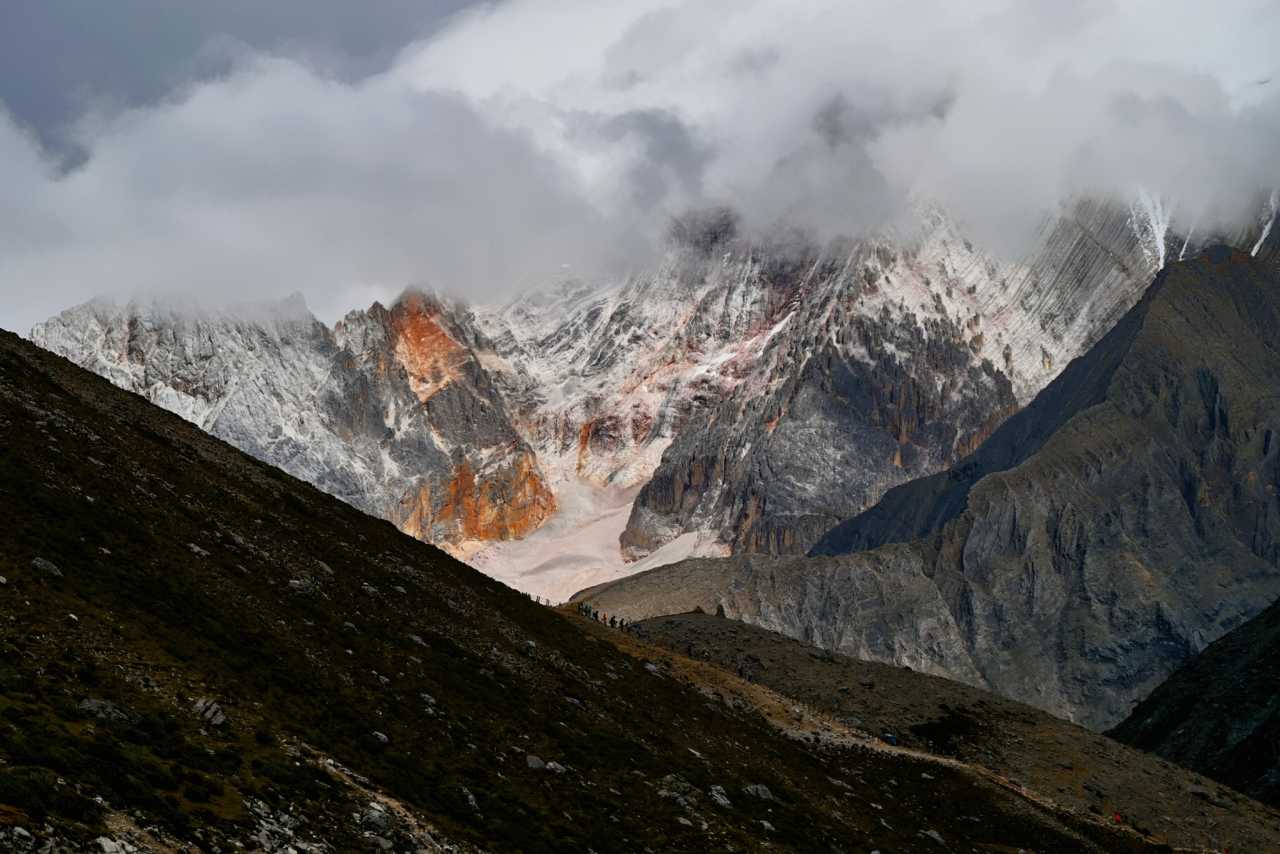
Scenery gave no comfort. Yangmaiyong looked cold and oppressive—so high, so near. Bare gray-black rock under thinning vegetation flashed hard, sharp lines—mirroring my smallness.
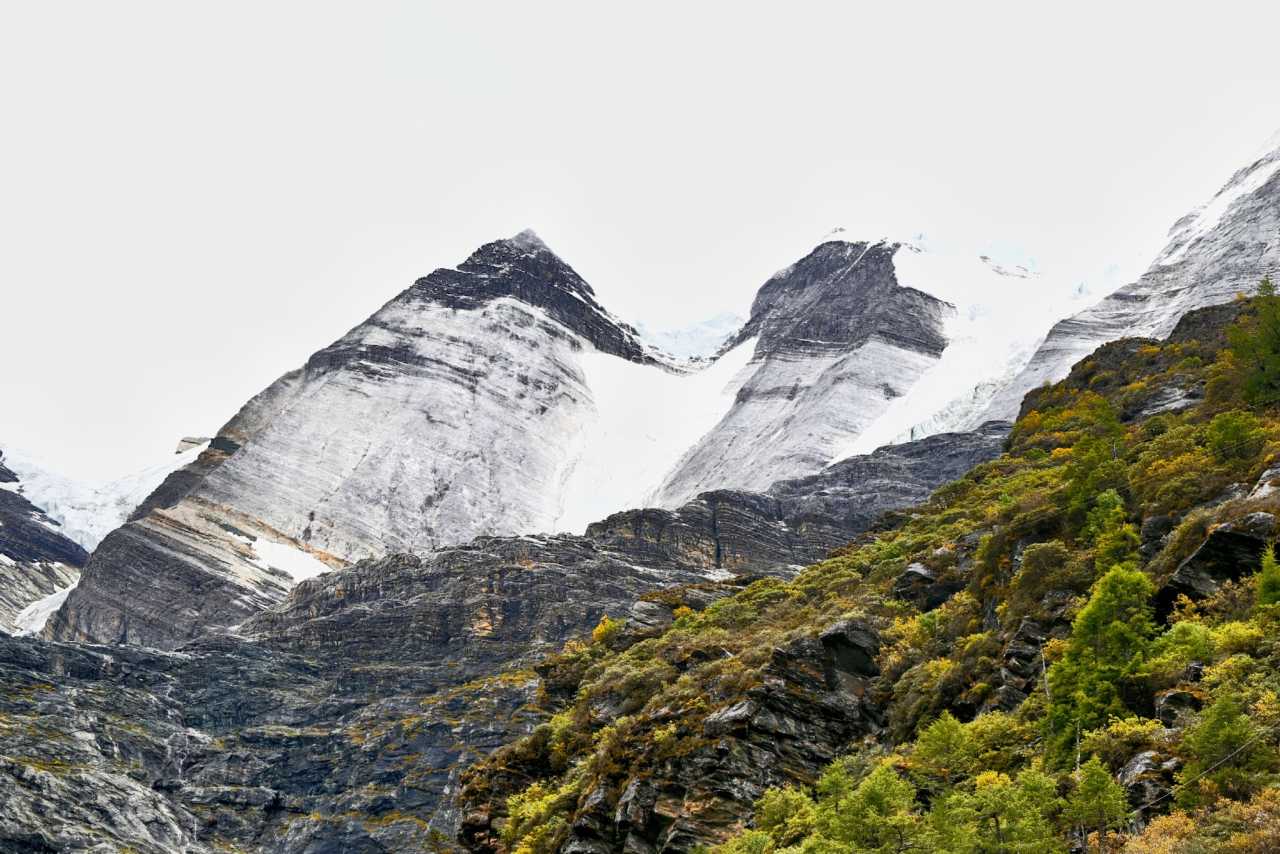 Milk Sea
I lacked strength even to pull out my phone (the DSLR had long left my mind). All attention condensed into one verb: walk. Lift, set down; lift, set down.
 Milk Sea
Besides the roaring wind, everyone was quiet as quail. No Luorong or Chonggu bustle—only hunched breathing and struggle-steps. On the long stairs, men and women, young and old, all wore the same “mask of pain.”
 Milk Sea
Only local porters kept normal faces—even joked. Unlike solicitors near Chonggu, these specialists offer “labor” on the hell-stairs—carry bags or even people uphill. Prices vary. Business peaks mid-to-late in the hell section when visitors’ energy collapses and hope fades. They walk calmly, like on flat ground—sharp contrast to us. I saw a lean brother carrying someone at least 85 kg—looked like he “floated bent over,” but up close it was sheer strength.
At last I endured the hell 300 m. Good news: a large platform to rest. Bad: rain began—first sparse, then lashing—bean-sized drops cracked on shells like hail. Wind stripped stored heat; chill invaded collar and cuffs. We felt small and vulnerable—afraid we might miss Milk Sea after all the suffering.
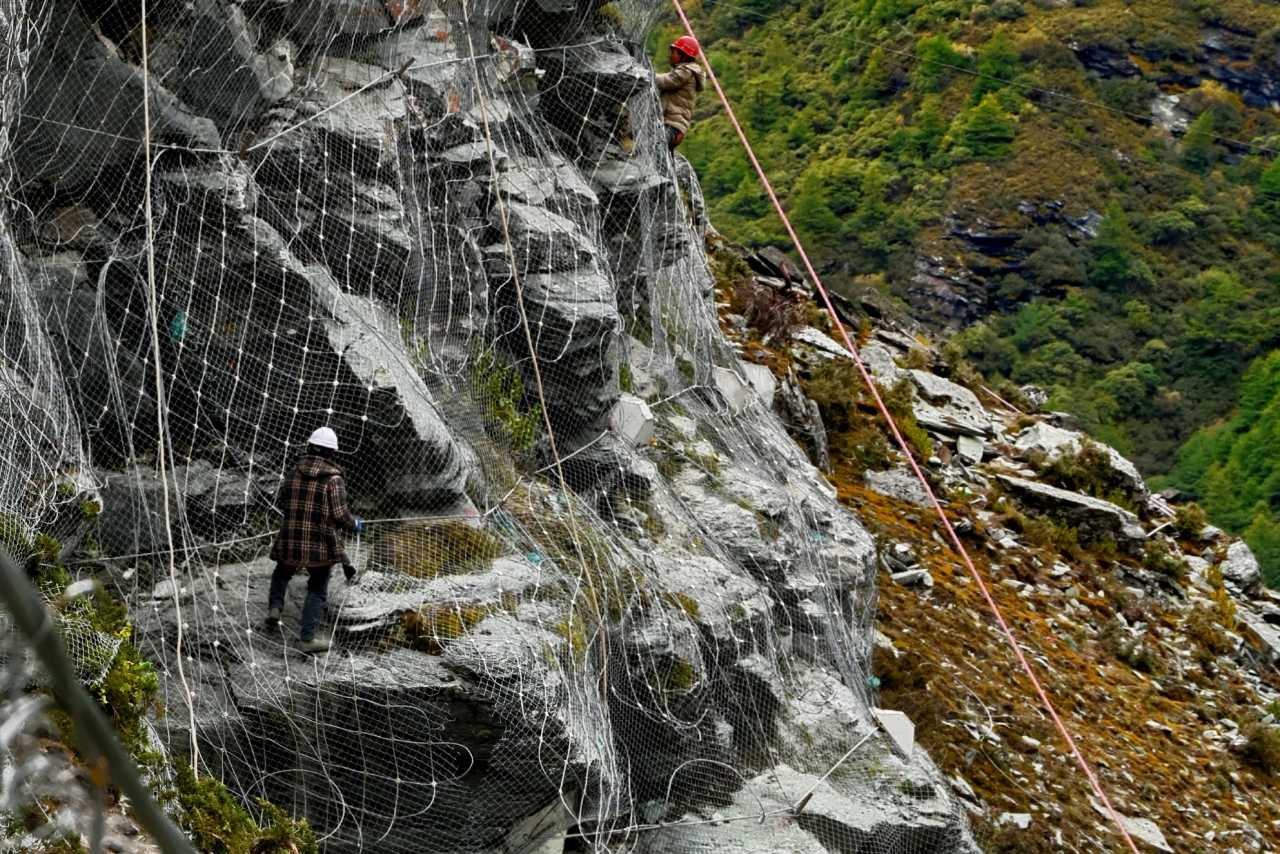
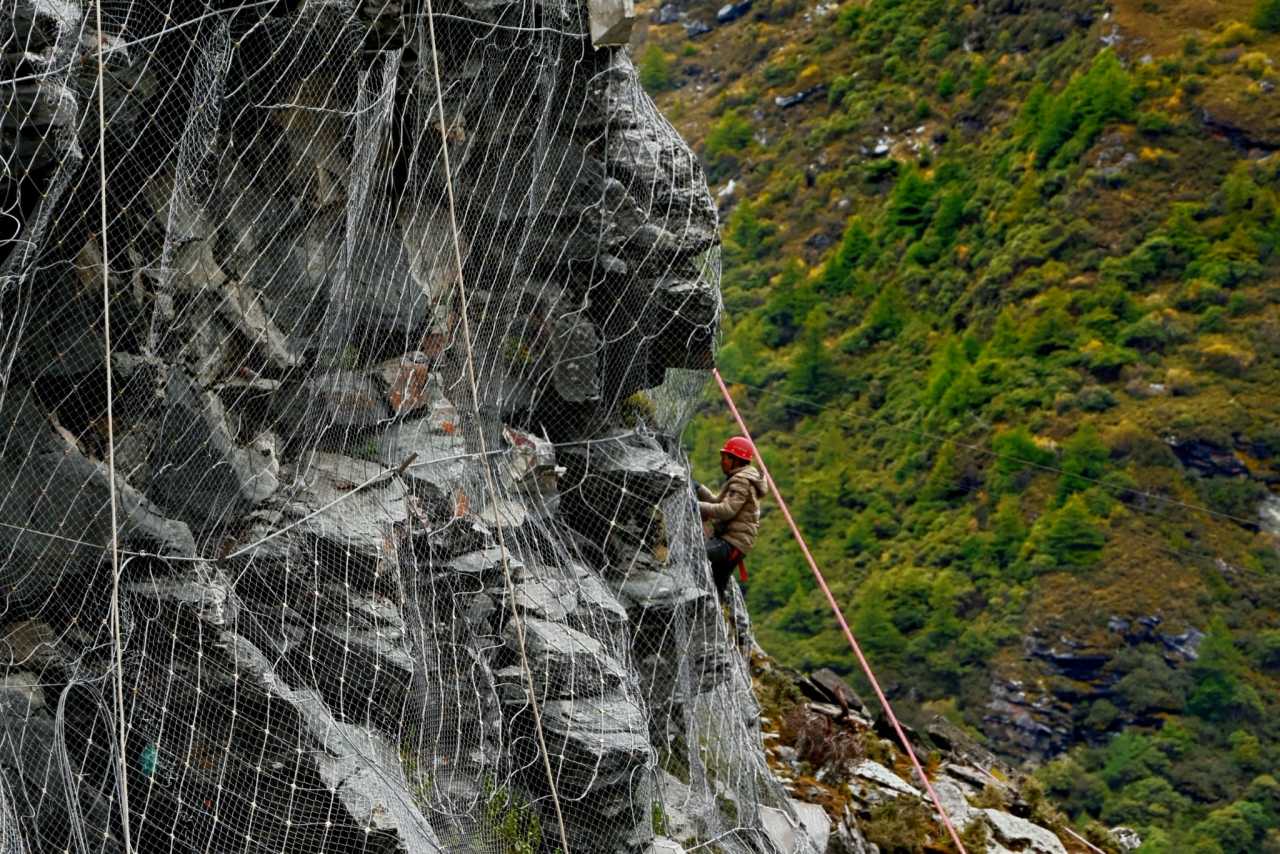
Thankfully, our old mantra “since we’re here” anchored us. Highland weather flips fast—downpour one moment, clear the next. From the platform to Milk Sea the route eases to trail—but rain turned it slick mud. Some sections are under slope-side construction—nets and machines narrow the way to single-file; puddles and stones complicate footing.
 Milk Sea
Workers climbed the mesh—at altitude, it’s hard to say whether they or Spider-Man are stronger.
 Milk Sea
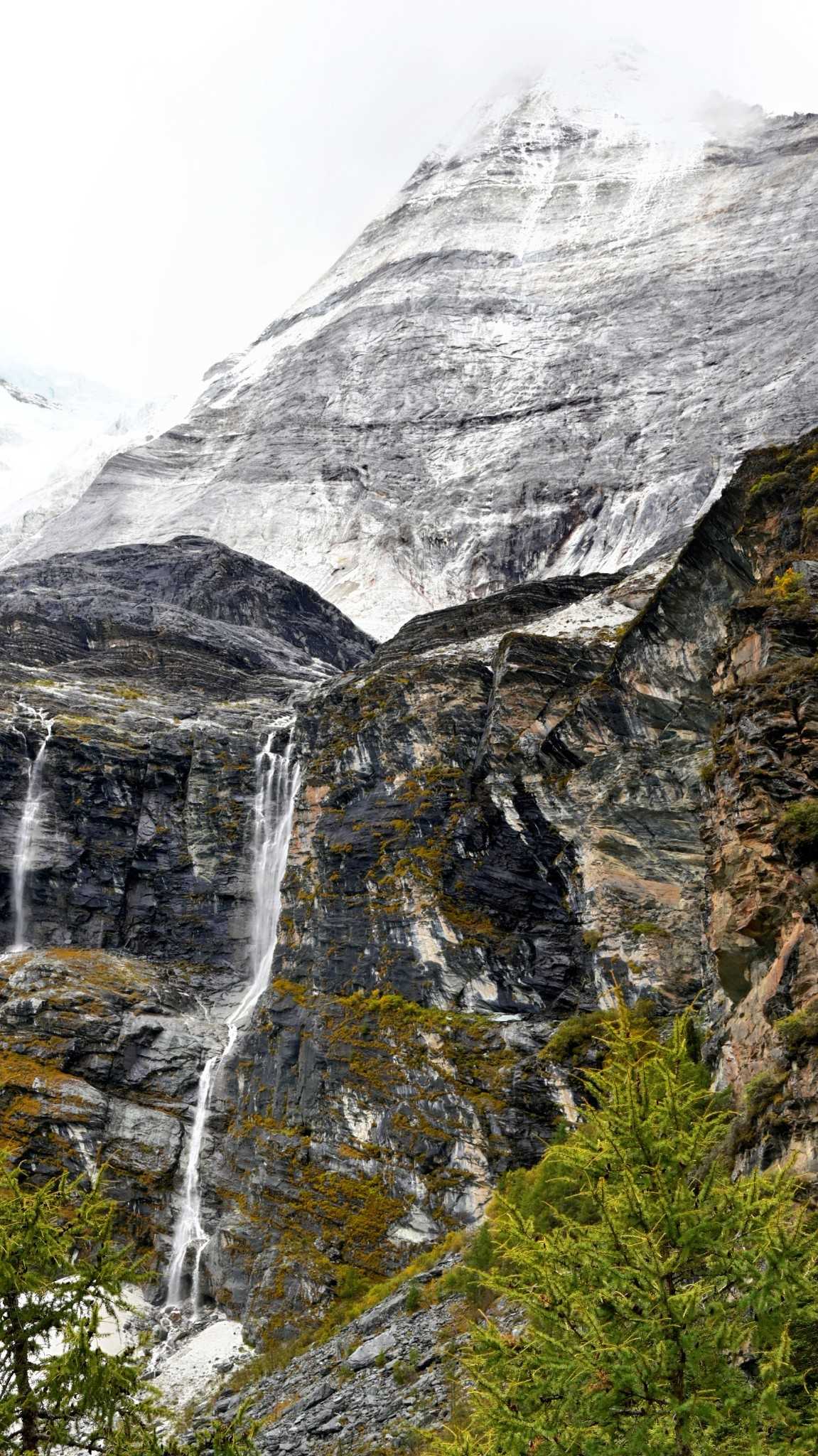
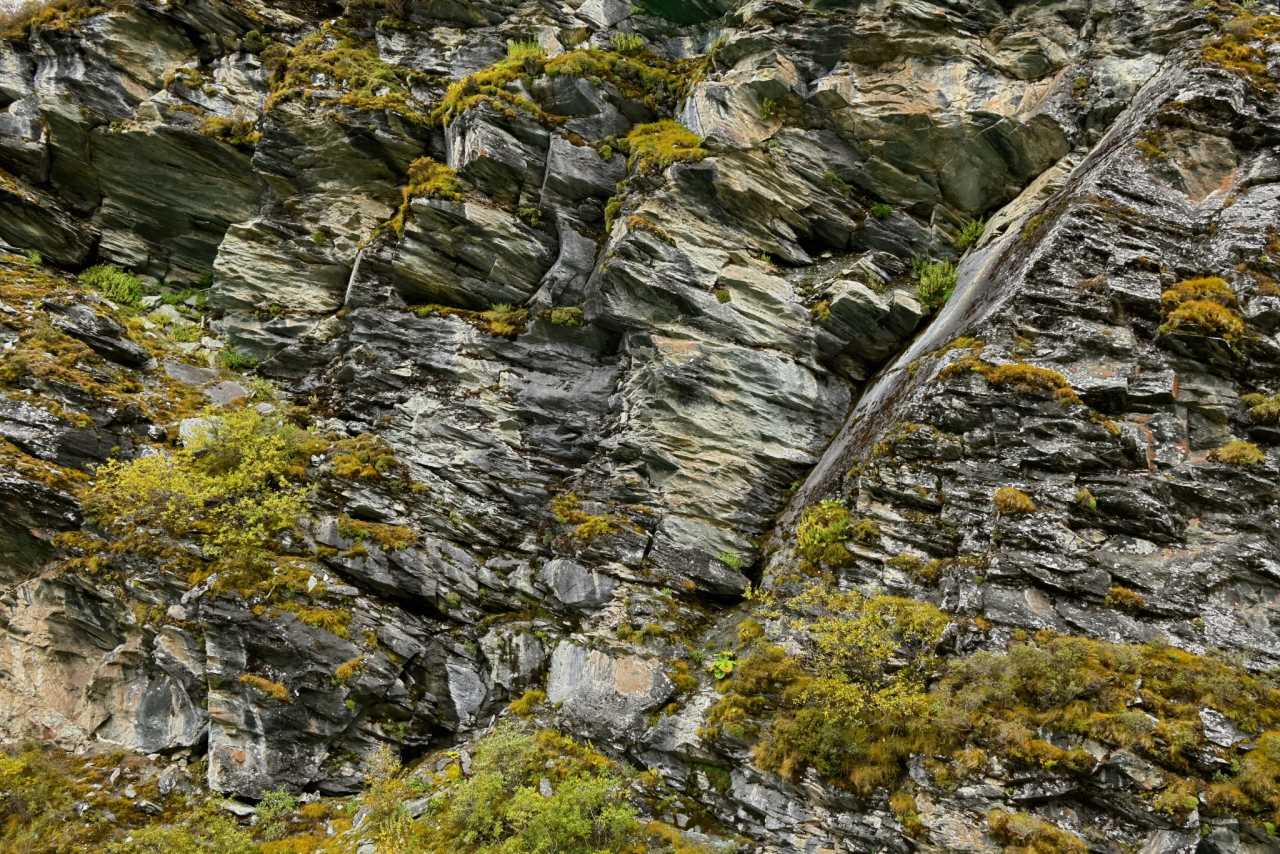
Long path; Milk Sea still unseen; rock walls encircle—utterly different from Luorong’s language. Not rounded by time, but violently torn—hard ridges protruding.
 Milk Sea
Textures look hacked by ancient gods—unfinished wild sculpture with stones spilled everywhere.
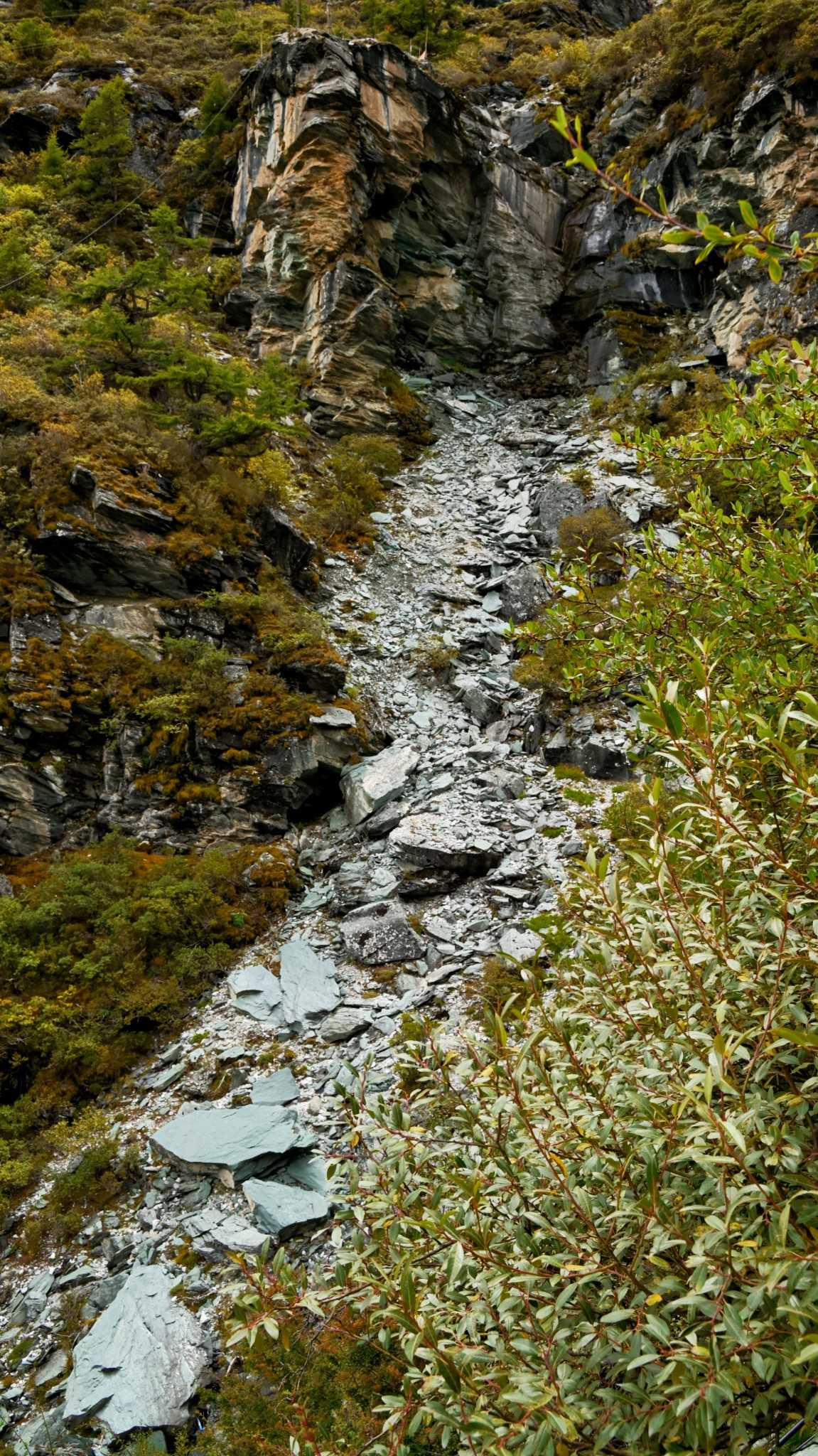 Milk Sea
Air is ice-steeped damp—cold drills to the bone. Yet life persists: nameless needle-leaf plants grip cracks, wringing scant nutrients from rock; their deep green tufts speak of resilience stronger than fragile humans.
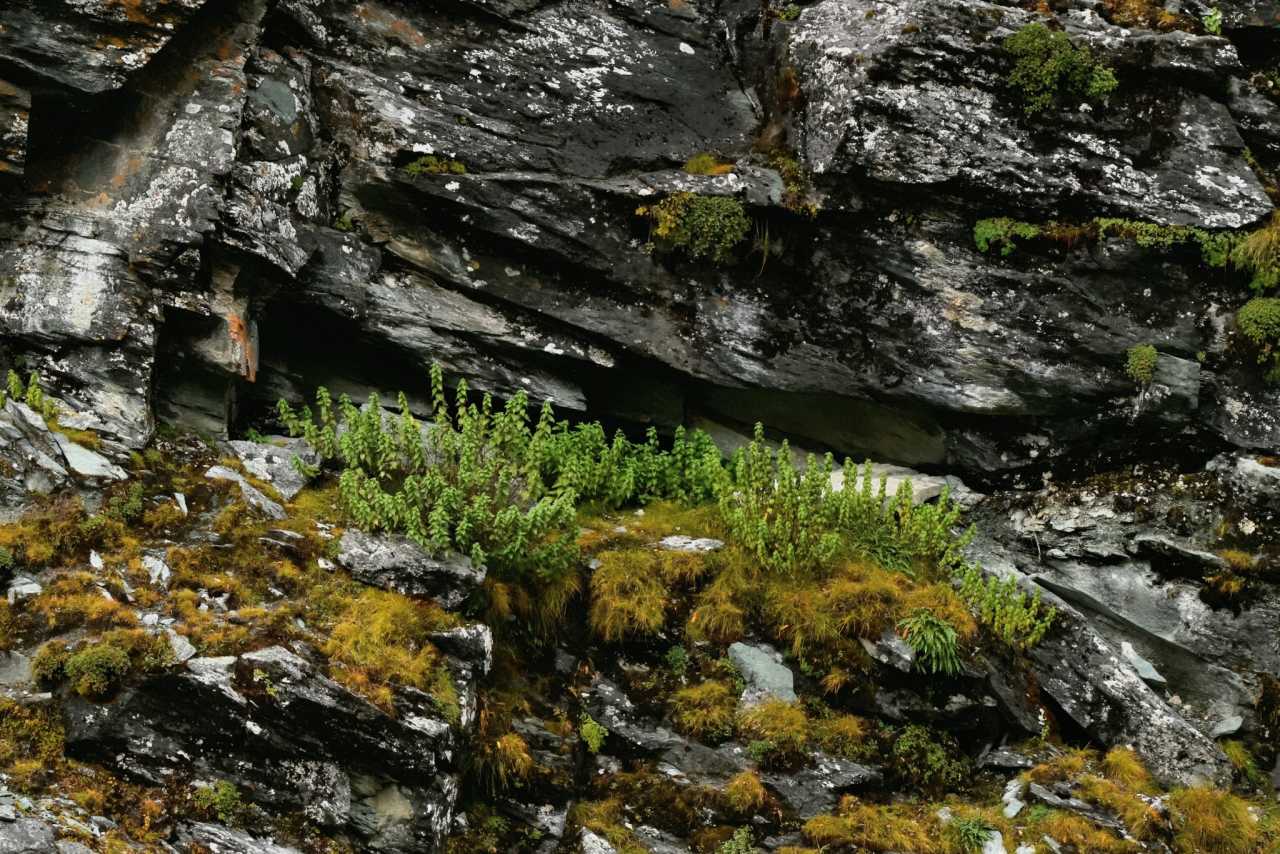 Milk Sea
When Milk Sea finally entered view, the first feeling wasn’t joy but relief—at last a place to stop both body and mind.
Vajra Challenge Line – 06 – Milk Sea
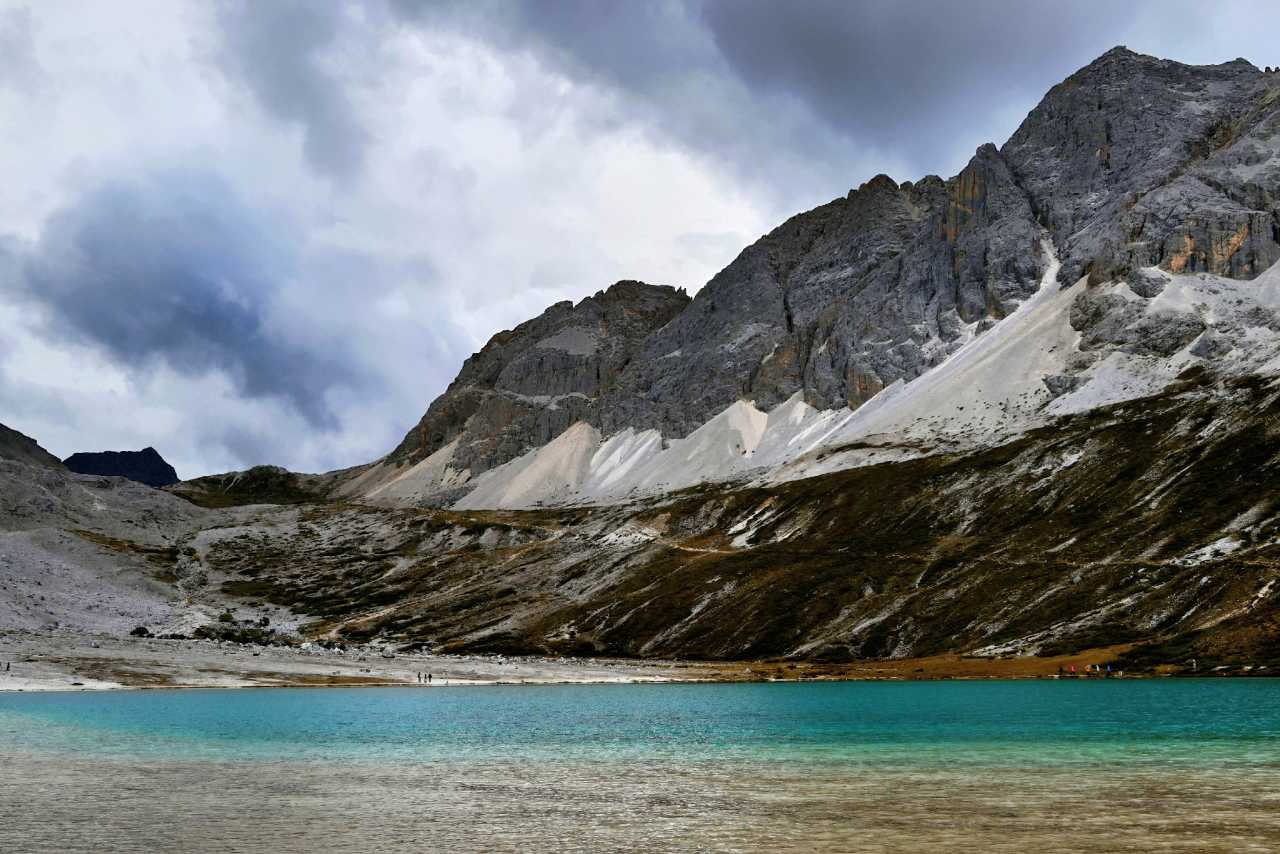
Milk Sea lies quiet in Yangmaiyong’s wide embrace—like a giant turquoise from beyond the human world, or a solidified blue gem with velvet sheen—calmly greeting exhausted visitors.
Its milky-white shallows ring the lake like a gentle white-jade frame that cradles the dreamlike blue-green water.
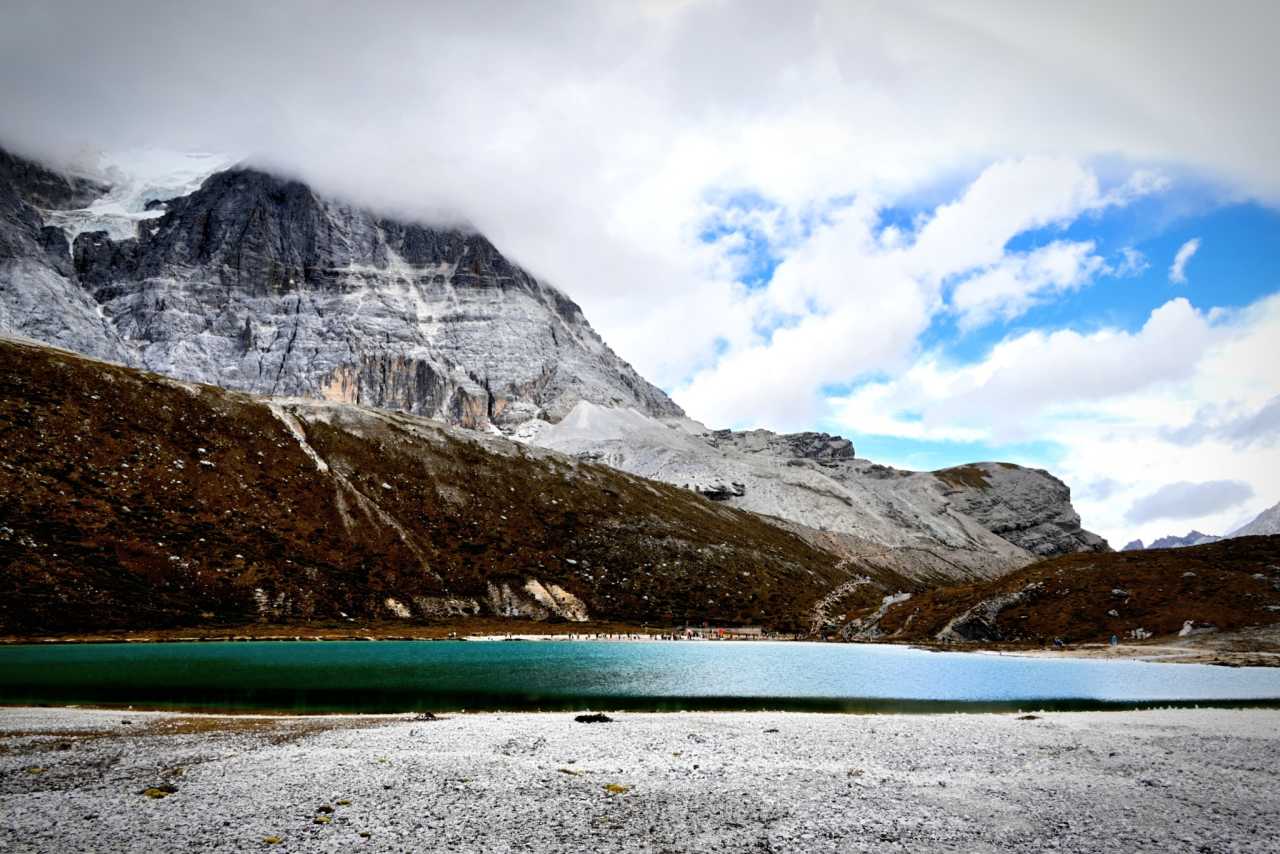 Milk Sea
Such extreme beauty is bought with equal extreme fatigue—perhaps that’s why this serene blue moves us so deeply.
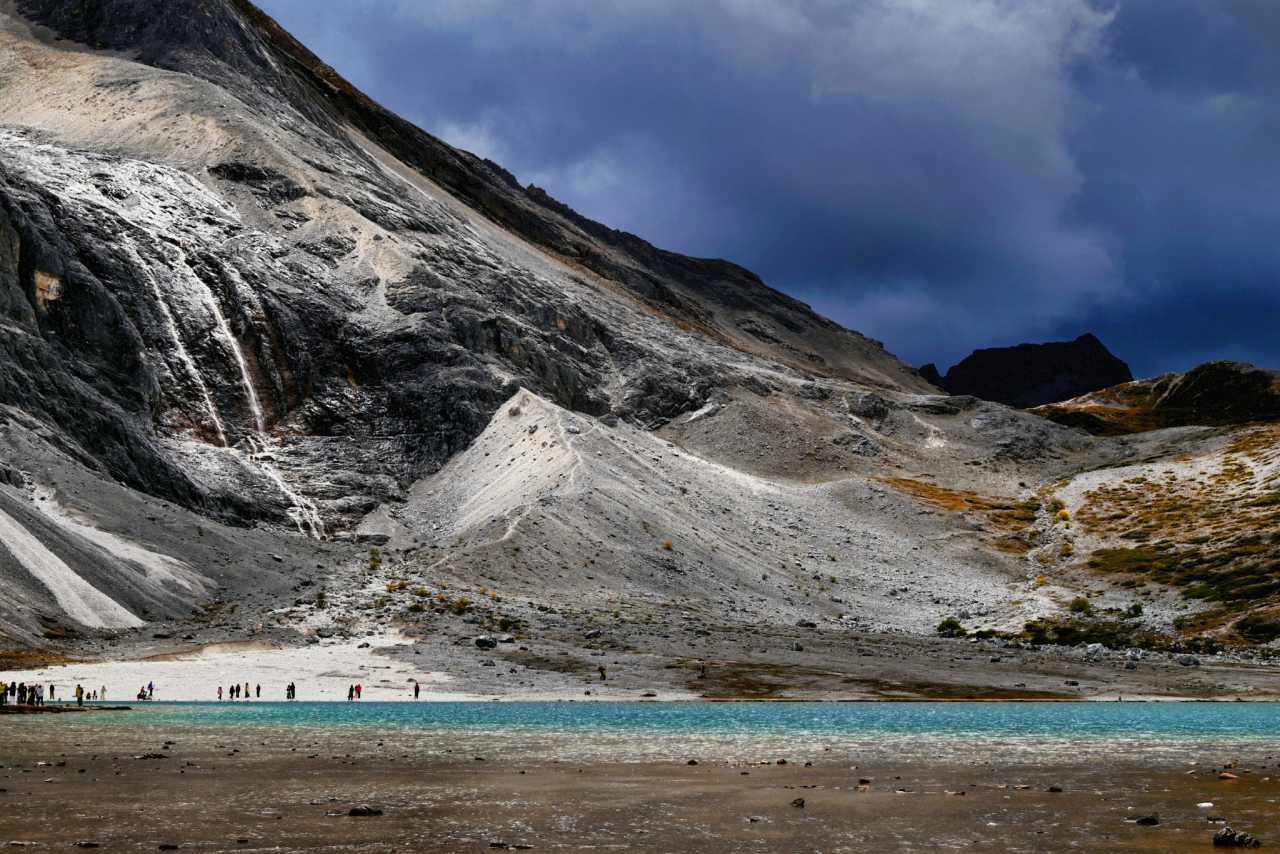 Milk Sea
Best viewpoints:
1) Entry-side stone beach—first encounter spot; snacks/oxygen at a hut; you can reach the shore for intimate views. Downside on holidays: lines of people along the edge block full panoramas.
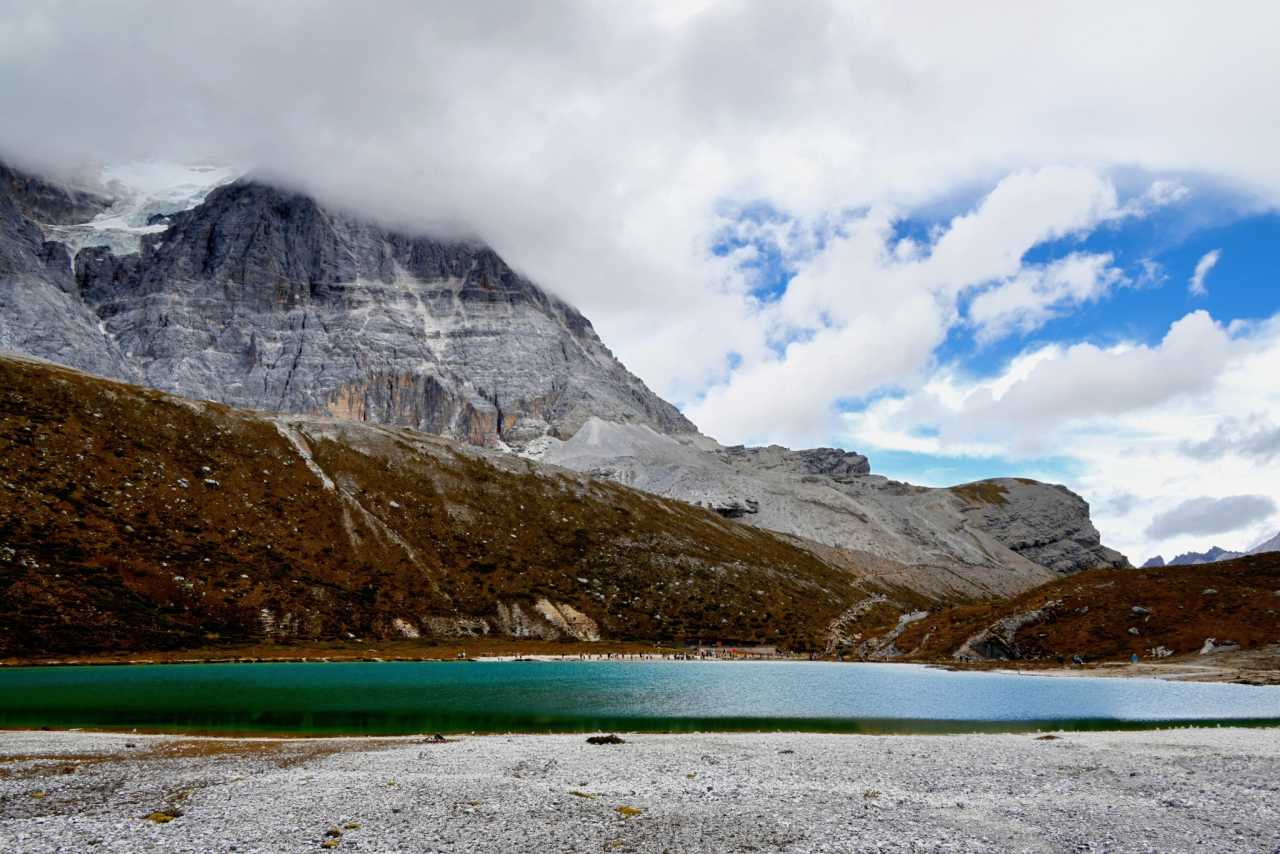 Milk Sea
2) Opposite stone beach—quieter but needs wading. The “path” is merely larger stones forming a slick “bridge”—be careful; the calm angle and reflections are worth it.
Both are lakeside, at lake level, so shots are narrow or partial. For a higher angle, climb the giant boulders—the third viewpoint. Only for the nimble; ascend via cracks, then look down on the full lake. Remember: “easy up, hard down”—with energy spent, safety first.
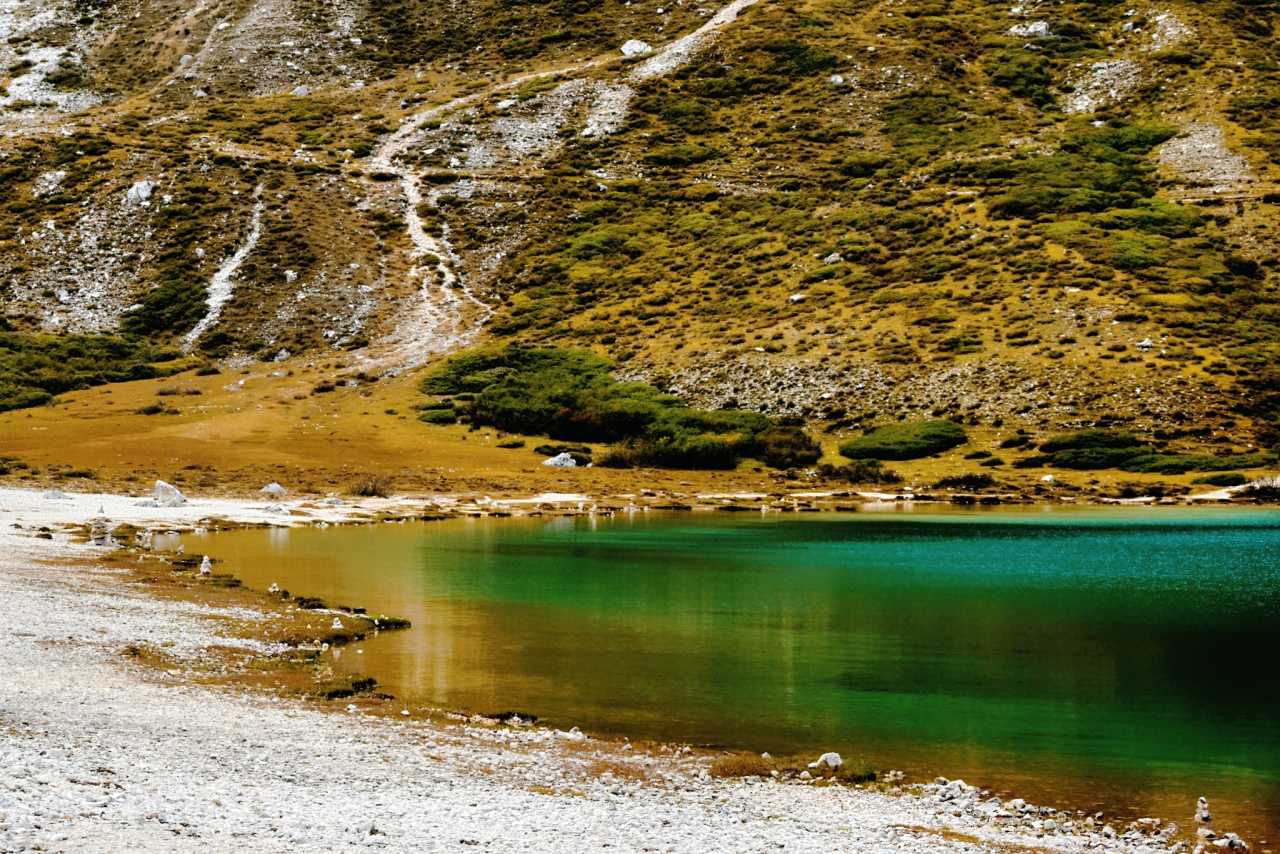 Milk Sea
No strength to climb? Don’t worry—there’s a third-party drone service at the lake (200 RMB for three 10-second edited clips). Pricey, but “rare once” and “since we’re here” both apply. Without a drone, I chose to be a “once-off fat sheep.”
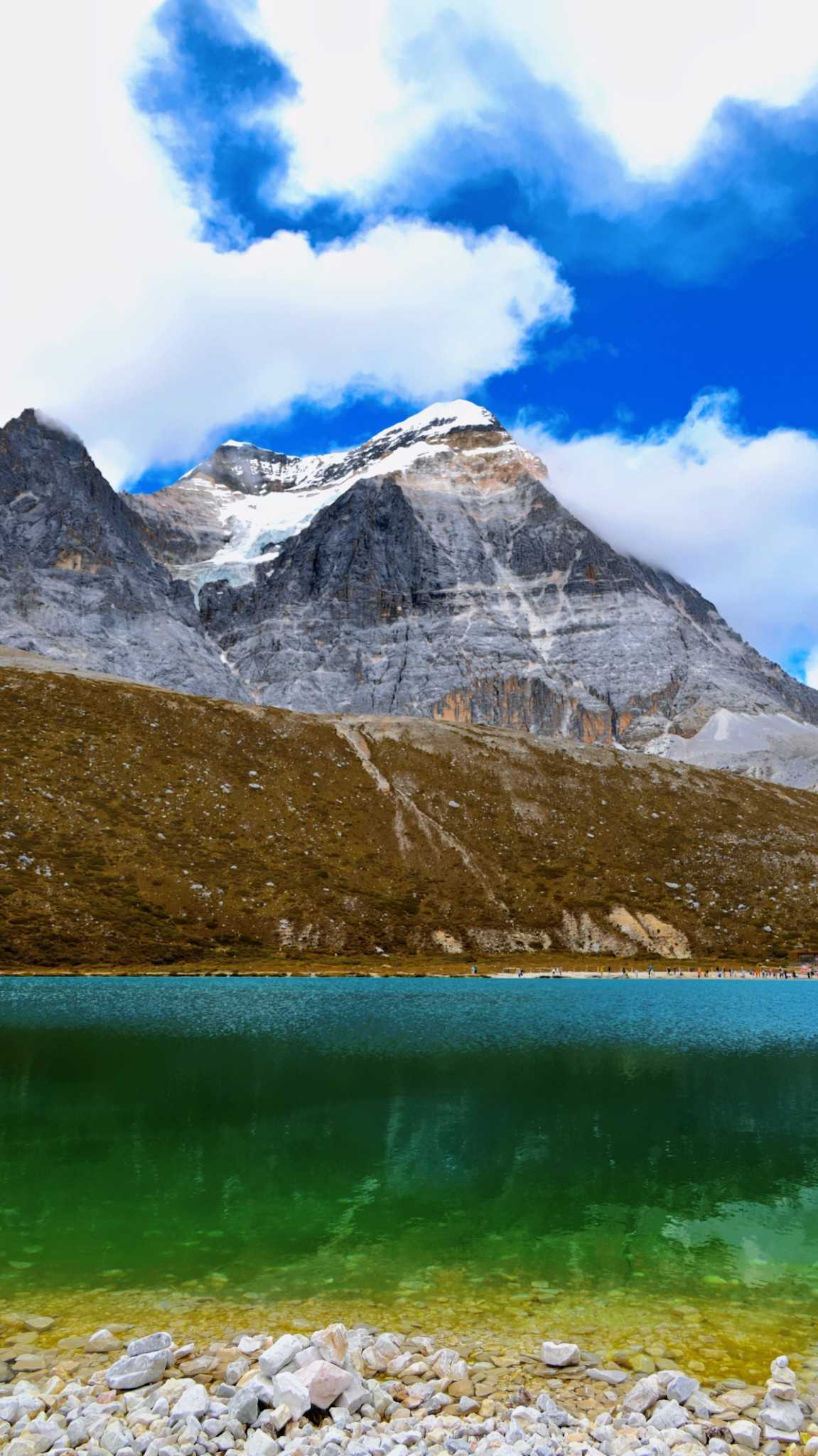 Milk Sea
If you plan to shoot, think through motions and camera paths ahead; otherwise you’ll follow the pilot’s instructions and get more generic clips—still unique for overhead angles and counts as “been here.”
Note: be efficient—dragging time risks missing Five-Color Lake.
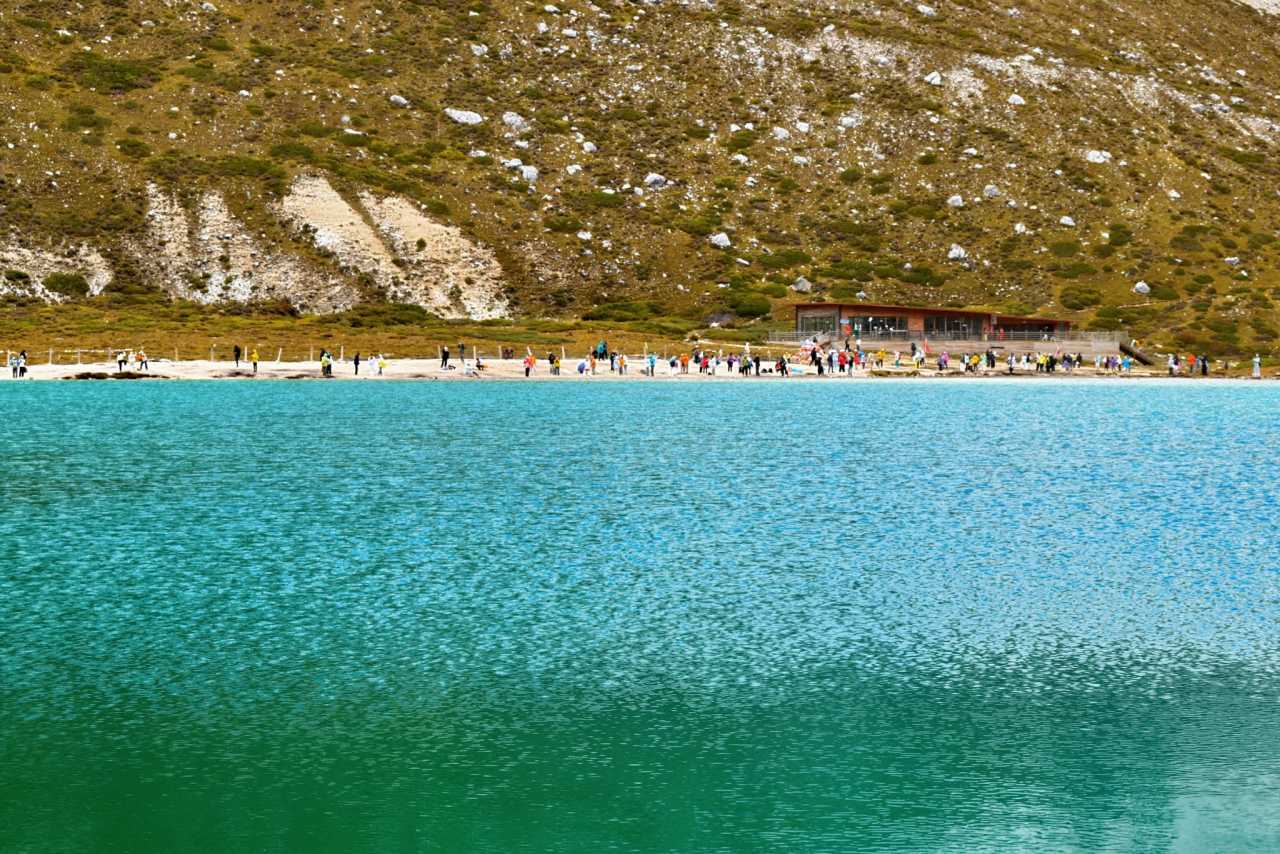 Milk Sea
Mountains around Milk Sea show little soft green—more primal jagged cold enclosing the lake.
Front and center, Yangmaiyong rises like a wall of the gods. From base to tip, rock textures sharpen—marks carved by windblades and ice. Dim light casts deep shadows between corrugated walls and glacial channels—like hearing ancient glaciers sighing as they retreat.
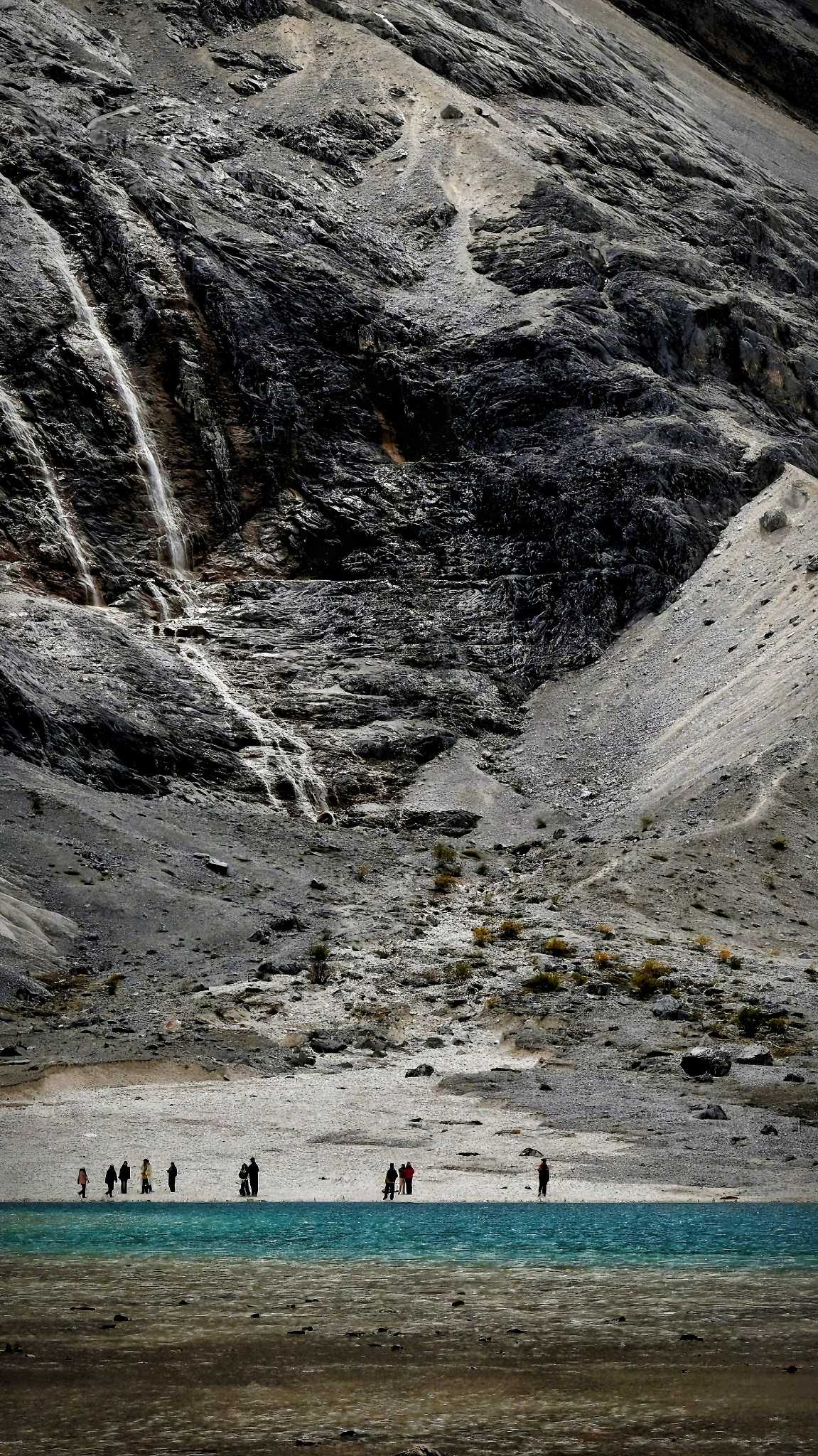 Milk Sea
Leftward lines continue; right-side ridges look more eroded and broken—jagged blades left from titans’ battles. In the cracks, lingering ice glints cold in shade—winter’s remnant refusing to go.
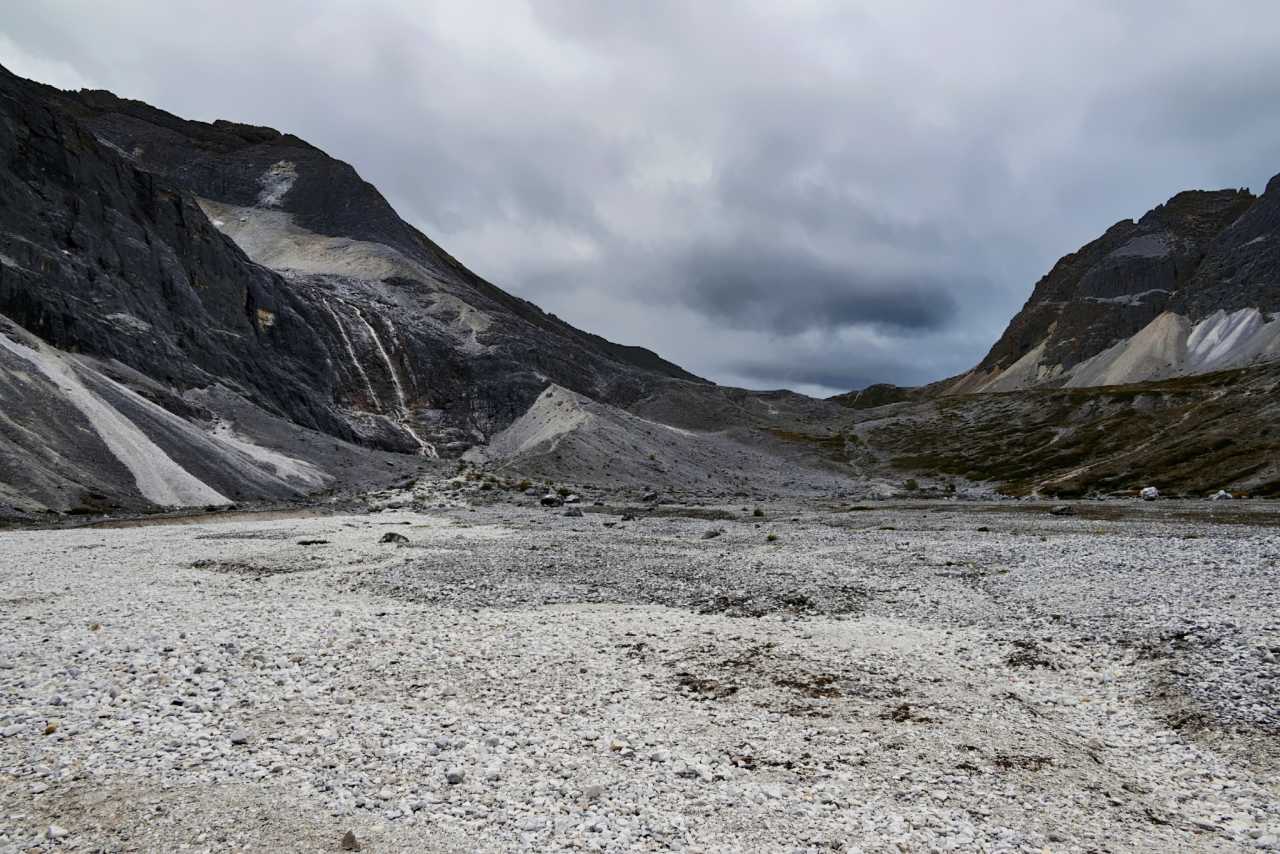 Milk Sea
Together the circling ranges form a vast surround-sound silence—making this milk-blue water feel even more precious. The soft survives only within the strong.
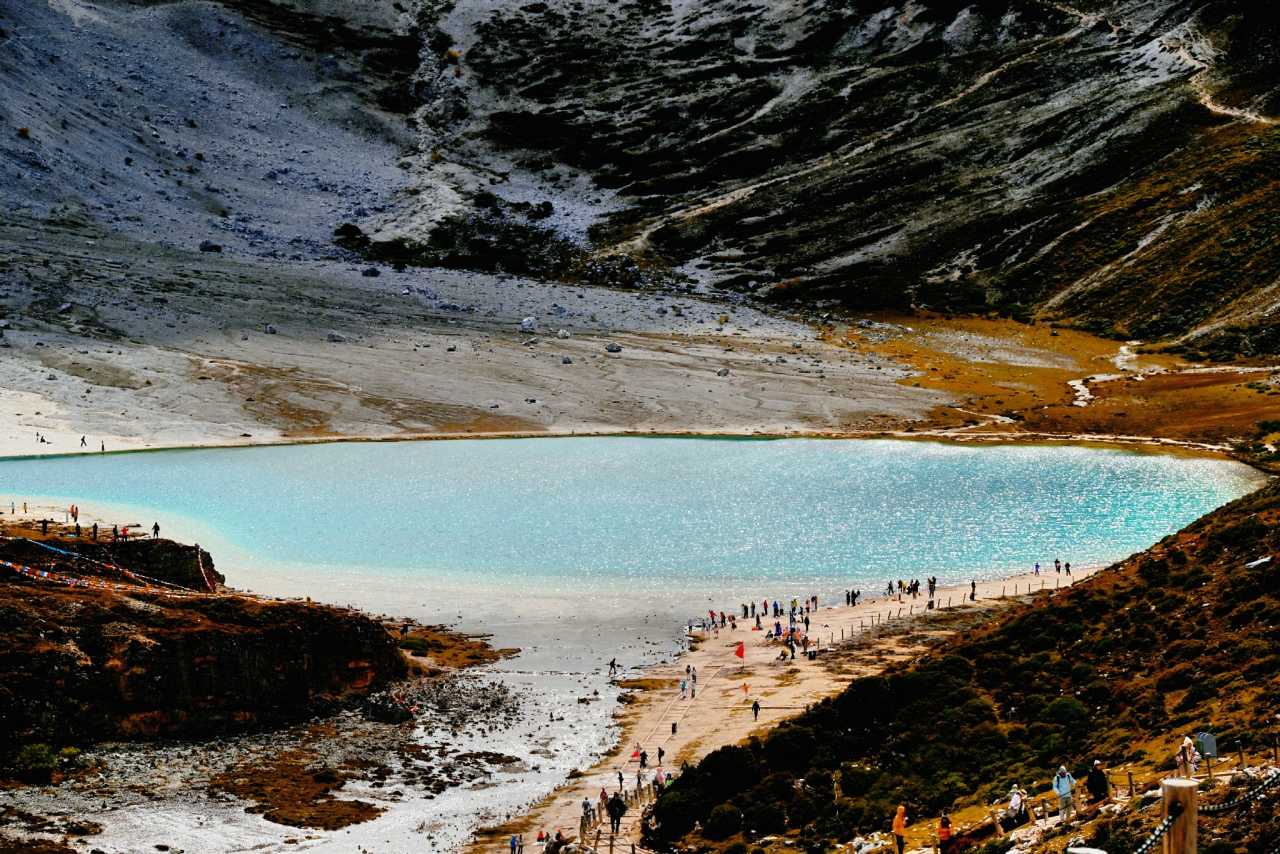 Milk Sea
On the way to Five-Color Lake, be sure to look back—the Milk Sea becomes a palm-sized sapphire set among brown ridges and yellow-green bands—a grand reward for the climb.
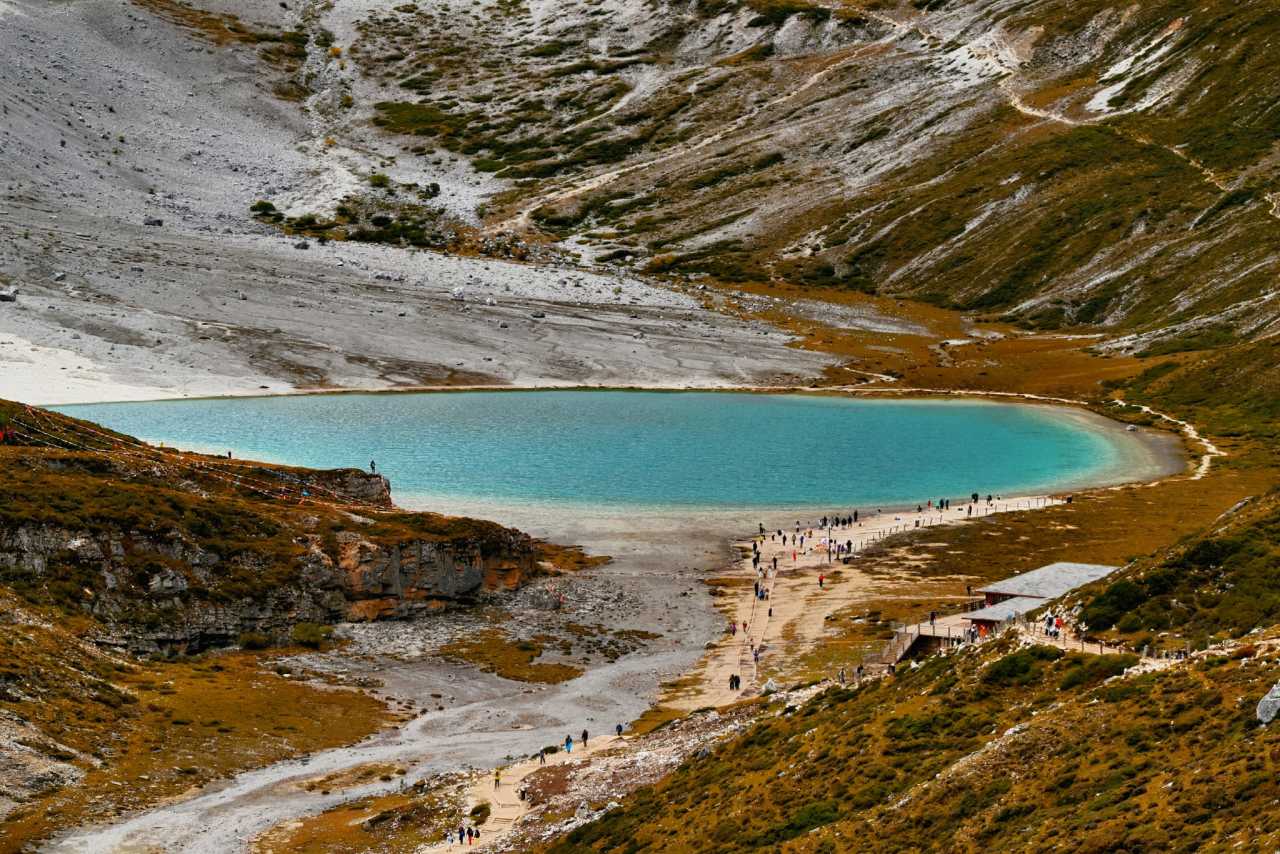 Milk Sea
The rest platform, Milk Sea, and Five-Color Lake form a triangle. From the platform, go “Milk Sea first, then Five-Color Lake.” Milk Sea lures you from the forest; Five-Color is blocked by a hill and requires “another climb”—which spikes heart rate and kills legs—ill-advised right after the ordeal. Rest by the shore first, breathe steadily, then tackle Five-Color—higher success odds.
 Five-Color Lake
Vajra Challenge Line – 07 – Five-Color Lake – Glaze Lake
Five-Color Lake lies between Xiannairi and Yangmaiyong; in Tibetan Buddhism it shares sacred status with Yamdrok (Tibet), named for five colors under light’s magic.
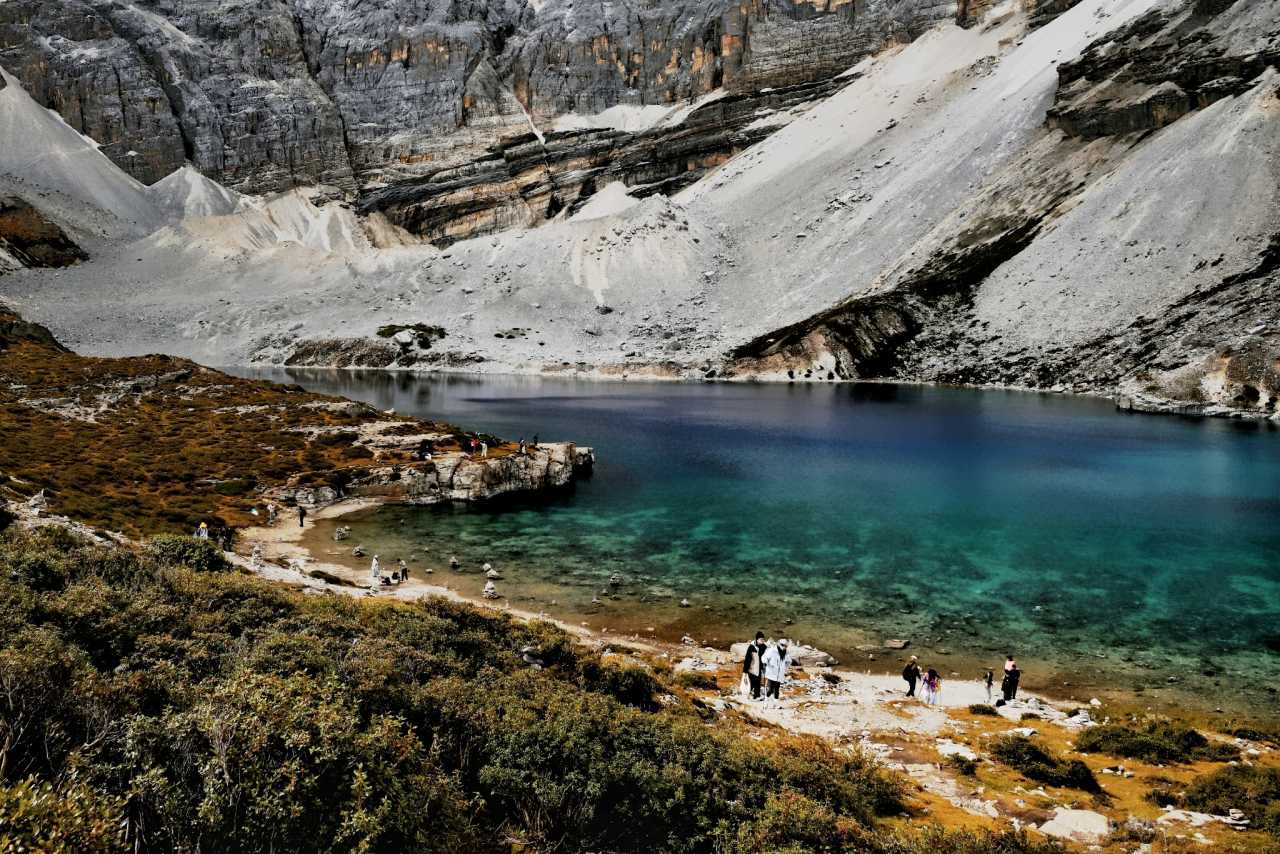 Five-Color Lake
The path to it is the final duel of will vs. fatigue. Only the “not willing to give up—since we’re here” whip drove our lead-weight legs to charge the last high ground.
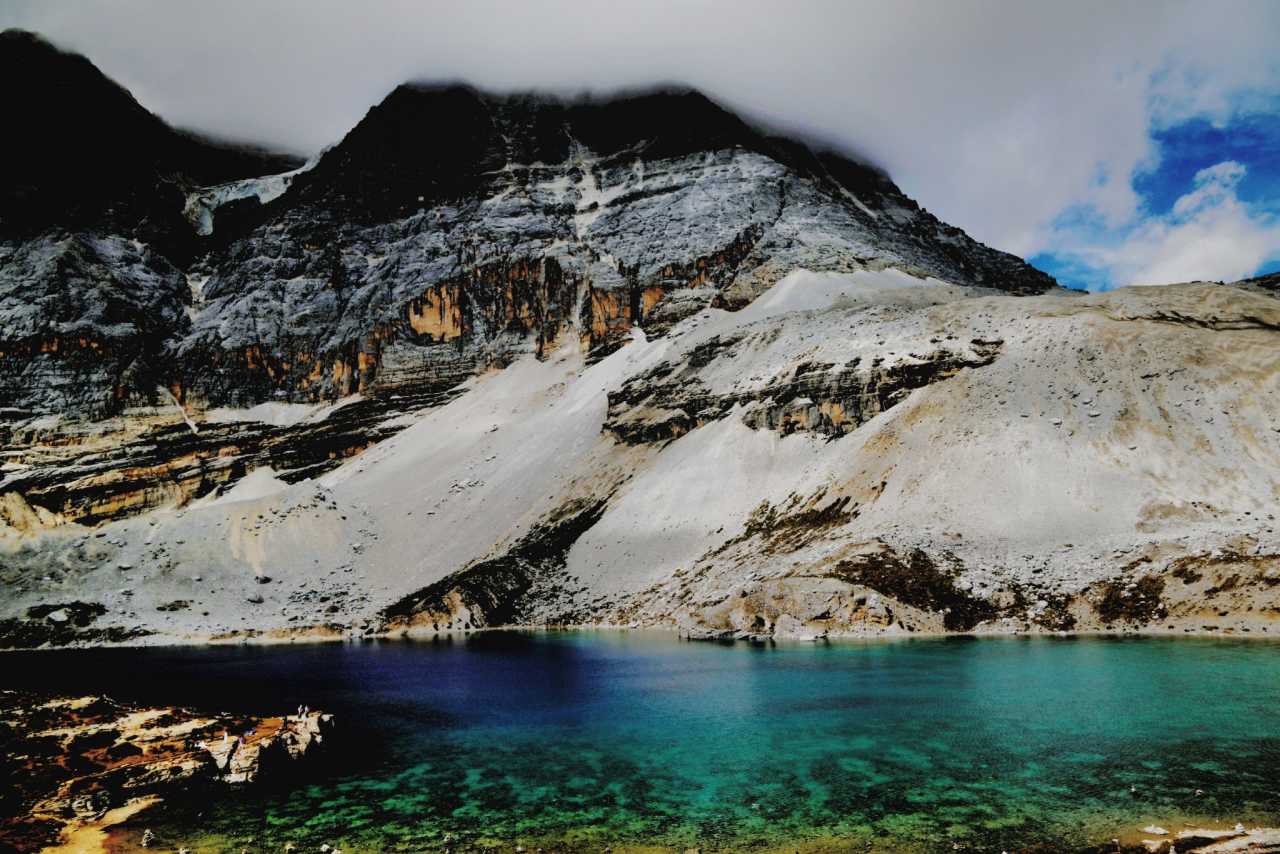 Five-Color Lake
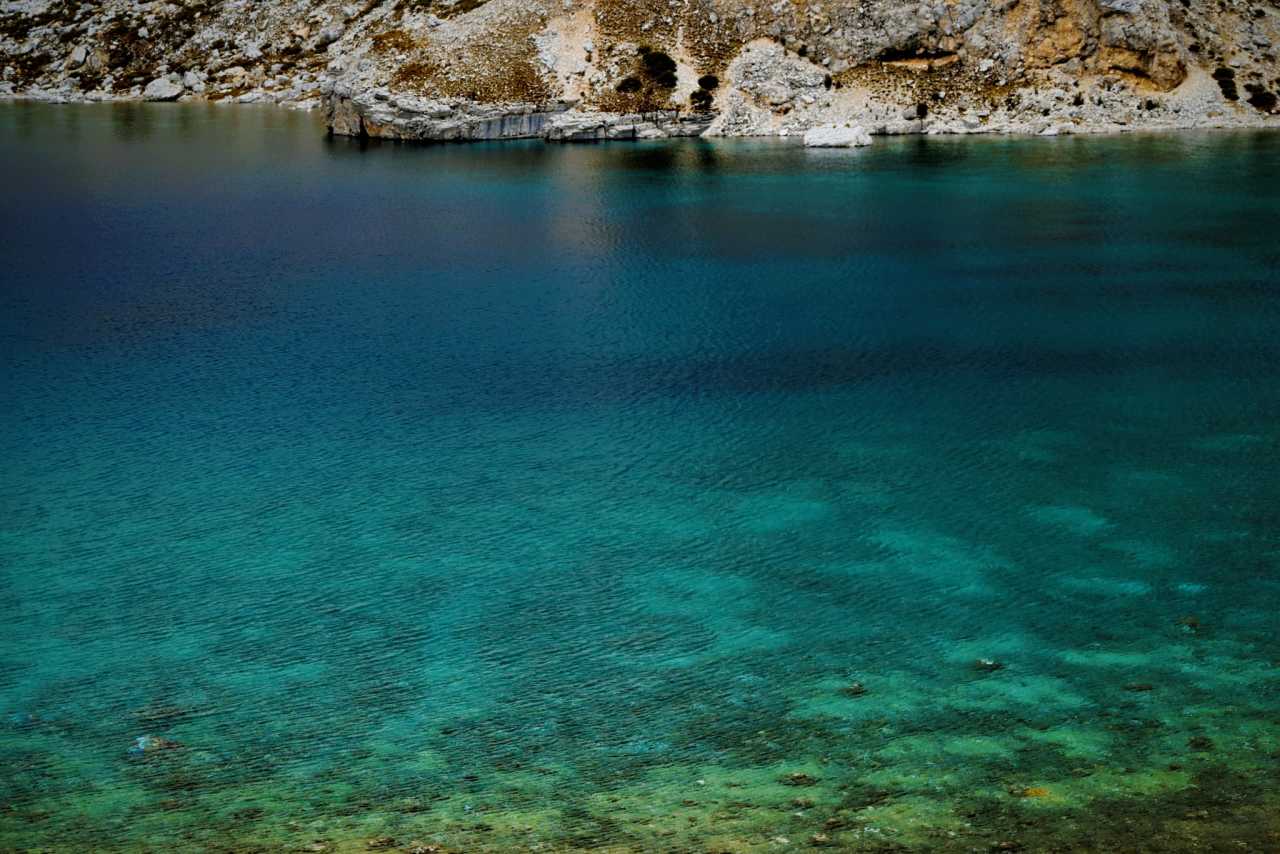 Five-Color Lake
Staff kept urging with loudspeakers—time was tight. The route is a condensed “hell three hundred.” Continuous fatigue, hypoxia, and load made every step heavy.
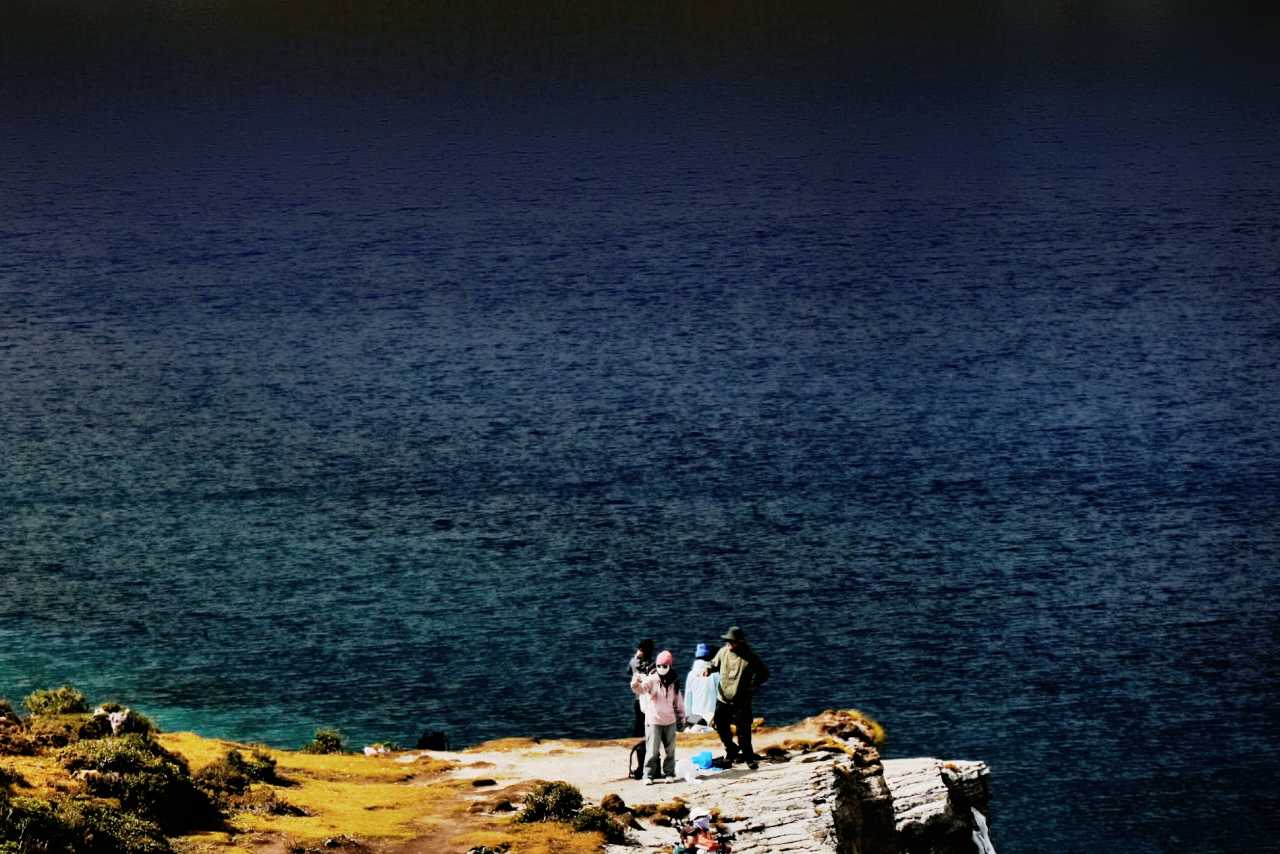
What finally held me was beyond scenery—pure stubbornness. Complicated motives, but if it works, it’s a good cat that catches mice.
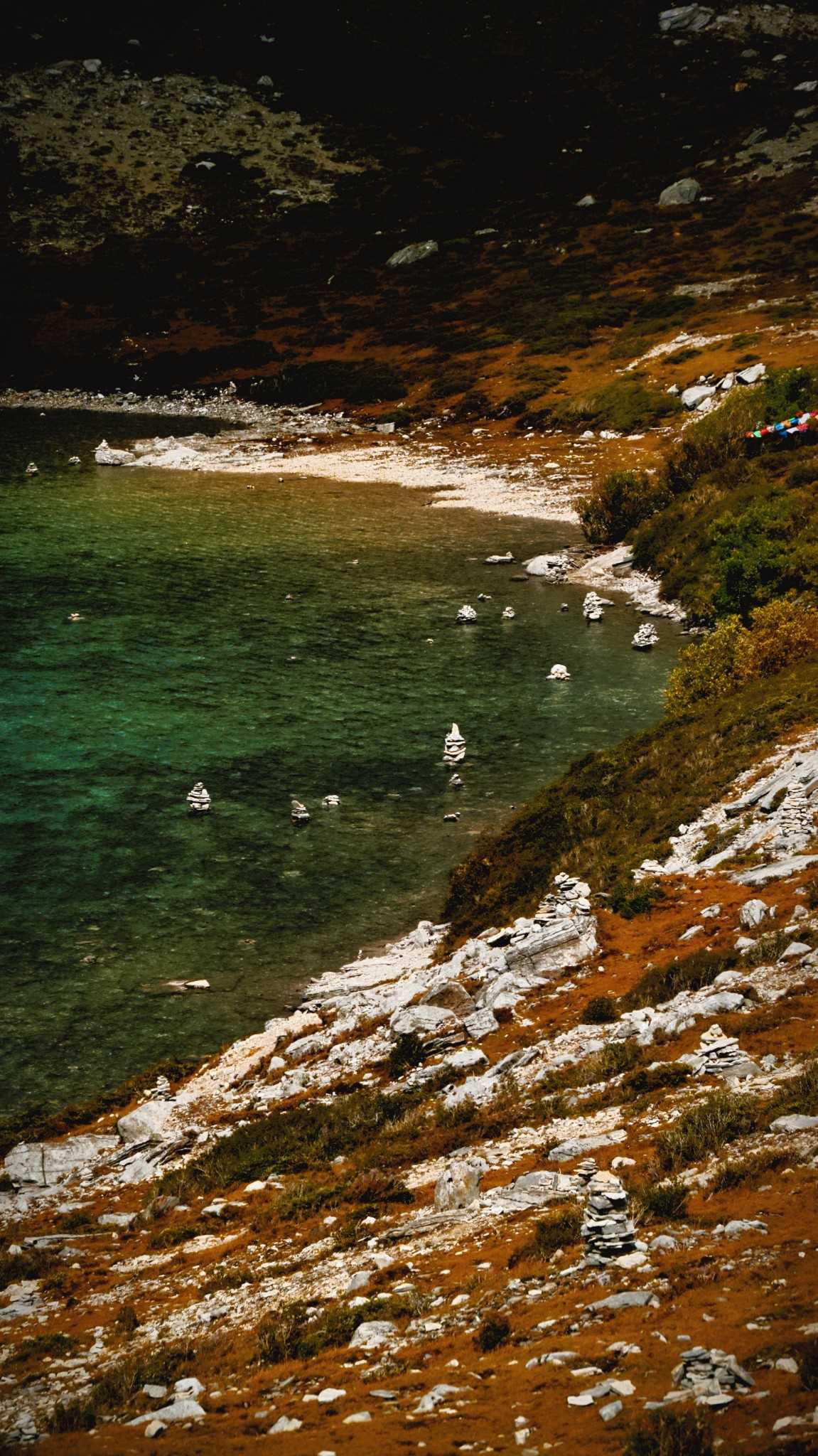 Five-Color Lake
By the time we arrived half-dead, light had dimmed; thick cloud blocked sun—the famed five-color magic didn’t appear.
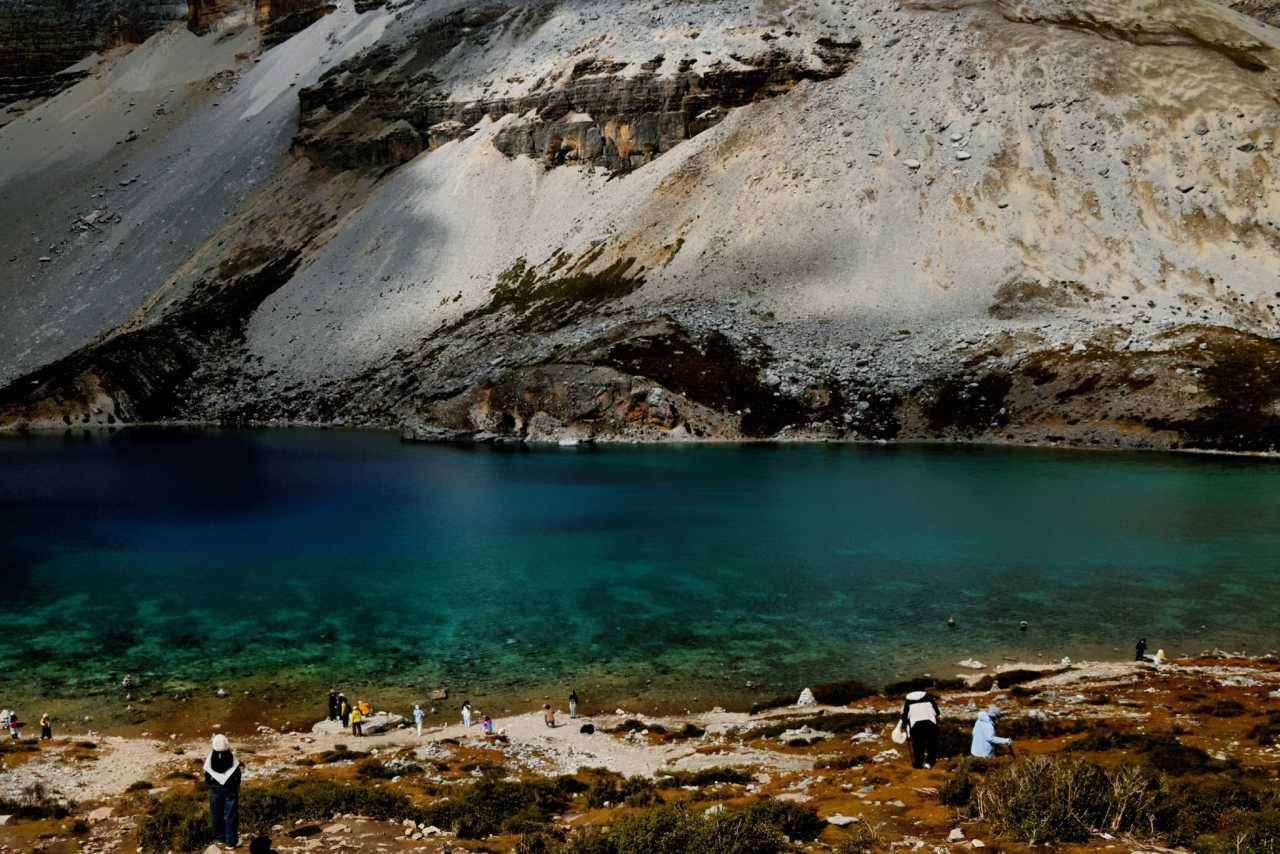 Five-Color Lake
From high up, the lake is much smaller than Milk Sea, quieter, without the iconic milky rim—plain on an overcast day. Many hikers descend slopes to seek subtle color shifts; we lacked time and energy—took a quick look and left.
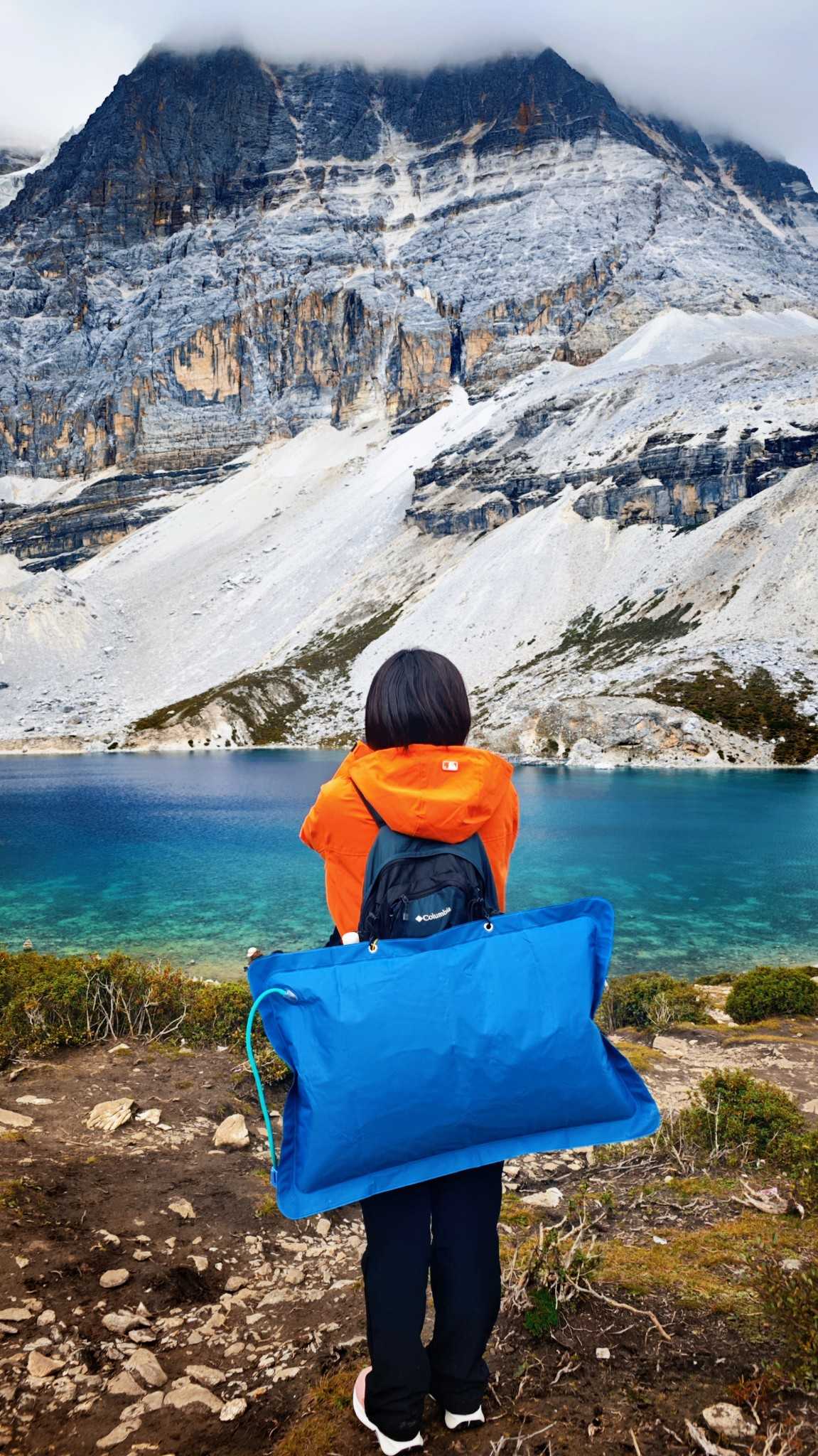 Five-Color Lake
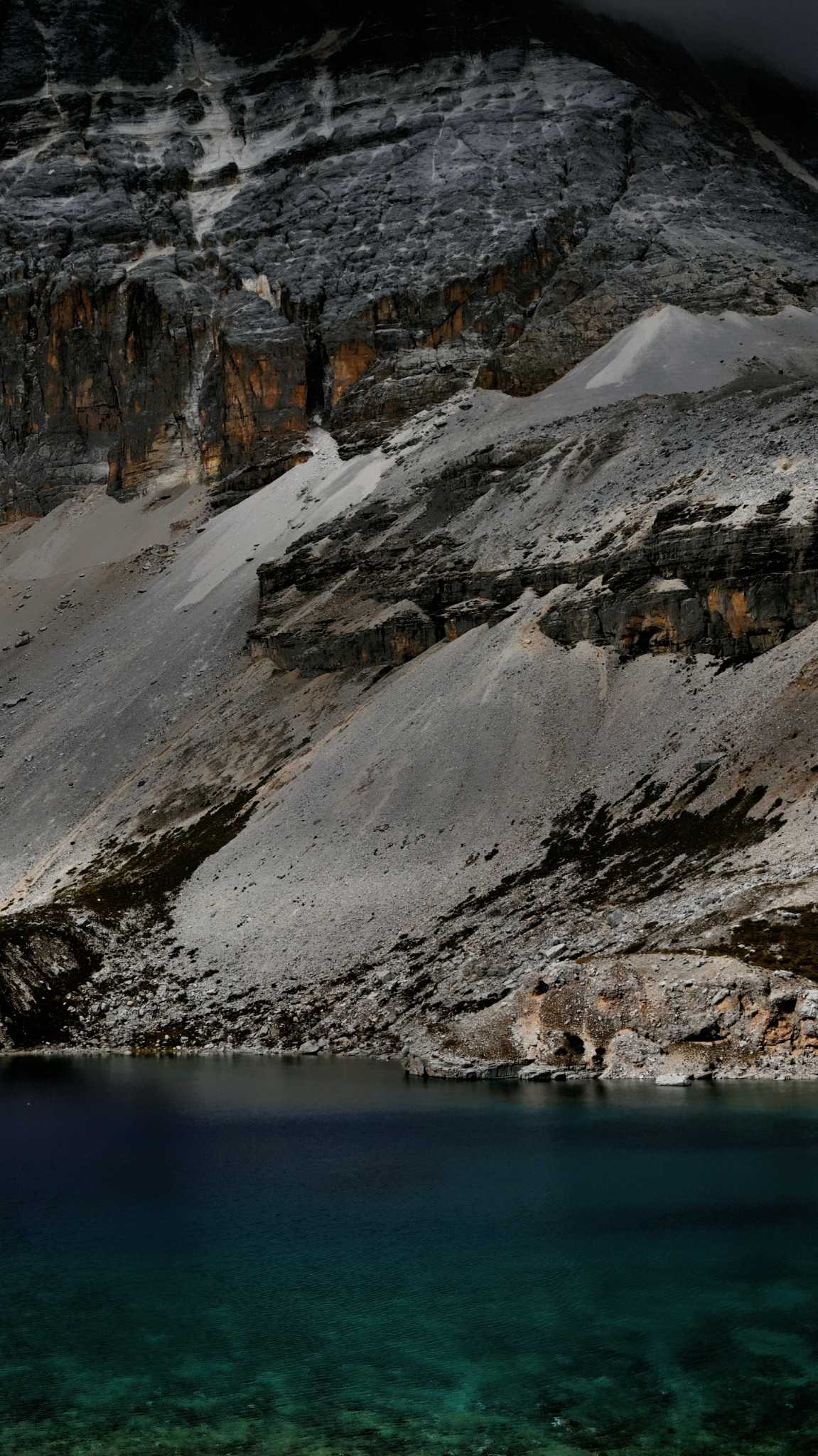 Five-Color Lake
Vajra Challenge Line – 08 – Descent from Five-Color Lake
After “pretending fine” yet nearly dying at Milk Sea and Five-Color, we entered a dull “sage time” (truth: rolled and crawled downhill). Many posts claim the lakes aren’t “worth it.”
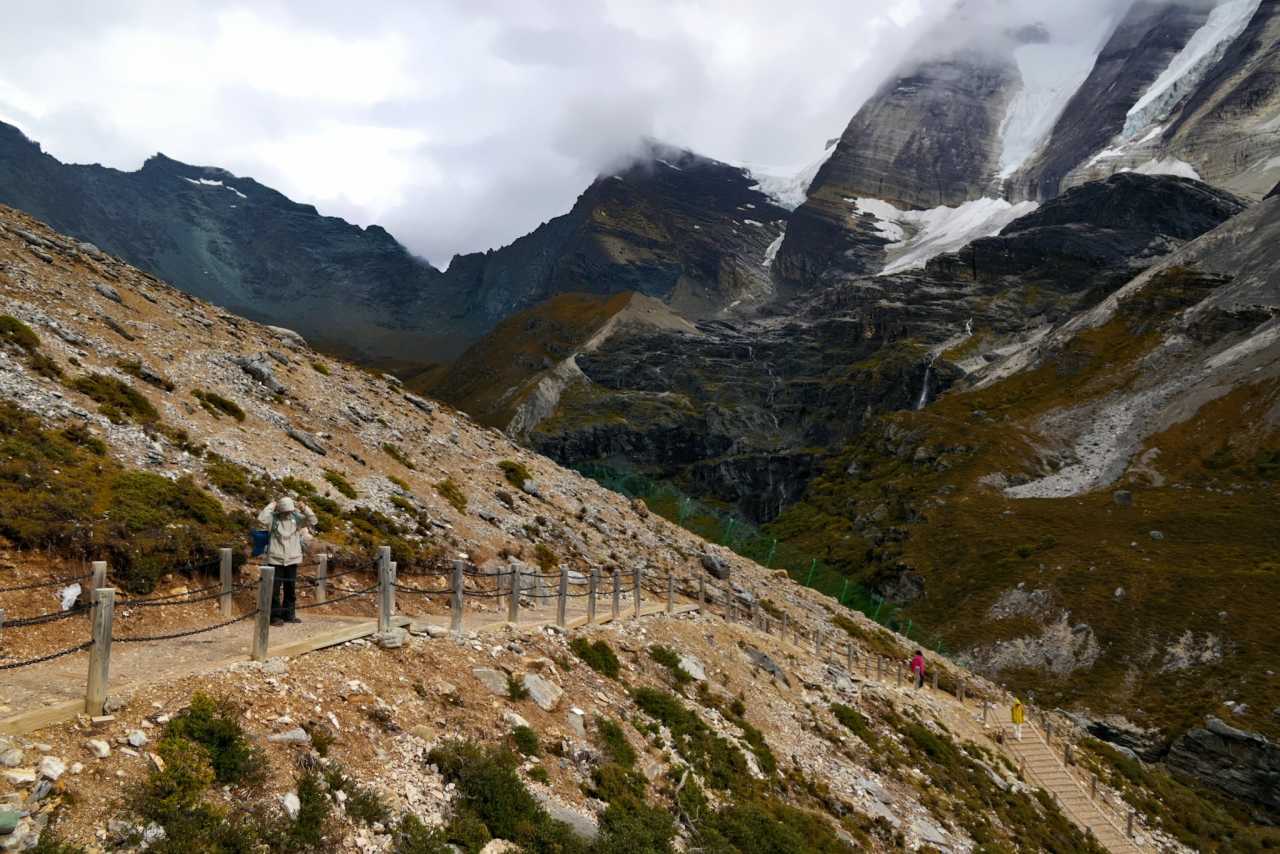 Five-Color Lake
Weather aside, purely on vivid hues and water beauty, Jiuzhaigou is unmatched—hence “After Jiuzhai, no other water.” But on the Vajra Challenge, the lakes aren’t the only protagonists.
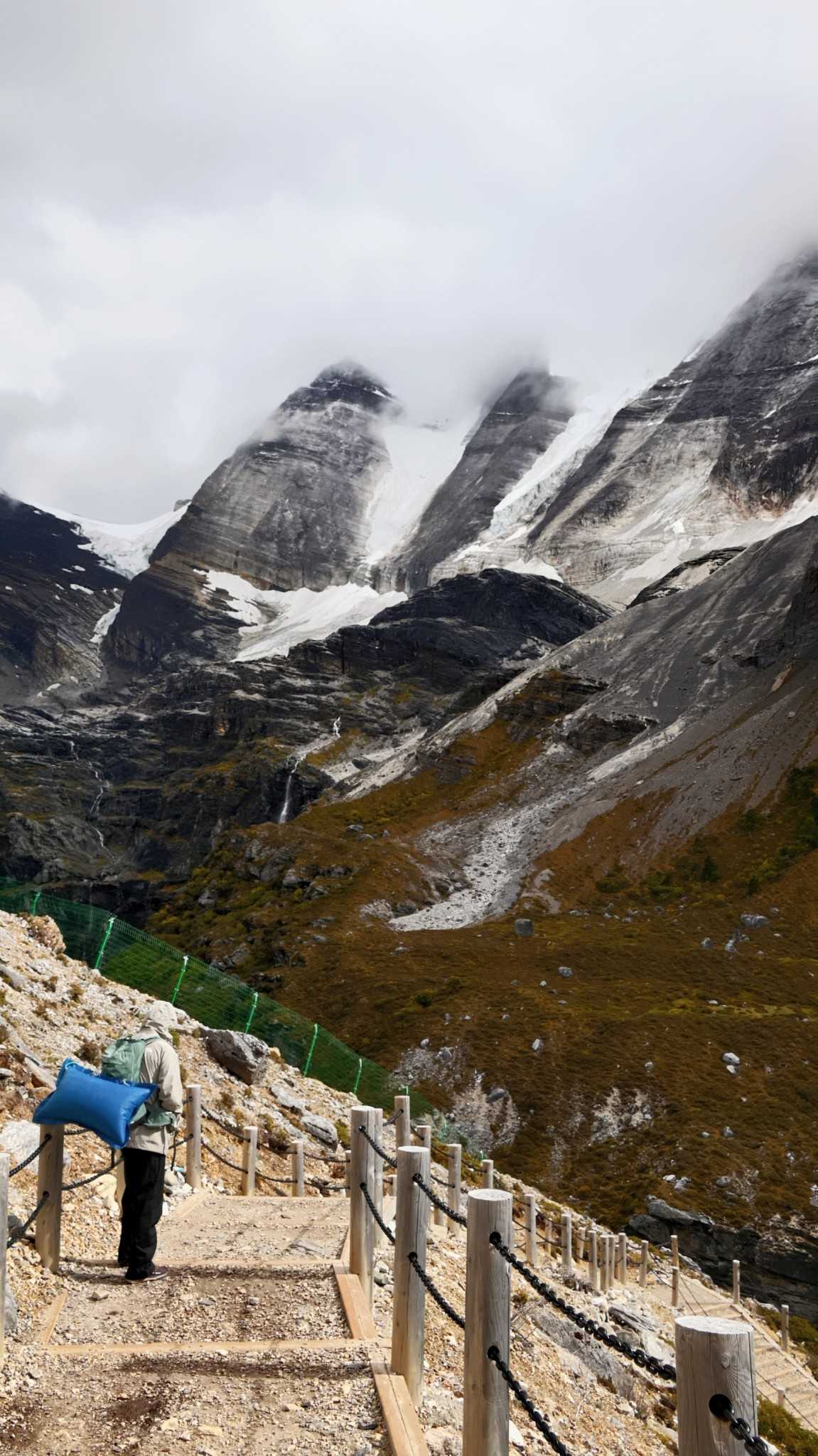 Five-Color Lake
The real treasure is facing holy peaks nearly nose-to-nose. Past the toughest ascent and Sheshenya (Sacrifice Cliff), the view opens. Yangmaiyong’s ice-rock wall fills vision—no longer a distant backdrop but a close, oppressive presence—its solemn calm hints at wisdom’s strength.
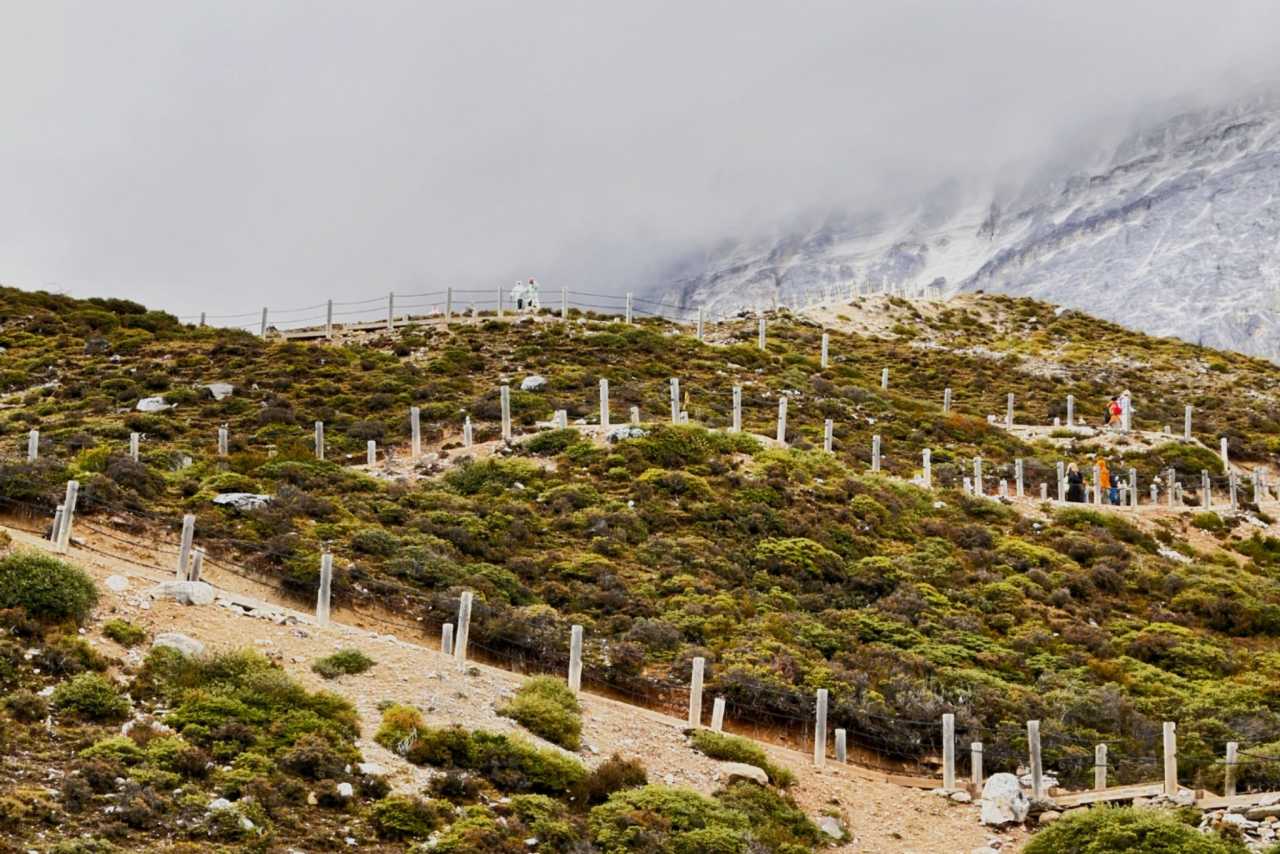 Five-Color Lake
En route you also enter Xiannairi’s domain—the chief among the three. Massive body spans the front; snow and glacier textures are clear—almost within reach. At Pearl Lake you only see the reflection; here you sense its breath.
Most thrilling: from the slope by Five-Color you can see both Xiannairi and Yangmaiyong—standing in the center of ranges, becoming part of the scenery.
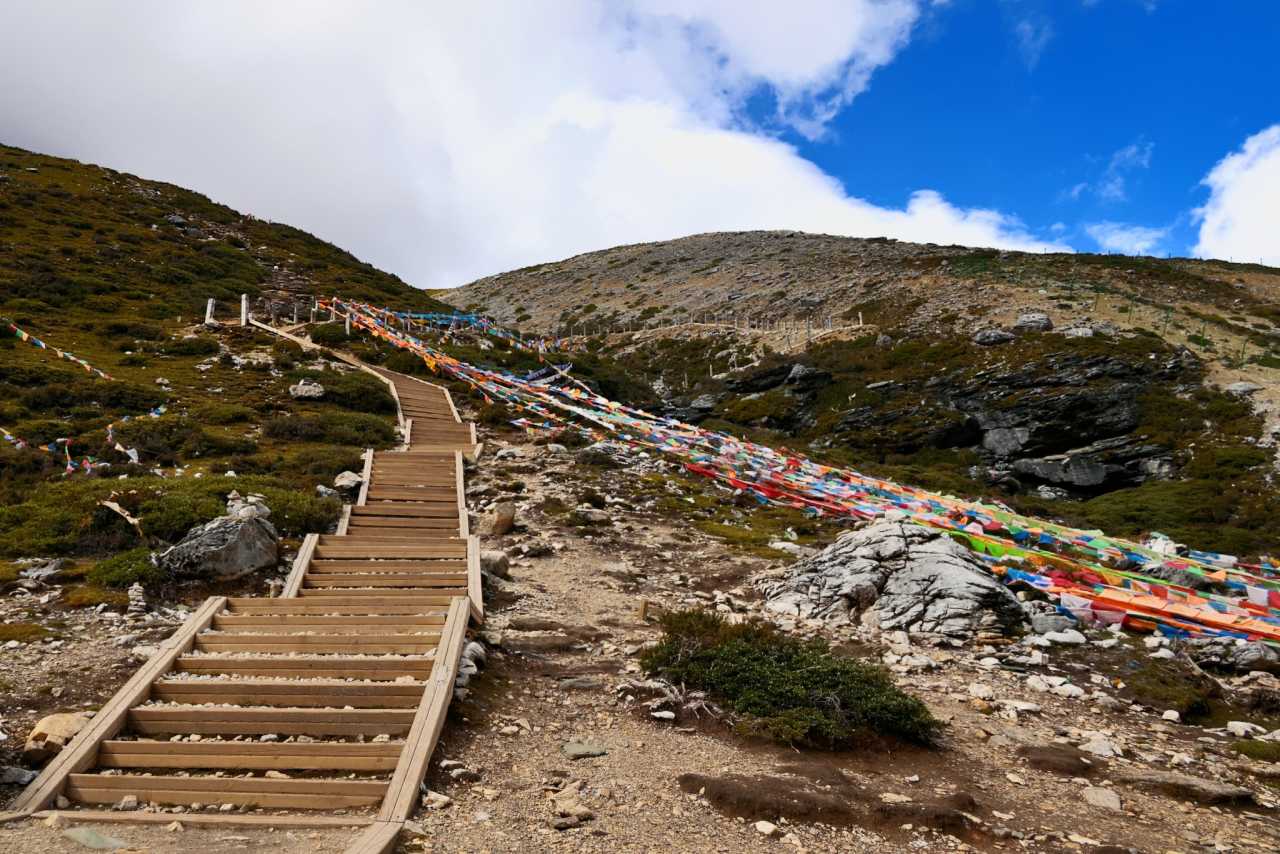 Five-Color Lake
Being encircled by multiple 5000 m peaks is beyond any distant view or vehicle ride. Not a postcard, but a deep memory of dialogue with nature. At ~4800 m, many say “we glimpse the world’s end”—perhaps not a specific lake but the planet’s primal face formed by pure peaks.
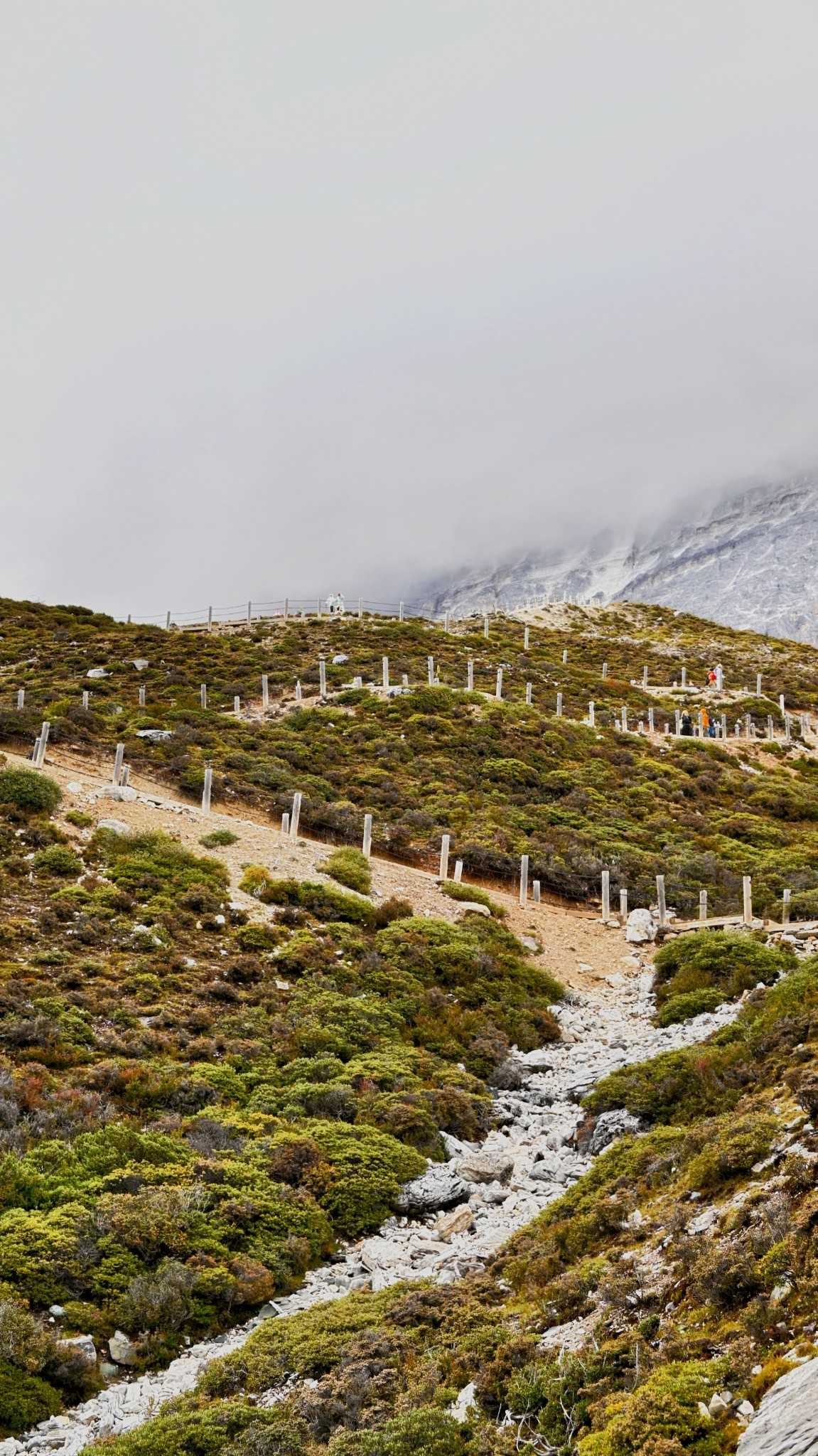 Five-Color Lake
Is the Vajra Challenge worth it? Adjust expectations. Come not only for lakes, but for a solemn appointment with snow mountains. When wind whips the pass and the peaks stand quietly before you, you’ll know all the effort was for this moment—a close conversation with the mountains on the “last pure land.”
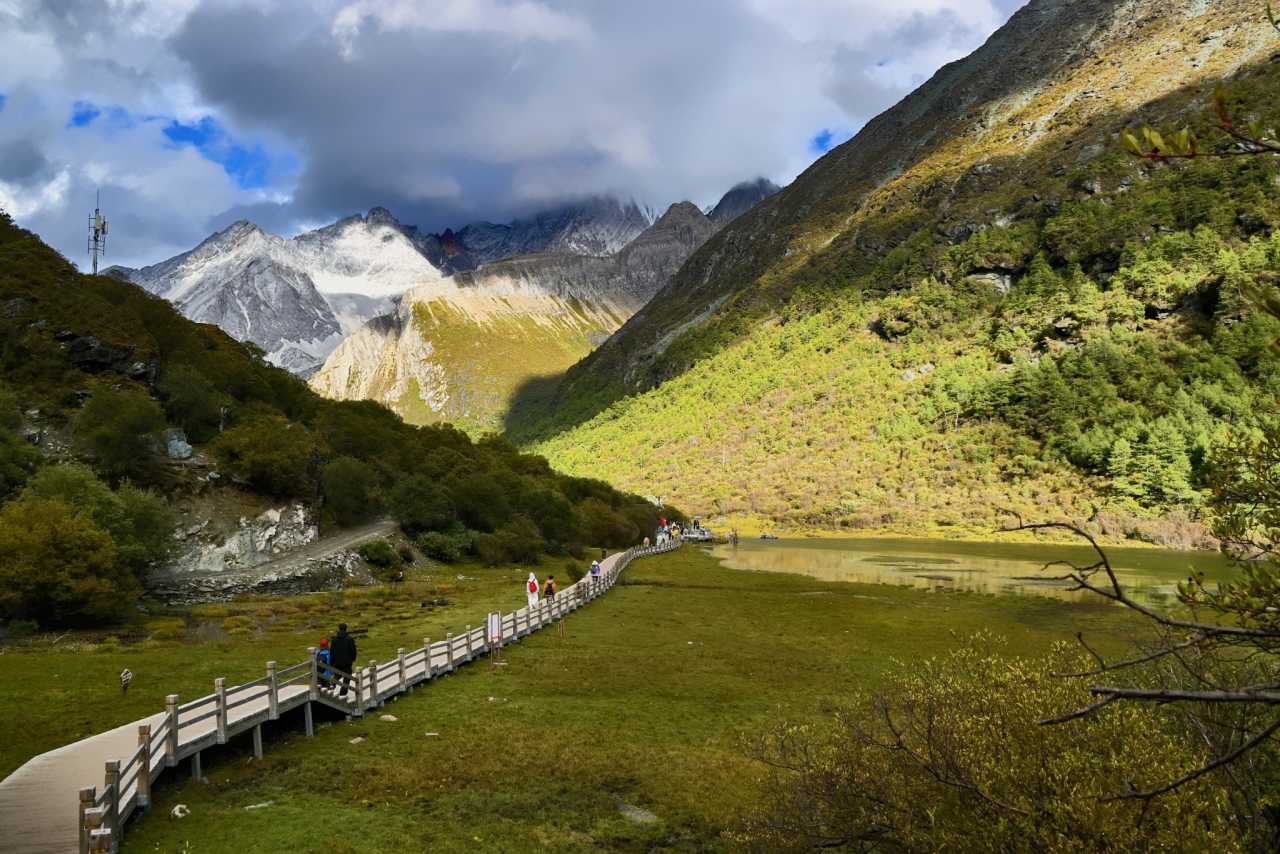 Five-Color Lake
Unsurprisingly, under relentless staff urging, we were the last batch to leave. Worse than the “hell 300 m” is doing it again on return—downhill should be easy, yet felt even more draining. We forced a smile at Sheshenya for a check-in shot.
Vajra Challenge Line – 09 – Meet a Rainbow
Highland weather flips quickly. Rain returned; fine threads in sunset wove silver veils across ranges. When showers paused, mist rose; sunlight pierced vapor and arced a rainbow across the valley.
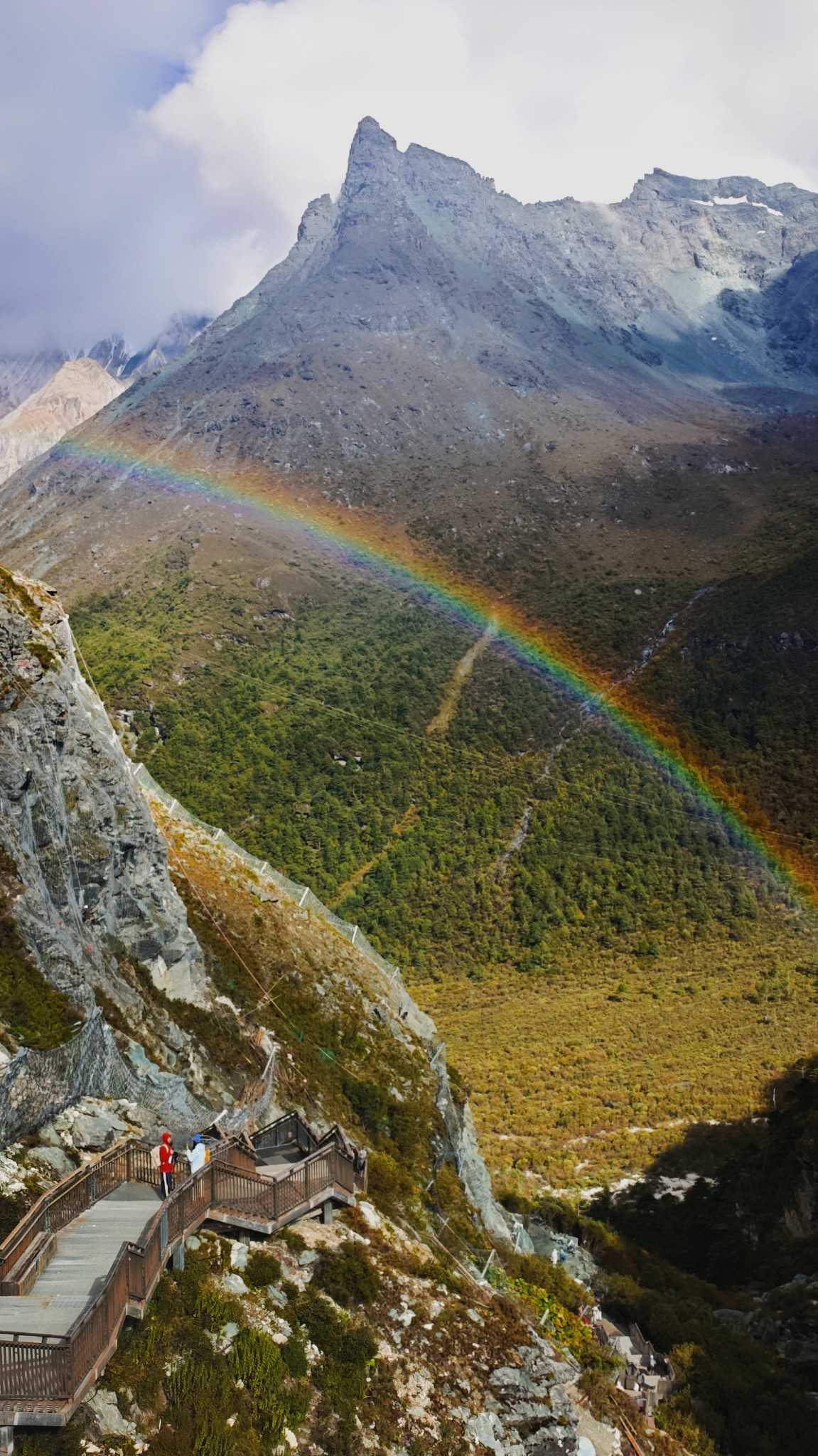 Daocheng Yading – Yading Viewing Deck
The rainbow was shockingly clear—plateau air is clean with little dust, saturating colors beyond ordinary. We chased the best angle along winding road, watching it appear and vanish between woods—adding fun to a tiring return.
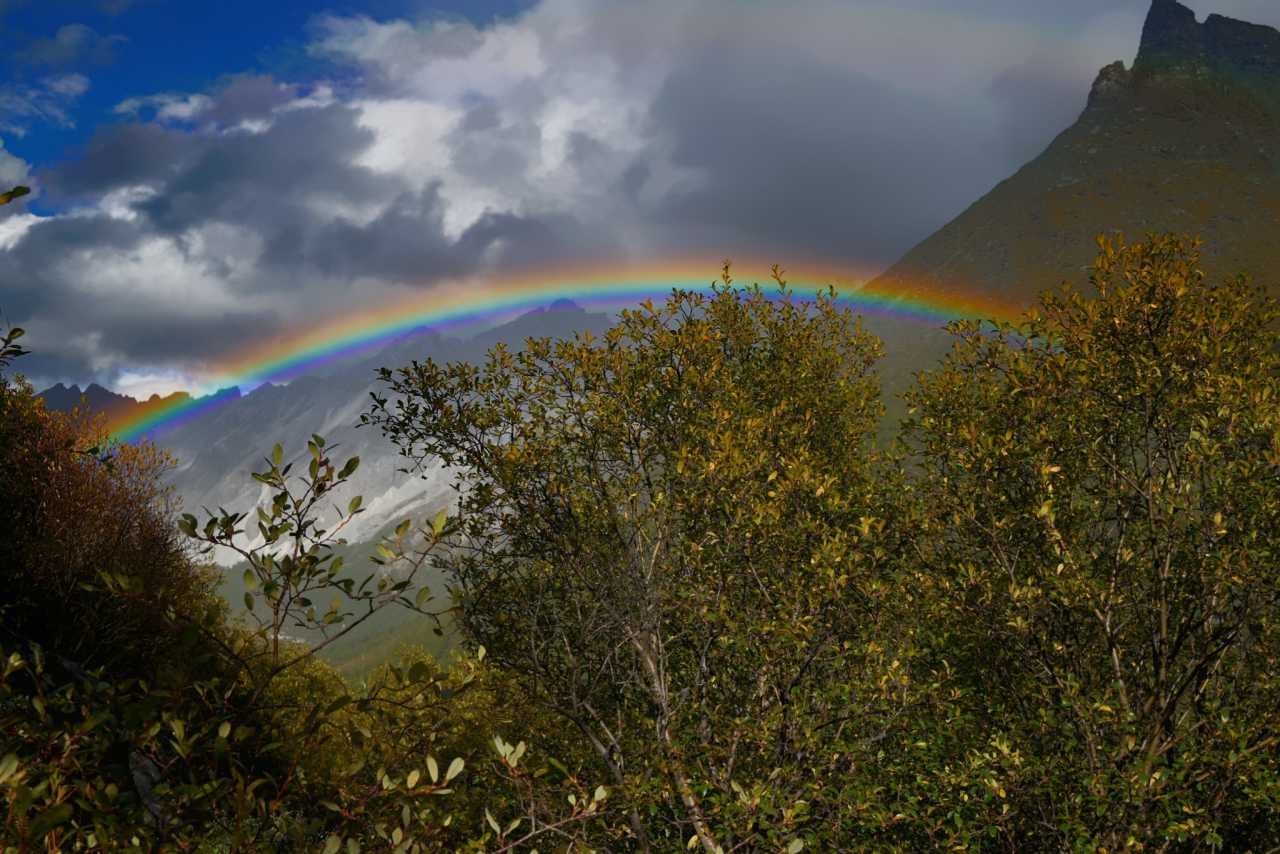 Daocheng Yading – Yading Viewing Deck
Two return branches lead from Gongga Cuo; we casually chose the right. It’s fairly gentle; on a normal day 2 km is nothing. But after a whole day’s march, the body is spent—joints creak like rusty hinges—every step moves by will alone.
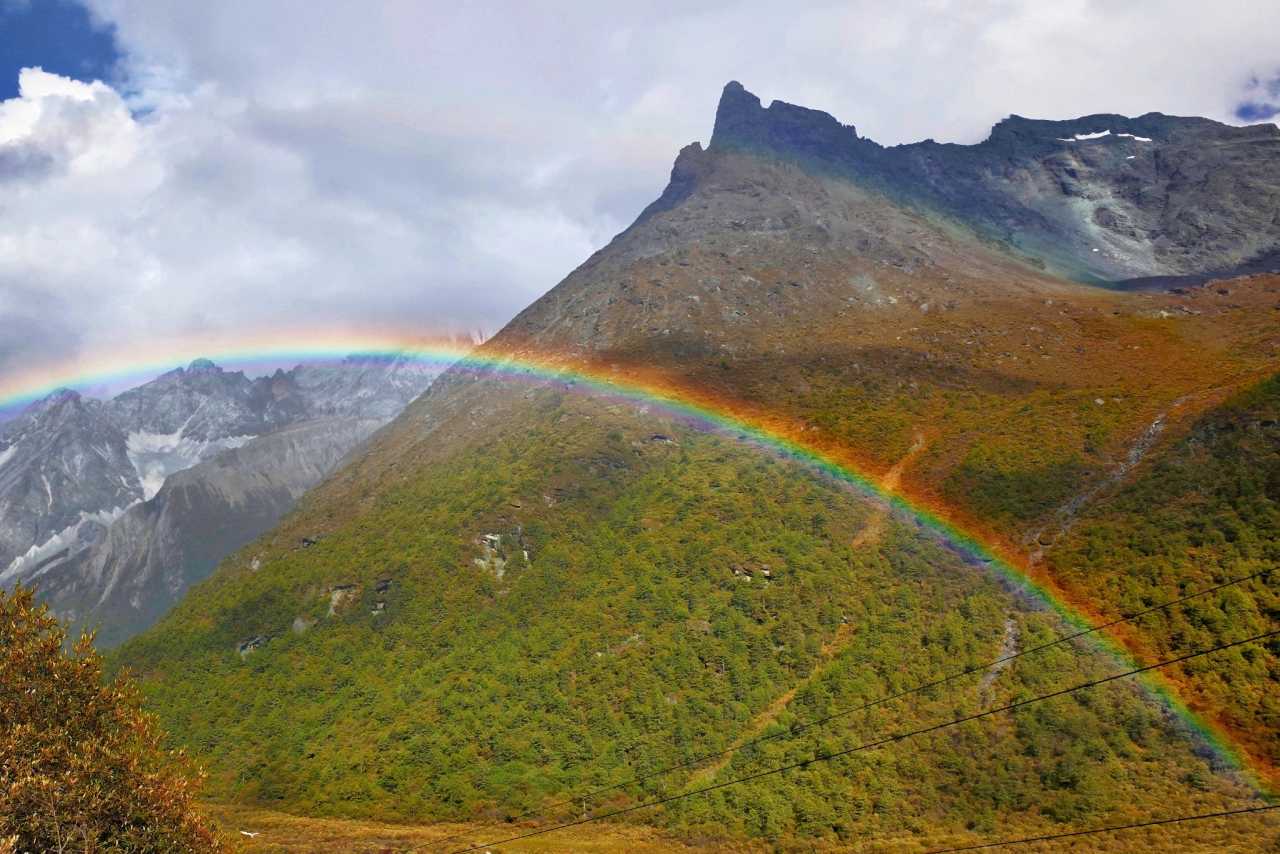 Daocheng Yading – Yading Viewing Deck
We finally fell into the cart seats at dusk. Drivers flew through bends; we had no strength to gasp. The 500 m from Zhaguanbeng to the bus point felt longest—slope pressed full weight on toes; only the shoe front braced hard to avoid sliding down on our butts.
—— Major Transport, Transit, Local ——
Major Transport: Shanghai Pudong → Chengdu Tianfu → Daocheng Yading
To ease altitude reactions, the gentlest way is self-driving from Chengdu over 2–3 days. With limited “cattle-and-horse” vacation, we flew—no direct flights, a bit of hassle. In late September, Yading Airport had only two morning flights, both from Chengdu Tianfu.
Shanghai Pudong → Chengdu Tianfu: we flew after work, stayed overnight near T2, then the first flight to Yading, arriving noon in Shangri-La Town to acclimatize instead of rushing into the park (acclimatization is crucial).
 Chengdu Tianfu International Airport T2
Recommended: Tianfu Konggang Yuexiang Hotel (Tianfu Airport). About 10 minutes’ walk from T2 exit; friendly to late arrivals. Rooms are new and clean—excellent for a transit night. Price is a bit high, but don’t sacrifice rest to save money.
Skip hotel breakfast—McD across the street opens 5:30 am—perfect for early flights.
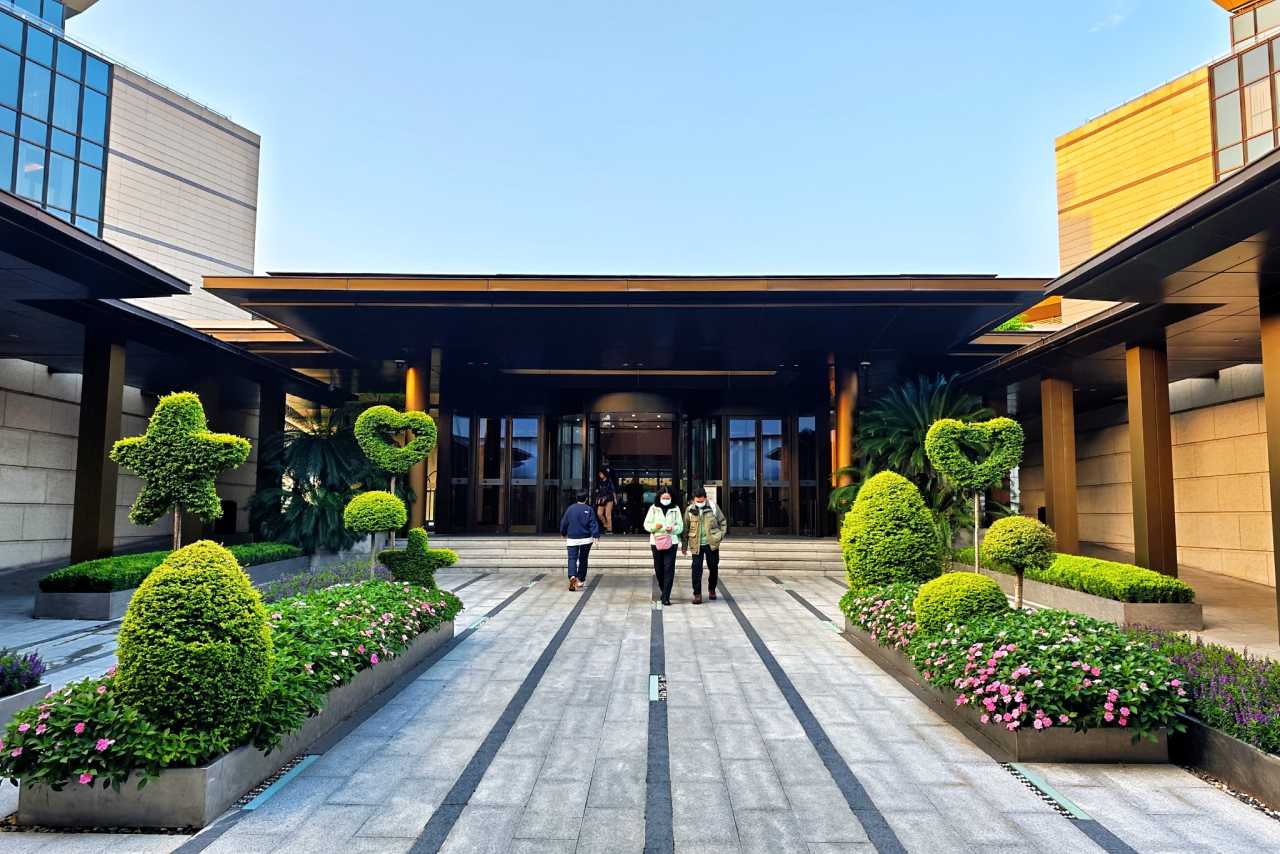 Chengdu Tianfu International Airport T2
Transit: Yading Airport → Shangri-La Town
Daocheng Yading Airport is among the world’s highest civilian airports at 4411 m. Terminal looks like a small flying saucer—echoing Yading’s otherworldly landforms.
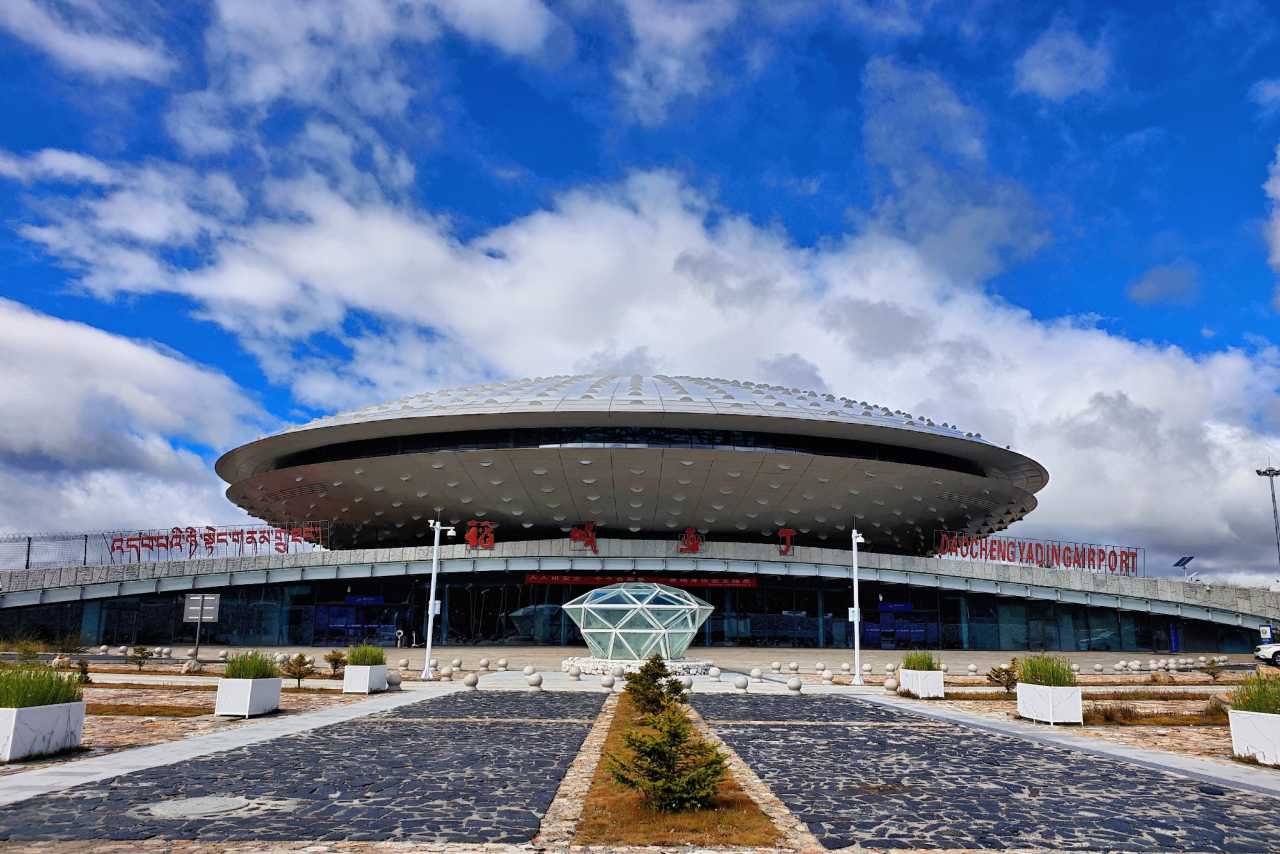 Daocheng Yading Airport
Flying directly from Chengdu brings two issues: altitude reaction and strong wind.
From prior G318 self-drive, I had mild headache around 4000 m; partner felt pressure at ~4300 m. This time, direct ascent caused mild symptoms—acceptable.
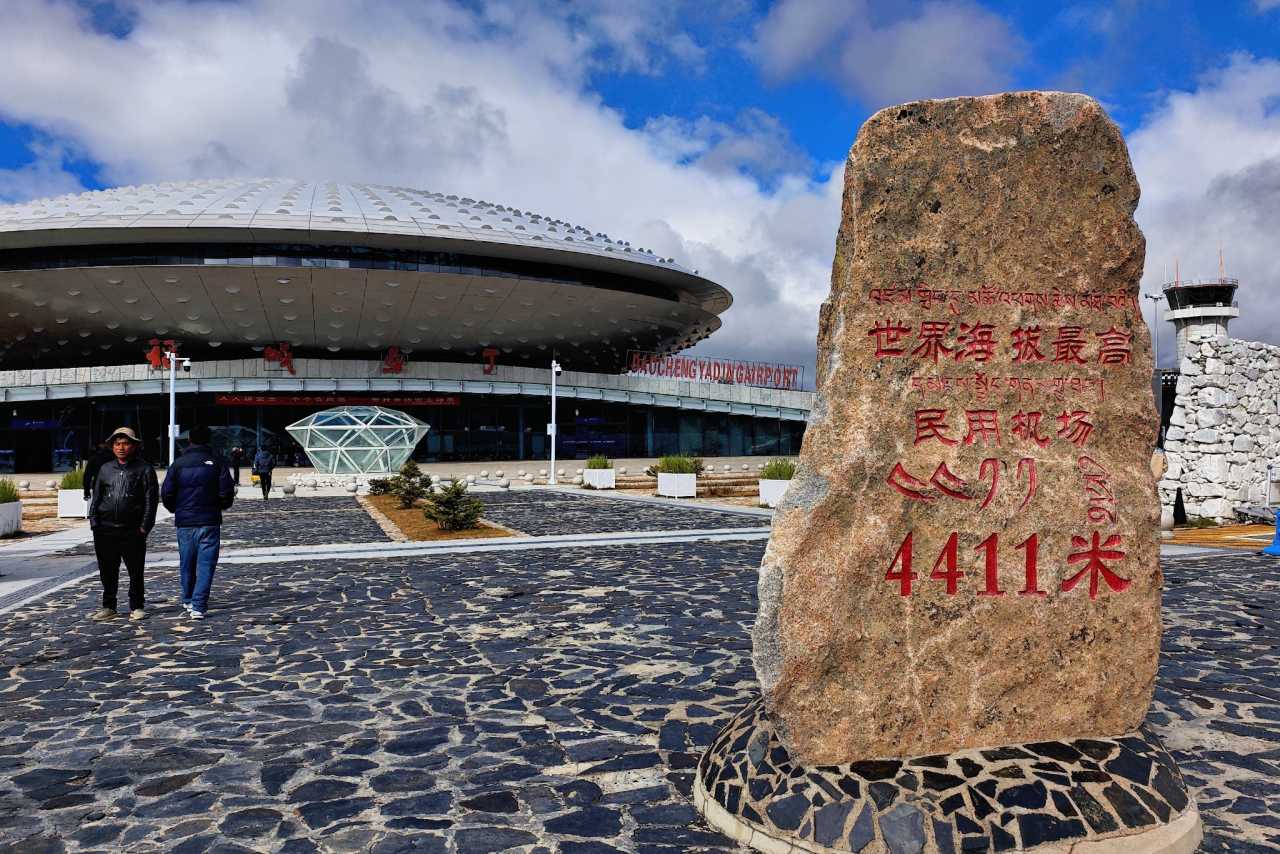 Daocheng Yading Airport
To town there are two options: private cars solicit at arrivals—100 RMB/person to your hotel; or scheduled buses at the right of the main exit behind the white wall—85 RMB/person—also to your hotel. Both take ~1.5–2 hours.
For return, our hotel arranged a yellow MPV taxi—100 RMB/person shared—fair price.
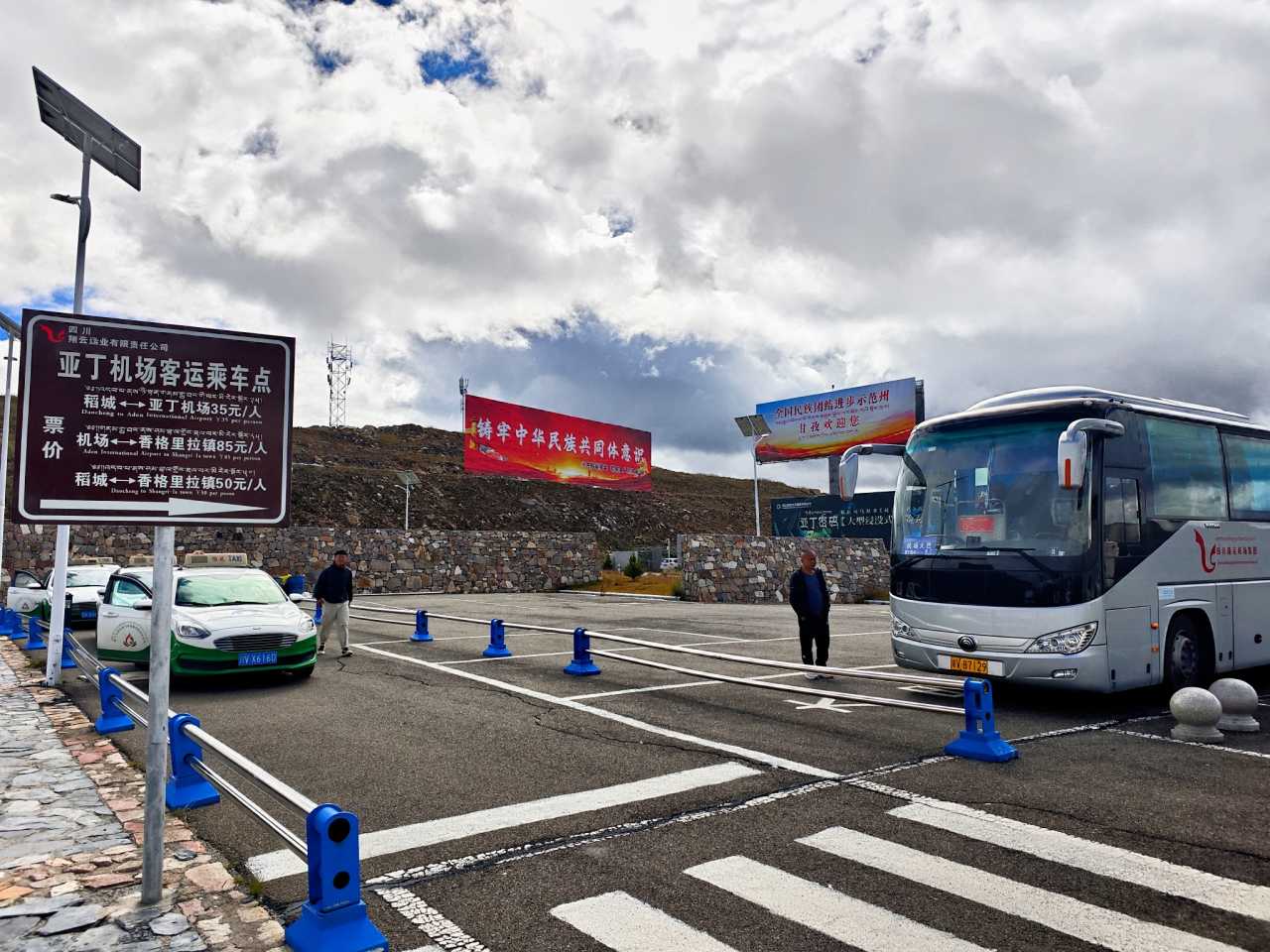 Daocheng Yading Airport
En route buses stop at Rewu Monastery for a short stretch. The complex spreads across the hillside, comprising upper and lower temples.
“Rewu” in Tibetan means “place of the broken jar.” Legend says a monk carried a clay jar seeking where to build; the master said “where the jar breaks, build the temple.” It broke here—so they built.
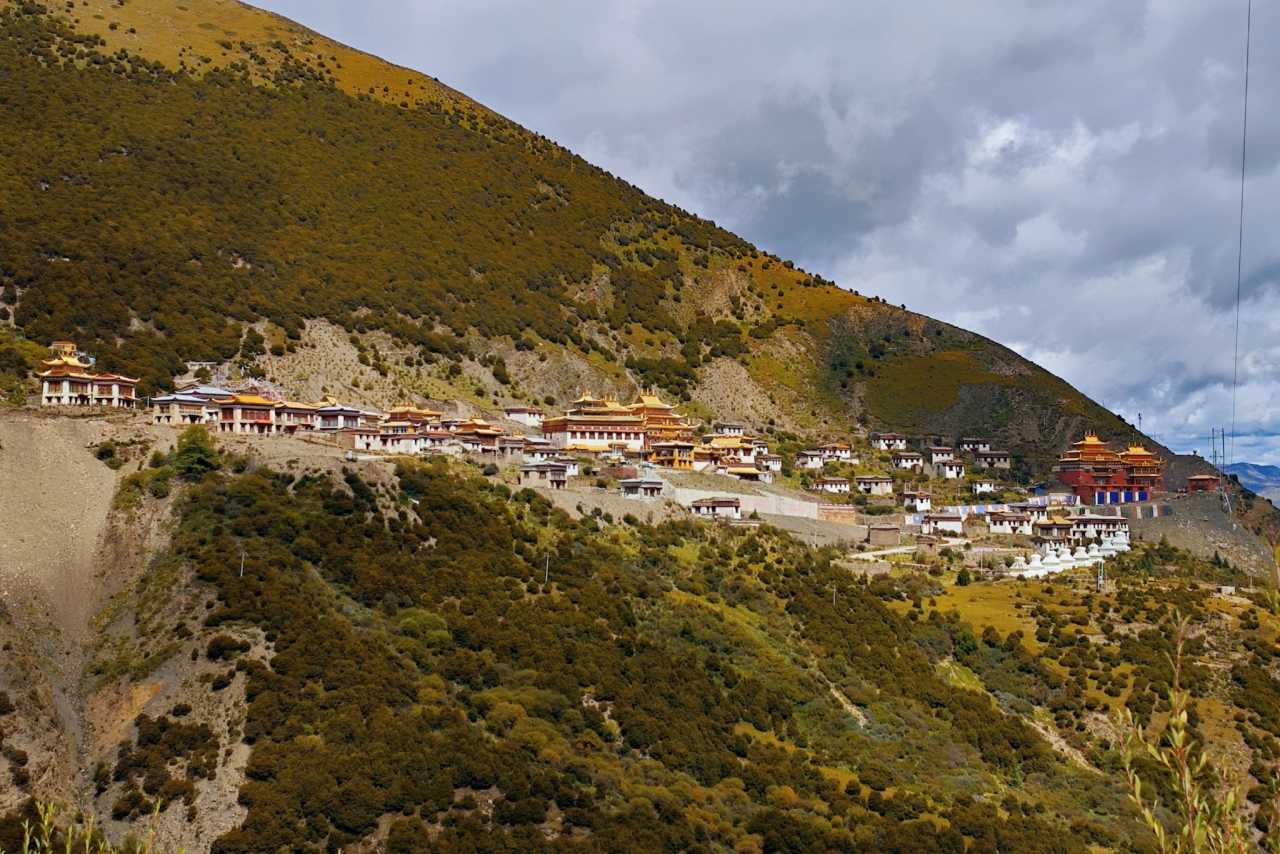 Rewu Monastery
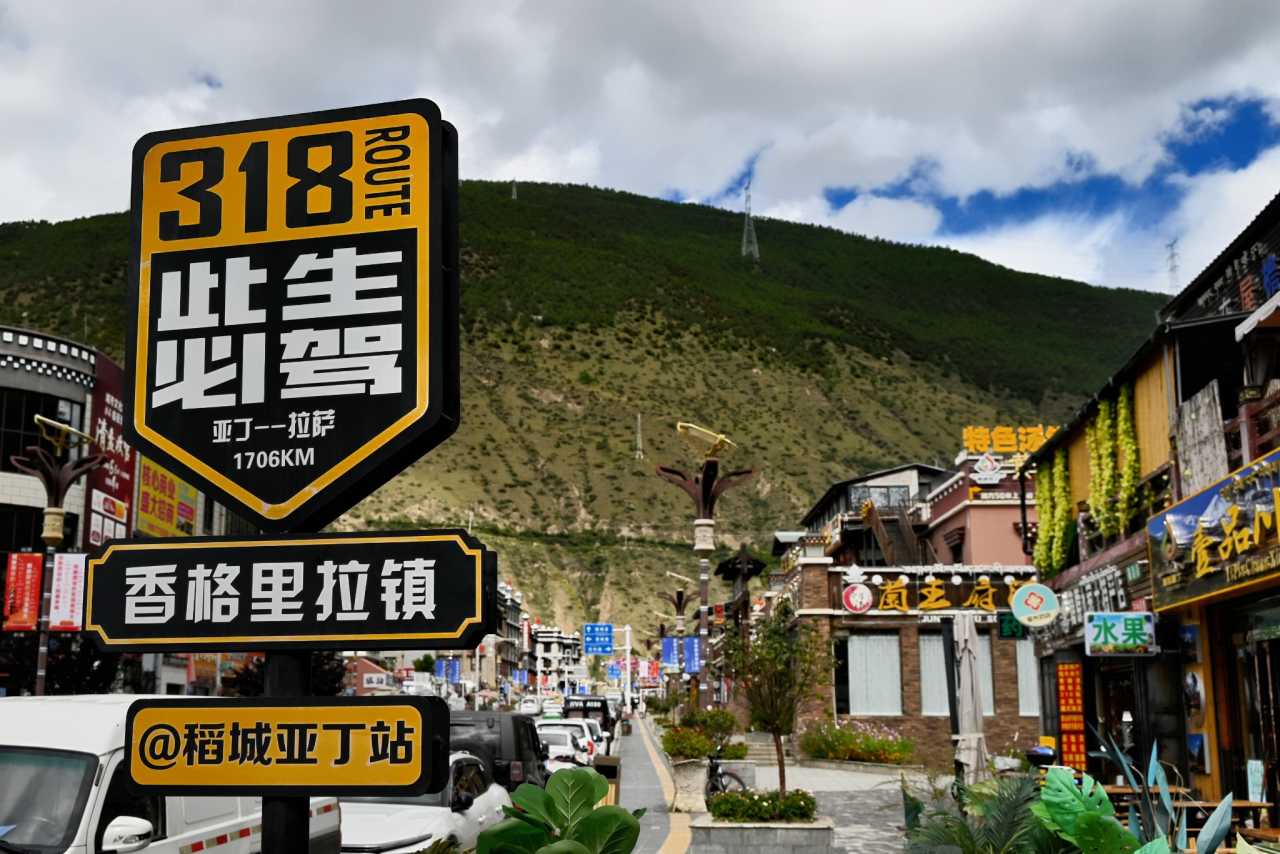
Place names confuse many: Daocheng County, Shangri-La Town, Yading Village, and Daocheng Yading Scenic Area stack by administrative and geographic containment: Garzê Prefecture > Daocheng County > Shangri-La Town > Yading Village > Yading Scenic Area.
 Shangri-La Town
“Going to Daocheng” usually means Daocheng County (Jinzhu Town), where the airport is—80 km from the core scenic area; bus ~2.5 hours. Note: not the same as Yunnan’s city named Shangri-La.
 Shangri-La Town
 Shangri-La Town
 Shangri-La Town
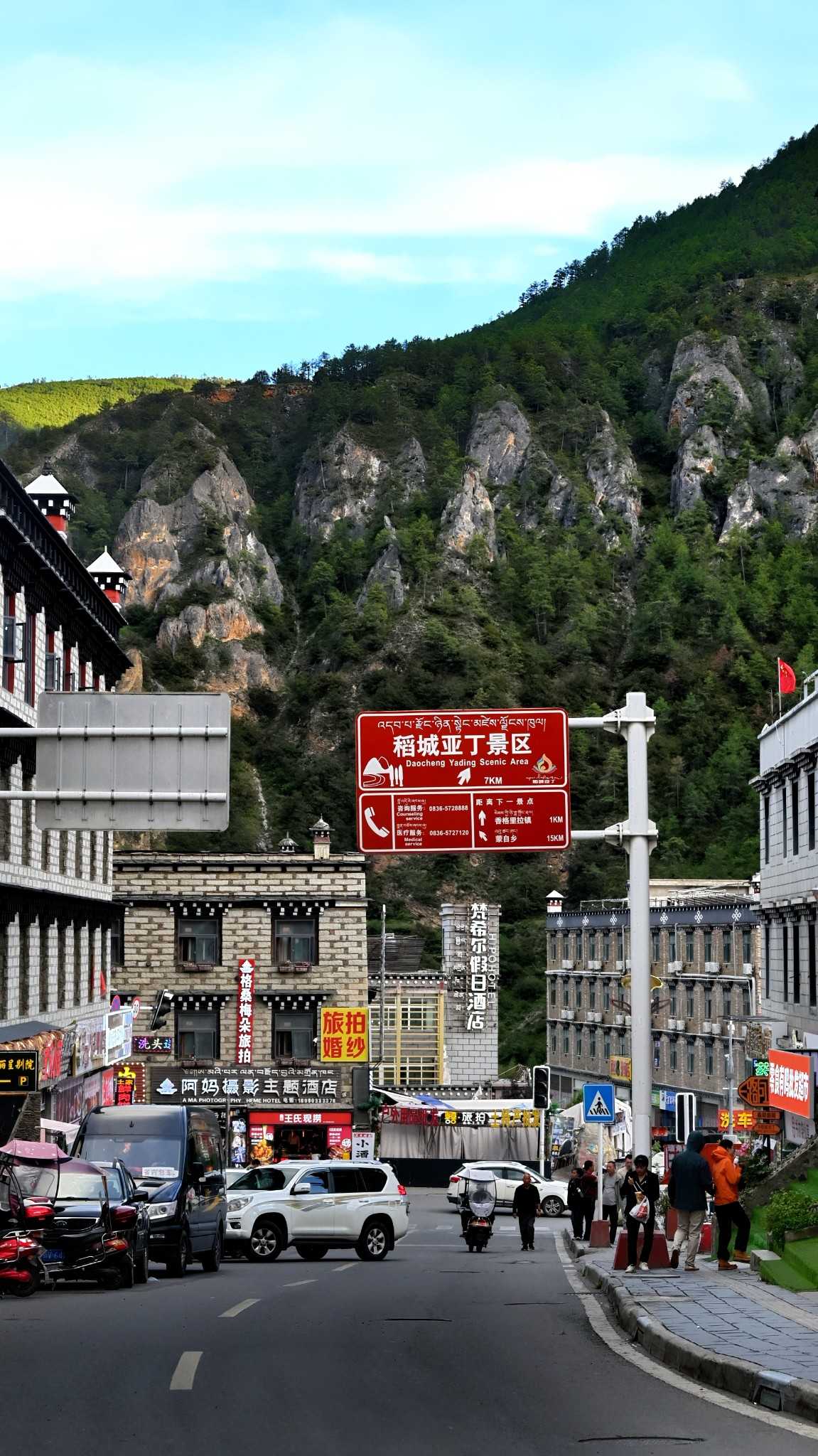 Shangri-La Town
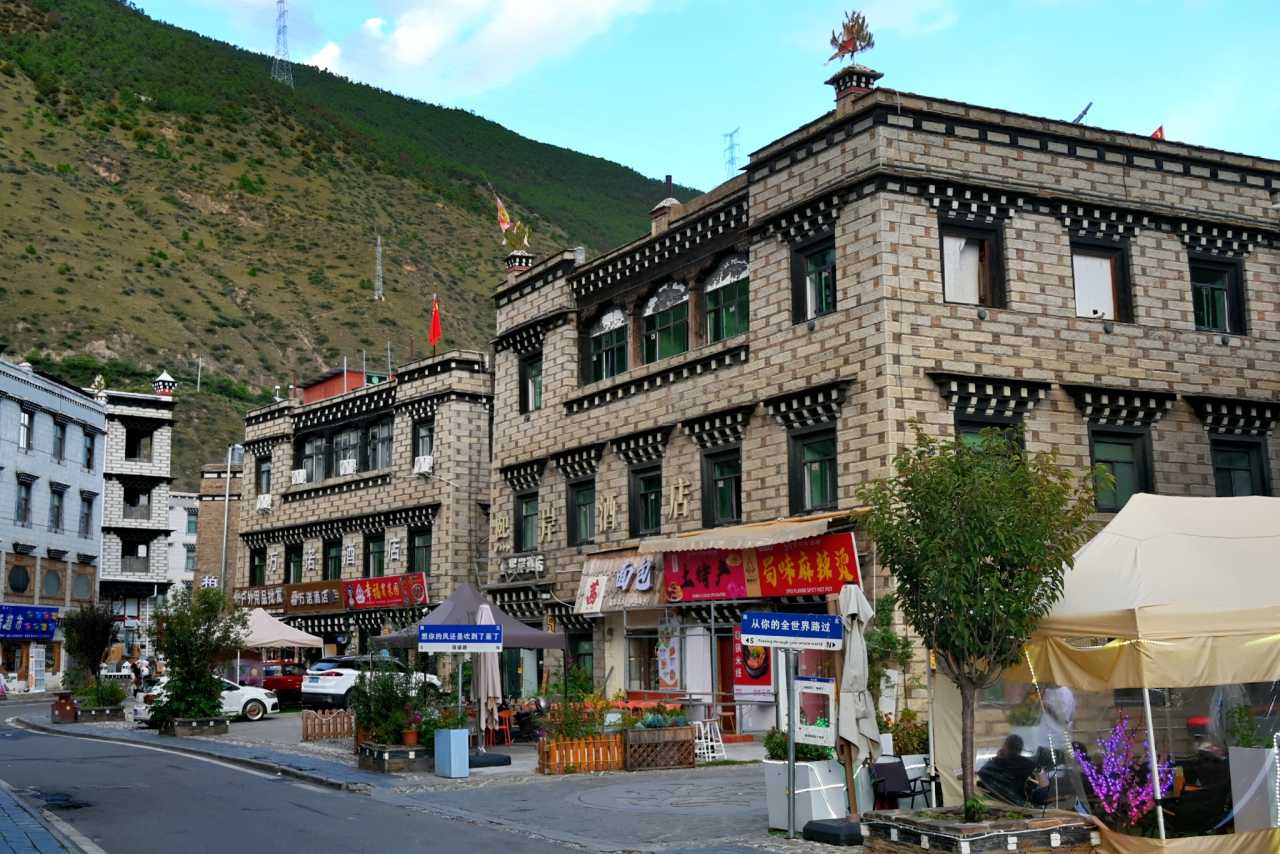
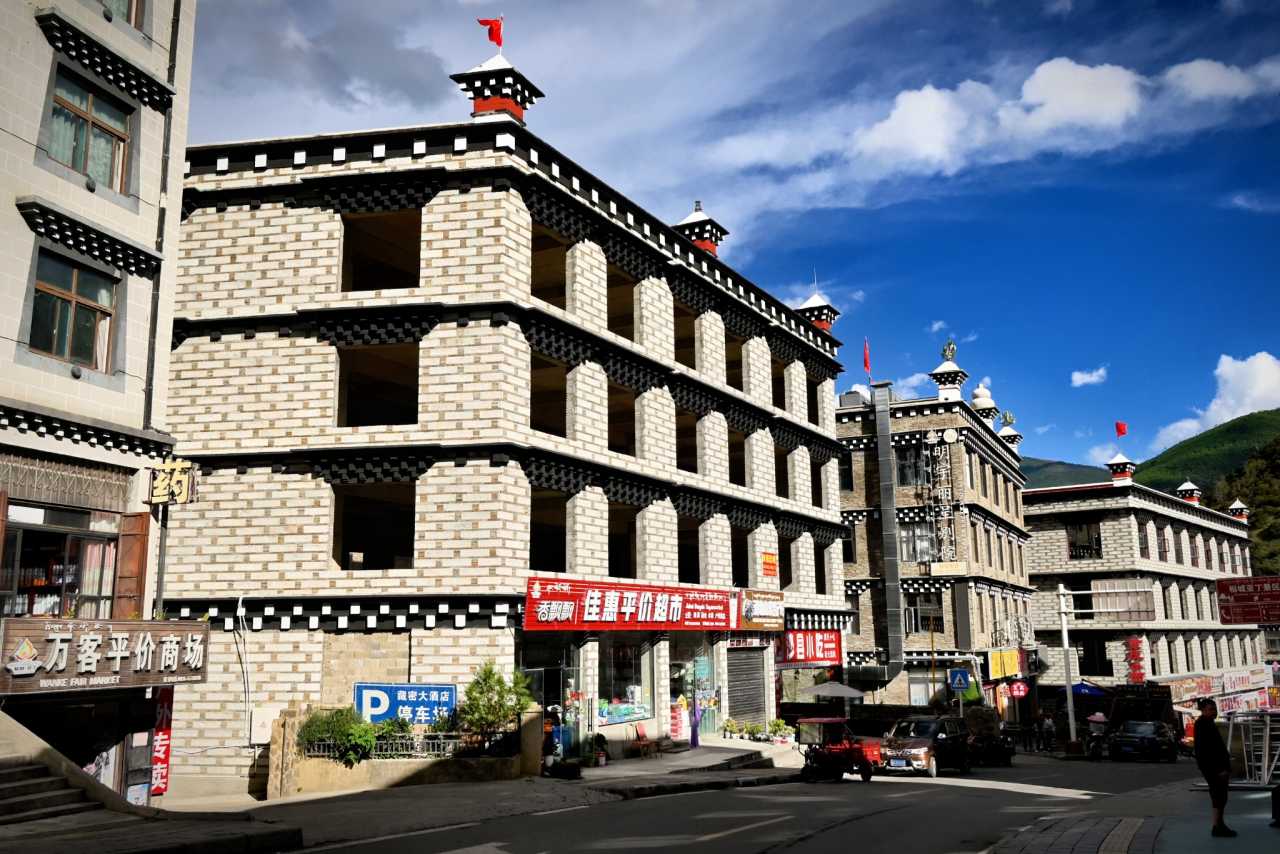
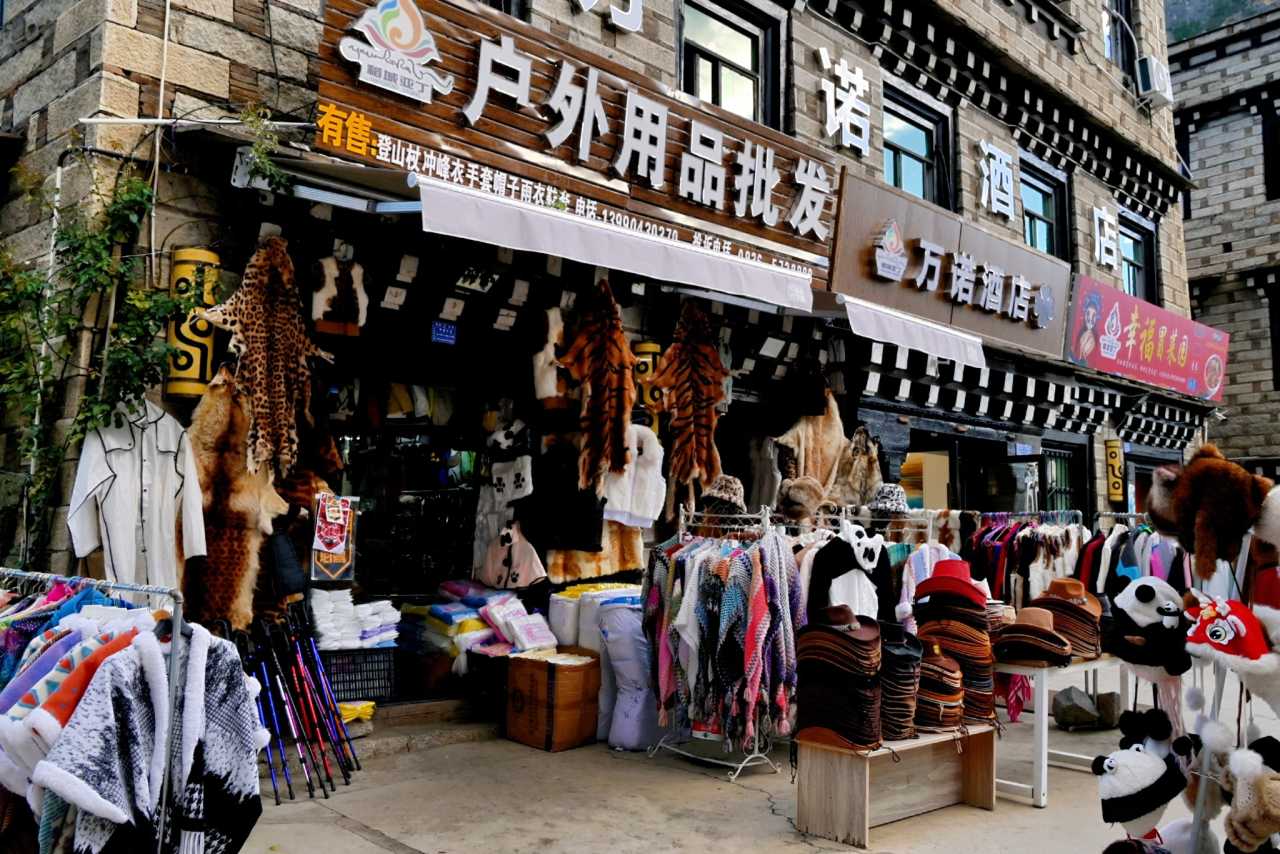
Shangri-La Town (alt ~2900 m) is the base for lodging, food, and supplies—lower altitude makes sleep easier. Shops sell almost all trekking gear with wide ranges.
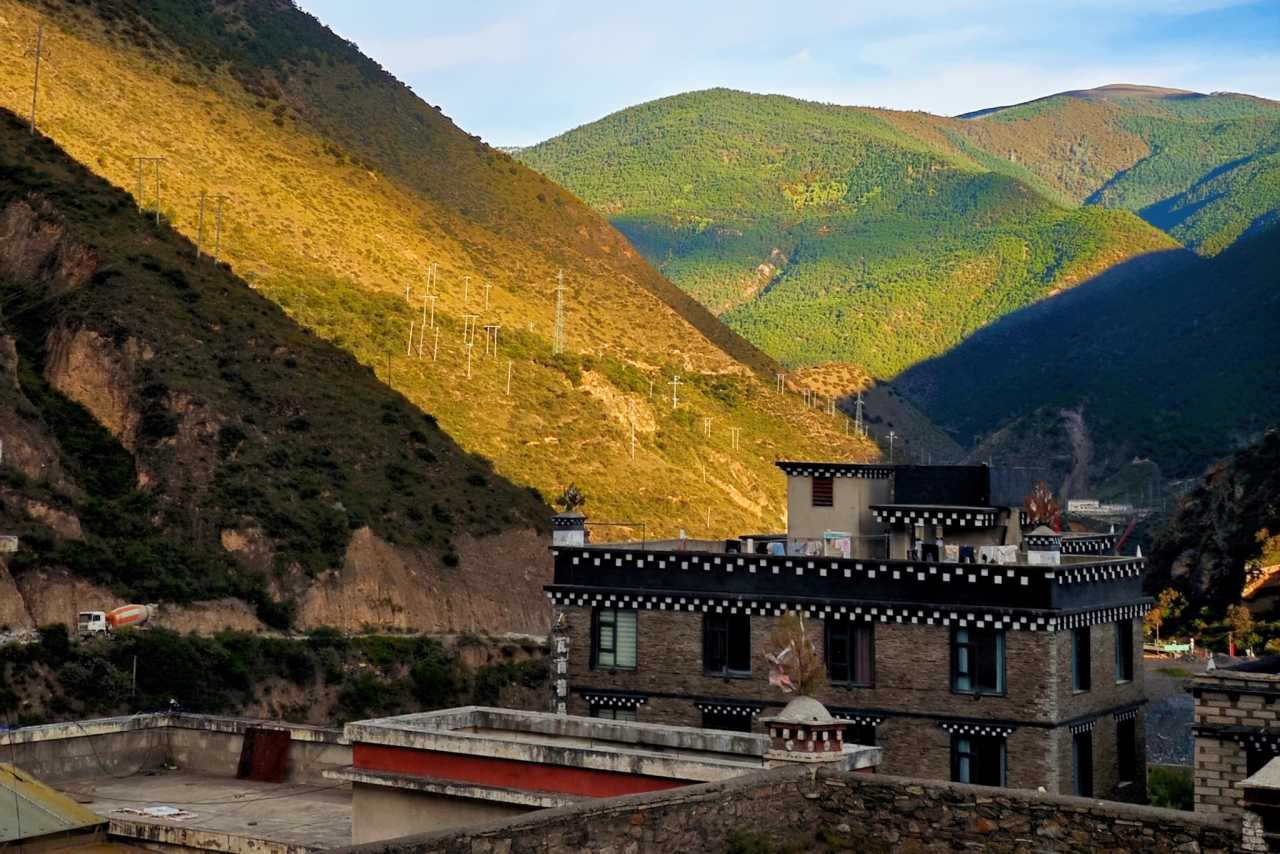 Luorong Pasture
Yading Village lies inside the scenic area at 3900–4100 m, with lodging and food, reachable only by park buses. Compared with Shangri-La Town it’s simpler and higher (more altitude reaction, poorer sleep). Upsides: you skip next morning’s bus and may catch Xiannairi’s sunrise/sunset.
Local Transport: Shangri-La Town → Park Gate → Zhaguanbeng
No ride-hailing in town—only yellow MPVs and local “black cars.” Both charge 10 RMB/person shared (four seats) or 40 RMB charter to the gate. If you want to arrive early for opening, charter.
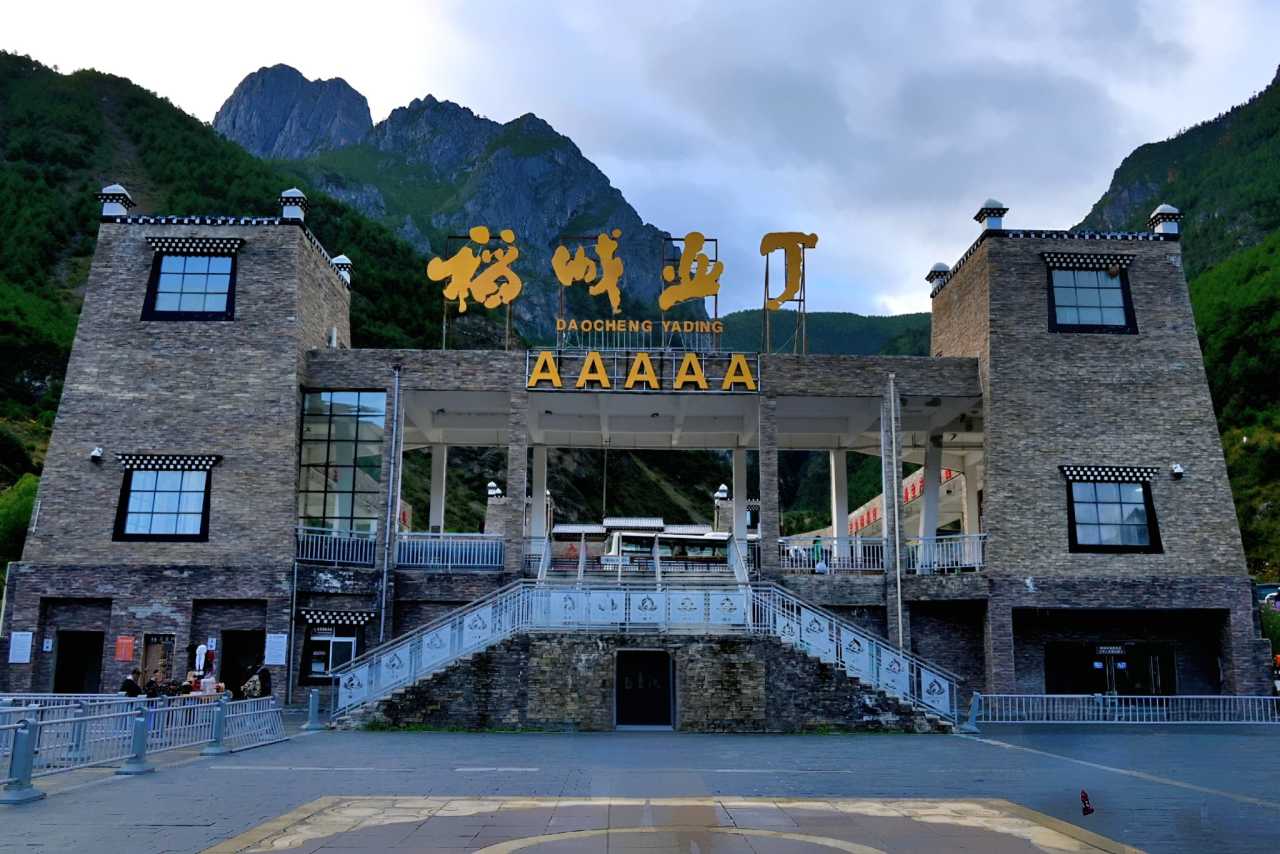 Daocheng Yading Scenic Area
Keep the driver’s phone for evening pickup when exiting—otherwise you wait hungry and tired for a shared ride.
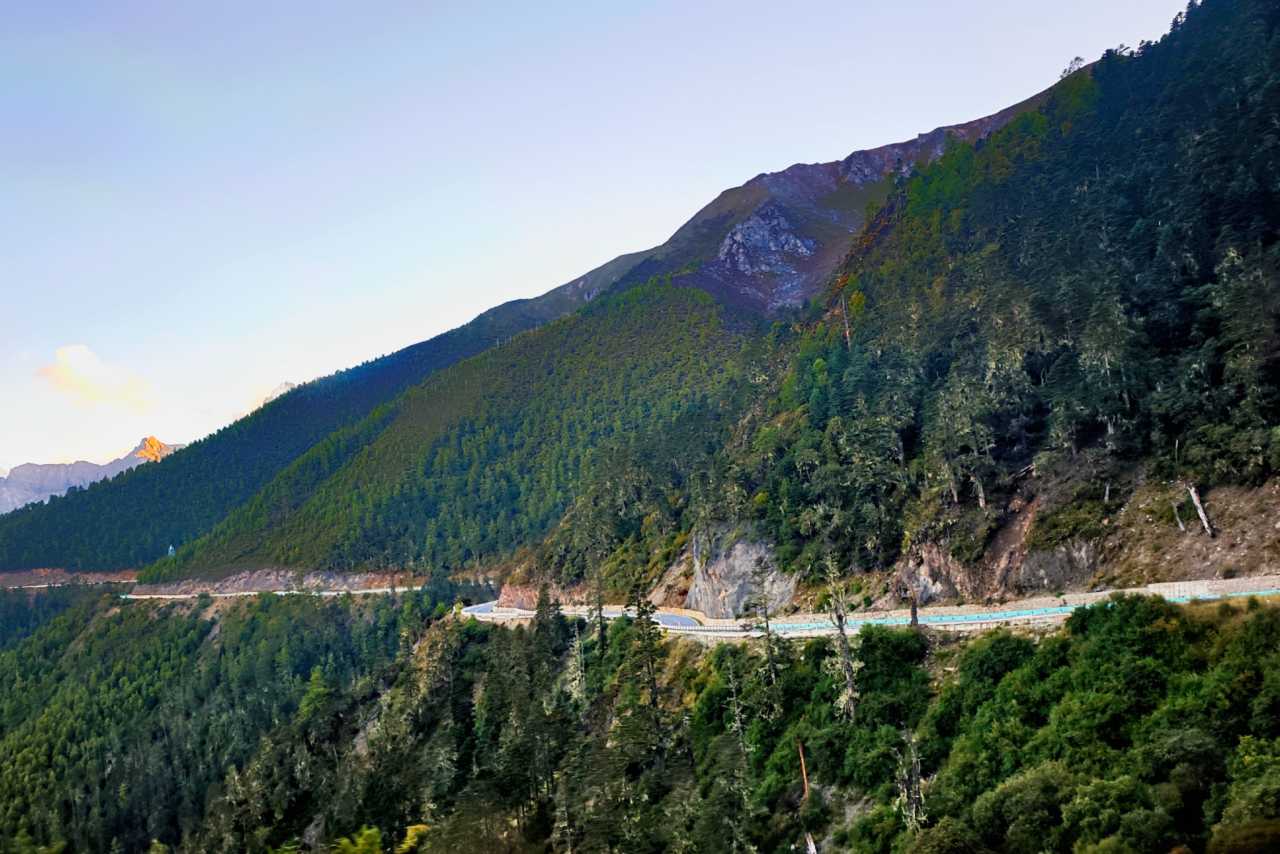 Daocheng Yading Scenic Area
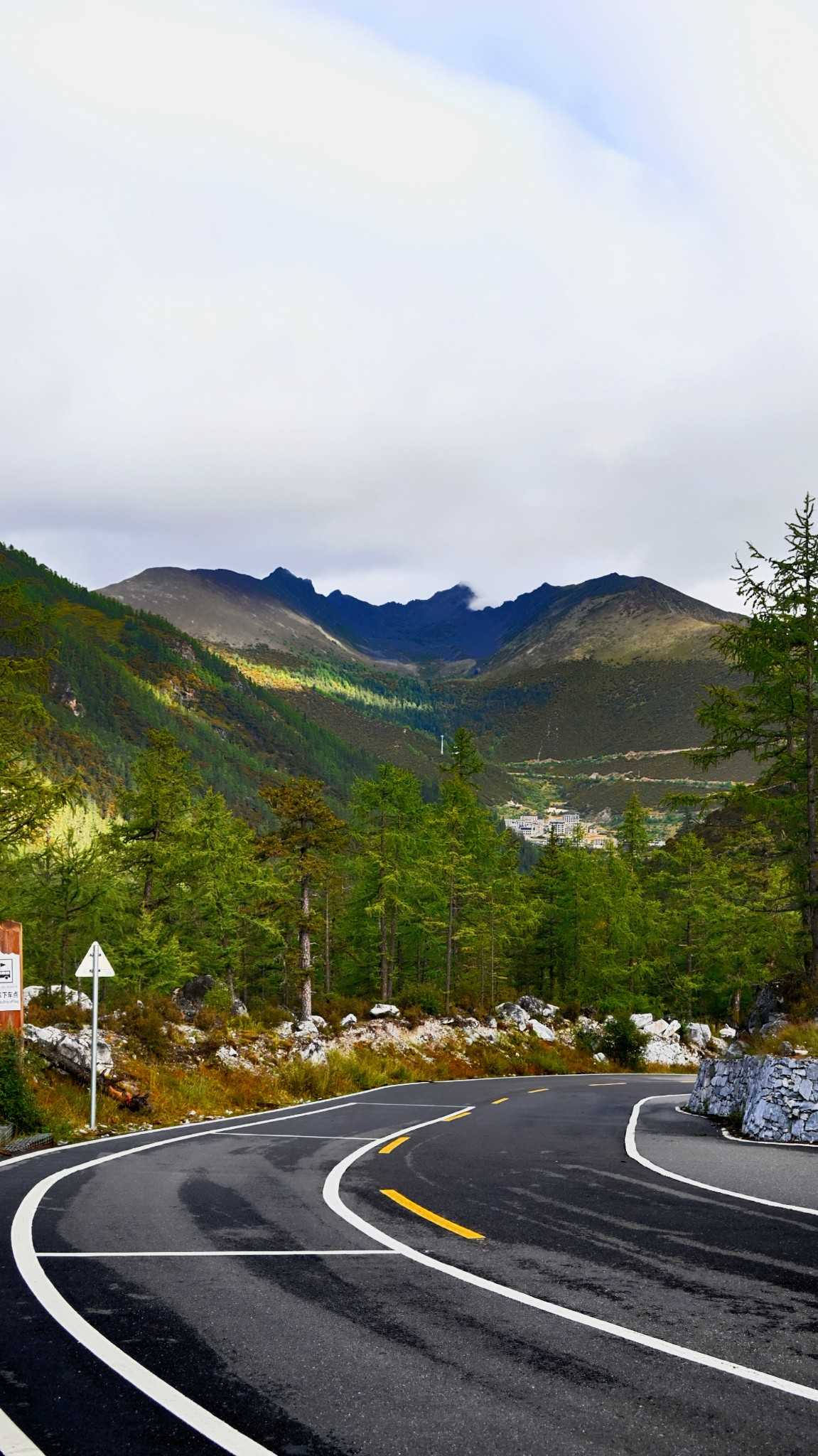 Daocheng Yading Scenic Area
From the gate, shuttle buses to Zhaguanbeng wind long mountain roads at brisk speeds—take motion-sickness meds if needed. On ascent, sit left (driver’s side) for canyon views and possible cloud seas.
— Oxygen in the Packing List —
Oxygen is important enough to warrant a separate note.
Oxygen cans can’t be checked—buy locally. Airport bus drivers sell 1.4 L cans for 50 RMB (shops in town ~58). Online, brands like Yuwell cost ~10 RMB for 1.4 L—but in Daocheng, 1.4 L is 50–58; 1.0 L is ~10–15 and may be insufficient.
Alternatively, buy oxygen pillows online or at the Tibetan medicine hospital/clinics in town. They fill from blue steel oxygen bottles (not concentrators)—works fine at 20 RMB per fill per pillow. Hospital requires registration (2 RMB) and a doctor slip; clinics are simpler—pay and fill.
If you buy pillows online, note they don’t include nasal tubes and adapters—purchase locally. We met a girl with a filled pillow and nasal tube but no adapter—couldn’t use it.
Pillow vs. can? If your backpack is small and must carry food and warm clothes, use a pillow—hang it outside and fold after use. With large packs, cans are simpler—use and discard.
If you only need short rests when stair-climbing, a can is fine—small bursts. If you also have mild headache or other symptoms, a pillow helps—steady 20 minutes of oxygen.
Reference: on day one we used one 1.4 L can for both of us on the short+half-long routes. Day two on the Challenge: up used one pillow + three 1.0 L cans; down used one pillow. When unsure whether fatigue or hypoxia—treat as hypoxia.
Dai Sees the World
Ending with a small collection—until next time, “Dai Sees the World.”