On the vast land of China, there is a province shaped like a rhombus. It is well-known for its rich coal resources and fragrant vinegar, and even more so for the emergence of Black Myth: Wukong, which has attracted countless domestic and foreign tourists. This is Shanxi.
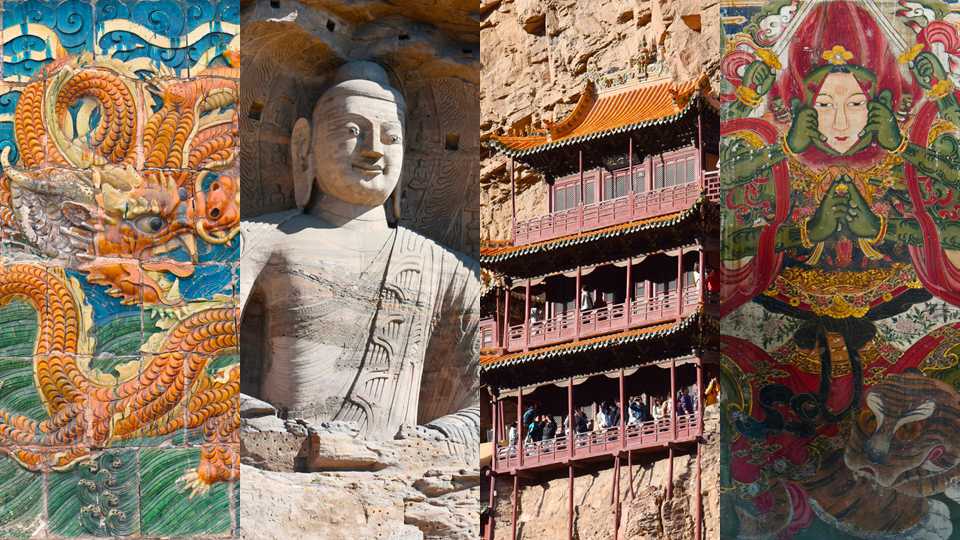
In this "Shanxi tourism boom" sparked by Black Myth: Wukong, Datong, with its numerous cultural heritage sites, has secured the "C-position." The history of Datong can be traced back to the Warring States period. During the Qin dynasty, Datong was incorporated into the Yunzhong Commandery jurisdiction. When the Northern Wei dynasty moved its capital to Datong (anciently known as Pingcheng), this city ushered in its golden age during the subsequent hundred years.
Under the diligent governance of the Northern Wei rulers, Datong not only became the most frequent and active international metropolis in northern China at that time, but also due to its frequent economic and cultural exchanges with various Western Regions countries, became the eastern starting point of the Silk Road, leaving records such as "All foreign tribes submit, the Western Regions are pacified again" and "Tribute envoys come and go without end, merchants fill the roads year-round." Among them, classics like "Book of Wei" and "History of the North" provide concentrated and detailed records of Pingcheng's Silk Road history. Since Datong has such a glorious past, how could I not come, even though the round-trip airfare was quite touching.
Yungang Tanyao Five Caves
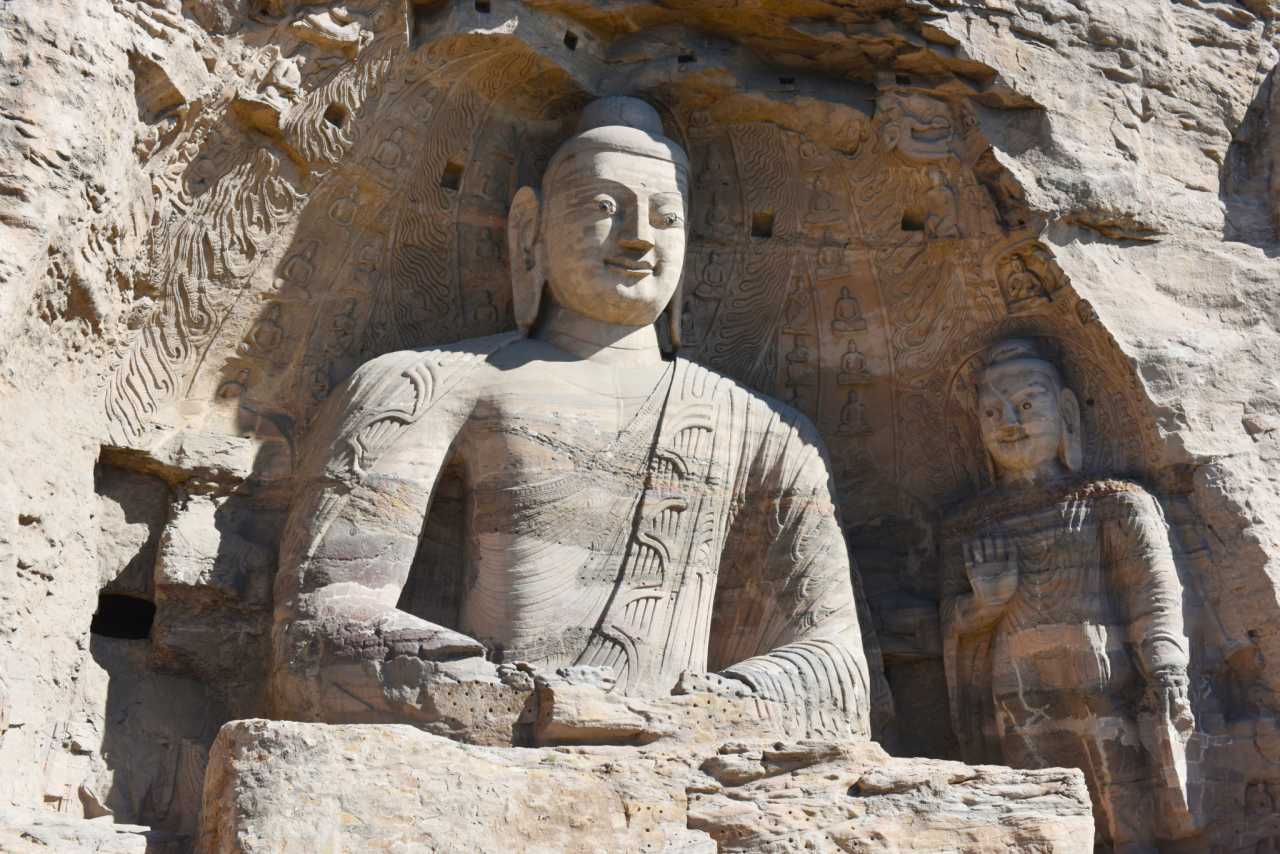 Yungang Grottoes
The Five Buddhas in the Mahavira Hall of Shanhua Temple
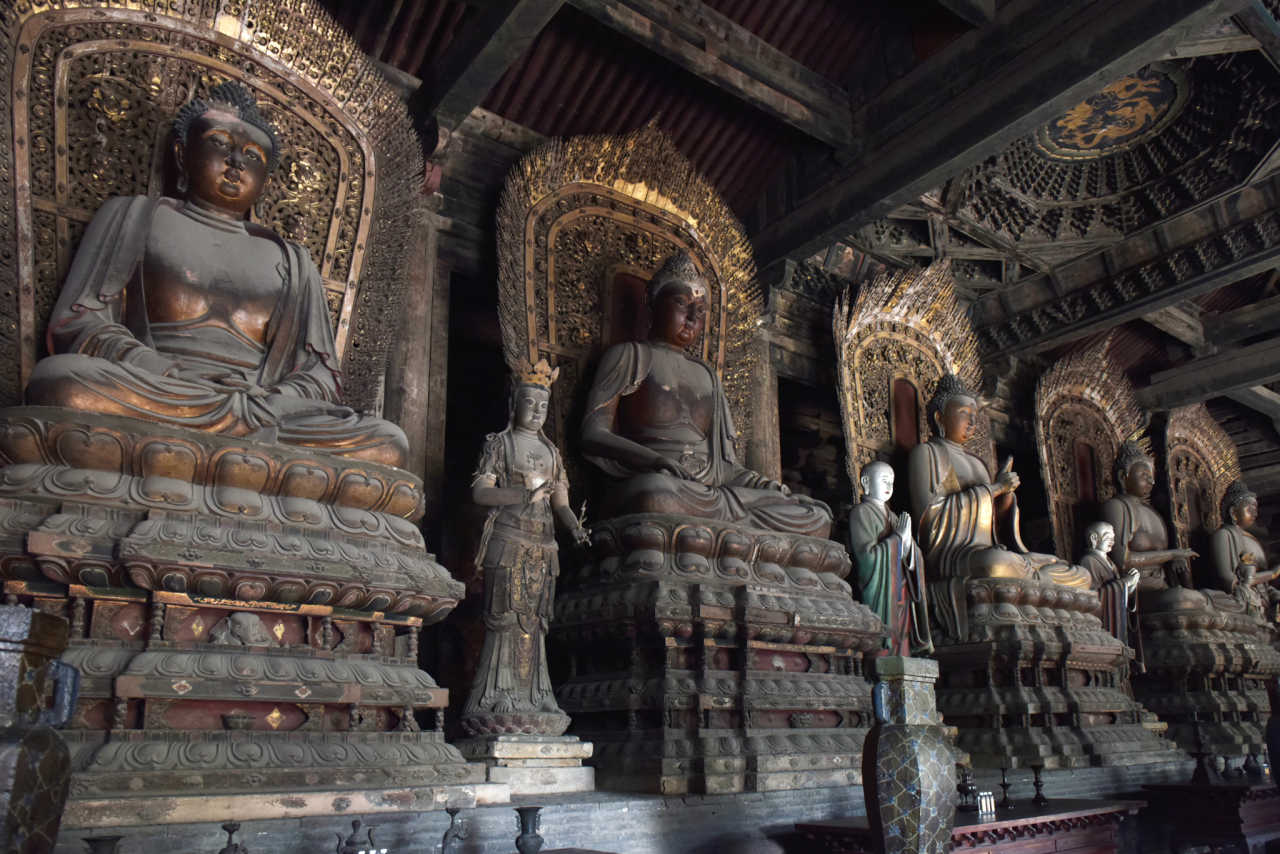 Shanhua Temple
The largest existing Datong Nine-Dragon Wall in China
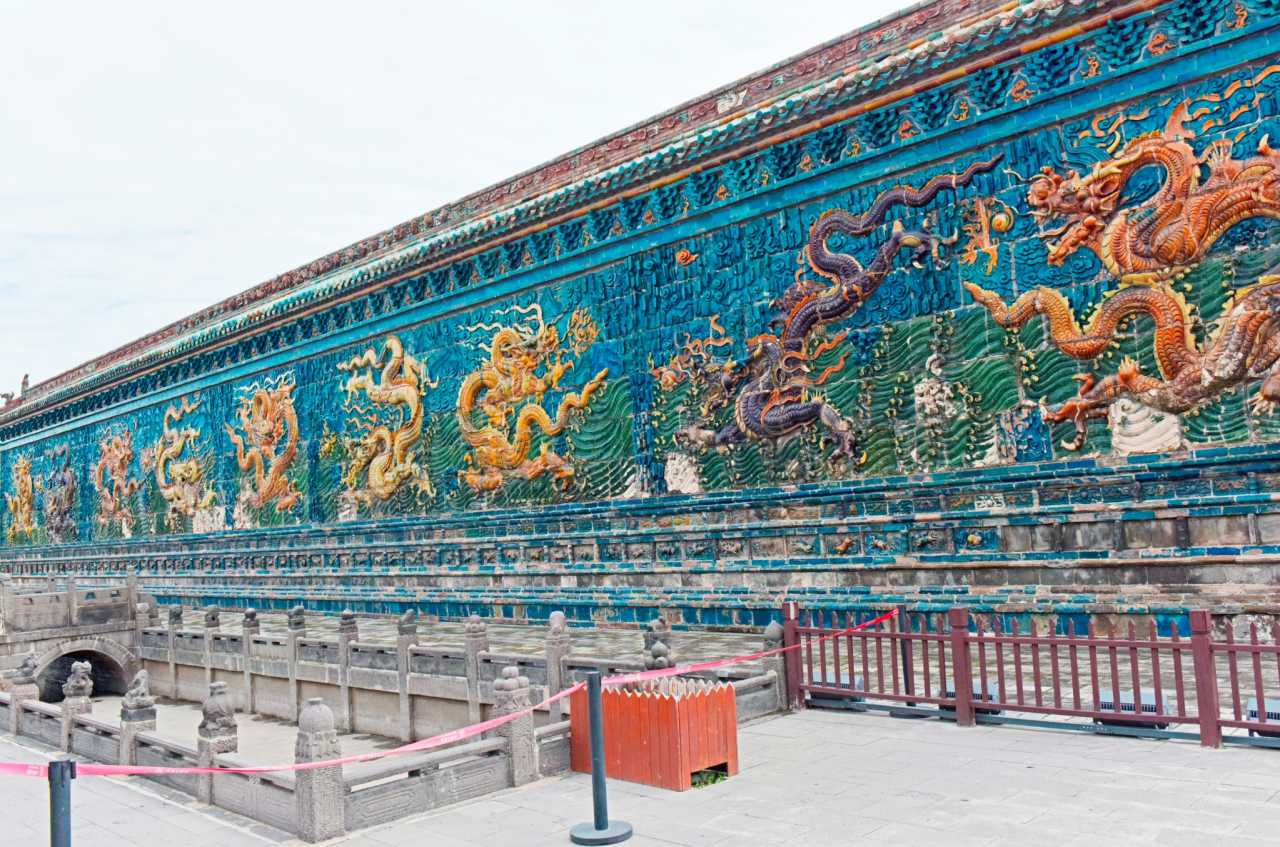 Nine-Dragon Wall
The "Oriental Venus" in Huayan Temple - the Smiling Bodhisattva with Palms Together
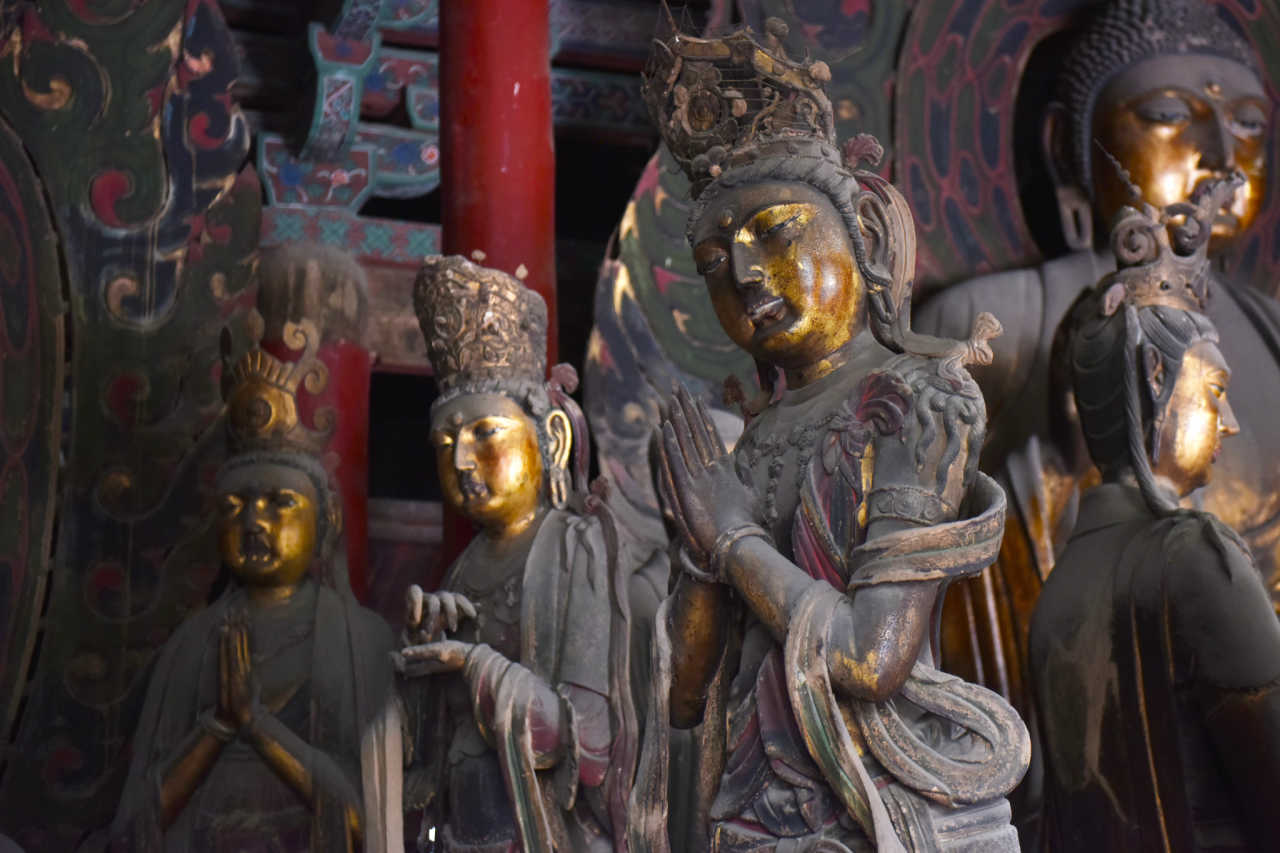 Datong Huayan Temple
The world's oldest and tallest pure wooden structure pavilion building - Yingxian Wooden Pagoda
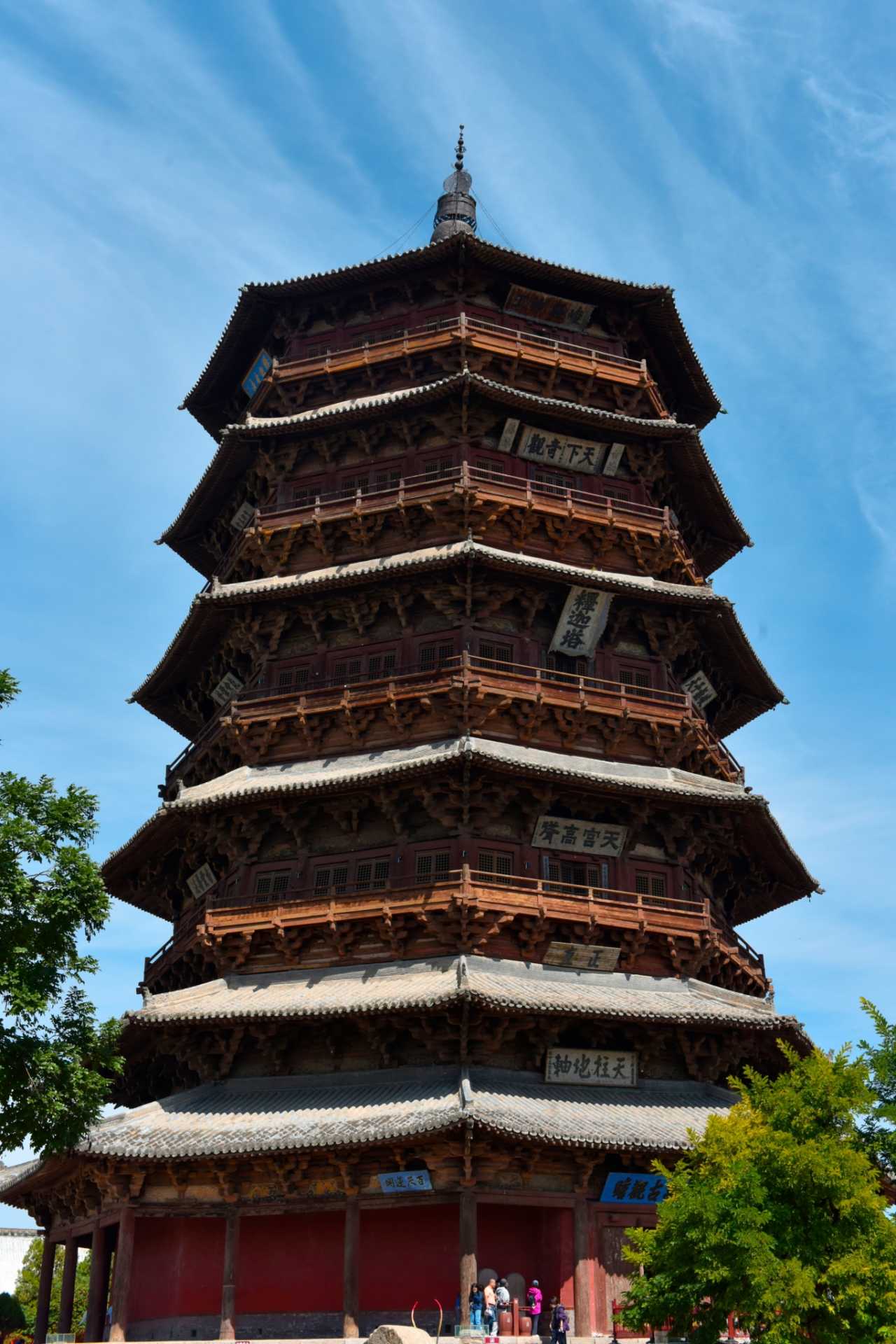 Fugong Temple Shakyamuni Pagoda
The exquisite and beautiful Pure Land Temple Heavenly Palace
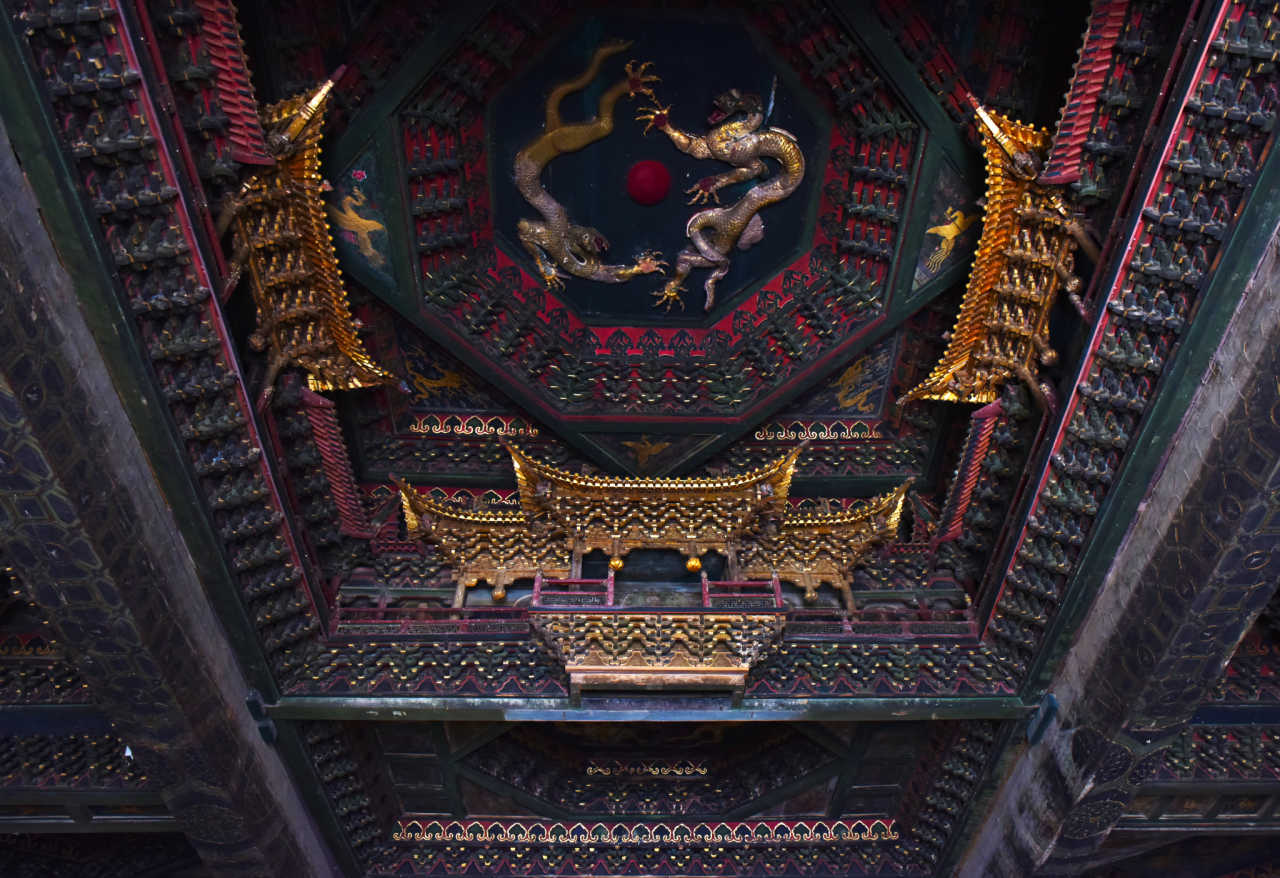 Pure Land Temple
The Hanging Temple on Mount Heng that integrates Confucianism, Buddhism, and Taoism
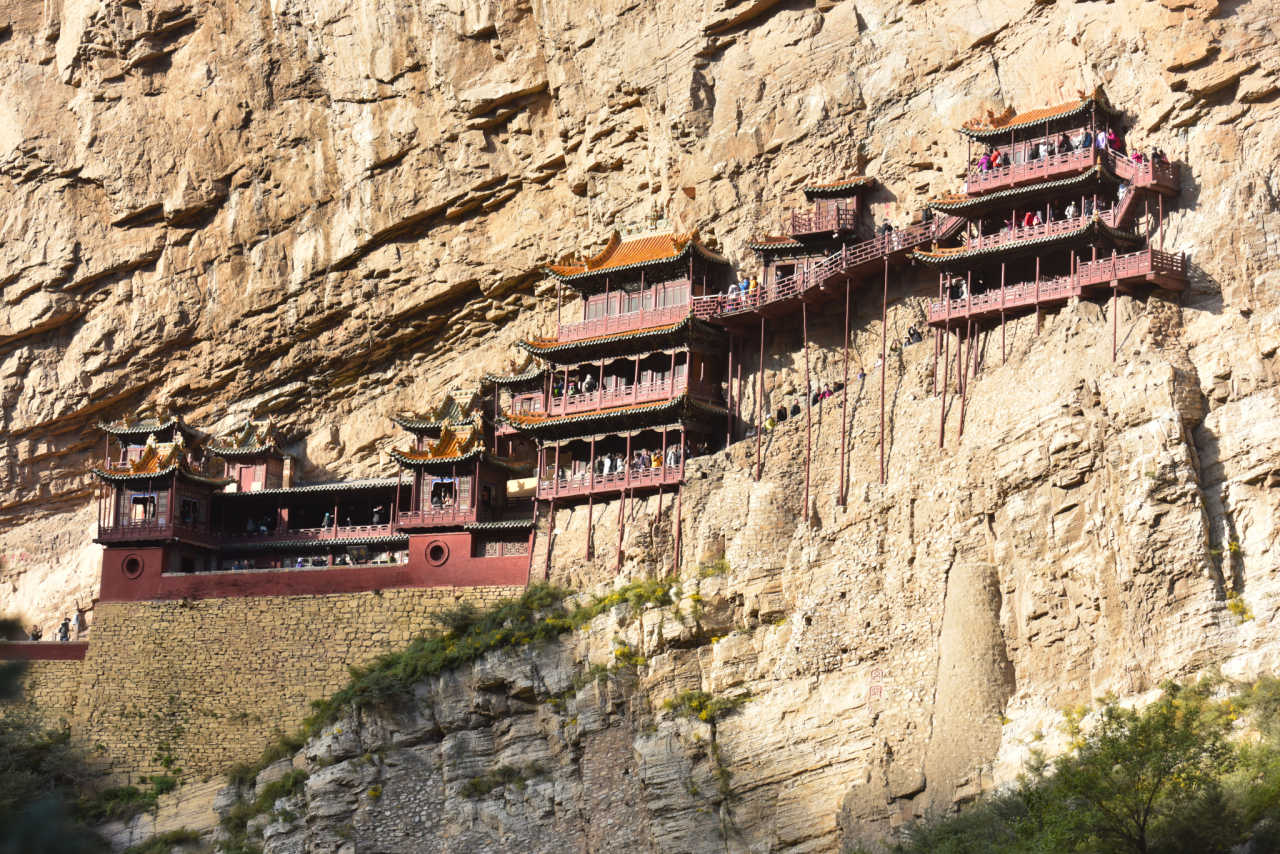 Hanging Temple
The lively and vivid Yong'an Temple Face-tearing Mingwang
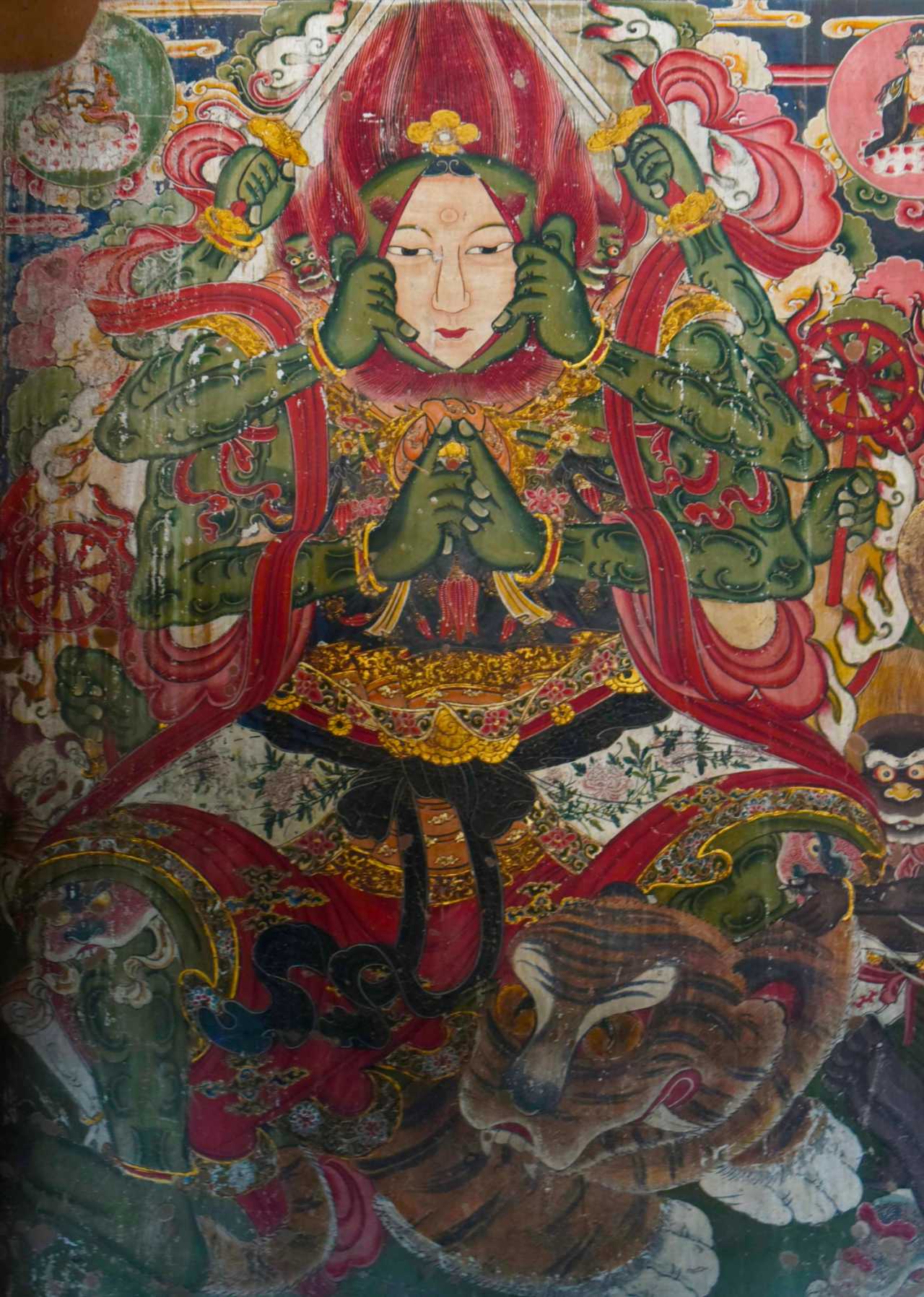 Yong'an Temple
Coming to Datong to Appreciate the Beauty of Yunzhou
Flying from Chengdu to Datong is really not cheap, with round-trip airfare reaching 1,700 yuan. But when I walked out of Yungang Airport, I was extremely excited, as this was my first time setting foot in "Yunzhou" among the "Sixteen Prefectures of Yanyun." In September, Datong was already hard to find any summer heat, with morning temperatures as low as 7-8 degrees, and even at noon, the maximum temperature was only 23 degrees.
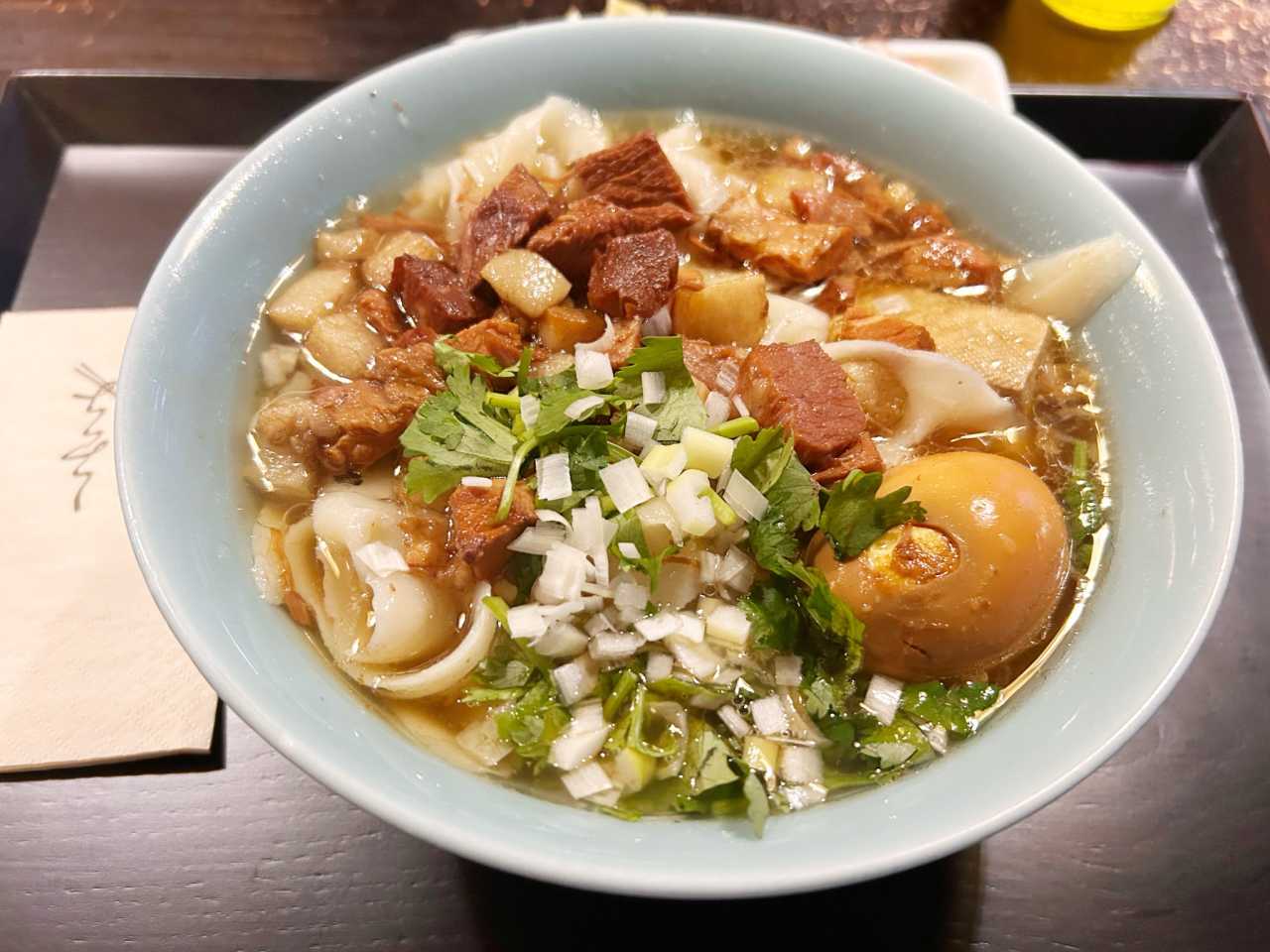
Although the morning in Datong was full of chill, it didn't stop me from going early to Xijin Dao and Longjuxiang to taste knife-cut noodles and shaomai. As the "representative" of Datong cuisine, knife-cut noodles appeared as early as the Yuan dynasty. At that time, each household could only have one kitchen knife, and it had to be used in turn. To make cooking convenient, someone creatively used iron sheets to cut noodles, and thus knife-cut noodles were born.
Today, knife-cut noodles have become a must-try food for tourists coming to Datong. Before 7 o'clock, there were diners waiting outside the store. I ordered a bowl of braised pork knife-cut noodles without hesitation. The knife-cut noodles produced by Xijin Dao have excellent elasticity, are very chewy, and the toppings are generous, full of sincerity.
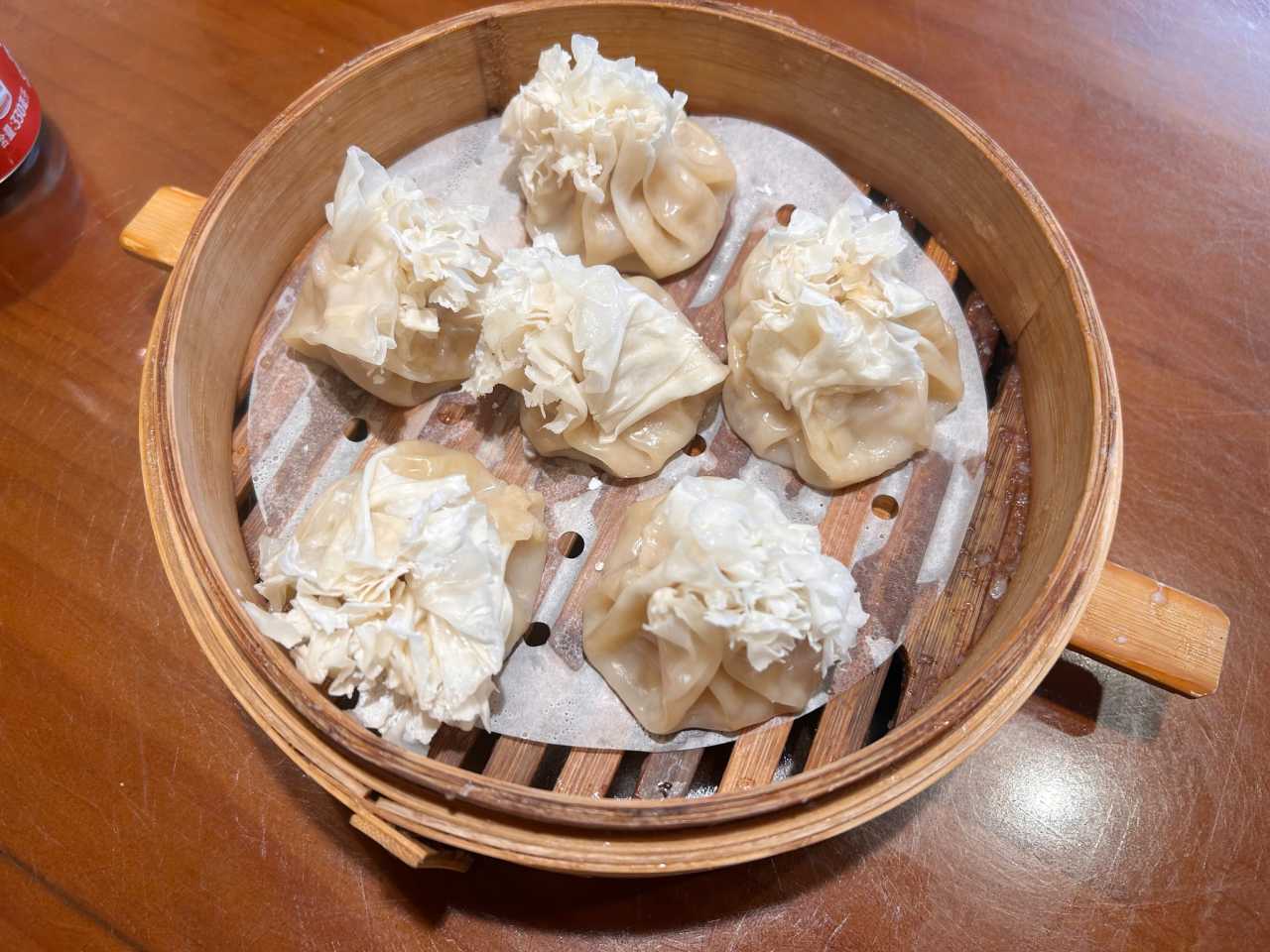
Compared with Xijin Dao's knife-cut noodles, Longjuxiang's shaomai is equally beloved by me. Large in size and generous in filling, it perfectly suits the needs of a big guy like me. With every bite, the rich lamb soup fills my mouth, and that unique flavor makes me feel the pride belonging to the Sixteen Prefectures of Yanyun. It's a direct impact on the taste buds, without concealment or modification.
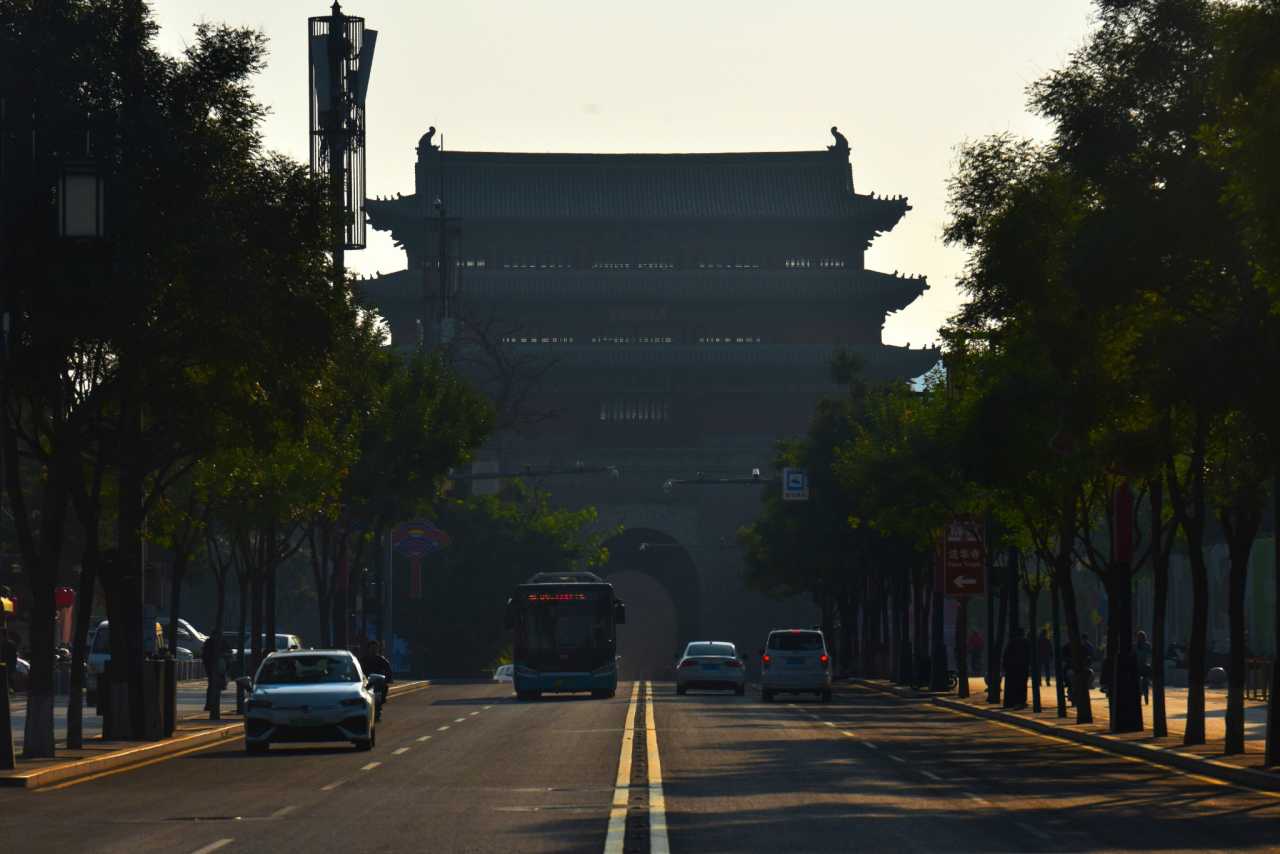
After eating and drinking, I climbed the Datong city wall, and the ancient city style was unobstructed. Different from the three-dimensional and colorful Lijiang ancient city and the exotic style of Kashgar ancient city, Datong ancient city is full of heaviness. In the past, Datong seemed to be a mighty warrior, silently guarding the Central Plains people from foreign invasion. However, the hardship of border defense was beyond ordinary people's imagination. Li He deeply described the psychological state of border soldiers in his work "Under Pingcheng City."
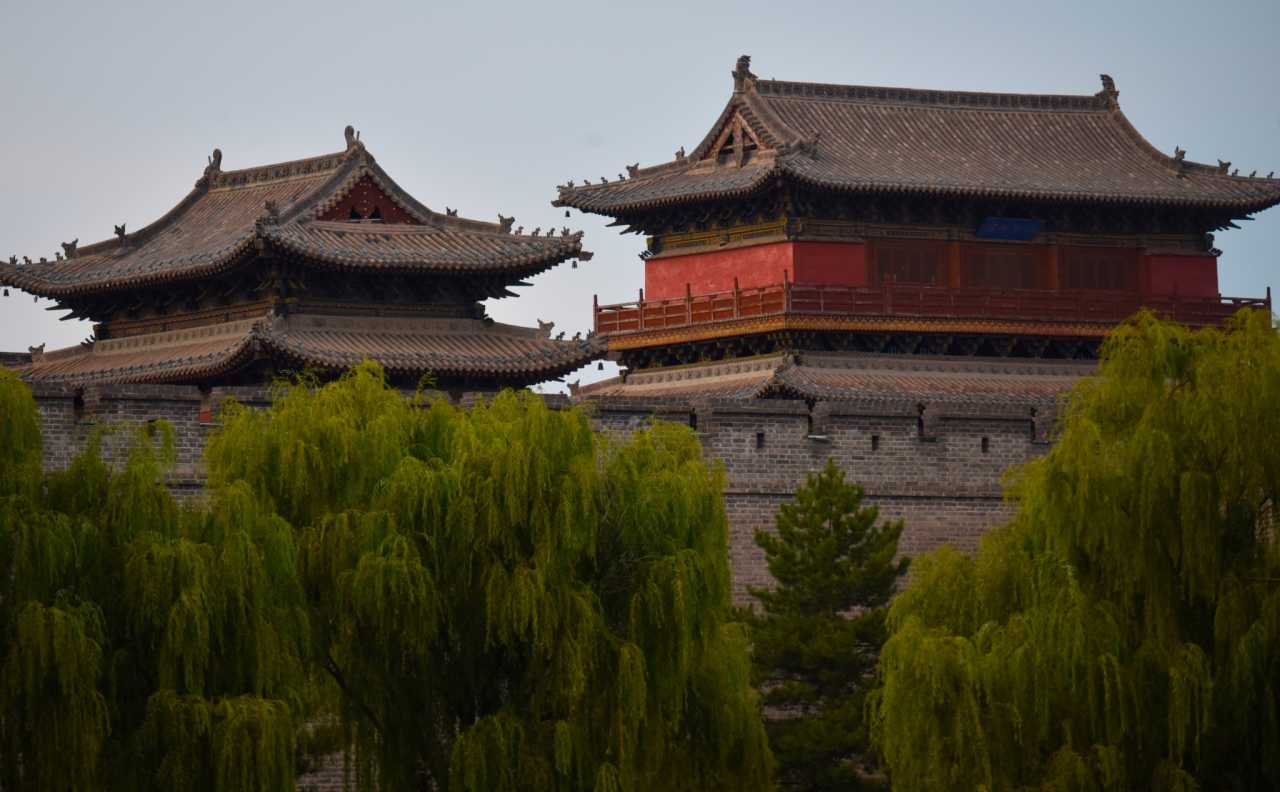
Today, Datong, which is no longer an important border town, has opened a new chapter. Taking advantage of the "Black Myth: Wukong" trend, on the one hand, Datong ancient city is accelerating construction, and on the other hand, it is strengthening the protection of numerous ancient buildings in the city. The former improves Datong's reception capacity, while the latter attracts countless Chinese traditional culture enthusiasts to come to Datong to see the elegance of the Northern Wei, Liao, and Jin dynasties.
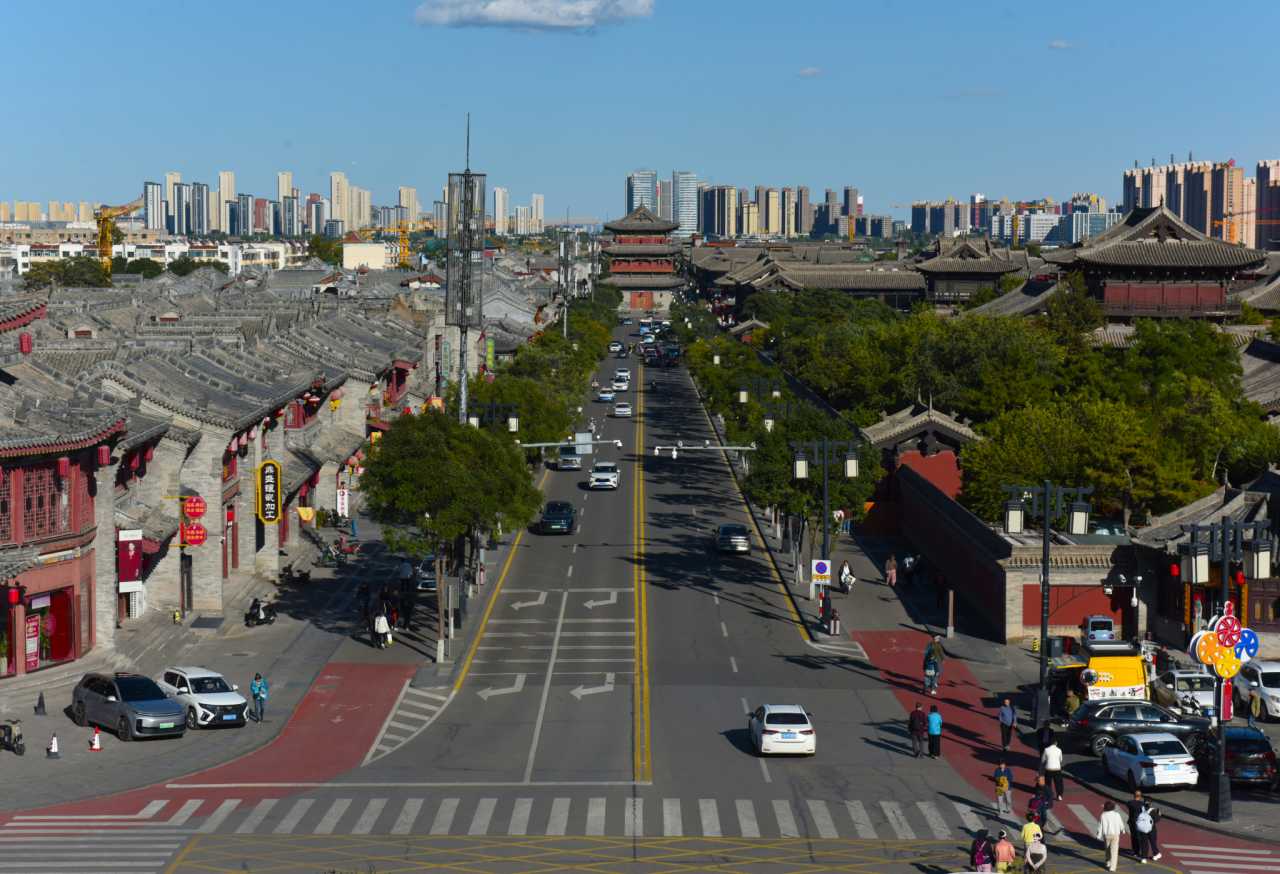
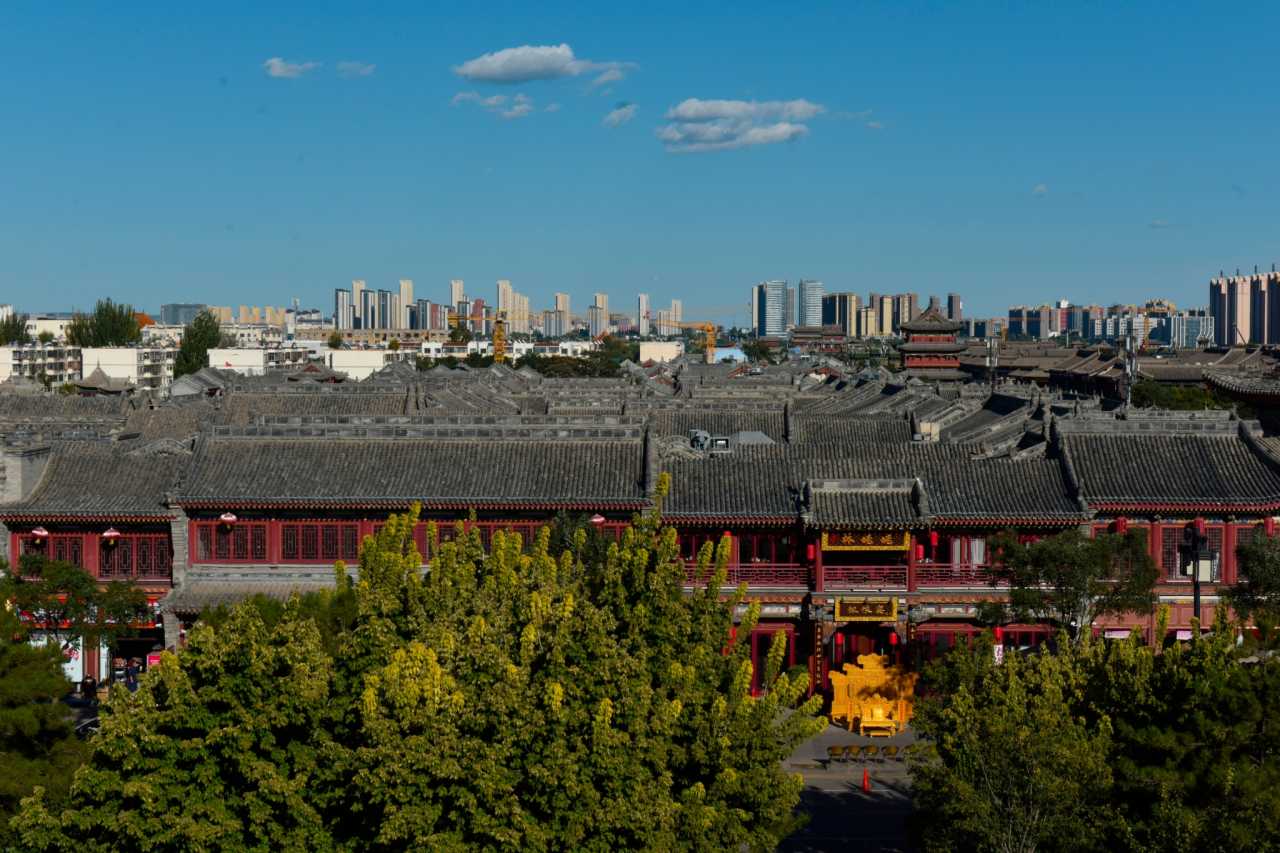
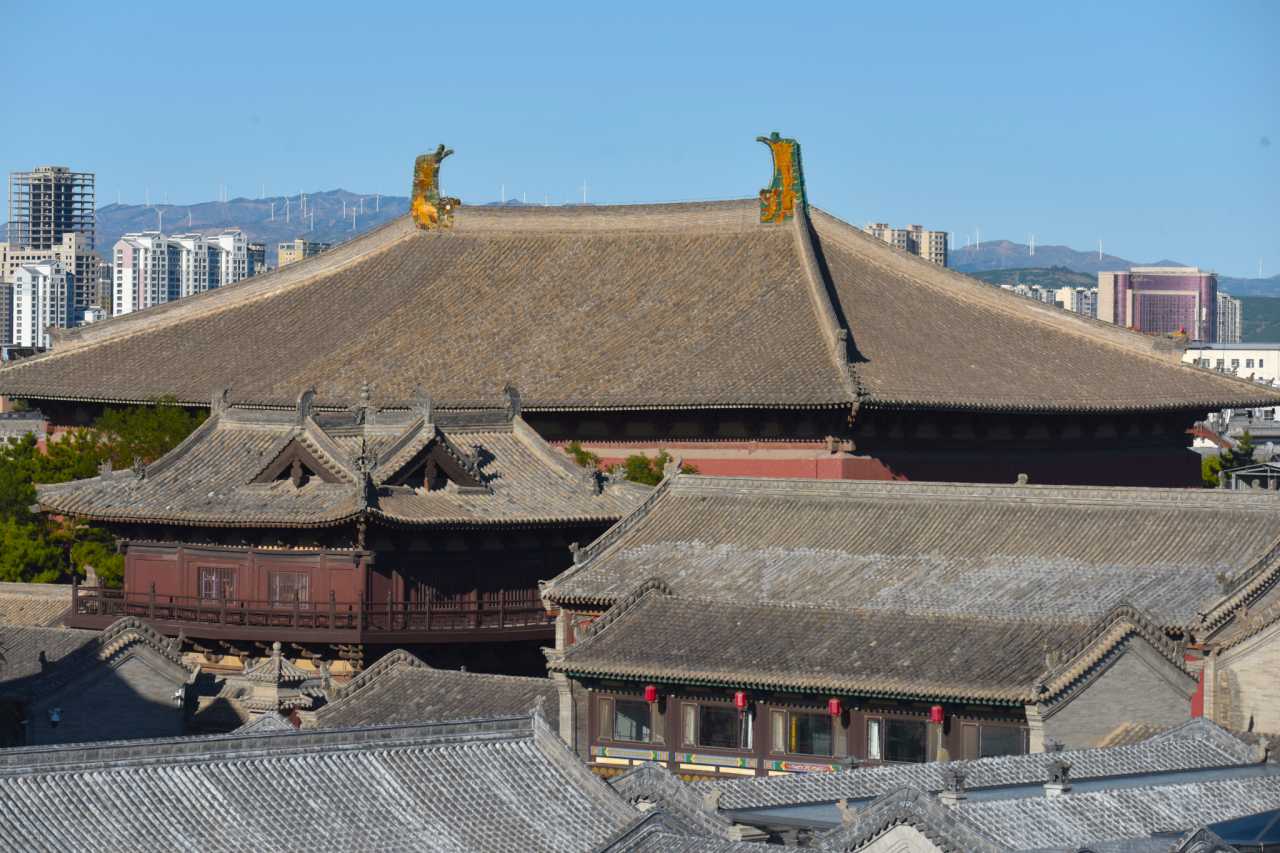
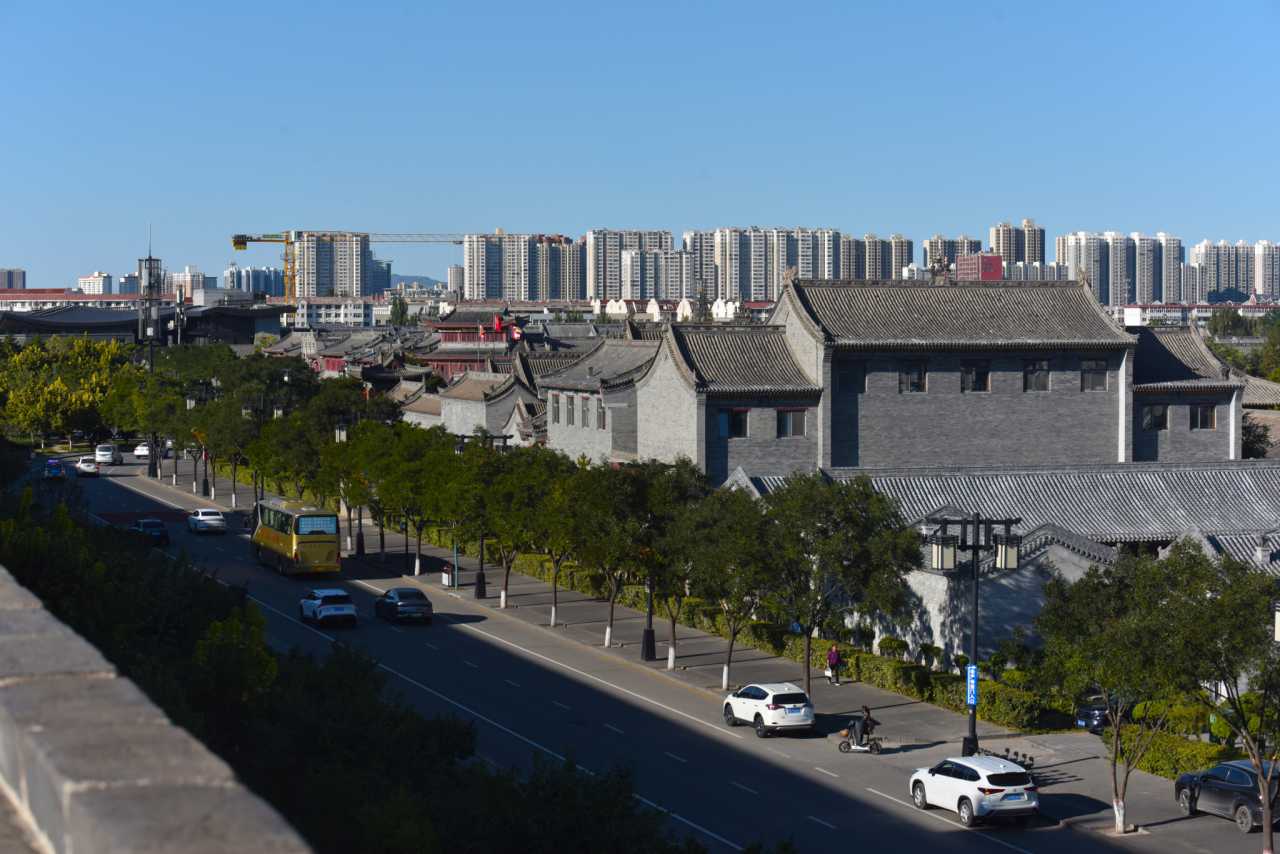
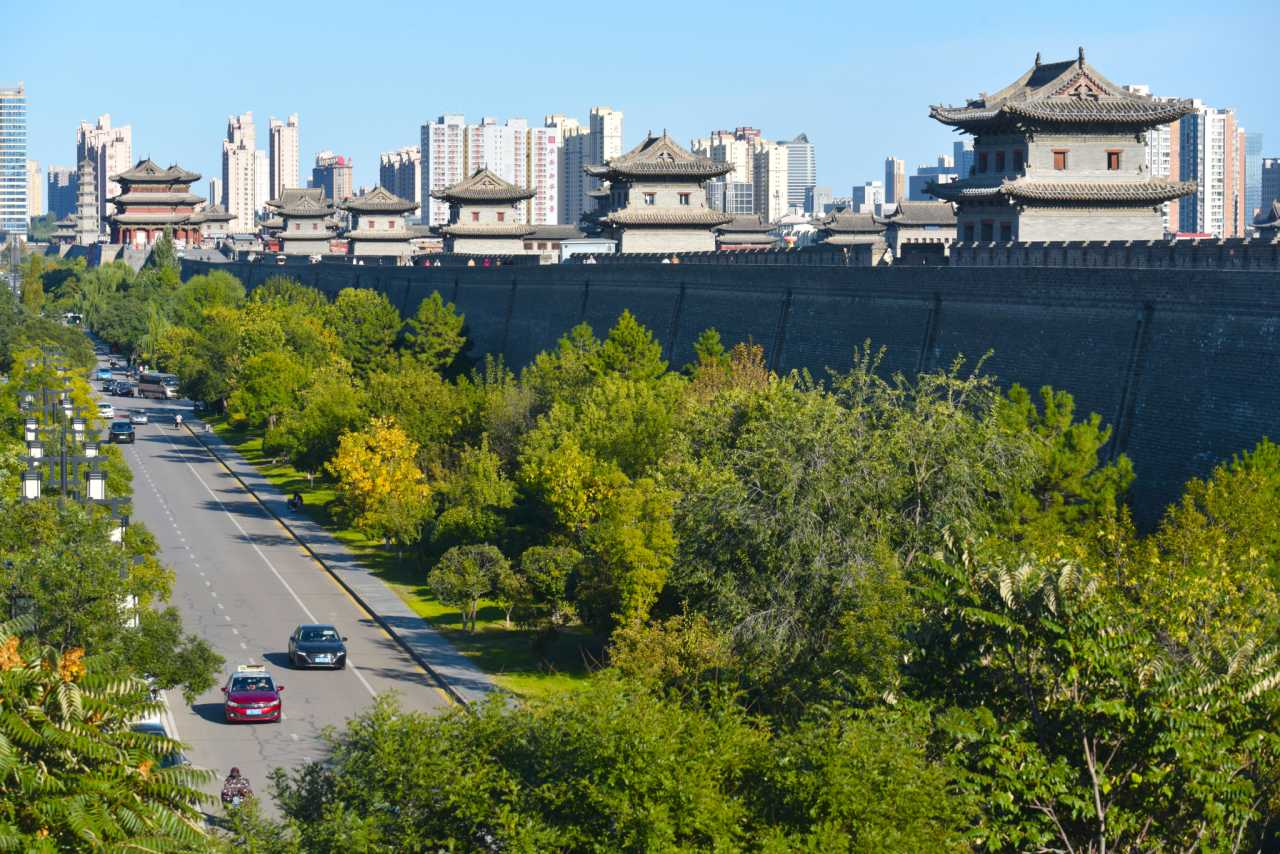
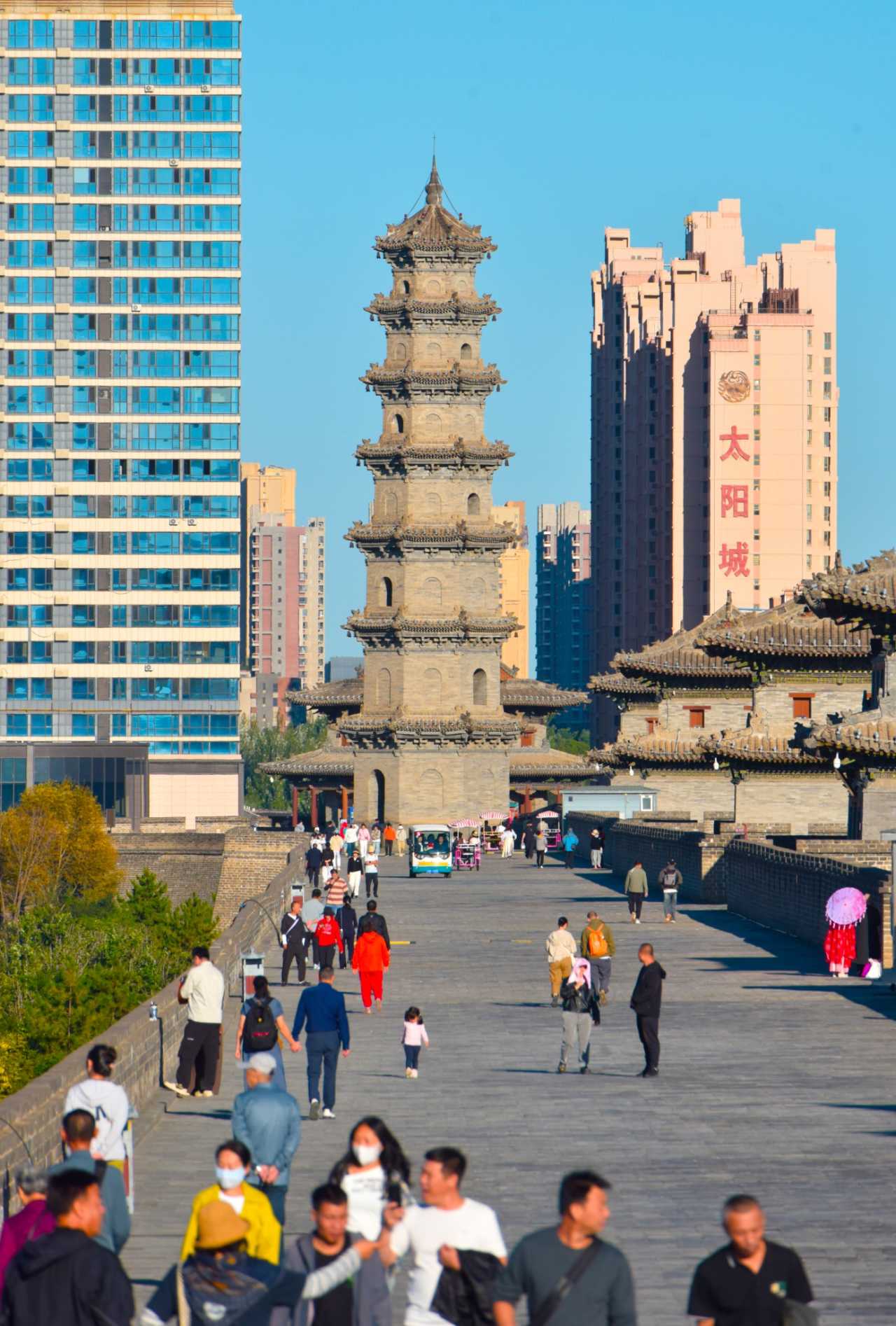
Although Datong's ancient city wall is not as magnificent as Xi'an's ancient city wall, it also has its unique features, such as the Wild Goose Pagoda built on the city wall. If I don't tell you the function of the Wild Goose Pagoda, can you guess its use? I believe it's difficult. On the one hand, it was a place for scholars who "passed the imperial examination" in ancient times to worship and show off their official status, and on the other hand, it was used as a watchtower to look out over the distance and see the enemy's movements clearly.
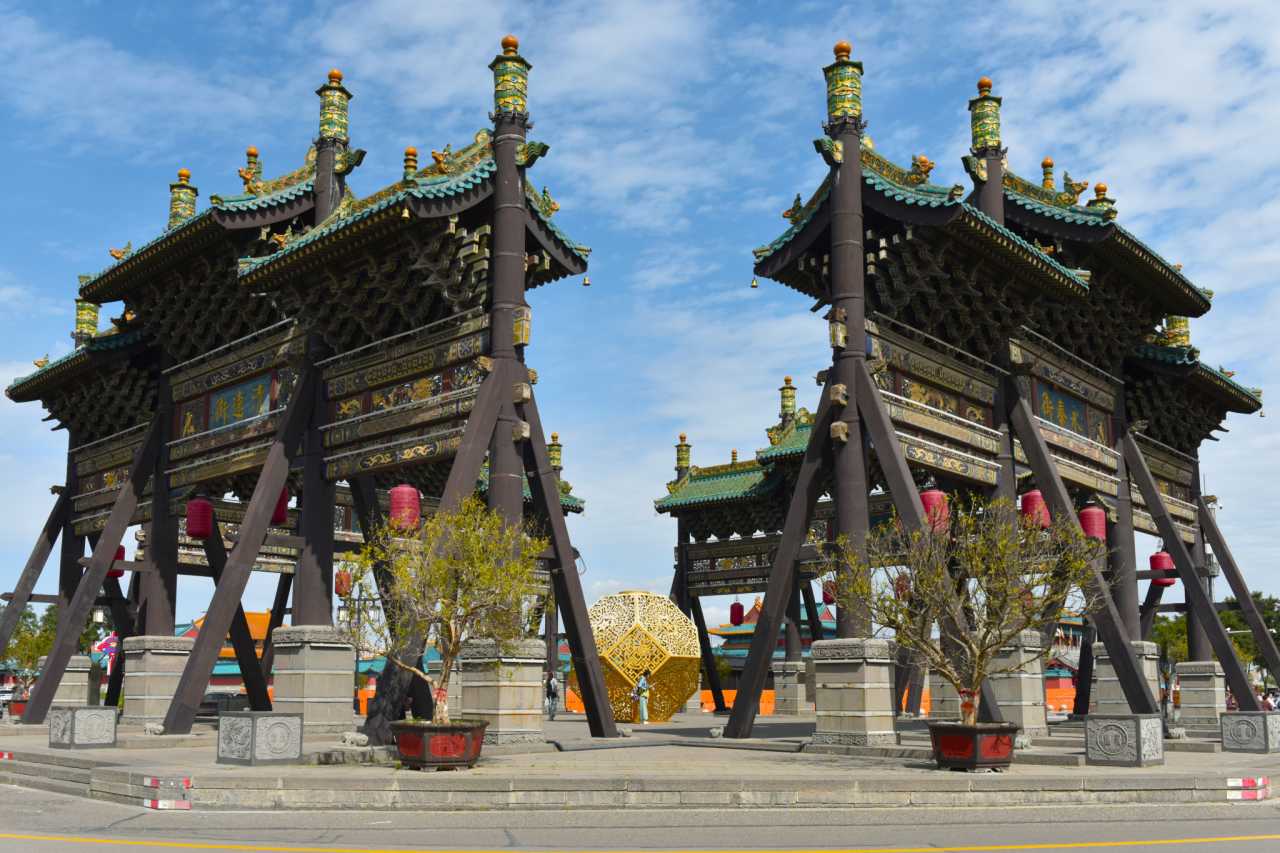
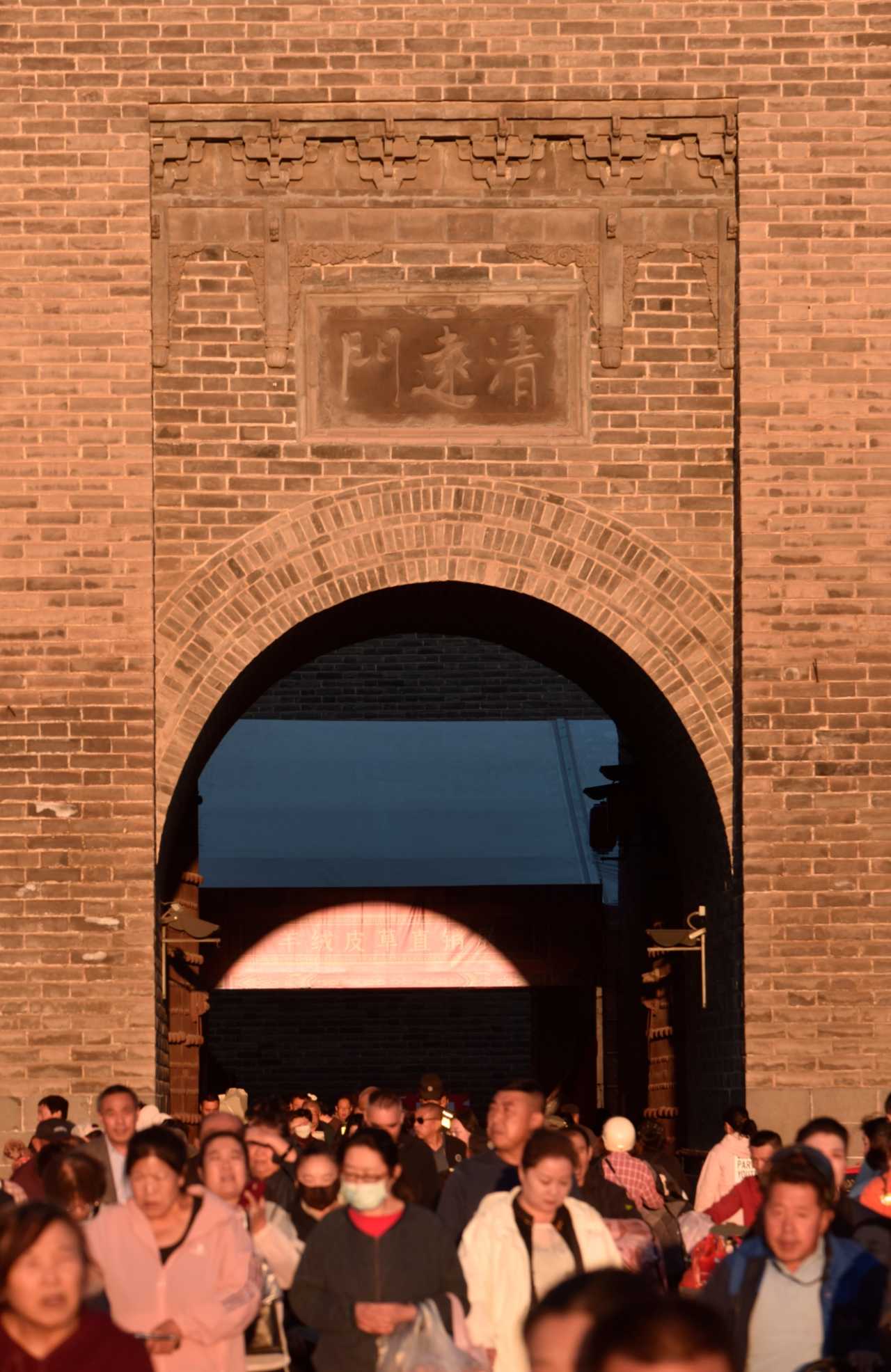
Different from Xi'an, the center of Datong ancient city is composed of four archways forming the Sipailou. The four plaques read "Yongtai Street," "Qingyuan Street," "Wuding Street," and "Heyang Street." With these four streets as axes, the interior of Datong ancient city adopts a layout resembling tofu blocks. Scattered among them are inns, hotels, and restaurants, all doing booming business. Tourists from all directions have brought new vitality to this thousand-year-old city.
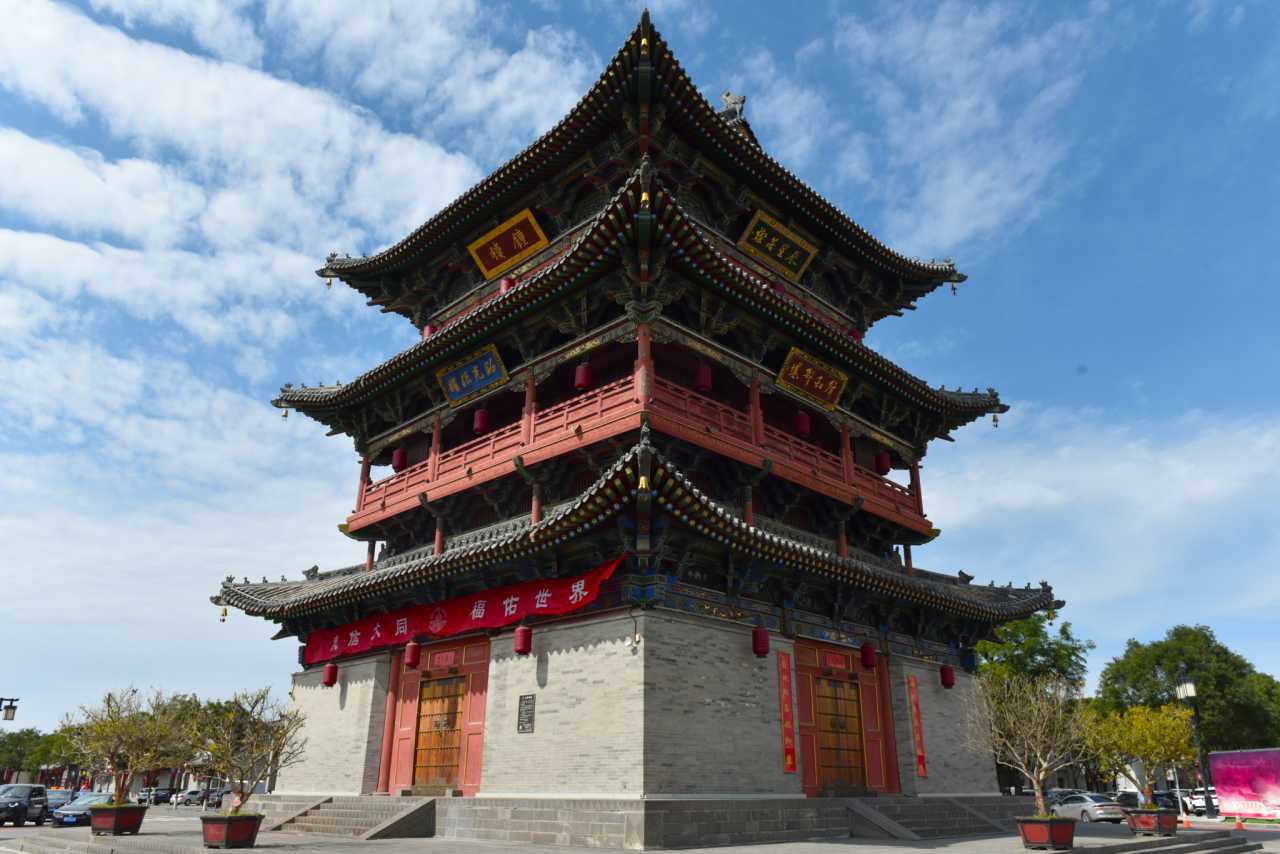
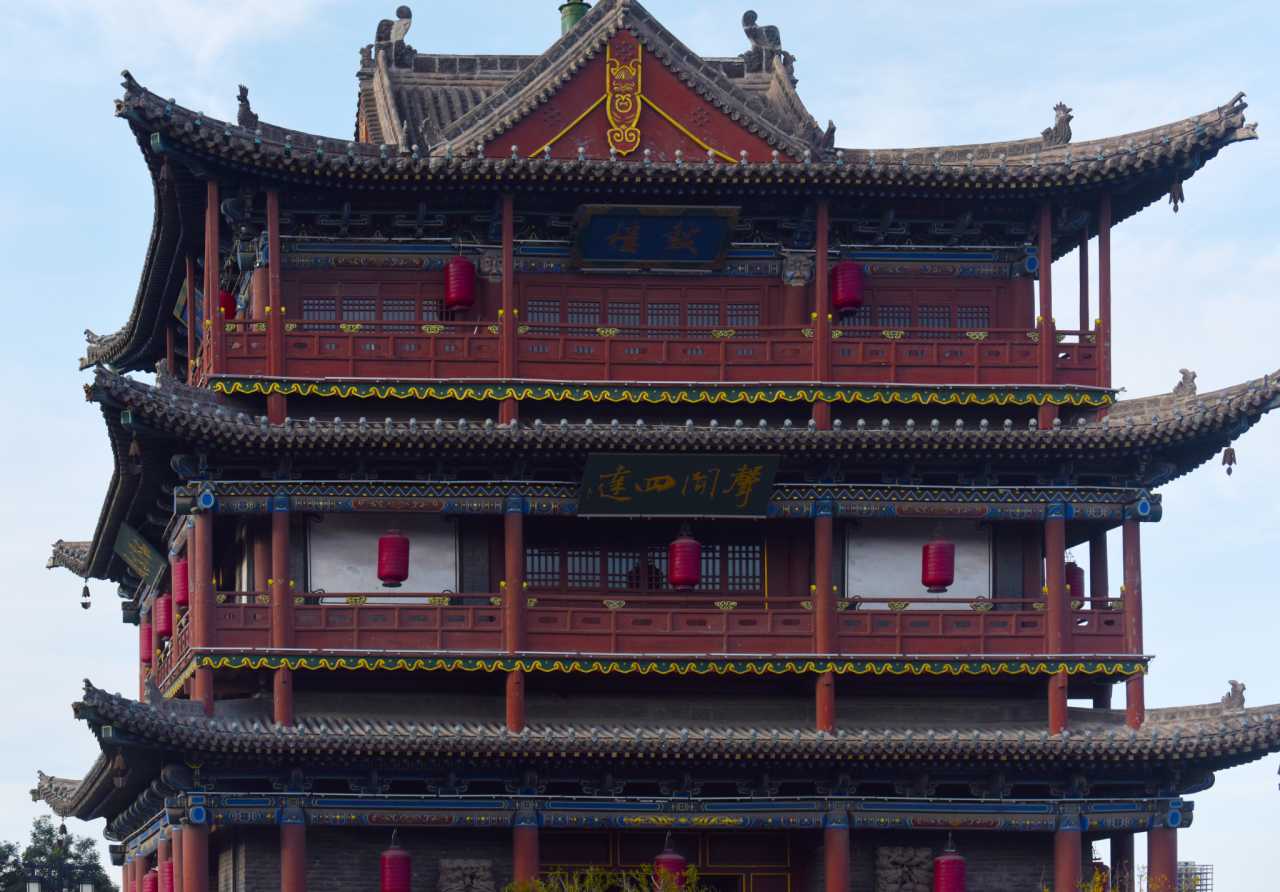
Although Datong is very prosperous, it ultimately cannot compare with Xi'an, which is full of imperial atmosphere. Although the bell tower is tall, it does not have the momentum of overlooking the world; although the drum tower is upright, it also lacks the posture of swallowing mountains and rivers.
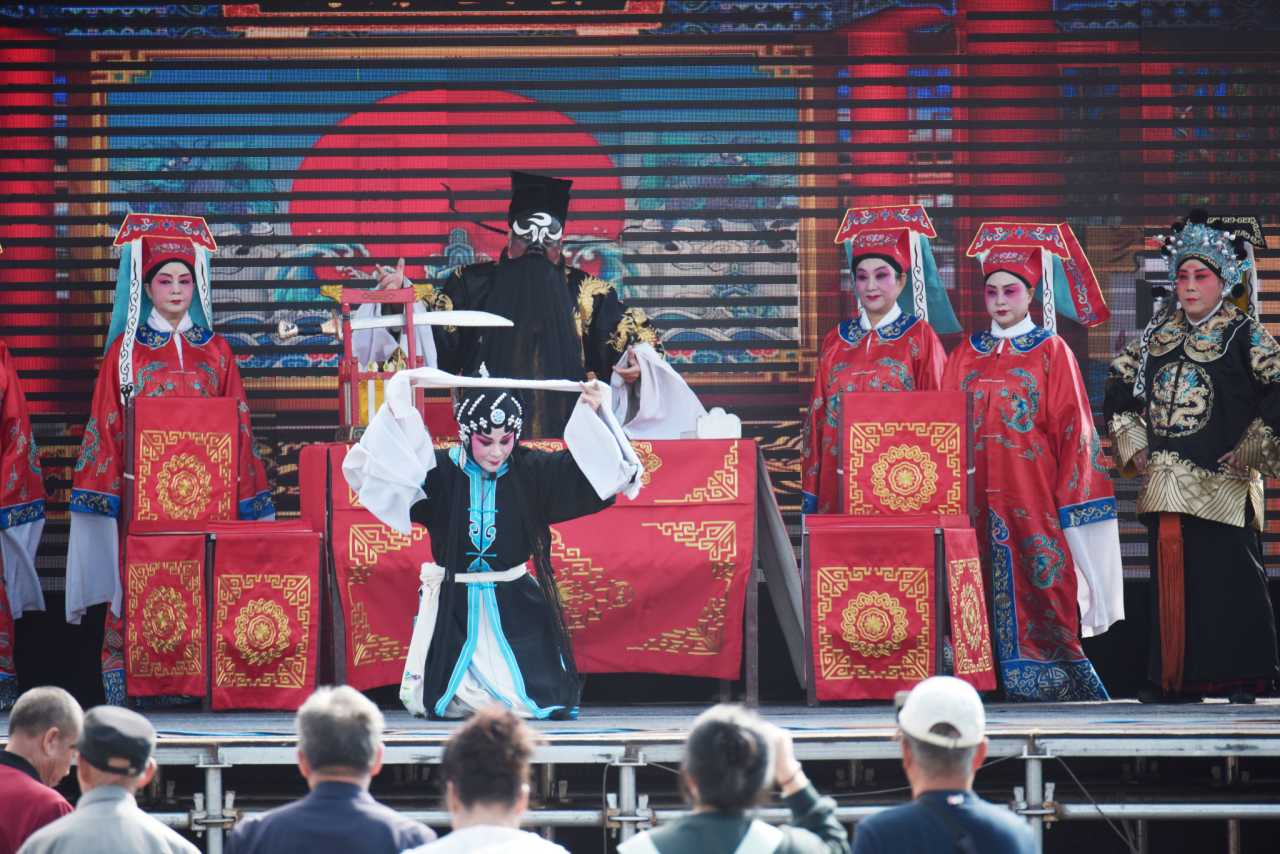
Compared with the bell and drum towers, the opera stage outside the Guandi Temple brightened my eyes. I saw many local elderly people gathered here, either concentrating on listening to opera or chatting with acquaintances about everything under the sun, creating a truly peaceful atmosphere. Later, I saw the same scene at the opera stage outside Yunlin Temple in Yanggao County, which can be appropriately described as "peaceful years."
Having seen tall buildings and hurried pedestrians, Datong's modern atmosphere obviously cannot compare with first- and second-tier cities, but I quite like this "primitive feeling." In the market, vegetables bundled into hills are sold in bundles, the bargaining sounds between residents and vendors rise and fall, and the smiles that cannot be hidden on their faces together outline a beautiful picture of happiness.
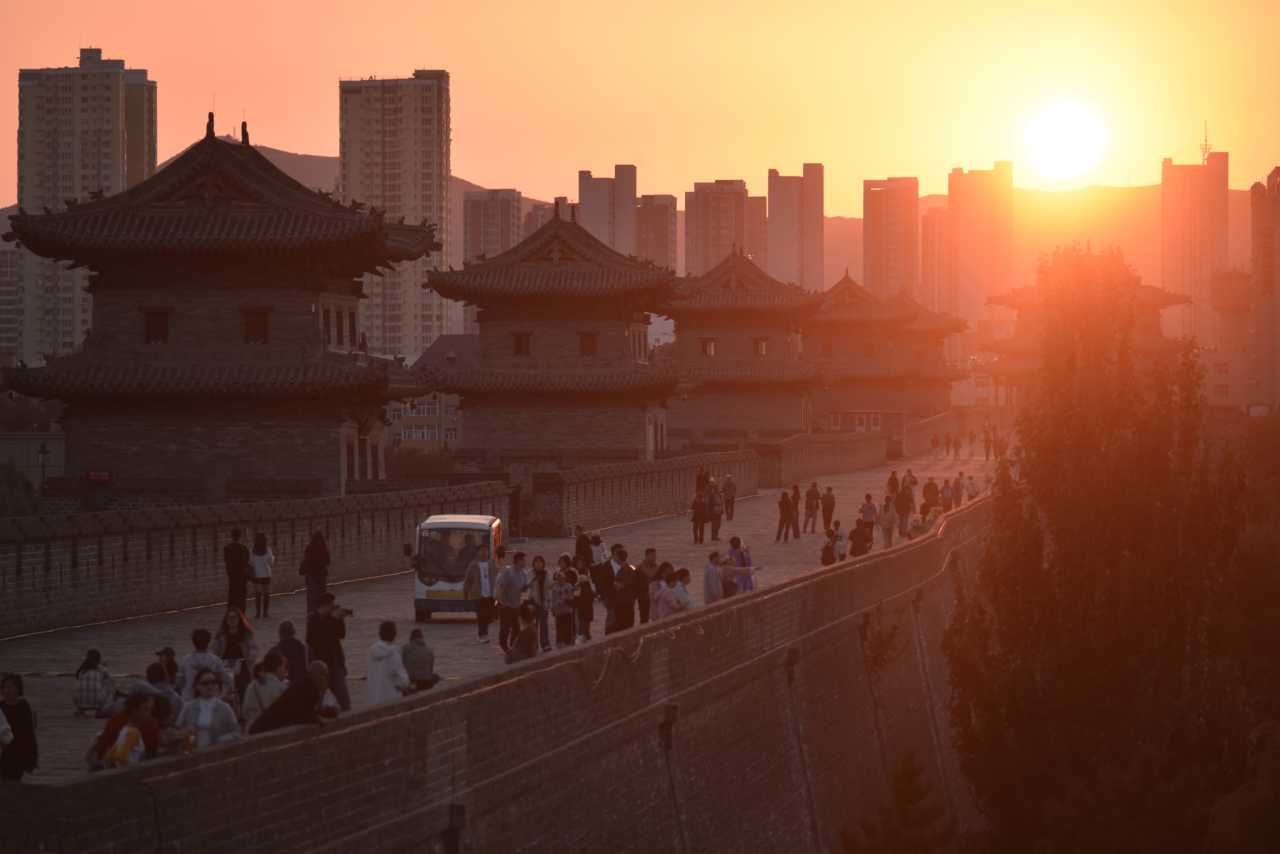
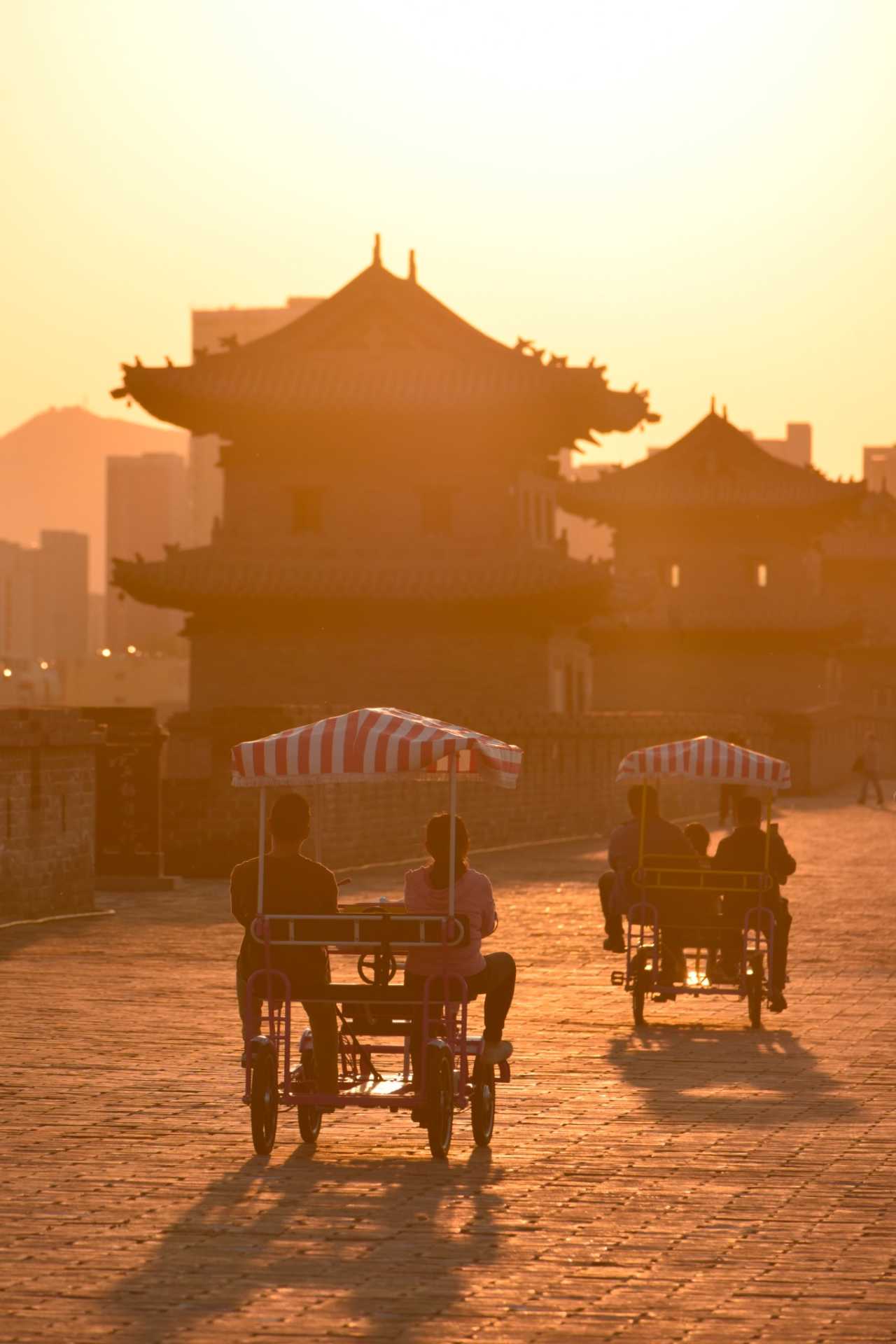
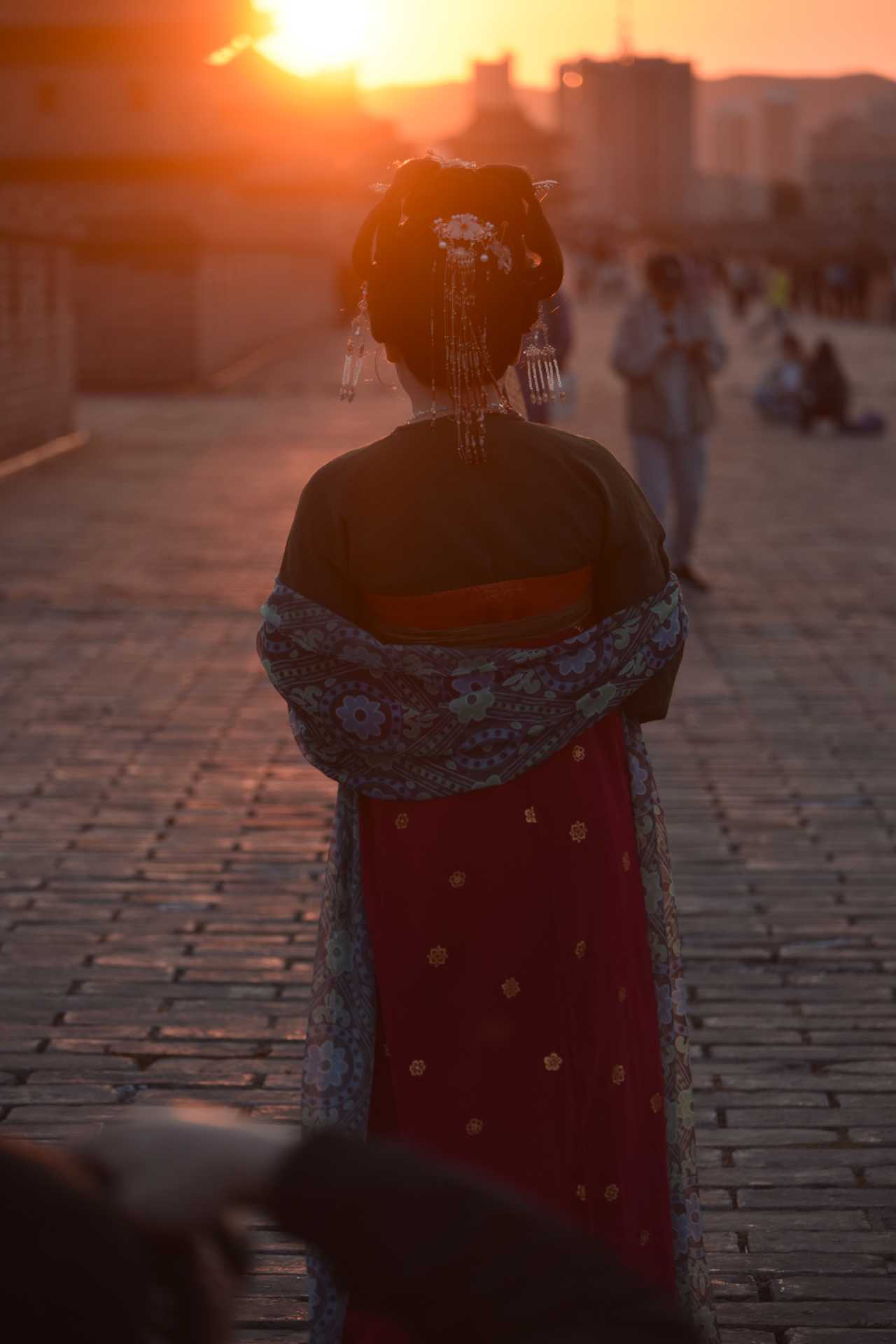
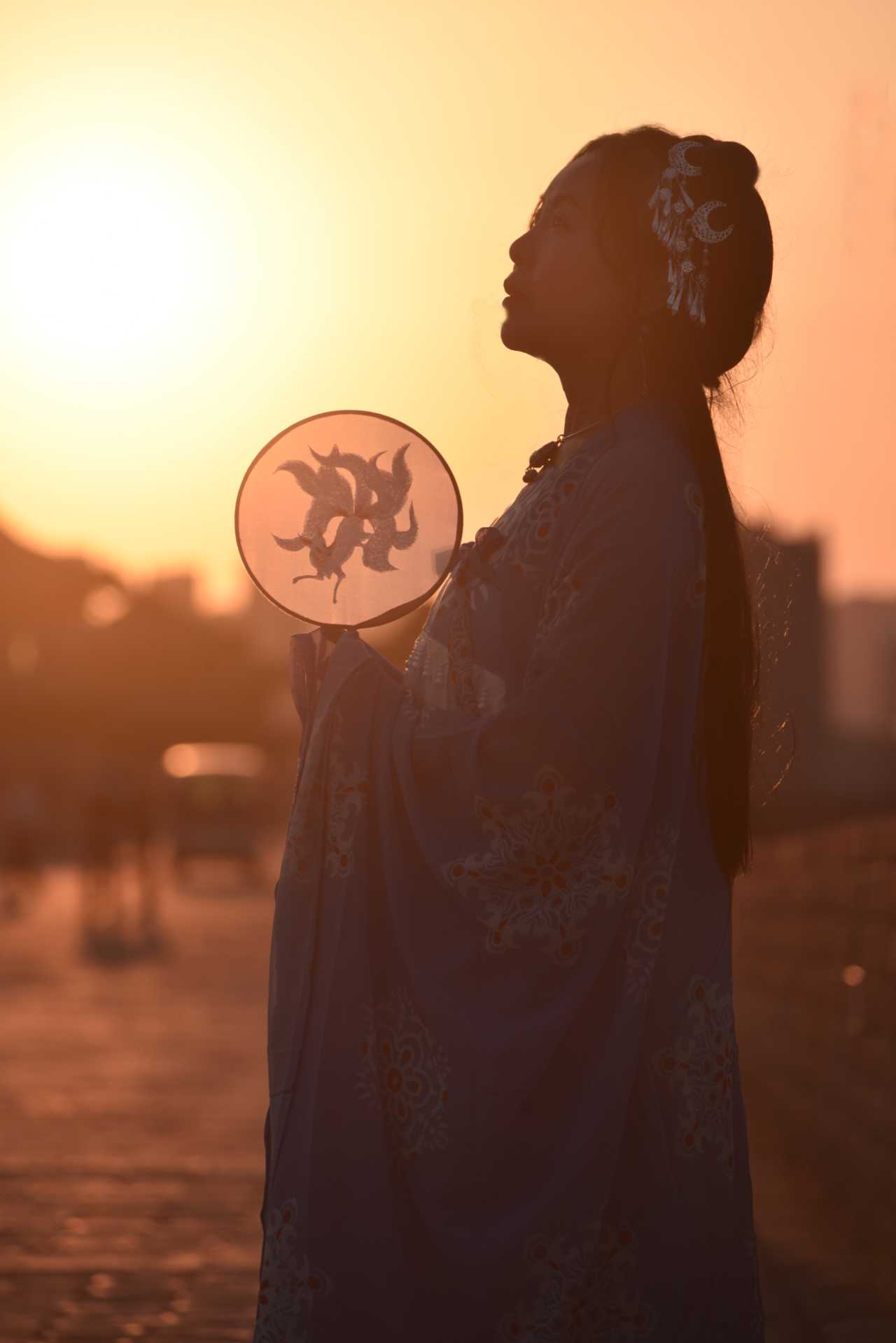
As the sun sets in the west, Datong ancient city welcomes its most beautiful moment. Different from other ancient cities, Datong's "sunset" is so unique in artistic conception that it reminds me of Xin Qiji's "Water Tune Song Head · Sunset Ancient City Corner." This poem was written by Xin Qiji to send off a friend to Lin'an, expressing the author's reluctance to part with his friend's long journey, hoping for his early return, as well as the poet's own loneliness and solitude. As a former border fortress city, Datong seems to have its own "sorrow," which makes people particularly moved.
Shanhua Temple: The Most Complete Preserved Liao and Jin Dynasty Temple Layout
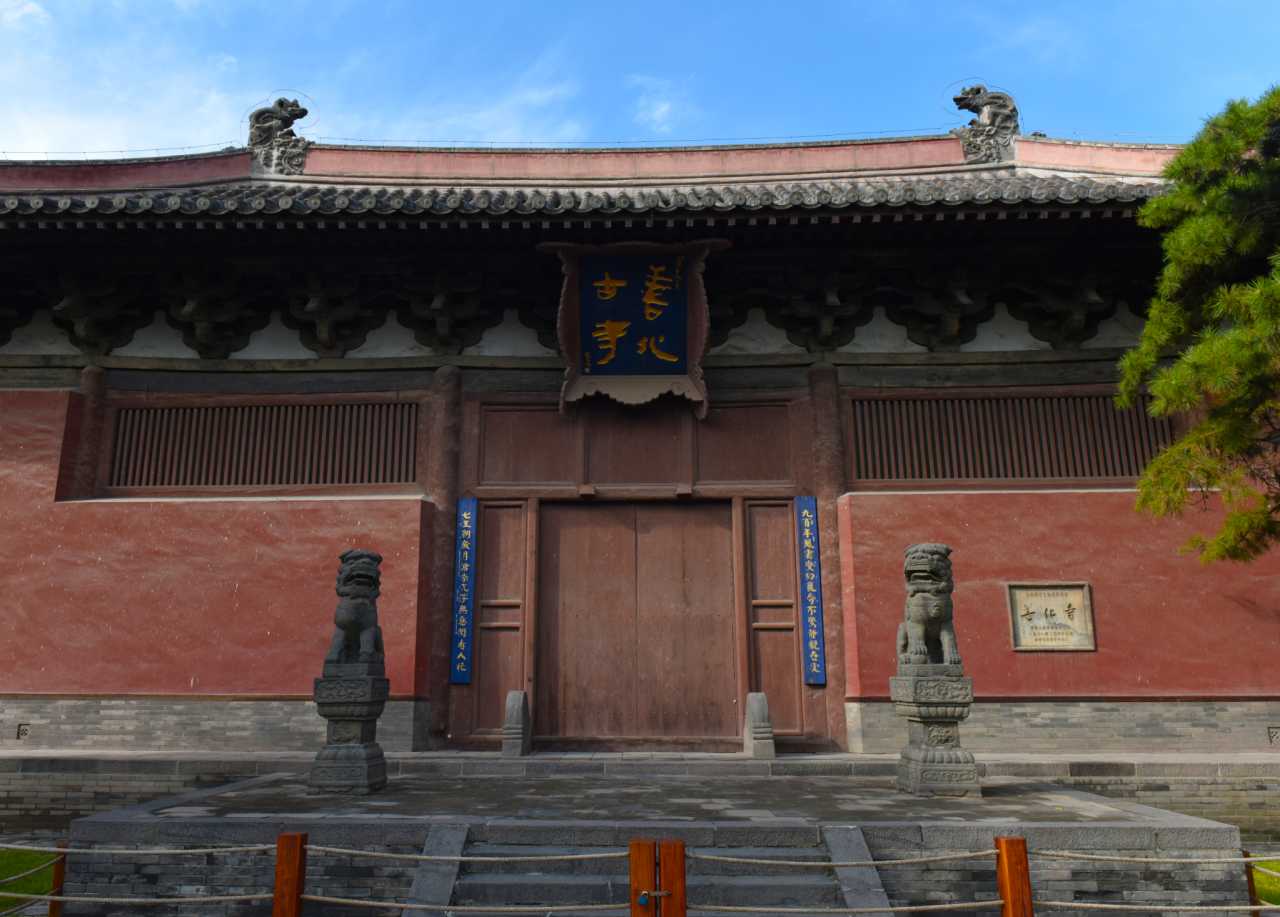
In recent years, "See underground in Shaanxi, see above ground in Shanxi" has been well-known to the Chinese people. Coming to Datong, one naturally cannot miss these masterpieces left over from the Liao and Jin dynasties. As the most complete preserved Liao and Jin dynasty temple layout in China, Shanhua Temple was first built in the Tang dynasty, adopting the traditional Buddhist temple layout at that time. On the main axis, the mountain gate (Heavenly King Hall), Sansheng Hall, and Mahavira Hall are arranged in sequence. The Mahavira Hall has east and west side halls on the left and right, and Samantabhadra Pavilion and Manjusri Pavilion at the front end, supplemented by corridors.
 Shanhua Temple
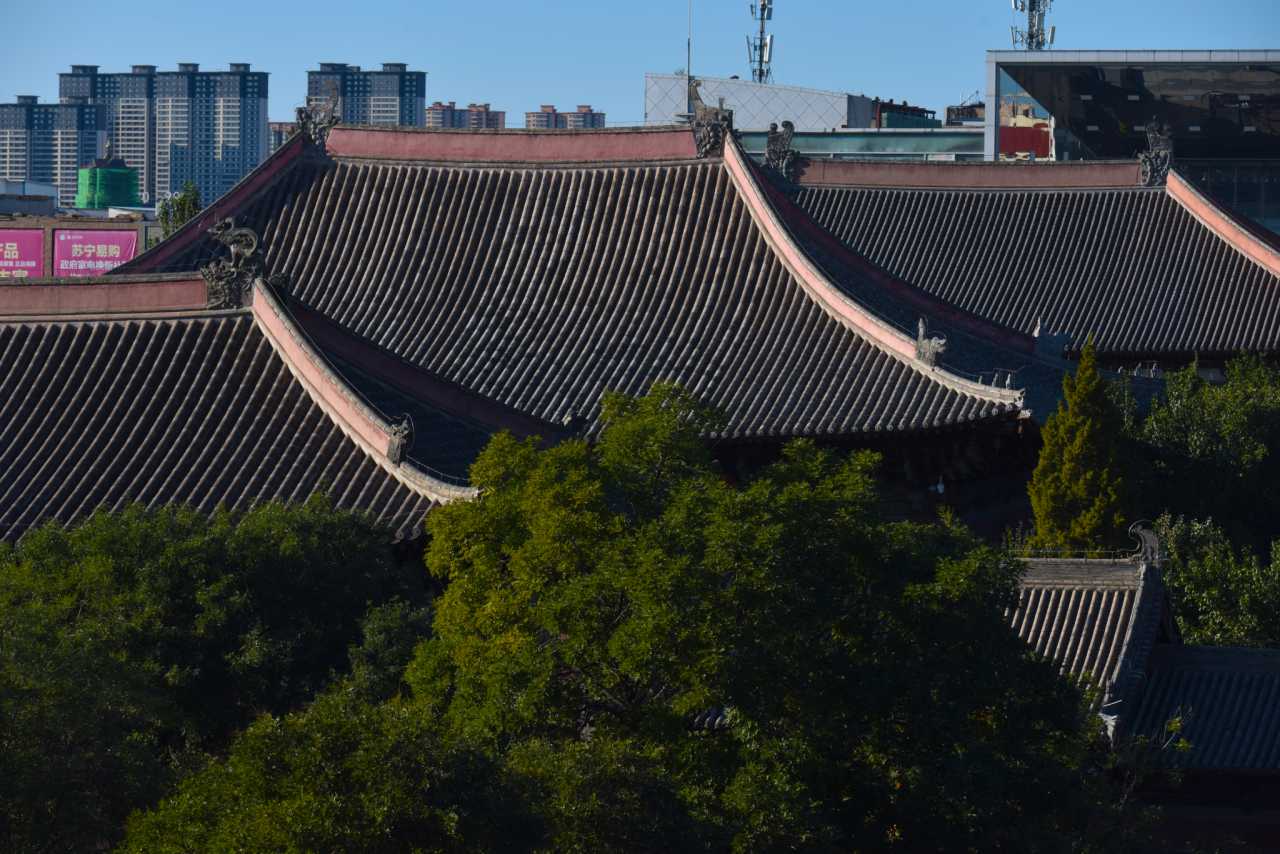
From the perspective of form, although the three halls on the main axis of Shanhua Temple all adopt the single-eaved hip roof, there are certain differences. The single-eaved hip roof of Sansheng Hall has a shorter main ridge, gentle and open vertical ridge curves, and upturned eaves in wing shape, quite three-dimensional. The single-eaved hip roof of Mahavira Hall has a longer main ridge and gentler vertical ridges, giving the entire hall a stable and dignified visual effect.
 Shanhua Temple
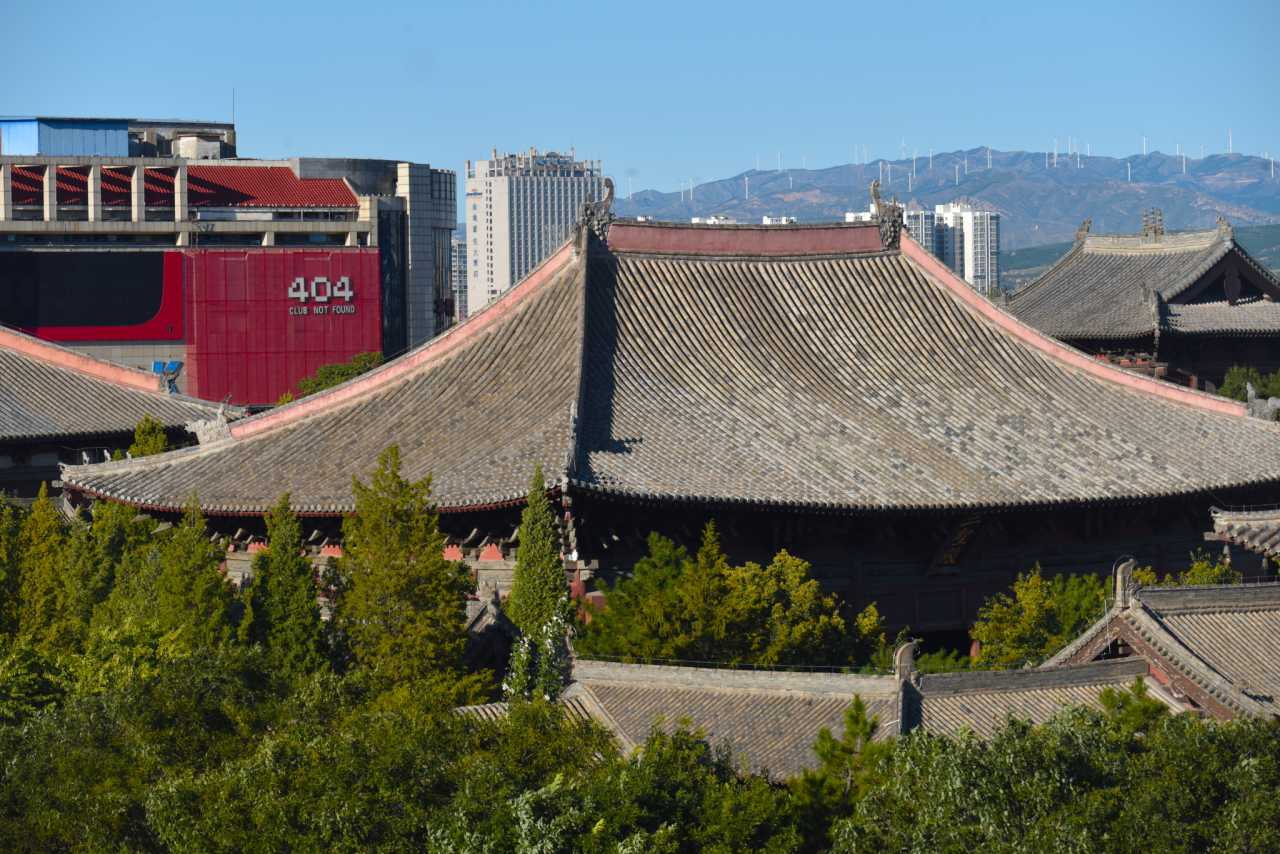 Shanhua Temple
When we truly entered Shanhua Temple, we discovered that the attractions of this temple are more than just the differences in roof tops. First, the Heavenly King Hall with five rooms facing width is the largest existing mountain gate of the Jin dynasty in China, and the Four Heavenly Kings in the hall are deeply loved by tourists for their playful feeling.
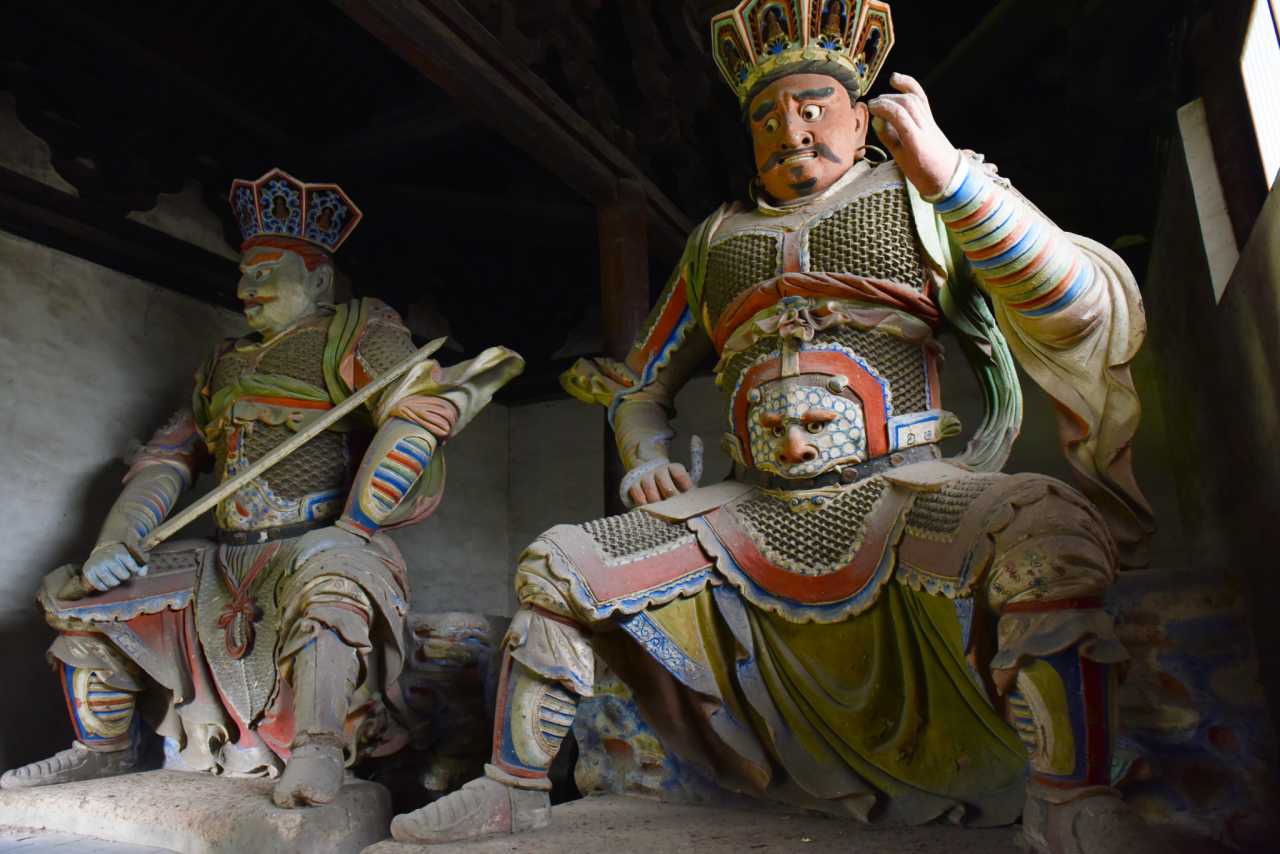 Shanhua Temple
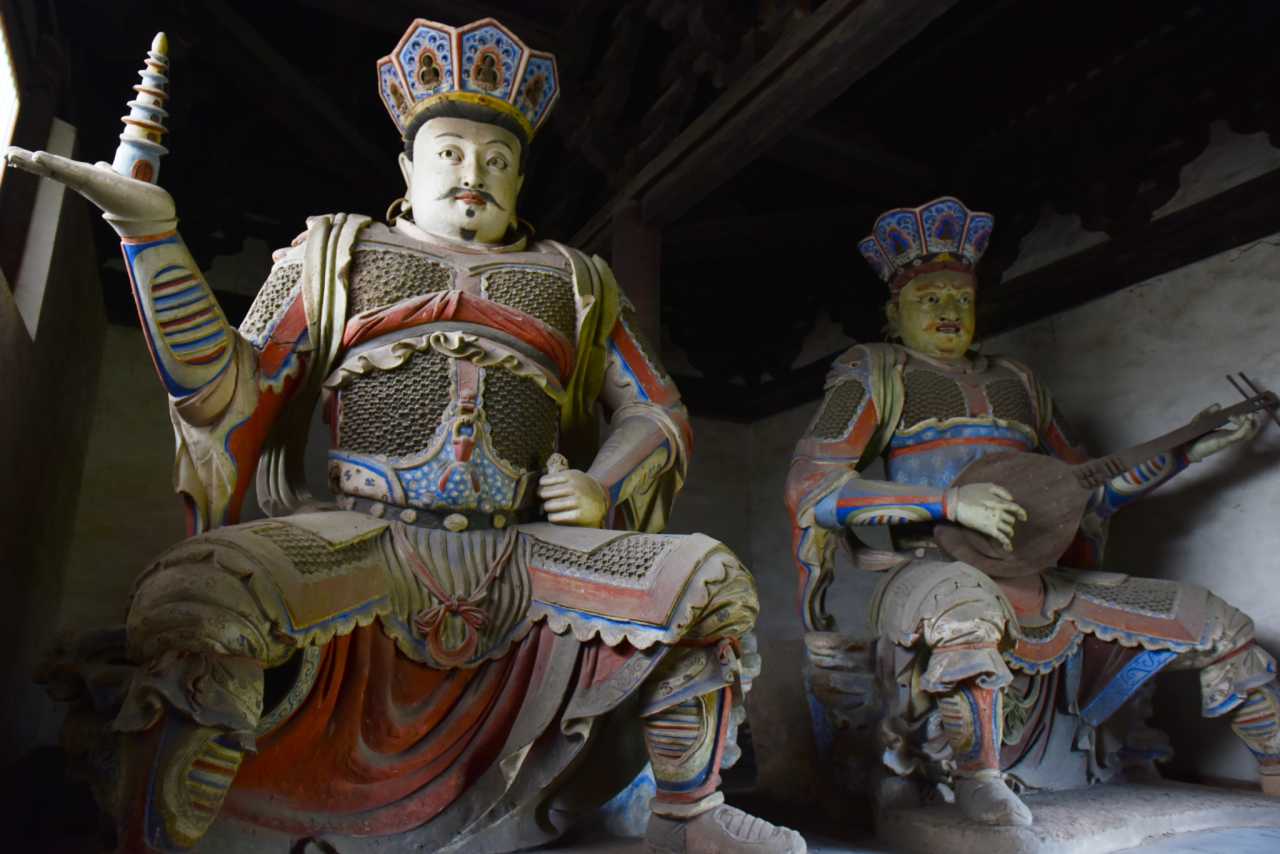 Shanhua Temple
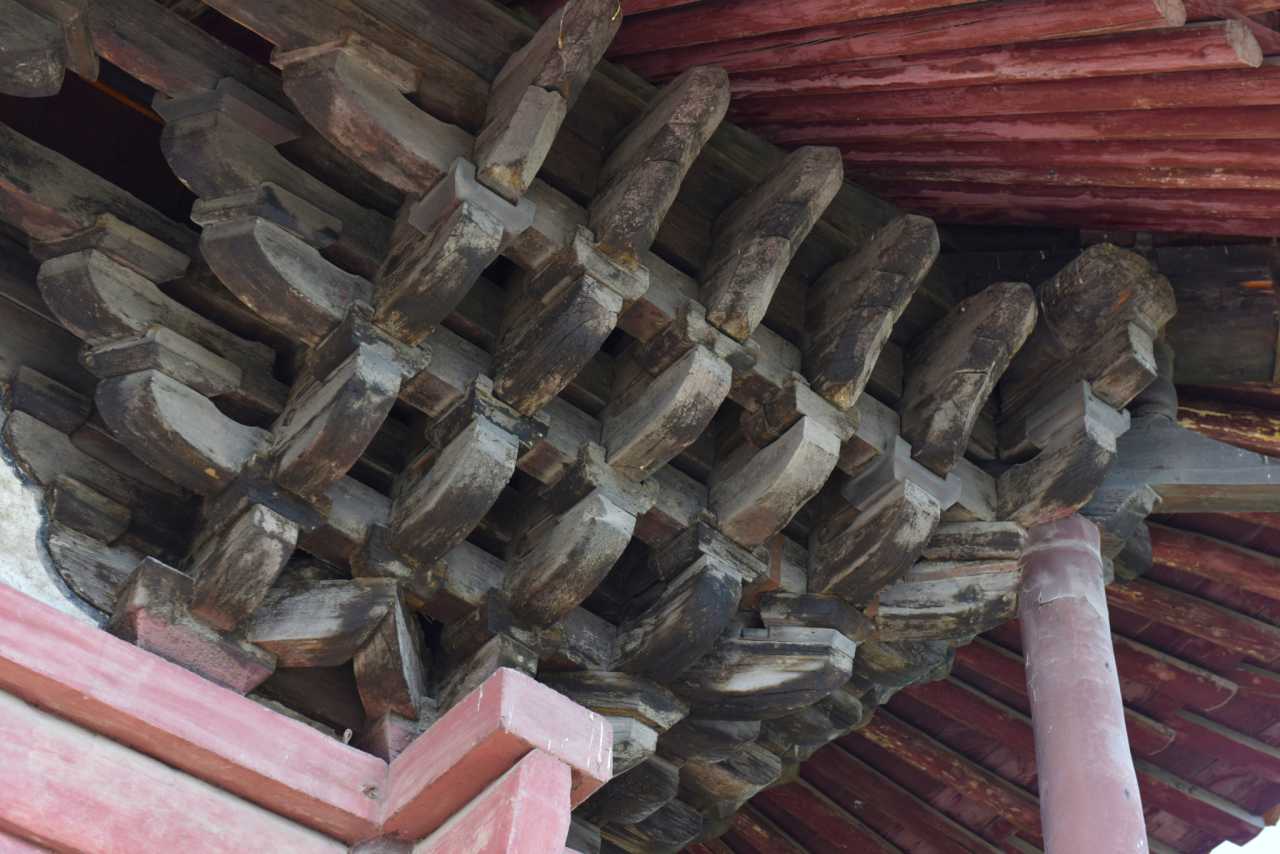
After entering the Central Plains, both Liao and Jin began to absorb Central Plains culture, and this was also true in architecture. Taking dougong (bracket sets) as an example, the dougong in Heavenly King Hall, Sansheng Hall, and Mahavira Hall are all relatively large in volume.
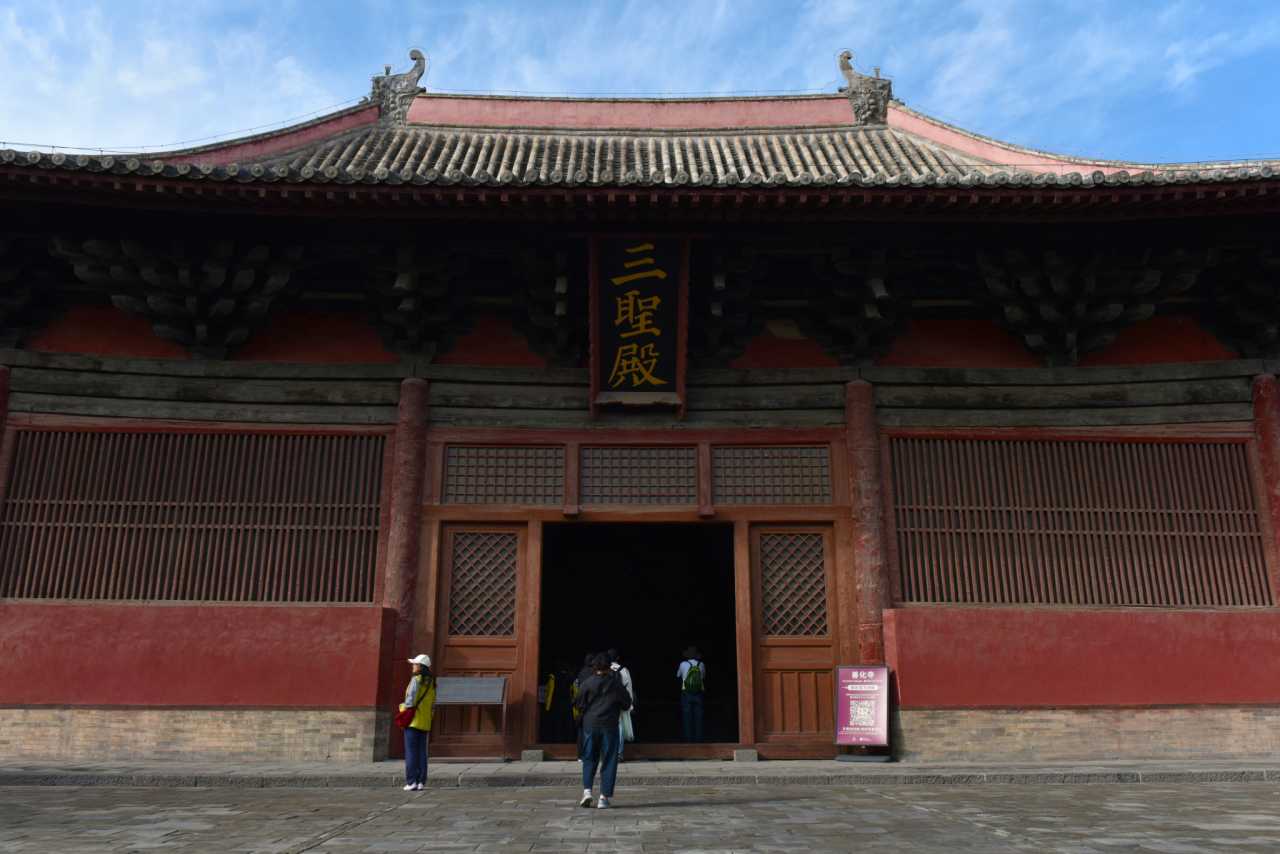 Shanhua Temple
Among the many dougong, the "oblique arch" between the two pillars is the most beautiful. The oblique arch has five layers, layer upon layer, shaped like blooming flowers. Due to the overly complex structure of the oblique arch, its decorative and beautifying function is greater than its structural function.
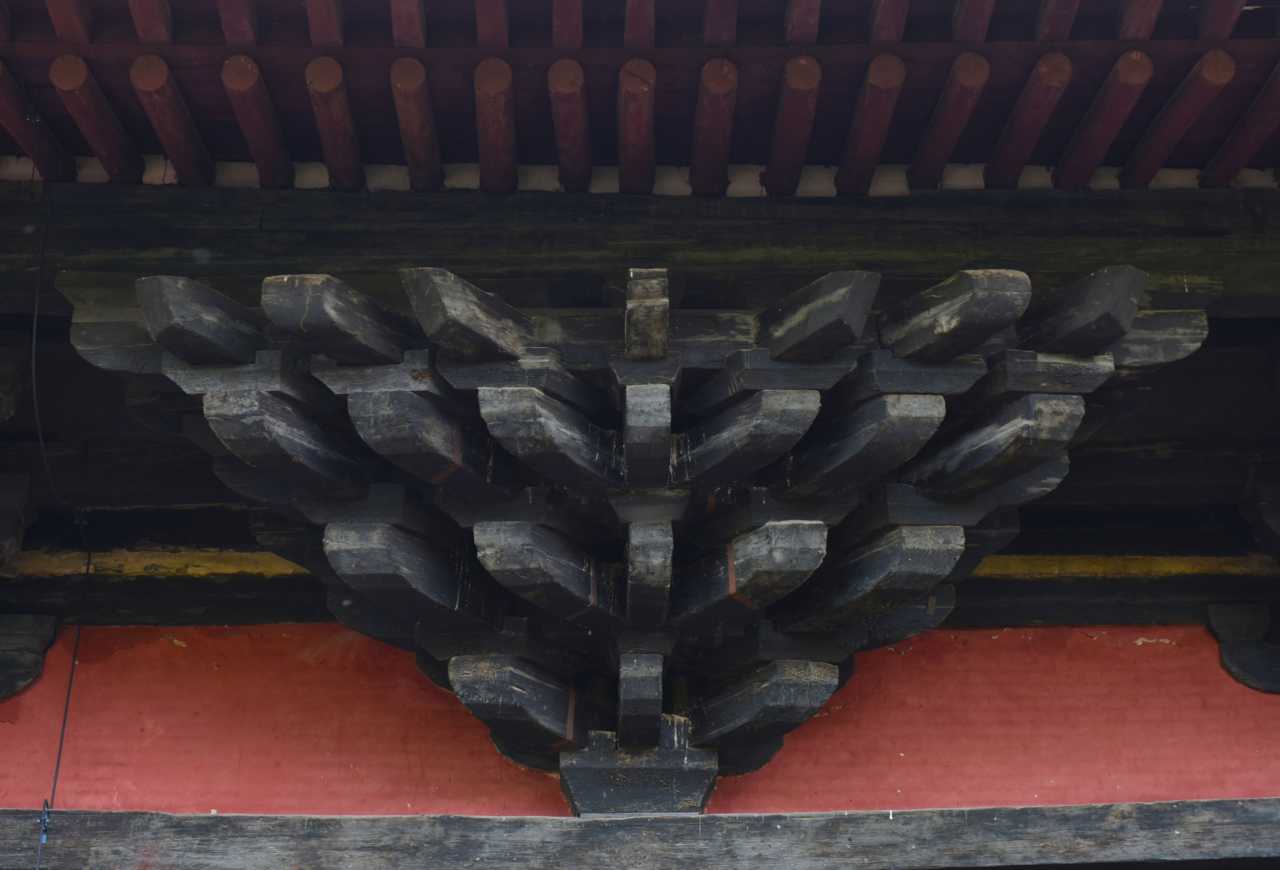 Shanhua Temple
Entering the hall and looking around, we can find that craftsmen made the hall appear more spacious and tall by using the "column reduction method" and adopting "exposed structure" (that is, without ceiling blocking). In addition, due to the absence of a ceiling, the components supporting the roof are all exposed, revealing robust and powerful dougong and intricate beam structures, bringing people a unique visual experience.
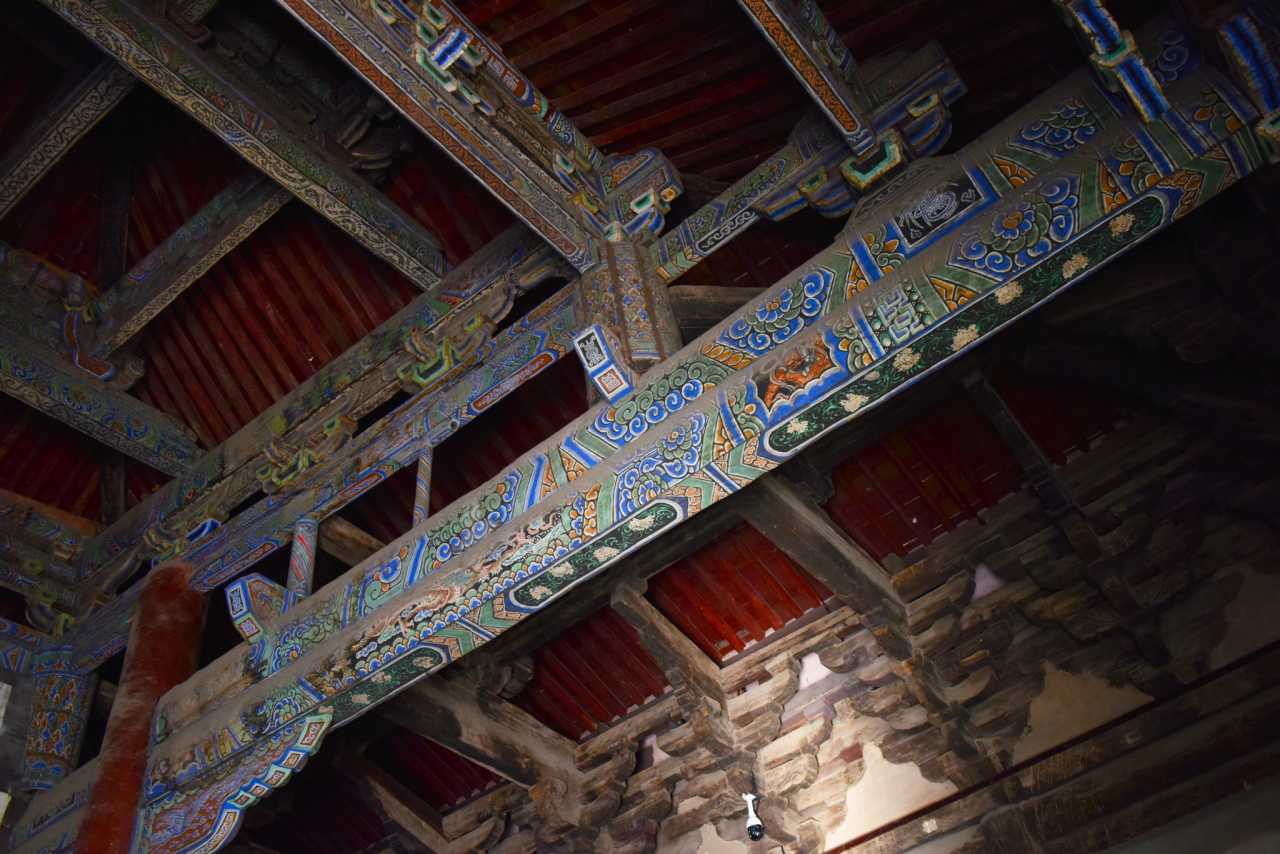 Shanhua Temple
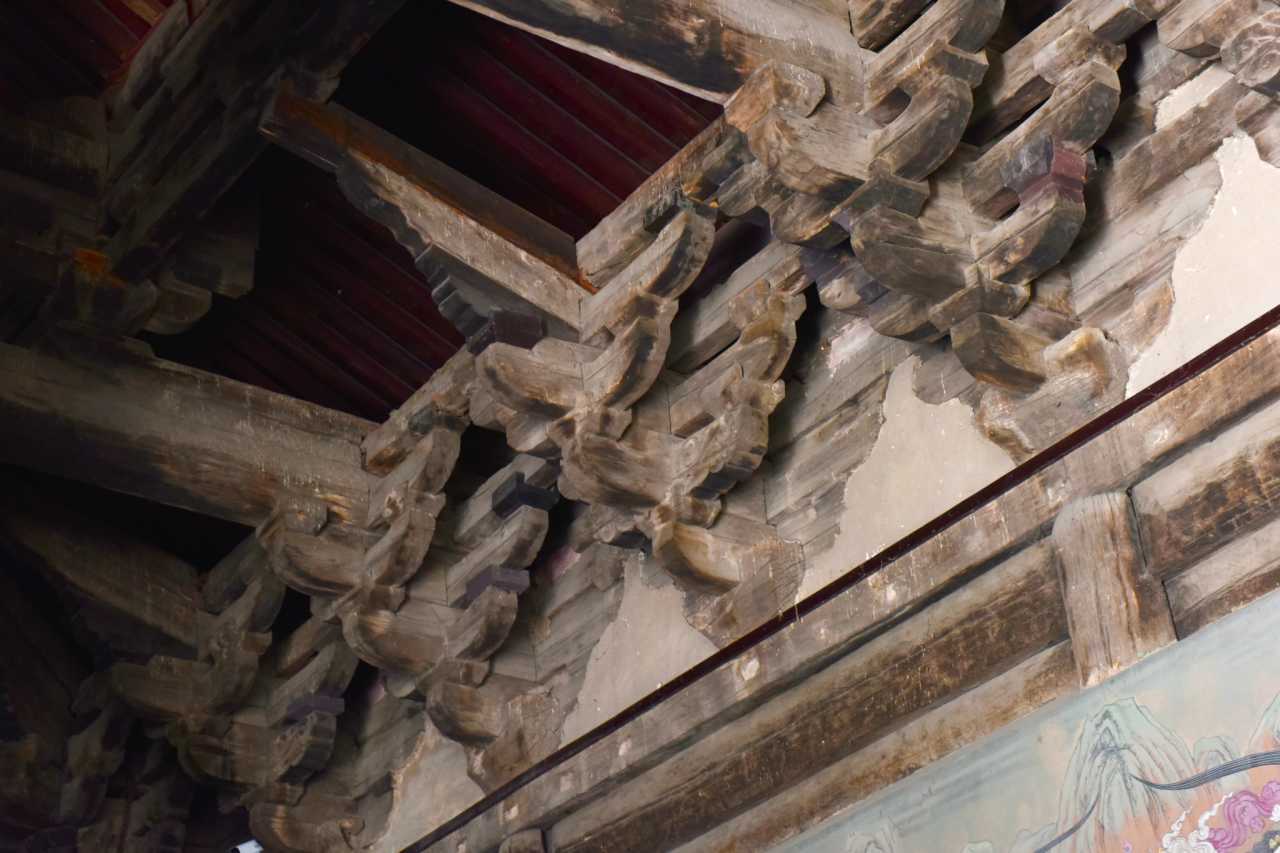 Shanhua Temple
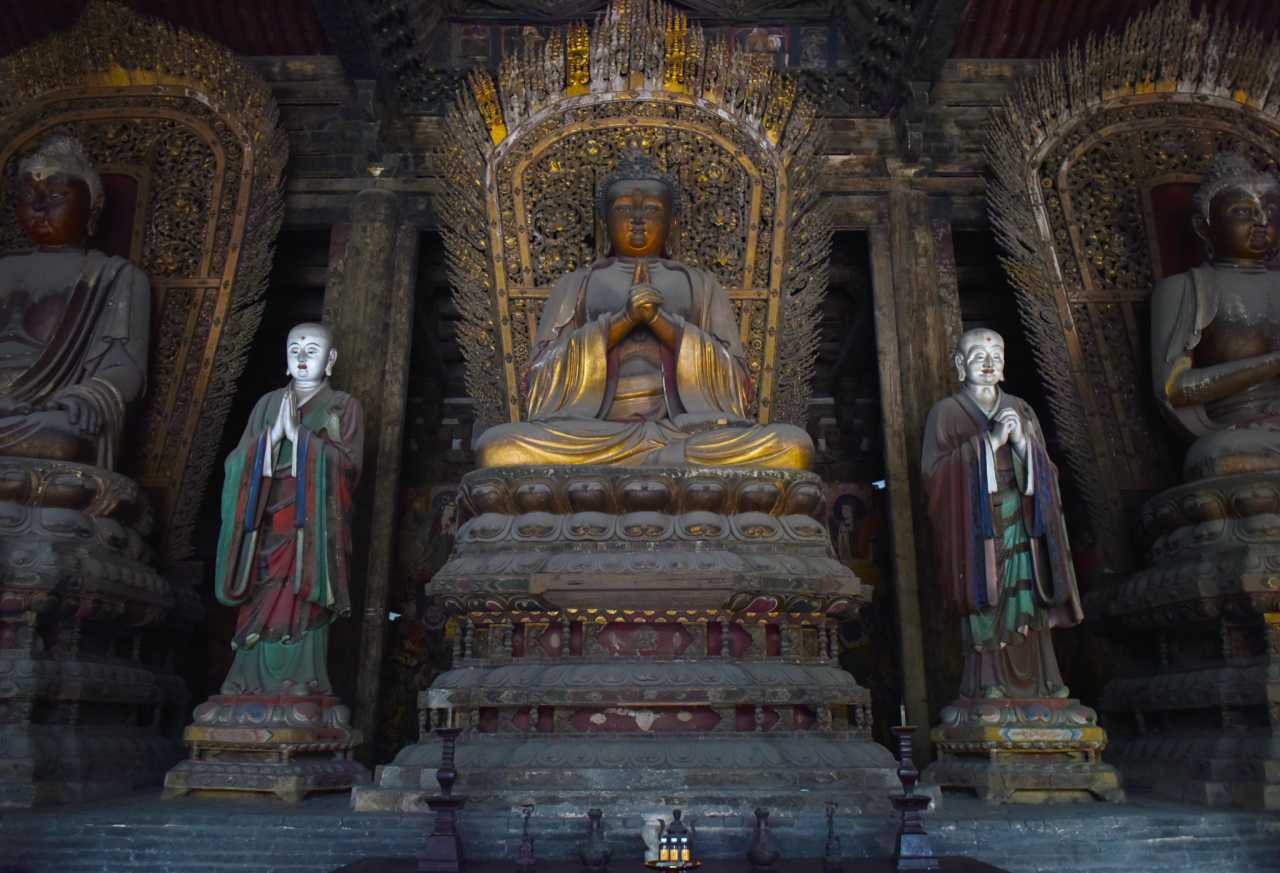
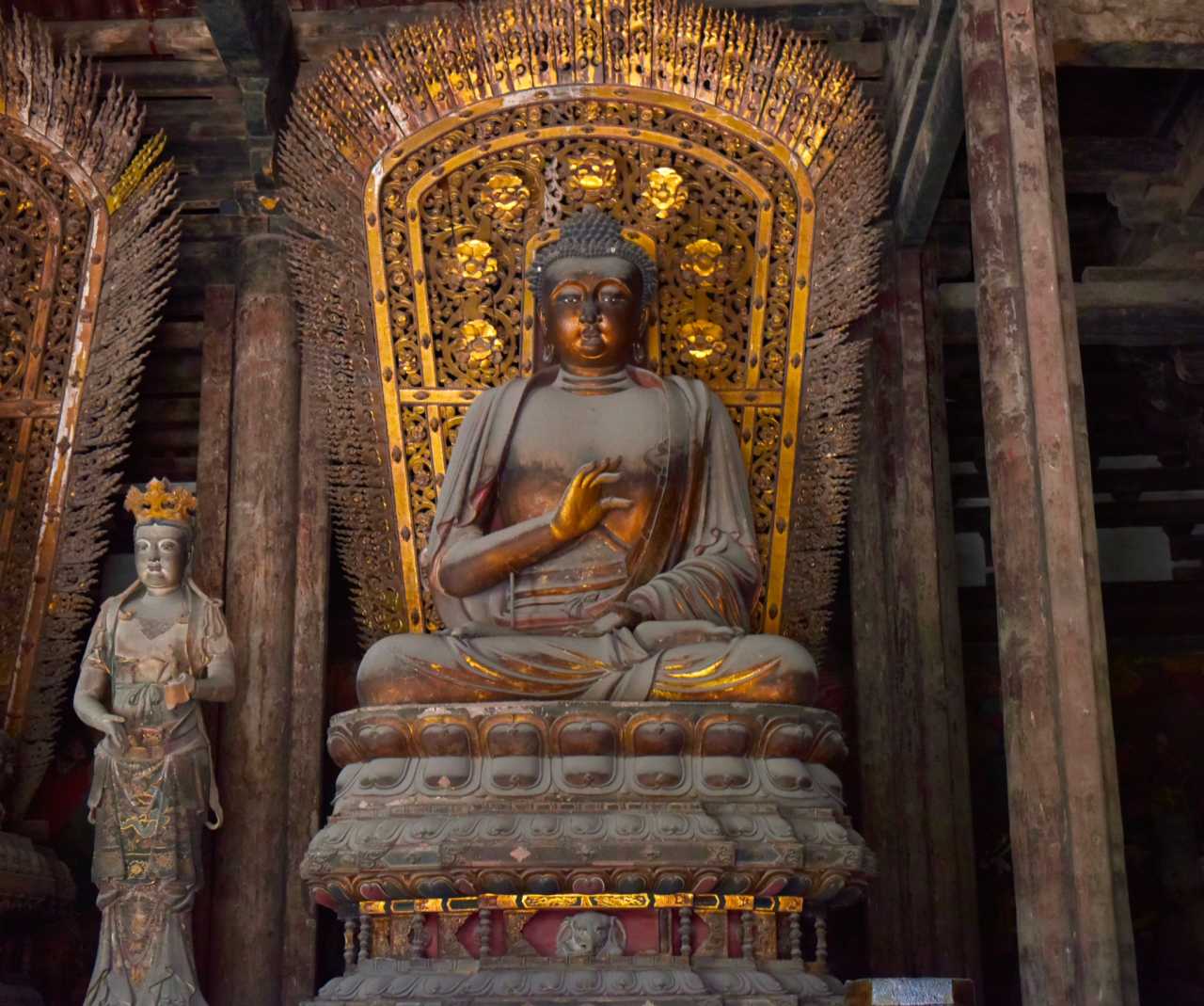
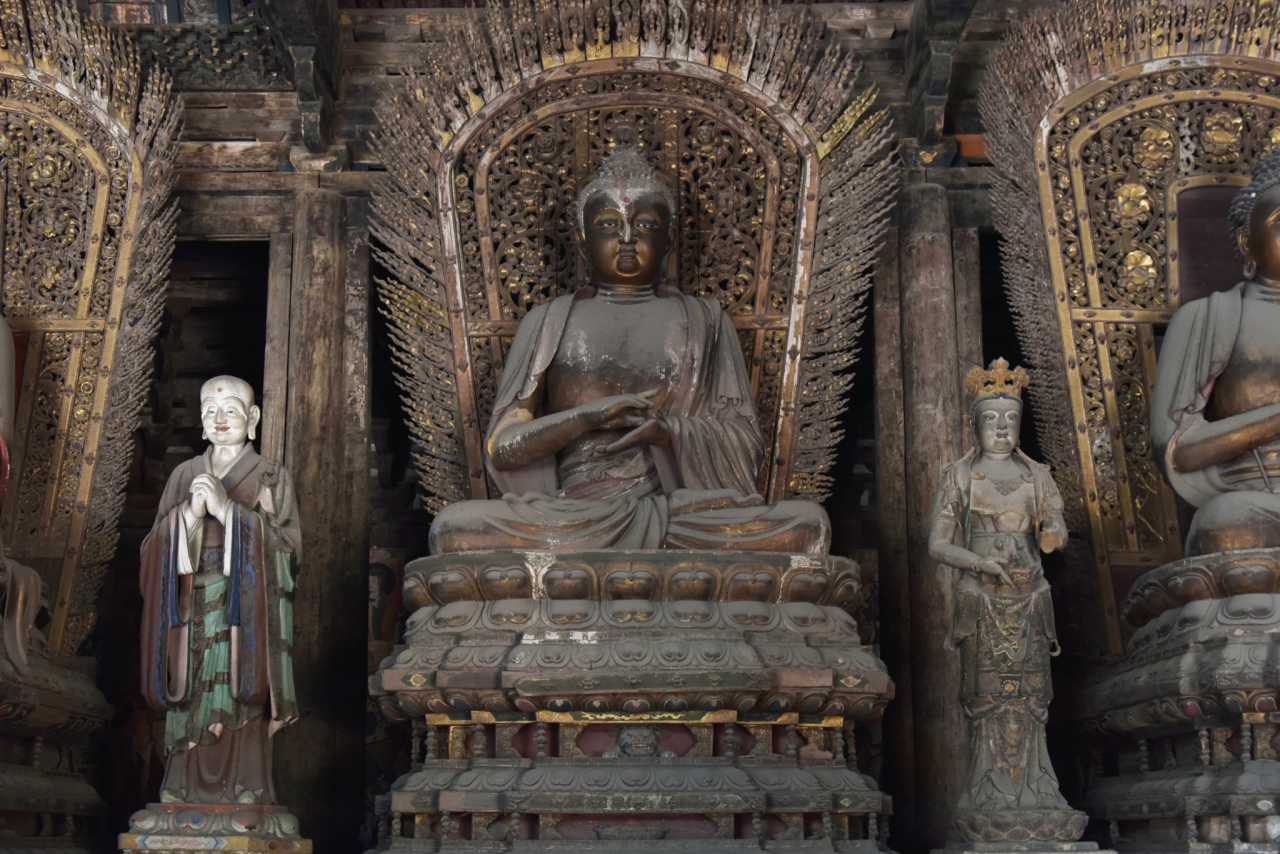
Enshrined in this solemn Buddhist hall are the Huayan Three Saints, namely Vairocana Buddha (Shakyamuni), Manjusri Bodhisattva, and Samantabhadra Bodhisattva. They are all original works from the Jin dynasty.
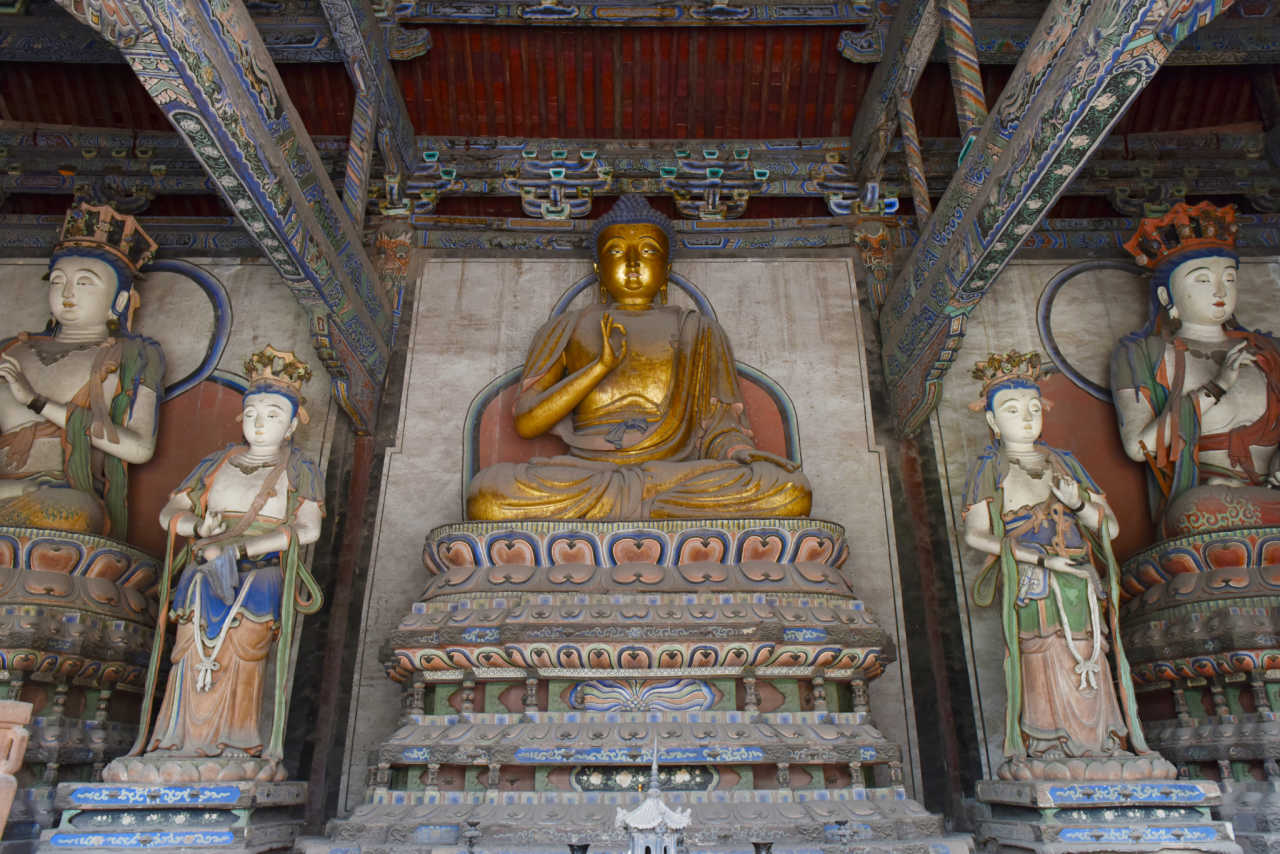 Shanhua Temple
In addition, through the stele "Record of Rebuilding the Main Hall of Dapuen Temple in Western Capital of Great Jin" placed in Sansheng Hall, visitors can understand the history of this temple. Shanhua Temple was first built in the Tang dynasty, originally named Kaiyuan Temple, and was renamed Dapuen Temple during the Later Jin period of the Five Dynasties. Later, during the great war between Liao and Jin, Datong was captured by Jin soldiers, and most of Shanhua Temple's buildings were destroyed in the war. In the early Jin dynasty (1128), the monk Master Yuanman presided over the reconstruction of the temple. In the tenth year of Ming Zhengtong (1445), Emperor Yingzong of Ming bestowed the name "Shanhua Temple."
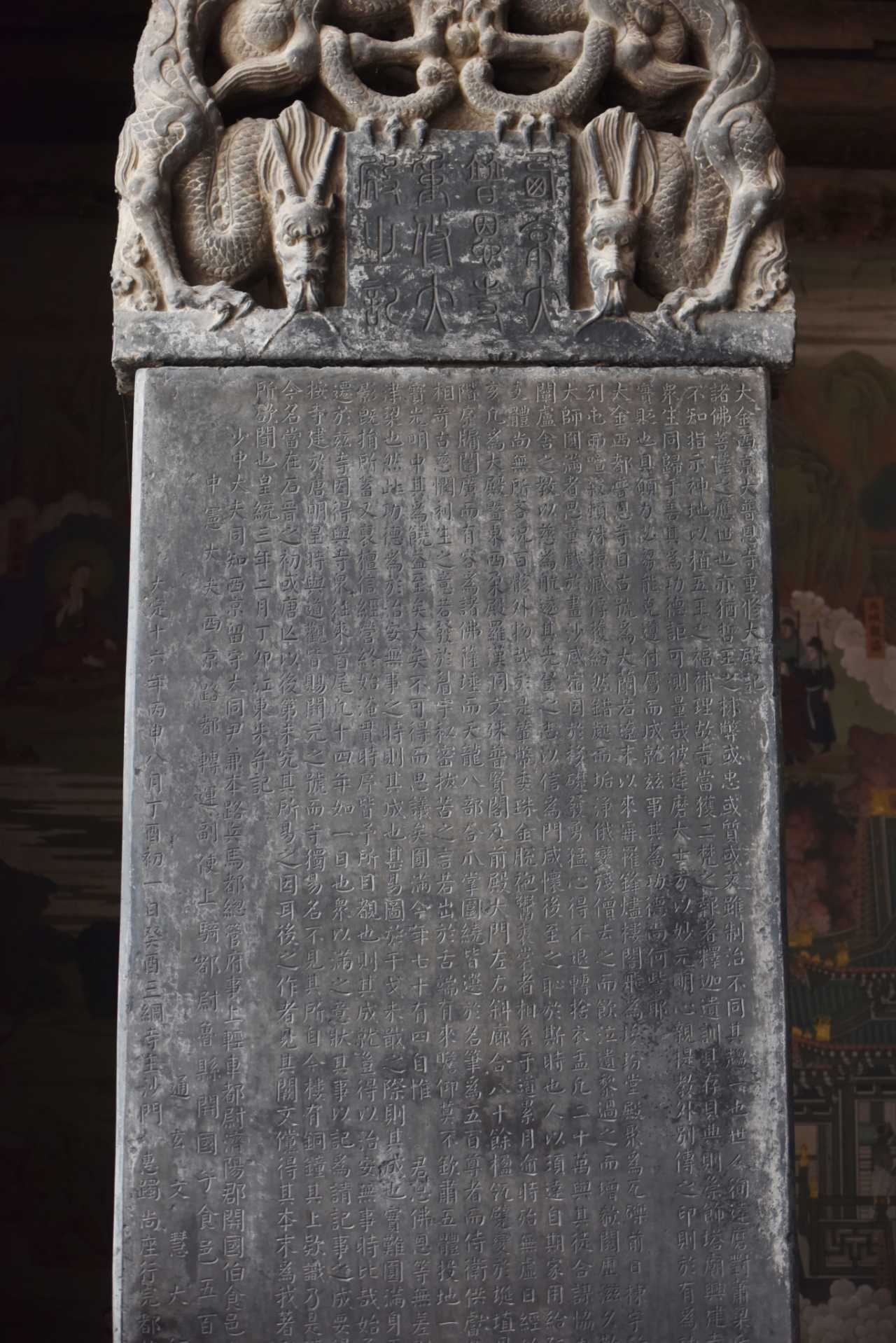 Shanhua Temple
There are obvious differences between the gate of Mahavira Hall in Shanhua Temple and the gates of temples in the Central Plains. This door shaped like lotus petals was called "pot door" during the Tang and Song dynasties. After Buddhism was introduced to China, combined with arch doors and Buddhist niche shapes, it became a decorative door, set at the entrance of buildings to show dignity. The interior of Mahavira Hall not only uses the column reduction method but also adopts "exposed structure" except for the exquisite caisson carved in the middle of the top, making the entire hall appear more spacious.
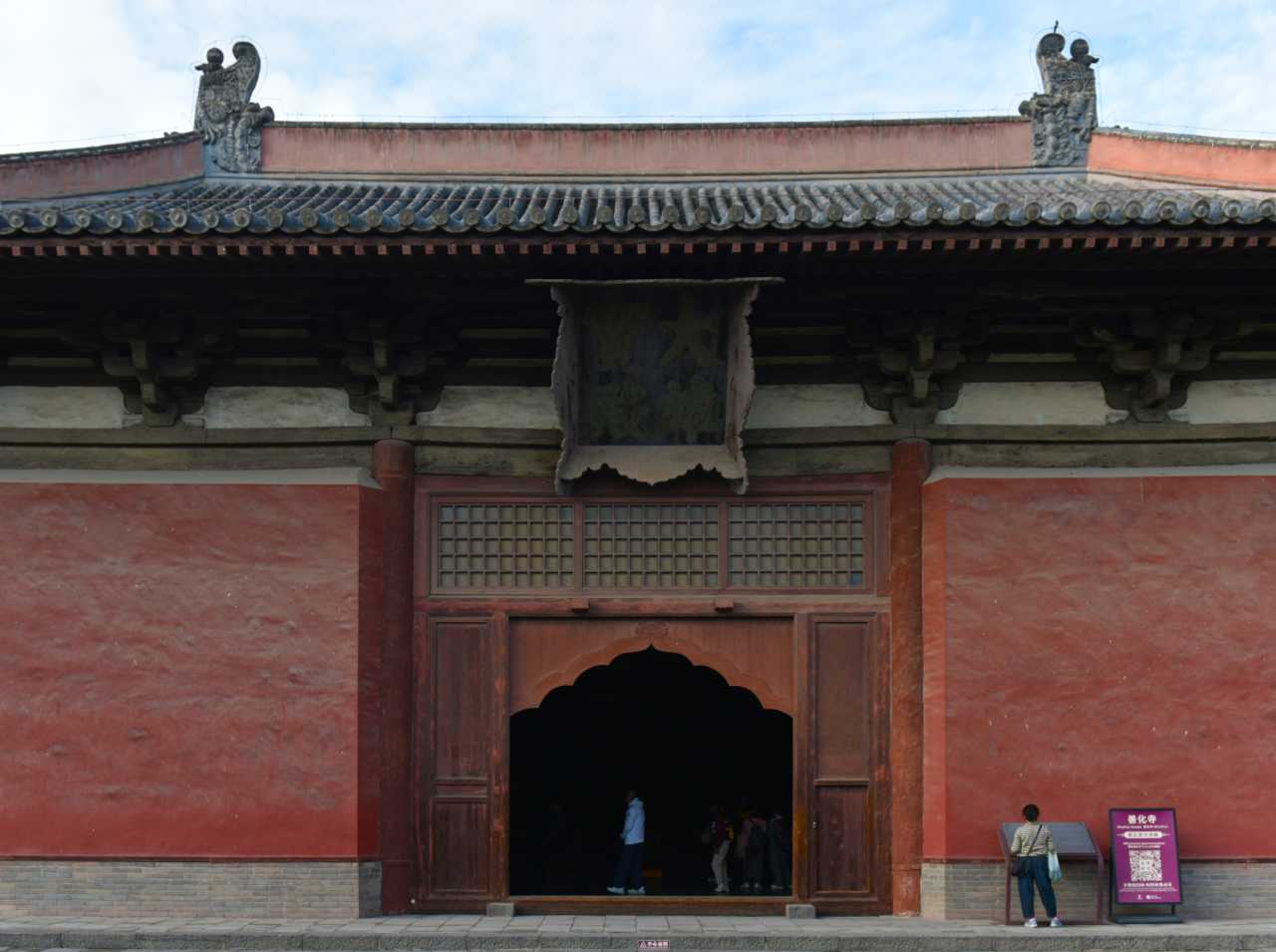 Shanhua Temple
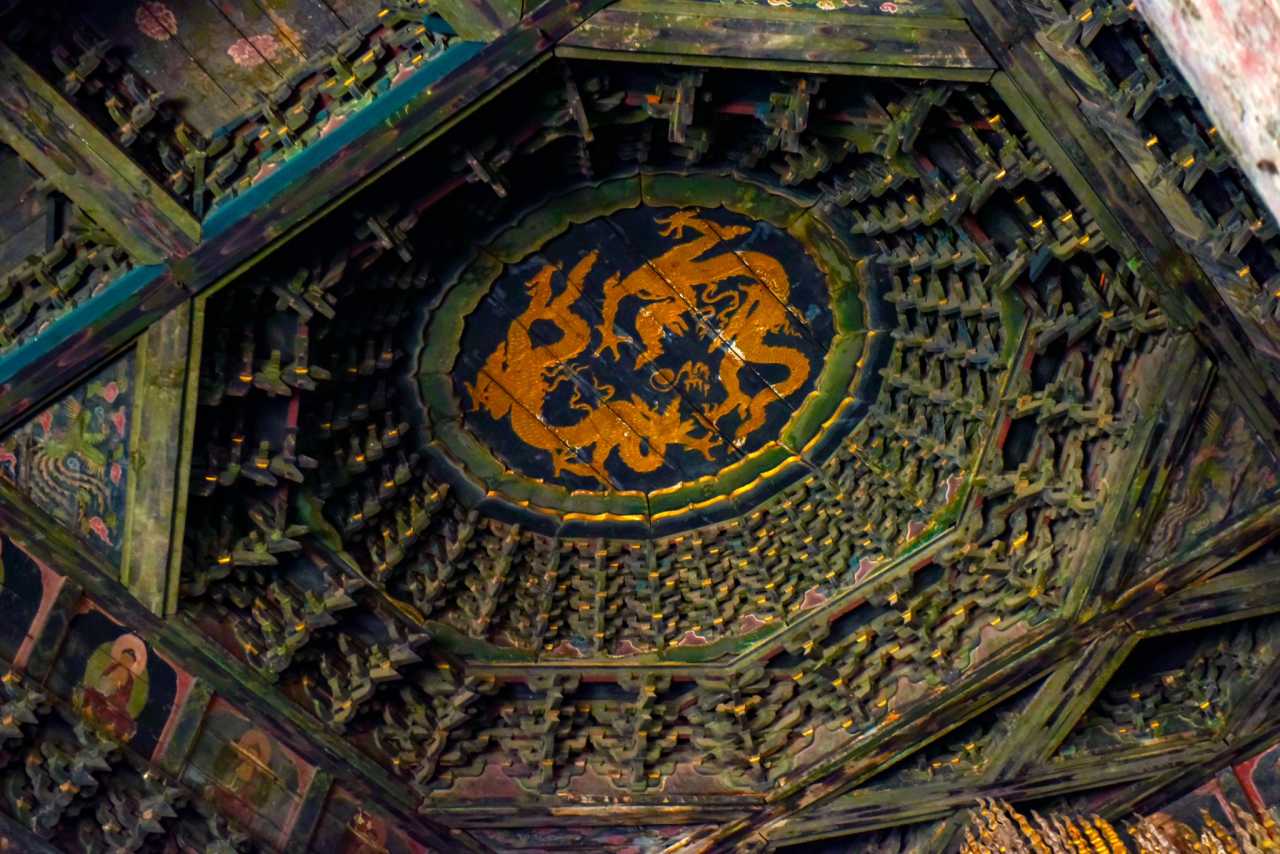 Shanhua Temple
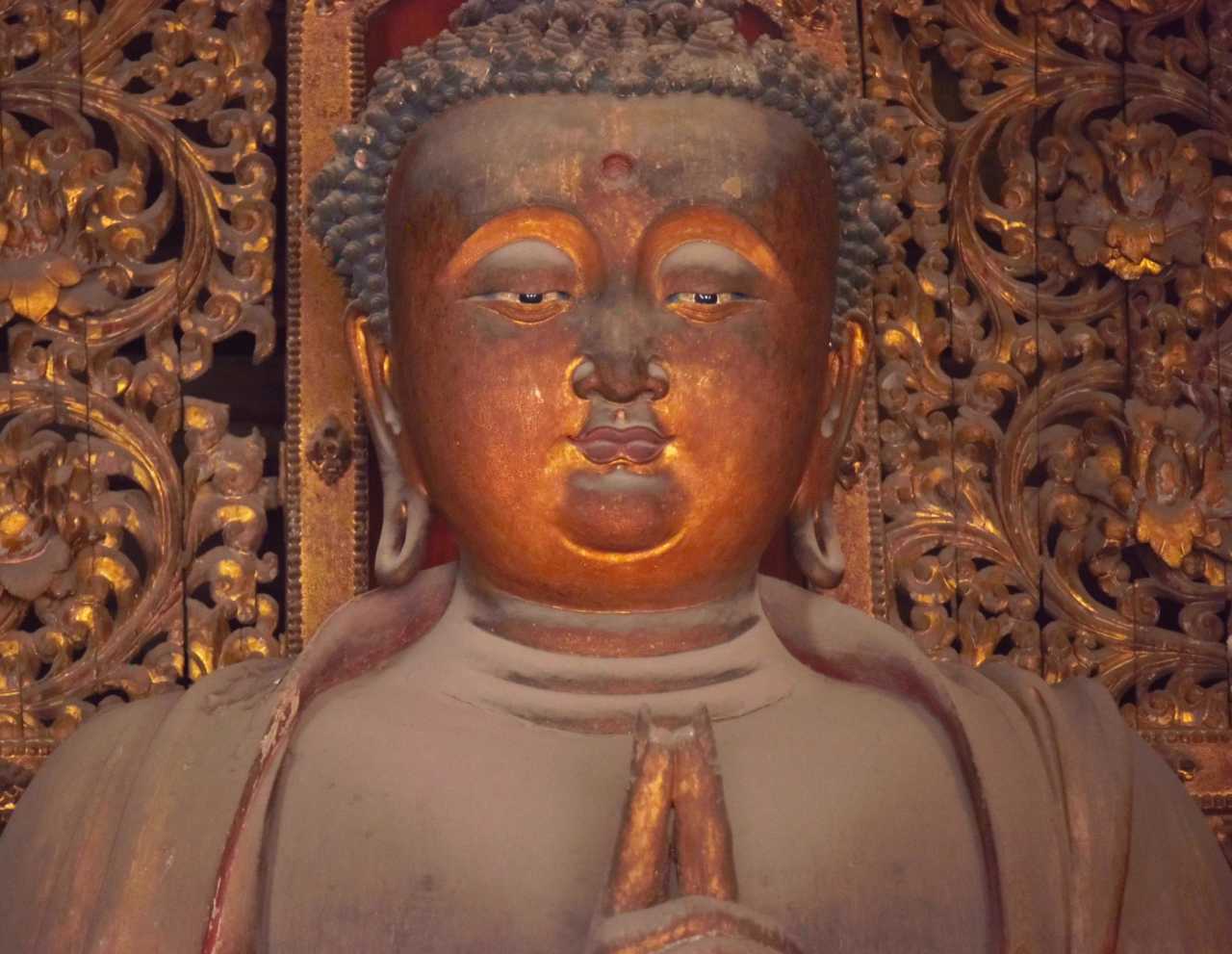
On the huge lotus seat sits the Five Buddhas of Tathagata, with dignified appearance, elegant bearing, smooth clothing patterns, and the disciples and Bodhisattvas under the lotus seat are also dignified. The brick platforms on the east and west sides of the hall are lined with twenty-four statues of Dharma-protecting Heavenly Kings, with vivid expressions, distinct personalities, and exquisite carvings. They not only have the solemn feeling of religious treasures but also are full of strong life atmosphere; they have both the characteristics of plumpness and elegance of Tang and Song dynasty sculptures and the bold and vigorous spirit of northern nomadic peoples.
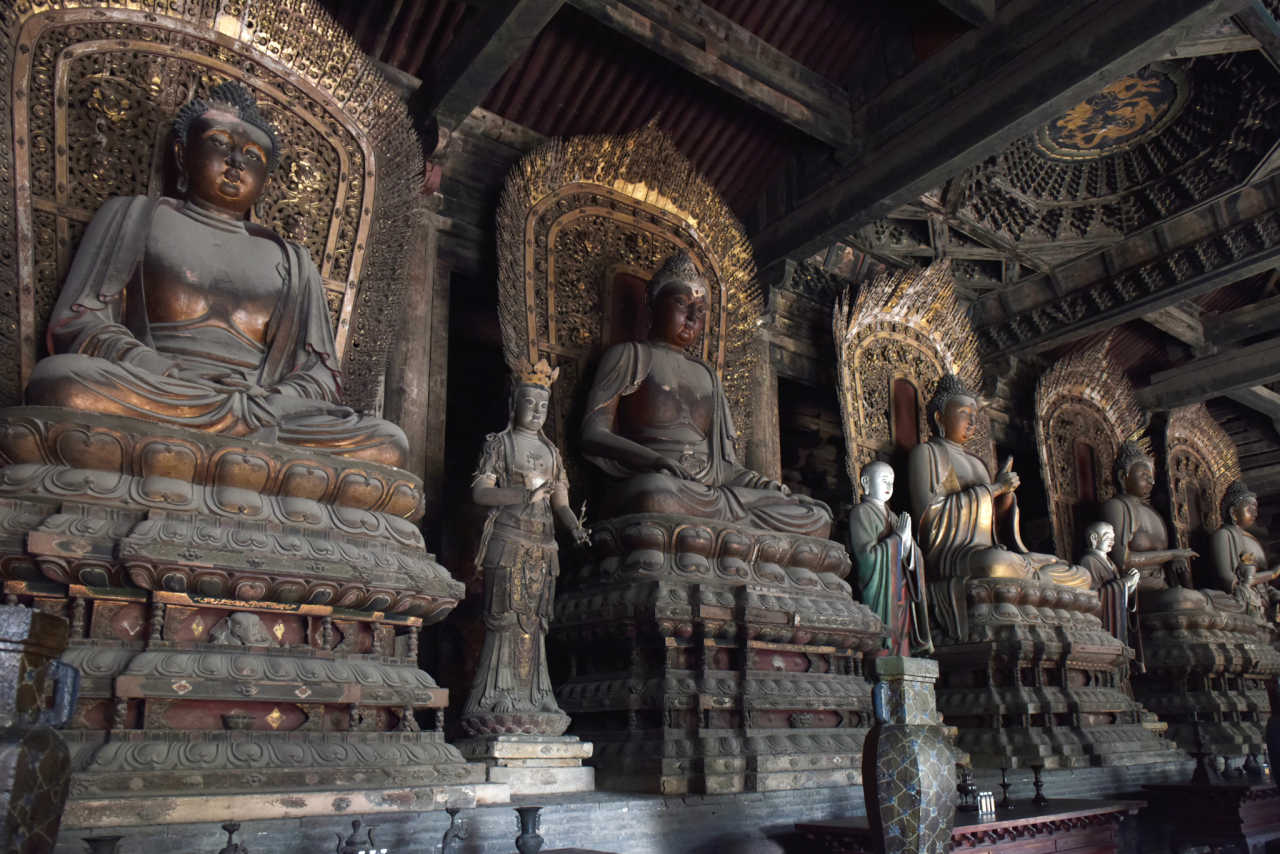 Shanhua Temple
 Shanhua Temple
 Shanhua Temple
 Shanhua Temple
 Shanhua Temple
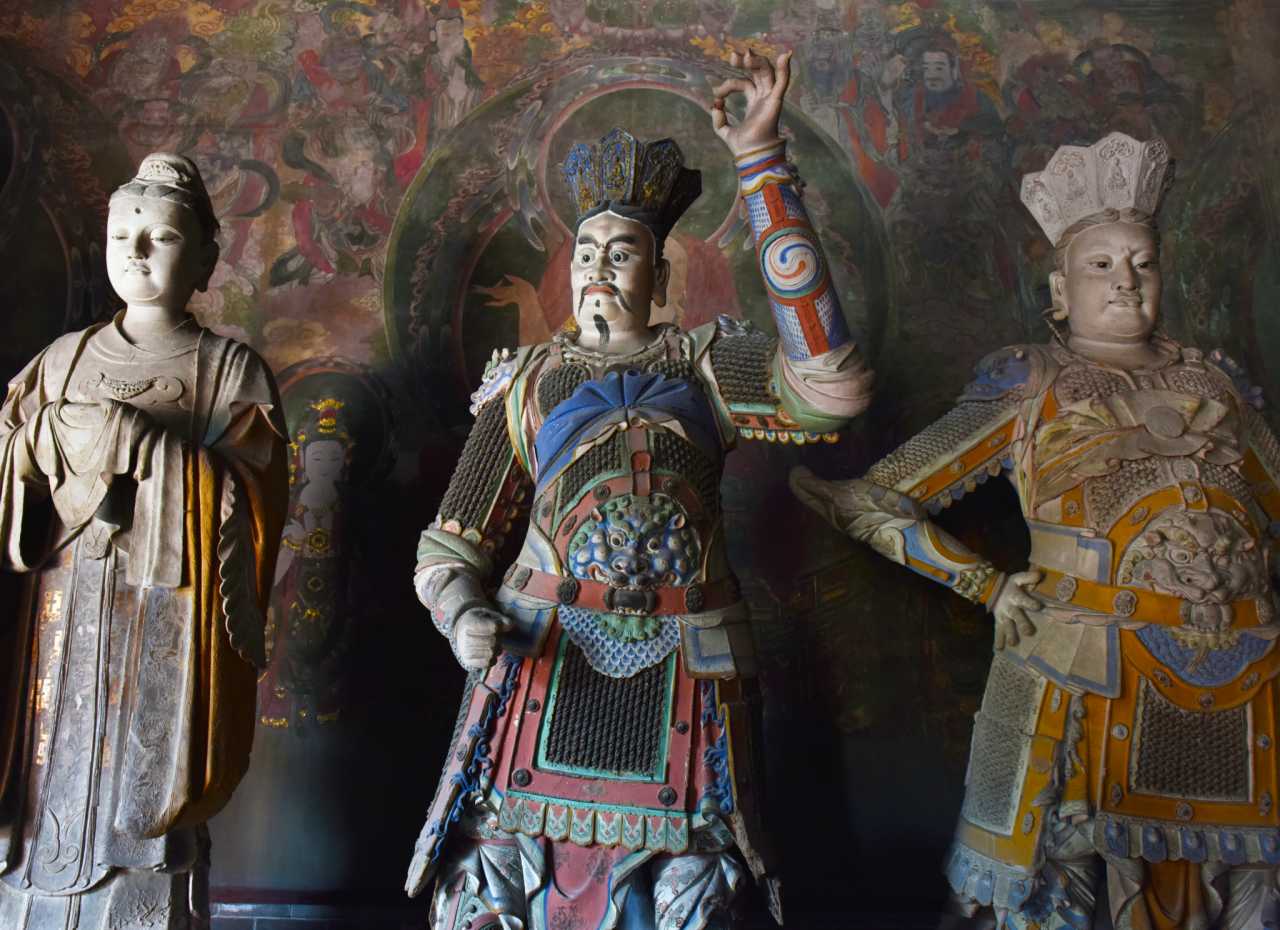 Shanhua Temple
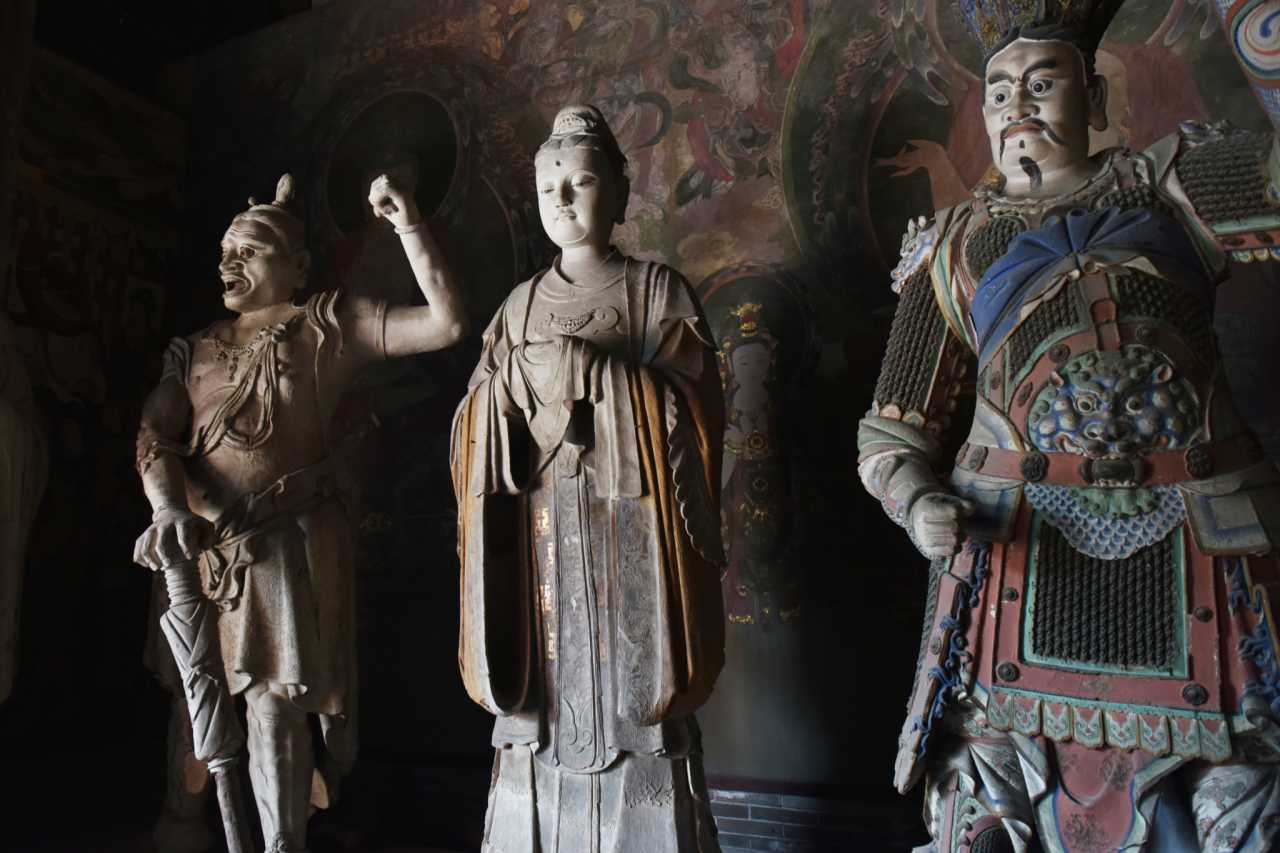 Shanhua Temple
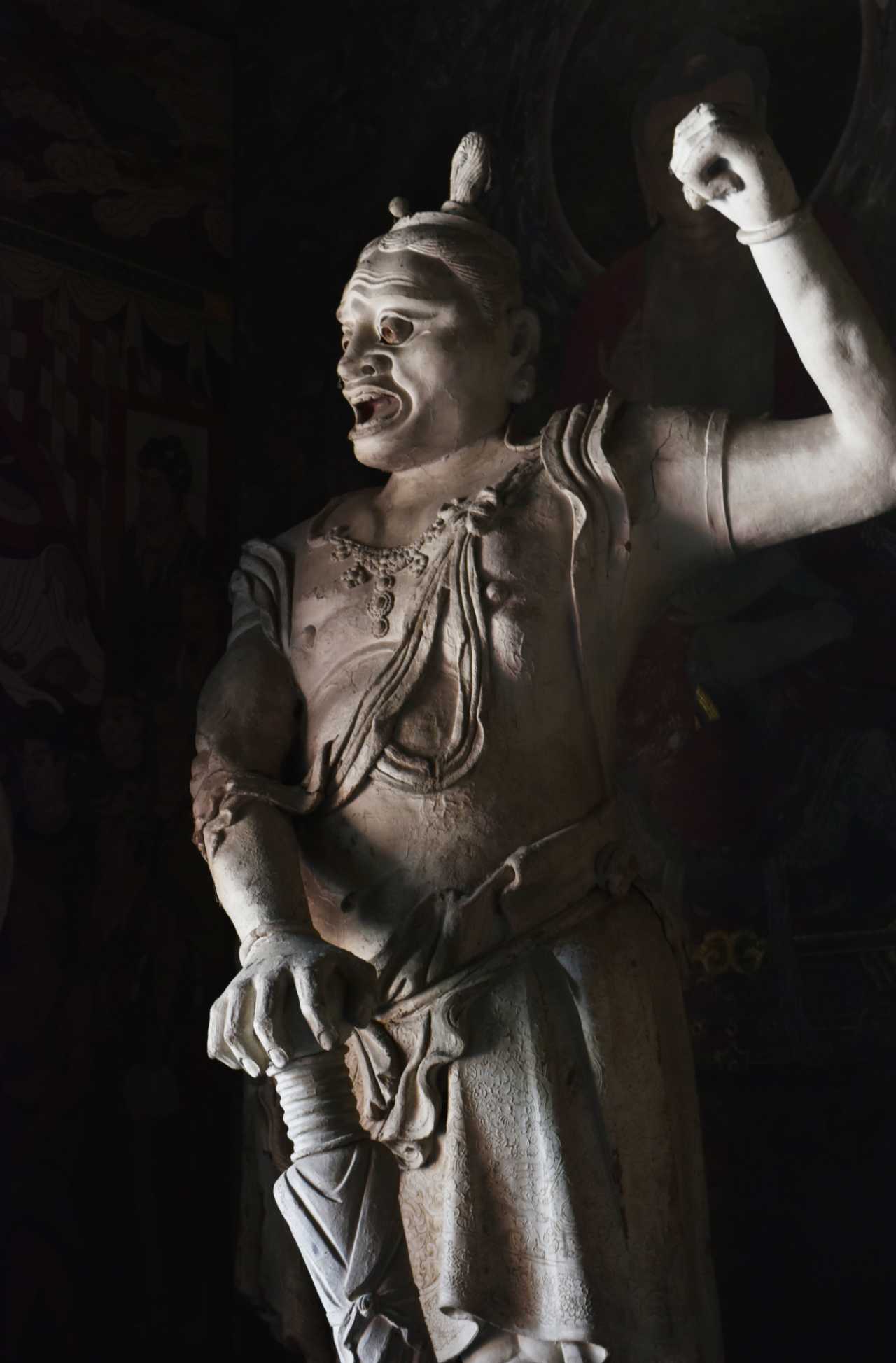 Shanhua Temple
Among the many statues, the statue of Hariti (also known as Yaksha Mother) has profound meaning. Based on the legend of the Buddha converting Hariti to Buddhism, it portrays a dignified, graceful, gentle, and virtuous image of Hariti after reforming from evil, but under her left foot, it also portrays a small statue of Hariti when she was doing evil with green face and red hair, ferocious and terrifying. One deity, two statues, the cruelty before becoming a Buddha and the kindness after becoming a Buddha form a sharp contrast, which is relatively rare in the history of Buddhist sculpture, perhaps to warn the world that one can become a Buddha immediately after putting down the butcher's knife.
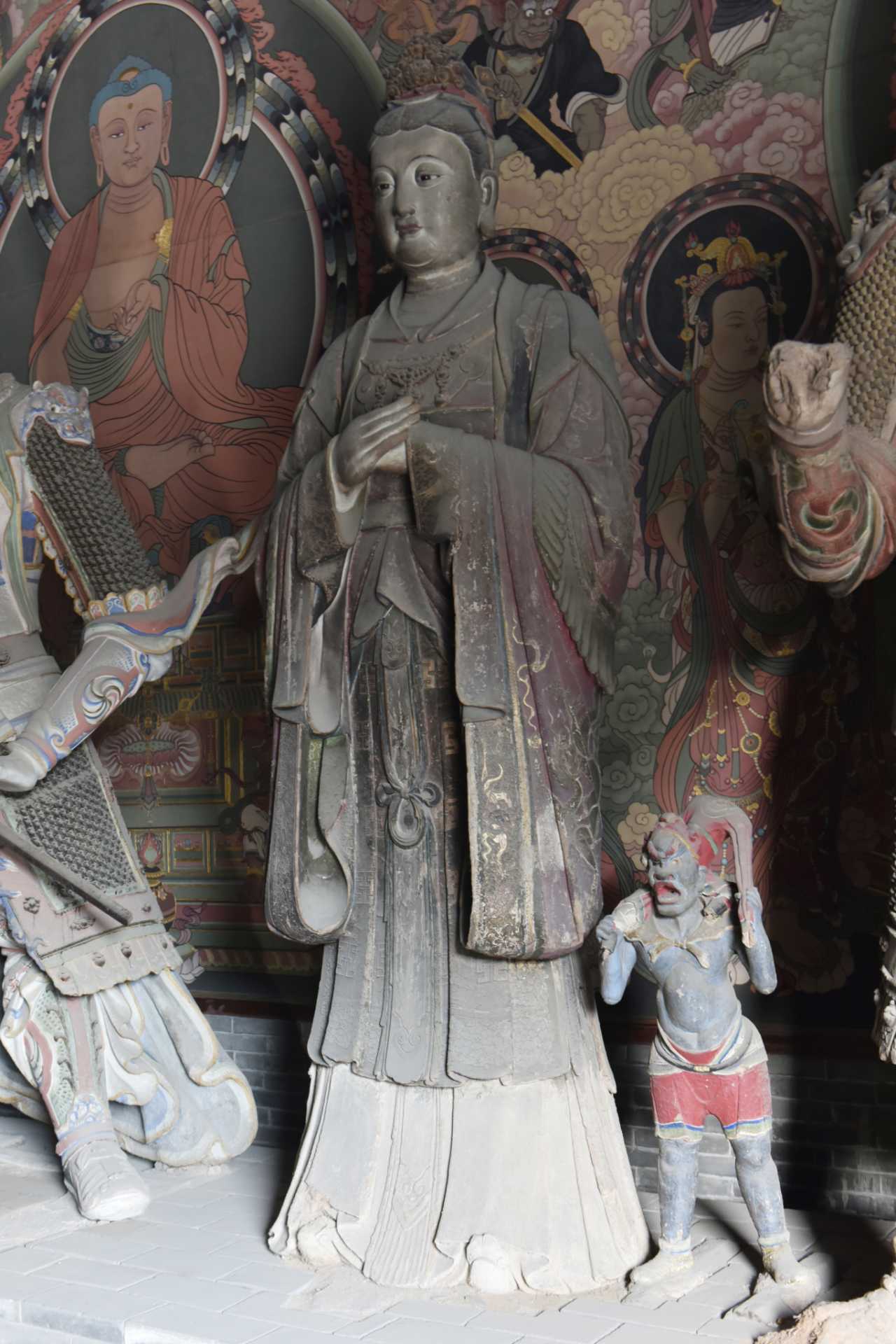 Shanhua Temple
The Samantabhadra Pavilion and Manjusri Pavilion on both sides of the central axis, although not as magnificent as Mahavira Hall, have exquisite shapes and flying momentum, but unfortunately, one cannot climb high to see far. What is even more valuable is that the Manjusri Pavilion is also a building from the Liao and Jin dynasties. As for the Manjusri Pavilion, it is a building reconstructed according to the style of Samantabhadra Pavilion.
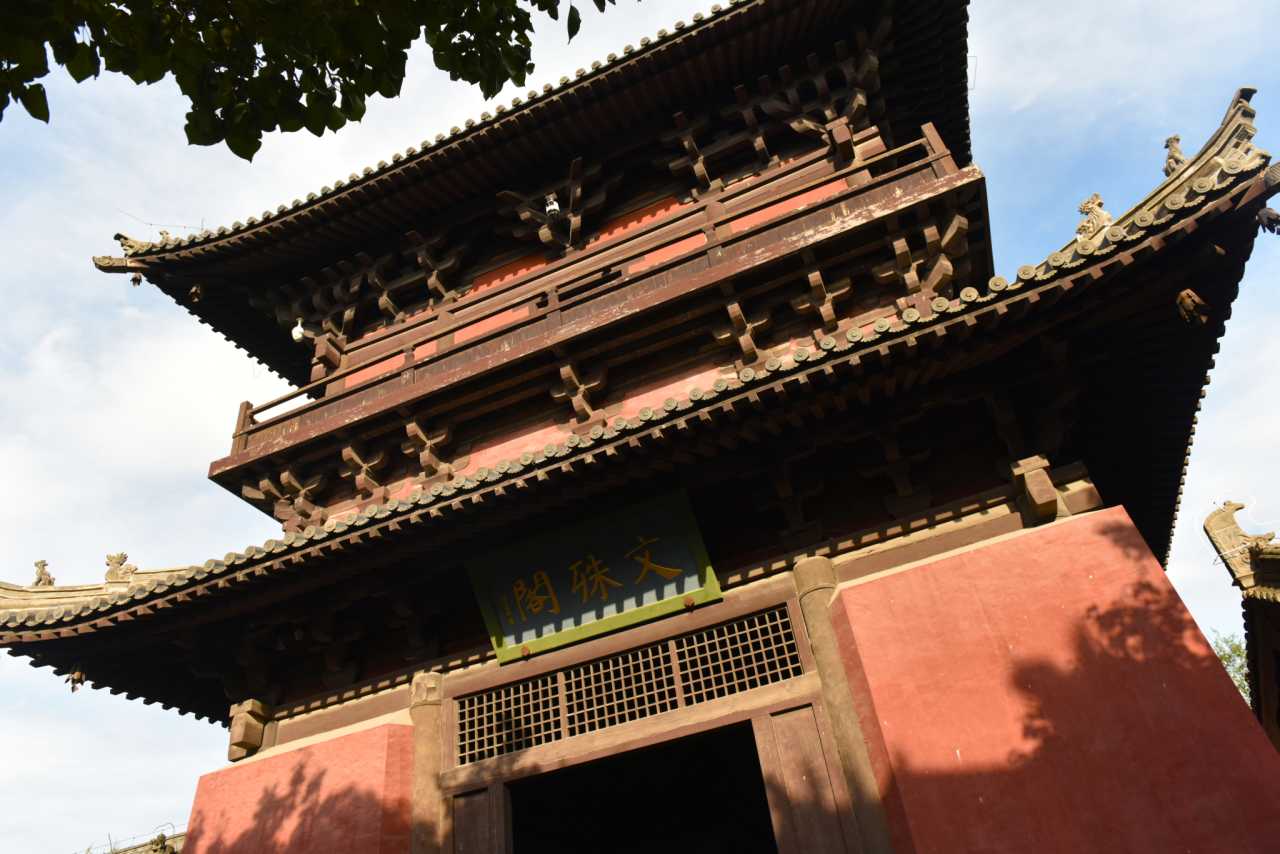 Shanhua Temple
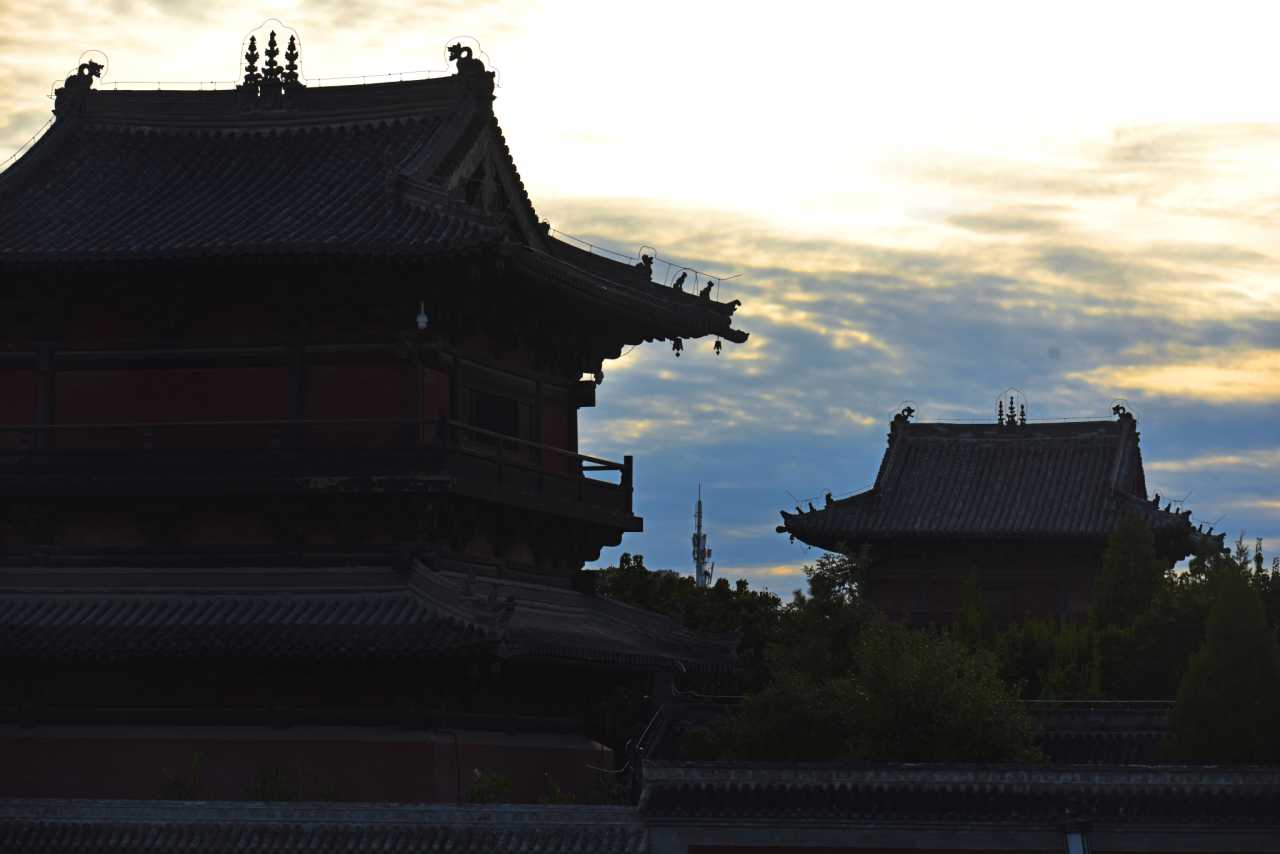 Shanhua Temple
Upon stepping out of Shanhua Temple, the Five-Dragon Wall immediately comes into view. From the perspective of regulations, it is at a lower level than the Nine-Dragon Wall outside the Daiwang Mansion, but this does not prevent the five giant dragons from being lifelike, mighty, and domineering.
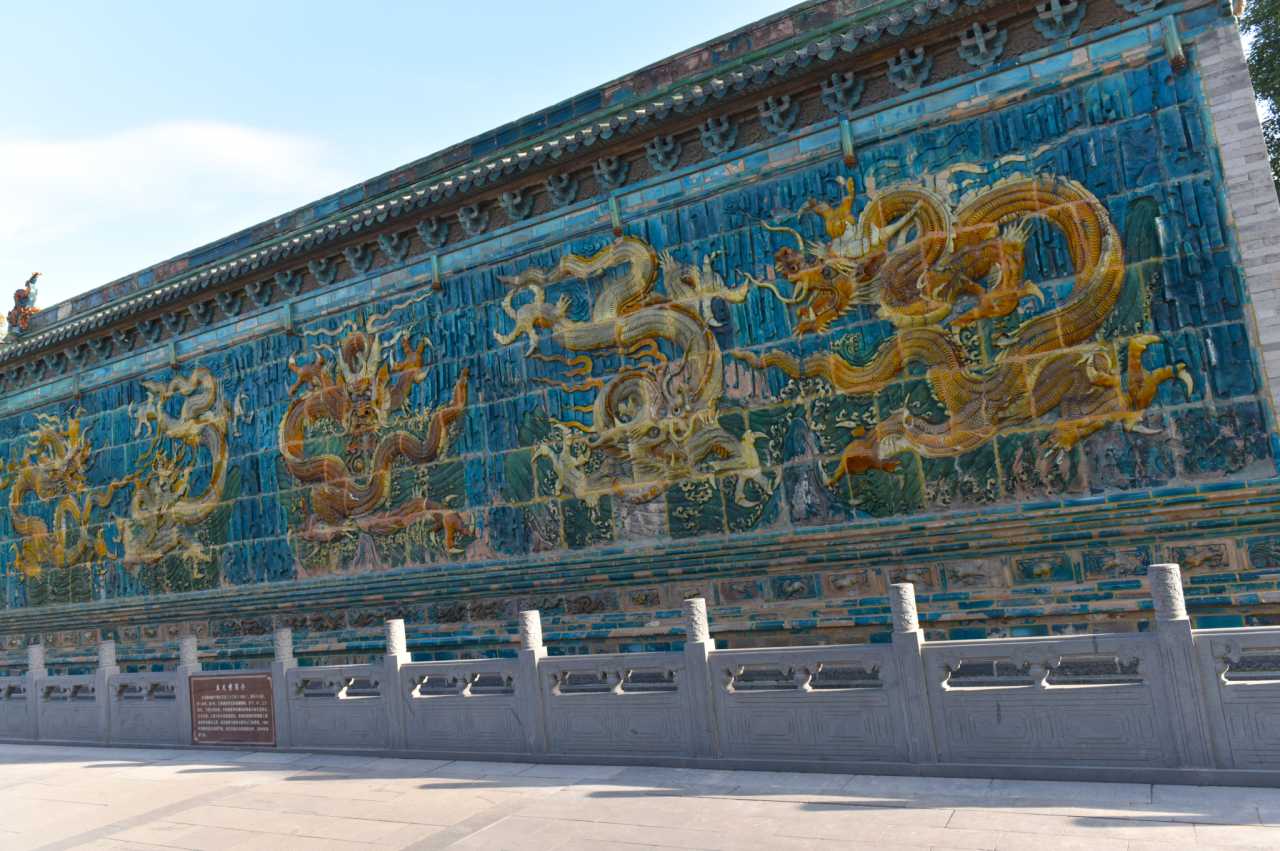 Shanhua Temple Five-Dragon Wall
Huayan Temple: The Oriental Venus and the Largest Liao and Jin Dynasty Buddhist Hall are Hidden Here
Located in the southwest of Datong ancient city, Huayan Temple is like a pearl standing alone from the world, condensing the brilliance of a thousand-year civilization. The layout facing west and east originates from the unique belief customs of the Khitan people. The Khitan people worshipped ghosts and the sun, regarding the sun as a deity and the totem of the nation. They devoutly worshipped the sun every morning, and religious worship activities were definitely carried out facing the direction of the sun. Even their tents, houses, and palaces were built facing east, with doors and windows also opening to the east.
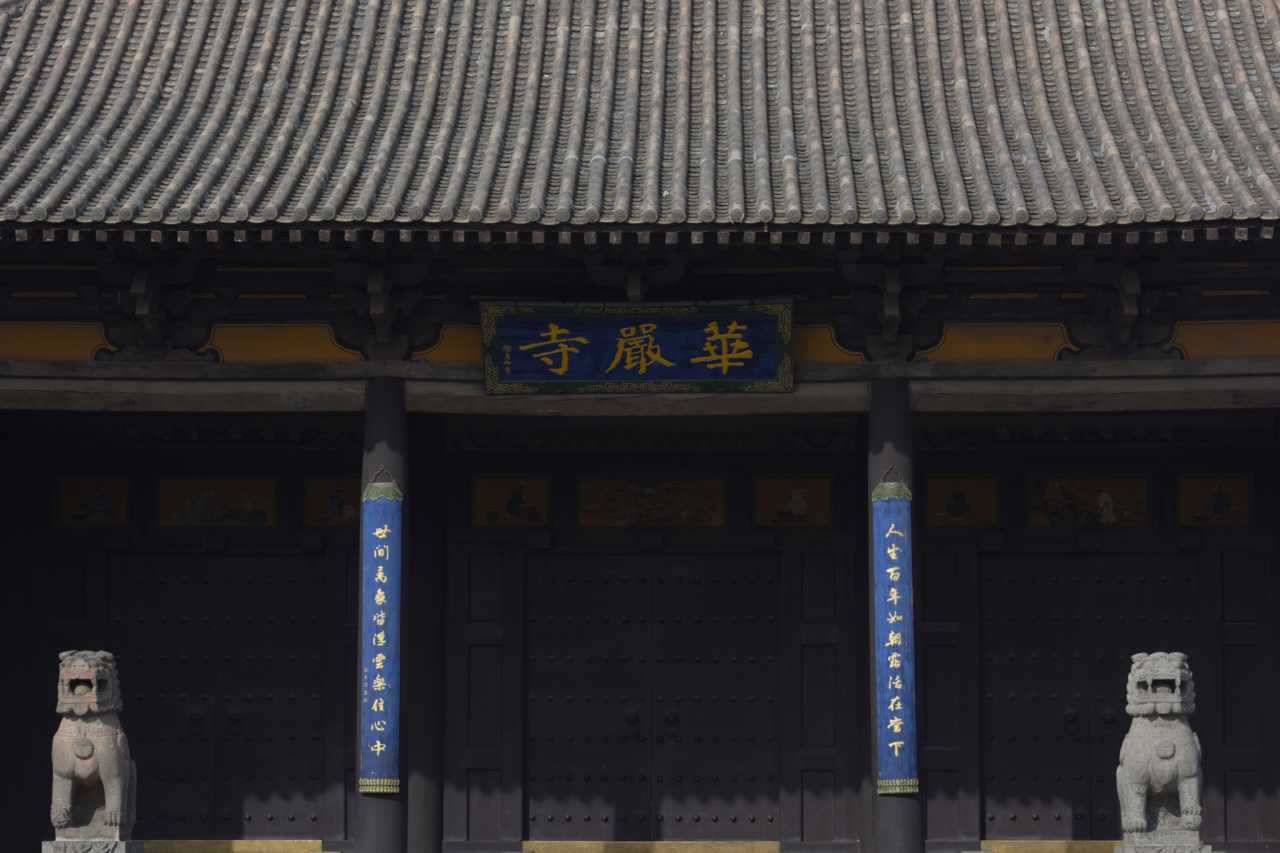 Datong Huayan Temple
Huayan Temple is divided into upper and lower parts. The most core building on the central axis of the upper Huayan Temple is the Mahavira Hall, first built in the Liao dynasty and destroyed in the war at the end of Liao. It was rebuilt on the original site during the Jin dynasty. The hall has nine rooms facing width and five rooms in depth, and is the largest existing Liao and Jin dynasty Buddhist hall in China, as well as one of the largest Buddhist halls in China.
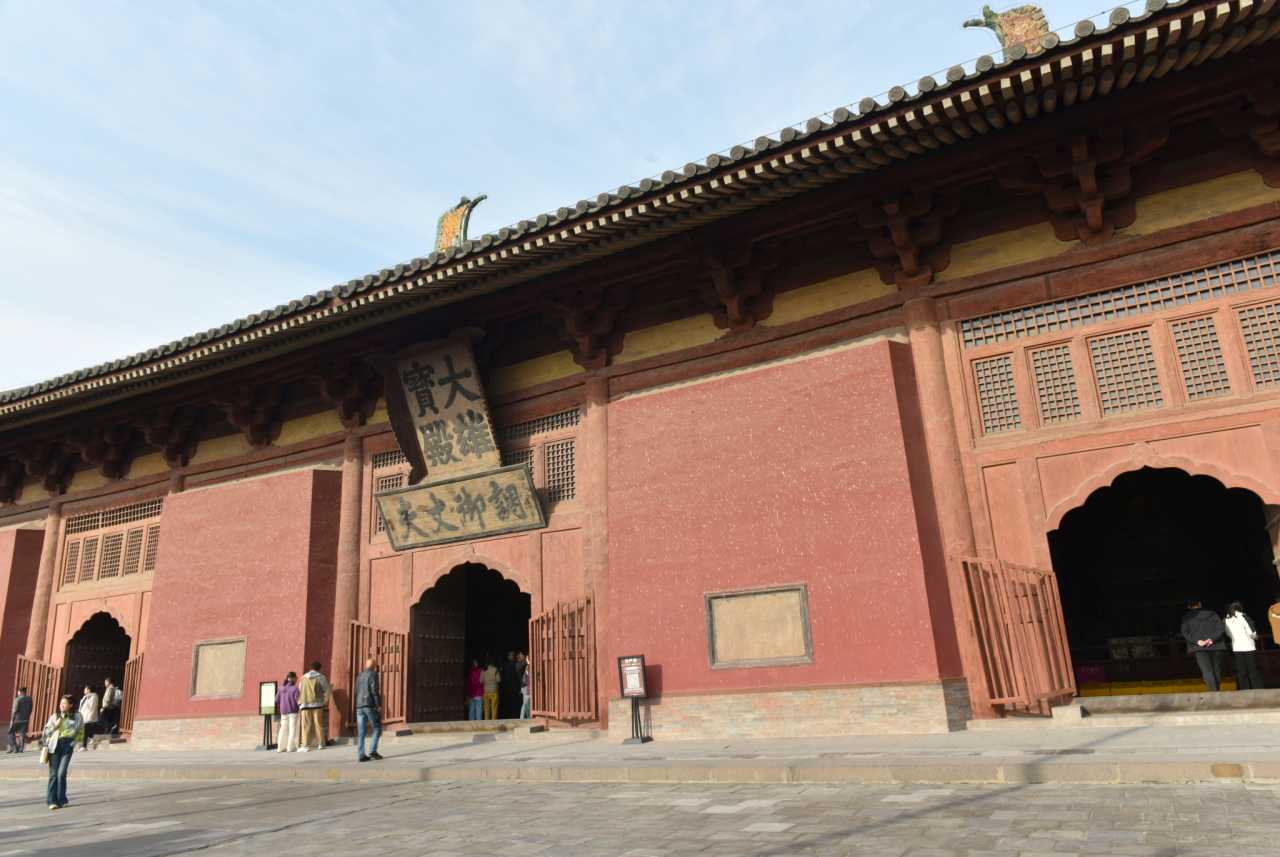 Datong Huayan Temple
Like the Mahavira Hall of Shanhua Temple, the Mahavira Hall of Huayan Temple also adopts the single-eaved hip roof regulation, with gentle roof slopes, exuding a simple and ancient atmosphere. The huge dougong inherits the legacy style of the Tang dynasty, and the lotus petal-shaped "pot door" adds a touch of softness to this solemn building.
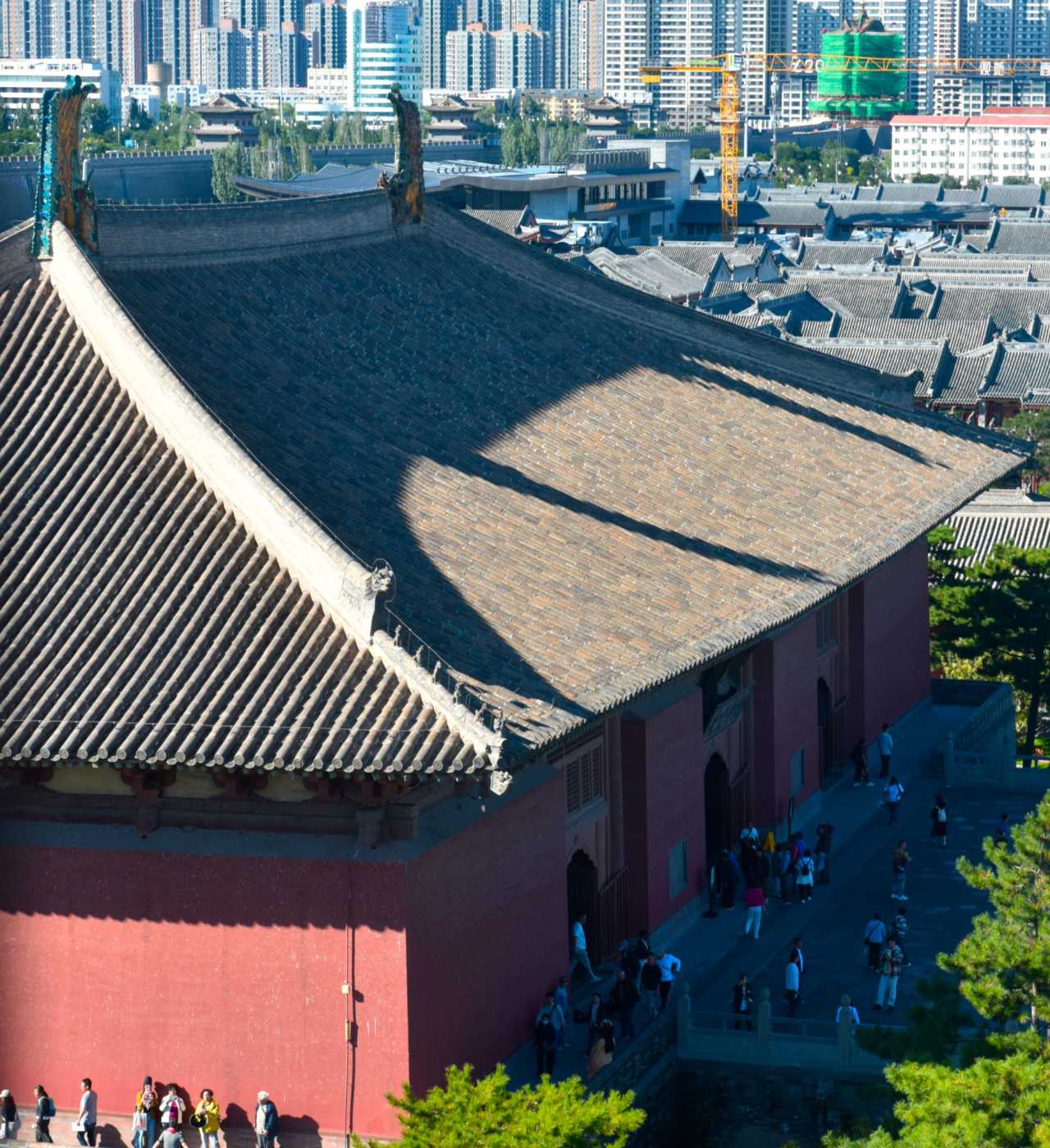 Datong Huayan Temple
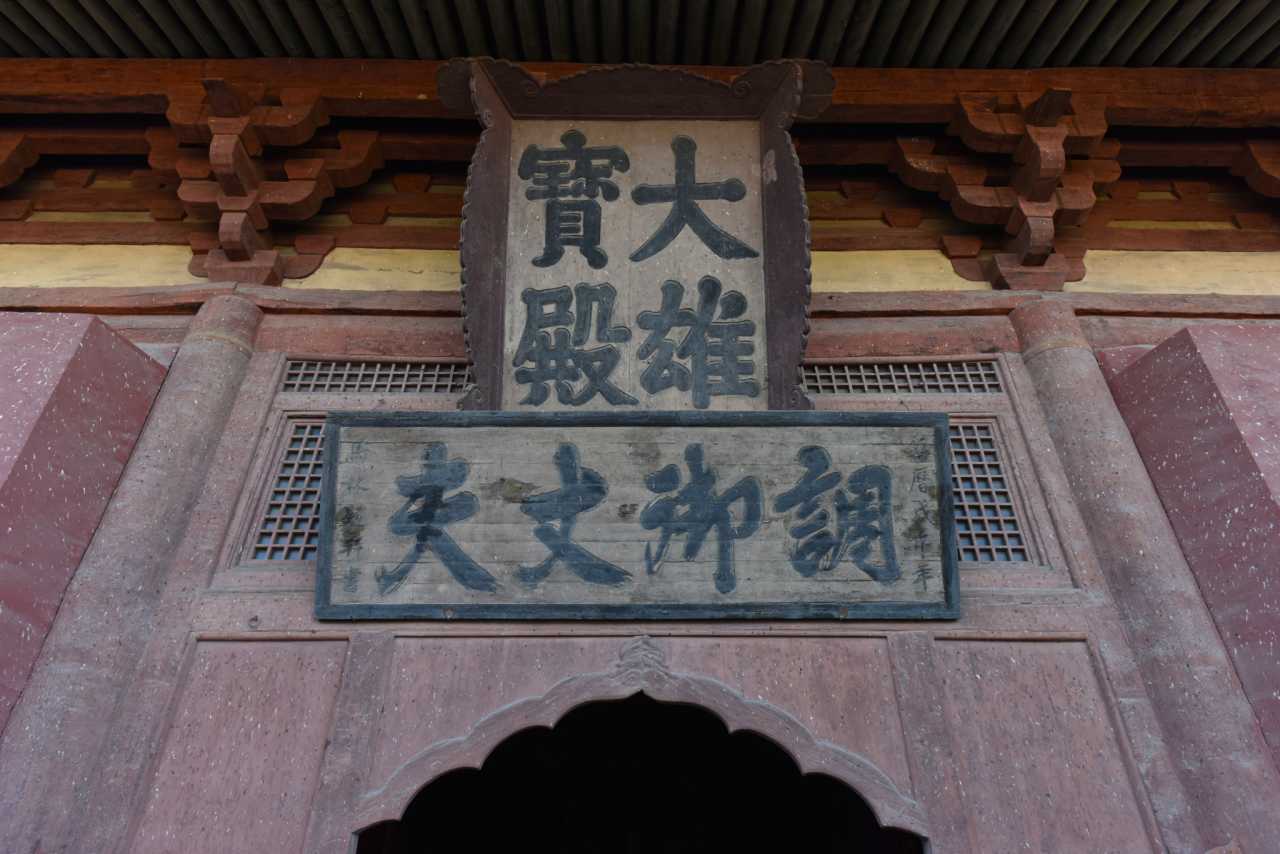 Datong Huayan Temple
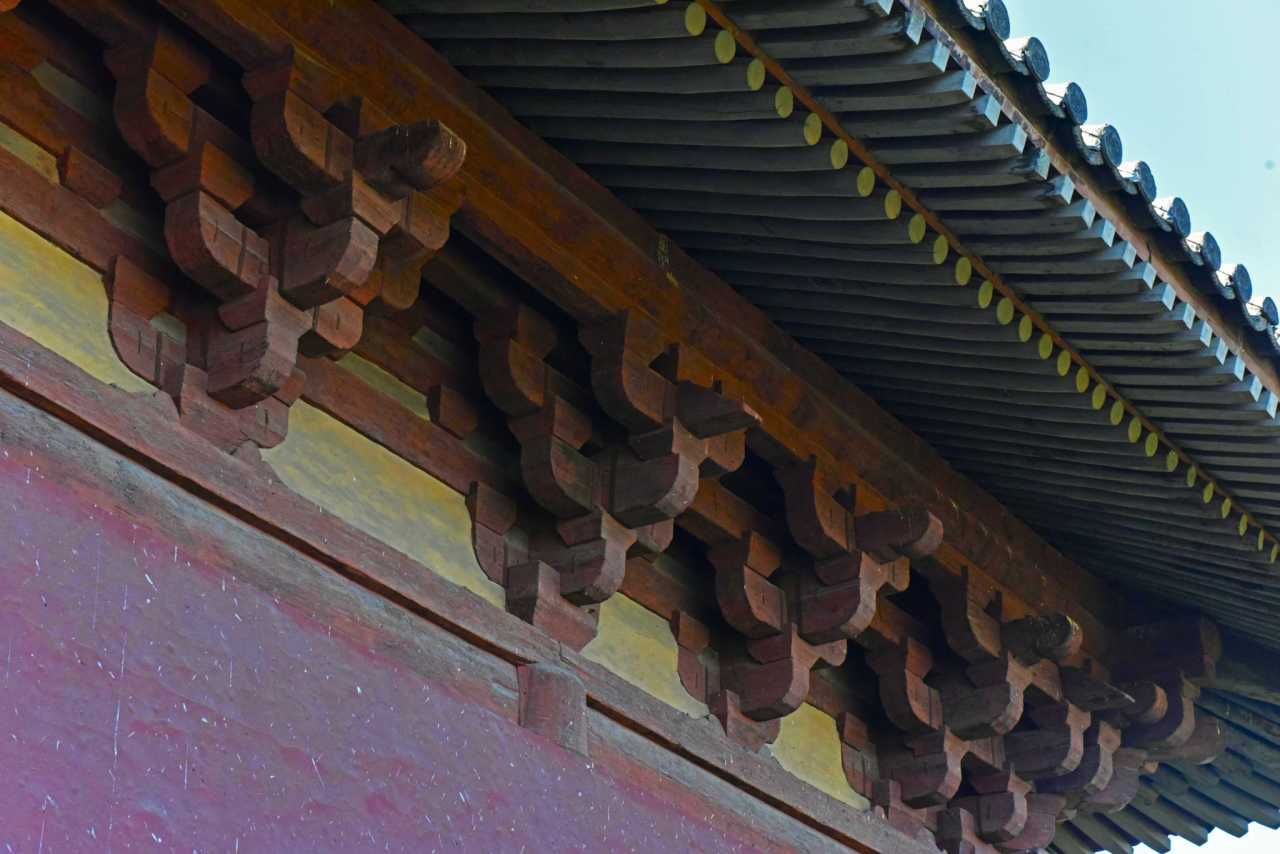 Datong Huayan Temple
The huge ridge ornaments on the hall roof play a perfect finishing role. They are 4.5 meters high and are the largest glazed ridge-swallowing beasts among existing ancient buildings in China, but they are not products of the same era. The ridge-swallowing beast at the north end is a relic from the Jin dynasty, while the one at the south end was repaired and supplemented during the Ming dynasty.
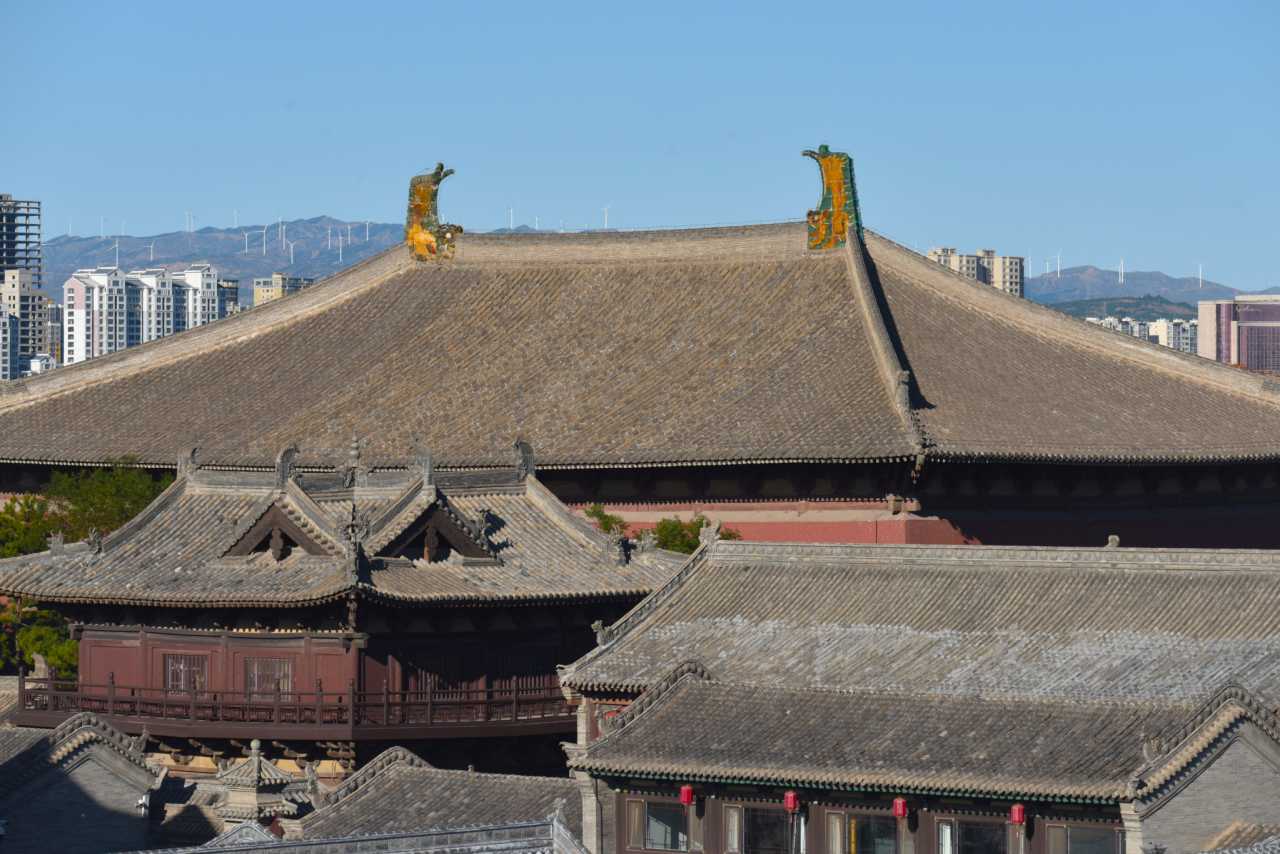 Datong Huayan Temple
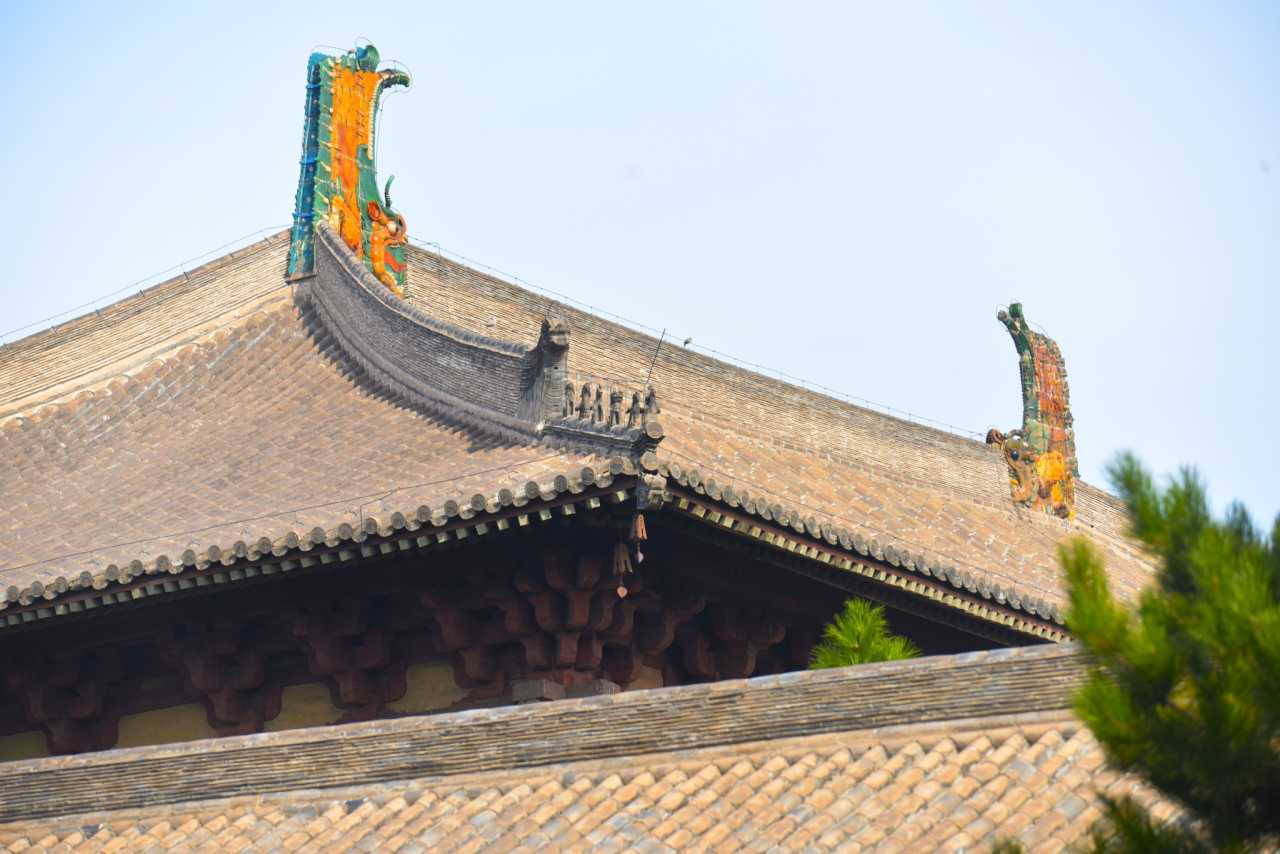 Datong Huayan Temple
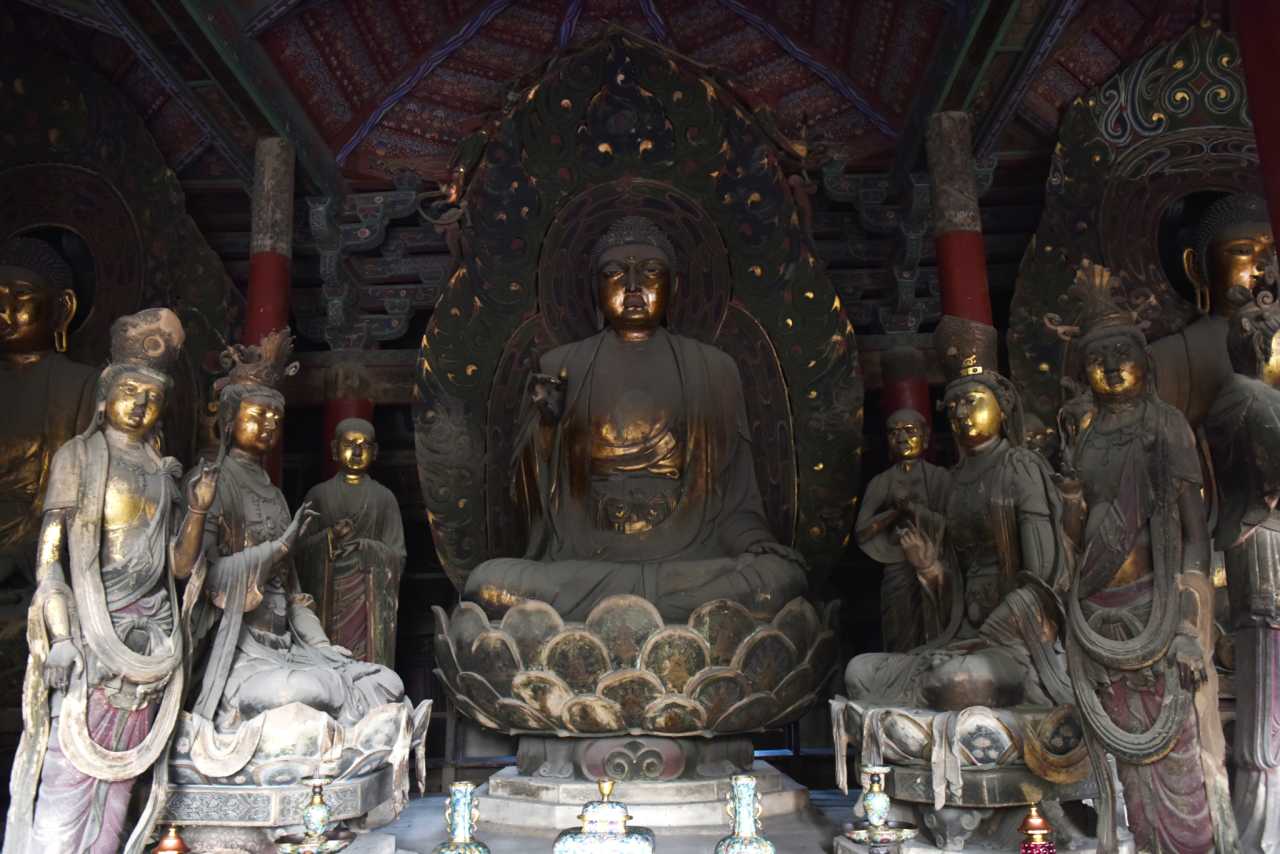
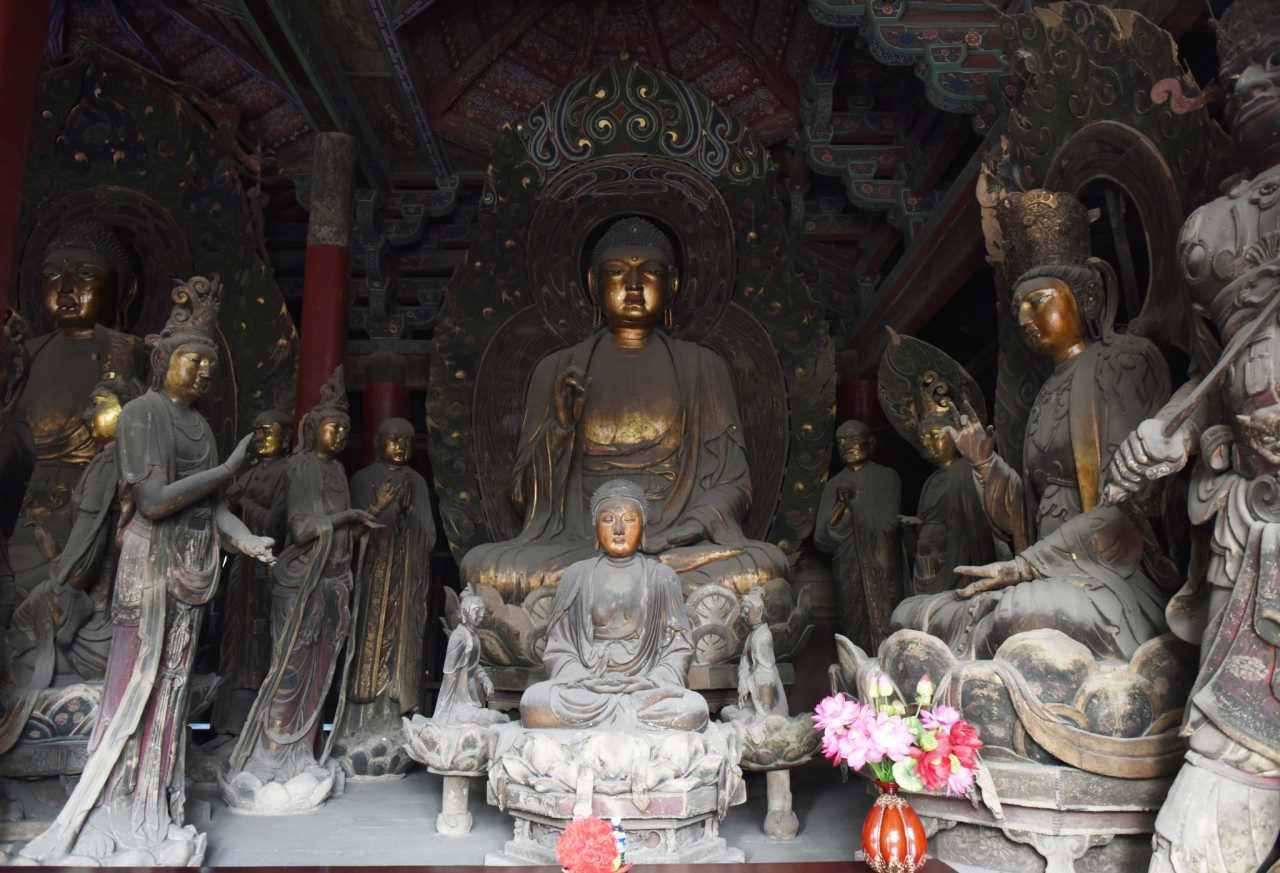
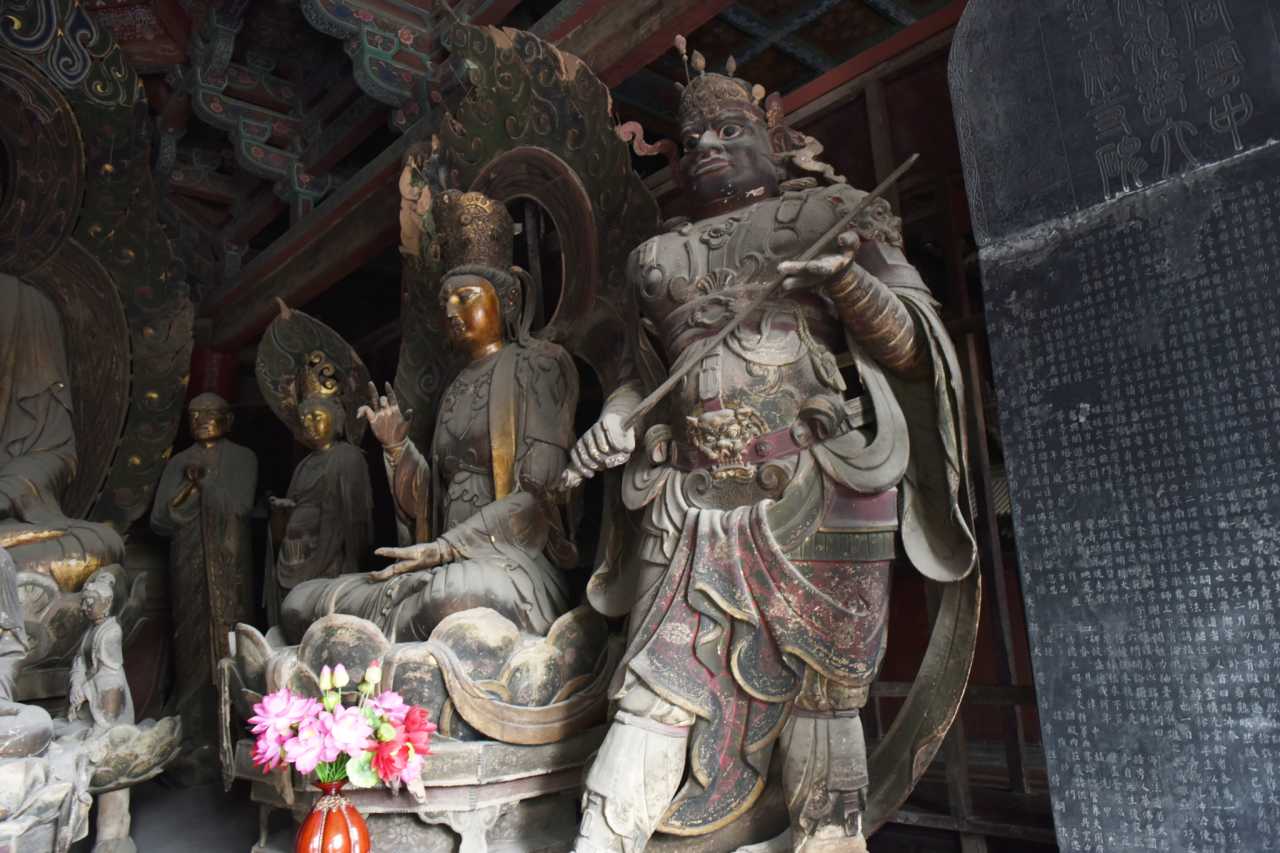
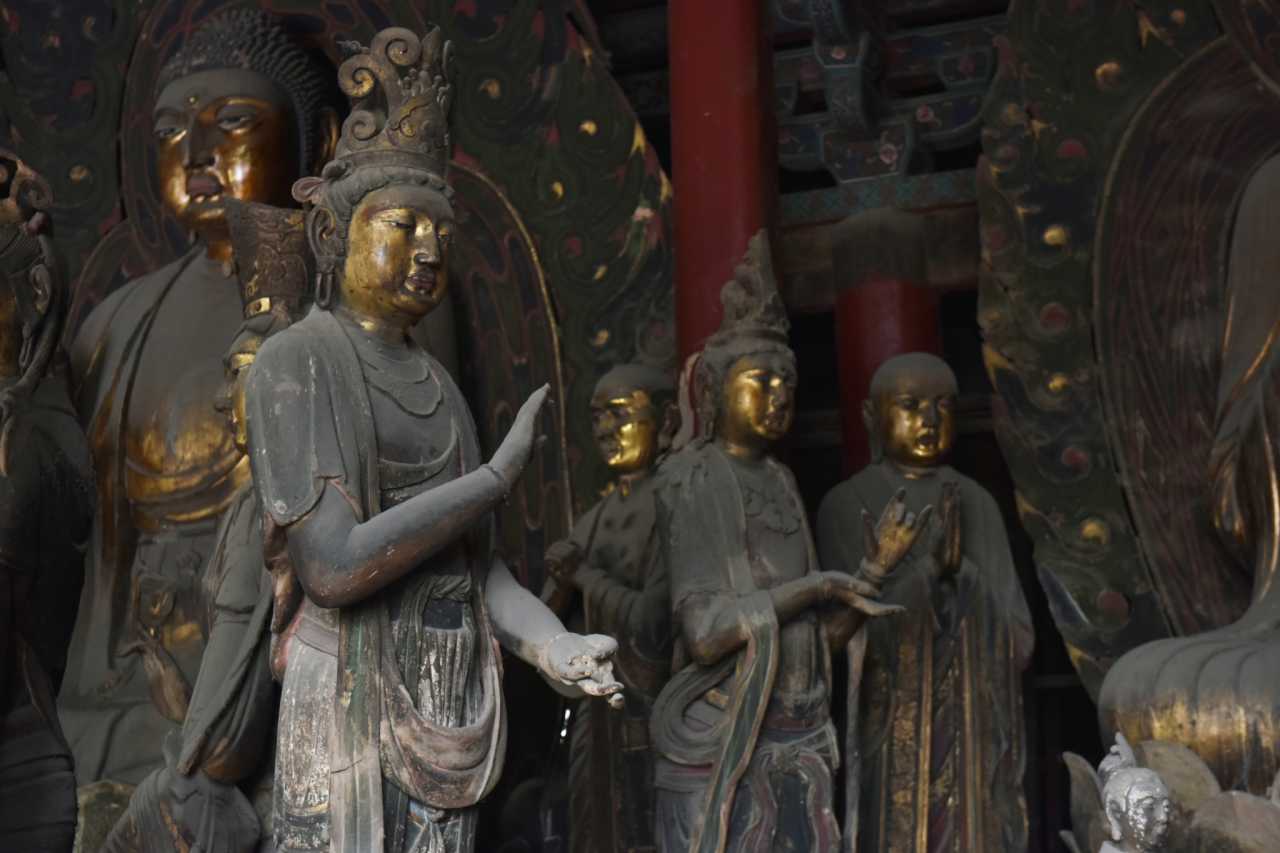
In this huge Jin dynasty building, there are enshrined Ming dynasty Buddha statues. In the center are the Five Buddhas, with twenty Dharma-protecting Devas on both sides. The middle three of the Five Buddhas are wood carvings, while the two on the sides are clay sculptures. Compared with the solemn and gorgeous Five Buddhas, the Deva statues on both sides are even more special. The forward-leaning body shape is very rare.
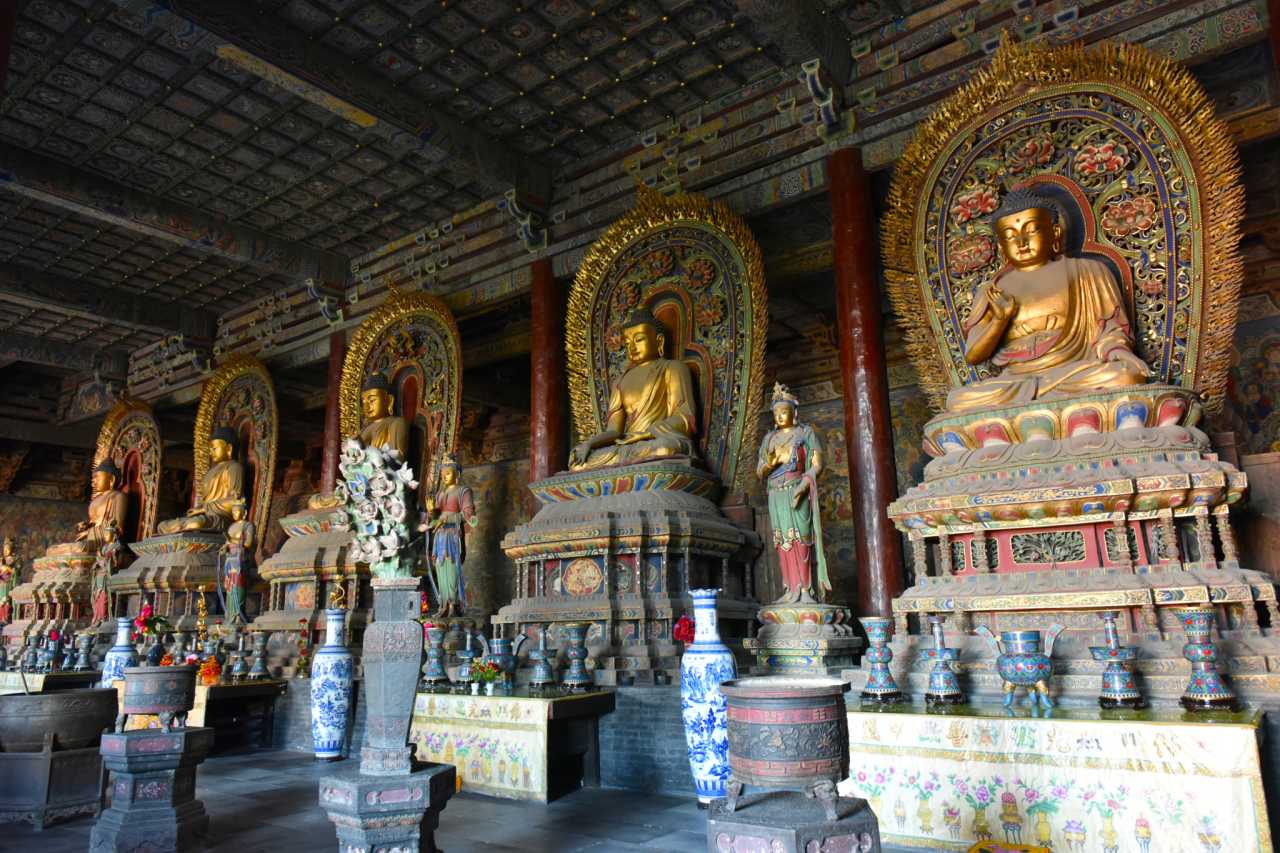 Datong Huayan Temple
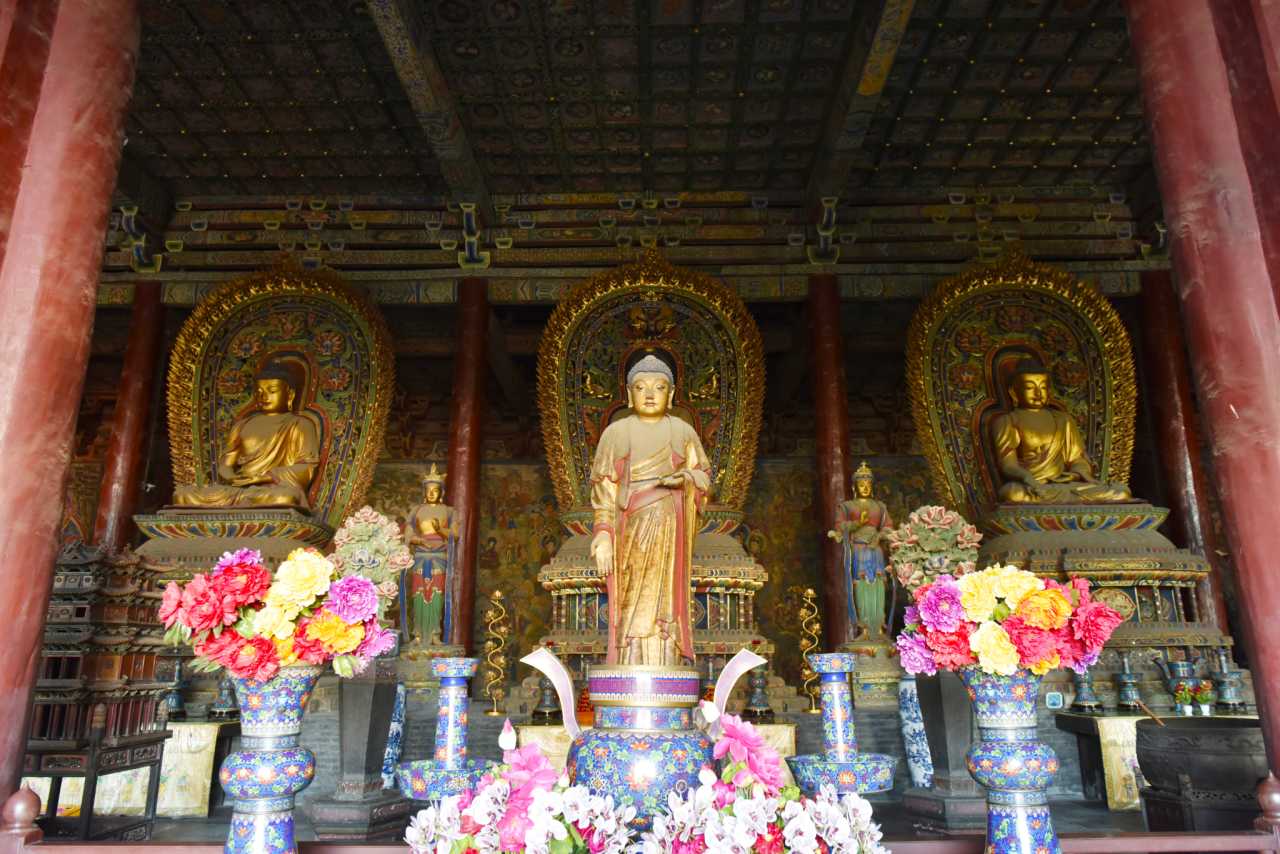 Datong Huayan Temple
Compared with the Buddha statues themselves, the backlights of the Five Buddhas are even more dazzling. The overall shape is lotus petal-shaped, with flame patterns in the outermost circle, honeysuckle patterns like rolling clouds in the middle circle, and honeysuckle grass leaf patterns in the innermost circle. However, it is slightly regrettable that the parts blocked by the body are not carved, only simply painted. Looking closely at the backlight, at the top is Garuda wearing a five-leaf golden crown, with burning eyebrows and hair, pitch-black body, pearl necklaces, and golden wings spread.
In Garuda's claws, he holds the ankles of two small golden figures, who are the Naga dragon girls; the animals carved at the top of both sides of the Buddha's backlight are Makara fish, and below the Makara fish is carved a standing beast, the Lion-Goat of Fortune. Before the Ming dynasty, there was a boy riding on the back of the lion-goat, named the Boy of Fortune, but after the Ming dynasty, it was simplified, leaving only the image of the beast king. Below the Lion-Goat of Fortune is carved a white elephant, which is the Elephant King of Salvation.
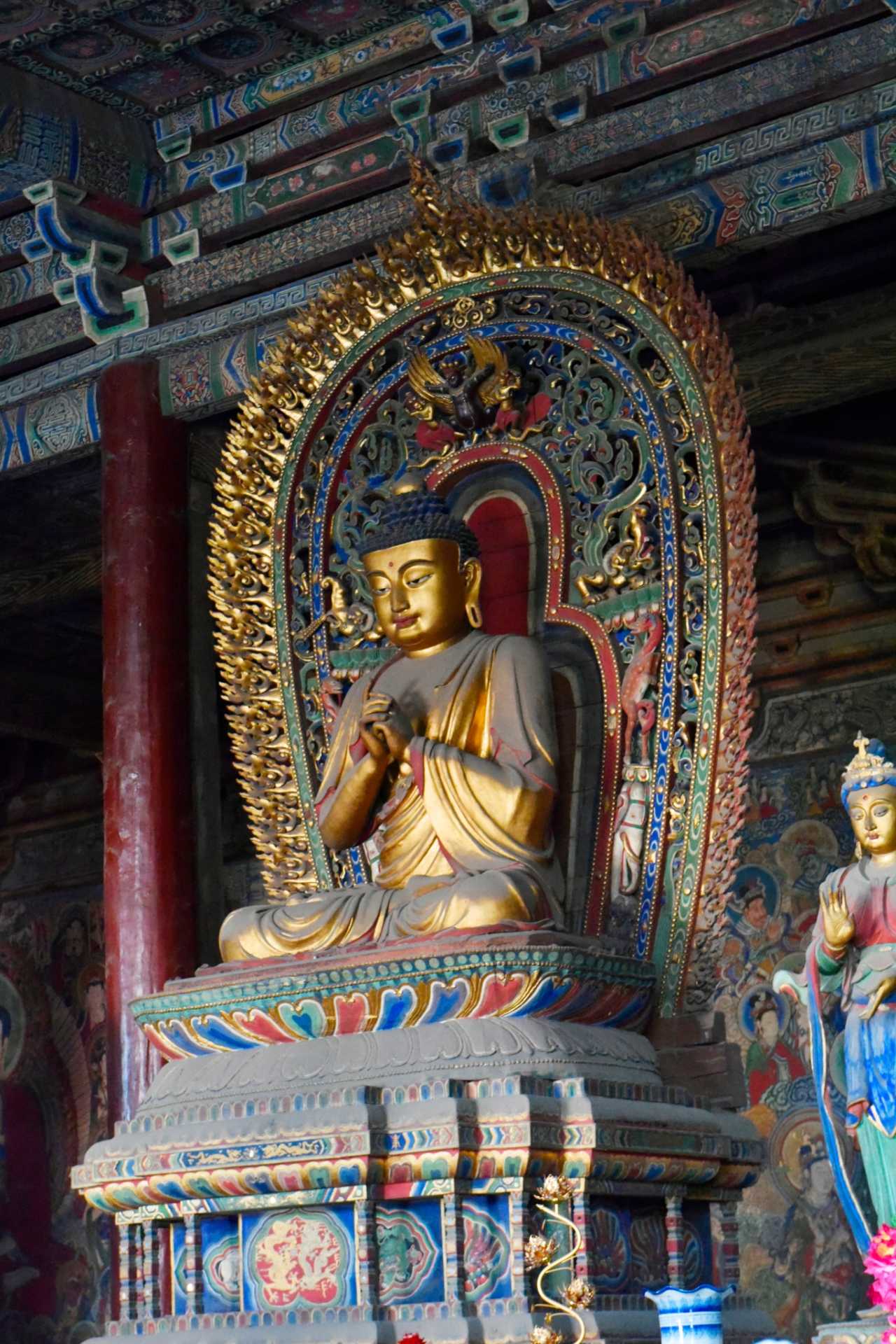 Datong Huayan Temple
These six types of decorative patterns are the "Six Auspicious Symbols," also known as the Six Spirits Holding the Throne. According to the "Sutra on the Measurement of Buddha Images," they are named the Six Auspicious Symbols because each of their six Sanskrit names ends with "na" (pronounced like "take"). Each has different symbolic meanings and represents the six paramitas. From top to bottom in order: Garuda (Golden-Winged Great Peng), the appearance of compassion, representing wisdom; Naga (Half-body Dragon Girl), the appearance of salvation, representing generosity; Makara (Makara Fish), the appearance of protection, representing meditation; Bala (Pillar-supporting Boy), the appearance of blessing, representing diligence; Saha (Unicorn), the appearance of freedom, representing precepts; Jie La (White Elephant), the appearance of good teacher, representing patience.
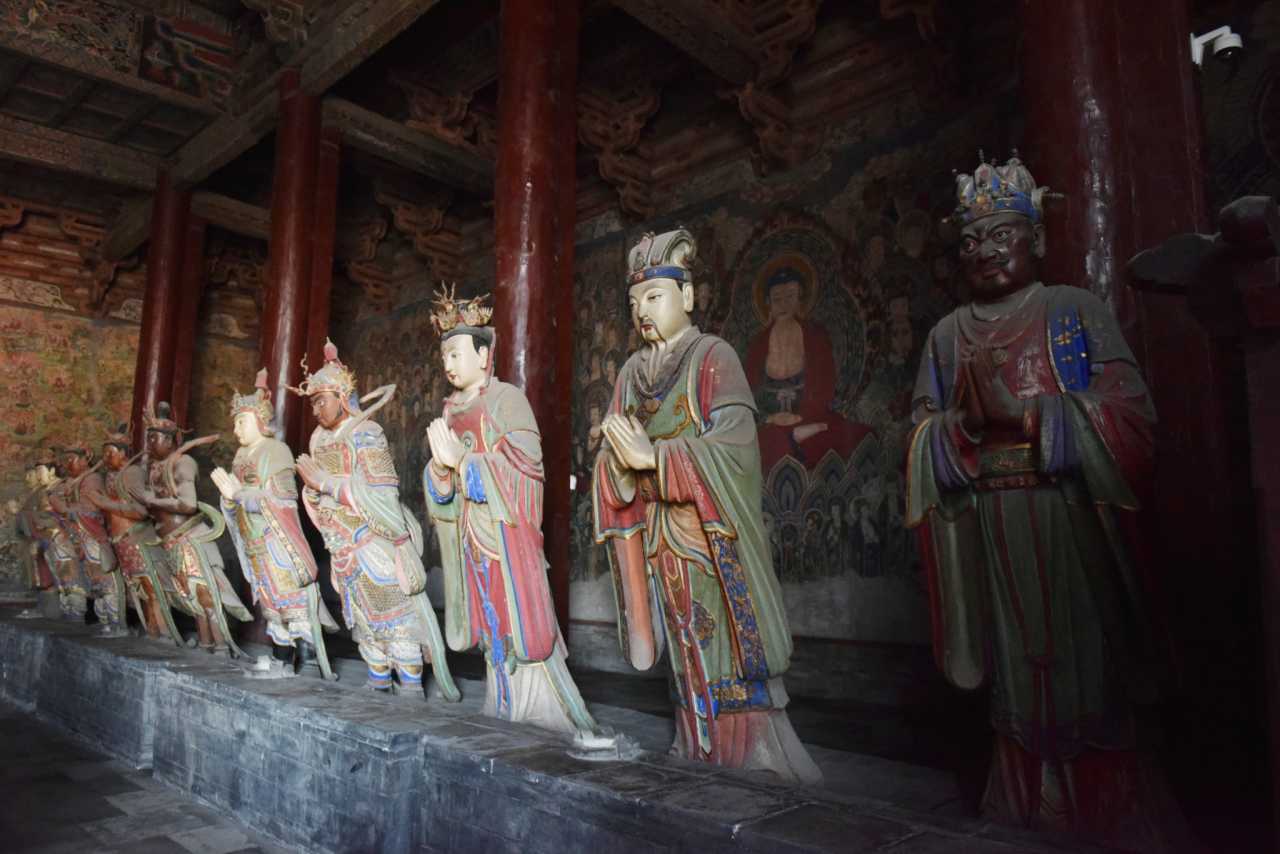 Datong Huayan Temple
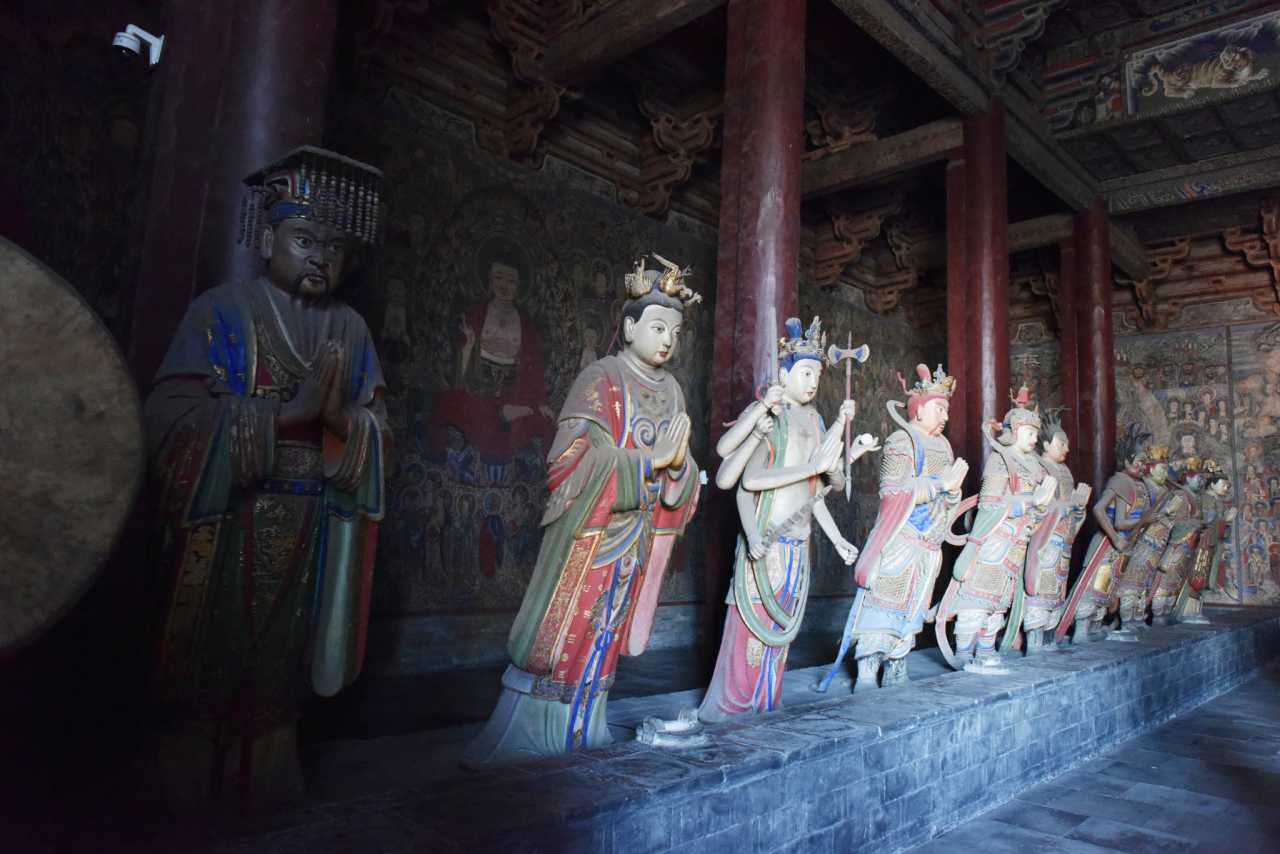 Datong Huayan Temple
The most core building on the central axis of the lower Huayan Temple is the Bhagavata Sutra Store Hall. From the hall name, it can be seen that this building is used to store Buddhist scriptures. It is the only remaining Liao dynasty building in Huayan Temple and also the oldest building in the entire temple.
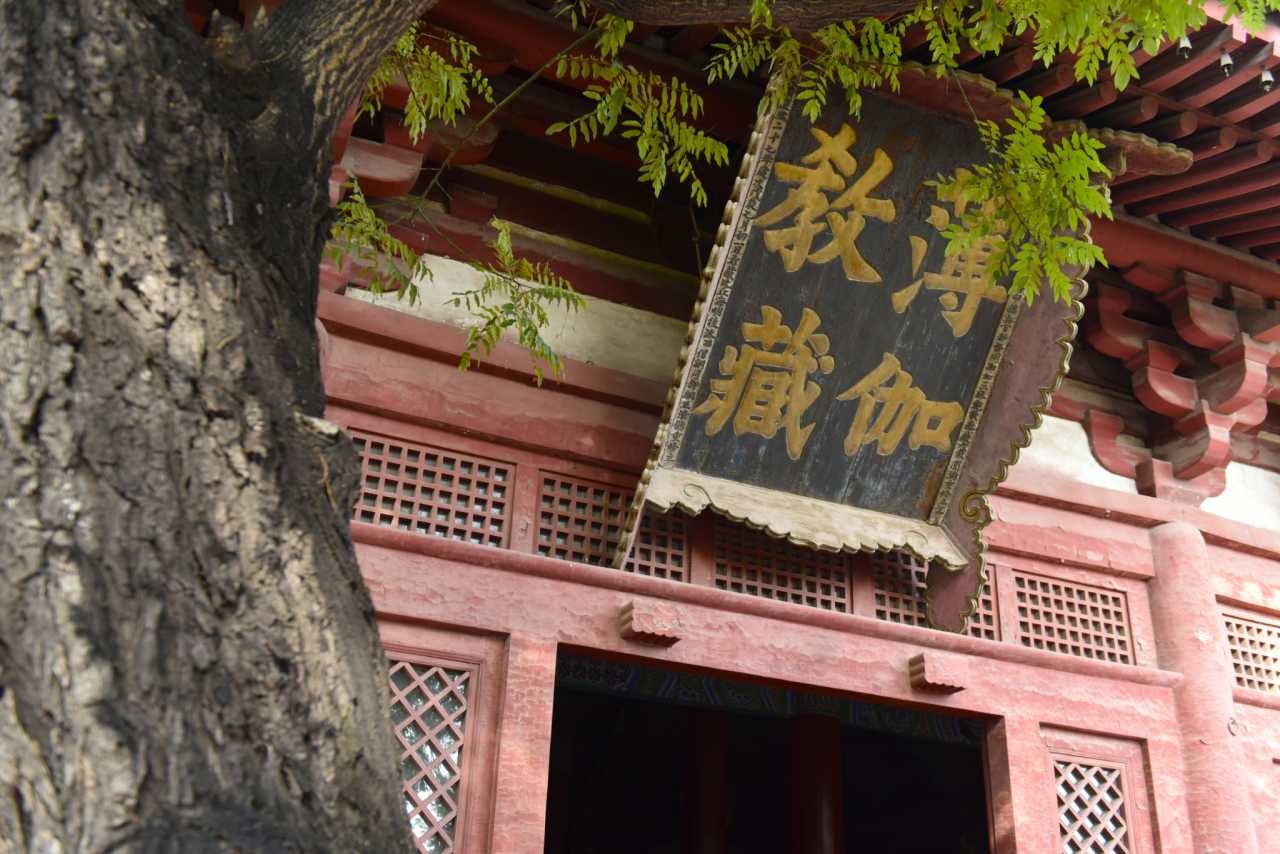 Datong Huayan Temple
The Bhagavata Sutra Store Hall has two must-see attractions. One is the wall storage and heavenly palace pavilion built around the walls inside the hall. This is the only existing Liao dynasty wooden architectural model in China, which Mr. Liang Sicheng called "a unique treasure in China." The wall storage of the Bhagavata Sutra Store Hall can be regarded as a miniature of multi-storied pavilion buildings. They are divided into upper and lower levels, with Buddhist niches on the upper level and scripture cabinets for storing Buddhist scriptures on the lower level. For ventilation and lighting, there are bright windows on the back wall, which caused the wall storage on both sides to be disconnected. Craftsmen built a circular arch bridge between them and constructed five "heavenly palace pavilions" on the bridge, perfectly combining the left and right wall storage into one.
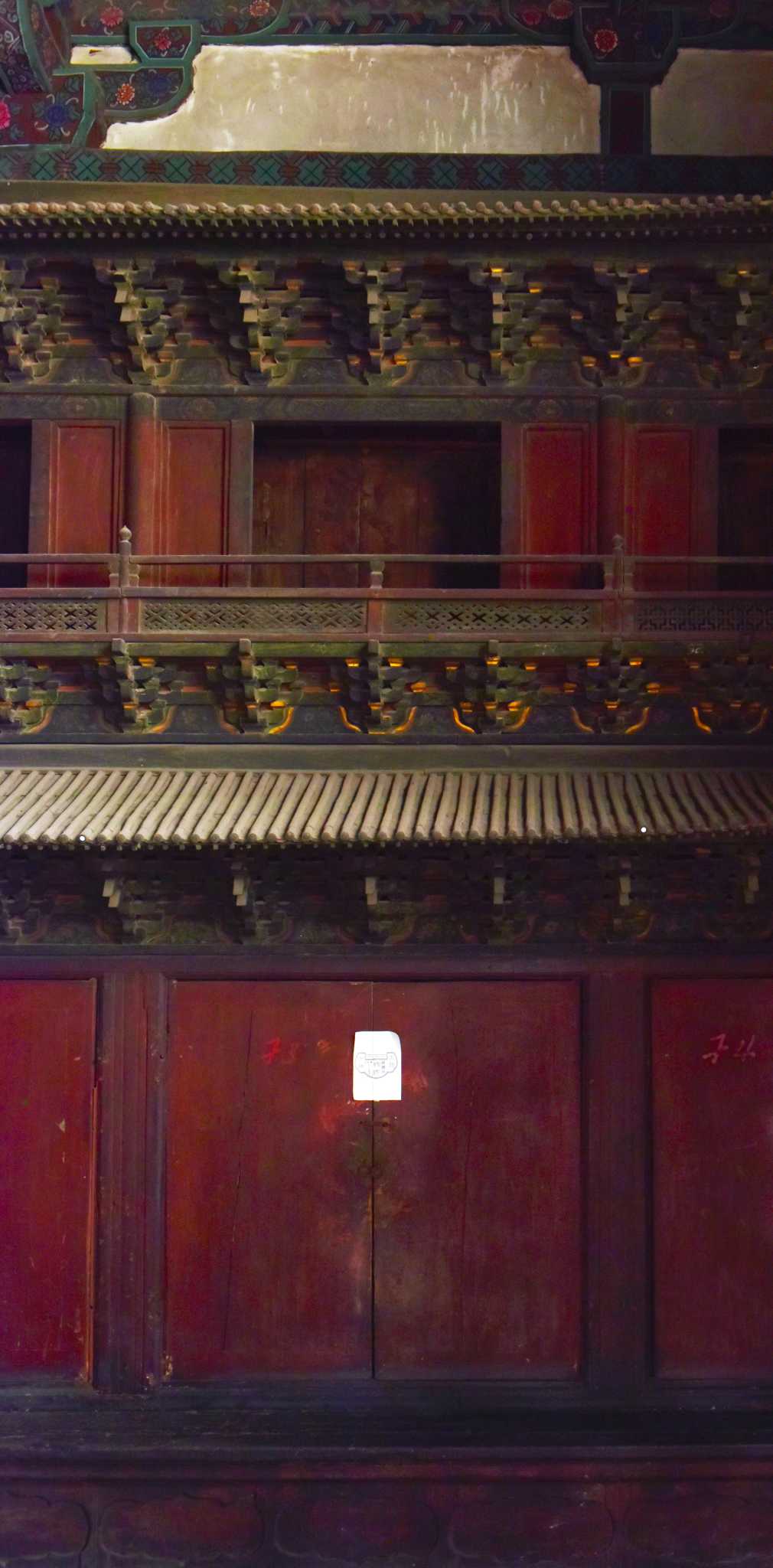 Datong Huayan Temple
In addition to the heavenly palace, the exquisite Liao dynasty clay Buddha statue groups in the hall also opened my eyes. These gold-adhered Liao dynasty colored paintings, after years of erosion, have shown a mottled bronze color. This kind of "natural beauty" is now hard to find in China. As Mr. Liang Sicheng wrote: "This group of statues has a beautiful appearance and soft and dull colors, escaping the usual examples of ancient Chinese sculpture and avoiding the disaster of "renovation" by later generations. Although they are no longer glittering, I like the feeling of thousands of years flowing through them."
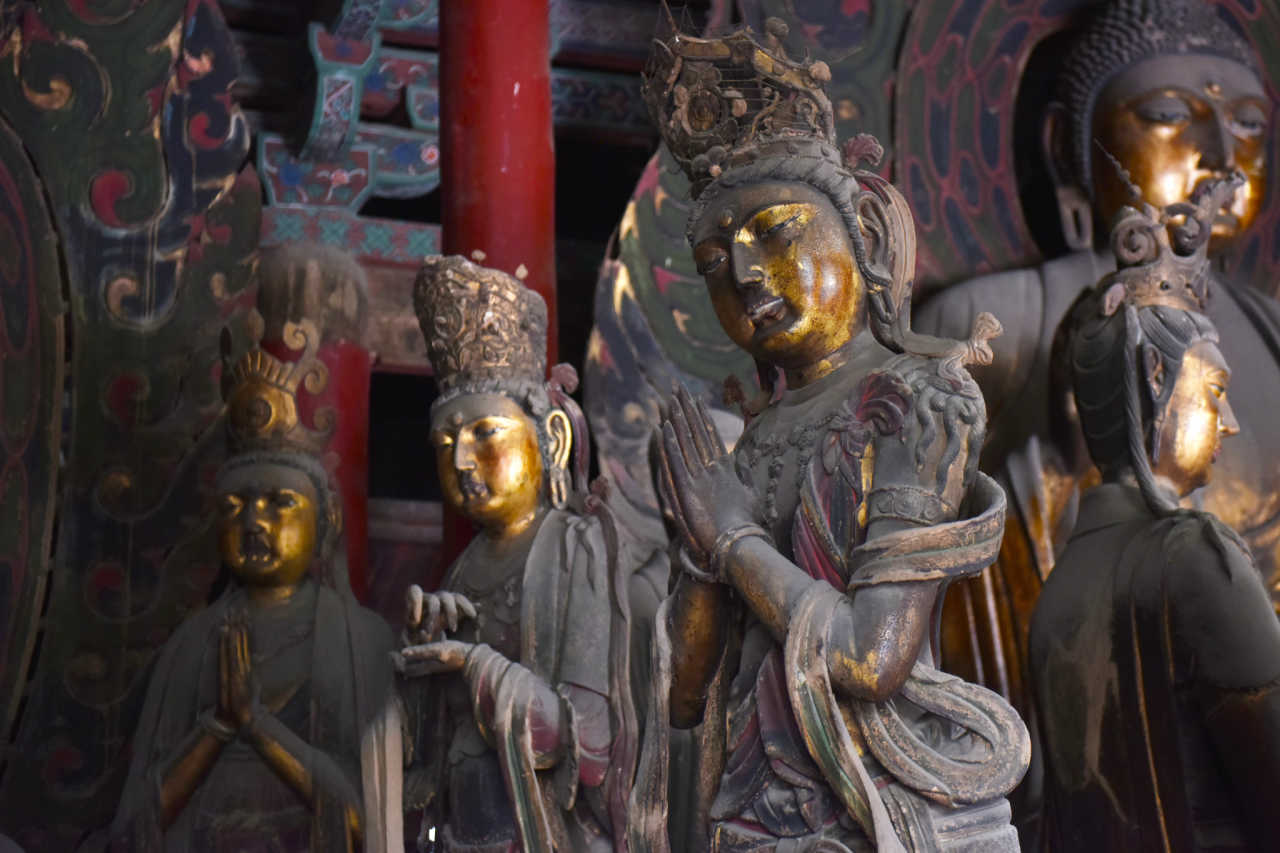 Datong Huayan Temple
Among these Buddha statues, the statue of the palms-together smiling attendant Bodhisattva, hailed by historians as the "Oriental Venus," is the most famous. I saw a Bodhisattva with a slightly bare upper body, gorgeous head ornaments, long braids hanging over the shoulders, a beautiful and plump figure, and bare feet standing on a lotus platform, showing white teeth and a smiling expression, which is very rare among Buddha statues. The secularized and humanized expressions and postures make the Buddha statues full of human touch and life atmosphere.
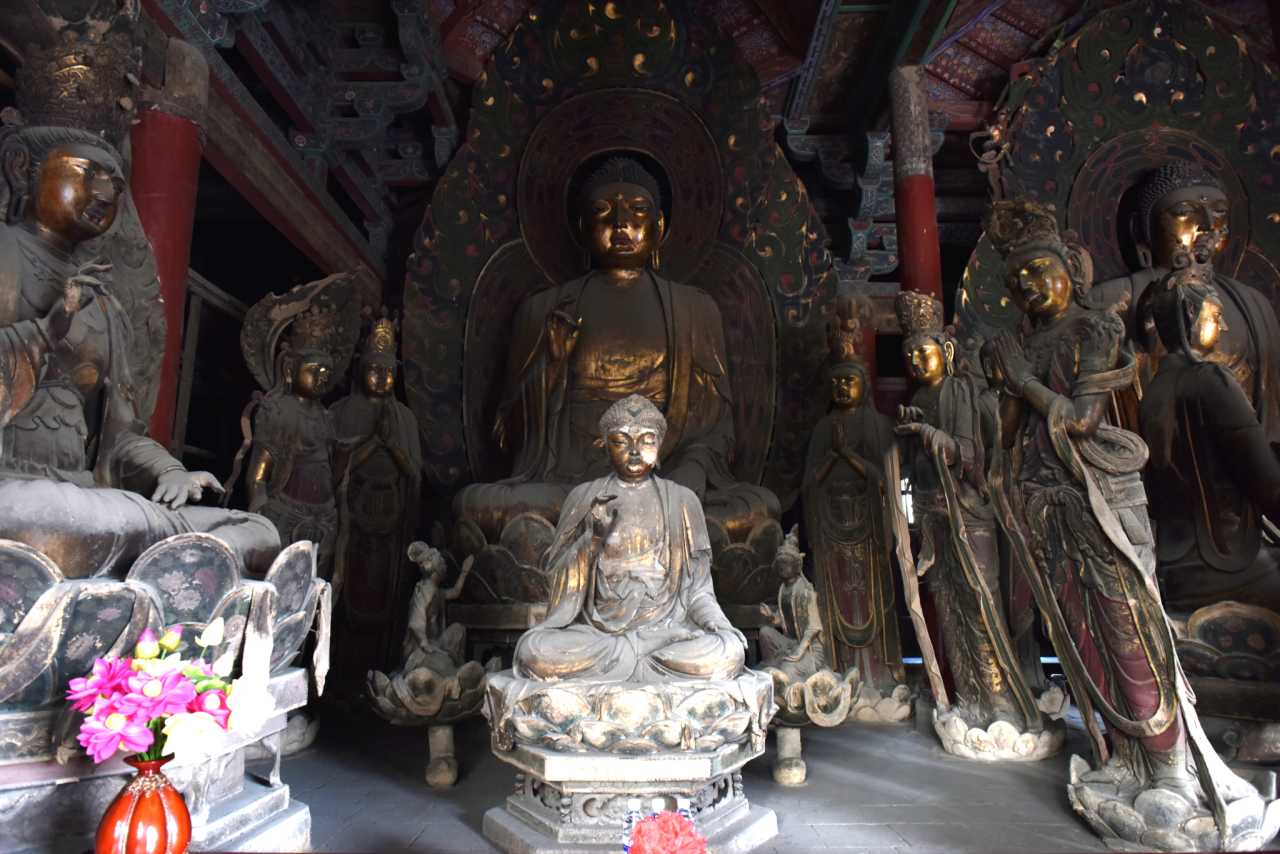 Datong Huayan Temple
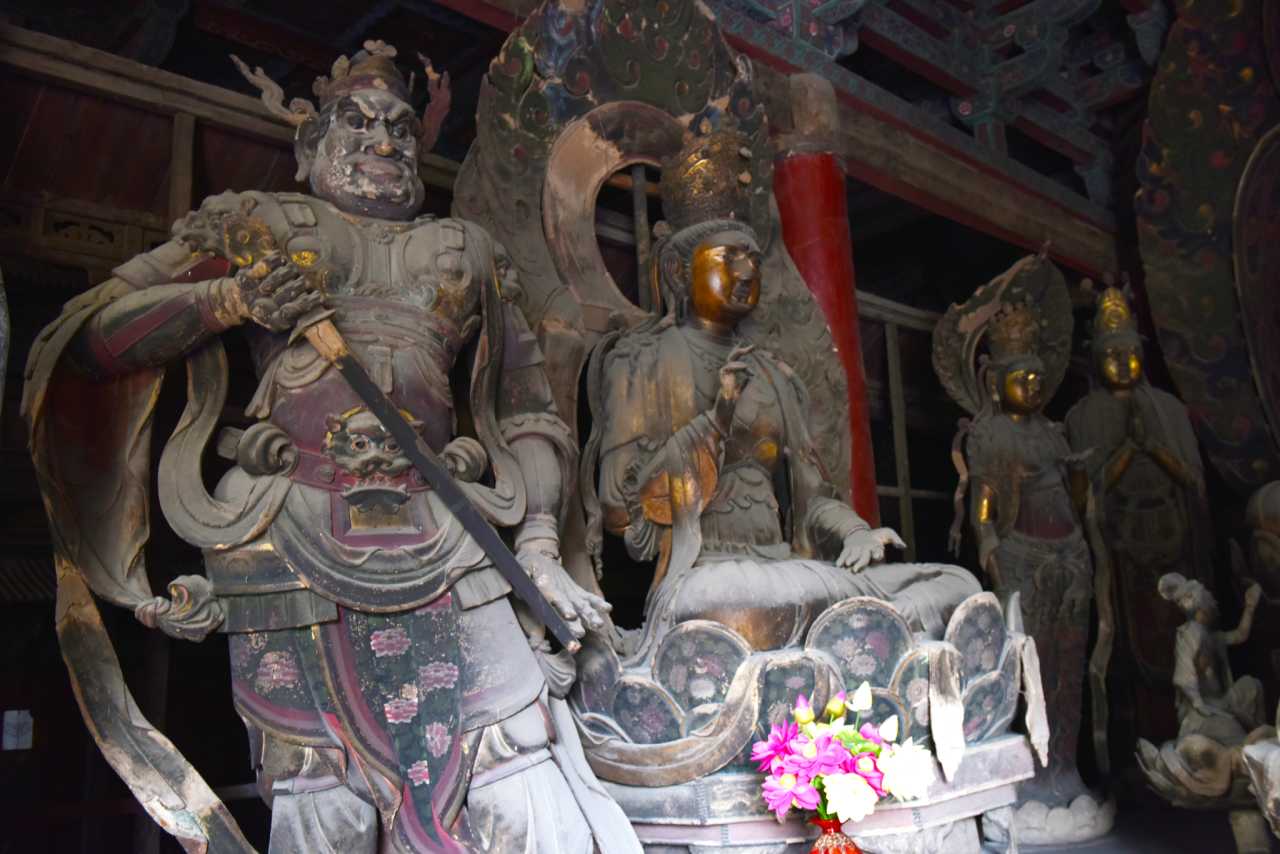 Datong Huayan Temple
 Datong Huayan Temple
 Datong Huayan Temple
 Datong Huayan Temple
 Datong Huayan Temple
Guandi Temple: The Only Yuan Dynasty Building in Datong
If Shanhua Temple and Huayan Temple are the top attractions in Datong ancient city, then Guandi Temple is a small transparent one. But turning back time to the Qing dynasty, Lord Guan was a top presence in Datong. According to Datong Qing dynasty records, there were as many as 16 Guandi temples in the city alone, among which the largest and oldest one is this Datong Guandi Temple known as the "Great Temple."
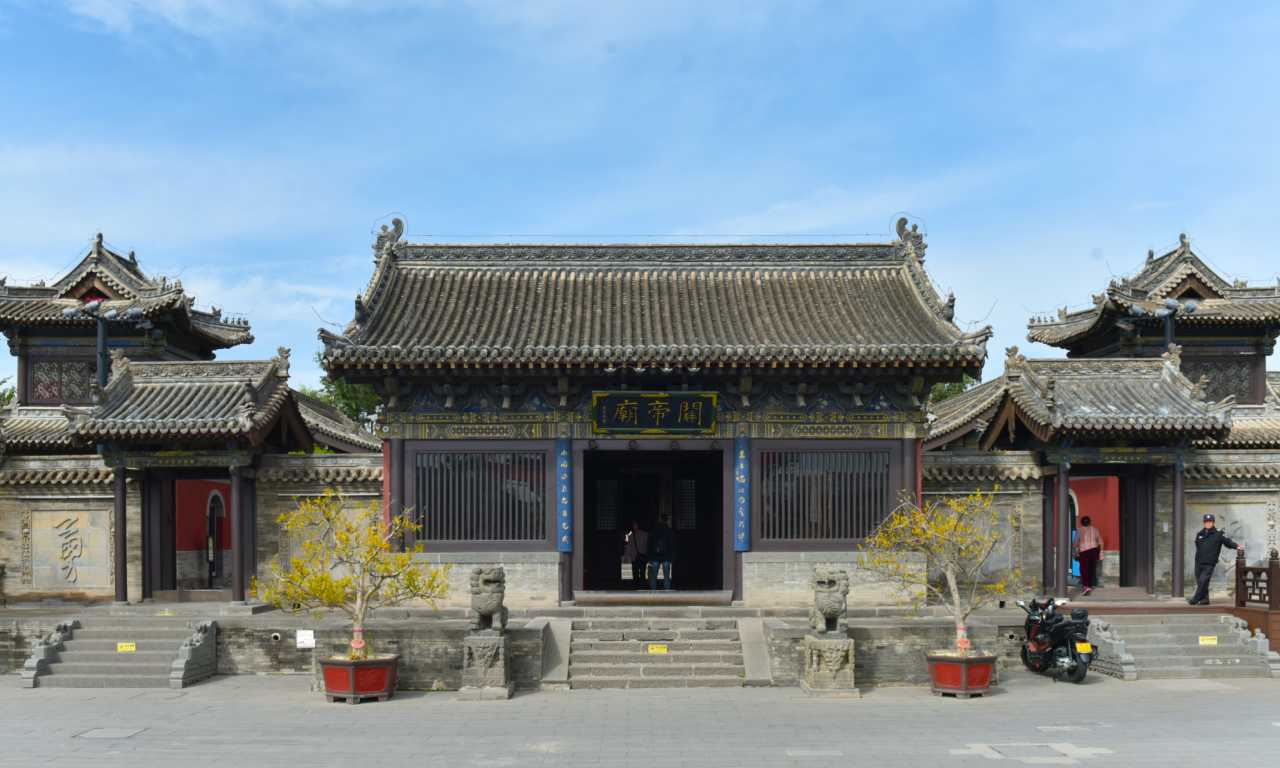 Guandi Temple
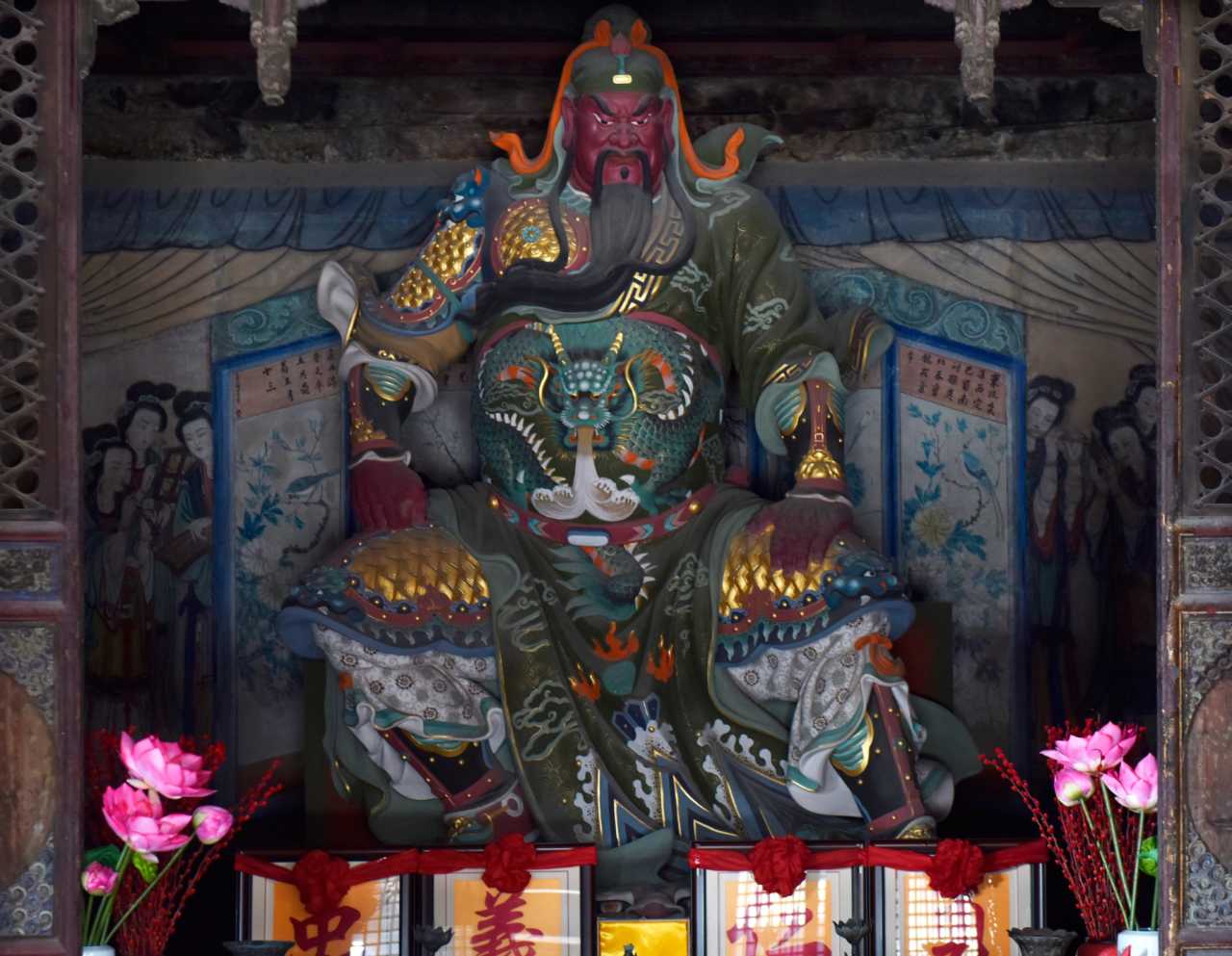
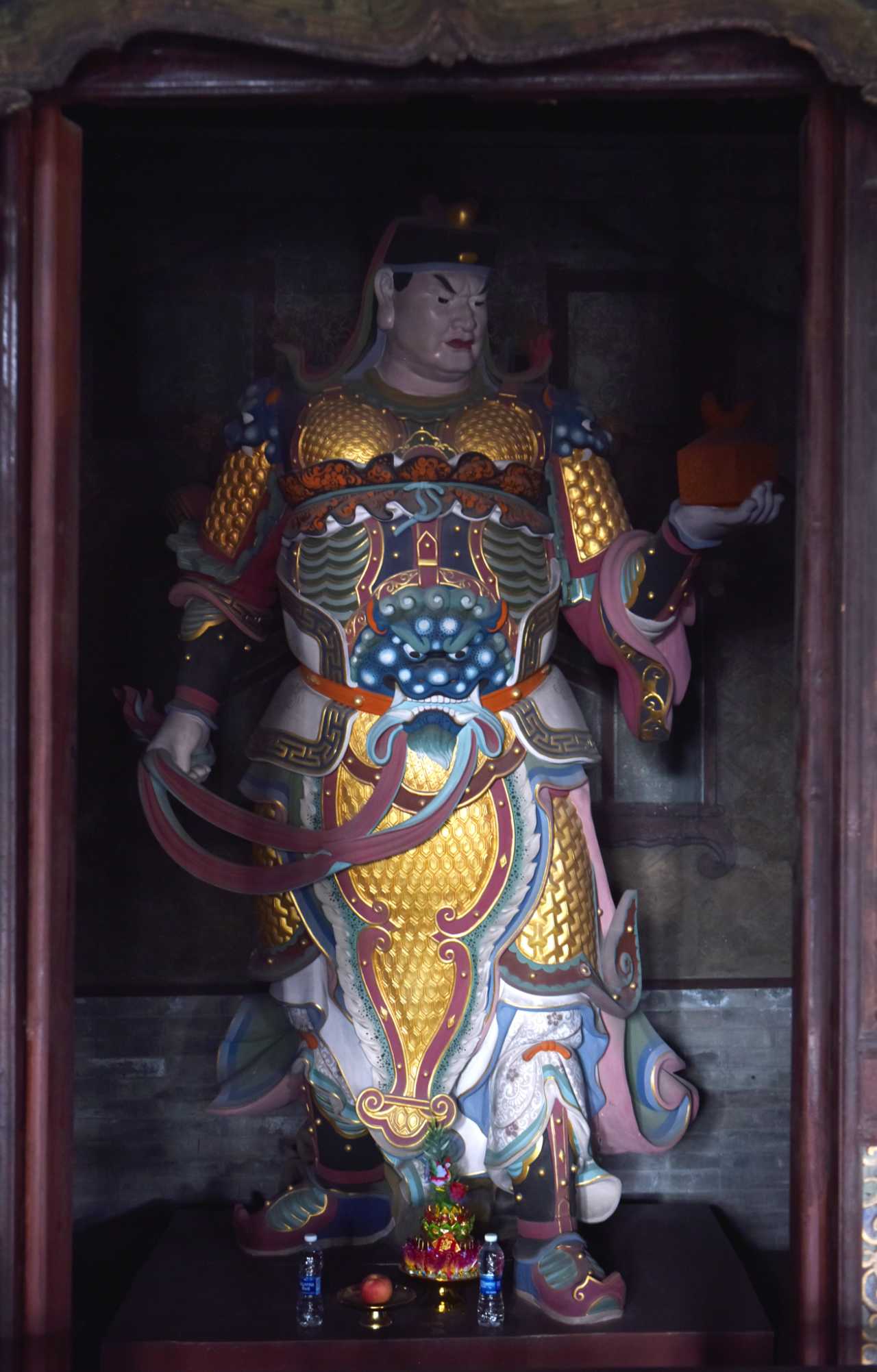
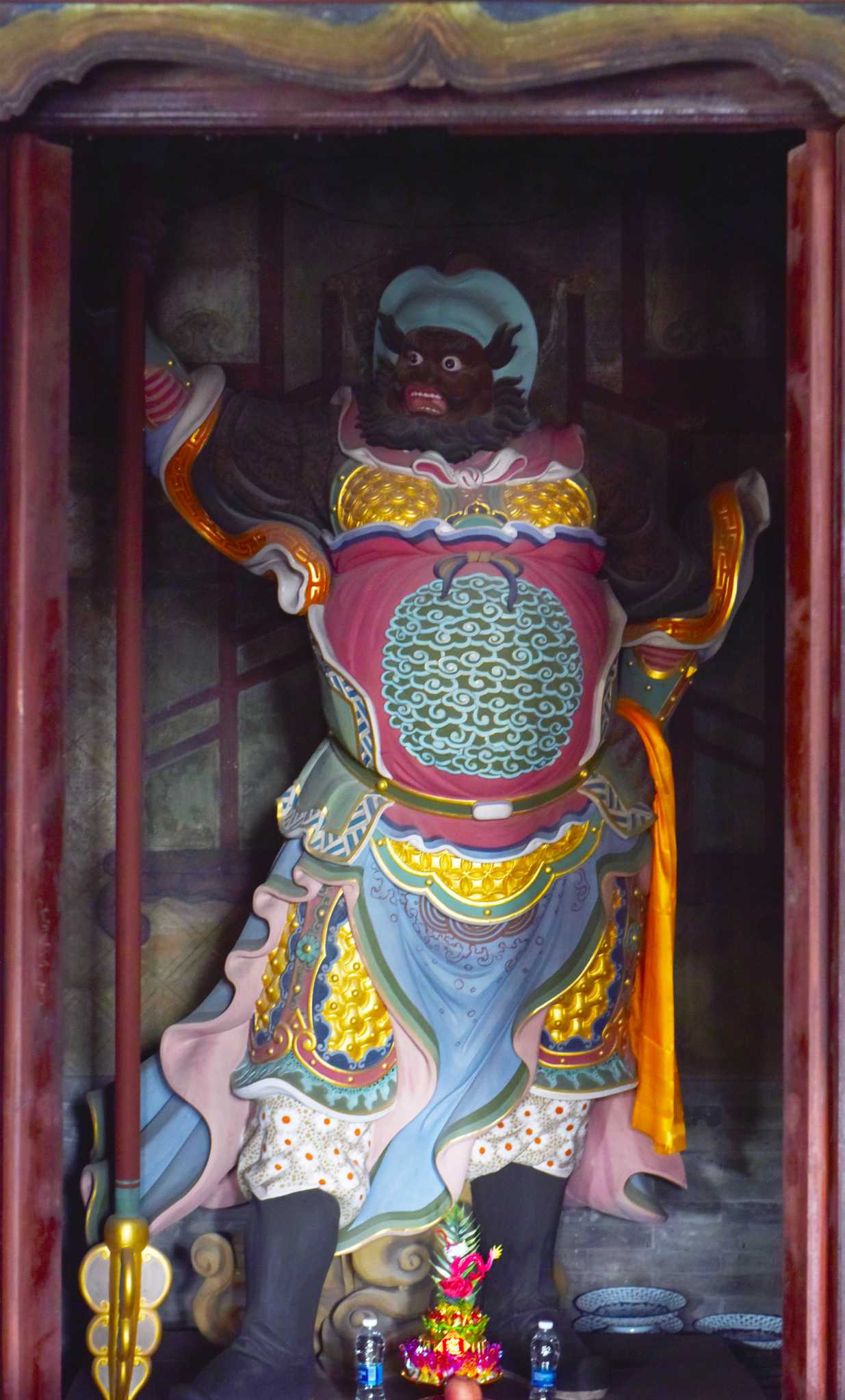
This Guandi Temple, facing south, was first built in the Yuan dynasty and is an early Guan temple in northern China. It is regrettable that among this quite large-scale Guandi Temple, only the Wusheng Hall (main hall) has been preserved to this day. The mountain gate, passage hall, and Spring and Autumn Tower are all buildings constructed in later periods. In the hall, there are not only statues of Guan Yu but also murals showing his achievements.
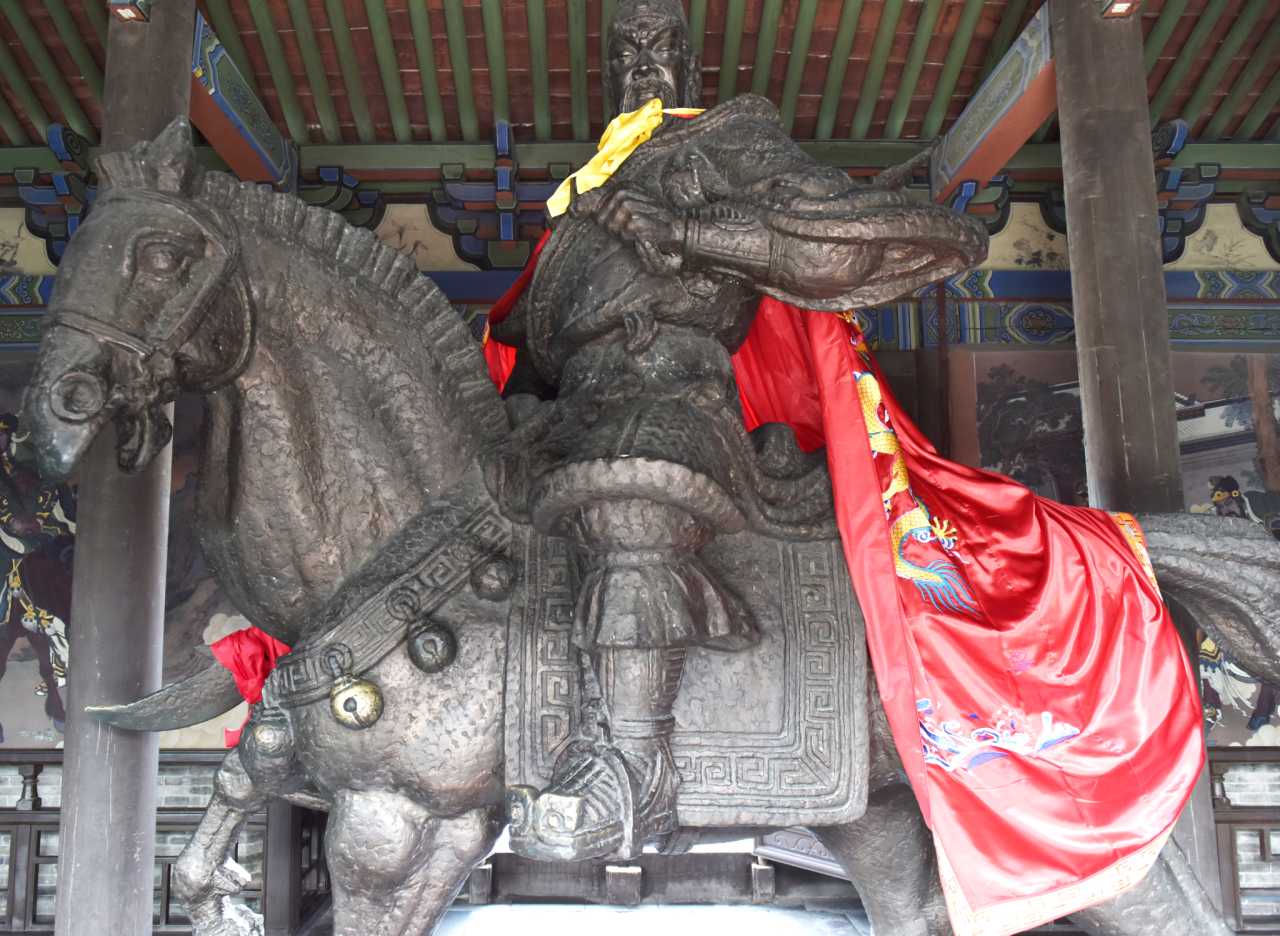 Guandi Temple
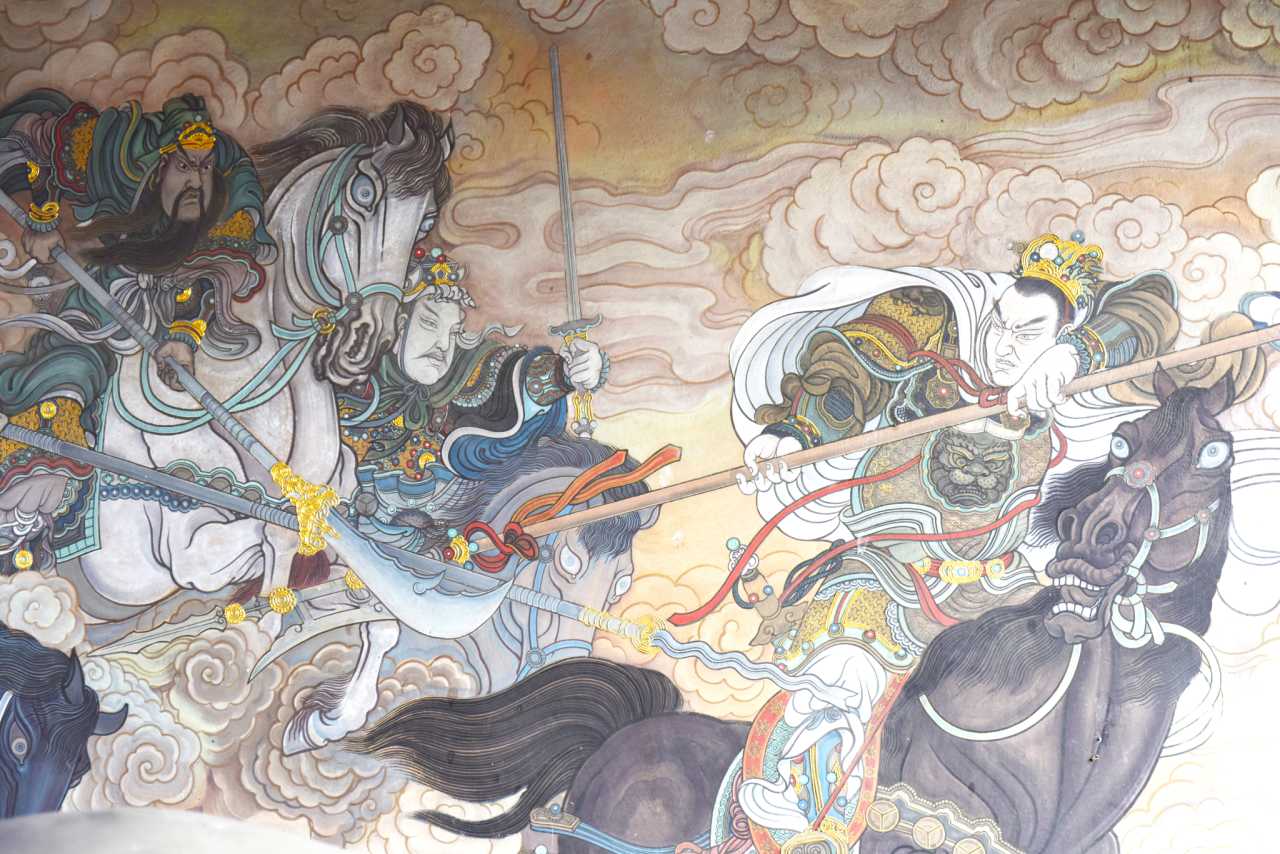 Guandi Temple
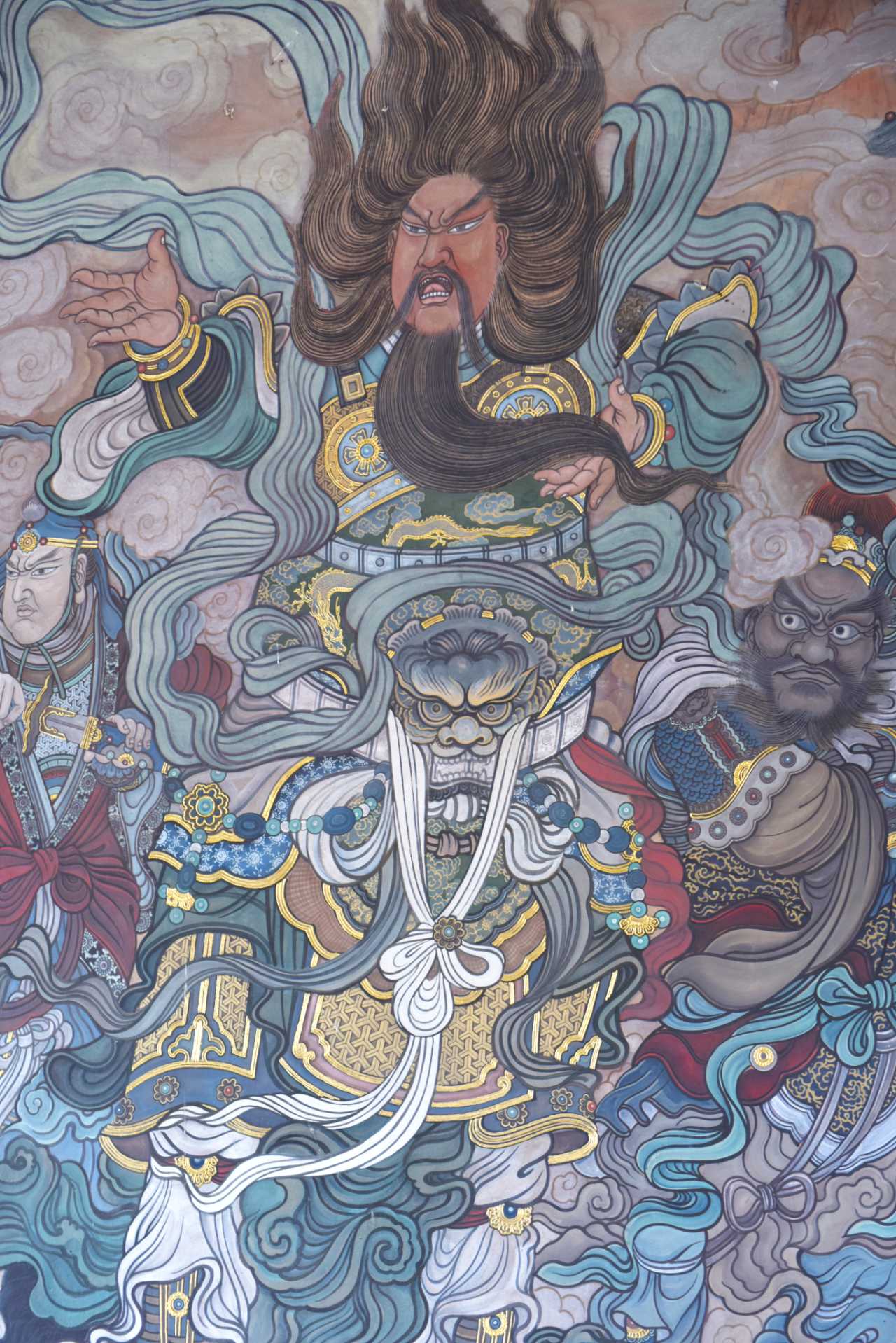 Guandi Temple
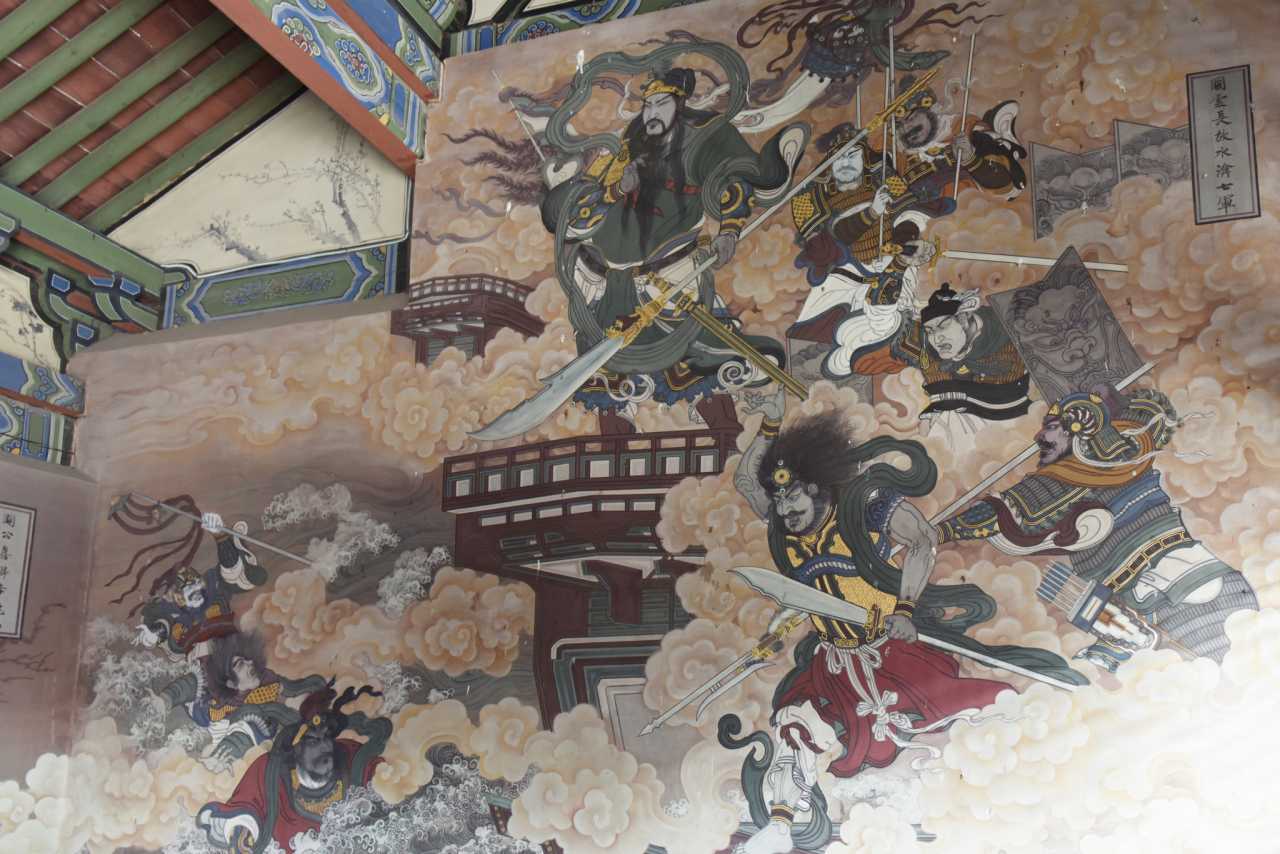 Guandi Temple
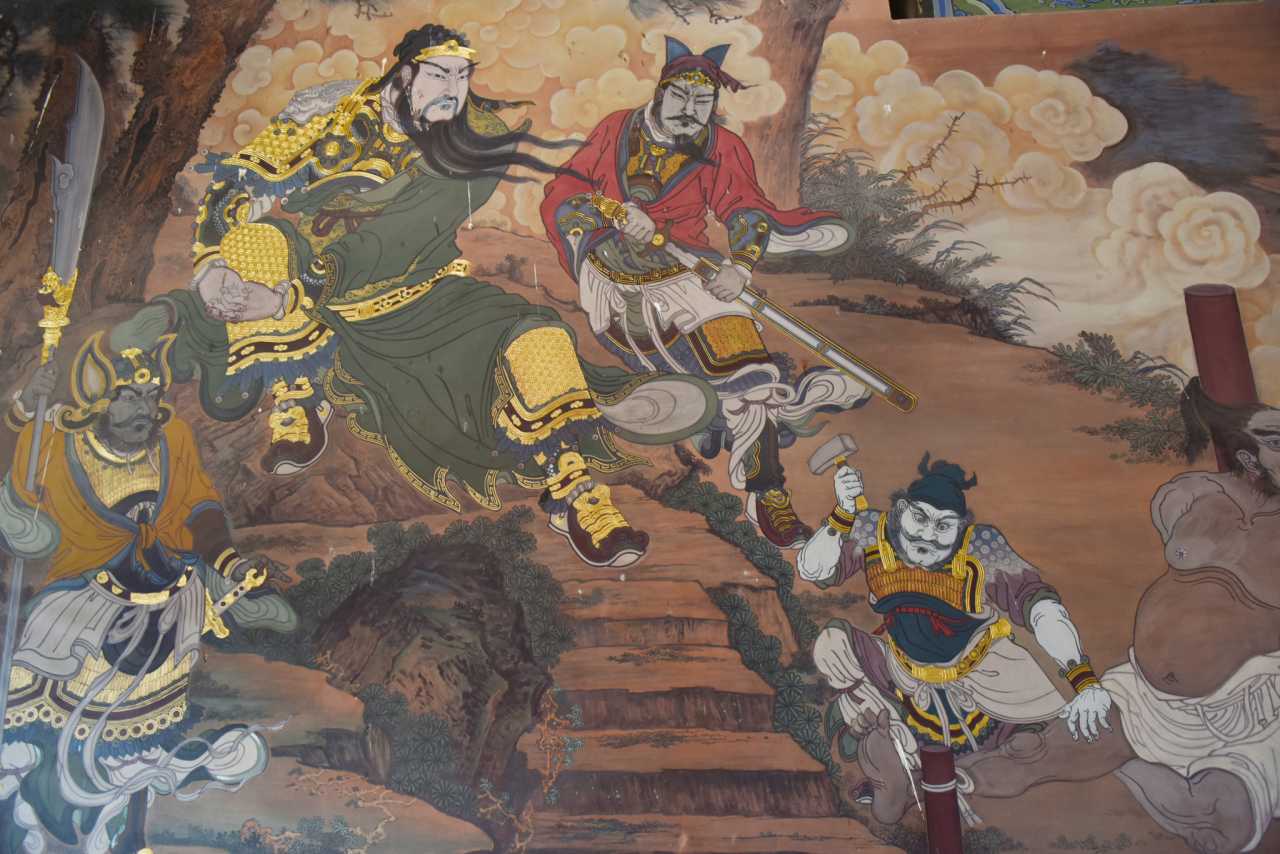 Guandi Temple
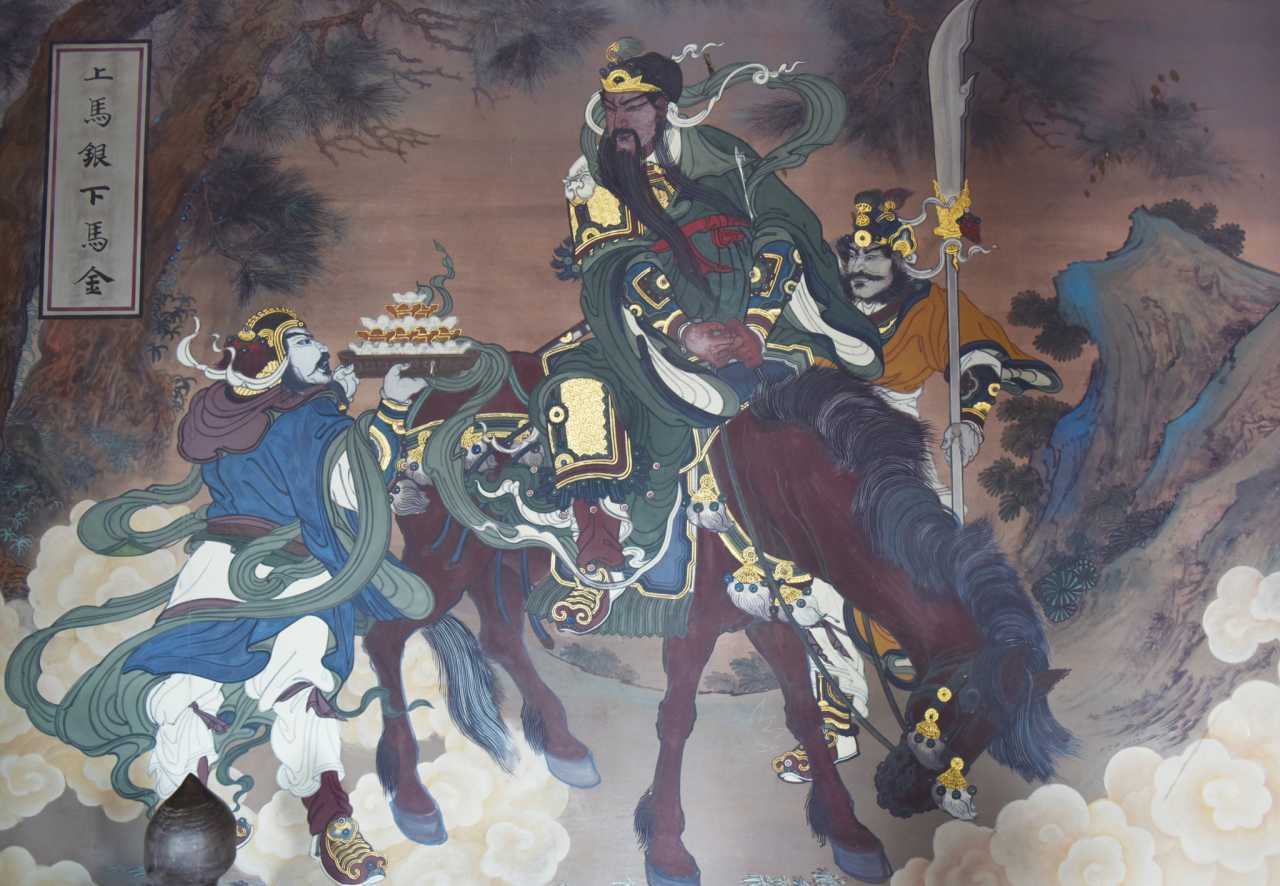 Guandi Temple
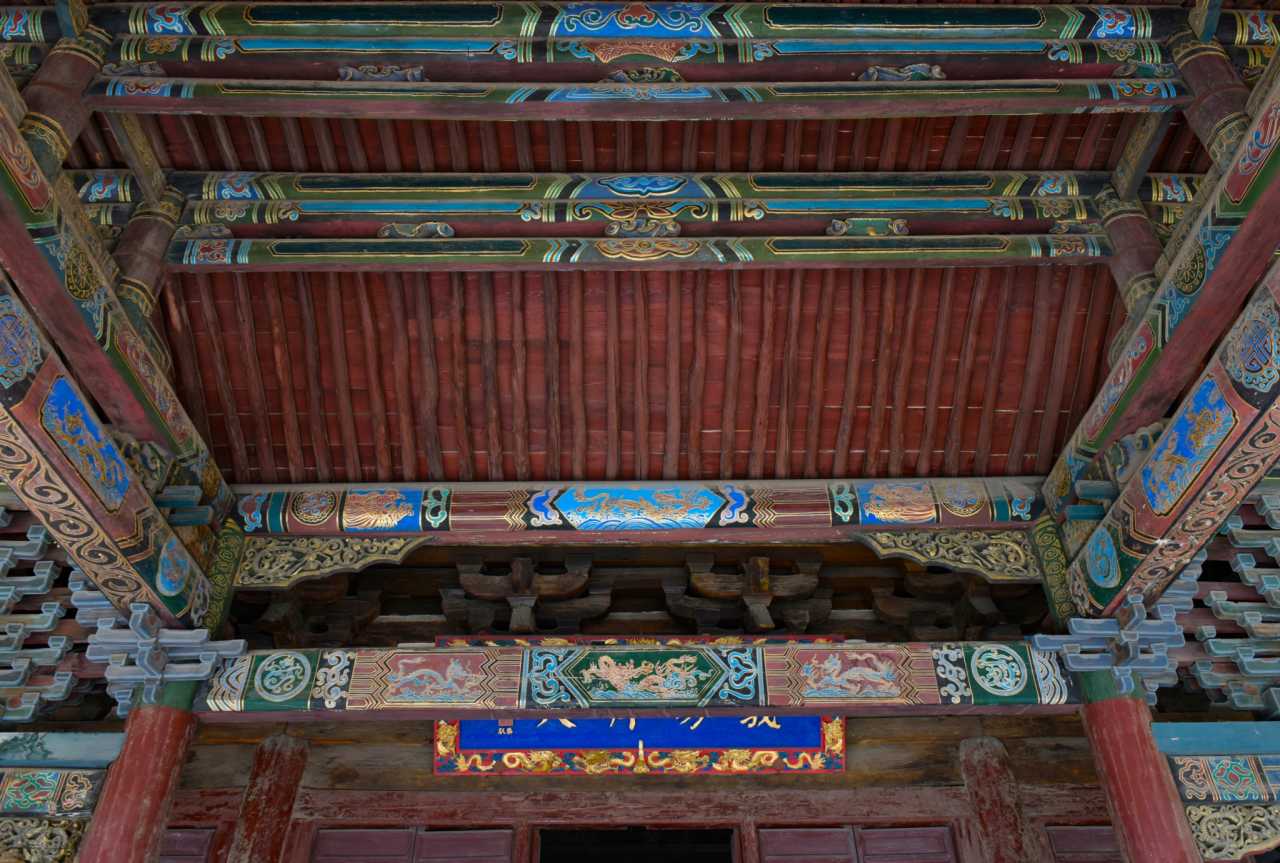
For me, a history enthusiast who has read "Romance of the Three Kingdoms" and "Records of the Three Kingdoms," Lord Guan's achievements are well-known. I am more interested in this Wusheng Hall left in the Guandi Temple. Its hall roof is a single-eaved nine-ridge hip roof, covered with glazed tiles, shining brightly. The main ridge has three-color glazed ridge ornaments in yellow, green, and blue, with vivid ridge-swallowing beasts at both ends and upturned wing corners. The dougong uses large materials and has a special arrangement, everywhere showing the roughness and grandeur of architecture of that era. The front porch was added in the Qing dynasty to expand the area for sacrificial activities. The inner eaves are densely covered with dougong, with eleven-step dougong at each corner, small and exquisite in structure, and exquisite in art.
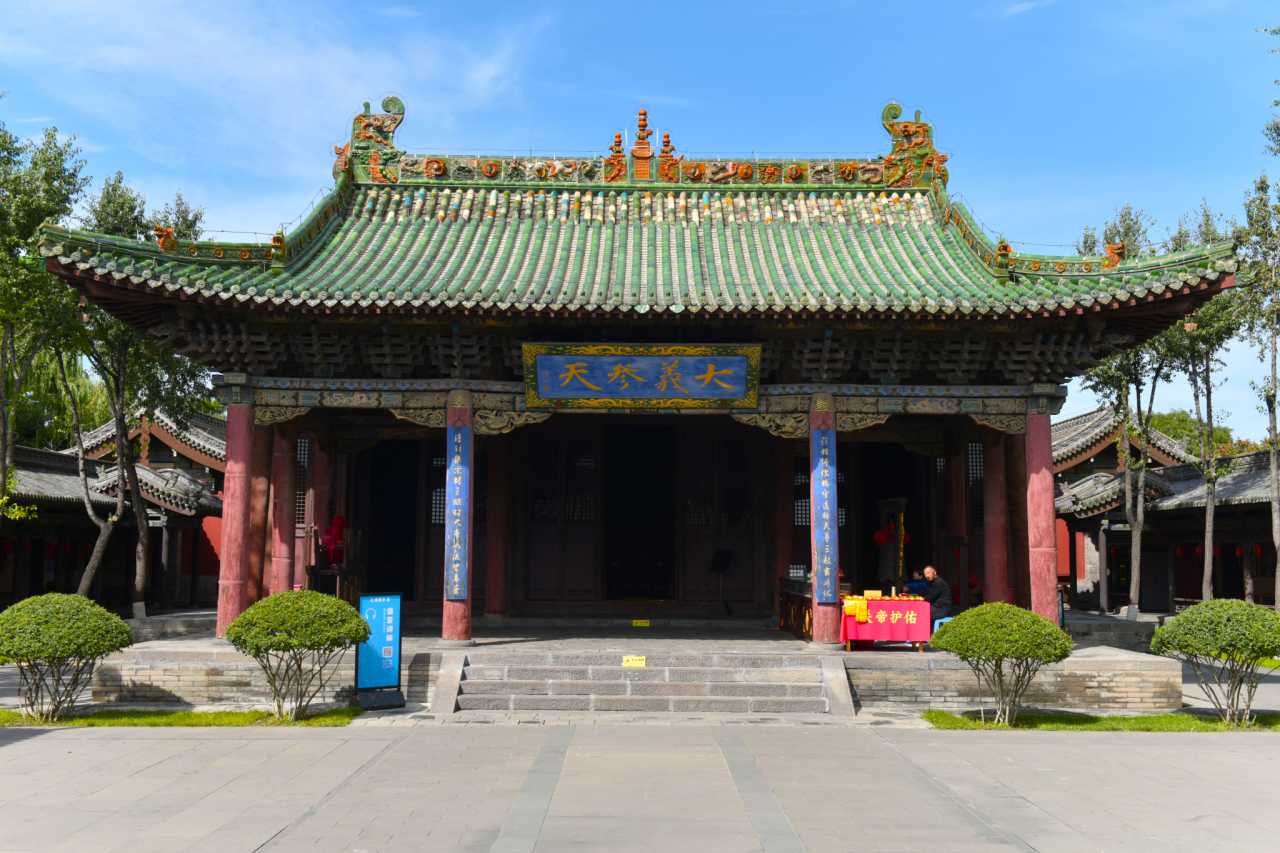 Guandi Temple
 Guandi Temple
The internal structure of the main hall is also very special. A Sumeru seat is built against the back wall, with pillars erected and walls built on the flat ground, forming a three-room altar, connected to the altar wooden niche with two rear golden pillars. The hall ceiling is a flat caisson, a structure added in the Qing dynasty, painted with dragon patterns, various in form and unique in style. Between the pillars, there is one finely carved shrine each, imitating wooden architectural shapes, exquisitely transparent. The shrine has a double-eaved hip roof, with ceiling on the side, golden dougong, and colored paintings for the rest, belonging to the superior works of small wooden works in Qing dynasty ancient architecture.
 Guandi Temple
The partition fans on both sides of the middle shrine all adopt the decoration of three-way six-rhombus flower patterns, with very exquisite and unique workmanship. This decorative technique is a high-grade form in the exterior decoration of ancient buildings. The two golden pillars are painted red, with clear coiled dragons on them. According to expert research, such large redwood carved coiled dragon golden pillars are only seen in Datong Guandi Temple. The coiled dragon has powerful scales and claws, coils freely, and seems to be flying vividly, providing important evidence for dating the main hall pillars of the Yuan dynasty.
 Guandi Temple
 Guandi Temple
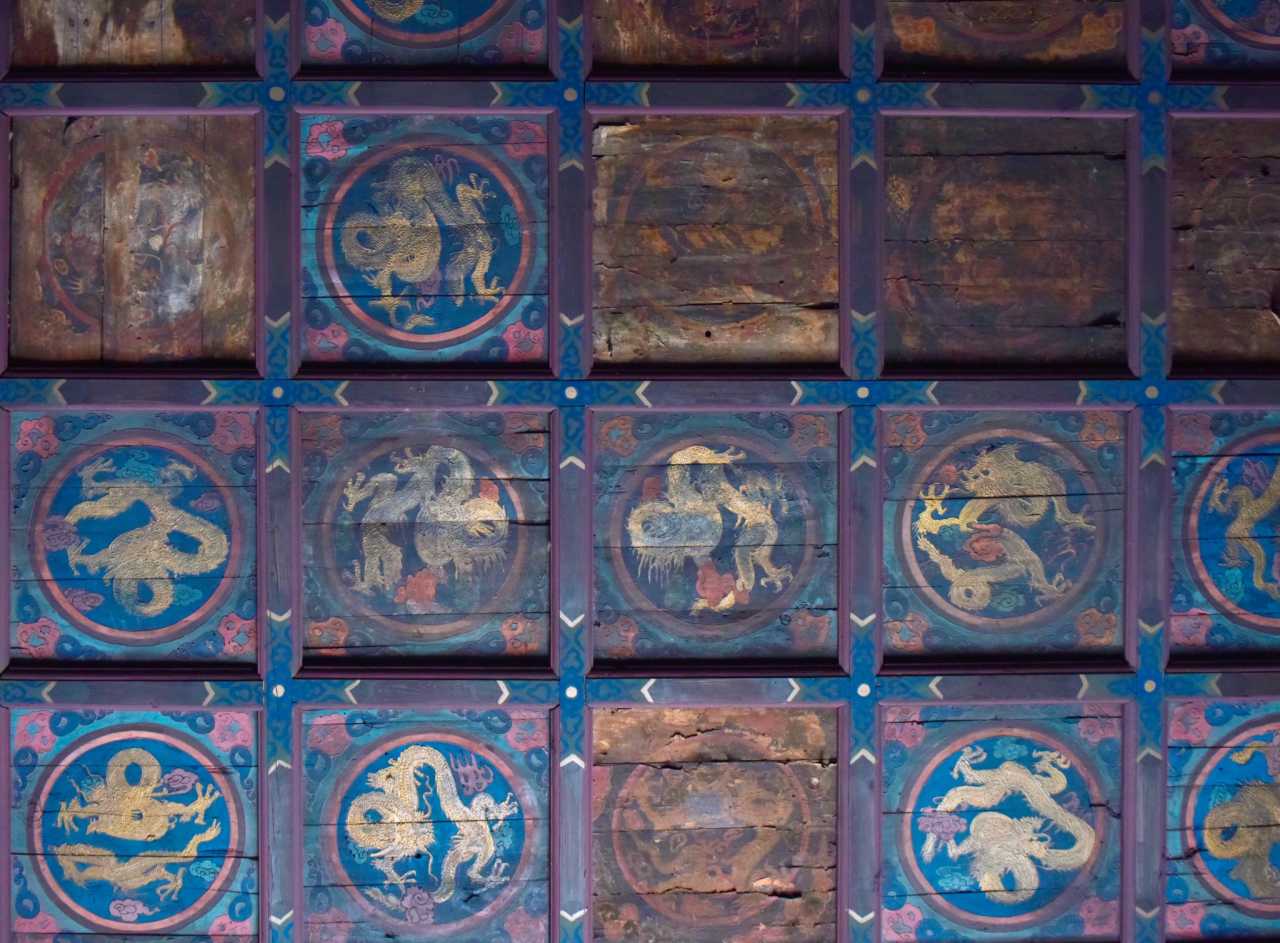 Guandi Temple
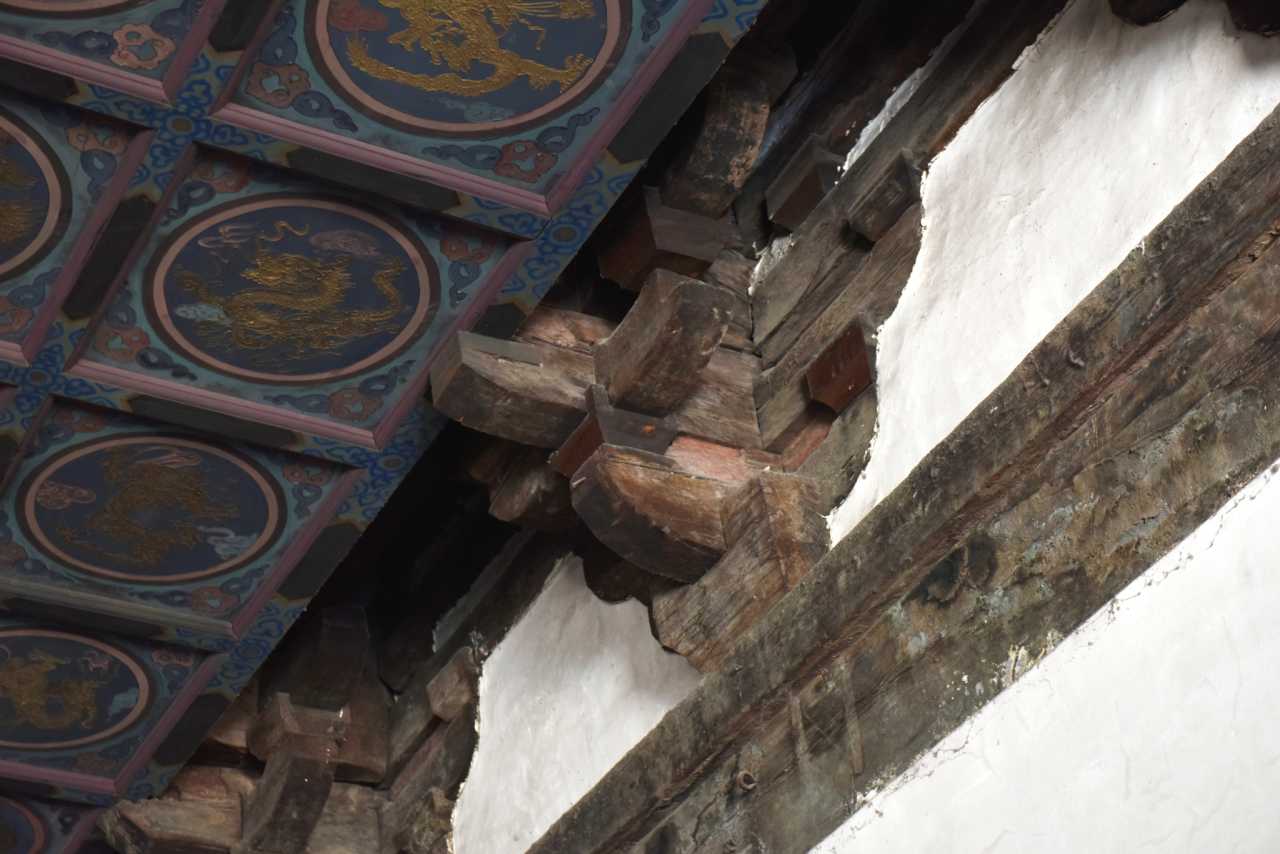 Guandi Temple
Fahua Temple: Go to See the Covered-bowl Glazed Lama Pagoda
In Datong, where ancient sites are everywhere, Fahua Temple, as a later renovated temple, appears quite new. Facing south, with a standard left-right symmetrical four-entry courtyard, it shows that it adopts the Han Buddhism layout, along the central axis are glazed archway, Heavenly King Hall, Three Saints Hall, Mahavira Hall, Fahua White Pagoda, and Scripture Library, with scattered heights and distinct layers.
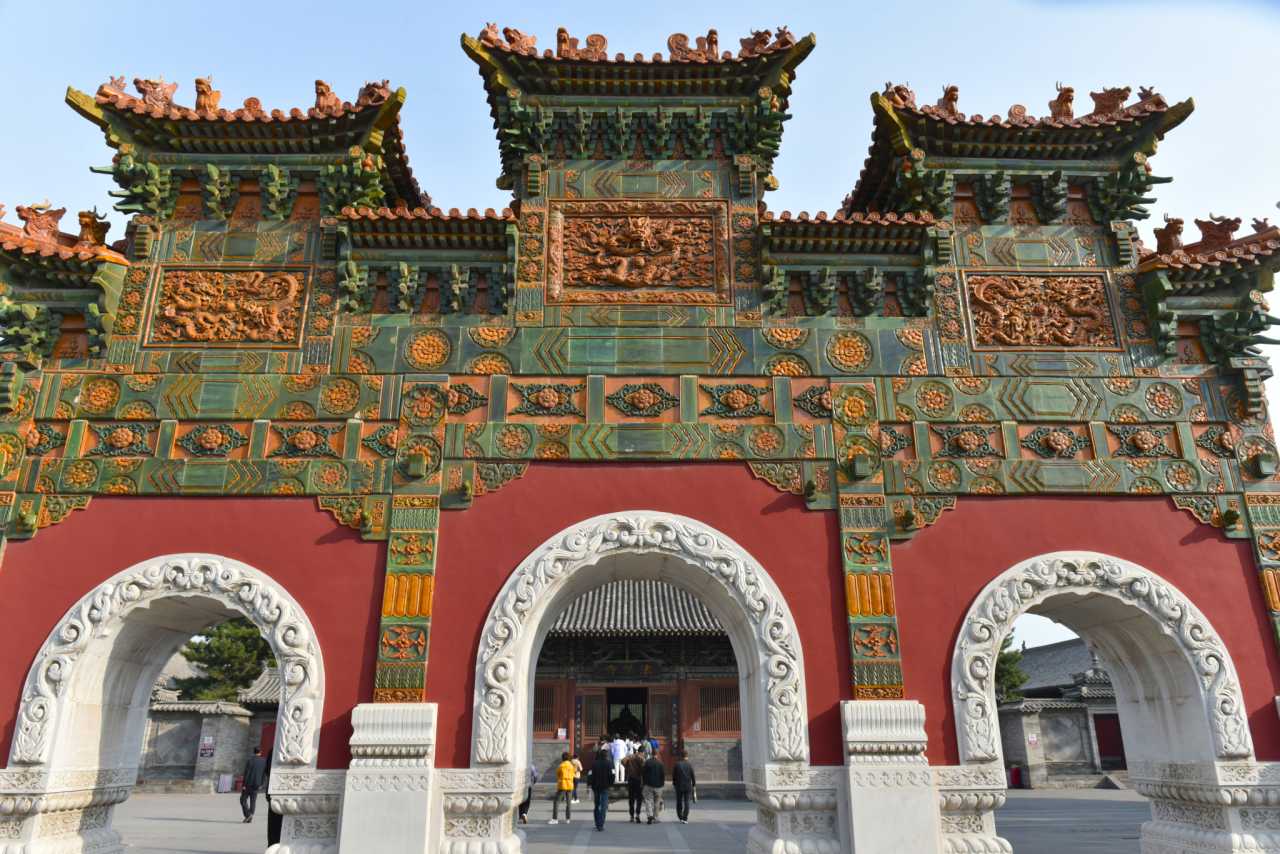 Fahua Temple
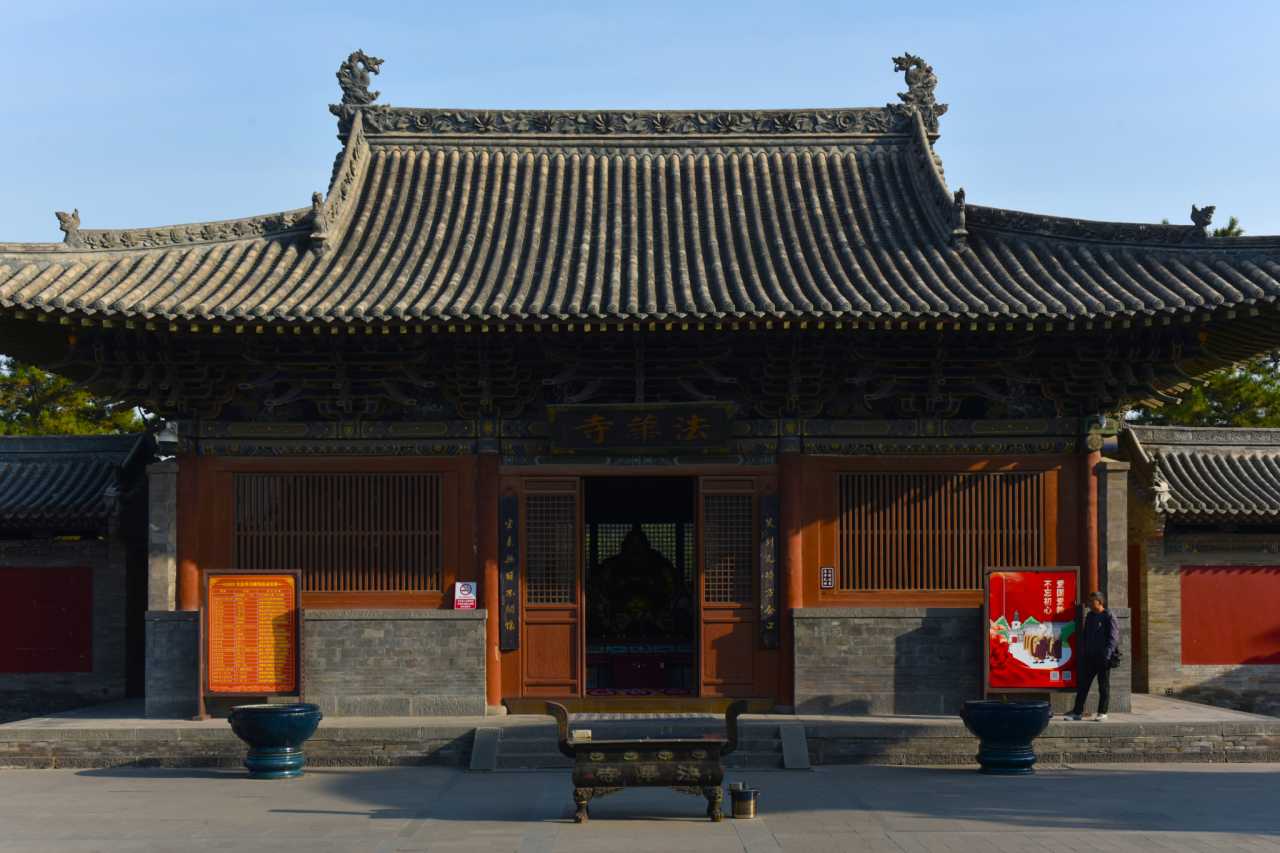 Fahua Temple
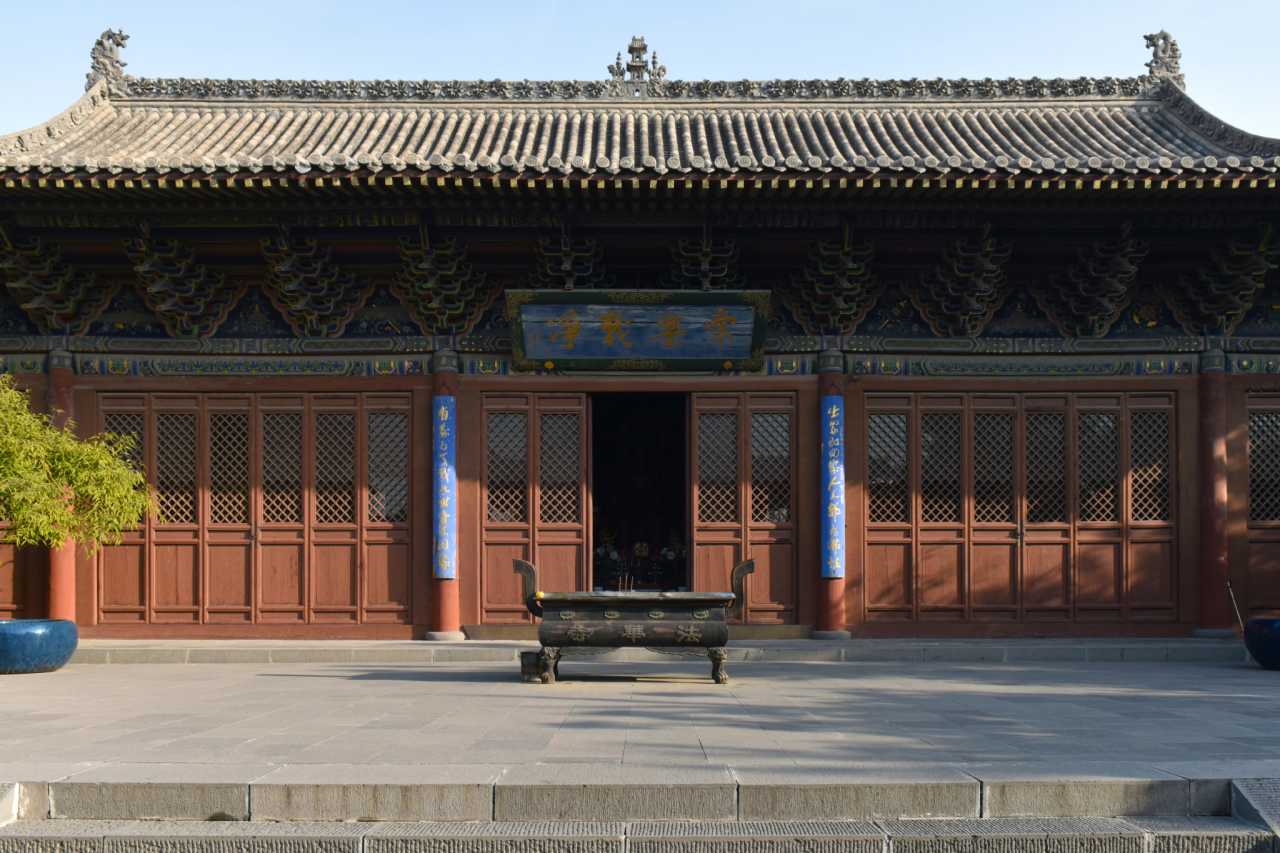 Fahua Temple
Compared with the staggered Chinese-style buildings, I am quite interested in the "circle" in the temple. In Buddhism, "circle" has special meaning, representing completeness, wholeness, and perfection, which is the supreme realm pursued by Buddhism. The circle symbolizes the universality and vastness of Buddha-nature and the completeness and abundance of life meaning, reflecting the Buddhist concept of "taking circle as beauty." In addition, Buddhism believes that the universe is round, and the trajectory of celestial bodies is also round, with the circle symbolizing the harmony and order of the universe. From a macro perspective, the universe itself is regarded by Buddhism as an infinitely large circular space, which can be clearly understood through the inherited Buddhist paintings.
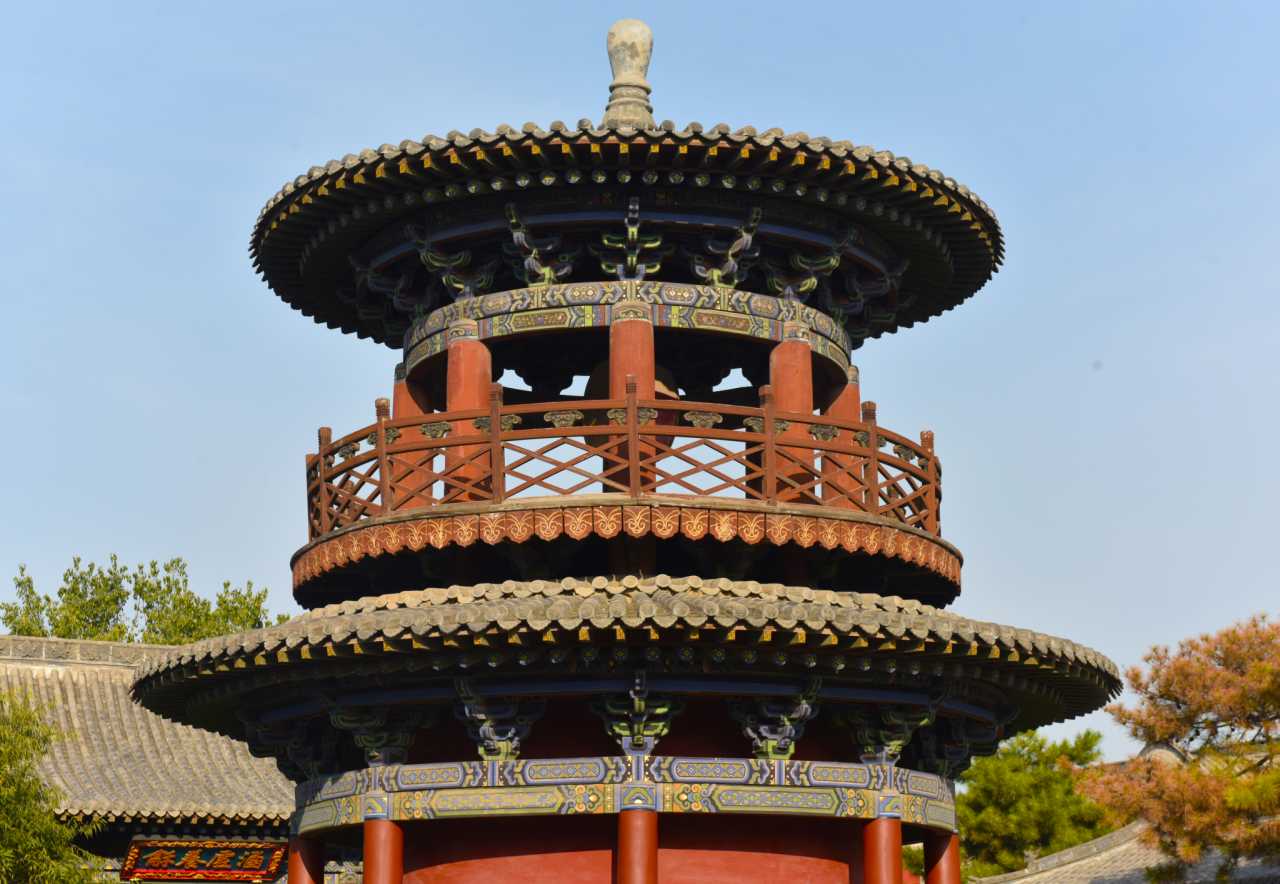 Fahua Temple
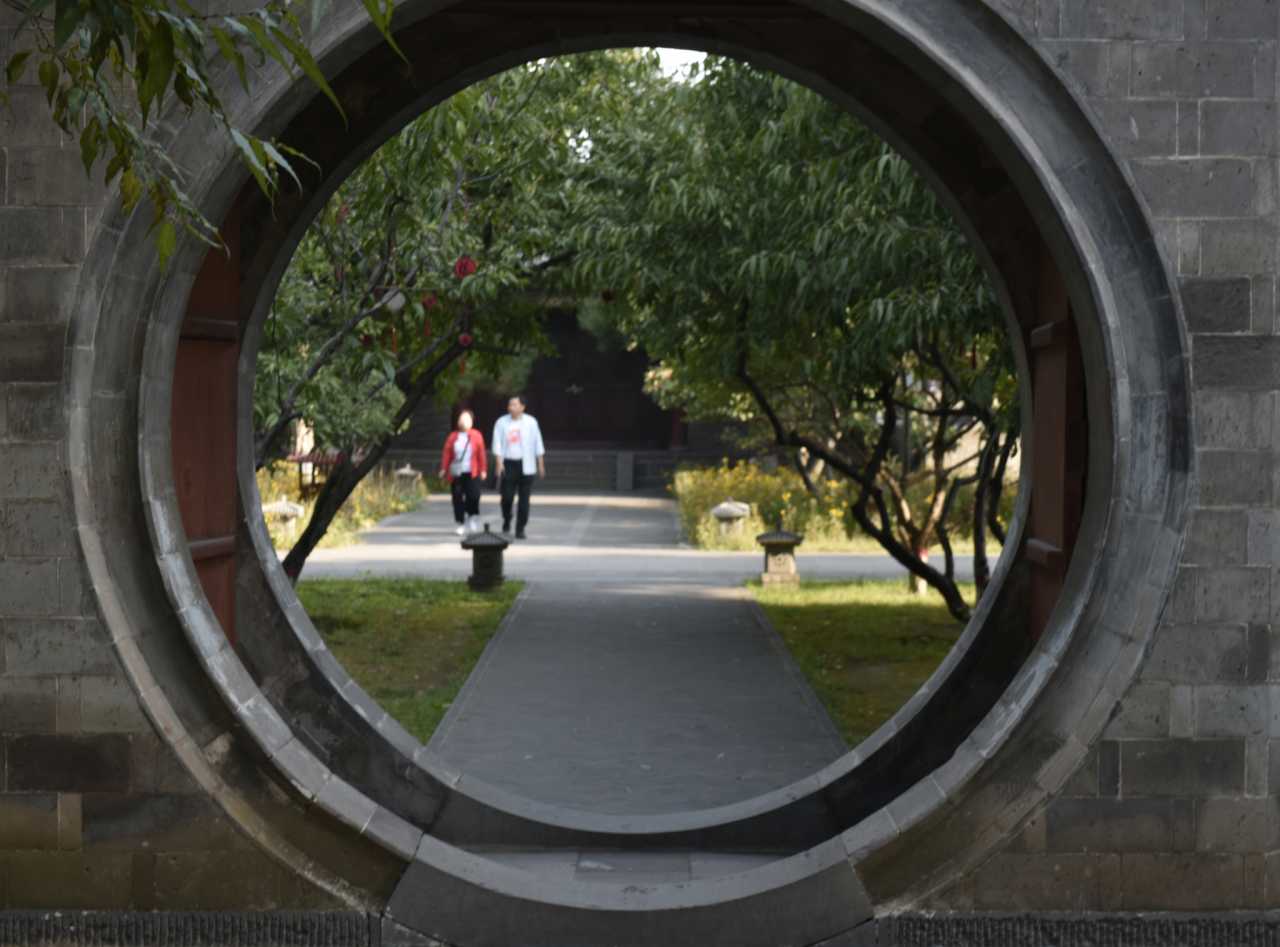 Fahua Temple
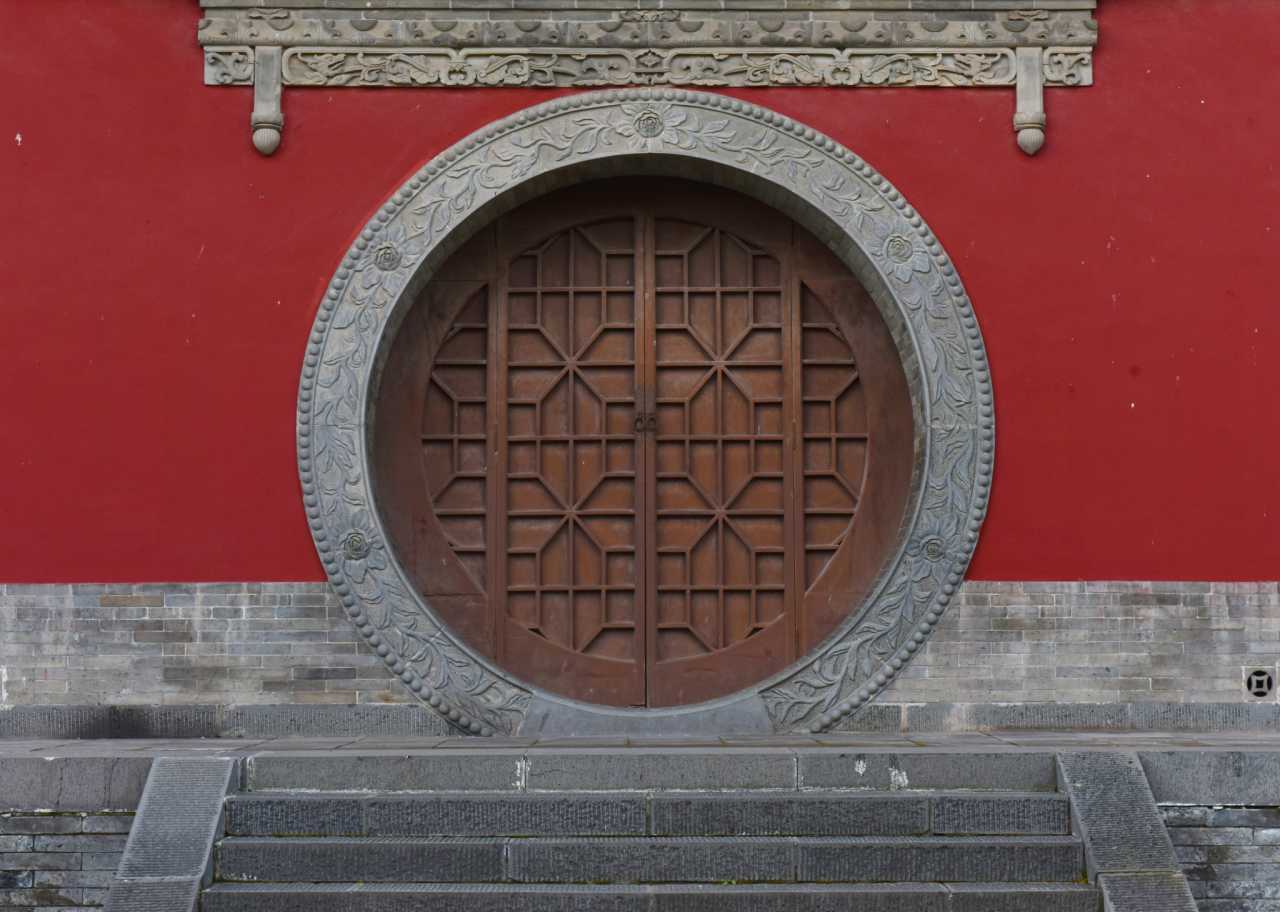 Fahua Temple
Fahua Temple in the morning is a good place to cultivate a "pure heart." In this high-pressure era that emphasizes efficiency, we who are in the mortal world have to face many troubles, temptations, and setbacks. Only by approaching the original state of being spotless, ethereal and free can one gain a brief release. Watching the temple folk sweeping away the dust, I felt they are Bodhisattvas helping all beings remove the Five Hindrances (sensual desire, ill will, sloth and torpor, restlessness and remorse, doubt), so that our minds become clearer, purer, and stronger.
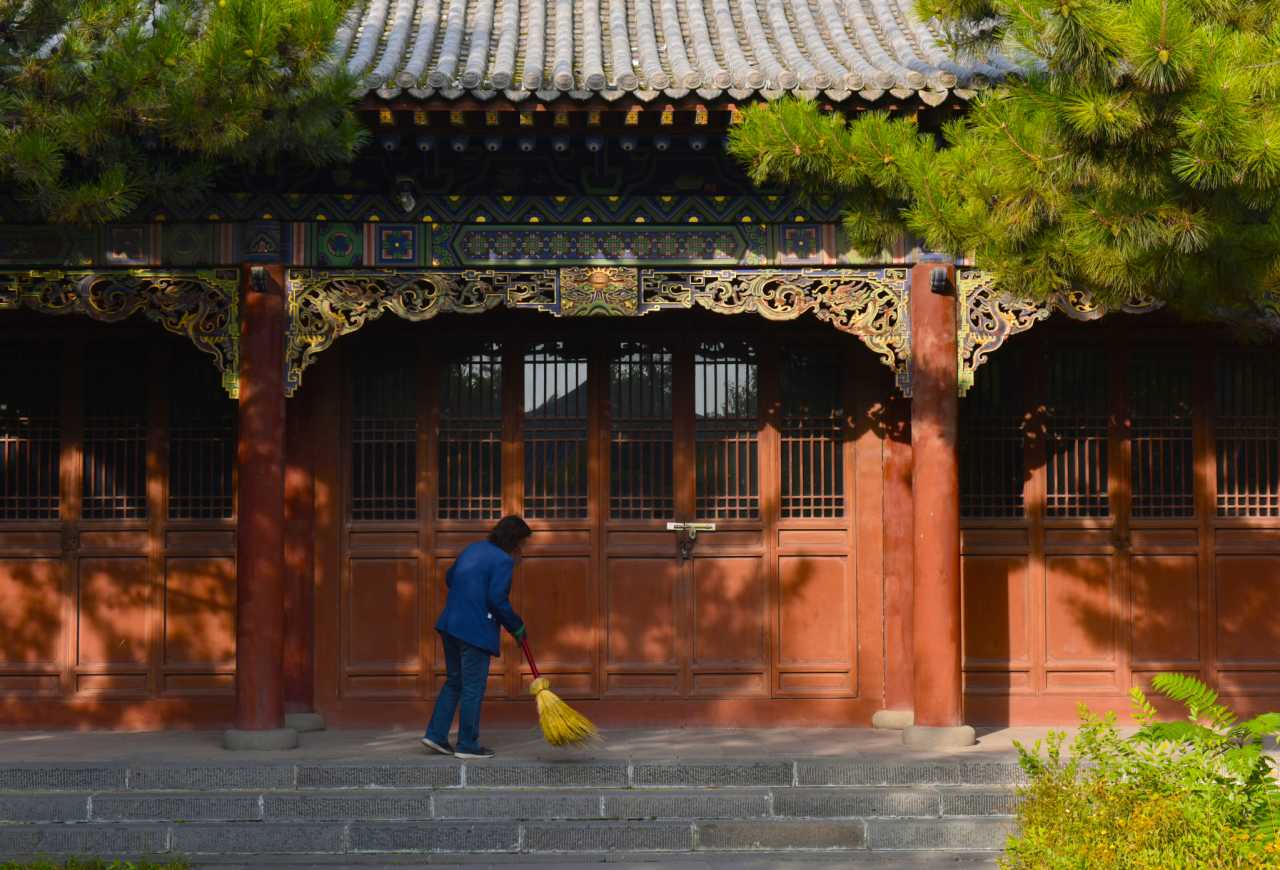 Fahua Temple
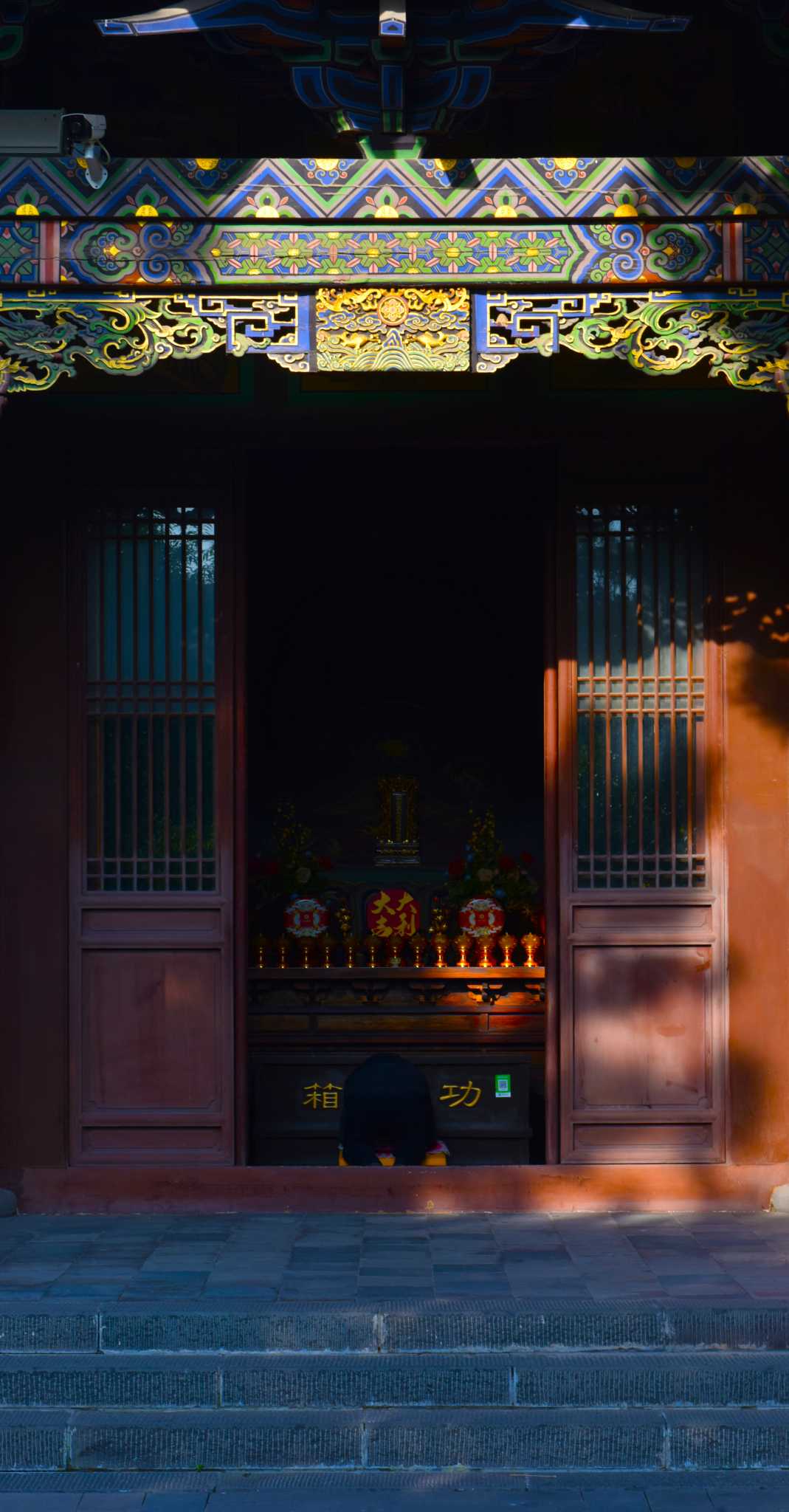 Fahua Temple
Today, Fahua Temple seemed to be holding a ritual. The words "Joy and Freedom" on the steps describe a state I also strive to reach. Joy is the delight born of non-attachment—not a greedy clinging to external things, but a pure joy arising after banishing anger and jealousy, from compassion, benefiting others, and realizing one’s true nature. Freedom is an unbound realm, untroubled by afflictions and not swayed by circumstances—an ease where the mind does not turn with conditions. The two are one: understanding that "all dharmas are without self," we let go of self-clinging and thus feel joy toward all beings; by not grasping external conditions and not being trapped by emotions, we gain ease in body and mind, finally returning to the serenity of "the ordinary mind is the Way."
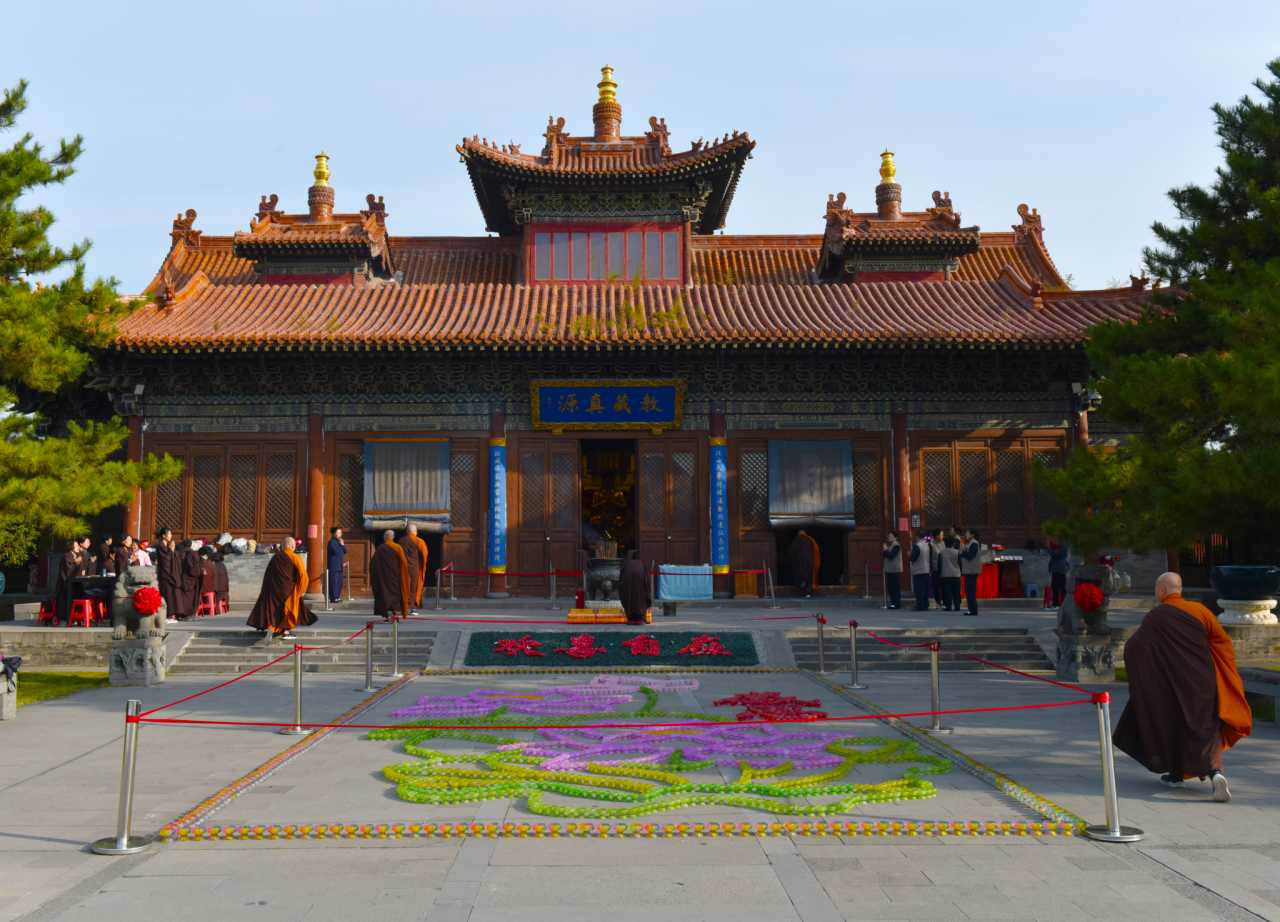 Fahua Temple
Entering the fourth courtyard of the temple, one sees a covered-bowl glazed lama pagoda from the late Yuan and early Ming. It is named Fahua Pagoda because a copy of the Lotus Sutra is stored within. According to the Daoguang Tenth Year “Gazetteer of Datong County”: "Built in the Ming, later long abandoned; the brick pagoda remains." It shows that Fahua Temple was first built in the Ming dynasty; due to the passage of time and lack of repair, the temple halls were destroyed, and only the Fahua Pagoda survived.
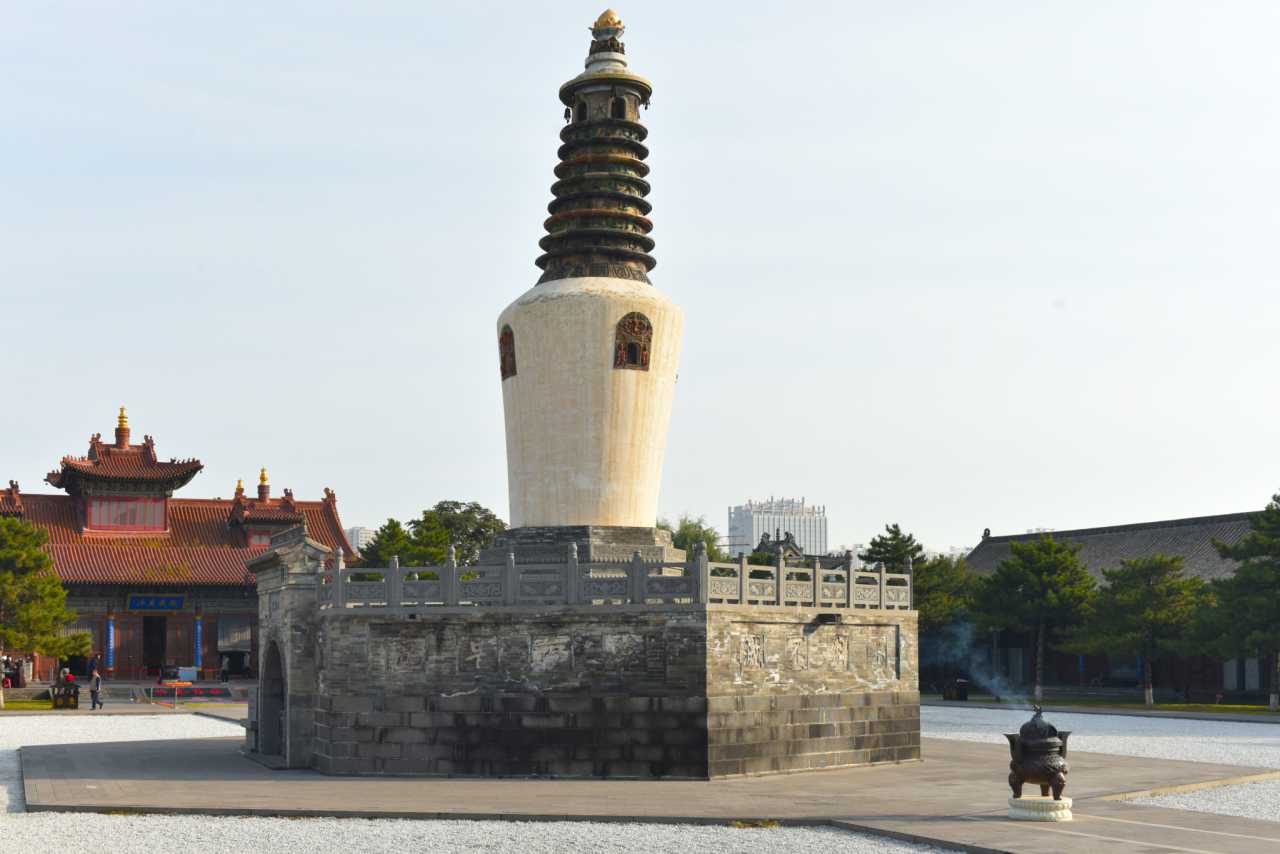 Fahua Temple
Fahua Pagoda consists of a base, body, and top, and stands upon a hexagonal platform. The pedestal is a two-tiered, constricted-waist octagonal Sumeru base; the pagoda body is bottle-shaped, with a small window on each of its four sides. Above each window’s upper corners stands a pair of brick-carved Vajra guardians, surrounded by colored ribbons and auspicious clouds. The upper part of the body is inlaid with eight tiers of yellow, green, and purple round glazed eaves. The set of eight "wheels" stacks heaven and earth disks, crowned by a gilded copper upturned lotus and a jewel finial, forming an elegant and harmonious composition.
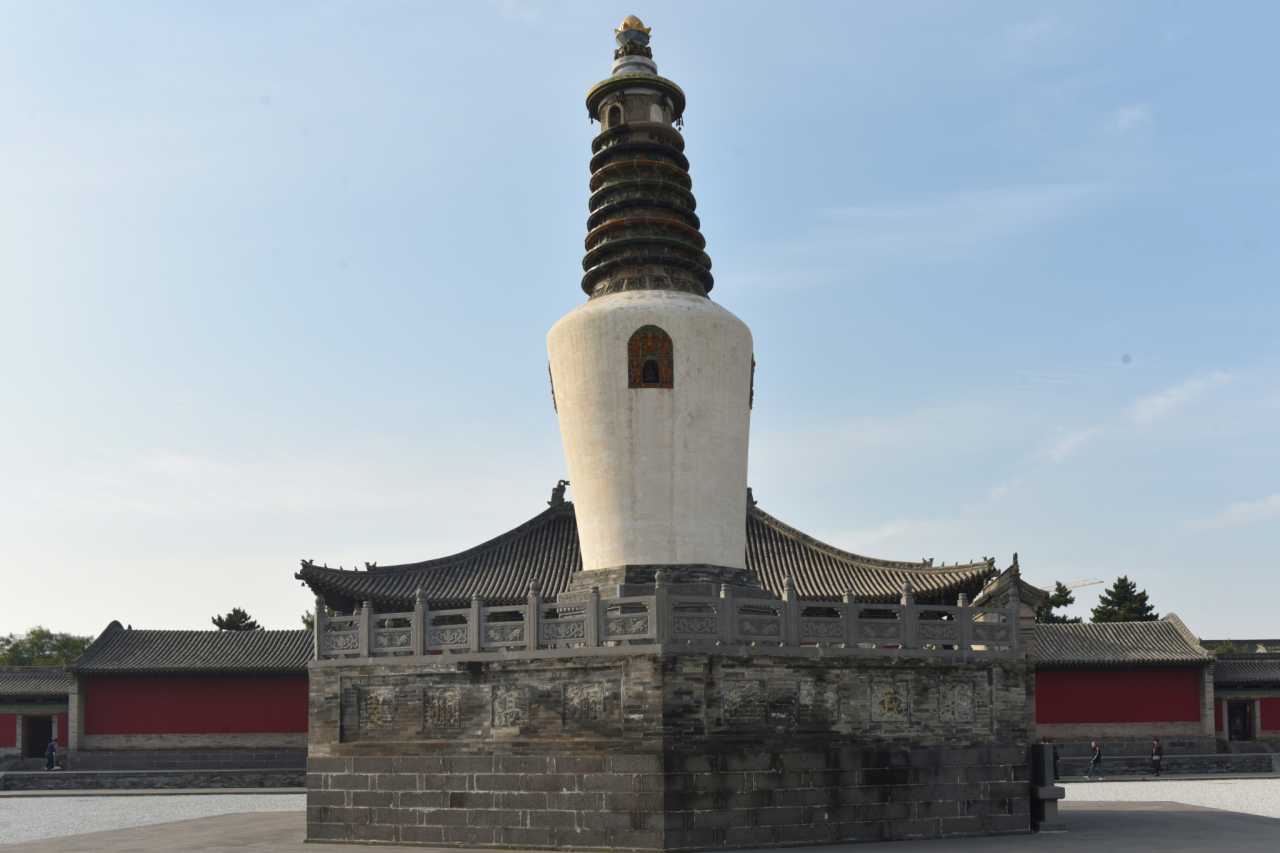 Fahua Temple
Confucian Temple: An Overlooked Existence
At 3 p.m., the Datong ancient city is packed with visitors, yet the Confucian Temple becomes a peaceful haven amid the bustle. It’s a pity, because its predecessor was the first Confucian Temple outside Confucius’s hometown, built in the Northern Wei Tahe era, opening the precedent for building Confucian Temples across China and the world. Even though this is no longer the original temple, the Hall of Great Achievement and the Wild Goose Pagoda have been preserved.
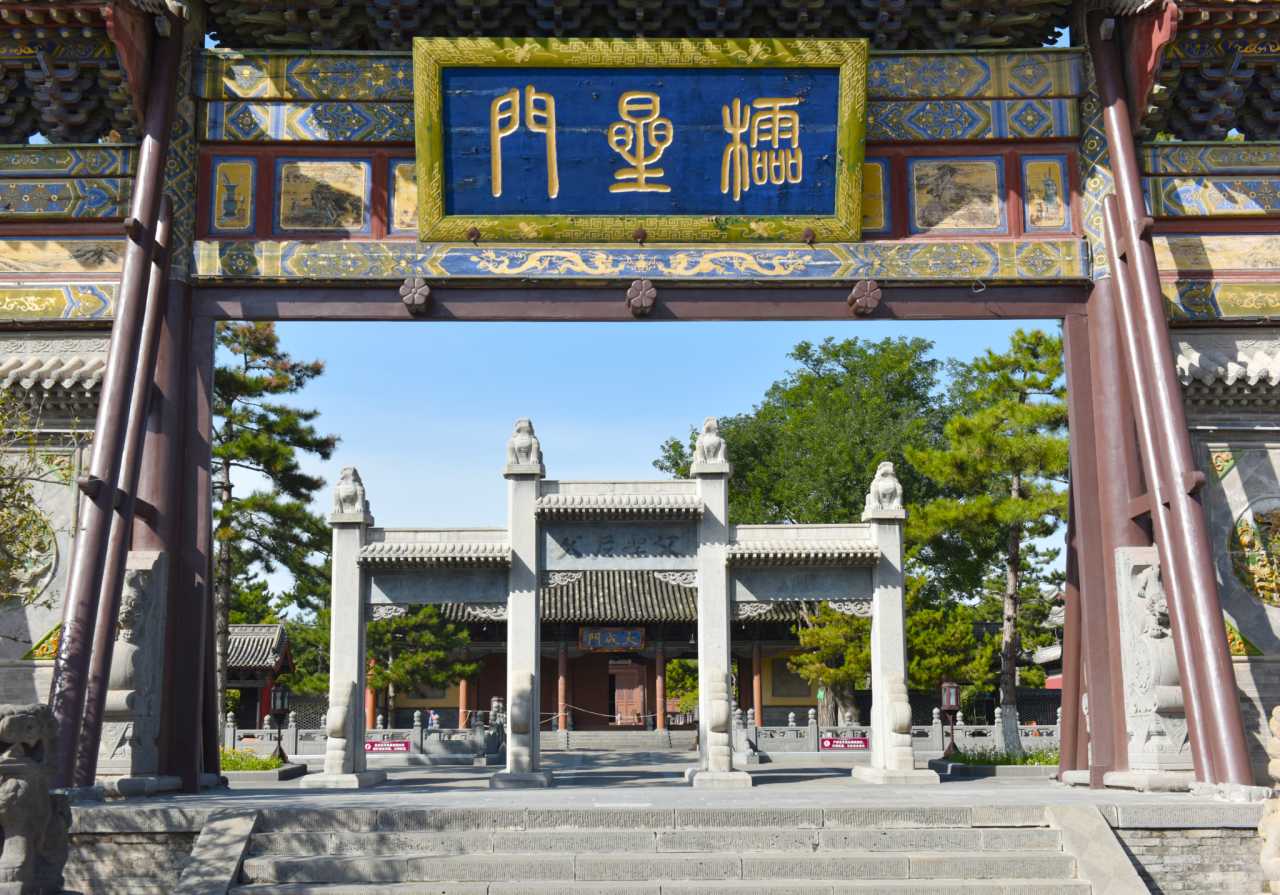 Confucian Temple
The continued preservation of the Hall of Great Achievement owes much to Prince Dai Zhu Gui. In the 29th year of Hongwu, Zhu Gui was enfeoffed in Datong and immediately took a liking to the geomantic treasure land in Datong’s northeast—having served successively as a Northern Wei State Temple, Liao Western Capital Guozijian, Jin Imperial Academy, Yuan County School, and Ming Prefecture School. He planned to expand it into the Dai Prince’s Palace "for sons and grandsons to enjoy forever." Interestingly, the ostentatious and overbearing Zhu Gui, while building a Nine-Dragon Wall surpassing Beijing’s in scale, also ordered that the "Hall of Great Achievement" and its side halls not be demolished, converting them for palace rites to Confucius and as a school for the prince’s descendants.
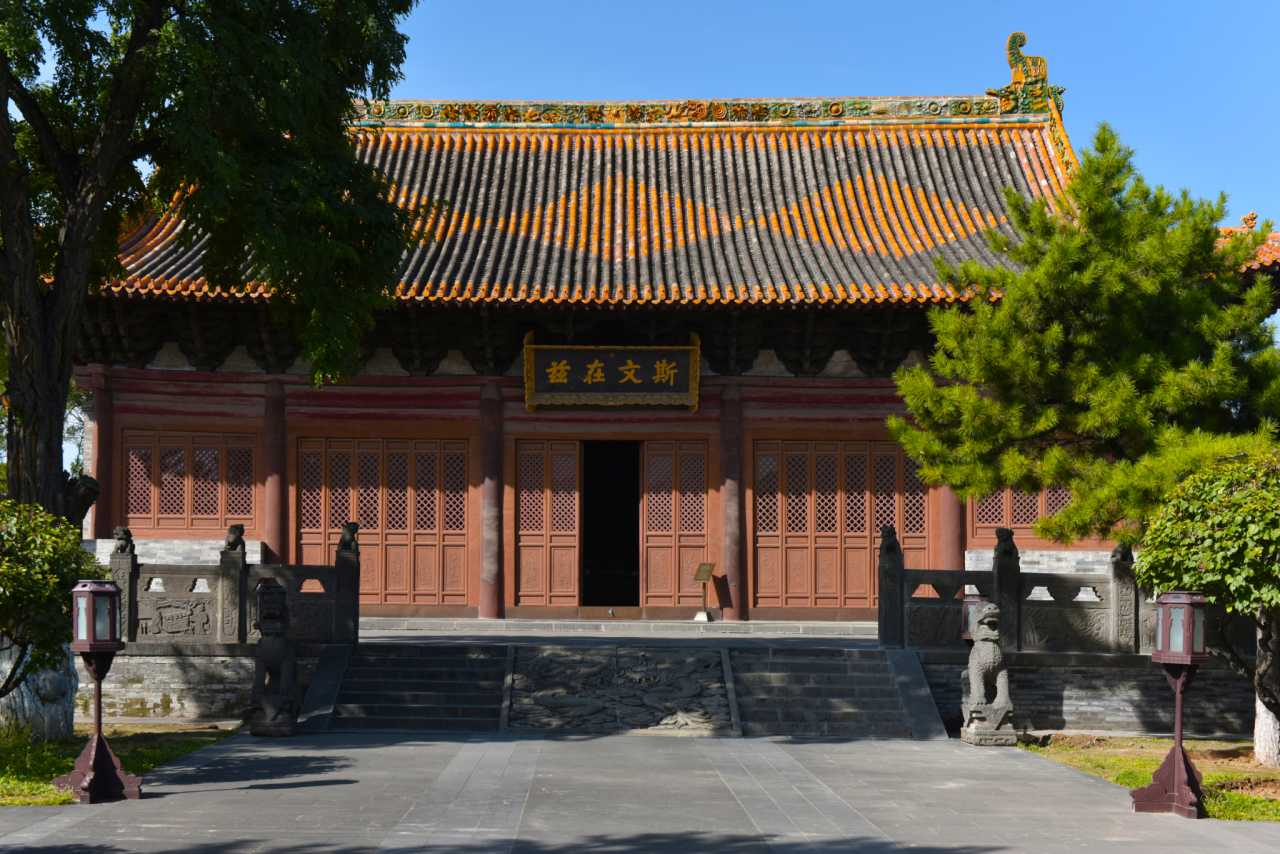 Confucian Temple
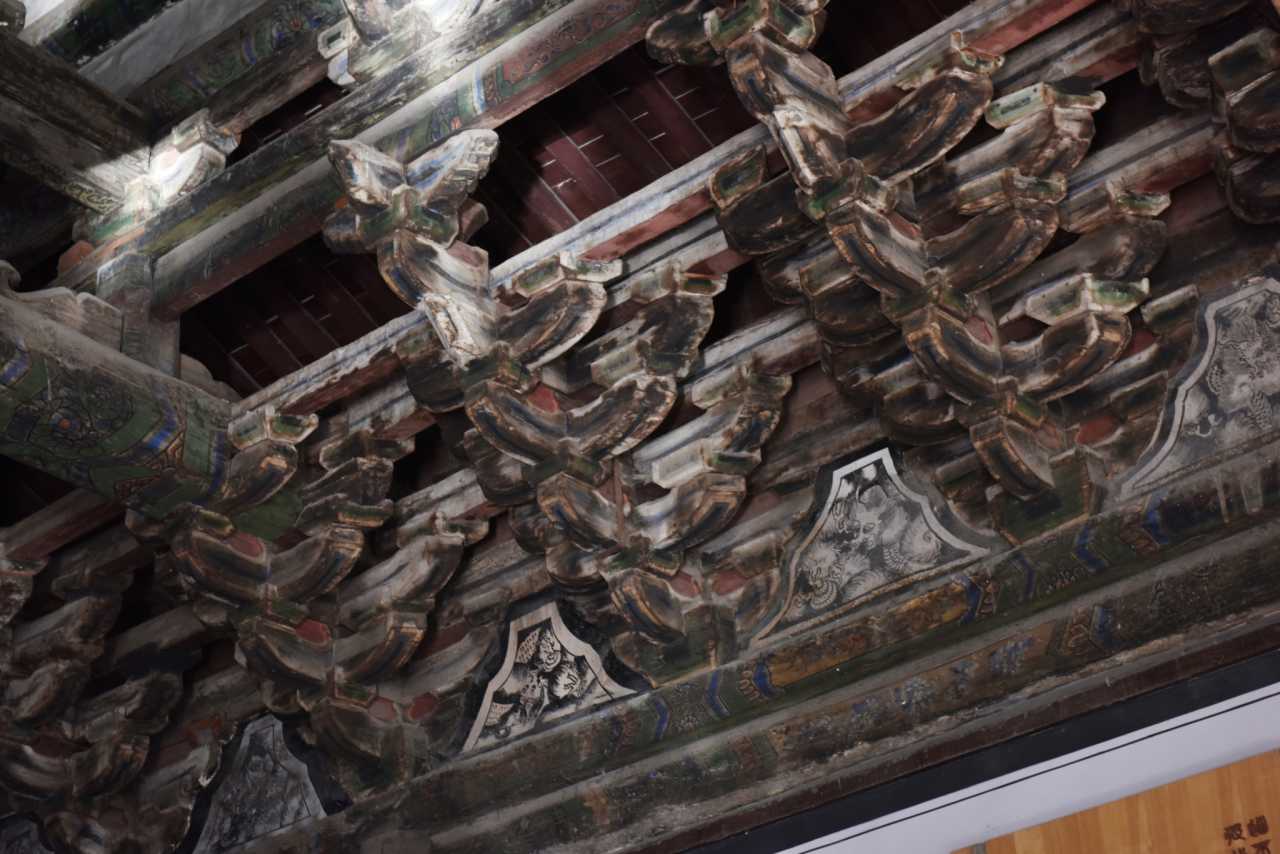
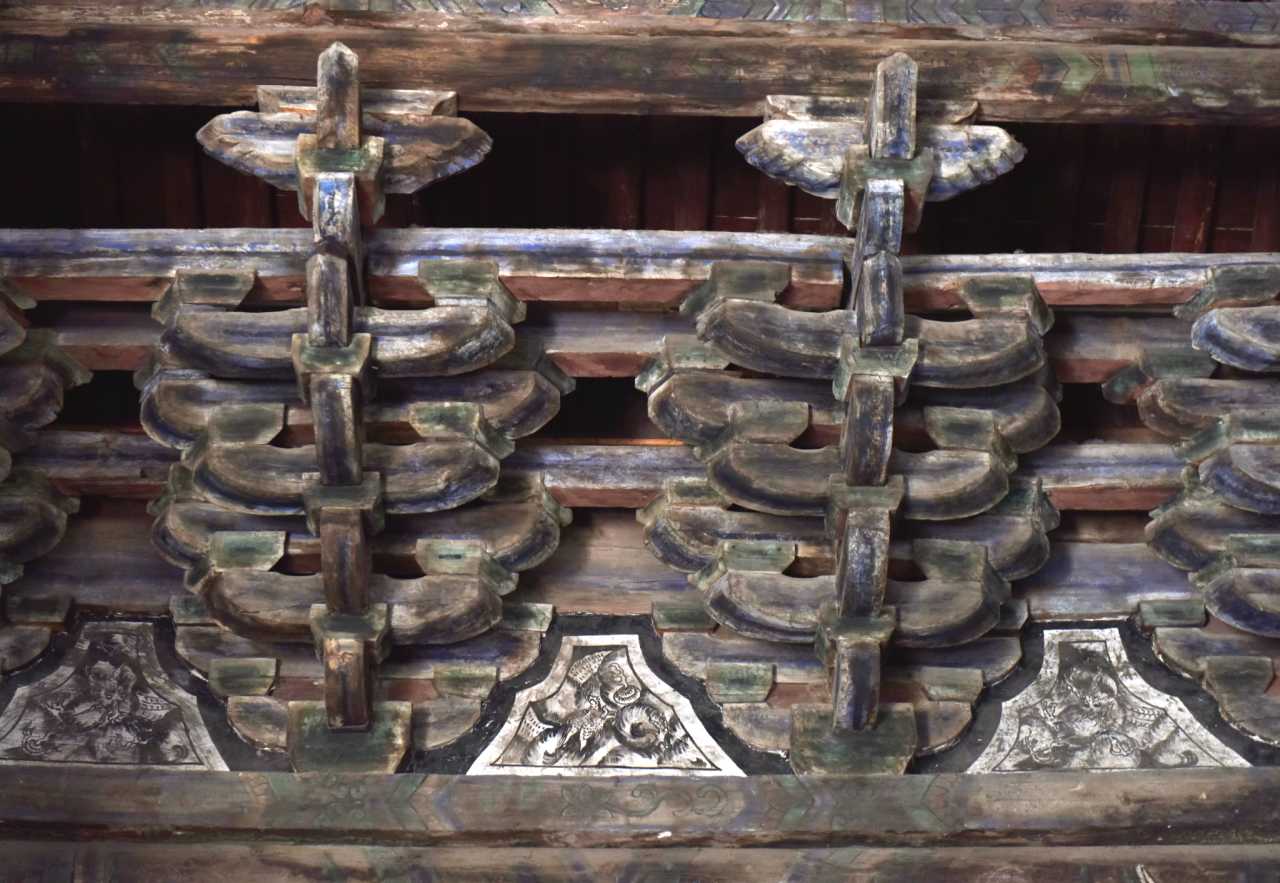
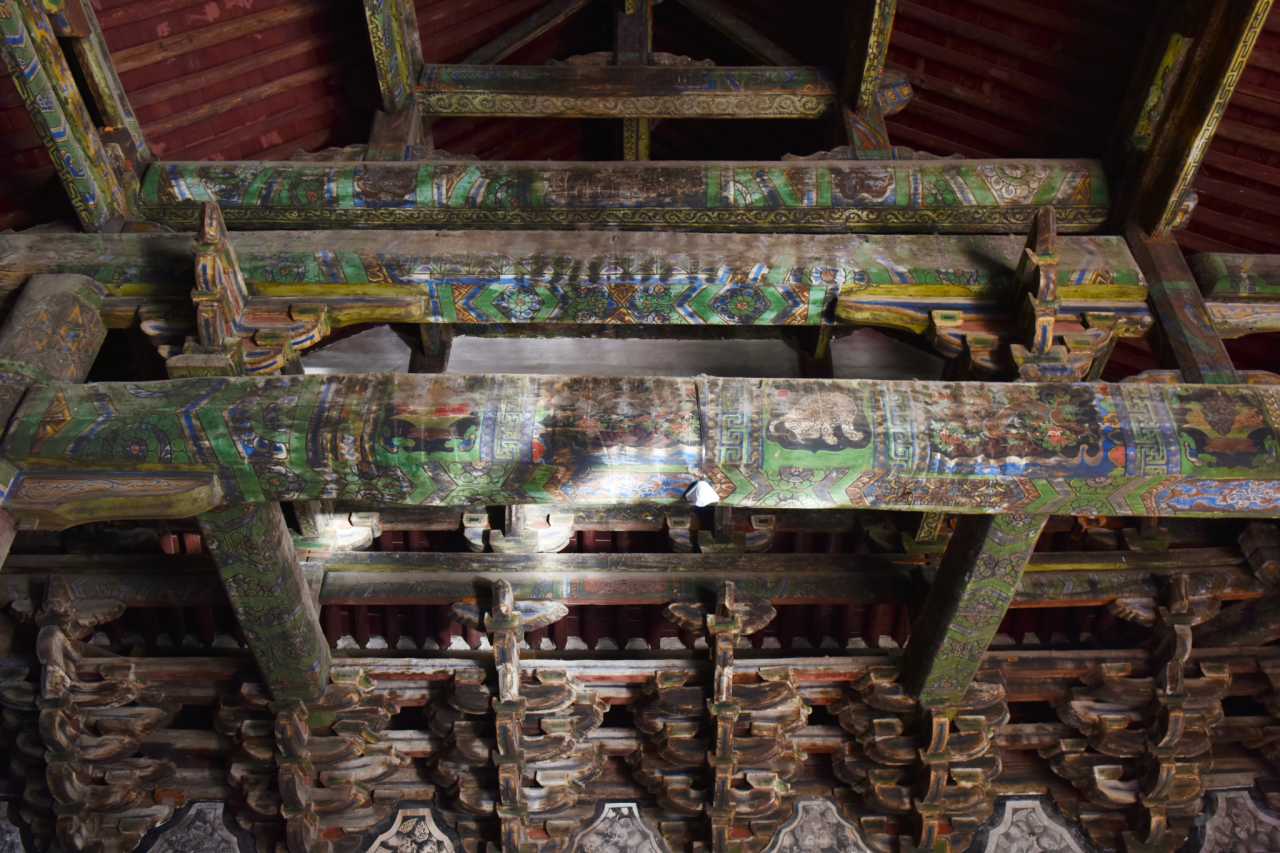
Today, above the gate of the Hall of Great Achievement hangs the plaque "Si Wen Zai Zi" (This is where culture resides), inscribed by Emperor Guangxu. The phrase has two commonly cited sources. One is from the Analects (Zi Han): "The Master, in Kuang, said: ‘Since King Wen is gone, is not culture here? If Heaven were to destroy this culture, those who died later would not share in it. Since Heaven has not destroyed the culture, what can the people of Kuang do to me?’" The meaning is that the culture of the world originates in Confucius and Confucianism, practicing the Way of culture—benevolence, righteousness, propriety, wisdom, and fidelity—‘with Heaven’s Way here; who but me?’ Another source comes from the Book of Documents: "May his descendants prosper; thus culture resides here," meaning future generations flourish, and culture rests in one’s own hands.
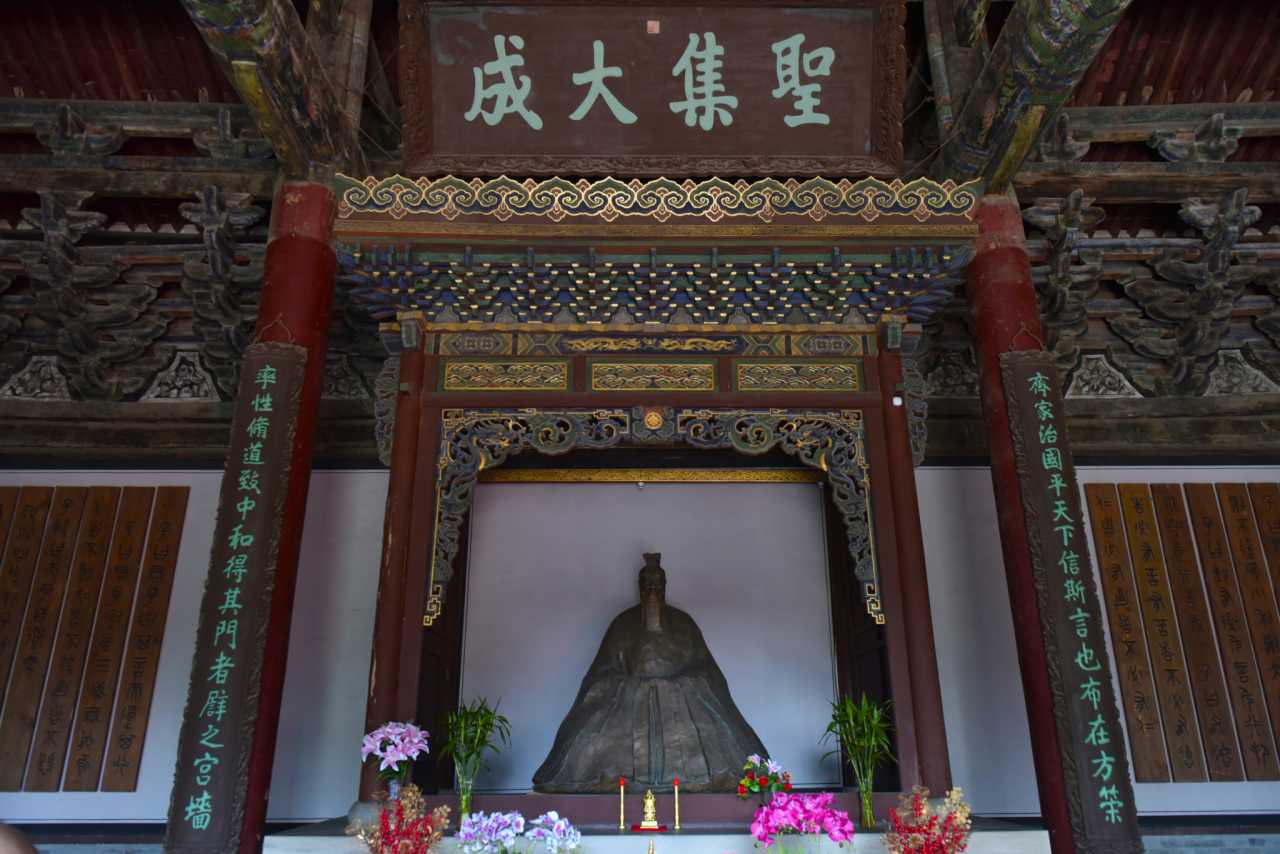 Confucian Temple
Entering the hall, I bowed three times toward Confucius’s seated statue and carefully recited the couplet on the pillar sides: "To order the family, govern the state, and pacify the world—trust these words recorded in the classics; By following one’s nature, cultivating the Way, and achieving harmony—those who gain the gate are like palace walls." The upper line adapts the doctrine from the Great Learning—"self-cultivation, ordering the family, governing the state, pacifying the world"—and emphasizes Confucius’s teachings on personal ethics, household governance, state administration, and universal peace. The lower line references the Doctrine of the Mean—"What Heaven decrees is called nature; following nature is called the Way; cultivating the Way is called teaching"—and the anecdote of Zigong comparing Confucius’s learning to high palace walls, praising the depth and subtlety of Confucian thought.
 Confucian Temple
 Confucian Temple
 Confucian Temple
 Confucian Temple
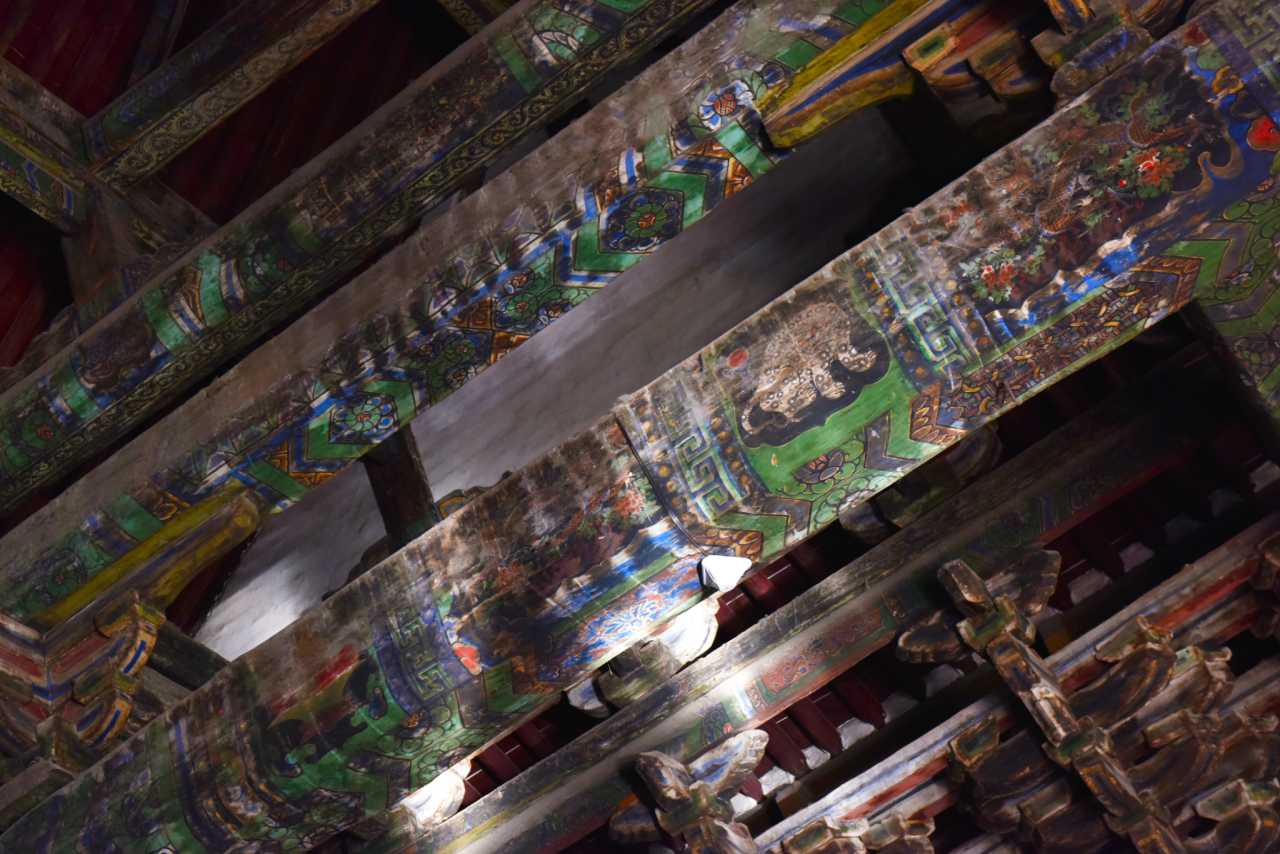 Confucian Temple
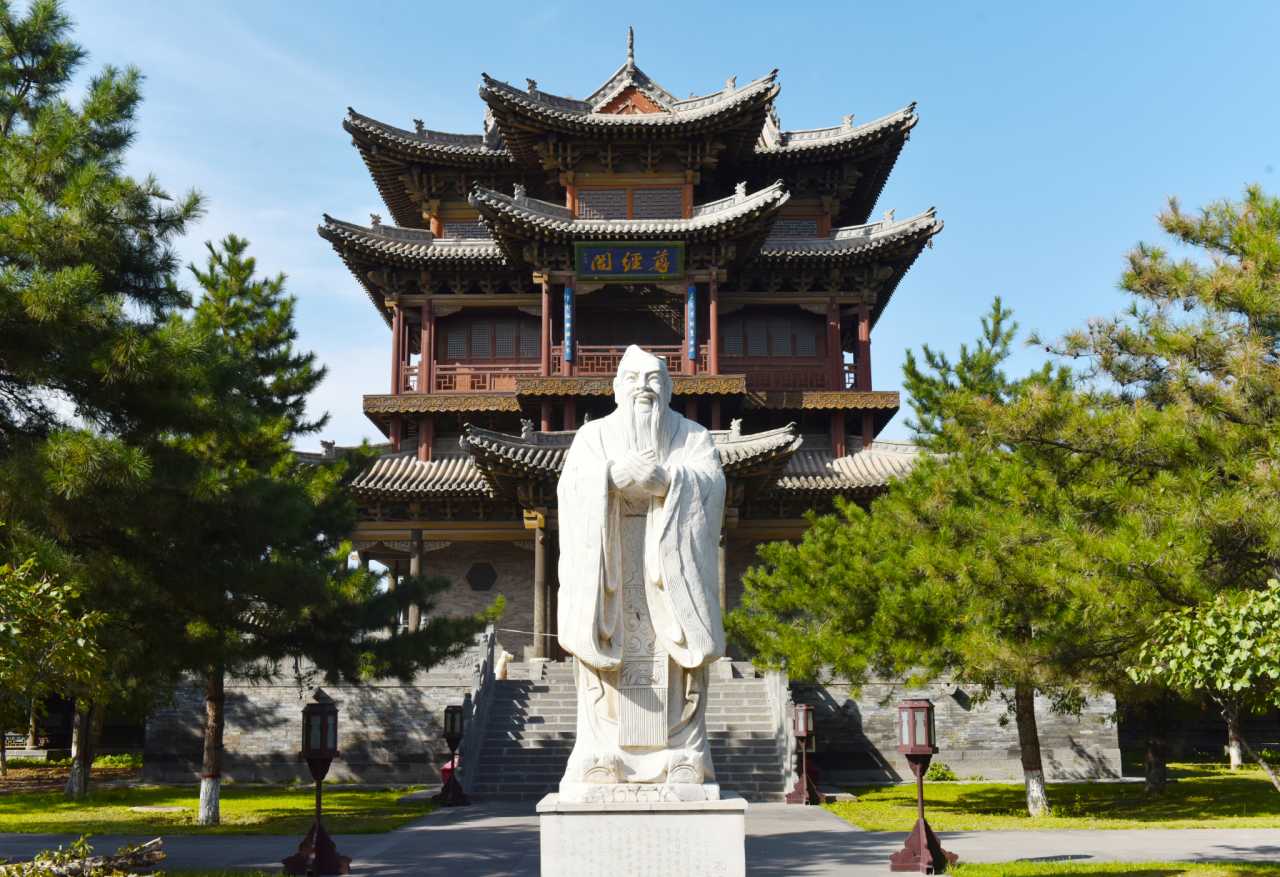 Confucian Temple
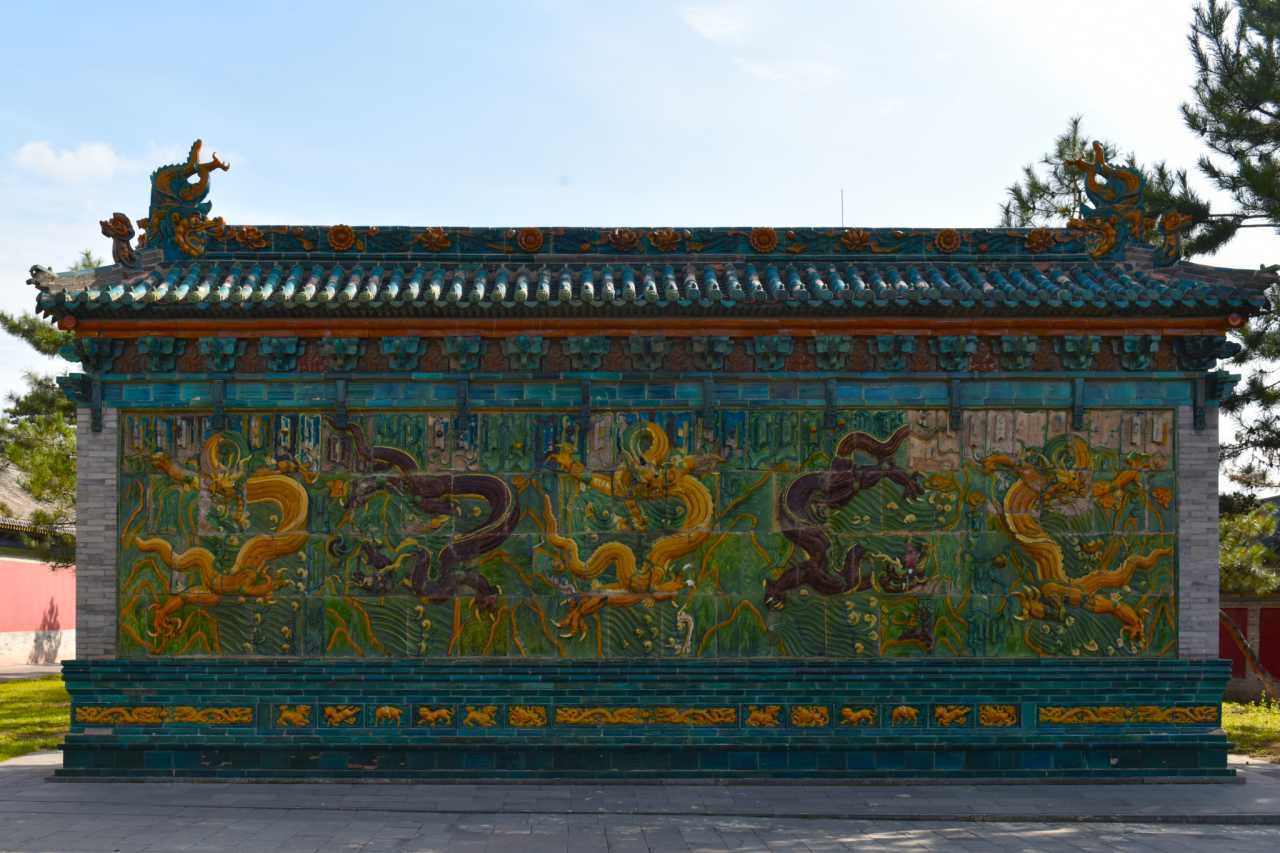 Confucian Temple
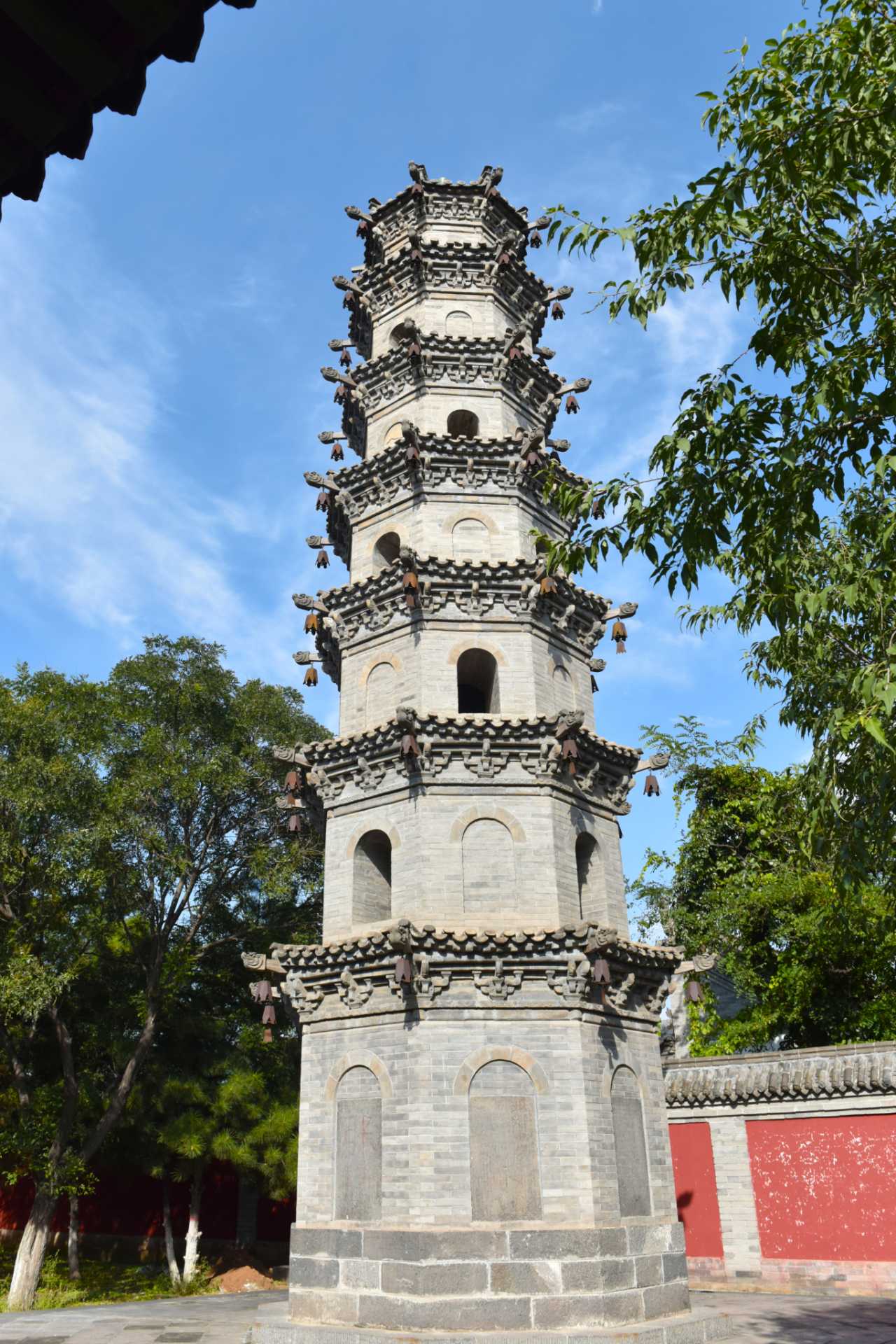 Confucian Temple
Datong Nine-Dragon Wall: I Am the Largest
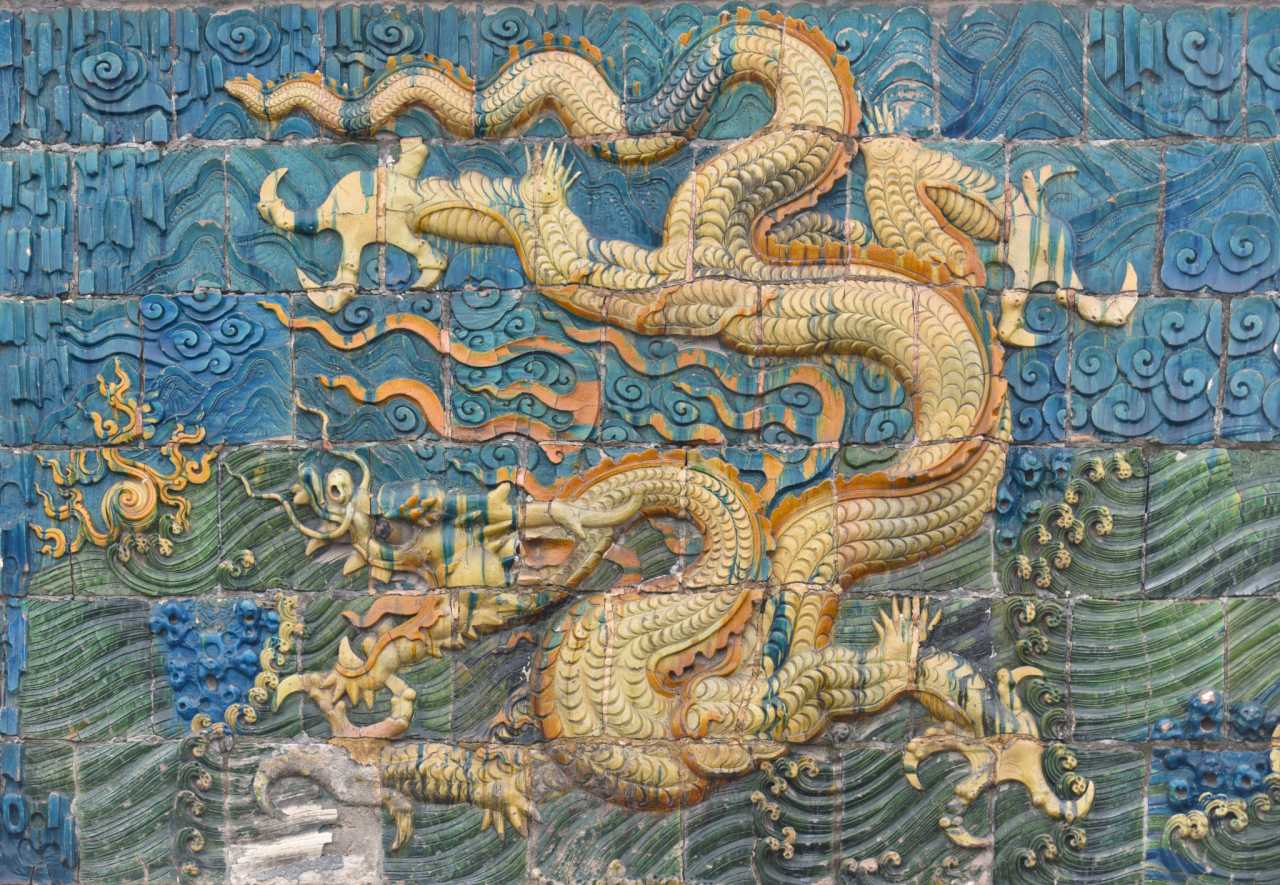
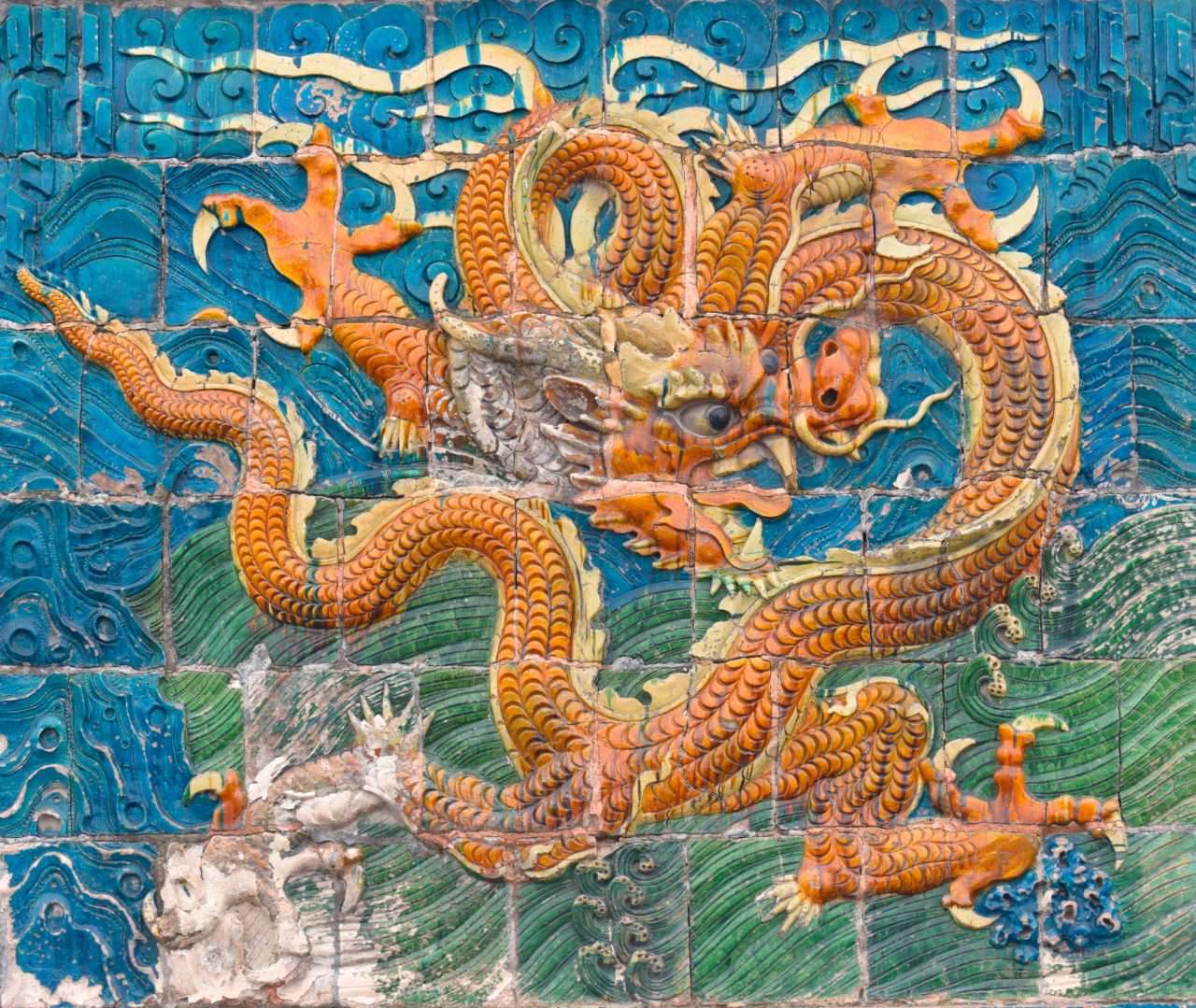
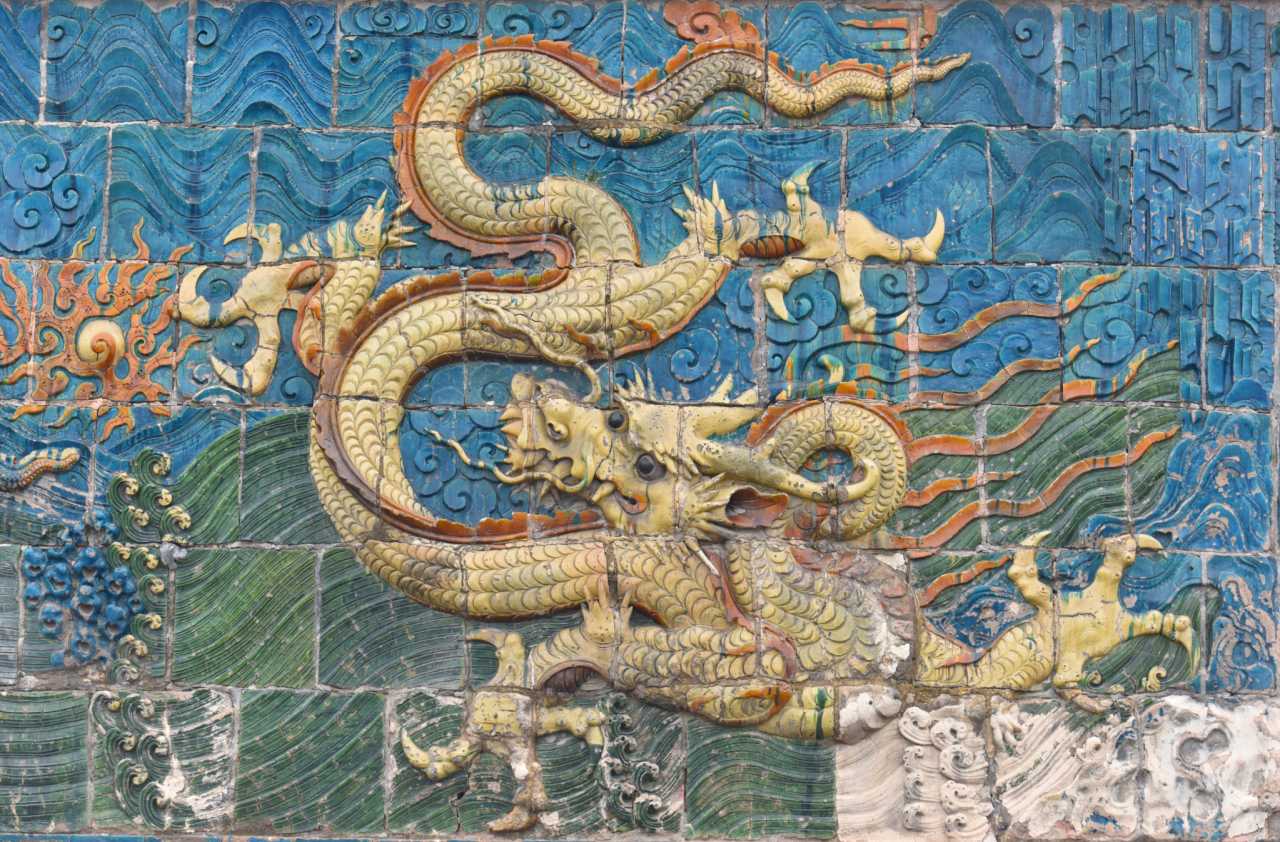
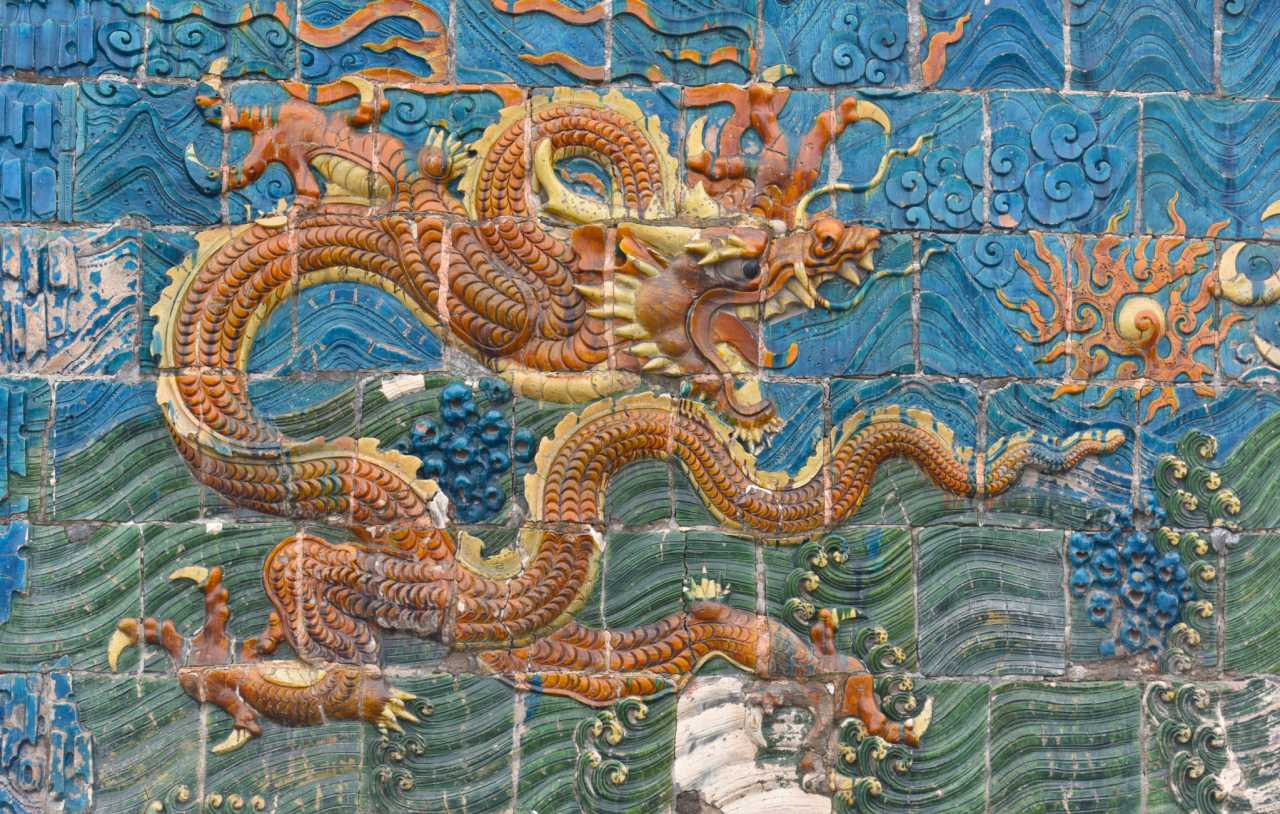
While introducing the Confucian Temple, I mentioned Prince Zhu Gui. If you know him, you’ll know he was not only debauched and brutal but also intensely jealous. Precisely due to his jealousy, China’s largest Nine-Dragon Wall found its home in Datong.
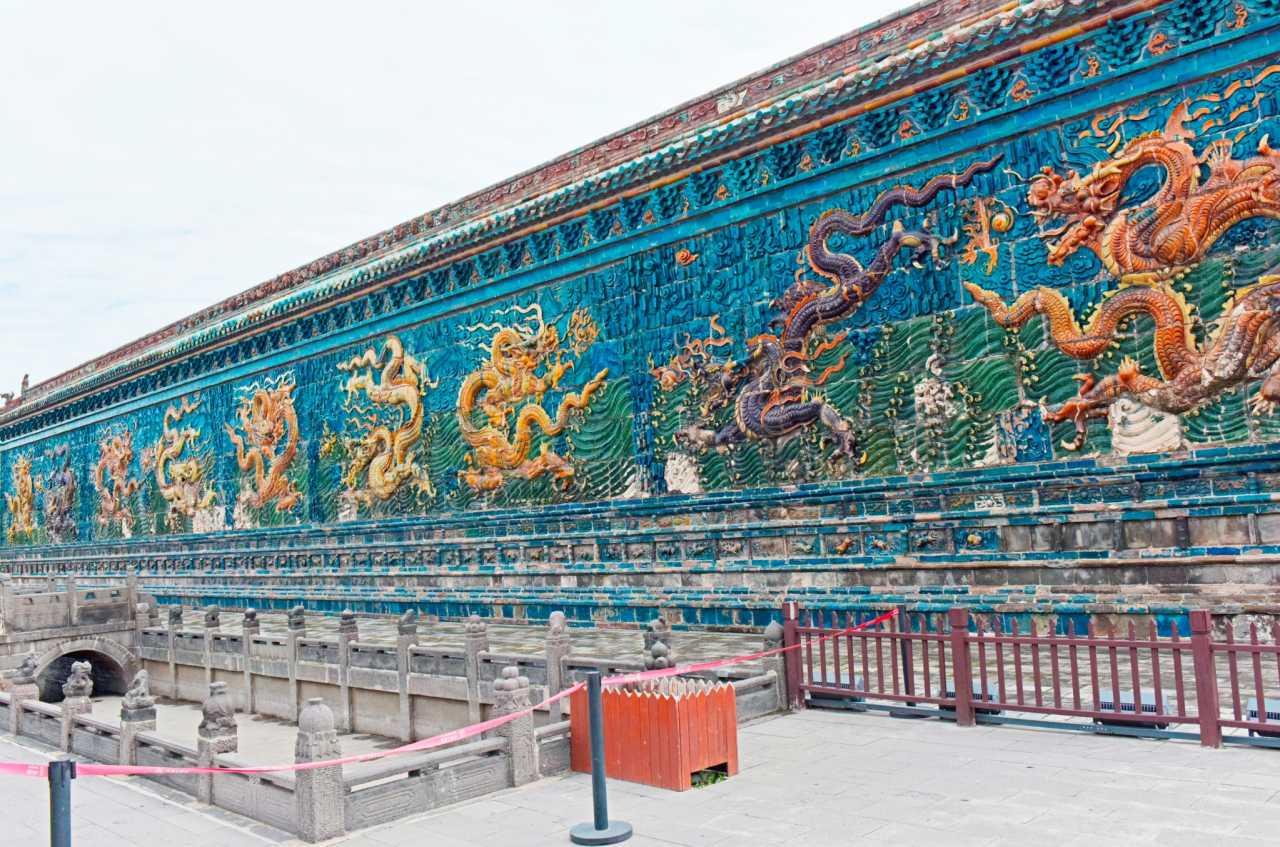 Nine-Dragon Wall
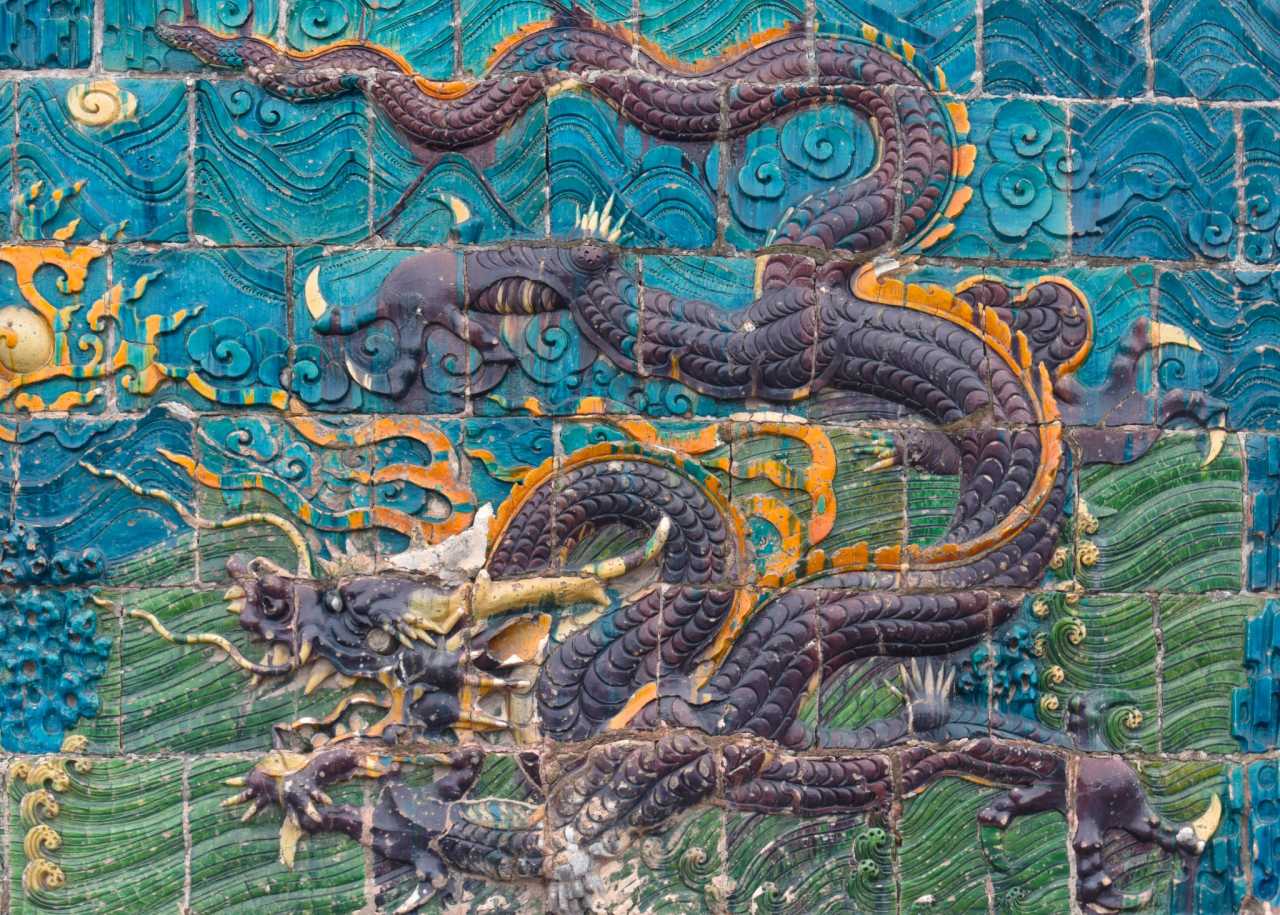
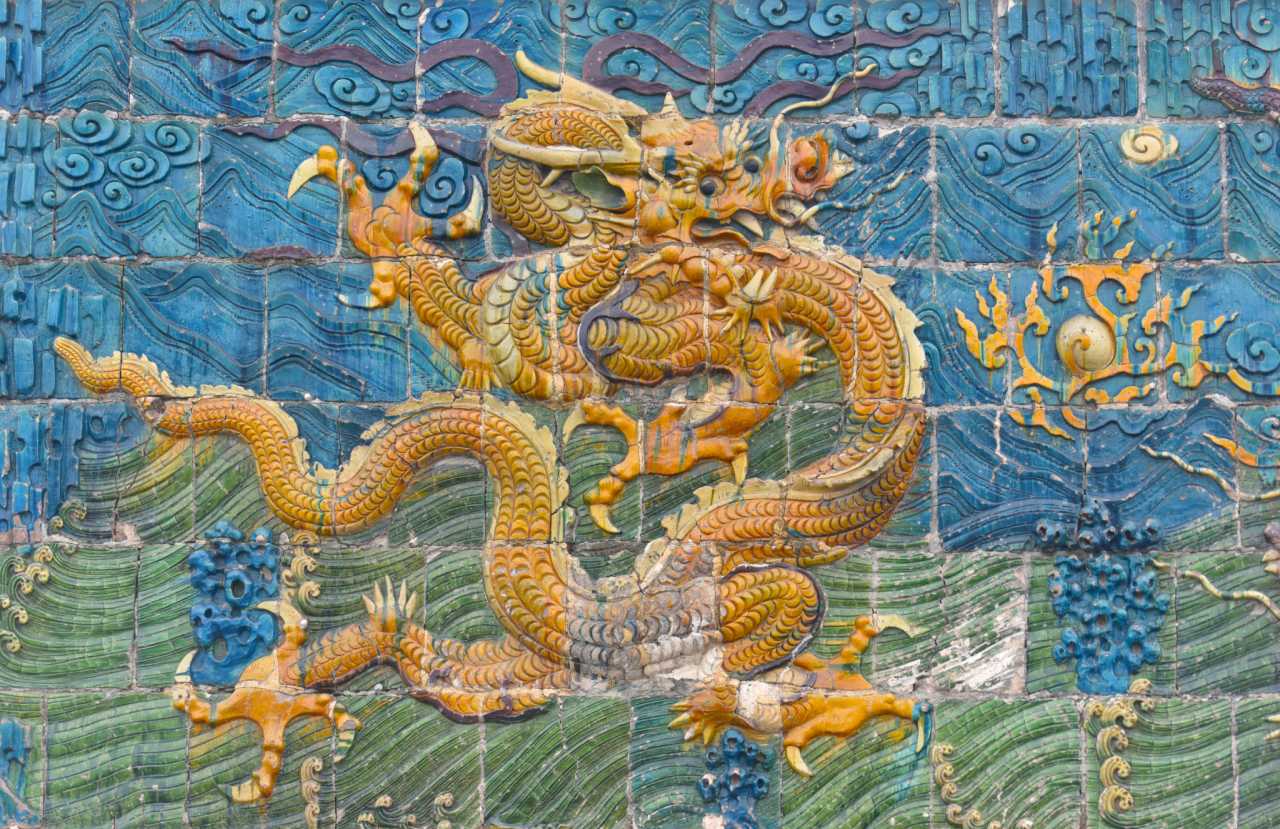
To make his Nine-Dragon Wall unparalleled, Zhu Gui demanded: "Its length, width, and thickness must each be increased by two chi, and the dragons must move!" Confronted with this "unreasonable demand," craftsmen spent three years firing 426 glazed components and, by innovating a combination of high relief and piercing, made the still dragons vivid—as if soaring across the sky.
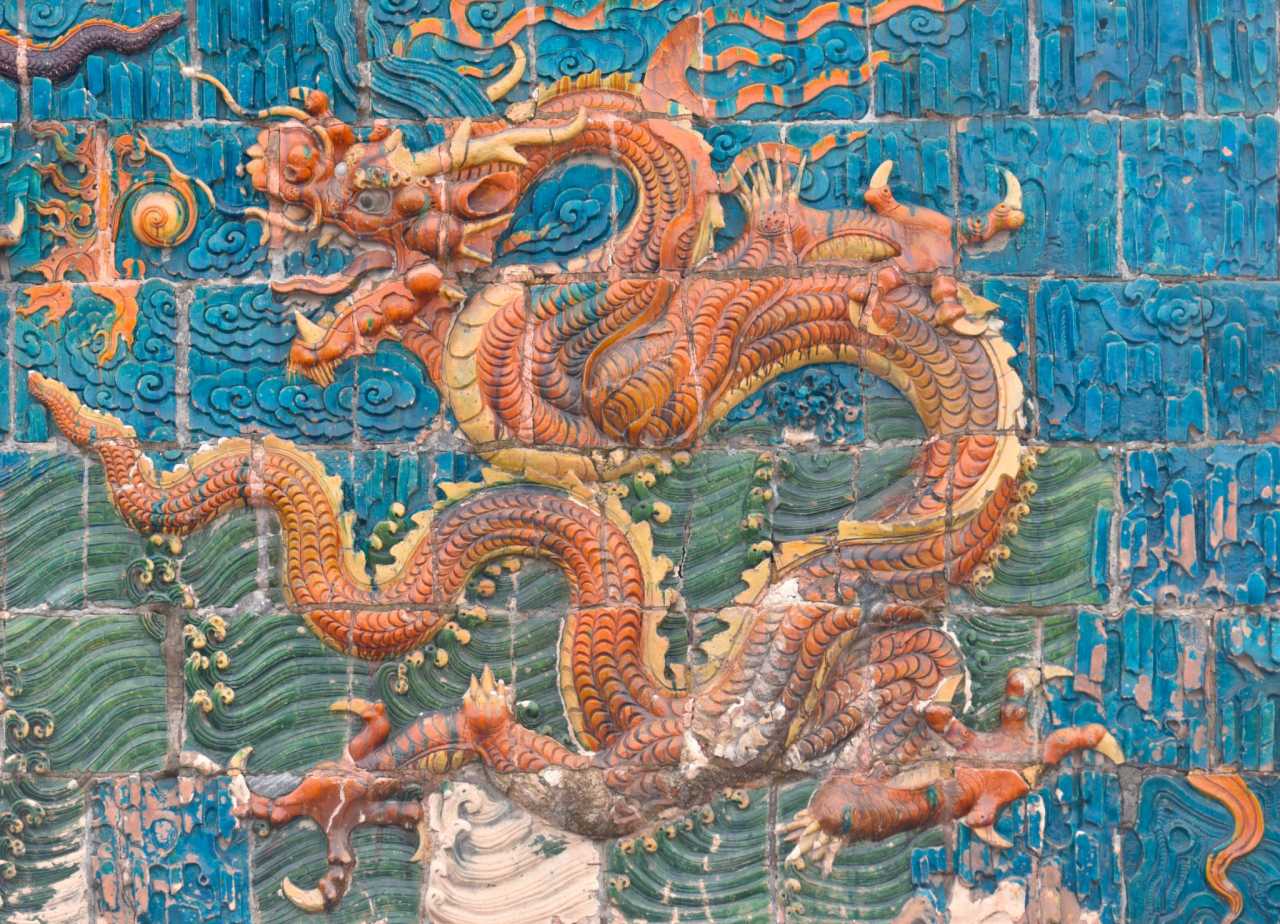 Nine-Dragon Wall
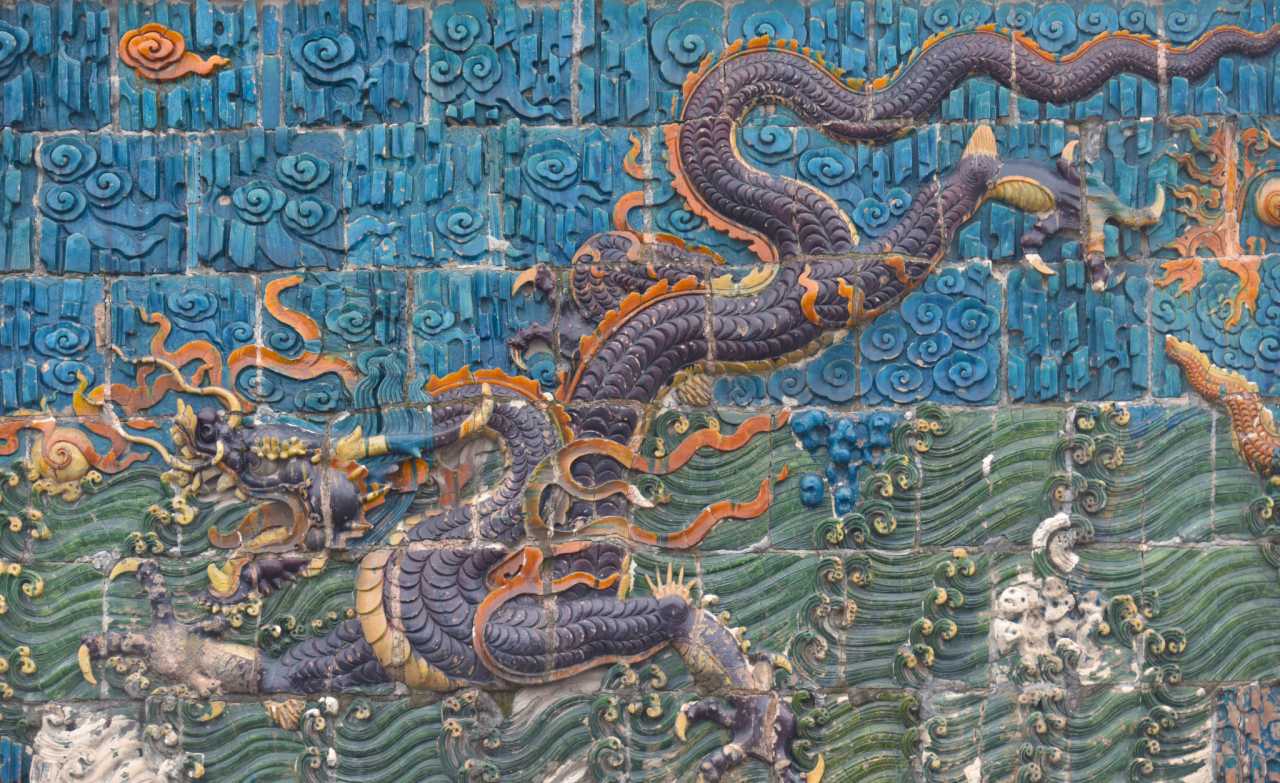 Nine-Dragon Wall
Although this Nine-Dragon Wall is the largest among China’s surviving ones, the dragons sculpted have only four claws (five claws were exclusive to emperors). The height of the constricted-waist Sumeru base is also one chi lower than that of royal architecture, strictly observing the boundaries of ritual hierarchy.
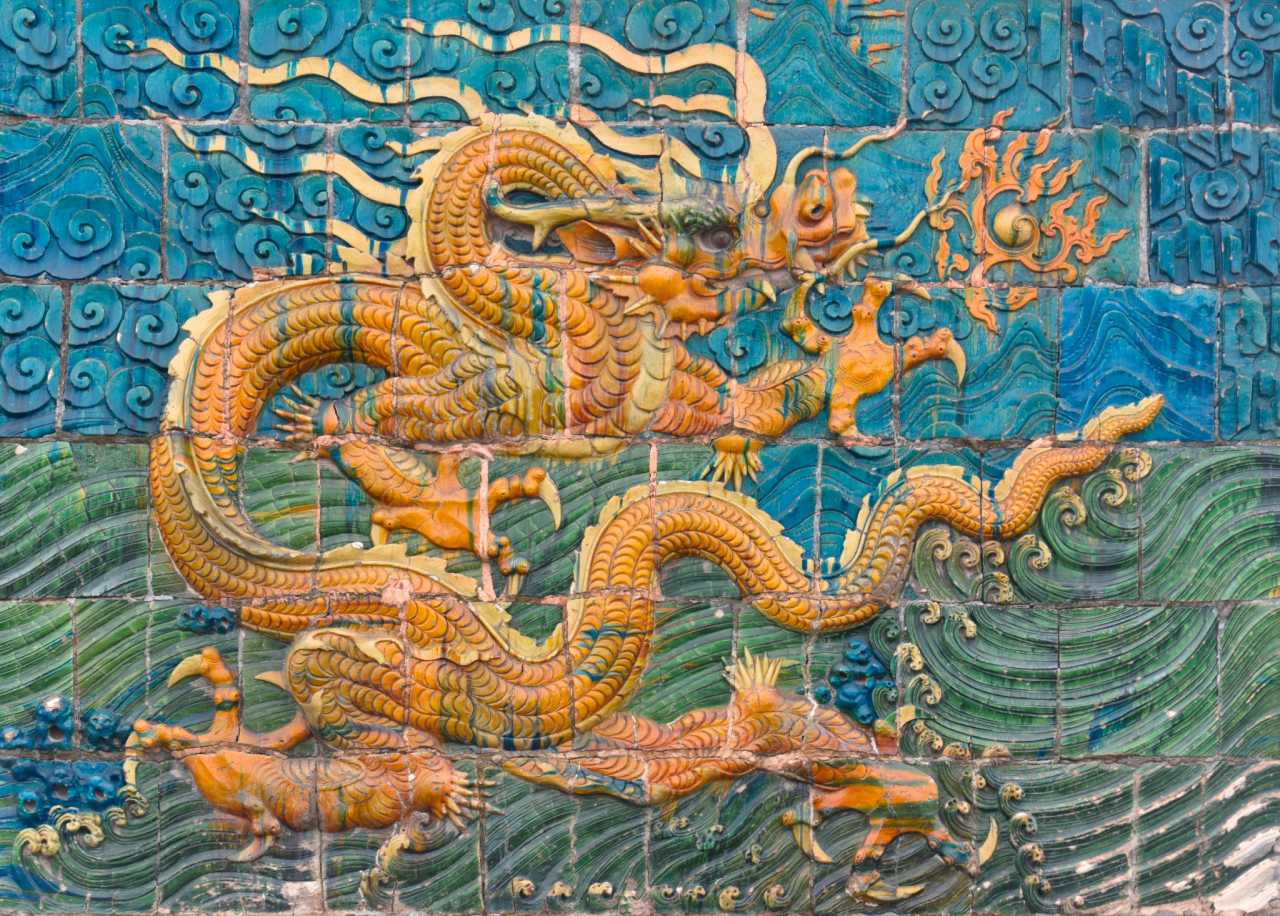 Nine-Dragon Wall
 Nine-Dragon Wall
 Nine-Dragon Wall
 Nine-Dragon Wall
 Nine-Dragon Wall
 Nine-Dragon Wall
 Nine-Dragon Wall
Datong Museum: Coming Specially for Sima Jinlong’s Lacquer Screen
"See underground Shaanxi, see above-ground Shanxi" aptly describes the strengths of both provinces. Shaanxi’s museums are astonishingly rich in collections, while Shanxi’s ancient architecture and sculpture are equally admirable. Because of this, I did not expect much from Datong Museum’s holdings, and indeed the collections are limited and true highlights are few.
 Datong Museum
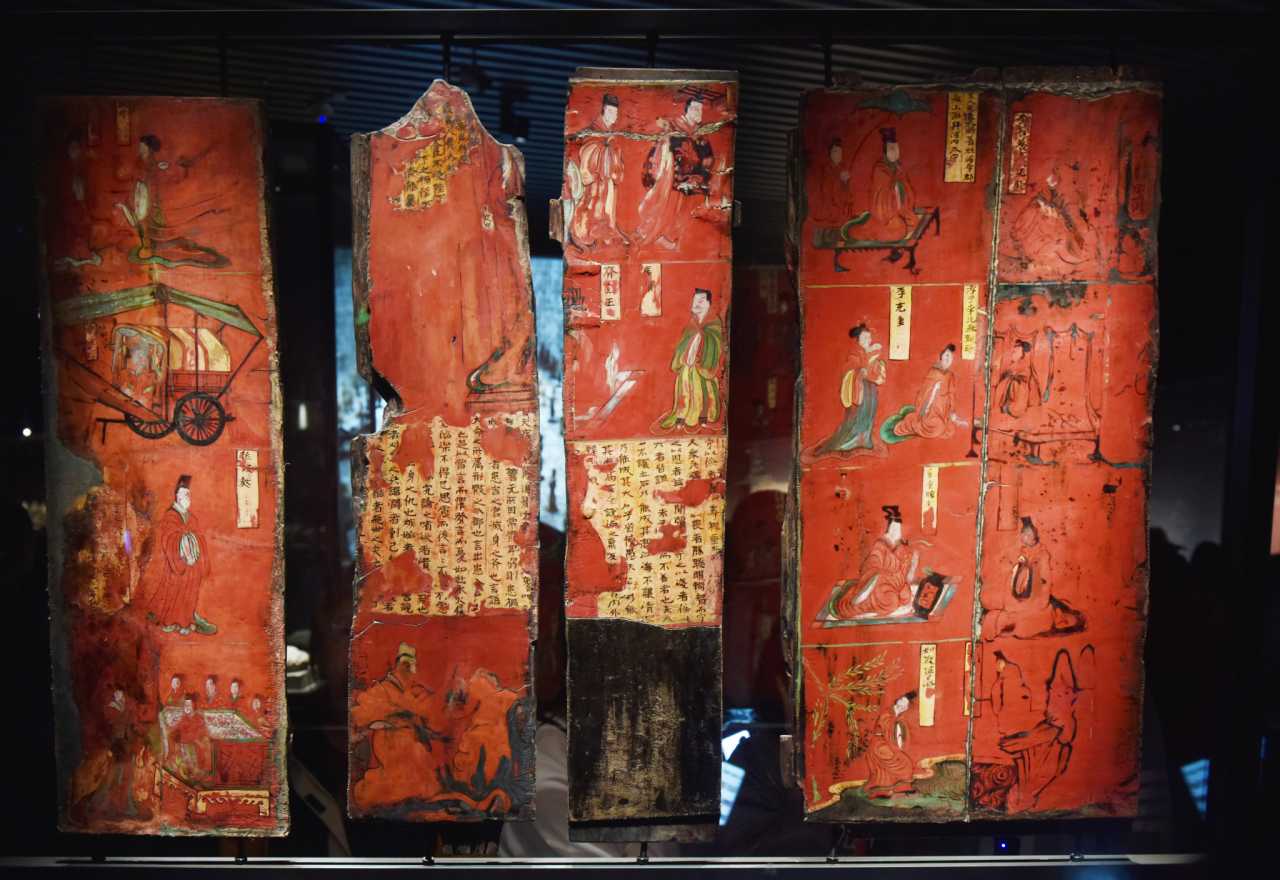
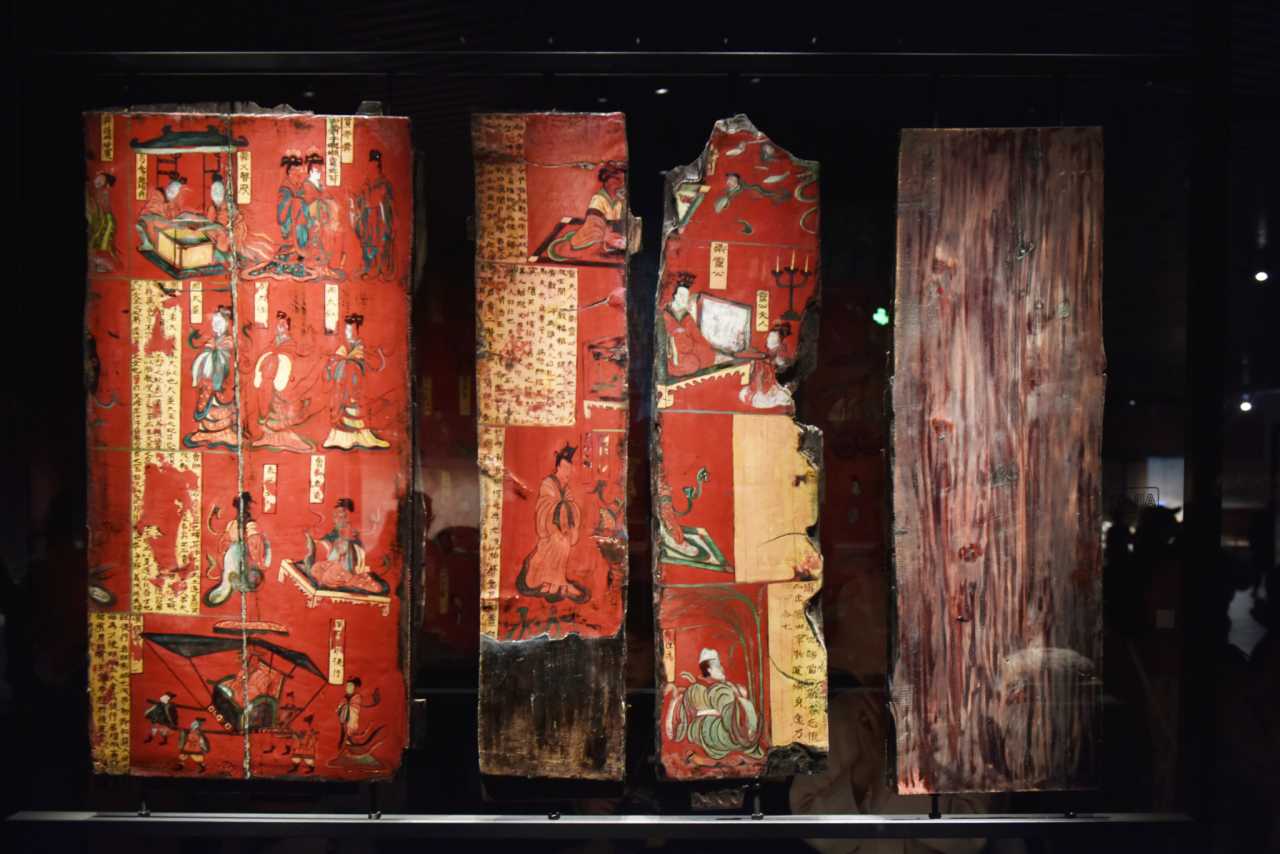
Among the few exhibits, the one that left a deep impression on me was the "Sima Jinlong lacquer-painted screen." The screen is assembled with mortise-tenon joinery, edged with painted borders, and carries paintings and inscriptions on both sides. The lacquer inscriptions and title boards are written in elegant, vigorous script; the brushwork and character forms are close to regular script—a transitional model from Jin clerical to Tang regular—making it a rare authentic example of Northern Wei calligraphy.
 Datong Museum
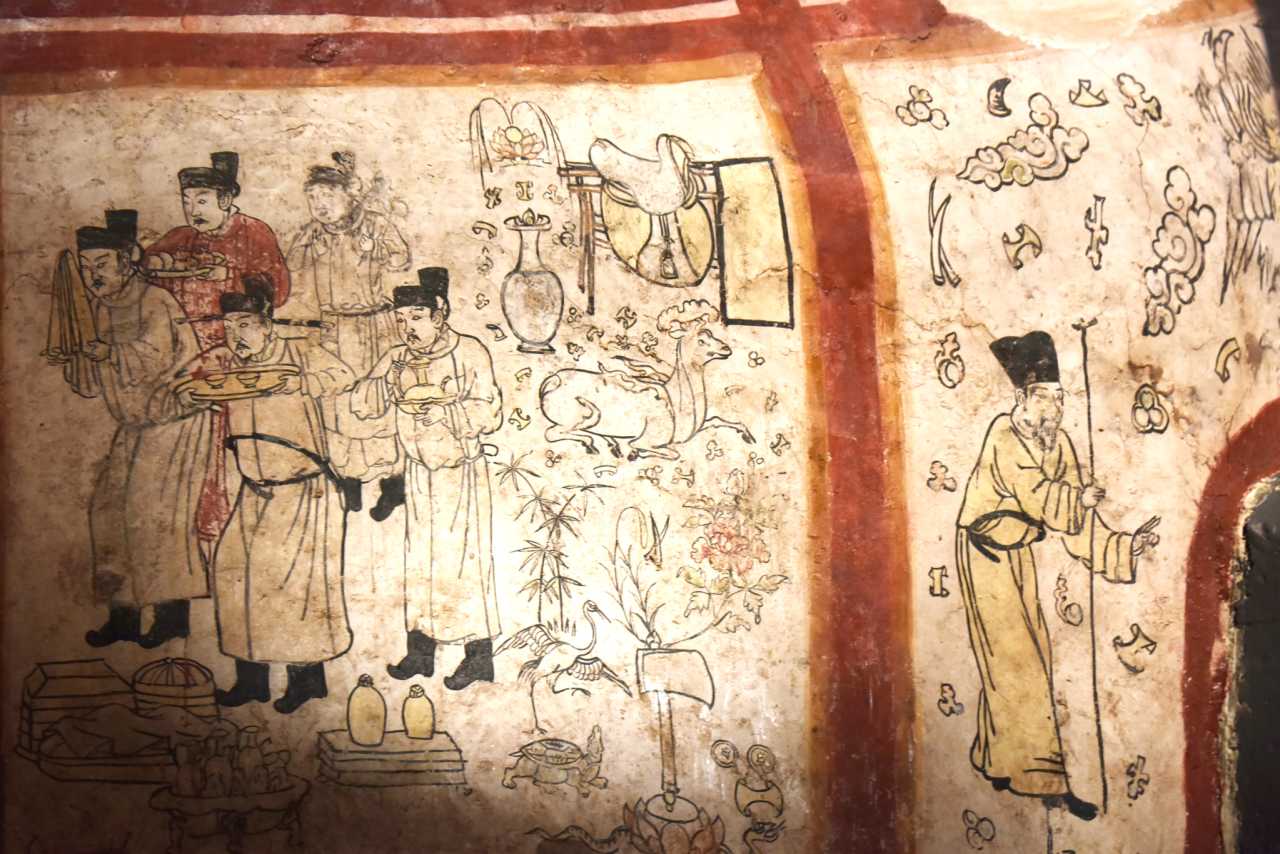
As for subject matter, since the period was when Empress Dowager Wenming held power, the painted lacquer screen mostly draws from maternal exemplars in the Biographies of Exemplary Women: Shun’s filial piety to his parents, the three empresses of Zhou, Lady Chun’s instruction of her daughter, and the Consort’s refusal of the imperial carriage—all praising the Empress Dowager Wenming.
 Datong Museum
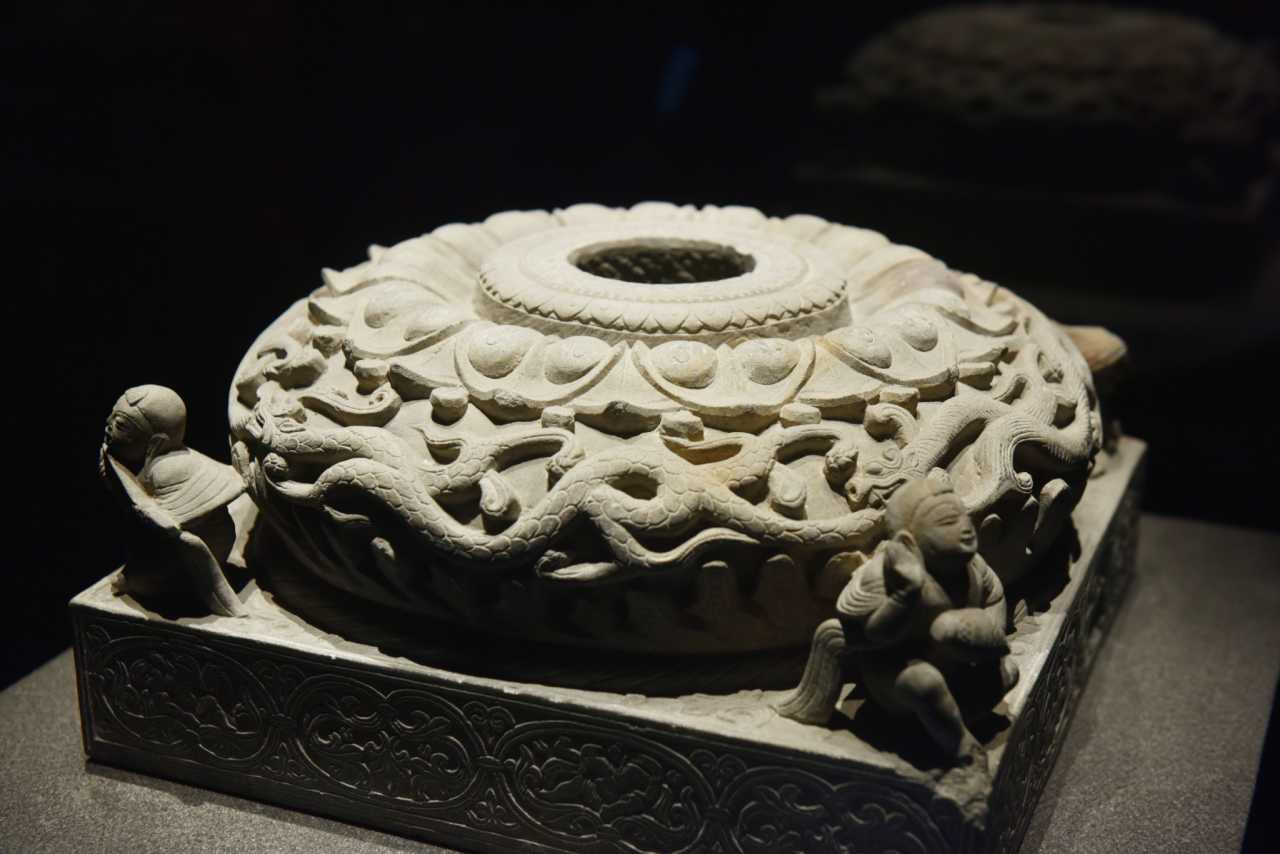
The stone-carved column base from Sima Jinlong’s Northern Wei tomb is among the finest discovered, with the highest artistic value. The base has a drum-like, basin-covered square plinth, with relief motifs in three groups: around the column hole radiate tight rope patterns, beaded patterns, and lotus petal patterns in concentric layers, culminating in a lotus form of rich, curling multi-layered petals; on the drum wall, four coiling dragons bear rope and scale textures, arrayed in a line amid auspicious clouds and layered mountains; on the four corners of the plinth are carved musicians playing a drum, waist drum, bili, and pipa. The imagery and instruments reflect cultural fusion: the musicians have strong Hu features, and both the bili and pipa came from the Western Regions.
 Datong Museum
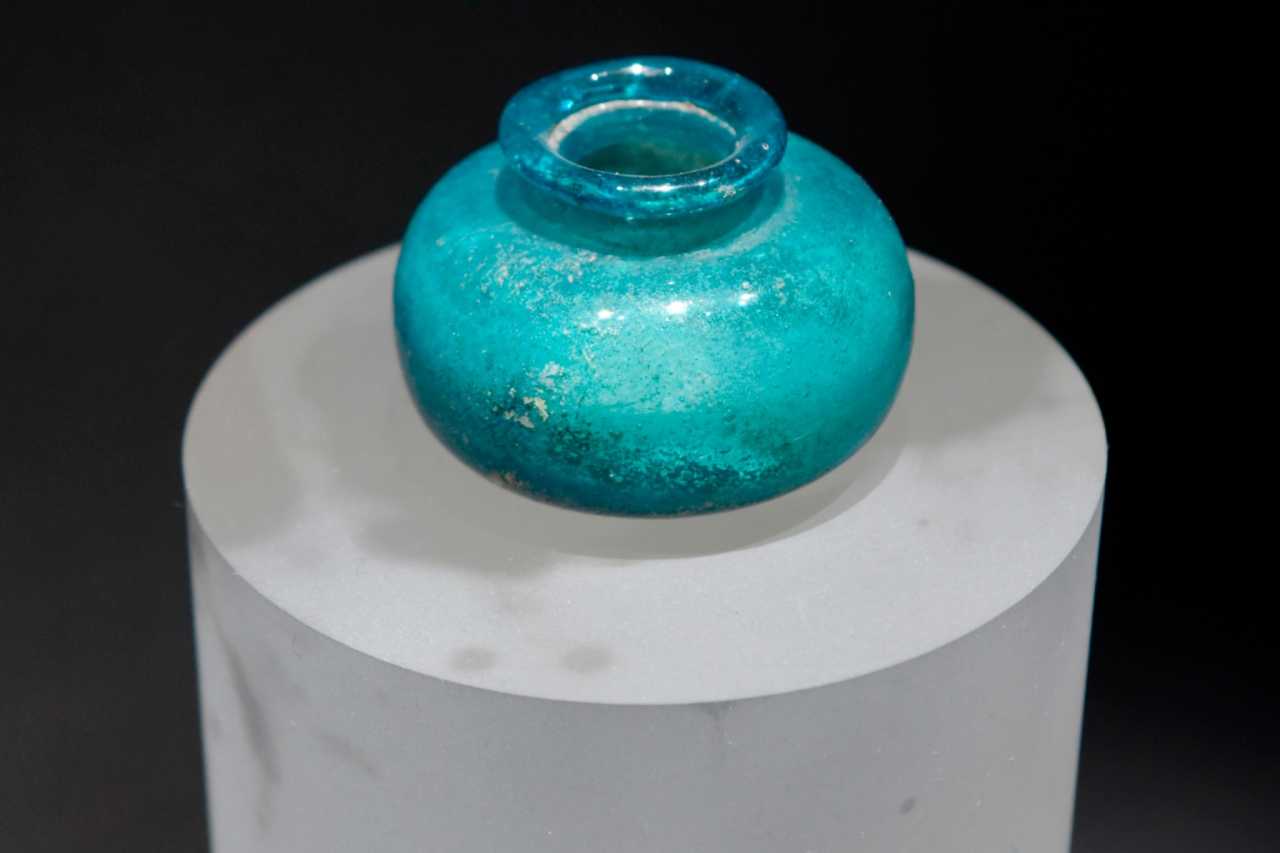
The sky-blue glass ewer is arguably the museum’s most dazzling piece. Small in form yet crystal-clear and exquisitely made, it is not only an early masterpiece of Chinese blown glass, but also material evidence that Western glass-blowing technology entered China during the Northern Wei’s Datong era. Cultural exchange has never ceased; outstanding cultures flourish through inclusiveness.
 Datong Museum
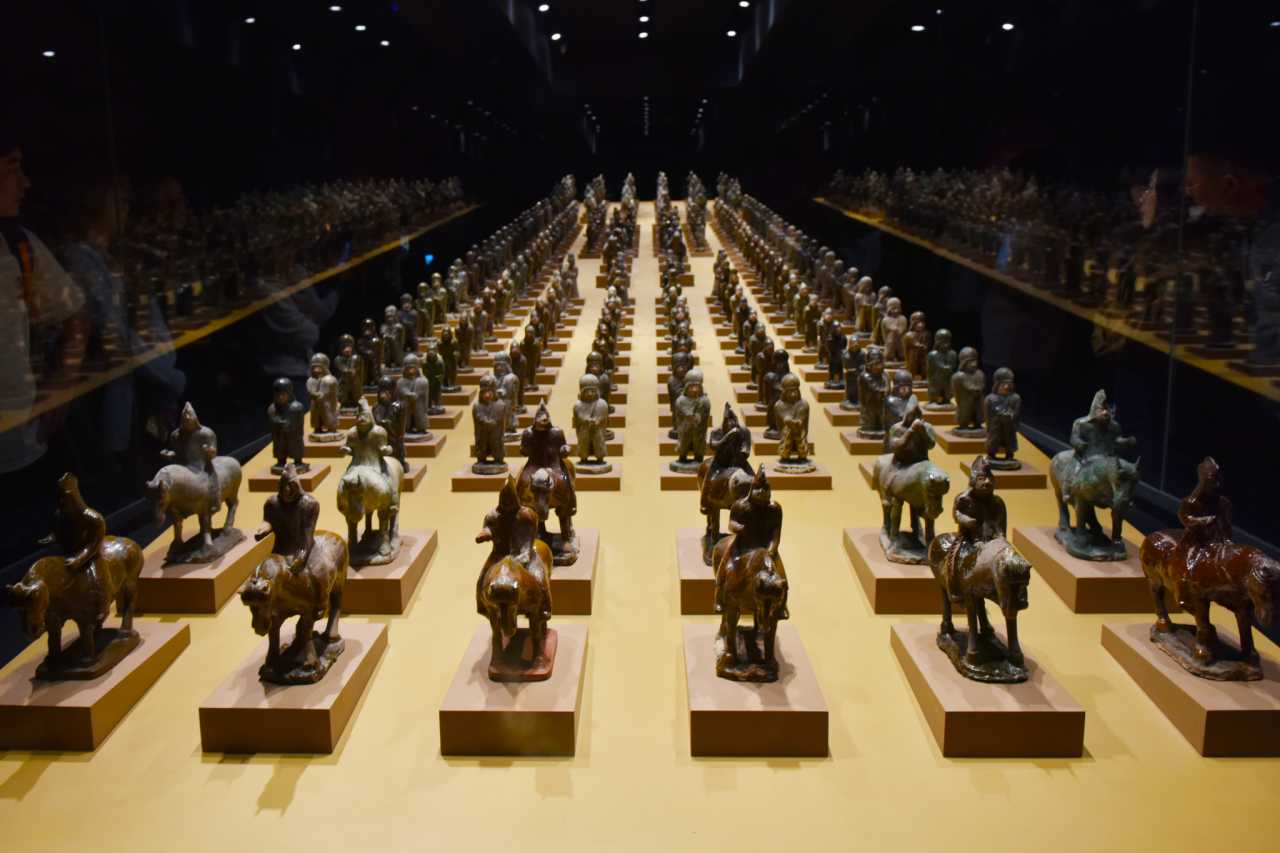
Though ceremonial terracotta figures are common in museums, this set in Datong has a strong ethnic flavor: broad faces, thick brows and narrow eyes, hats with cockscomb-like draping, pleated trousers, fluid lines, ample proportions, tight-clasped legs astride warhorses, knees bent as if riding forward.
 Datong Museum
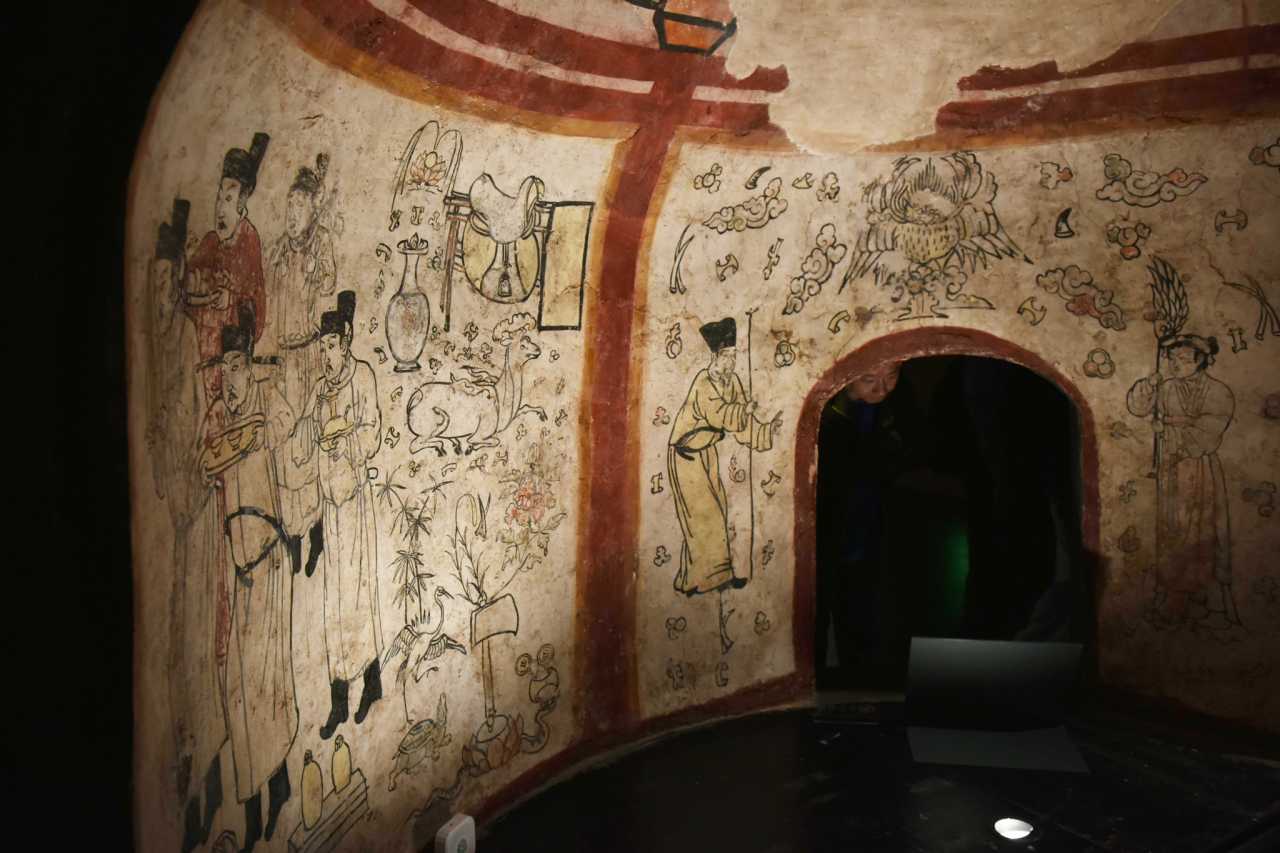 Datong Museum
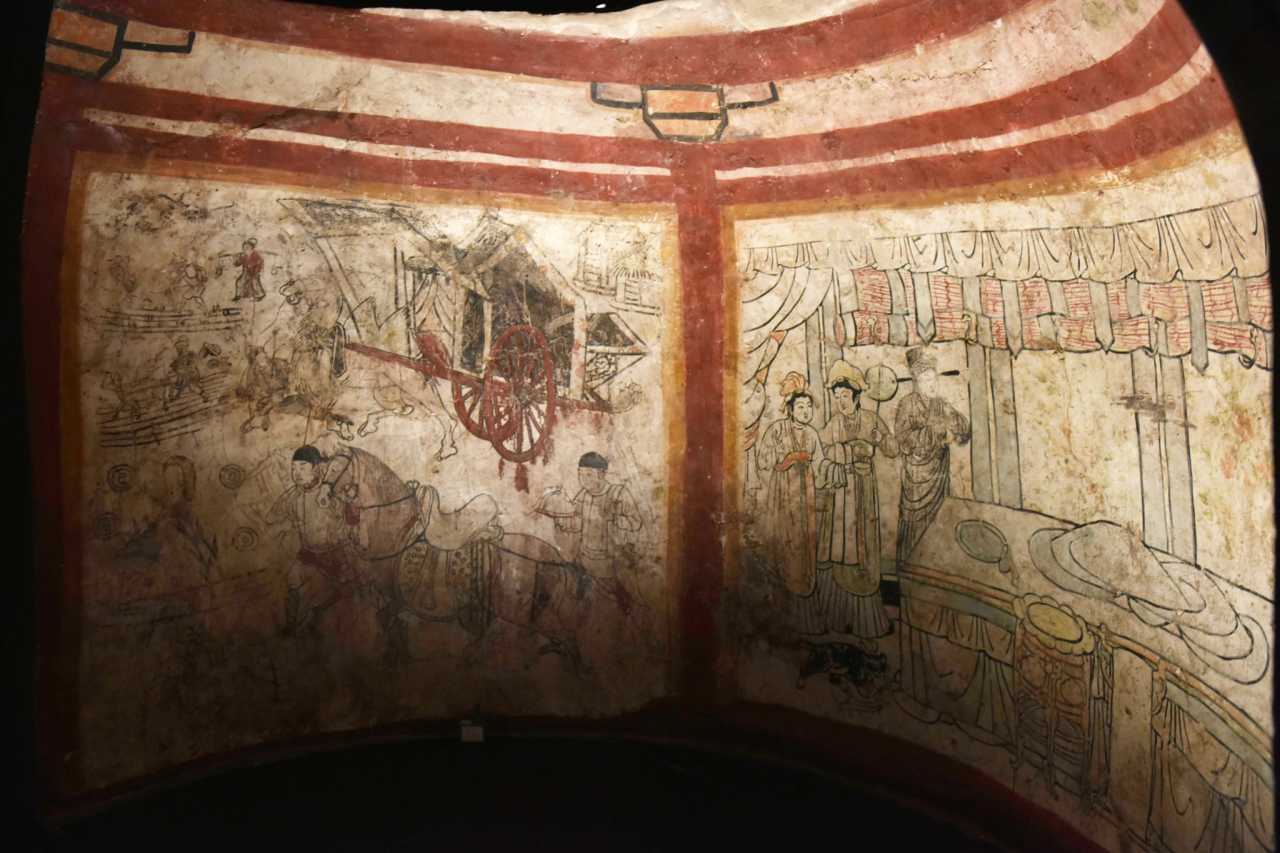 Datong Museum
Yunlin Temple: Treasures Hidden in Ruins
Fifty-six kilometers from Datong ancient city in Yanggao County stands a national key cultural relics protection unit—Yunlin Temple. I debated for a long time whether to take a special taxi to Yunlin Temple, because it is not open to the public. In the end I decided to try my luck, and was fortunate: upon arrival, someone had already asked the temple’s guardian elder to open the Mahavira Hall, allowing a brief visit.
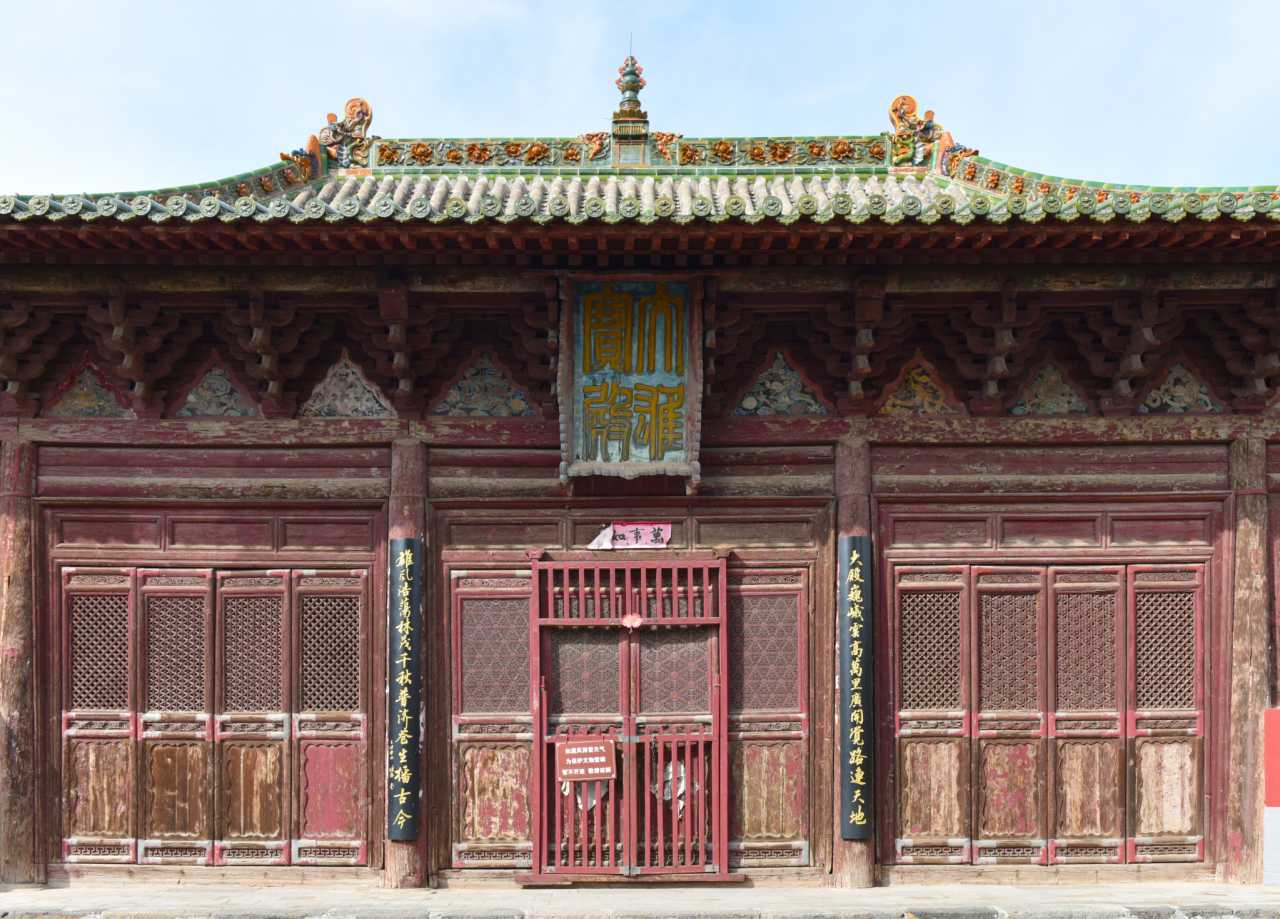 Yunlin Temple
Yunlin Temple, commonly called West Great Temple, has an unknown founding date. According to the Yanggao County Gazetteer of the seventh year of Yongzheng (1792): "Yunlin Temple was imperially built on West Street; at the same time, temples built by decree included Mount Tai Temple at the East Gate, Guangning Temple (the North Temple), and Laifu Temple (the South Temple), all Ming constructions." At its peak, Yunlin Temple covered 6,600 square meters, with a three-entry, four-sided courtyard layout, facing south. Along the central axis: Vajra Hall (mountain gate), Heavenly King Hall (passage hall), Mahavira Hall, and Rear Hall, with bell and drum towers, side halls, and rooms on both sides. Today, however, the temple is full of the marks of age; its former glory has faded, and what remains is precious heritage that survives by fortune.
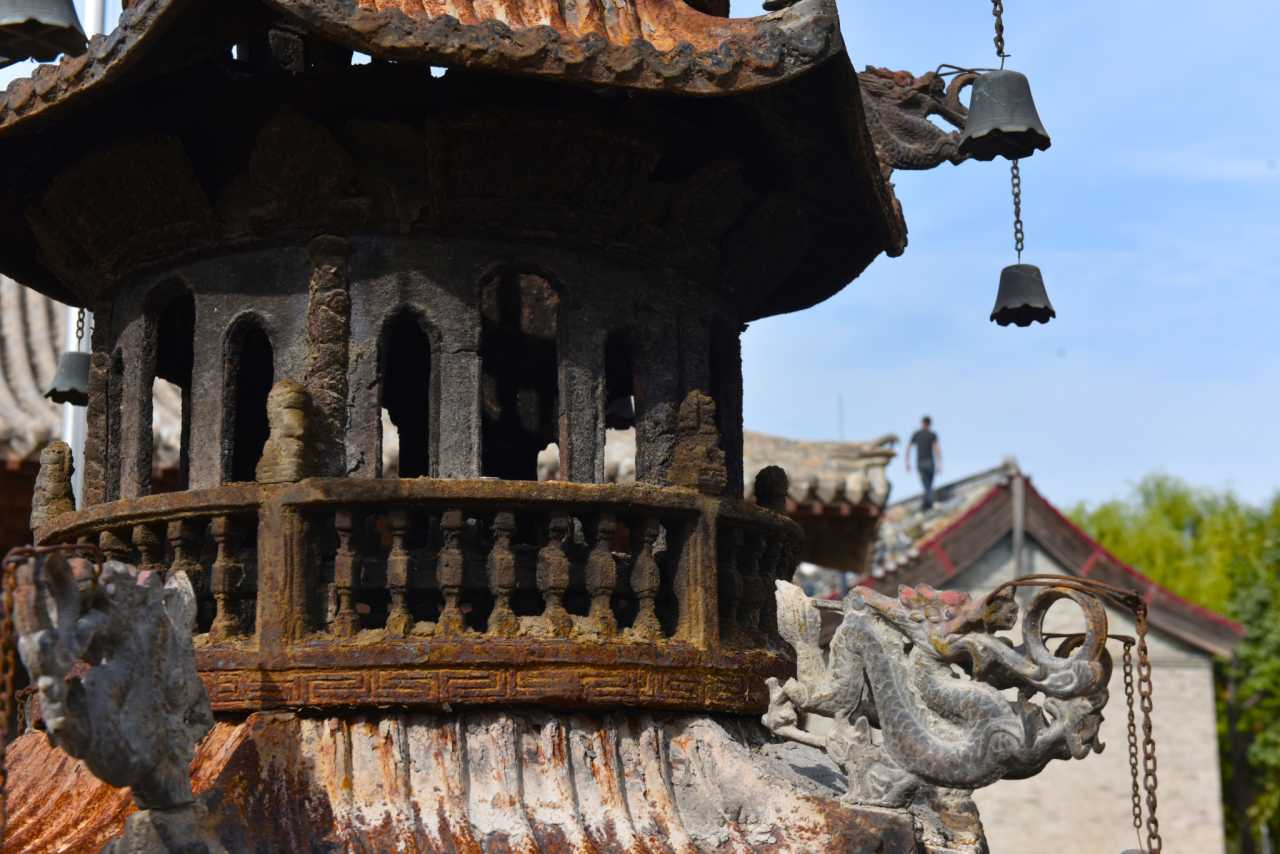 Yunlin Temple
 Yunlin Temple
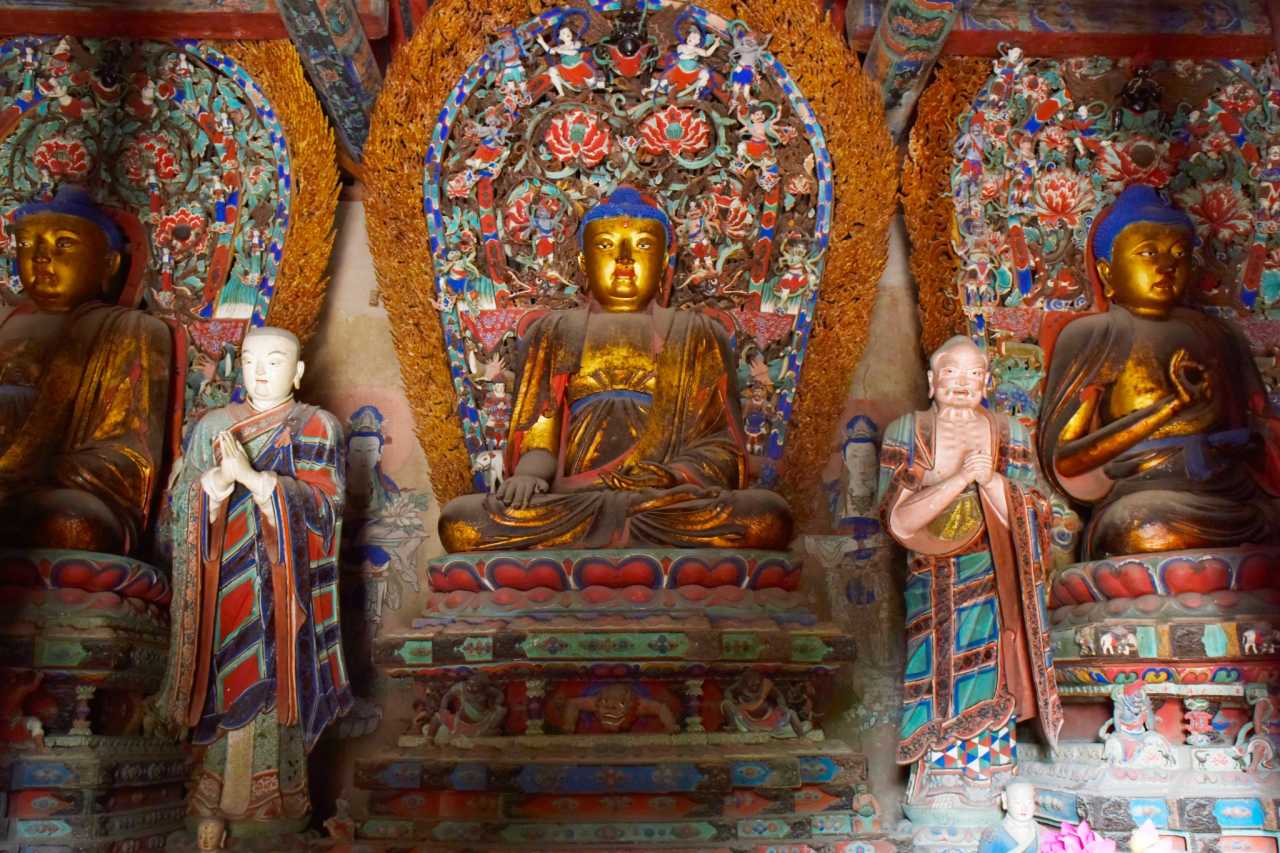
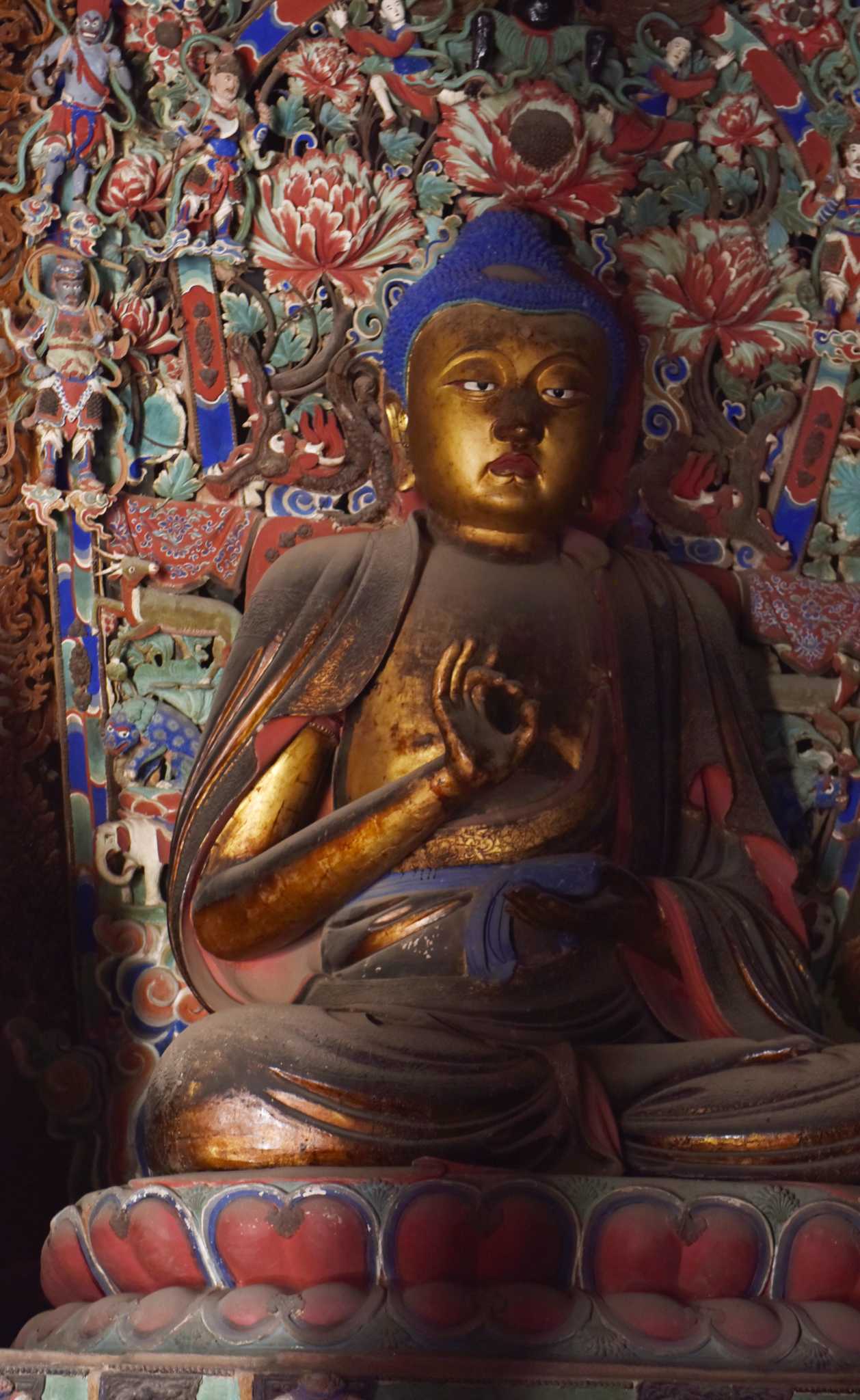
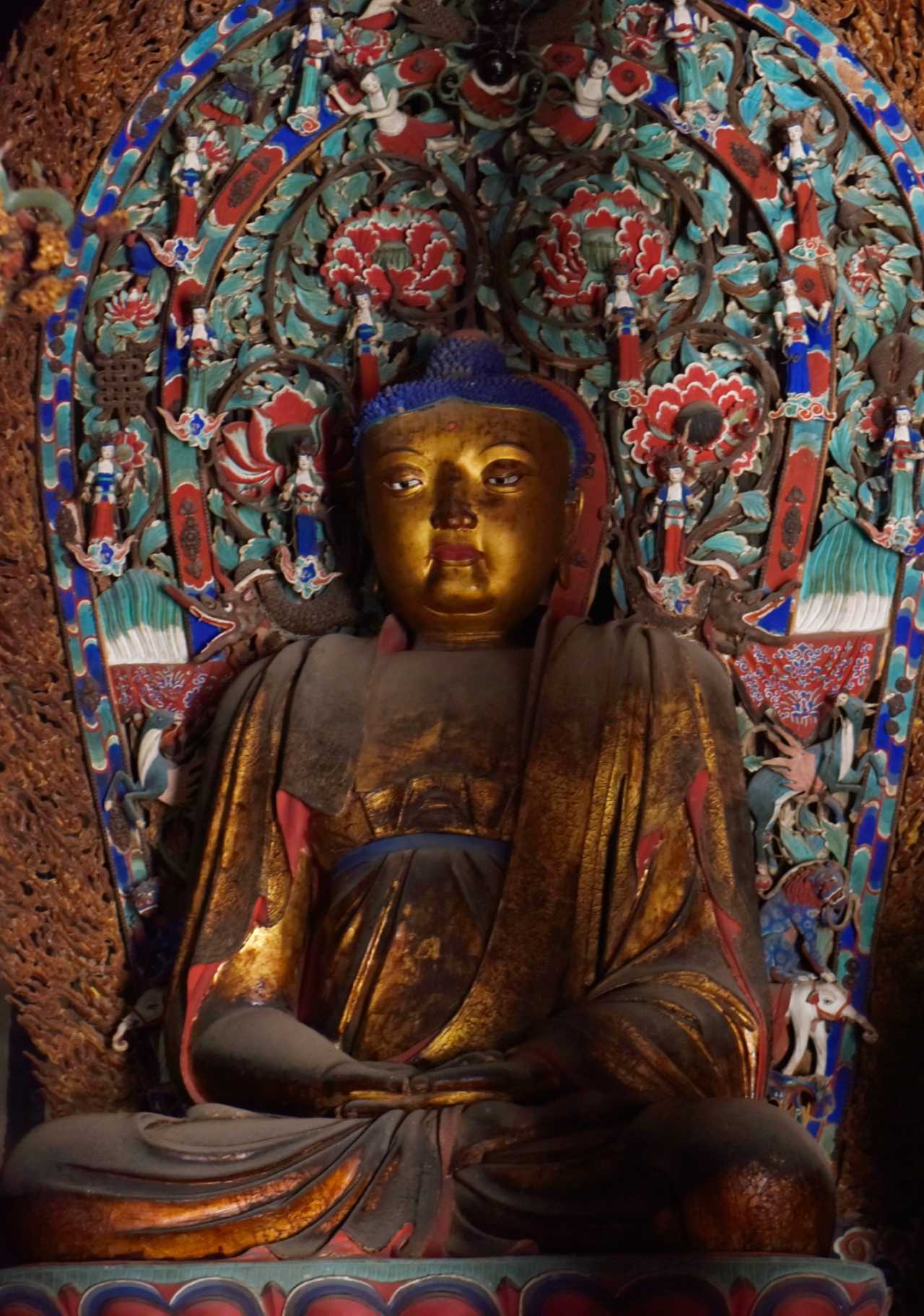
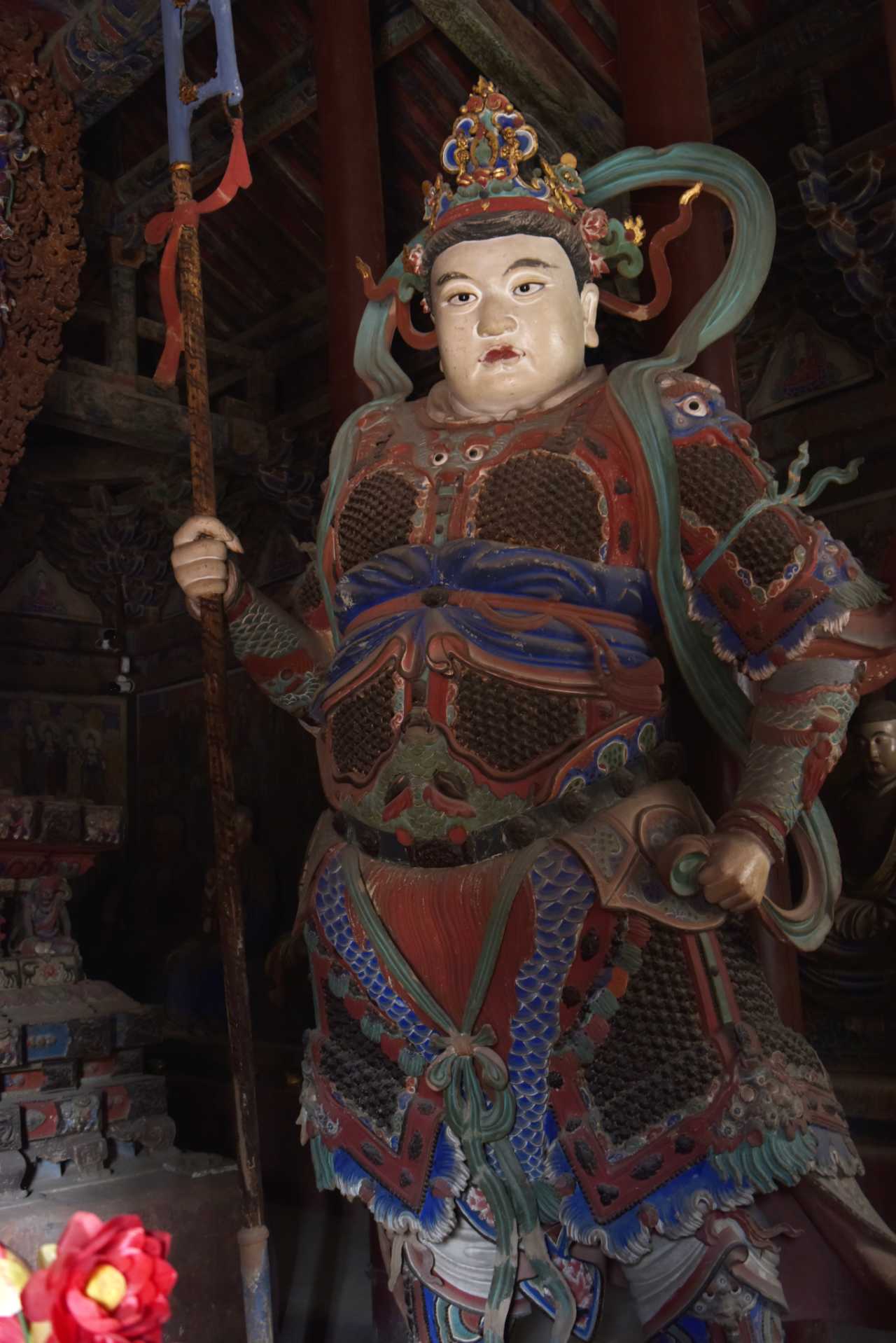
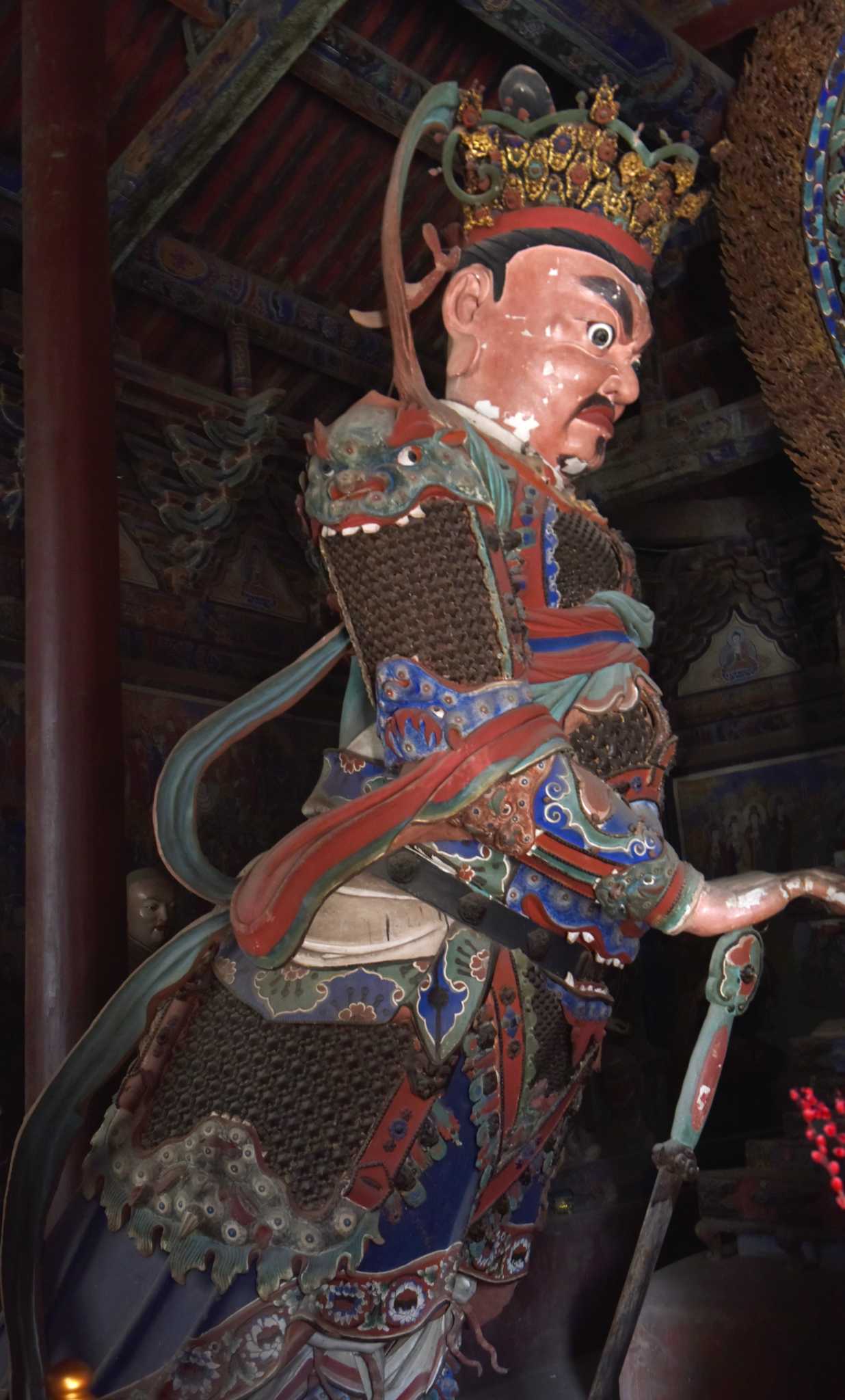
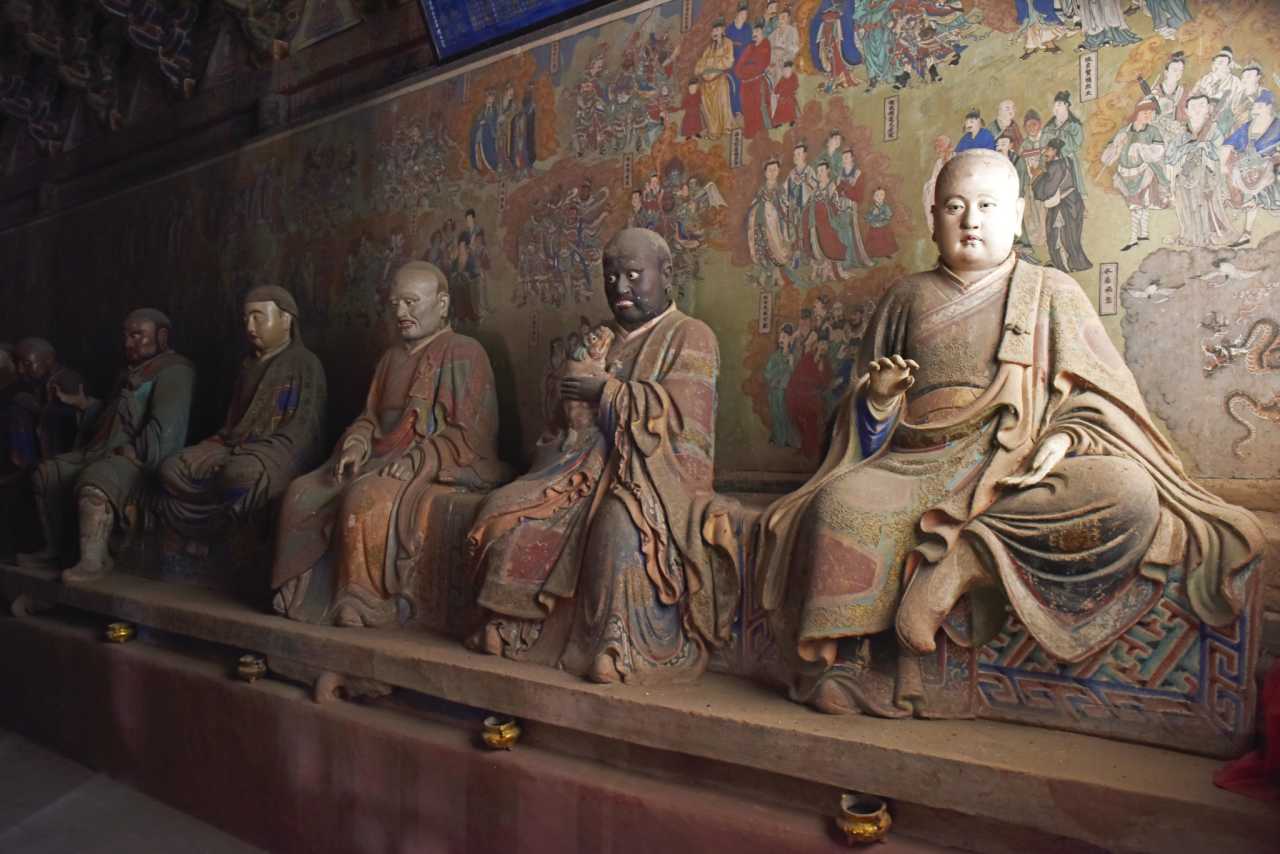
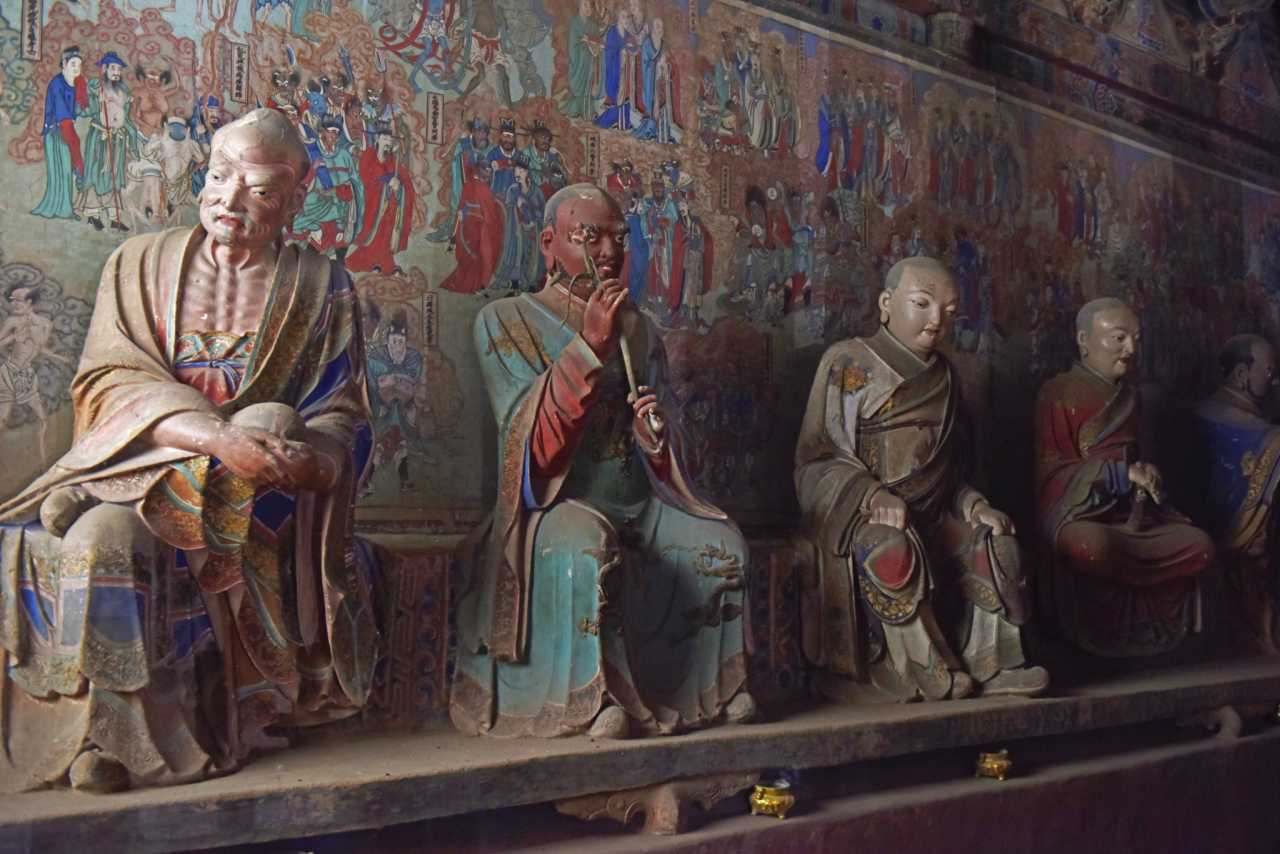
Entering the dim Mahavira Hall, the Three Buddhas sit upon high lotus Sumeru thrones, richly gilded, serene of countenance, full-faced, solemn and dignified. The backlights are suspended sculptures and feature the "Six Auspicious Symbols." In front of the present Buddha stand the disciples Kāśyapa and Ānanda; flanking the altar are two Dharma-protecting Heavenly Kings—on the right, glaring with round eyes and holding a sword; on the left, with resolute expression, bearing a halberd. On platforms to either side stand eighteen Arhats with natural expressions, varied demeanors, vivid forms, and flowing garment patterns.
 Yunlin Temple
 Yunlin Temple
 Yunlin Temple
 Yunlin Temple
 Yunlin Temple
 Yunlin Temple
Besides the solemn Three Buddhas and the diverse Arhats, the walls of the Mahavira Hall are painted with Water-Land ritual scenes, among which the images of Guanyin, Manjusri, and Samantabhadra on the rear wall behind the Three Buddhas are especially splendid and precious.
 Yunlin Temple
Yungang Grottoes: A Masterpiece Left by the Northern Wei
The Yungang Grottoes, an artistic treasure carrying millennia of history and culture, lie about 16 km west of Datong City at the southern foot of Wuzhou Mountain and the north bank of Wuzhou River. Here mountains and water accompany stone Buddhas, a perfect blend of nature and culture. As one of China’s four great grottoes, Yungang witnessed the rise and fall of the Northern Wei and the spread of Buddhism in China. Every statue and carving seems to tell a story of its age and draws one deeply in.
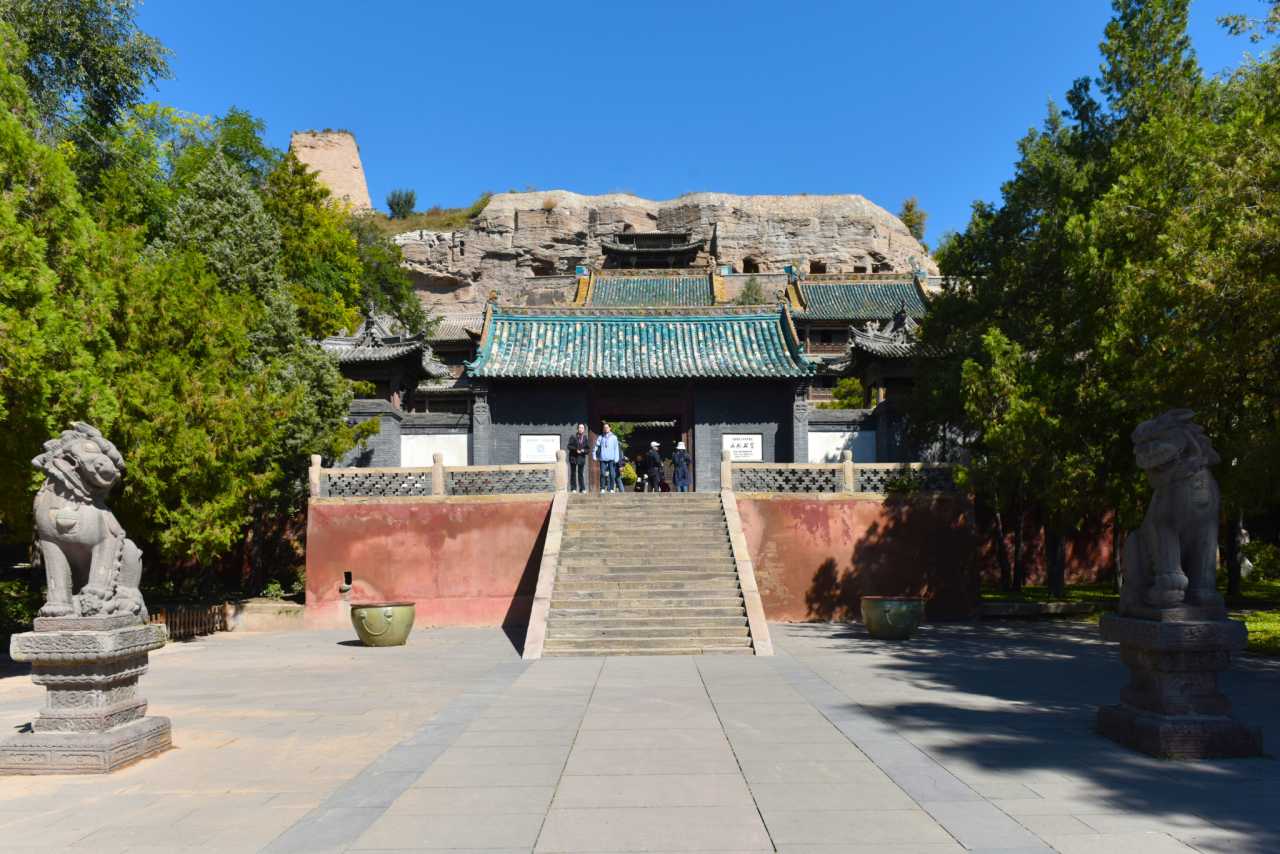 Yungang Grottoes
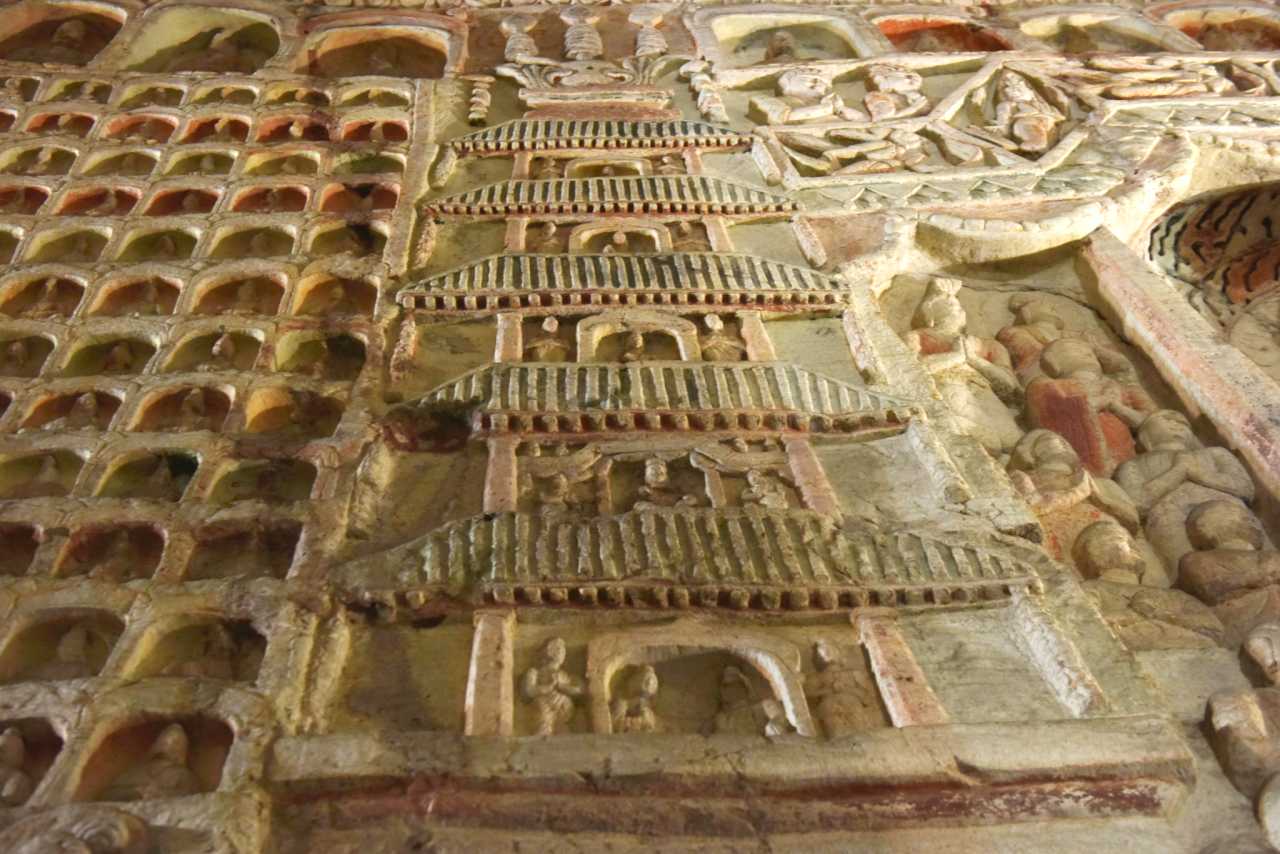
Compared with last year’s visit to Kizil Thousand-Buddha Caves, Yungang is not only better preserved but also stylistically distinct. Across its 1-km stretch of caves, I truly felt "the work of spirits and gods" and the evolution and fusion of styles. To observe evolution, start with the cave forms. Although caves 1, 2, 5, 6, 11, and 39 are all central-pillar caves, they fall into two types, among which 1, 2, and 39 are pavilion-style tower-pillar caves: overall like multi-storey pavilions, with square tower columns of two to five tiers, and between tiers are clearly protruding, wood-like eaves.
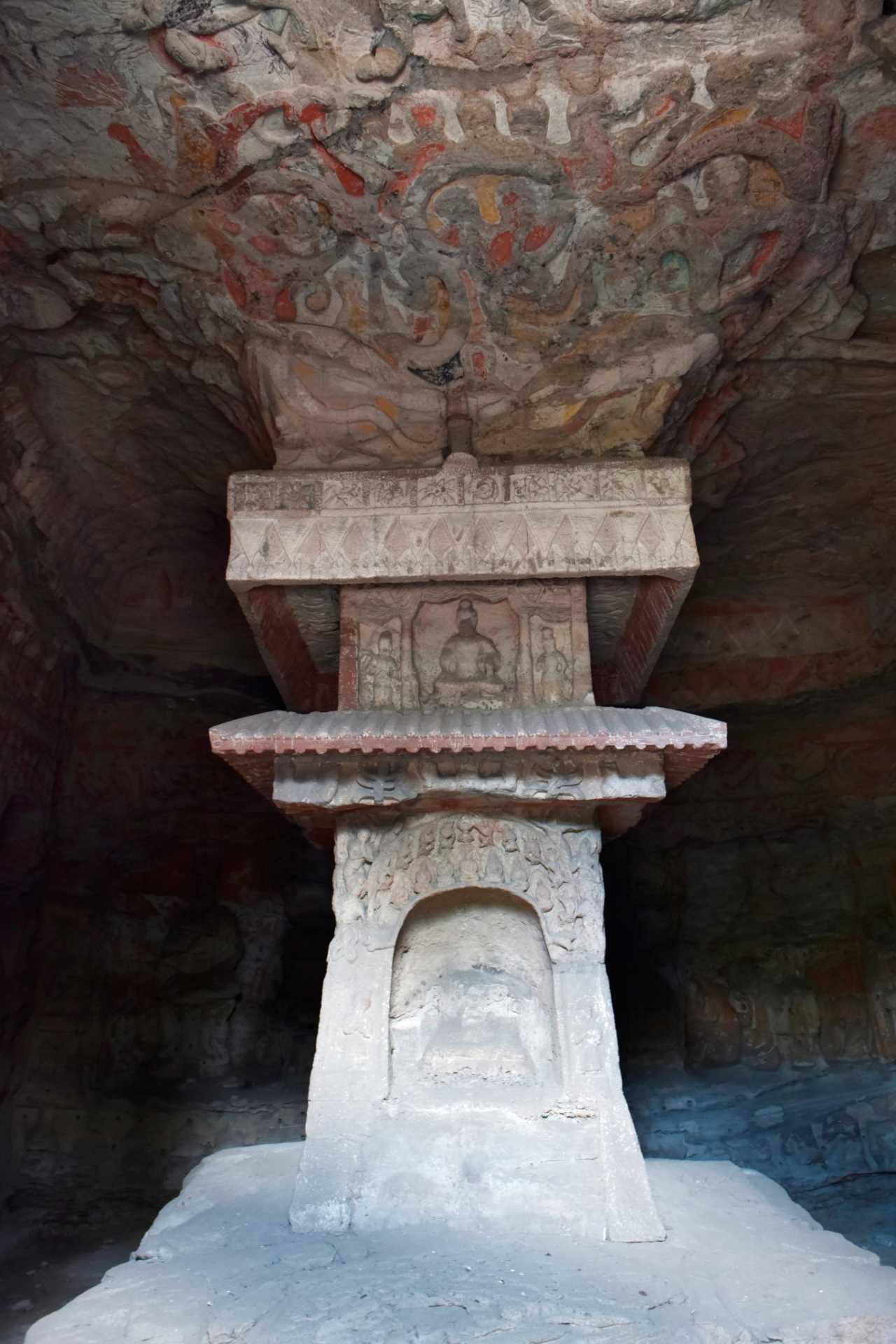 Yungang Grottoes
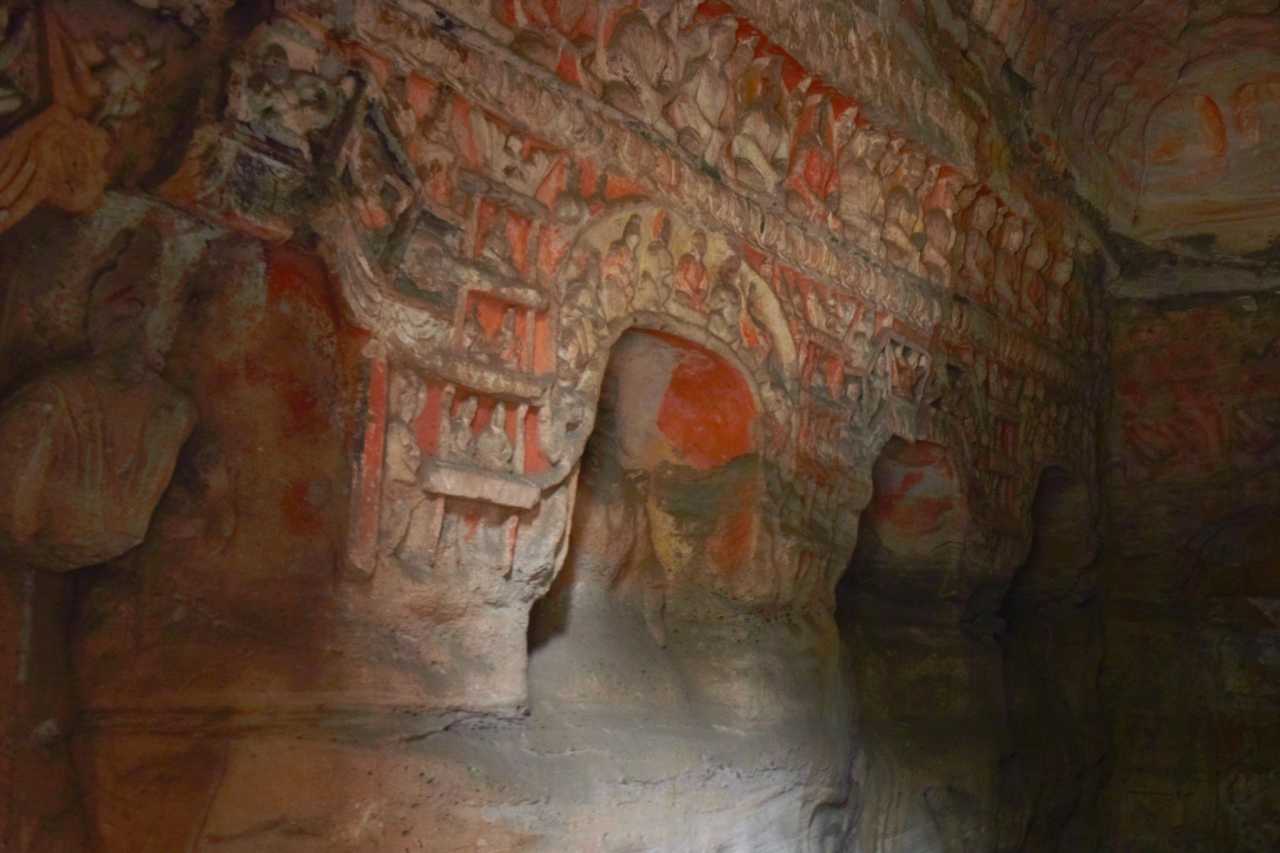
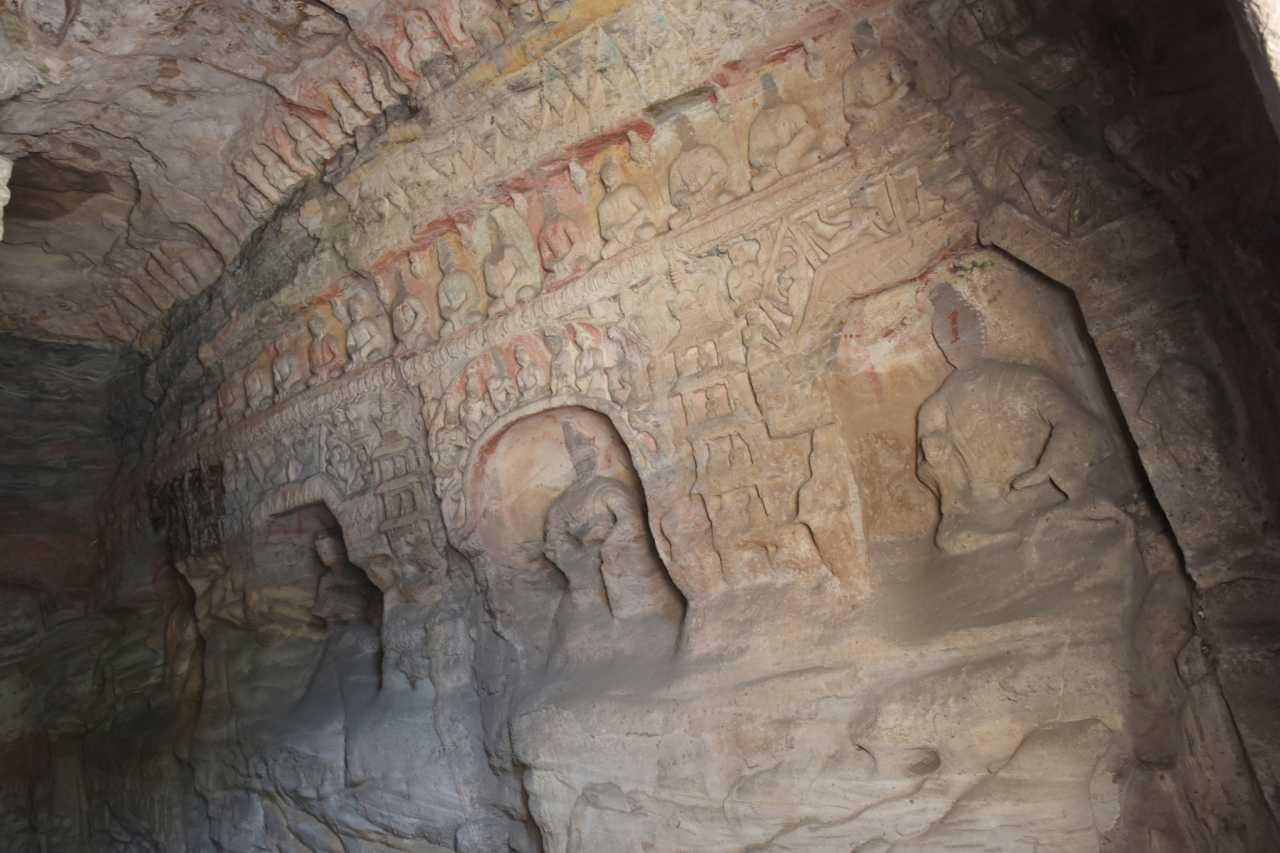
At the eastern end, caves 1 and 2 form a pair, cut between 471–494 CE. The outer walls preserve single-storey square pagodas on the east and west sides. There are clerestory windows above and cave doors below. The plan is square with a flat roof; the central tower reaches the ceiling; niches on the four walls allow monks to circumambulate and worship—a typical tower-temple cave. In cave 1, the "Stone Drum Cave," the outer wall’s clerestory window retains Zhu Tinghan’s Qing inscription "Visiting Yungang Stone Buddha Temple." The central square tower has wood-like eaves in two tiers. Each side of the lower tier has a round-arched niche with seated Buddhas; each side of the upper tier has three curtain-like niches, with seated Buddhas to the south and north and cross-legged Maitreya Bodhisattvas to the east and west. Dragons coil around the top; Mount Sumeru undulates. The north wall has a large three-bay curtain niche with the central image a cross-legged Maitreya and flanking bays with mirrored contemplative Bodhisattvas. On the east wall, the lower tier has reliefs of the Jataka tale of filial piety (Prince Shanzi’s story).
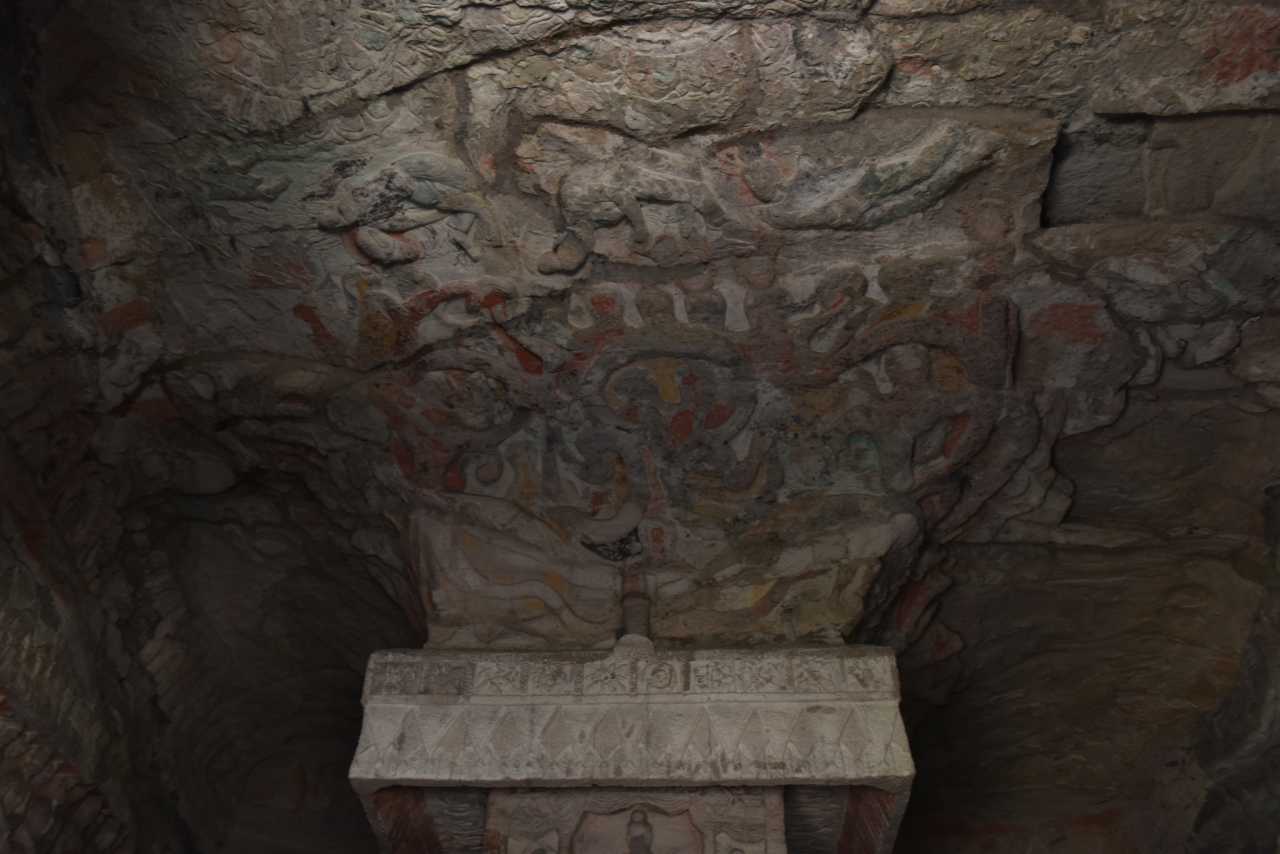 Yungang Grottoes
Cave 2 is called the "Cold Spring Cave" because a fine spring flows all year along the west end of its north wall. The three-tiered square stupa tower stands centered, with carved roof-tiles, rafters, and bracket sets mimicking wood construction; above, the eaves project in layered tile ridges, with pierced octagonal prismatic columns at the four corners forming an encircling gallery. The four walls are arranged in layered bands: the uppermost has rows of heavenly musicians in niches, playing bili, pipa, qin, panpipes, and other instruments. Below are bands of meditating seated Buddhas, large arrays of niches, and long-scroll relief stories, with donor figures at the lowest level. The main image on the north wall is a cross-legged Buddha, badly weathered. The lower tier of the east wall depicts the Buddha’s tale of the prince "shooting the iron drum," showing archery contests when Śākyamuni was a prince.
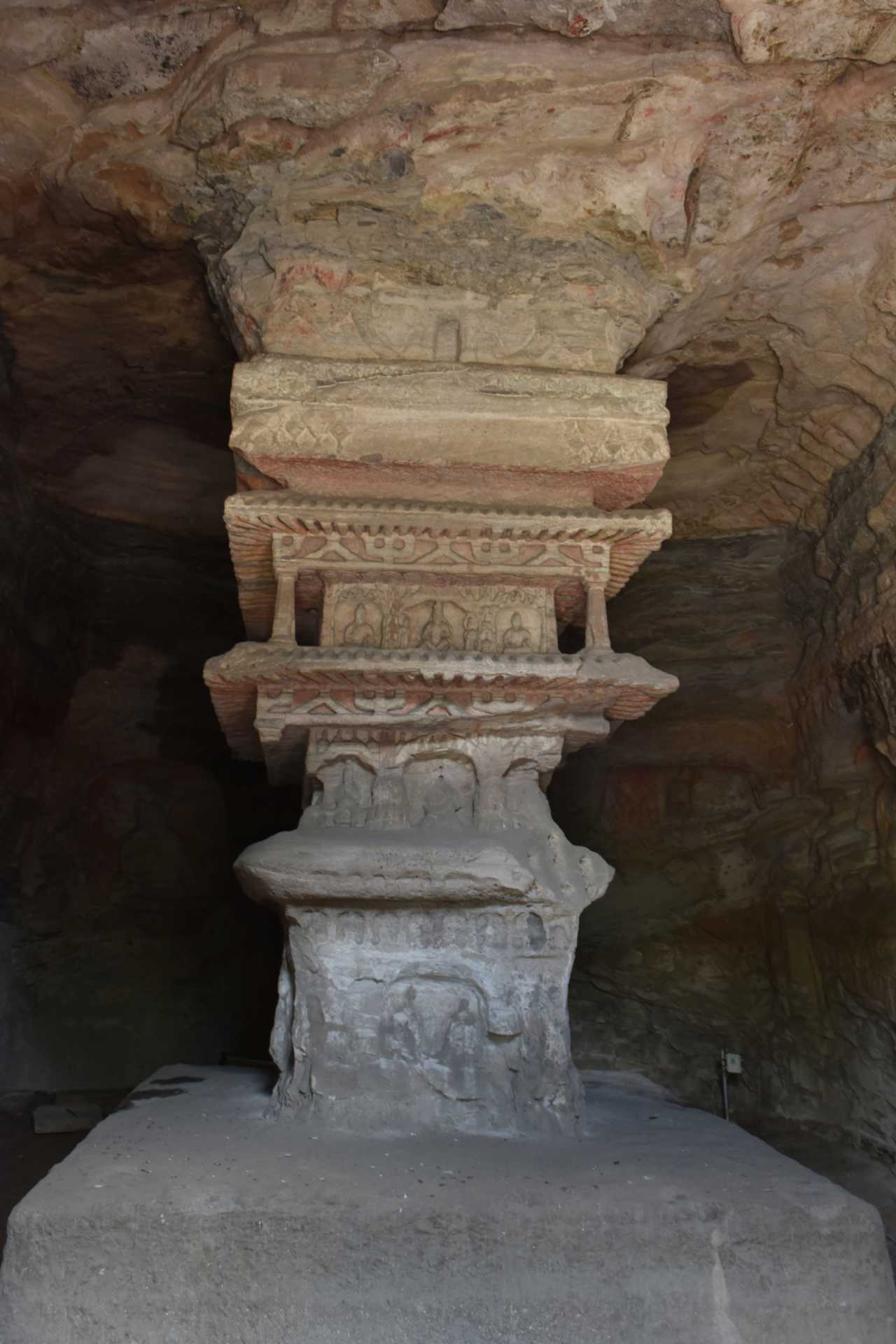 Yungang Grottoes
 Yungang Grottoes
 Yungang Grottoes
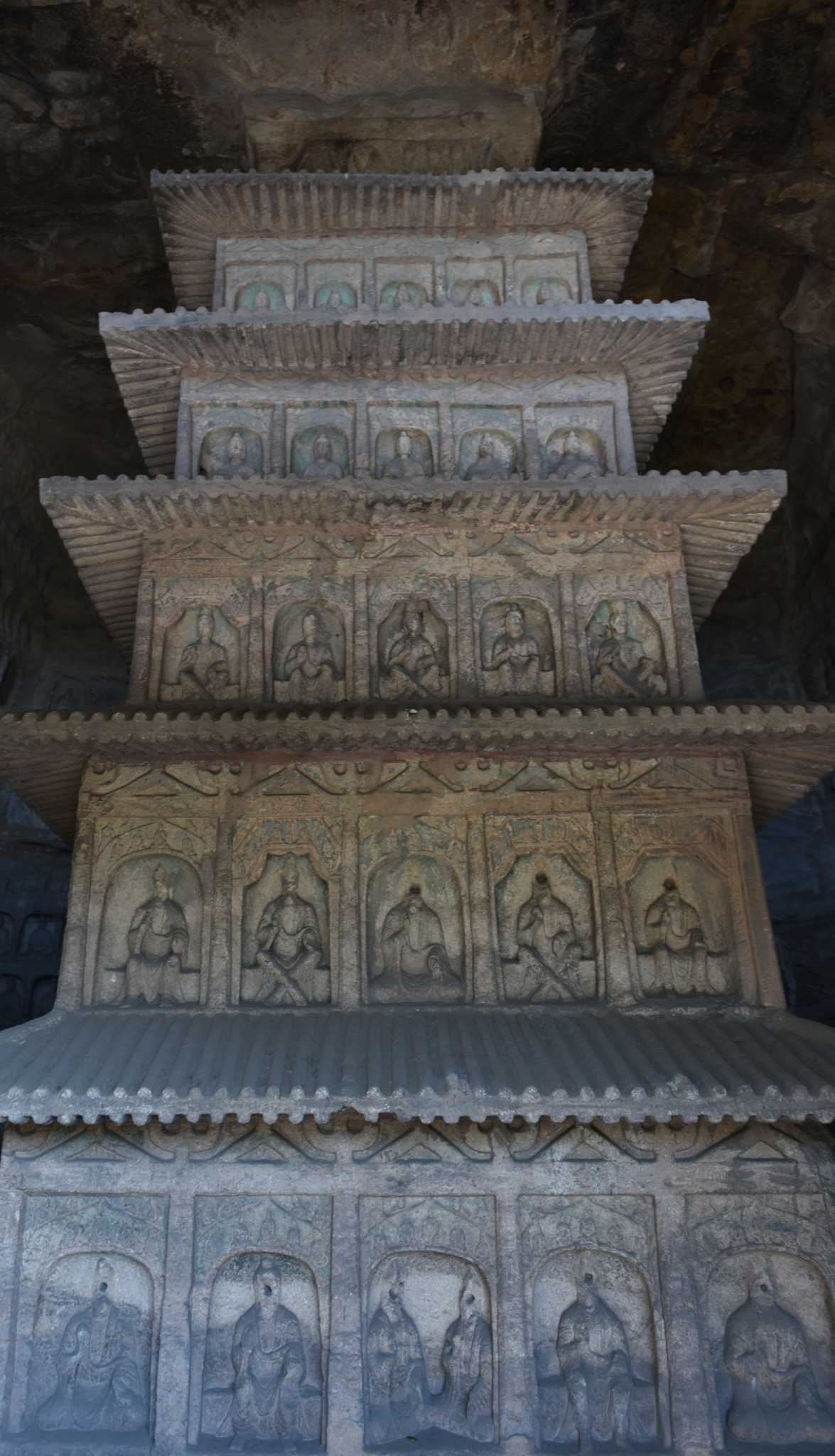
Even though caves 1, 2, and 39 are all central-pillar caves, cave 39 is unique in both cave form and niche layout. Its five-tier tower narrows as it rises. The small octagonal column tapers upward, topped by cap blocks and architraves; bracket arms are carved as one-dou-three-rise with herringbone struts below eaves beams; tile ridges are carved, and the roof is gentle. Each side of each tier opens five niches with seated Buddhas, two-Buddha seating, cross-legged Bodhisattvas, contemplative Bodhisattvas, and reclining Buddhas—typical Yungang motifs. The tower-top Mount Sumeru connects to the cave roof.
 Yungang Grottoes
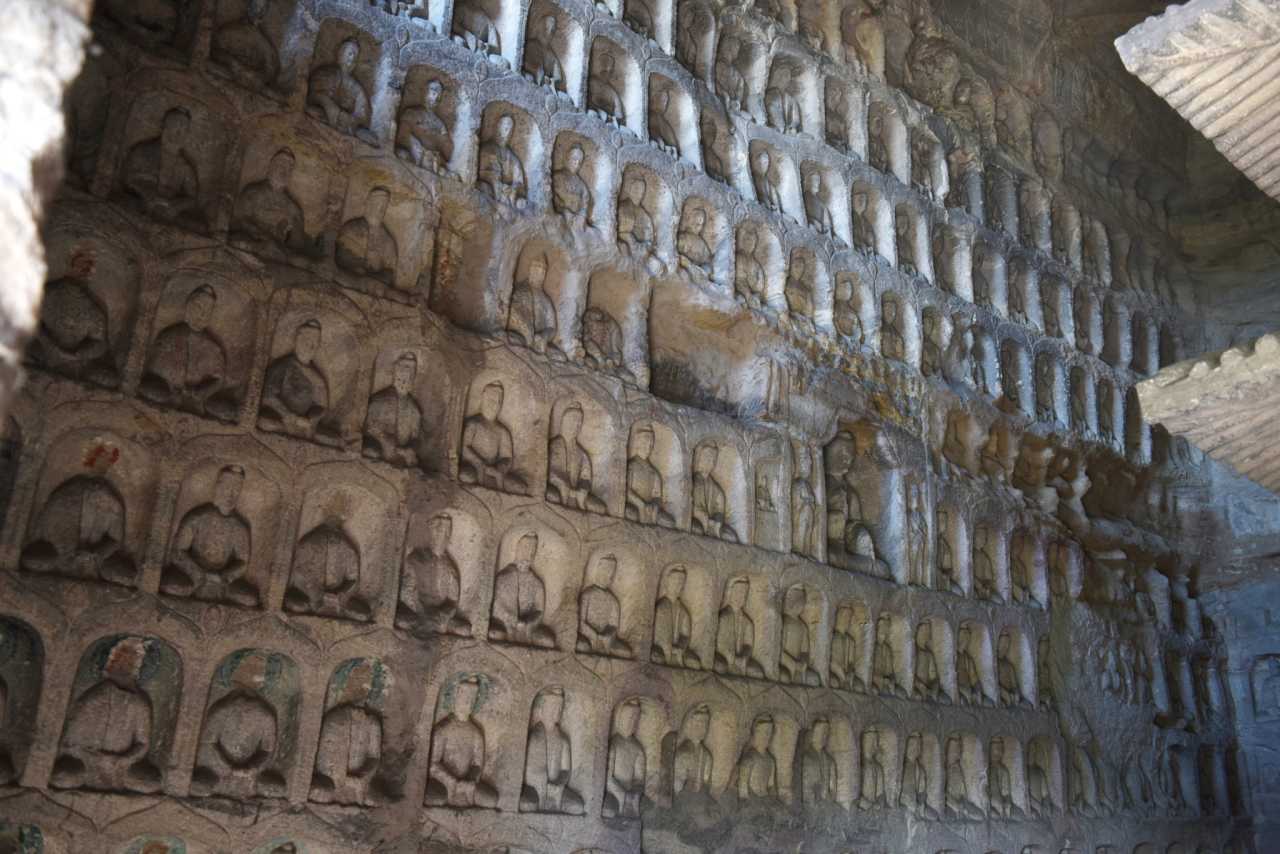
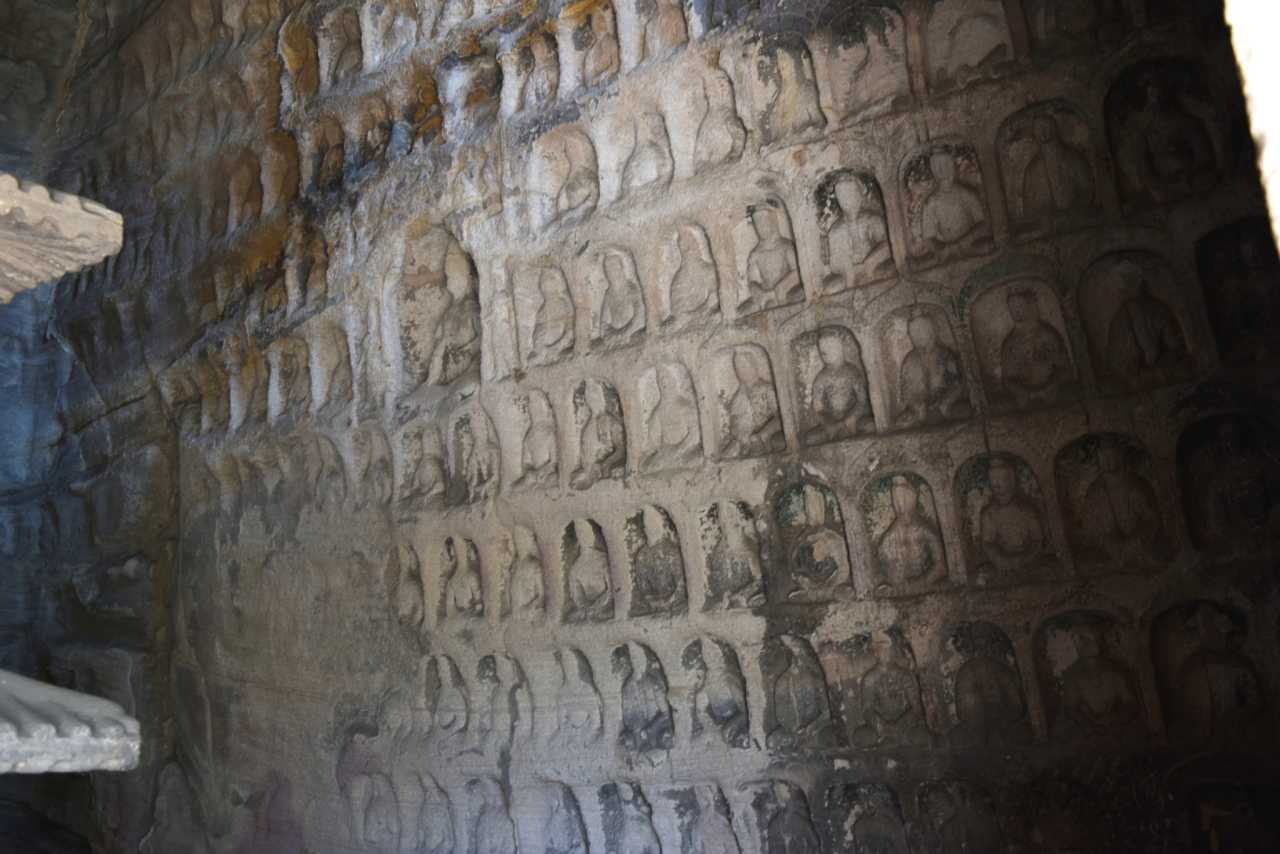
Surrounded by the thousand-Buddha niche arrays on the east, west, and north walls, this distinctive pagoda looks all the more solemn and mysterious.
 Yungang Grottoes
 Yungang Grottoes
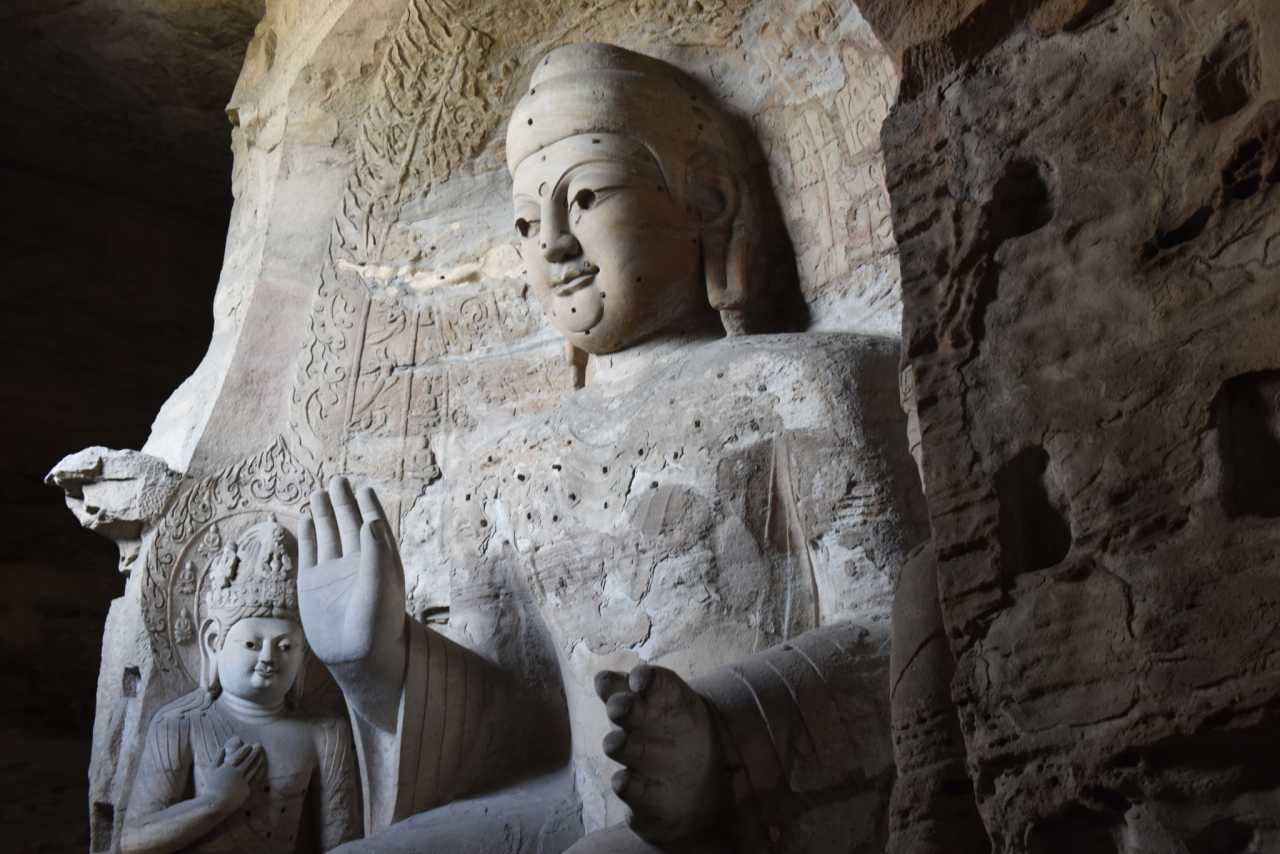
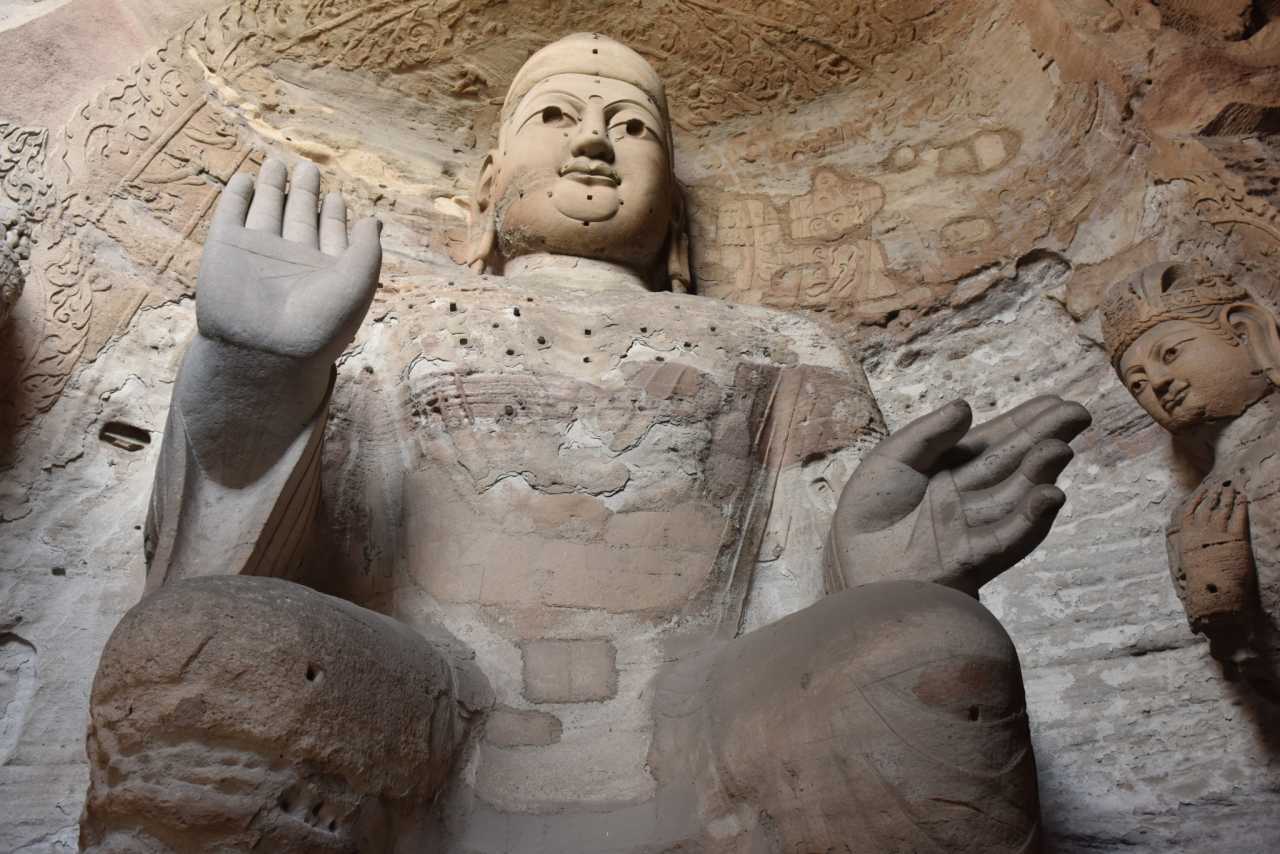
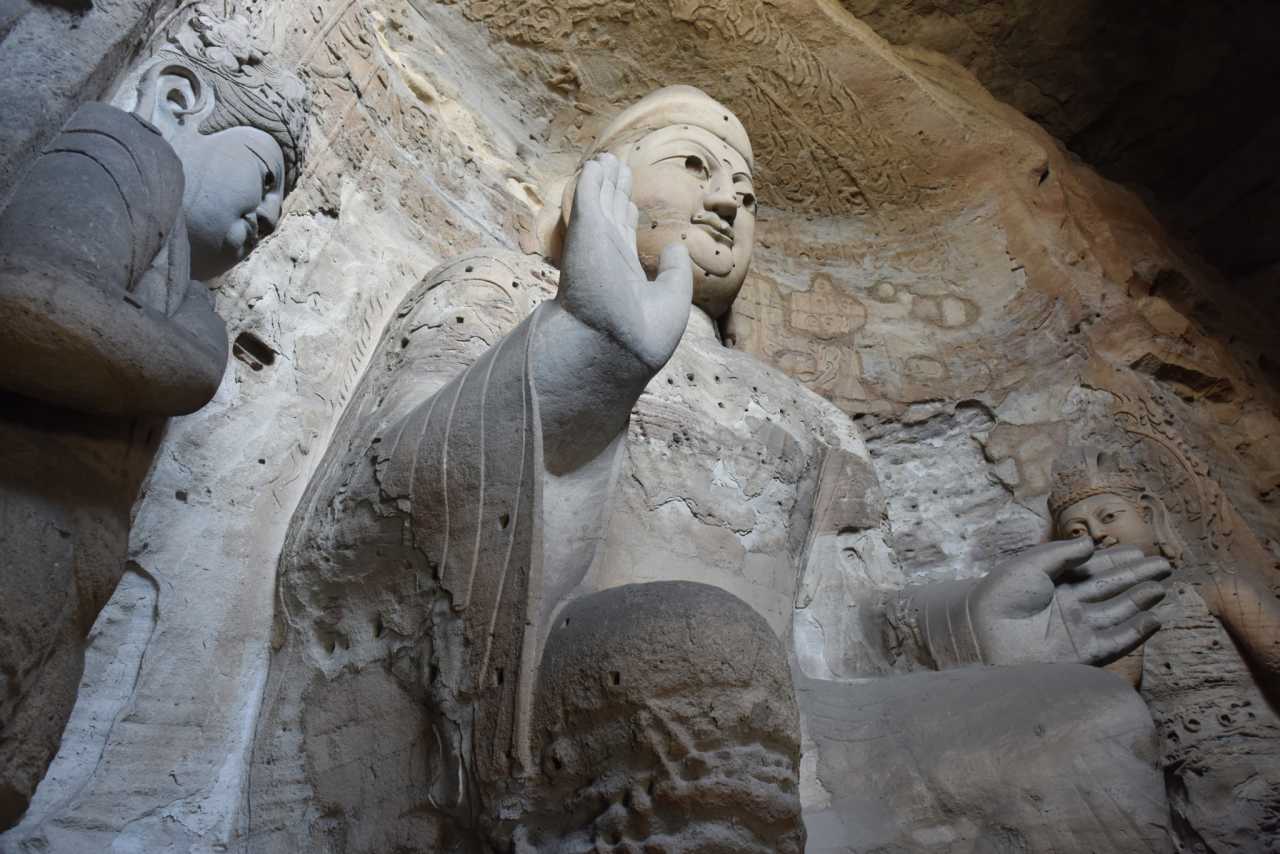
From caves 1 and 2 to cave 3, the cave form changes completely. Cave 3 (Lingyanshi Cave) is Yungang’s largest cave, characterized by grandeur and vastness. The central seated Buddha is about 10 meters tall, with a high ushnisha, full face, proper features, large eyes and ears, clear urna between the brows, upright posture, harmonious proportions, and hands forming fearlessness and granting-wishes mudras over a form-fitting robe. The flanking Bodhisattvas are 6 meters tall, with high hair knots and ordered strands; their flowing hair drapes both shoulders; jeweled crowns are exquisitely carved, showing meticulous design and mature craftsmanship. These three images are fuller and rounder than others in Yungang and artistically distinct.
 Yungang Grottoes
 Yungang Grottoes
 Yungang Grottoes
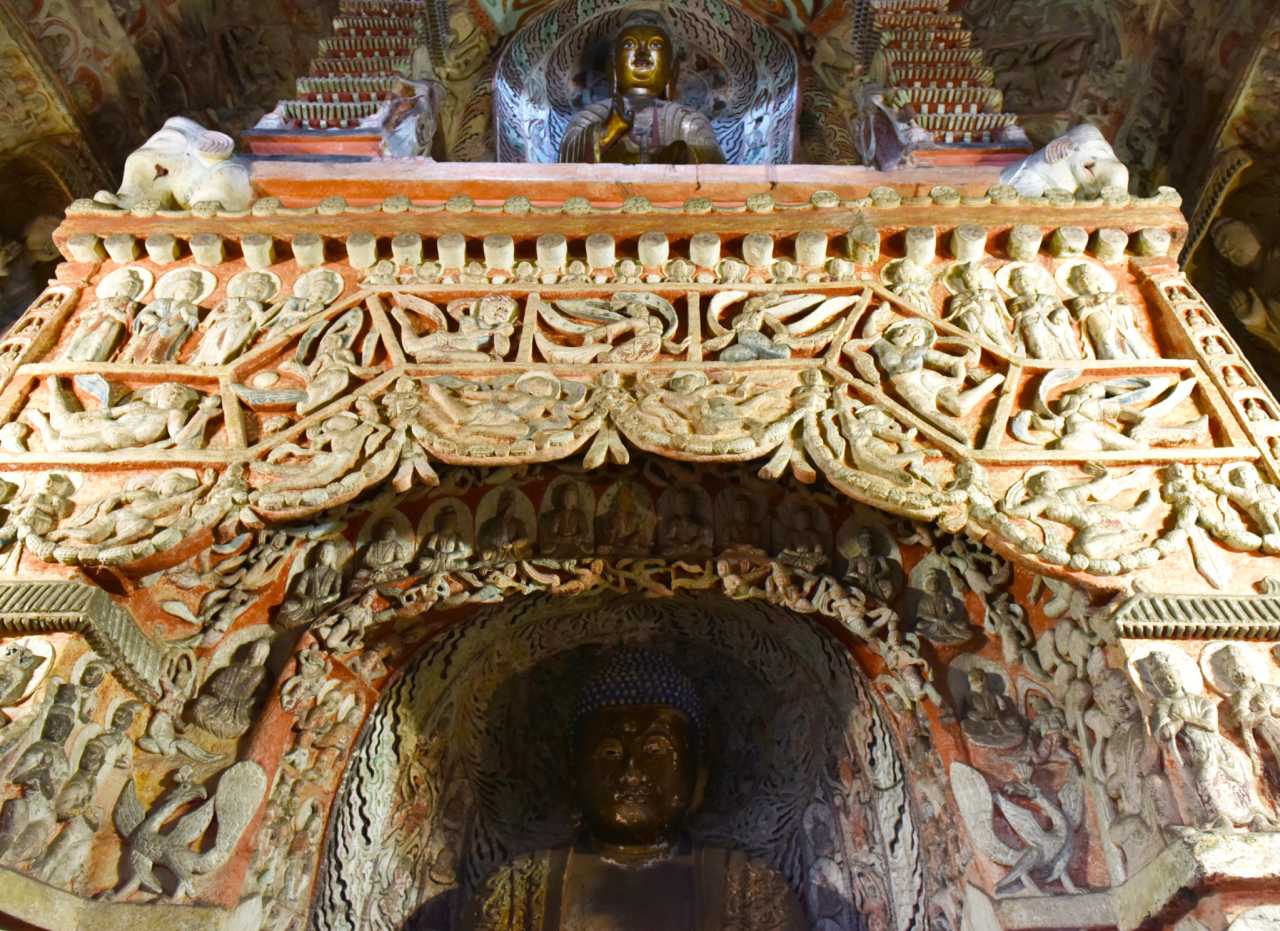
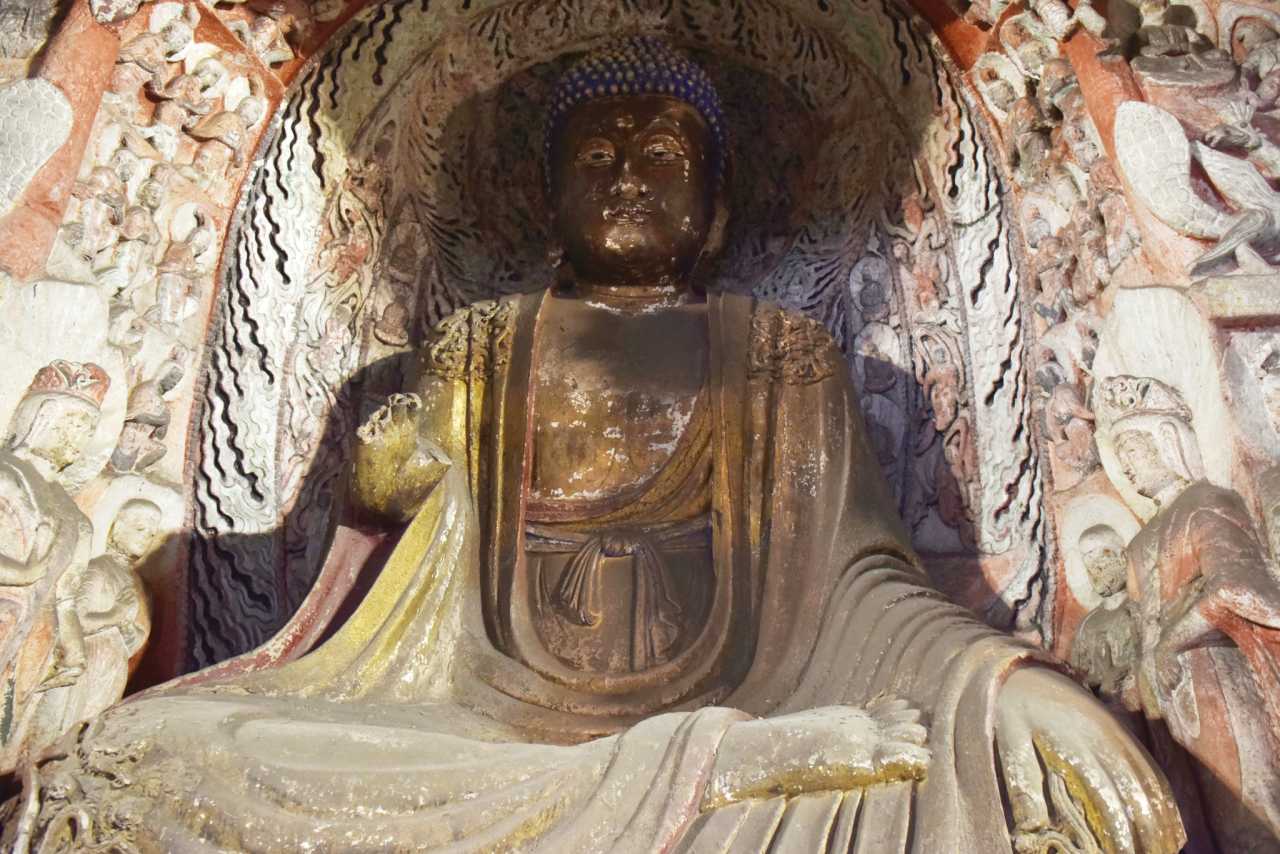
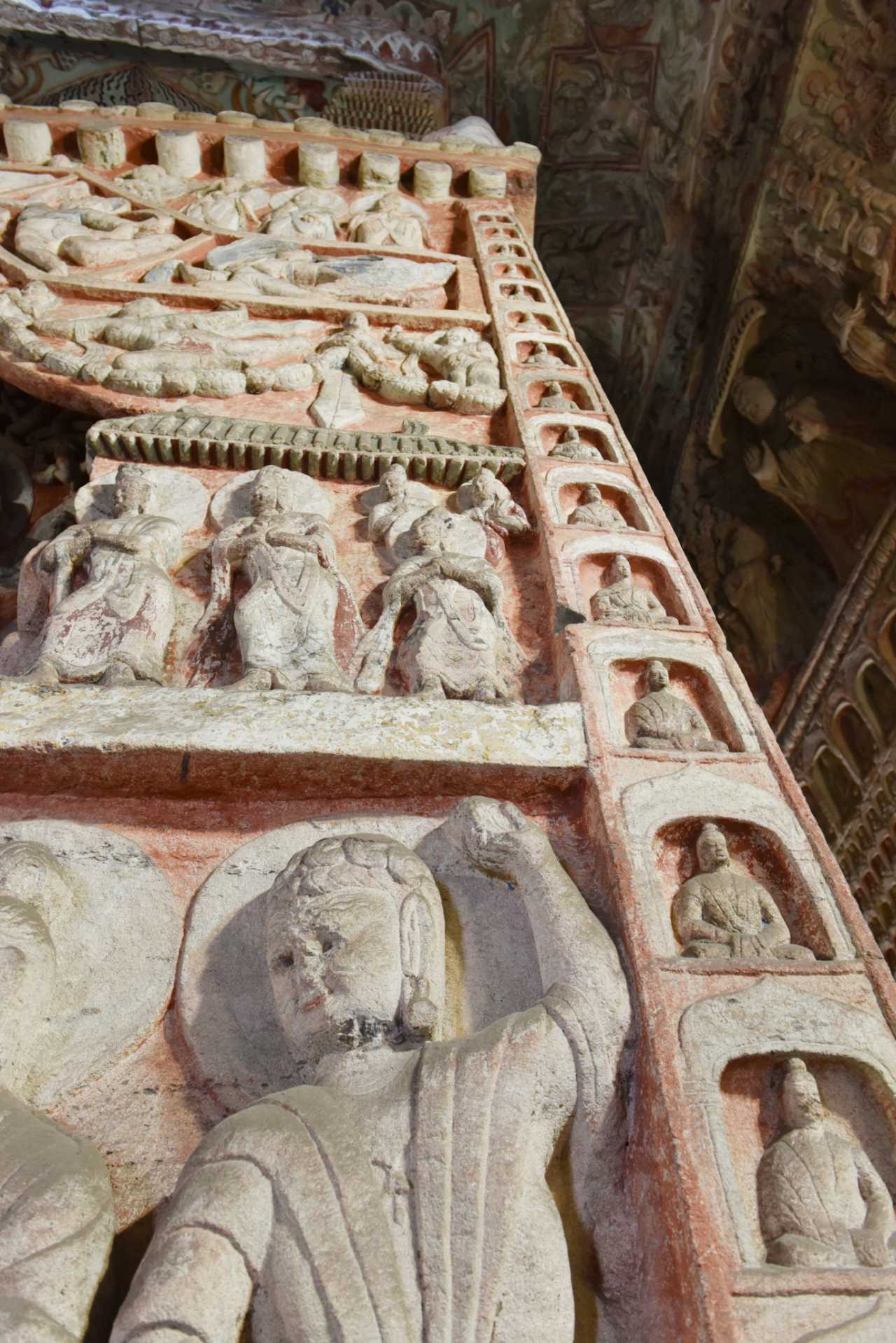
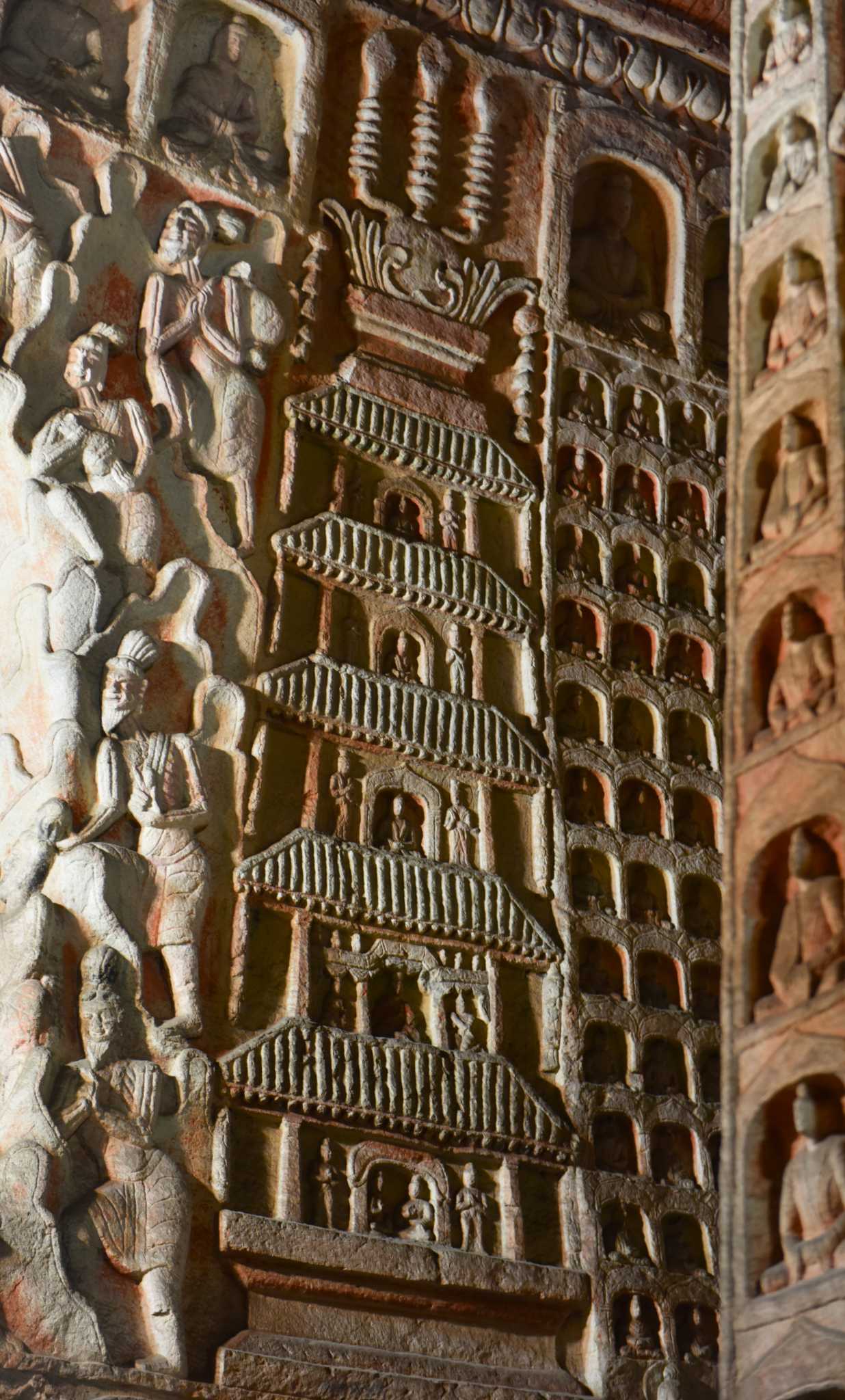
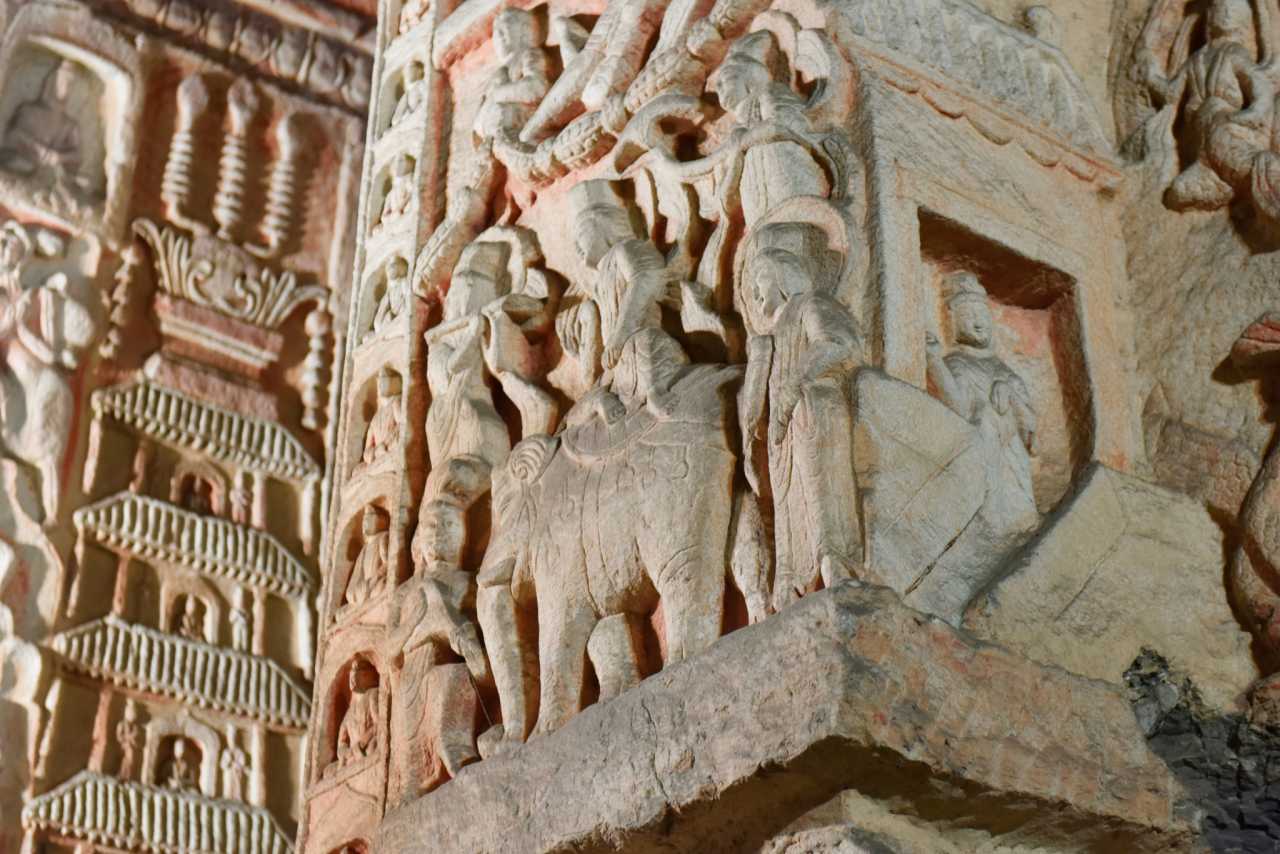
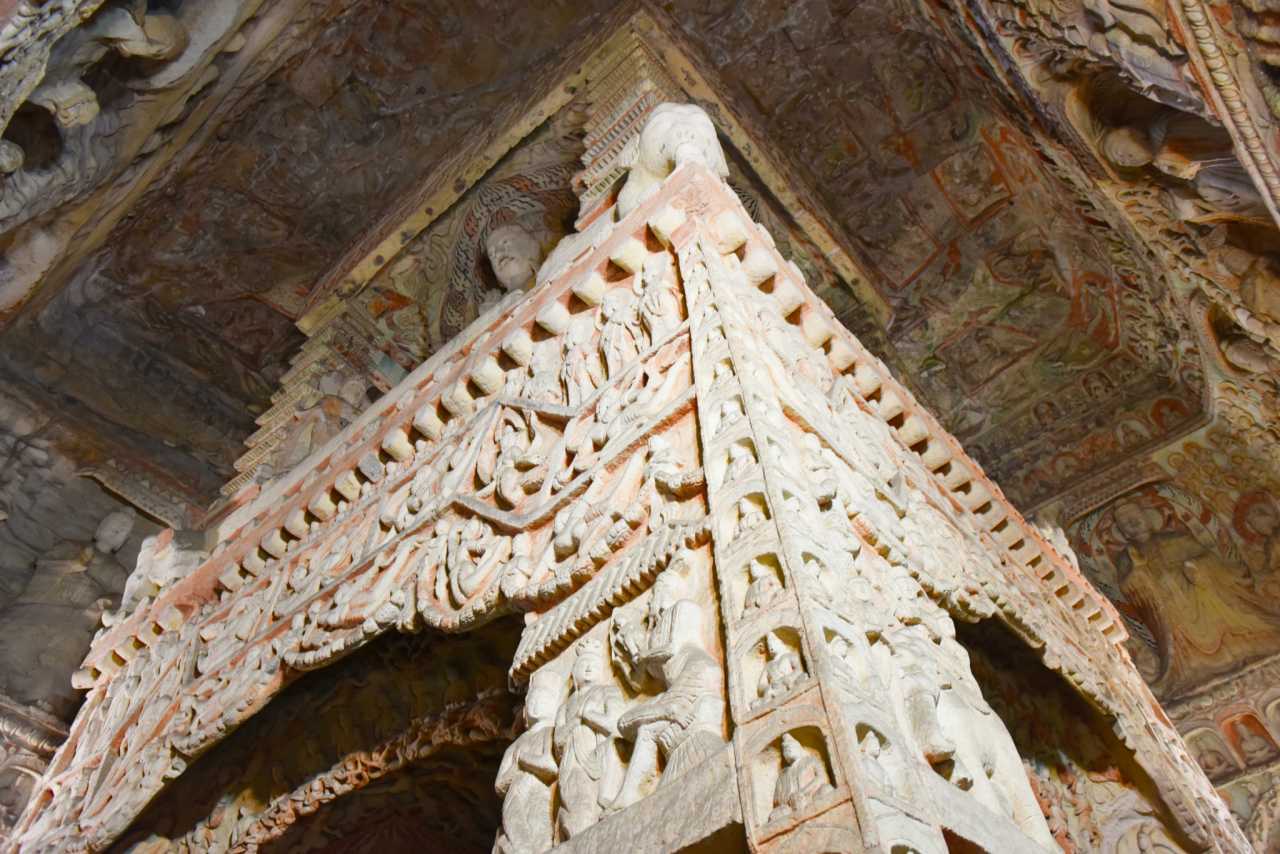
Cave 6 is undoubtedly Yungang’s most carefully designed, most ornate, and richest "tower-temple" cave. The 15-meter central tower has upper and lower levels; the upper "Four Buddhas" wear broad robes with majestic bearing, and at the four corners are three-dimensional nine-tier towers with three niches and three Buddhas per tier, with projecting eaves. On the lower level, each side opens large double-layered niches, each different: south—Śākyamuni in full lotus; west—Amitābha in relaxed pose; north—Śākyamuni and Prabhūtaratna seated together; east—Maitreya cross-legged on a lotus, forming a five-Buddha scheme (four cardinal plus central).
 Yungang Grottoes
 Yungang Grottoes
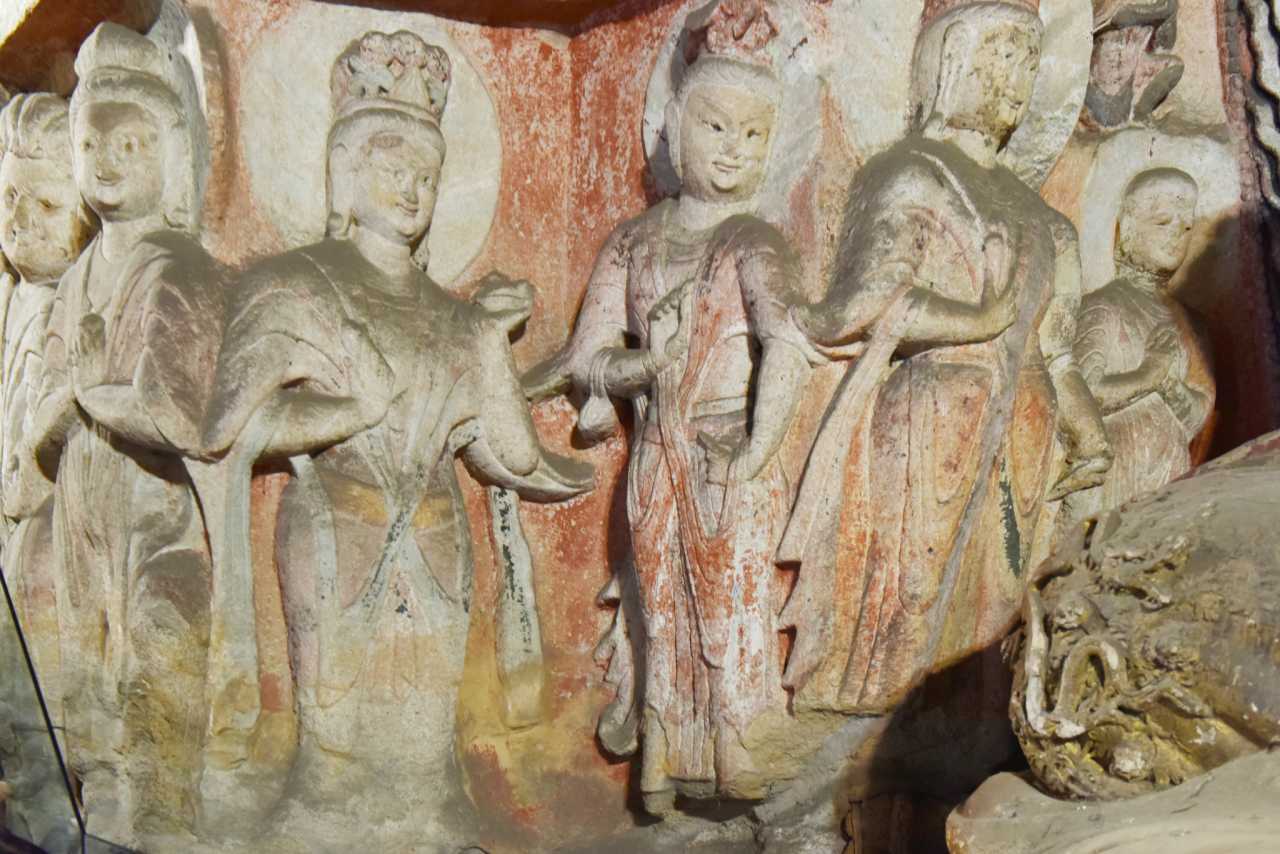
The four walls are packed with Buddhas, Bodhisattvas, Arhats, and flying celestials. The ceiling features the 33 heavens and many riders—dazzling to behold. The lower bands on walls and tower combine reliefs with niches in a continuous narrative, primarily from the "Past and Present Causes and Effects Sutra" translated by Guṇabhadra in Liu Song, depicting Śākyamuni’s life from conception and birth as a prince of Kapilavastu, through court life, the drum-shooting wedding, inspirational tours, resolve to renounce, ascetic practice, and finally enlightenment and teaching.
 Yungang Grottoes
 Yungang Grottoes
 Yungang Grottoes
 Yungang Grottoes
 Yungang Grottoes
 Yungang Grottoes
 Yungang Grottoes
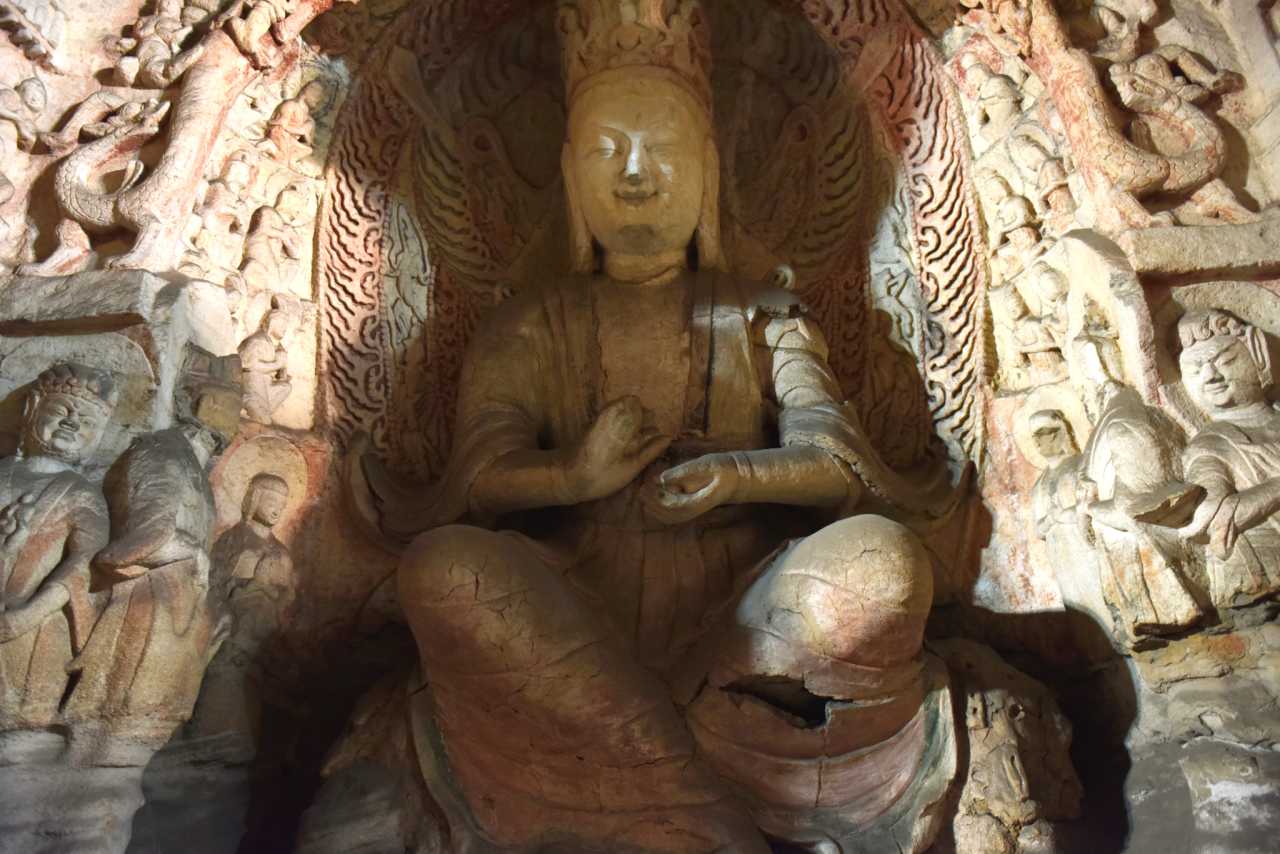
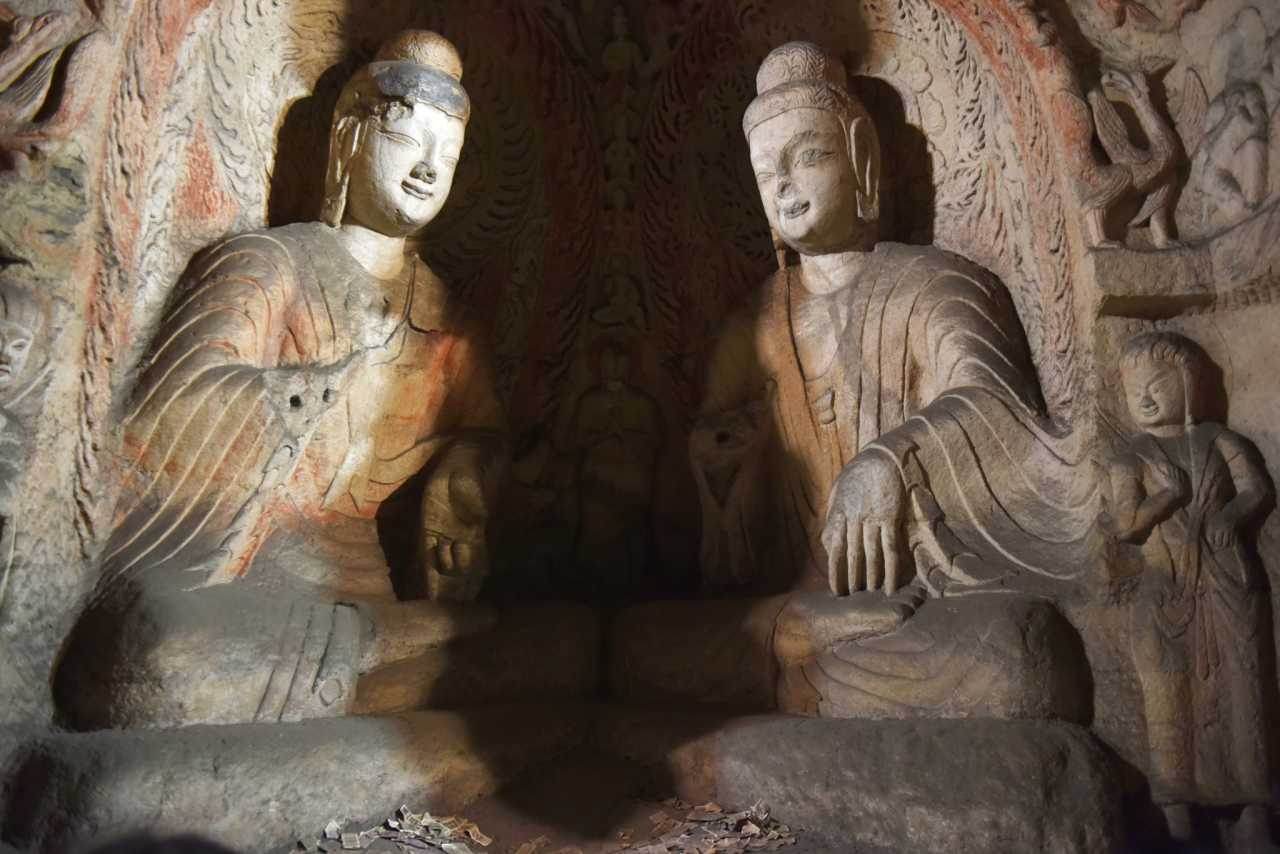
On the lower north side of the tower, a pivotal pair of seated Buddhas clearly marks a shift in era. They no longer wear the right-shoulder-bared Gandhāran-style robes common in early Yungang, but broad, Han-style secular garments. Their faces are fuller, shoulders narrowed, and expressions gentle and introspective—unlike the robust, awe-inspiring foreign flavor of the early "Tanyao Five Caves." Art historians call this the precursor to the "Taihe style" or "Longmen style."
 Yungang Grottoes
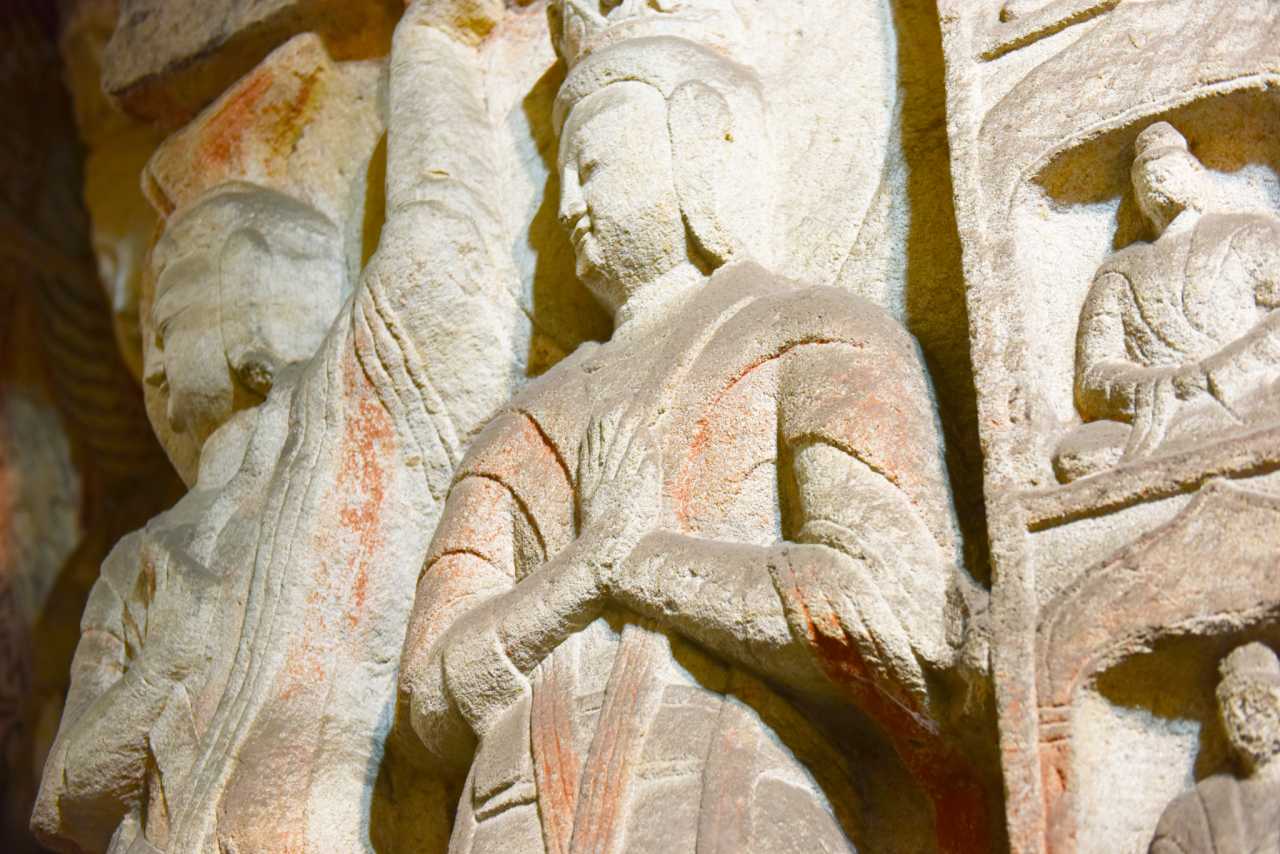
Around the niches and backlights are progressively layered decorative bands. Lotus-petal motifs symbolize purity and sanctity; another recurring plant motif—the honeysuckle (scroll) pattern—is particularly notable. Resilient even in harsh environments, it signifies perseverance and the never-ending cycle of rebirth. Together with lotus and flames, it forms the core vocabulary of Northern Wei Buddhist ornament, whose abstract rhythmic beauty reinforces the religious spirit.
 Yungang Grottoes
 Yungang Grottoes
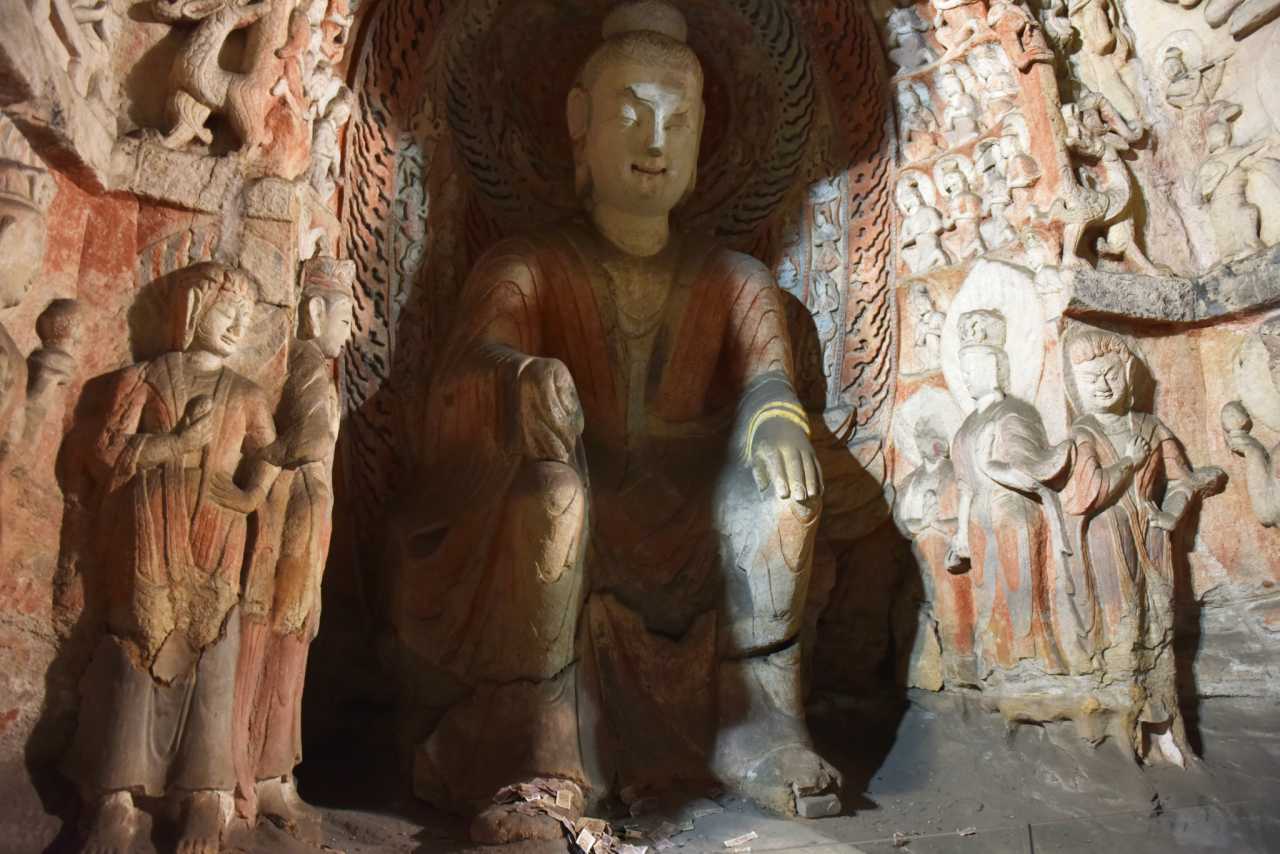 Yungang Grottoes
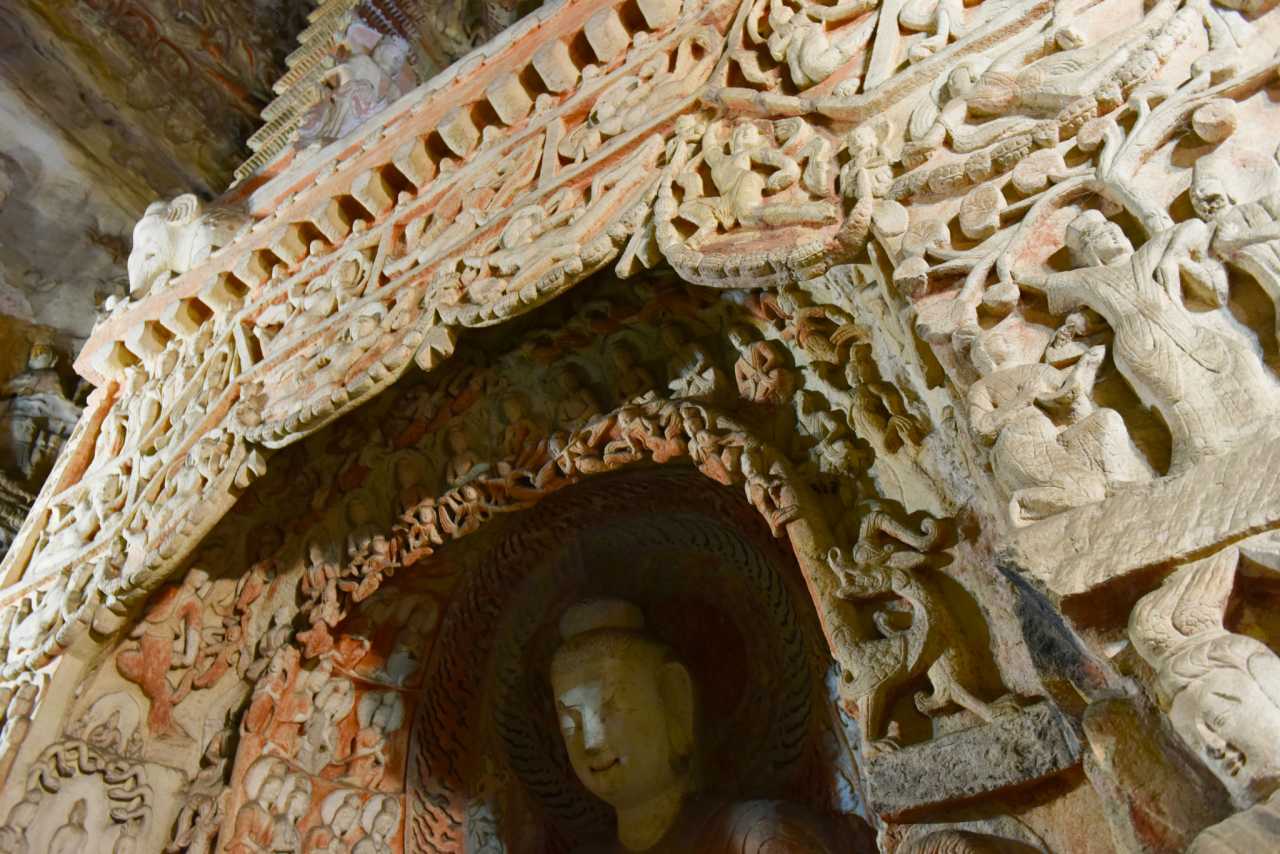 Yungang Grottoes
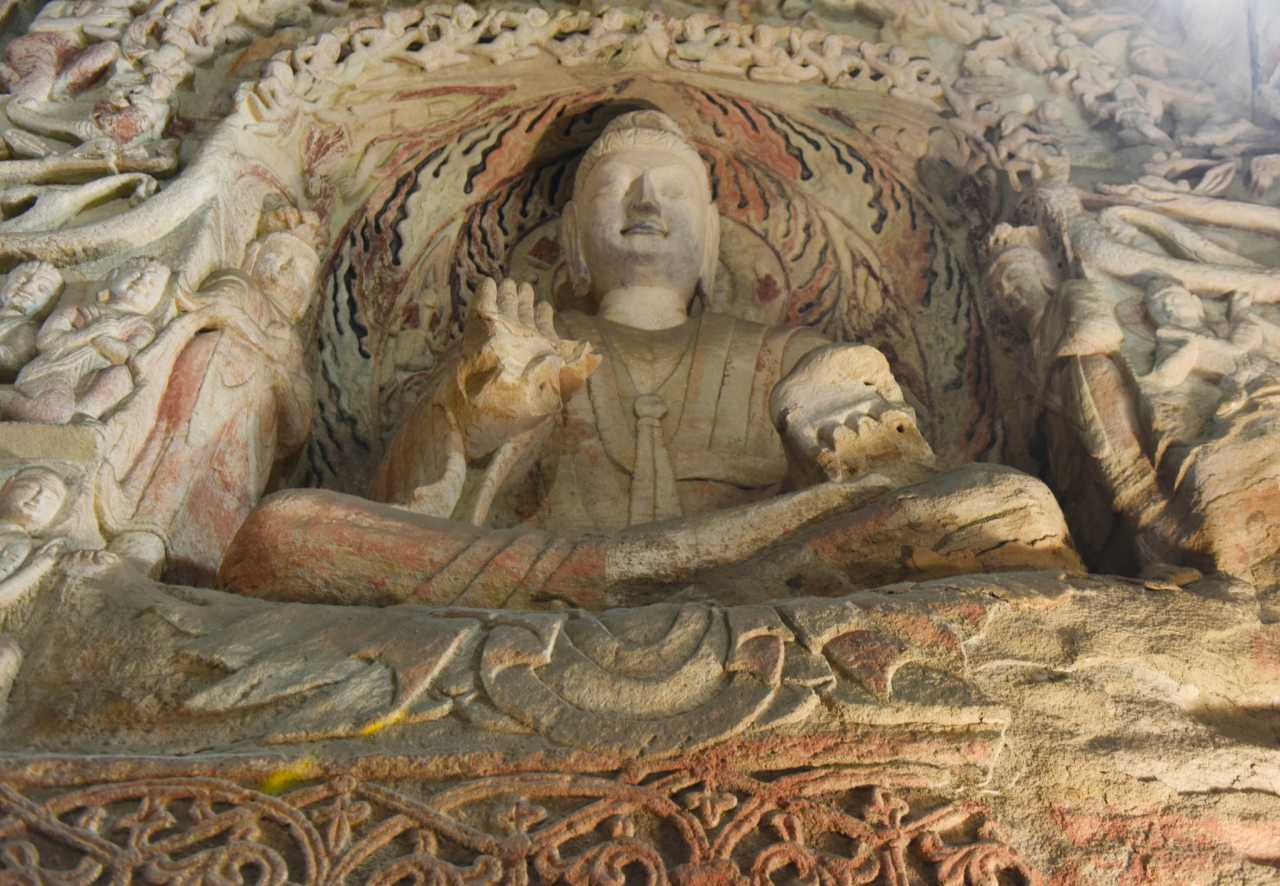 Yungang Grottoes
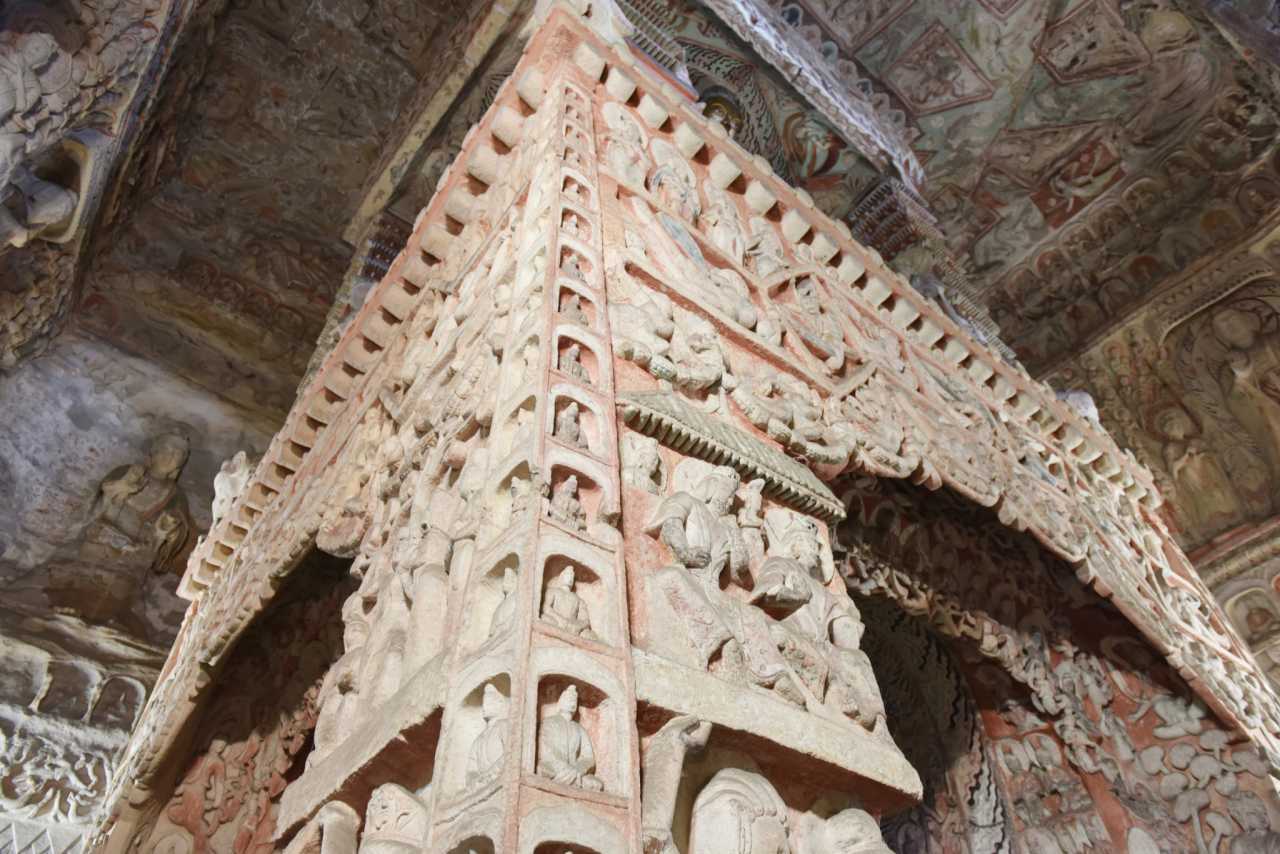 Yungang Grottoes
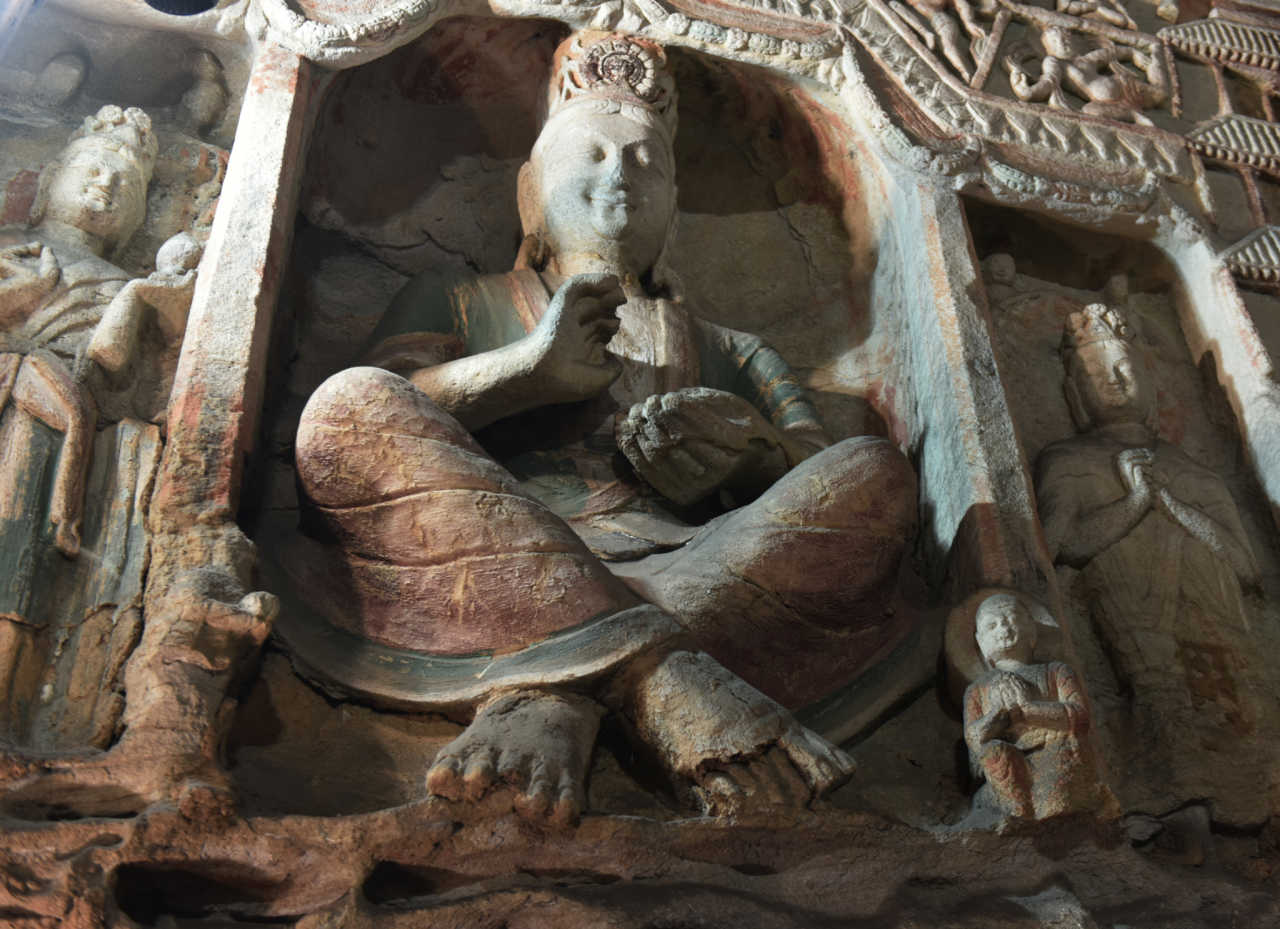 Yungang Grottoes
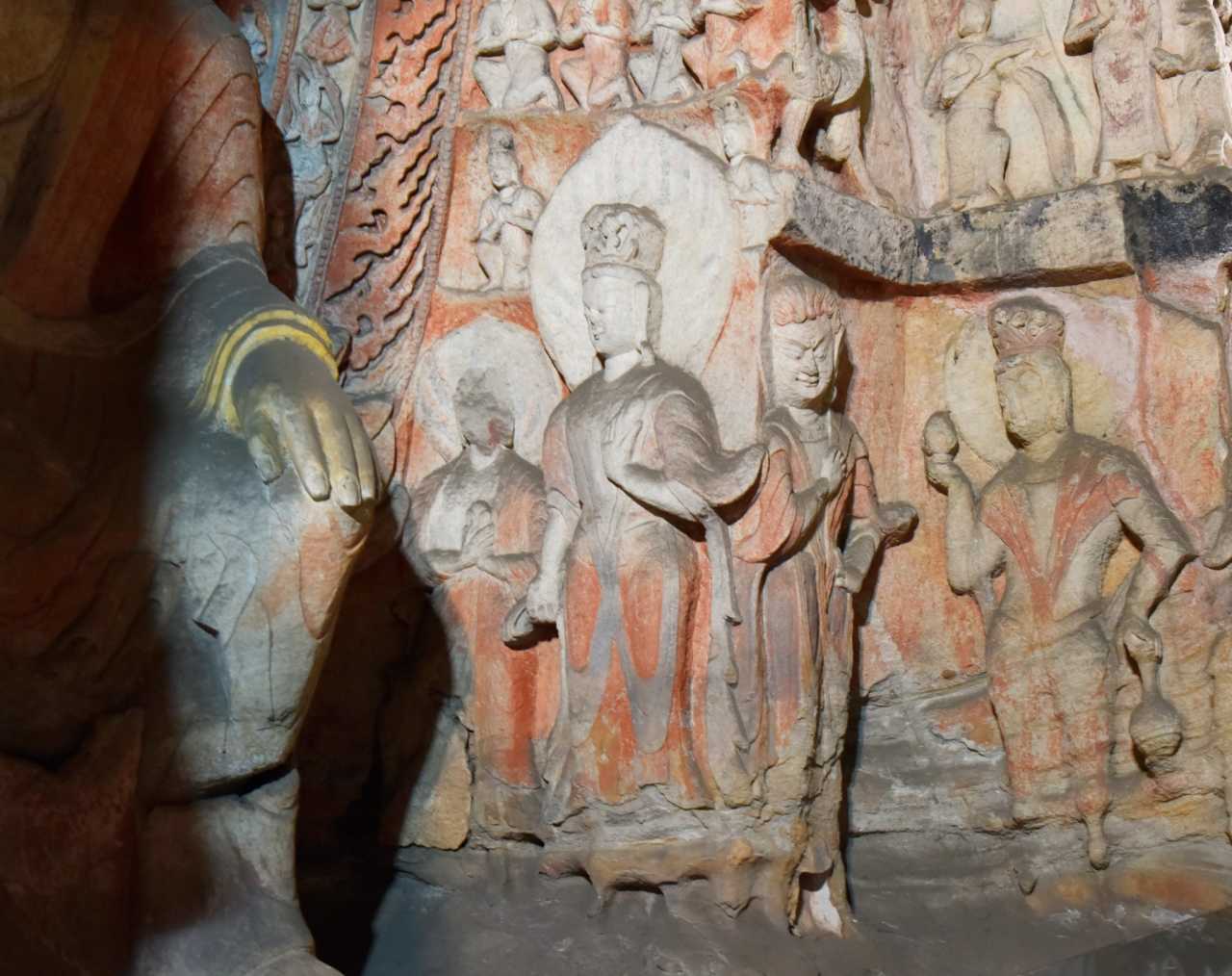
Cave 6 also boasts Yungang’s most intact and grand "Vimalakīrti Debates Illness" scene. In the niche, Śākyamuni sits in the center; to the right is Vimalakīrti; to the left Manjusri. Manjusri, draped in a long robe, tilts his head, bends his legs, and points his right index finger toward his chin, debating with Vimalakīrti. Vimalakīrti, mixing Hu and Han attire, wears a pointed hat and wide-sleeved robe, reclines on a couch holding a whisk fan, eyes narrowed in a calm smile. Based on the "Vimalakīrti Sutra: The Chapter of Manjusri’s Inquiry into Illness," the scene recounts how the layman Vimalakīrti feigned illness and did not attend the assembly; when no disciple dared to visit, "wisdom first" Manjusri went and sparred brilliantly with him—an enduring Buddhist story.
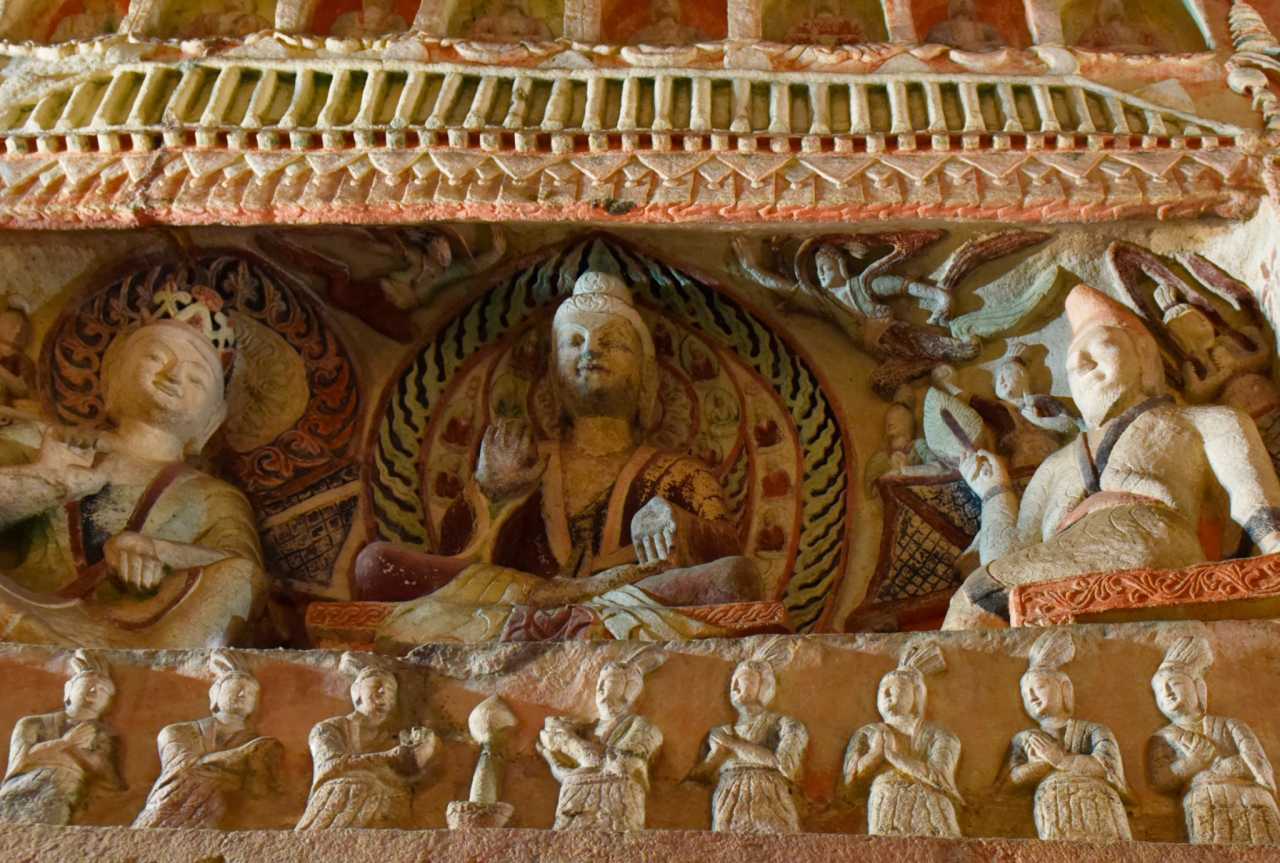 Yungang Grottoes
Many believe that cave 6 and adjacent cave 5 form a symbolic pair. Cave 5 houses Yungang’s tallest Buddha at 17 meters and is widely thought to be modeled on Empress Dowager Feng, grandmother of Emperor Xiaowen, who profoundly influenced Northern Wei. Cave 6 is considered to correspond to Emperor Xiaowen himself. This "grandmother–grandson" pairing cleverly fuses the imperial "seven temples" system with Buddhism’s "seven Buddhas" concept. By opening caves for ancestors and oneself, the Northern Wei court merged secular filial piety with Buddhist merit, building a political theology of "the emperor is Tathāgata." Thus the central tower of cave 6 is not only a religious monument but also a milestone declaring the legitimacy of imperial power and cultural confidence.
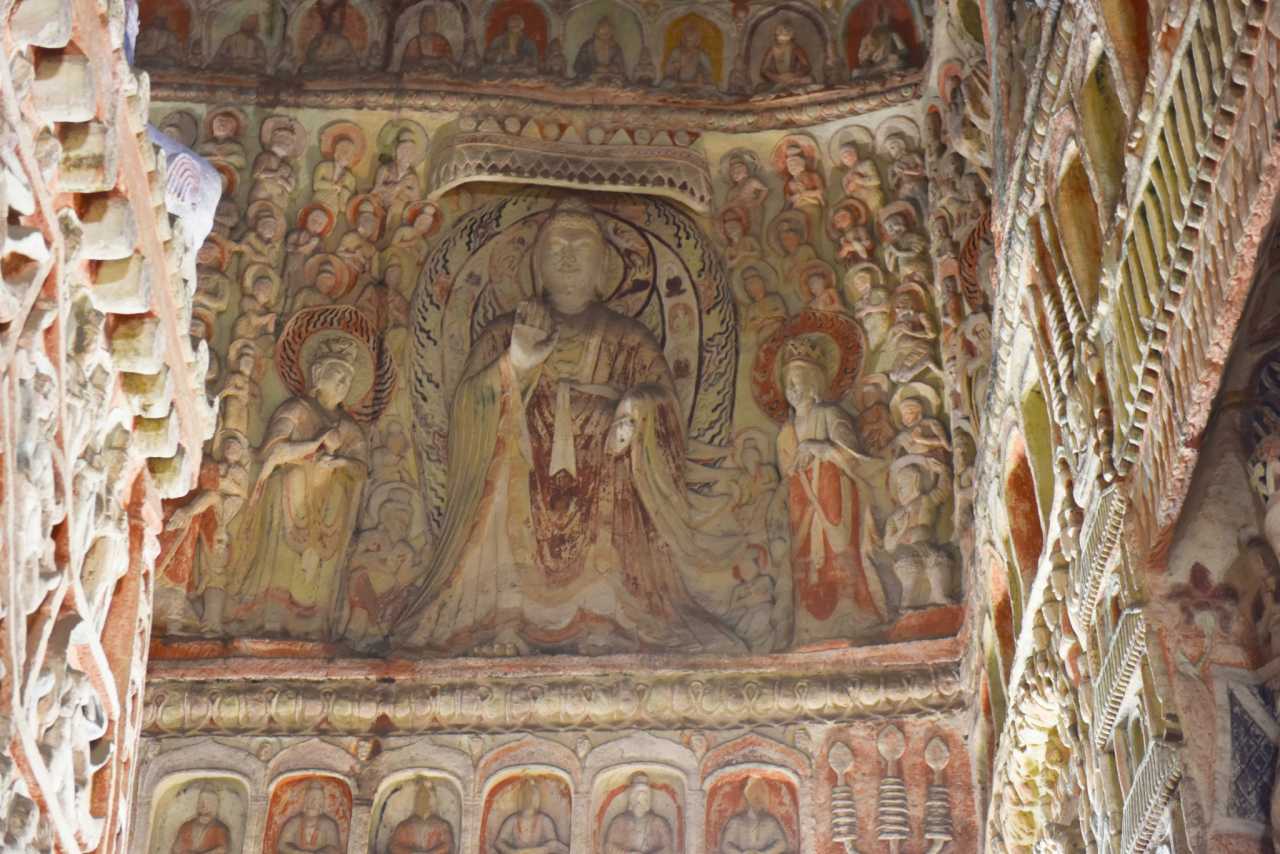 Yungang Grottoes
Caves 9 and 10 have similar layouts with front and rear chambers. The long rectangular front chamber walls are densely carved with Buddhas, flying celestials, flowers, and creatures, leaving almost no empty space. Despite the profusion, the carvings are symmetrically arranged with strong layering. On the north lintel of the front chamber, the Mount Sumeru carving stands out, formed with two dragons coiled mid-mountain—wide below, narrow middle, small top. Flanking figures of celestial deities with three heads and four arms or five heads and six arms hold sun, moon, and bows, seated in majesty. This famed Yungang Sumeru scene tells of the battle among the two Dragon Kings, Indra, and the Asura King.
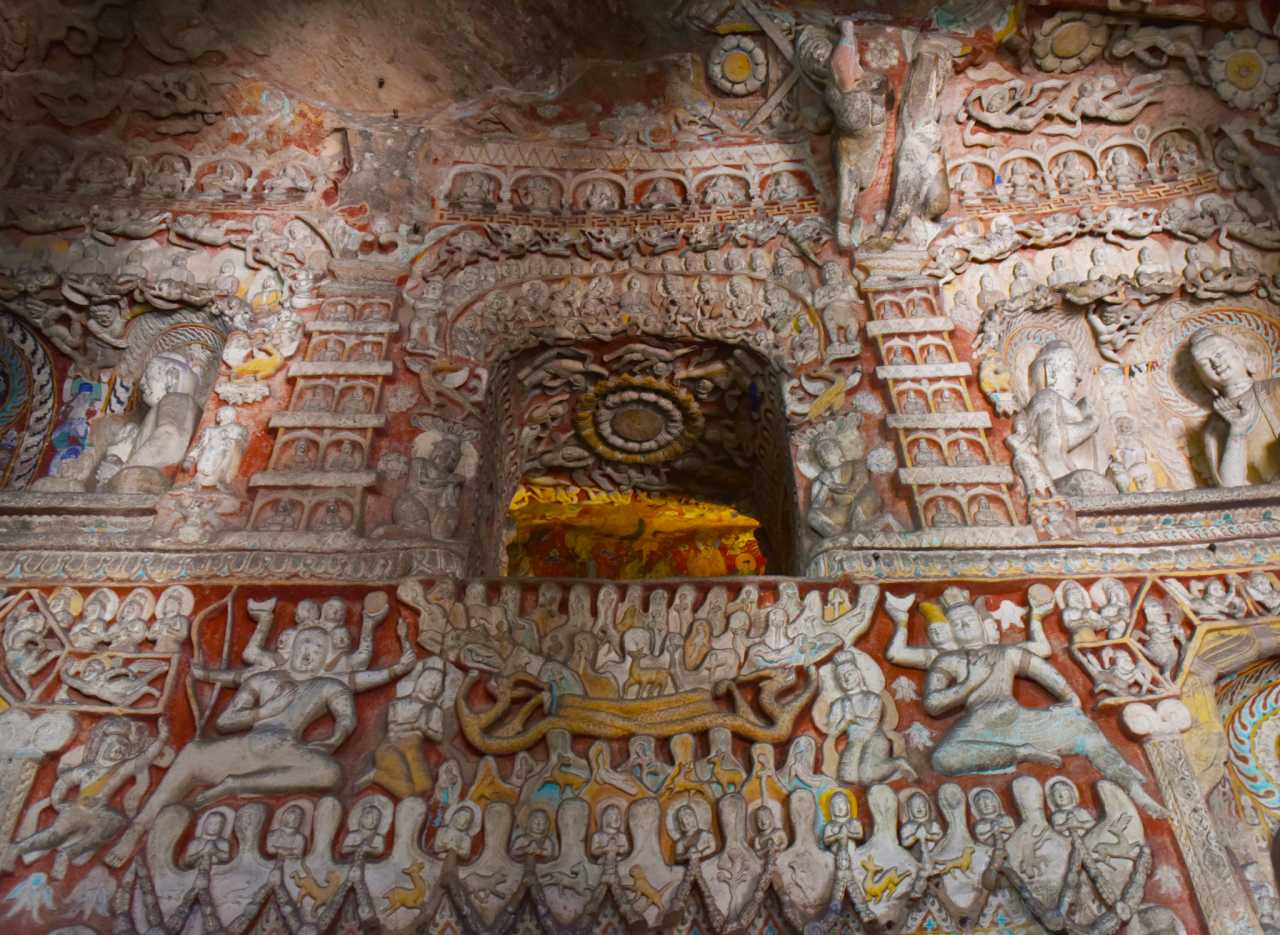 Yungang Grottoes
The east and west walls of the front chamber each have three-bay, wood-like pavilion niches. The images are kindly-faced, the Bodhisattvas serene. Beneath the Jambu tree, a half-lotus contemplative Bodhisattva rests chin-in-hand, pondering the Four Noble Truths. The guardians by the door wear bird-feather crowns and hold vajra pestles, yet their expressions are gentle. More intriguing is the appearance of Ionic column forms in Yungang.
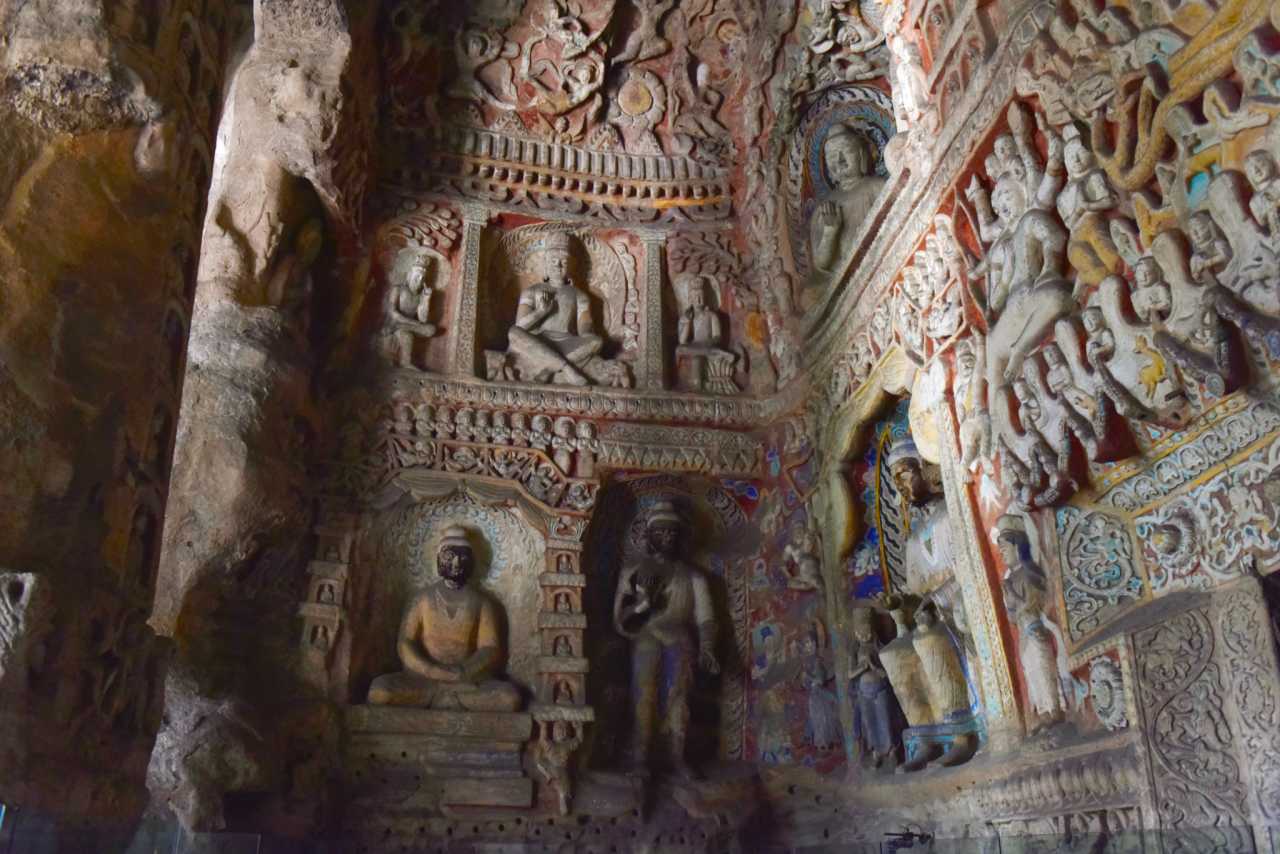 Yungang Grottoes
We know Yungang was cut in the 5th century, about nine centuries after the earliest Greek temples. Was Liang Sicheng right in writing about the history of Buddhist images that Chinese art’s native bloodline was strongly infused by foreign influence, traceable to the Greek classical sources, spreading across Persia and India, then via the Western Regions and by routes through Gandhara and Tibet into China? Yungang stone carvings are among the clearest attestations of this phenomenon.
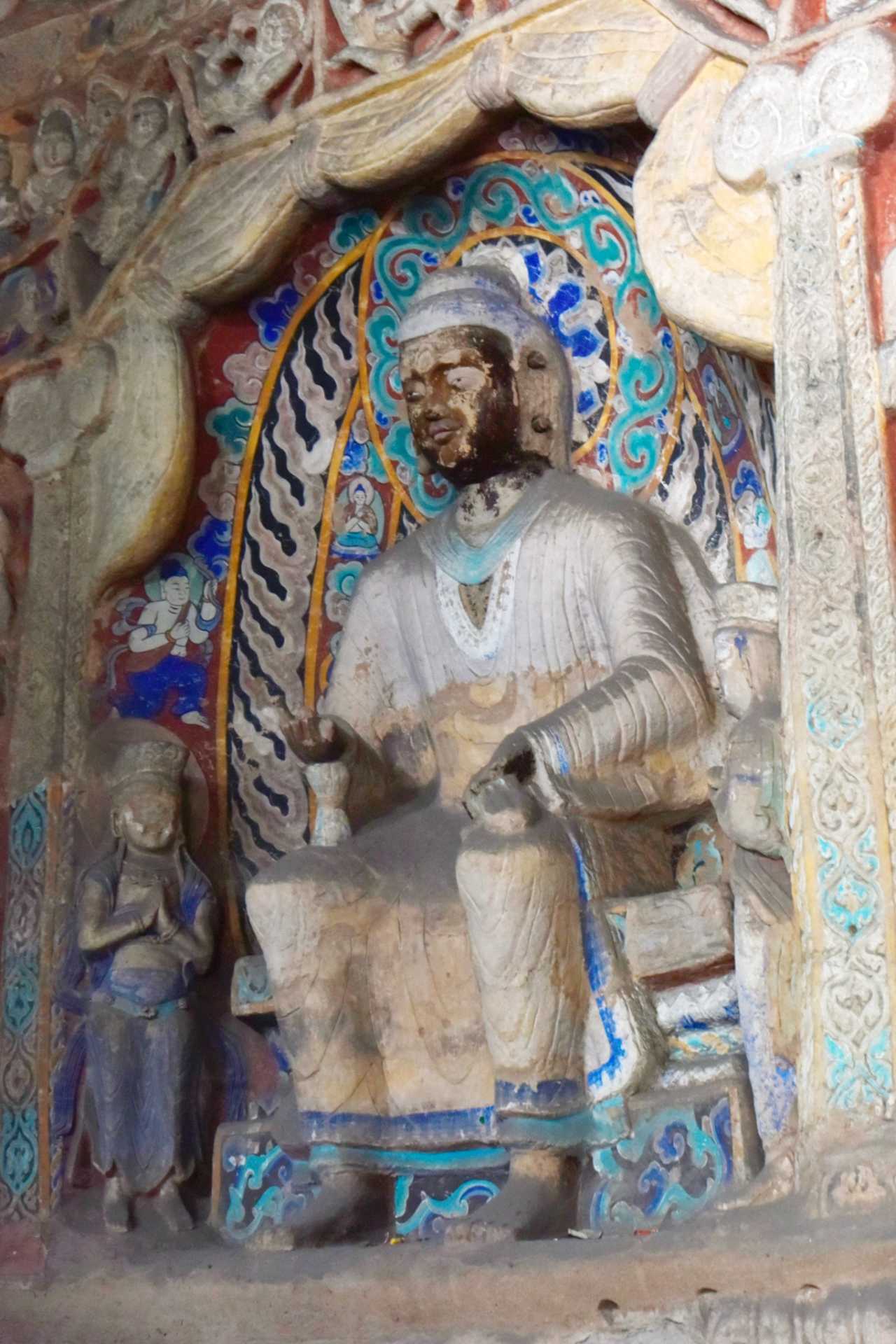 Yungang Grottoes
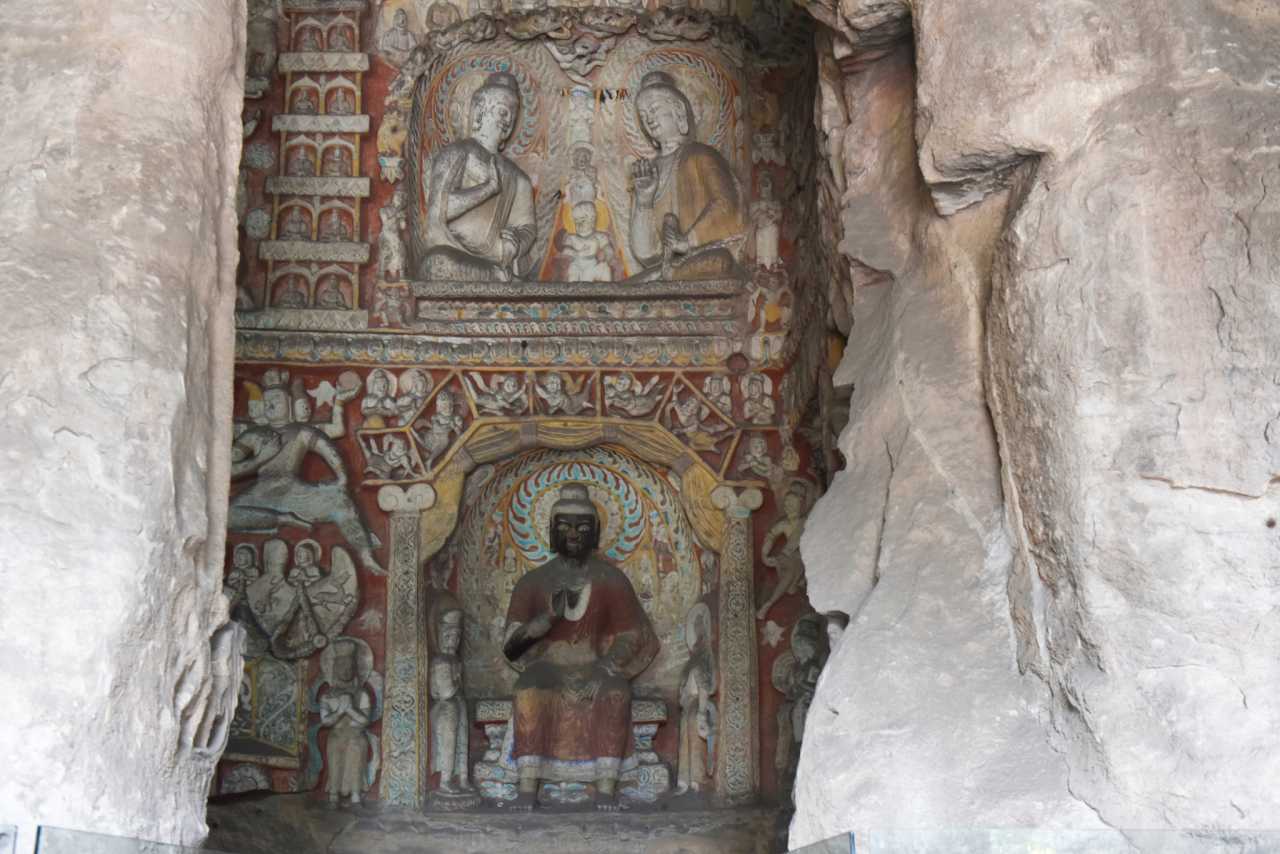 Yungang Grottoes
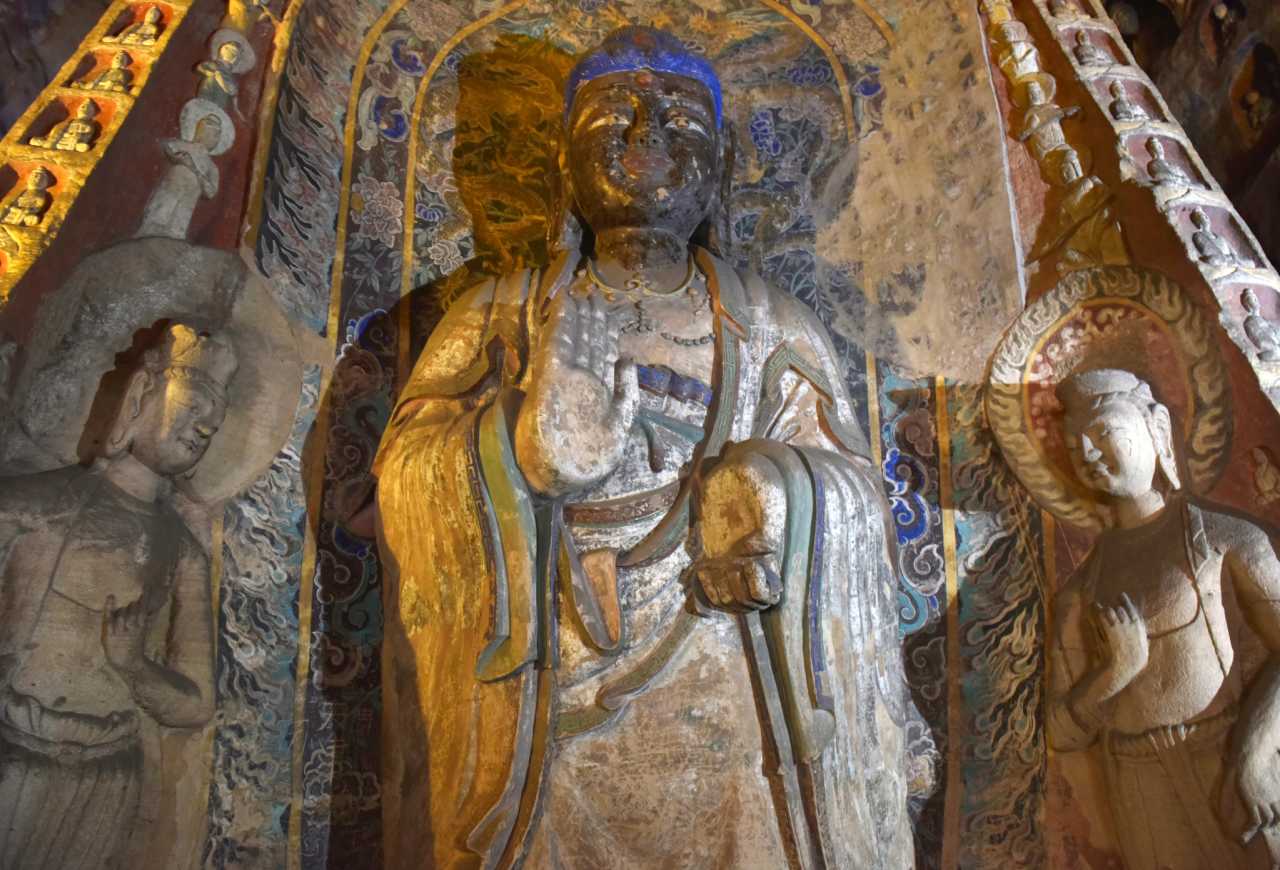
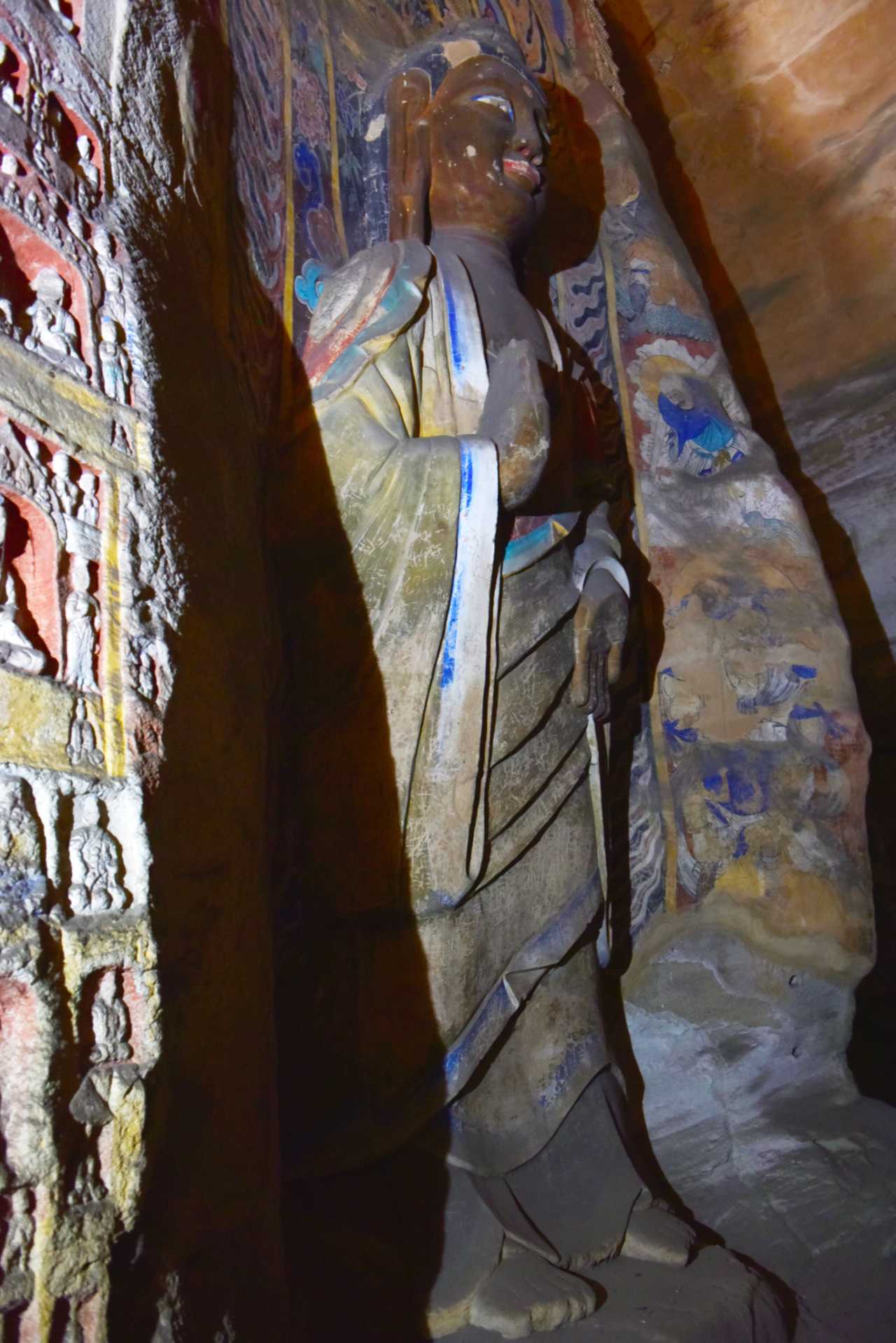
The Five Splendid Caves (9–13) are beloved for their brilliance, but cave 11 is unique because its sculptures are non-uniform. The styles clearly belong to different carving periods, showing mid-period features and also the late style after Emperor Xiaowen moved the capital to Luoyang. For example, the flanking Bodhisattvas beside the standing Buddha on the south side of the central tower have full faces, slender figures, and elegant posture; their style and attire differ greatly from Northern Wei figures and resemble Liao clay sculpture like that in Datong’s Huayan Temple. They are widely believed carved by Liao artisans, making them Yungang’s latest carvings.
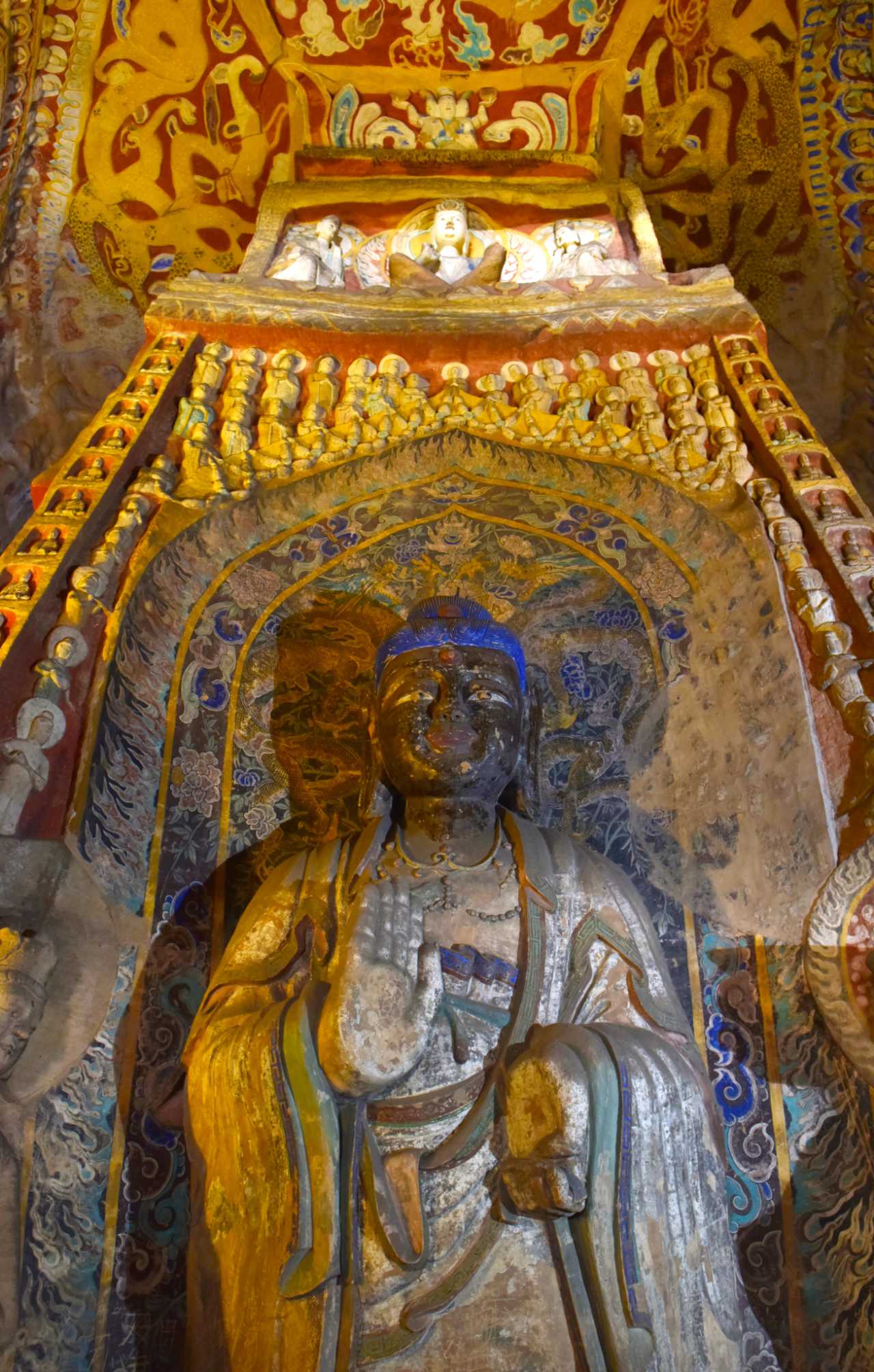 Yungang Grottoes
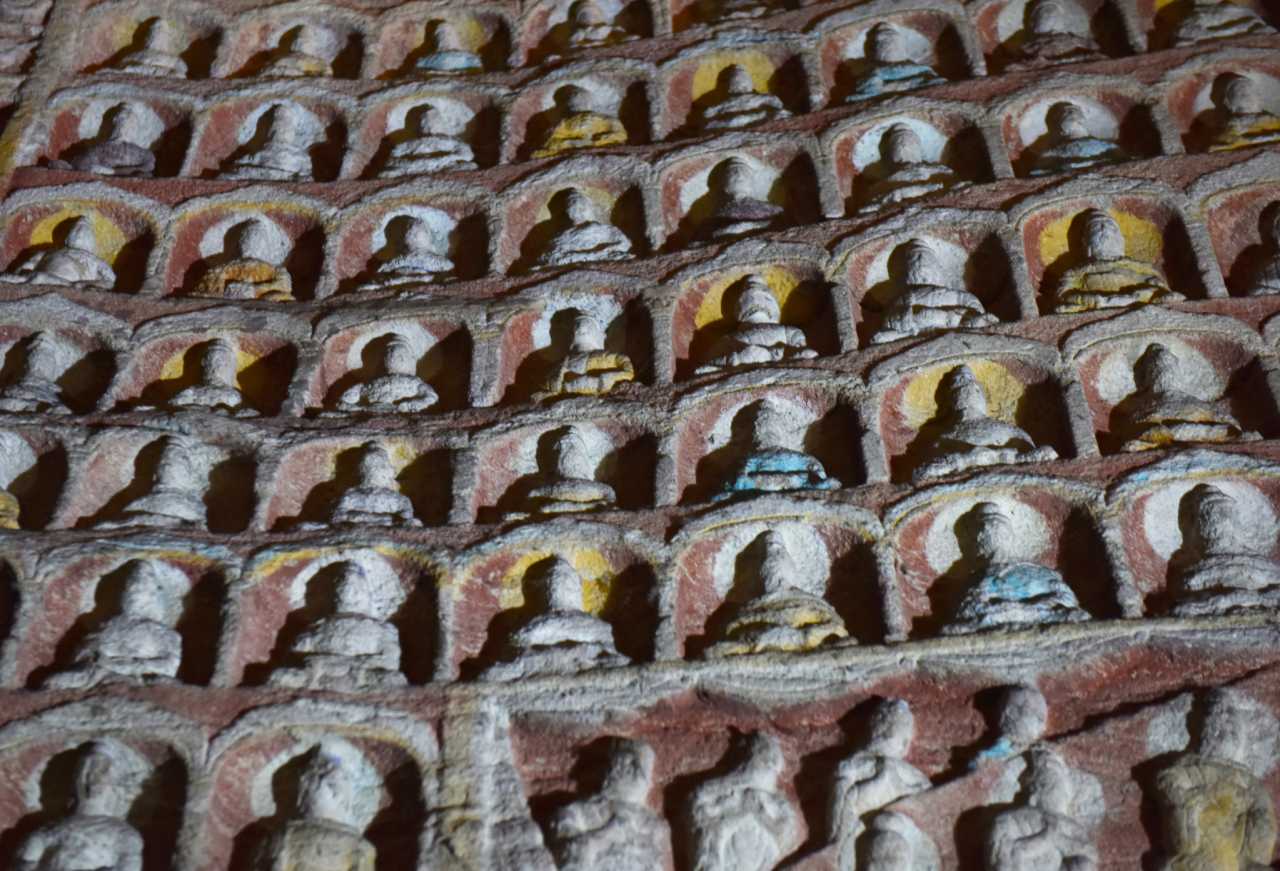
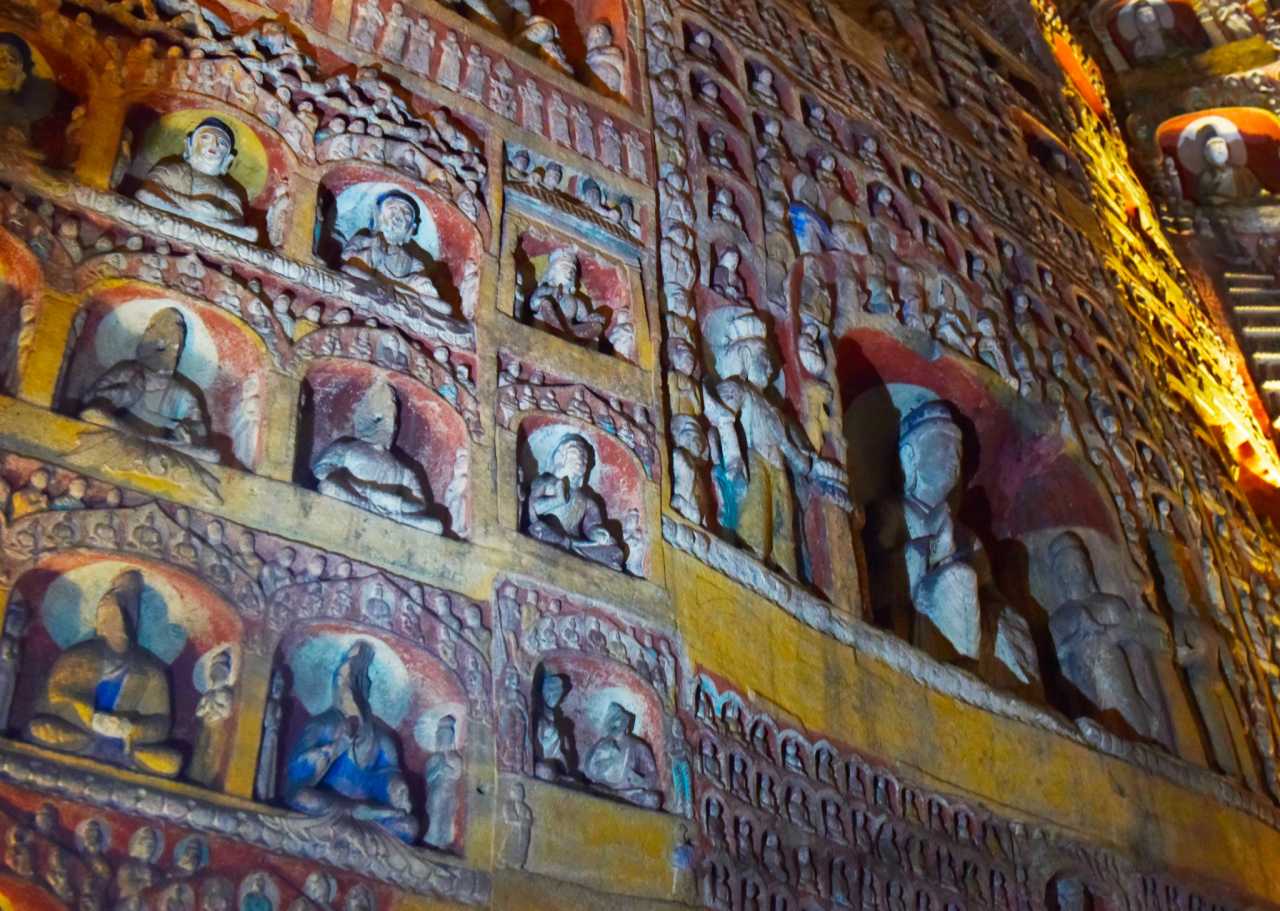
This phenomenon likely relates to the cessation of official carving by the Northern Wei. As court-sponsored work stopped, devotees, monks, and elites began rapidly carving small niches that broke the original layouts.
 Yungang Grottoes
 Yungang Grottoes
 Yungang Grottoes
 Yungang Grottoes
 Yungang Grottoes
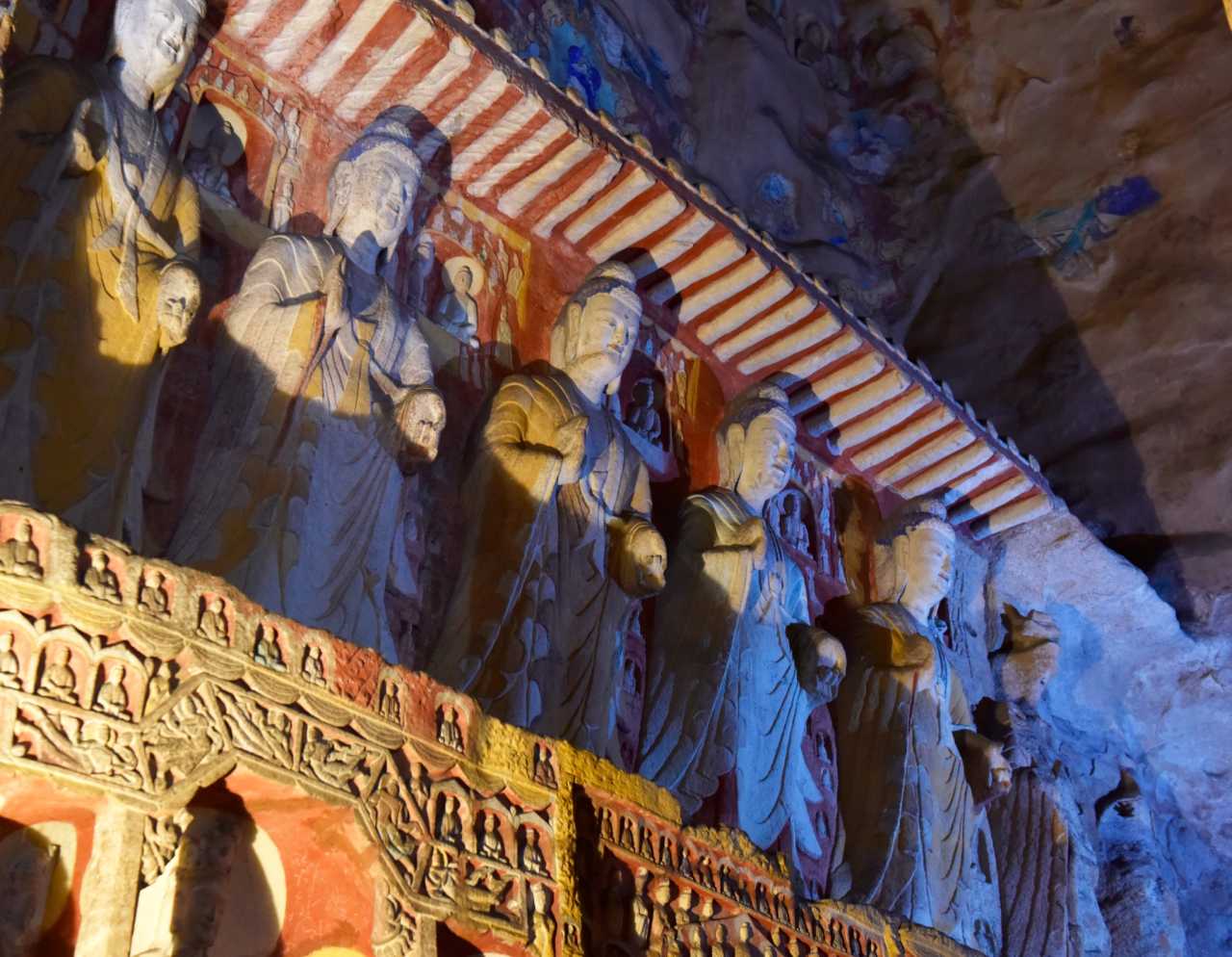
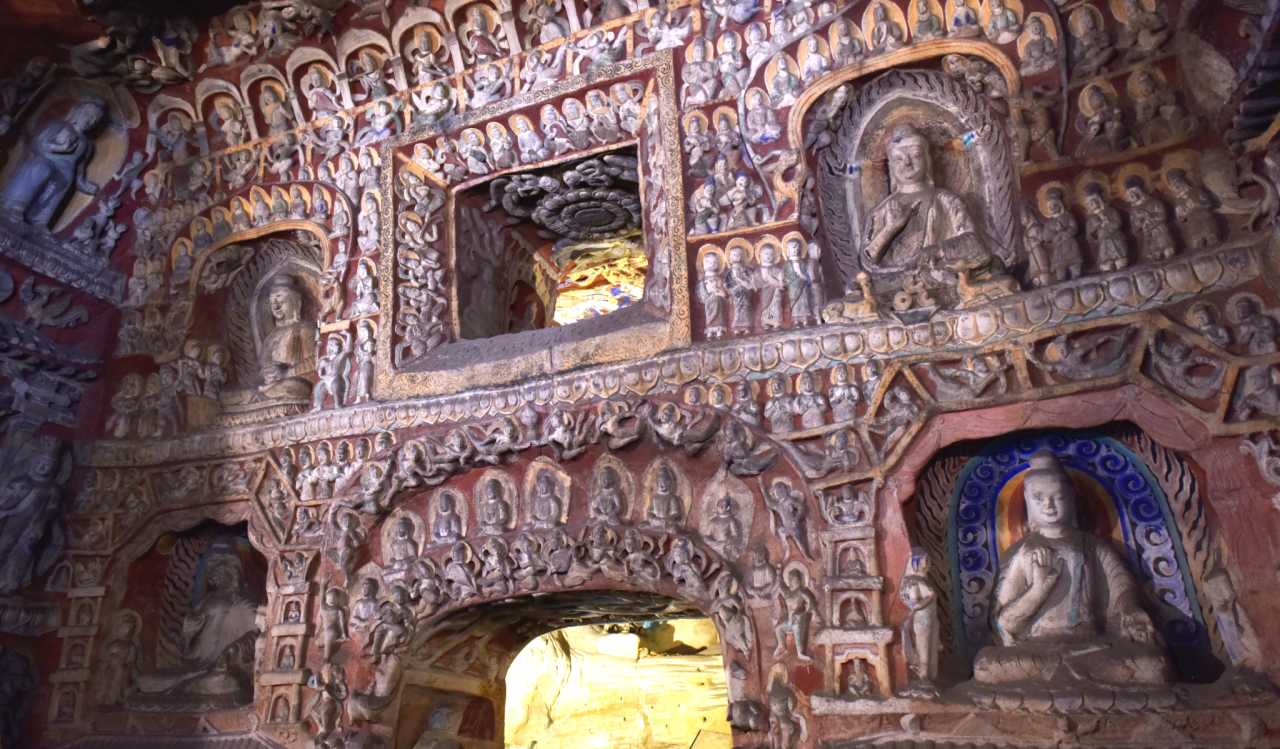
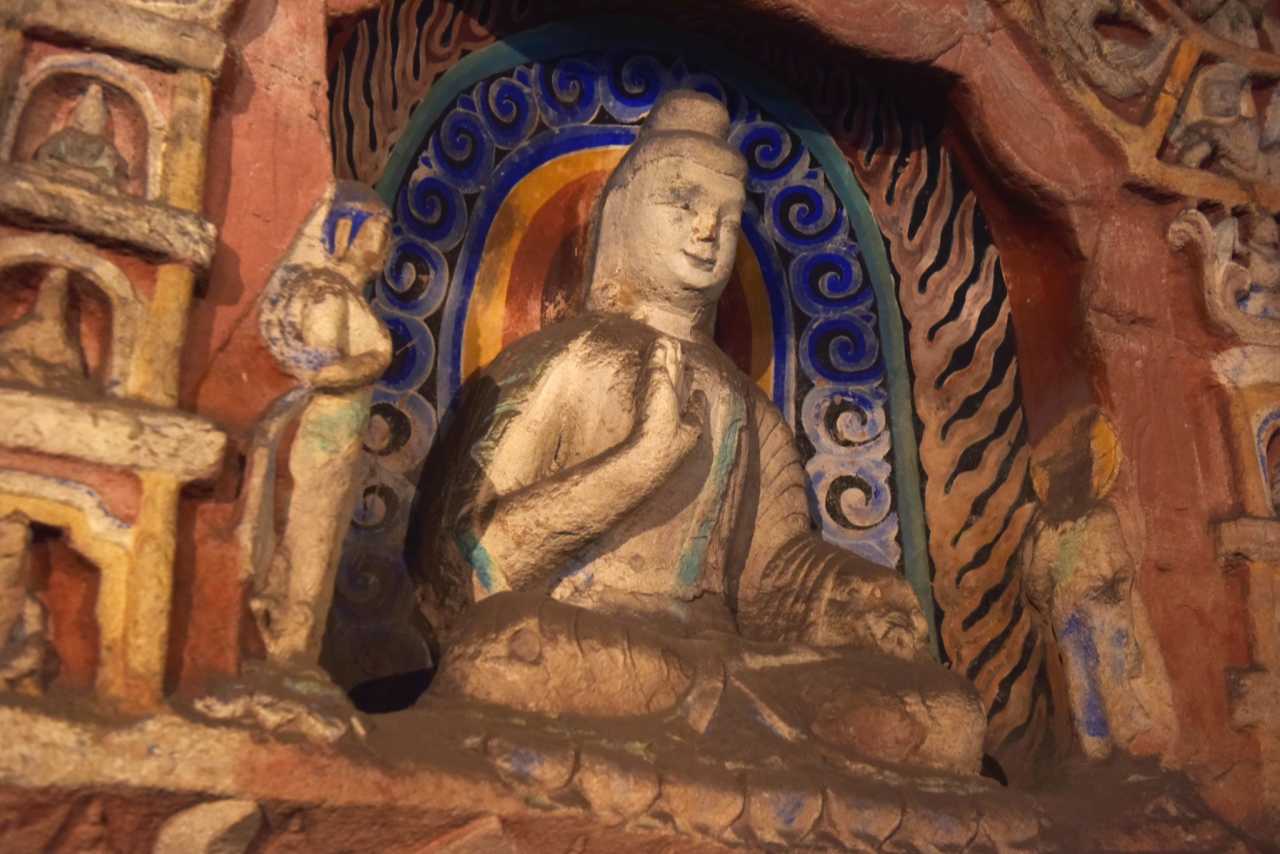
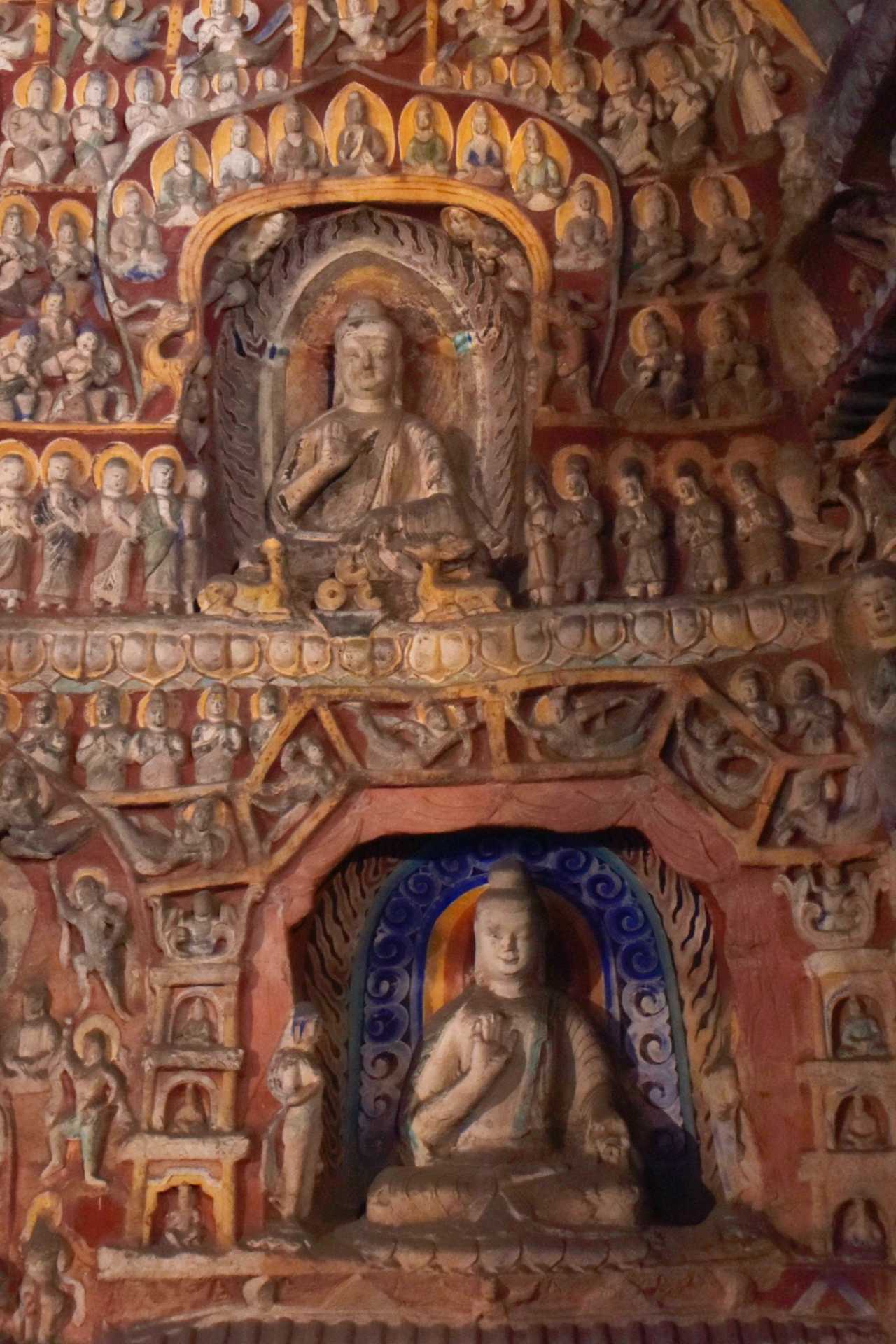
Cave 12 has the strongest artistic atmosphere and is called the "music cave." The rectangular plan divides into front and rear chambers. Two octagonal thousand-Buddha columns in the front support wood-like eaves. The east and west walls each have three-bay hall-shaped niches in typical Chinese gallery style. The upper north wall has rows of heavenly musicians in niches, from west to east, holding finger-flutes, paired drums, panpipes, pipa, transverse flutes, zithers, pipa, bili, vertical konghou, qin, hourglass drums, yizui flutes, xun, and frame drums—graceful and splendid. Below, sixteen flying celestials chase and dance in pairs; a band uses three hourglass drums of varying sizes.
 Yungang Grottoes
 Yungang Grottoes
 Yungang Grottoes
The ceiling’s celestial dancers and musicians are each consummate. Sixty-four flying dancers with high chignons and twenty reverse-haired dance gods, with streaming ribbons, slender bodies, bare feet, circle eleven giant lotus blooms, dancing with poised expressions and soft trailing scarves—an inexhaustible poetic mood. Around them at the edges, eight reverse-haired yaksha musicians fly—robust bodies, deep-set eyes, bulging pupils—richly exotic.
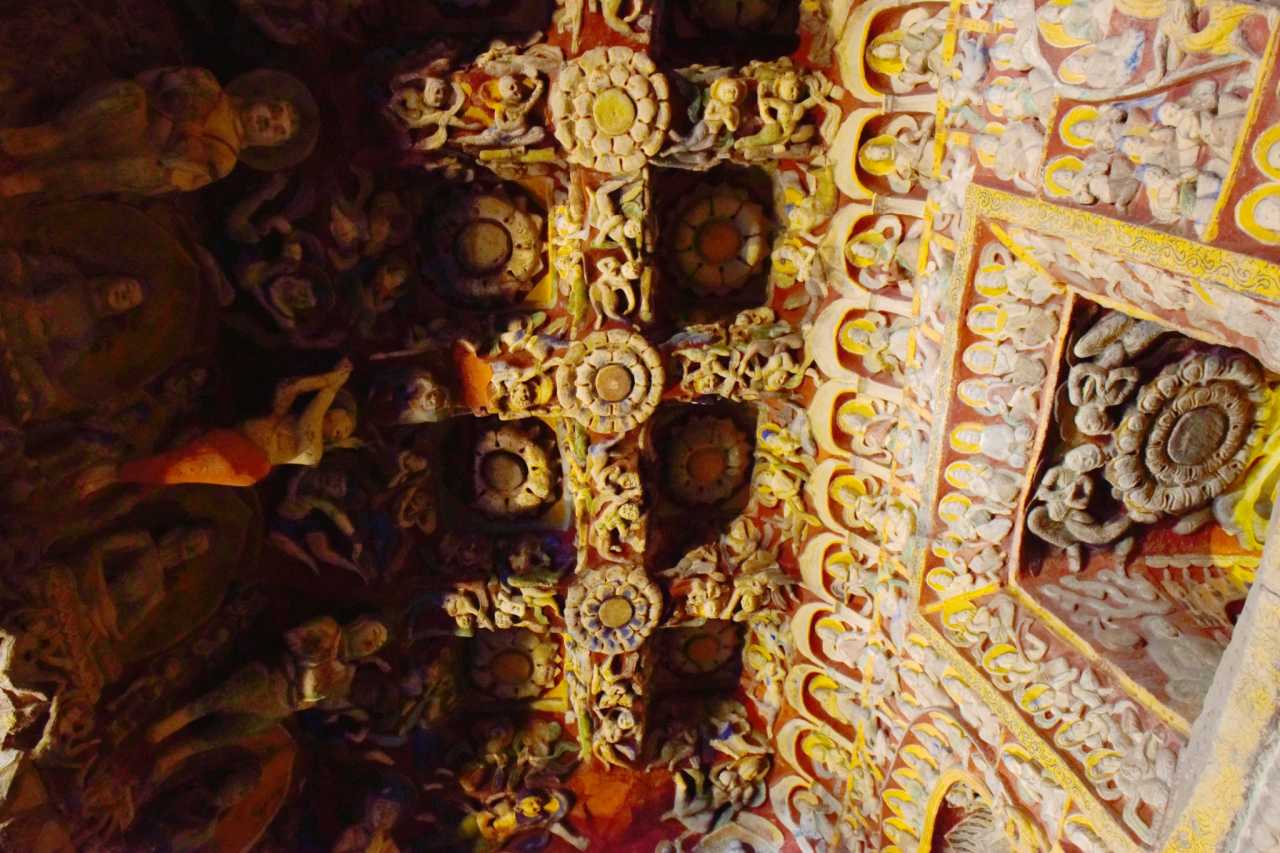 Yungang Grottoes
The west wall has three tiers: the first tier’s south side shows the story of "Subduing the Fire Dragon" and to the north a seated Buddha under a canopy, with remaining flying celestials and donors; the second tier has a hall-shaped niche divided by two square pillars into three bays, with a cross-legged Buddha in the center and flanking Bodhisattvas, plus reclining Buddhas in the side bays and more Bodhisattvas outside; above are flying celestials and ornaments, with ridge triangles and Garuda at the roof, and bracket sets and herringbone struts under the eaves; the third tier’s north side shows the story of "King Aśoka’s Gift of Earth" and the south a seated Buddha with two Brahmins.
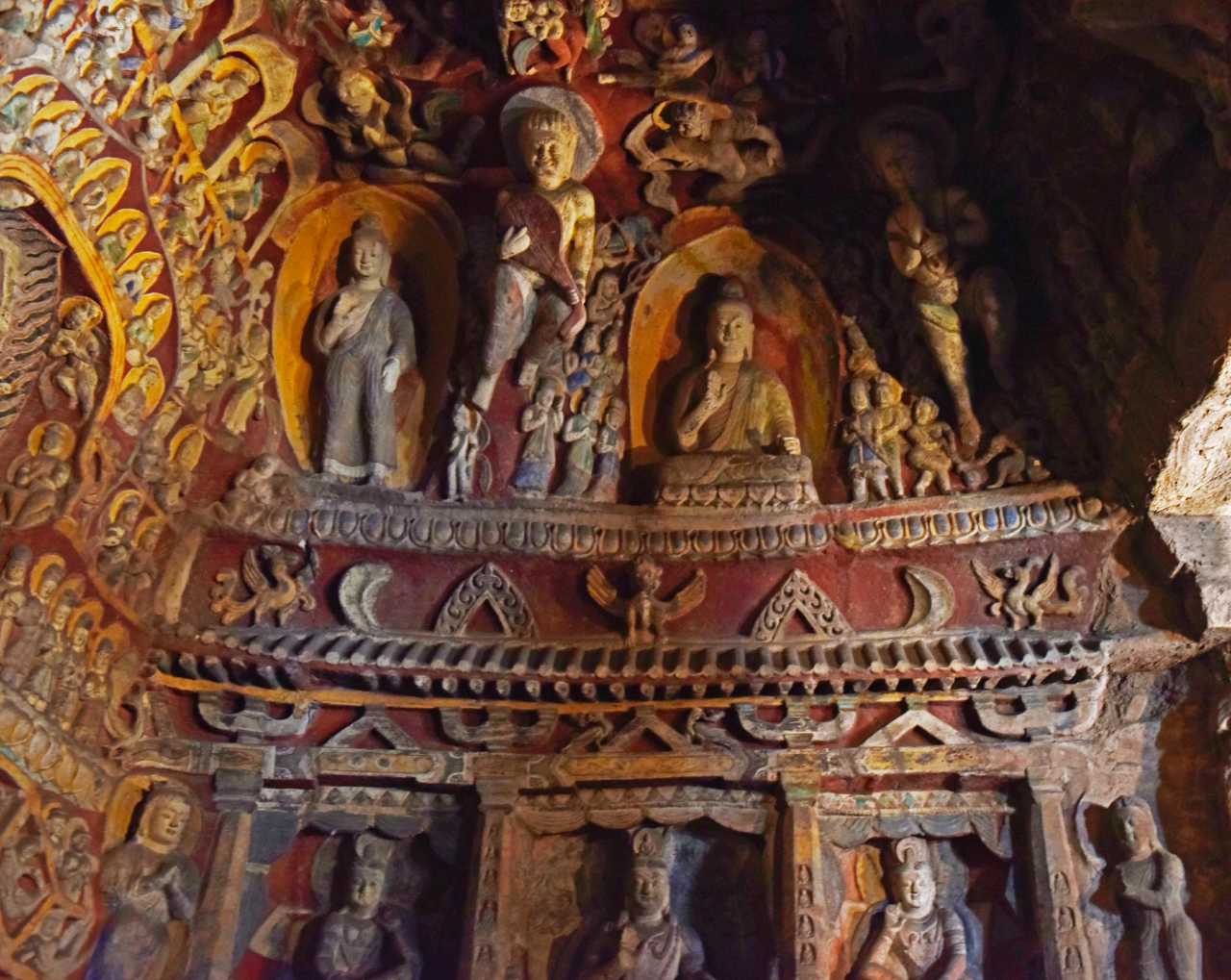 Yungang Grottoes
The east wall also has three tiers: the first has a round-arched niche with two Buddhas seated side by side; the second has a hall-shaped niche with a cross-legged Bodhisattva in the center and flanking Bodhisattvas, with contemplative Bodhisattvas in the side bays and donors outside; the third tier’s north side shows the "Rutuṅga Jātaka" and the south the "Subduing Māra and Achieving Enlightenment" story.
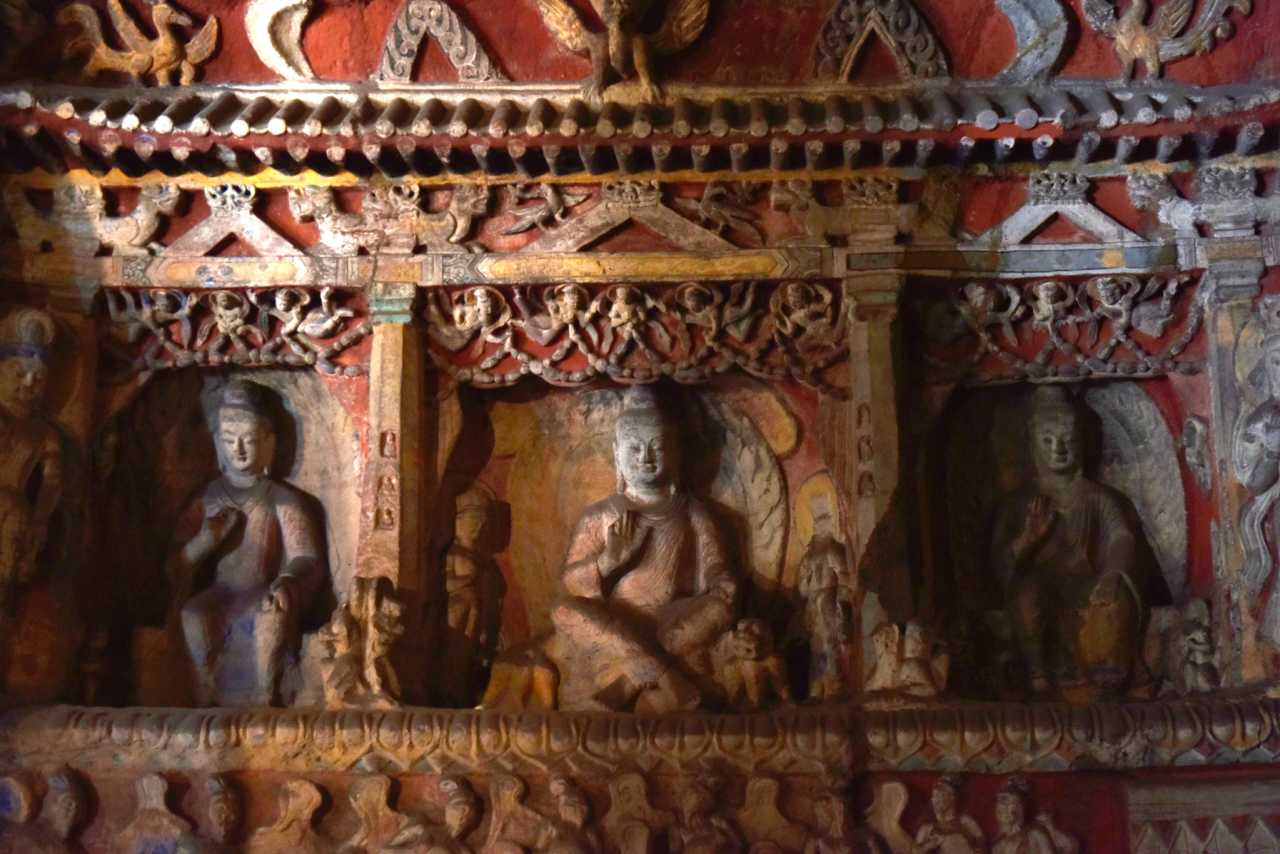 Yungang Grottoes
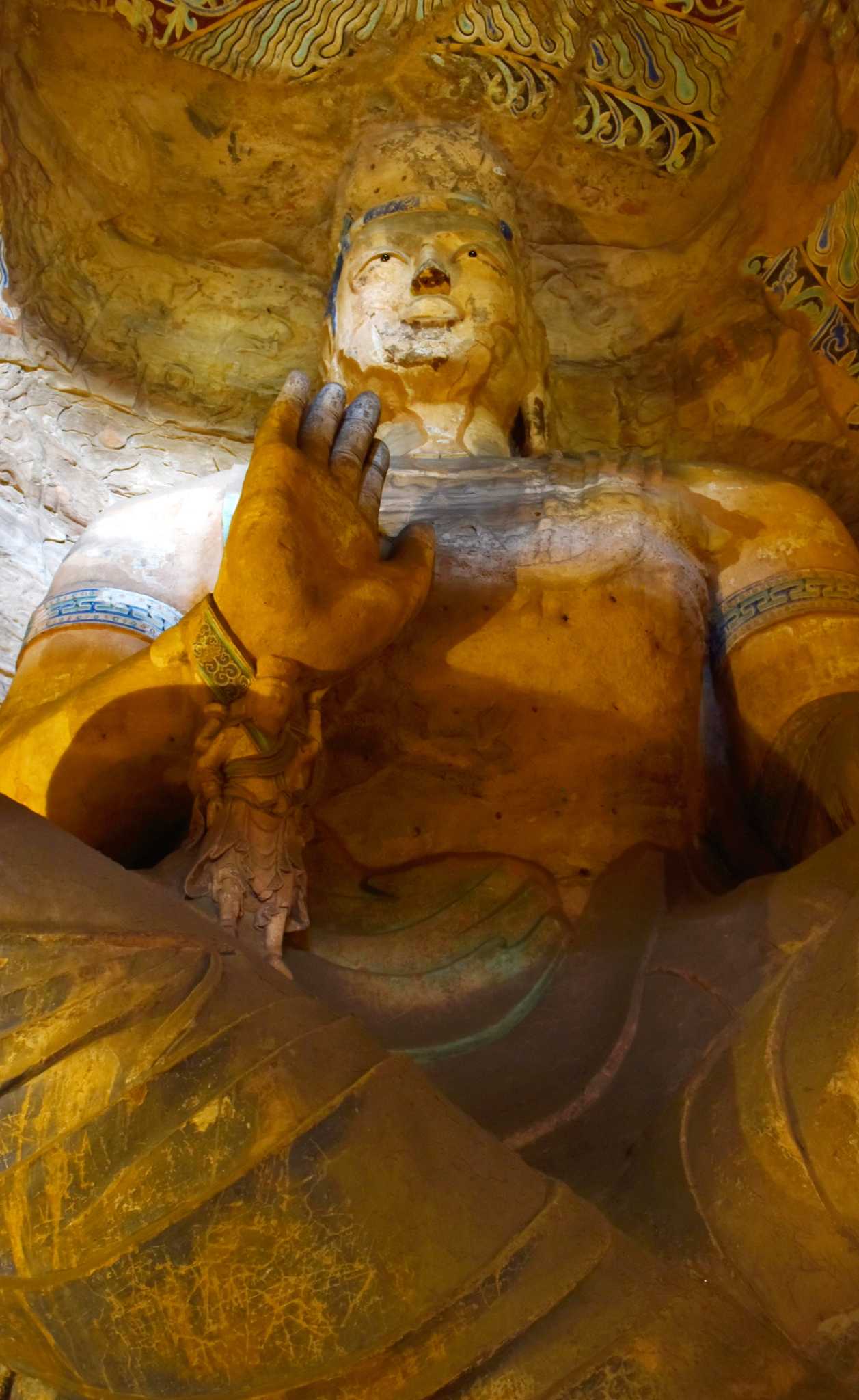
Cave 13 is a dome-roofed large-image cave most akin to the Tanyao Five, and has the richest niche and lintel decorative carvings. The 13.6-meter cross-legged Maitreya Bodhisattva wears a jeweled crown, a pendant collar and necklaces, chest serpent ornament, and mouth-held pearl, with lotus underfoot; the colossal figure fills most of the oval cave. Because the main figure’s arm cannot be carved free-standing, Yungang artisans "custom-designed" a four-armed strongman to support it—a brilliant solution that securely supports the massive arm while magnifying Maitreya’s grandeur and the guardian’s valor—reasonable and astonishing.
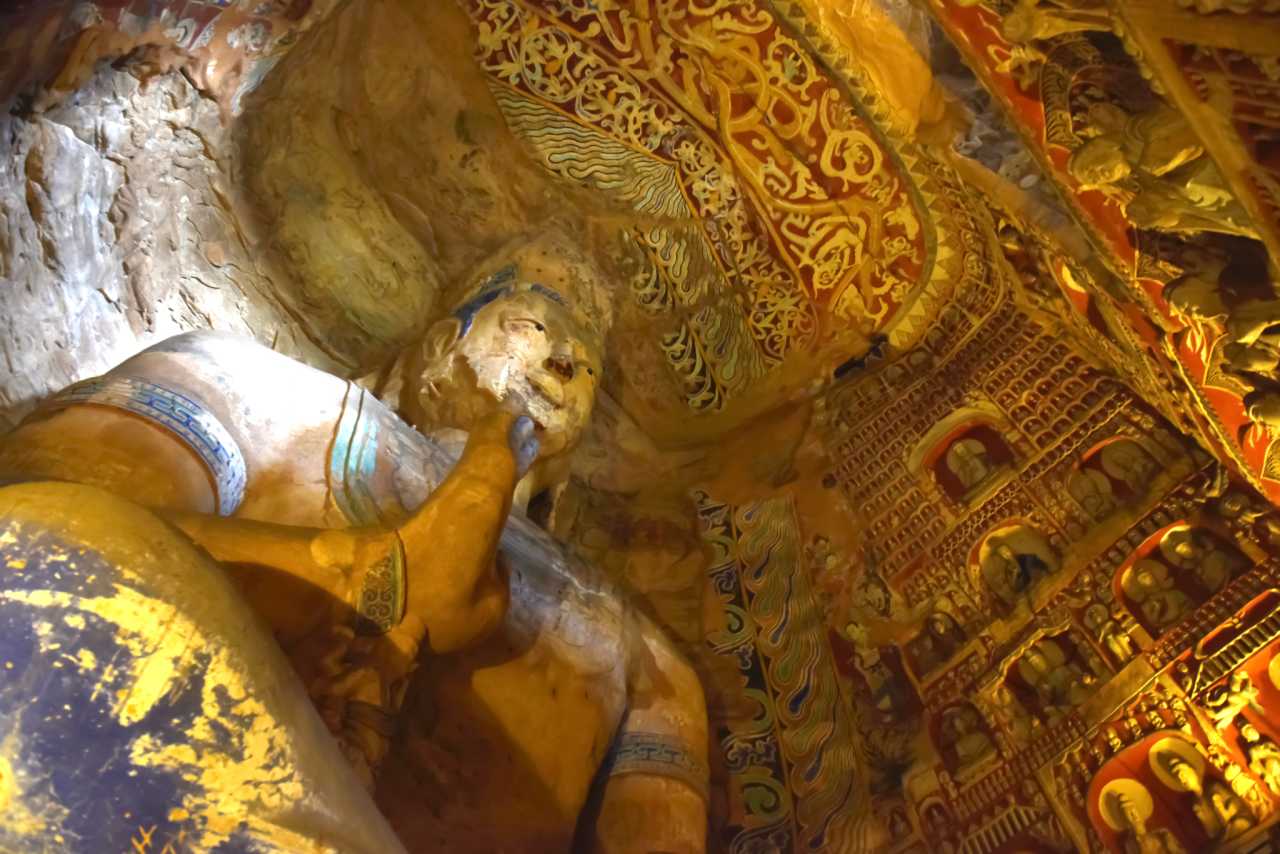 Yungang Grottoes
 Yungang Grottoes
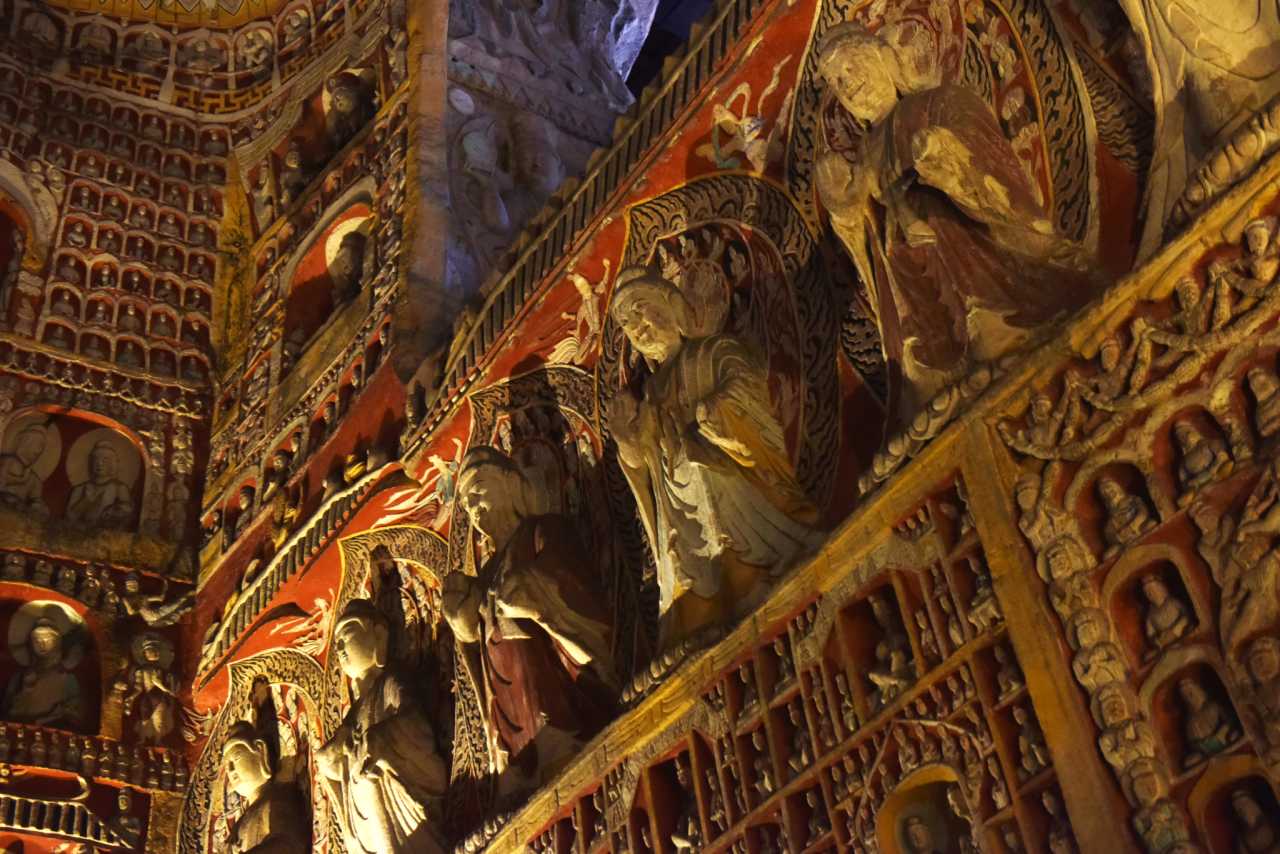
Besides the giant Maitreya, the seven standing Buddhas carved between the door and clerestory on the south wall are equally splendid. The hip-roof is cleverly divided into three parts: the central roof is wider with three standing Buddhas; the east and west roofs are narrower with two Buddhas each. The "Seven Buddhas" doctrine says that before Śākyamuni, six Buddhas appeared in this world; Śākyamuni is the present Buddha, seventh in the series—each appearing to preach the Dharma and illuminate the world.
 Yungang Grottoes