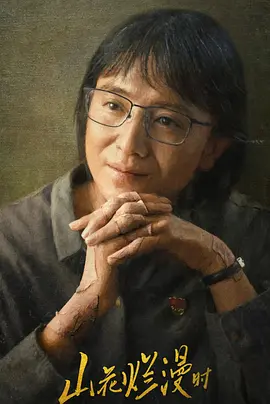
Asian youth is generally about patience, and movies tell us that. Wear a school uniform, follow school rules, and wait for the accidental outburst of love and hate to die - and then become an adult.
Singaporean director Chen Siyou's first feature film, Amoeba, gives us an example of the lack of patience. In an interview with Single Read, Tan Si You said: "In Singapore, the process of growing up is like facing death. You have to kill a part of yourself to take on a new role in society. But in the movie, Xu Xinyu, a 16-year-old girl, does not accept this kind of death. When the violence of the state seeped into the lives of students through the school, she and her friends formed a "gang" and vowed to die only for each other.
Growing up in the same Confucian culture, the audience may feel numb: Aren't these experiences what we are used to? The enjoyment or tingling that may come from watching this movie is that it pushes us to review the things that once made us feel uncomfortable through the body of a Chinese girl in another country, but slowly forgot in order to grow up smoothly. And the happiness that the girls get in the rebellion is eye-catching.
"Nuclear" premiered in China at the Pingyao International Film Festival in September this year, and won the honor of Youth Jury and Fan Choice as a shortlisted film in the "Hidden Dragon" unit, and actor Zheng Kaixin, who played Xu Xinyu, won the honor of Fei Mu Best Actress. At the Golden Horse Film Festival, where the results will be announced tomorrow night, the film is also expected to bring Chen Siyou the award for Best New Director.
The following is an introduction to the movie "Nuclear" and an interview with director Chen Siyou.
Growing up is a part of killing yourself
The "coming-of-age" of youth coming-of-age movies refers to growing up, but in specific situations, it sometimes refers to "I don't want to be that kind of adult".
In the past ten years, this film genre has ushered in an explosion of diversity, with "Moonlight Boy" and "Miss Bird" on the Oscar stage, as well as "Fish Tank" and "Hummingbird" and other gains cheered by fans. These stories of teenage boys and girls are surprisingly penetrating in a society made up of many adults who do not want to grow up.
This penetration is also reflected in the story of "Nuclear", but unlike other movies, the protagonists of "Nuclear" are light and excited most of the time. Director Chen Siyou dug out an image that was different from the mainstream perception from his rebellious memories - an outspoken Asian girl.
The protagonist Xu Xinyu (Choo) had just entered an elite Chinese girls' high school in Singapore, and under the prank of his classmates, he delivered a class president campaign speech saying "the class president is a slave to the teacher" and "defending the right to take a nap". Her speech attracted three friends among the seemingly submissive schoolgirls: Vanessa with a small camera, Sofia with a driver at home, and Gina, who had the shortest hair. The four girls enjoyed music, went cave expeditions, performed campus dramas to ridicule the "Merlion" representing the country, and finally decided to form a female gangster.
But during the entrance exam, they were asked the question about the Merlion again. At this time, should you say a standard answer that conforms to the will of the state, or protect your heart from damage in reality?
Four girls stage a school drama © mocking the Merlion AKANGA FILM ASIA
There is a prejudice that a good youth coming-of-age movie must be heavy and rough. In the interview, several of my questions reflected this bias. And "Nuclear" makes people feel so free and innocent, the girls are constantly protesting, constantly occupying space, believing that ghosts do not believe what textbooks say, and do not want to understand the history of gangsters or the narrative of the country.
In one scene, Xu Xinyu looked at the camera and asked, "Why do we learn things that we know are fake?" ”
In the post-pandemic years, I will also ask myself what is true. Sometimes watching the news seems to be made up, and watching the puppy dancing turns out to be artificial intelligence content. Moreover, why does even clicking on a seemingly funny comment jump to shopping software?
It was 16-year-old Xu Xinyu who asked this question in Chinese, which made me want to understand the growth experience of the people behind the movie, and understand why in the movie, a group of people disobey, two people are not defined intimacy, and one person's deafening rhetorical question, can look at and even examine these systems that create lies.
Chen Siyou's voice sounded very happy. She grew up in Singapore, studied film in the northeastern United States, interned at a gallery in Beijing, and now lives in Los Angeles. Before filming "Nuclear", she made short films, filmed commercials, and worked as a bartender for several years. At home, she would be nagged by her mother when she took a nap, but outside of Singapore, it was easier to tell the story of Singapore. "Feeling away from Singapore is like slowly untangling all the things that have held me back in the past," she said. ”
导演陈思攸 © DANIELLE KRUDY
A rebellious girl with the country where she grew up
How did you spend your teenage years in Singapore?
Chen Siyou Now that I think about it, I grew up completely surrounded by women. My family consists of four sisters, we live with my mother and grandmother, and my father went to work in Hong Kong when I was nine years old. My mother was born in China, and she often said to me, "Dad is not around, but Dad is great." ”
Later, I went to an all-girls high school, which was an elite school that was very stressful, just like the middle school in the movie. I became very rebellious in this school, starting to "bully" teachers, making fun of their names and hairstyles, and one teacher kept wanting to expel me.
At the same time, I spent a lot of time writing letters. If you think a senior is cool, write to her and ask her to be your "angel". As soon as I started class, I took out pens and stickers of various colors and wrote letters to many, many people. Although studying and exams are important, I don't remember much about them. Looking back, those times were very beautiful.
Single reading Are some of the rebellious behaviors you show in the movie really done yourself?
Chen Siyou Yes, I once staged a campus drama with my friends like the girls in the movie.
One day it was hot, and my three friends bought rice noodles to eat in the library because there was air conditioning. The vice principal found out and ordered them to perform a campus drama for the whole school, with the theme of "not eating in the library". Back in class, my friends told me, "Oh my God, we have to rehearse this play!" I said, "Then let's make it a satire." ”
So we wrote the script together and got twelve more classmates to join, and things suddenly became very interesting. I played the vice principal in the play, I borrowed a green suit like the one she often wears, imitating her very similarly, and the whole school was laughing and cheering for us during the performance. The vice principal punished my friends for rehearsals, which was meant to humiliate them, but we managed to return the shame.
Single reading When did you realize that your education system was problematic?
Chen Siyou When I was in it, I didn't realize that there was a problem. Everyone is like this, and you have to do the same. For me at the time, the education system was like a game where you need to get a certain score, but the game was not fun at all.
When I was in school, I had no interest in some subjects at all because they weren't attractive in themselves. There is a subject called "sociology", which is equivalent to a history class, which talks about the history of Singapore - but it is a certain version of Singapore's history. I couldn't use the word "political propaganda" to describe it at that time, but I could feel that it was a kind of top-down history that was imposed on us. You learn it and test it, which means you take a test to see how fluently you can repeat the narrative given to you by the state.
Literature is the opposite, when I read poems and novels around the world, I am not reciting them, but exploring and observing how words are combined and what they mean. That kind of learning attracts me even more.
Reading alone This is very interesting, from the contrast between "sociology" and literature, you begin to reflect on what you are learning. Can you talk about this process again?
Chen Siyou In school, this feeling is obvious. We have to take specific courses, such as the "Good Citizenship" class—every student has to take this course. The core of the whole course is to shape students' concepts through national narratives.
I think that perhaps because Singapore is a young country, it has only been about 60 years since its founding, and the school likes to emphasize that our society is based on racial equality and multi-ethnic integration. In the "Good Citizen" course, there are always stories like this: people of different races are all friends and get along well. This idea is good in itself, but the reality is not. In Singaporean society, there are still clear boundaries between different ethnic groups.
There are many similar statements, such as: "Singapore is a fragile country because we are a small country." So we must unite or perish. ”
The national narrative is weaved through various symbols and festivals. In addition to the propaganda about the "Merlion", the school also holds a "Total Defense Day" event every year, on which military personnel will come to the school to give a speech and tell us: "We must protect ourselves, we must be prepared for the world." "On National Day, we will sing, and I still remember those songs! They are all about saying "I love Singapore", with catchy melodies that are easy to remember.
There are many days of the year when people come together to either express their love for their country or remind each other that Singapore is a young country and our lives are very insecure, so we must identify with our Singaporean identity and unite with the outside world.
Single reading So you think that national narratives have largely permeated the lives of individuals? Are there any other examples?
Chen Siyou is like this. In my personal life, especially as an adult woman, I feel a lot of pressure. I remember an advertisement that was played before the movie screening said, "Today is National Day, give birth to a few more children for the country!" ”
From a very young age, you are taught to do your best for the country, because "we don't have any natural resources, the only resource is you, our citizens." "This means you have to study hard, get a good job, and then get married and have children. In the 70s of the last century, the government implemented a fertility policy called "two is good"; However, in the 80s, many ridiculous policies were introduced to encourage women who graduated from college to have more children, and women with low education to have fewer children.
These policies are discriminatory. If you don't fit into this national narrative – like you're single, or not heterosexual, or don't live by "family" standards – then you'll have a harder time applying for HDB flats. Therefore, the national narrative is not only permeated in the little things of life, but also strengthened by policies and institutions.
The main character, Xu Xinyu, "shoots" © AKANGA FILM ASIA in the classroom
"Why do we learn what we know is false?"
I can understand that when you hear these policies as an adult, you are wary of the national narrative. But when you were a teenager, what made you start to doubt these claims? Do your friends think these are fake too?
Chen Siyou When we were middle school students, we didn't think those things were "fake", but more thought that this set of statements was very "funny". Because the school bombards you with this set of words all day long, it makes it lame and inelegant. It's like someone feeds you the same food every day, and it won't be long before you feel sick. Can't we eat something else?
At that age, I also started to be exposed to different music, realizing that they didn't sound as nationalistic as the songs sung in school. Then I found out that there was a whole world out there! It turns out that there are so many kinds of "food" in this world. In the circle of friends in middle school, sometimes we would meet a person like Sophia in the movie, she came from a higher social class, and she would bring back chocolates from overseas to introduce us to music and books outside of Singapore.
Later, I went to an English-style Christian high school, which was almost full of children of rich people, children of government officials, children of businessmen, children who came in through nepotism...... There I realized that although people always say that society is meritocractic—if you get good grades and work hard, you will be rewarded—this society is not what it seems.
I began to question many things, including my own sexuality. I began to ask myself, where is the "real" of the so-called heterosexual relationship? For me, the relationship between women and women is very real, but it is not allowed. Why? Why is this relationship looked down upon, is it considered disgusting?
Single reading There is a scene in the movie where two girls, Xu Xinyu and Vanessa, play intimately in the room. When I walked out of the cinema, a friend said to me, "This is a great queer movie." But I was surprised that he quickly chose the word "queer," and I said, "A lot of women were very close to their friends as children, and maybe kissed other girls." ”
When you designed this scene, did you want Xu Xinyu and Vanessa to broaden the boundaries of their friendship, or to challenge it?
Chen Siyou Actually, your conversation with your friend reflects the kind of balance I want to portray.
When I was about sixteen, I was always caught up in a relationship that went beyond friendship, but I didn't have any words to describe it. It was an adolescent "fetish", but with your same-sex friends. I guess it's very common, at least in girls' schools. It's just that people never say it clearly.
The relationship is certainly "queer" because it is in flow and unformed. But I don't want to define how "queer" it is anymore, because the reality is that it's too confusing for teenagers in Singapore.
For example, I want to be very close to a friend, but I don't want to be so close to other friends. Why is this happening? Is she responding to me? What should I do? …… What I wanted to capture was that clumsy, chaotic, but like a burning fire.
Single reading In the movie, when Xu Xinyu and Vanessa were worried that the video of their intimate play would be discovered by the teacher, they must have felt the fear that the relationship would be defined. What is the general attitude towards same-sex relationships in Singapore?
Chen Siyou You are very accurate that their relationship was pure at first, but this purity was later pierced by the presence of adults. It was fear that kept them away from that emotion.
In Singapore, at least in my formative years, it was really difficult to develop same-sex relationships. But interestingly, girls' schools have something unique. Because they are all girls, everyone will say things like "That's my crush" and "That senior sister is mine", and they are always infatuated with a certain classmate or senior, and they will suddenly run out of the classroom to see her. Everyone has likes, even five at once! And this is completely normal.
But once things get serious — like who you're really going out on a date with, someone sees you holding hands — you get discriminated against. You will be sent to a counselor, your text messages will be checked, and you may be expelled from school. I don't know how to explain the strange phenomenon in girls' schools: crushes are normal, but they must not cross that line. Once you cross that line, everyone will advise you, "You can't do this," "It's not true," "You should be with the guys," and so on.
It was not until three years ago that a colonial legacy of discriminatory laws against same-sex acts was repealed. I think the only reason the government is abolishing it is that Singapore is losing investment. International companies like Google and Facebook might say: We want to be based in Singapore, but you have this law, and we have queer people in our workforce. So these changes actually come from the pressure on the enterprise. Singapore itself doesn't care much about the queer community, and it's common for people to joke about queer people.
Single reading So as you grew up from middle school to high school, you kept questioning the authenticity of what you had to learn, because the literature you read, the music you listened to, and your relationships with women felt more authentic.
Towards the end of the movie "Nuclear", there is a scene of an exam that tests the girls' understanding of Singapore's history. When asked to state the history of the Merlion, Xu Xinyu questioned the examiner, "Why do we learn what we know is fake?" ”
How did you design this scene? Wouldn't it be too much like a "manifesto" for a girl to say such a line bluntly?
Chen Siyou In the script, this paragraph is actually very short. Because I have a bit of a background in making documentaries, I directed the scene in a documentary style.
It's visually simple: Xu Xinyu speaks to the examiner, and we look at her from the examiner's perspective. You may be on the side of the examiner and become an accomplice in oppressing these girls; You may also look at her as if you were looking in a mirror because she said what you wanted to say.
Before arriving at this scene, most of the film is not so concrete, more about emotions and feelings and the process of the protagonist wandering in it. I think at some stage, the film needs to be more grounded and "anchor" the end of the movie. Of course, I also hesitated, will this scene be too much? Will it be like what you call a "manifesto"?
But I think there is something very confrontational about this scene. After all, it's not often that we see young Asian girls talking to you frankly and directly. Because our impression of teenage Asian girls is generally submissive. Who would take the time to listen to them? I don't think most people in society will not. So I hope they can appear in a way that is directly to the audience, almost like questioning you.
Single reading It reminds me that from the short film to your first feature film, Nuclear, your protagonists are almost all young girls. Why do you think their perspective is so important?
Chen Siyou As a director, I won't say that I am still very young, I am in my thirties, but I feel that my current maturity is only enough to make me look back on this period of my life.
And I think there is something very vigorous in youth. Before you enter society and accept your role in society, you have more curiosity, less gender distinction, and simpler emotions.
In Singapore, growing up is like facing death. You have to kill a part of yourself to take on a new role in society. For example, you will become a good employee of the company, a machine in a capitalist society...... So the time before this kind of death is more interesting.
Single reading Back to that scene, you asked Xu Xinyu to ask the important question: "Why do we learn things that we know are fake?" Is the question a specific referral to Singapore's education system, or is it a general manipulation experience?
Chen Siyou On the one hand, this is Xu Xinyu questioning her environment; On the other hand, the film is also talking about a cosmopolitan system.
Of course, those in power in the world hope that the people will do things obediently and not resist. Singapore is an example of a well-functioning society that is wealthy, safe, and full of big business. Education in Singapore is still to train me to become a capitalist worker and teach me to pursue the appreciation of capital endlessly. When I was in Singapore, I sometimes felt that I had to die in my heart to live.
If everyone is working, without emotion, like a robot, what is the "real" of such a life? You have money in your bank and you can buy things with it, but is this real? Who determines the value of these things?
For me, the emotions, friendships, and intimacy of the people that this film explores, these are the real ones. The bond you create with people is real, the emotions you struggle with and try to express in words are real, even those intangible things, such as imagination, are extremely real to me.
So Xu Xinyu's question is also to lead to this question: What do you think is true?
I think everyone's reality is subjective. I think the way to refuse to be indoctrinated is to keep looking for the truth you feel in your heart, to find a way to live honestly in this world, to truly regard friendship, love, desire, and intimacy as real things.
A gangster movie with only "existential violence"
Like you said, Singapore is a clean and safe capitalist society today. How did you come up with the idea of letting the girls in the movie form a "gangster" in such a society? What is your research process like for "gangsters" as a historical construction?
Chen Siyou Of course, I am a film director, not a historian. I wanted to make a movie about four girls forming a gang before studying the concept of "gangster". But if I had endless time, I really wanted to read every book about gangsters.
I started my research from the origins of Chinese gangsters. When I learned about the secret organization of the Qing Dynasty's "Tiandi Society", I was surprised that one of the cultural origins of the gangsters was actually a very idealistic, anti-government organization, and it was not particularly violent.
Later, in the development of history, some people who wanted to change society and promote things would use the power of gangs to organize a large group of people. I read how Sun Yat-sen traveled all over the world, from Hong Kong, Taiwan, to the United States and even to Singapore, using the network of the Tiandi Society to extend the "Hongmen" network to raise funds for the revolution from overseas Chinese groups.
I was like, "Wow, I didn't know the origins of gangsters like this, they weren't the guys on motorcycles in pop culture that I was familiar with."
Why did you become interested in gangsters?
Chen Siyou I know very well that my interest in gangsters is not in violence and crime, and I don't want the four girls in the story to steal and sell drugs. Because in the simplest sense, these gangs in history have never allowed women to participate.
I realized that my interest in the gangster lies in its rebellious spirit. In fact, gangs in Singapore were also political, and they once played the role of trade unions, participating in activities against the colonizers and fighting for better working conditions and a better life. What those in power fear most is that people organize themselves for a common goal. I think the temperament of "radicals" in the student movement is a bit similar to "gangs".
On the other hand, I am also interested in the ritual and gender traditions of the gangsters. Entering the gang requires losing your original identity, and there is always such a myth in the gang: "I can die for you, I can die for my brothers." "When I was a teenager, I definitely had this feeling – I can die for someone. It's simply romantic. I still remember when I was in middle school, the teacher who wanted to expel me always called me and my friends "martial arts masters". The term "martial arts master" left a deep impression on me, and made me begin to reimagine the myth of "brotherhood" in an all-girl environment.
Ultimately, I may be concerned about how women have autonomy over their lives and how to answer "who I am" outside of the established institutions of school and family.
The "gangsters" of the girls you depict in the movie are actually very innocent, even role-playing. At the same time, there are real male gangsters in the movie, which is the gang that Sophia's driver used to be involved in, but you also focus on showing the friendship between them.
This is a very fresh image of a gangster. Why is it filmed like this?
Chen Siyou You can say that this is a gangster movie without gangsters. I don't want to film characters to be violent, because there is already too much violence in reality, why do we have to copy more violence in movies?
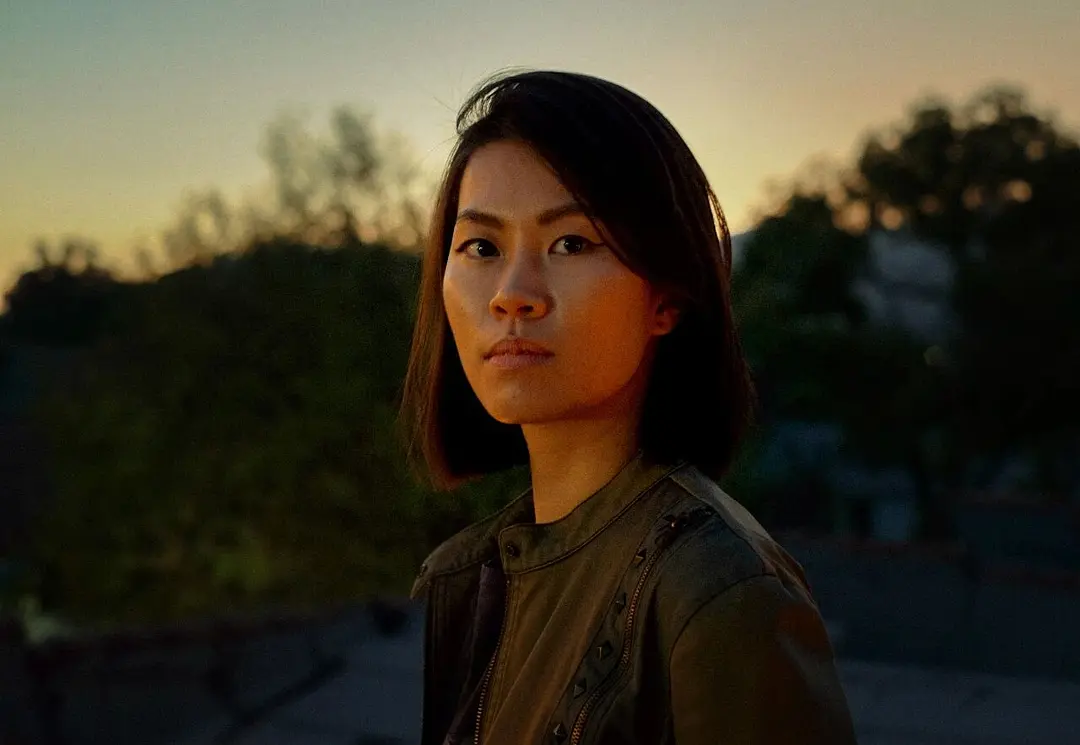
I think I prefer to explore institutional violence—systemic violence that strips you of your individuality, and can even be said to be a kind of "existential violence". I think friendship is a counter to the sense of loss that comes with this existential violence.
I think it also has to do with how much realistic narrative you're willing to use in your film. You leave many gray areas: although the girls are rebellious, they are still good students, and they have not dropped out of school, stolen, or fallen into social poverty and violence like those youth movies we are familiar with.
The film is partly idealistic, partly imaginative, and has a lot of writing about the body and feelings. Was it clear to you from the beginning that you didn't want to shoot darker, heavier stories?
Chen Siyou Yes, this is a decision.
I first had to be faithful to my own real experience and the real environment of the school in the movie. In an elite school, the "worst thing" that can happen is probably like in a movie. Everyone understands in their hearts that they only have one chance to get into this good school, but they must not mess up.
This also involves the differences between elite and non-elite schools, which themselves are the epitome of modern Singapore. When I went back to Singapore to study its gangster history, I was told, "Go to that building, go to that pool hall," and I went—there was no trace of gangsters.
In today's Singapore, a person can't be a gangster, just like the girls in the movie want to be gangsters, but in fact they just retain the rebellious nature of gangsters. In the end, this is still a Singaporean gangster movie, not a Brazilian gangster movie like "City of God", or a British movie that focuses on street gangs.
Girls learn the ritual © of the yakuza AKANGA FILM ASIA
A kind of "left-wing cinema" and the environment in which it is located
Last year at the Pingyao International Film Festival, I interviewed the director of "Yesterday's Youth", which was also a radical and critical film, and I also liked it. Then I heard some discussion that the new generation of "left-wing cinema" has become more elite and aesthetic. Does this match your observations? Is this also related to the elitism and stratification of moviegoers now?
Chen Siyou Yes, I think this is related to the question of "who is still going to the cinema". It's the fans who are still watching the movie.
Of course I hope my films will reach the masses, but it seems that not many people come to see them. Even my sisters, my friends who aren't movie fans, probably think the movies are too slow and "nothing happens". For me, a lot of things happened emotionally. What to do?
I could write more exciting and informative stories, but I also wanted to stay true to my beliefs as a writer and filmmaker. Maybe this made me a left-wing, progressive "bubble" - it was, because my friends were progressive-minded people, and I read so-called progressive books, and I could only be attracted to them.
Of course, I also tried to watch Fox News (a conservative TV news channel in the United States) to try to understand what was going on there. It's strange that the world is so divided that we all look at different news websites.
In fact, we are all human beings, we all enjoy good weather, good food, the process of growing up, and the memory of doing stupid things with friends. I have always loved watching movies because they capture the breath of the human experience. As a director, I also try to present this kind of breathing, and I hope that these concrete experiences can transcend barriers - which is very idealistic again (laughs).
In one scene, Xu Xinyu delivered a speech that sounded very Marxist: "The class leader is the teacher's slave!" "The rules and regulations in these schools you mentioned not only have the requirements to become capitalist workers, but also the roots of Confucianism? In the movie, how do you present the entanglement of these two ideas?
Tan Si You The interesting thing about Singaporean society is that it is both highly capitalist and very conservative because it is rooted in Confucian traditions. I think Confucianism and capitalism are similar in this respect: they have the same desire to put you in a fixed role.
Having said that, as a creative person, do I know how to manage a society? I don't want to say that capitalism is completely bad. Because even when I was growing up, sometimes there was no hot water at home, but now we have clean water, food, shelter, and good education, and it is a comfortable society. As a film director, it's my responsibility to digest my experience and ask questions, to ask if there's a better way, instead of just saying, "This sucks."
Singaporeans of my generation are like the product of some kind of social experiment. When I was growing up, Singapore was still very young, so those leaders were still experimenting. One moment it was a two-child policy, and the other moment it asked us to have more children; It used to be this kind of examination system, but now it has been changed to that one. From the leader's point of view, it might be something like this: "Well, add a little more Confucianism here." "Give me a little more freedom to try?" "Now we are going to be particularly capitalist!"
For me, what I want to criticize most is the power structure and control over people that accompany it. Why must everyone's life be so tightly controlled? If we were given more freedom to do our own thing, how do you know the economy wouldn't get better? What I disagree with most is this kind of thoughtless control of young people, and even uses deception.
I was curious, growing up in such an environment, would studying film be a difficult decision?
Chen Siyou Even in 2025, many people still feel that you will only study art or humanities if you are a stupid person. Even now, my mom would say, "You should go to law school." ”