 haopass.top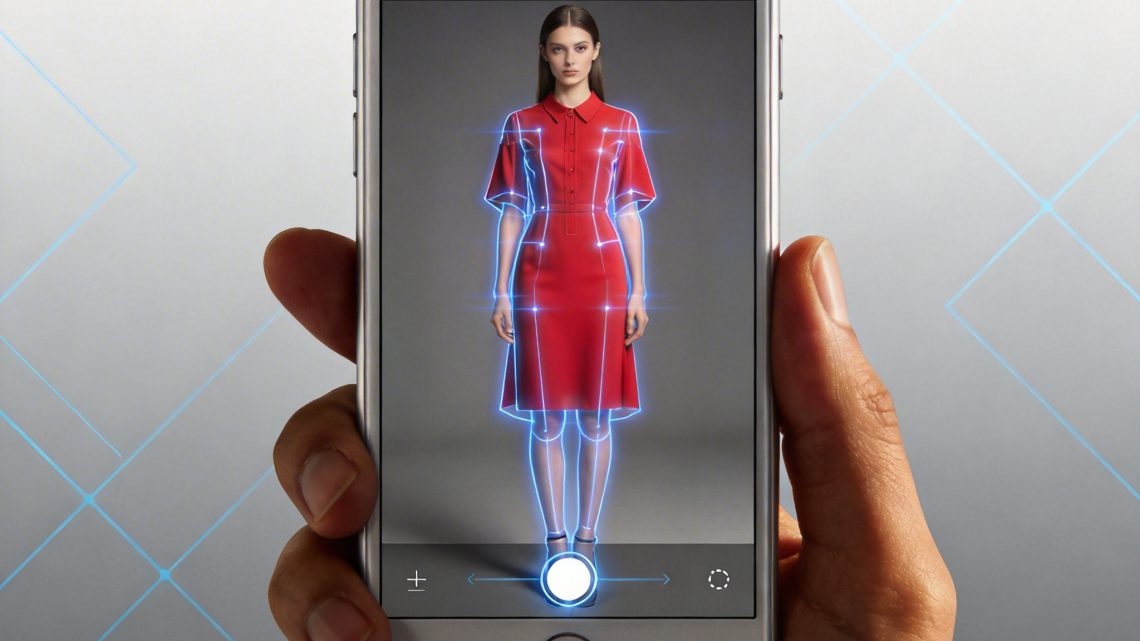
Beyond the Fitting Room: How AR Virtual Try-On is Revolutionizing the Shopping Experience
Imagine standing in your living room, holding up your phone, and seeing exactly how a new pair of sunglasses frames your face, how a bold shade of lipstick complements your skin tone, or how that statement sofa would look against your actual wall color. This is no longer a scene from a sci-fi movie; it’s the everyday reality powered by Augmented Reality (AR) Virtual Try-On technology. What began as a novel gimmick has rapidly evolved into a transformative force in retail, beauty, fashion, and even home decor. By seamlessly blending digital elements with the real world, AR Virtual Try-On is solving age-old consumer pain points, boosting business metrics, and fundamentally changing how we discover and purchase products. This deep dive explores the technology behind the magic, its profound impact across industries, and the exciting future it is building.
The Technology Behind the Magic: More Than Just a Filter
At its core, AR Virtual Try-On uses a device’s camera—most commonly on a smartphone—to superimpose a digital 3D model or 2D image onto a live feed of the user or their environment. But to move from a clunky, misaligned overlay to a convincing and useful experience requires a sophisticated stack of technologies working in harmony.
Computer Vision and Facial/Feature Mapping
This is the foundational layer. Advanced algorithms analyze the camera feed in real-time to identify and map key points. For face-based try-ons (like glasses, makeup, or jewelry), the software detects hundreds of facial landmarks—the contours of your eyes, lips, nose, and jawline. This precise mapping ensures the virtual object moves, rotates, and scales naturally with your head movements, maintaining a realistic anchor point. For body or room try-ons, similar mapping occurs for body joints, walls, and floors.
3D Modeling and Rendering
The virtual products themselves are high-fidelity 3D models, often created using techniques like photogrammetry or 3D scanning. These models contain information about texture, material, reflectivity, and even how light interacts with them. The rendering engine then dynamically lights the virtual object to match the ambient light in the user’s environment, casting appropriate shadows and highlights to create a believable composite. This is why a virtual watch can look shiny under bright light and matte in the shade.
Integration and Platform Accessibility
Modern AR is incredibly accessible. It leverages built-in frameworks like Apple’s ARKit and Google’s ARCore, which handle the complex tasks of motion tracking and environmental understanding. For brands, this means integration can happen directly within their native apps or, more commonly, on their websites via WebAR. WebAR is a game-changer, as it allows users to access try-on experiences instantly by simply clicking a link or scanning a QR code, with no app download required, drastically lowering the barrier to entry.
Transforming Industries: From Eyewear to Living Rooms
The applications of AR Virtual Try-On are vast and growing, but its impact is most pronounced in a few key sectors where the “try-before-you-buy” imperative is strongest.
Fashion and Apparel: The End of Guesswork
For online fashion retailers, sizing and fit have always been the primary drivers of returns—a costly problem. AR is tackling this head-on. Beyond just overlaying a t-shirt on a user’s torso, advanced solutions now offer virtual fitting rooms. Users can input their precise measurements or use their phone’s camera to generate a body model, allowing them to see how clothes drape and fit on a true-to-life avatar. This not only increases consumer confidence but also personalizes the shopping journey. Brands like Gucci and Adidas have successfully used AR to let customers try on shoes virtually, examining details from every angle.
Beauty and Cosmetics: A Personalized Palette
The beauty industry has been one of the earliest and most enthusiastic adopters. AR try-on for lipstick, eyeshadow, foundation, and even false lashes is now standard on the apps of major brands like Sephora, L’Oréal, and Ulta. The technology has become so precise it can account for skin undertones and texture. This virtual testing eliminates hygiene concerns in stores and empowers customers to experiment with colors and styles they might never have dared to try otherwise. It’s a powerful tool for discovery and conversion.
Eyewear and Jewelry: The Perfect Fit, Digitally
Companies like Warby Parker and Ray-Ban pioneered this space. Trying on dozens of glasses frames in a store can be tedious. Their AR apps allow users to see how hundreds of frames look on their unique face shape, from the comfort of home. Similarly, jewelers use AR to let customers visualize how a ring, necklace, or watch will look at scale on their hand or wrist, adding a layer of confidence to high-value purchases.
Home Decor and Furniture: Spatial Confidence
Perhaps one of the most practical applications is in home goods. IKEA Place and Amazon’s “View in Your Room” feature allow users to place true-to-scale 3D models of furniture, lamps, and decor directly into their physical space. You can walk around a virtual sofa, see if it fits under a window, or check if a new coffee table matches your existing rug. This solves the monumental guesswork of online furniture shopping and dramatically reduces the likelihood of returns due to size or style mismatch.
The Tangible Benefits: Why Businesses and Consumers are All In
The adoption of AR Virtual Try-On isn’t just about being trendy; it’s driven by clear, measurable advantages for both sides of the transaction.
For Consumers:
- Enhanced Confidence: Reduces purchase anxiety by providing a realistic preview of fit, style, and scale.
- Personalized Discovery: Encourages playful experimentation with new products, styles, and colors.
- Convenience: Saves time and effort, enabling shopping anywhere, anytime, without physical constraints.
- Informed Decisions: Leads to more satisfying purchases and fewer disappointments upon delivery.
For Businesses:
- Reduced Return Rates: This is the most significant ROI driver. More accurate visualization leads to better-fit choices, slashing the costly reverse logistics of returns, especially in apparel and home goods.
- Increased Conversion & Average Order Value (AOV): Engaging, interactive experiences keep users on-site longer and provide the final nudge needed to complete a purchase. Users who engage with AR are often more likely to buy and spend more.
- Powerful Data Insights: Brands gain valuable data on which products are “tried on” most, which colors are popular, and how users interact with items, informing inventory, marketing, and design decisions.
- Brand Differentiation: Offering a cutting-edge, helpful technology builds a reputation for innovation and customer-centricity.
The Future and Challenges Ahead
The journey of AR Virtual Try-On is just beginning. We are moving towards even more immersive and social experiences. The integration of AI for hyper-personalized recommendations based on try-on history is imminent. Social commerce will be supercharged as users can share their virtual try-on videos with friends for real-time feedback directly within social platforms. Furthermore, the rise of the metaverse and persistent digital identities will allow for a unified virtual wardrobe or home space that spans multiple brands and retailers.
However, challenges remain. Creating high-quality 3D assets at scale can be resource-intensive. Ensuring consistent accuracy across diverse skin tones, body types, and lighting conditions is an ongoing technical hurdle that requires conscious effort to avoid bias. Finally, while the technology is impressive, it must not feel like a novelty but a seamless, utility-driven part of the shopping journey.
Conclusion: A New Standard for Retail
AR Virtual Try-On has decisively shifted from a marketing experiment to a core component of the modern retail toolkit. It represents a powerful convergence of technology and human-centric design, addressing fundamental desires for confidence, convenience, and personalization. By effectively bridging the gap between the digital and physical worlds, it is not merely enhancing online shopping—it is redefining it. As the technology becomes more sophisticated, accessible, and integrated, we can expect it to become as standard as product photos and customer reviews. The future of shopping is interactive, personalized, and visually empowered, all thanks to the layer of augmented reality that is now at our fingertips.