 haopass.top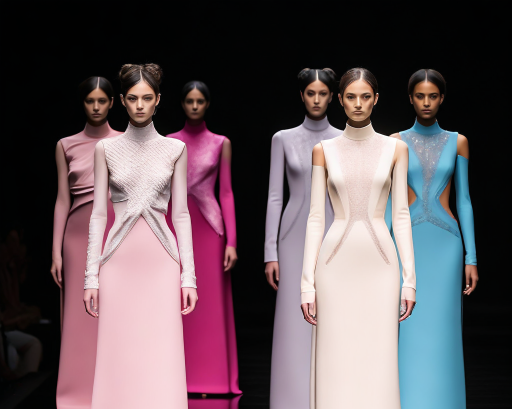
Digital Couture: Where Fashion, Technology, and the Metaverse Collide
For centuries, haute couture has represented the pinnacle of fashion artistry—painstakingly handcrafted, exorbitantly priced, and accessible to a select few. It was the ultimate symbol of exclusivity, worn on the red carpets of Cannes and the runways of Paris. But a new atelier is emerging, one built not from silk and thread, but from pixels and polygons. Welcome to the era of Digital Couture: a revolutionary fusion of fashion design, cutting-edge technology, and virtual identity that is redefining what it means to create, own, and wear clothing. This isn’t merely clothing for video game avatars; it is a burgeoning art form, a new economic frontier, and a philosophical challenge to the very fabric of the fashion industry.
At its core, digital couture is the design and creation of clothing intended to exist solely in digital spaces. These are garments crafted using 3D modeling software, digital sculpting tools, and game engines. They are worn by digital avatars in virtual worlds like Decentraland and The Sandbox, featured in video games, modeled by AI influencers on Instagram, or even superimposed onto real people via augmented reality (AR) filters. The materials are virtual—simulated silk that glows with an impossible sheen, leather that shifts color with movement, or fabrics that defy the laws of physics. The constraints of gravity, durability, and even human anatomy are lifted, unleashing a torrent of creative potential previously unimaginable in the physical realm.
The Fabric of Innovation: How Digital Couture is Made
The creation of a digital garment is a deeply technical and artistic process. It begins not with a sketch on paper, but often with a concept art or a 3D scan of a body (real or imagined). Designers then use sophisticated software like CLO3D, Marvelous Designer, Blender, or Cinema 4D to drape, sculpt, and stitch the garment around a digital form. This process allows for incredible precision and experimentation. A designer can adjust the weight, texture, and movement of a fabric with a slider, see how light interacts with a material in real-time, and create complex, gravity-defying structures that would be impossible to construct in a physical atelier.
The Toolkit of the Digital *Couturier*
- 3D Modeling & Sculpting Software: The foundational tools for building the garment’s geometry from the ground up.
- Digital Fabric Simulation Engines: Software like CLO3D uses real-world physics to simulate how different fabrics drape, fold, and move on a body.
- Game Engines: Platforms like Unity and Unreal Engine are where the garments come to life, rendered with cinematic quality and integrated into interactive experiences.
- Blockchain & NFT Platforms: These provide the framework for verifying ownership, authenticity, and scarcity of digital fashion items.
The final product is more than a static image; it’s a dynamic, often animated, asset. It can be a file that you “wear” on your social media avatar, an accessory for your character in an online game, or a filter that places a breathtaking digital gown over your body in a video call. This shift from physical object to dynamic digital asset is the fundamental paradigm change driving the industry.
Beyond the Pixel: The Tangible Impact of Virtual Fashion
To dismiss digital couture as a frivolous trend for gamers is to miss its profound implications. Its impact is being felt across sustainability, economics, and creative expression in very real ways.
1. The Sustainable (R)evolution
The fashion industry is one of the world’s largest polluters. Digital couture offers a compelling alternative. By creating and experiencing fashion digitally, it eliminates the need for physical sampling, water-intensive fabric production, shipping, and eventual landfill waste. Brands like The Fabricant lead with the motto “We don’t craft clothes, we craft stories—zero cloth, zero waste.” Designers can experiment with endless iterations without a single scrap of physical waste, pushing the boundaries of creativity while dramatically reducing their environmental footprint.
2. Redefining Ownership and Scarcity with NFTs
How do you own something that doesn’t physically exist? Enter Non-Fungible Tokens (NFTs). NFTs act as a digital certificate of ownership and authenticity, recorded on a blockchain. This technology has given rise to a booming market for digital fashion collectibles. Iconic moments, like the $9,500 NFT dress sold by The Fabricant in 2019 or RTFKT’s (now part of Nike) viral digital sneakers, proved that people are willing to invest significant sums in unique digital assets. Ownership confers status, access to exclusive communities, and a new form of digital flex.
3. Unleashing Unbridled Creativity
Digital couture liberates designers from the constraints of the physical world. Imagine a dress made of liquid fire, a jacket that changes pattern with your heartbeat, or a gown constructed from swirling constellations. Designers like Iris van Herpen have long bridged this gap, but digital tools make this hyper-expressive, phygital (physical + digital) future more accessible. It allows for storytelling on a new scale, where a garment can be an interactive experience, evolving or reacting to its environment.
The Challenges on the Catwalk: Barriers to Adoption
Despite its promise, the world of digital couture is not without its hurdles. Widespread adoption faces several significant challenges:
- The “Why Wear It?” Factor: For many, the visceral pleasure of texture, fit, and the physical act of wearing a garment is irreplaceable. Convincing the mainstream of the value of a purely digital item remains a key hurdle.
- Technological Accessibility: Creating and, in some cases, even viewing high-end digital fashion requires powerful hardware and software, creating a barrier to entry.
- Industry Silos: The fashion and tech worlds have historically operated separately. True innovation requires seamless collaboration between designers, 3D artists, software developers, and blockchain experts.
- Intellectual Property & The Copy-Paste Problem: In a digital realm, what stops someone from right-clicking and copying a million-dollar digital gown? Robust digital rights management and evolving legal frameworks are critical.
The Future Fit: What’s Next for Digital Couture?
The trajectory of digital couture points toward deeper integration with our daily lives. We are moving toward a phygital reality, where our digital and physical wardrobes are intertwined. Imagine purchasing a physical garment that comes with a unique, more extravagant digital twin for your online presence. Augmented Reality (AR) will allow us to “try on” and wear digital pieces over live video for meetings or social media. Digital fashion will become a core component of personal branding in the metaverse, where your avatar’s attire signals your identity, affiliations, and tastes as clearly as your real-world clothing does today.
Furthermore, the rise of AI in design will accelerate creation, potentially allowing users to co-create or generate fully personalized digital items through text prompts. The line between consumer and creator will continue to blur, fostering a new, more democratic and participatory fashion ecosystem.
Conclusion: A New Stitch in Time
Digital couture is far more than a niche for tech enthusiasts or a marketing gimmick for luxury brands. It is a fundamental expansion of fashion’s domain. It challenges the industry to rethink its values—from exclusivity to accessibility in virtual spaces, from material consumption to digital sustainability, and from static garment to dynamic experience. While it will never replace the timeless artistry of a hand-sewn, physical gown, it doesn’t seek to. Instead, it opens a parallel universe of expression, one where the only limit is the imagination of the designer and the digital *couturier*. As we spend more of our lives, relationships, and economies online, what we choose to wear in these spaces will become increasingly significant. Digital couture is not the end of fashion as we know it; it is the exciting, luminous, and limitless beginning of its next chapter.